Resistance Band Active Hang
The Resistance Band Active Hang is an assisted scapular depression exercise that teaches you to engage the lats and lower traps while hanging from a bar with reduced bodyweight load. The band takes away enough weight to let you focus entirely on pulling the shoulder blades down and holding a stable hollow body position. This exercise is one of the most effective entry points for building the scapular control and shoulder stability required for pull-ups and all overhead calisthenics movements.
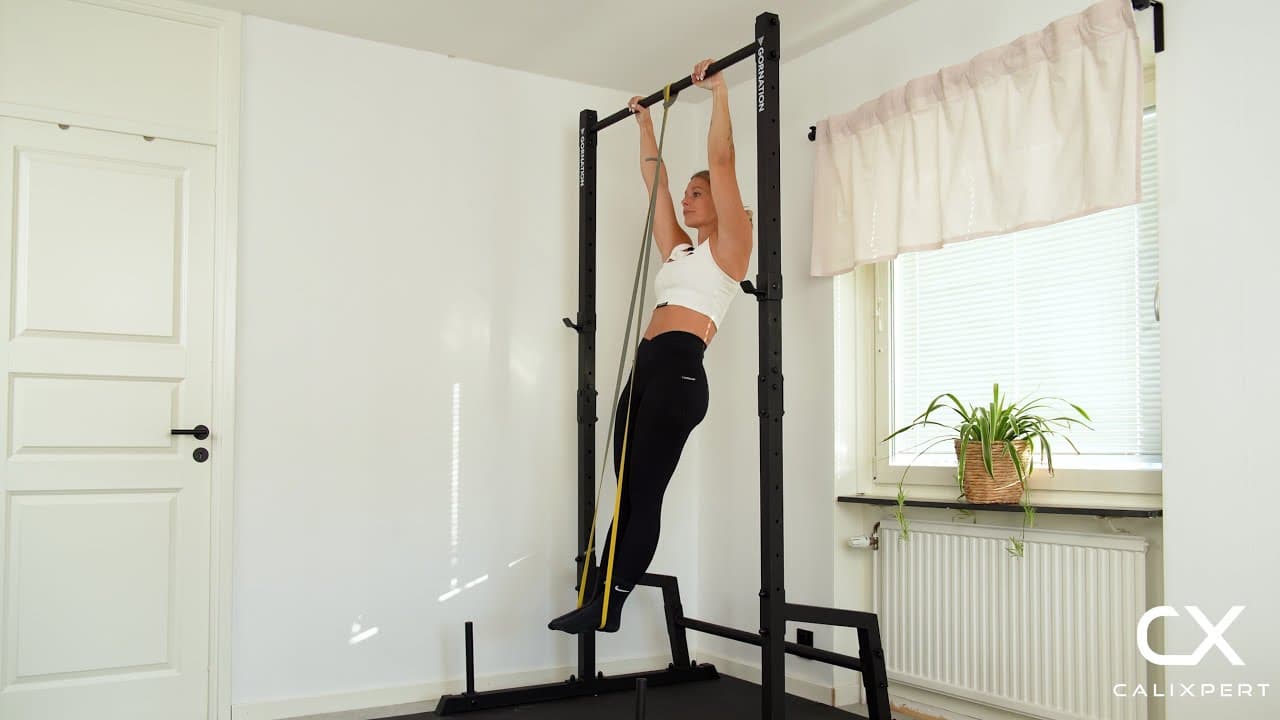
The Resistance Band Active Hang is an assisted scapular depression exercise that teaches you to engage the lats and lower traps while hanging from a bar with reduced bodyweight load. The band takes away enough weight to let you focus entirely on pulling the shoulder blades down and holding a stable hollow body position. This exercise is one of the most effective entry points for building the scapular control and shoulder stability required for pull-ups and all overhead calisthenics movements.
How to Do Resistance Band Active Hang
1. Attach the Band to the Bar
Loop a resistance band over the pull-up bar so it hangs down evenly. Choose a band thickness that removes enough weight to let you hold the active position for at least 10 seconds without losing form. A thicker band provides more assistance, so start heavier and progress to thinner bands over time.
Band secure before you step in
2. Step In and Set Your Grip
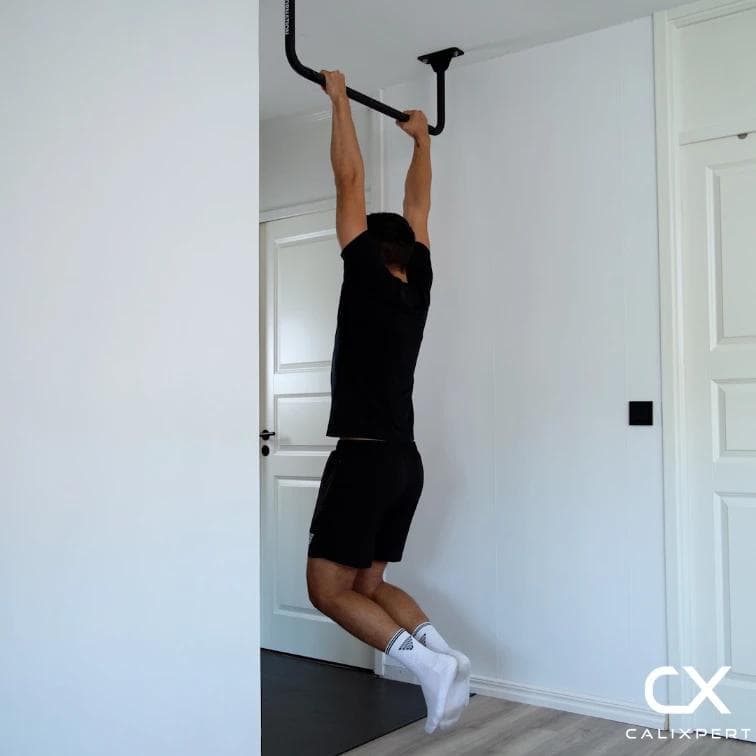
Place one or both feet into the bottom of the band loop. Grab the bar with a shoulder-width overhand grip and wrap your thumbs fully around the bar. Let your body settle into a full hang with arms completely extended. The band should be supporting part of your weight so you feel lighter than a normal hang.
Thumbs around the bar, arms fully extended
3. Engage the Hollow Body Position
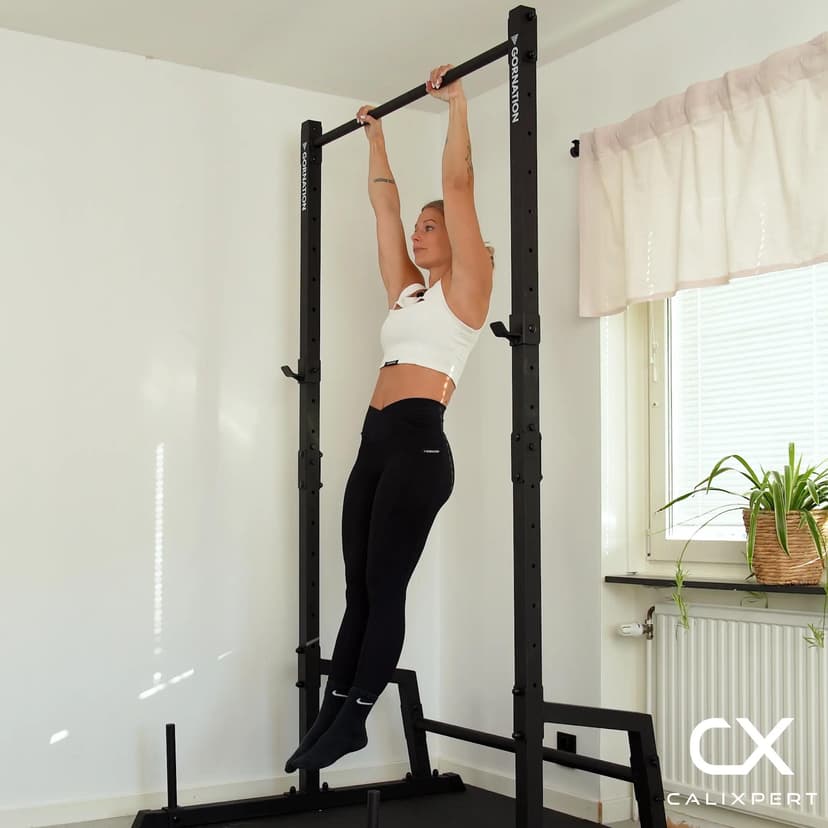
Before activating the scapula, brace your core and tilt your pelvis slightly under to create a mild hollow body shape. Your legs should be together and your ribs pulled down, not flared. This position prevents your lower back from arching and keeps the load on the correct muscles throughout the hold.
Ribs down, core tight
4. Depress the Scapula
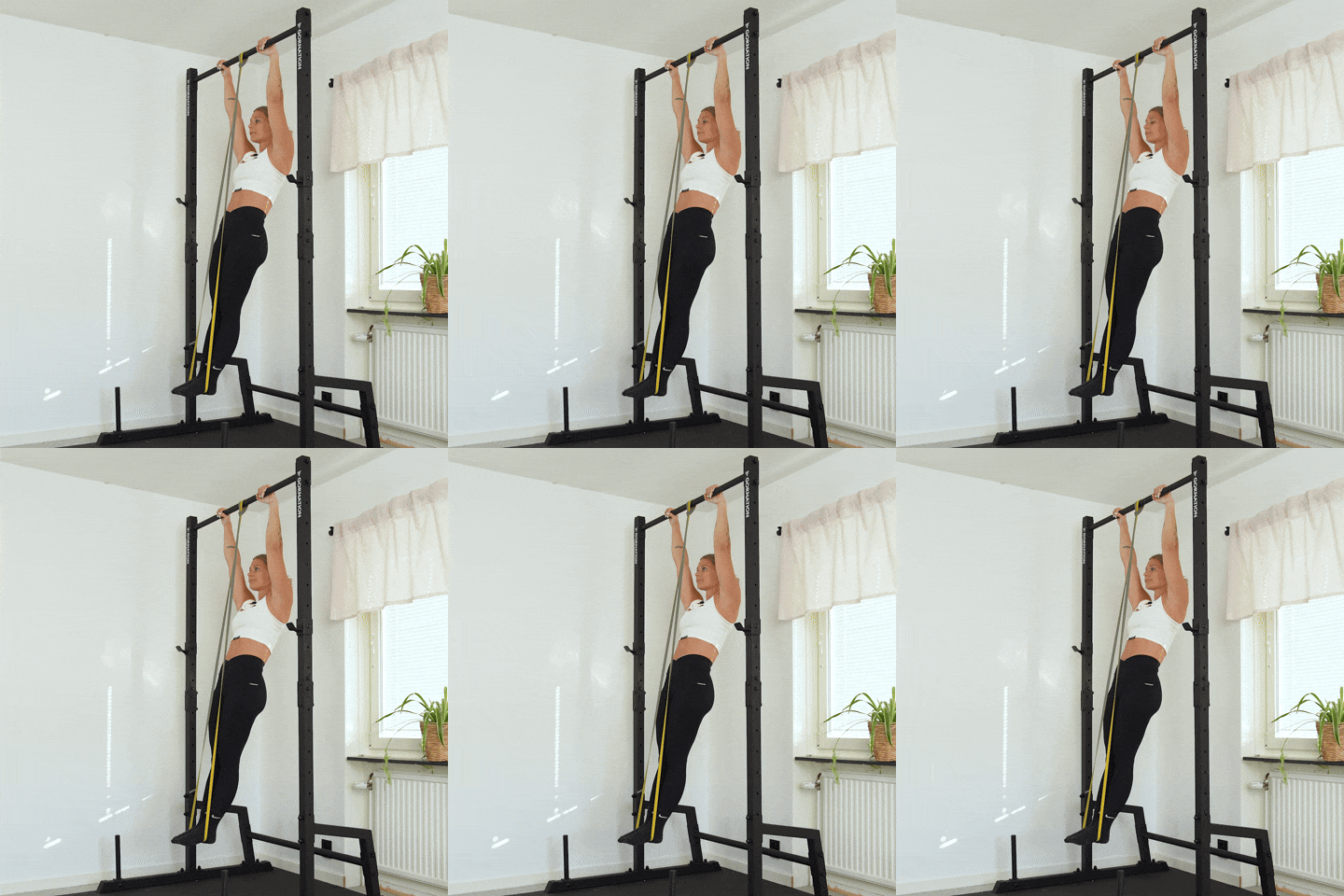
Without bending your elbows, pull your shoulder blades down toward your back pockets. You should feel your body rise slightly as the lats and lower traps engage. This is the active hang position. Your shoulders should move away from your ears while your arms stay straight.
Shoulders down, arms stay straight
5. Hold and Breathe
Maintain the depressed scapula and hollow body position for the target hold time. Breathe steadily through the hold without letting your shoulders creep back up toward your ears. If you lose scapular depression, reset by relaxing fully and pulling the shoulders back down before continuing.
Breathe, keep shoulders locked down
6. Release With Control
Slowly relax the scapular depression and let your shoulders rise back to the passive hang position. Step out of the band carefully and release the bar. Never drop suddenly from the active position, as the controlled release reinforces the same muscles used during the hold.
Slow release, do not drop
Most people rush past the active hang because it looks simple, but this is where you build the scapular control that makes everything else work. Focus on pulling the shoulders as far from your ears as possible and holding that position for time. If you cannot hold a clean active hang for 15 seconds, you are not ready for pull-ups, and no amount of kipping or momentum will fix that gap.
Muscles Worked During Resistance Band Active Hang
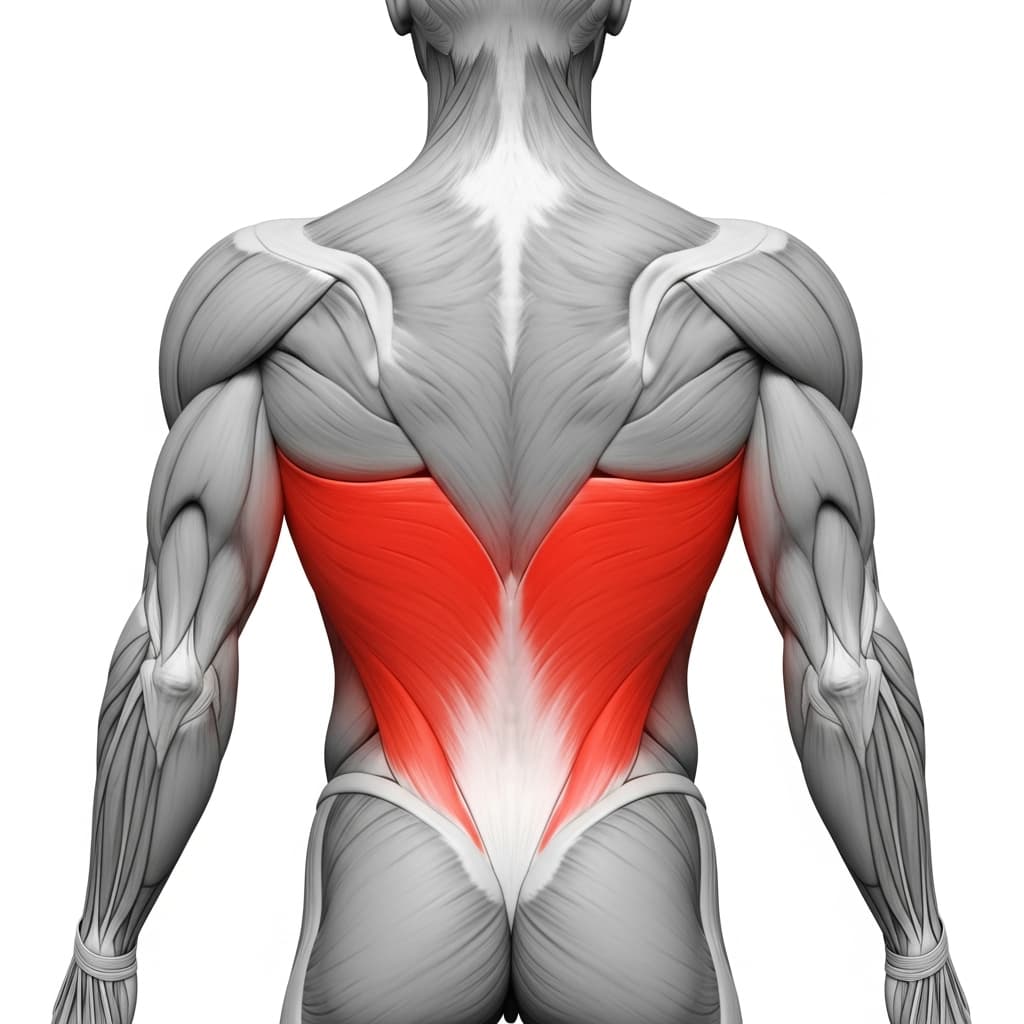
Primary Muscles:
Secondary Muscles:
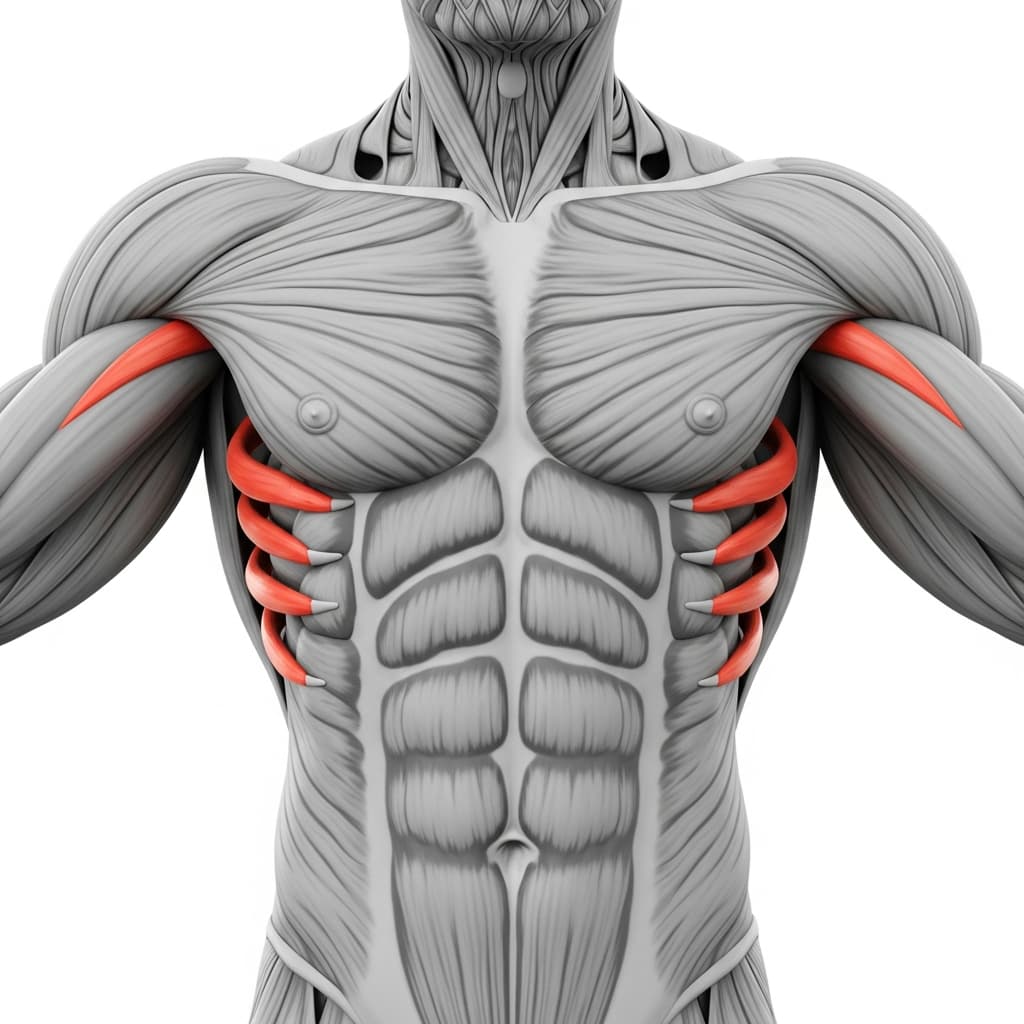
Primary Muscles
Latissimus Dorsi (Lats) - The lats drive scapular depression, pulling the shoulder blades downward and away from the ears to move the body from a passive hang into the active position.
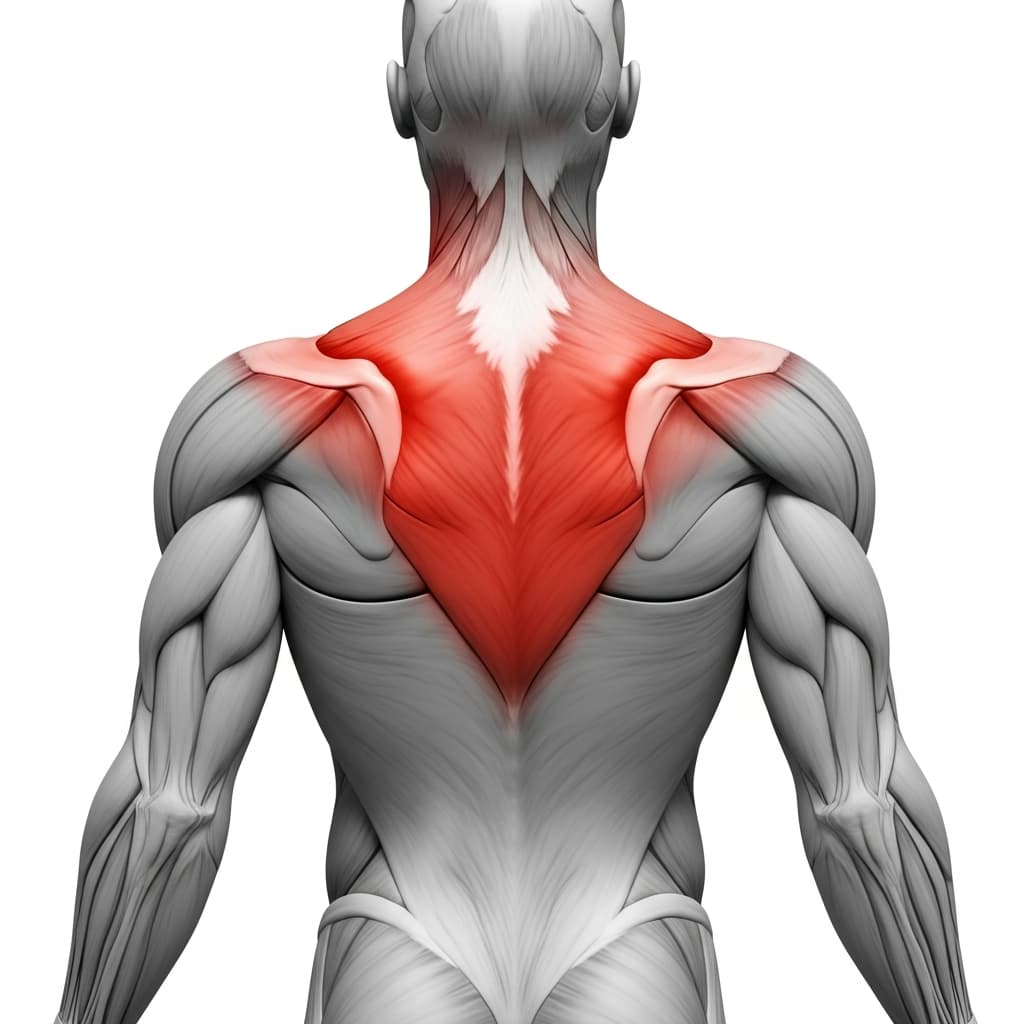
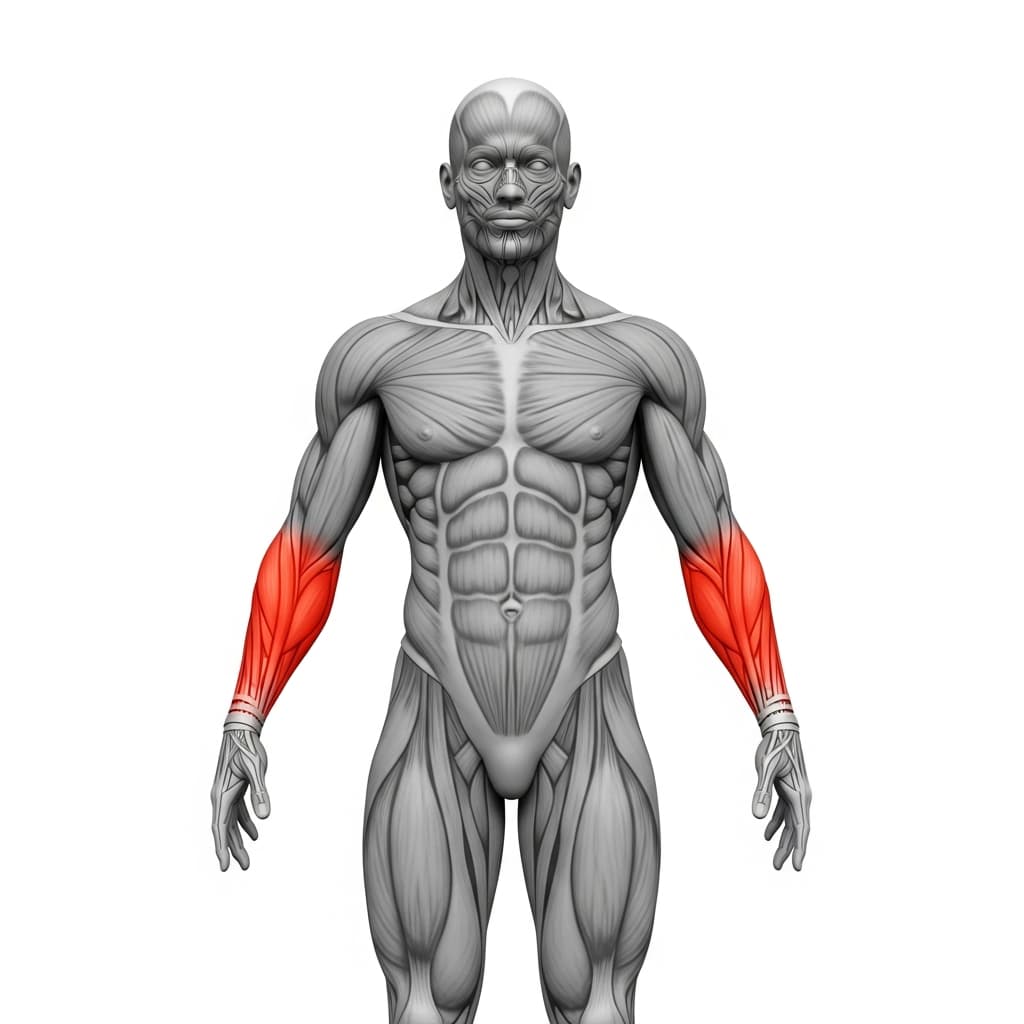
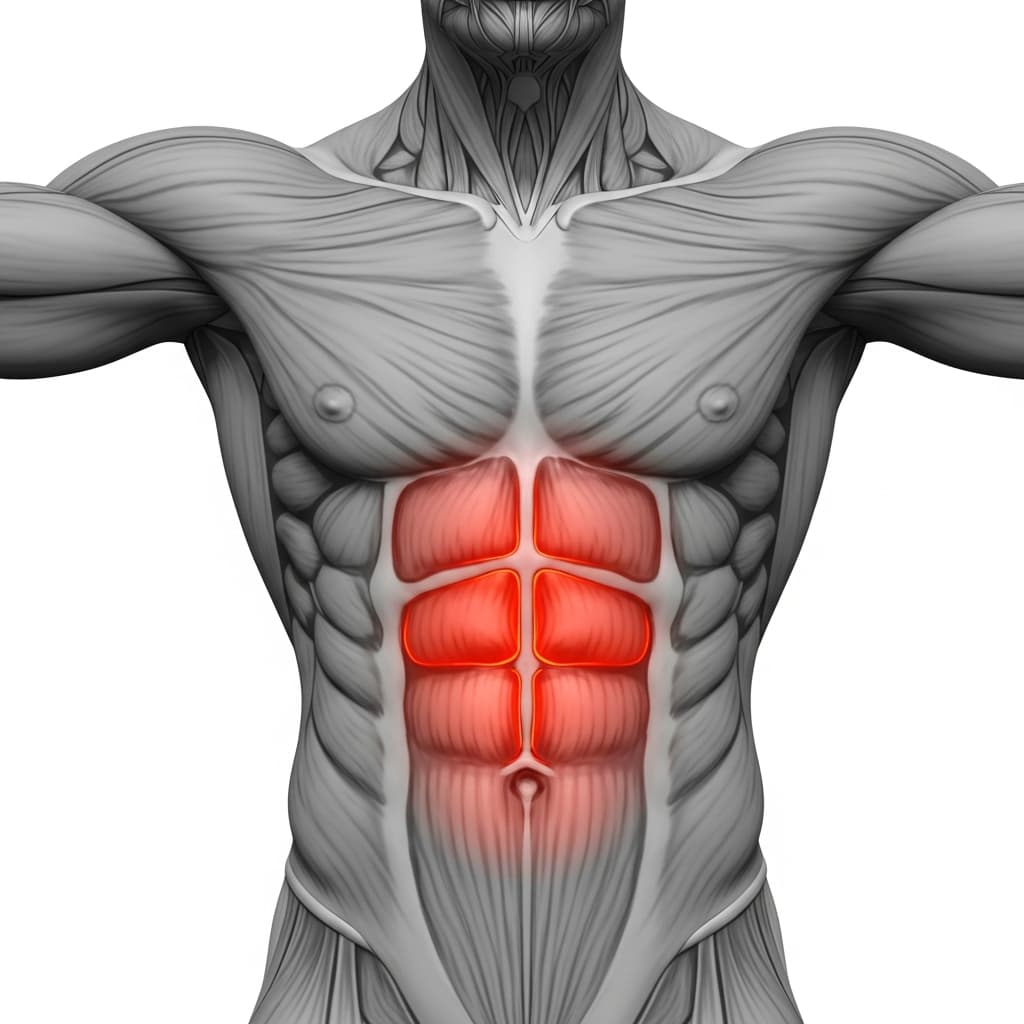
Secondary Muscles
Trapezius (Trapezius) - The lower fibers of the traps assist in pulling the scapula downward and stabilizing it in the depressed position throughout the hold.
Forearm Flexors & Extensors (Forearms) - The forearm flexors maintain grip on the bar under sustained load, keeping the hands locked in position for the duration of each hold.
Rectus Abdominis (Abs) - The abdominals brace the torso in a hollow body position, preventing the lower back from arching and keeping the pelvis tucked during the hang.
Serratus Anterior (Serratus Anterior) - The serratus anterior stabilizes the scapula against the ribcage during depression, preventing winging and ensuring clean overhead shoulder mechanics.
Benefits of Resistance Band Active Hang
- Teaches scapular depression under load, which is the foundational movement pattern for every pulling exercise in calisthenics
- Builds lat activation and control in the lengthened position where most beginners are weakest
- Develops grip strength and forearm endurance through sustained time under tension on the bar
- Strengthens the lower traps and serratus anterior, which stabilize the shoulder blade during overhead movements and reduce injury risk
Who Is This Exercise For?
You should be able to grip a pull-up bar for at least 10 seconds in a relaxed dead hang before adding scapular activation with a band. If holding the bar itself is a challenge, work on passive dead hangs and basic grip endurance first. Shoulder mobility should allow you to reach overhead without pain or significant restriction.
Common Mistakes to Avoid
Bending the elbows during scapular depression: Keep your arms completely straight throughout the entire movement. The moment you bend your elbows, the biceps take over and the lats disengage. Think about pulling the shoulders down, not pulling the body up.
Shrugging the shoulders instead of depressing them: The shoulders should move down and away from the ears, not up. If you feel tension in the upper traps and neck, you are shrugging. Reset and focus on driving the shoulder blades toward your back pockets.
Arching the lower back: Engage your core and hold a slight hollow body position before and during the scapular depression. An arched back shifts the load off the lats and places unnecessary stress on the lumbar spine.
Using a band that is too light: If you cannot hold the active position for at least 10 seconds with good form, the band is not providing enough assistance. Move to a thicker band and build hold time before progressing down.