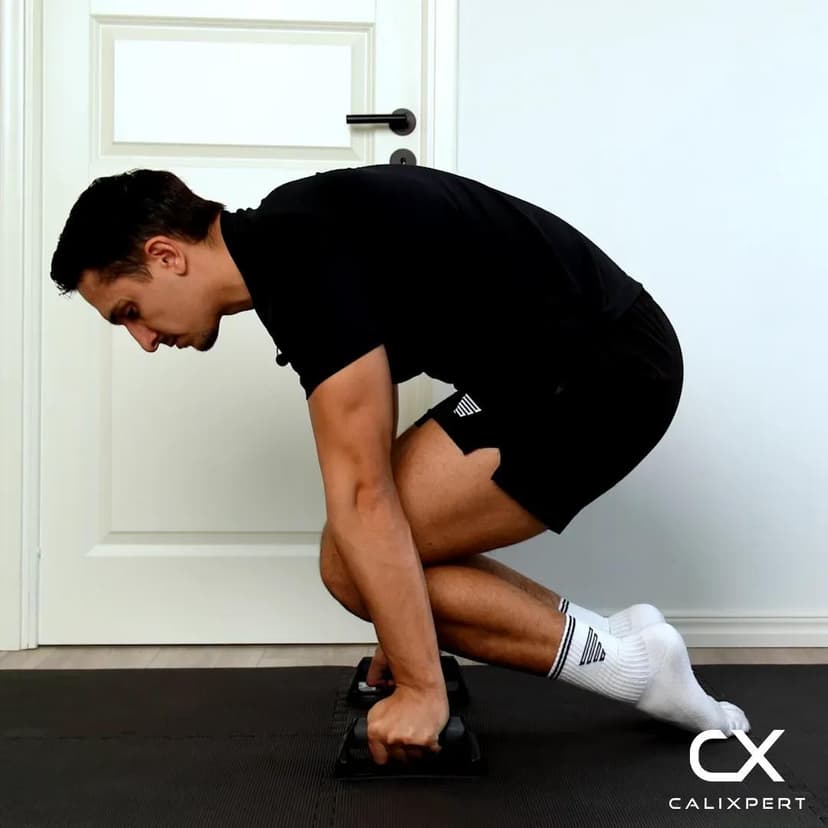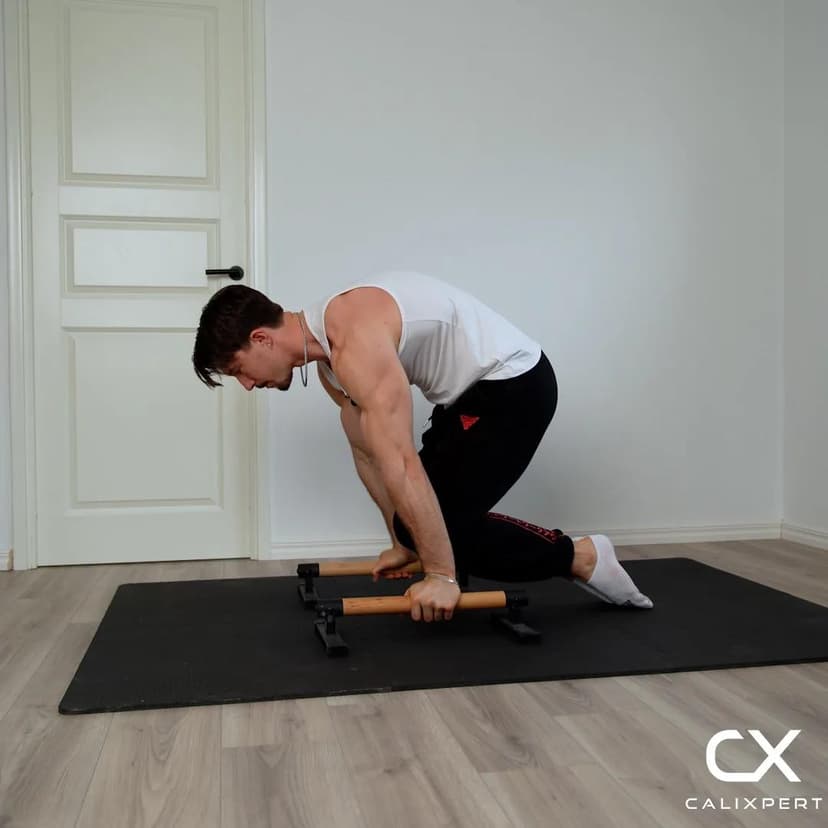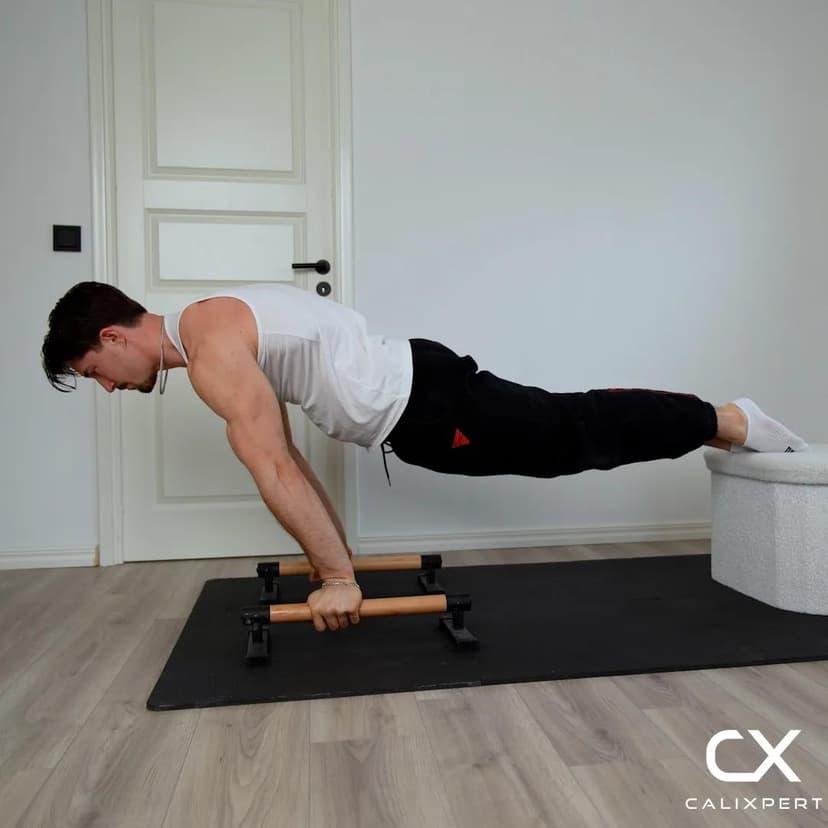
Mountain Climbers
Mountain climbers are a dynamic core exercise performed from a high plank position, targeting the abs, hip flexors, shoulders, and quads through rapid alternating knee drives. The movement demands constant core bracing to keep the hips level while each leg cycles forward and back, combining anti-extension stability with active hip flexion. Performed consistently, mountain climbers build core endurance and cardiovascular conditioning simultaneously, making them one of the most efficient bodyweight exercises for calisthenics training.
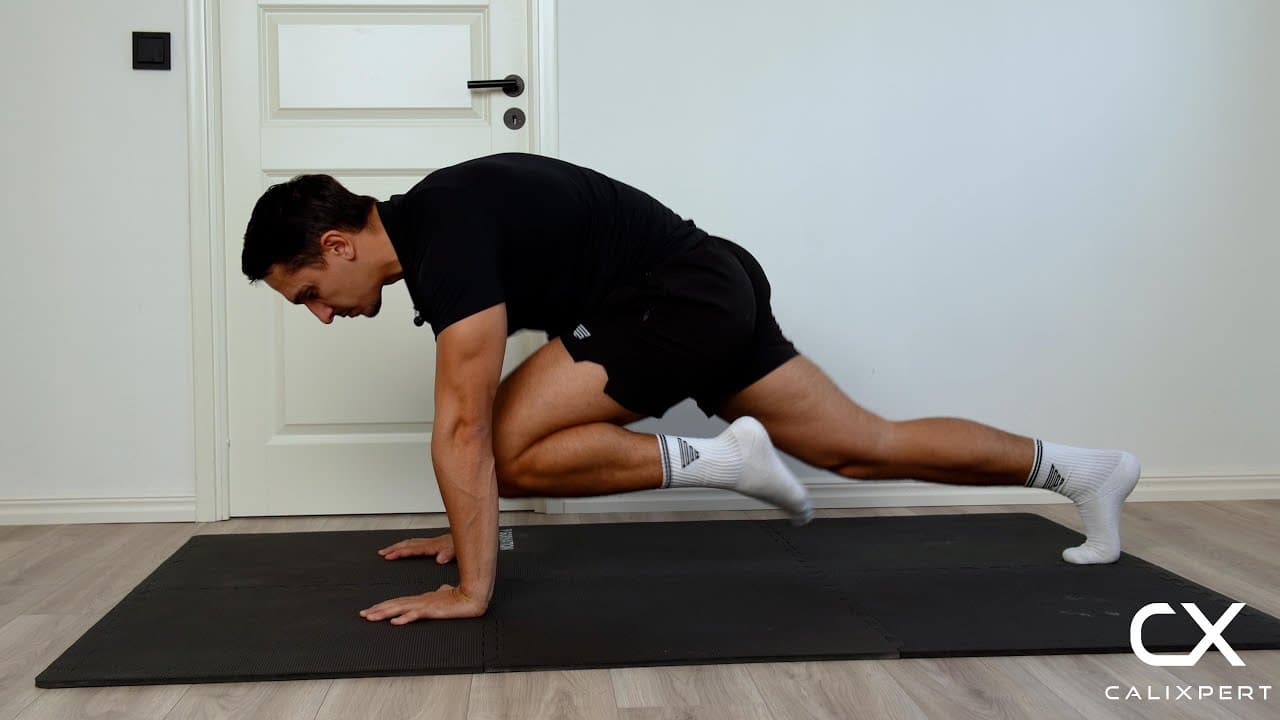
Mountain climbers are a dynamic core exercise performed from a high plank position, targeting the abs, hip flexors, shoulders, and quads through rapid alternating knee drives. The movement demands constant core bracing to keep the hips level while each leg cycles forward and back, combining anti-extension stability with active hip flexion. Performed consistently, mountain climbers build core endurance and cardiovascular conditioning simultaneously, making them one of the most efficient bodyweight exercises for calisthenics training.
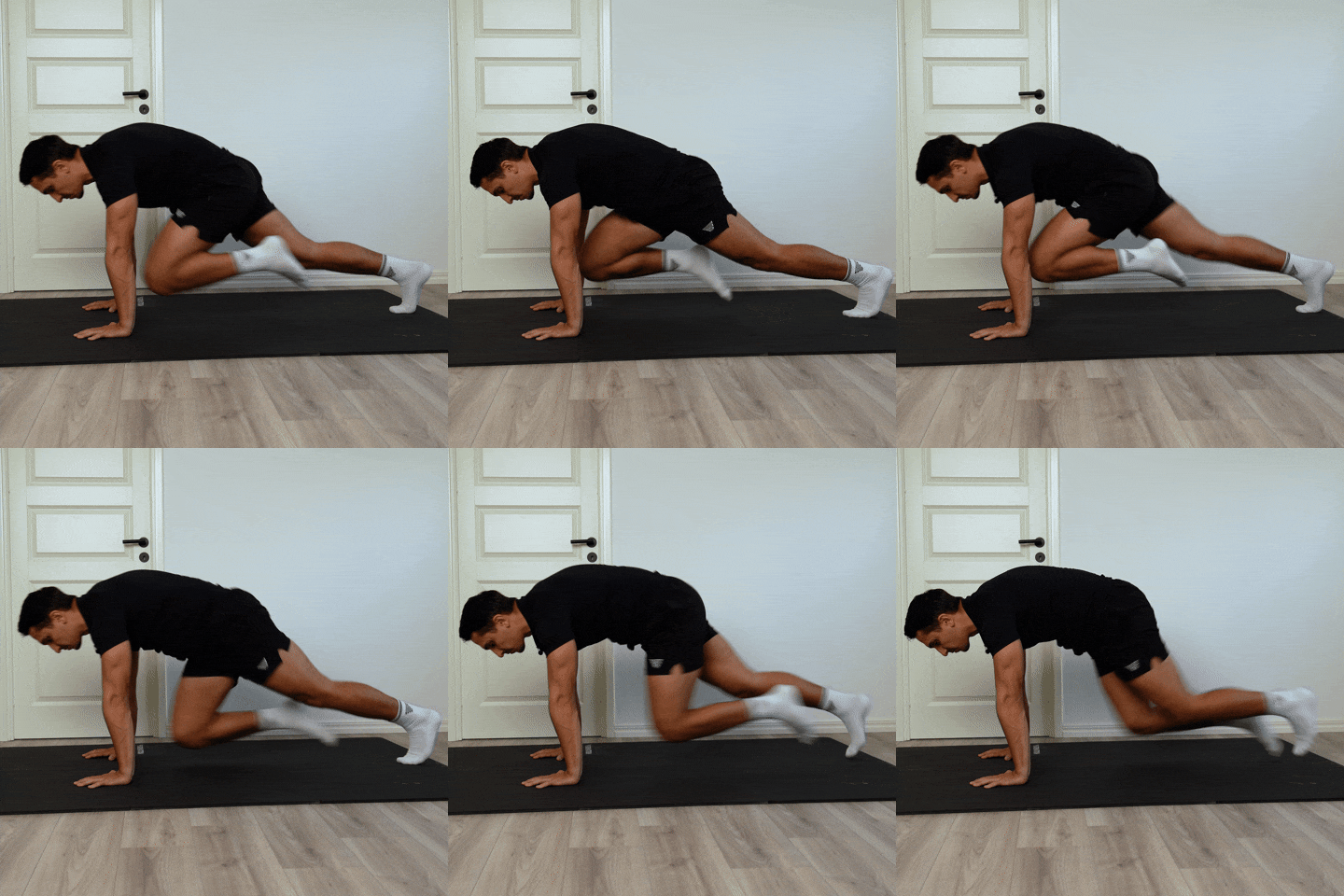
How to Do Mountain Climbers
1. Set Up in High Plank
Place your hands directly under your shoulders, slightly wider than shoulder width, with fingers spread and pressing firmly into the floor. Extend both legs behind you so your body forms a straight line from head to heels. Squeeze your glutes and brace your core as if someone were about to push you sideways.
Hands under shoulders, body in one line
2. Lock Your Hips Level
Before you begin the knee drives, check that your hips are not piked up or sagging toward the floor. Your pelvis should stay at the same height as your shoulders throughout the entire set. Think about pressing the floor away with your hands to keep your upper back engaged and your shoulder blades stable.
Hips stay at shoulder height
3. Drive One Knee Forward
Lift one foot off the floor and drive your knee toward your chest in a controlled motion. Keep your toes off the ground as the knee comes forward and maintain full tension through your core. Your shoulders should stay stacked over your wrists without shifting forward or backward.
Knee to chest, shoulders stay stacked
4. Switch Legs Smoothly
As you extend the bent leg back to the starting position, simultaneously pull the opposite knee toward your chest. The transition should be smooth and continuous, not a stomp or a hop. Focus on keeping each switch controlled rather than bouncing off the floor.
Switch legs, never bounce
5. Control Your Tempo
Start with a slow, deliberate tempo to build the movement pattern and core engagement. Once your form is solid at a slow pace, increase the speed to raise the cardiovascular demand. A faster tempo makes the exercise harder, but a slow tempo with full control can be equally challenging for core strength.
Earn speed with clean form first
6. Finish With Both Feet Back
Complete your set by returning both feet to the starting plank position. Hold the plank for one second with your core braced before dropping your knees or standing up. This ensures you finish the set with the same quality you started with.
End in a solid plank, not a collapse
Most people lose mountain climbers at the hips. The moment your hips start bouncing up and down, your core checks out and you are just moving your legs. Lock your pelvis at one height and keep it there for the entire set. If you cannot maintain flat hips at a fast pace, slow down until you can, because a slow mountain climber with a stable plank is ten times more effective than a fast one with a swinging back.
Muscles Worked During Mountain Climbers
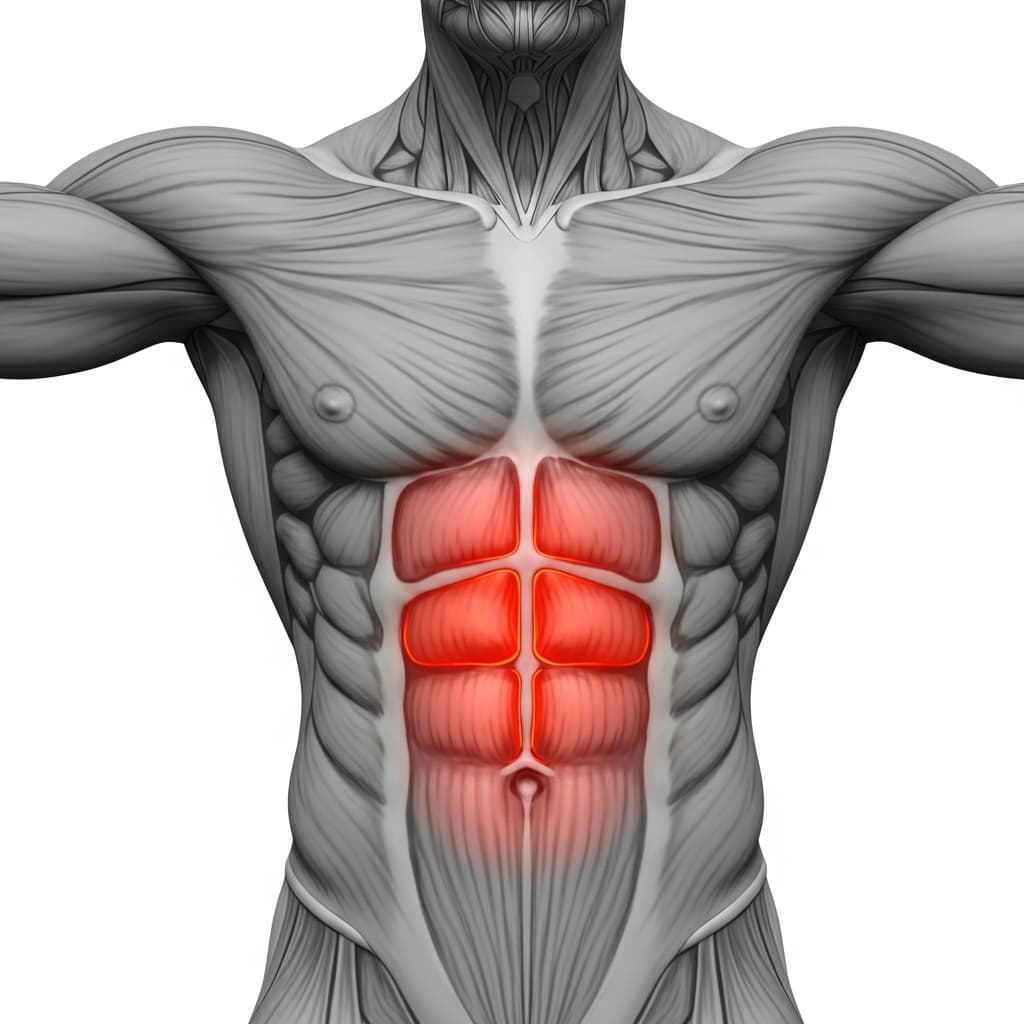
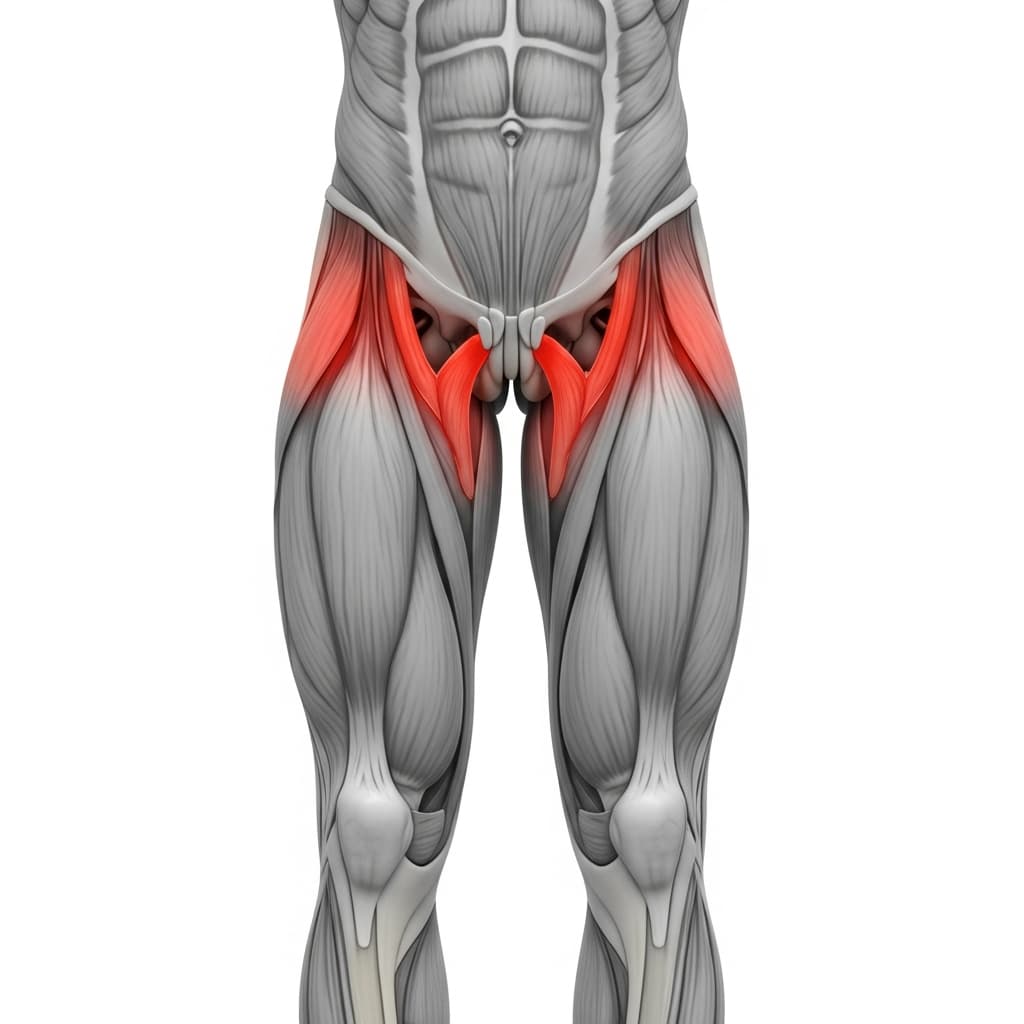
Primary Muscles:
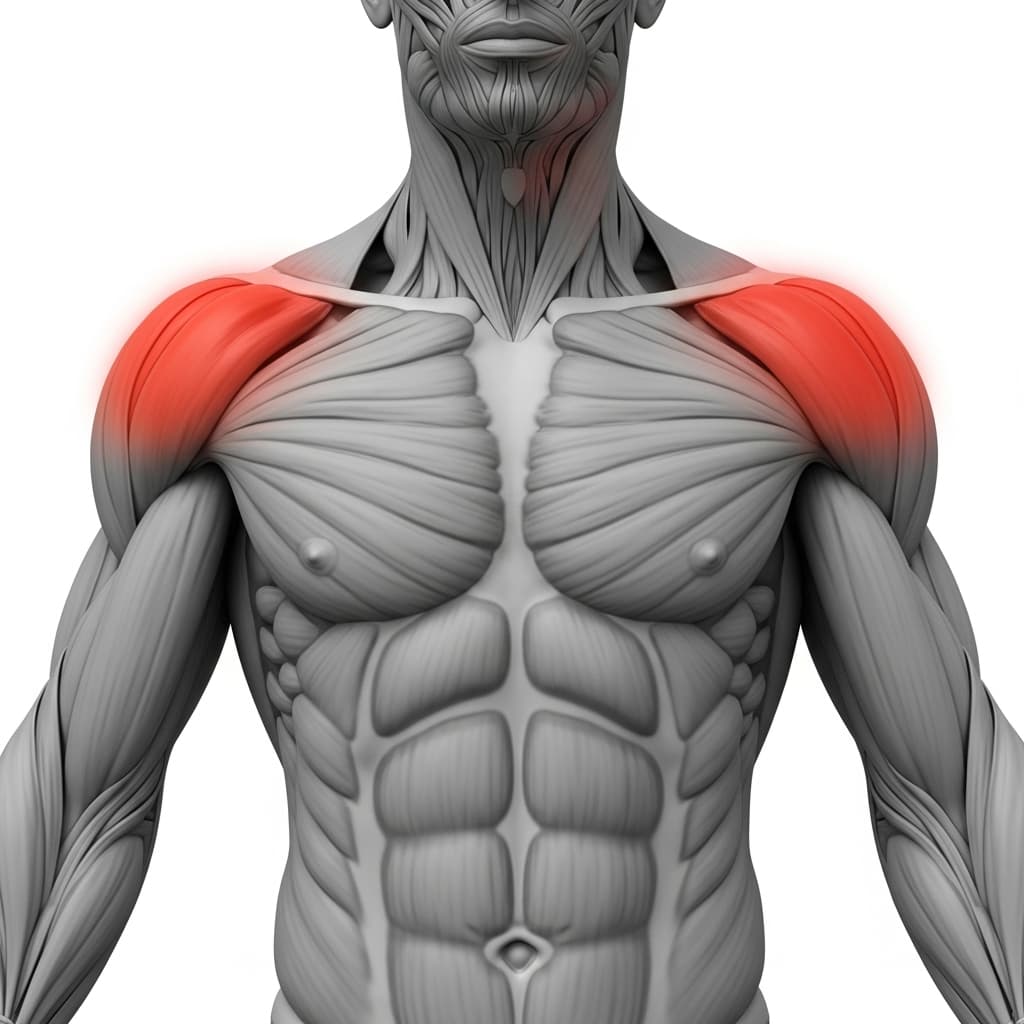
Secondary Muscles:
Primary Muscles
Rectus Abdominis (Abs) - The rectus abdominis and deep core muscles brace isometrically throughout every rep to resist lower back extension and keep the pelvis level as each leg cycles forward and back.
Iliopsoas (Hip Flexors) - The iliopsoas and rectus femoris contract to drive the knee toward the chest on each rep, providing the primary movement force of the exercise.
Secondary Muscles
Anterior Deltoid (Front Deltoid) - The anterior deltoids stabilize the shoulder joint under sustained bodyweight load, keeping the upper body locked in the plank position while the legs move.
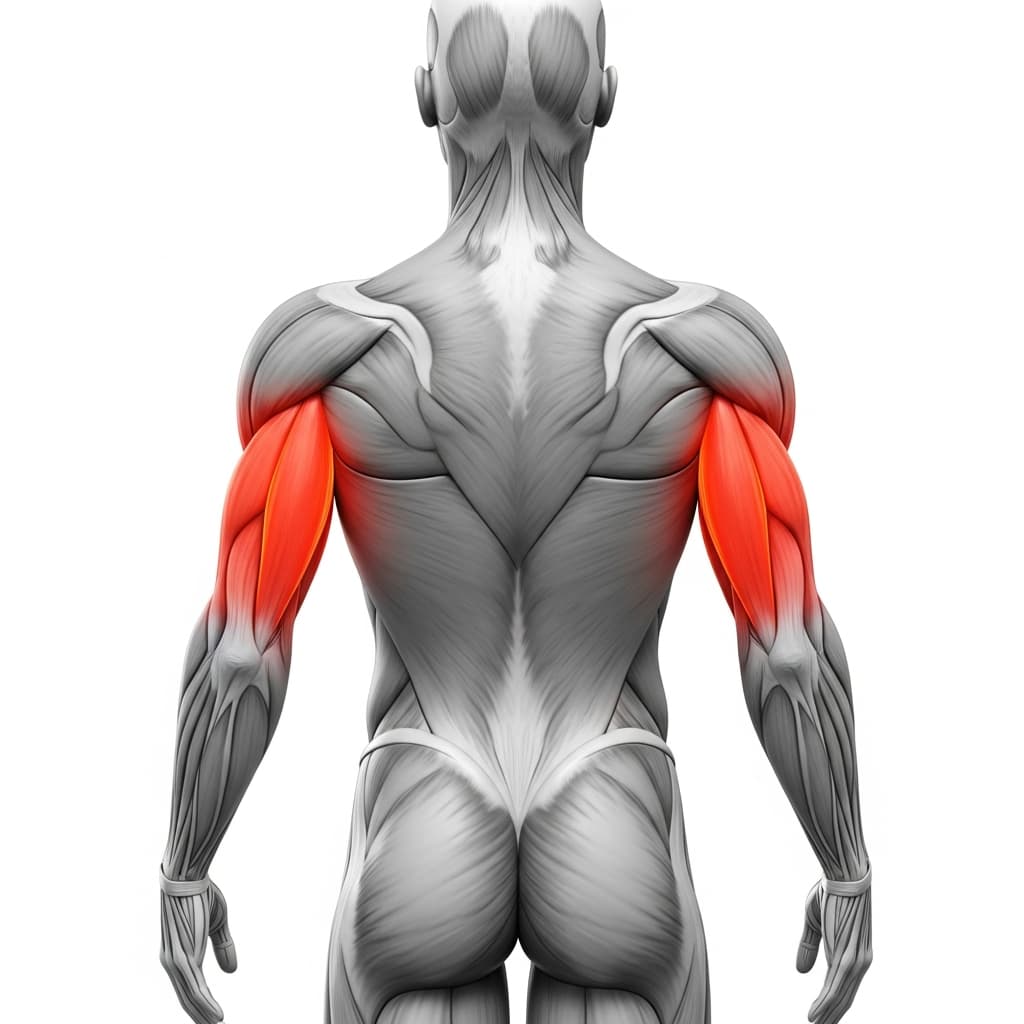
Triceps Brachii (Triceps) - The triceps maintain elbow extension to keep the arms straight and support the upper body in the high plank throughout the set.
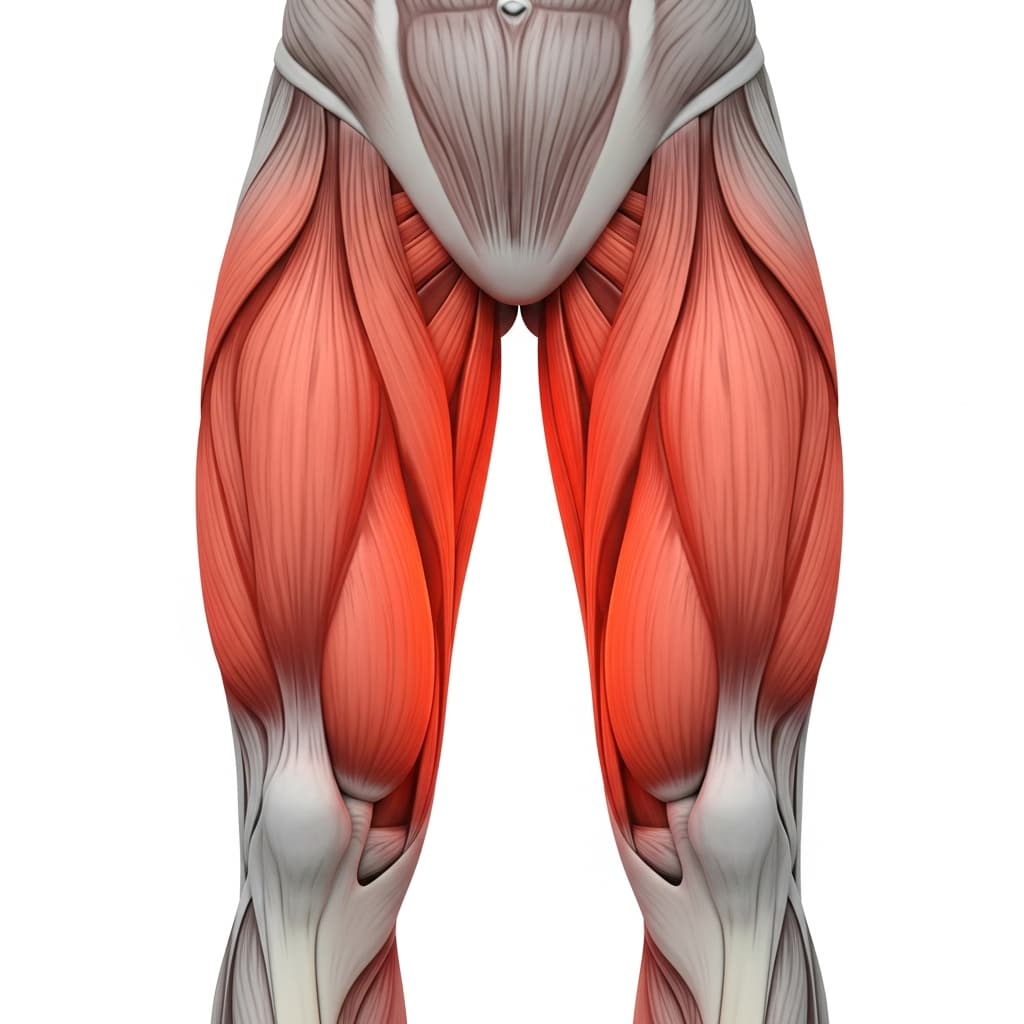
Quadriceps (Quads) - The quadriceps extend the knee as each leg returns to the starting position and assist the hip flexors in driving the knee forward.
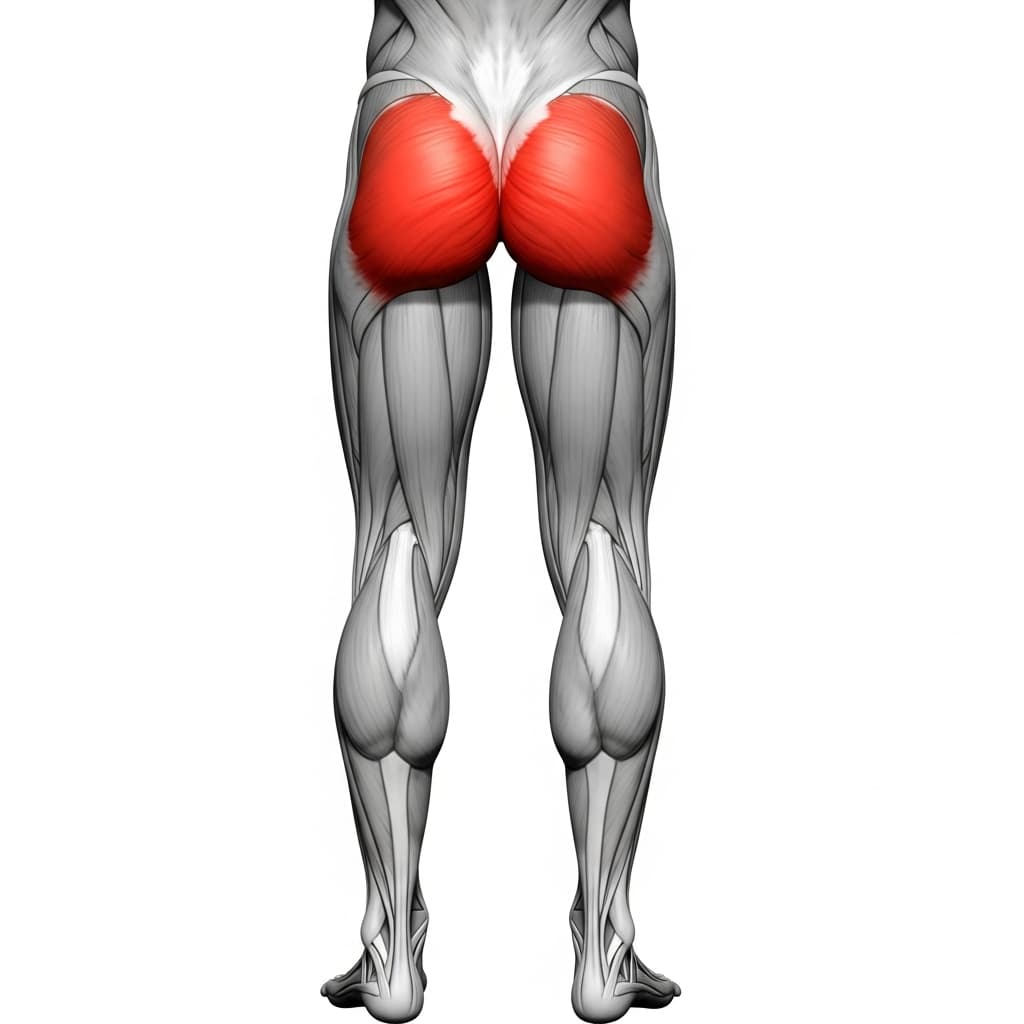
Gluteus Maximus (Glutes) - The glutes fire to extend the hip as each leg pushes back to the plank position and help stabilize the pelvis against rotational forces during leg switches.
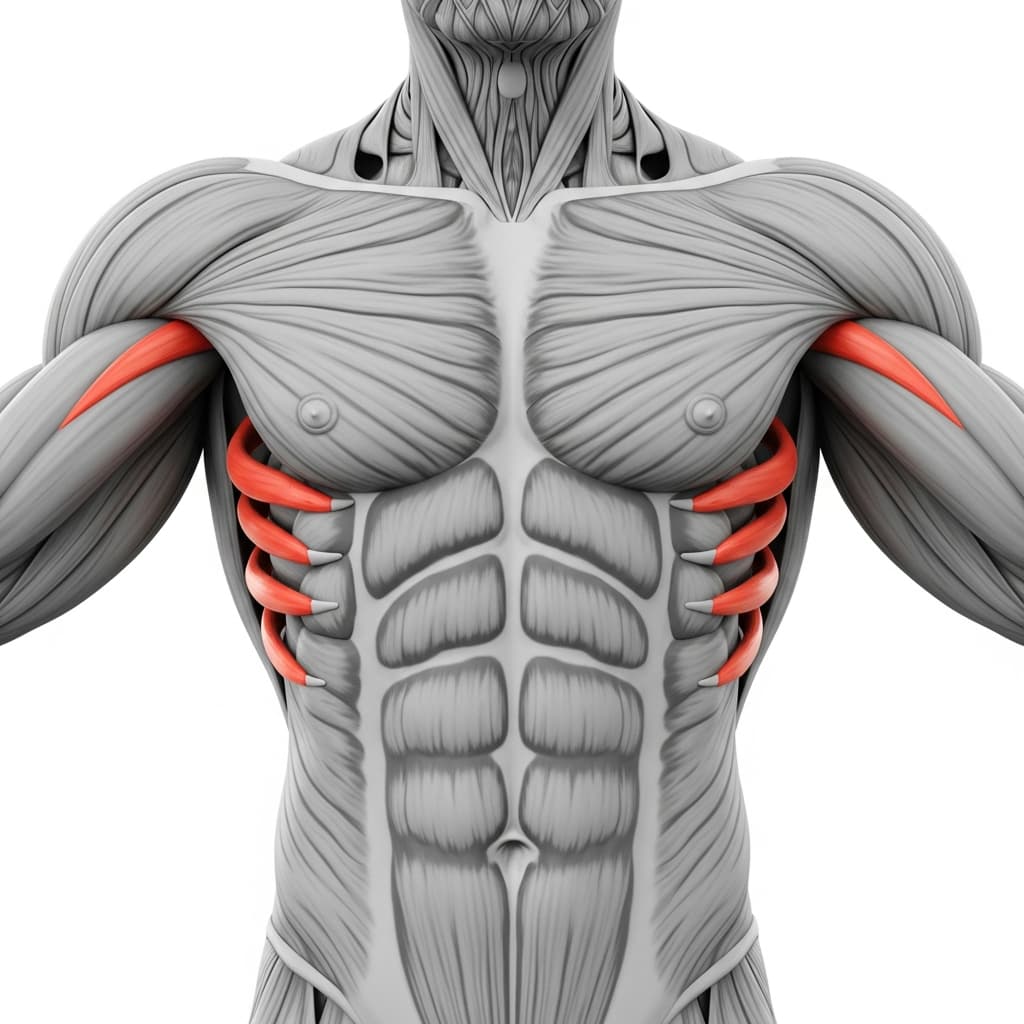
Serratus Anterior (Serratus Anterior) - The serratus anterior protracts and stabilizes the scapulae against the ribcage, preventing the shoulder blades from winging under the sustained plank load.
Benefits of Mountain Climbers
- Builds anti-extension core endurance, training the abs to resist lower back collapse under dynamic movement and fatigue
- Elevates heart rate rapidly without equipment, delivering cardiovascular conditioning alongside strength work in a single exercise
- Strengthens the hip flexors through a loaded, full range of motion that transfers directly to exercises like L-sits and hanging leg raises
- Develops isometric shoulder stability under bodyweight load, reinforcing the same plank position used in push-ups, planches, and handstands
- Trains coordination between upper and lower body, building the motor control needed for more complex calisthenics movements
Who Is This Exercise For?
You should be able to hold a high plank with a flat back and engaged core for at least 30 seconds before adding the knee drive. If your hips sag or your lower back rounds during a basic plank hold, work on plank endurance and glute activation first. Mountain climbers demand shoulder stability under load, so a solid push-up top position is the minimum entry point.
Common Mistakes to Avoid
Hips rising into a pike: When the hips creep up, the core disengages and the exercise turns into a hip flexor shuffle. Actively press the floor away with your hands and squeeze your glutes to keep your pelvis in line with your shoulders.
Lower back sagging toward the floor: A sagging lower back puts compressive stress on the lumbar spine and means your core is not bracing properly. Tighten your abs as if bracing for contact and tuck your pelvis slightly to flatten your lower back.
Bouncing feet off the floor: Slamming or bouncing the feet reduces time under tension and shifts load away from the core. Keep your toes light and focus on the knee drive itself, not the foot landing.
Shoulders drifting ahead of wrists: When the shoulders creep forward past the hands, the load shifts into the anterior deltoids and the core contribution drops. Check that your wrists stay directly below your shoulders on every rep.
Variations & Progressions
Slow Mountain Climbers
Perform the same knee drive but at a slow, deliberate pace with a two-second hold at the top of each rep. The reduced speed allows you to focus entirely on core bracing and hip alignment without the cardiovascular demand.
Cross-Body Mountain Climbers
Drive each knee toward the opposite elbow instead of straight ahead, adding a rotational demand on the obliques. This variation increases anti-rotation core work and requires more hip mobility through each rep.
Sliding Mountain Climbers
Place a towel or slider under each foot on a smooth floor so the feet glide instead of stepping. The constant friction and lack of ground contact forces the core to work harder to stabilize the pelvis throughout the entire set.