Assisted Hanging L-sit Hold
The Assisted Hanging L-sit Hold is a core compression exercise performed while hanging from a bar with a resistance band supporting your feet, targeting the abs, hip flexors, lats, and forearms through an isometric hold. The band reduces the load on the hip flexors and core just enough to let you train the correct body position without collapsing out of the hold. Building time in this position develops the compression strength and shoulder stability that directly transfer to full hanging L-sits and front lever progressions.
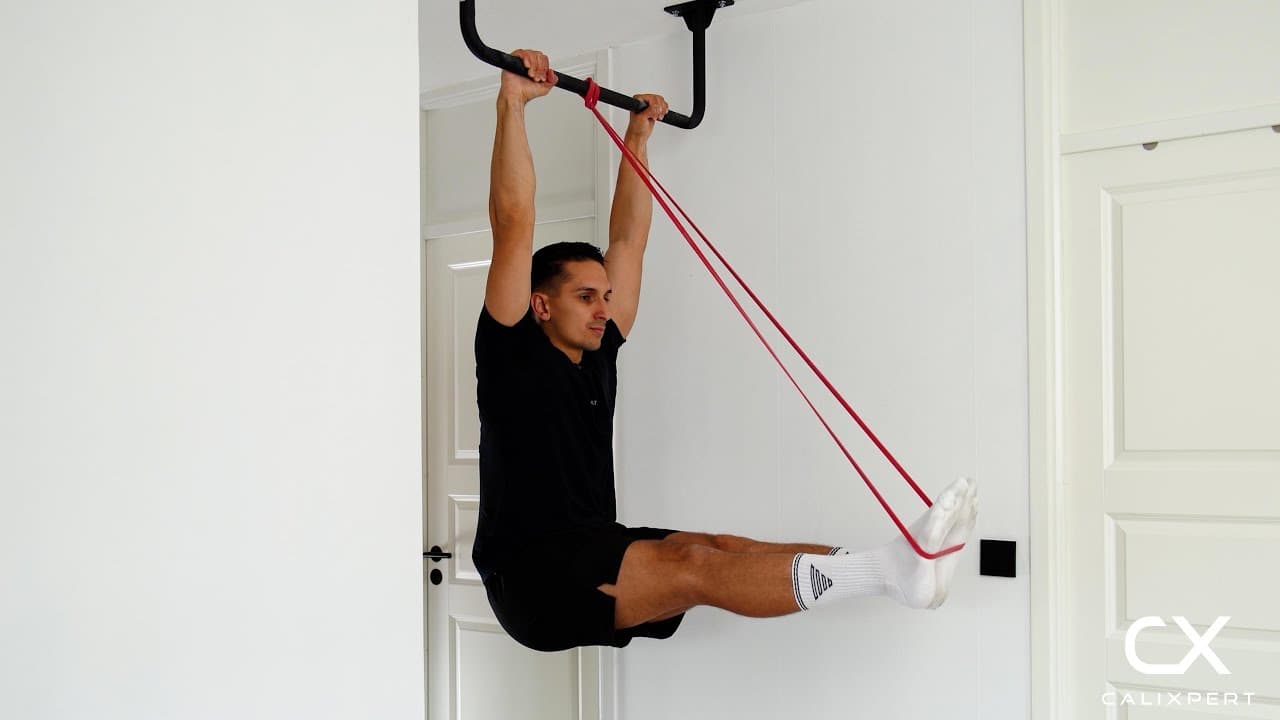
The Assisted Hanging L-sit Hold is a core compression exercise performed while hanging from a bar with a resistance band supporting your feet, targeting the abs, hip flexors, lats, and forearms through an isometric hold. The band reduces the load on the hip flexors and core just enough to let you train the correct body position without collapsing out of the hold. Building time in this position develops the compression strength and shoulder stability that directly transfer to full hanging L-sits and front lever progressions.
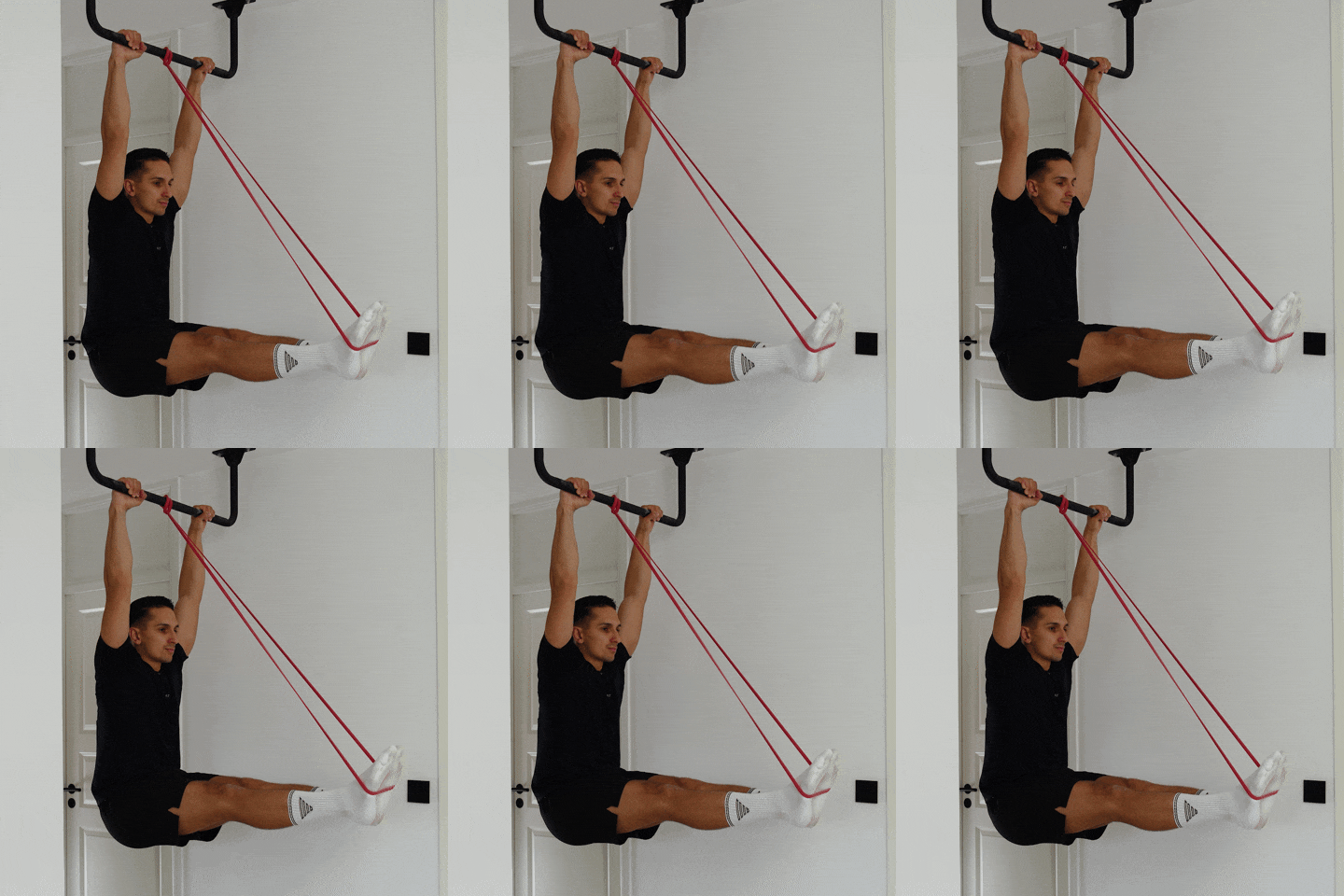
How to Do Assisted Hanging L-sit Hold
1. Attach the Band to the Bar
Loop a resistance band over a high straight bar by pulling one end through the other to create a secure anchor. The band should hang down with enough length for you to step into it with both feet. Choose a band thickness that provides meaningful support without making the hold effortless.
Loop it tight, no slack at the top
2. Step In and Set Your Grip
Pull the band down and step into it with both feet before grabbing the bar. Grip the bar with palms facing forward at shoulder width, wrapping your thumbs fully around. This order prevents you from struggling to get your feet into the band while already hanging.
Feet in the band first, then grip
3. Engage Your Scapula in the Hang
Once hanging, pull your shoulder blades down and slightly back to create an active hang. This scapular depression keeps the shoulders in a safe, stable position and prevents passive loading on the joint. Do not begin lifting your legs until your shoulders are fully set.
Shoulders down and locked before you lift
4. Compress and Lift Your Legs
Bring your legs up by compressing through the core and hip flexors, not by pushing the feet forward. Think about shortening the distance between your ribs and your hips as you raise your legs to horizontal. Keep both legs straight with toes pointed and pressed together throughout the lift.
Compress up, do not push forward
5. Hold the L-sit Position
Maintain your legs at roughly 90 degrees to your torso with continuous core tension. Keep breathing steadily through the hold and resist the urge to let your legs drift downward. Your shoulders should remain actively depressed the entire time, not creeping up toward your ears.
Legs locked, shoulders down, keep breathing
6. Lower With Control
When the hold is complete, slowly lower your legs back to a full dead hang rather than dropping them. Reset your scapular engagement and posture before beginning the next rep. This controlled descent reinforces core stability and prevents swinging between holds.
Slow descent, full reset before the next rep
Most people fail this exercise at the hip flexors, not the abs. If your legs keep dropping after a few seconds, the fix is not more ab work. It is floor compression drills where you sit with straight legs and try to lift your heels off the ground using only your hip flexors. Build that strength on the floor first, and the hanging version becomes a completely different exercise.
Muscles Worked During Assisted Hanging L-sit Hold
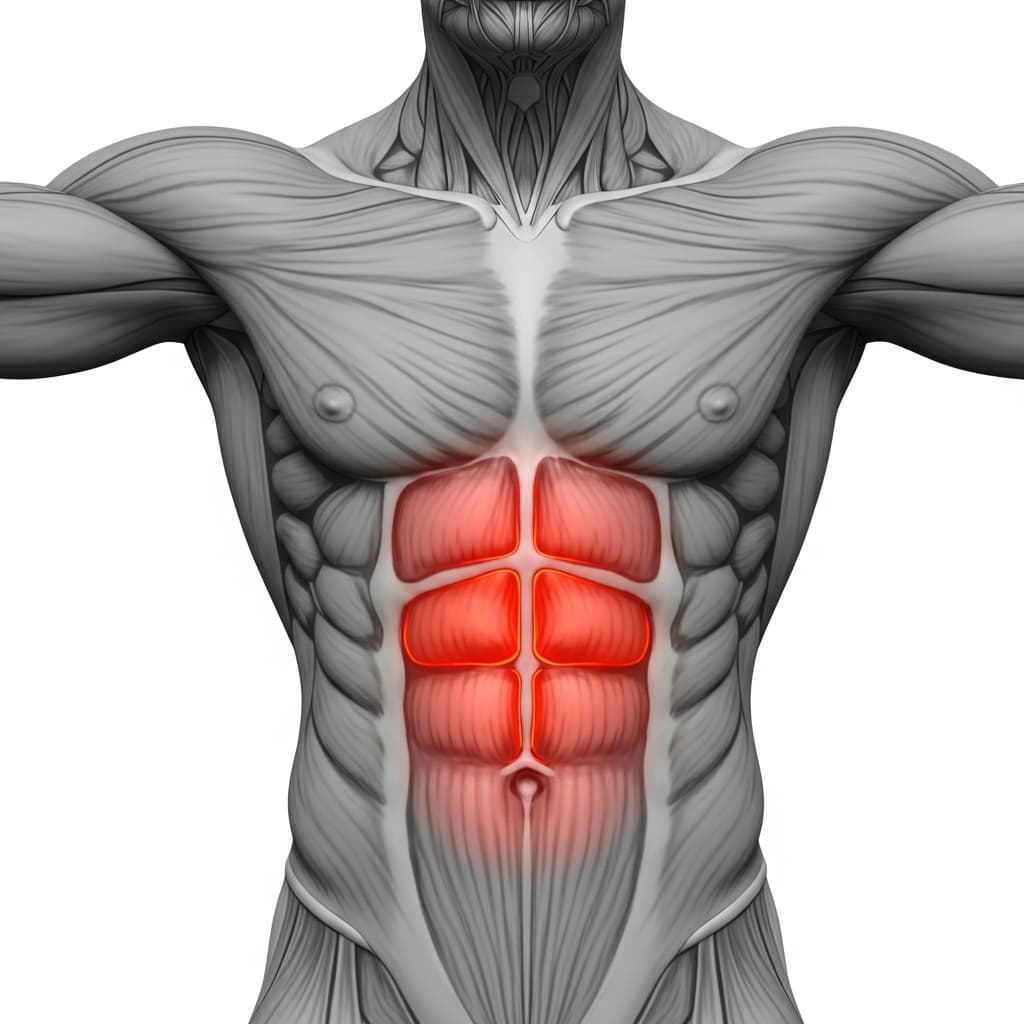
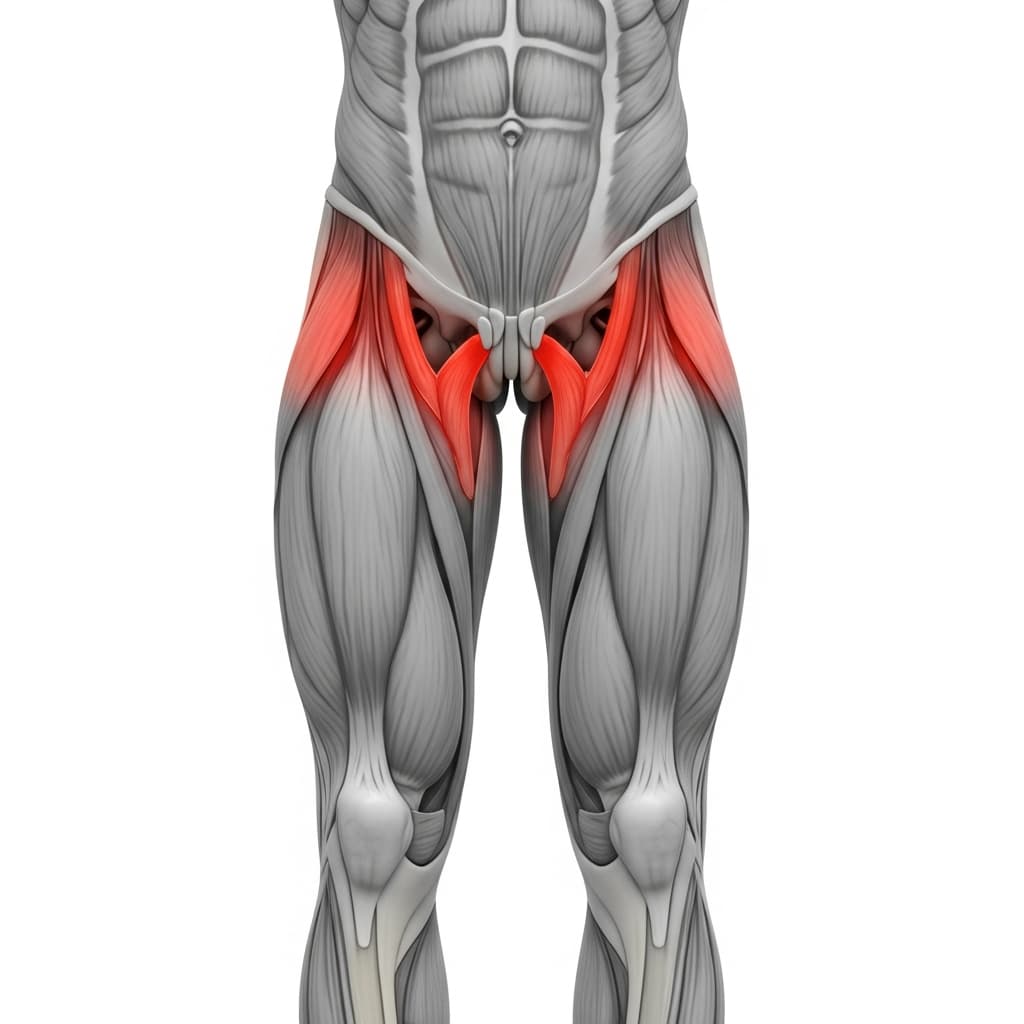
Primary Muscles:
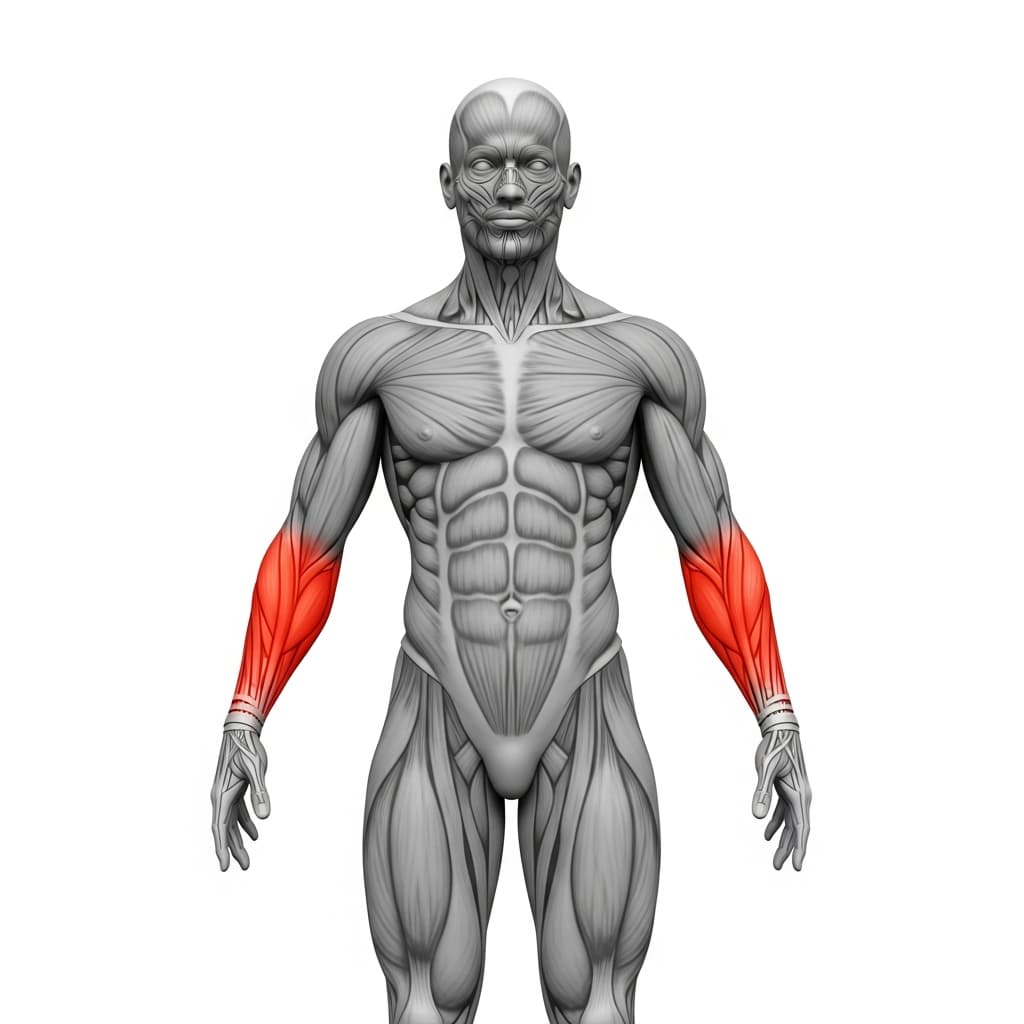
Secondary Muscles:
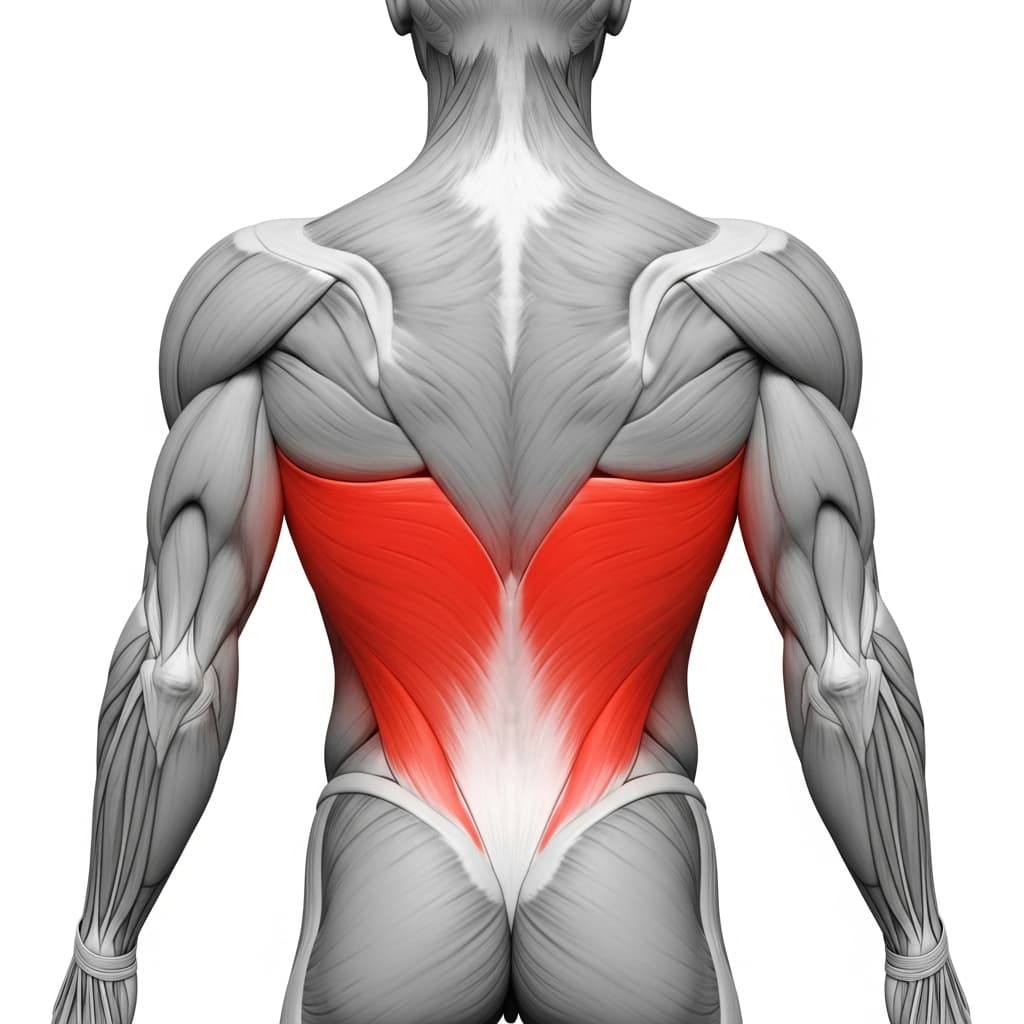
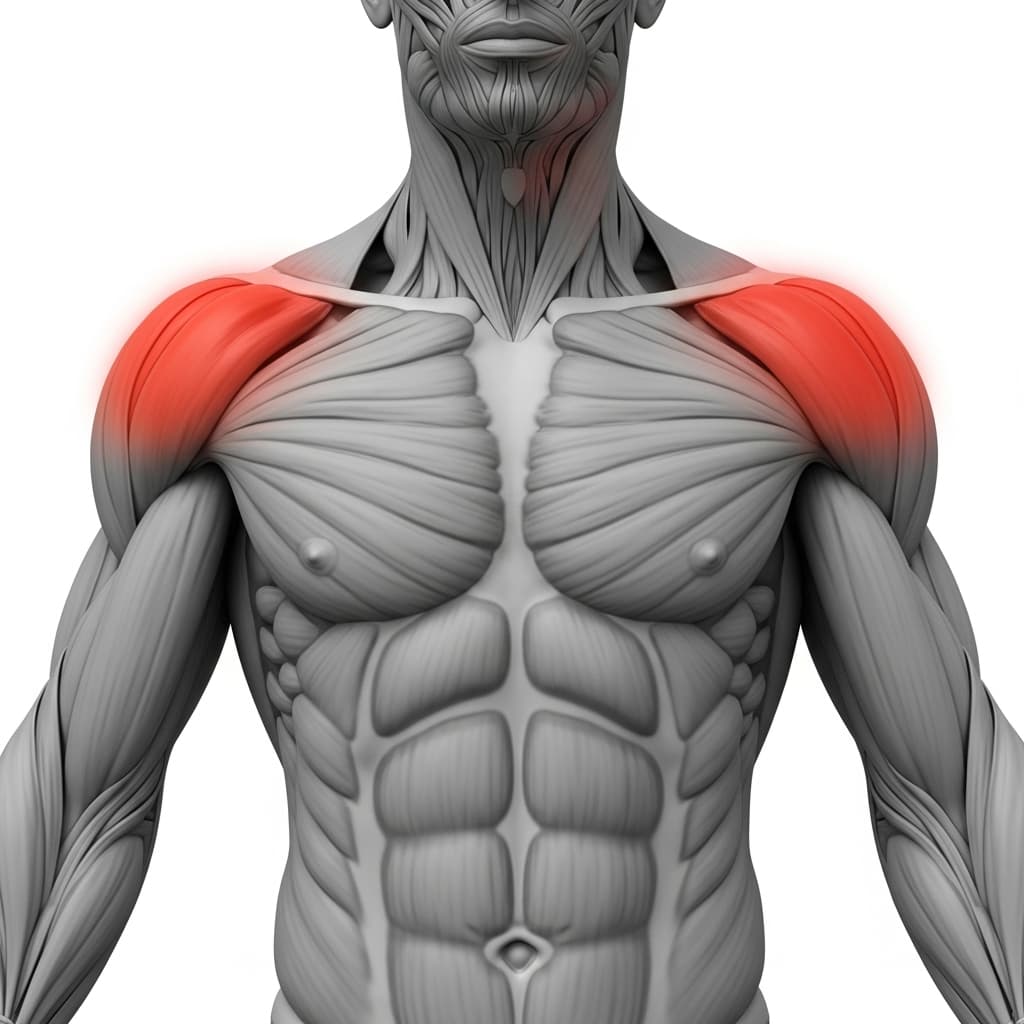
Primary Muscles
Rectus Abdominis (Abs) - The rectus abdominis maintains the rigid trunk position by resisting extension and keeping the torso from arching backward under the weight of the legs.
Iliopsoas (Hip Flexors) - The hip flexors, primarily the iliopsoas, hold the legs at 90 degrees to the torso throughout the isometric hold, bearing the majority of the sustained load.
Secondary Muscles
Forearm Flexors & Extensors (Forearms) - The forearm flexors maintain grip on the bar for the entire duration of the hold, working under increasing fatigue as hold times extend.
Latissimus Dorsi (Lats) - The lats depress and stabilize the scapula during the hang, preventing the shoulders from shrugging up and keeping the torso in a controlled position.
Anterior Deltoid (Front Deltoid) - The anterior deltoids stabilize the shoulder joint in the overhead hanging position while the core works to hold the legs in place.
Benefits of Assisted Hanging L-sit Hold
- Develops the core compression strength required for L-sits, front levers, and other straight-arm calisthenics skills
- Builds hip flexor endurance under sustained isometric load, which is the limiting factor in most hanging leg work
- Strengthens grip and forearm endurance through extended hanging time under core-loaded conditions
- Trains scapular depression and lat engagement in a hanging position, reinforcing healthy shoulder mechanics for all bar work
- Allows progressive overload by gradually reducing band thickness as strength improves, creating a clear path to the full hanging L-sit
Who Is This Exercise For?
You should be able to hold a dead hang for at least 20 seconds with active shoulders and perform hanging knee raises with controlled form before attempting this exercise. If maintaining a basic floor L-sit for 5 seconds is still out of reach, focus on seated leg lifts and floor compression work first. The resistance band reduces load but does not eliminate the core and hip flexor demand, so a baseline of hanging comfort and core activation is essential.
Common Mistakes to Avoid
Pushing legs forward instead of compressing: The L-sit position comes from compressing the core, not from kicking the feet out in front of you. Focus on pulling your ribs toward your pelvis as you lift. If you watch from the side, your legs should rise because the torso-to-leg angle closes, not because the feet drift forward.
Losing scapular engagement: When the shoulders creep up toward the ears mid-hold, the lats disengage and all the stress shifts into the passive shoulder structures. Re-depress your shoulder blades before every hold and actively maintain that position throughout.
Bending the knees to extend hold time: Bent knees drastically reduce the lever arm and remove most of the hip flexor and core demand. If you cannot hold straight legs for the target time, use a thicker band rather than bending your knees.
Swinging or using momentum to lift the legs: Any swing means the core is not doing the work. Start each rep from a completely still dead hang and initiate the lift slowly. If you find yourself swinging, pause and reset before the next attempt.
Variations & Progressions
Assisted Hanging Knee Tuck Hold
Bend your knees and bring them toward your chest instead of holding legs straight. The shorter lever arm significantly reduces the demand on the hip flexors and core while still training the hanging compression pattern.
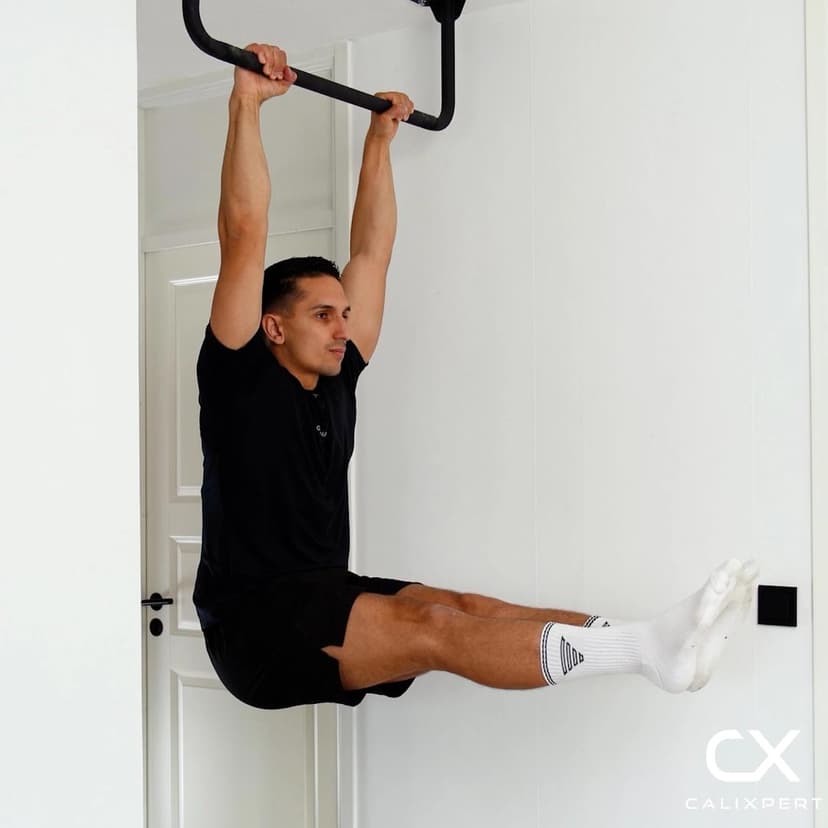
Hanging L-sit to Toes-to-Bar
From the unassisted L-sit position, continue lifting the legs overhead until the toes touch the bar. This adds a dynamic pulling component through the full range and demands significantly more hip flexor power and lat engagement.