Push Ups
Push-ups are the foundational horizontal pressing exercise in calisthenics, targeting the chest, triceps, and front deltoids through a full range of motion using nothing but your bodyweight and the floor. The key to an effective push-up is maintaining a rigid, straight body line while controlling the elbow path at roughly 45 degrees from the torso. Done with strict form, push-ups build pressing strength, shoulder stability, and core control that carry directly into every advanced calisthenics pushing skill.
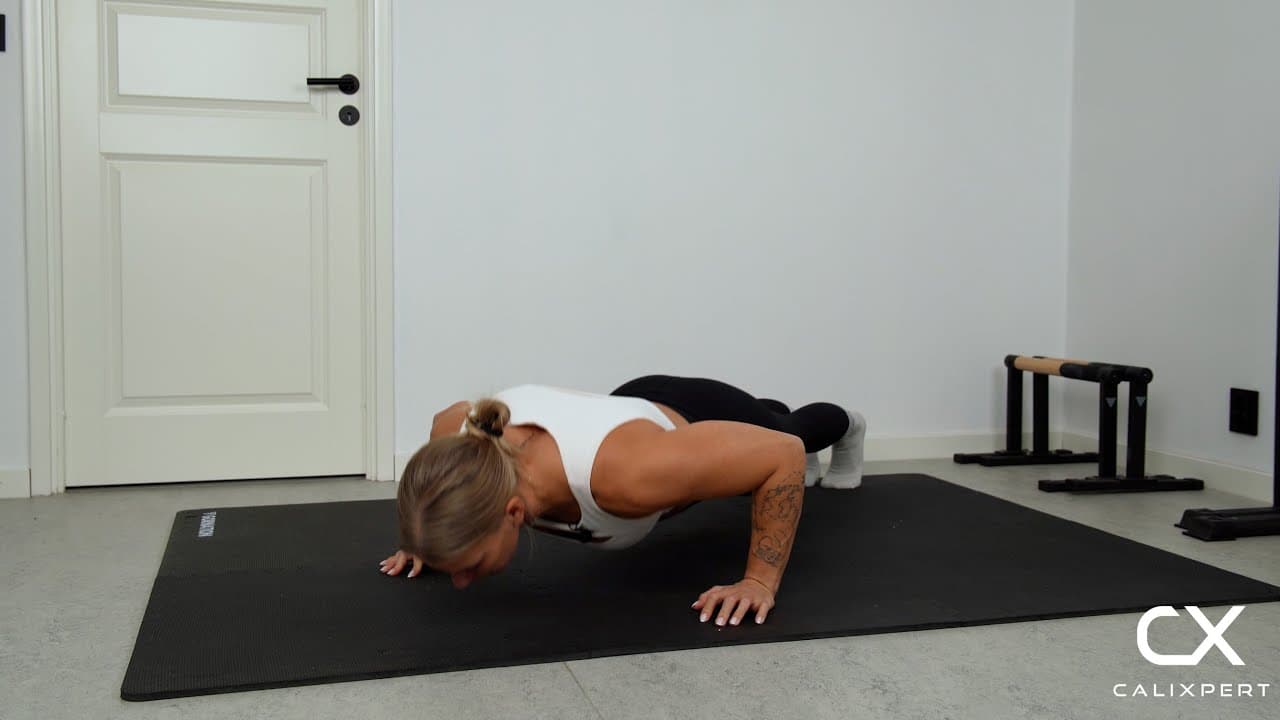
Push-ups are the foundational horizontal pressing exercise in calisthenics, targeting the chest, triceps, and front deltoids through a full range of motion using nothing but your bodyweight and the floor. The key to an effective push-up is maintaining a rigid, straight body line while controlling the elbow path at roughly 45 degrees from the torso. Done with strict form, push-ups build pressing strength, shoulder stability, and core control that carry directly into every advanced calisthenics pushing skill.
How to Do Push Ups
1. Set Up Your Hand Position
Place your hands on the floor slightly wider than shoulder-width apart with your fingers pointing straight forward. Spread your fingers for a stable base and press your full palm into the ground. This natural hand placement keeps the wrists aligned and allows you to generate maximum pressing force throughout the movement.
Fingers forward, full palm on the floor
2. Stack Shoulders Over Your Hands
Position your shoulders directly above your wrists so your arms form a vertical line from shoulder to floor. Do not lean your shoulders forward past your hands or shift them behind. This stacked position ensures the load travels straight through the joints and keeps the pressing mechanics efficient from the very first rep.
Shoulders straight above the hands
3. Lock In Full Body Tension
Engage your core, squeeze your glutes, and press your legs together with the quads fully contracted. Your body should form one rigid, straight line from head to heels with no arch in the lower back and no pike at the hips. This total body tension turns the push-up into a full-body exercise and prevents energy leaks during the press.
Squeeze everything, one straight line
4. Lower With a Controlled Elbow Path
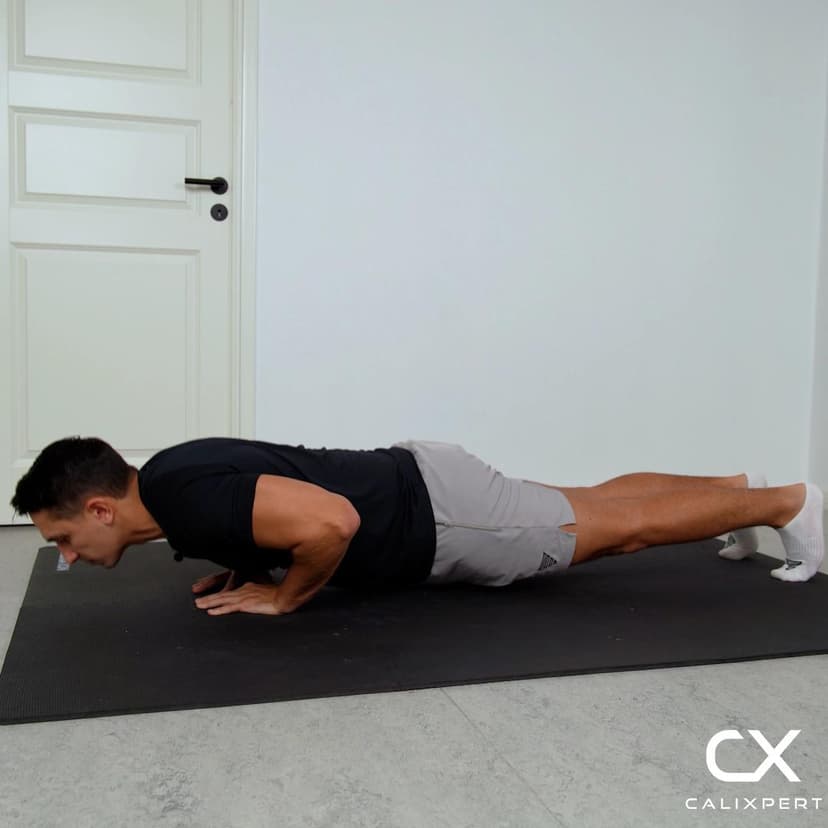
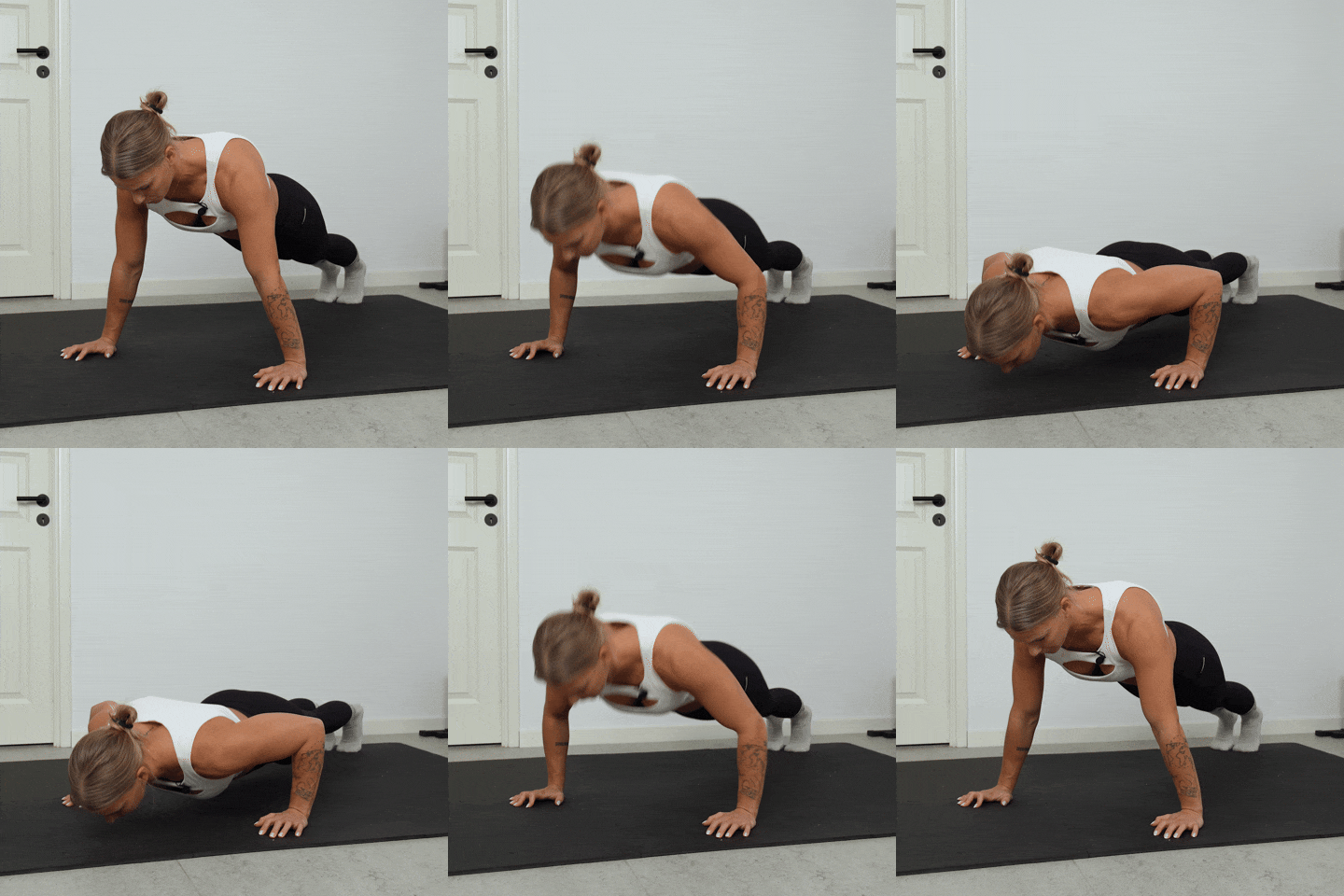
Bend your elbows and lower your body toward the floor, keeping the elbows at approximately 45 degrees out from your torso. Do not flare the elbows wide to 90 degrees or pin them tight against your sides. Lower until your elbows reach at least a 90-degree bend, bringing your chest just above the floor. Keep your head in a neutral position throughout the descent.
Elbows at 45 degrees, chest to the floor
5. Push Back Up as One Unit
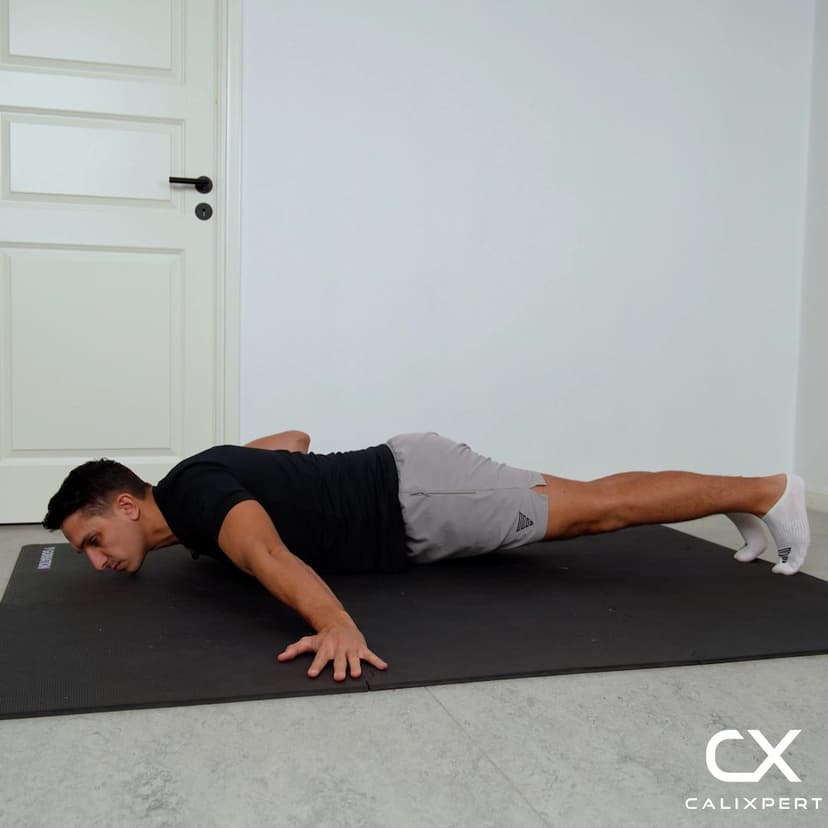
Press through your palms and drive your body upward in one straight line. The hips, chest, and shoulders should all rise at the same rate. Do not let the hips shoot up first or the chest lift while the hips lag behind. Fully extend your arms at the top without hyperextending the elbows, and allow your shoulder blades to protract slightly as you lock out.
Full body rises together, not in parts
Most people lose their push-up at the core, not the arms. If your hips sag or your lower back arches even slightly, you are leaking force that should be going into the press. Lock your glutes and abs before you even start bending the elbows, and you will feel the chest and triceps work harder immediately because no energy is escaping through a soft midsection.
Muscles Worked During Push Ups
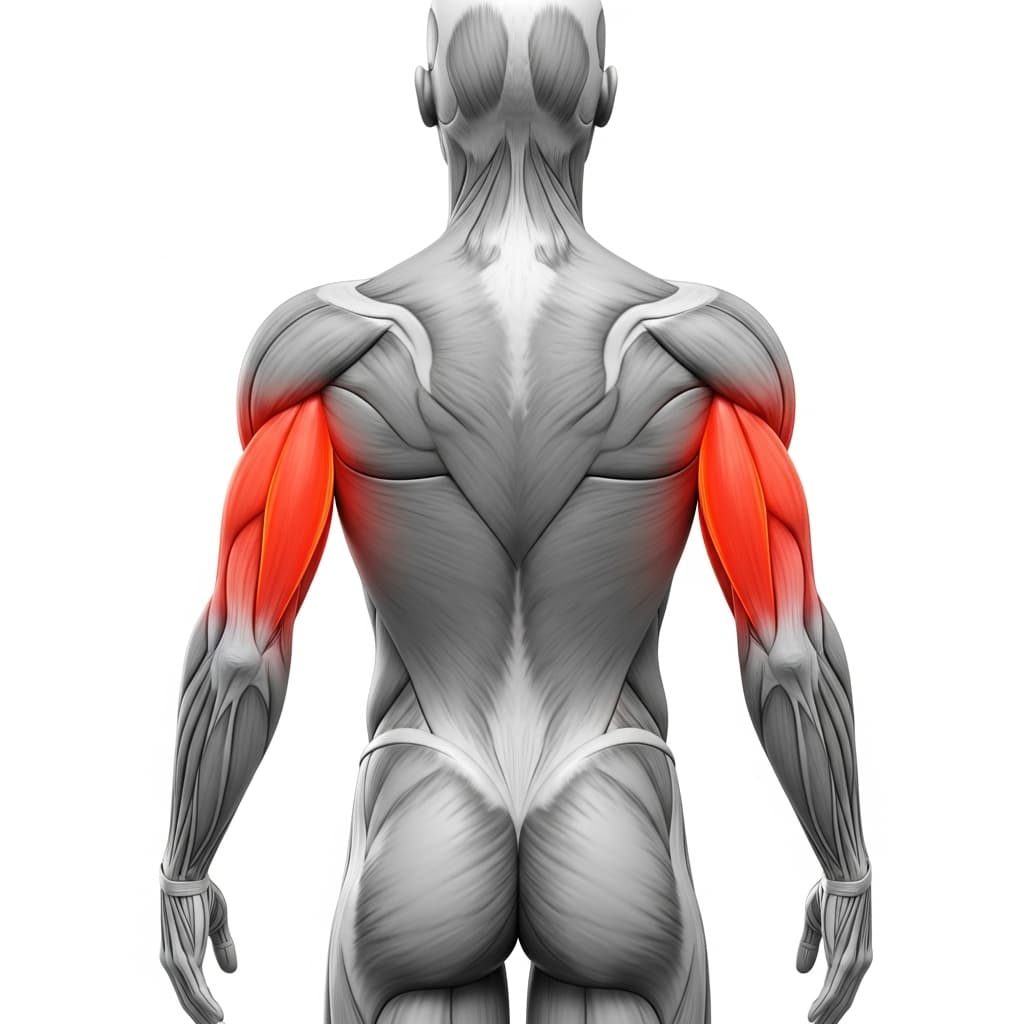
Secondary Muscles:
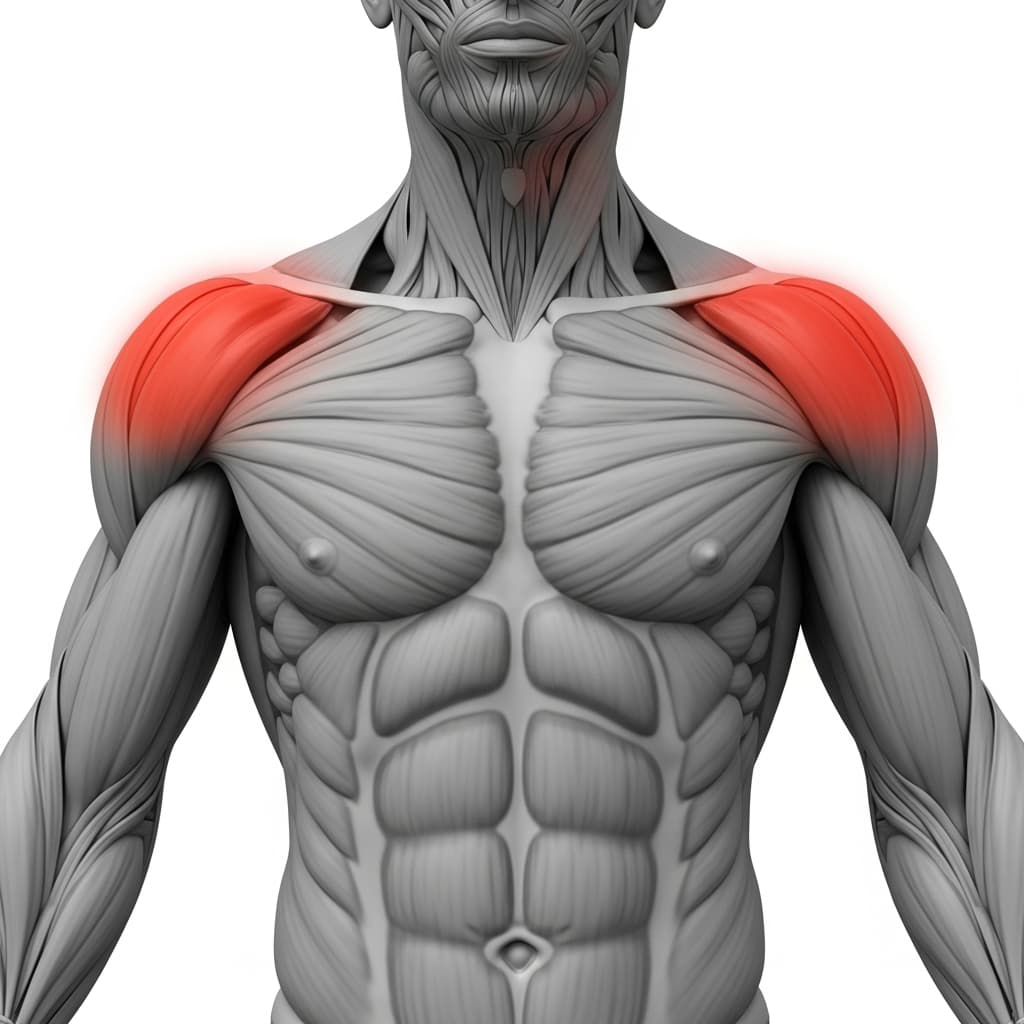
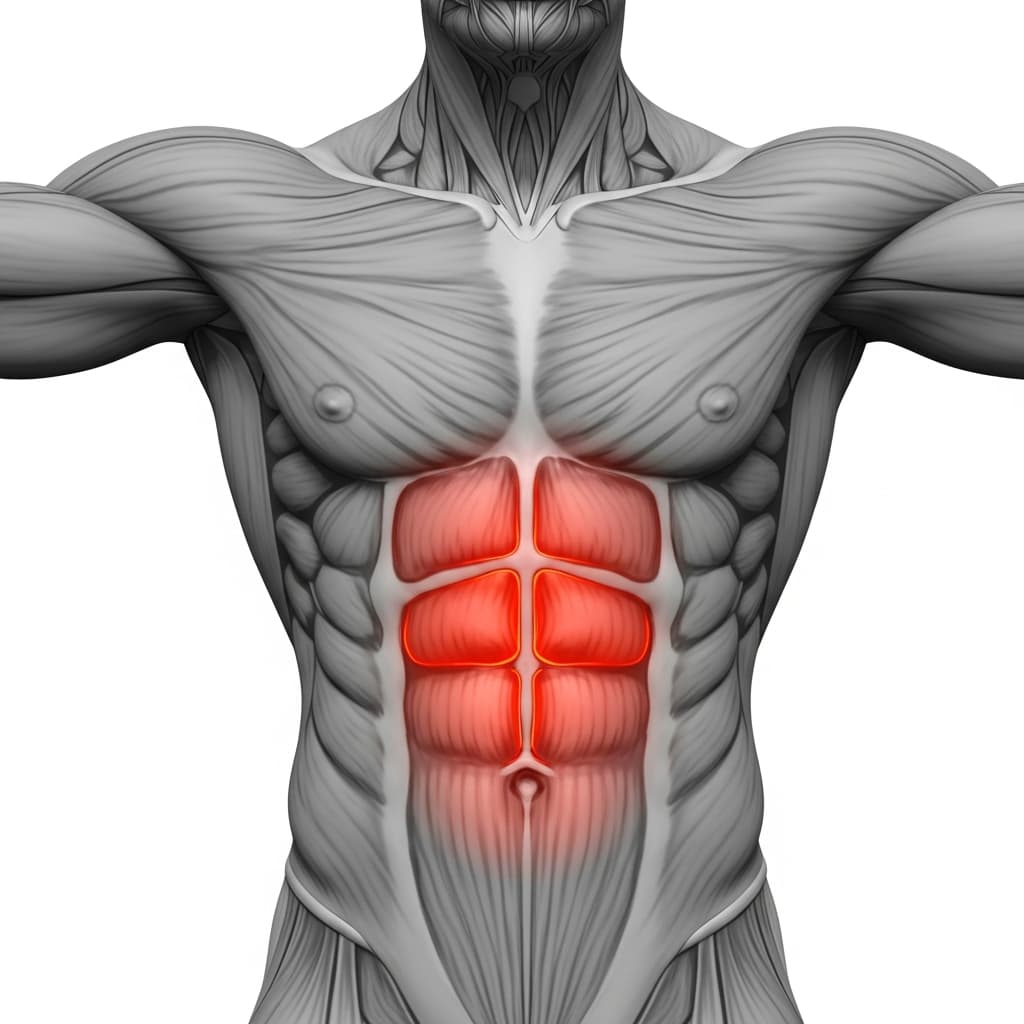
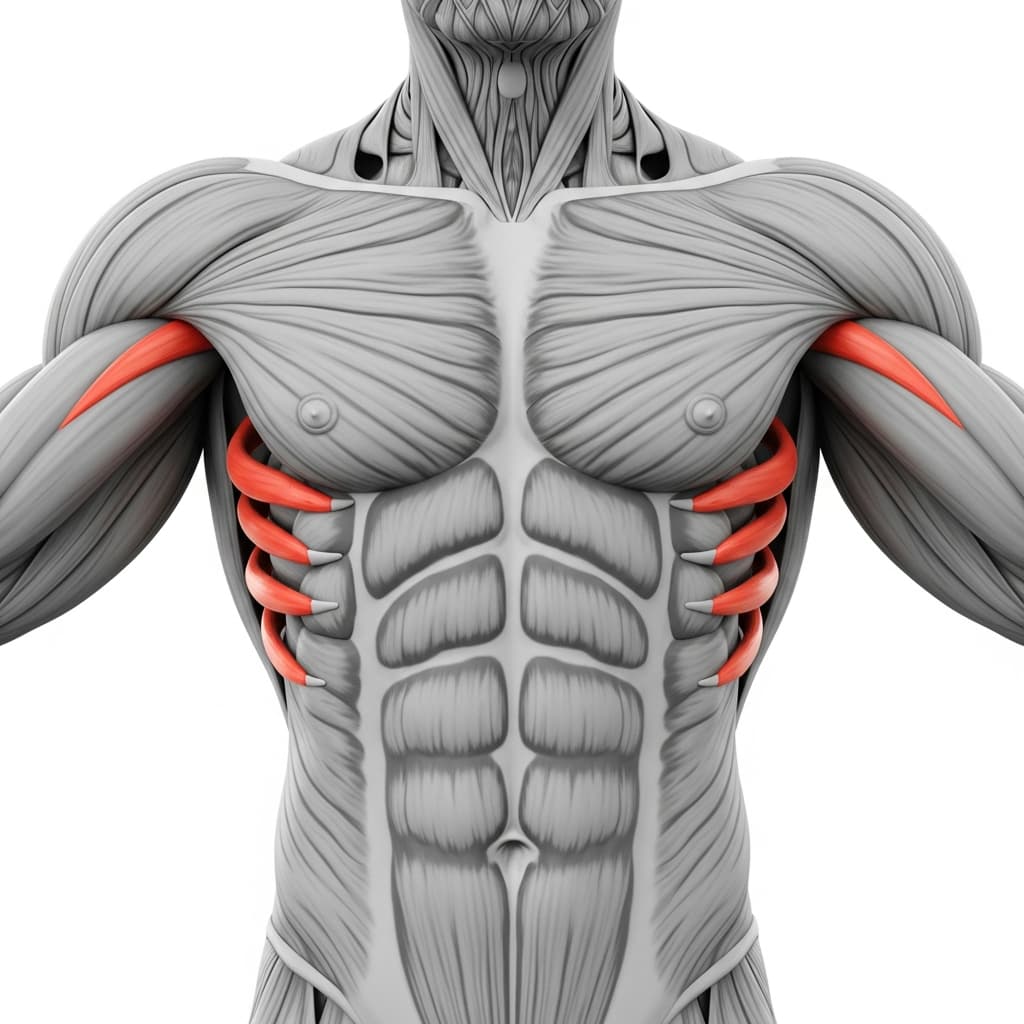
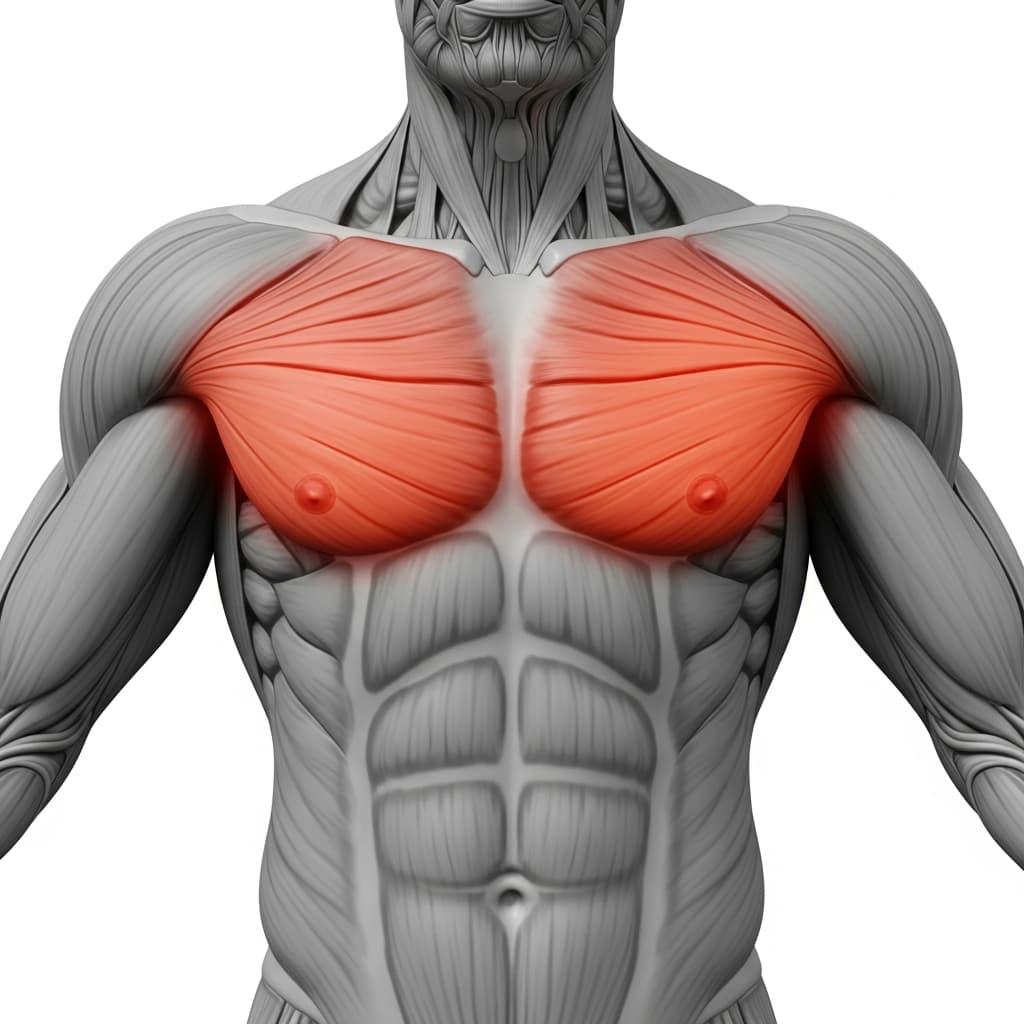
Primary Muscles
Pectoralis Major (Chest) - The pectorals drive the horizontal pressing force, powering the push from the bottom position through full arm extension on every rep.
Triceps Brachii (Triceps) - The triceps extend the elbow joint during the pressing phase, completing the lockout at the top of each rep.
Secondary Muscles
Anterior Deltoid (Front Deltoid) - The anterior deltoids assist the pressing motion and stabilize the shoulder joint, particularly through the bottom half of the range of motion.
Rectus Abdominis (Abs) - The abdominals brace the torso in a rigid plank position throughout the movement, preventing the lower back from sagging under gravity.
Serratus Anterior (Serratus Anterior) - The serratus anterior protracts the shoulder blades at the top of the push-up, completing the full pressing range and stabilizing the scapula against the ribcage.
Benefits of Push Ups
- Builds pressing strength across the chest, triceps, and front deltoids using zero equipment, making it trainable anywhere at any time
- Develops core stability and anti-extension strength through the plank position held under load throughout every rep
- Strengthens the serratus anterior through scapular protraction at the top of each rep, which protects the shoulder joint during overhead movements
- Serves as the foundational pressing pattern for every advanced calisthenics pushing skill, from dips to planche progressions
Who Is This Exercise For?
You should be able to hold a straight-arm plank for at least 20 seconds with no hip sag before attempting full push-ups. If maintaining that plank is a struggle, start with incline push-ups on a bench or elevated surface to build pressing strength and core stability at a reduced load.
Common Mistakes to Avoid
Sagging hips and arched lower back: Squeeze your glutes and brace your core before every rep. If your hips drop during the set, your core is fatiguing and you should rest rather than continue with broken form.
Flaring elbows out to 90 degrees: Keep your elbows at roughly 45 degrees from your torso throughout the entire movement. Wide-flared elbows place excessive stress on the shoulder joint and reduce the chest's ability to produce force.
Cutting the range of motion short: Lower until your elbows reach at least a 90-degree bend and your chest is just above the floor. Half reps reduce muscle activation and build strength only in the partial range you actually train.
Letting the hips rise first on the way up: Press your entire body up as one rigid unit. If the hips pike up before the chest, the core has disengaged and the movement is no longer training the chest and triceps effectively.
Variations & Progressions
Incline Push-Ups
Place your hands on an elevated surface like a bench or step instead of the floor. The incline reduces the percentage of bodyweight you press, making it an ideal progression for building toward full push-ups.