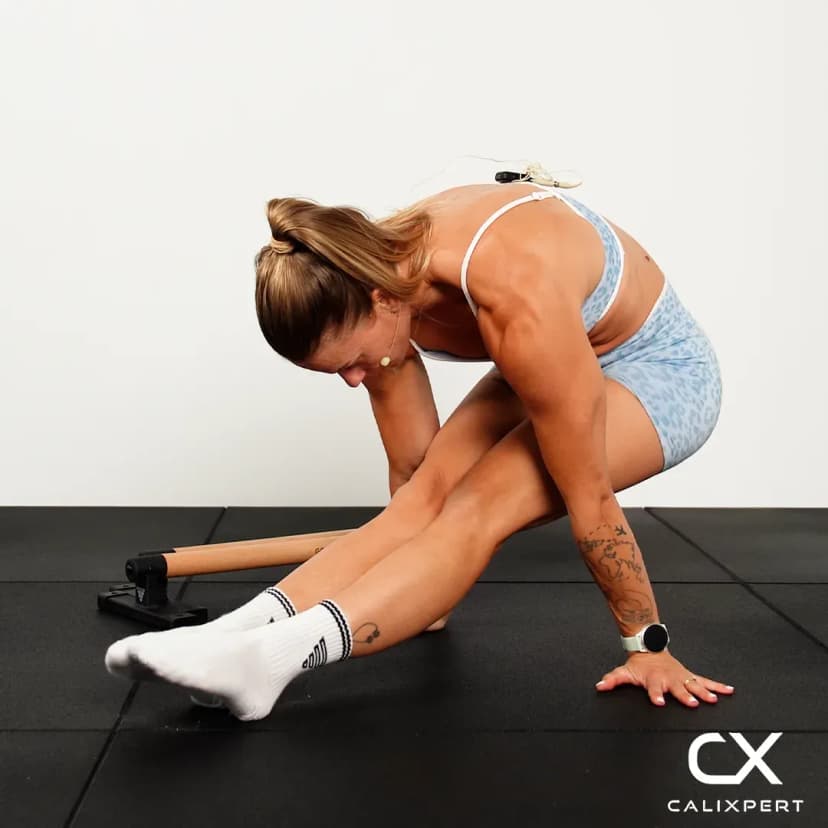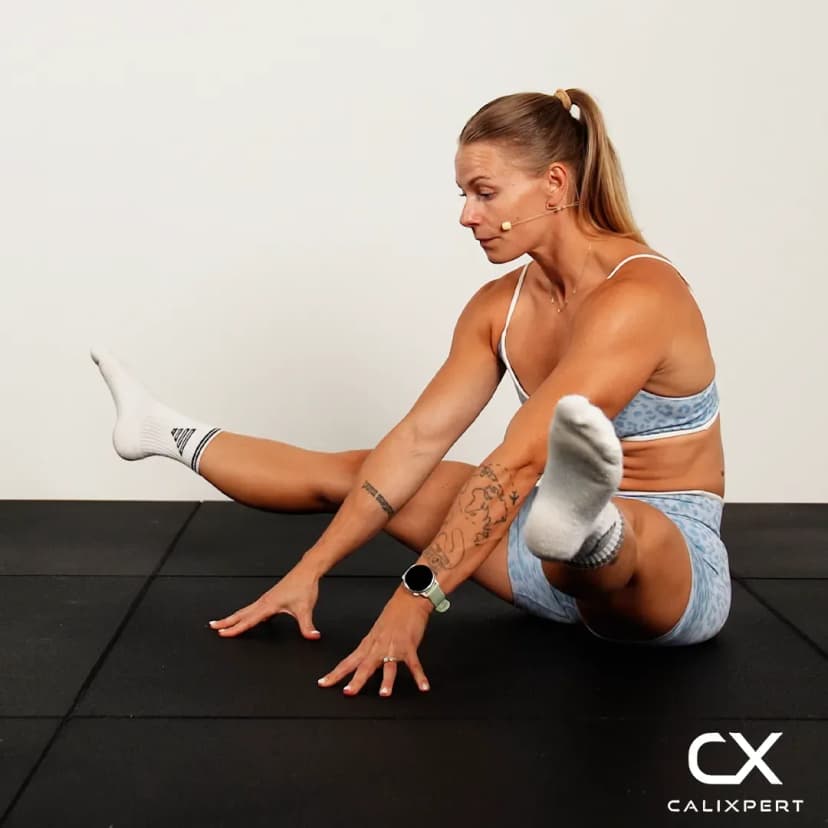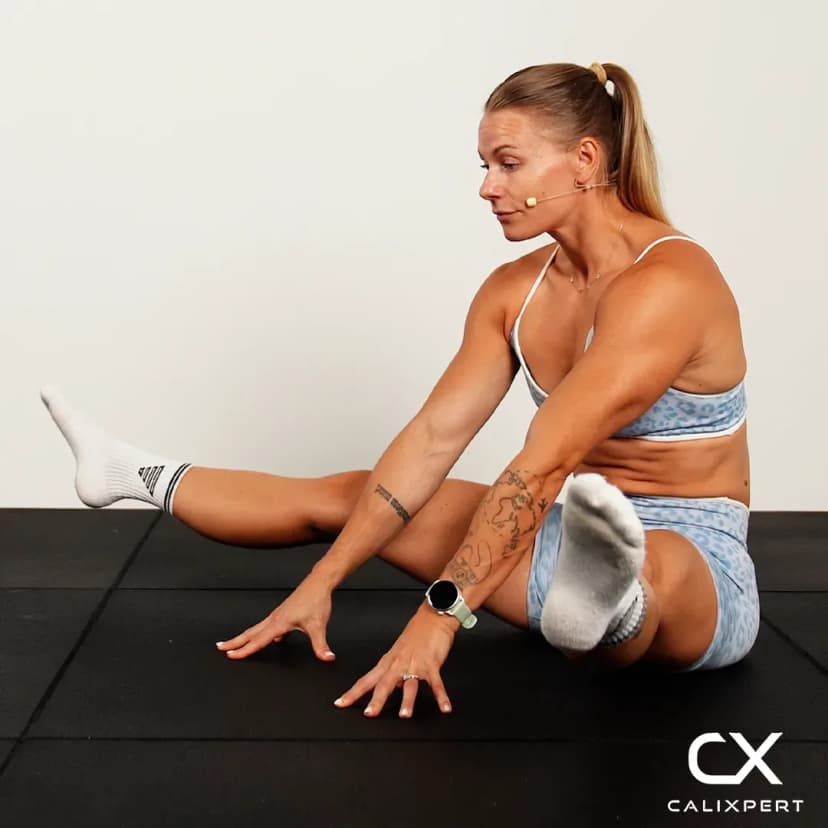
Ring Muscle Up Transition
The ring muscle up transition is the most technically demanding phase of the ring muscle up, bridging the gap between the pulling phase below the rings and the pressing phase above them. It targets the lats, chest, front deltoids, and triceps through a complex rotational movement that requires precise timing and body positioning. Mastering this transition on low rings is the fastest way to unlock a clean ring muscle up, because the transition is where nearly every failed attempt breaks down.
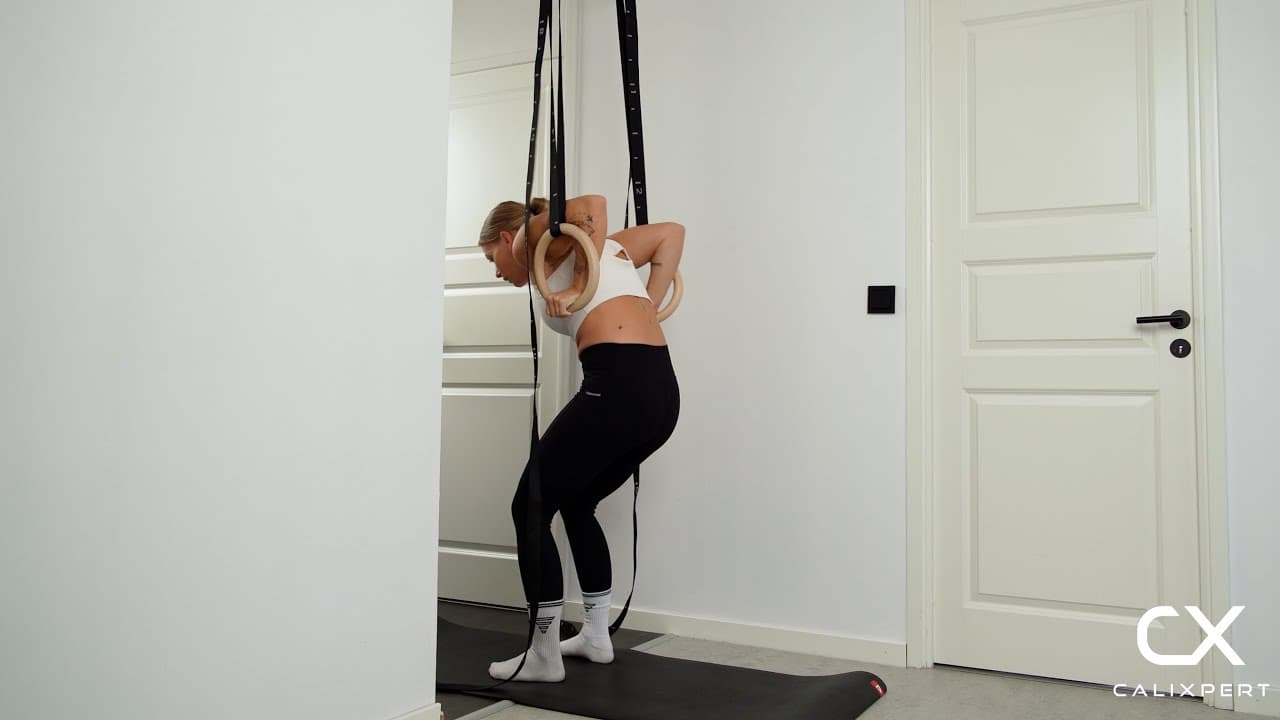
The ring muscle up transition is the most technically demanding phase of the ring muscle up, bridging the gap between the pulling phase below the rings and the pressing phase above them. It targets the lats, chest, front deltoids, and triceps through a complex rotational movement that requires precise timing and body positioning. Mastering this transition on low rings is the fastest way to unlock a clean ring muscle up, because the transition is where nearly every failed attempt breaks down.
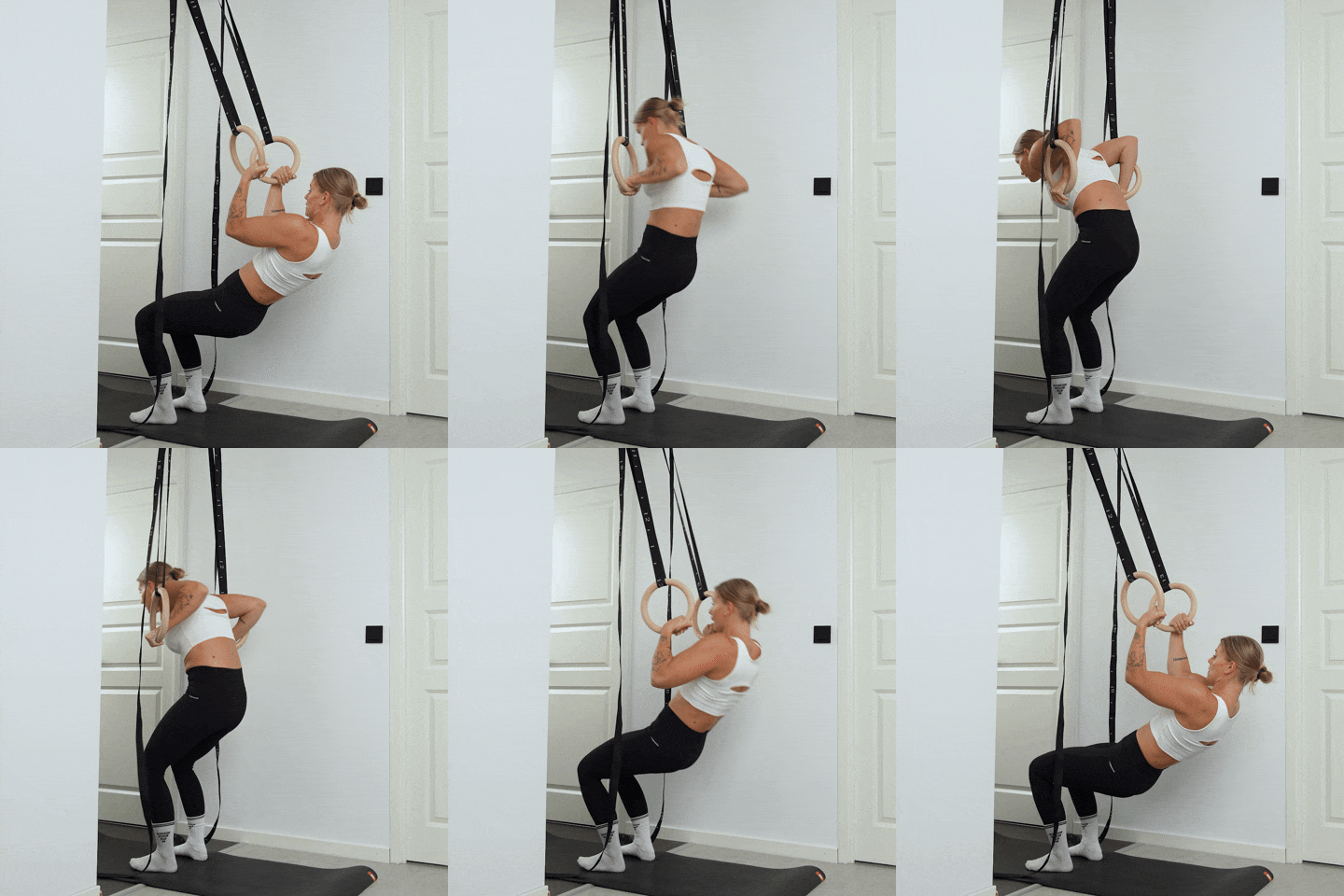
How to Do Ring Muscle Up Transition
1. Set Ring Height and Grip
Set the rings to approximately hip or core height so you can practice the transition from a seated position on the floor. Grab the rings with a false grip by rotating your hands forward and positioning your wrists above the rings, not below them. Place more pressure on the pinky side of your hand and rotate slightly outward. This grip is non-negotiable for the transition because it keeps your wrists in position to rotate over the rings.
Wrists above the rings, weight on pinkies
2. Sit Down and Set Position
Stand directly under the rings or slightly in front of them, then sit down to the floor while maintaining your false grip. If you cannot keep a full false grip with straight arms from this position, bend your elbows slightly. The goal of this drill is the transition itself, not wrist flexibility, so prioritize maintaining grip contact over arm position.
Bend the arms if the grip slips
3. Pull Up and Over the Rings
Initiate the pull by driving your elbows backward, not outward, and pull yourself up toward the rings. As you ascend, keep the rings as close to your body as possible. The rings should start angled slightly outward during this pulling phase. Your hips will move from a flexed position to extended as you rise.
Elbows back, rings tight to the body
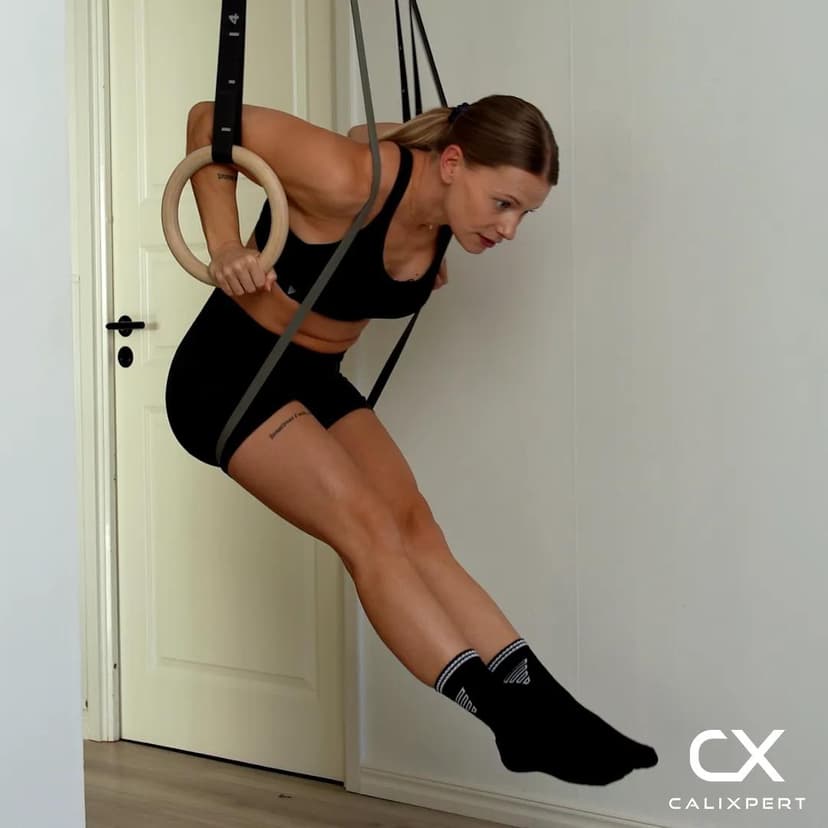
4. Lean Forward at Chest Level
As your chest reaches ring height, begin leaning your upper body forward aggressively over the rings. This forward lean is the actual transition, the moment where you shift from pulling to pushing. Your hips will move from extension back into flexion as your torso tips forward. Without this lean, you will stall at the rings and fail the transition.
Chest over the rings, lean forward hard
5. Rotate Rings and Press to Support
As you lean over the rings, rotate them from the outward-facing position to a neutral or slightly inward position. Press down to extend your arms and reach the top support position with your elbows locked. Keep your shoulders depressed and the rings close to your sides throughout the press.
Rotate, press, lock the elbows
Most people stall at the transition because they try to muscle through it vertically. The ring muscle up transition is not an up-and-down movement, it is a rotation. Think of your body as swinging forward over the rings, not pulling straight up past them. Once you commit to the aggressive forward lean at chest height, the transition clicks and the rest of the movement becomes straightforward.
Muscles Worked During Ring Muscle Up Transition
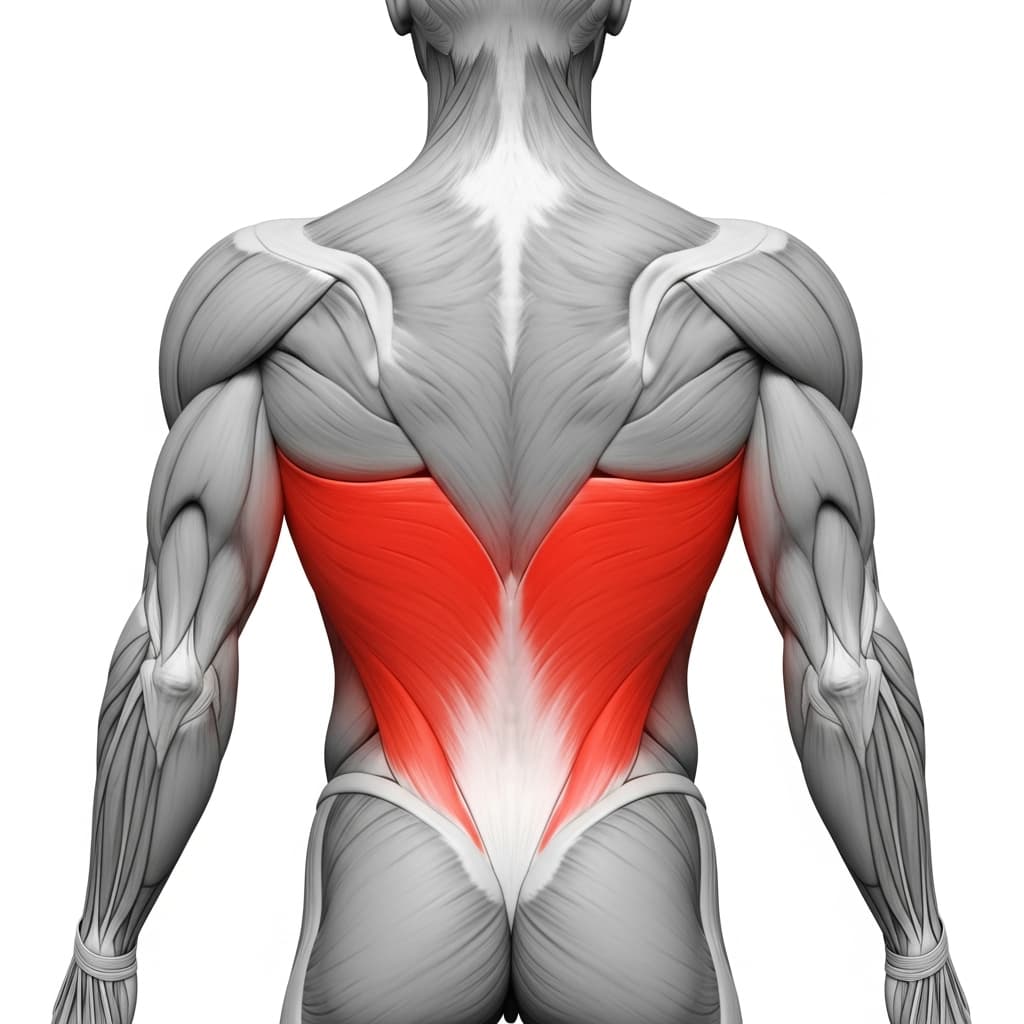
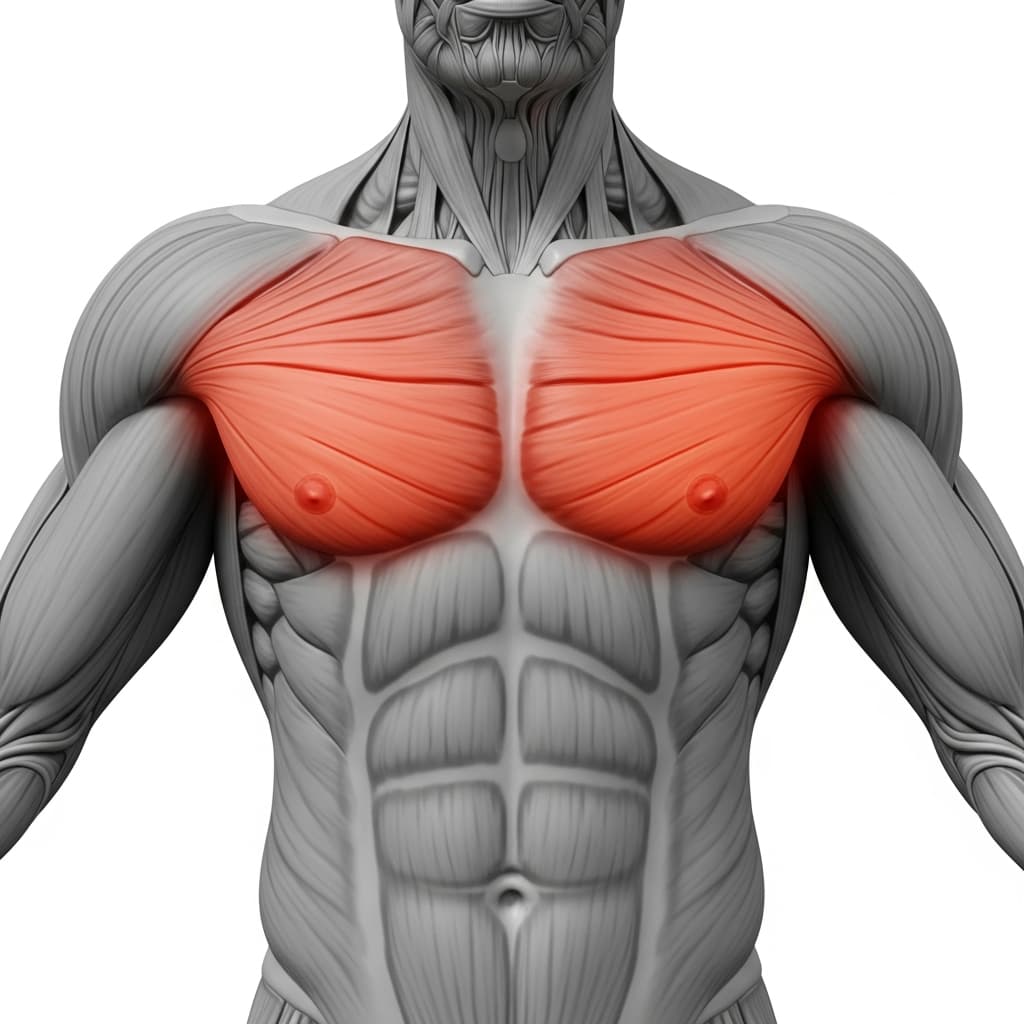
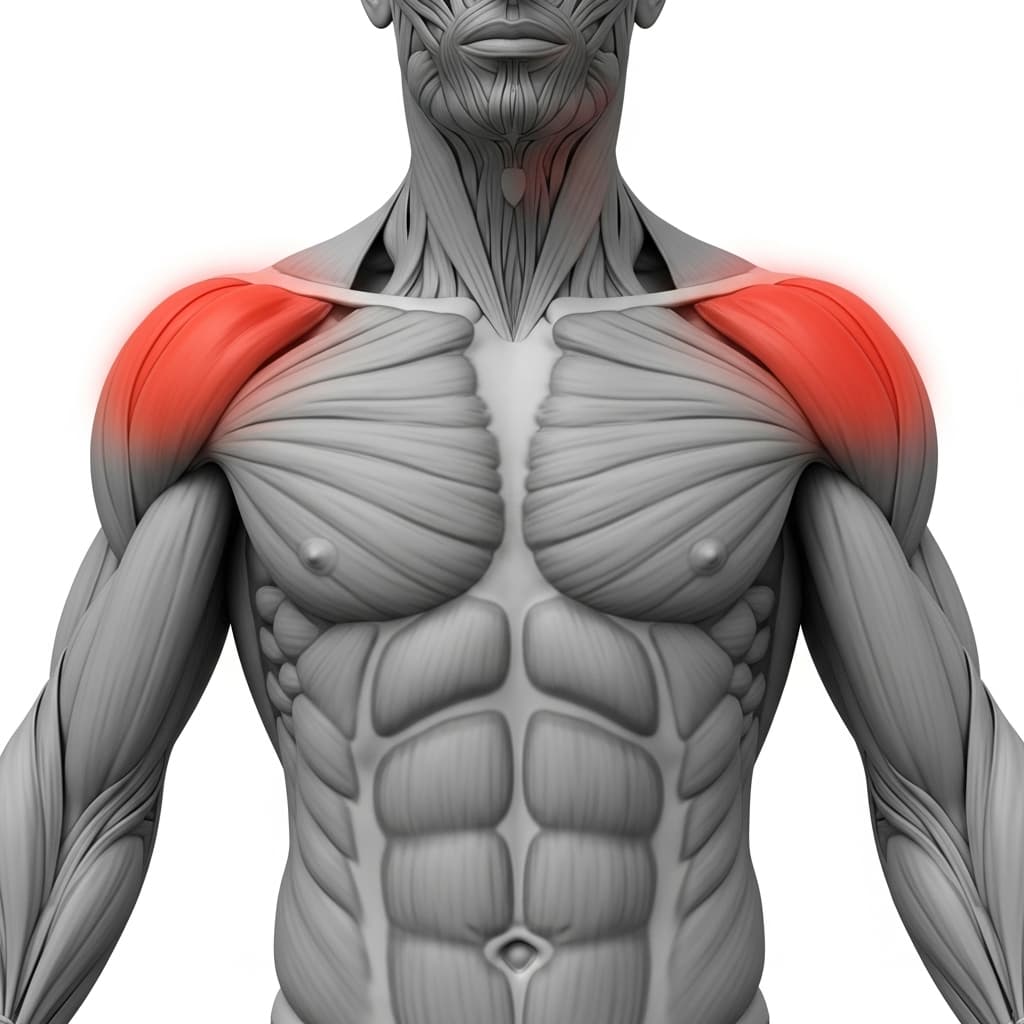
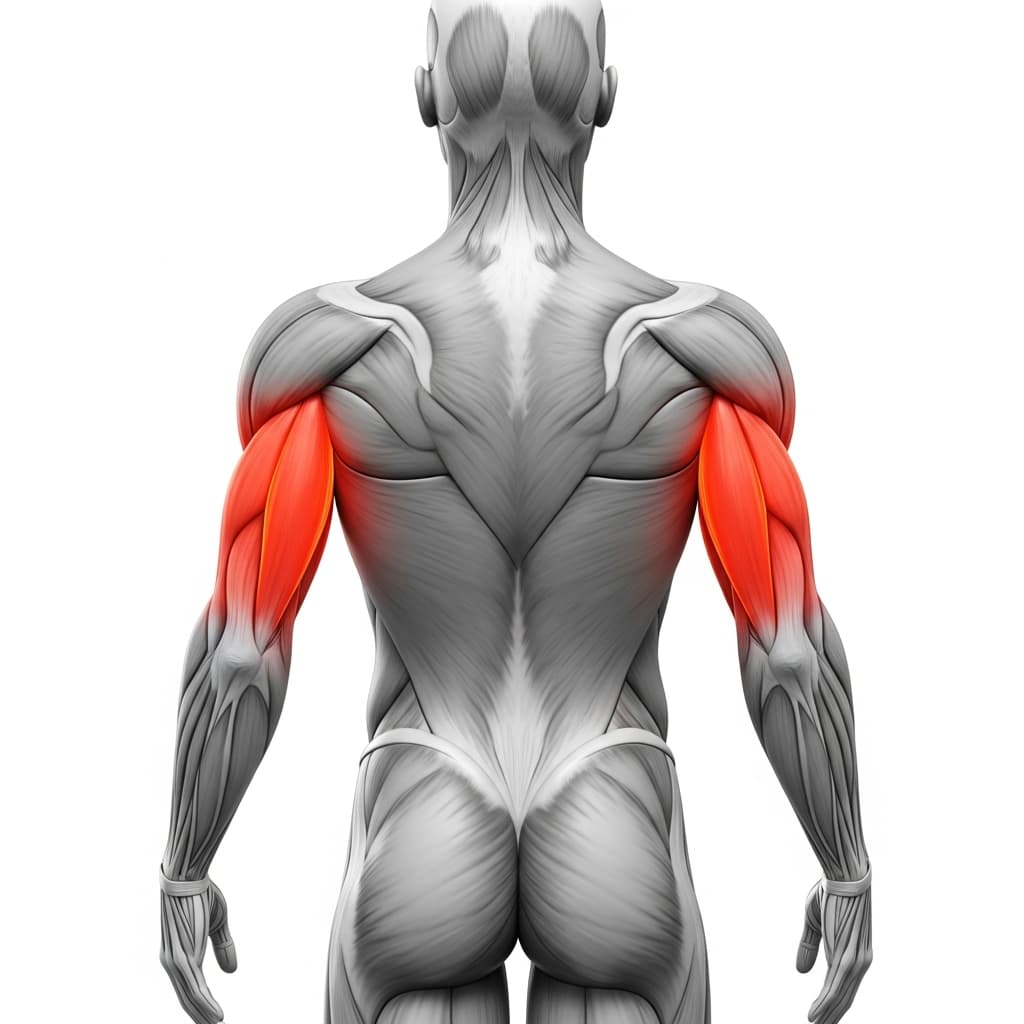
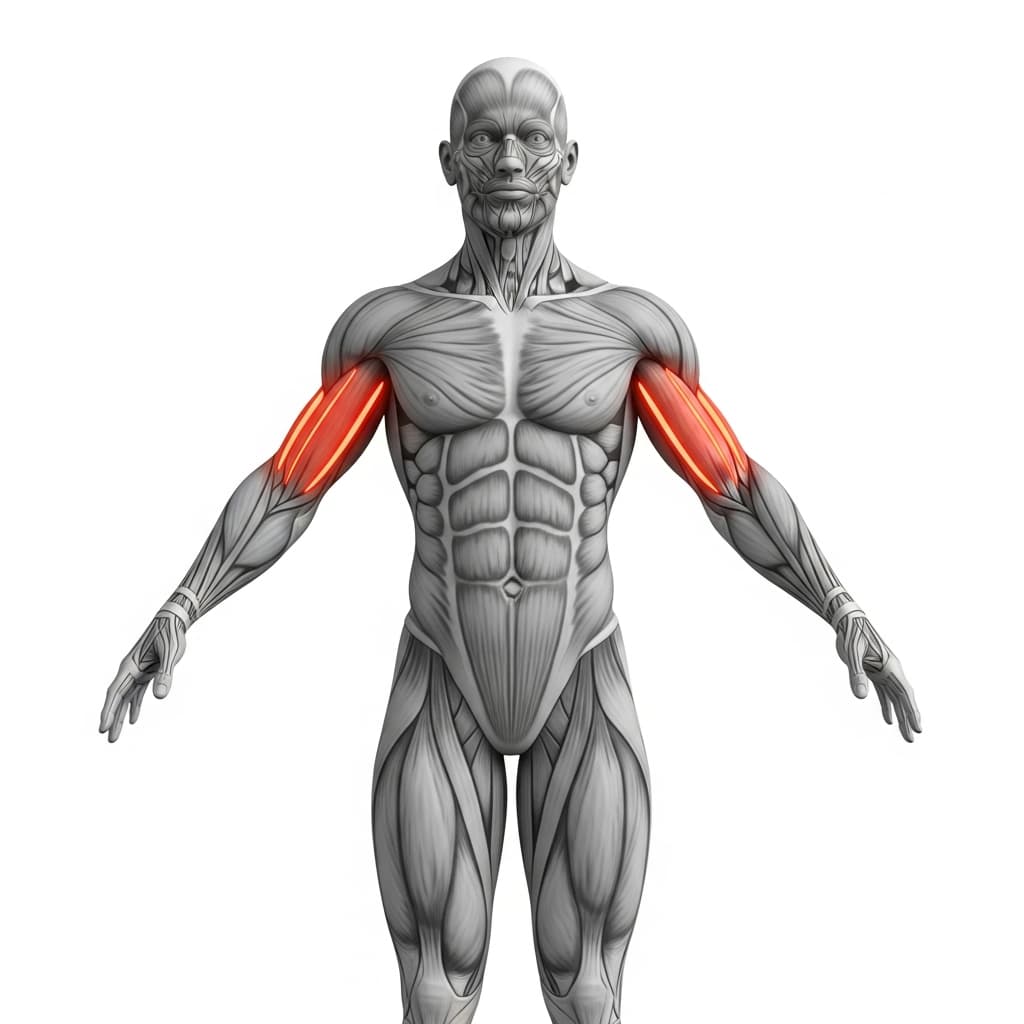
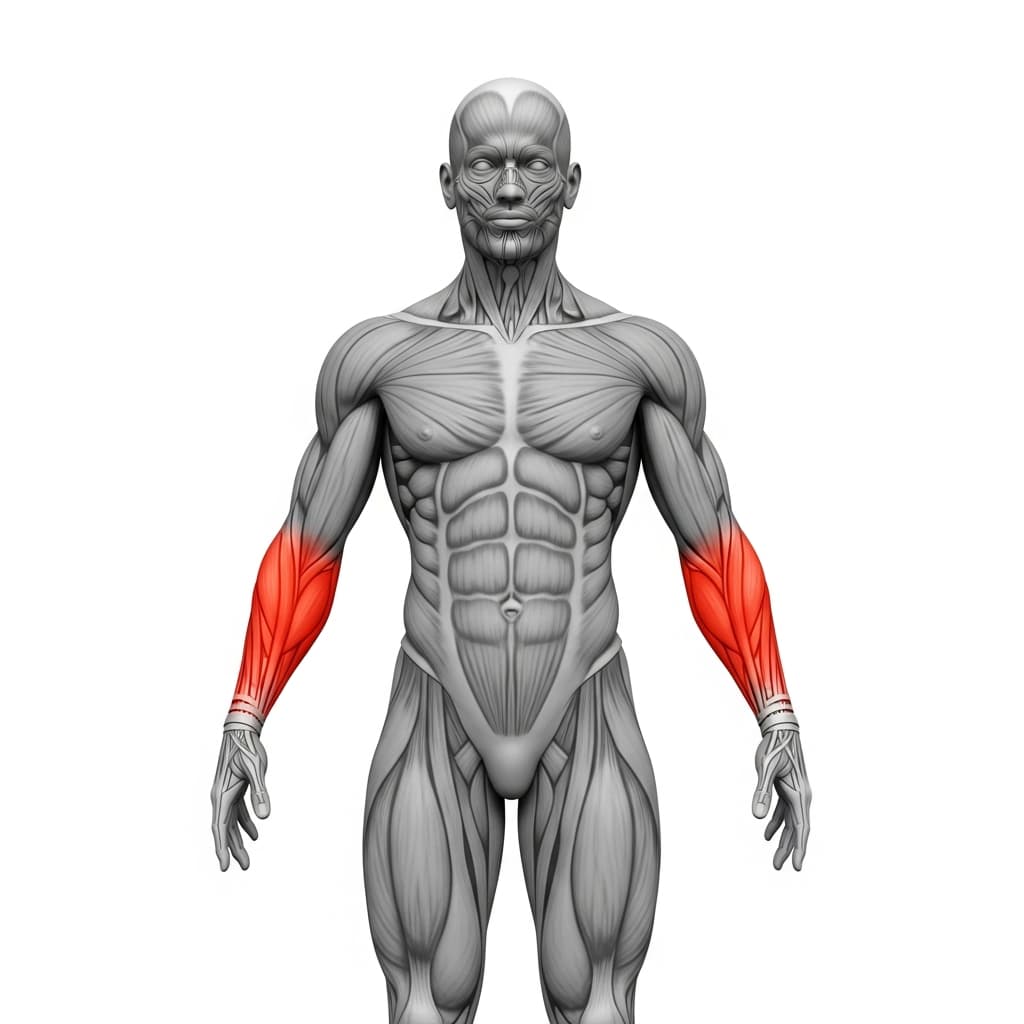
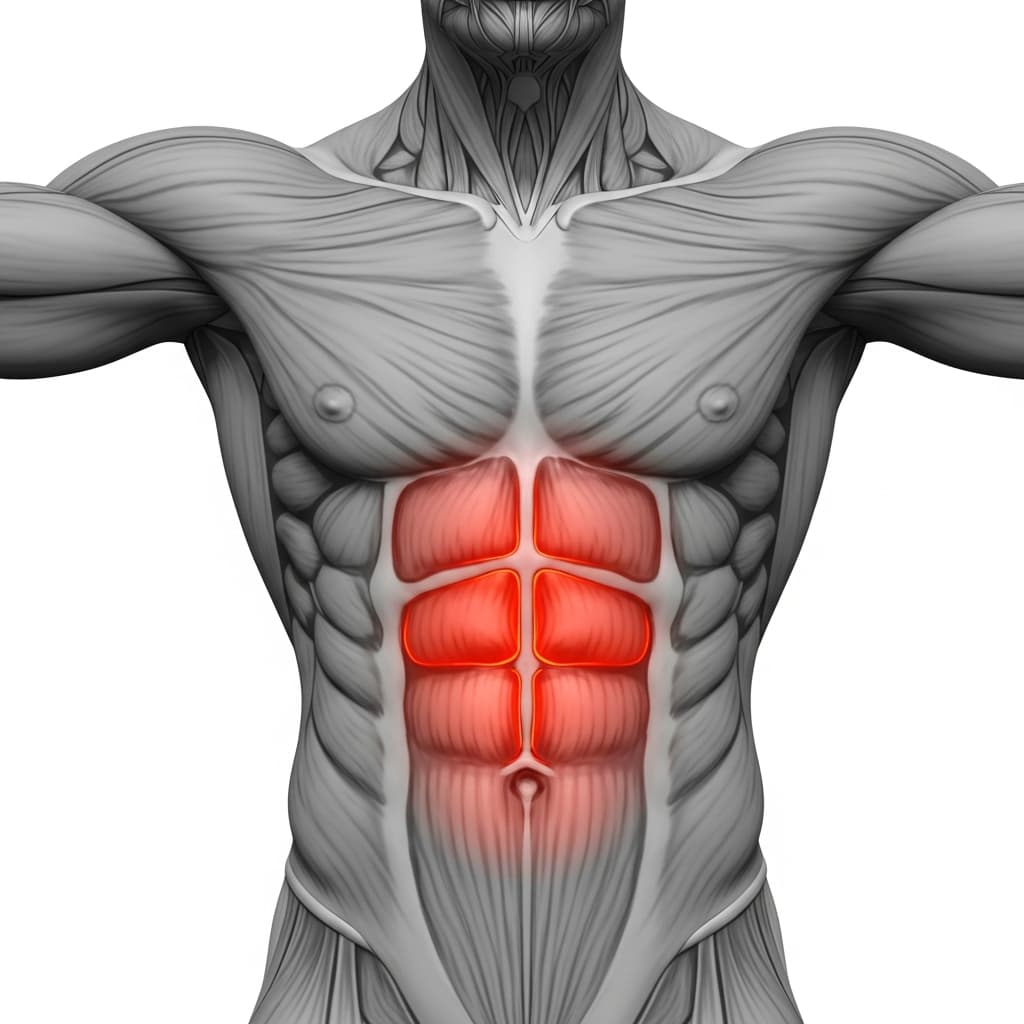
Primary Muscles
Latissimus Dorsi (Lats) - The lats drive the initial pull from the bottom position up to chest height, shortening forcefully to bring the body toward the rings before the transition point.
Pectoralis Major (Chest) - The chest activates heavily during the forward lean and press-over phase, pushing the body from below the rings into the support position above them.
Secondary Muscles
Anterior Deltoid (Front Deltoid) - The front deltoids assist in the forward lean and stabilize the shoulder joint as the body rotates over the rings into the pressing phase.
Triceps Brachii (Triceps) - The triceps extend the elbows during the final press to lock out the support position above the rings.
Biceps Brachii (Biceps) - The biceps work throughout the pulling phase and help maintain the false grip position by keeping the wrists flexed over the rings.
Forearm Flexors & Extensors (Forearms) - The forearms sustain the false grip under load, resisting the rings pulling the wrists open during the entire transition.
Rectus Abdominis (Abs) - The abs maintain core tension and control the hip flexion-extension-flexion sequence that coordinates the body's rotation over the rings.
Benefits of Ring Muscle Up Transition
- Develops the specific rotational pulling-to-pushing strength that no other exercise replicates, directly transferring to the full ring muscle up
- Builds false grip endurance under load, strengthening the wrists and forearms in the exact position required for ring work
- Trains the chest and front deltoids through a deep, loaded stretch at the bottom of the transition, building pressing strength from a disadvantaged angle
- Improves shoulder stability and coordination on unstable rings, which carries over to all ring-based calisthenics skills
Who Is This Exercise For?
You should be able to perform at least 5 strict pull-ups, 5 ring dips, and hold a false grip dead hang on rings for 10 seconds before drilling the transition. If your false grip collapses under load or you cannot complete a controlled ring dip, those are the skills to build first. This is an advanced movement and not appropriate for athletes still developing baseline pulling and pushing strength on rings.
Common Mistakes to Avoid
Losing the false grip during the pull: Keep your wrists positioned above the rings with pressure on the pinky side from the start. If your false grip breaks mid-pull, the transition becomes nearly impossible. Practice false grip hangs and rows until the grip is automatic before drilling the full transition.
Elbows flaring outward instead of driving back: Drive your elbows straight backward throughout the pulling phase. When the elbows flare out, you lose lat engagement and the pulling path becomes too wide to transition over the rings efficiently.
Not leaning forward aggressively enough: The forward lean at chest height is the defining move of the transition. Most failed attempts happen because the athlete stays too upright and stalls at the rings. Commit to tipping your chest forward and over the rings as soon as they reach chest level.
Keeping the rings too far from the body: The rings should travel as close to your torso as possible throughout the entire movement. When the rings drift away from your body, the leverage becomes significantly harder and the transition demands far more shoulder strength than necessary.
Variations & Progressions
Weighted Ring Muscle Up Transition
Perform the low ring transition drill with a weight vest or dip belt. Adding external load forces greater control through the rotation and builds the raw strength needed for a slow, controlled full-height muscle up.