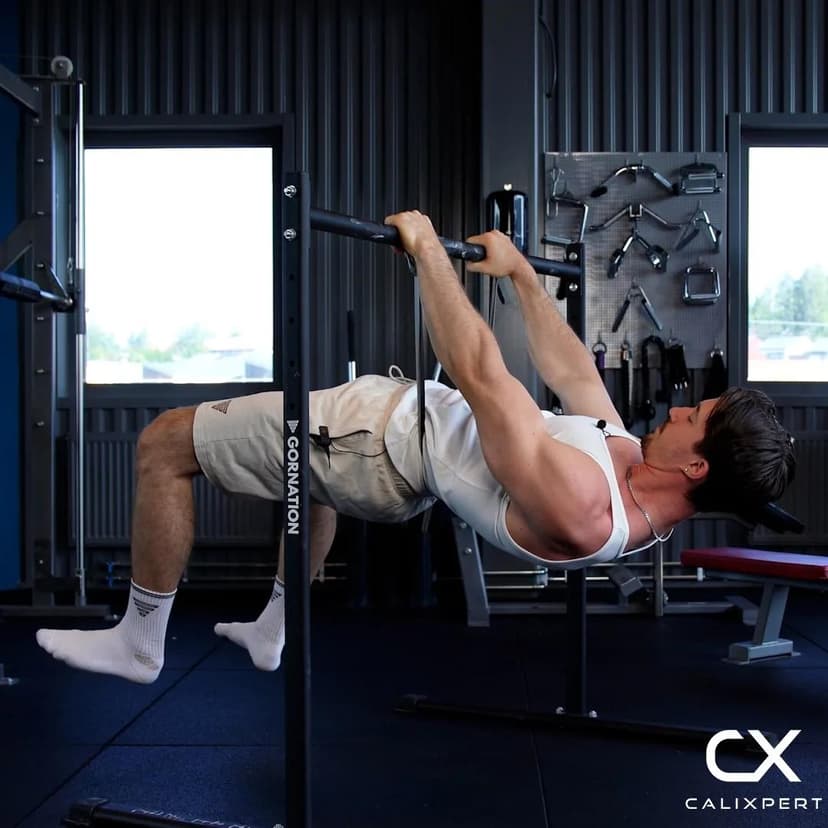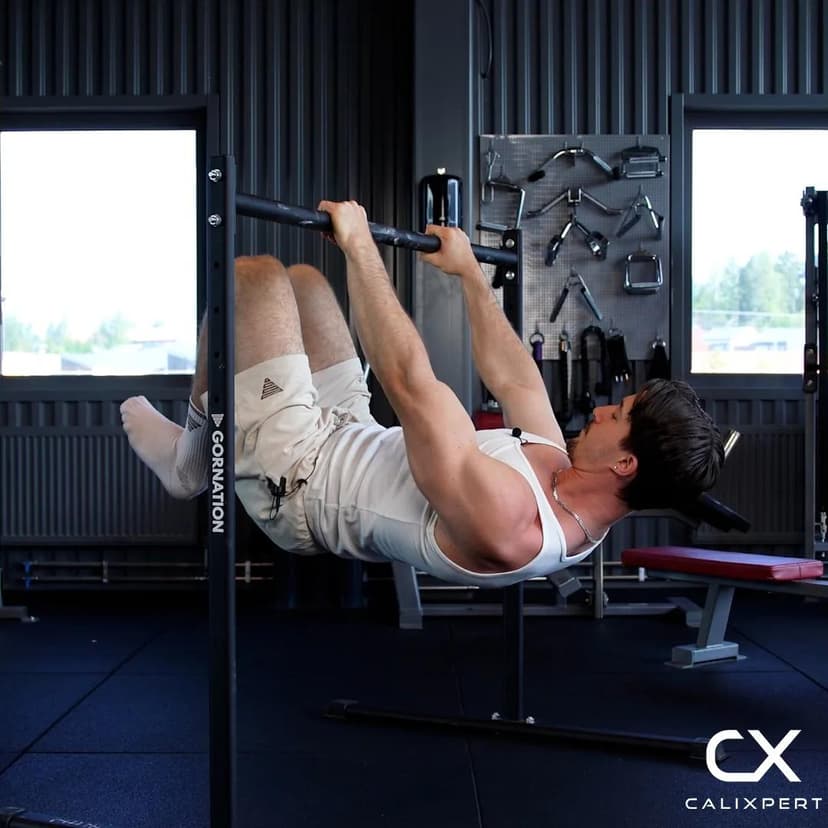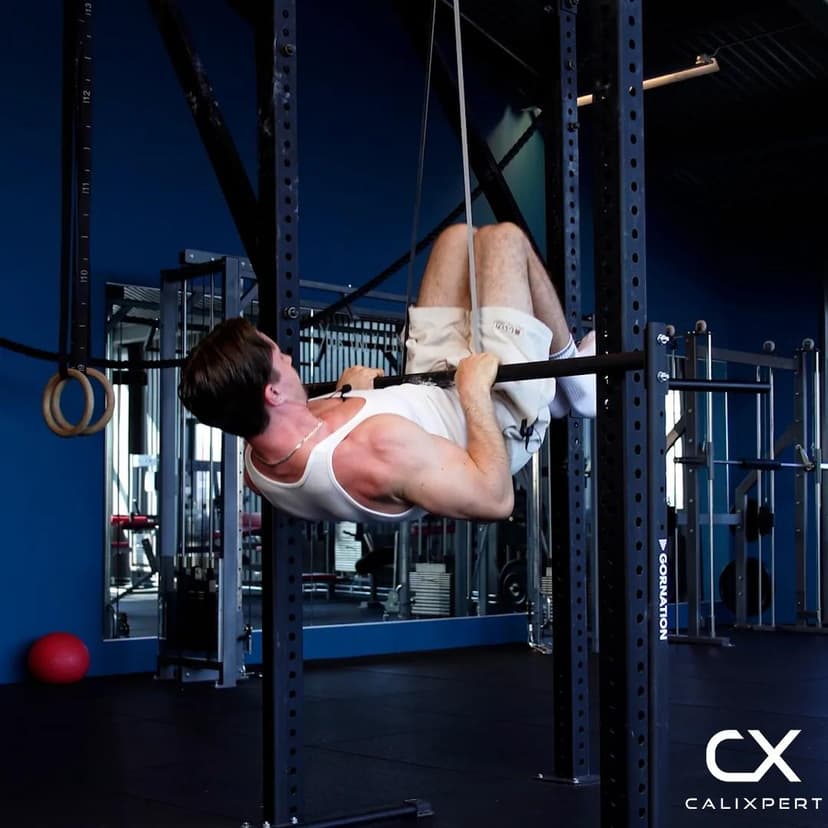
Band Assisted Ring Muscle Up
The band assisted ring muscle up is a progression exercise that trains the complete muscle up sequence, pull, transition, and dip, on gymnastic rings with reduced bodyweight from a resistance band. It targets the lats and chest as primary movers, with heavy involvement from the biceps, triceps, shoulders, forearms, and core throughout the three distinct phases. Learning the ring muscle up with band assistance lets you practice the hardest part of the movement, the transition from below to above the rings, at a manageable intensity while building the specific strength and coordination needed for the unassisted version.
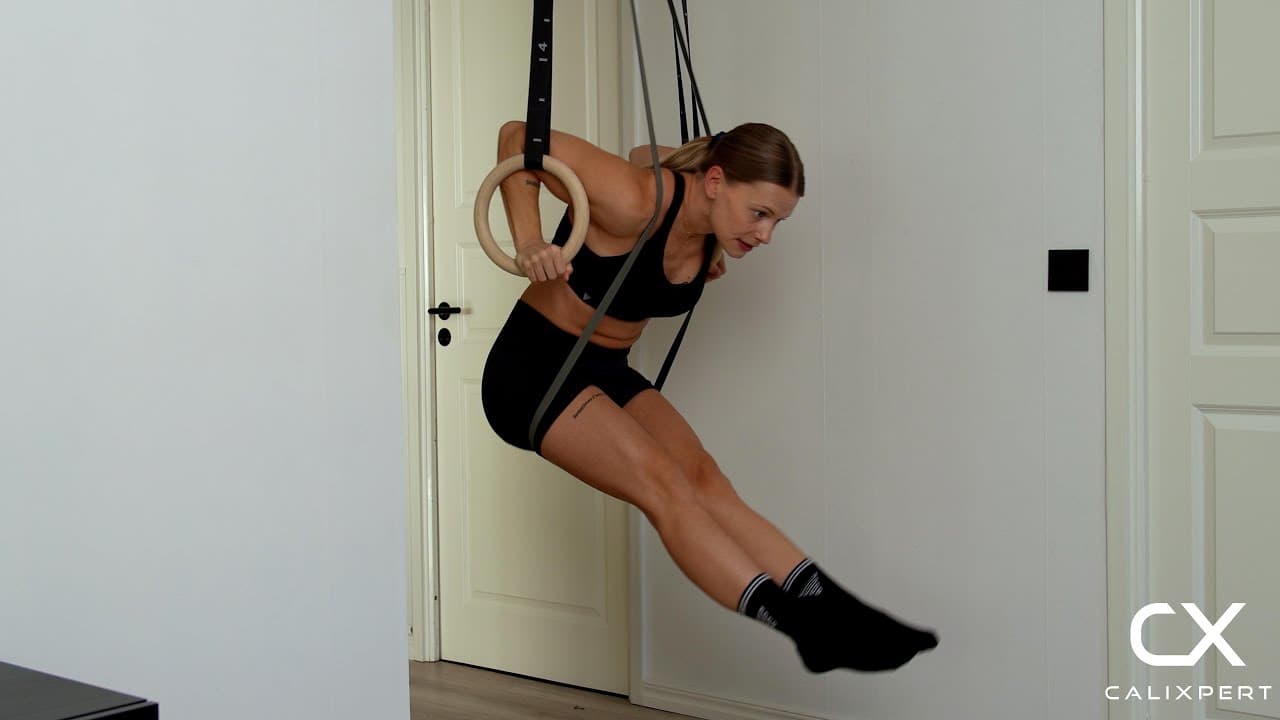
The band assisted ring muscle up is a progression exercise that trains the complete muscle up sequence, pull, transition, and dip, on gymnastic rings with reduced bodyweight from a resistance band. It targets the lats and chest as primary movers, with heavy involvement from the biceps, triceps, shoulders, forearms, and core throughout the three distinct phases. Learning the ring muscle up with band assistance lets you practice the hardest part of the movement, the transition from below to above the rings, at a manageable intensity while building the specific strength and coordination needed for the unassisted version.

How to Do Band Assisted Ring Muscle Up
1. Attach the Band to the Bar
Loop a resistance band over the bar or structure that your rings hang from, pulling one end through the other to secure it. The band should hang straight down between the two rings. Choose a band thickness that reduces enough weight to complete the movement with control but still requires real effort on the pull and transition.
Band centered between the rings
2. Step In and Set Your Grip
Step into the band loop and position it under your glutes, then sit down into the band so your arms are fully extended overhead. Grip the rings with a neutral grip so your thumbs face toward you. Set the ring height so that you can sit in the band with completely straight arms before you begin pulling.
Straight arms, thumbs facing you
3. Pull High With Rings Close
Initiate the pull by driving your elbows down and back while keeping the rings as close to your body as possible. Pull aggressively and aim to bring the rings to your lower chest or upper ribcage before attempting any transition. The higher you pull, the easier the transition will be. Maintain a tight core and avoid swinging or kipping.
Rings tight to the body, pull to the chest
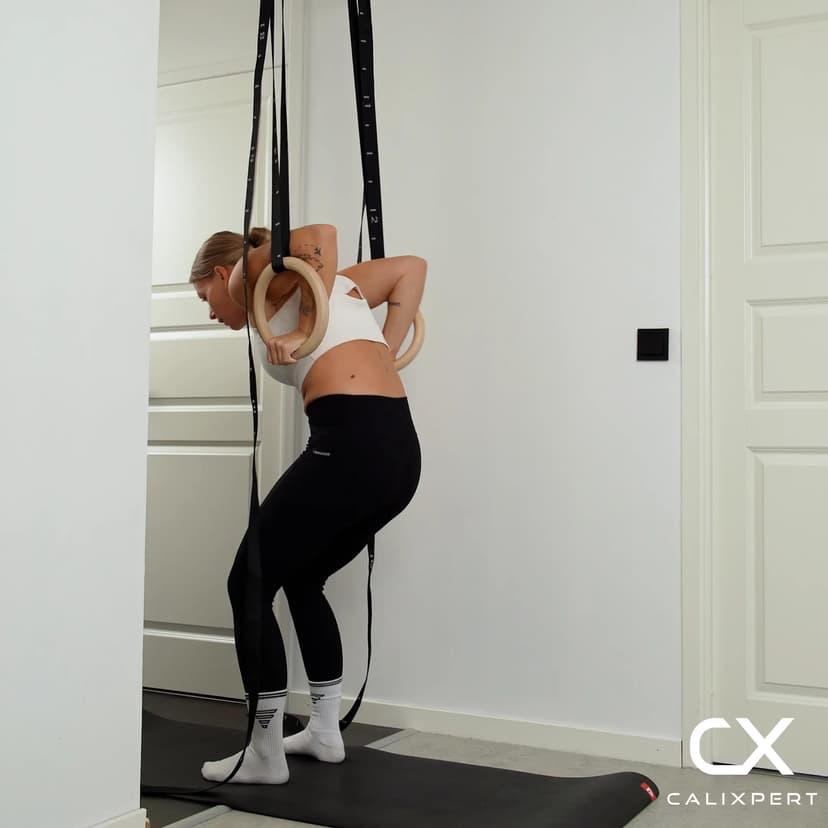
4. Lean Forward and Rotate the Grip
Once the rings pass your chest, lean your torso forward aggressively and rotate your hands from the neutral grip to a forward-facing position. This is the transition, the moment where you shift from pulling to pushing. Keep the rings pressed into your sides throughout the rotation to maintain control.
Lean forward, rotate hands, stay tight
5. Press Up Into the Dip
From the bottom of the dip position, press down on the rings and extend your arms fully. Keep your shoulders over your hands and the rings close to your body as you push. Lock out your elbows completely at the top with your body upright and stable above the rings.
Lock the arms, chest up
6. Lower With Control to the Start
Reverse the movement by bending your elbows and slowly lowering through the dip, then back through the transition, and finally extending into a full hang. Control the descent rather than dropping, since the eccentric phase builds strength in the exact positions you need for the unassisted muscle up. Reset your grip and body position before the next rep.
Slow descent, no dropping
The biggest mistake people make with ring muscle ups is trying to transition too early. If you are fighting through the transition, you did not pull high enough. Focus every rep on pulling the rings to your lower chest before you even think about leaning forward. When you get that pull height dialed in, the transition almost happens by itself.
Muscles Worked During Band Assisted Ring Muscle Up
Secondary Muscles:
Primary Muscles
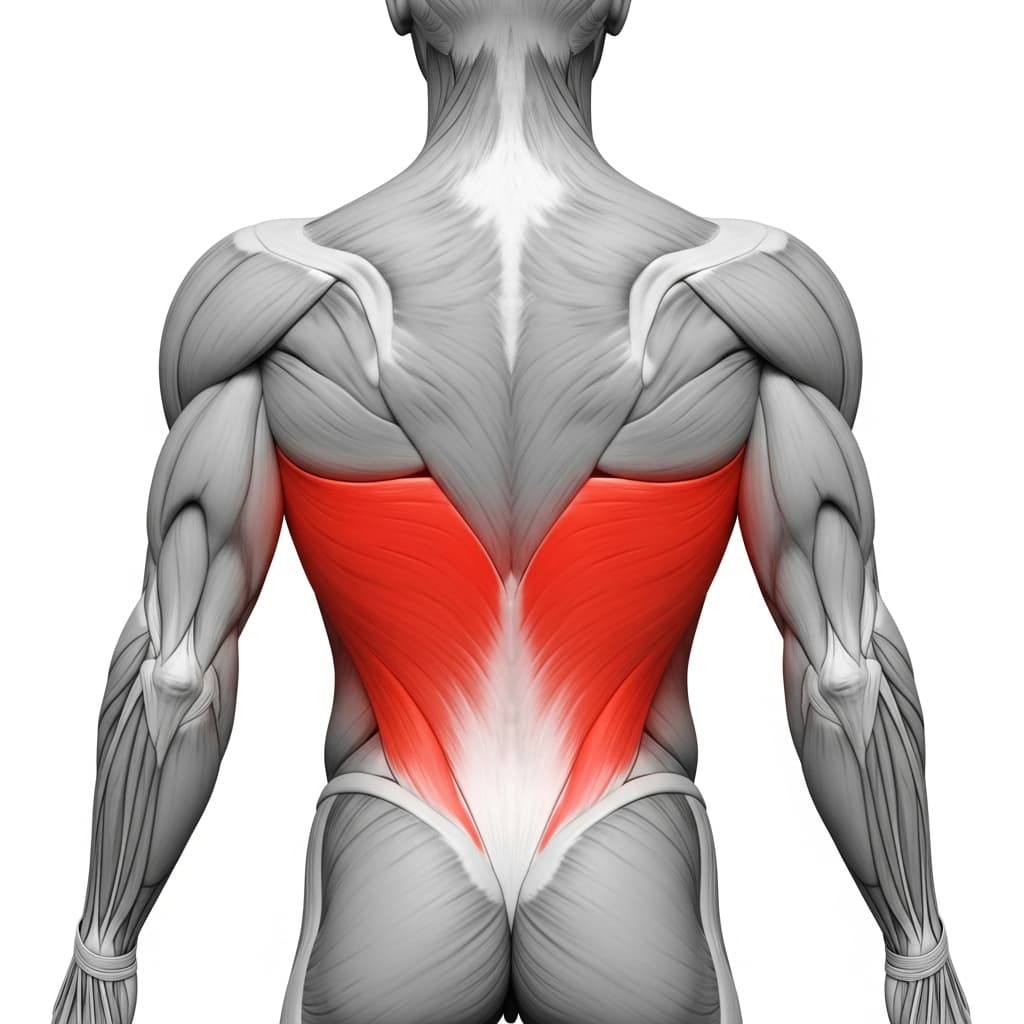
Latissimus Dorsi (Lats) - The lats drive the entire pulling phase, bringing the rings from a dead hang to the lower chest and generating the height needed for the transition.
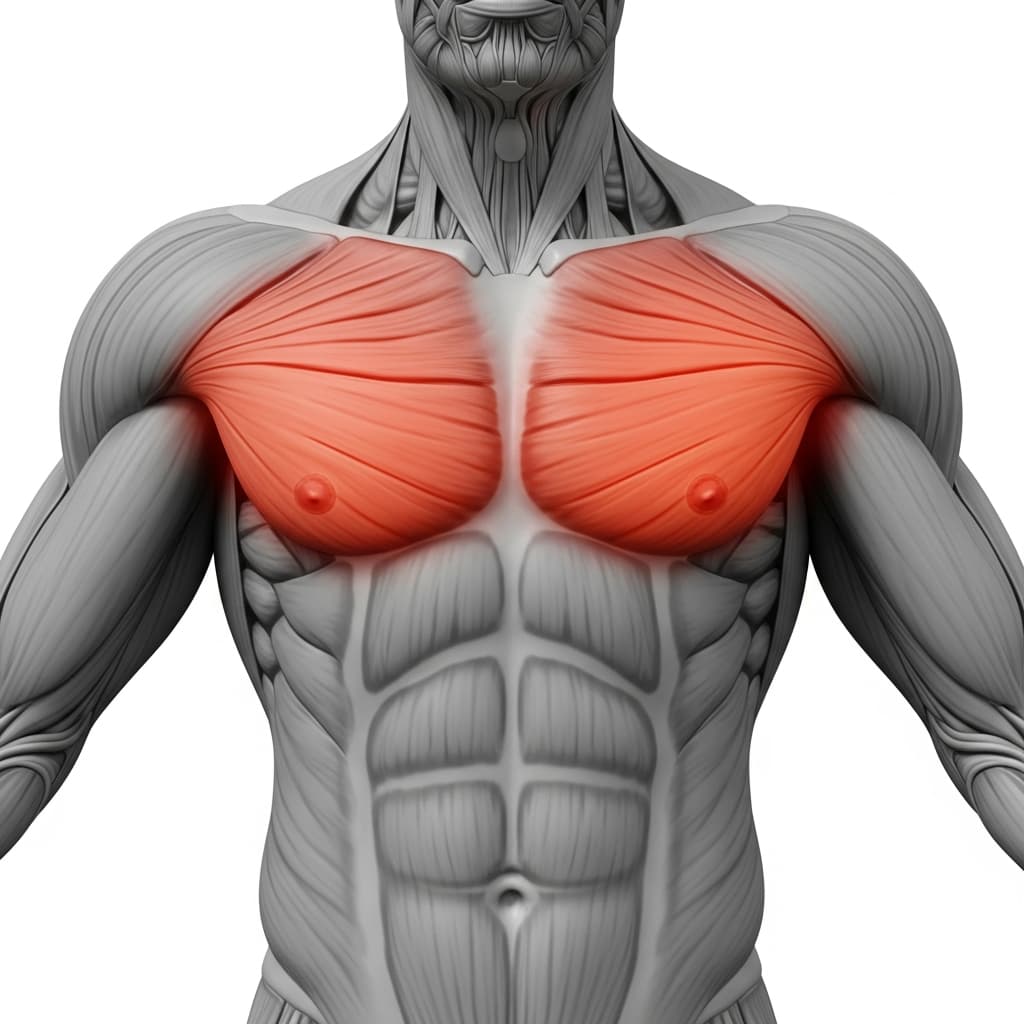
Pectoralis Major (Chest) - The chest activates heavily during the dip phase, pressing the body upward from the bottom of the transition to full lockout above the rings.
Secondary Muscles
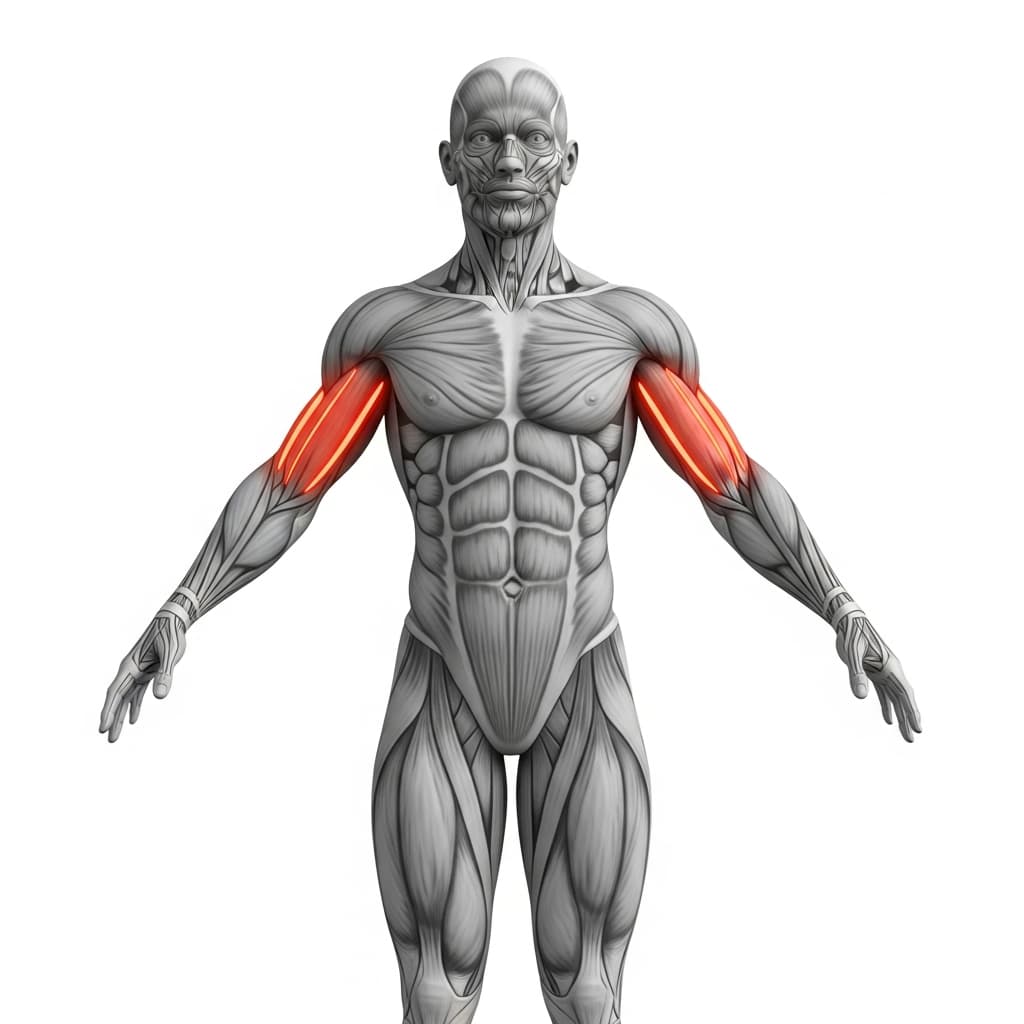
Biceps Brachii (Biceps) - The biceps assist the lats during the pull phase by flexing the elbow and help control the grip rotation during the transition.
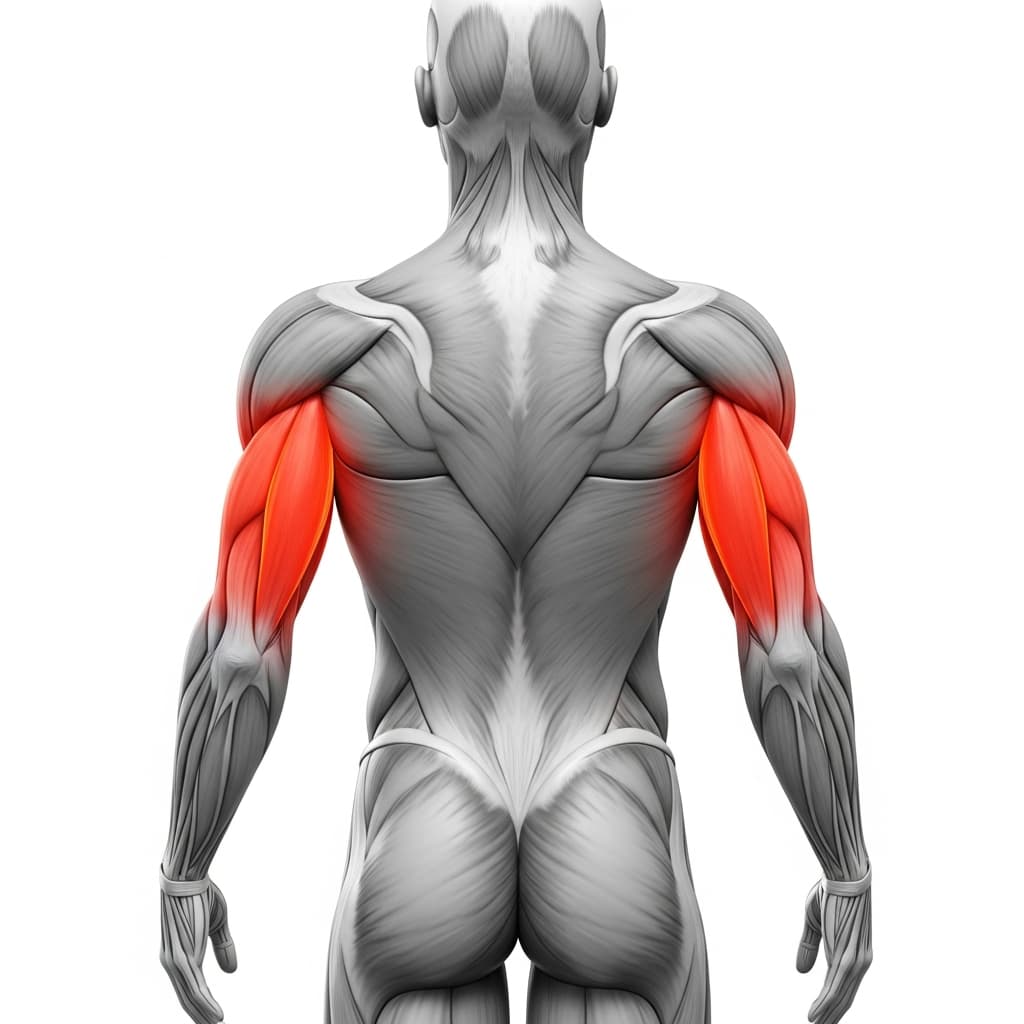
Triceps Brachii (Triceps) - The triceps extend the elbows during the dip and lockout phase, completing the pressing portion of the muscle up.
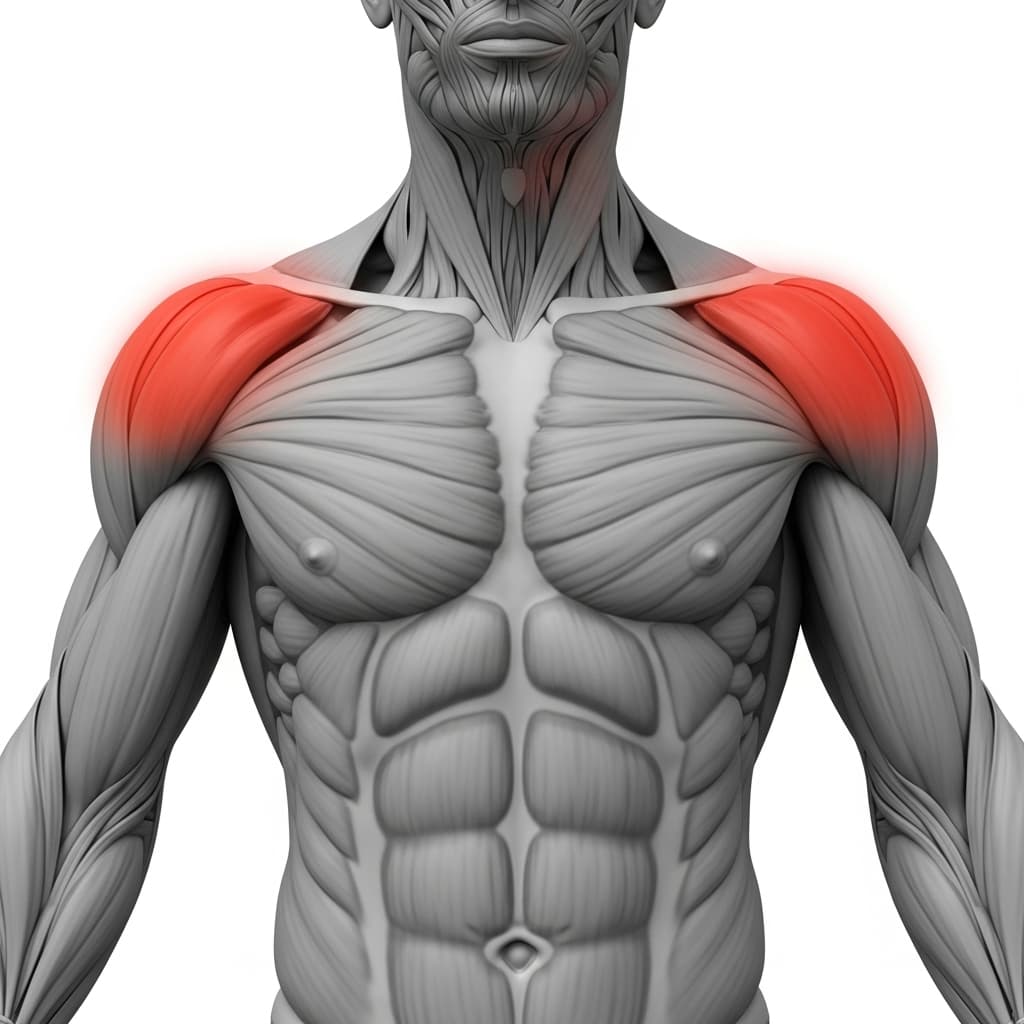
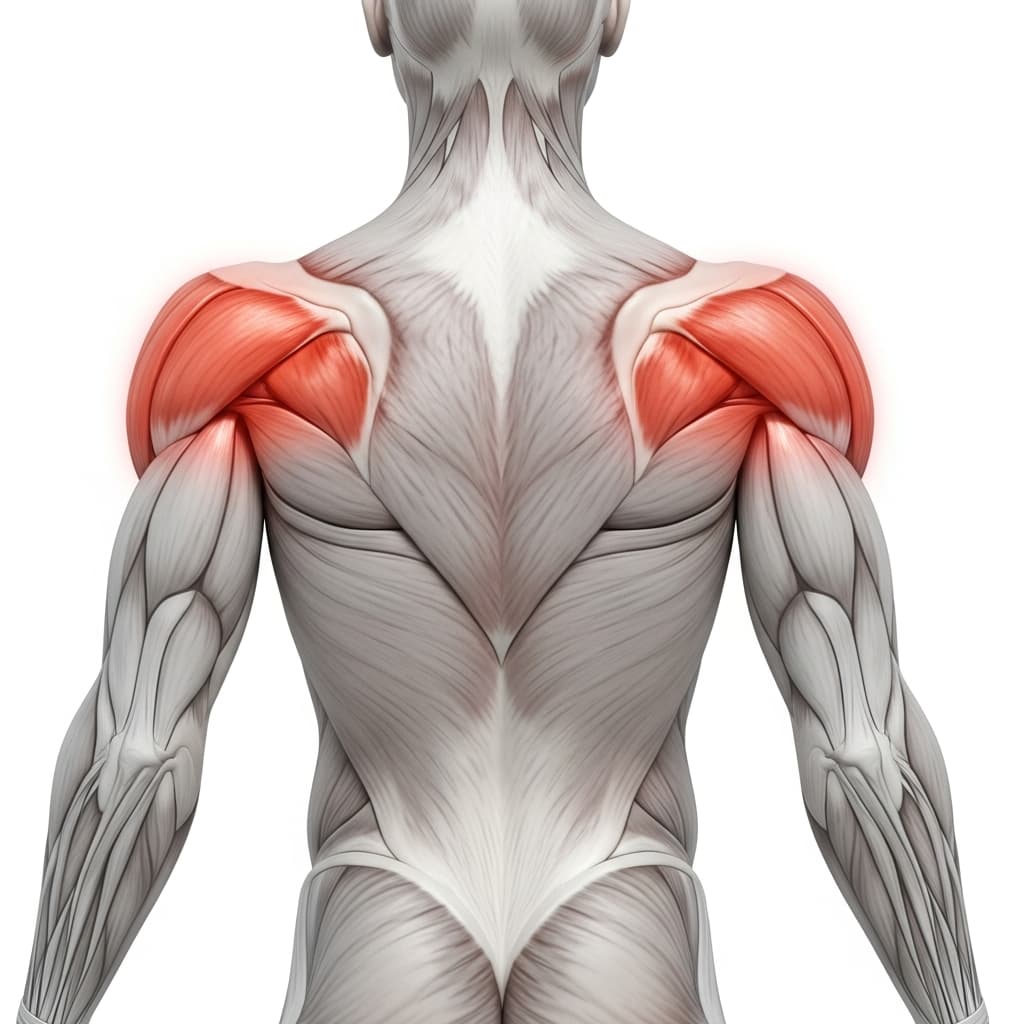
Anterior Deltoid (Front Deltoid) - The front deltoids stabilize the shoulder during the dip and assist in pressing the body upward through the final extension.
Posterior Deltoid (Rear Deltoid) - The rear deltoids assist during the pulling phase by retracting and stabilizing the shoulder blades as the rings are pulled toward the chest.
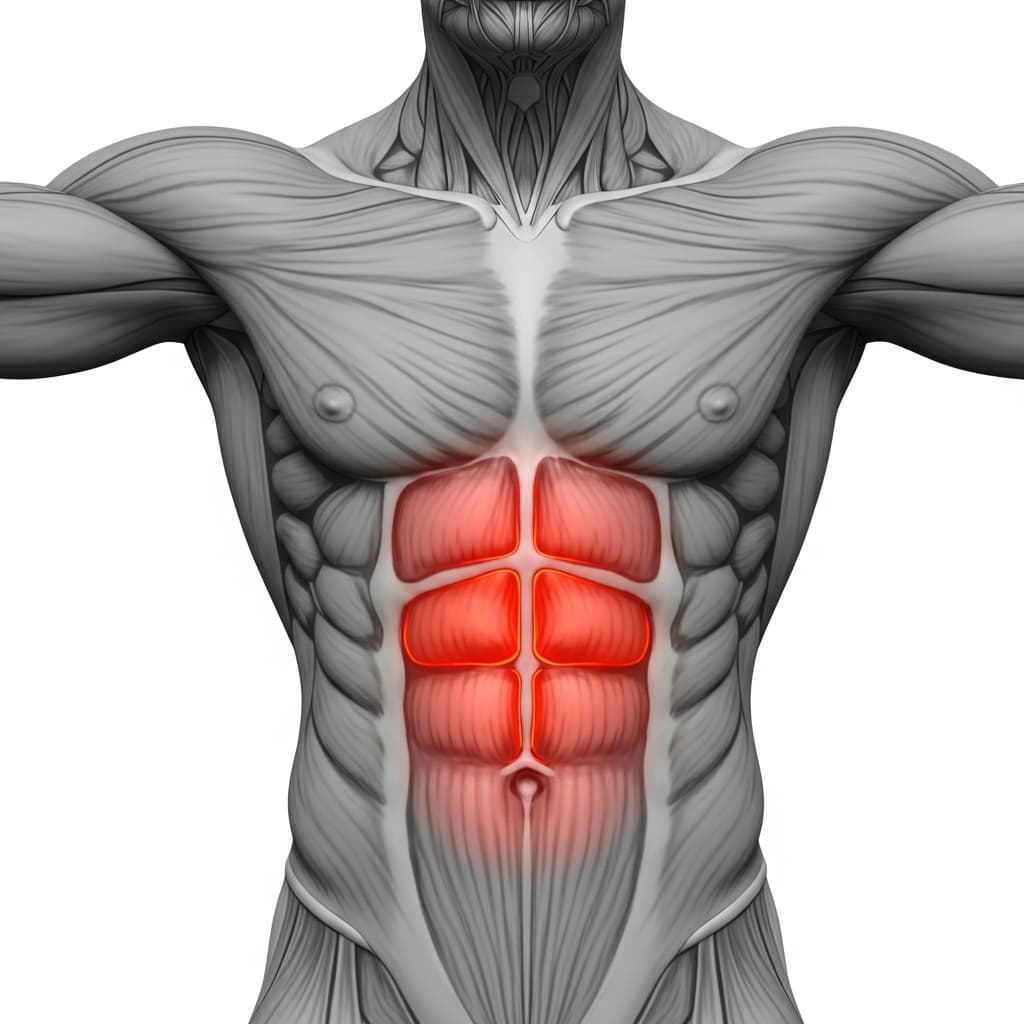
Rectus Abdominis (Abs) - The abs maintain a tight, controlled body position throughout all three phases, preventing excessive arching and swinging on the rings.
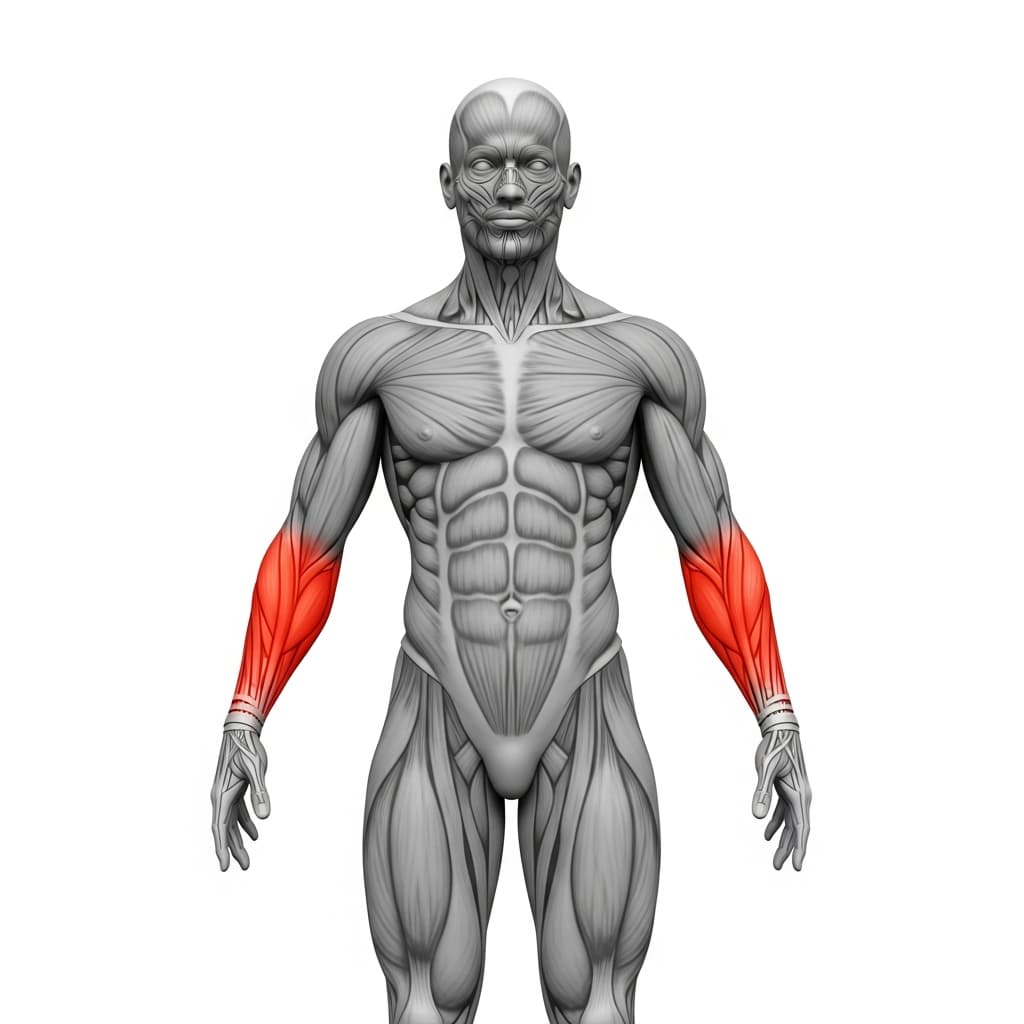
Forearm Flexors & Extensors (Forearms) - The forearms sustain grip on the rings throughout the movement and manage the rotational demand during the grip change in the transition.
Benefits of Band Assisted Ring Muscle Up
- Teaches the ring muscle up transition, the most technical and difficult phase of the movement, under reduced load so you can build the motor pattern without failing repeatedly
- Develops pulling and pushing strength in a single compound movement, training the lats, chest, and triceps through their full range in one exercise
- Builds ring-specific stability and control that transfers directly to ring dips, ring pull-ups, and all advanced ring skills
- Strengthens the forearms and grip under the rotational demand of the ring transition, which standard bar work does not replicate
- Allows progressive overload by reducing band thickness over time, creating a clear and measurable path to the unassisted ring muscle up
Who Is This Exercise For?
You should be able to perform at least 8 clean ring pull-ups and 5 controlled ring dips before attempting this exercise. Comfortable ring support holds and the ability to maintain a neutral grip under load are also necessary, since the transition demands both pulling height and pressing stability. If you cannot hold yourself steady at the top of a ring dip for 3 seconds, focus on ring dip strength and ring support work first.
Common Mistakes to Avoid
Not pulling high enough before transitioning: The transition becomes drastically harder when you try it too early. Focus on pulling the rings all the way to your lower chest before you lean forward. If you cannot reach that height, use a thicker band until you can.
Letting the rings drift away from the body: Rings moving outward during the pull or transition reduce your mechanical advantage and make the movement unstable. Actively squeeze the rings into your sides throughout the entire rep as if you are trying to keep a towel pinned under each arm.
Using too much band assistance: A band that is too thick lets you complete reps without building real strength in the transition. Choose the lightest band that still allows you to perform 3 to 5 clean reps, and progress to thinner bands over time.
Kipping or swinging into the pull: Momentum masks the pulling strength you need for an unassisted muscle up. Start every rep from a dead hang with no swing, and if you need to kip, the band is too light or you are not strong enough for this progression yet.
Rushing through the transition: The transition is the skill component of the muscle up and needs deliberate practice. Slow down the lean-forward and grip rotation so you feel each position, rather than throwing yourself over the rings and hoping to catch the dip.
Variations & Progressions
Band Assisted Bar Muscle Up
Performing the muscle up on a straight bar instead of rings removes the instability factor entirely. This lets you focus purely on pull height and the transition without managing ring movement.
Unassisted Ring Muscle Up
Removing the band requires full bodyweight pulling strength through the transition. This is the target exercise and demands significantly more lat power, grip endurance, and transition speed.