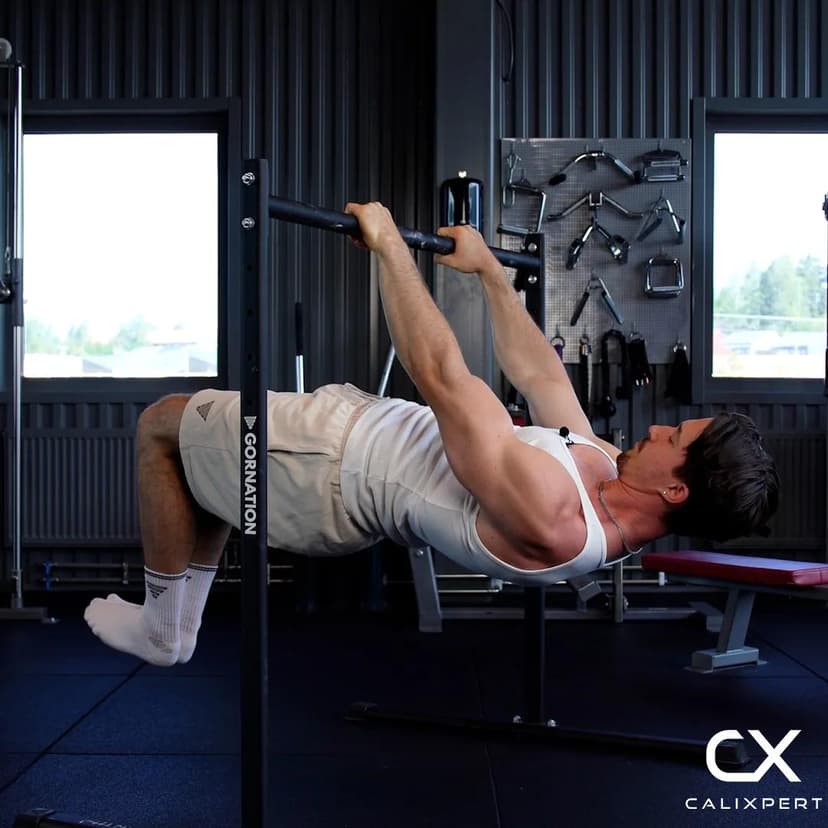
90 Degree Chin Up Hold
The 90 Degree Chin Up Hold is an isometric pulling exercise where you maintain a supinated hang with your elbows locked at 90 degrees, targeting the biceps, lats, and upper back under sustained tension. Unlike dynamic reps, the hold forces the muscles to stabilize under load without any momentum, which exposes weaknesses in scapular control and grip endurance that regular chin-ups can hide. Building a solid hold at this angle is one of the most direct ways to develop the pulling strength and body tension needed for strict chin-ups and one-arm chin-up progressions.
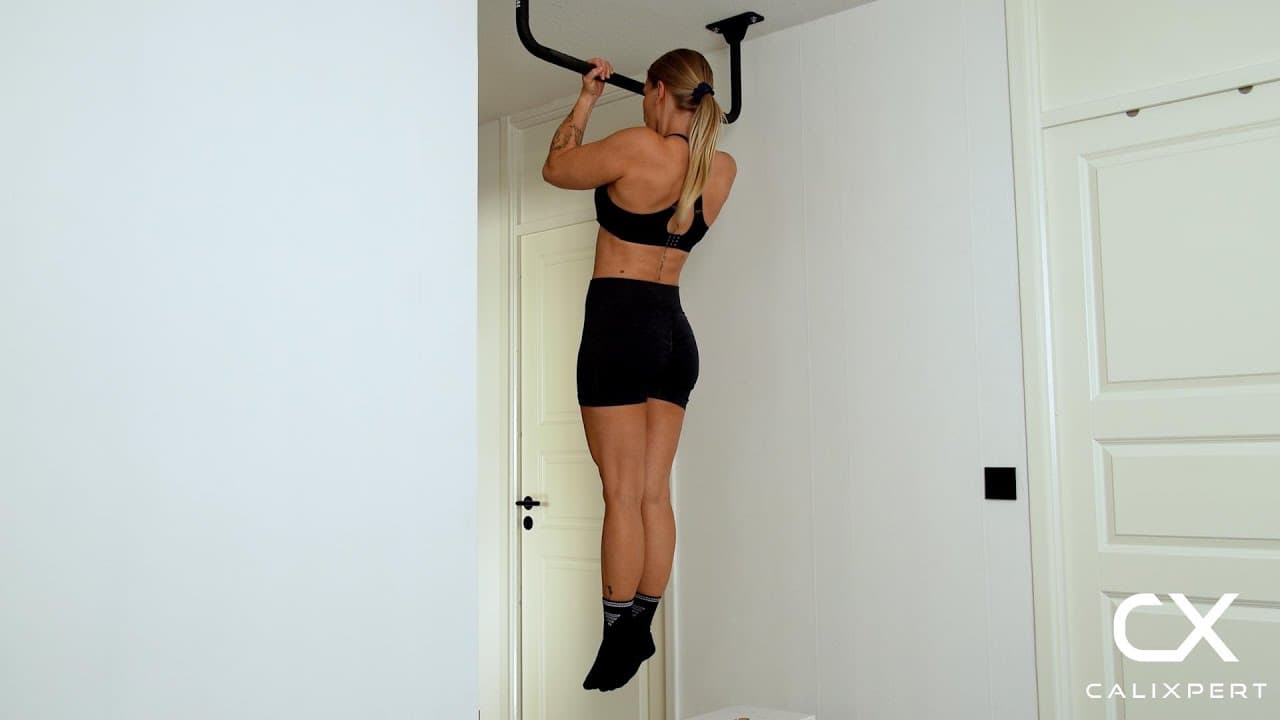
The 90 Degree Chin Up Hold is an isometric pulling exercise where you maintain a supinated hang with your elbows locked at 90 degrees, targeting the biceps, lats, and upper back under sustained tension. Unlike dynamic reps, the hold forces the muscles to stabilize under load without any momentum, which exposes weaknesses in scapular control and grip endurance that regular chin-ups can hide. Building a solid hold at this angle is one of the most direct ways to develop the pulling strength and body tension needed for strict chin-ups and one-arm chin-up progressions.
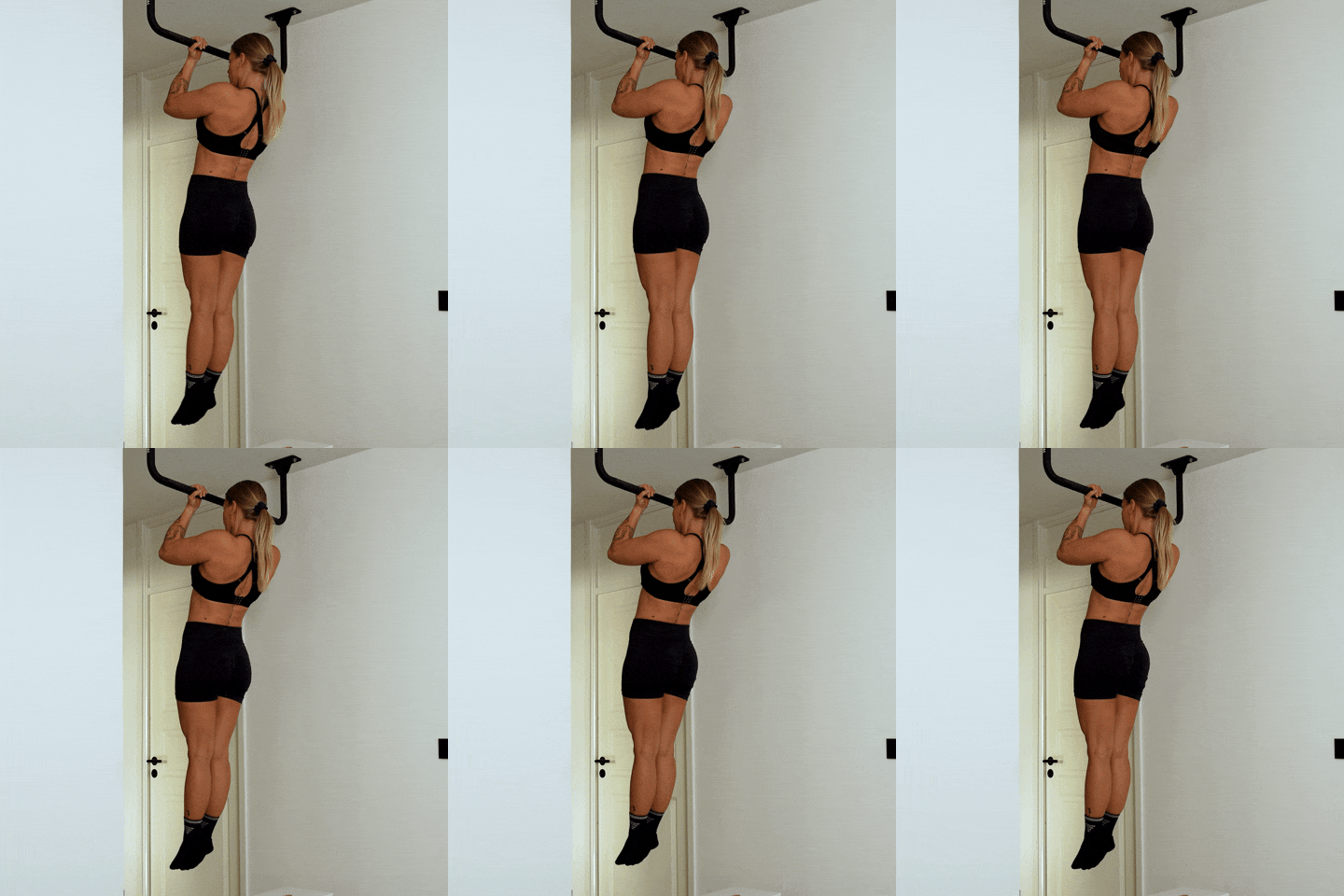
How to Do 90 Degree Chin Up Hold
1. Set Your Grip and Height
Find a bar at a height where you can step or jump directly into the hold position without needing to pull yourself up from a dead hang. Grab the bar with a supinated grip, palms facing toward you, at about shoulder width. Wrap your thumbs fully around the bar for a secure grip.
Palms toward you, thumbs locked around
2. Step Into the 90 Degree Position
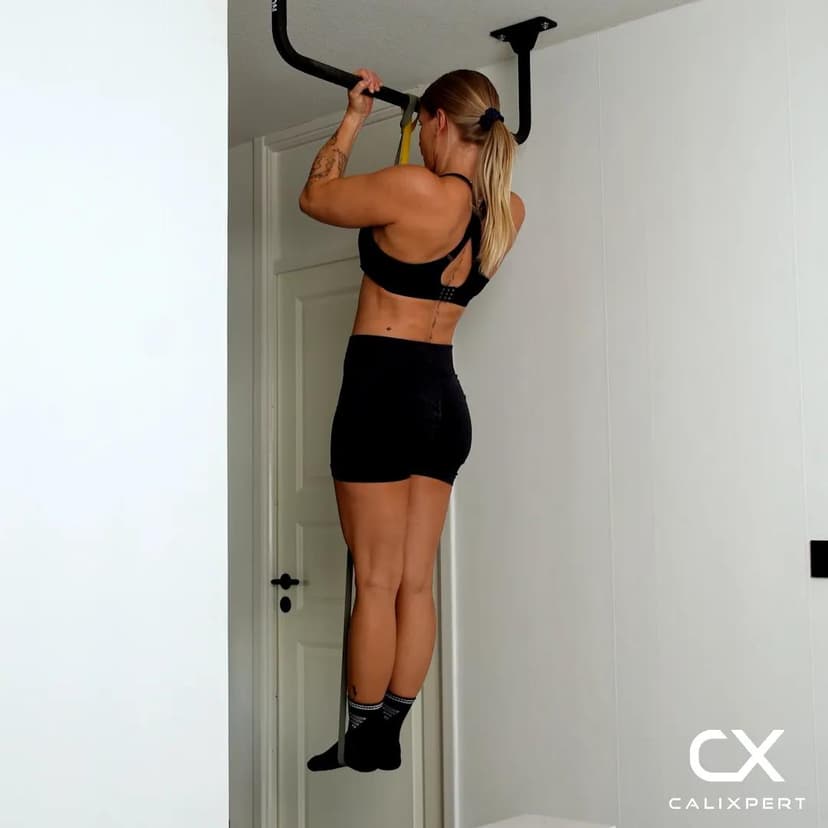
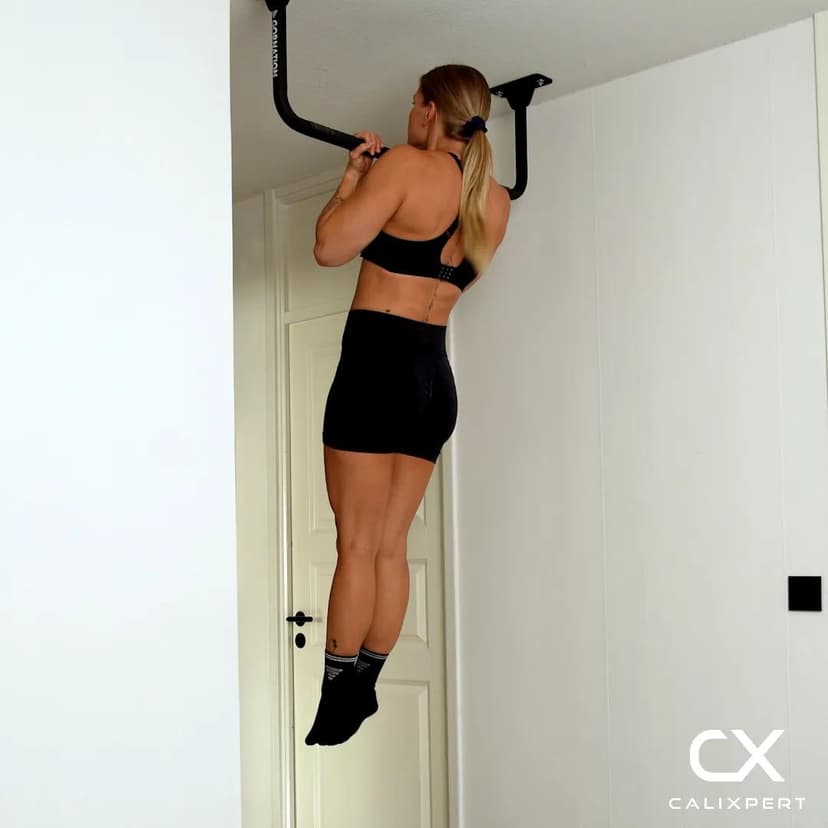
Step up or use a box to position yourself with your elbows bent at exactly 90 degrees and your chin clearly above the bar. Do not pull yourself up, step directly into the correct angle so you start the hold with full control. Your chest should be close to the bar from the very first second.
Step in, do not pull in
3. Depress and Retract the Scapula
Before focusing on the hold, actively push your shoulders down away from your ears and squeeze your shoulder blades together. This scapular set keeps the lats and upper back engaged and prevents the traps from taking over the hold. Maintain this retraction for the entire duration.
Shoulders down, blades squeezed together
4. Engage Full Body Tension
Bring your legs together, squeeze your glutes, and brace your core to eliminate any arching in the lower back. This full-body tension stabilizes your position and prevents swinging. Think of your body as one rigid unit from shoulders to toes.
Legs together, glutes tight, core braced
5. Hold Close to the Bar
Maintain the 90 degree elbow angle and keep your chest as close to the bar as possible throughout the hold. If you start drifting away from the bar, your lats are disengaging and the load is shifting entirely to the biceps. Breathe steadily through the hold without letting your position shift.
Stay tight to the bar, do not drift
6. Lower Under Control
When the hold time is complete, lower yourself slowly to a full dead hang over 3 to 4 seconds. Do not drop or release suddenly. Step off the bar and rest fully before the next set.
Slow descent, never drop
Most people lose the hold because they forget about the upper back. The moment your shoulder blades stop squeezing together, your body drifts away from the bar and the biceps get crushed trying to do everything alone. Set the scapula first, keep it retracted the entire time, and the hold gets significantly easier because the lats are actually doing their job.
Muscles Worked During 90 Degree Chin Up Hold
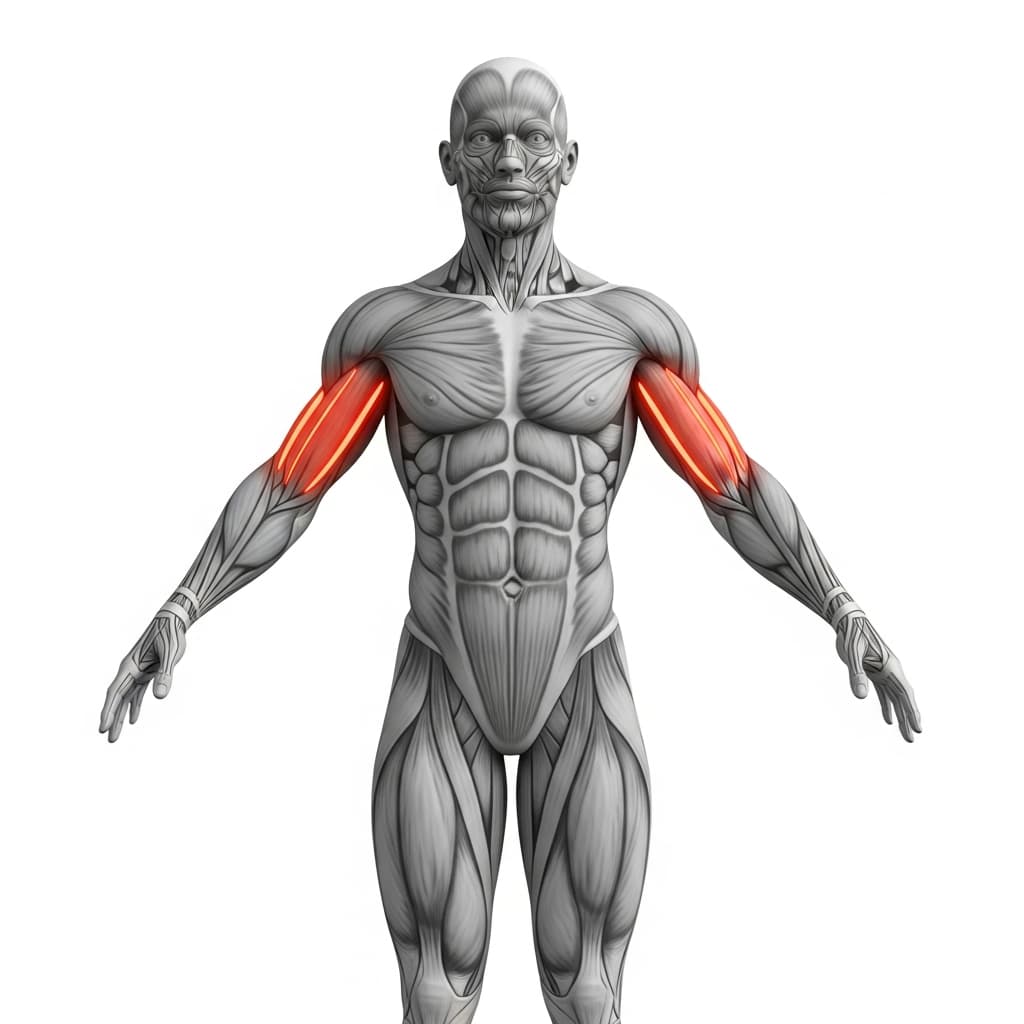
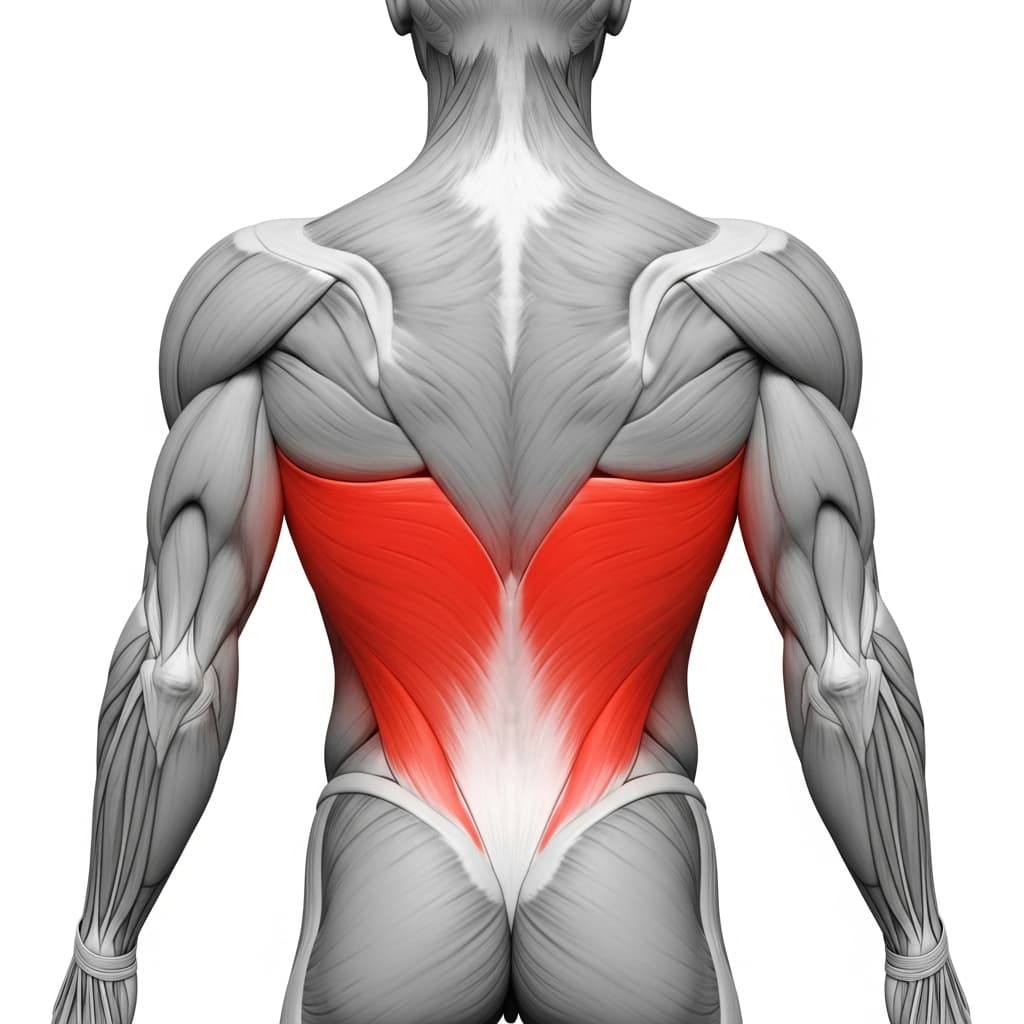
Secondary Muscles:
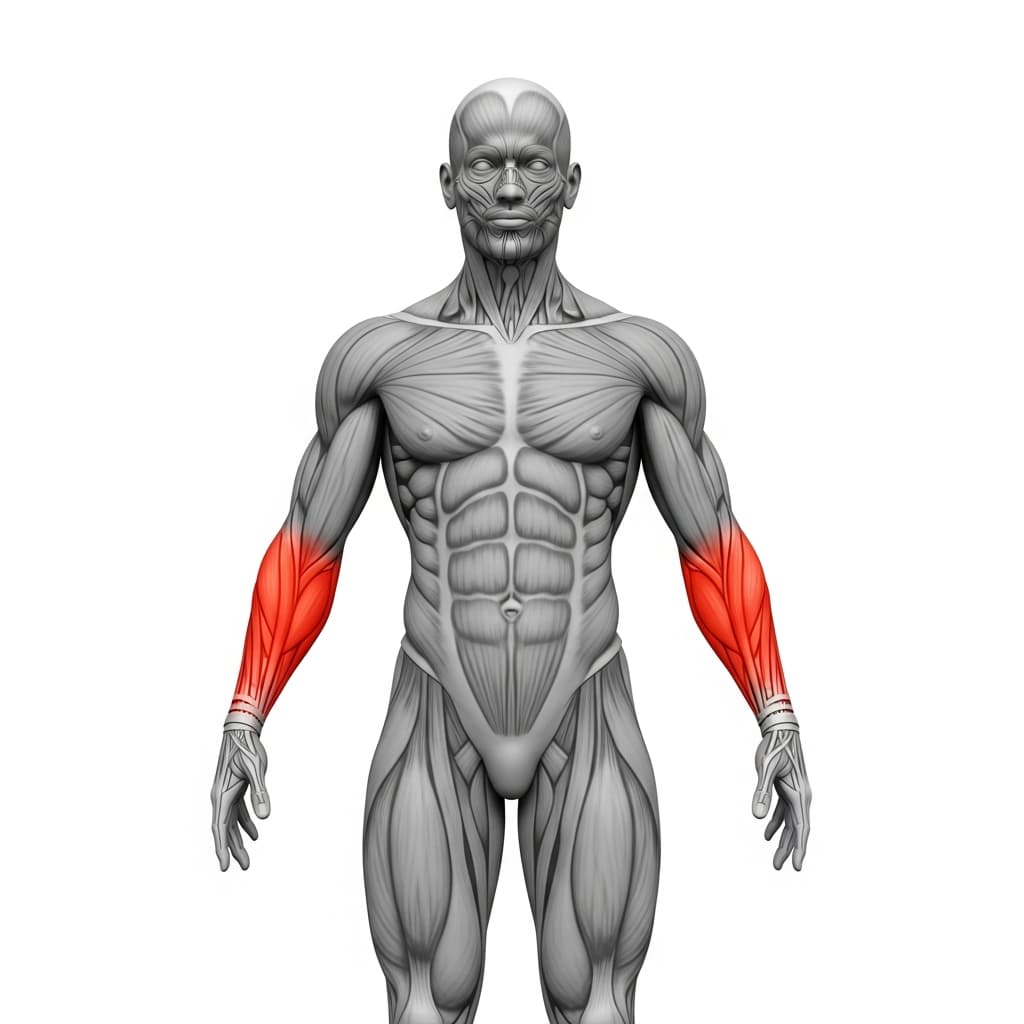
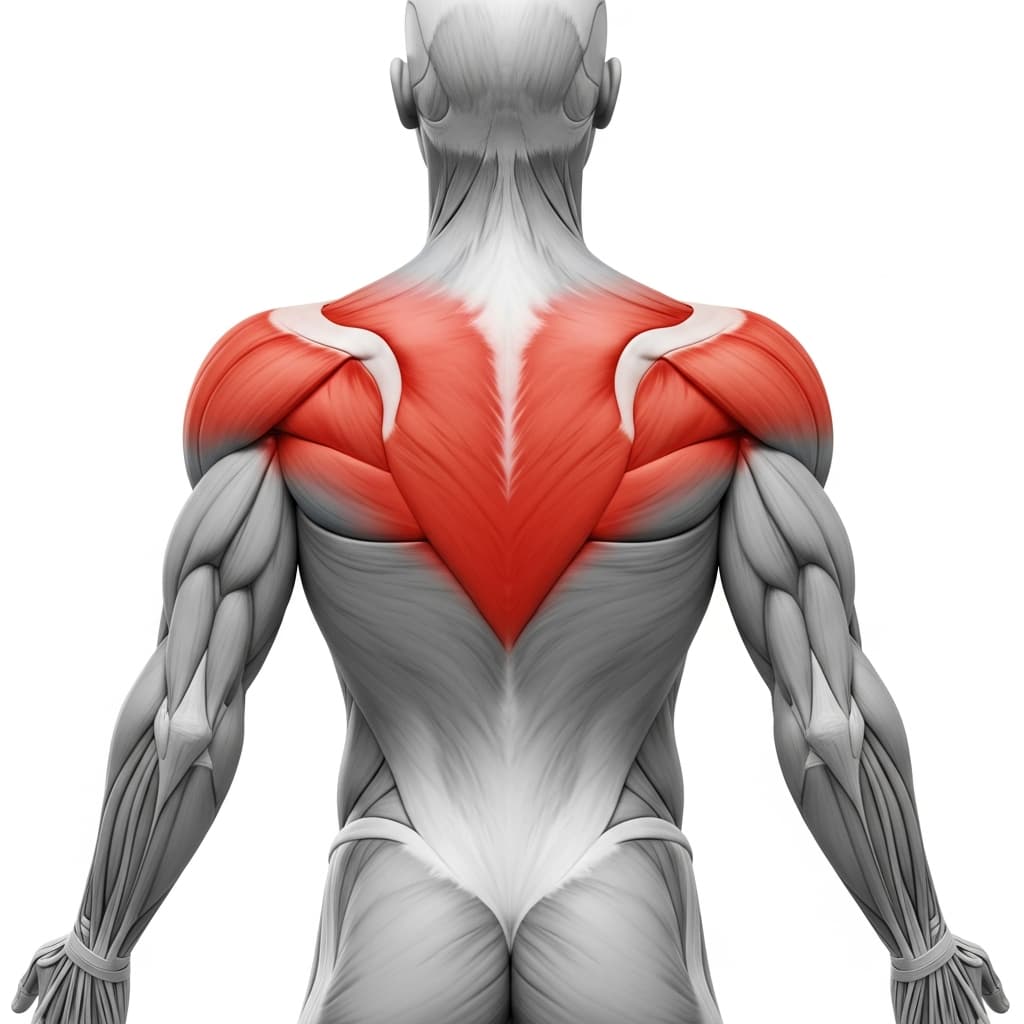
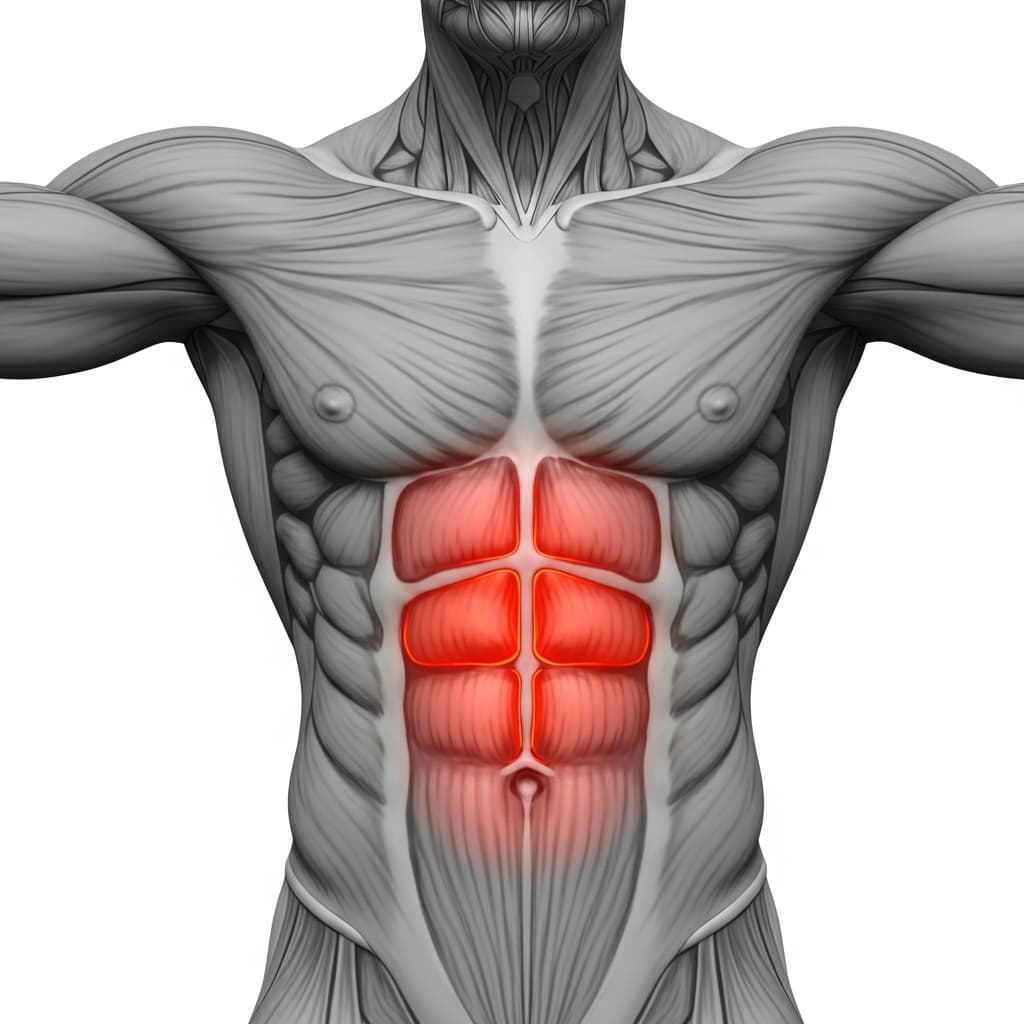
Primary Muscles
Biceps Brachii (Biceps) - The biceps maintain the 90-degree elbow flexion isometrically, bearing a large share of the load throughout the entire hold duration.
Latissimus Dorsi (Lats) - The lats keep the body pulled close to the bar by maintaining shoulder adduction and extension against gravity.
Secondary Muscles
Forearm Flexors & Extensors (Forearms) - The forearms maintain grip on the bar under sustained bodyweight load, with demand increasing as hold time extends.
Rhomboids & Upper Trapezius (Upper Back) - The upper back muscles, including the rhomboids and mid-traps, hold the scapulae in a retracted position throughout the hold.
Rectus Abdominis (Abs) - The abs brace the torso to prevent lower back arching and eliminate swing, maintaining a rigid midline.
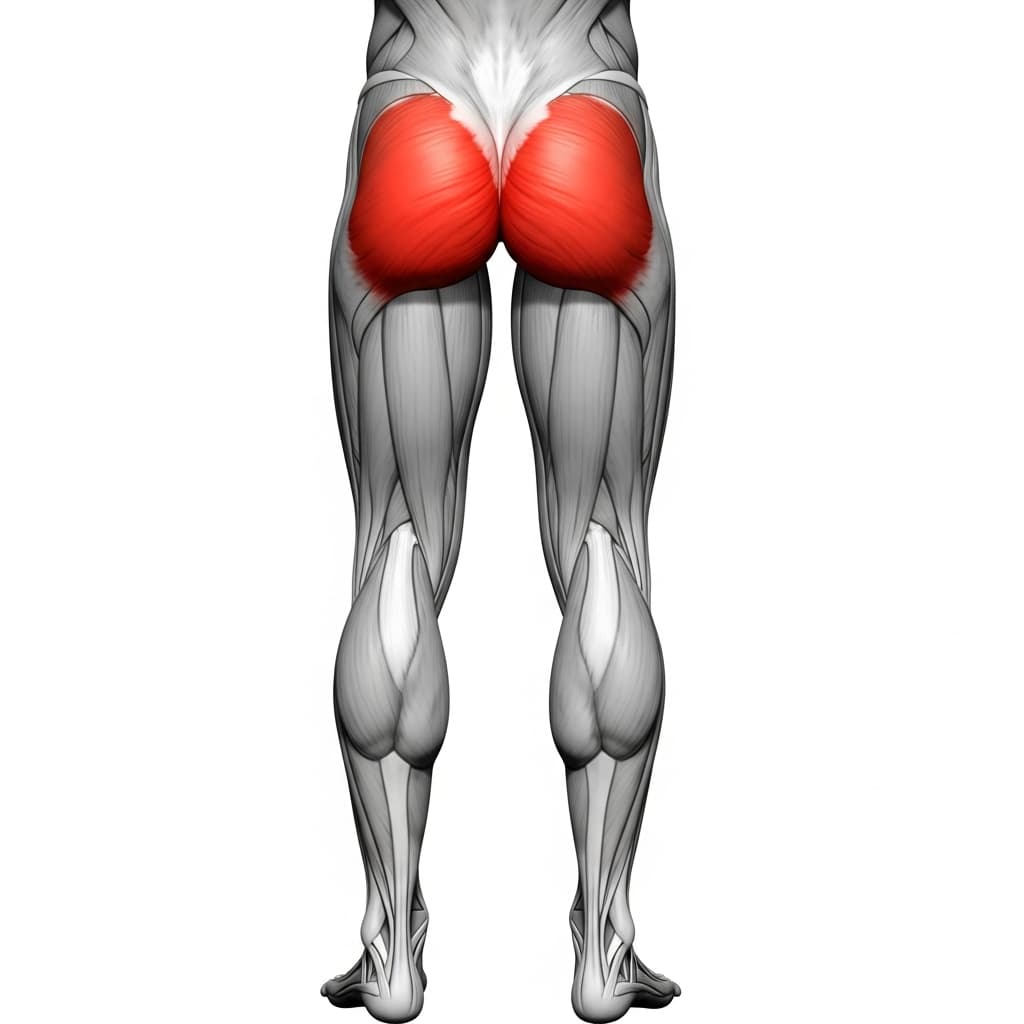
Gluteus Maximus (Glutes) - The glutes contract to lock the lower body in position, preventing hip flexion and contributing to full-body tension.
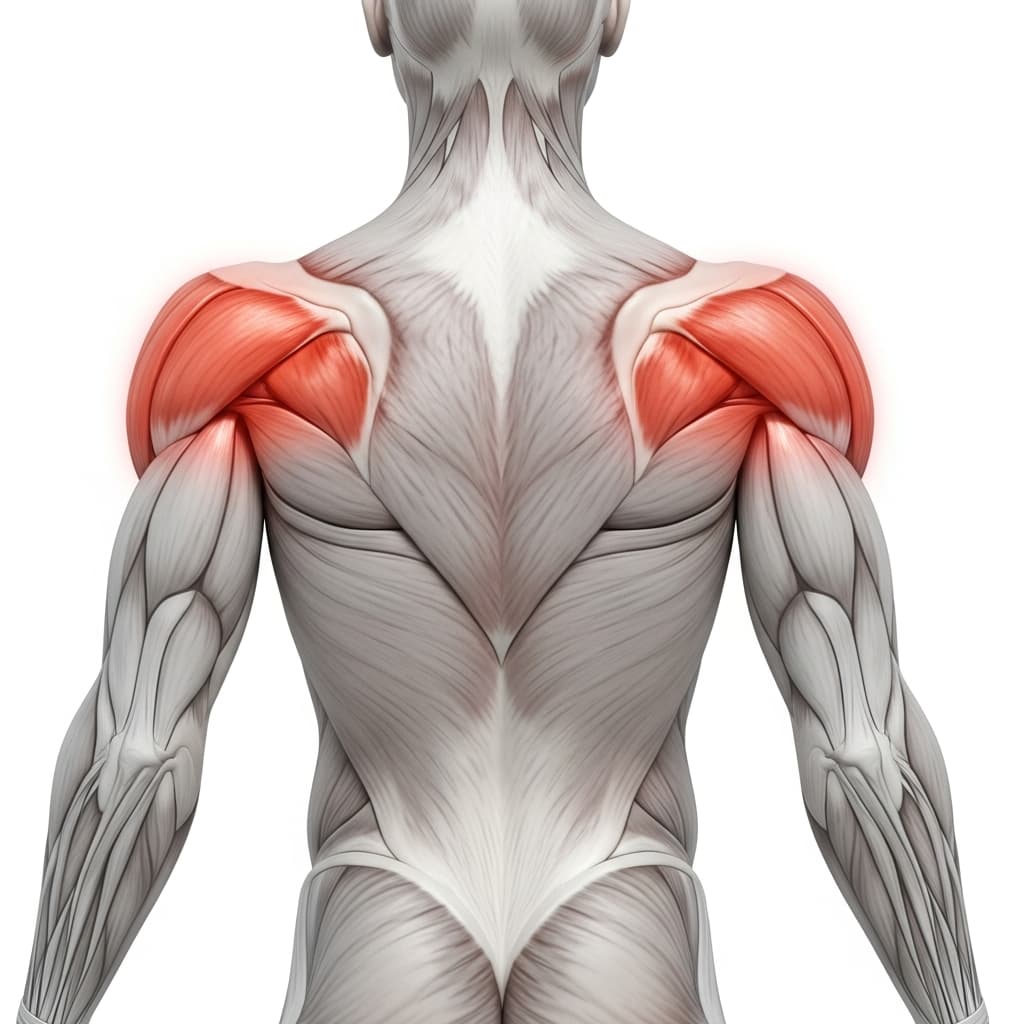
Posterior Deltoid (Rear Deltoid) - The rear deltoids assist the lats in maintaining shoulder extension and contribute to keeping the chest close to the bar.
Benefits of 90 Degree Chin Up Hold
- Builds bicep and lat strength at the exact joint angle where most people fail during chin-ups, directly improving pulling power through the mid-range
- Develops scapular retraction endurance, training the upper back to hold position under sustained load rather than just during dynamic reps
- Strengthens grip and forearm endurance through prolonged loaded hanging, which transfers to all bar-based pulling exercises
- Builds the tendon and connective tissue resilience in the elbows and shoulders that isometric holds develop more effectively than dynamic reps
- Creates the body tension and positional awareness needed for advanced chin-up and one-arm chin-up progressions
Who Is This Exercise For?
You should be able to hold a dead hang for at least 20 seconds and perform 3 to 5 clean chin-up negatives before attempting a 90 degree hold. If you cannot control a slow descent from the top of a chin-up, your biceps and lats are not yet strong enough to maintain a static position at the midpoint. Master the dead hang and negative chin-up first, then progress to timed holds.
Common Mistakes to Avoid
Shrugging the shoulders up toward the ears: Actively depress your shoulders before starting the hold and maintain that position throughout. When the traps take over, the lats and upper back disengage and the hold becomes less effective and harder on the neck.
Letting the body swing or kick: Squeeze your legs together, activate your glutes, and brace your core before starting the hold. Any swing breaks the isometric tension and turns the exercise into an uncontrolled hang.
Drifting away from the bar: If your body drifts forward and away from the bar, you have lost scapular retraction. Re-squeeze your shoulder blades together and think about pulling your chest toward the bar, not just holding yourself up.
Holding at the wrong elbow angle: Use a mirror or training partner to confirm your elbows are at 90 degrees. Holding too high shifts the exercise to a top hold, and holding too low makes it a near-dead hang, both of which train a different strength range.