Step Ups
Step ups are a unilateral lower body exercise that targets the quads, glutes, and hamstrings by driving your bodyweight up onto an elevated surface one leg at a time. The movement demands that each leg works independently, which exposes and corrects strength imbalances that bilateral exercises like squats can hide. When performed with strict form and no momentum from the trailing leg, step ups build functional single-leg strength that transfers directly to running, jumping, and advanced calisthenics skills like pistol squats.
Step ups are a unilateral lower body exercise that targets the quads, glutes, and hamstrings by driving your bodyweight up onto an elevated surface one leg at a time. The movement demands that each leg works independently, which exposes and corrects strength imbalances that bilateral exercises like squats can hide. When performed with strict form and no momentum from the trailing leg, step ups build functional single-leg strength that transfers directly to running, jumping, and advanced calisthenics skills like pistol squats.
How to Do Step Ups
1. Choose Your Box Height
Select a sturdy box, bench, or step that places your thigh roughly parallel to the ground when your foot is on it. A lower surface makes the exercise easier, a higher surface makes it significantly harder. Make sure the surface is stable and will not slide or tip under your weight.
Lower box for beginners, higher for advanced
2. Place Your Foot on the Box
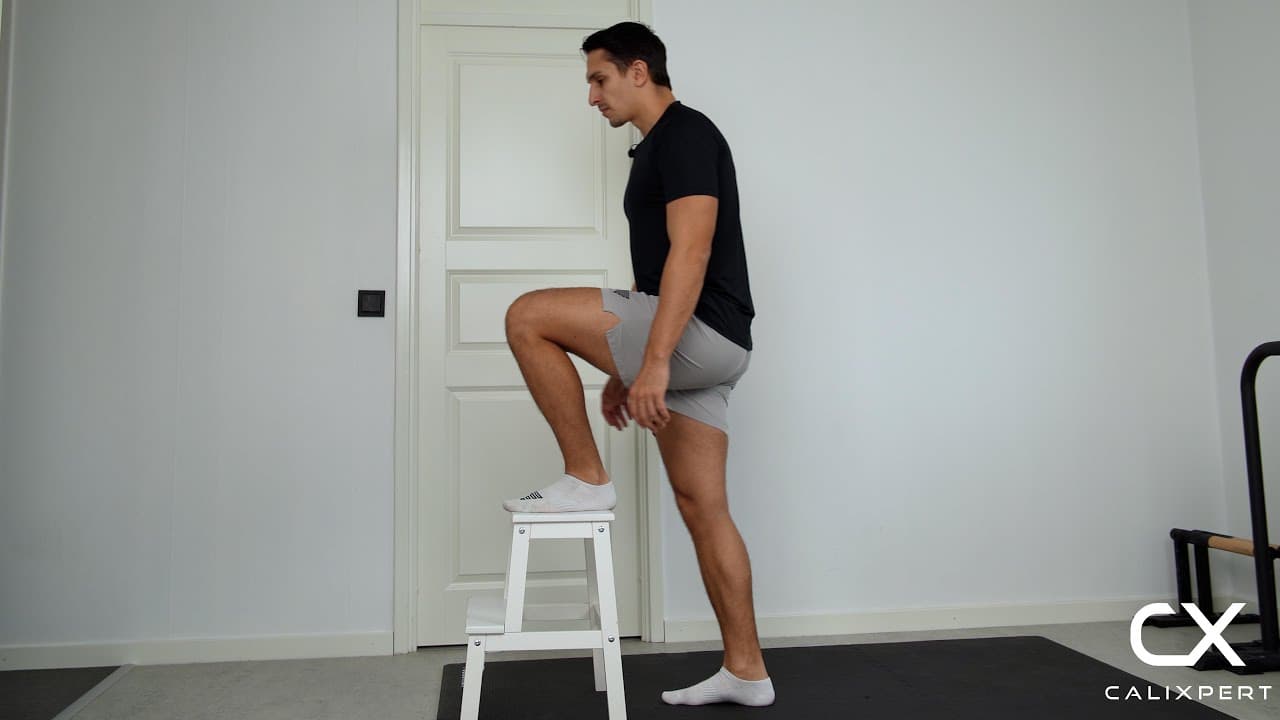
Stand close to the box and place your entire working foot flat on the surface. Your toes, ball, and heel should all be in contact with the box. Keep your standing leg close to the edge so you are not reaching forward. Arms can hang at your sides or be held in front of your chest for balance.
Whole foot flat, stand close to the edge
3. Lean Forward and Drive Up
Shift your weight forward into the working leg by leaning your torso slightly over that knee. Press through your full foot to drive yourself upward using only the strength of the leg on the box. Do not push off or bounce with the trailing leg on the ground. Keep your core braced and your chest lifted throughout the push.
Drive through the top leg only
4. Stand Tall at the Top
Fully extend your hip and knee at the top of the movement so you are standing upright on the box. Your trailing leg should hang freely or come up to a brief knee raise if you want additional hip flexor work. Pause for a moment at the top to confirm you are balanced and in control before descending.
Full lockout, stand tall on the box
5. Lower Under Control
Slowly lower your trailing foot back to the ground by bending the working knee and hip under control. Resist gravity on the way down rather than dropping. Keep your weight centered over the working leg throughout the descent. Touch the ground lightly with your trailing foot before starting the next rep.
Slow descent, do not drop down
The biggest mistake people make with step ups is turning them into a two-leg exercise by pushing off the ground with the back foot. If you want this exercise to actually build single-leg strength, pretend the floor is made of glass. Lean into the working leg, drive up through that leg alone, and lower yourself back down without slamming the trailing foot. That discipline is what separates a useful step up from a glorified stair climb.
Muscles Worked During Step Ups
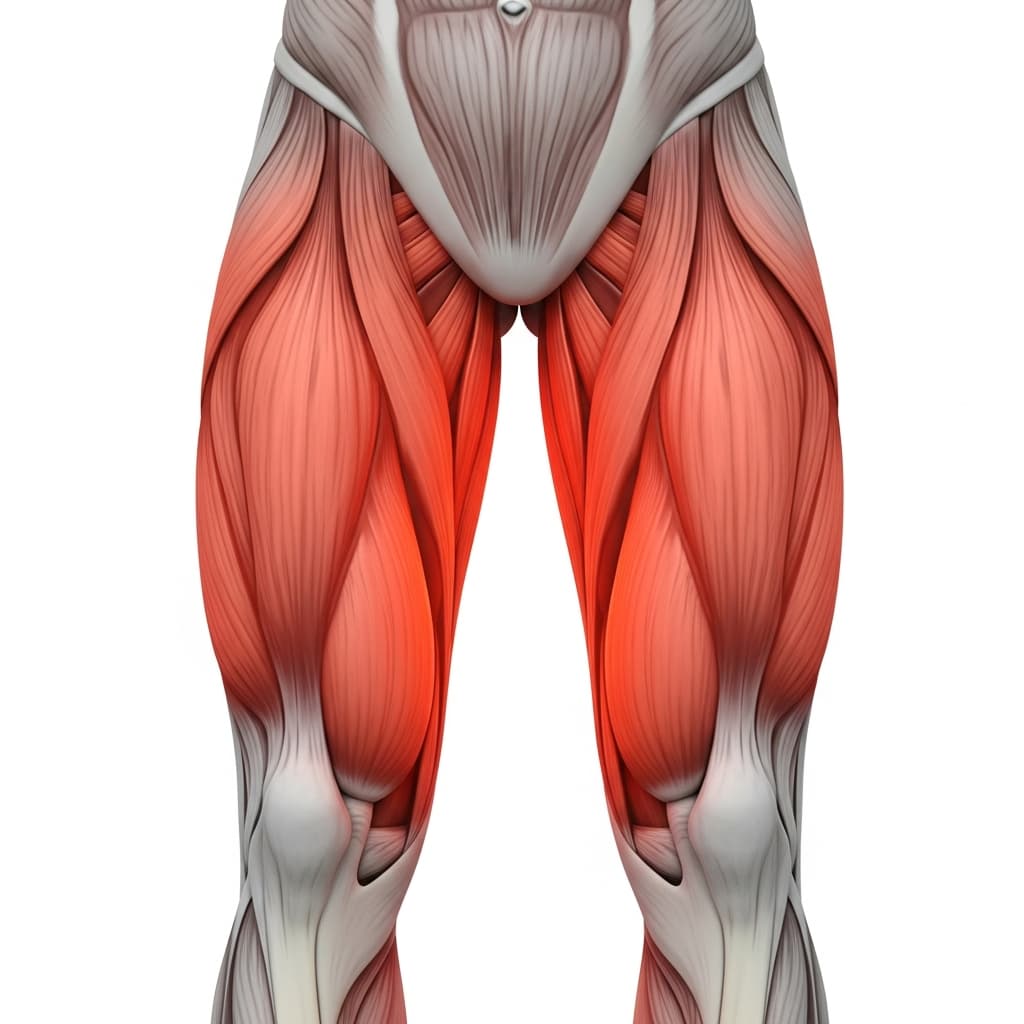
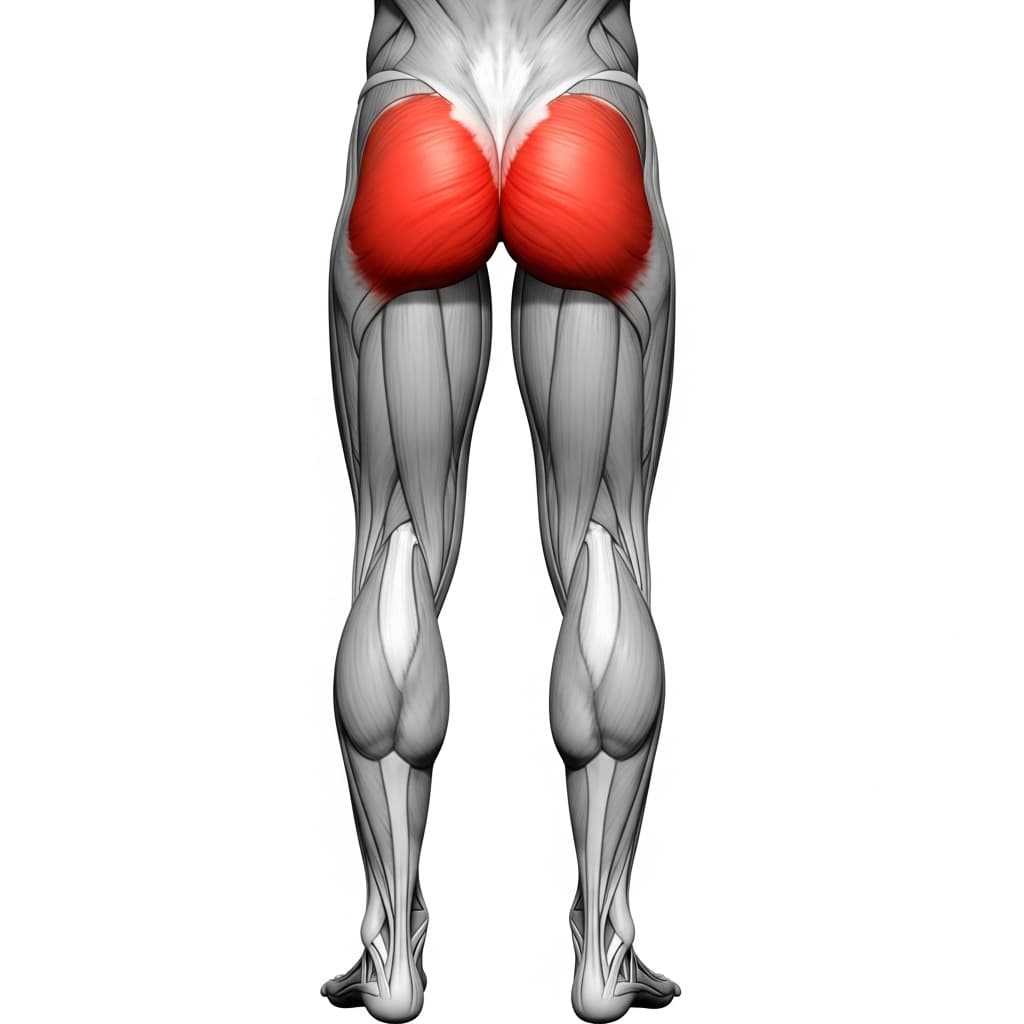
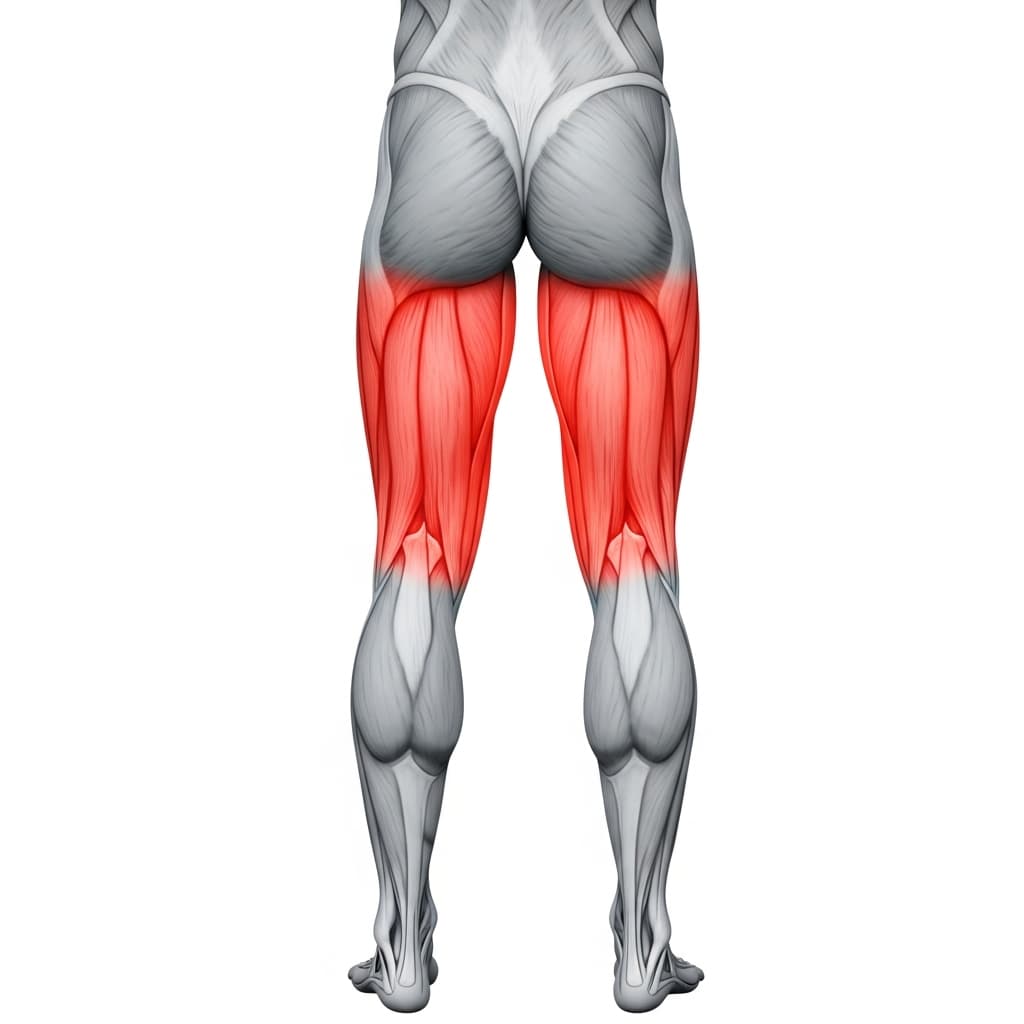
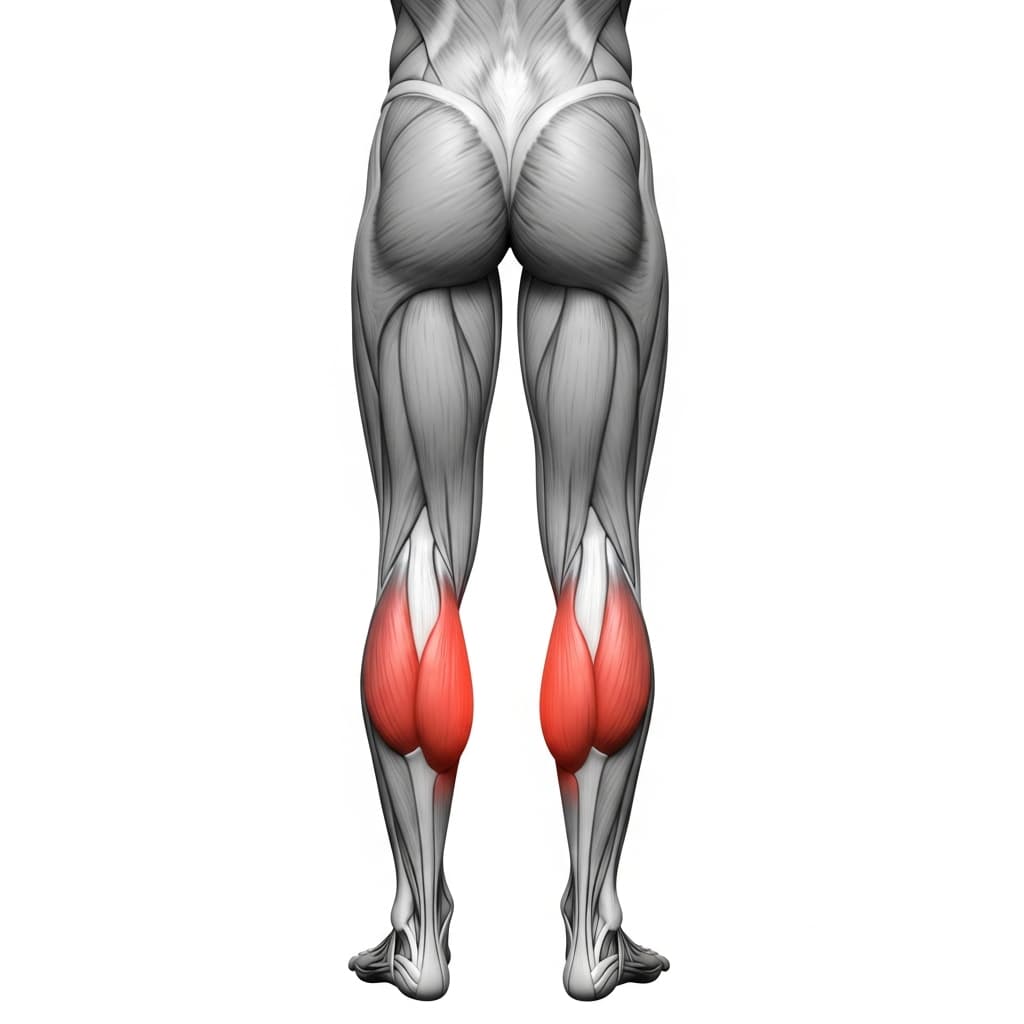
Secondary Muscles:
Primary Muscles
Quadriceps (Quads) - The quadriceps extend the knee as you drive your body upward onto the box, handling the majority of the lifting force through the full range of the step.
Gluteus Maximus (Glutes) - The glutes extend the hip from its flexed starting position as you press up, working hardest in the bottom half of the movement where the hip angle is deepest.
Secondary Muscles
Hamstring Group (Hamstrings) - The hamstrings assist the glutes in hip extension during the drive phase and help control the descent as you lower back to the ground.
Gastrocnemius & Soleus (Calves) - The calves stabilize the ankle joint of the working leg throughout the movement and contribute to balance on the elevated surface.
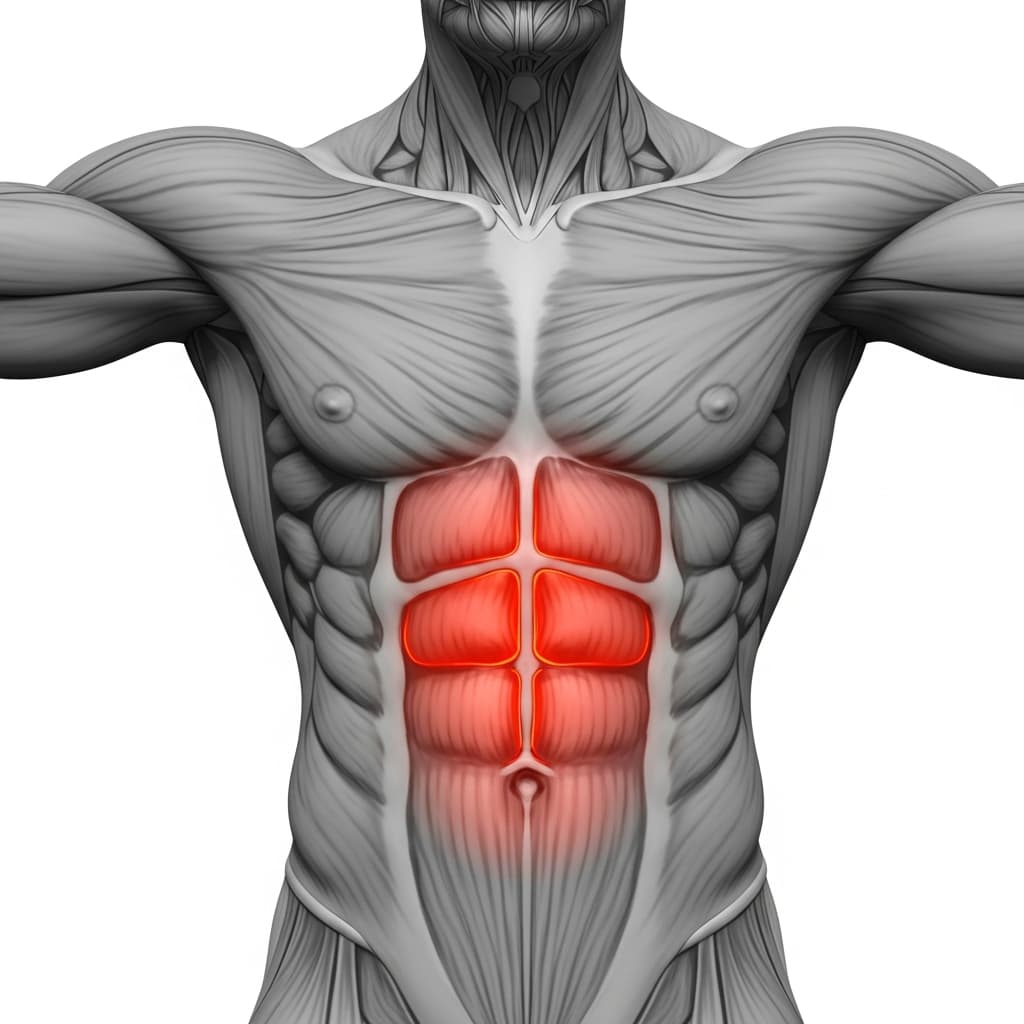
Rectus Abdominis (Abs) - The abdominals brace the torso to prevent excessive forward lean and maintain an upright posture during the single-leg drive.
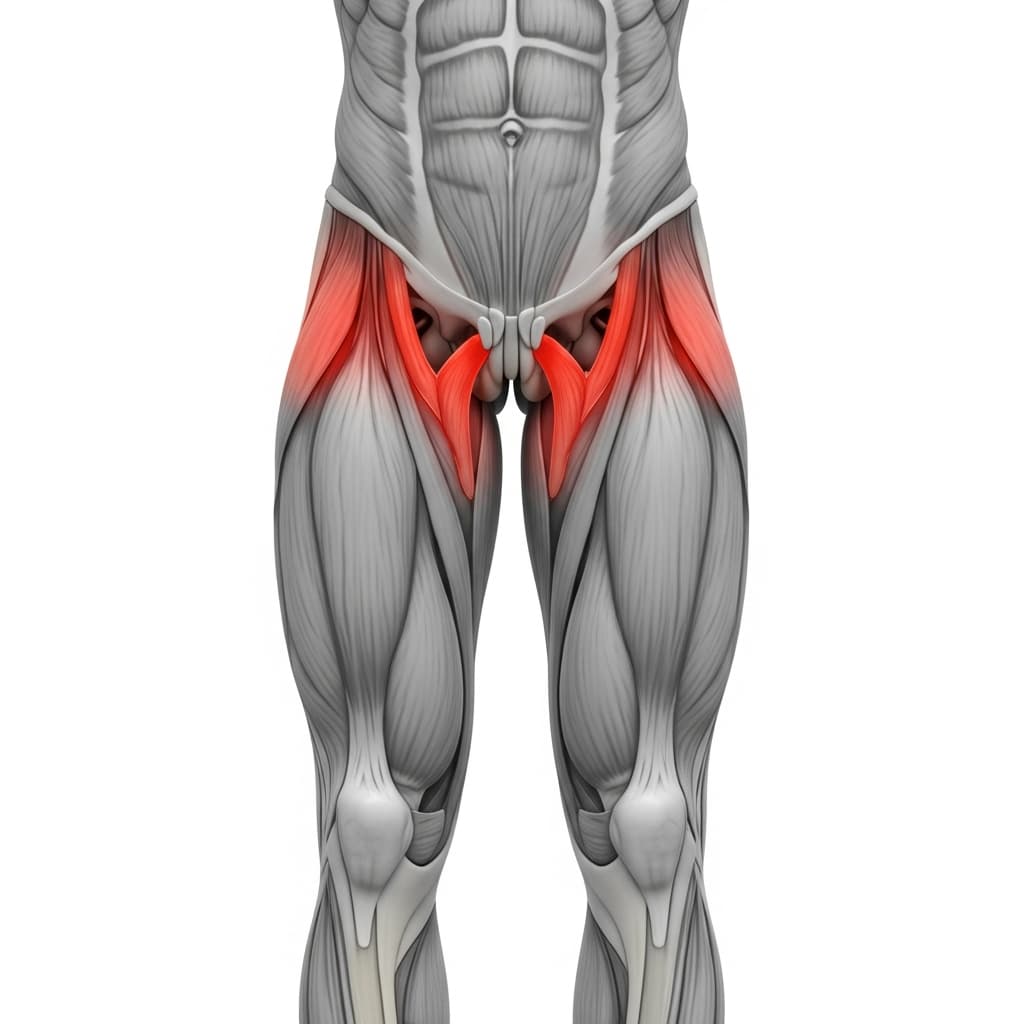
Iliopsoas (Hip Flexors) - The hip flexors of the trailing leg engage to lift the knee at the top of the movement and help control leg positioning during the descent.
Benefits of Step Ups
- Builds single-leg quad and glute strength that directly corrects left-to-right imbalances hidden by bilateral squats and lunges
- Develops balance and stabilizer muscle coordination under load, which carries over to running, jumping, and single-leg calisthenics skills
- Strengthens the knee joint through a controlled range of motion, making it an effective exercise for long-term knee health and injury prevention
- Requires no equipment beyond a stable elevated surface, making it one of the most accessible unilateral leg exercises available
Who Is This Exercise For?
You should be able to perform bodyweight squats with controlled depth and stable knees for at least 10 reps before adding step ups to your routine. If your balance is shaky during a single-leg stand for 10 seconds, work on that stability first. Basic quad and glute strength from squats or lunges gives you the foundation to perform step ups without compensating with momentum.
Common Mistakes to Avoid
Pushing off with the back leg: The trailing leg should contribute nothing to the upward movement. If you catch yourself bouncing or pushing off the ground, lower the box height until you can complete each rep using only the working leg.
Leaning too far forward or rounding the back: A slight forward lean is correct and necessary to load the working leg, but your chest should stay lifted and your spine neutral. If your torso collapses forward, the box is likely too high for your current strength level.
Knee caving inward on the working leg: Keep your knee tracking over your toes throughout the entire movement. Actively press your knee outward as you drive up. Knee collapse usually indicates weak glutes, which single-leg glute bridges can address.
Rushing through reps with momentum: Each rep should start from a controlled position with no swing or bounce. Pause briefly at the bottom of each rep to eliminate momentum and force the working leg to do all the work.
Variations & Progressions
Low Box Step Ups
Use a lower surface like a stair step or a short platform. The reduced height requires less quad and glute strength, making it ideal for building the movement pattern before progressing to full height.
Weighted Step Ups
Hold dumbbells at your sides or a weight plate at your chest while performing the step up. The added load increases the demand on the quads, glutes, and core stability significantly.
High Box Step Ups
Use a box that places your thigh well above parallel when your foot is on it. The deeper starting angle demands much more hip and knee extension strength and is a strong precursor to pistol squat training.