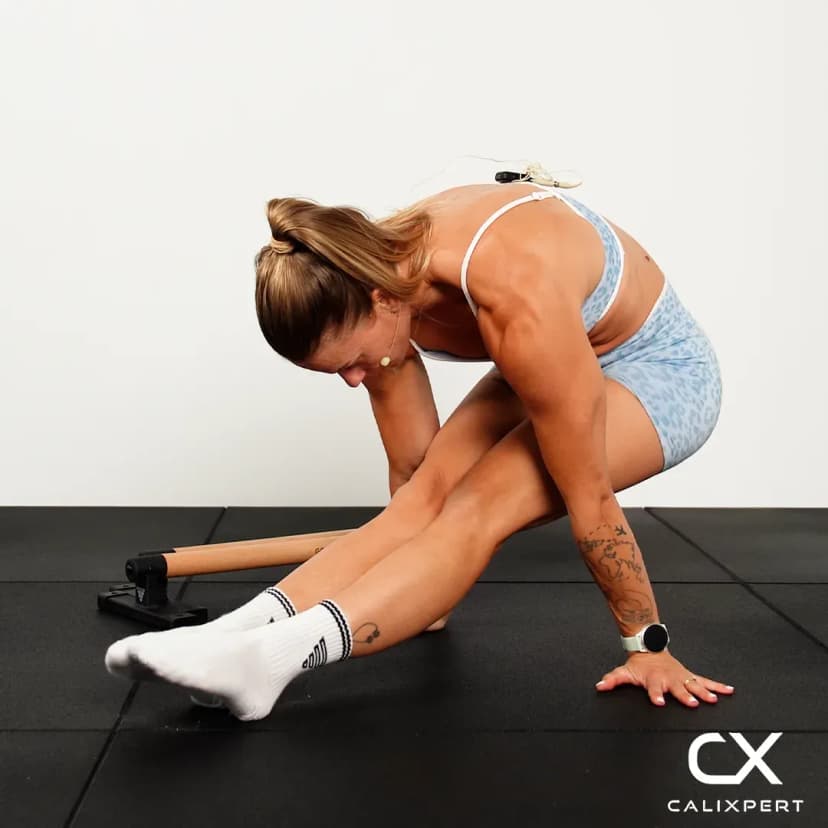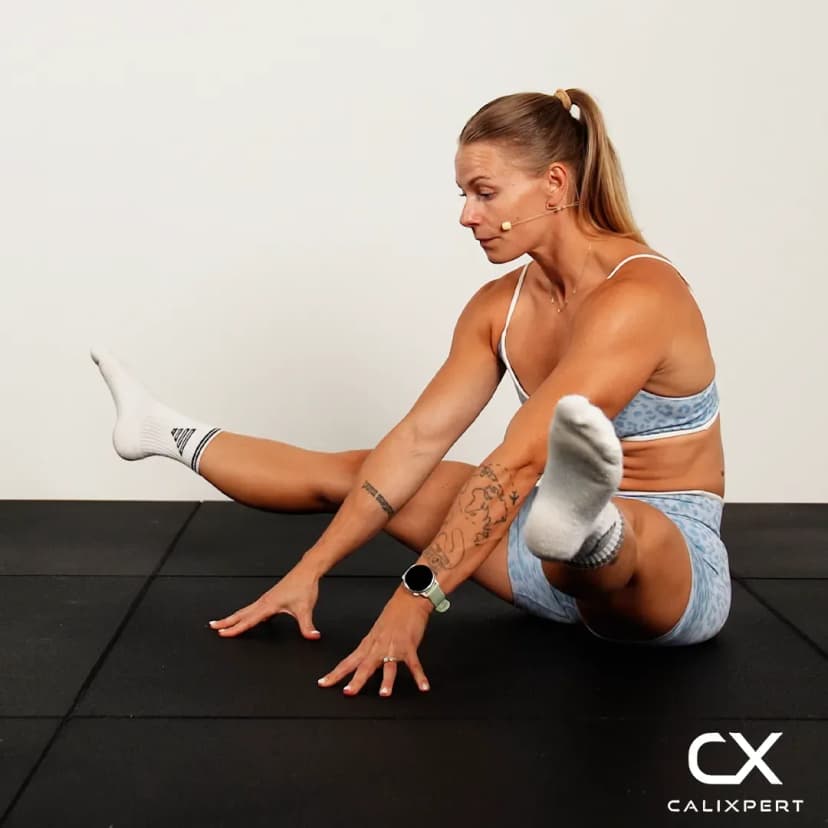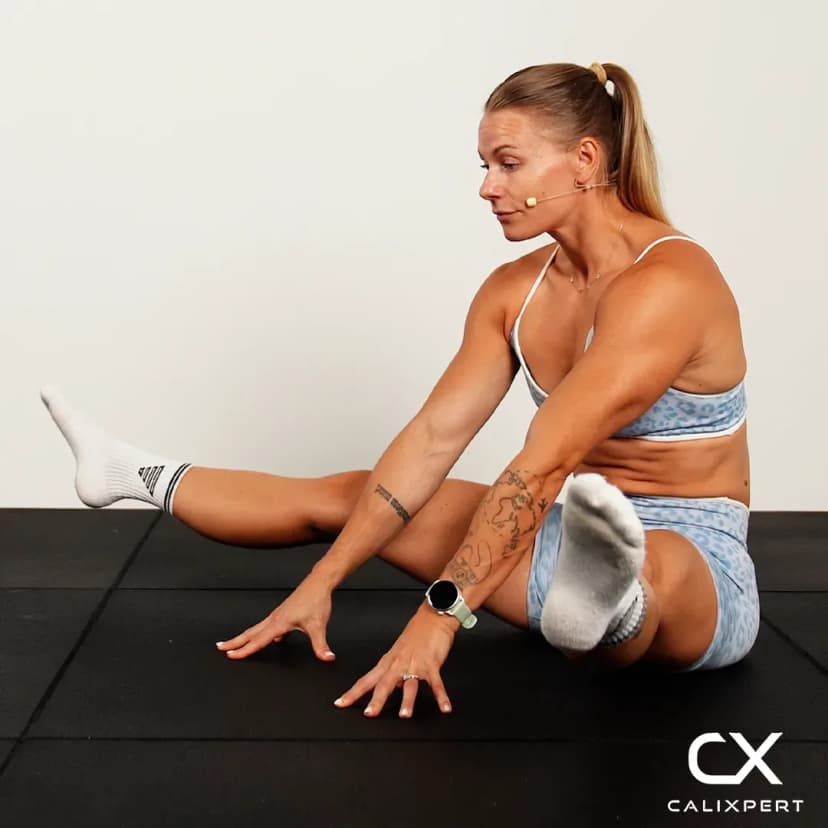
Russian Twist
The Russian twist is a rotational core exercise that targets the obliques, abs, and hip flexors through controlled side-to-side twisting from a seated, leaned-back position. The movement trains anti-extension and rotation simultaneously, demanding that the core stabilizes the spine while the upper body turns against a fixed lower body. Building rotational strength with Russian twists carries over directly to athletic movements and creates the oblique development that most static core exercises miss entirely.
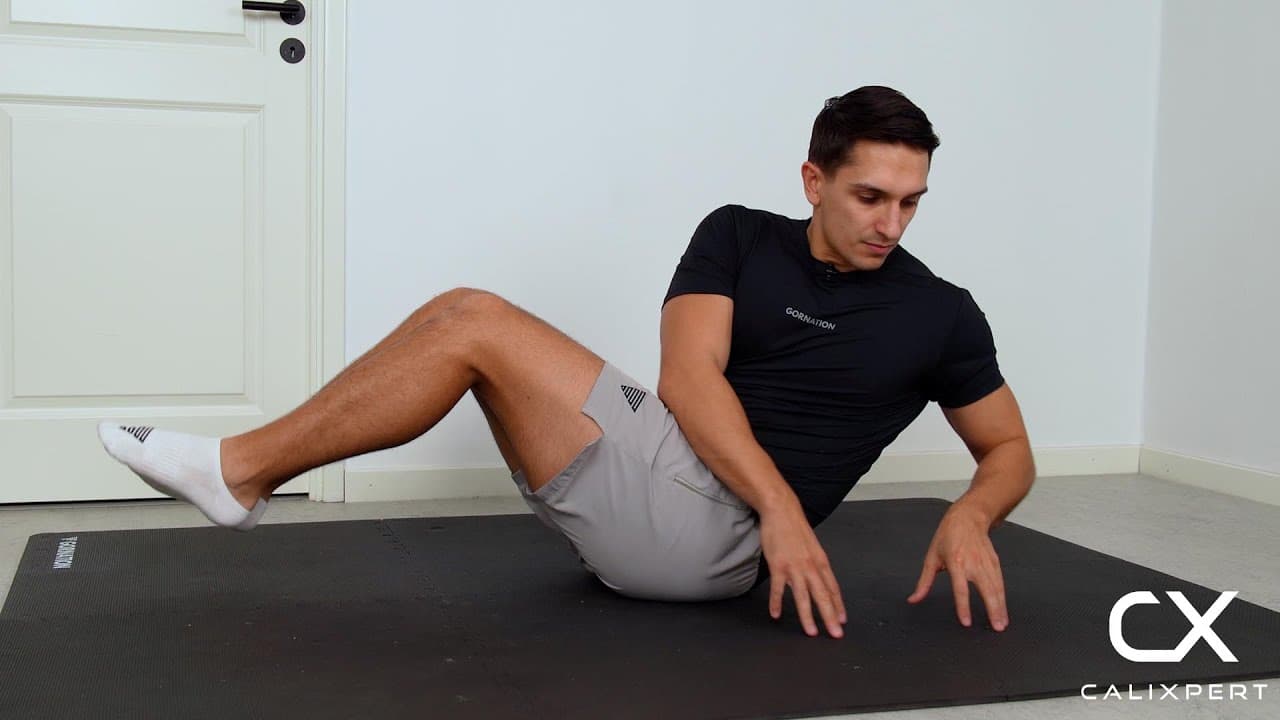
The Russian twist is a rotational core exercise that targets the obliques, abs, and hip flexors through controlled side-to-side twisting from a seated, leaned-back position. The movement trains anti-extension and rotation simultaneously, demanding that the core stabilizes the spine while the upper body turns against a fixed lower body. Building rotational strength with Russian twists carries over directly to athletic movements and creates the oblique development that most static core exercises miss entirely.
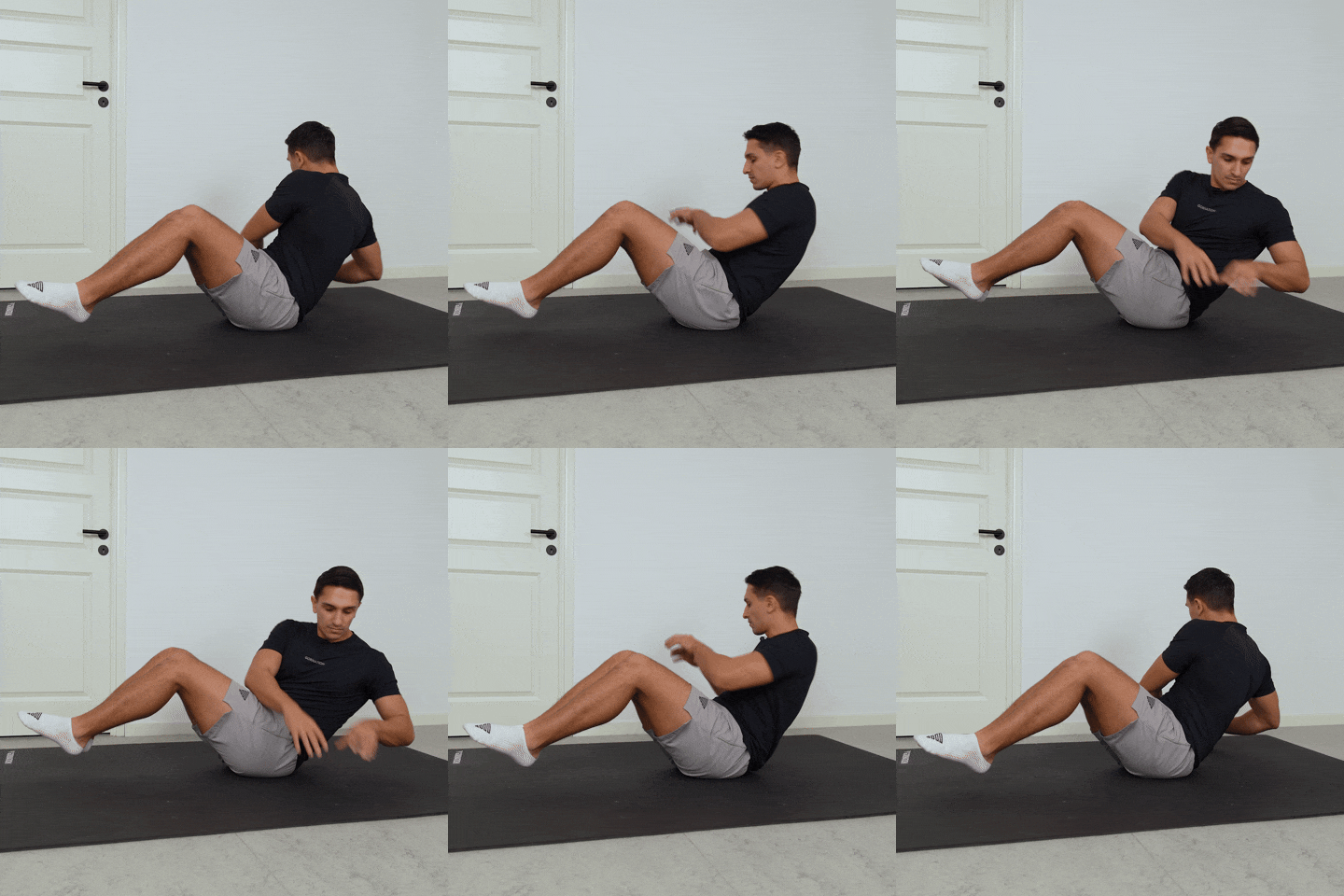
How to Do Russian Twist
1. Sit and Lean Back
Sit on the floor with your knees bent at roughly 90 degrees and your feet flat on the ground. Lean your torso back to about a 45-degree angle while keeping your back straight and your chest lifted. This lean-back position is what loads the core before any rotation begins.
Chest up, back straight, lean back
2. Brace Your Core Fully
Tighten your entire midsection before you begin twisting. Your abs should feel locked in to stabilize the spine, and your lower back should stay in a neutral position. Maintaining this brace throughout every rep is what separates an effective Russian twist from a sloppy one.
Lock the core before you rotate
3. Clasp Hands at Chest Height
Bring your hands together in front of your chest with your arms slightly extended. Keeping the hands at chest height creates a longer lever arm that increases the rotational demand on the obliques. Your arms should move as a single unit with your torso, not independently.
Hands together, arms move with torso
4. Rotate to One Side
Turn your entire upper body to the right, driving the rotation from your ribcage and obliques. Touch or hover your hands near the ground beside your hip. Keep your hips and lower body as still as possible so the twist comes from the trunk, not the legs.
Rotate from the ribcage, not the arms
5. Return and Rotate Opposite
Reverse the twist through center and continue rotating to the left side in one controlled motion. Each side-to-side rotation counts as one rep. Maintain the same lean-back angle throughout and do not let your torso collapse forward as you change direction.
Same speed both directions, no rushing
6. Breathe Through Each Rep
Exhale as you rotate to each side and inhale as you pass through the center. Holding your breath will cause you to tense up and lose control of the movement. Steady breathing keeps the core engaged without creating unnecessary tension in the neck and shoulders.
Exhale on every twist
Most people turn this into an arm-swinging exercise and wonder why their obliques never get sore. The fix is simple: lock your hands to your chest, then rotate from the ribcage as if your sternum is a dial you are turning left and right. When the rotation comes from the right place, you will feel the obliques light up within the first five reps.
Muscles Worked During Russian Twist
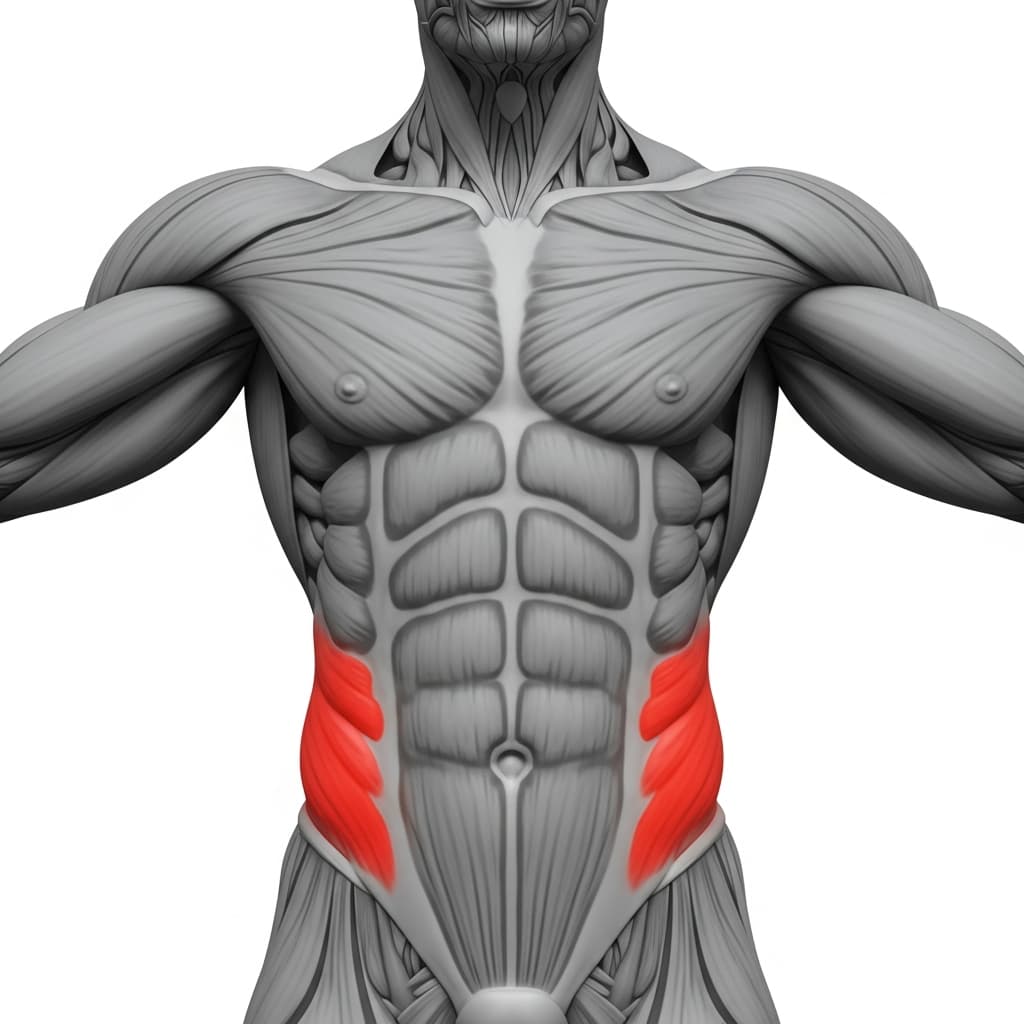
Primary Muscles:
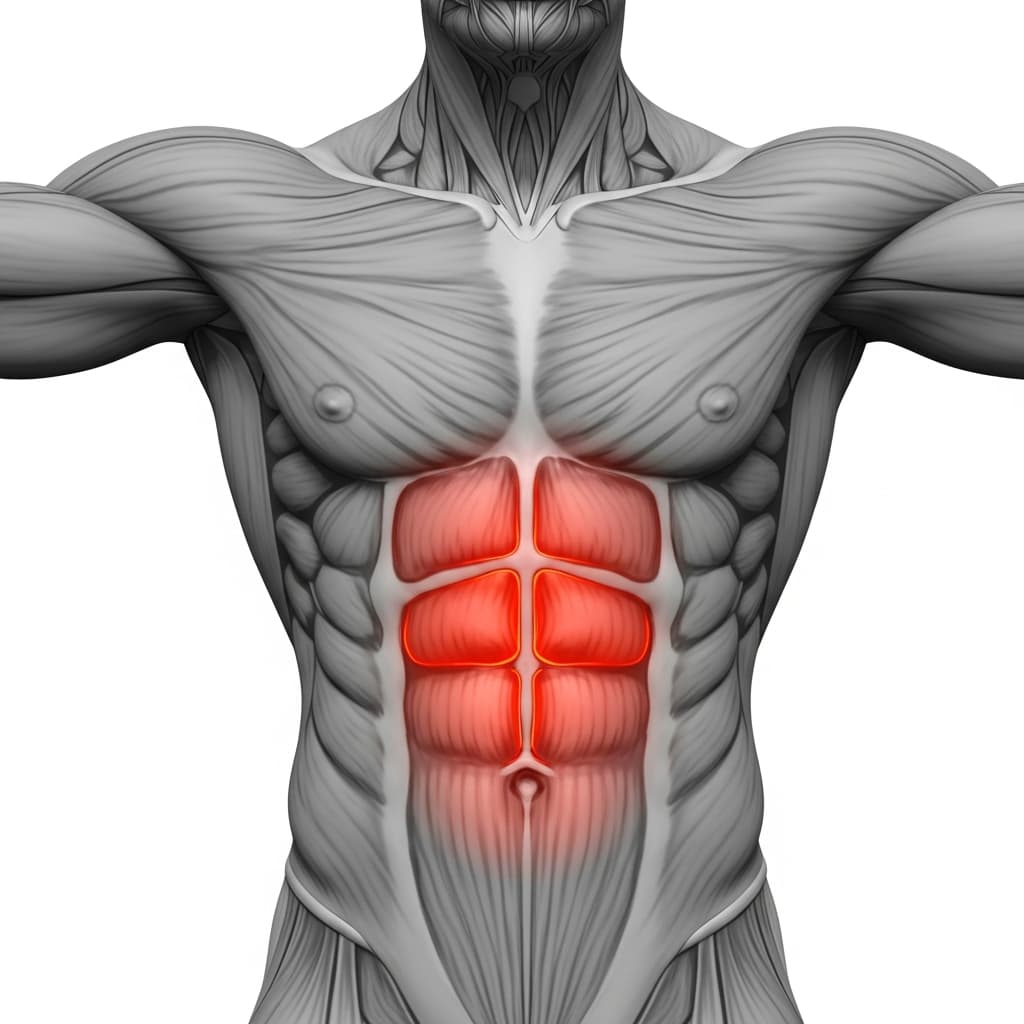
Secondary Muscles:
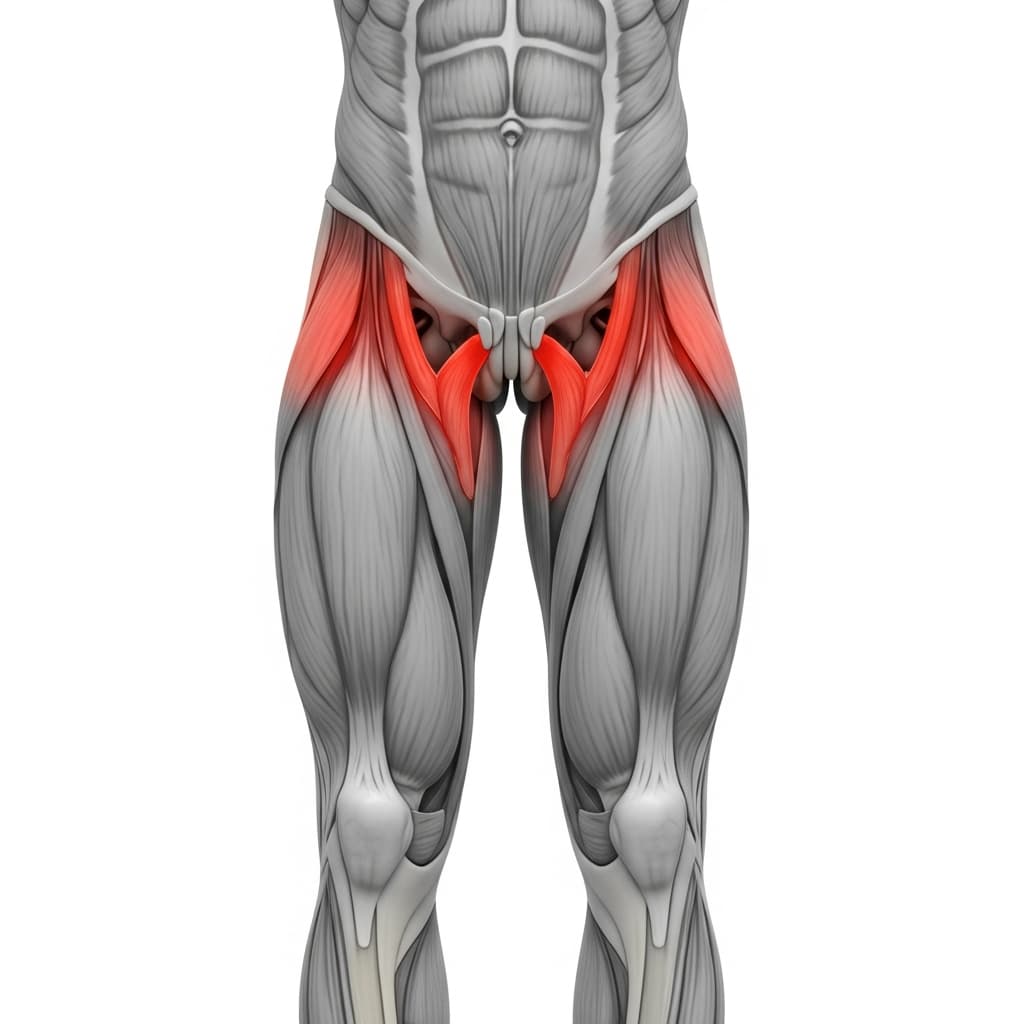
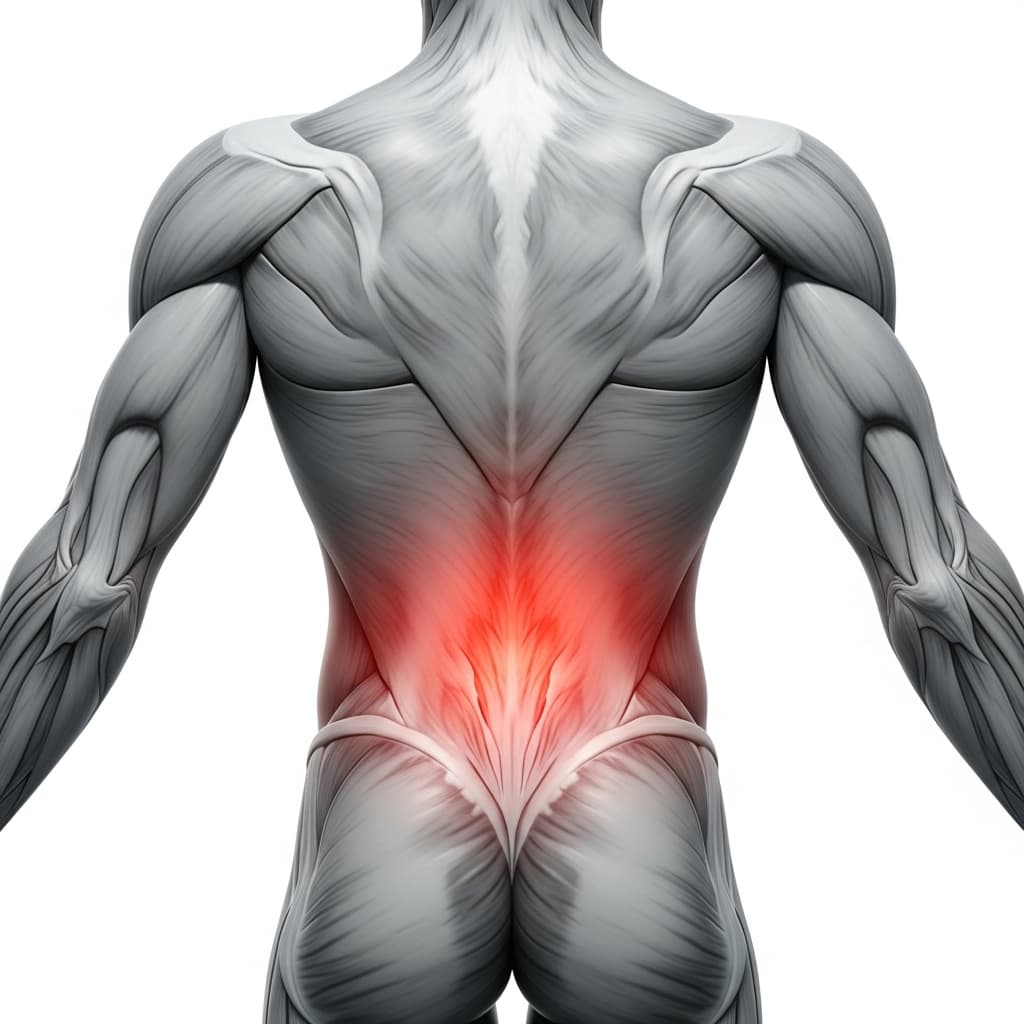
Primary Muscles
Obliques (Obliques) - The obliques generate the rotational force that twists the torso from side to side throughout each rep.
Secondary Muscles
Rectus Abdominis (Abs) - The rectus abdominis works isometrically to hold the torso in the leaned-back position and resist spinal extension throughout the set.
Iliopsoas (Hip Flexors) - The hip flexors stabilize the pelvis and maintain the seated V-position, working significantly harder when the feet are elevated off the ground.
Erector Spinae (Lower Back) - The lower back muscles co-contract with the abs to stabilize the spine and prevent excessive rounding or hyperextension during rotation.
Benefits of Russian Twist
- Develops oblique strength and definition through loaded rotation, which most planks and crunches do not train directly
- Builds anti-extension endurance by holding the leaned-back torso position under sustained tension for the entire set
- Improves rotational control and trunk stability, which transfers to throwing, climbing, and advanced calisthenics skills that involve twisting
- Strengthens the hip flexors isometrically when performed with feet elevated, adding a secondary training stimulus without additional exercises
Who Is This Exercise For?
You should be able to hold a seated V-position with your back straight and feet on the ground for at least 15 seconds before adding any rotation. If maintaining an upright torso while leaning back is difficult, spend time building basic core endurance with planks and hollow body holds first.
Common Mistakes to Avoid
Rounding the lower back: Keep your chest lifted and your back straight throughout the entire set. If your lower back rounds when you lean back, reduce the lean angle until your core is strong enough to maintain a neutral spine.
Twisting with the arms instead of the torso: Your hands and arms should move only because your ribcage is rotating. If your arms swing side to side while your chest stays facing forward, the obliques are barely working.
Rotating too fast with momentum: Slow down each twist to a 1-2 second pace per side. Speed turns this into a momentum exercise where the core coasts through most of the range of motion.
Letting the feet shift or bounce: Anchor your feet to the floor or hook them under something stable. When the lower body moves with each twist, the rotational load on the obliques drops significantly.
Variations & Progressions
Feet-on-Floor Russian Twist
Keep both feet flat on the ground throughout the movement. This removes the balance demand and lets you focus entirely on the rotation and core bracing.
Legs-Elevated Russian Twist
Lift both feet off the ground so your shins are roughly parallel to the floor. This adds a significant balance and hip flexor stability challenge on top of the rotational work.
Weighted Russian Twist
Hold a weight plate, dumbbell, or medicine ball at chest height while twisting. The added load increases rotational resistance and forces the obliques to work harder through every rep.