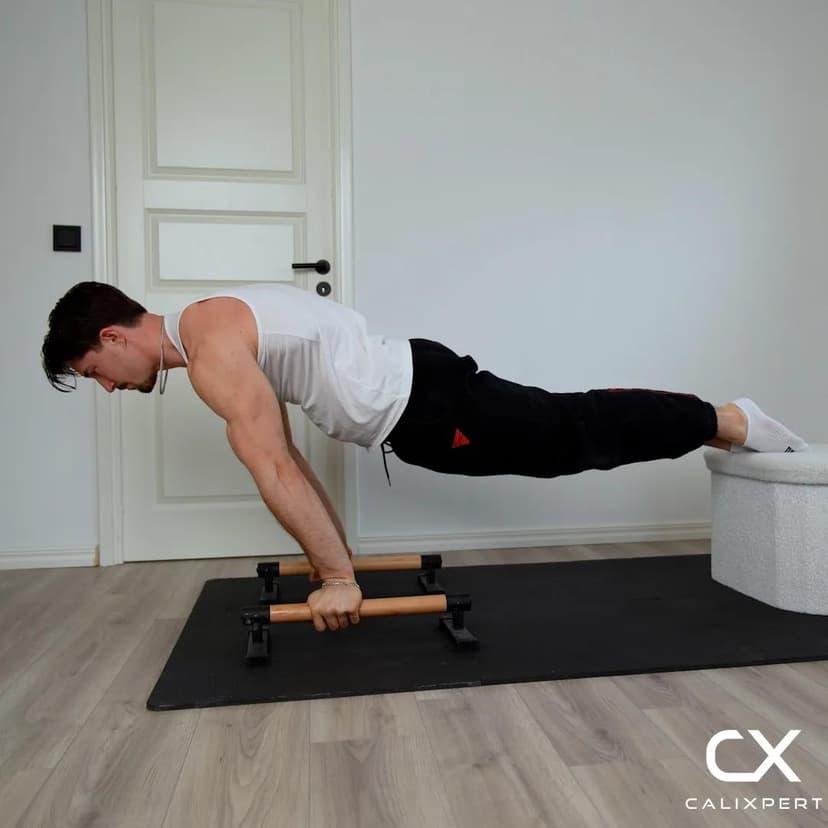
One Leg L-sit Hold
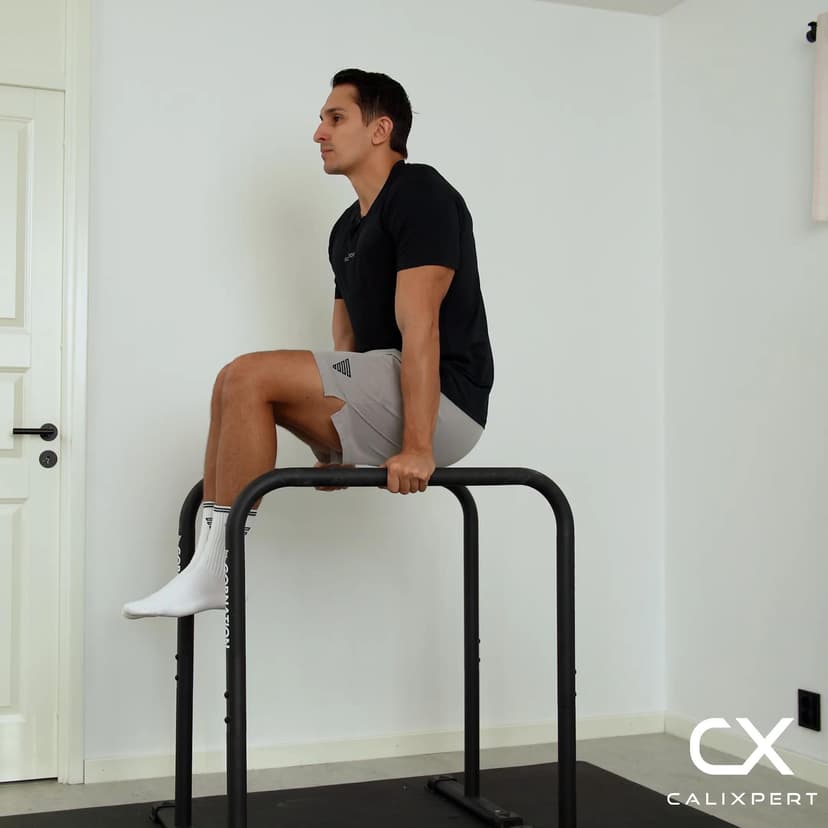
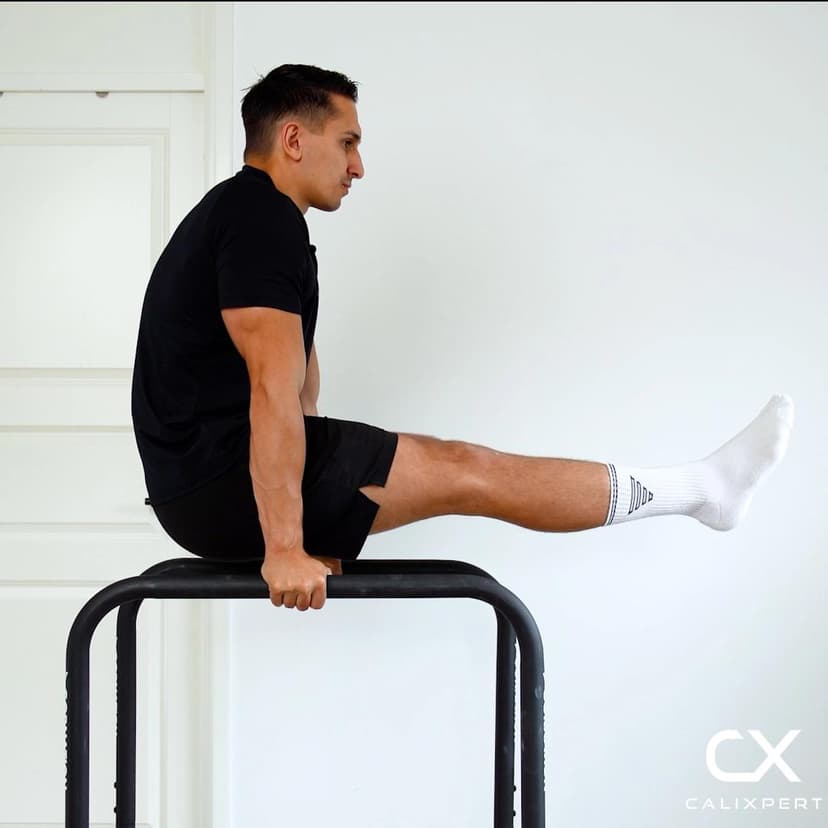
The One Leg L-sit Hold is an intermediate isometric core exercise that trains the abs, hip flexors, and shoulder stabilizers while building the compression strength needed for a full L-sit. You support your bodyweight on parallel bars or parallettes with locked arms, extend one leg straight out, and hold the other leg in a tucked knee raise position. This single-leg progression isolates each side of the hip flexor complex and builds the active flexibility and core endurance that directly transfers into the full L-sit and V-sit.
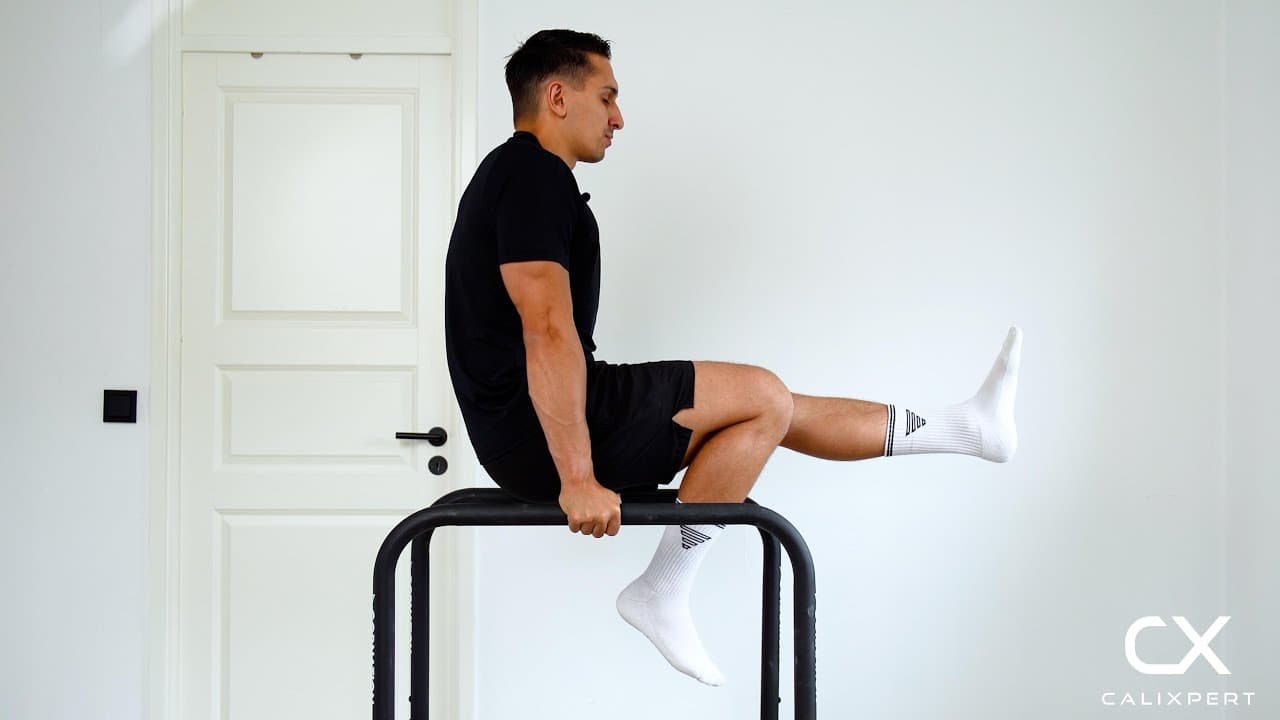
The One Leg L-sit Hold is an intermediate isometric core exercise that trains the abs, hip flexors, and shoulder stabilizers while building the compression strength needed for a full L-sit. You support your bodyweight on parallel bars or parallettes with locked arms, extend one leg straight out, and hold the other leg in a tucked knee raise position. This single-leg progression isolates each side of the hip flexor complex and builds the active flexibility and core endurance that directly transfers into the full L-sit and V-sit.
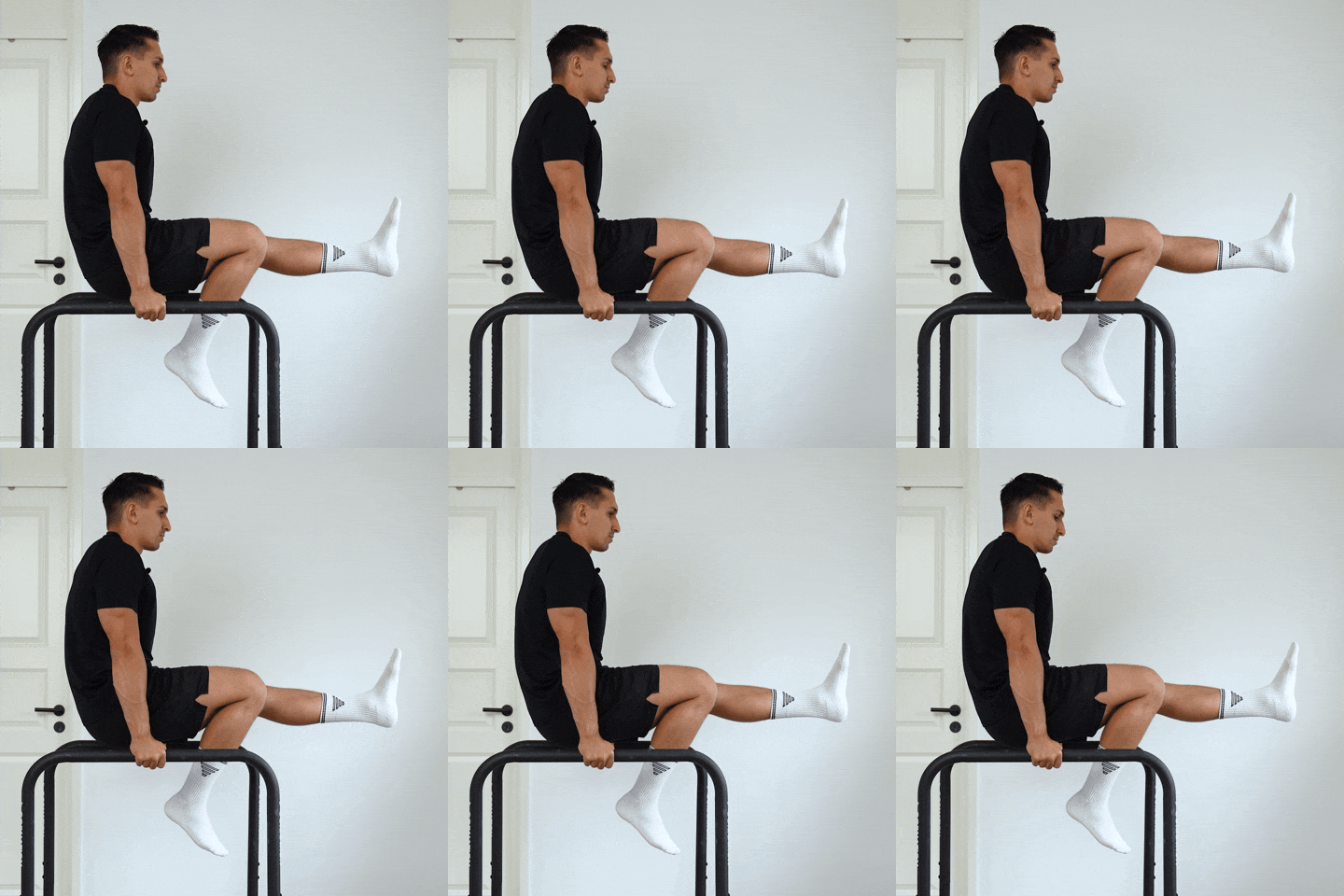
How to Do One Leg L-sit Hold
1. Set Up on Elevated Bars
Place your hands on a pair of dip bars or parallettes at roughly shoulder width. You need enough height that your legs can hang freely without your feet touching the ground. Wrap your fingers fully around the bars with a neutral grip, palms facing inward.
Bars at hip height or higher
2. Lock Your Arms and Depress Shoulders
Press through the bars until your elbows are fully locked out. Push your shoulders down away from your ears as far as possible. This shoulder depression is what creates the space for your legs to lift and protects the shoulder joint under sustained load.
Straight arms, shoulders far from ears
3. Lift Into the Starting Position
Raise both legs off the ground by compressing through your core. Bring one knee up to a 90-degree bend, like a hanging knee raise position, while keeping the other leg relaxed below you. Your torso should stay upright with a slight forward lean to help balance the load.
Compress up, do not swing
4. Extend One Leg Straight
Straighten the working leg out in front of you until it is parallel to the floor or as close as your flexibility allows. Lock the knee fully and point the toes forward. Keep the opposite leg bent at 90 degrees to maintain counterbalance and core tension.
Lock the knee, point the toes
5. Compress and Hold
Actively compress your torso toward your extended leg by squeezing the abs and hip flexors hard. Do not let your hips push forward or your chest lean back. Breathe in short, controlled breaths and maintain the hold for the target duration.
Pull the leg toward your chest, not chest toward the leg
6. Lower With Control and Switch
Slowly lower both legs back to the starting position without dropping or swinging. Reset your shoulder depression and arm lockout before beginning the next rep on the opposite leg. Alternate sides each set to build balanced strength.
Controlled descent, reset before switching
Most people lose the one leg L-sit because they try to hold the leg up with brute force instead of compressing their body into the position. Think about pulling your hip toward your ribcage rather than pushing the leg out in front of you. When you compress correctly, the hold becomes dramatically easier and your core does the work instead of your hip flexors burning out in seconds.
Muscles Worked During One Leg L-sit Hold
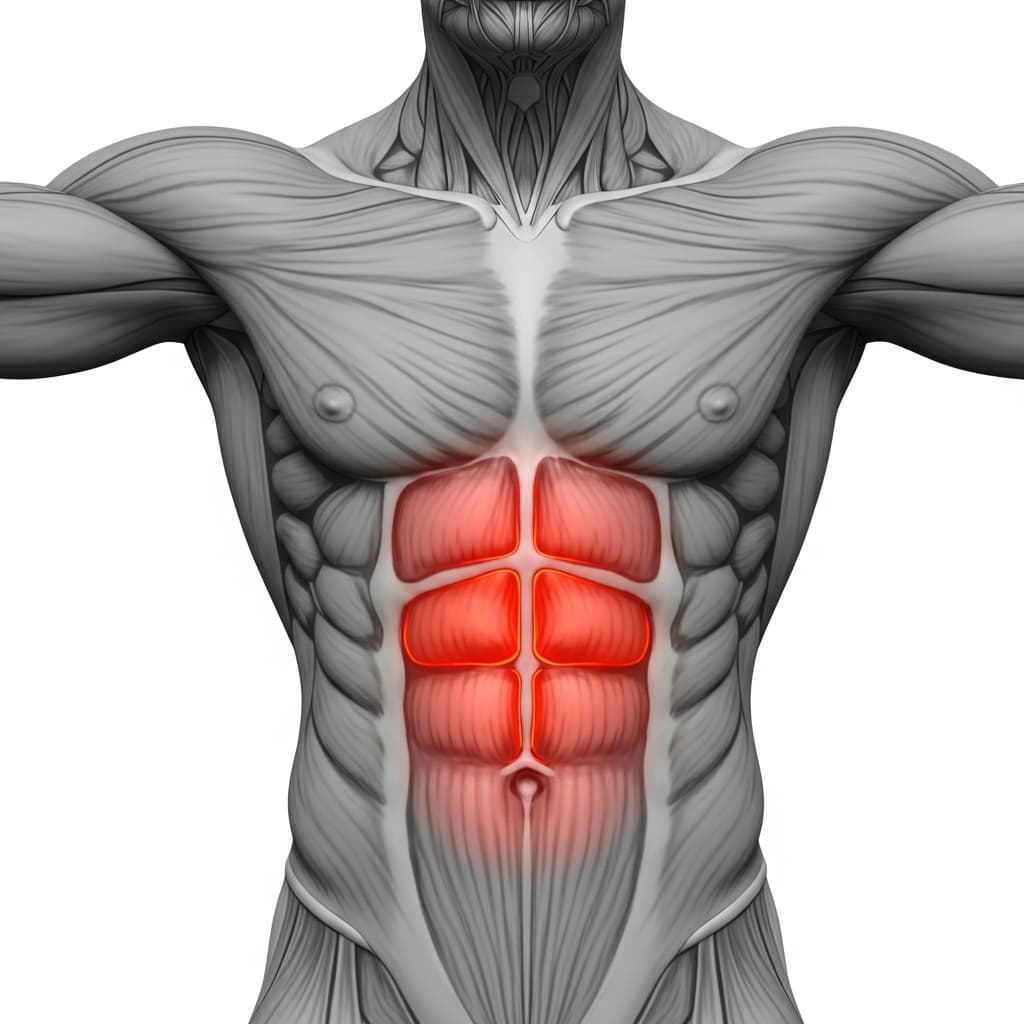
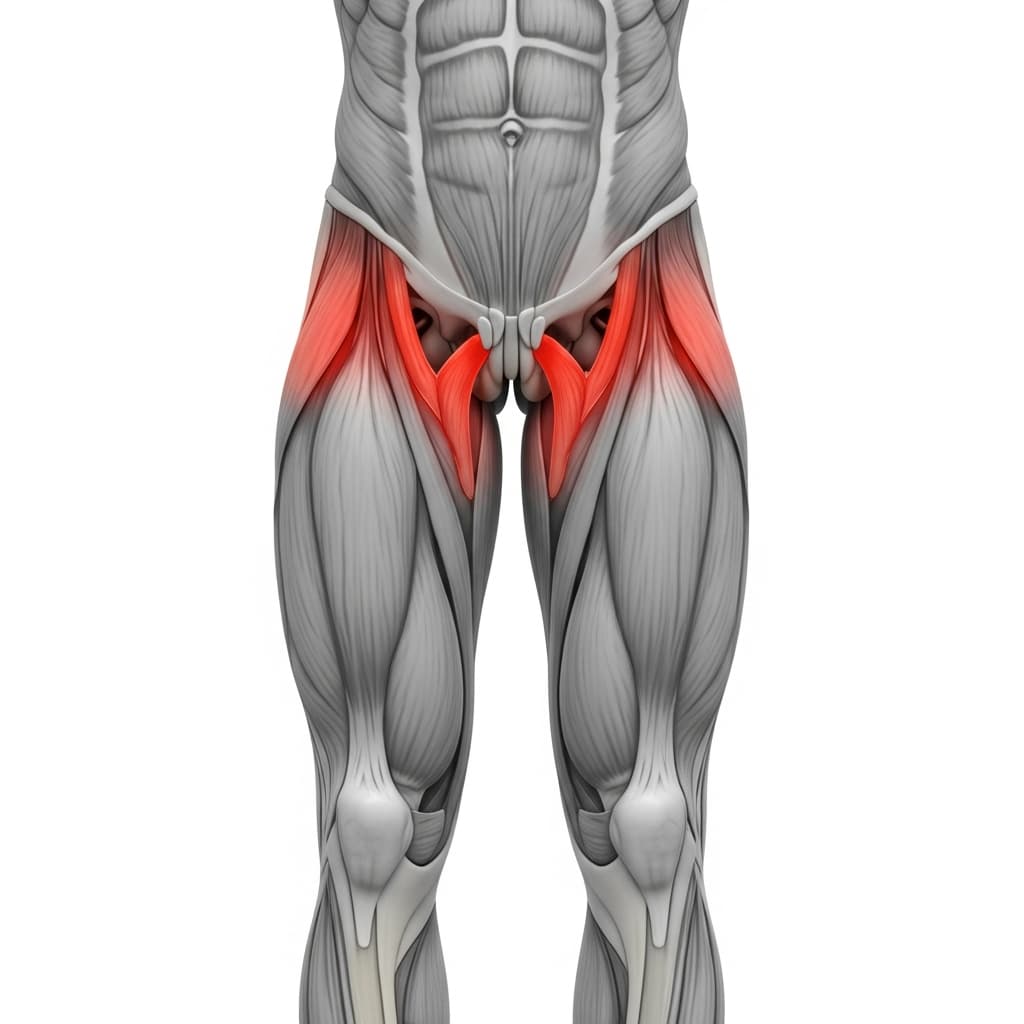
Primary Muscles:
Secondary Muscles:
Primary Muscles
Rectus Abdominis (Abs) - The rectus abdominis and deep core muscles maintain trunk rigidity and drive the compression that keeps the hips elevated and the torso stable throughout the hold.
Iliopsoas (Hip Flexors) - The iliopsoas and rectus femoris actively lift and hold the extended leg at parallel while also keeping the tucked leg in position against gravity.
Secondary Muscles
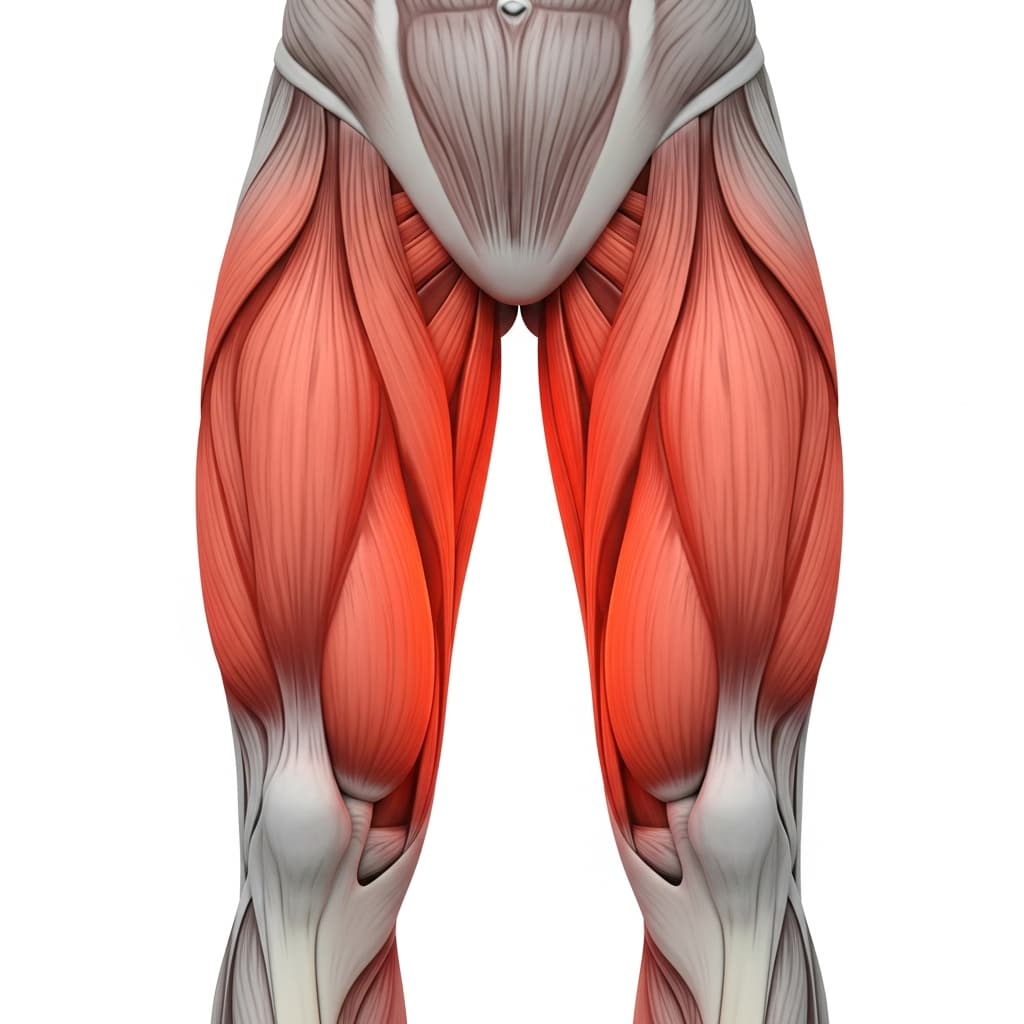
Quadriceps (Quads) - The quadriceps lock the knee of the extended leg into full extension, maintaining the straight-leg position that defines the exercise.
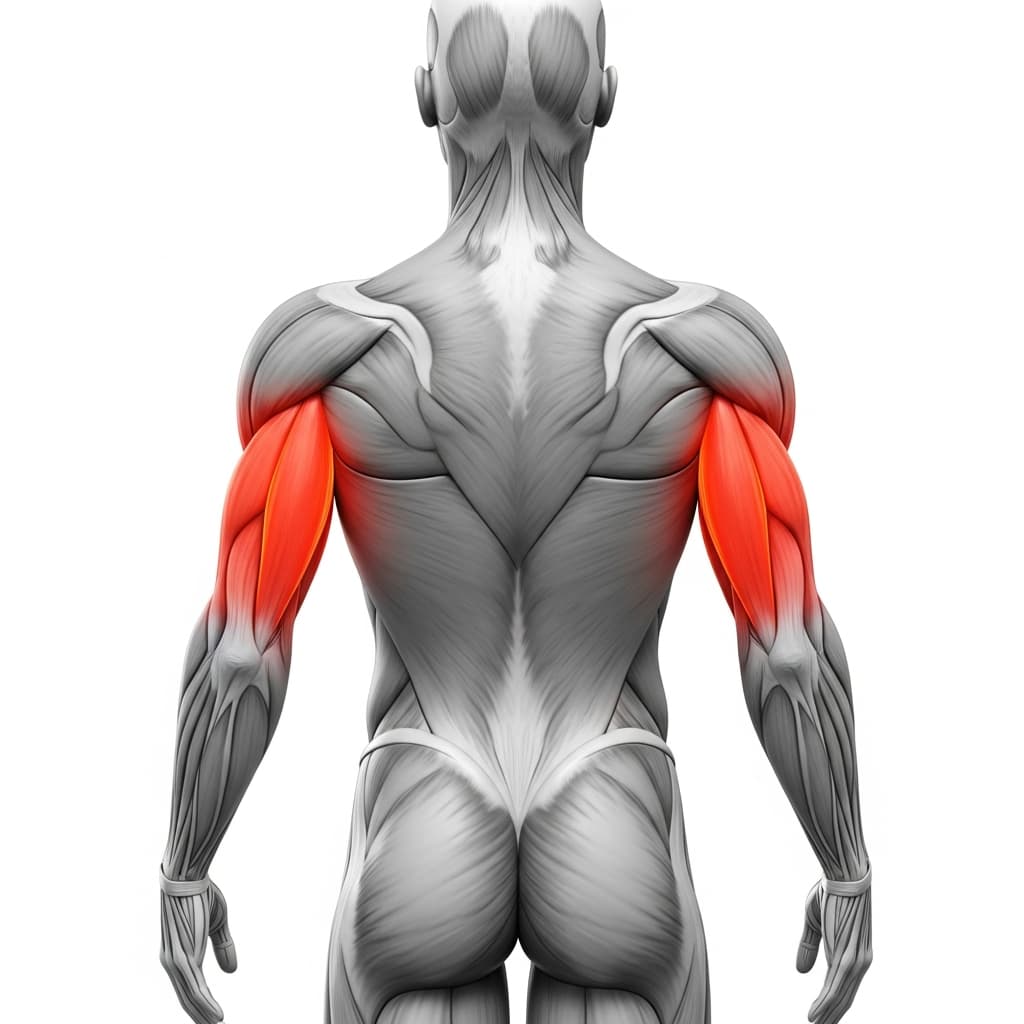
Triceps Brachii (Triceps) - The triceps maintain full elbow lockout throughout the hold, preventing arm bend under sustained bodyweight loading.
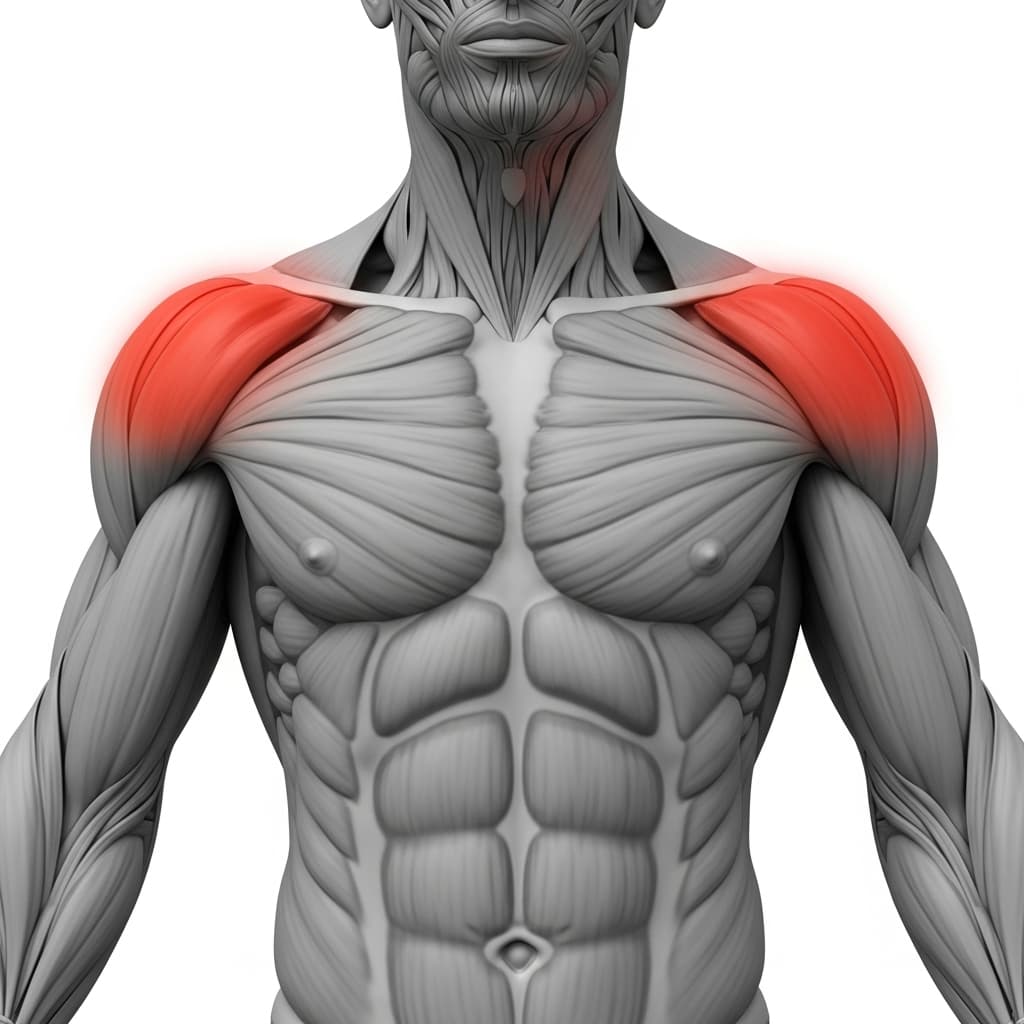
Anterior Deltoid (Front Deltoid) - The anterior deltoids stabilize the shoulder joint in a depressed position while supporting the full bodyweight through the arms.
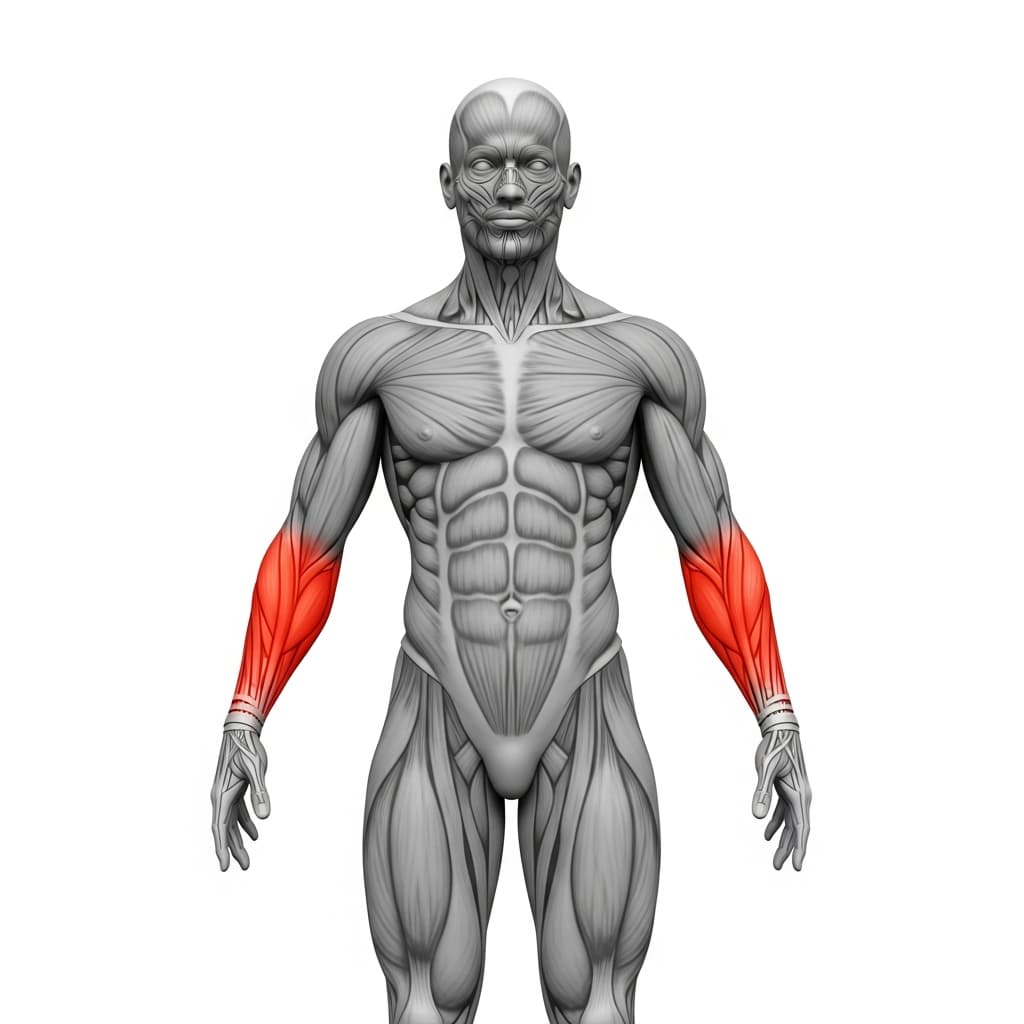
Forearm Flexors & Extensors (Forearms) - The forearm flexors maintain a secure grip on the bars throughout the hold, resisting the rotational forces created by the asymmetric leg position.
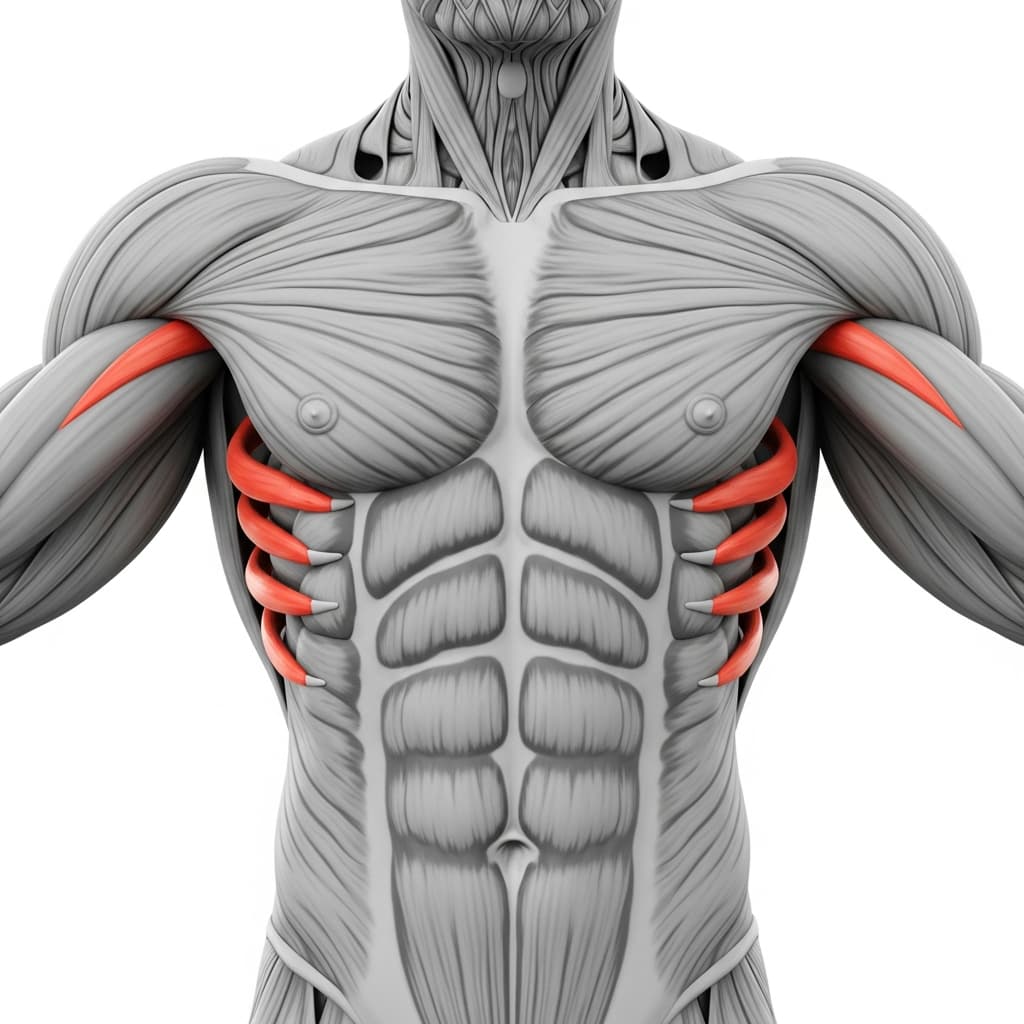
Serratus Anterior (Serratus Anterior) - The serratus anterior protracts and depresses the scapulae, keeping the shoulders packed down and creating the vertical height needed to clear the legs.
Benefits of One Leg L-sit Hold
- Builds the specific hip flexor strength and core compression needed to progress into a full L-sit and V-sit
- Develops shoulder depression endurance, which transfers directly into handstands, dips, and ring support holds
- Trains each side of the hip flexor complex independently, exposing and correcting left-right strength imbalances
- Strengthens the quads in a fully locked position, building the active straight-leg hold that advanced calisthenics skills demand
- Improves grip strength and forearm endurance through sustained isometric loading on the bars
Who Is This Exercise For?
You should be able to hold a tuck L-sit for at least 15 seconds with straight arms and depressed shoulders before attempting the one leg variation. If your hips drop below the bars during a tuck hold or your arms bend under load, spend more time building shoulder depression strength and basic support hold endurance first.
Common Mistakes to Avoid
Pushing the hips forward: Keep your hips directly under or slightly behind your shoulders. When the hips drift forward, the core disengages and the hold turns into a balance fight instead of a compression exercise.
Bending the arms under fatigue: Lock your elbows completely and keep them locked for the entire hold. If you cannot maintain straight arms, drop down and rest rather than continuing with bent elbows, which overloads the biceps and destabilizes the shoulders.
Shrugging the shoulders up: Actively push your shoulders down away from your ears throughout the hold. Shrugging compresses the neck, reduces your effective height on the bars, and makes it harder to lift the legs to the correct position.
Letting the extended leg drop below parallel: If you cannot hold the leg at parallel, shorten the hold duration rather than accepting a lower leg position. Training at partial range builds a habit that is difficult to correct later. Use the bent-knee variation until your hip flexor strength catches up.