L-sit Hold
The L-sit hold is a static compression exercise that targets the abs, hip flexors, triceps, and shoulders through sustained isometric tension. The key to a solid L-sit is depressing the shoulders, compressing the core inward, and actively engaging the quads to lock the legs at a full 90-degree angle from the torso. When performed with proper technique, the L-sit builds the core strength and body control that transfer directly into advanced calisthenics skills like the V-sit, manna, and planche.
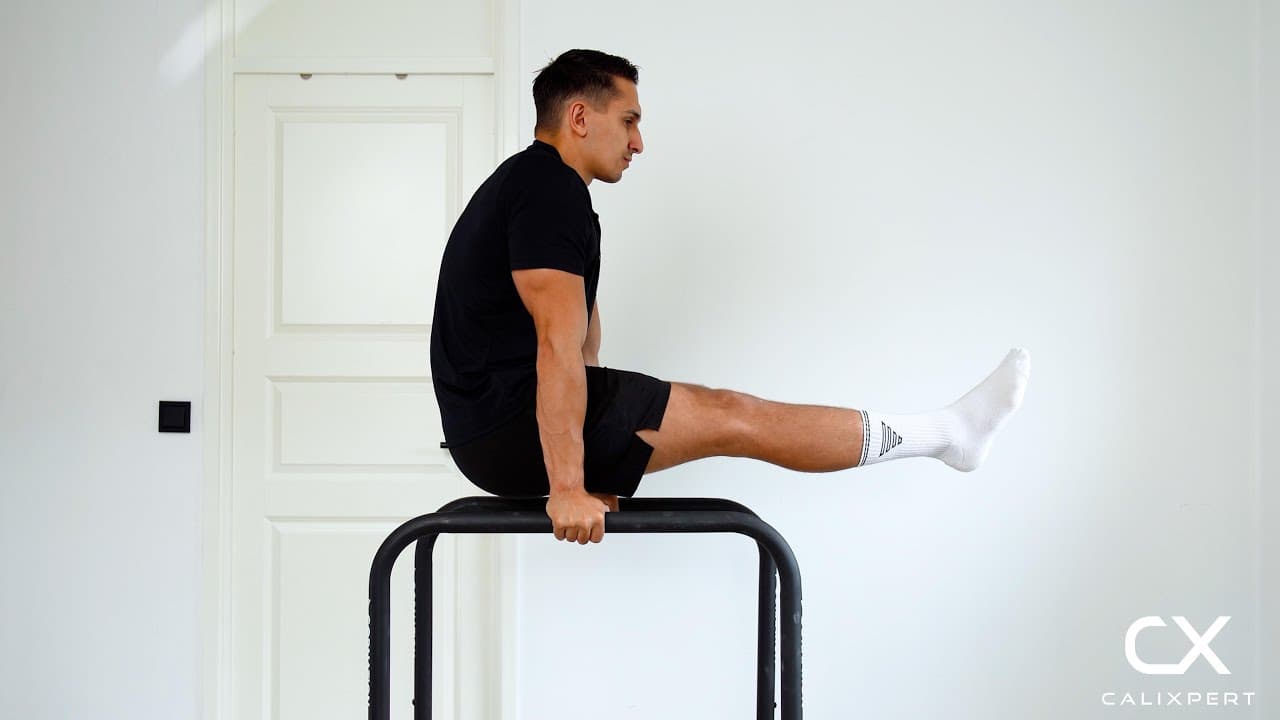
The L-sit hold is a static compression exercise that targets the abs, hip flexors, triceps, and shoulders through sustained isometric tension. The key to a solid L-sit is depressing the shoulders, compressing the core inward, and actively engaging the quads to lock the legs at a full 90-degree angle from the torso. When performed with proper technique, the L-sit builds the core strength and body control that transfer directly into advanced calisthenics skills like the V-sit, manna, and planche.
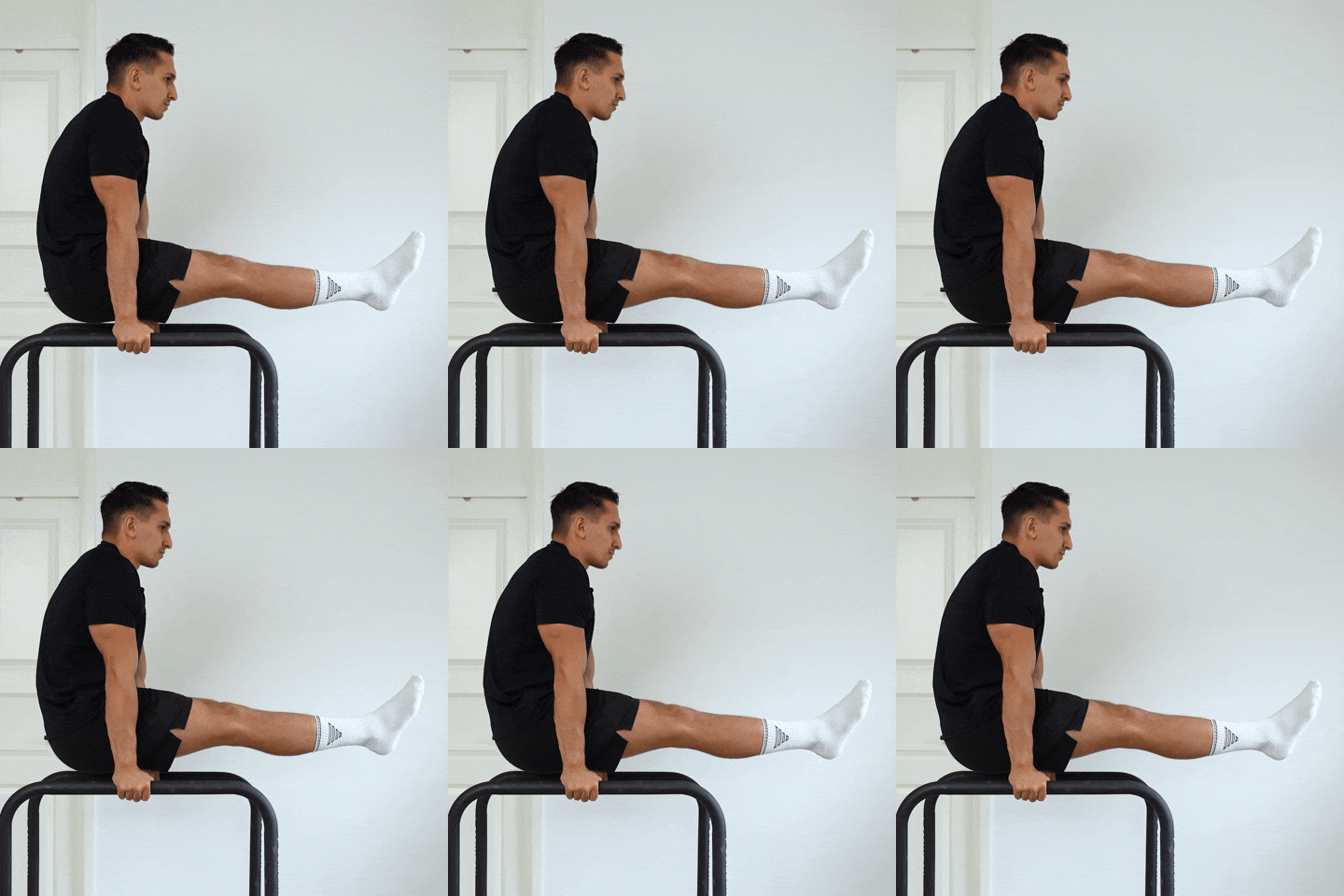
How to Do L-sit Hold
1. Set Up on the Bars
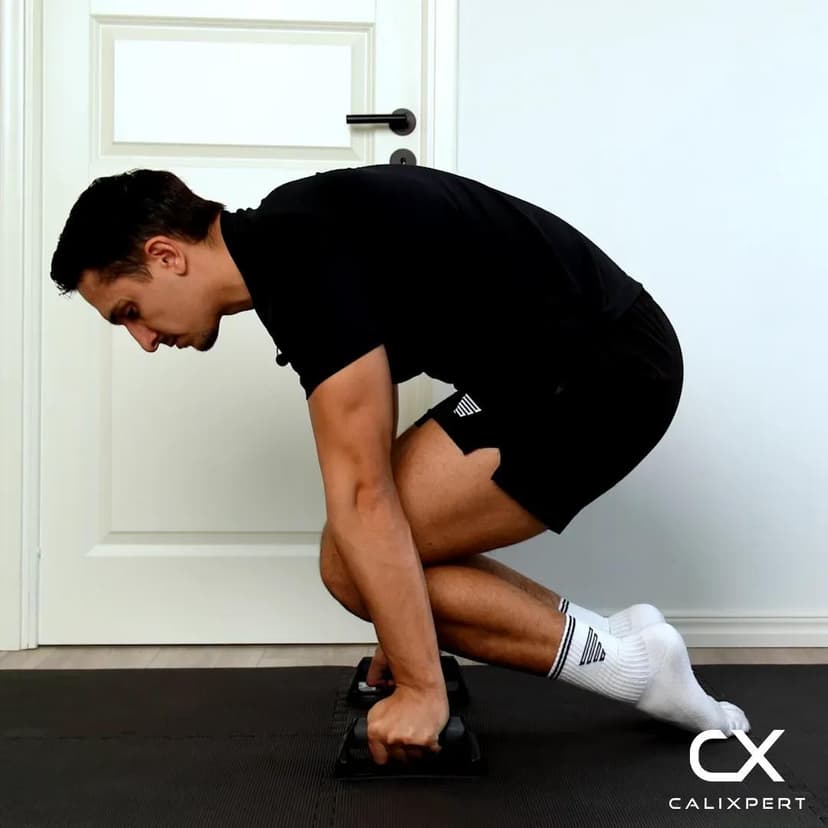
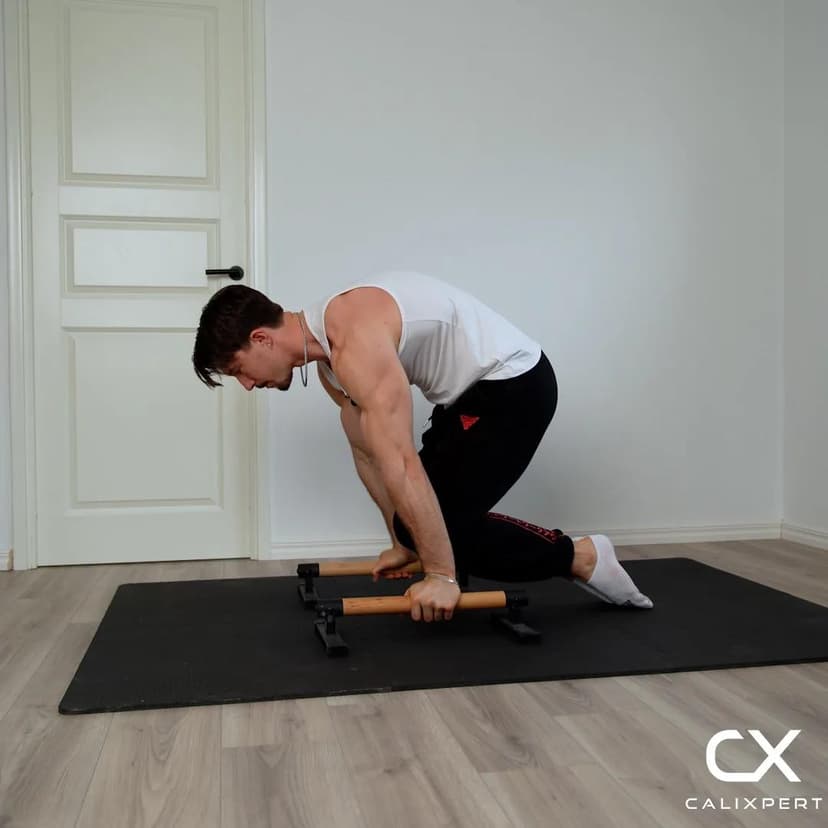
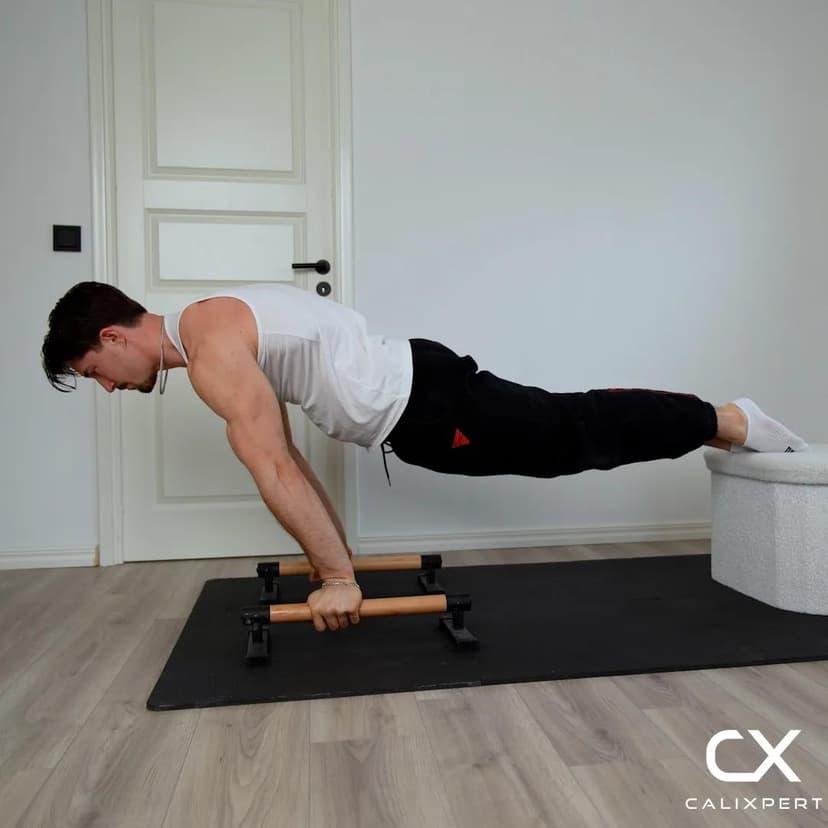
Place your hands on a pair of dip bars, high parallettes, or any elevated surface that lifts your body off the ground. Wrap your fingers fully around the bars with a neutral grip. Starting on an elevated surface is easier than the floor because you do not need as much shoulder depression to clear your legs.
Elevate to make it accessible
2. Lock Your Arms and Depress Shoulders
Press down through the bars until your arms are fully straight and your body is lifted off the surface. Push your shoulders down and away from your ears, creating as much distance as possible between your shoulders and your neck. Rotate your biceps slightly forward or inward, which engages the triceps more effectively and makes the hold significantly easier to sustain over time.
Straight arms, shoulders down, biceps forward
3. Compress the Core Inward
Before lifting your legs, actively draw your core inward as if you are trying to close the gap between your ribcage and your pelvis. Do not push your hips forward or lean back, as this shifts excessive load onto the triceps and shoulders. This compression keeps the demand on the abs and hip flexors where it belongs.
Close the ribcage, do not lean back
4. Lift Legs to 90 Degrees
Raise both legs together until they are straight and parallel to the floor, forming a 90-degree angle at the hips. Lock your knees fully and keep your toes pointed or flexed based on preference. Press your knees or ankles together so your legs act as one unit, which makes the hold easier to control.
Legs together, knees locked, 90 degrees
5. Hold With Full Body Tension
Maintain the position by keeping every muscle group engaged simultaneously. Continue pressing the shoulders down, squeezing the core inward, and driving the quads to keep the legs straight. Breathe in short, controlled breaths without releasing tension in the torso. The L-sit is a full body exercise, and any loss of tension in one area will cause the hold to collapse.
Everything tight, breathe short and steady
6. Lower With Control
When you finish the hold, lower your legs back down slowly rather than dropping them. Keep your shoulders depressed and arms locked until your feet touch the ground. Reset your position completely before starting the next set.
Lower slowly, do not drop
Most people fail the L-sit because they treat it as a leg-lifting exercise when it is really a compression exercise. Stop thinking about raising your legs and start thinking about closing the distance between your ribcage and your pelvis. When you compress the core first and push the shoulders down hard, the legs almost float up on their own.
Muscles Worked During L-sit Hold
Primary Muscles:
Secondary Muscles:
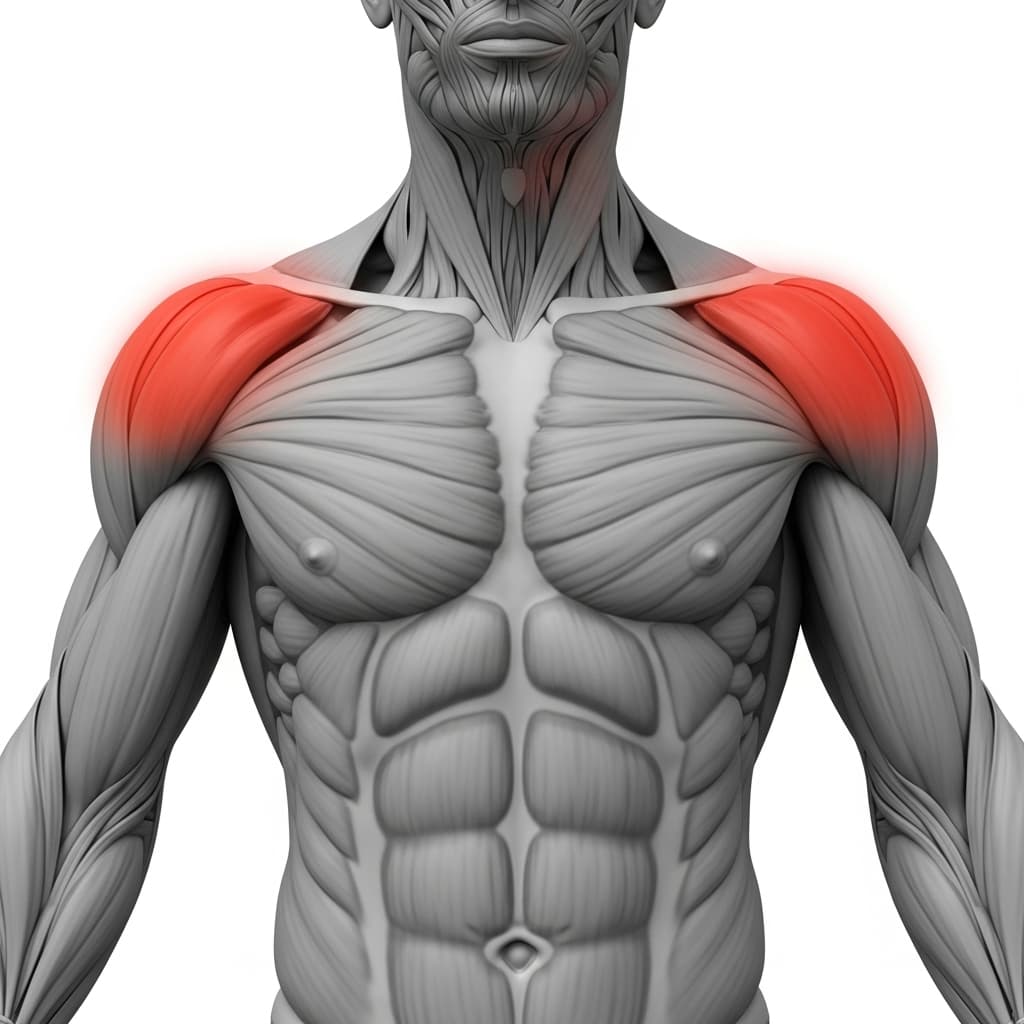
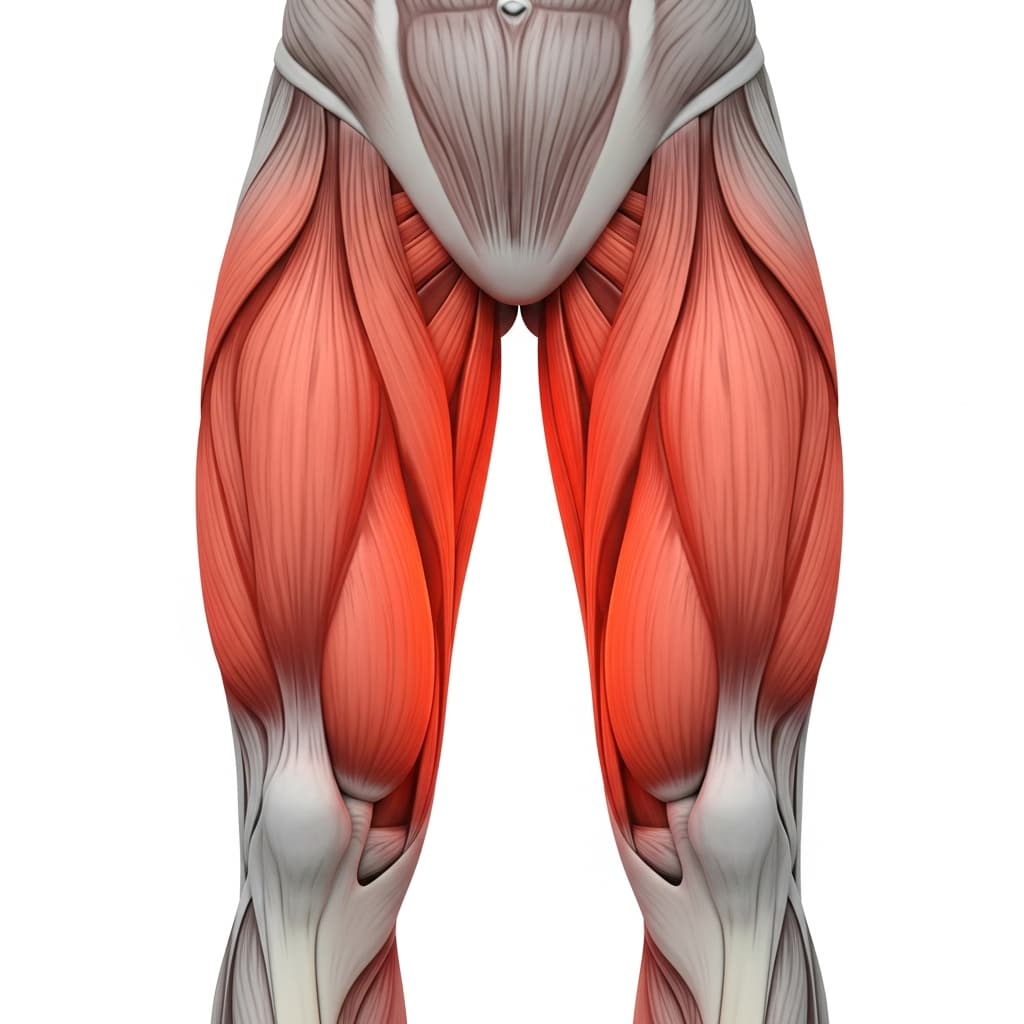
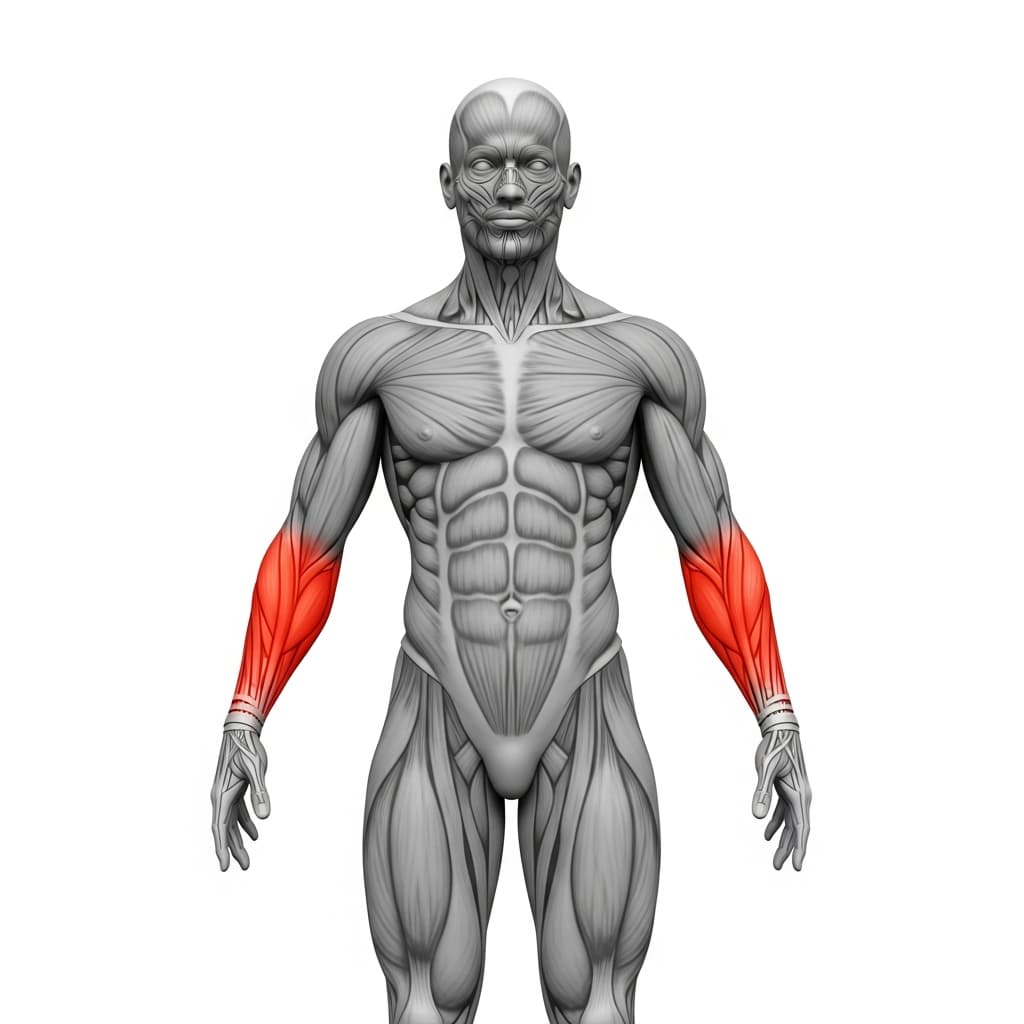
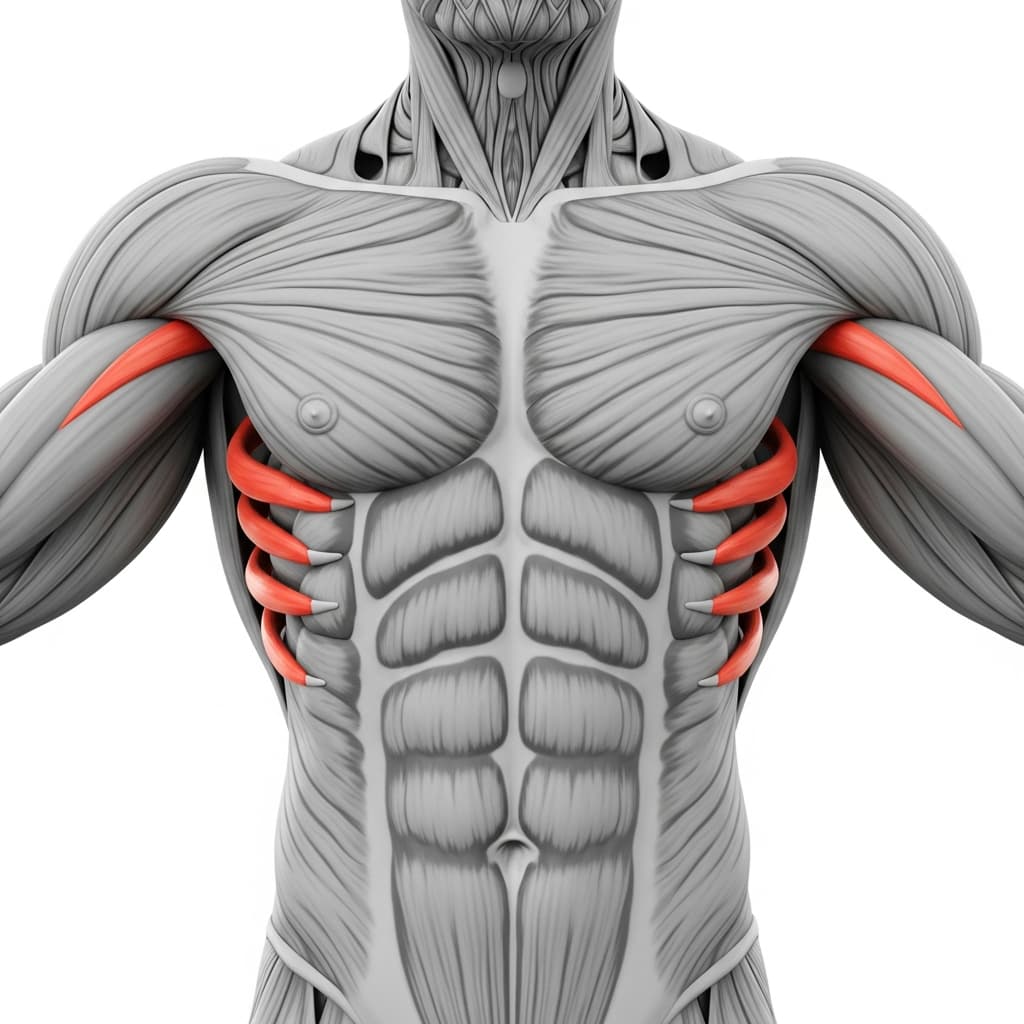
Primary Muscles
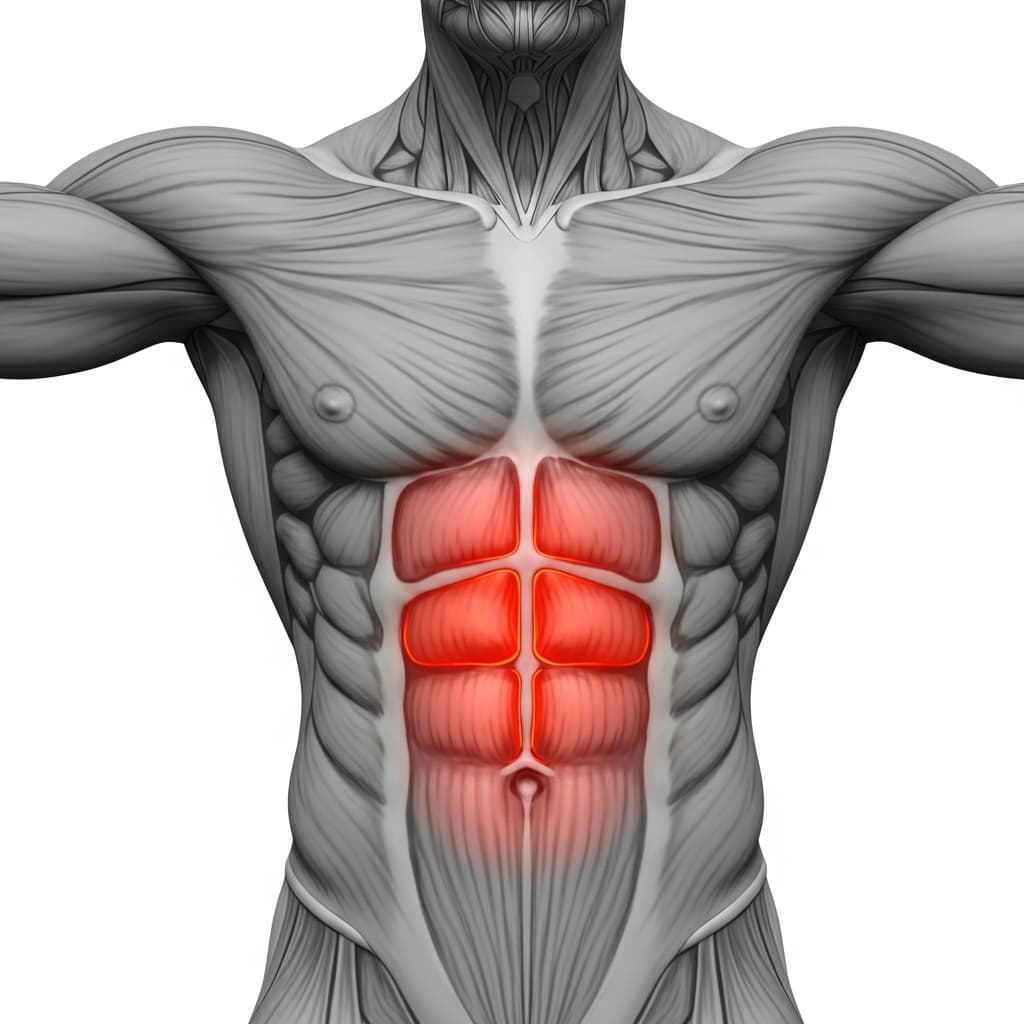
Rectus Abdominis (Abs) - The abs maintain sustained isometric contraction to keep the torso compressed and stabilize the pelvis against the pull of the legs held in front of the body.
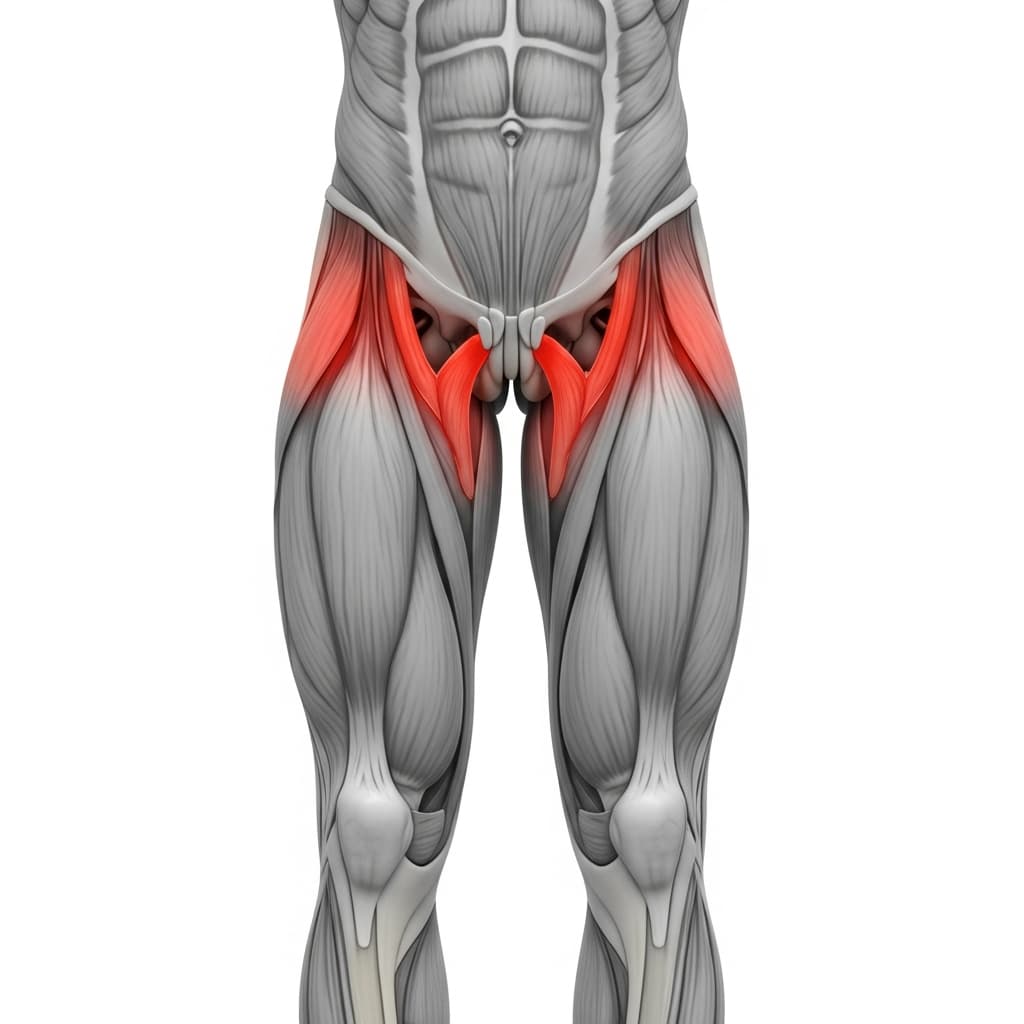
Iliopsoas (Hip Flexors) - The hip flexors hold the legs at a 90-degree angle relative to the torso under continuous isometric load, making them the primary driver of leg elevation in the L-sit.
Secondary Muscles
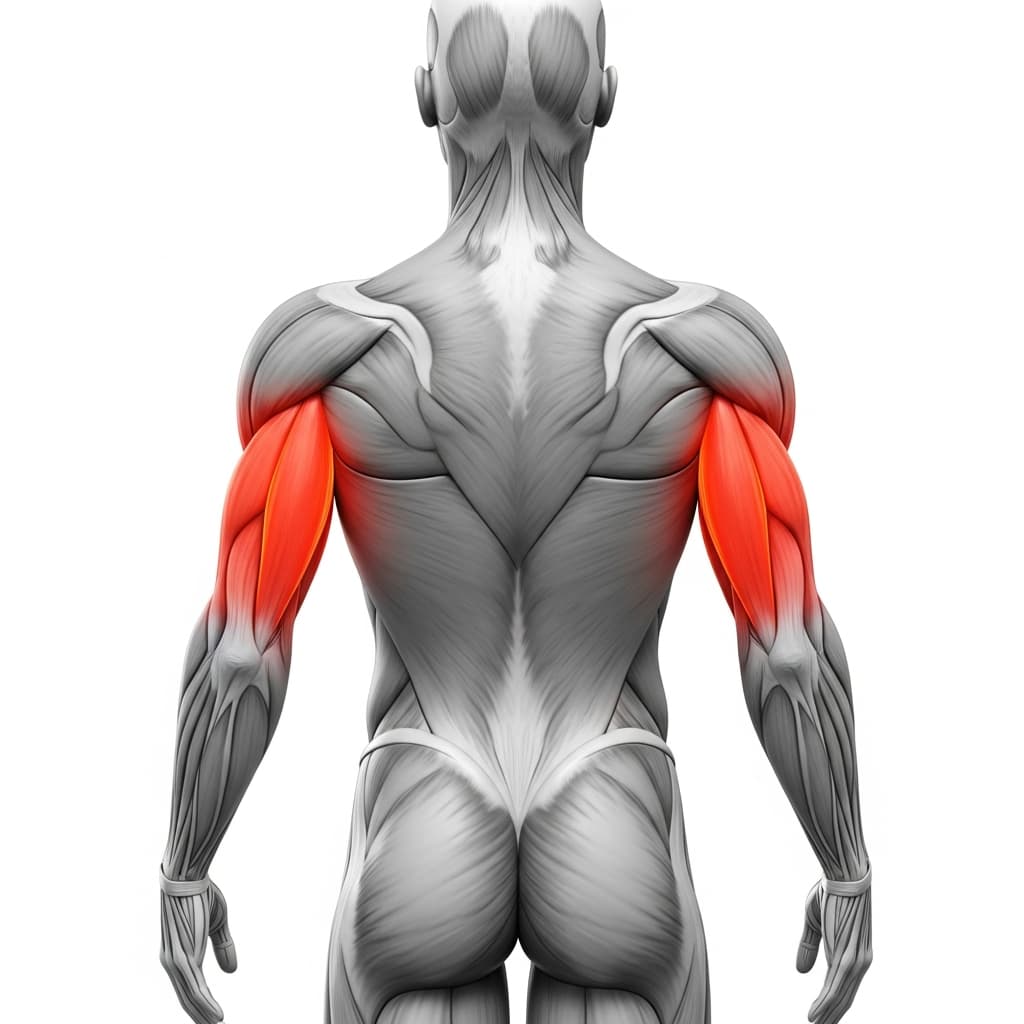
Triceps Brachii (Triceps) - The triceps lock the elbows in full extension and press the body away from the bars, maintaining the height needed to keep the legs elevated off the ground.
Anterior Deltoid (Front Deltoid) - The front deltoids stabilize the shoulder joint in a depressed and slightly protracted position, preventing the shoulders from collapsing upward under load.
Quadriceps (Quads) - The quadriceps contract isometrically to lock the knees in full extension, keeping the legs straight and parallel to the floor throughout the hold.
Forearm Flexors & Extensors (Forearms) - The forearms maintain grip on the bars and stabilize the wrist joint against the downward pressing force of the entire body.
Serratus Anterior (Serratus Anterior) - The serratus anterior works with the lower traps to depress and stabilize the scapulae, which is essential for maintaining the elevated pressing position.
Benefits of L-sit Hold
- Develops deep core compression strength that transfers directly into advanced calisthenics holds like the V-sit, manna, and press to handstand
- Builds hip flexor endurance under sustained isometric load, which is difficult to train with most conventional ab exercises
- Strengthens the scapular depressors and triceps in a locked-arm pressing position, improving stability for dips, handstands, and ring work
- Teaches full body tension and coordination, training the ability to engage every muscle group simultaneously under load
- Requires zero equipment when performed on the floor, making it one of the most accessible advanced core exercises in calisthenics
Who Is This Exercise For?
You should be able to hold a tuck L-sit for at least 10 seconds with depressed shoulders and a stable torso before attempting the full L-sit. If maintaining straight arms while pressing down on the bars is a struggle, work on support hold endurance and scapular depression first. Basic hamstring flexibility is also important, as tight hamstrings make it nearly impossible to hold the legs straight at 90 degrees.
Common Mistakes to Avoid
Shrugging the shoulders up: Actively push your shoulders down and away from your ears throughout the entire hold. If you cannot maintain depressed shoulders, shorten the hold duration and rebuild with support holds until the scapular depressors are strong enough.
Pushing the hips forward: Keep your core compressed inward and your torso slightly rounded forward. When the hips drift forward, the load shifts to the triceps and front deltoids, which fatigue much faster than the core.
Bending the knees: Lock your knees fully and squeeze your quads hard to keep the legs straight. If you cannot hold straight legs yet, train the tuck L-sit and gradually extend one leg at a time.
Spreading the legs apart: Press your knees or ankles together so your legs function as a single unit. Separated legs are harder to control and reduce the compressive demand on the core.
Holding the breath: Use short, controlled breaths throughout the hold. Holding your breath causes early fatigue and makes it nearly impossible to sustain the position for more than a few seconds.
Variations & Progressions
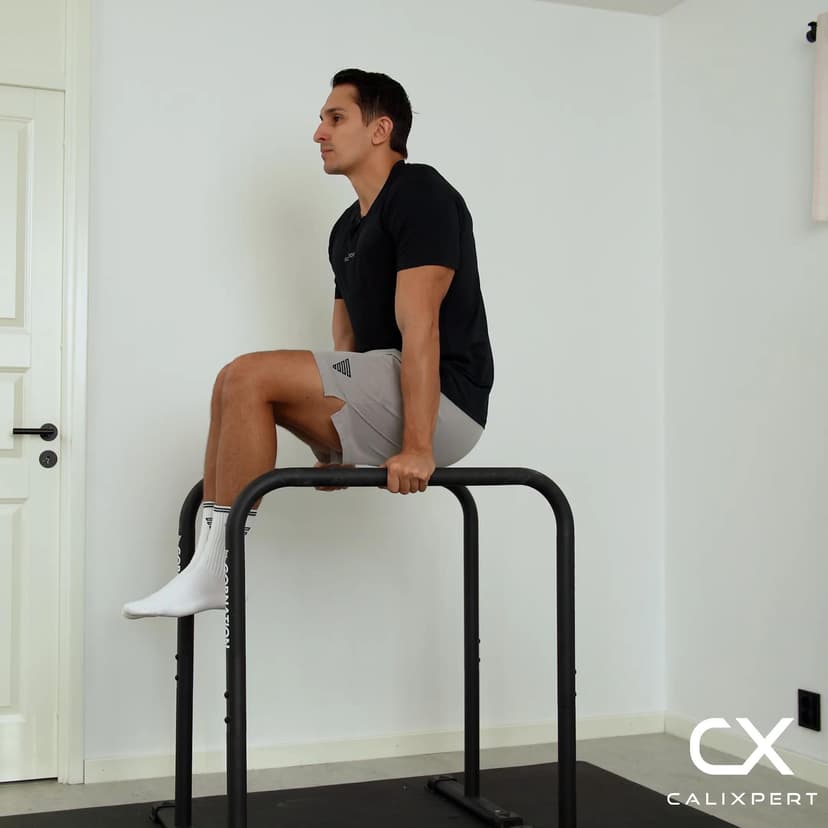
Floor L-Sit Hold
Perform the L-sit with your hands flat on the floor instead of on elevated bars. This requires significantly more shoulder depression strength because you need to push your entire body high enough to clear the legs off the ground.
V-Sit Hold
Raise the legs above 90 degrees toward your face while maintaining straight arms and a compressed torso. This increases the demand on the hip flexors, abs, and hamstring flexibility well beyond the standard L-sit.