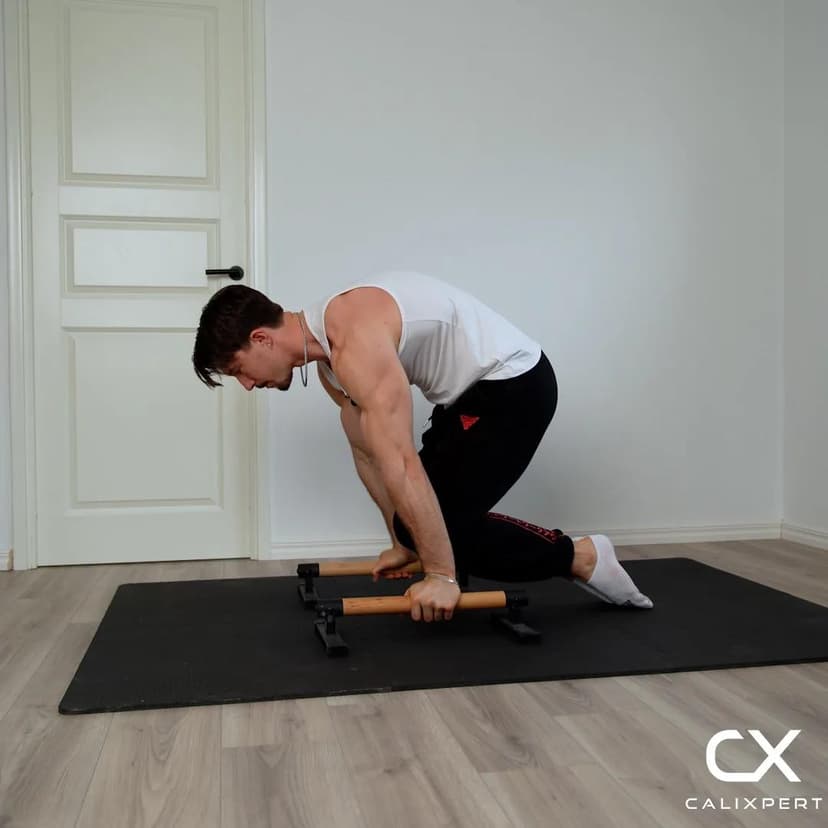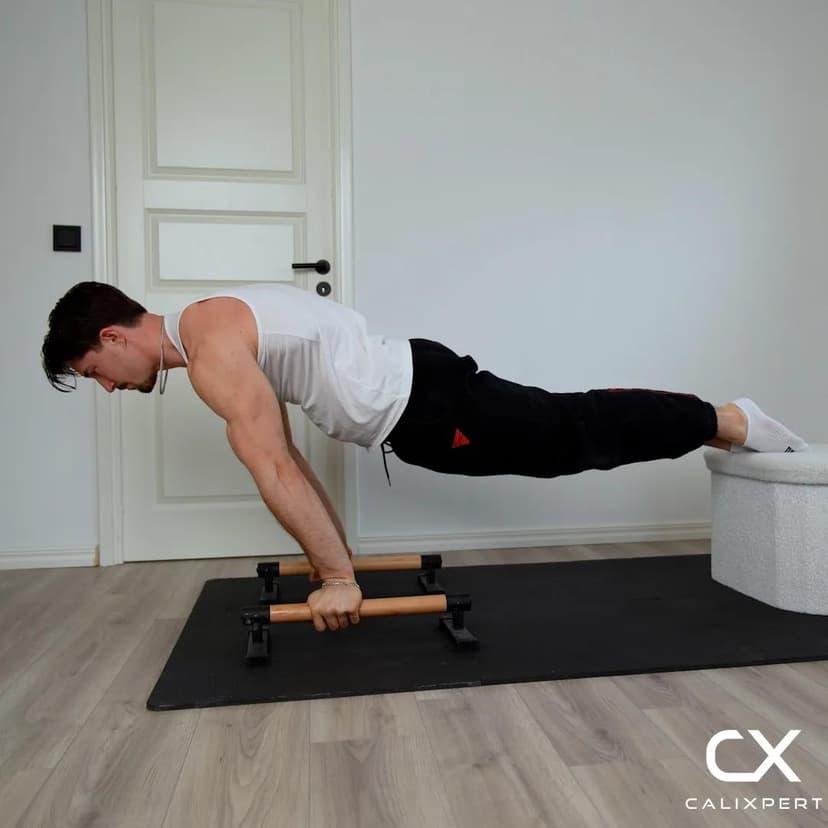
Triceps Push Ups
Triceps push-ups are a close-grip push-up variation that shifts the primary load from the chest onto the triceps and front deltoids by narrowing the hand placement and keeping the elbows tight to the body. The narrower grip forces the triceps to handle most of the pressing work through the full range of motion, making this one of the most effective bodyweight exercises for building arm strength. Mastered with proper elbow tracking and full-body tension, triceps push-ups build the lockout power and pressing endurance that carry directly into dips, handstand push-ups, and every advanced calisthenics push movement.
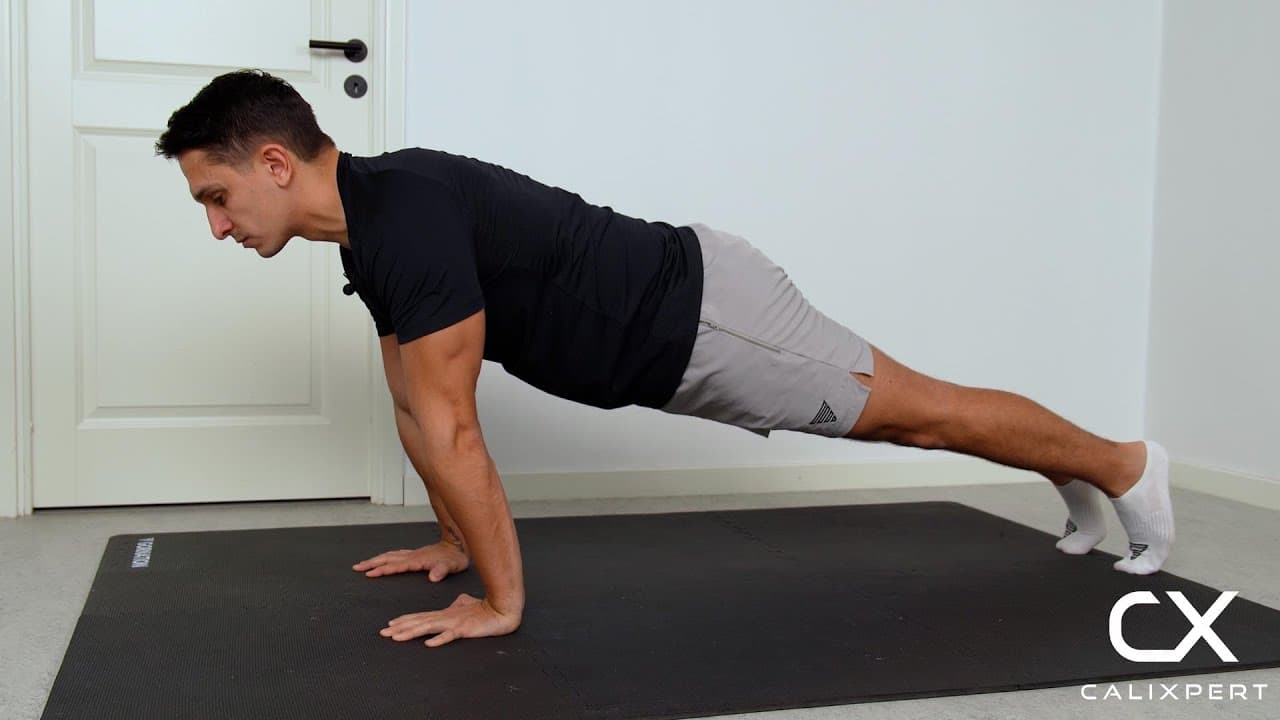
Triceps push-ups are a close-grip push-up variation that shifts the primary load from the chest onto the triceps and front deltoids by narrowing the hand placement and keeping the elbows tight to the body. The narrower grip forces the triceps to handle most of the pressing work through the full range of motion, making this one of the most effective bodyweight exercises for building arm strength. Mastered with proper elbow tracking and full-body tension, triceps push-ups build the lockout power and pressing endurance that carry directly into dips, handstand push-ups, and every advanced calisthenics push movement.
How to Do Triceps Push Ups
1. Set Your Hand Position
Place your hands on the floor slightly narrower than shoulder width apart, with your fingers pointing forward. Position your hands in line with your chest, not under your shoulders or near your face. This placement puts the triceps in the strongest mechanical position to drive the movement. Wrap your fingers firmly into the ground to stabilize the wrists.
Hands narrow, in line with your chest
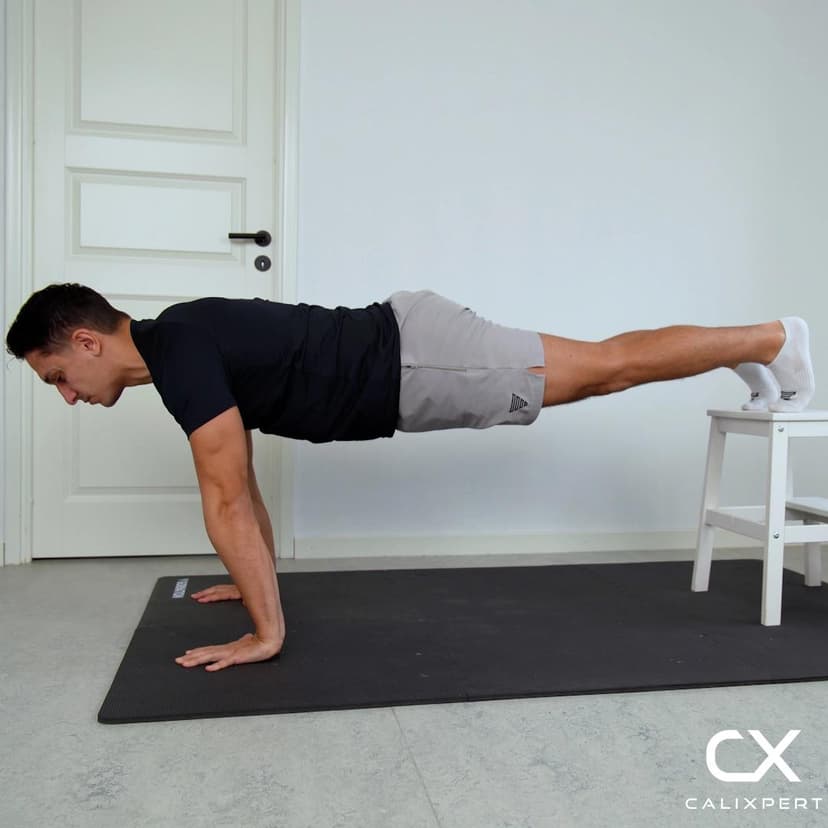
2. Lock In Your Body Line
Extend your legs fully and set your feet hip-width apart. Squeeze your glutes and brace your abs so your body forms one rigid line from head to heels. This full-body tension prevents your hips from sagging or piking, which would leak force away from the triceps. Maintain this tension throughout every rep.
Squeeze everything, stay rigid
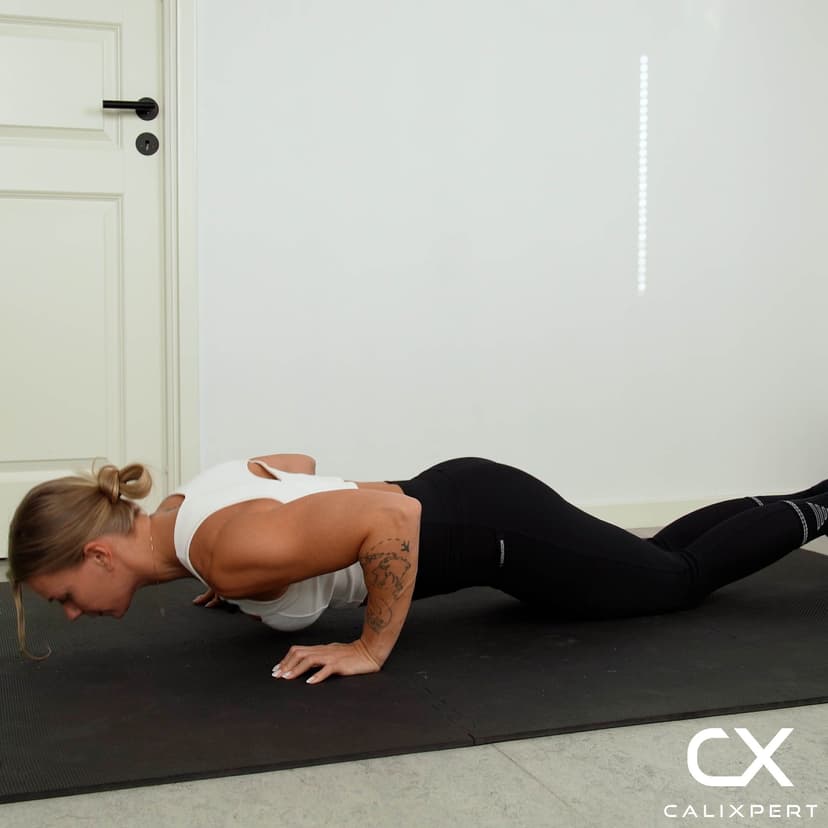
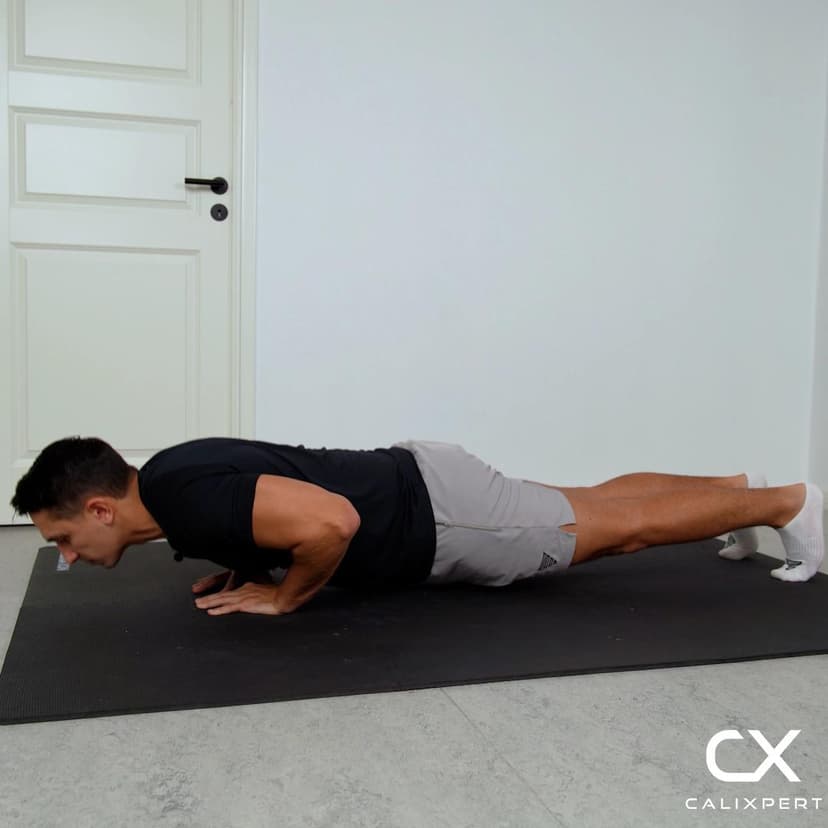
3. Lower With Elbows Tight
Bend your elbows and lower your body toward the floor, keeping your elbows as close to your ribs as possible. This tight elbow path is what shifts the load onto the triceps and away from the chest. Keep your neck neutral throughout the descent, not tucking your chin or craning your head up. Lower until your chest is just above the floor or as low as your mobility allows.
Elbows glued to your sides
4. Press Back Up Through the Triceps
Push through your palms to extend your arms fully, driving your body back to the starting position. Focus on squeezing the triceps hard through the entire pressing phase, especially at lockout. Keep your elbows tracking straight back, not flaring outward as you fatigue. Re-check your body line at the top before starting the next rep.
Press and squeeze to full lockout
5. Control the Tempo
Lower yourself for a count of two to three seconds on every rep and press up with controlled force. Rushing the descent throws away half the strength-building potential of the exercise. The controlled eccentric phase is where a large portion of the triceps growth stimulus comes from. Never bounce off the floor or use momentum to get back up.
Slow down, control every inch
Most people fail triceps push-ups at the bottom because they let their elbows drift outward when the load gets heavy. If you feel your chest doing most of the work, your elbows are flaring. Focus on keeping your upper arms glued to your ribs the entire time, and you will feel the triceps light up in a completely different way. The narrow grip is only half the equation, the elbow path is what actually makes this a triceps exercise.
Muscles Worked During Triceps Push Ups
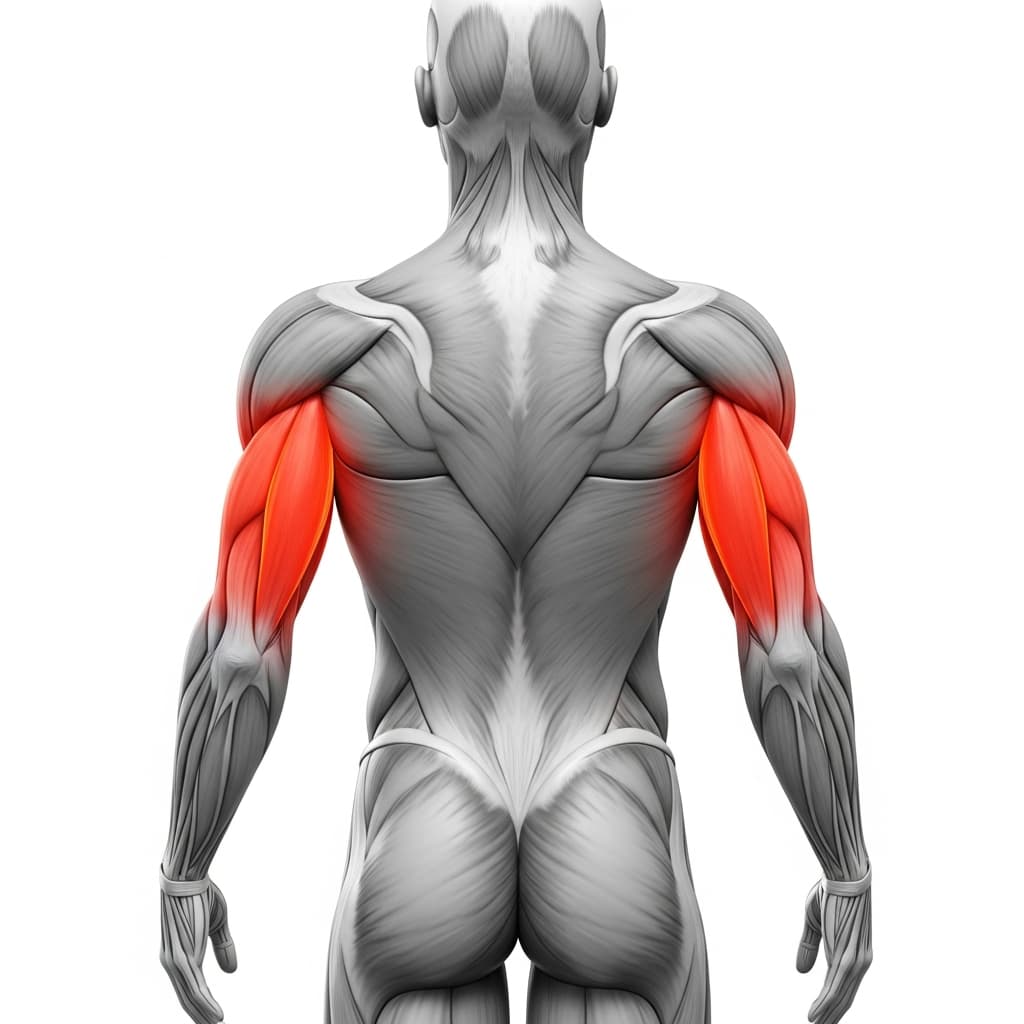
Primary Muscles:
Secondary Muscles:
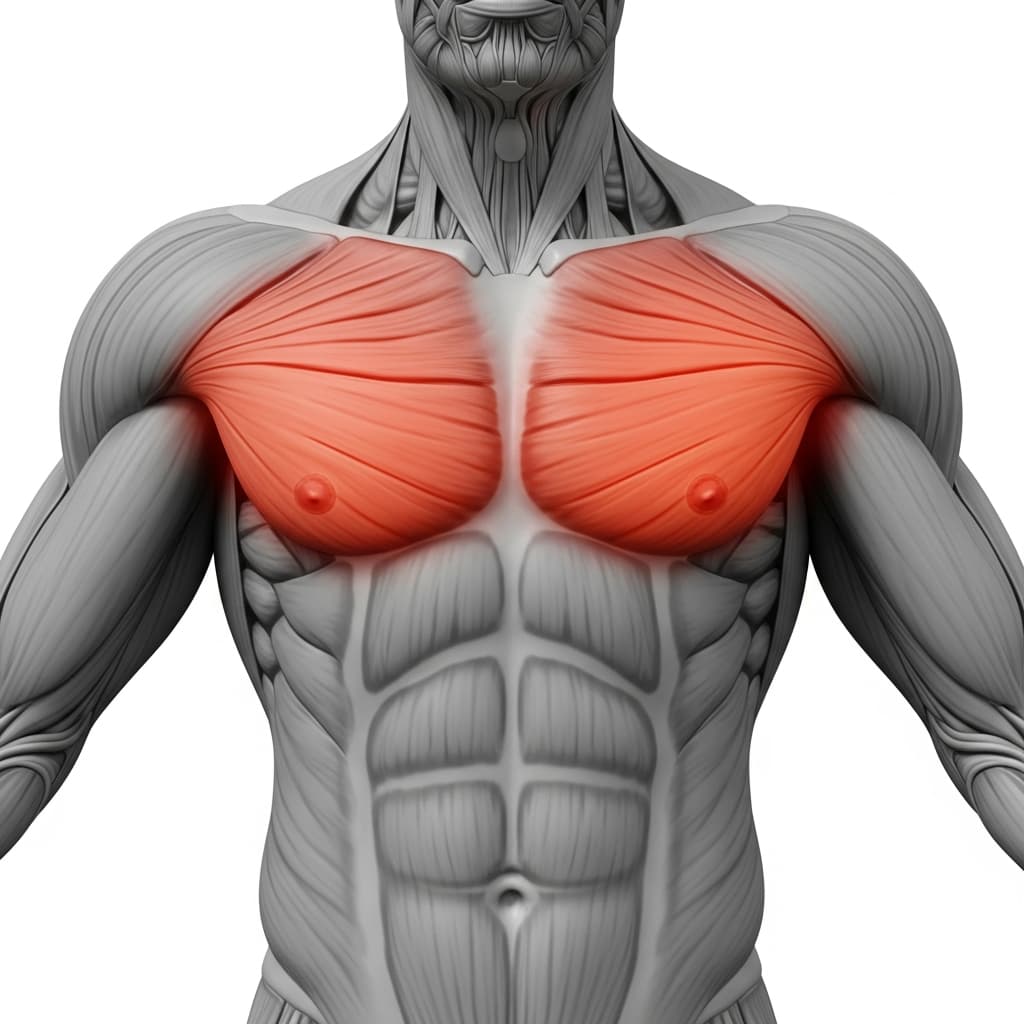
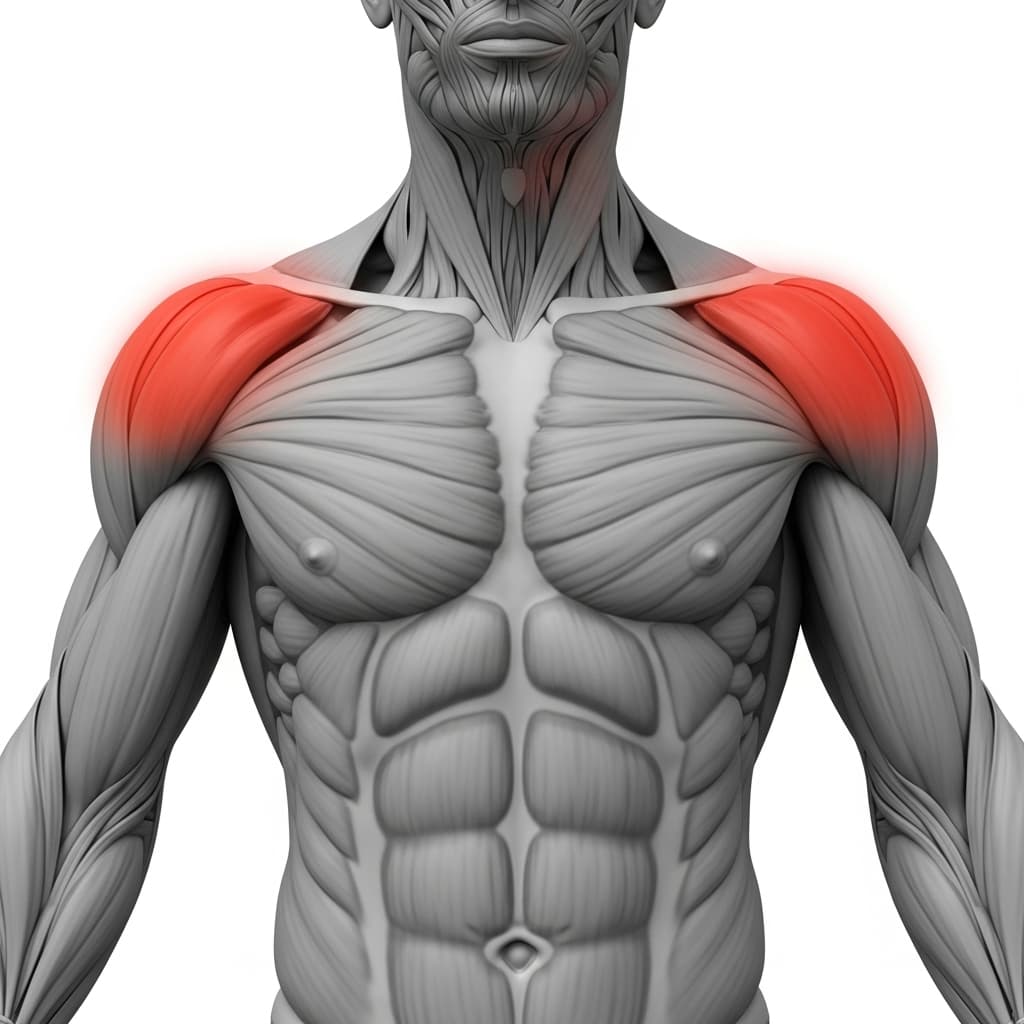
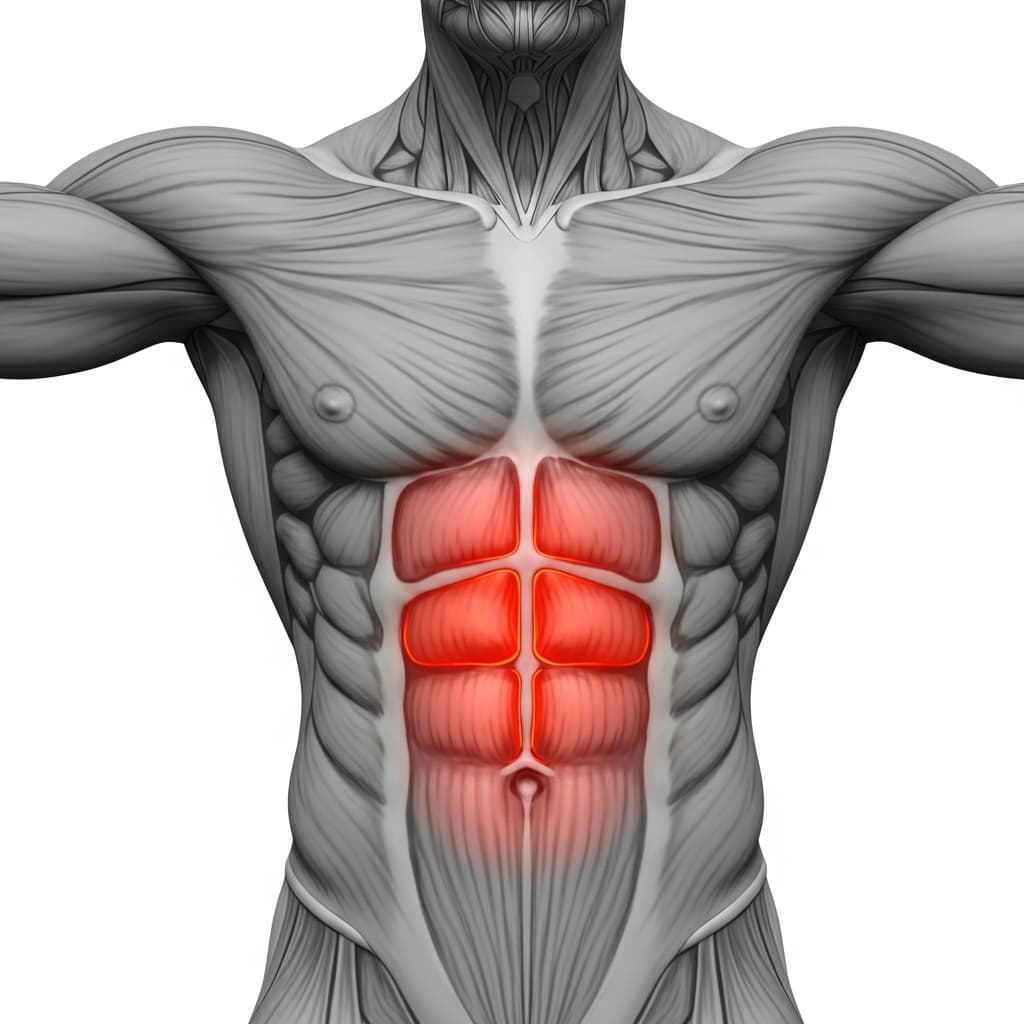
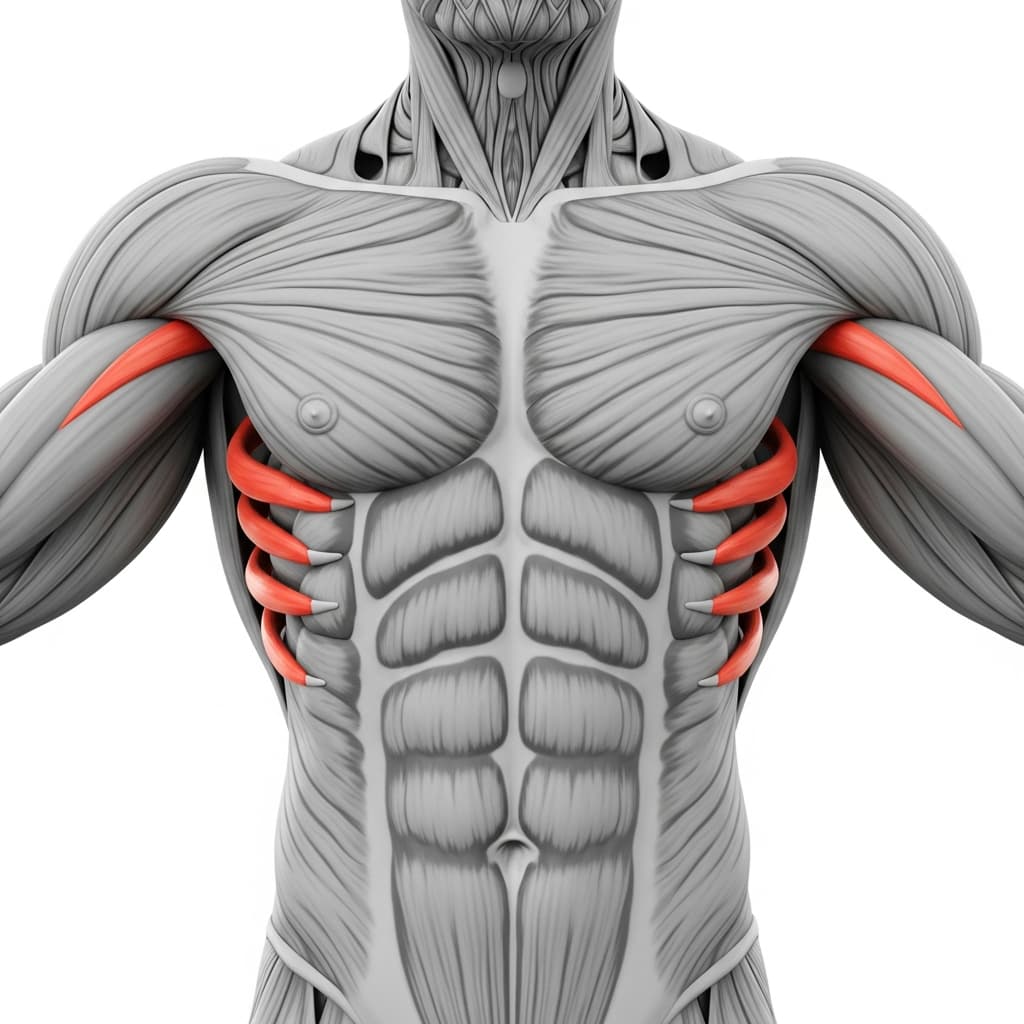
Primary Muscles
Triceps Brachii (Triceps) - The triceps extend the elbow joint to press the body away from the floor, handling the majority of the pushing force throughout the entire concentric phase.
Secondary Muscles
Pectoralis Major (Chest) - The chest assists with horizontal adduction of the upper arm during the press, contributing less than in a standard push-up due to the narrow grip and tight elbow path.
Anterior Deltoid (Front Deltoid) - The front deltoids stabilize the shoulder joint and assist with shoulder flexion as you press your body upward from the bottom position.
Rectus Abdominis (Abs) - The abdominals brace isometrically to maintain a rigid body line from head to heels, preventing the hips from sagging under load.
Serratus Anterior (Serratus Anterior) - The serratus anterior protracts the scapulae at lockout and stabilizes the shoulder blades against the ribcage throughout the pressing movement.
Benefits of Triceps Push Ups
- Isolates the triceps more effectively than standard push-ups by shifting the primary load away from the chest through the narrower grip and tight elbow path
- Builds lockout strength that transfers directly into dips, handstand push-ups, and any pressing movement where the triceps finish the rep
- Strengthens the front deltoids and shoulder stabilizers under a controlled load, reinforcing shoulder health for overhead calisthenics work
- Requires zero equipment and can be performed anywhere, making it one of the most practical bodyweight exercises for consistent triceps training
Who Is This Exercise For?
You should be able to perform at least 10 clean regular push-ups with full range of motion and controlled tempo before narrowing your grip for triceps push-ups. If your elbows flare out during standard push-ups or you cannot maintain a straight body line, work on regular push-up form and plank holds first. The narrower base demands more triceps strength and wrist stability, so jumping ahead before you have the foundation leads to compensations that train the wrong muscles.
Common Mistakes to Avoid
Letting elbows flare outward: Keep your elbows tracking straight back along your ribs throughout the entire rep. The moment the elbows flare, the chest takes over and the triceps contribution drops significantly.
Placing hands too far forward: Position your hands in line with your chest, not under your shoulders or near your face. Hands too far forward shifts the load into the front deltoids and places unnecessary stress on the shoulder joint.
Sagging hips or broken body line: Squeeze your glutes and brace your core before every set. A sagging midsection turns the exercise into a partial rep that misses the triceps and loads the lower back instead.
Cutting depth short: Lower until your chest nearly touches the floor on every rep. Partial reps limit the stretch on the triceps and reduce the total muscle activation compared to full range of motion.