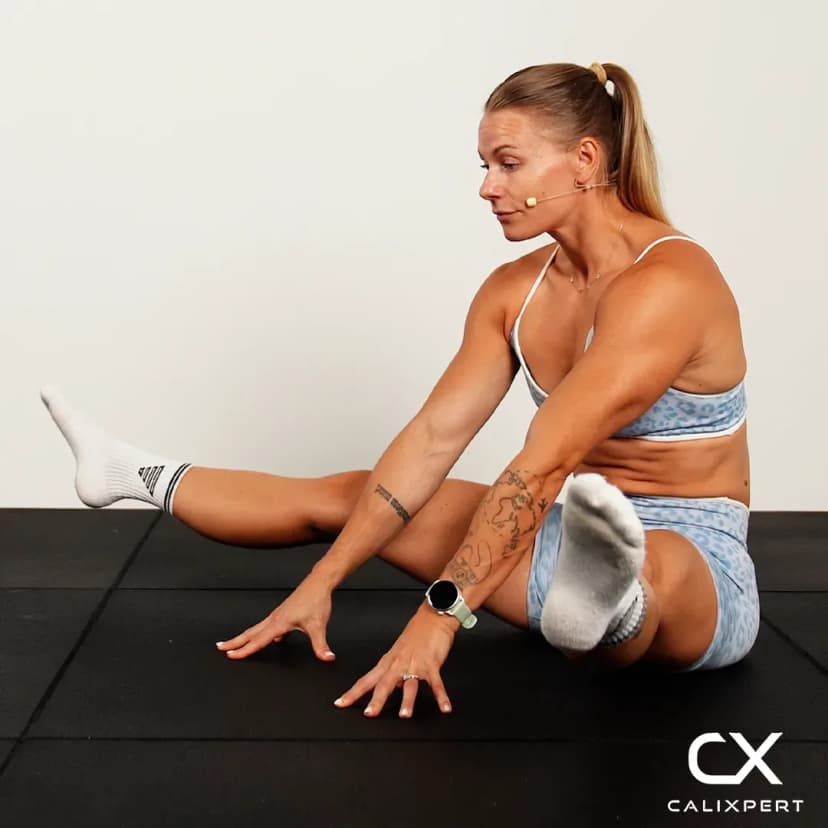
Knee Push Up
Knee push-ups are a foundational horizontal pressing exercise in calisthenics that targets the chest, triceps, and front deltoids through a shortened lever. By placing the knees on the ground instead of the feet, the movement reduces the percentage of bodyweight you press while maintaining the same pushing mechanics as a full push-up. Trained with strict form, knee push-ups build the pressing strength and shoulder stability needed to progress to standard push-ups and beyond.
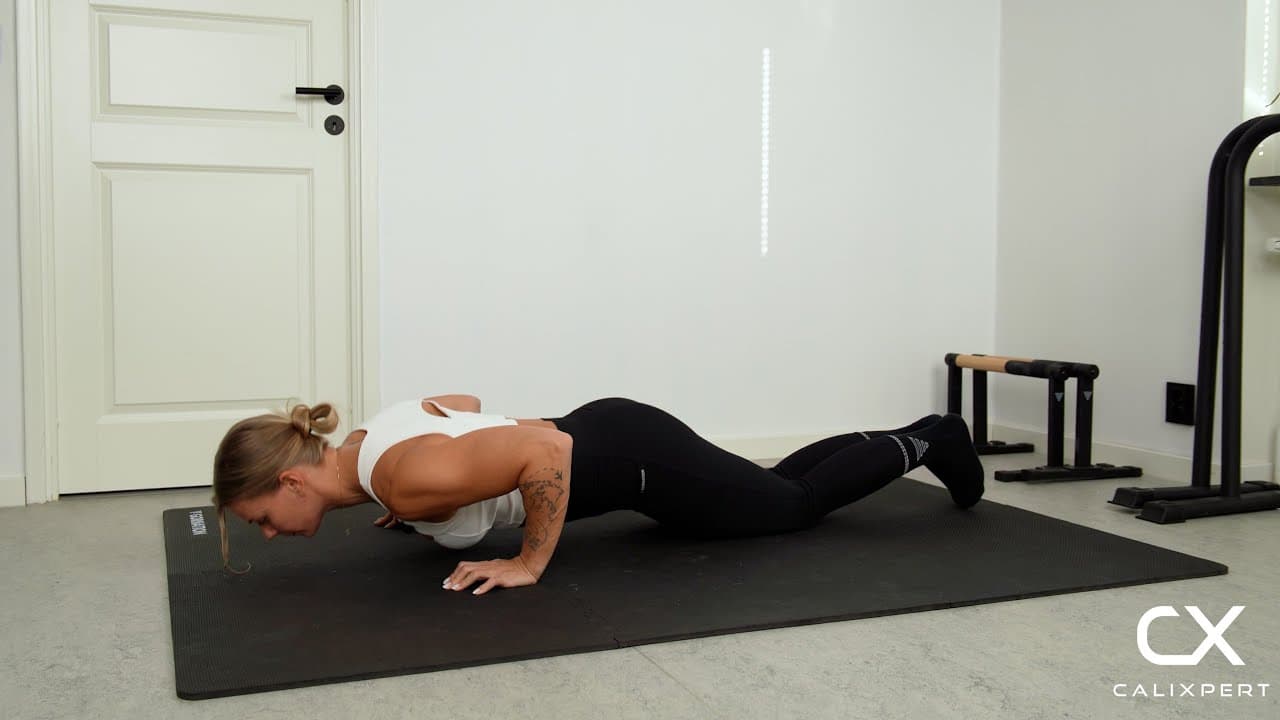
Knee push-ups are a foundational horizontal pressing exercise in calisthenics that targets the chest, triceps, and front deltoids through a shortened lever. By placing the knees on the ground instead of the feet, the movement reduces the percentage of bodyweight you press while maintaining the same pushing mechanics as a full push-up. Trained with strict form, knee push-ups build the pressing strength and shoulder stability needed to progress to standard push-ups and beyond.
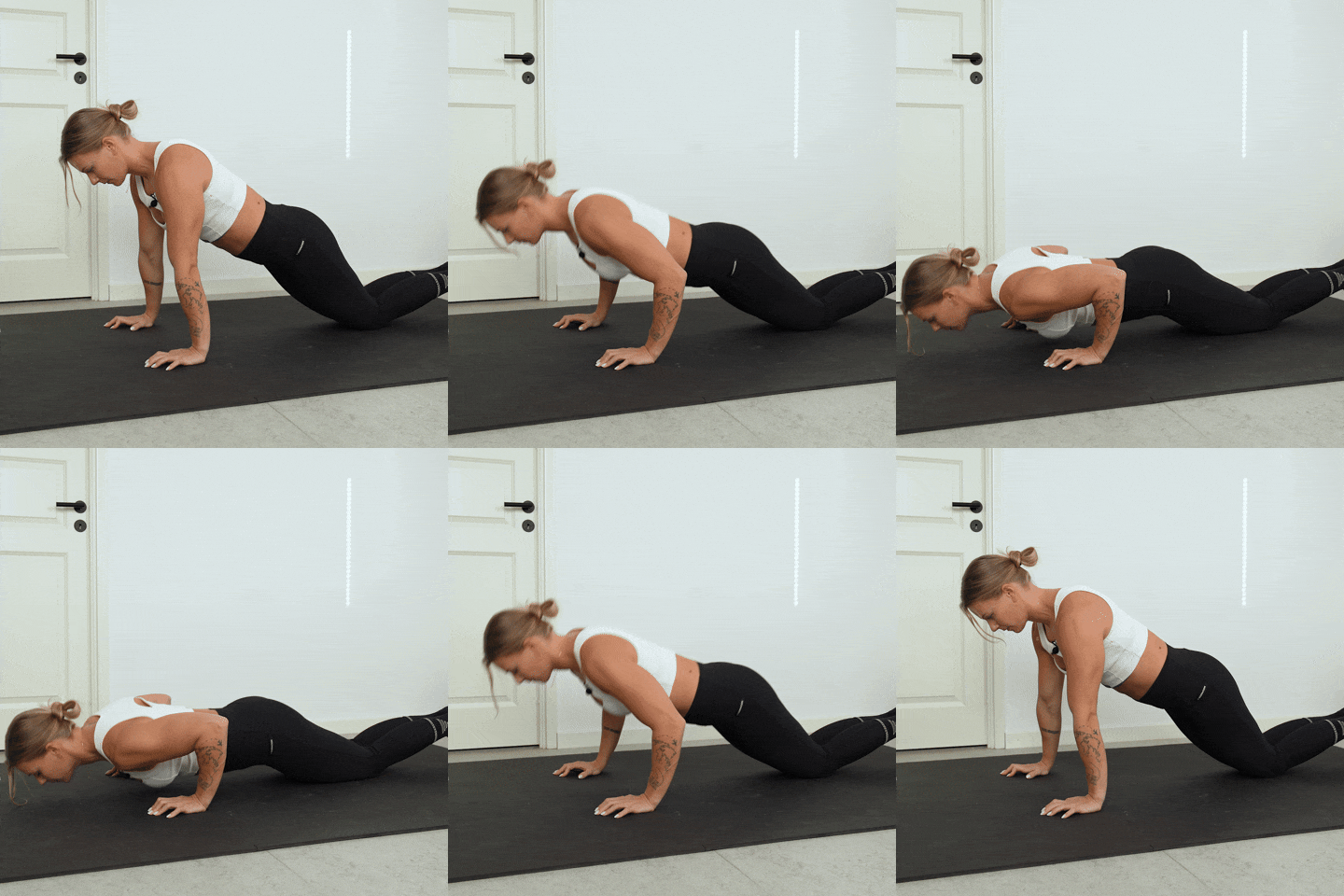
How to Do Knee Push Up
1. Set Up Your Hand Position
Place your hands on the ground slightly wider than shoulder width with your fingers spread. Position your shoulders directly above your hands so the wrists sit in a straight line under the shoulder joint. This alignment ensures even loading through the arms and keeps unnecessary pressure off the wrists.
Shoulders stacked directly over the hands
2. Position Your Knees and Hips
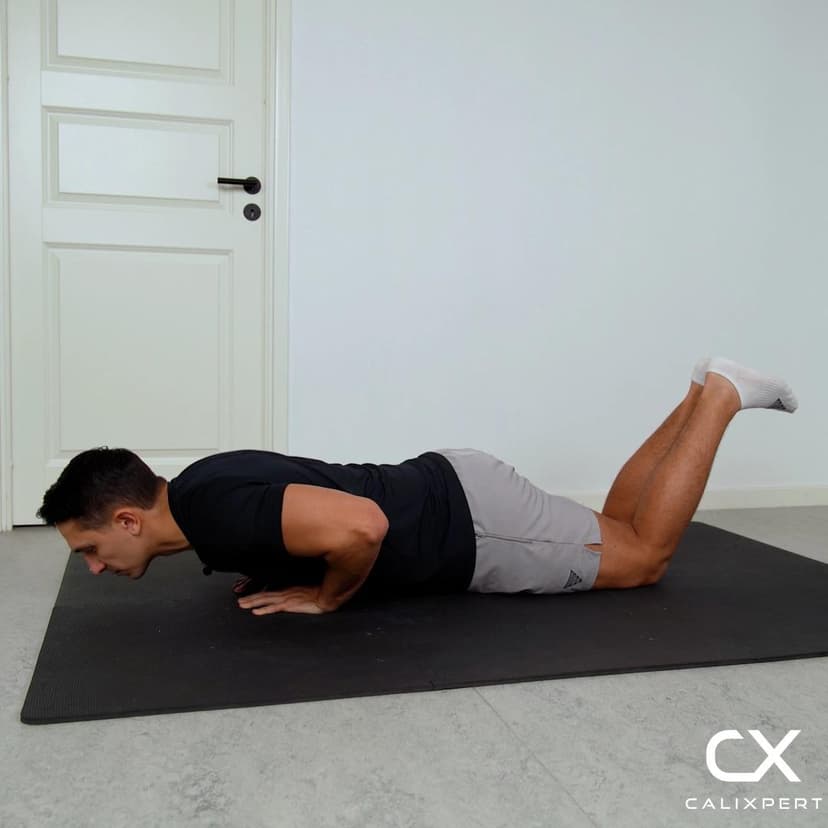
Step back with both knees so your body forms a straight line from your knees to the top of your head. Keep your legs together and your glutes engaged throughout the movement. Do not let your hips pike up or sag toward the floor.
Straight line from knees to head
3. Brace Your Core
Tighten your abs and squeeze your glutes before starting the descent. This creates a stable trunk that prevents your lower back from arching and your hips from dropping. Maintain this tension through every single rep.
Tight core, squeezed glutes
4. Lower With a Forward Lean
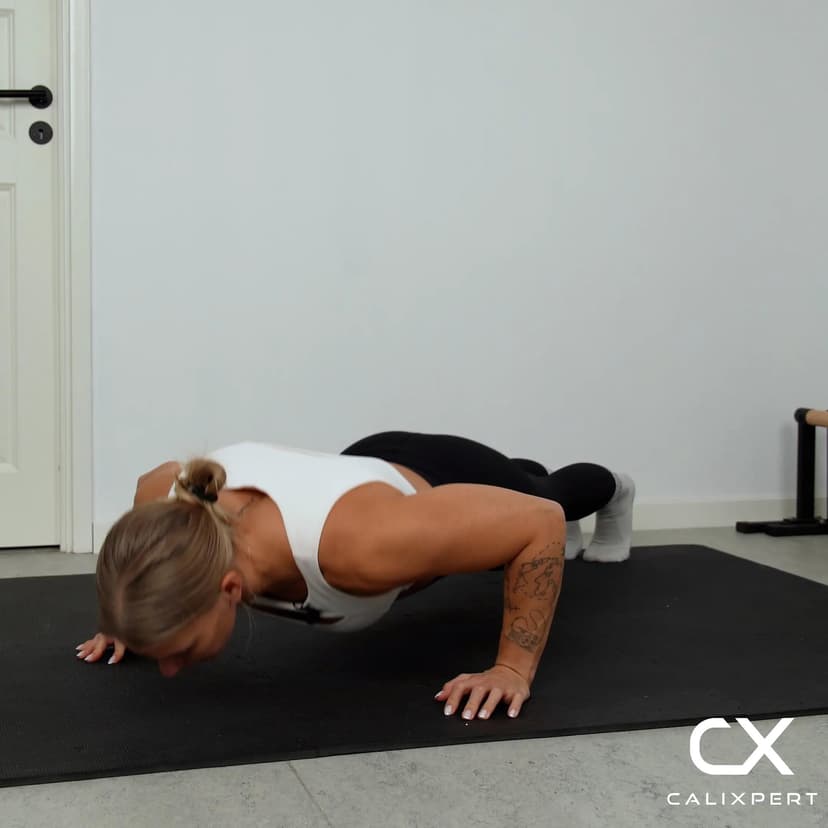
Lean slightly forward as you bend your elbows and lower your chest toward the ground. Keep your elbows at roughly a 45-degree angle from your body, not flared out to the sides and not pinned against your ribs. Lower until your elbows reach a 90-degree angle and your chest is just above the floor.
Elbows at 45 degrees, lean forward
5. Press Back Up to Full Extension
Push through your palms to extend your arms and return to the starting position. Keep your core braced and your body in one straight line throughout the press. Fully lock out your elbows at the top before beginning the next rep.
Push the floor away, full lockout
Most people rush through knee push-ups because they see them as a beginner exercise, but the technique transfer to full push-ups only happens if you do them with strict form. Focus on the forward lean as you descend and keep the elbows at 45 degrees the entire time. If you can do 3 sets of 12 perfect knee push-ups with a controlled 3-second lowering phase, you are ready for full push-ups.
Muscles Worked During Knee Push Up
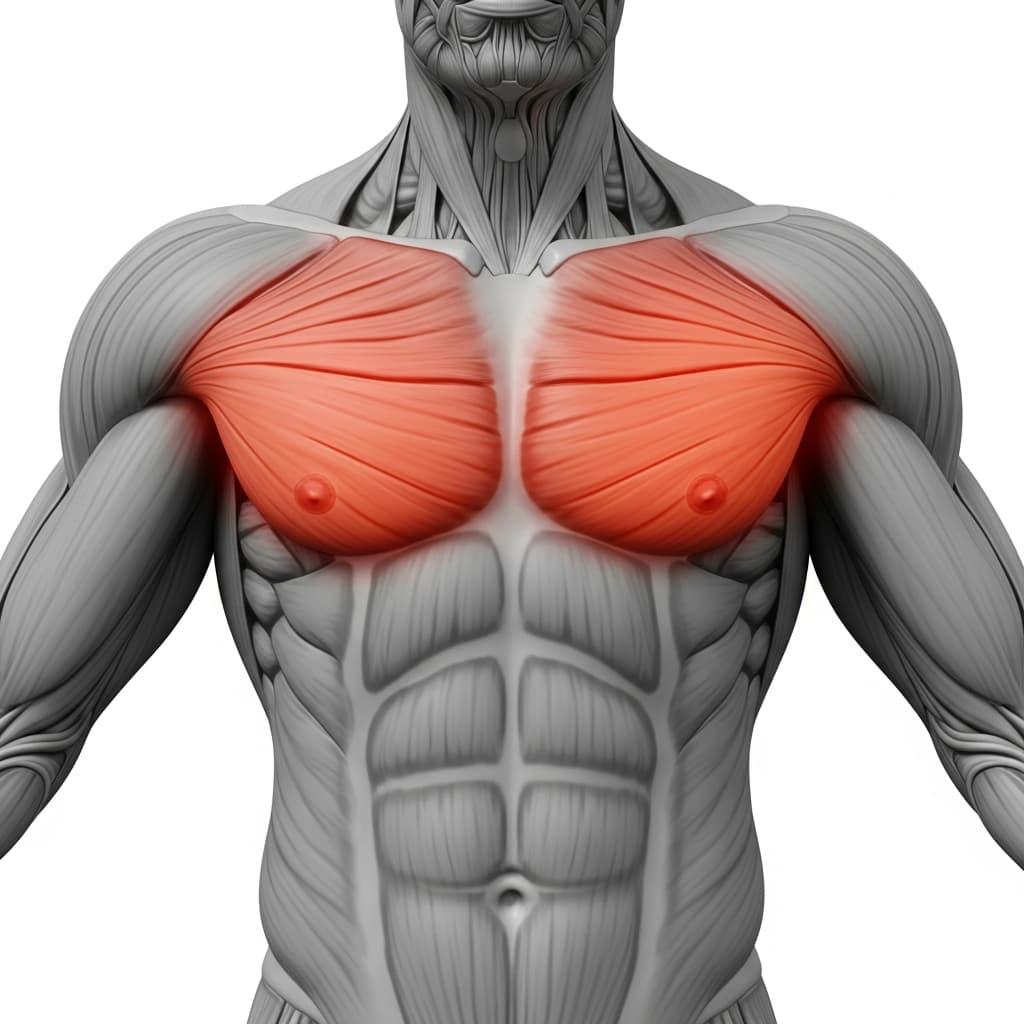
Secondary Muscles:
Primary Muscles
Pectoralis Major (Chest) - The pectoralis major contracts to horizontally press the body away from the floor, driving the primary pushing force through the full range of motion.
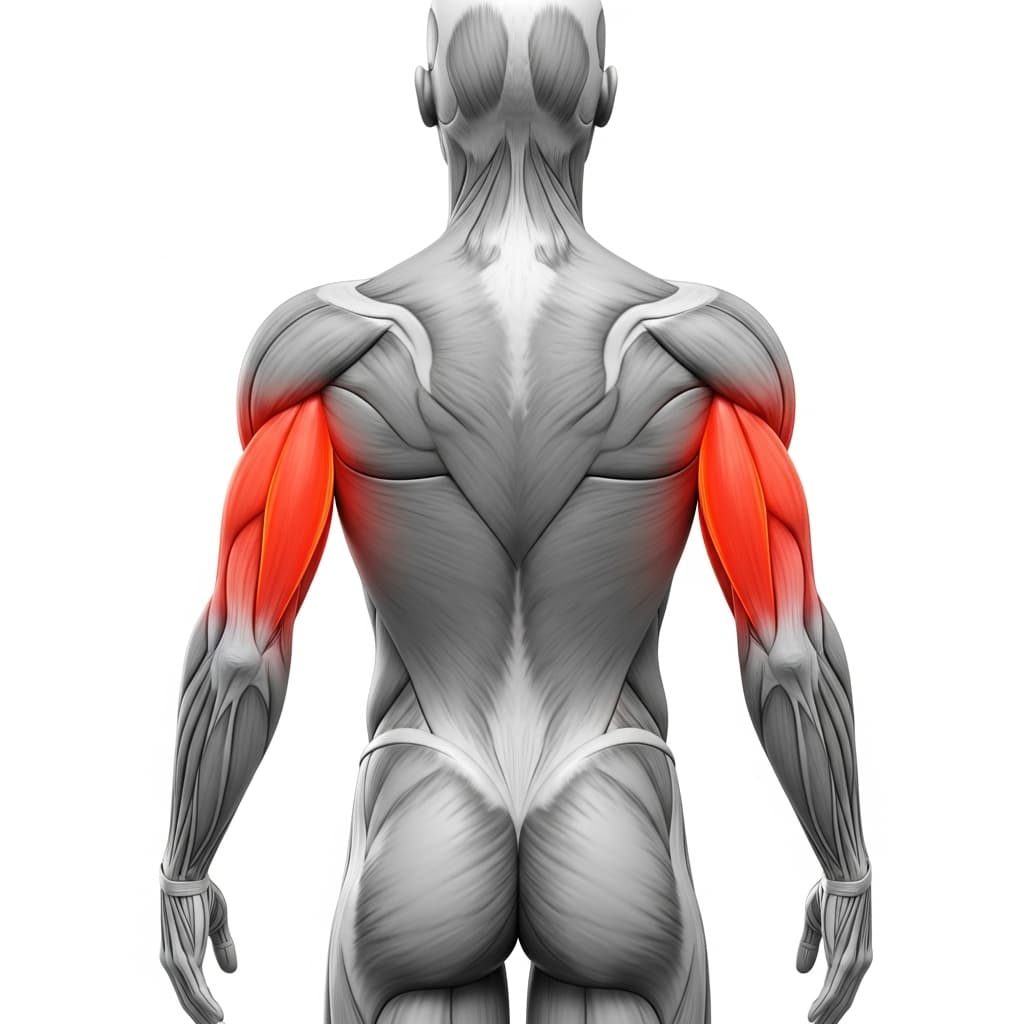
Triceps Brachii (Triceps) - The triceps extend the elbow from the bent position at the bottom to full lockout at the top, sharing the pressing load with the chest throughout every rep.
Secondary Muscles
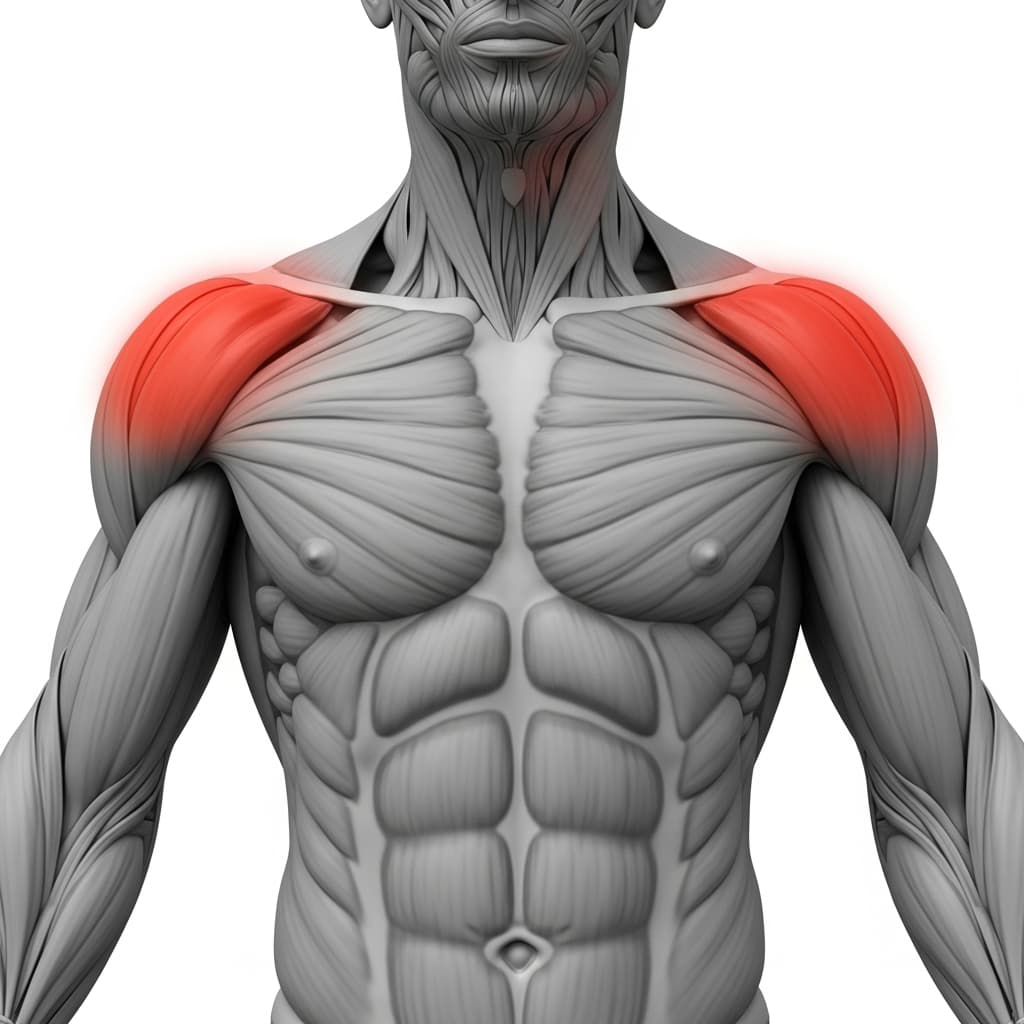
Anterior Deltoid (Front Deltoid) - The anterior deltoid assists the chest in shoulder flexion during the pressing phase, helping drive the torso away from the floor.
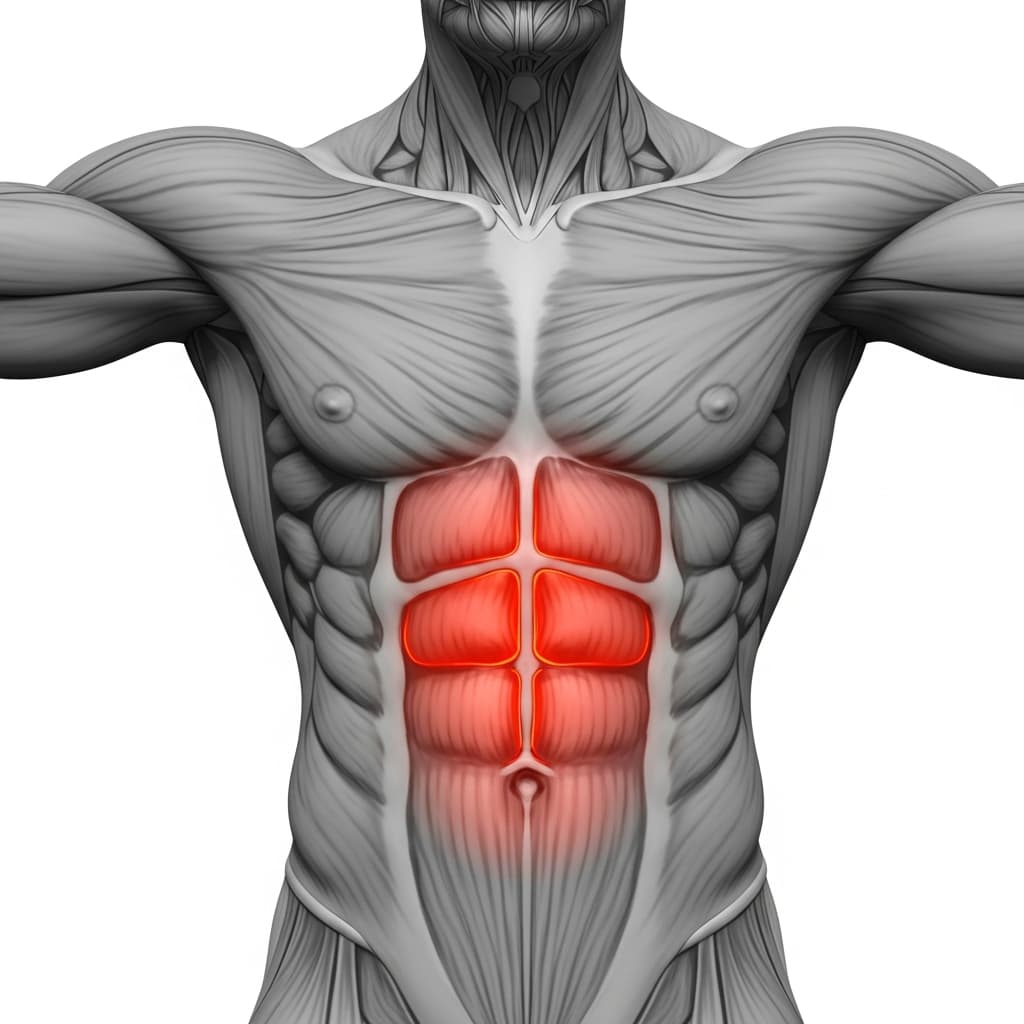
Rectus Abdominis (Abs) - The rectus abdominis holds the torso rigid in a straight line from knees to head, preventing the lower back from arching under load.
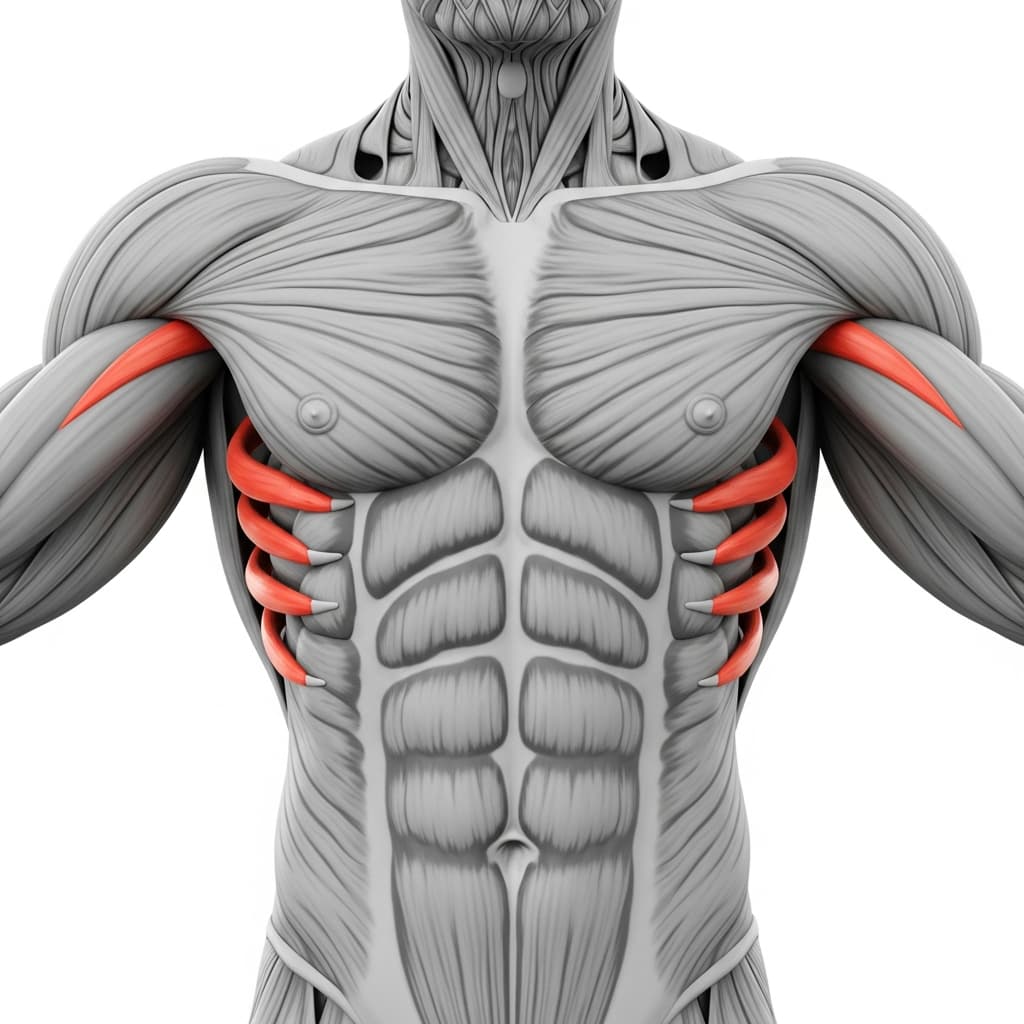
Serratus Anterior (Serratus Anterior) - The serratus anterior protracts the shoulder blades at the top of each rep, completing the full pressing motion and stabilizing the scapula against the ribcage.
Benefits of Knee Push Up
- Builds pressing strength in the chest and triceps with reduced bodyweight load, making it the most effective bridge between zero push-ups and full push-ups
- Trains the exact same motor pattern and muscle recruitment as a standard push-up, so every rep transfers directly to the full movement
- Strengthens the serratus anterior and front deltoids, which stabilize the shoulder blade during all pressing and overhead movements
- Develops core anti-extension strength by requiring you to maintain a rigid torso throughout each rep
Who Is This Exercise For?
You should be able to hold a plank on your knees for at least 15 seconds with a straight line from your knees to your head before attempting knee push-ups. If maintaining that position is difficult, focus on wall push-ups and plank holds to build baseline pressing strength and core stability first.
Common Mistakes to Avoid
Letting the hips sag toward the floor: Keep your glutes engaged and your core tight so your body stays in one straight line from knees to head. When the hips drop, load shifts onto the lower back instead of the chest and triceps.
Flaring the elbows out to 90 degrees: Keep your elbows at a 45-degree angle from your torso throughout the entire movement. Flaring them wide puts excessive stress on the shoulder joint and reduces chest activation.
Cutting the range of motion short: Lower until your elbows reach at least a 90-degree bend on every rep. Half reps skip the hardest portion of the movement where the most muscle recruitment happens.
Looking up or craning the neck: Keep your head in a neutral position with your gaze toward the floor about a foot ahead of your hands. Lifting the chin creates unnecessary cervical spine tension and breaks the straight line of your body.