Planche Lean
The planche lean is a straight-arm pushing exercise that builds the anterior deltoid strength and scapular protraction required for planche progression. Starting from a plank position, you shift your shoulders forward past your wrists while maintaining locked elbows and full body tension, placing heavy isometric load on the front deltoids, chest, and serratus anterior. This exercise is the single most important drill for developing the specific straight-arm pushing strength that separates basic calisthenics from advanced planche work.
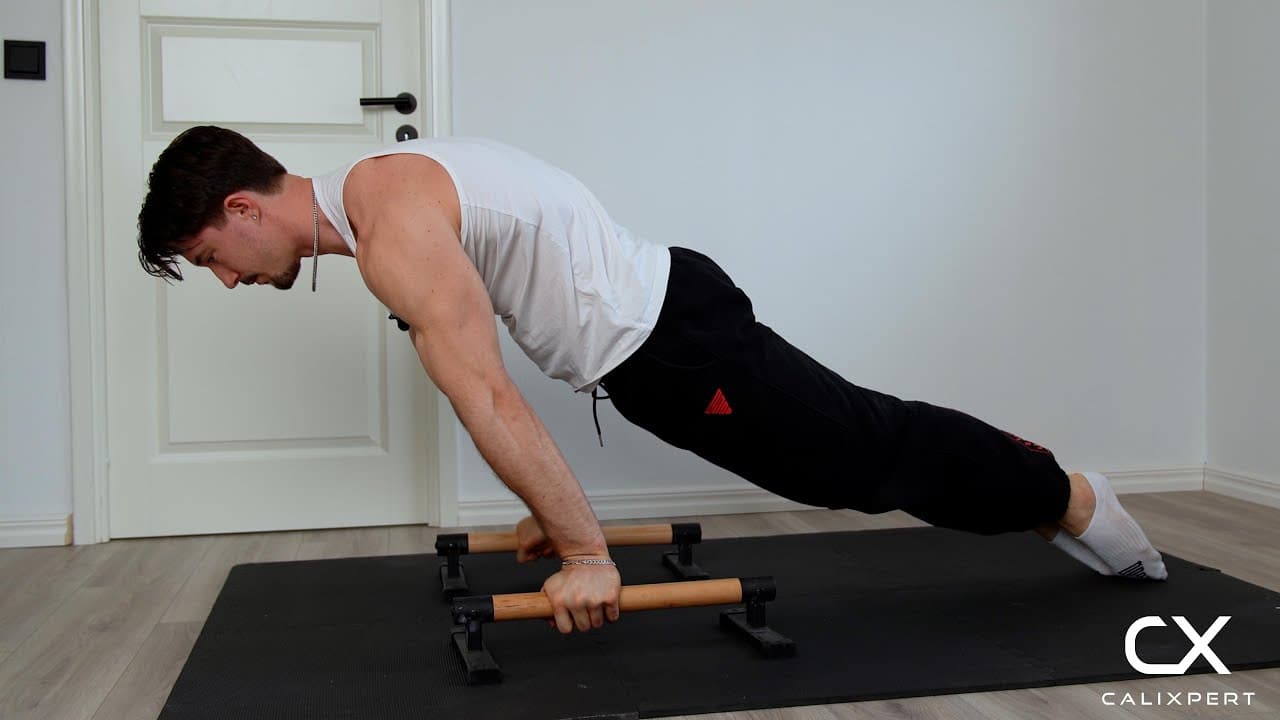
The planche lean is a straight-arm pushing exercise that builds the anterior deltoid strength and scapular protraction required for planche progression. Starting from a plank position, you shift your shoulders forward past your wrists while maintaining locked elbows and full body tension, placing heavy isometric load on the front deltoids, chest, and serratus anterior. This exercise is the single most important drill for developing the specific straight-arm pushing strength that separates basic calisthenics from advanced planche work.
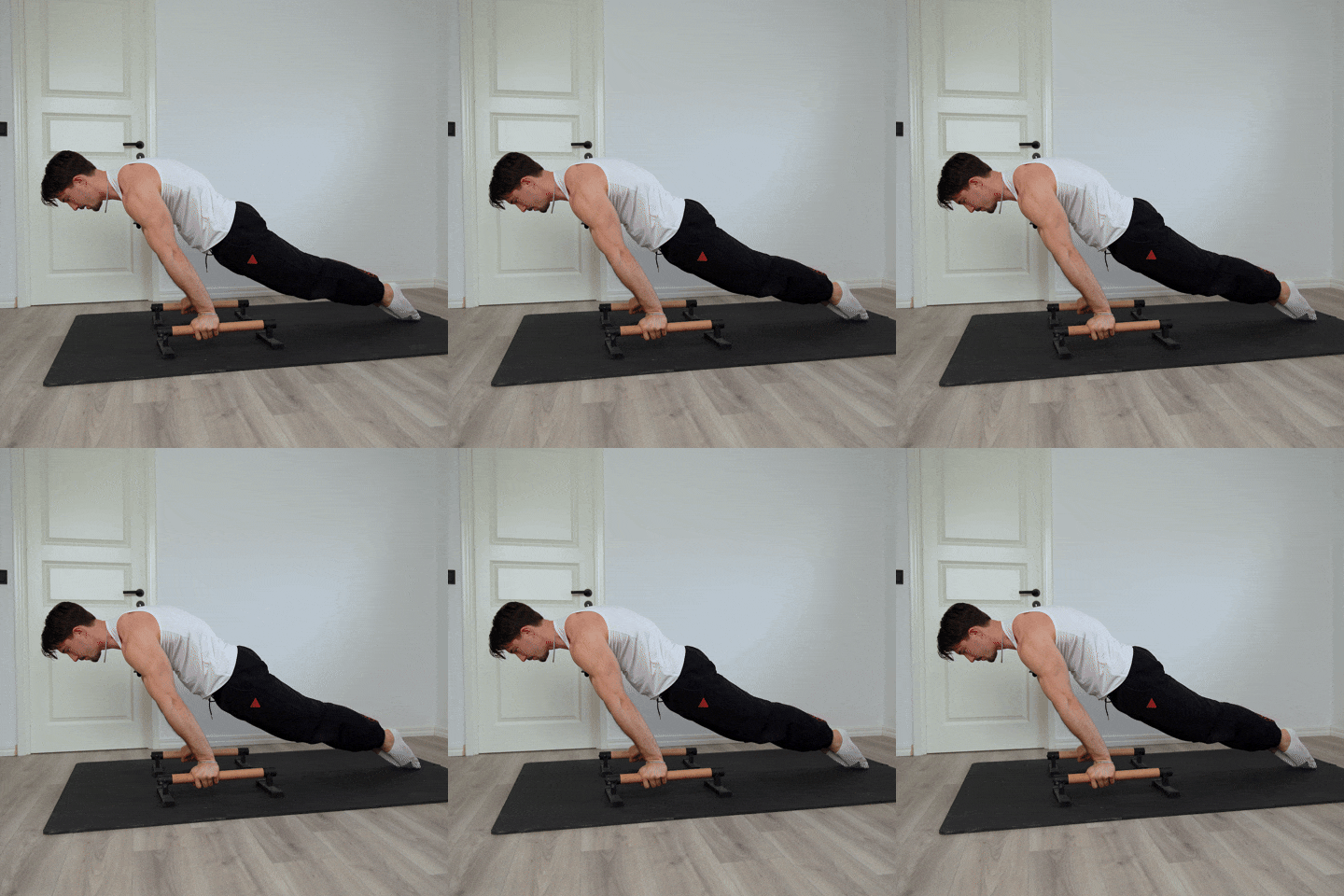
How to Do Planche Lean
1. Set Up Your Hand Position
Place your hands flat on the floor at shoulder width apart, fingers spread wide and pointing forward. If you feel wrist pressure, turn your hands slightly outward to reduce the angle of extension. For a parallette variation, use a neutral grip at the same width. Set up in a high plank with arms fully locked.
Hands shoulder width, fingers spread wide
2. Lock Out and Build Tension
Straighten your elbows completely and keep them locked for the entire set. Squeeze your glutes hard and push your hips slightly downward to create a straight line from head to heels. This full-body tension is what allows you to transfer force through your core instead of sagging at the hips.
Lock elbows, squeeze glutes, straight line
3. Protract the Shoulder Blades
Push the floor away from you by spreading your shoulder blades apart and rounding the upper back slightly. This scapular protraction engages the serratus anterior and positions the shoulder joint for safe forward loading. You should feel your upper back widen and your chest hollow slightly.
Push the floor away, spread the shoulder blades
4. Lean Forward Past the Wrists
Shift your entire body forward as a single unit by letting your shoulders travel past your wrists. Keep your elbows locked and your body rigid throughout the lean. The movement comes from the ankles and toes, not from bending at the hips or shoulders. Lean until your shoulders are clearly in front of your fingertips.
Shoulders past the wrists, body moves as one
5. Hold the Position
Maintain the forward lean with steady breathing. Do not hold your breath, as the isometric effort is intense and requires oxygen. Keep checking that your elbows are locked, glutes are squeezed, and shoulder blades are protracted. The moment your hips sag or elbows bend, the set is over.
Breathe steady, elbows stay locked
6. Return Under Control
Shift your weight back slowly until your shoulders return directly over your wrists. Maintain full body tension through the return and do not collapse at the hips. Reset your protraction and glute squeeze before beginning the next rep or hold.
Shift back slowly, stay tight throughout
Most people rush the lean distance and ignore the quality of their protraction and body line. A shorter lean with locked elbows, hard glute squeeze, and full scapular protraction will build more planche-specific strength than leaning your shoulders six inches past your hands with a soft core. Master the tension first, then add distance one centimeter at a time.
Muscles Worked During Planche Lean
Primary Muscles:
Secondary Muscles:
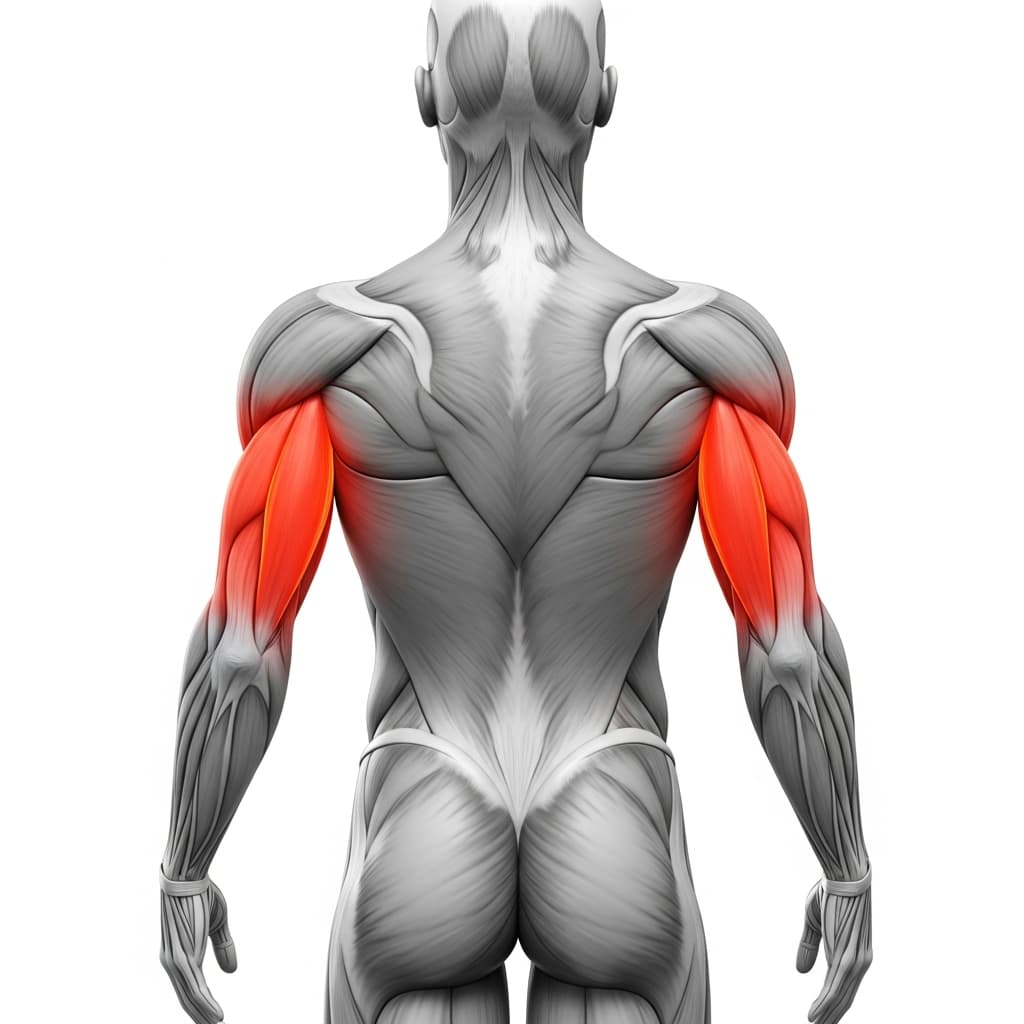
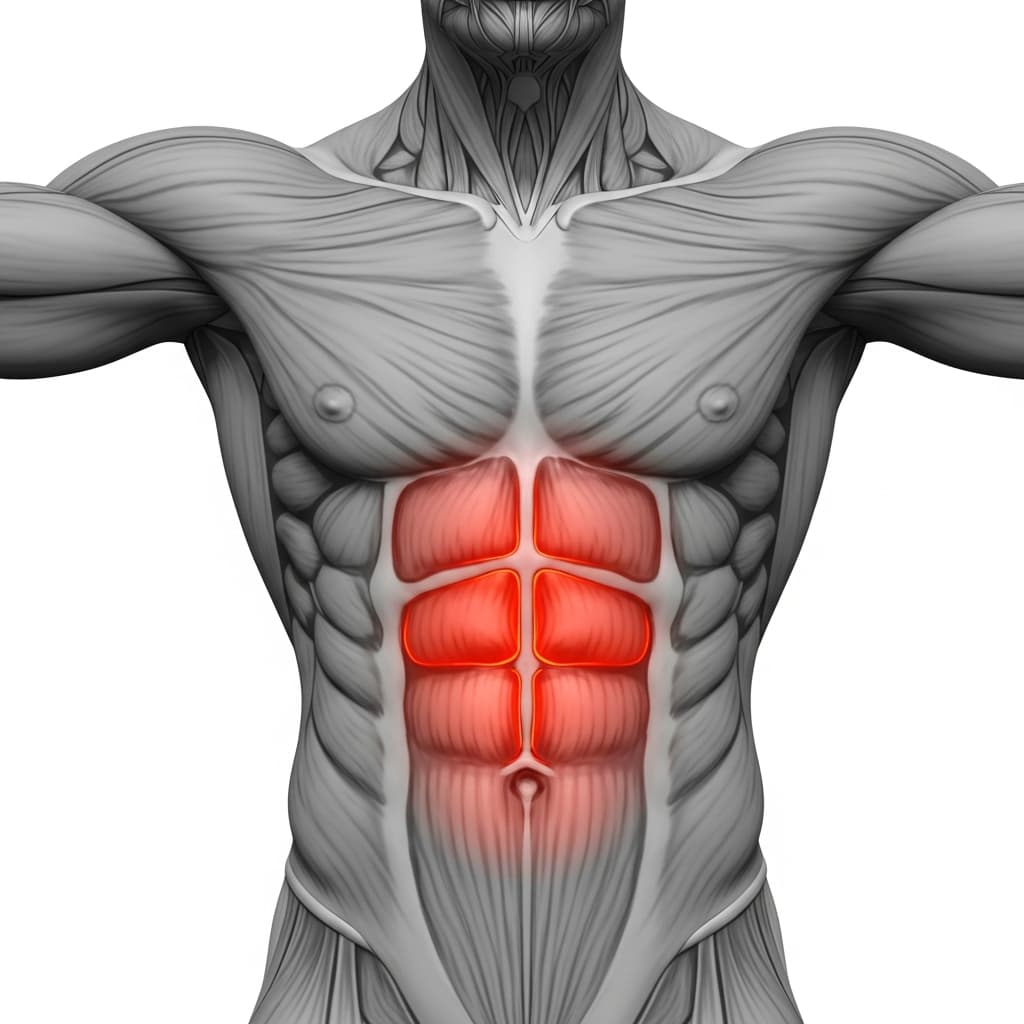
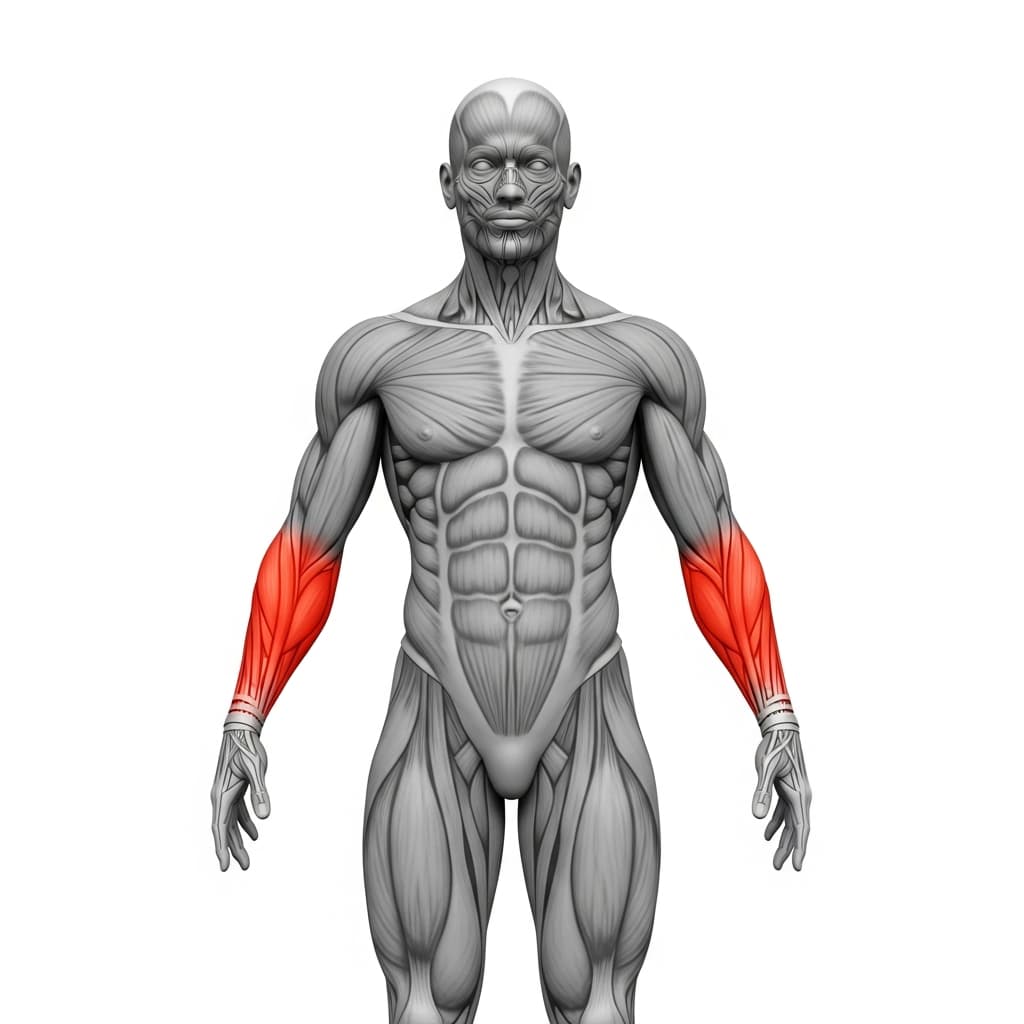
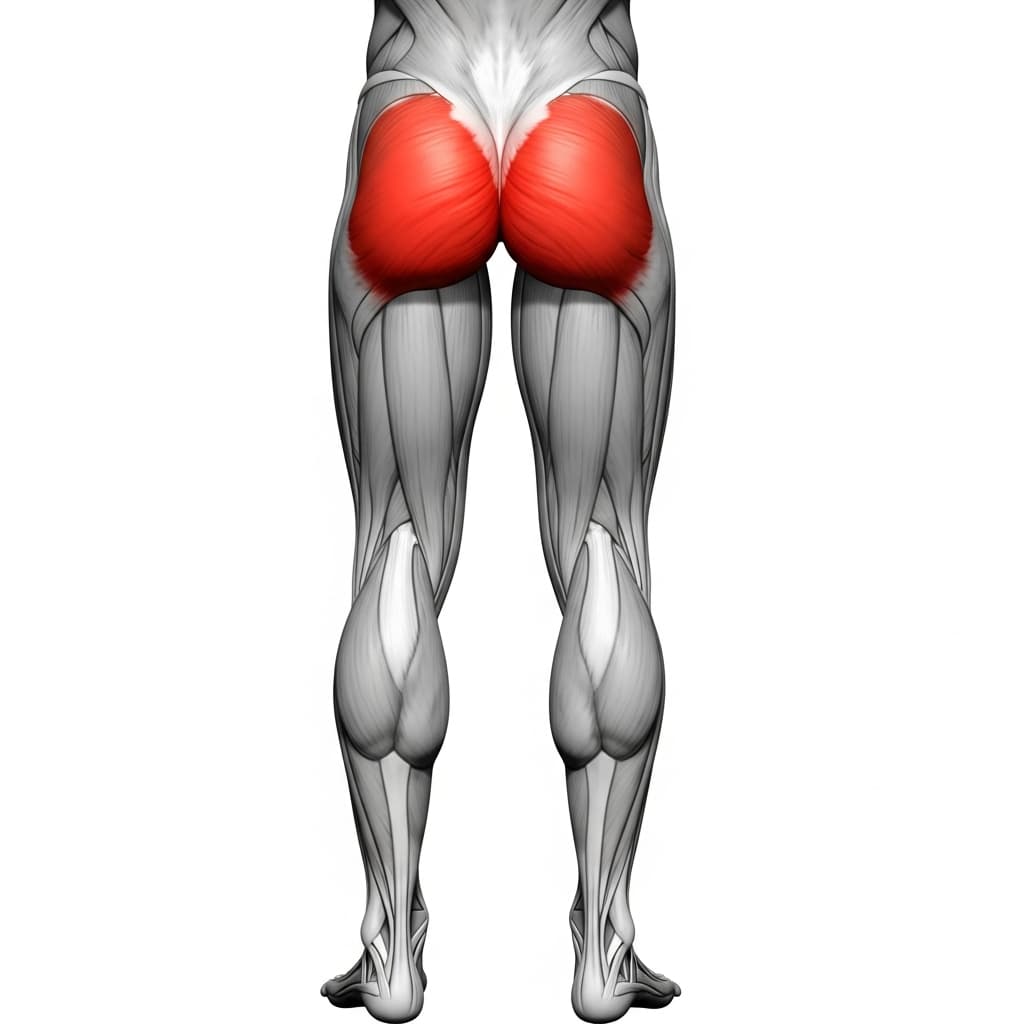
Primary Muscles
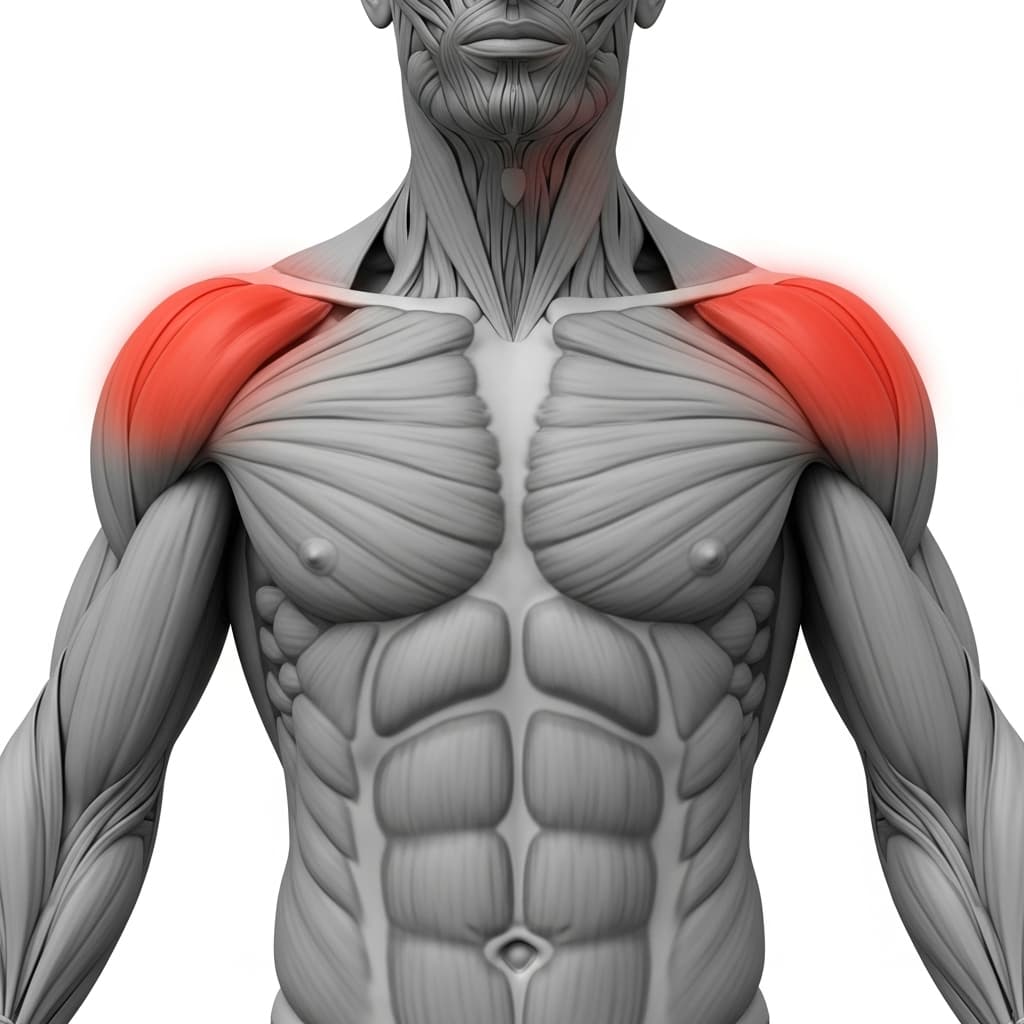
Anterior Deltoid (Front Deltoid) - The anterior deltoid resists the forward lean by isometrically holding the shoulder in flexion under full bodyweight load, making it the primary limiting muscle in planche lean progression.
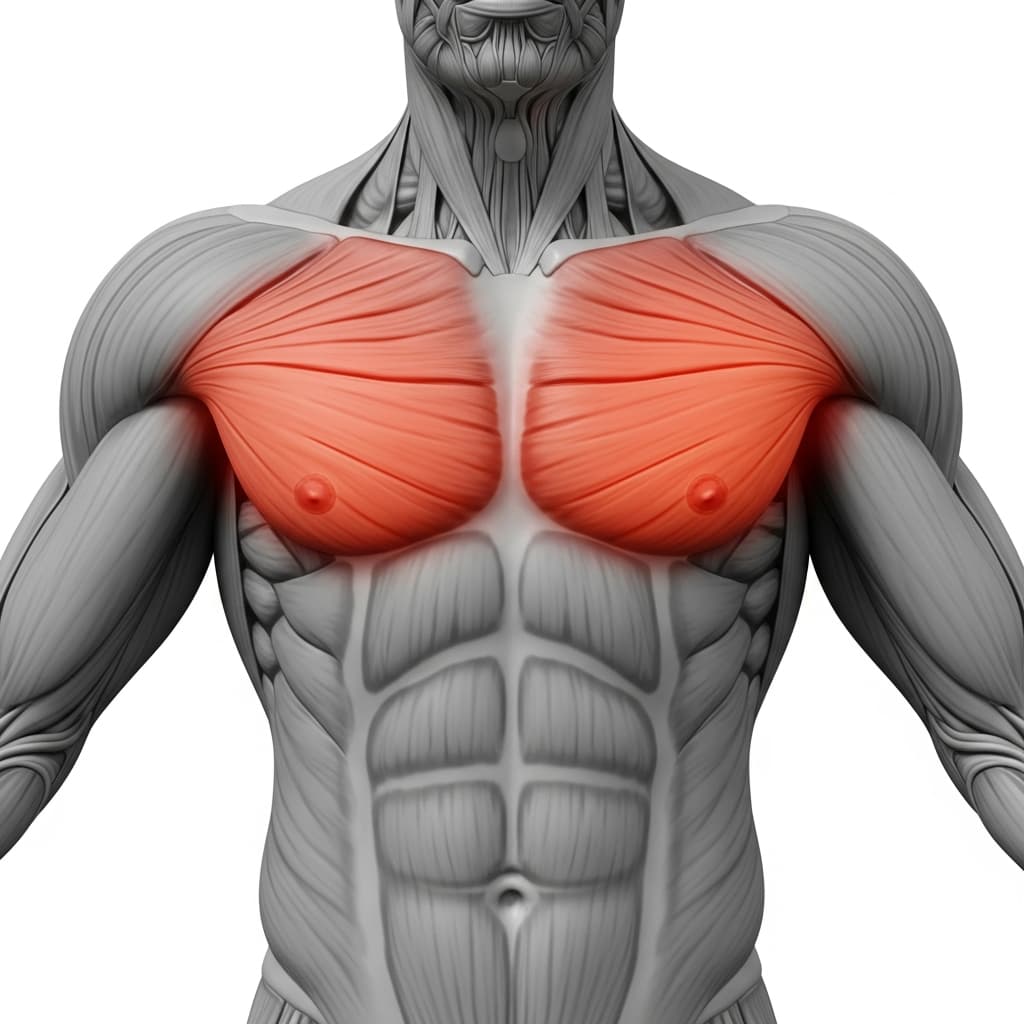
Pectoralis Major (Chest) - The pectorals assist the anterior deltoid in holding the forward-leaned position by producing horizontal adduction force that prevents the shoulders from collapsing forward.
Secondary Muscles
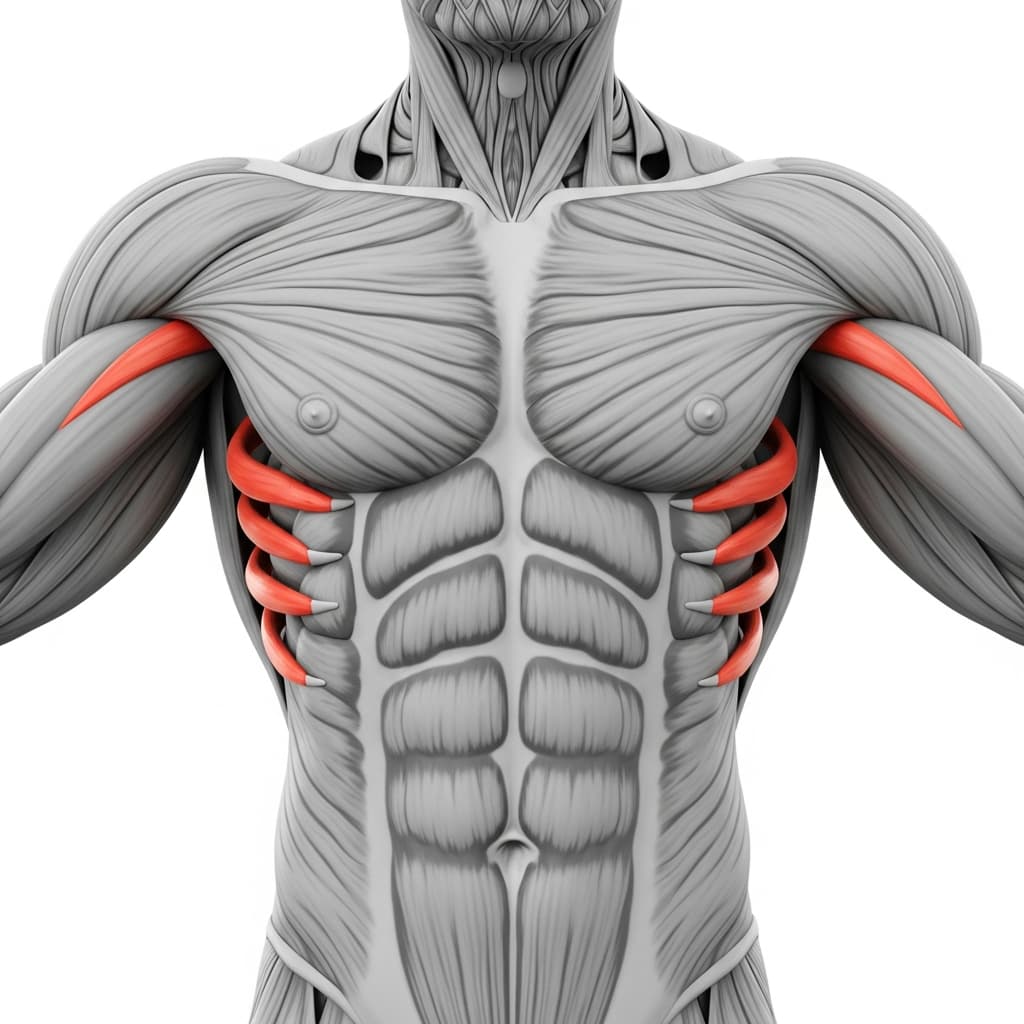
Serratus Anterior (Serratus Anterior) - The serratus anterior protracts the scapulae throughout the hold, pushing the shoulder blades apart against the floor to stabilize the shoulder girdle under forward loading.
Triceps Brachii (Triceps) - The triceps maintain full elbow lockout against the compressive load of the lean, keeping the arms straight so force transfers through bone rather than through a bent joint.
Rectus Abdominis (Abs) - The abdominals hold the torso rigid in an anti-extension role, preventing the lower back from arching and the hips from sagging under the shifted center of gravity.
Forearm Flexors & Extensors (Forearms) - The forearm flexors and extensors stabilize the wrist joint under extreme extension, absorbing the increased ground reaction force created by the forward lean.
Gluteus Maximus (Glutes) - The glutes maintain hip extension and posterior pelvic tilt, locking the lower body into a straight line and preventing energy leaks through the hips.
Benefits of Planche Lean
- Develops the anterior deltoid strength specific to planche progression, which no other pushing exercise loads at the same angle
- Strengthens the serratus anterior through sustained protraction under load, building the scapular control required for all straight-arm skills
- Conditions the wrists and forearms for the extreme extension angles found in planche, handstand, and press-to-handstand work
- Teaches the full-body tension and posterior pelvic tilt that transfers directly into tuck planche and straddle planche holds
- Builds isometric pushing endurance in the shoulder girdle without requiring any equipment beyond a flat surface
Who Is This Exercise For?
You should be able to hold a high plank with locked elbows and protracted shoulders for at least 30 seconds before attempting planche leans. If your wrists ache in a standard push-up position, work on wrist flexibility and conditioning first, because the forward lean multiplies wrist loading significantly. Comfortable plank holds and pain-free wrist extension to at least 90 degrees are the minimum entry point.
Common Mistakes to Avoid
Bending the elbows during the lean: Lock your elbows before you lean and keep them locked the entire time. The moment your elbows bend, the load shifts from straight-arm shoulder strength to a push-up pattern, which defeats the purpose of the exercise.
Sagging hips: Squeeze the glutes hard and think about pushing them slightly toward the floor. A sagging hip line means your core has disengaged, and the shoulder loading becomes uneven and unstable.
Forgetting scapular protraction: Push the floor away from you so your shoulder blades spread apart. Without protraction, the shoulder sits in a weak position and the serratus anterior never gets trained, which limits planche progression.
Leaning too far too fast: Progress the lean distance gradually over weeks. Jumping to an extreme forward lean before your shoulders and wrists are conditioned is the fastest way to develop wrist pain or a shoulder impingement.
Variations & Progressions
Parallette Planche Lean
Performing the lean on parallettes with a neutral grip removes the wrist extension demand entirely. This variation lets you focus on shoulder loading and protraction without wrist discomfort limiting your hold times.
Feet-Elevated Planche Lean
Placing your feet on a raised surface shifts more bodyweight onto the hands and increases the forward lean demand. This variation closes the gap between the standard planche lean and tuck planche holds.