Resistance Band Scapula Pull down
The resistance band scapula pull-down is an isolation exercise that trains scapular depression, targeting the lower traps and lats through a controlled range of motion using band tension from above. The movement teaches you to activate and control the shoulder blades independently from the arms, which is a skill that transfers directly into pull-ups, muscle-ups, and every overhead calisthenics movement. When trained consistently, this exercise builds the scapular control and stability that separates clean technique from sloppy reps on every pulling exercise.
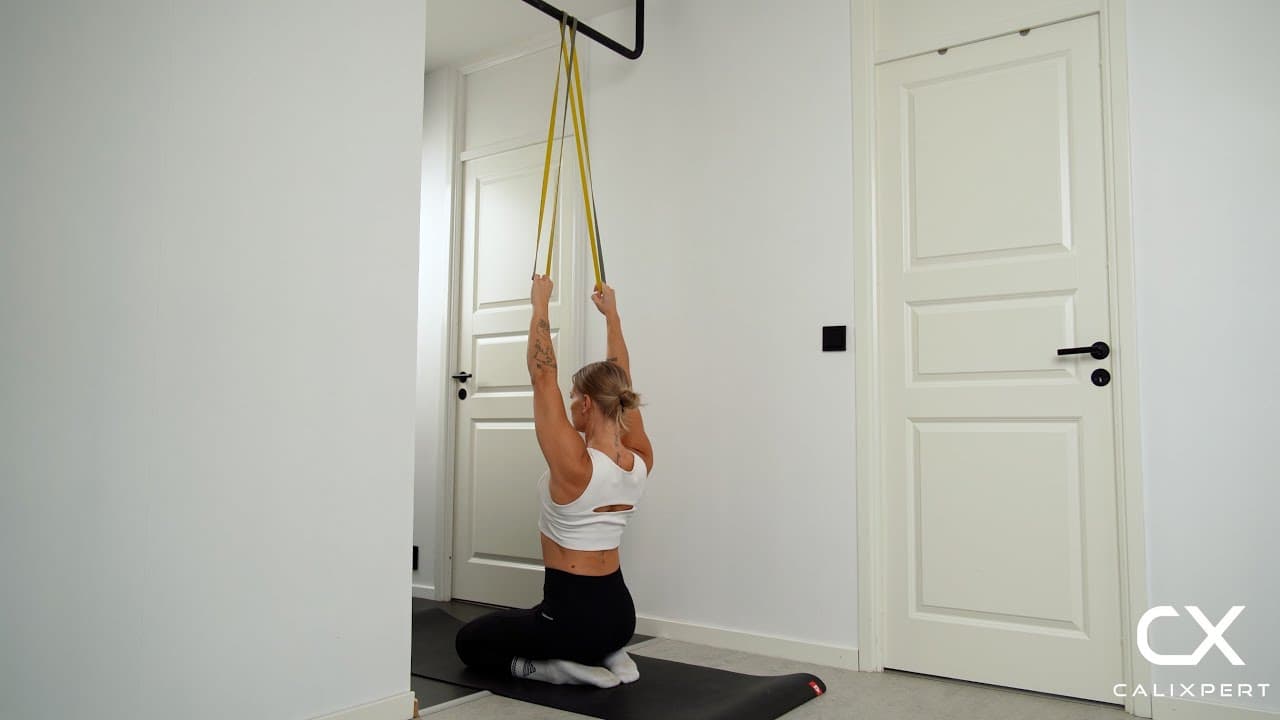
The resistance band scapula pull-down is an isolation exercise that trains scapular depression, targeting the lower traps and lats through a controlled range of motion using band tension from above. The movement teaches you to activate and control the shoulder blades independently from the arms, which is a skill that transfers directly into pull-ups, muscle-ups, and every overhead calisthenics movement. When trained consistently, this exercise builds the scapular control and stability that separates clean technique from sloppy reps on every pulling exercise.
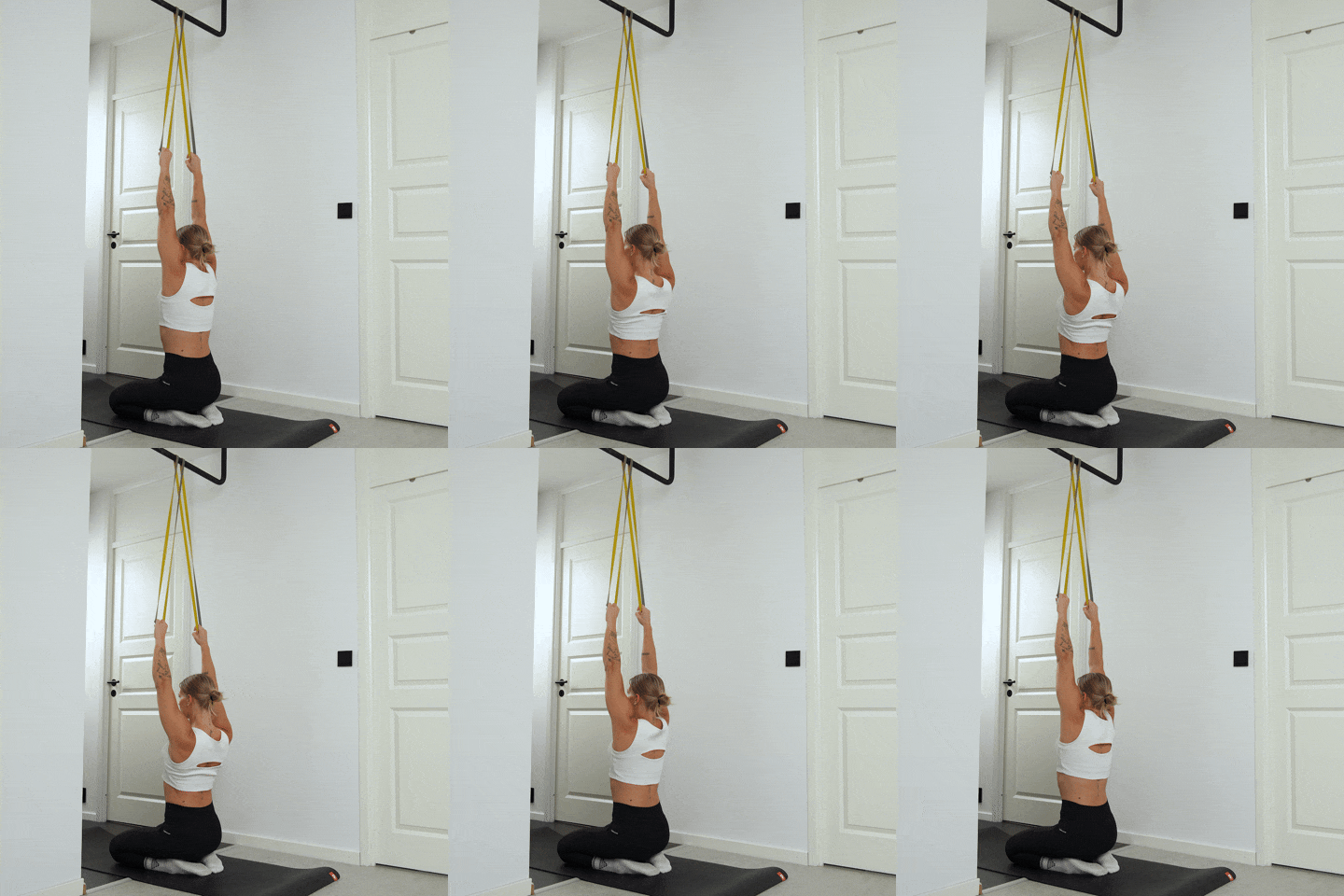
How to Do Resistance Band Scapula Pull down
1. Anchor the Band High
Loop a resistance band over a pull-up bar or high anchor point so both ends hang down evenly. Start with a thin band to learn the correct movement pattern before progressing to thicker resistance. The anchor must be directly above you, not angled forward or behind.
Band straight overhead, not angled
2. Kneel and Grip Both Ends
Kneel directly under the band and grab one end in each hand with a neutral or overhand grip. Extend your arms fully overhead and let the band pull your shoulders up toward your ears. Keep your core braced and your spine in a neutral position throughout the setup.
Arms straight, shoulders relaxed up
3. Depress the Scapulae Down
Without bending your elbows, pull your shoulder blades down and slightly back. Your chest should rise and open as your shoulders move away from your ears. The arms stay completely straight throughout this phase. Focus on driving the movement from the shoulder blades, not the hands.
Shoulder blades down, chest up
4. Hold and Squeeze at the Bottom
At the bottom of the depression, hold for one to two seconds and actively squeeze the lower traps. Your shoulders should be packed down, chest slightly lifted, and your arms still fully extended. This hold builds the isometric strength that carries over to pull-up mechanics.
Squeeze and hold for two seconds
5. Return Slowly to the Start
Let the band pull your shoulders back up toward your ears in a slow, controlled release. Do not let the band snap your shoulders up. Maintain tension throughout the entire eccentric phase and reset fully before beginning the next rep.
Resist the band on the way up
Most people rush through scapula work because the range of motion is small and it does not feel dramatic. That is exactly the point. The difference between someone who can do a clean pull-up and someone who grinds ugly reps is whether the scapula fires first or not. Train this movement slowly, hold the bottom position for two full seconds every rep, and you will feel the carryover the next time you touch a pull-up bar.
Muscles Worked During Resistance Band Scapula Pull down
Secondary Muscles:
Primary Muscles
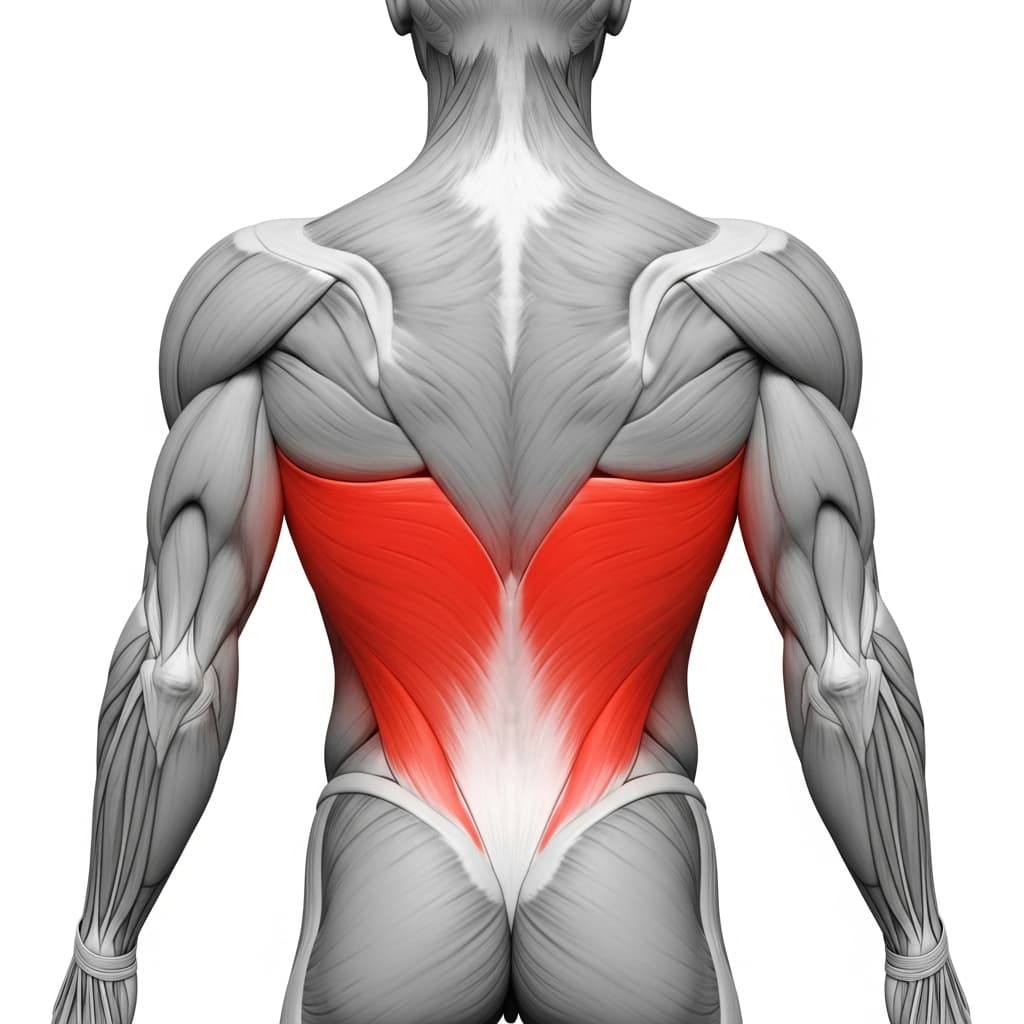
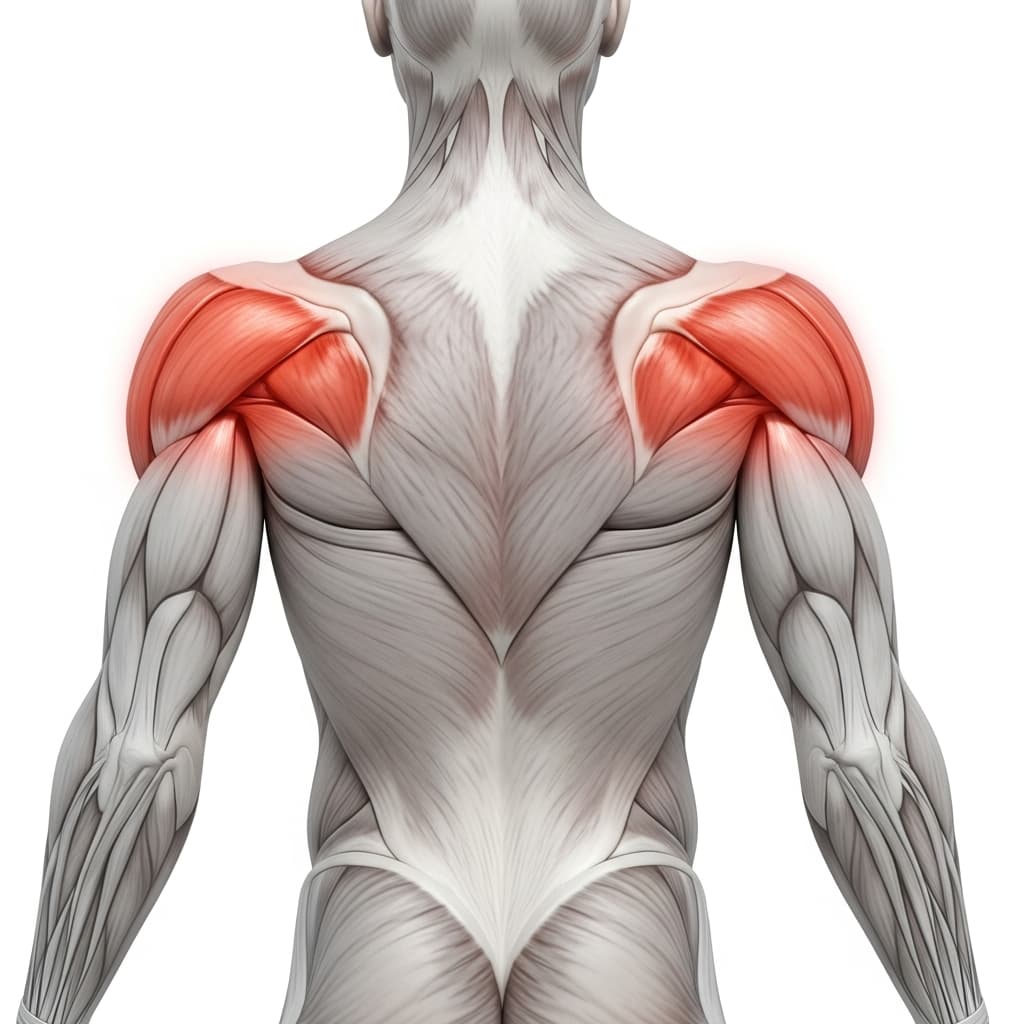
Latissimus Dorsi (Lats) - The lats act as the primary scapular depressors, pulling the shoulder blades downward against the band resistance with each rep.
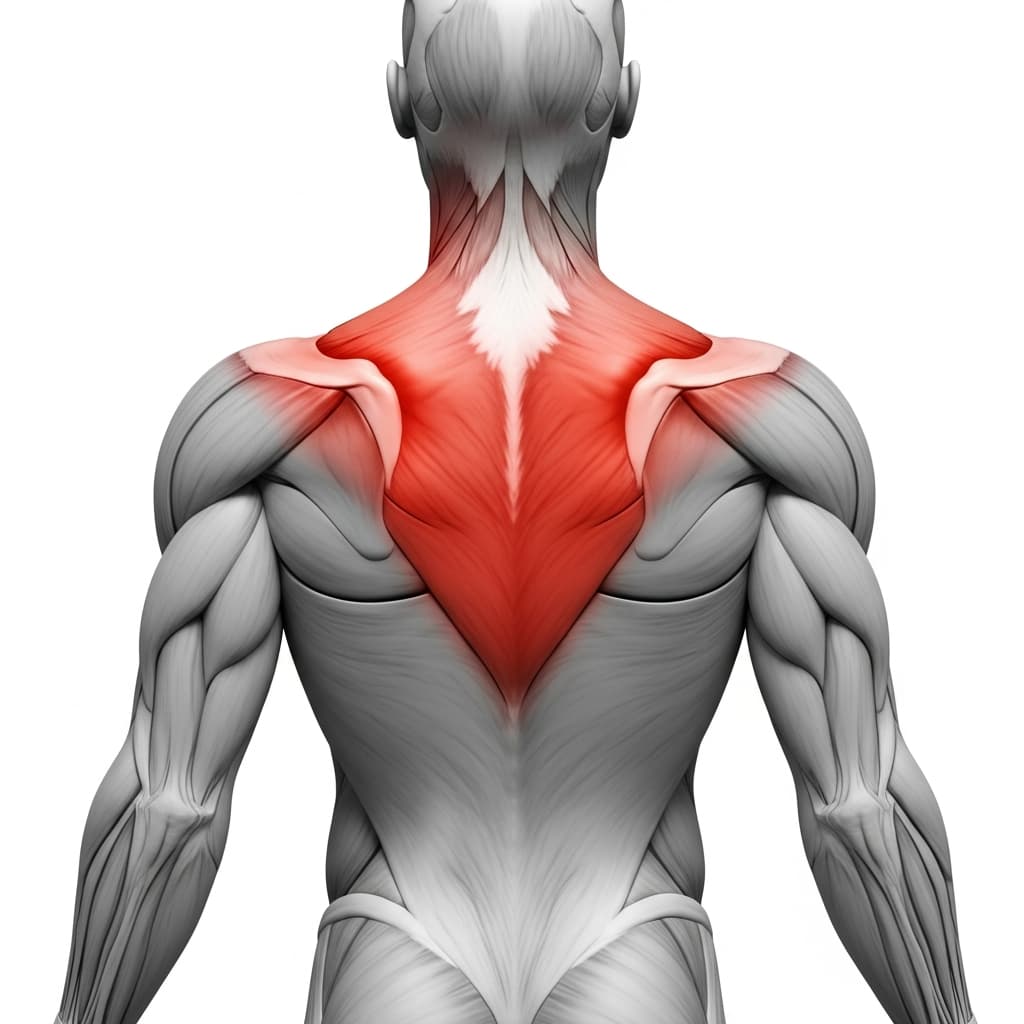
Trapezius (Trapezius) - The lower fibers of the traps work alongside the lats to depress and slightly retract the scapulae, controlling the bottom position of each rep.
Secondary Muscles
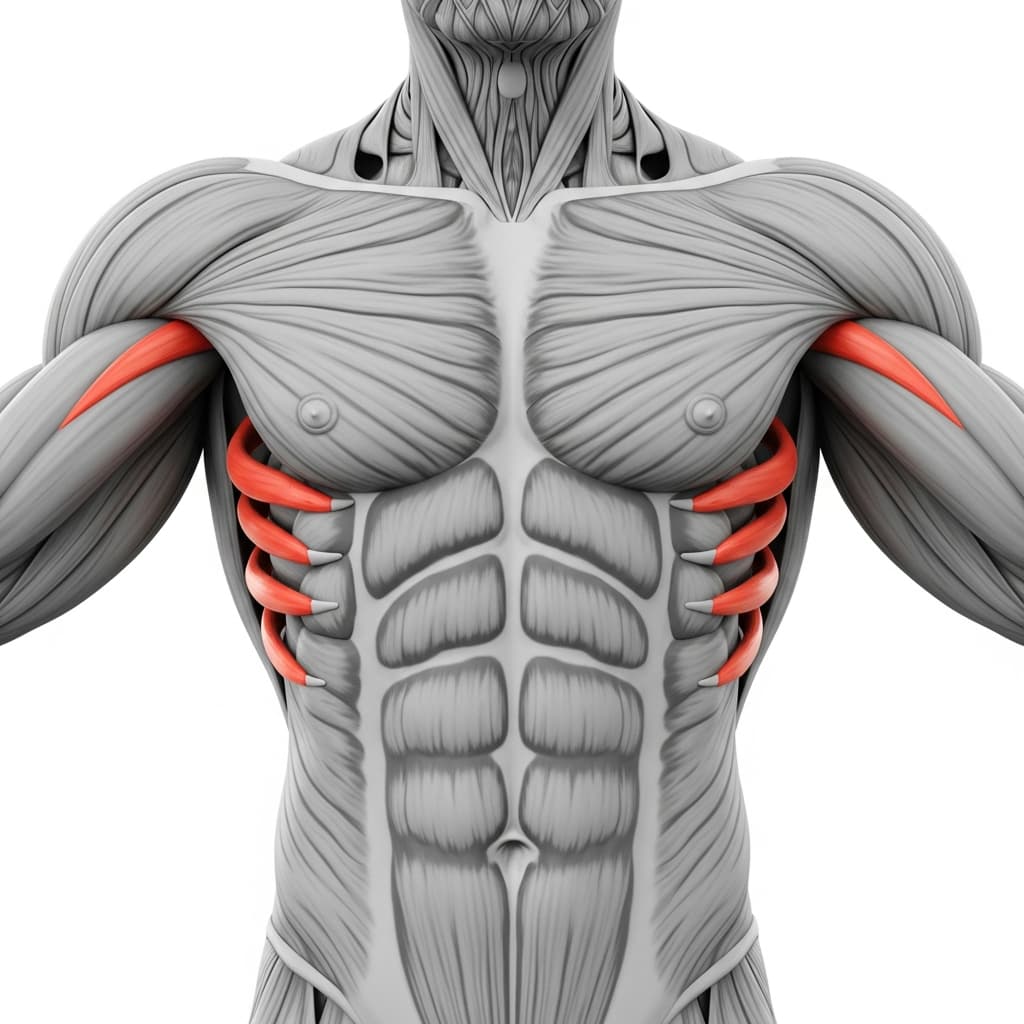
Serratus Anterior (Serratus Anterior) - The serratus anterior stabilizes the scapula against the ribcage during the depression, preventing winging and ensuring smooth scapular tracking.
Posterior Deltoid (Rear Deltoid) - The rear deltoids assist with the slight retraction component as the shoulders pull back and the chest opens at the bottom of the movement.
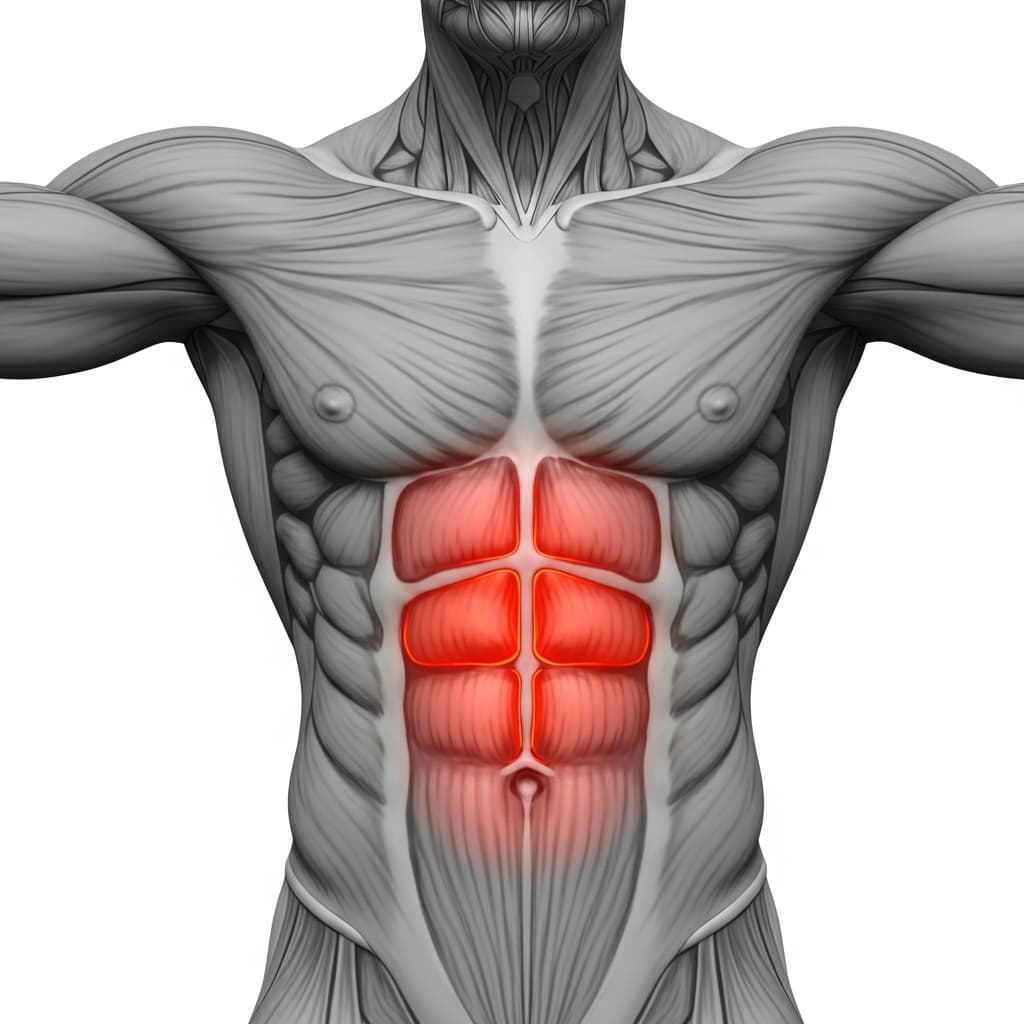
Rectus Abdominis (Abs) - The abdominals brace the trunk in a neutral position, preventing the lower back from arching as the shoulders depress against the band tension.
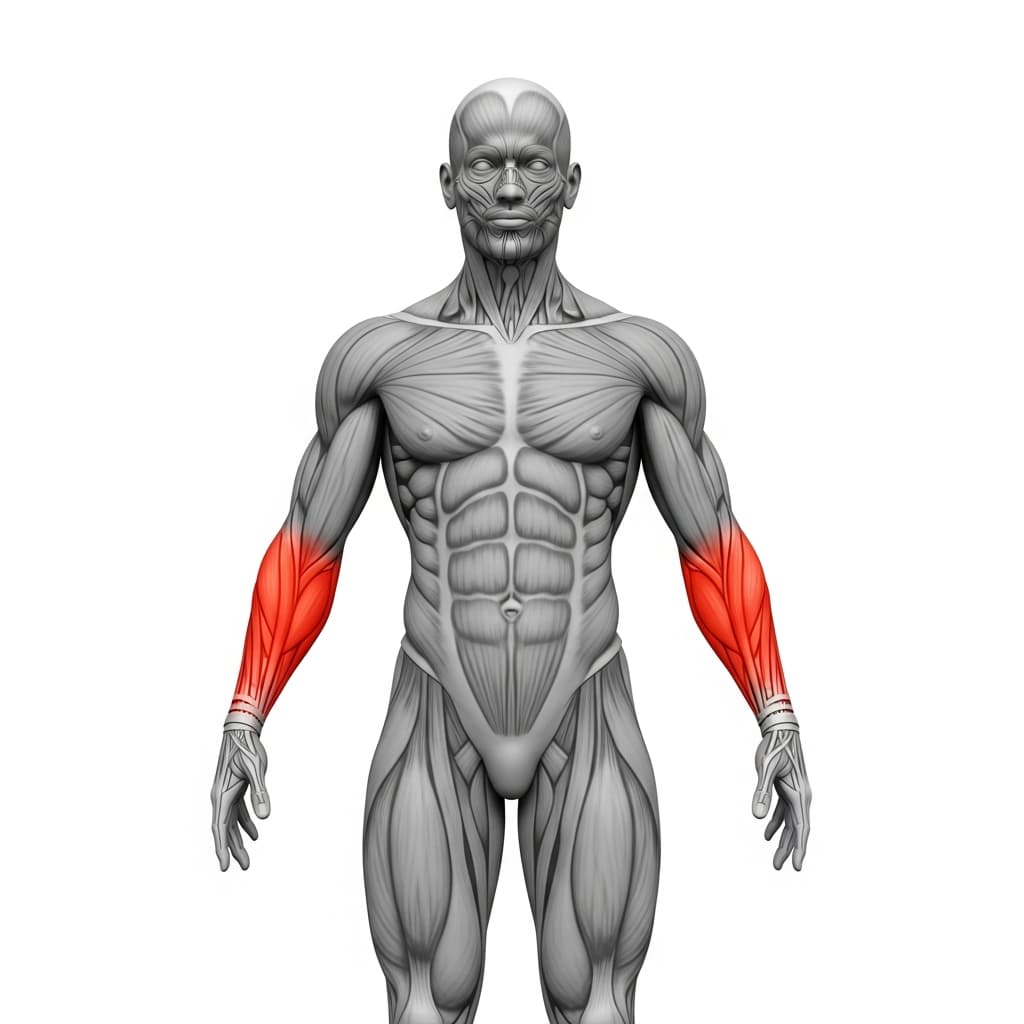
Forearm Flexors & Extensors (Forearms) - The forearms maintain grip on both ends of the resistance band throughout the set, working isometrically to keep the hands locked in position.
Benefits of Resistance Band Scapula Pull down
- Develops lower trap strength and scapular depression control, which is the exact activation pattern required to initiate every pulling movement in calisthenics
- Builds the shoulder stability foundation needed to safely progress into pull-ups, muscle-ups, and front lever training without impingement risk
- Corrects elevated and anteriorly tilted shoulder posture by strengthening the muscles that pull the shoulder blades down and back into a neutral position
- Provides scalable resistance through band thickness, allowing complete beginners to train scapular mechanics before they can support their full bodyweight on a bar
Who Is This Exercise For?
You should be able to hold a dead hang from a bar for at least 10 seconds with relaxed shoulders before adding this exercise. No specific strength baseline is required since band thickness scales the resistance, but you need enough shoulder mobility to reach overhead comfortably without pain. If raising your arms straight above your head causes discomfort or significant arching in your lower back, address shoulder and thoracic mobility first.
Common Mistakes to Avoid
Bending the elbows during the pull: Lock your elbows straight throughout the entire movement. If your arms bend, the biceps and lats take over and the scapular muscles lose their isolated activation. Think of your arms as rigid levers attached to your shoulder blades.
Shrugging the shoulders instead of depressing them: The movement direction is down and slightly back, not up. If your shoulders creep toward your ears during the rep, reset and use a lighter band until you can control the depression pattern cleanly.
Arching the lower back to compensate: Brace your core and keep your ribs stacked over your hips. When the abs disengage, the lower back hyperextends to create the illusion of a bigger range of motion. A neutral spine ensures the work stays in the scapular muscles.
Rushing through reps without control: Each rep should take three to four seconds with a clear pause at the bottom. Scapular control is built through slow, deliberate movement, not volume. If you cannot control the tempo, reduce the band thickness.
Variations & Progressions
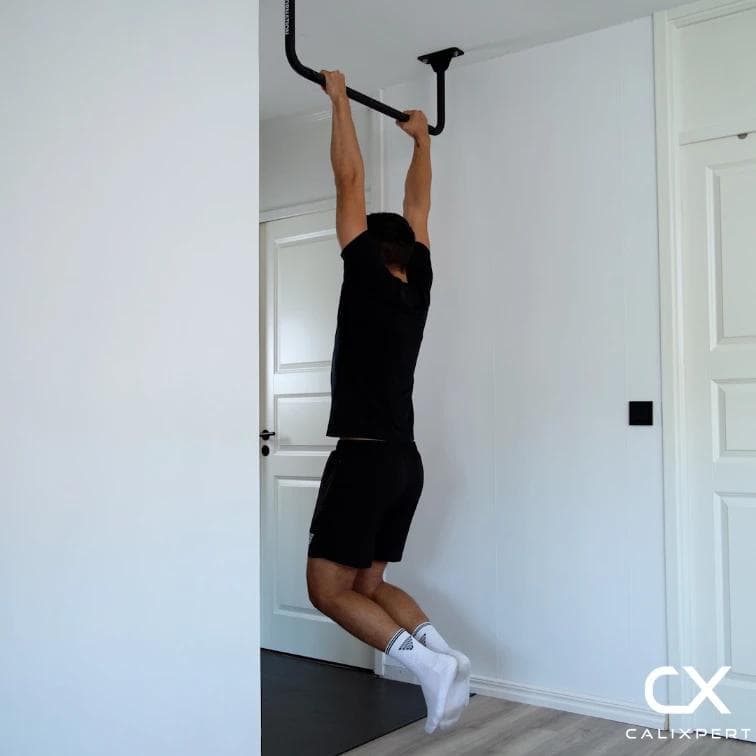
Weighted Scapula Pull-Down on Lat Machine
Perform the same scapular depression on a cable lat pulldown machine with a straight bar, using a fixed load heavier than your bodyweight equivalent. The cable provides consistent resistance and allows precise load progression beyond what bands offer.