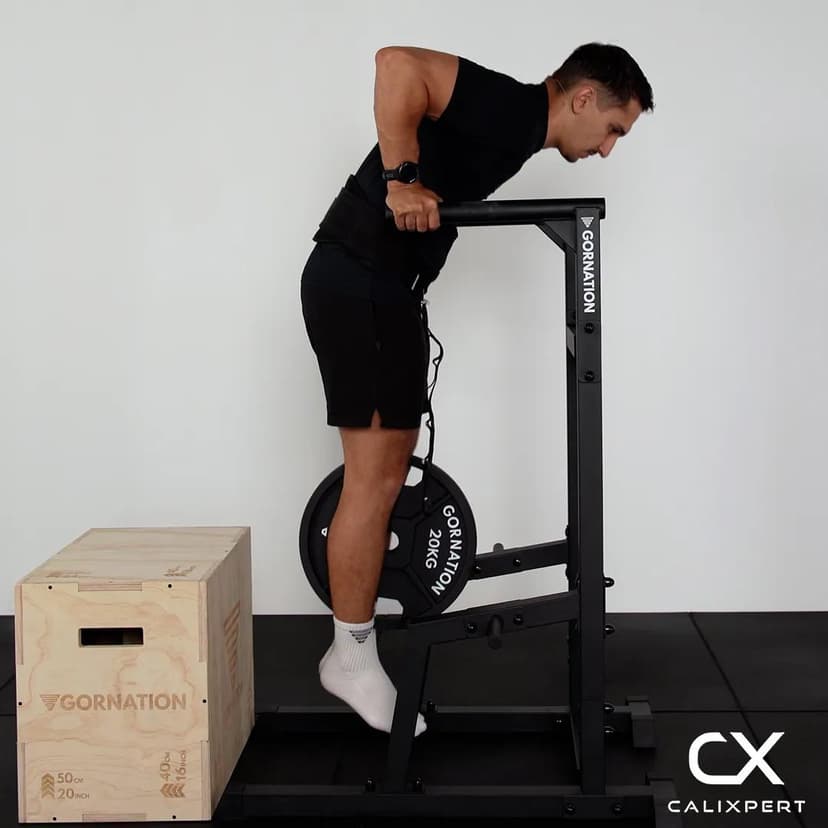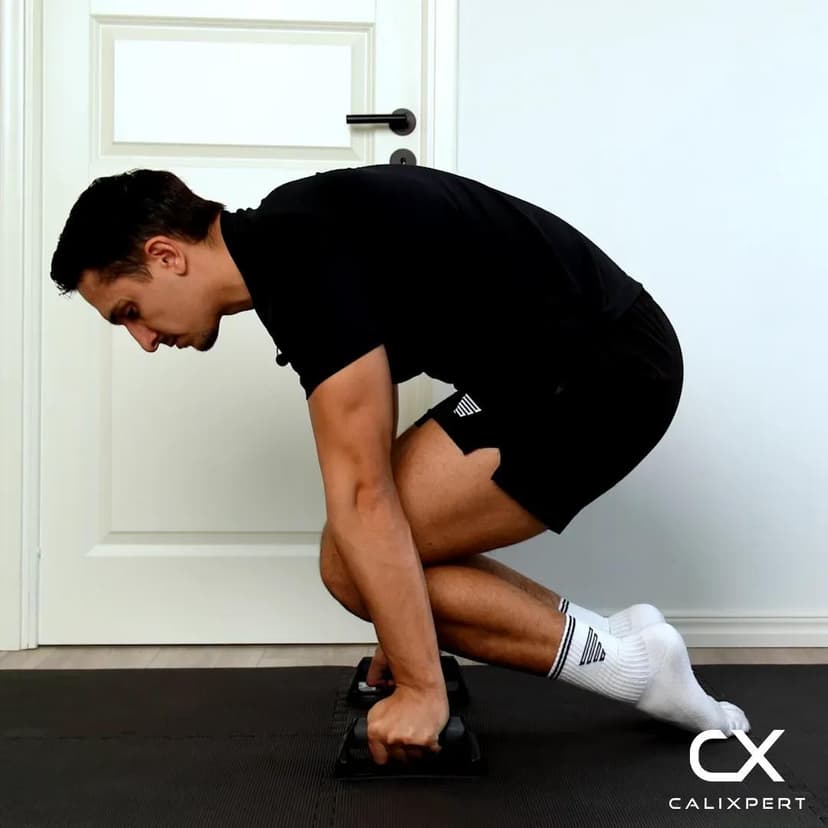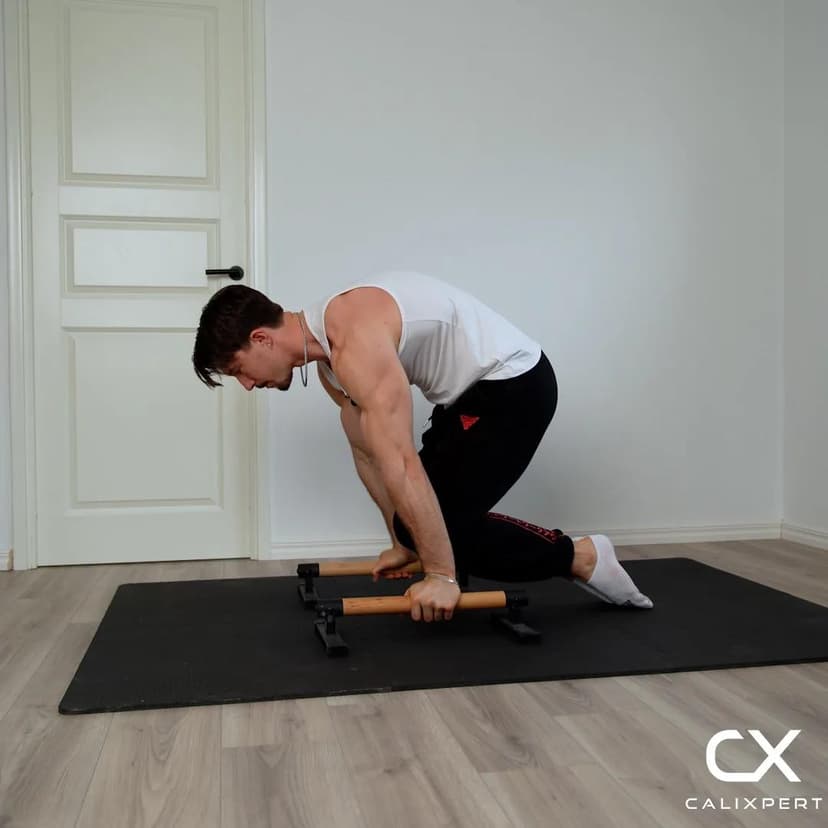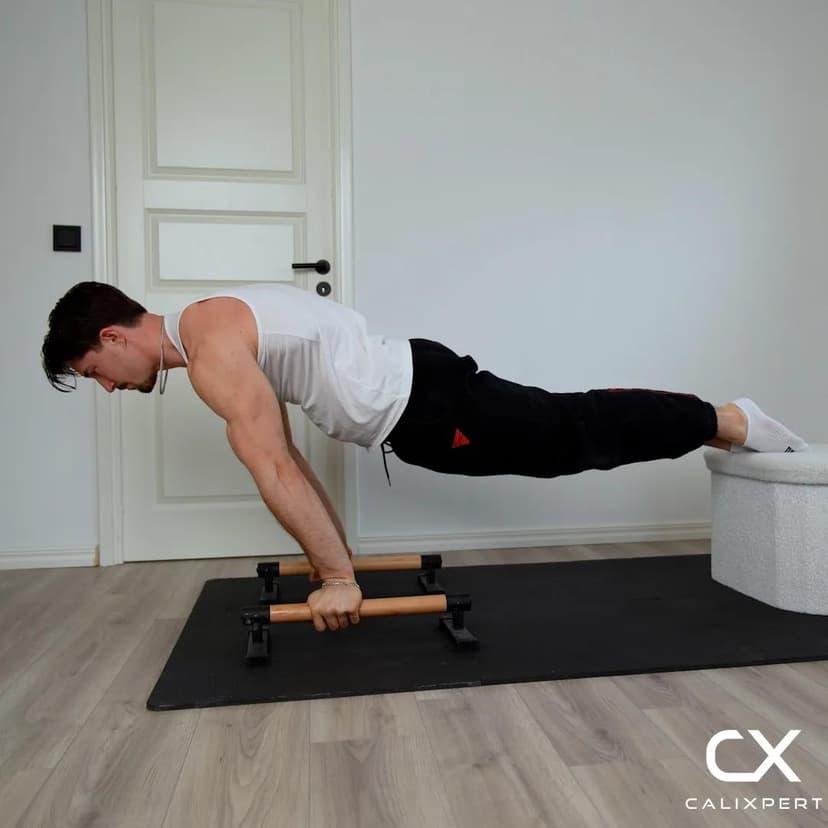
Leg Assisted Dips
Leg assisted dips are a beginner-friendly regression of full dips that trains the chest, triceps, and front deltoids while using the legs to offload a portion of your bodyweight. The key to an effective leg assisted dip is maintaining a forward lean and controlling the descent, rather than simply bouncing off the legs at the bottom. Mastered with proper form, this exercise builds the pressing strength and shoulder stability required to progress to full bodyweight dips.
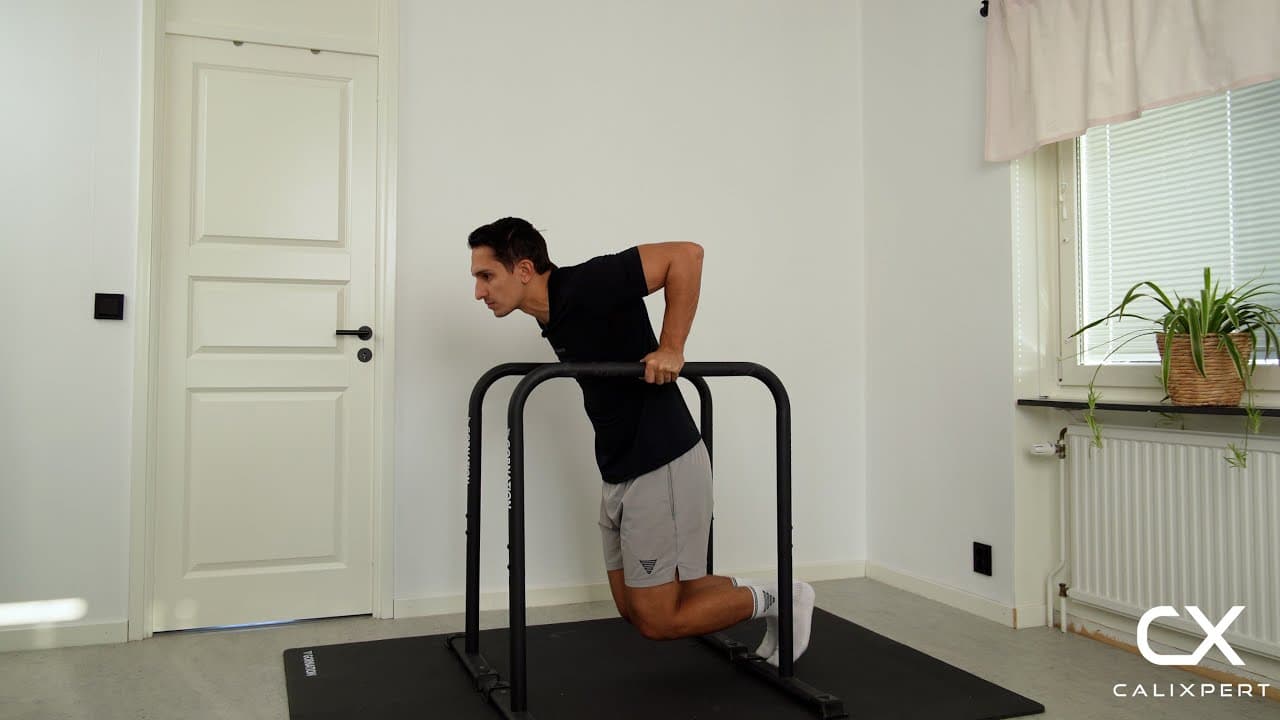
Leg assisted dips are a beginner-friendly regression of full dips that trains the chest, triceps, and front deltoids while using the legs to offload a portion of your bodyweight. The key to an effective leg assisted dip is maintaining a forward lean and controlling the descent, rather than simply bouncing off the legs at the bottom. Mastered with proper form, this exercise builds the pressing strength and shoulder stability required to progress to full bodyweight dips.
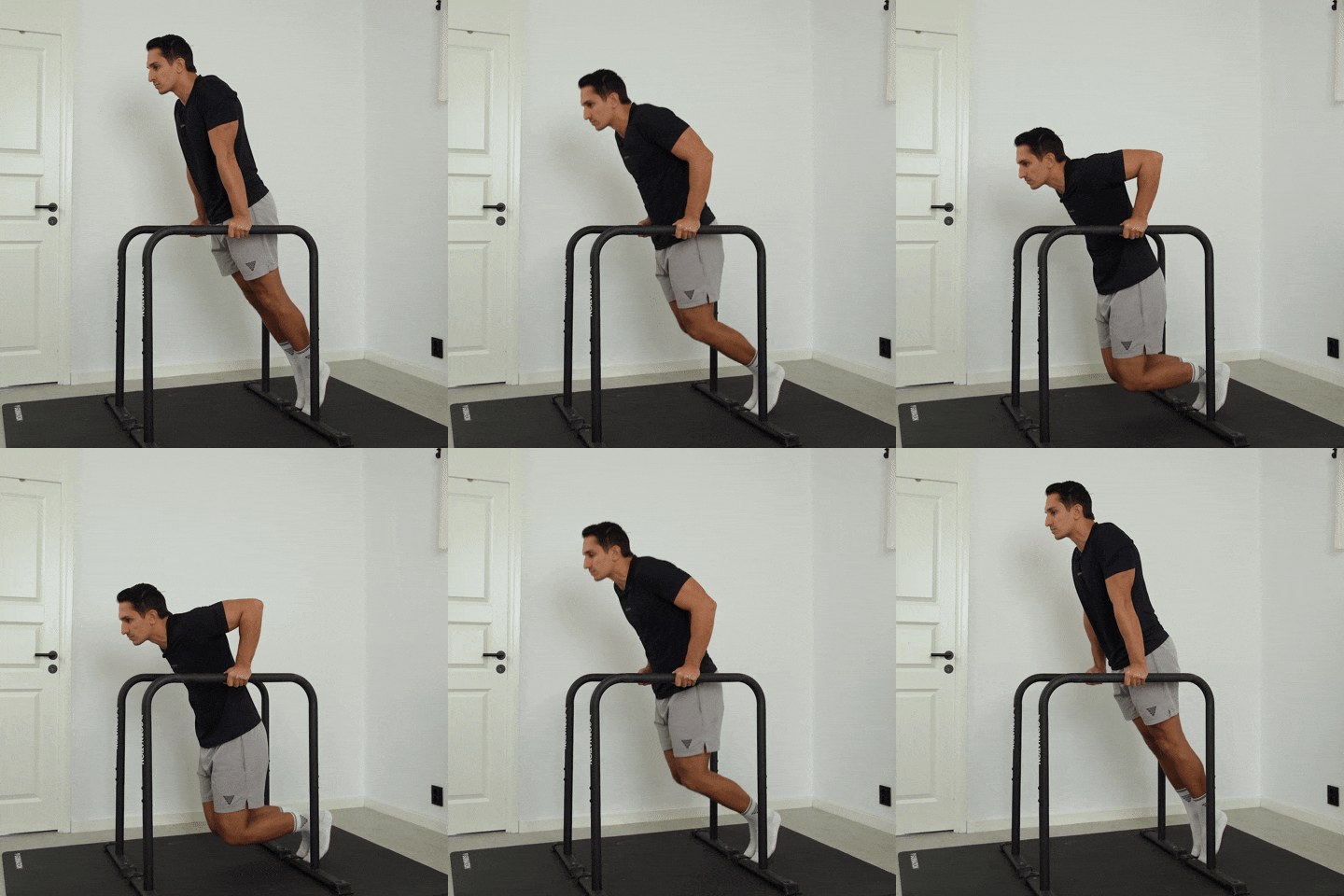
How to Do Leg Assisted Dips
1. Position Yourself Behind the Bars
Stand behind the dip bars and take one normal step forward so your feet are roughly between the bars. Grip the bars firmly with your hands at about shoulder width, thumbs wrapped fully around. Your arms should be straight and your shoulders packed down away from your ears.
Step forward, then grip
2. Set the Starting Position
With your hands on the bars and one foot planted forward, lean your torso slightly forward so that your bodyweight shifts into your hands. Keep your feet flat on the ground behind you for support but let the majority of the load travel through your arms. Your elbows should be fully locked at the top.
Lean forward, weight in your hands
3. Lower Yourself to 90 Degrees
Bend your elbows and lower your body in a controlled manner until your elbows reach approximately a 90-degree angle. Maintain a slight forward lean throughout the descent to keep the chest engaged. Your elbows should track slightly back, not flare wide to the sides.
Slow descent, elbows back
4. Use Legs for Minimal Assistance
At the bottom position, use your legs to assist the push back up by pressing lightly through your feet. The goal is to use just enough leg drive to complete the rep while keeping the primary effort in your chest and triceps. As you get stronger, reduce the amount of leg assistance on each session.
Legs assist, arms do the work
5. Press Back to the Top
Drive through your palms and extend your elbows fully to return to the starting position. Keep your shoulders depressed and your core braced throughout the push. Lock out completely at the top before beginning the next rep.
Full lockout every rep
Most beginners use their legs like a trampoline and wonder why they never graduate to full dips. The fix is simple: treat your legs as a safety net, not a launch pad. Lower yourself slowly, pause at the bottom, and only use your legs for the last 10 to 20 percent of effort needed to push back up. You will build real strength much faster this way.
Muscles Worked During Leg Assisted Dips
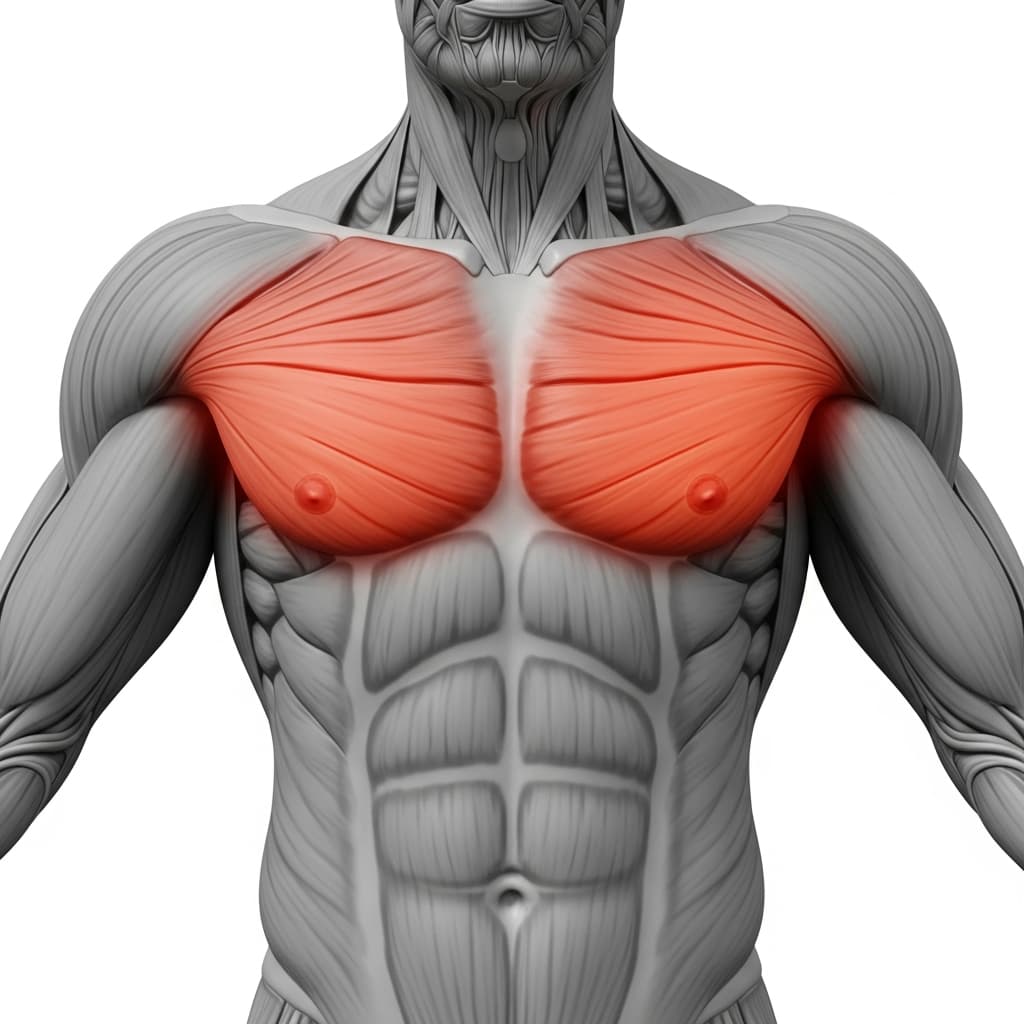
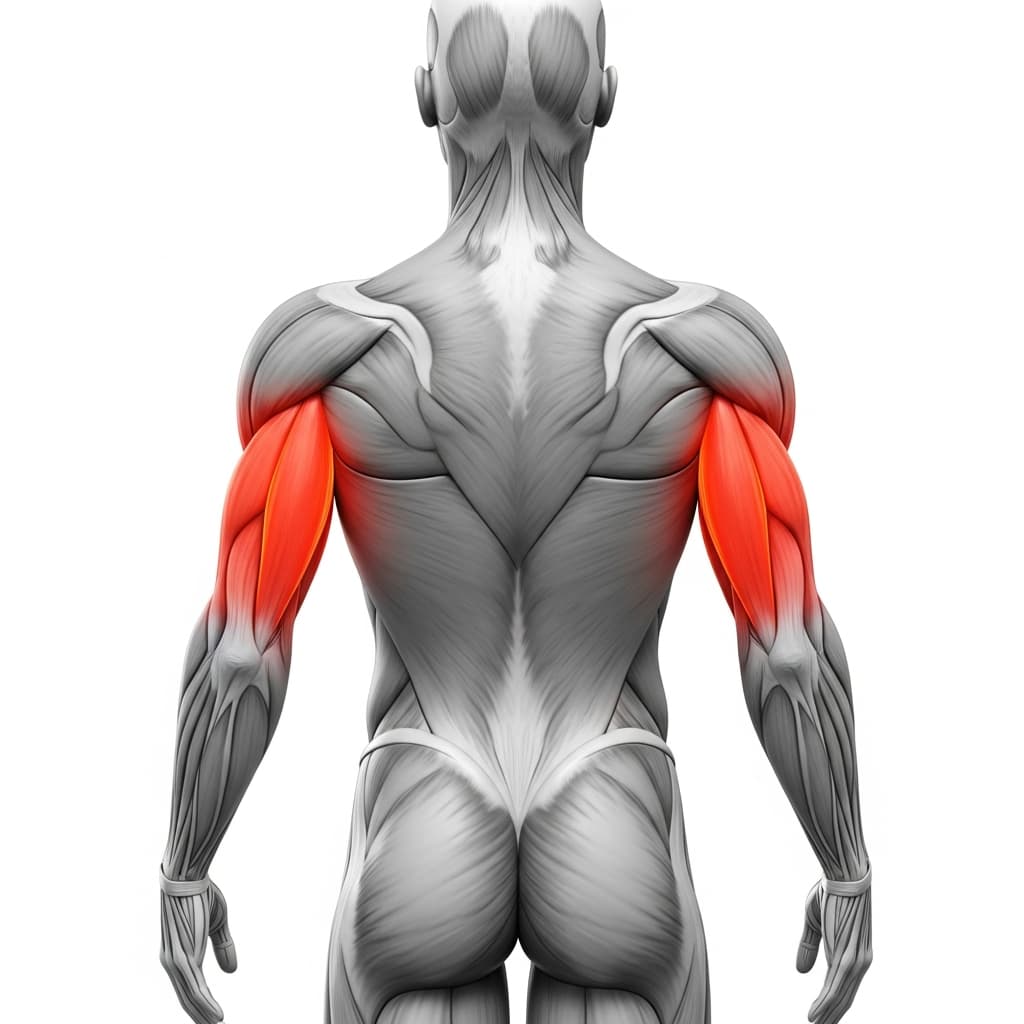
Secondary Muscles:
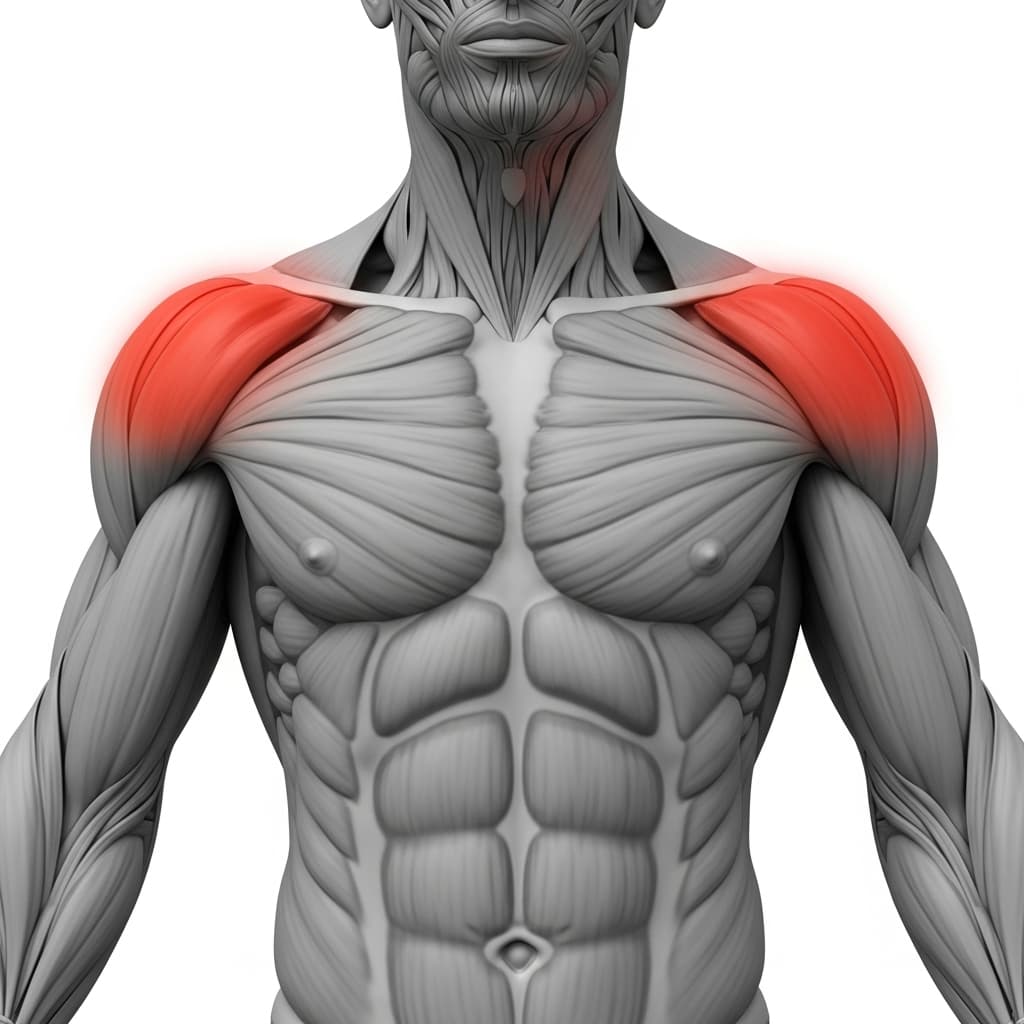
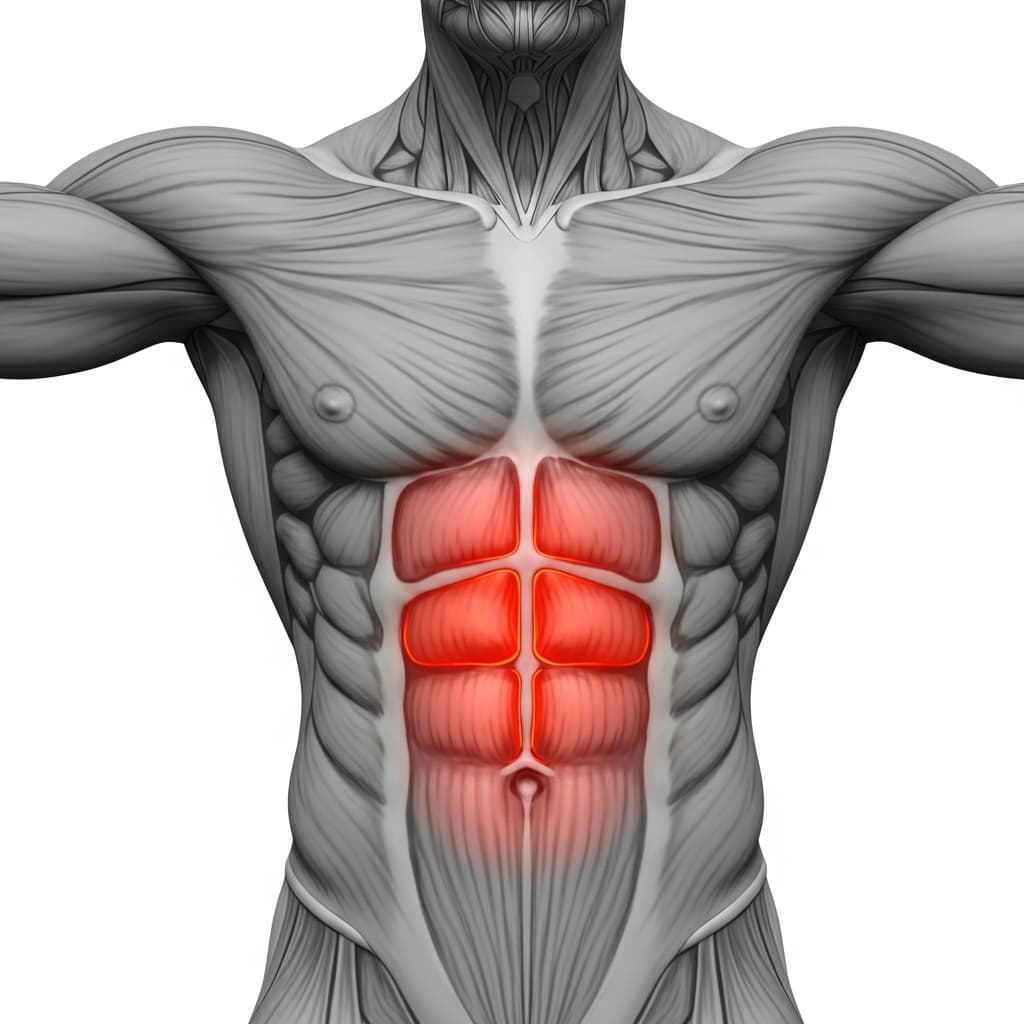
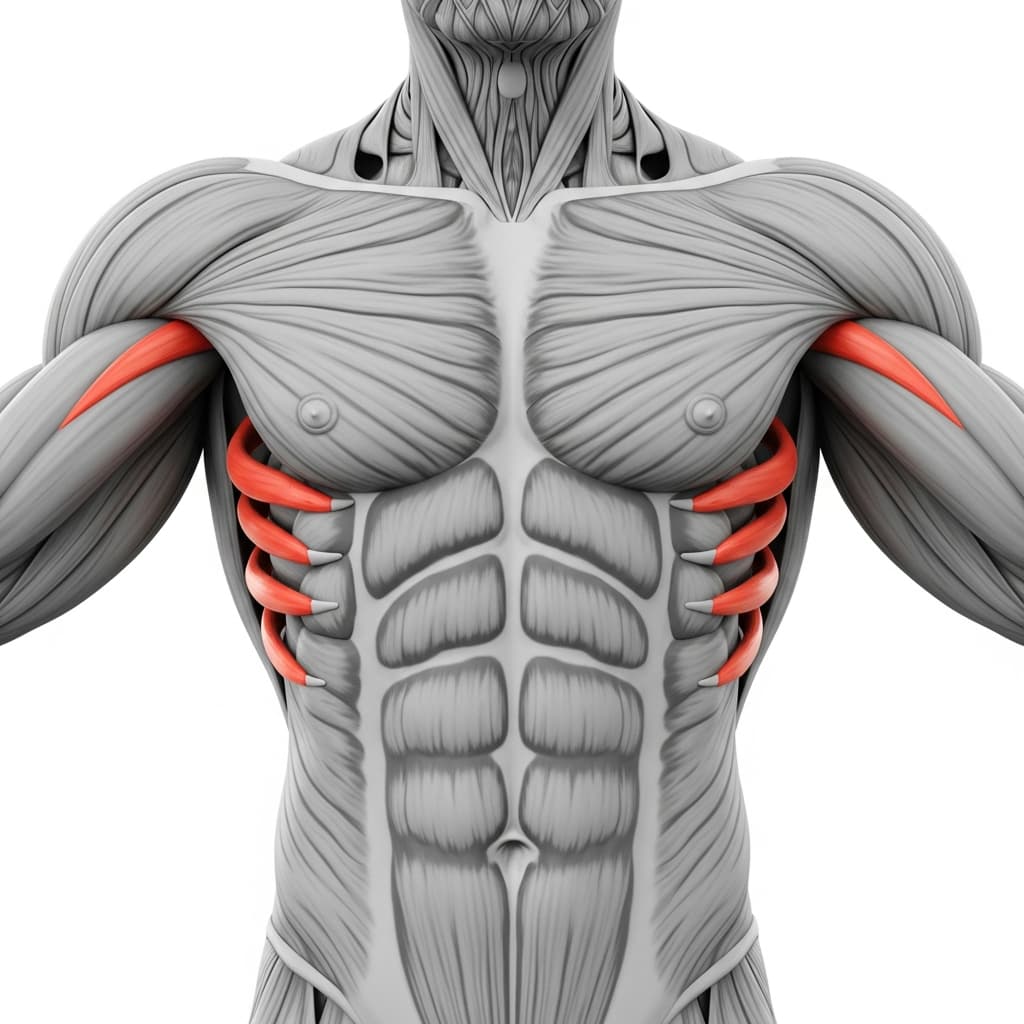
Primary Muscles
Pectoralis Major (Chest) - The pectoralis major drives horizontal adduction of the upper arm during the pressing phase, especially under the forward lean that loads the chest through a deep stretch at the bottom.
Triceps Brachii (Triceps) - The triceps extend the elbow joint to lock out the arms at the top of each rep, handling the majority of the load in the upper portion of the movement.
Secondary Muscles
Anterior Deltoid (Front Deltoid) - The anterior deltoid assists the chest in flexing the shoulder during the upward press, stabilizing the joint throughout the full range of motion.
Rectus Abdominis (Abs) - The abdominals brace the torso to prevent excessive arching and maintain the forward lean position that keeps the chest loaded.
Serratus Anterior (Serratus Anterior) - The serratus anterior protracts and stabilizes the scapula against the ribcage during the pressing motion, preventing the shoulder blades from winging under load.
Benefits of Leg Assisted Dips
- Builds the pressing strength and motor pattern needed to progress to full bodyweight dips without risking shoulder injury
- Develops chest and triceps size through a loaded stretch at the bottom position that push-ups cannot replicate
- Strengthens the serratus anterior and shoulder stabilizers, which protects the joint during all pressing and overhead movements
- Allows precise load management by adjusting how much leg assistance you use, making progressive overload measurable from session to session
Who Is This Exercise For?
You should be able to hold yourself at the top of the dip bars with locked arms for at least 10 seconds before attempting leg assisted dips. If supporting your bodyweight in that top position feels unstable or causes shoulder discomfort, focus on push-up variations and static holds first.
Common Mistakes to Avoid
Relying too heavily on the legs: Your legs should provide only the minimum assistance needed to complete the rep. If you are standing up more than dipping down, reduce your foot pressure and accept fewer reps with more arm effort.
Elbows flaring wide: Keep your elbows tracking slightly behind you rather than flaring out to the sides. Wide elbows place excessive stress on the shoulder joint and reduce triceps engagement.
Staying too upright: Maintain a slight forward lean throughout the movement to load the chest properly. An upright torso shifts all the work to the triceps and mimics a machine press rather than a dip.
Dropping too fast on the descent: Lower yourself over 2 to 3 seconds on every rep. Uncontrolled descents waste the eccentric phase where most strength is built and can stress the shoulder joint.
Variations & Progressions
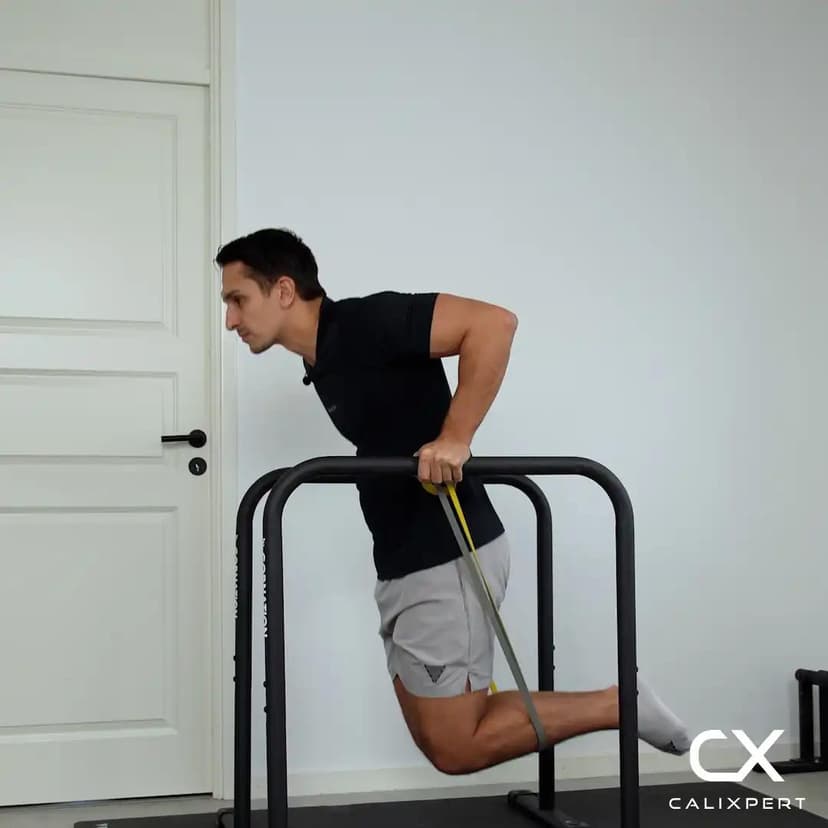
Full bodyweight dips
Perform dips with your feet off the ground and no leg assistance. This requires enough pressing strength to move your entire bodyweight through the full range of motion.