Assisted 90 Degree Chin Ups
Assisted 90 degree chin ups are a partial-range pulling exercise that isolates the top portion of the chin-up, from a 90 degree elbow bend to chin over the bar, using a resistance band to reduce bodyweight. This variation heavily targets the biceps and lats while demanding constant tension from the upper back and core throughout the shortened range of motion. Training this specific range builds the top-end pulling strength and positional awareness needed to progress toward unassisted 90 degree chin-up holds and full-range slow chin-ups.
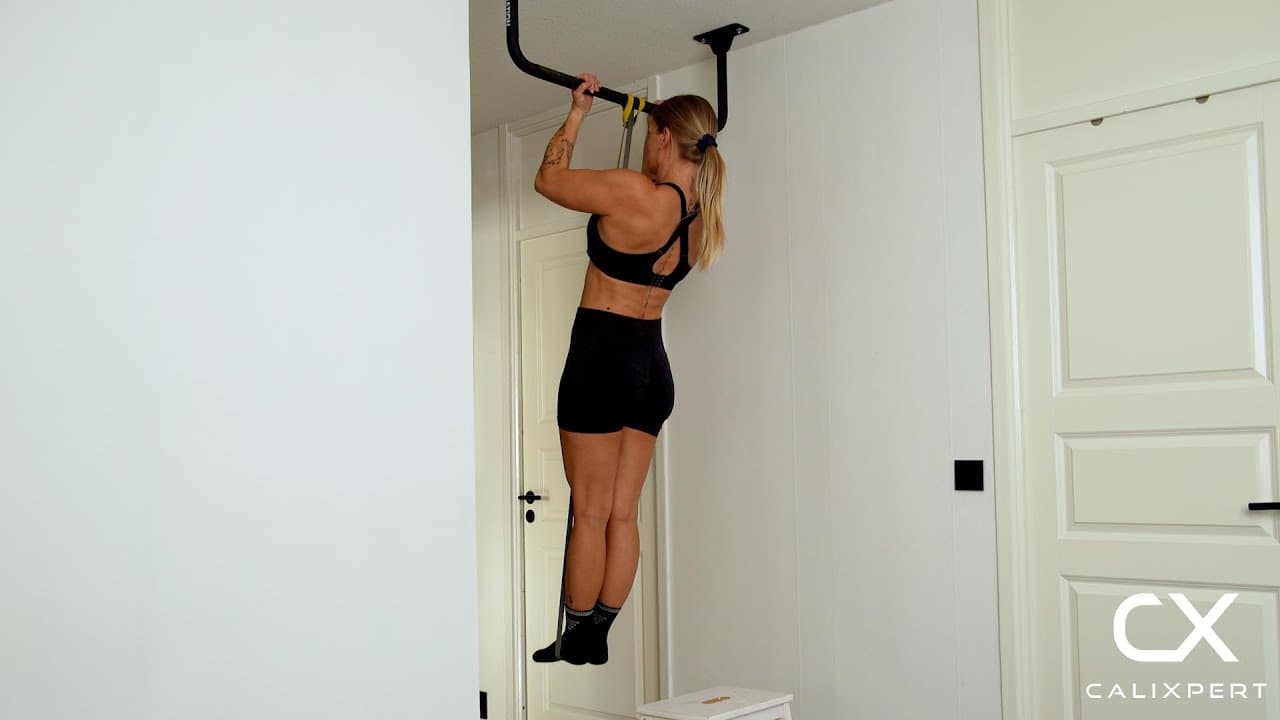
Assisted 90 degree chin ups are a partial-range pulling exercise that isolates the top portion of the chin-up, from a 90 degree elbow bend to chin over the bar, using a resistance band to reduce bodyweight. This variation heavily targets the biceps and lats while demanding constant tension from the upper back and core throughout the shortened range of motion. Training this specific range builds the top-end pulling strength and positional awareness needed to progress toward unassisted 90 degree chin-up holds and full-range slow chin-ups.
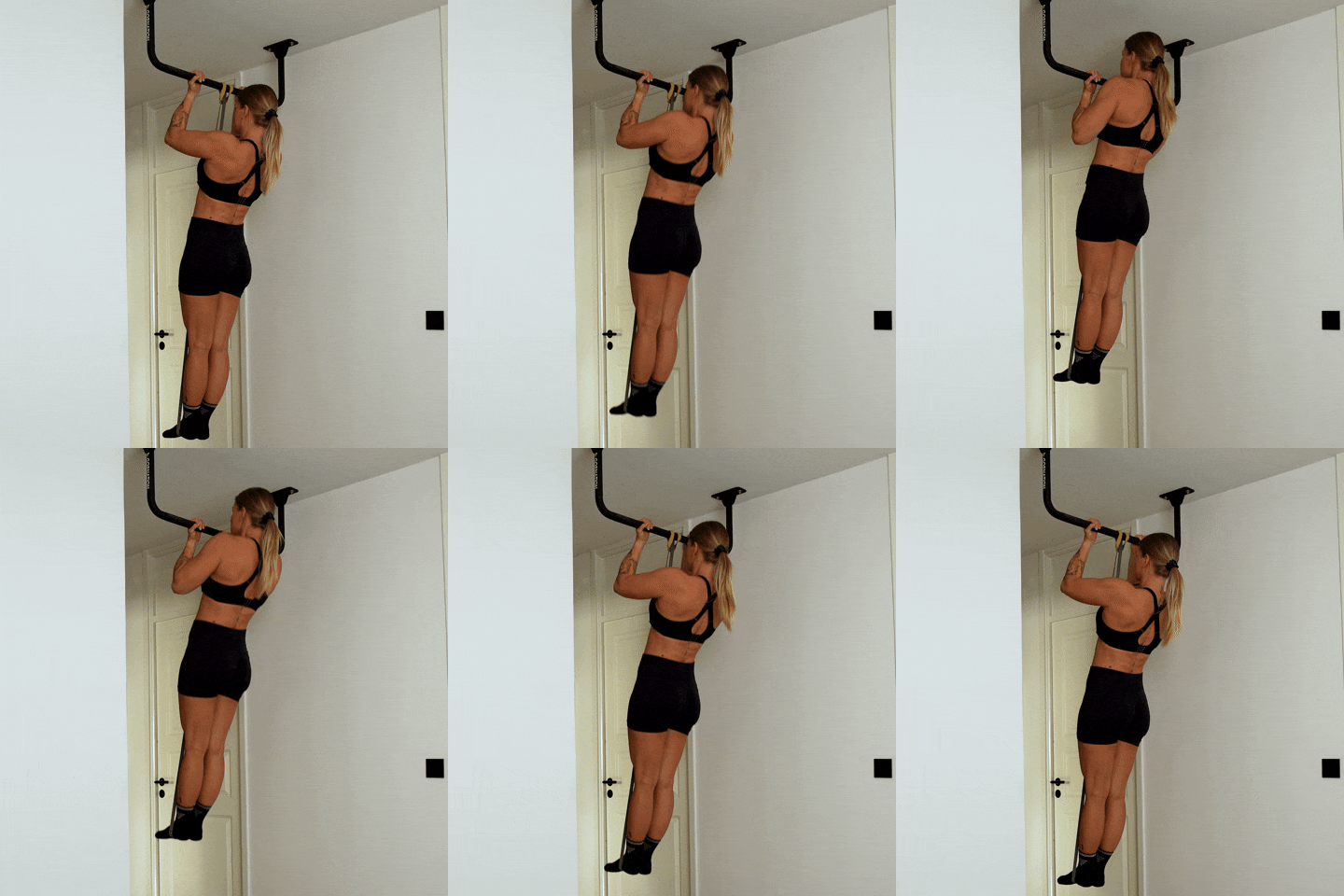
How to Do Assisted 90 Degree Chin Ups
1. Attach the Band and Step In
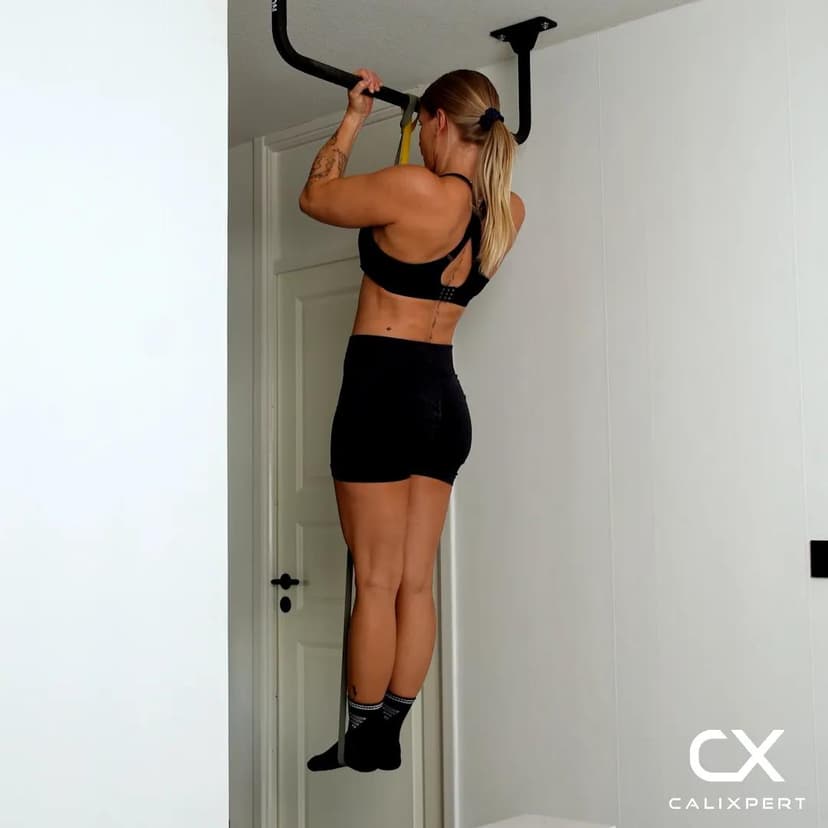
Loop a resistance band over a pull-up bar and let it hang down. Use a light or medium band at most. Step both feet into the bottom of the band so the tension supports your bodyweight evenly through the movement.
Both feet in, band centered
2. Set Your Chin-Up Grip
Grab the bar with an underhand grip, palms facing you, hands shoulder-width apart. Wrap your thumbs fully around the bar for a secure hold. Let your arms extend fully and set your shoulders down away from your ears before pulling.
Palms toward you, thumbs locked
3. Pull to the 90 Degree Position
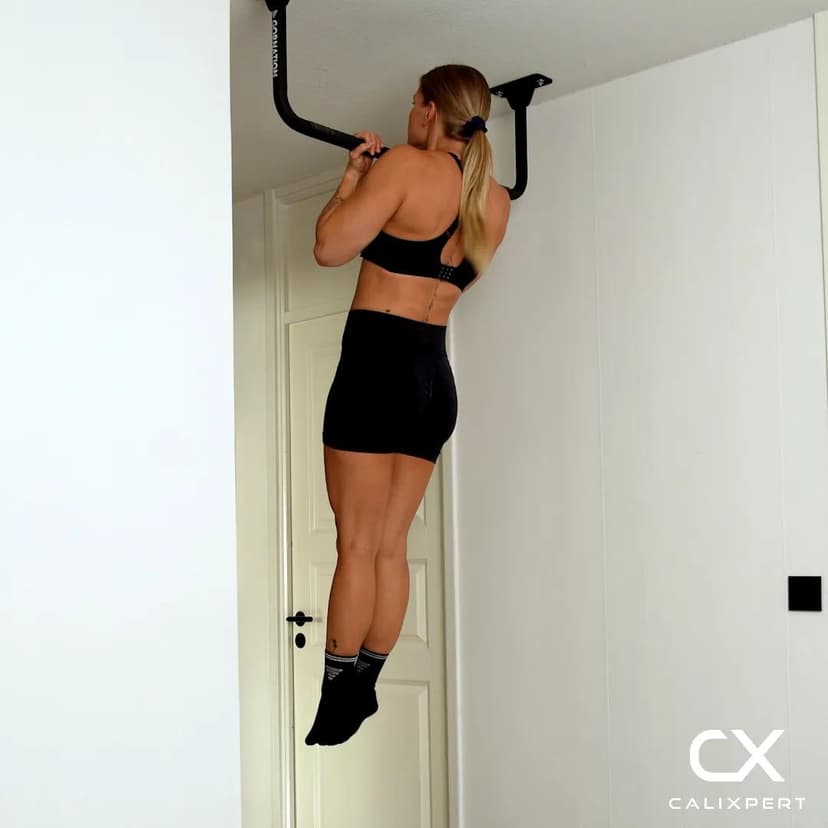
Pull yourself up until your elbows are bent at 90 degrees and your forearms are roughly parallel to the ground. Squeeze your glutes, press your legs together, and brace your core to eliminate any swing. Your shoulders should be packed down with your shoulder blades squeezed together.
Tight body, elbows at ninety
4. Drive Chin Over the Bar
From the 90 degree position, pull hard through the biceps and lats to drive your chin above the bar. Stay as close to the bar as possible with your head throughout the pull. Keep your chest lifted and your neck neutral rather than craning your chin forward to clear the bar.
Stay close, chin clears the bar
5. Lower Back to 90 Degrees
Slowly lower yourself back to the 90 degree elbow position with a controlled 2 to 3 second descent. Maintain full body tension and keep your shoulder blades retracted the entire way down. Do not drop or relax at any point during the lowering phase.
Slow descent, hold the tension
6. Reset and Repeat
Pause briefly at the 90 degree position to confirm your shoulders are set and your core is braced before starting the next rep. Each rep should begin from a controlled hold, not from momentum. If you lose body tension or your shoulders creep up, reset fully before continuing.
Reset position before every rep
Most people rush through the 90 degree position on their way up or down during a chin-up, which is exactly why they are weak there. This exercise forces you to own that range. Focus on staying as close to the bar as possible and keeping your shoulder blades pinched the entire time. When you can do clean reps with a light band, you are ready to try it without assistance.
Muscles Worked During Assisted 90 Degree Chin Ups
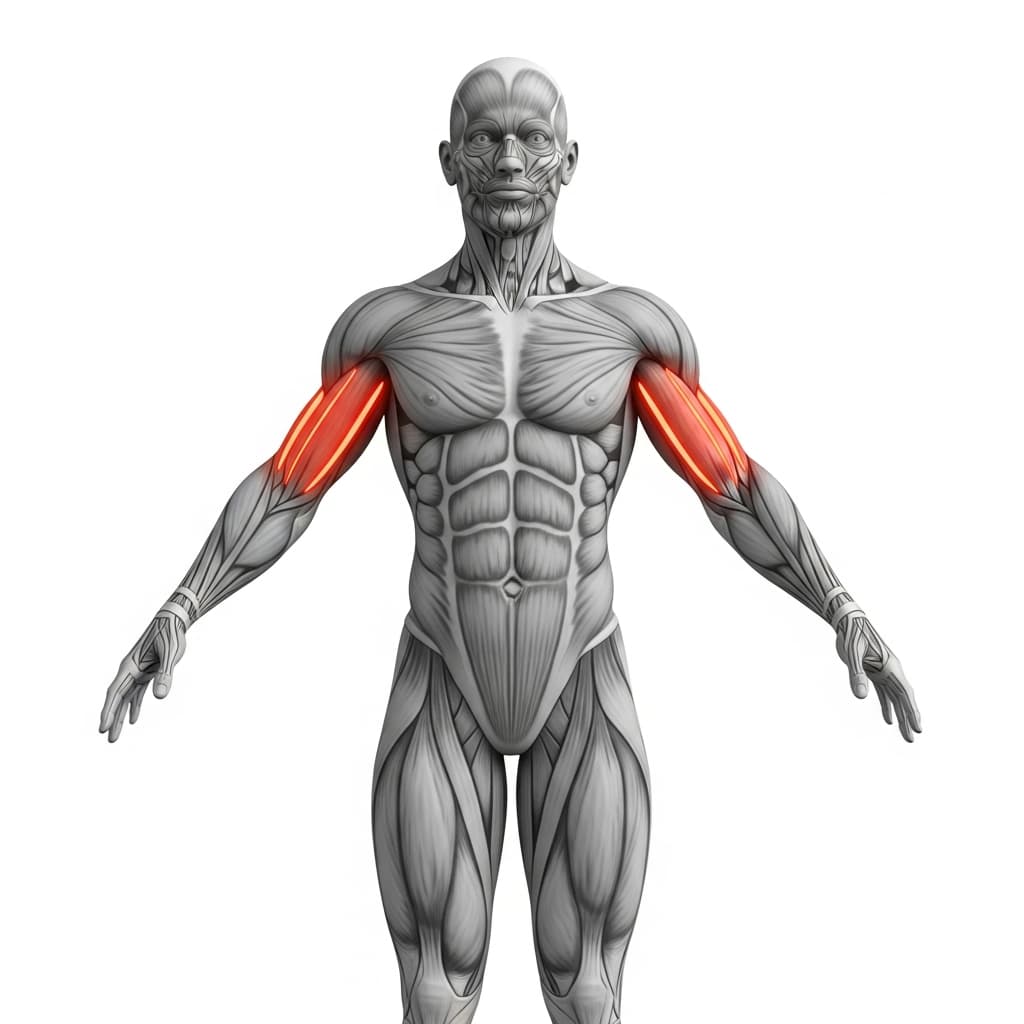
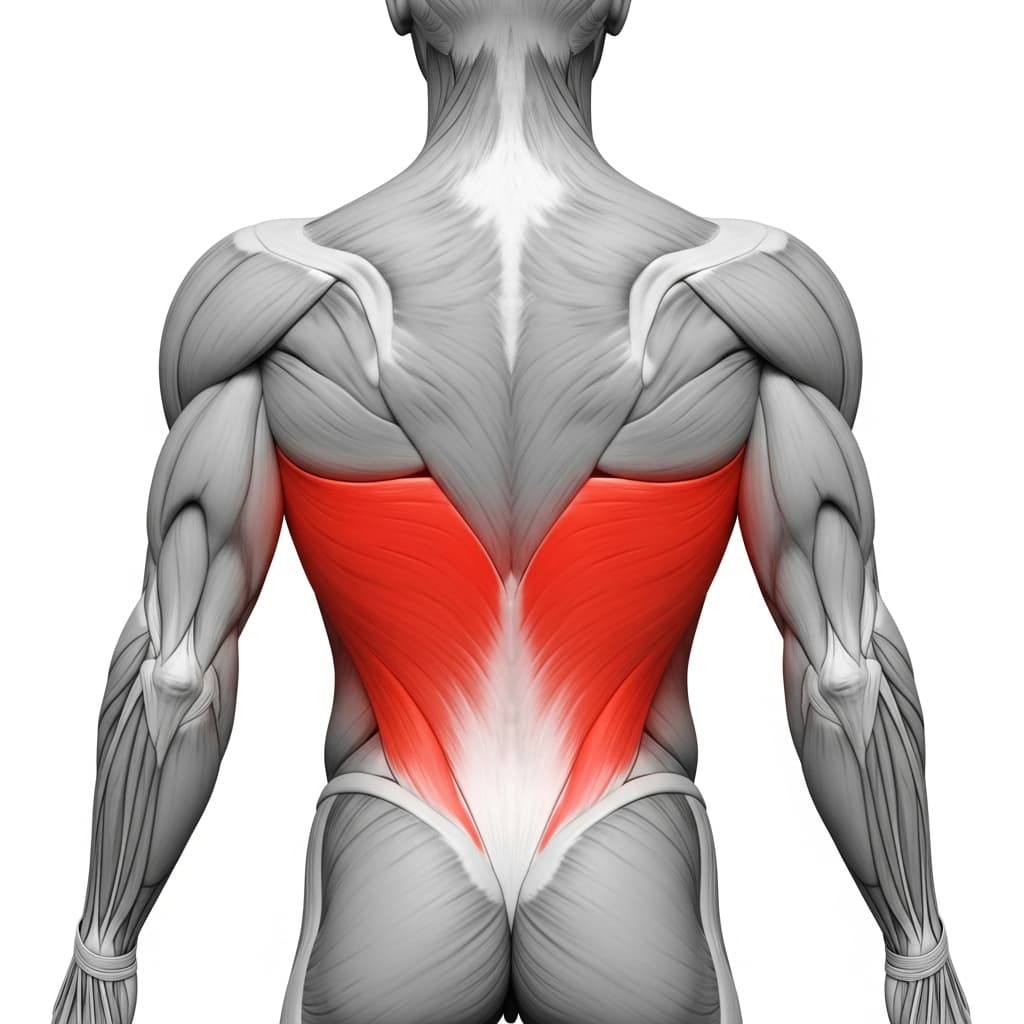
Secondary Muscles:
Primary Muscles
Biceps Brachii (Biceps) - The biceps are the primary elbow flexors driving the pull from 90 degrees to chin over bar, working under constant tension through the shortened range of motion.
Latissimus Dorsi (Lats) - The lats produce shoulder extension and adduction to pull the body upward toward the bar, working alongside the biceps as the main force generators in this movement.
Secondary Muscles
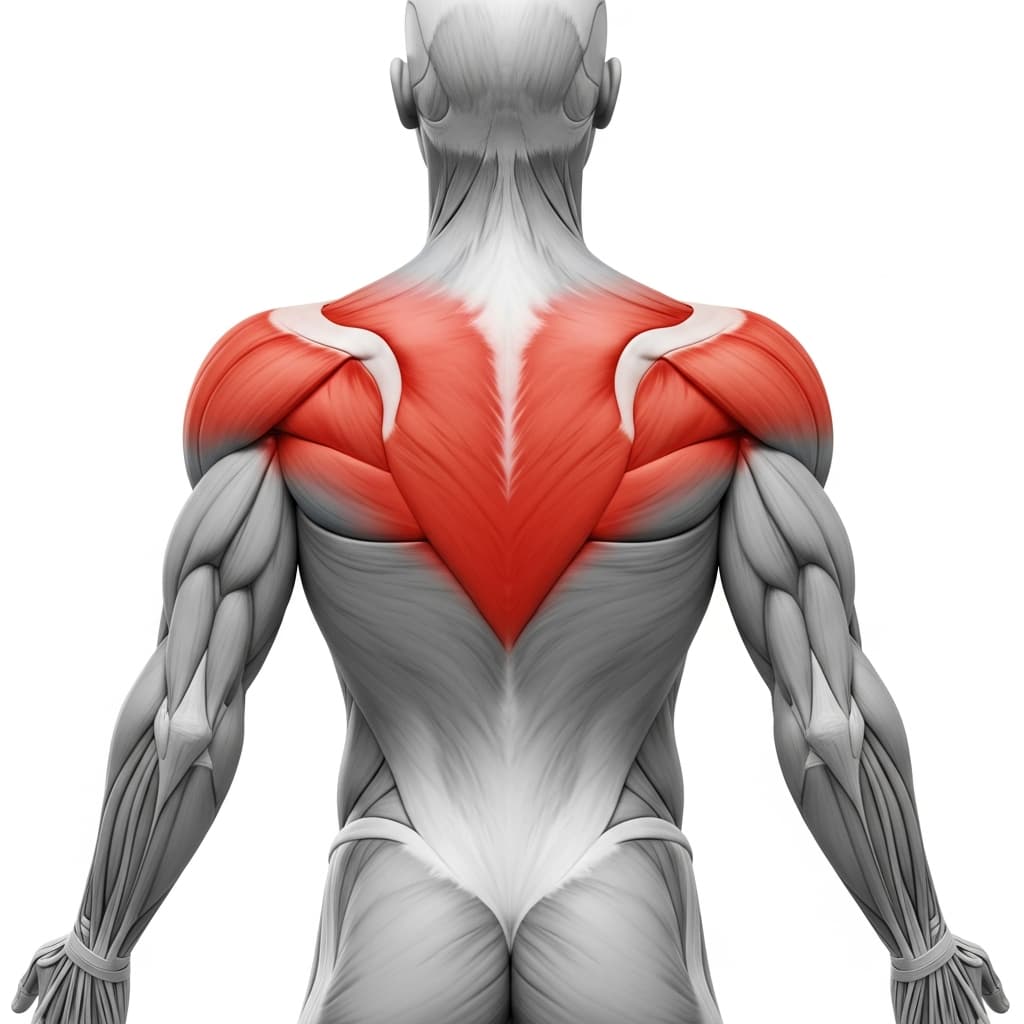
Rhomboids & Upper Trapezius (Upper Back) - The rhomboids and mid-traps retract the shoulder blades throughout the movement, maintaining the packed shoulder position required to keep the body close to the bar.
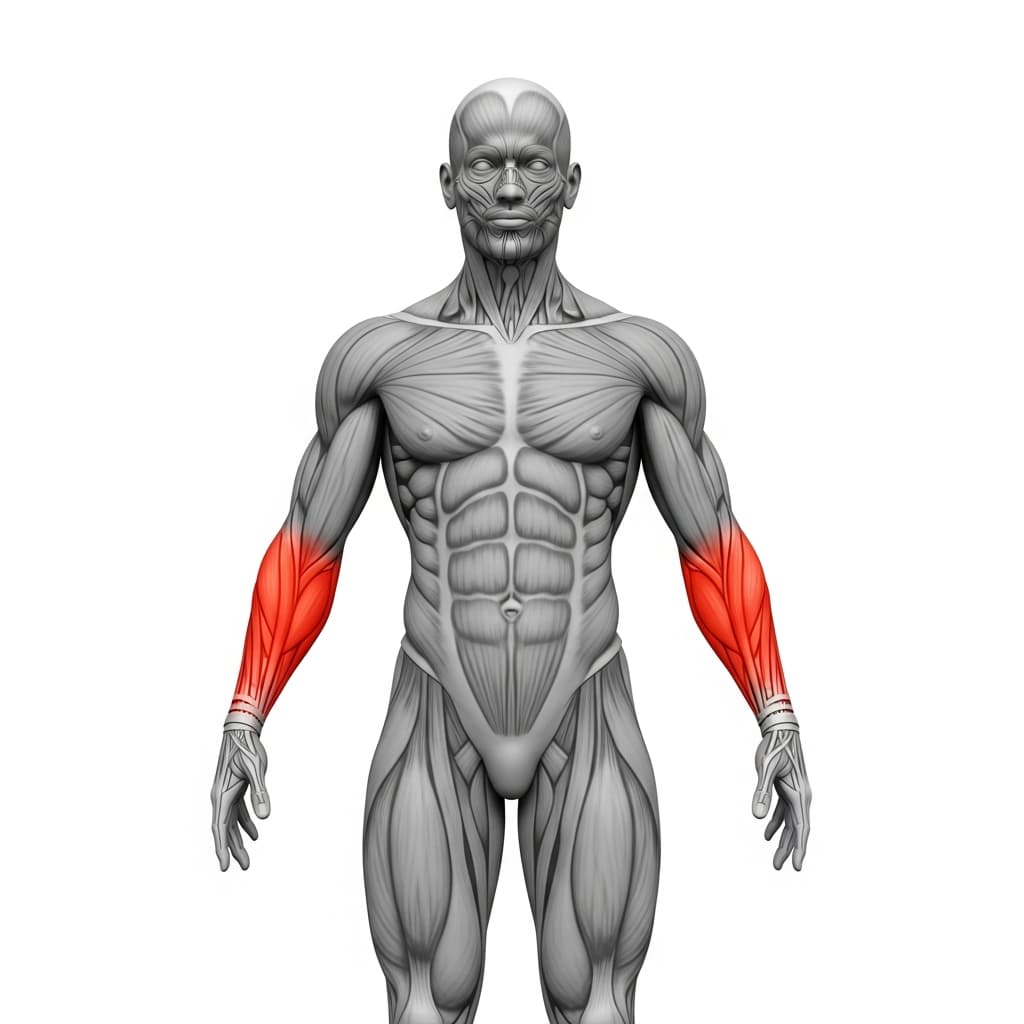
Forearm Flexors & Extensors (Forearms) - The forearm flexors maintain grip on the bar under sustained load, working isometrically to prevent the hands from slipping during each rep and hold.
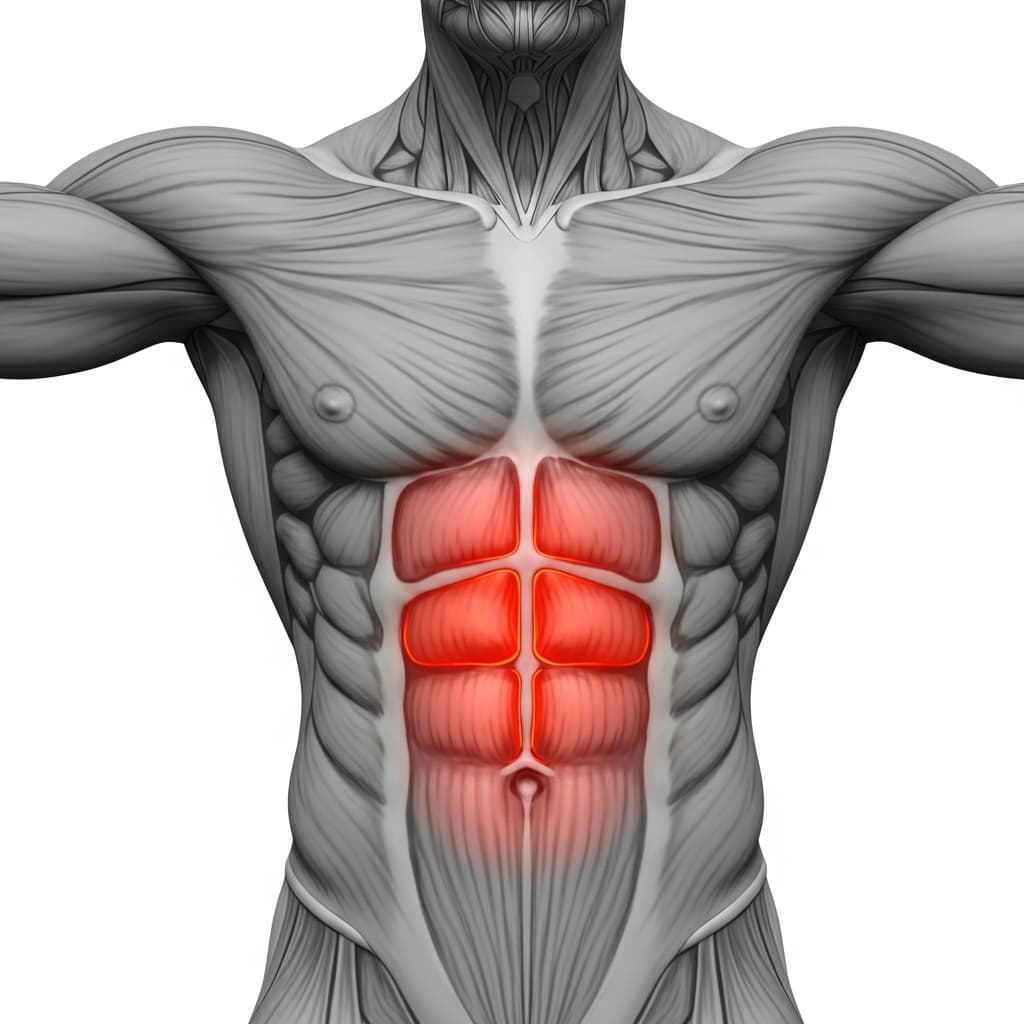
Rectus Abdominis (Abs) - The abdominals brace the torso and prevent the lower body from swinging, keeping the body rigid and still so pulling force transfers efficiently to the bar.
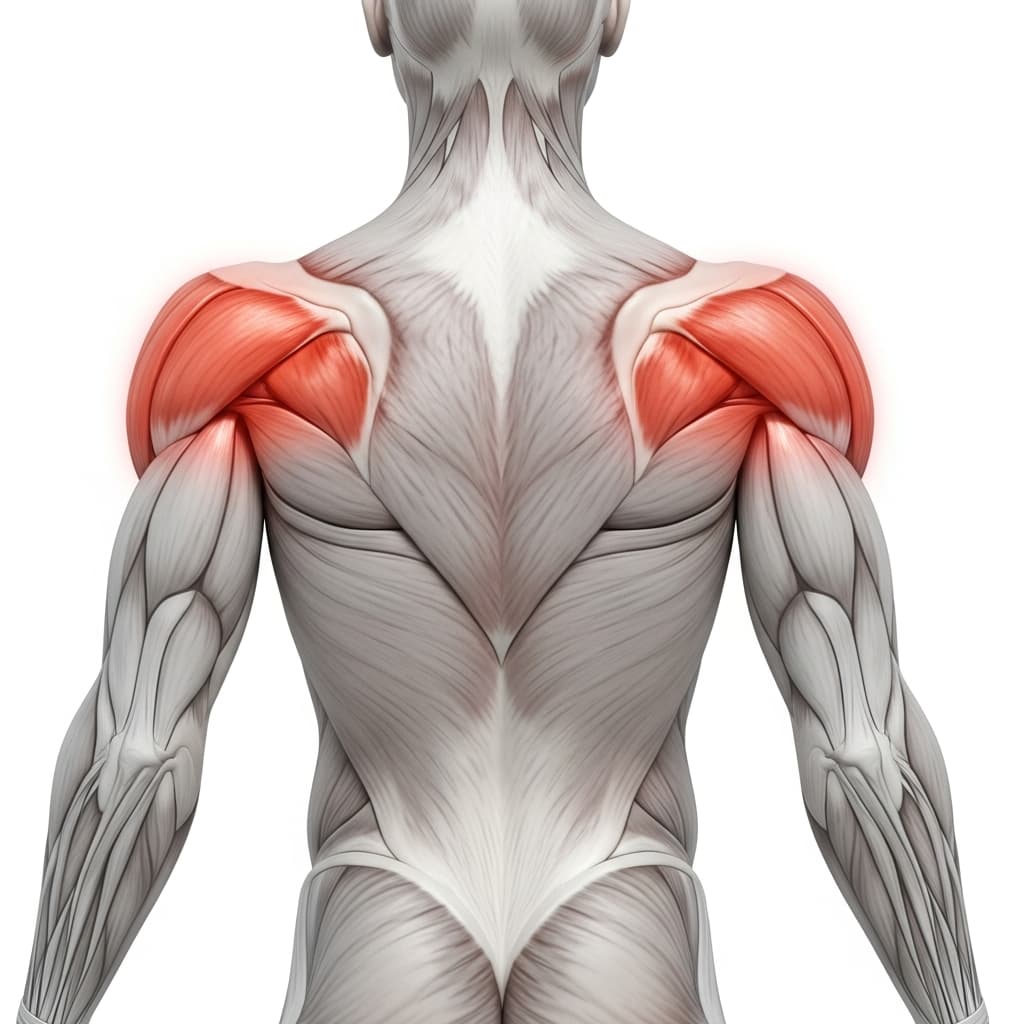
Posterior Deltoid (Rear Deltoid) - The rear deltoids assist shoulder extension during the pull and help stabilize the shoulder joint in the retracted position at the top of each rep.
Benefits of Assisted 90 Degree Chin Ups
- Builds top-end pulling strength in the biceps and lats through the hardest portion of the chin-up, where most people are weakest
- Develops isometric control at the 90 degree position, which transfers directly to static holds and slow chin-up variations
- Strengthens scapular retraction under load, improving shoulder stability for all pulling and overhead movements
- Allows progressive overload by reducing band thickness over time, creating a clear path from assisted to unassisted 90 degree work
Who Is This Exercise For?
You should be able to perform at least 5 band-assisted full chin-ups with controlled form and hold a dead hang for 20 seconds before attempting this exercise. If you cannot maintain a chin-up grip without your shoulders shrugging up toward your ears, work on scapular chin-ups and passive hangs first.
Common Mistakes to Avoid
Using too heavy of a band: A band that is too strong removes the training stimulus from the biceps and lats. Use a light or medium band at most, and only enough assistance to complete the reps with strict form.
Shrugging the shoulders up: Keep your shoulders actively pulled down and your shoulder blades squeezed together throughout every rep. If your shoulders creep toward your ears, stop the set and reset your scapular position before continuing.
Swinging or kipping for momentum: This exercise demands a dead-still body with no swing. Squeeze your glutes, press your legs together, and brace your core before each rep to eliminate momentum.
Craning the neck to clear the bar: Your chin should pass the bar as a result of pulling effort, not by jutting your head forward. Keep your neck neutral and focus on driving through the lats and biceps.