False Grip Hang
The false grip hang is a wrist-intensive hanging exercise that builds the grip position required for bar muscle-ups, ring muscle-ups, and advanced transitions. It targets the forearms, wrist flexors, and shoulder stabilizers by forcing the wrist to sit over the bar instead of gripping it in the standard overhand position. Developing a strong false grip is one of the most overlooked prerequisites in calisthenics, and without it, clean muscle-ups are nearly impossible.
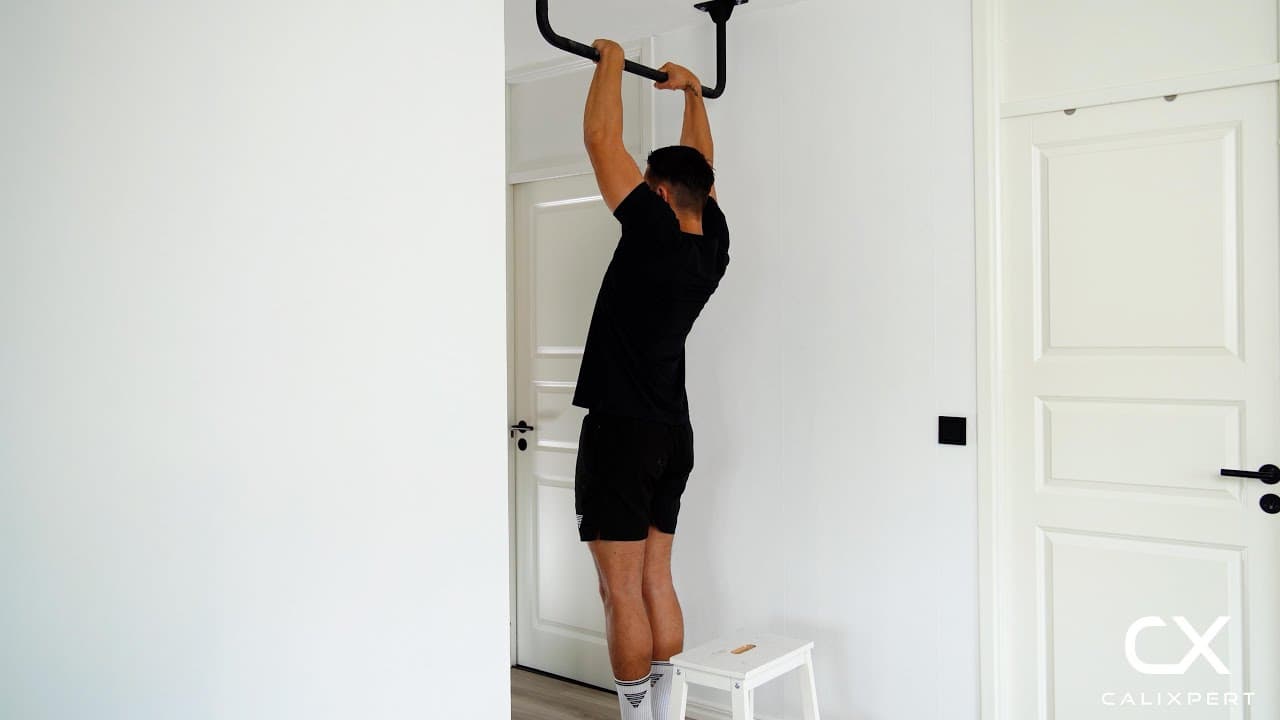
The false grip hang is a wrist-intensive hanging exercise that builds the grip position required for bar muscle-ups, ring muscle-ups, and advanced transitions. It targets the forearms, wrist flexors, and shoulder stabilizers by forcing the wrist to sit over the bar instead of gripping it in the standard overhand position. Developing a strong false grip is one of the most overlooked prerequisites in calisthenics, and without it, clean muscle-ups are nearly impossible.
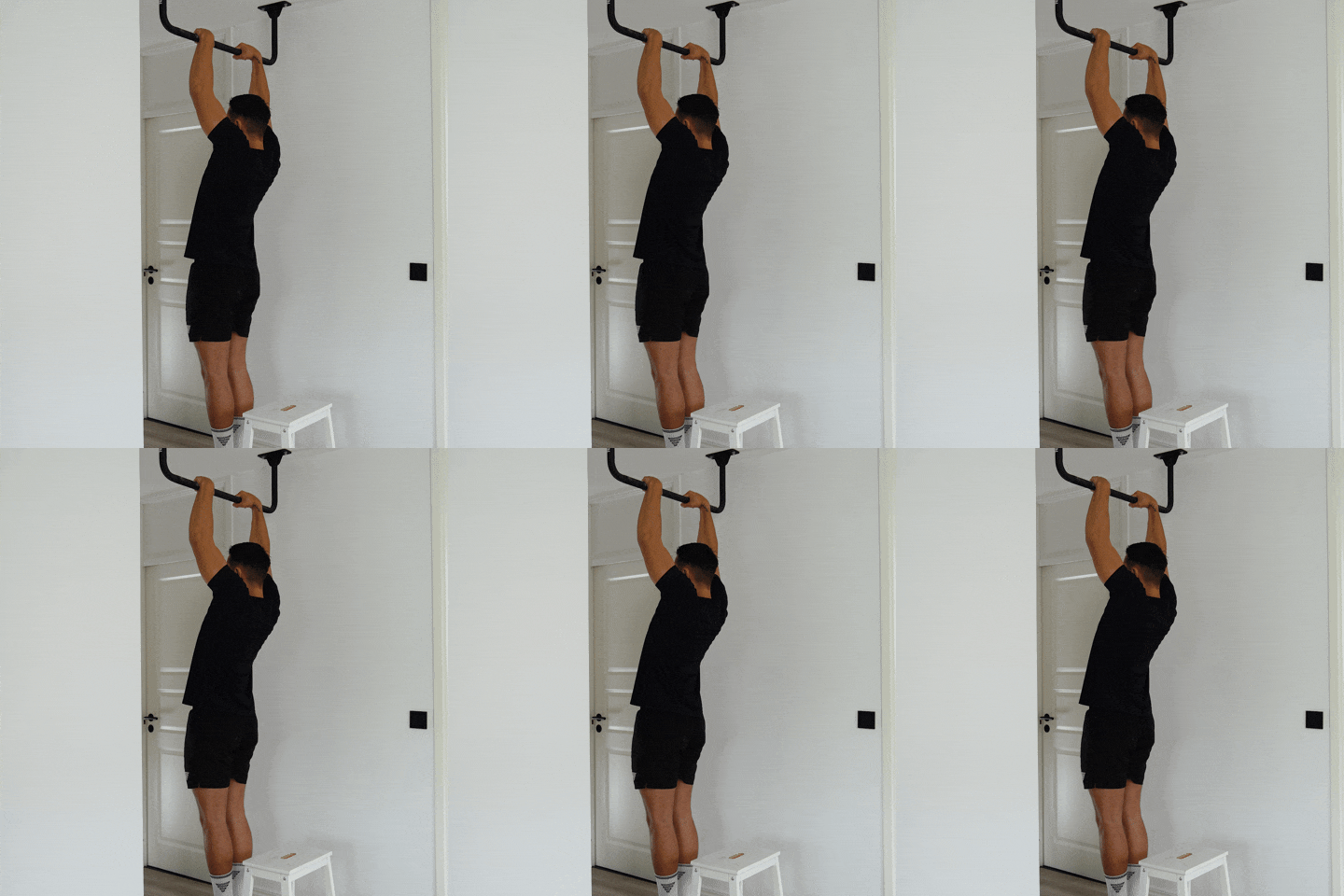
How to Do False Grip Hang
1. Position Your Wrist Over the Bar
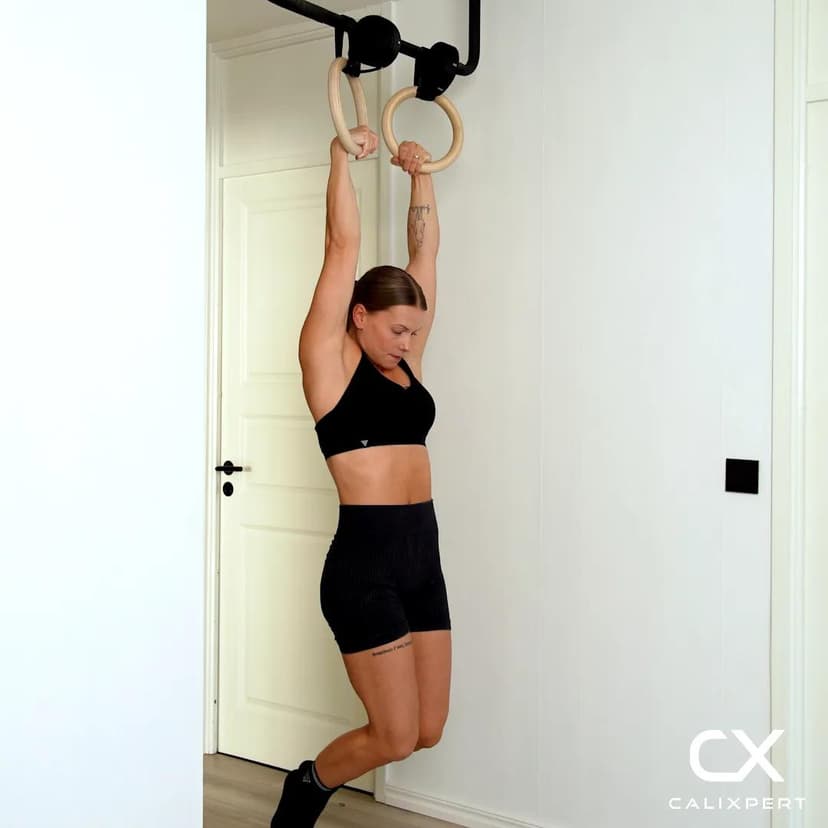
Stand on a box or platform so you can place your hands on the bar at chest height. Instead of gripping the bar with a standard overhand grip, place the base of your palm on top of the bar so the bar sits across the crease of your wrist. Rotate your hand forward over the bar until your knuckles point downward rather than upward. This deep wrist position is what defines the false grip.
Bar on the wrist crease, not the fingers
2. Wrap and Secure Both Hands
Once the bar sits in the wrist crease, curl your fingers around the bar to lock the position. Repeat the same wrist rotation on the other hand. Both wrists should be flexed over the bar with the fingers wrapped securely underneath. Apply chalk to your palms and wrists, because this grip places significant friction on the skin around the wrist bone.
Chalk the wrists, not just the palms
3. Lift Your Feet and Hang
Step off the box and allow your bodyweight to load into the false grip gradually. Keep your shoulders actively pulled down and away from your ears rather than collapsing into a passive hang. Your arms do not need to be perfectly straight in the beginning, since the wrist position demands significant mobility that develops over time. Focus on maintaining the wrist position rather than forcing full arm extension.
Shoulders down, wrists locked
4. Hold and Breathe Steadily
Maintain the false grip for the target hold time while breathing normally. Keep your core engaged and your body still with no swinging or shifting. If you feel the bar slipping from the wrist crease into your fingers, the grip has been lost and the set is over. It is better to do shorter clean holds than longer holds where the grip degrades halfway through.
End the set when the grip slips
5. Lower Down With Control
When the hold is complete, step back onto the box or lower your feet to the ground in a controlled manner. Do not simply drop from the bar, because releasing a false grip under load can strain the wrist if done abruptly. Shake out your hands and wrists between sets to restore circulation and reduce the pressure buildup around the wrist bones.
Step down, never just drop
Most people try to grip the bar normally and then rotate into a false grip while hanging. That never works because the load is already on your fingers and you cannot reposition. Always set the false grip before you leave the box. Place the wrist over the bar, lock it in, then step off. The grip should feel uncomfortable on the wrist bone, and chalk on the wrist area makes a real difference. If it feels easy, your hand has probably slipped into a regular grip.
Muscles Worked During False Grip Hang
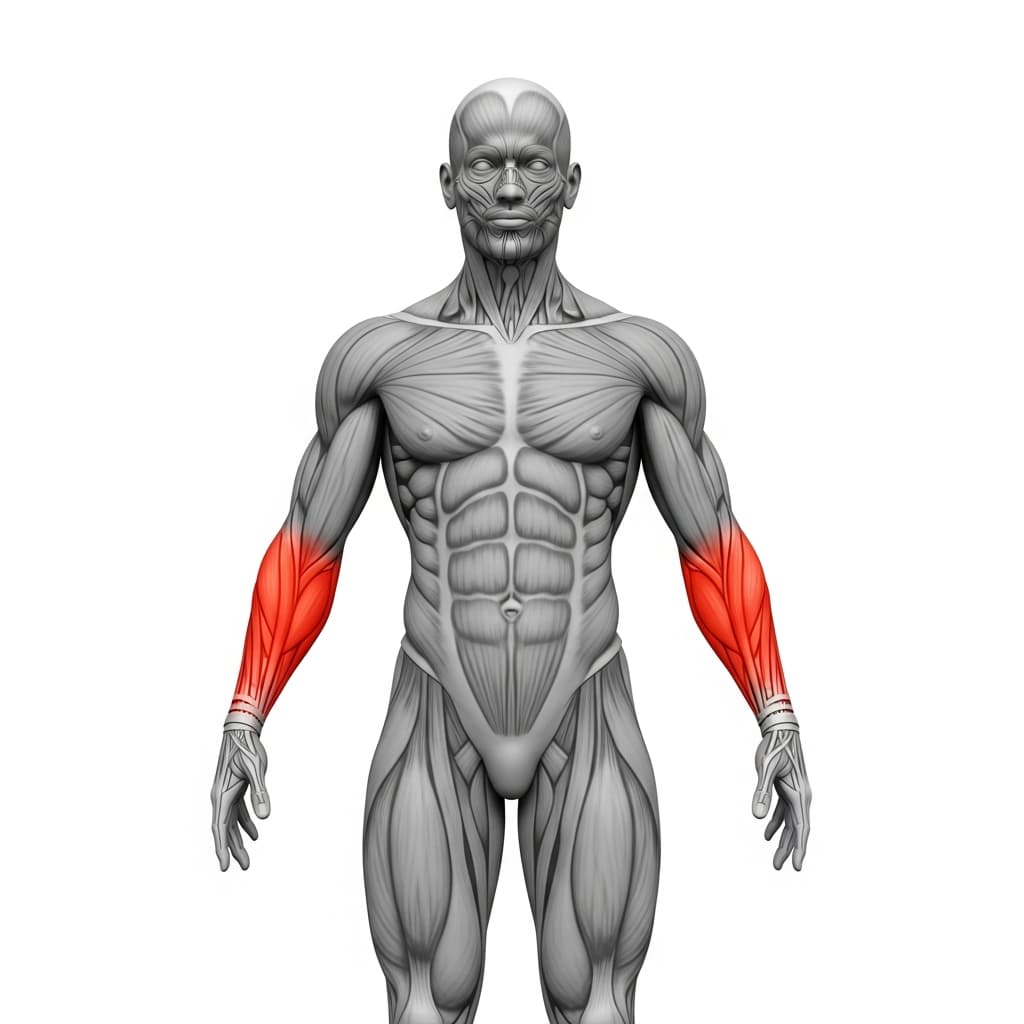
Primary Muscles:
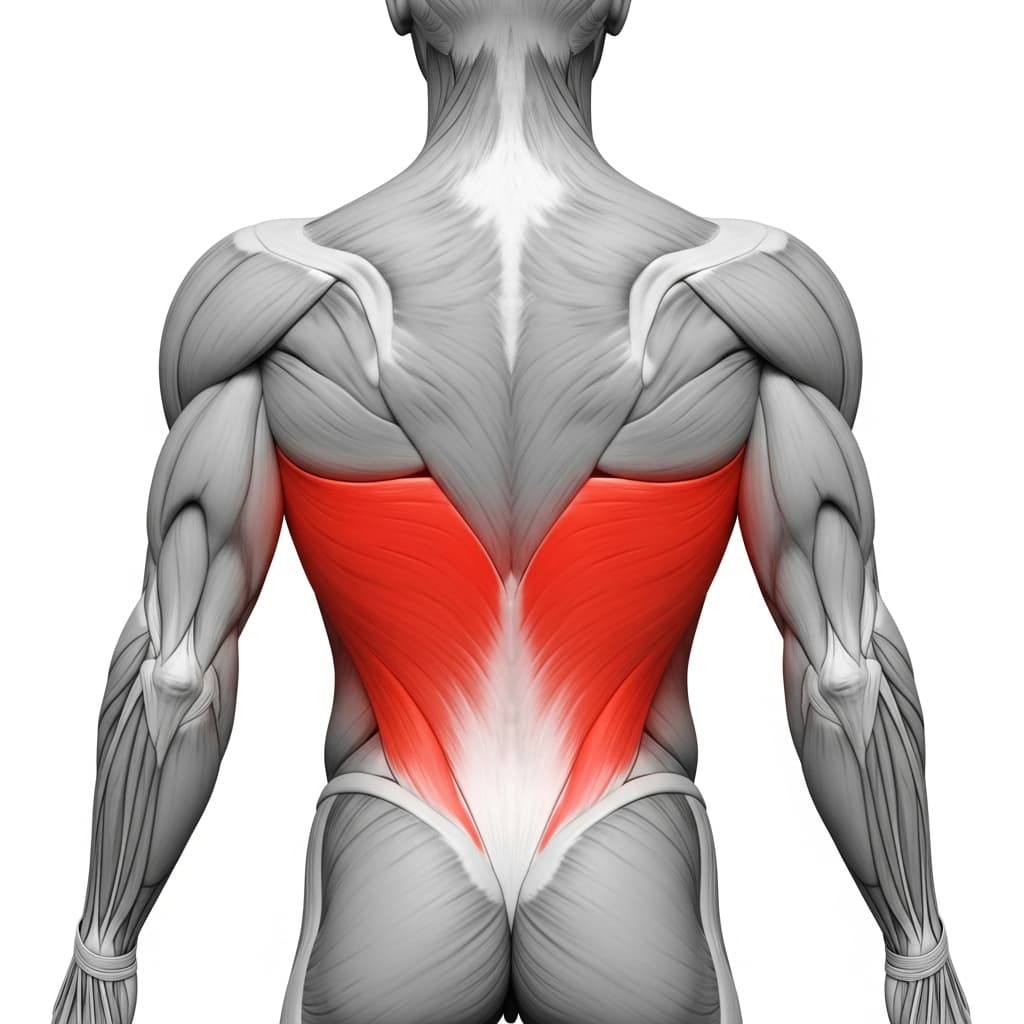
Secondary Muscles:
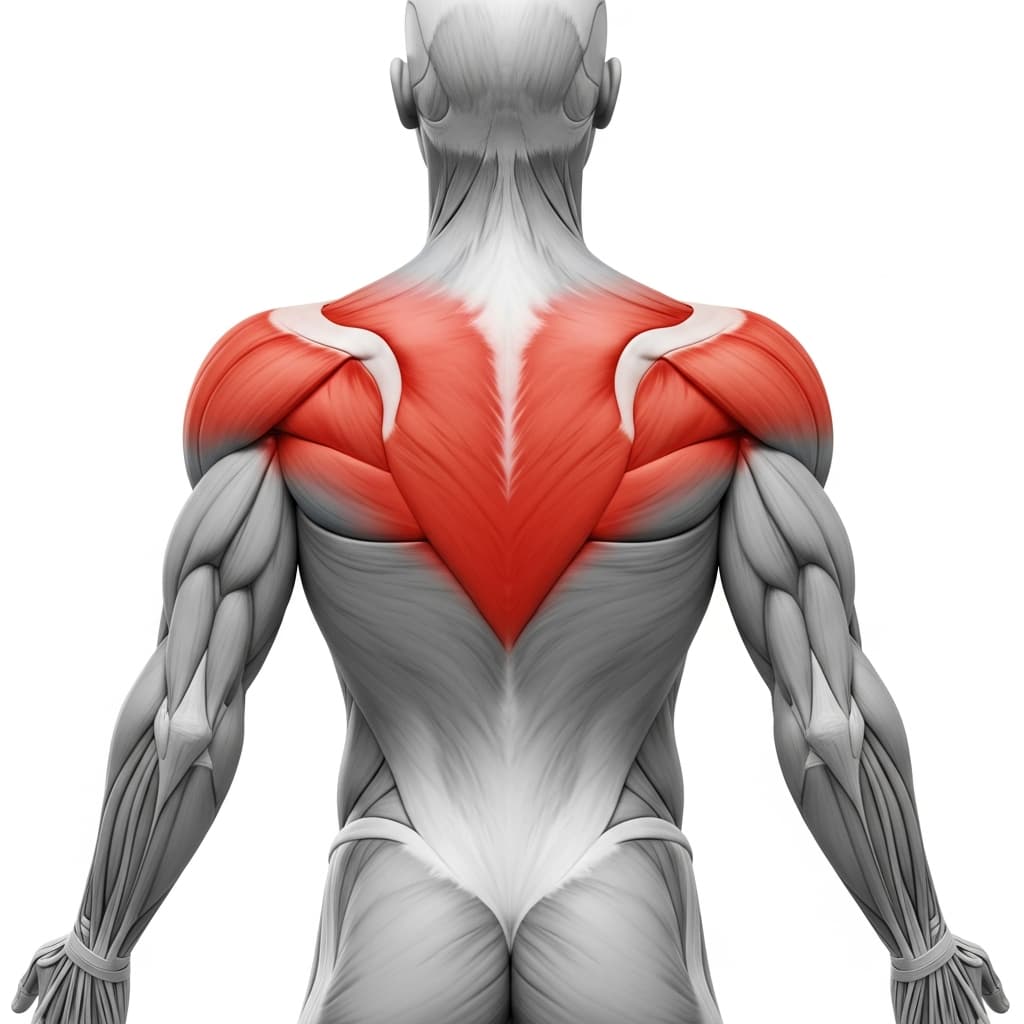
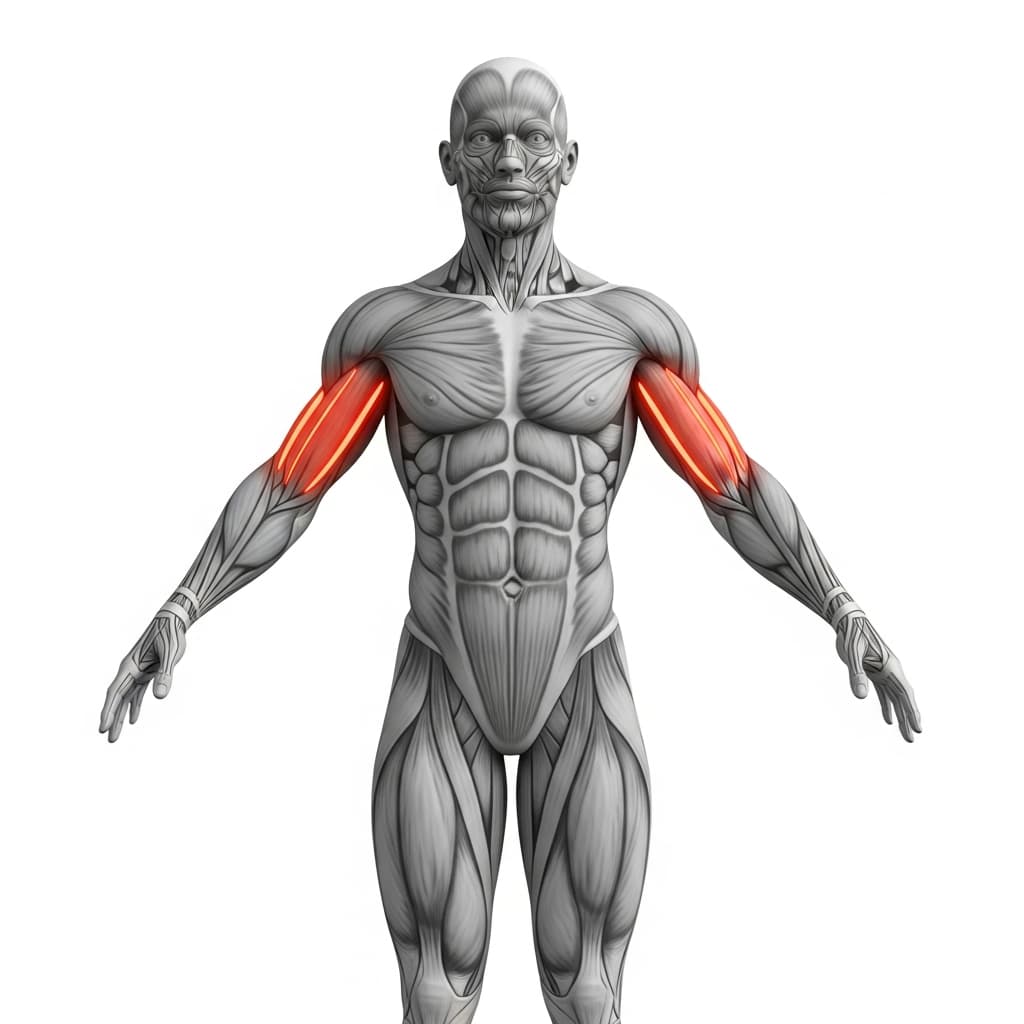
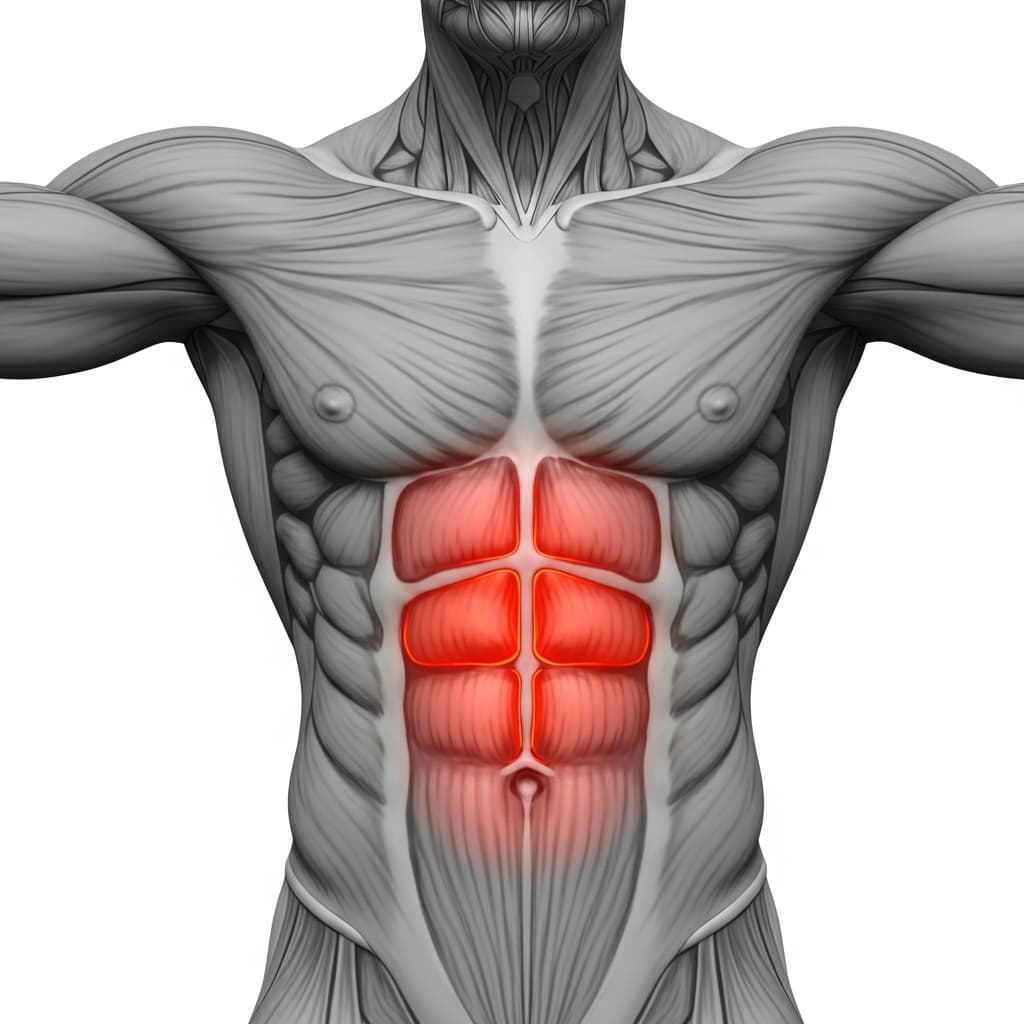
Primary Muscles
Forearm Flexors & Extensors (Forearms) - The wrist flexors and finger flexors of the forearm work continuously to maintain the deep false grip position against the pull of bodyweight trying to open the hand.
Secondary Muscles
Latissimus Dorsi (Lats) - The lats contract isometrically to keep the shoulders depressed and stable during the hang, preventing the body from collapsing into a passive position.
Rhomboids & Upper Trapezius (Upper Back) - The rhomboids and mid-traps hold the scapulae in a retracted and depressed position, maintaining an active hang that protects the shoulder joint.
Biceps Brachii (Biceps) - The biceps work isometrically to resist elbow extension under load, especially in the early stages when full arm extension is limited by wrist mobility.
Rectus Abdominis (Abs) - The abdominals brace the trunk to prevent swinging and keep the body still, allowing the forearms and shoulders to maintain the grip position without compensation.
Benefits of False Grip Hang
- Develops the specific wrist and forearm strength required to perform bar and ring muscle-ups with a clean transition
- Increases wrist flexor endurance and tolerance to pressure, which directly carries over to ring work and advanced transitions
- Strengthens the shoulder stabilizers in a loaded hanging position, building joint resilience for overhead and pulling movements
- Improves grip endurance under an unconventional wrist angle that standard hanging exercises do not train
Who Is This Exercise For?
You should be able to hold a standard dead hang for at least 30 seconds with stable shoulders before training the false grip hang. If your wrist mobility is limited or you experience sharp pain when flexing the wrist over the bar, work on wrist flexibility drills and shorter holds with partial weight first. This is not a beginner exercise, it requires a baseline of grip endurance and shoulder stability from regular hanging work.
Common Mistakes to Avoid
Gripping with the fingers instead of the wrist: The bar must sit in the crease where the palm meets the wrist, not across the middle of the palm or in the fingers. If your knuckles face upward, you are in a standard overhand grip, not a false grip. Rotate the hand forward until the knuckles point down and the wrist hooks over the bar.
Collapsing into a passive hang: Keep the shoulders actively depressed throughout the hold. A passive hang with relaxed shoulders puts extra stress on the shoulder capsule and removes the stabilization work that makes this exercise valuable.
Swinging or using momentum: Any swing shifts load away from the wrist and forearm and makes the grip harder to maintain. Engage your core and keep the body completely still from the moment you leave the box.
Holding too long with a broken grip: Once the bar slips from the wrist crease into the fingers, the false grip benefit is gone. End the set immediately and reset rather than completing extra seconds in a normal hang position.
Variations & Progressions
Band-Assisted False Grip Hang
Loop a resistance band over the bar and place your feet in it to offload some bodyweight. This reduces the load on the wrists and forearms, allowing you to practice the correct wrist position for longer holds before progressing to full bodyweight.