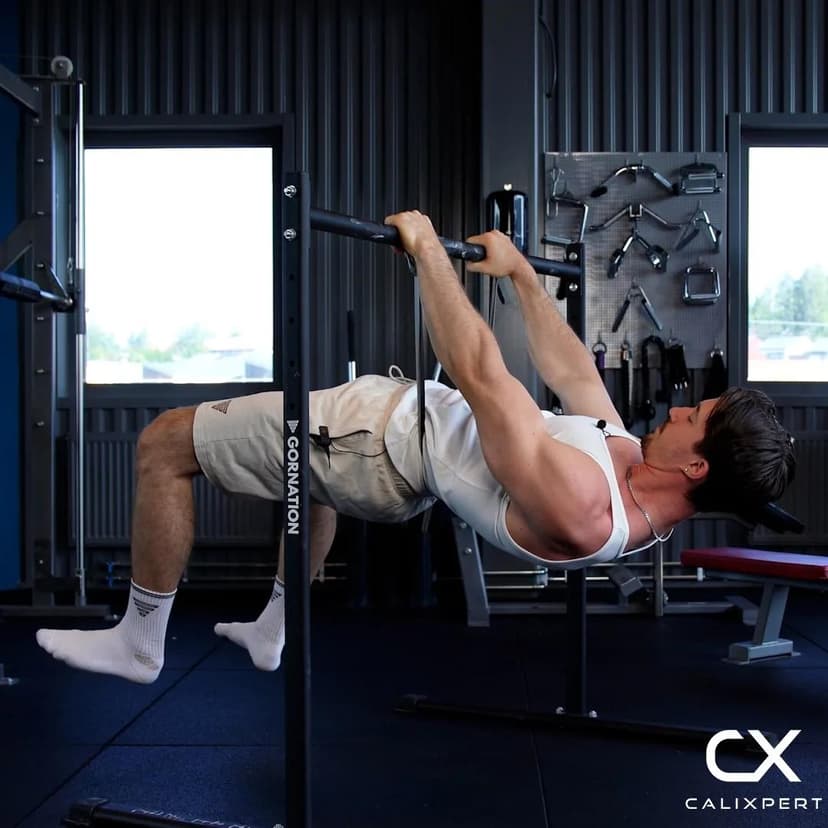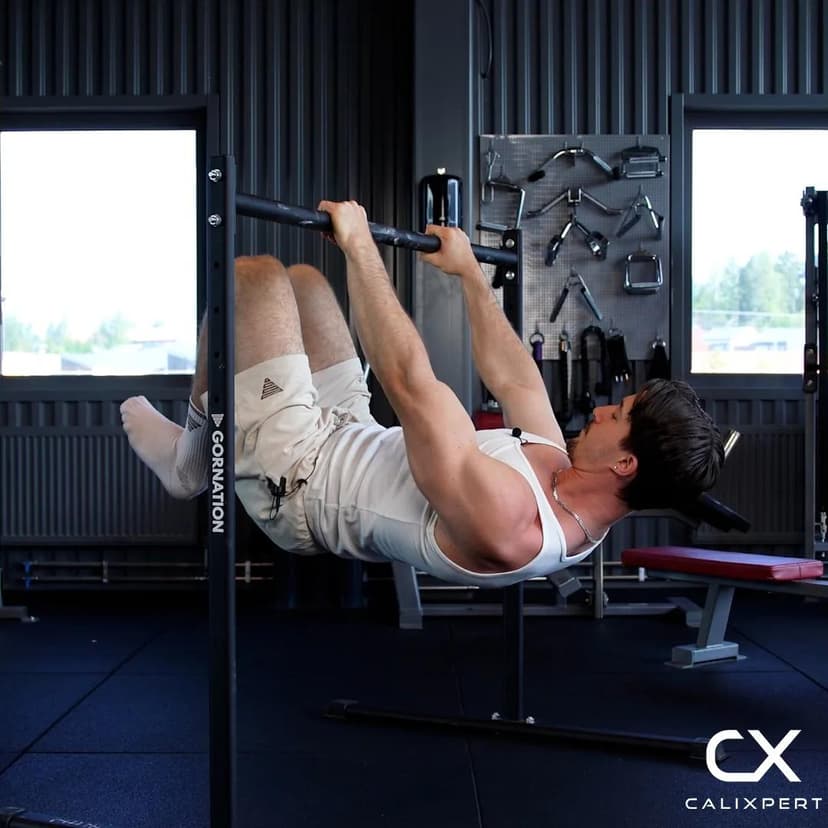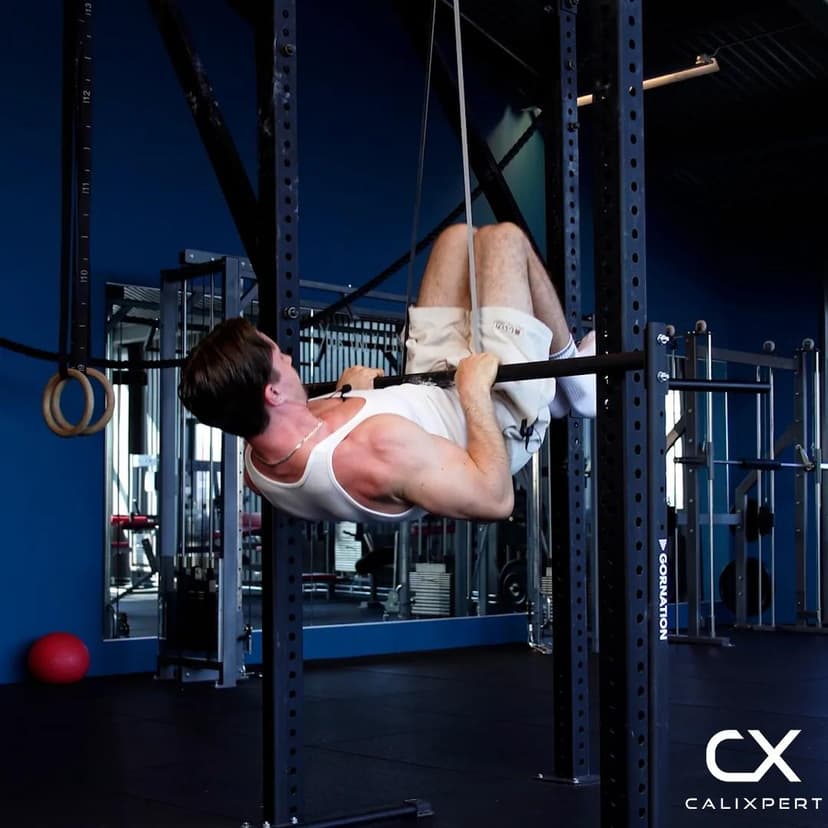
Negative Ring Muscle Up
The negative ring muscle up is an advanced eccentric exercise that trains the full lowering phase of a ring muscle up, from the support hold through the transition and into a dead hang. It targets the lats, chest, triceps, and shoulders while placing heavy emphasis on the transition zone that most athletes struggle with. By slowing down the descent, you build the joint stability, grip control, and positional awareness needed to eventually perform a clean full ring muscle up.
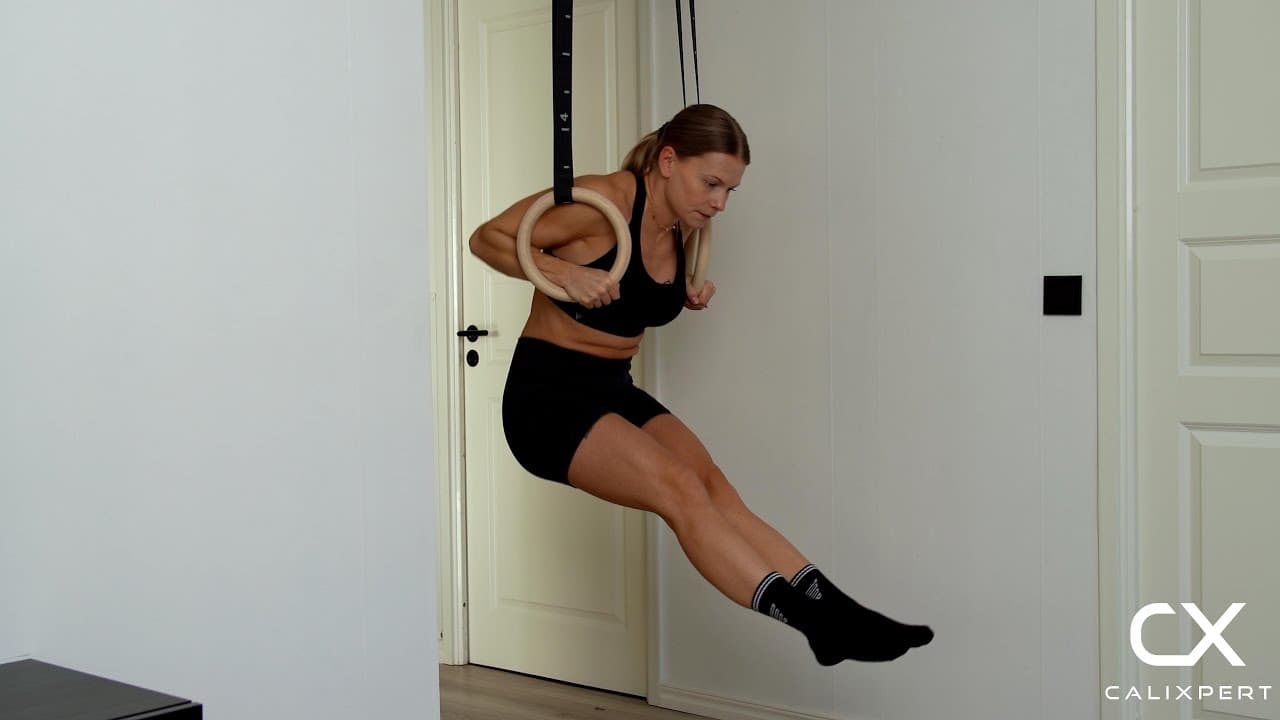
The negative ring muscle up is an advanced eccentric exercise that trains the full lowering phase of a ring muscle up, from the support hold through the transition and into a dead hang. It targets the lats, chest, triceps, and shoulders while placing heavy emphasis on the transition zone that most athletes struggle with. By slowing down the descent, you build the joint stability, grip control, and positional awareness needed to eventually perform a clean full ring muscle up.
How to Do Negative Ring Muscle Up
1. Set the Rings and Mount
Adjust the rings to a height where you can jump into a support hold without hitting your head on the ceiling or frame. Jump up and lock out into a full support position with arms straight, rings turned slightly outward, and shoulders pressed down. Keep your core tight and legs together or slightly tucked for balance.
Rings tight to the body at the top
2. Lower Through the Dip Phase
Begin bending your elbows and slowly lower your body through the dip portion of the movement. Keep the rings pressed tight against your sides and drive your elbows directly backward, not outward. This backward elbow path prevents the rings from flaring wide and keeps the load on your triceps and chest instead of stressing the shoulder joint.
Elbows back, rings glued to your ribs
3. Rotate Through the Transition
As your chest passes below ring height, begin rotating your grip from the neutral support position into a pulling grip. This is the transition zone, the most demanding part of the entire movement. Control the rotation slowly and resist the urge to drop through this phase. Your shoulders should stay active and engaged throughout the rotation.
Slow rotation, never free-fall through the transition
4. Lock Into the False Grip
As your grip rotates during the transition, lock your wrists into a false grip position where the base of your palm sits on top of the ring. Do not let your hand slide down to a normal hanging grip. The false grip locks you into the correct wrist angle and prevents you from losing control during the final lowering phase.
Lock the wrist, do not let the hand slide
5. Lower to a Full Hang
From the false grip position below the rings, continue lowering as slowly as you can until your arms are fully extended. Aim for a 3 to 5 second descent from the transition to the bottom. Keep your shoulders active in the hang rather than dumping into a passive dead hang. Reset your position completely before starting the next rep.
Resist gravity all the way to straight arms
Most people try to learn the ring muscle up by pulling harder, but the negative is where you actually build the strength for it. Spend your time on the transition phase, not the top or bottom. If you can control a 5-second descent through that middle zone where the grip rotates, you already have the strength for a full muscle up. You just need to learn to reverse the direction.
Muscles Worked During Negative Ring Muscle Up





Primary Muscles
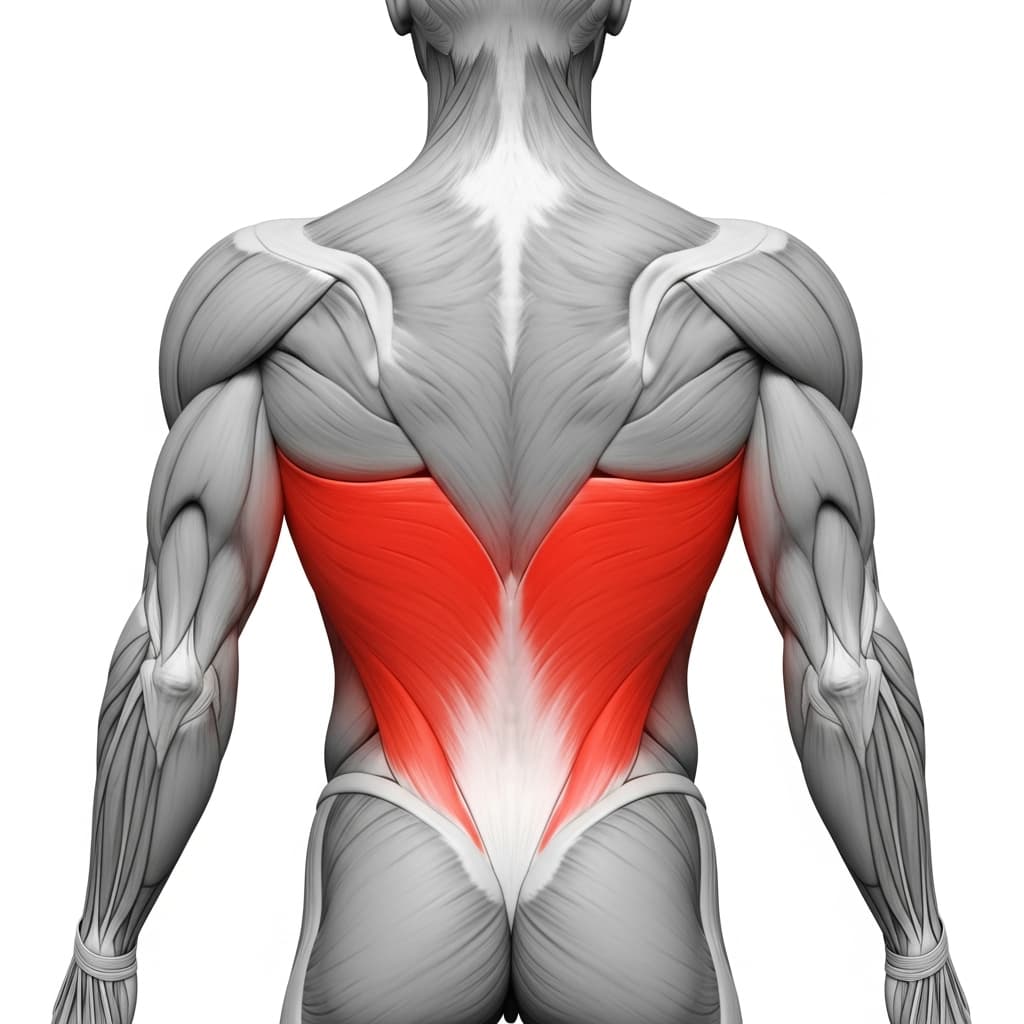
Latissimus Dorsi (Lats) - The lats control the eccentric lowering from the transition into the hang, resisting gravity as the arms extend and the body descends below the rings.
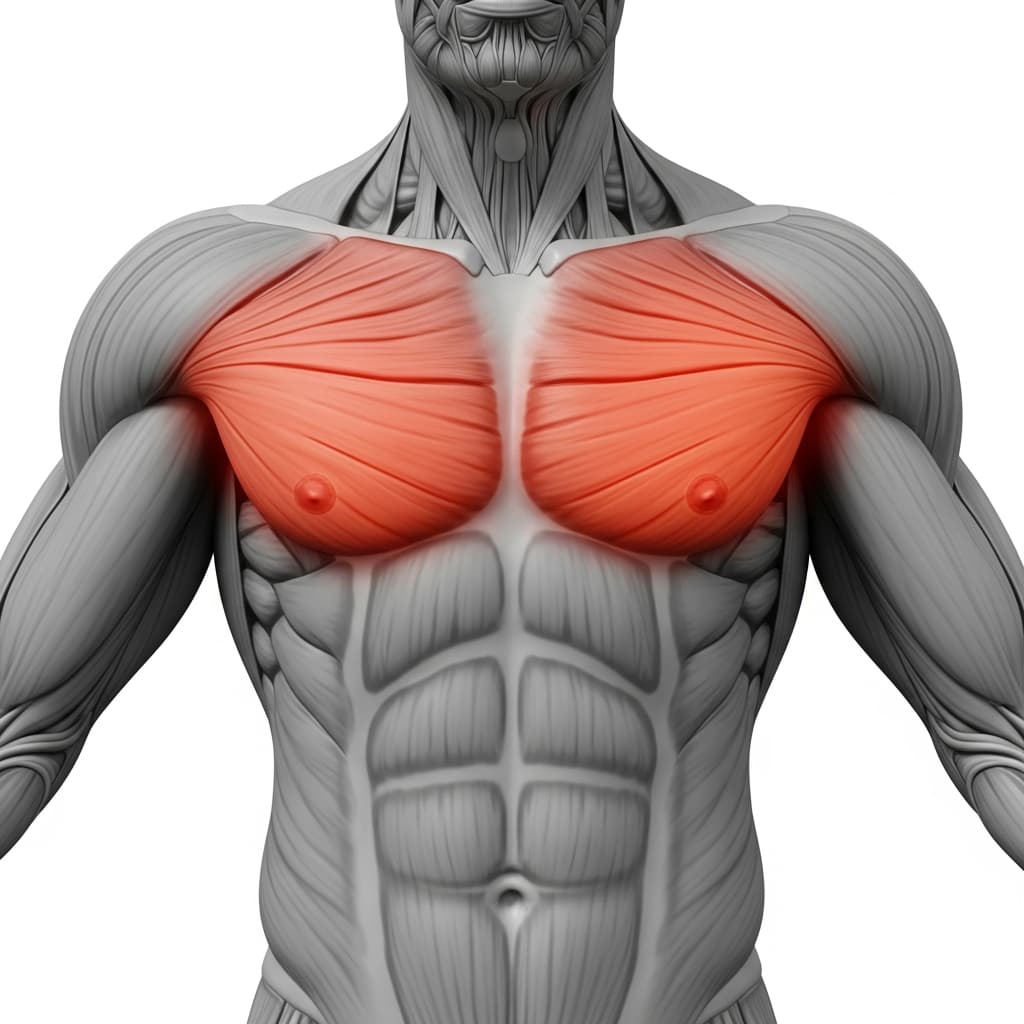
Pectoralis Major (Chest) - The chest works eccentrically during the dip phase, controlling the descent from the support hold as the body lowers toward ring height.
Secondary Muscles
Triceps Brachii (Triceps) - The triceps decelerate elbow extension during the dip portion and maintain ring stability as the arms straighten in the lower phase.
Anterior Deltoid (Front Deltoid) - The front deltoid stabilizes the shoulder joint during the transition and controls shoulder flexion as the body passes below the rings.
Biceps Brachii (Biceps) - The biceps assist the lats in controlling the final lowering phase from the transition to the full hang under eccentric load.
Forearm Flexors & Extensors (Forearms) - The forearms maintain grip on the rings throughout the descent and lock the wrist into the false grip position during the transition.
Rectus Abdominis (Abs) - The abs brace the torso and prevent the body from swinging or arching during the controlled descent through each phase of the movement.
Benefits of Negative Ring Muscle Up
- Builds eccentric strength through the muscle up transition, the exact range of motion where most athletes fail when attempting a full ring muscle up
- Develops shoulder stability and joint resilience in the deep positions that rings demand, reducing injury risk during dynamic ring movements
- Trains false grip strength and wrist control under load, which is the limiting factor for most people learning ring muscle ups
- Strengthens both the pressing and pulling muscles in a single movement, connecting the ring dip and ring pull-up into one coordinated pattern
Who Is This Exercise For?
You should be able to hold a ring support hold for at least 10 seconds with stable shoulders and perform 5 controlled ring dips before attempting this exercise. A solid false grip hang of at least 5 seconds and the ability to do chest-to-ring pull-ups are also required, since the lowering phase passes through both pressing and pulling positions. If you cannot hold a stable support position on rings without shaking or collapsing, you are not ready for this movement.
Common Mistakes to Avoid
Dropping through the transition: The transition is where you build the most strength for a full muscle up. If you cannot control the descent through this phase, reduce your rep count and focus on spending 2 to 3 seconds in the transition zone alone before adding full reps.
Rings flaring wide during the dip: Keep the rings pressed against your body and drive your elbows straight back, not out to the sides. Wide rings put excessive strain on the shoulders and remove the training stimulus from the muscles that actually perform the muscle up.
Losing the false grip in the transition: As you rotate from the support position into the pulling position, actively lock your wrist over the ring and resist the urge to let your hand slide. Practice isolated false grip hangs to build the wrist strength needed for this lock.
Rushing the entire descent: A negative that takes less than 3 seconds total provides very little eccentric stimulus. Aim for a minimum of 5 seconds from the top support hold to a full hang. If you cannot control the speed, reduce your sets and rest longer between reps.
Variations & Progressions
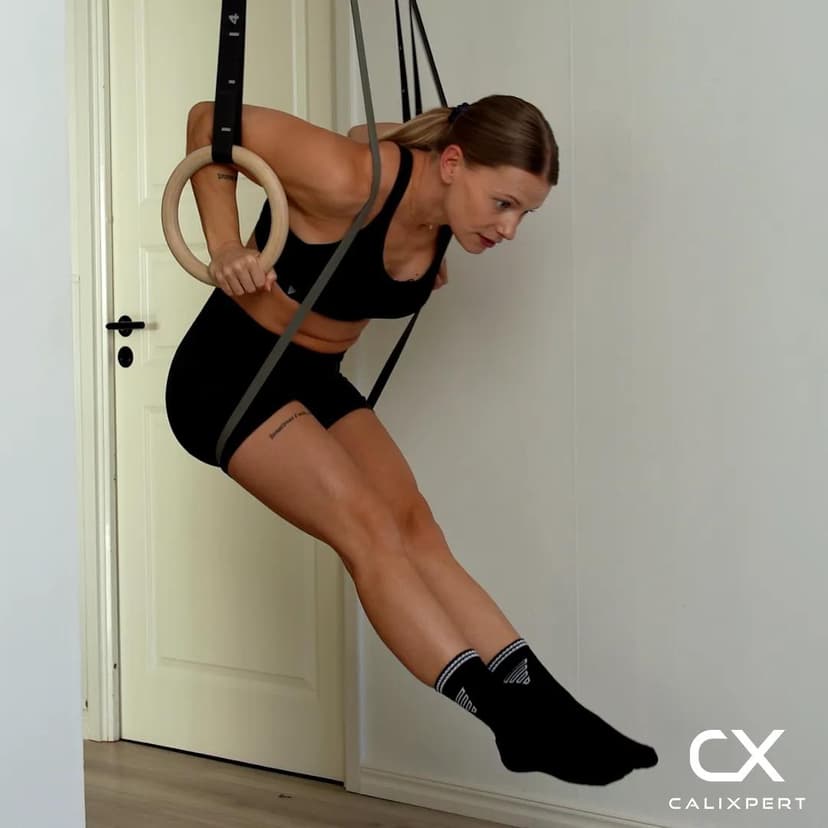
Weighted Negative Ring Muscle Up
Wear a weight vest or hang a dumbbell from a dip belt to increase the eccentric load throughout the descent. Only add weight once you can perform 5 clean unweighted negatives with a 5-second descent.