L-sit Support Raises
L-sit support raises are a compression-based calisthenics exercise performed from an L-sit hold on low parallettes or the floor, targeting the abs, hip flexors, and shoulders through a controlled hip elevation pattern. The movement starts from a standard L-sit support position and adds a vertical press component where you drive the hips higher by depressing the scapula and compressing through the core. This exercise builds the specific pressing and compression strength required for V-sits, manna progressions, and other advanced static holds in calisthenics.
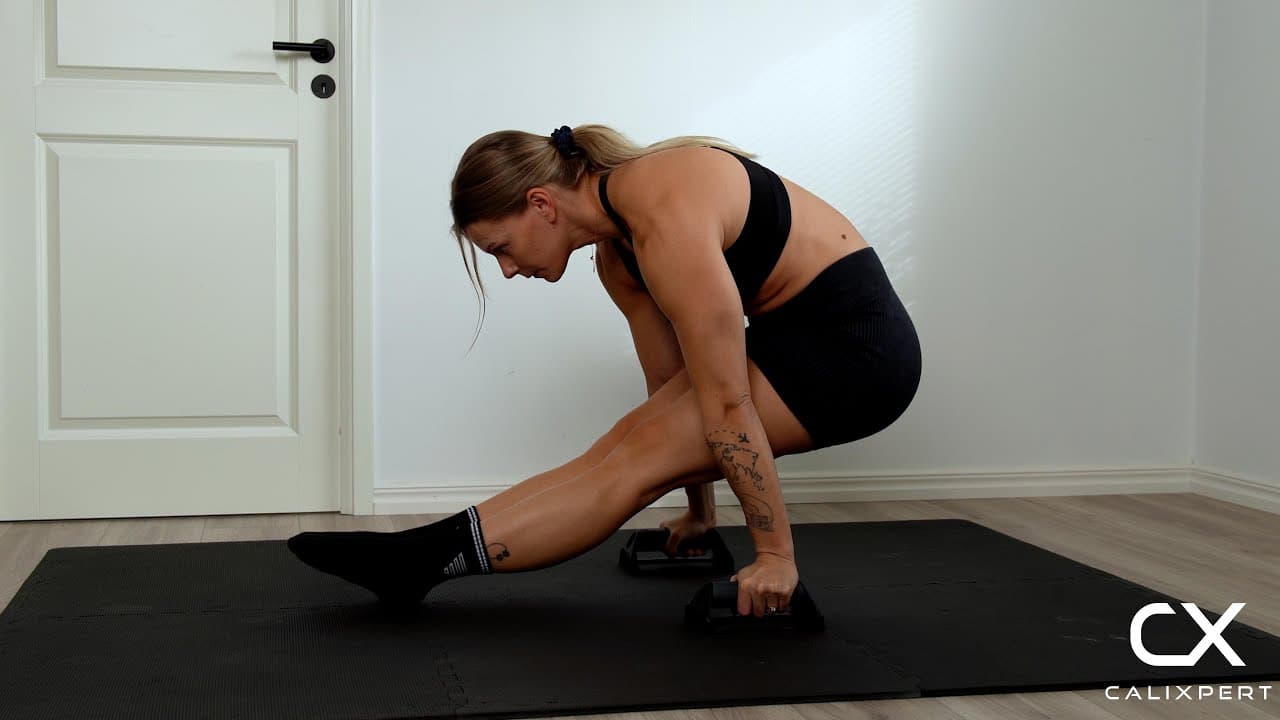
L-sit support raises are a compression-based calisthenics exercise performed from an L-sit hold on low parallettes or the floor, targeting the abs, hip flexors, and shoulders through a controlled hip elevation pattern. The movement starts from a standard L-sit support position and adds a vertical press component where you drive the hips higher by depressing the scapula and compressing through the core. This exercise builds the specific pressing and compression strength required for V-sits, manna progressions, and other advanced static holds in calisthenics.
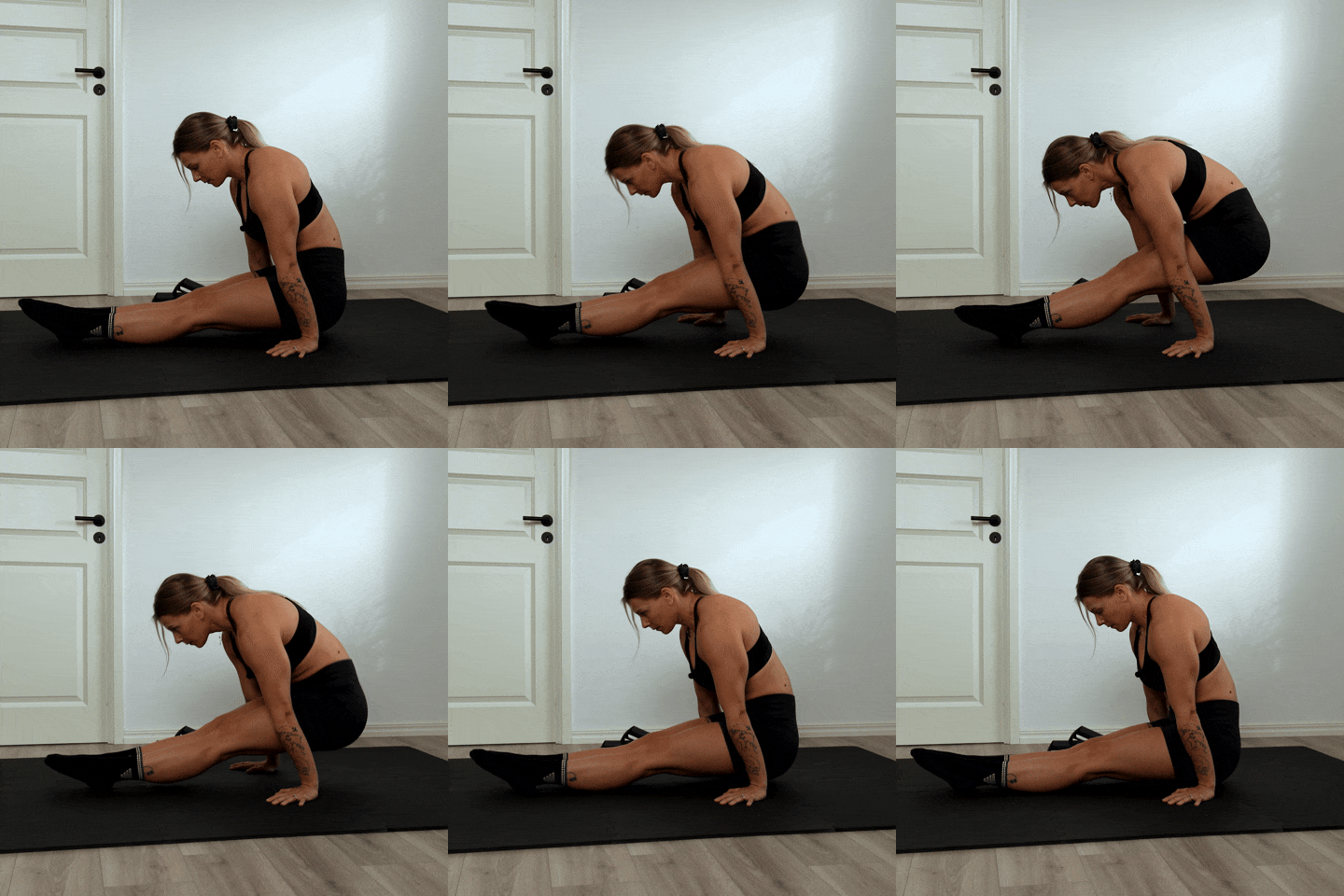
How to Do L-sit Support Raises
1. Position the Parallettes at Hip Width
Place a pair of low parallettes on the ground just outside your hips. Sit between them with your legs extended straight in front of you and your hands gripping the handles. Wrap your thumbs fully around the bars for a secure grip.
Parallettes just outside the hips
2. Set the L-sit Support Hold
Press down through the parallettes and lift your body off the ground into an L-sit position. Lock your elbows completely and push your scapula down into full depression. Tuck your belly in tight and point your toes forward with straight legs. This is your starting position for every rep.
Straight arms, scapula depressed, belly tight
3. Raise the Hips Higher
From the L-sit hold, press down even harder through the parallettes and drive your hips upward by compressing your core. Think about lifting the pelvis toward the ceiling while keeping your legs at the same relative angle. Your shoulders should stay depressed and your arms locked throughout the elevation.
Press down to lift up
4. Drive Heels Backward at the Top
As your hips reach their highest point, actively drive your heels backward to maximize compression. This heel drive deepens the pike angle and forces the hip flexors and lower abs to work through a greater range. Hold the top position briefly before lowering.
Heels back at the top
5. Lower With Control to the L-sit
Slowly lower your hips back to the standard L-sit support position, resisting gravity on the way down. Do not drop or relax at the bottom. Re-establish full scapular depression and core tension before initiating the next rep.
Controlled descent, reset tension each rep
Most people try to lift the hips by muscling through the arms, but the real movement comes from compressing the core harder while pressing the scapula down. Think less about going up and more about folding your body tighter. When you get the compression right, the hips rise almost as a side effect.
Muscles Worked During L-sit Support Raises
Primary Muscles:
Secondary Muscles:
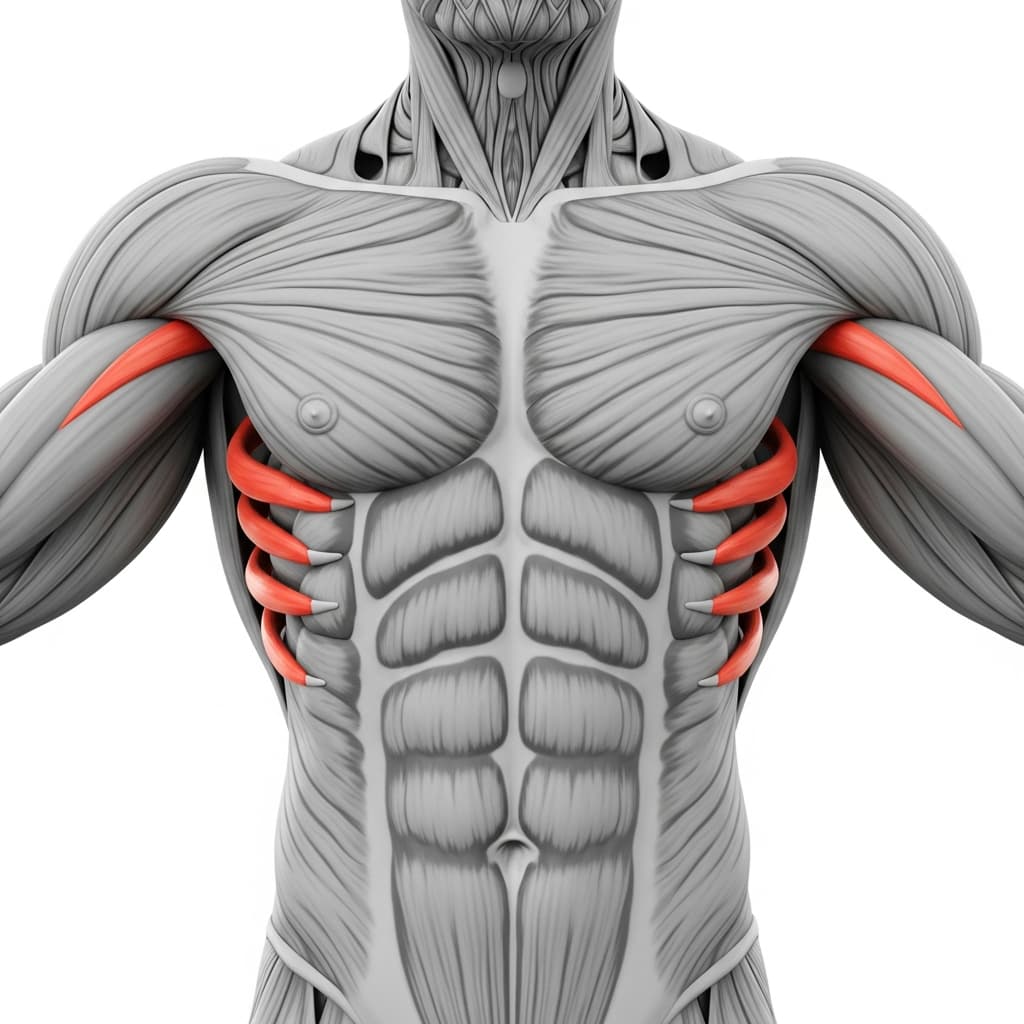
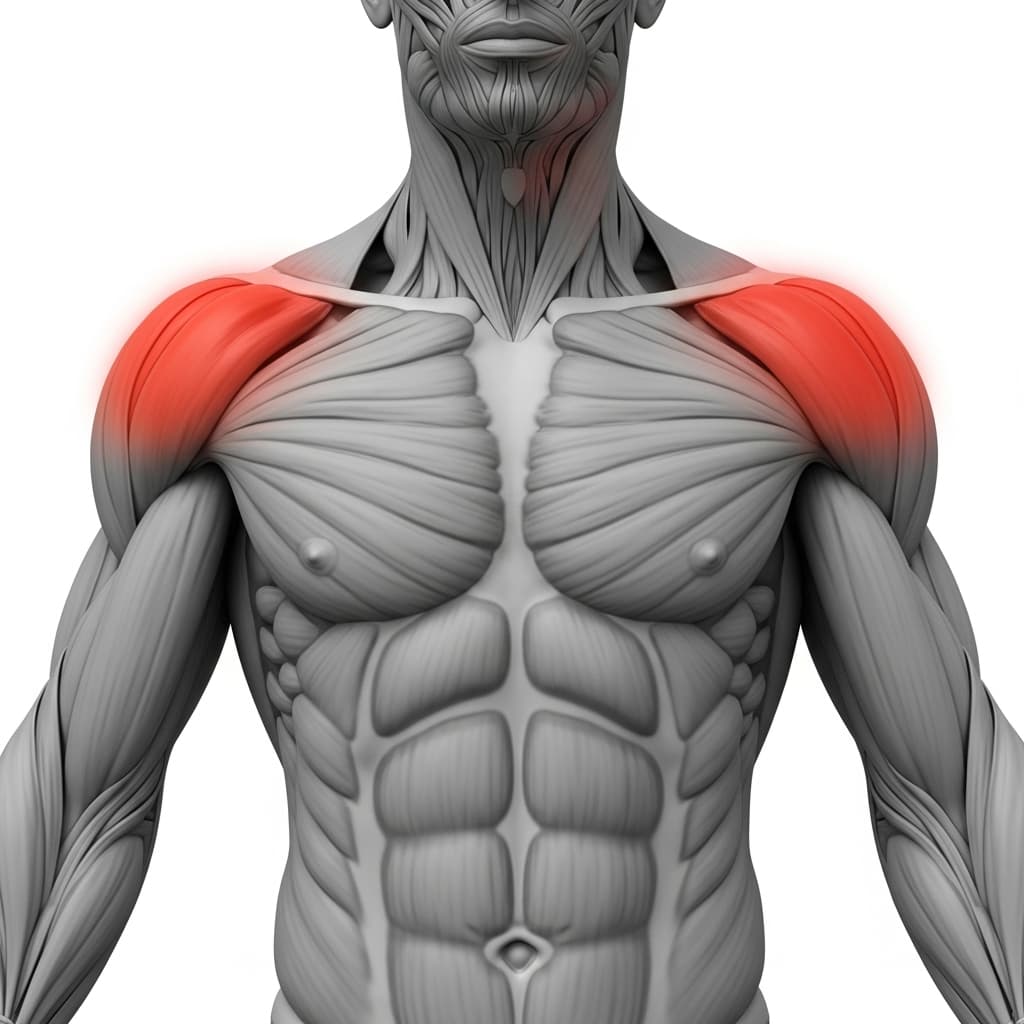
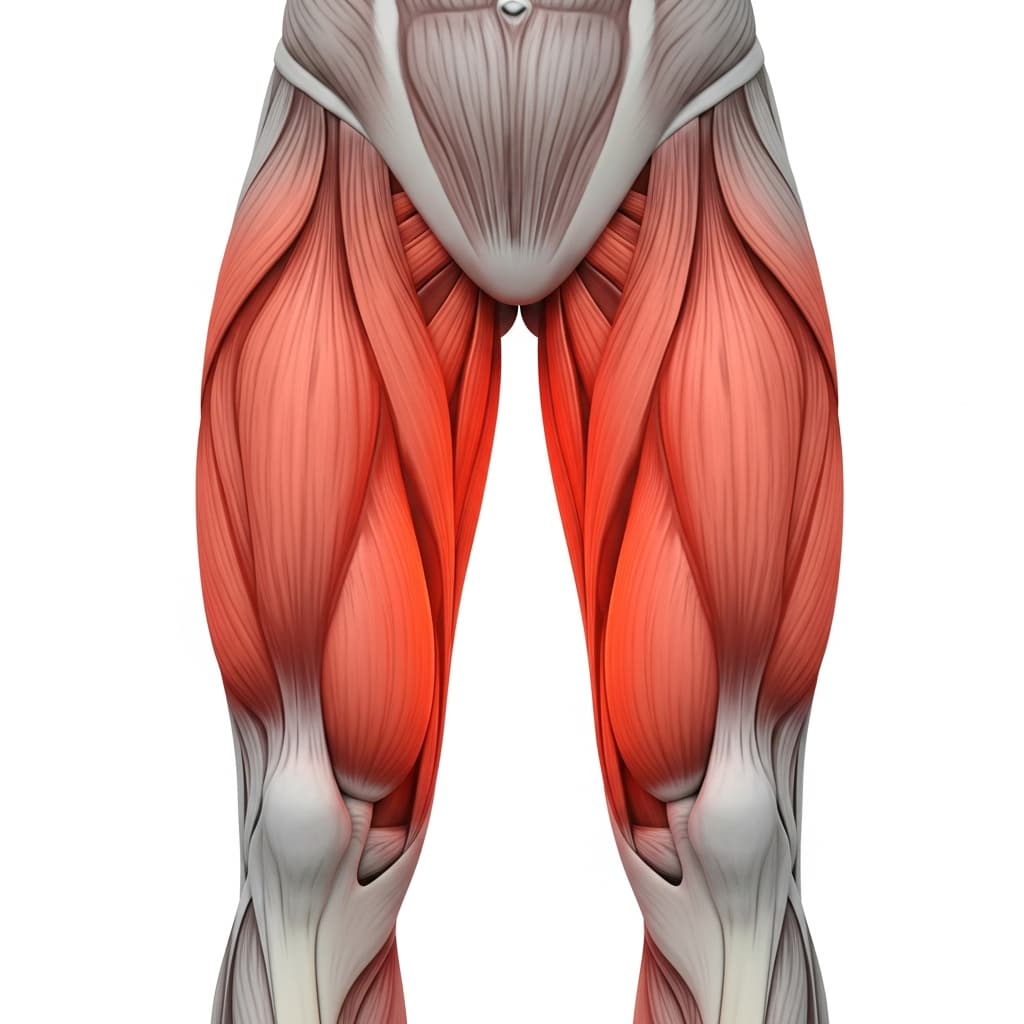
Primary Muscles
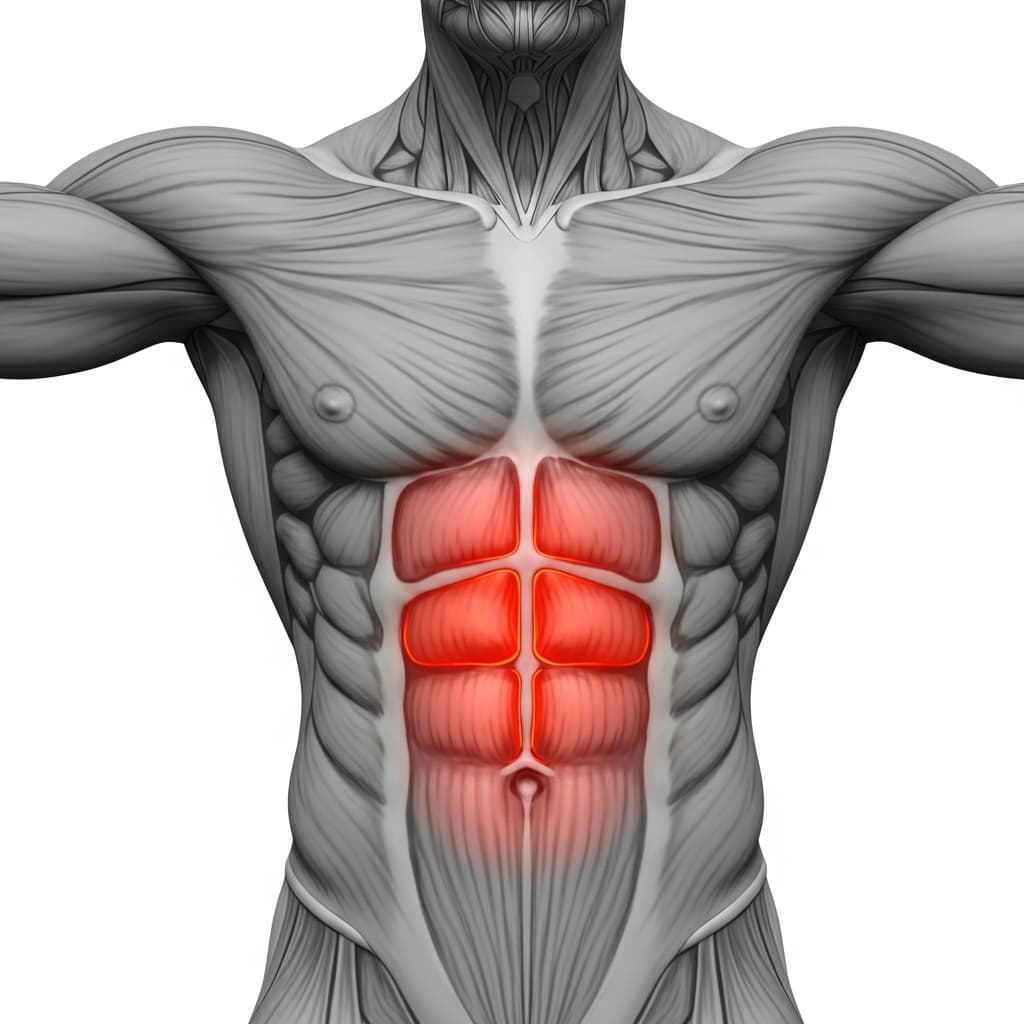
Rectus Abdominis (Abs) - The abdominals drive the core compression that elevates the hips above the standard L-sit position, working through a shortened and loaded range on every raise.
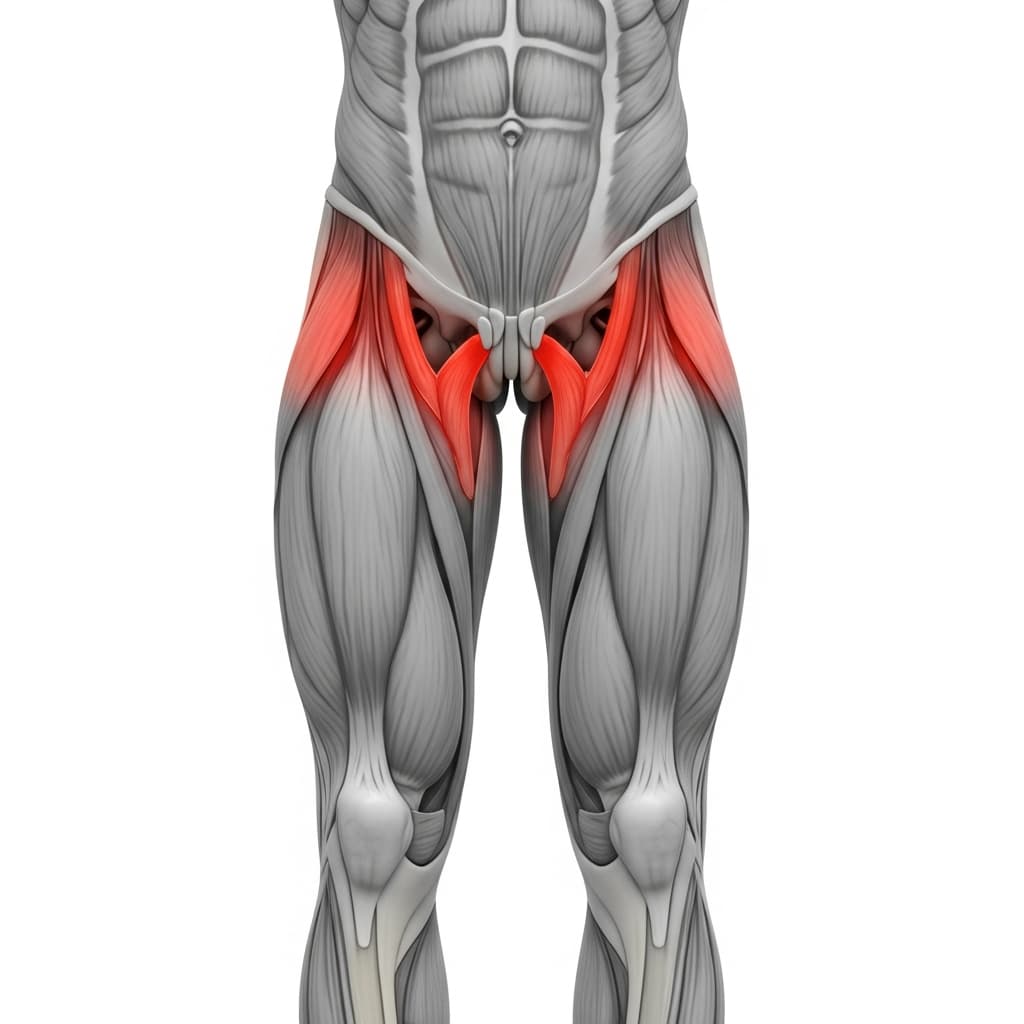
Iliopsoas (Hip Flexors) - The hip flexors maintain the legs at or above hip height throughout the movement and contribute to the upward pike compression at the top of each rep.
Secondary Muscles
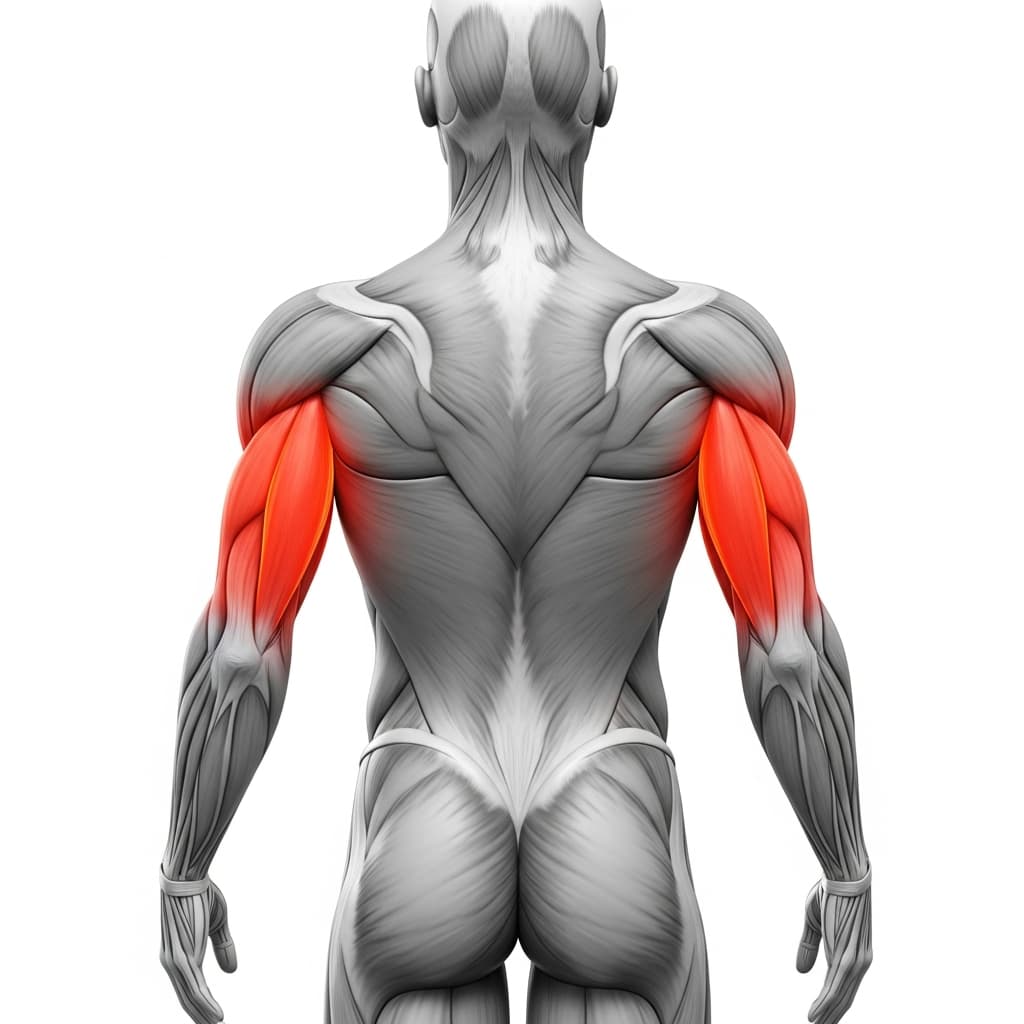
Triceps Brachii (Triceps) - The triceps lock the elbows in full extension and transfer the pressing force from the shoulders through the arms into the parallettes.
Serratus Anterior (Serratus Anterior) - The serratus anterior drives scapular depression and protraction, creating the downward shoulder force that allows the hips to elevate.
Anterior Deltoid (Front Deltoid) - The front deltoids stabilize the shoulder joint under load as the body shifts position during the hip raise and descent.
Quadriceps (Quads) - The quadriceps keep the knees locked and legs straight throughout the movement, maintaining the full lever arm that loads the core and hip flexors.
Benefits of L-sit Support Raises
- Develops the specific core compression strength required for V-sits, manna, and press-to-handstand progressions
- Strengthens scapular depression under load, which directly improves performance in support holds, dips, and planche training
- Builds hip flexor endurance and active flexibility through a loaded range of motion that static stretching cannot replicate
- Trains the coordination between shoulder depression and core compression that is the foundation of every advanced static hold in calisthenics
Who Is This Exercise For?
You should be able to hold a solid L-sit support hold for at least 10 seconds with locked arms and depressed scapula before attempting raises. If maintaining straight legs in the L-sit position is not yet possible, work on tucked L-sit holds and active compression drills first. Athletes who cannot keep their shoulders depressed during a basic support hold are not ready for this movement.
Common Mistakes to Avoid
Shrugging the shoulders during the raise: Keep your scapula actively depressed throughout the entire movement. If your shoulders creep up toward your ears, you lose pressing power and place unnecessary stress on the shoulder joint. Practice isolated scapular depression holds before adding the hip raise.
Bending the elbows to gain height: Your arms must stay fully locked on every rep. Bending the elbows turns this into a dip variation and removes the compression demand that makes the exercise effective.
Letting the legs drop below L-sit level: Maintain your legs at or above hip height throughout the set. If your legs sag between reps, your hip flexors are disengaging and you are resetting the tension that should carry over into the next raise.
Using momentum to swing the hips up: Each raise should be a controlled press, not a swing. If you need to generate momentum, reduce the range of motion or switch to the tucked variation until your compression strength improves.
Variations & Progressions
Tucked L-sit Support Raises
Perform the same movement with your knees tucked toward your chest instead of legs extended. This shortens the lever arm and significantly reduces the core and hip flexor demand, making it accessible for athletes still building L-sit hold endurance.
Floor L-sit Support Raises
Perform the raises with your palms flat on the floor instead of on parallettes. The reduced clearance forces greater compression and wrist flexibility, and demands more shoulder depression strength to lift the hips high enough to complete each rep.