Straddle Hyperextension
The straddle hyperextension is a reverse hyperextension variation where you lift straddled legs from a prone position, targeting the glutes, lower back, and hamstrings through a full range of hip extension. The wide leg position increases adductor engagement and changes the loading angle compared to a standard reverse hyperextension, making it a more complete posterior chain exercise. When performed with controlled tempo and full scapular-to-glute tension, straddle hyperextensions build the hip extension strength and lower back endurance needed for bridges, back levers, and heavy pulling movements.
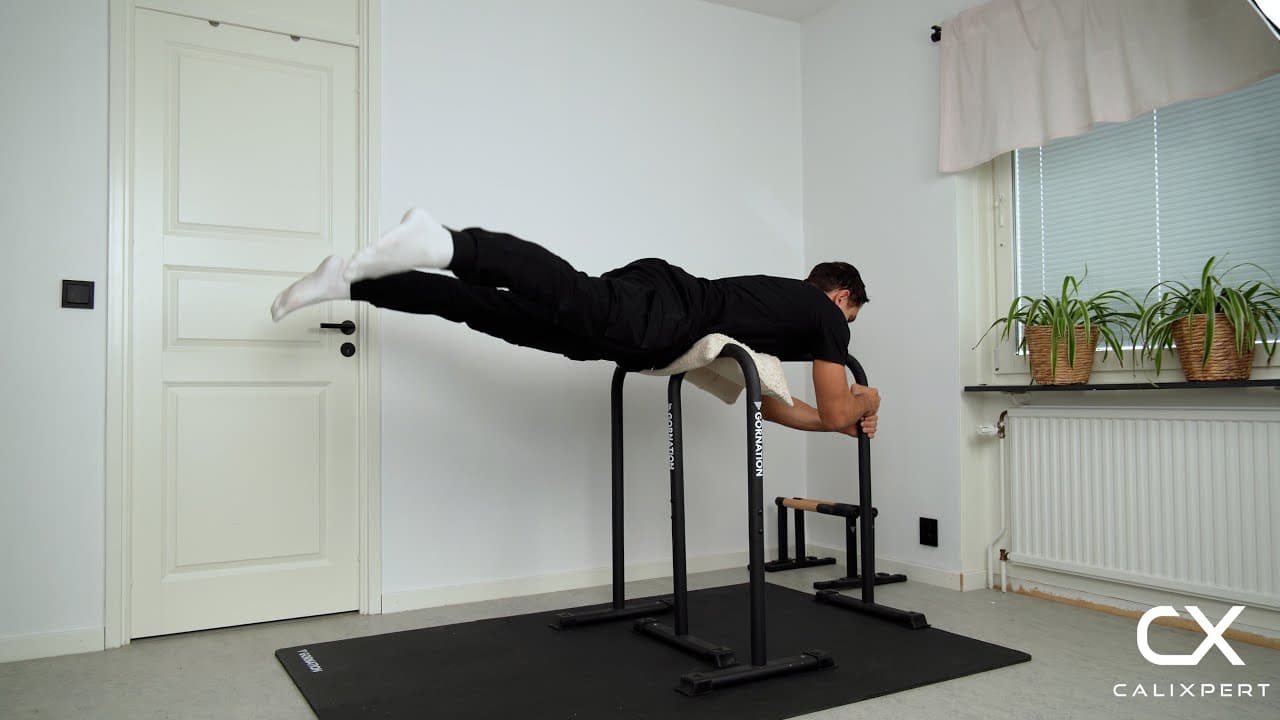
The straddle hyperextension is a reverse hyperextension variation where you lift straddled legs from a prone position, targeting the glutes, lower back, and hamstrings through a full range of hip extension. The wide leg position increases adductor engagement and changes the loading angle compared to a standard reverse hyperextension, making it a more complete posterior chain exercise. When performed with controlled tempo and full scapular-to-glute tension, straddle hyperextensions build the hip extension strength and lower back endurance needed for bridges, back levers, and heavy pulling movements.
How to Do Straddle Hyperextension
1. Position Your Hips on the Edge
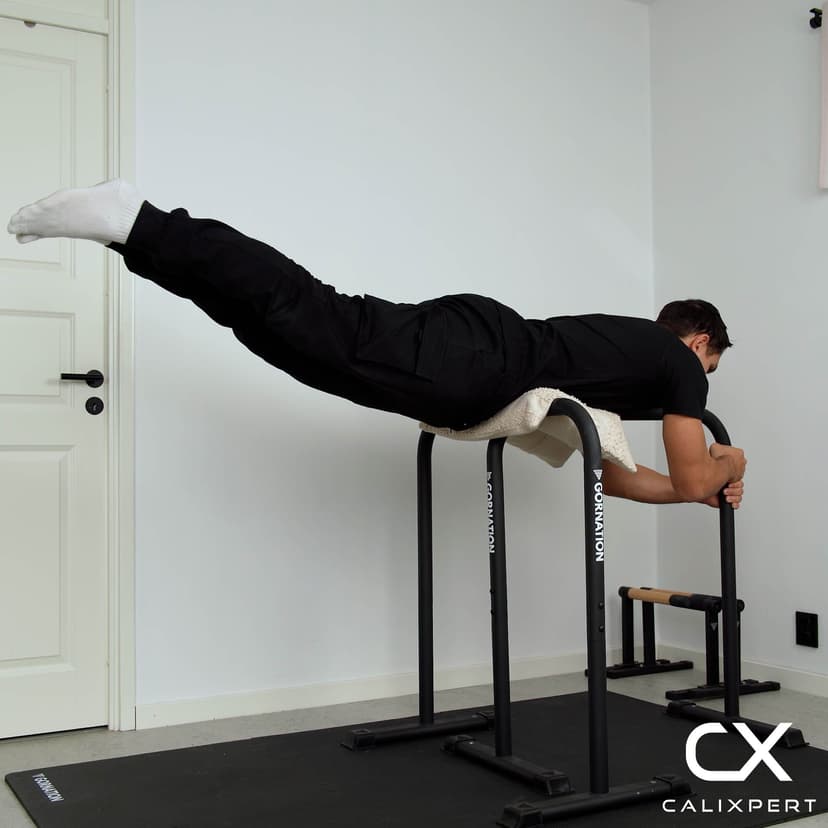
Lay face down on a sturdy elevated surface such as a bench, dip bars with a cushion, or the arm of a sofa. Position your body so your hip bones sit just past the edge of the surface, with your upper body fully supported. Place a pillow or folded towel under your hips if the edge is uncomfortable. Your legs should hang freely off the edge with no contact with the ground.
Hip bones just past the edge
2. Anchor Your Upper Body
Grab onto the edges of the surface, the legs of the bench, or whatever stable structure is available to lock your upper body in place. Your grip needs to be firm enough that your torso does not shift or slide forward when your legs are lifted. Keep your chest flat against the surface and your shoulders relaxed.
Grip tight, chest stays flat
3. Open Into the Straddle
Spread your legs wide into a straddle position while keeping them straight. The wider your straddle, the more your adductors will engage throughout the movement. Find a width that allows you to maintain straight knees without straining the inner thighs. This straddle position is held for the entire set.
Legs wide, knees locked straight
4. Lift Your Legs With Control
Drive your heels upward by squeezing your glutes and contracting your lower back. Keep your legs straight and maintain the straddle width throughout the lift. The movement should come entirely from hip extension, not from swinging or using momentum. Lift until your legs reach at least parallel with your torso or slightly above.
Drive heels up, squeeze glutes
5. Squeeze and Arch at the Top
At the top of the movement, create a slight arch in your upper back while maximally squeezing your glutes and lower back muscles. Hold this contracted position for a full second before beginning the descent. This brief hold at the top ensures you are using muscular contraction rather than momentum to hold the position.
Arch, squeeze, hold one second
6. Lower Slowly to the Start
Lower your legs back to the starting position under full control, resisting gravity the entire way down. Do not let your legs drop or swing. Maintain the straddle width on the descent and re-engage your glutes before initiating the next rep.
Slow descent, no dropping
Most people rush through this exercise and never actually feel their glutes fire. Slow the tempo down to a 2-second lift and a 3-second lower, and hold the top for a full second with a hard glute squeeze. You will feel the difference in three reps. If your lower back cramps before your glutes fatigue, your hips are too far forward on the surface, so shift back until the fold point is right at the hip crease.
Muscles Worked During Straddle Hyperextension
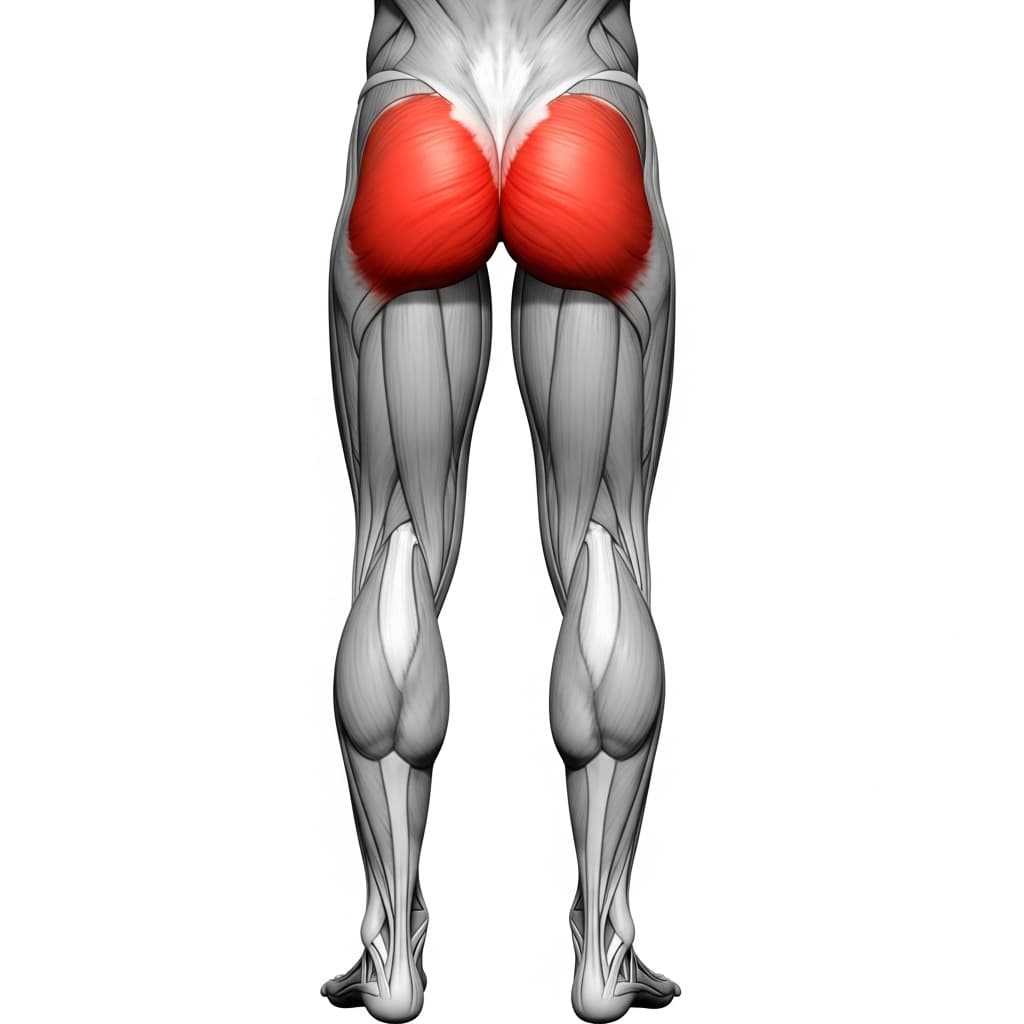
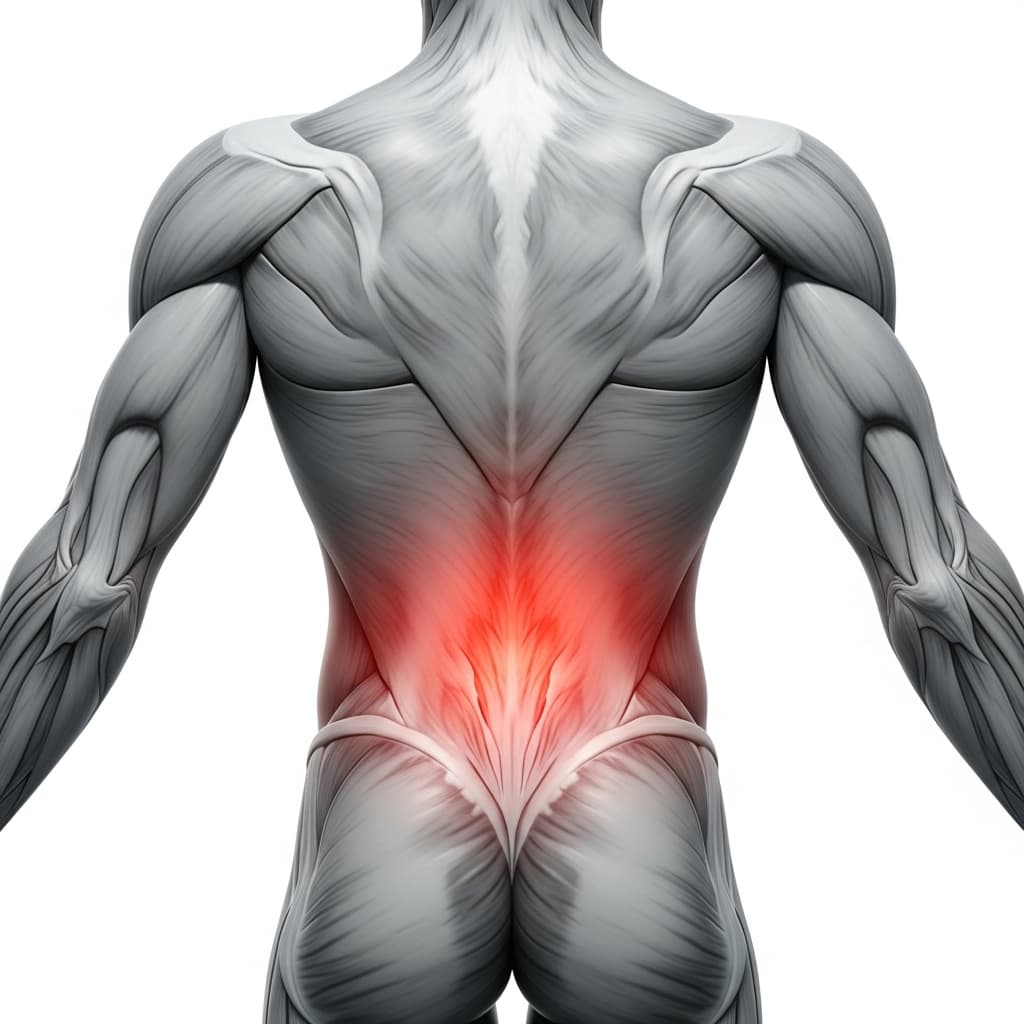
Primary Muscles:
Secondary Muscles:
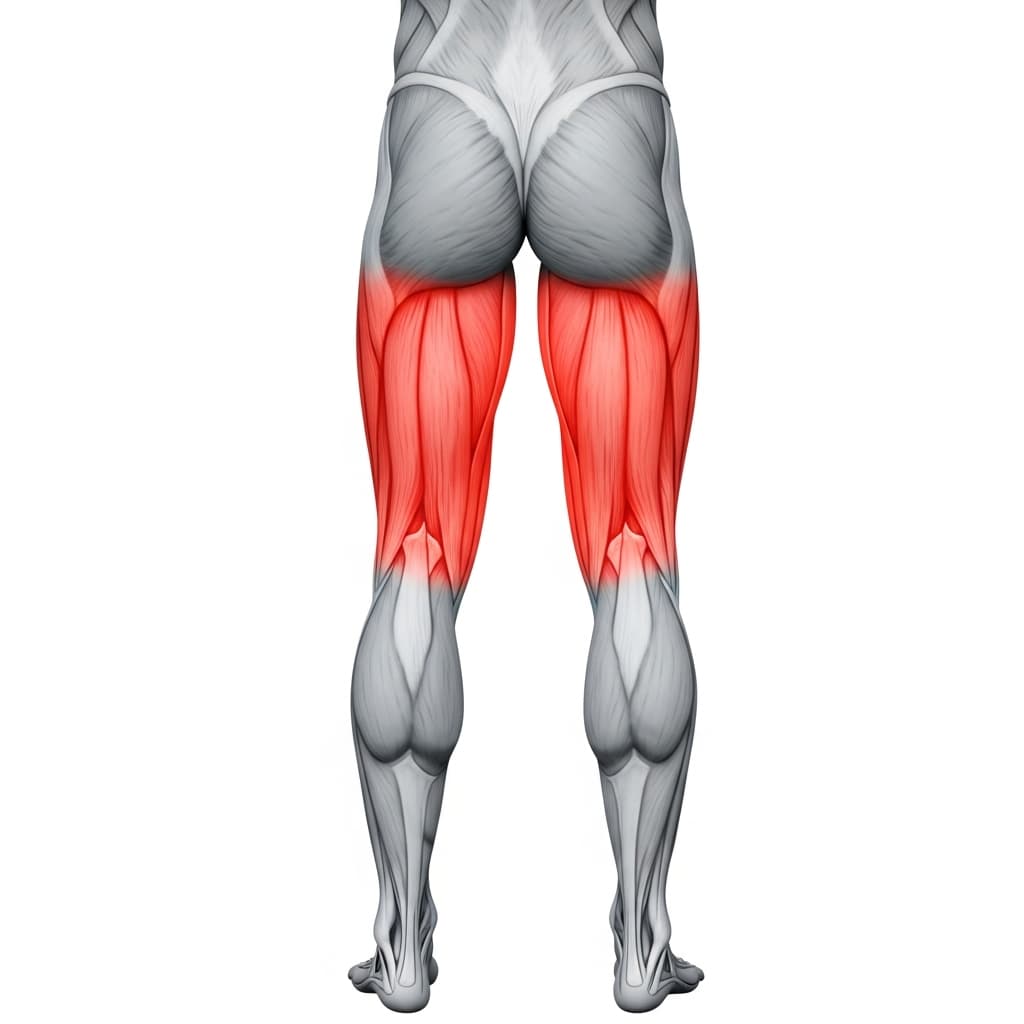
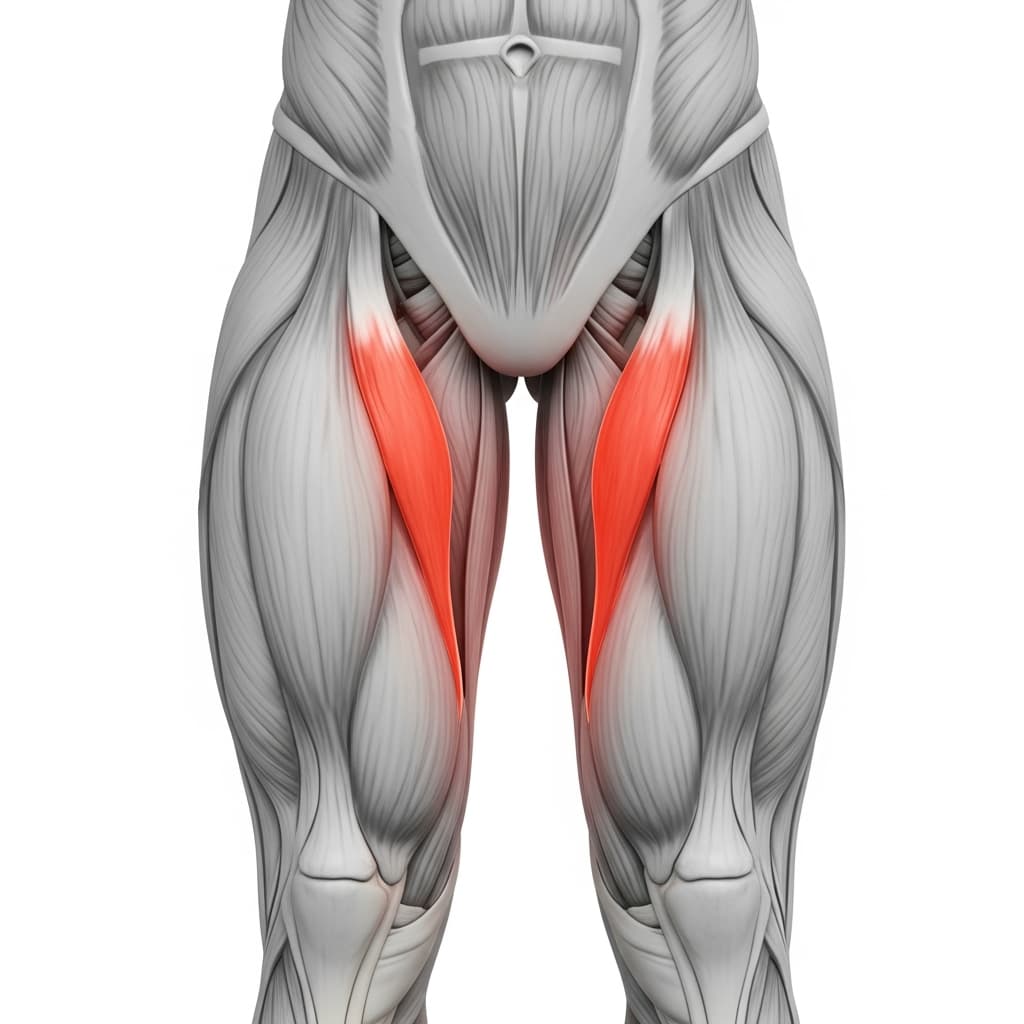
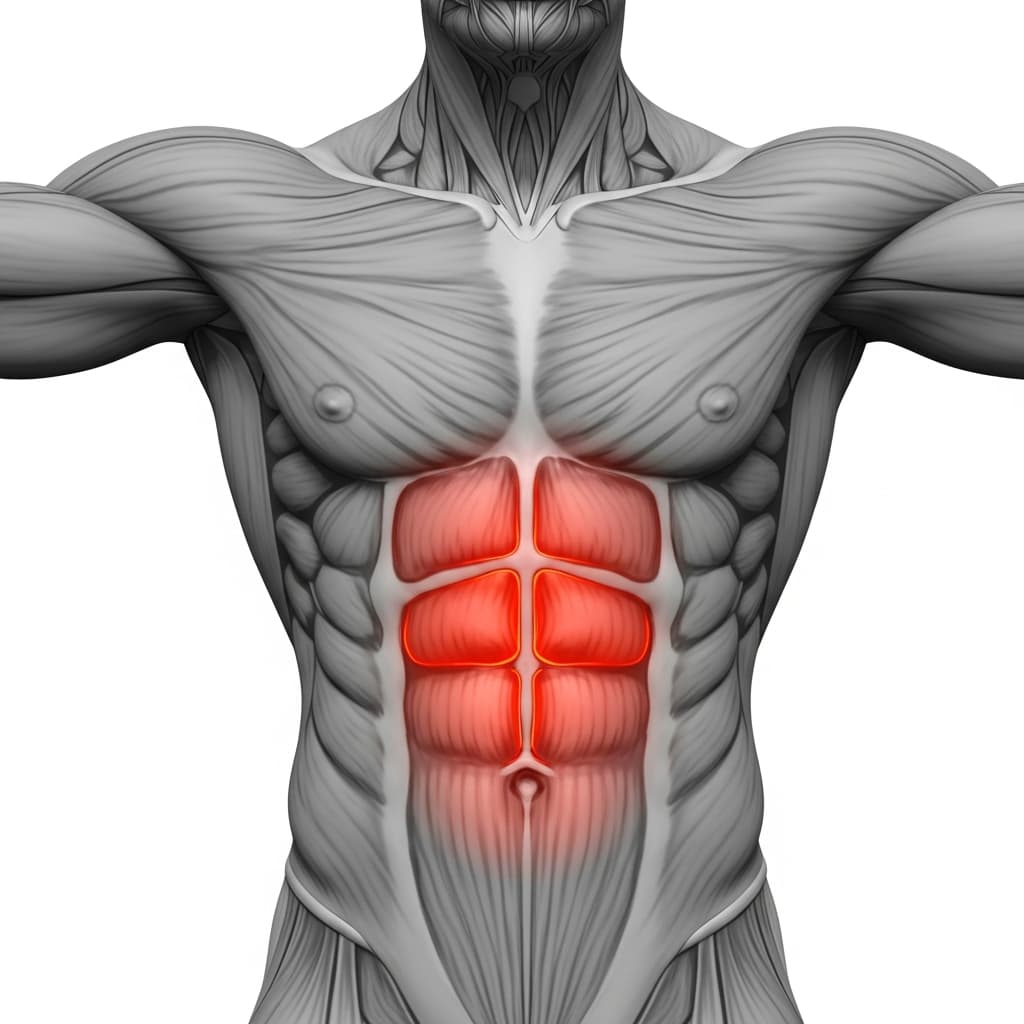
Primary Muscles
Gluteus Maximus (Glutes) - The glutes drive hip extension to lift the straddled legs from a hanging position to above parallel, serving as the primary power source throughout the concentric phase.
Erector Spinae (Lower Back) - The lower back muscles contract isometrically and concentrically to create the slight arch at the top of the movement and stabilize the lumbar spine under the load of the extended legs.
Secondary Muscles
Hamstring Group (Hamstrings) - The hamstrings assist the glutes in hip extension, working hardest during the initial lift from the bottom position where the glutes have less mechanical advantage.
Hip Adductors (Adductors) - The adductors work isometrically to maintain the wide straddle position throughout the entire range of motion, adding a sustained inner thigh contraction that is absent in standard reverse hyperextensions.
Rectus Abdominis (Abs) - The abdominals brace the trunk against the surface and prevent excessive lumbar hyperextension at the top of the movement, keeping the spine in a safe range.
Benefits of Straddle Hyperextension
- Strengthens the glutes and spinal erectors through a full range of hip extension, building the posterior chain endurance needed for bridges and back levers
- Develops adductor strength and inner thigh flexibility simultaneously due to the sustained straddle position under load
- Improves lower back resilience and reduces injury risk by training the lumbar extensors in a controlled, low-impact movement pattern
- Requires no specialized equipment, making it one of the most accessible posterior chain exercises for home training
Who Is This Exercise For?
You should be able to hold a prone plank for at least 30 seconds and perform 10 standard glute bridges with a 2-second hold at the top before attempting straddle hyperextensions. If you experience any lower back discomfort during basic hip extension movements, work on hip mobility and standard reverse hyperextensions with legs together first. Beginners who cannot maintain a neutral spine while lifting their legs should build foundational posterior chain strength before adding the straddle component.
Common Mistakes to Avoid
Bending the knees during the lift: Lock your knees straight throughout the entire movement. Bending the knees shortens the lever arm and reduces the load on the glutes and lower back, making the exercise far less effective.
Using momentum to swing the legs up: Start each rep from a dead stop with no swing. If you cannot lift your legs without momentum, reduce the straddle width or perform the movement with legs together until you build enough strength.
Letting the hips slide off the edge: Position your hip bones just past the edge and grip the support firmly before starting. If your hips shift forward during the set, reset your position completely rather than continuing with poor alignment.
Rushing through reps without a top squeeze: Hold the top position for at least one full second on every rep. Skipping the hold turns the exercise into a swinging motion and removes the peak contraction that drives glute and lower back development.