Hyperextension
Hyperextensions are a foundational posterior chain exercise in calisthenics that targets the spinal erectors, glutes, and hamstrings through controlled hip and back extension. Unlike gym-based versions that require a Roman chair, the calisthenics approach uses everyday surfaces like dip bars, a sofa arm, or a sturdy table, making it one of the most accessible lower back exercises you can do at home. Trained consistently with proper form, hyperextensions build the spinal stability and hip extension strength that protect your lower back during every other movement in your training.
Hyperextensions are a foundational posterior chain exercise in calisthenics that targets the spinal erectors, glutes, and hamstrings through controlled hip and back extension. Unlike gym-based versions that require a Roman chair, the calisthenics approach uses everyday surfaces like dip bars, a sofa arm, or a sturdy table, making it one of the most accessible lower back exercises you can do at home. Trained consistently with proper form, hyperextensions build the spinal stability and hip extension strength that protect your lower back during every other movement in your training.
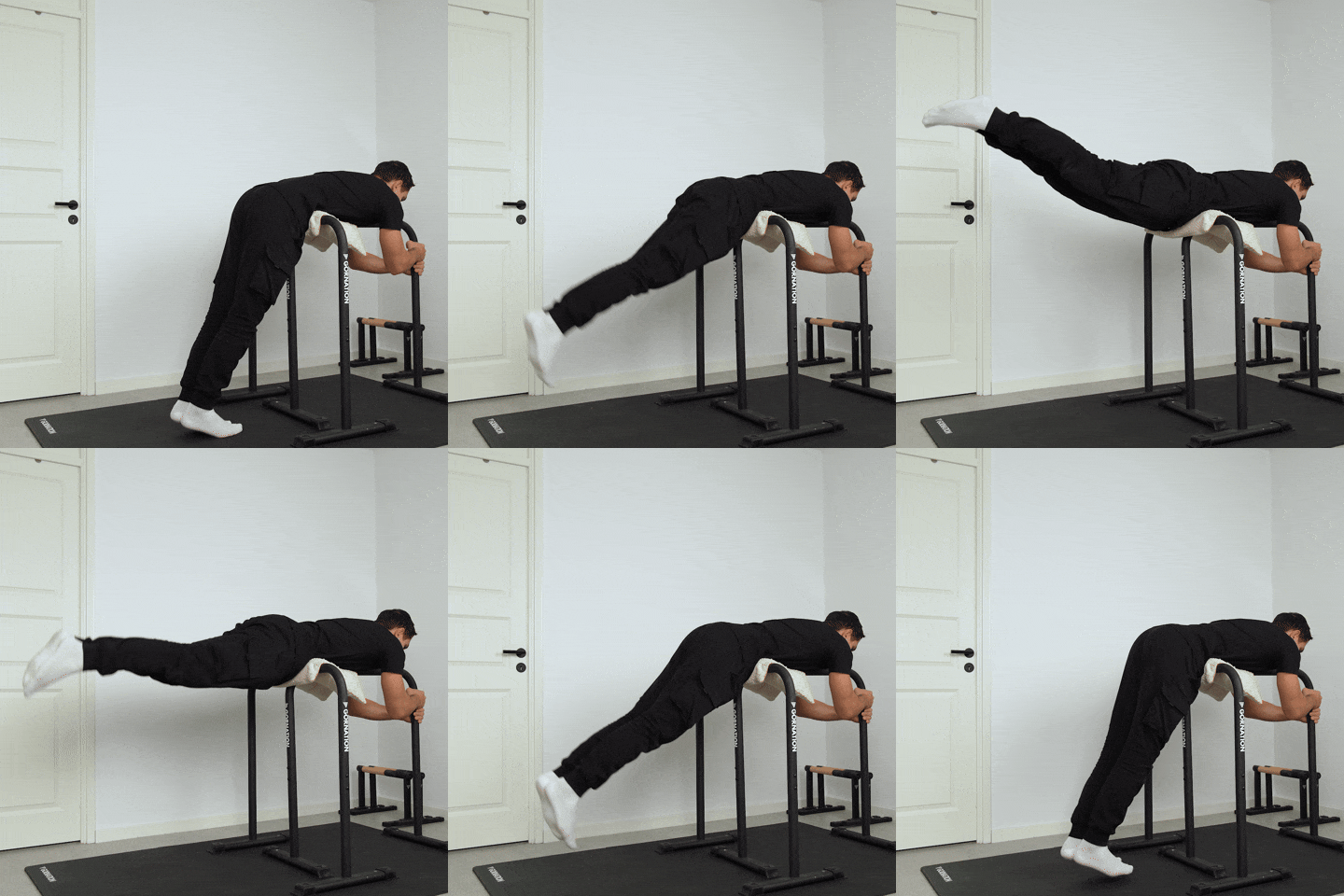
How to Do Hyperextension
1. Set Up Your Surface
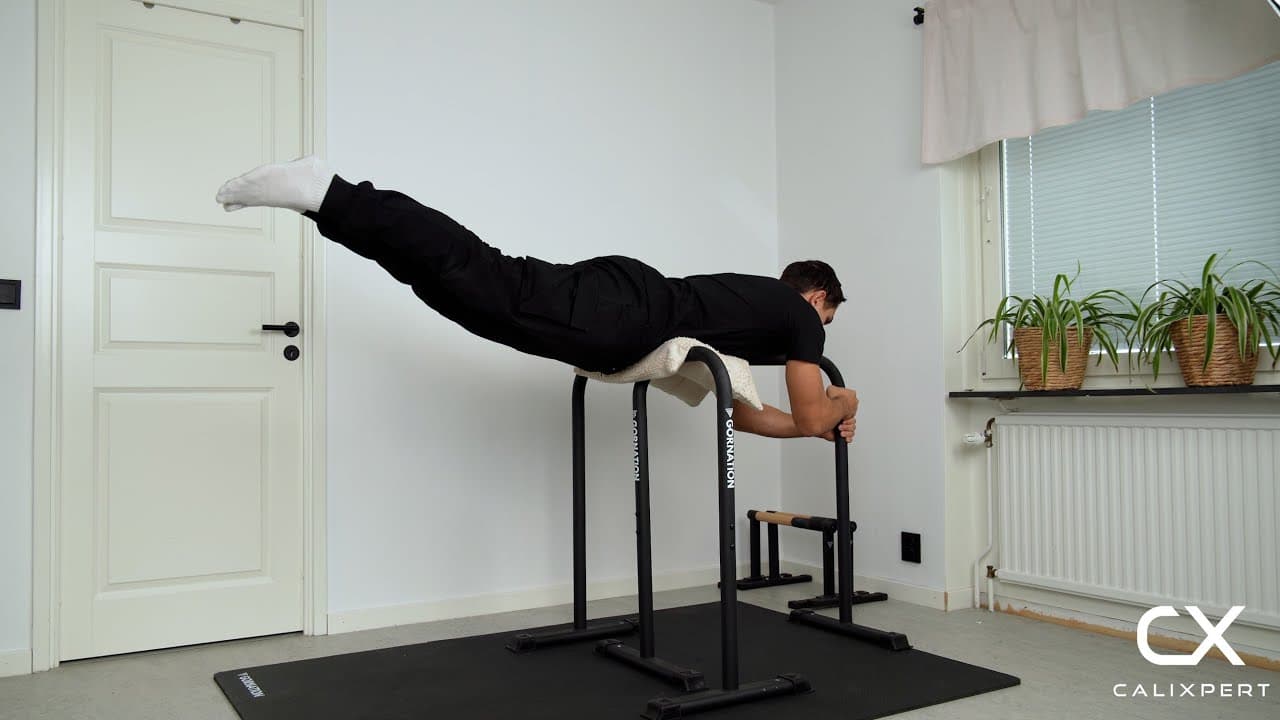
Use a pair of dip bars, the arm of a sofa, or a sturdy table as your base. Place a folded towel or pillow on the edge where your hips will rest to reduce pressure on the hip bones. The surface needs to be stable enough to support your full bodyweight without shifting.
Pad the edge, lock the surface
2. Position Your Hips at the Edge
Lie face down with your hips positioned just past the edge of the surface so your legs can hang freely. Your upper body should rest flat on the surface with your torso fully supported. Adjust forward or backward until the crease of your hips sits right at the edge.
Hip crease at the edge, not above
3. Anchor Your Upper Body
Grab onto the edges of the surface, the dip bar frame, or whatever is available to hold your upper body in place. Your grip should be firm enough to keep you from sliding forward as you lift your legs. Keep your chest down and your neck in a neutral position throughout the movement.
Grip tight, chest stays flat
4. Lift Your Legs With Straight Knees
Keeping your legs straight, squeeze your glutes and raise your heels upward until your legs are in line with your torso. Initiate the movement from the glutes and lower back, not by swinging or using momentum. The lift should feel controlled from the very first inch of movement.
Squeeze the glutes to start the lift
5. Squeeze and Arch at the Top
At the top of the movement, arch your lower back slightly and hold for a one-count squeeze. This extra extension at the top activates the spinal erectors fully and maximizes the contraction through the entire posterior chain. Do not hyperextend aggressively, just enough to feel a strong squeeze.
Slight arch, hard squeeze at the top
6. Lower Under Control
Slowly lower your legs back to the starting position, resisting gravity on the way down. Do not let your legs drop or swing. Each rep should start and end from a full dead-hang position with the legs relaxed before initiating the next lift.
Control the descent, no dropping
Most people rush through hyperextensions and treat them as a throwaway warm-up exercise. The real value comes from slowing down the lowering phase, holding the squeeze at the top for a full second, and using a range of motion that challenges you without pain. If you can do 15 controlled reps easily, add a pause at the top or hold a light weight between your feet before increasing volume.
Muscles Worked During Hyperextension
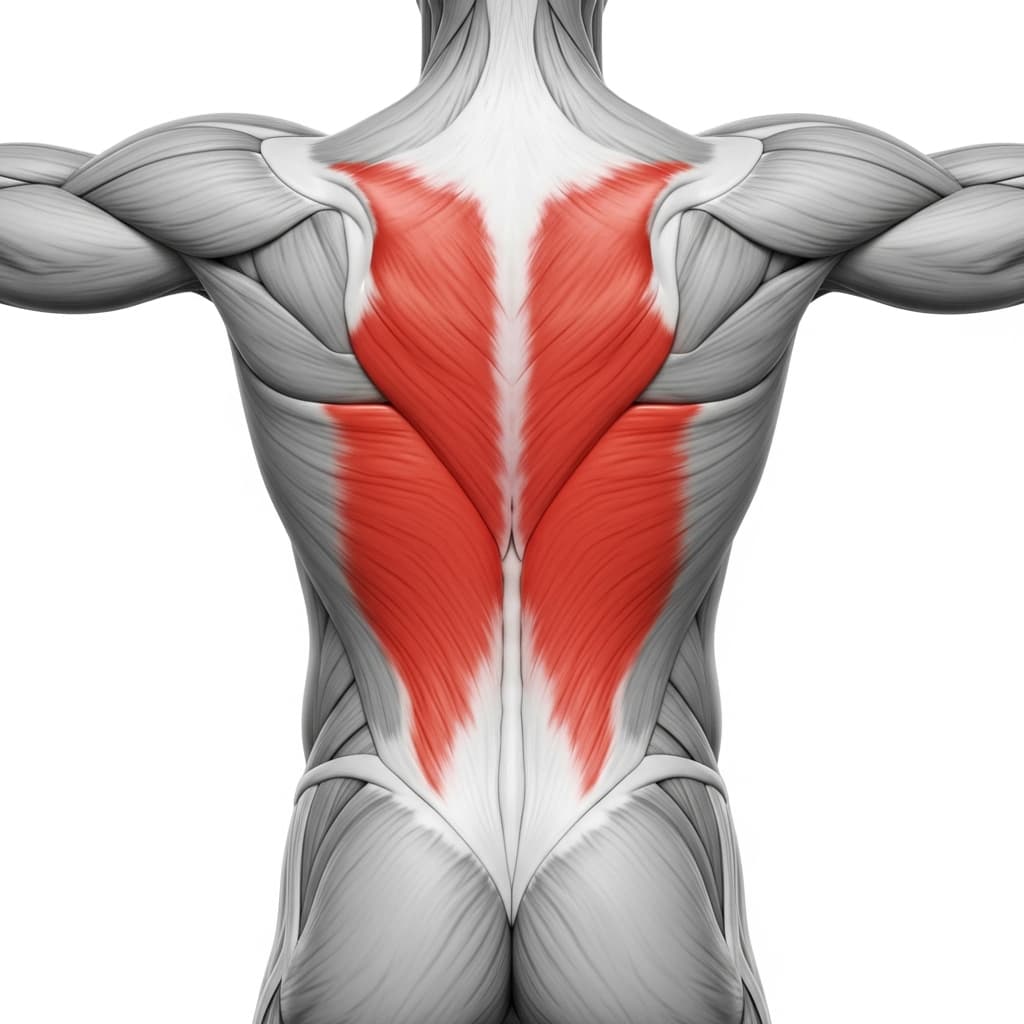
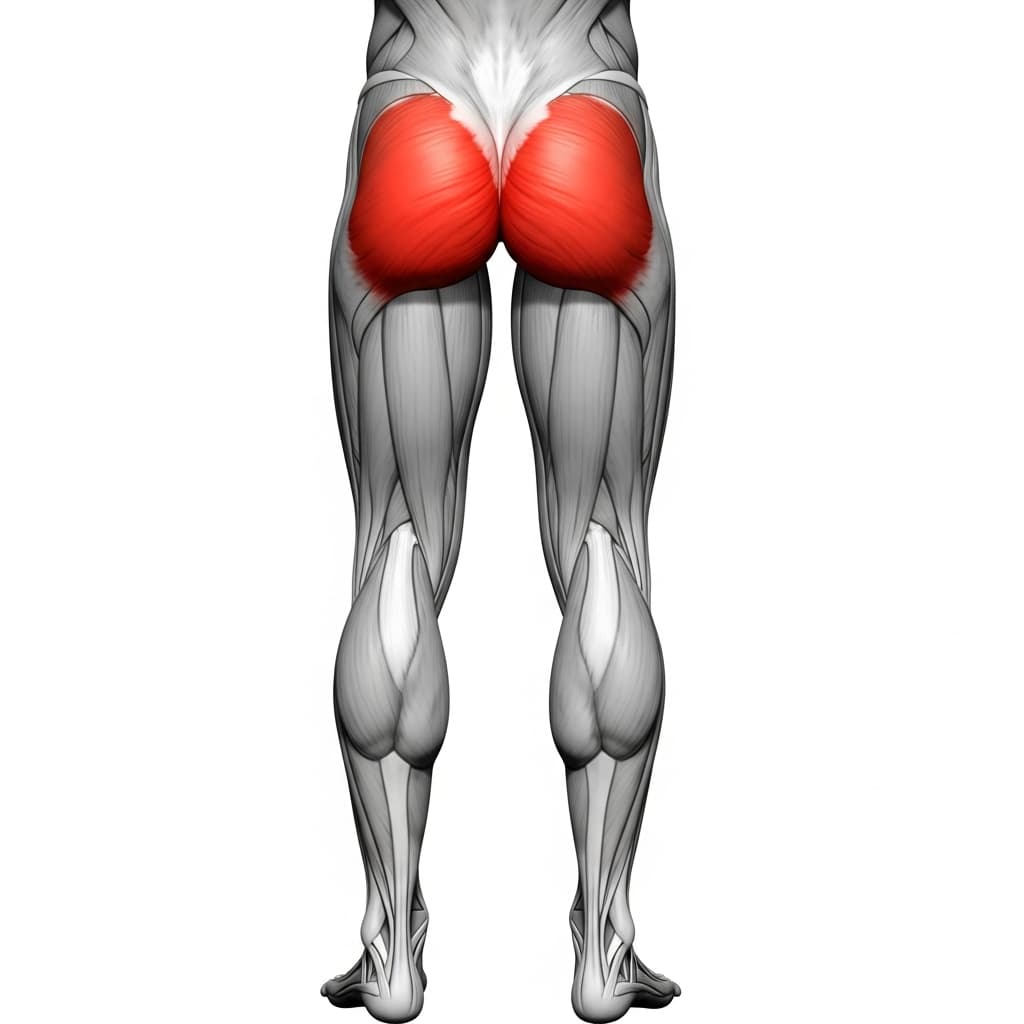
Primary Muscles:
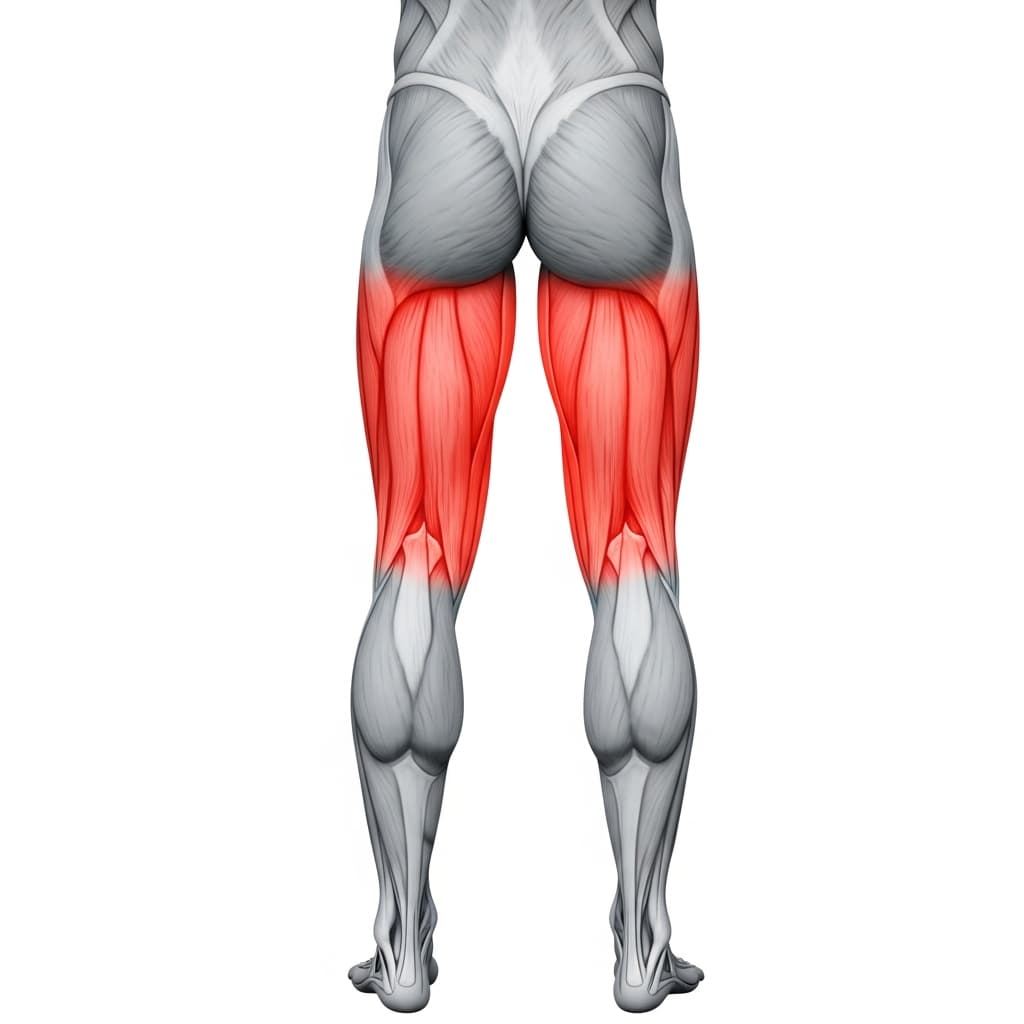
Secondary Muscles:
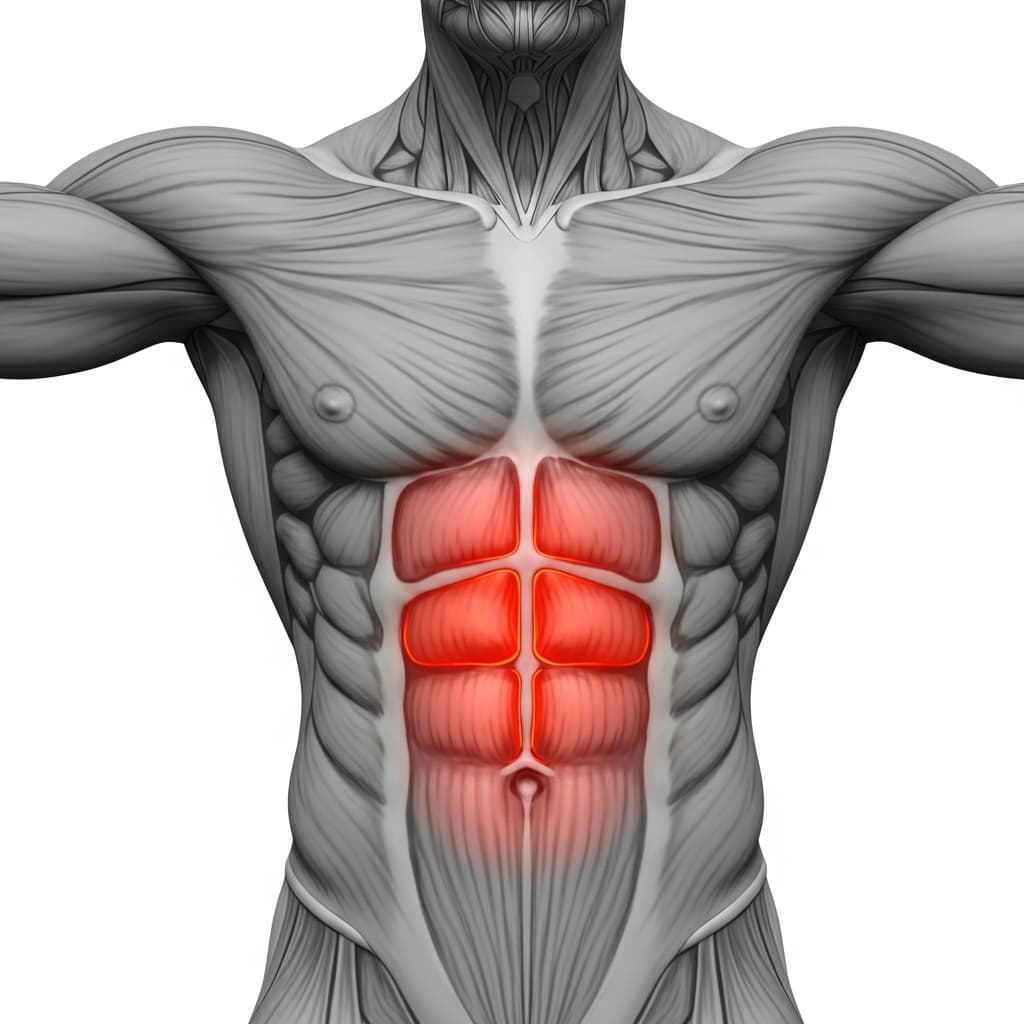
Primary Muscles
Erector Spinae (Spinal Erectors) - The spinal erectors extend the lumbar spine at the top of each rep, producing the slight arch that completes the full range of motion and stabilizing the spine throughout the entire movement.
Gluteus Maximus (Glutes) - The glutes drive hip extension to lift the legs from the hanging position up to body level, acting as the primary force producer through the majority of the range of motion.
Secondary Muscles
Hamstring Group (Hamstrings) - The hamstrings assist the glutes in extending the hips during the lifting phase, contributing more force as the legs approach the top position.
Rectus Abdominis (Abs) - The abdominals brace the torso against the surface and prevent excessive anterior pelvic tilt, keeping the movement controlled and the spine protected.
Benefits of Hyperextension
- Strengthens the spinal erectors directly, building the lower back endurance needed to maintain a neutral spine during squats, pistol squats, and advanced calisthenics holds
- Develops glute and hamstring strength through hip extension, which transfers directly to explosive movements like box jumps, sprints, and tucked planche entries
- Improves posture by strengthening the muscles responsible for keeping the spine upright, counteracting the effects of prolonged sitting and forward-leaning positions
- Requires no gym equipment, making it one of the most practical posterior chain exercises for home-based calisthenics training
Who Is This Exercise For?
You should be comfortable holding a prone plank for at least 20 seconds and have no active lower back injuries before attempting hyperextensions. If lying face down and extending your hips causes any sharp pain, work on gentle glute bridges and bird-dogs first to build baseline posterior chain activation.
Common Mistakes to Avoid
Using momentum to swing the legs up: Start every rep from a dead stop with no swing. If you cannot lift your legs without momentum, reduce the range of motion and build strength in the shortened range first.
Bending the knees during the lift: Keep your legs straight throughout the entire movement. Bending the knees shortens the lever arm and reduces the load on the glutes and hamstrings, making the exercise significantly less effective.
Overextending the lower back at the top: A slight arch at the top is correct, but cranking the lower back into extreme extension places unnecessary stress on the lumbar spine. Stop the arch as soon as you feel a strong contraction in the spinal erectors.
Positioning hips too far forward on the surface: If your hips are too far past the edge, you lose stability and the exercise becomes a core endurance test instead of a posterior chain movement. Adjust until the hip crease sits right at the edge of the surface.
Variations & Progressions
Bent-Knee Hyperextension
Perform the movement with your knees bent at 90 degrees. This shortens the lever arm and reduces the load on the posterior chain, making it a good entry point for beginners.
Weighted Hyperextension
Hold a weight plate or a filled backpack between your ankles while performing the movement. The added resistance increases the demand on the glutes, hamstrings, and spinal erectors significantly.