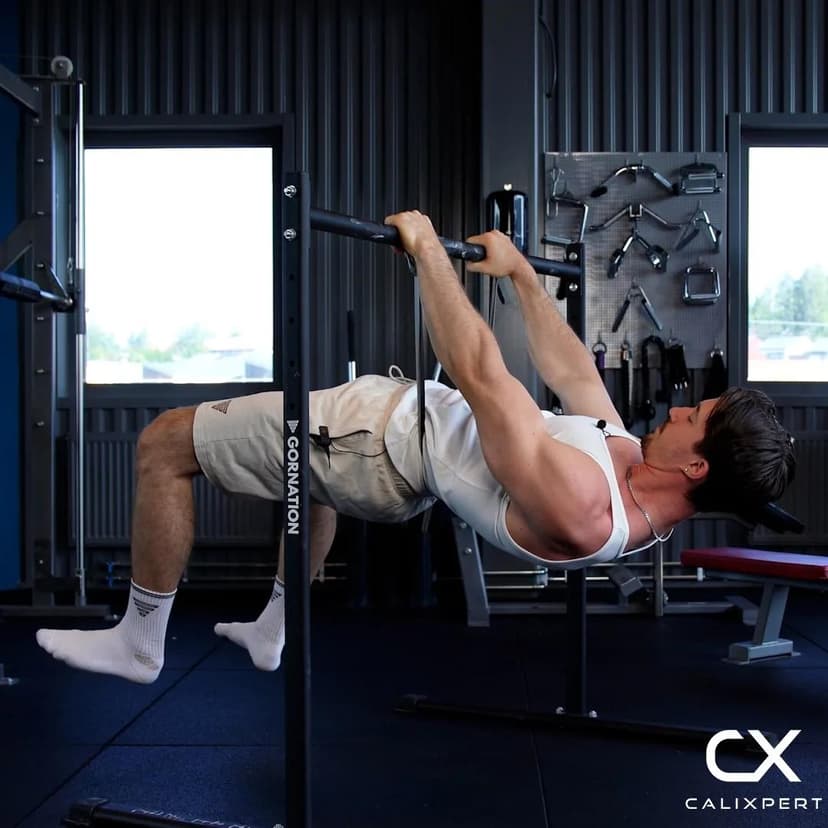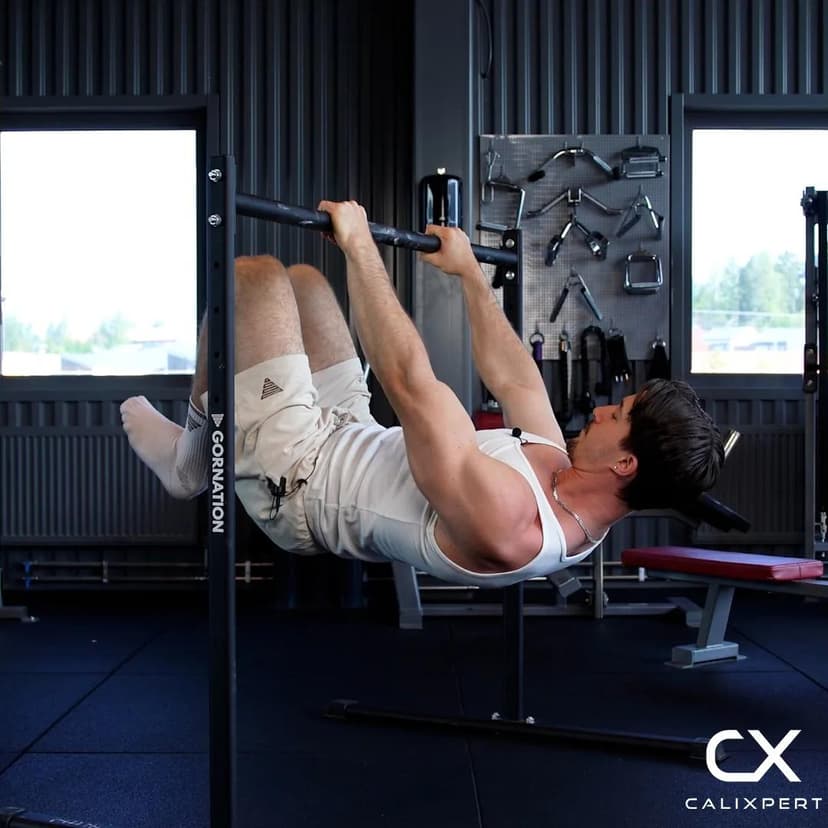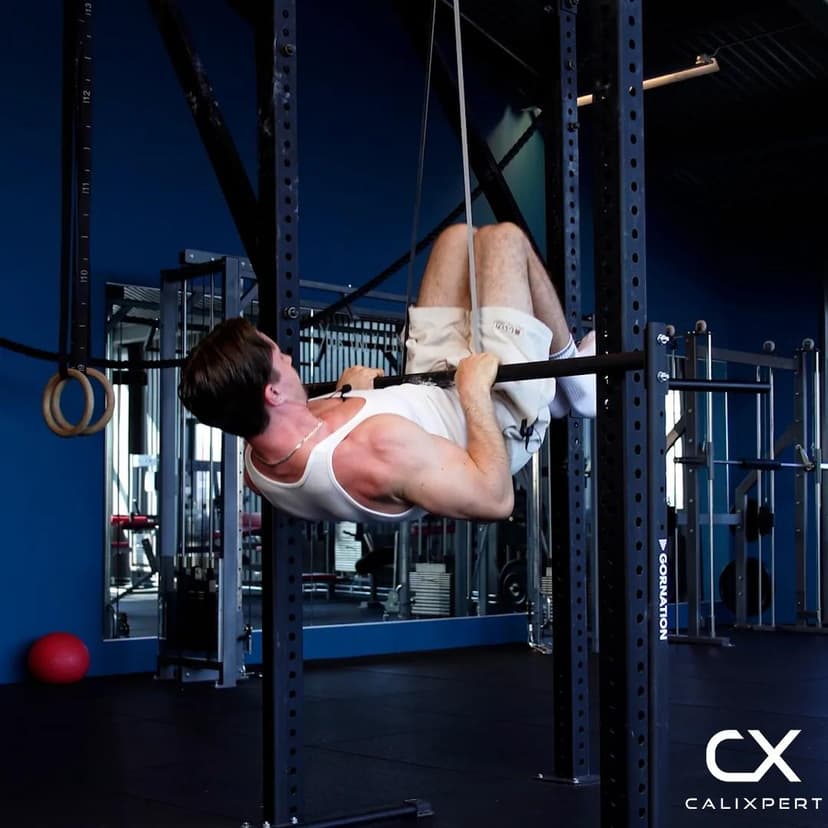
Negative Pistol Squat
The negative pistol squat is a single-leg eccentric exercise that trains the controlled lowering phase of a full pistol squat, targeting the quads, glutes, and hip flexors through a deep range of motion. The focus is entirely on the descent, allowing you to build strength in the most challenging portion of the movement without needing the concentric power to stand back up. This makes it one of the most effective progressions toward a full pistol squat while simultaneously developing single-leg stability and knee resilience.
The negative pistol squat is a single-leg eccentric exercise that trains the controlled lowering phase of a full pistol squat, targeting the quads, glutes, and hip flexors through a deep range of motion. The focus is entirely on the descent, allowing you to build strength in the most challenging portion of the movement without needing the concentric power to stand back up. This makes it one of the most effective progressions toward a full pistol squat while simultaneously developing single-leg stability and knee resilience.
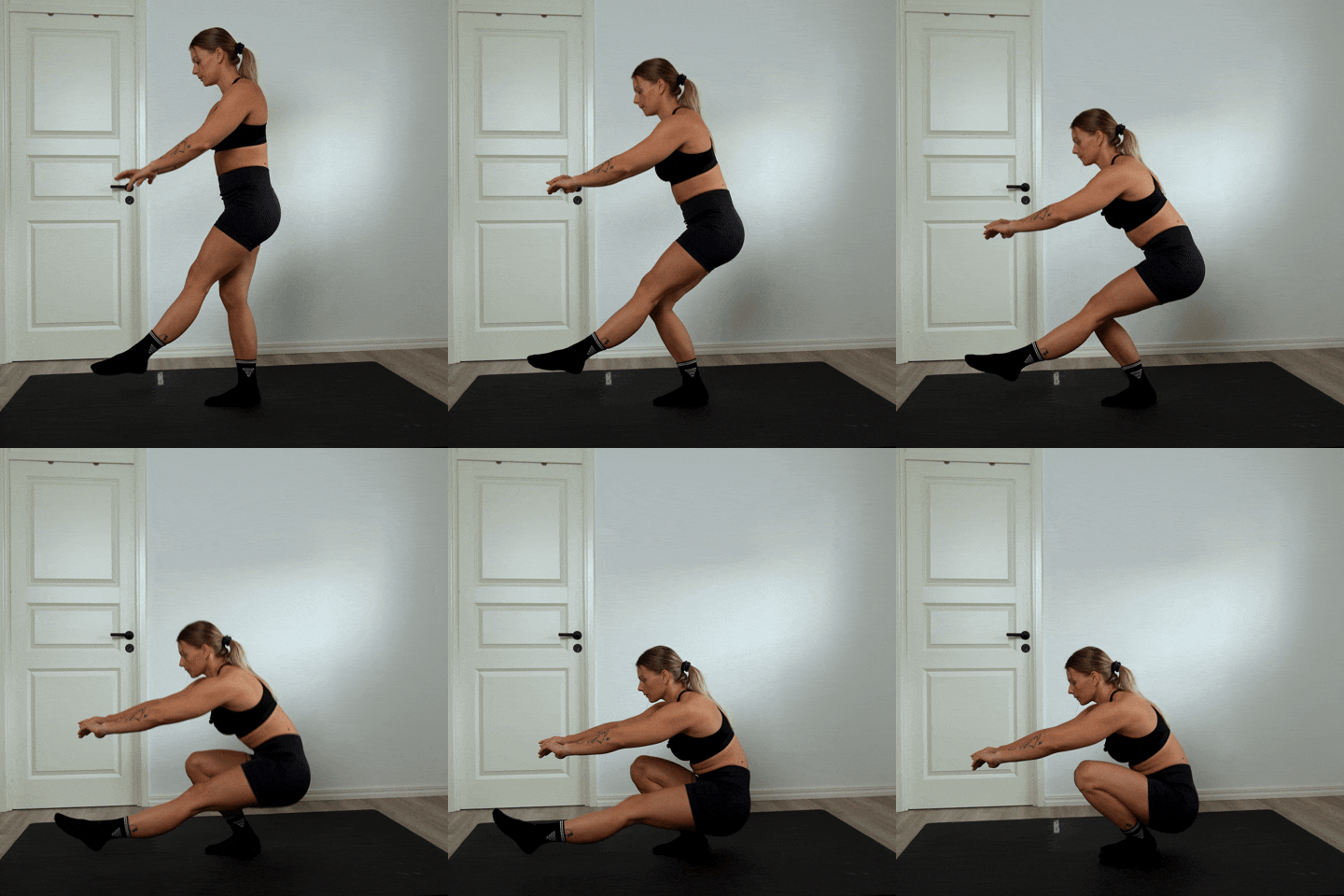
How to Do Negative Pistol Squat
1. Stand on One Leg
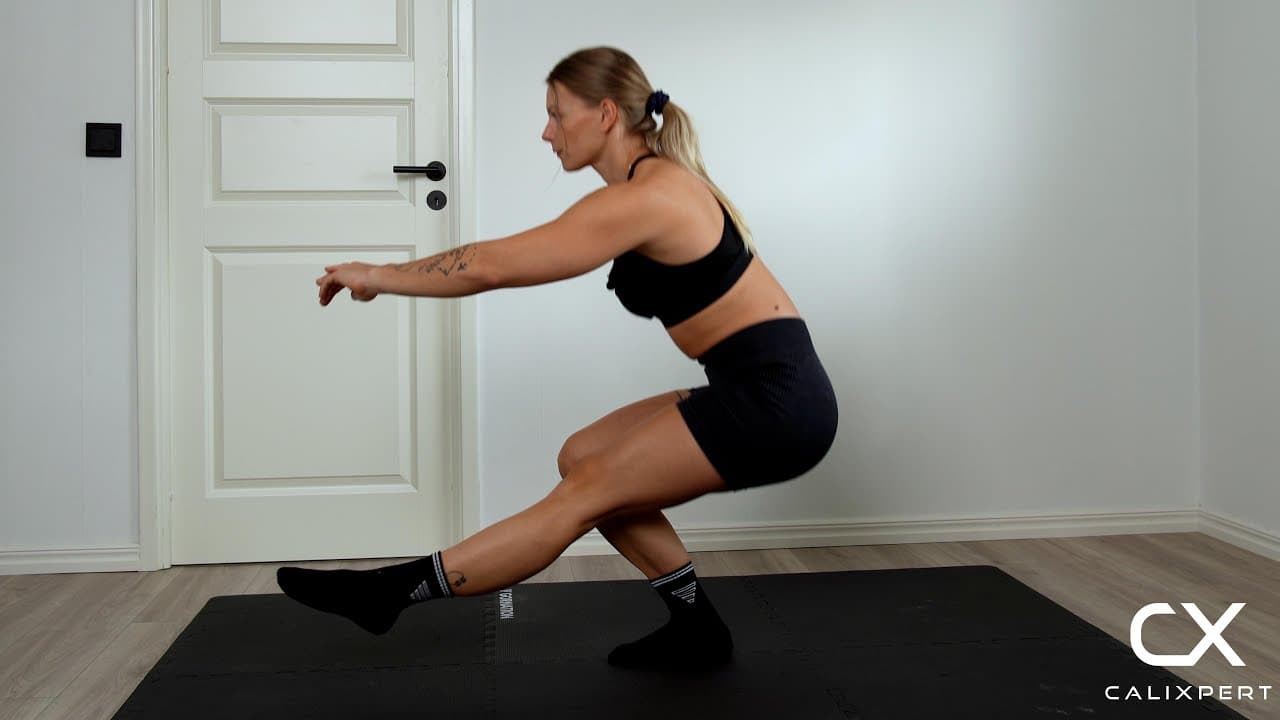
Stand tall on your working leg with your foot flat on the ground, toes pointing slightly outward. Keep your standing knee soft and your weight distributed across the full foot. Extend your arms straight out in front of you at shoulder height to act as a counterbalance.
Full foot on the ground, arms forward
2. Extend the Non-Working Leg
Lift your non-working leg off the ground and extend it straight out in front of you. Keep it as straight as possible throughout the entire descent. The straighter this leg stays, the more your hip flexors and abs have to work to hold it in position.
Lock the free leg straight ahead
3. Begin the Slow Descent
Start bending your standing knee and lowering your hips toward the ground as slowly as you can control. Lean your torso forward over the working leg to maintain balance. This forward lean is not a mistake, it is necessary to keep your center of gravity over the foot. Aim for a minimum 3 to 5 second descent.
As slow as possible, lean forward
4. Keep Your Heel Planted
Throughout the entire lowering phase, your heel must stay in contact with the floor. If your heel lifts, it signals limited ankle mobility. Place a small weight plate or thin wedge under your heel to compensate until your ankle mobility improves.
Heel stays glued to the floor
5. Lower to the Bottom Position
Continue descending until your hamstring touches your calf or you reach the lowest point you can control. Keep your core braced and your extended leg off the ground the entire time. At the bottom, briefly hold the position if you can before resetting.
Go as deep as you can control
6. Reset to Standing
At the bottom, place your hands on the ground or use both feet to stand back up. Do not try to push back up on one leg, this is a negative-only exercise. Reset your balance at the top, re-extend the free leg, and begin the next rep from a stable standing position.
Use assistance to stand, then reset
Most people fail the negative pistol squat because they try to stay bolt upright like a barbell back squat. That does not work here. Lean your torso forward over your working leg and think about sitting back and down at the same time. The moment you allow that forward lean, your balance stabilizes and you can actually focus on slowing the descent instead of fighting to not tip over.
Muscles Worked During Negative Pistol Squat
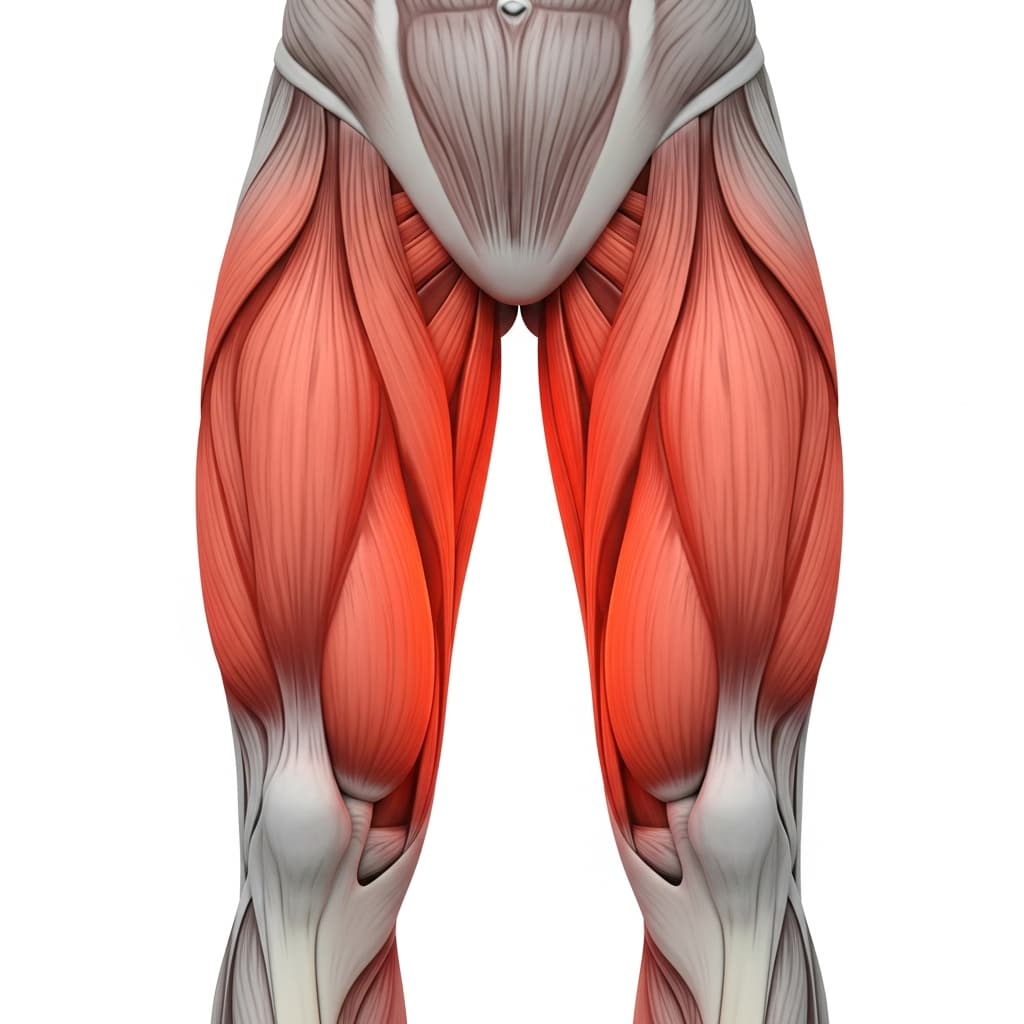
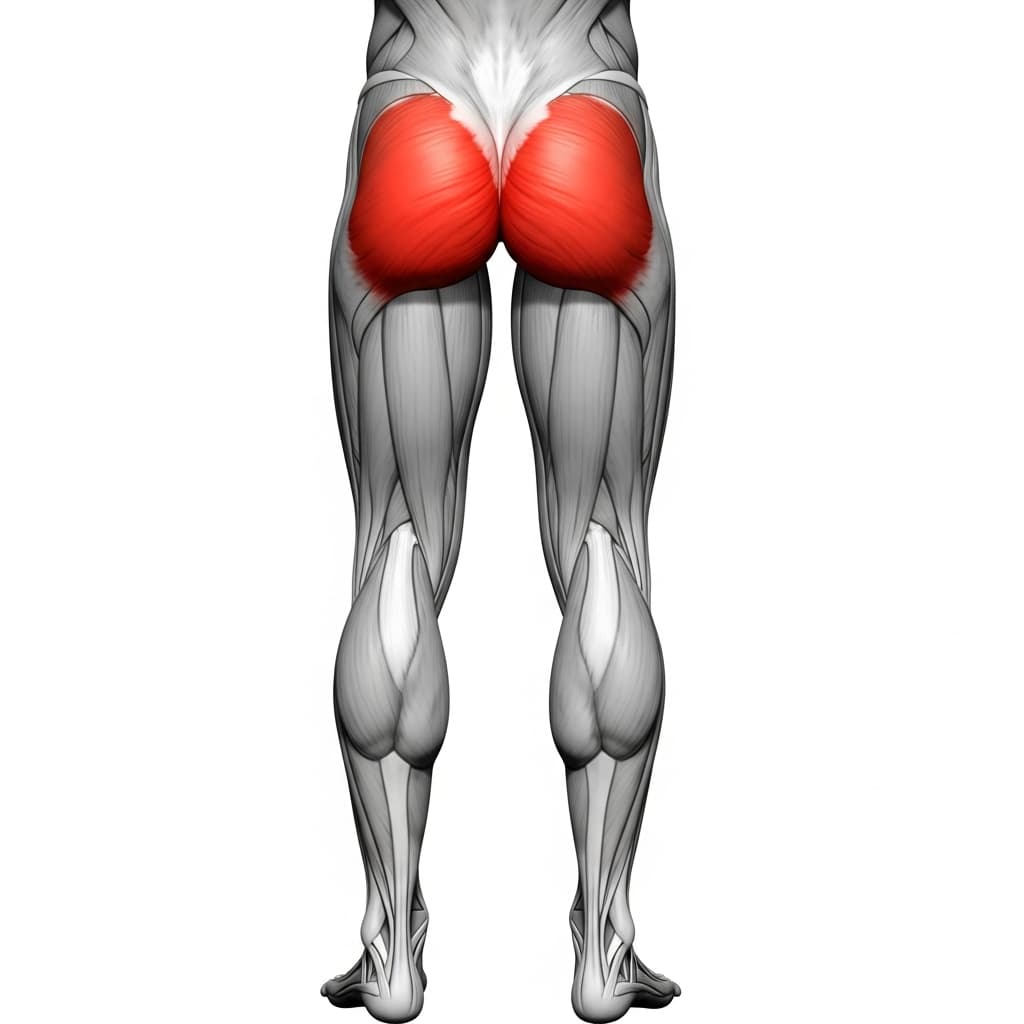
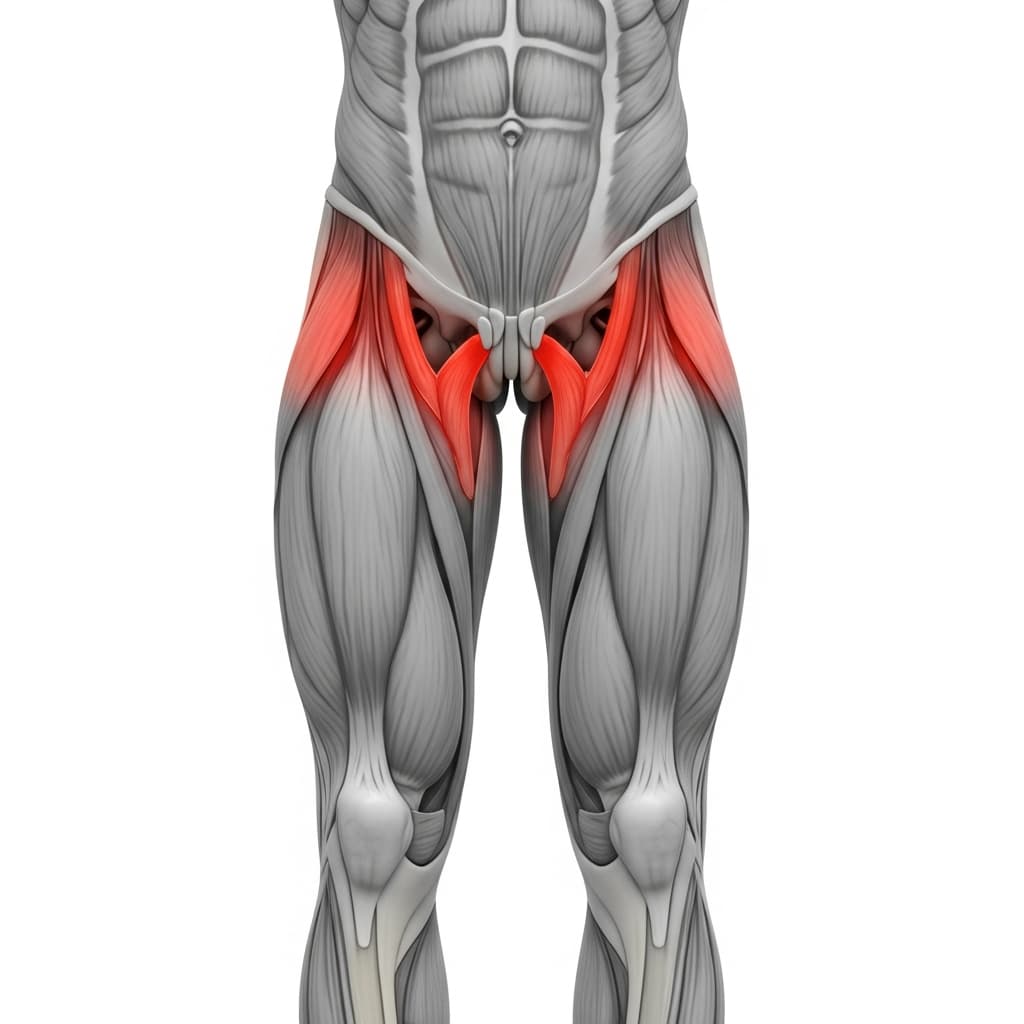
Primary Muscles
Quadriceps (Quads) - The quadriceps eccentrically control knee flexion throughout the entire descent, resisting gravity to produce the slow, controlled lowering that defines this exercise.
Secondary Muscles
Gluteus Maximus (Glutes) - The glutes stabilize the hip of the standing leg and control hip flexion eccentrically as the body descends into a deep single-leg squat position.
Iliopsoas (Hip Flexors) - The hip flexors hold the non-working leg extended straight out in front of the body throughout the entire movement, maintaining an isometric contraction under increasing demand as the descent deepens.
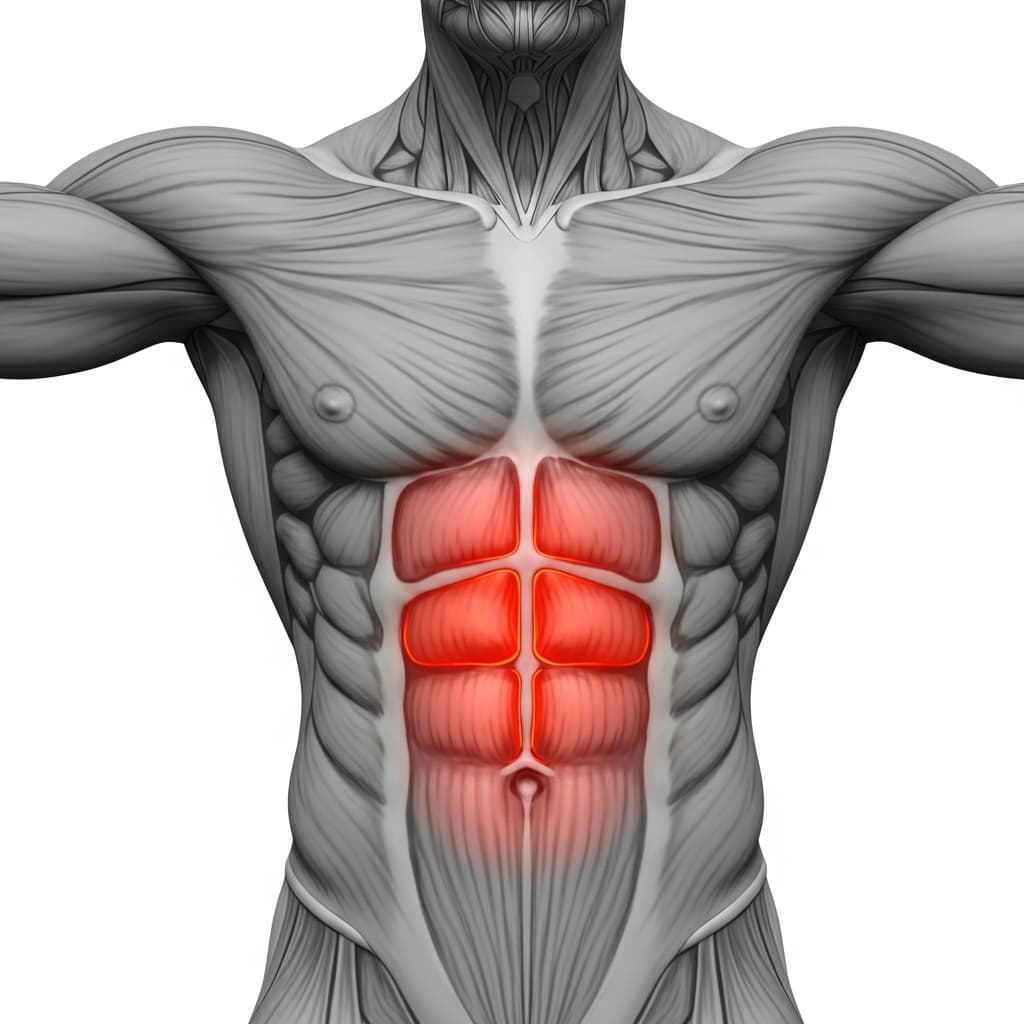
Rectus Abdominis (Abs) - The abdominals brace the torso and maintain trunk stability during the single-leg descent, preventing lateral collapse and controlling the forward lean.
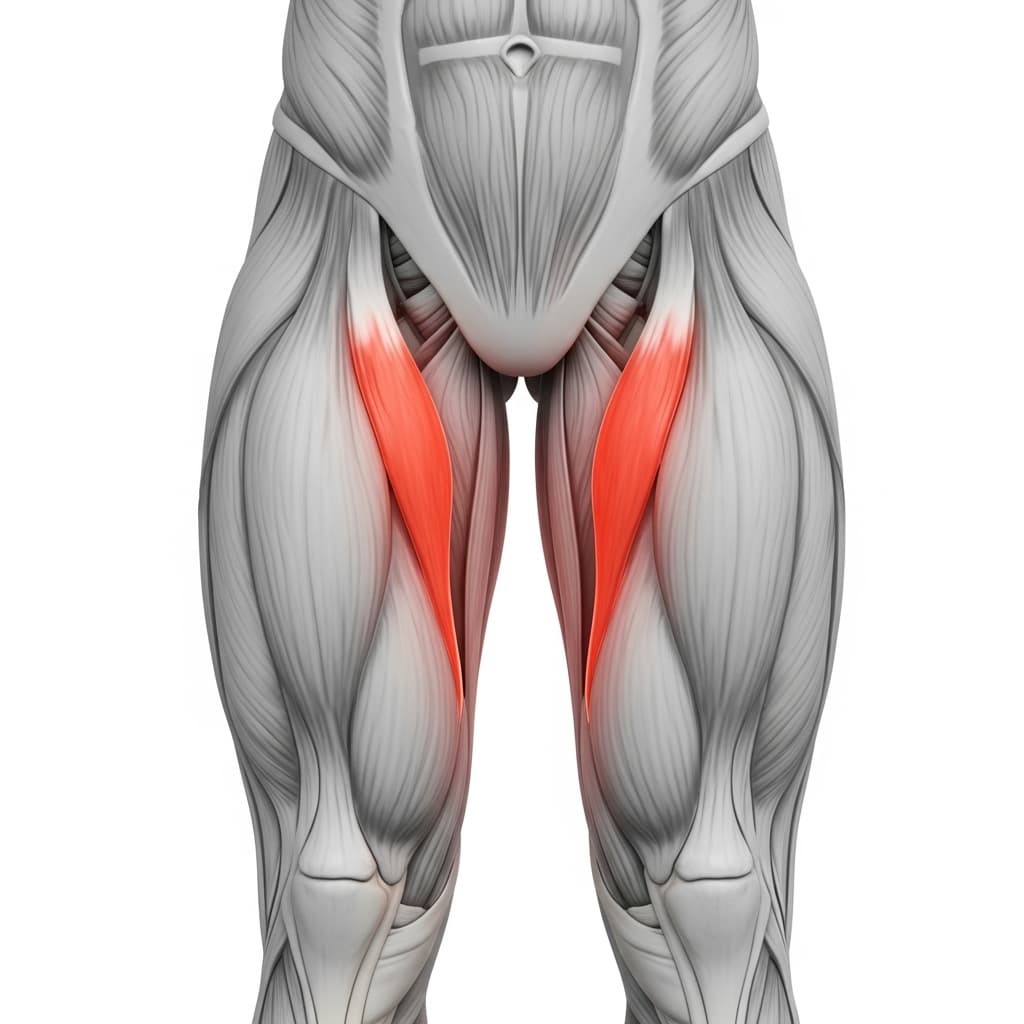
Hip Adductors (Adductors) - The adductors stabilize the standing leg at the hip, preventing the knee from caving inward during the deep single-leg squat descent.
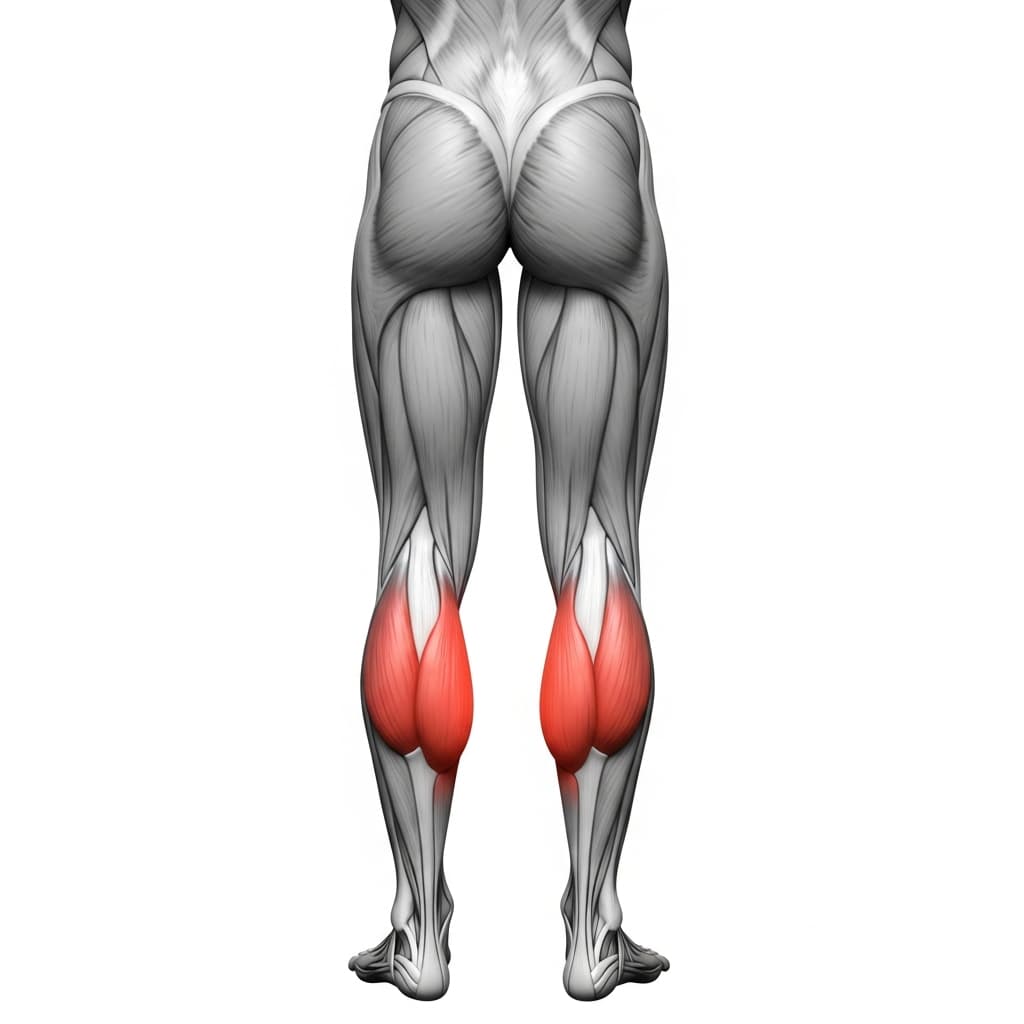
Gastrocnemius & Soleus (Calves) - The calves maintain ankle stability and control dorsiflexion throughout the descent, keeping the heel grounded and the shin angled forward over the foot.
Benefits of Negative Pistol Squat
- Builds eccentric quad strength through a full single-leg range of motion, directly preparing the muscles and connective tissue for full pistol squats
- Develops single-leg balance and proprioception under load, which transfers to all unilateral lower body movements in calisthenics
- Strengthens the knee joint through progressively deeper ranges of motion, building resilience in the tendons and ligaments around the patella
- Exposes ankle mobility limitations early and provides a structured way to improve dorsiflexion over time
Who Is This Exercise For?
You should be able to perform at least 10 controlled bodyweight squats to full depth and hold a single-leg balance for 15 seconds before attempting negative pistol squats. If you struggle with deep squat depth on two legs or lack the ankle mobility to keep your heels down, work on assisted deep squats and ankle mobility drills first. Beginners who cannot control a slow single-leg descent even partway down should start with step-downs from a low box.
Common Mistakes to Avoid
Dropping too fast on the descent: The entire purpose of this exercise is the slow eccentric. If you cannot control a 3-second descent, reduce your range of motion and lower only to a depth you can control before working deeper over time.
Heel lifting off the floor: A lifted heel shifts stress forward onto the knee and reduces stability. Place a small weight plate or wedge under your heel until your ankle dorsiflexion improves enough to keep the heel flat.
Keeping the torso too upright: Trying to stay perfectly vertical shifts your center of gravity behind the foot and makes you fall backward. Lean your torso forward over the working leg, this is the natural and correct counterbalance for single-leg squatting.
Bending the non-working leg: A bent free leg shortens the lever arm and makes the exercise easier while also reducing hip flexor engagement. Keep the non-working leg as straight as possible throughout the entire descent.
Variations & Progressions
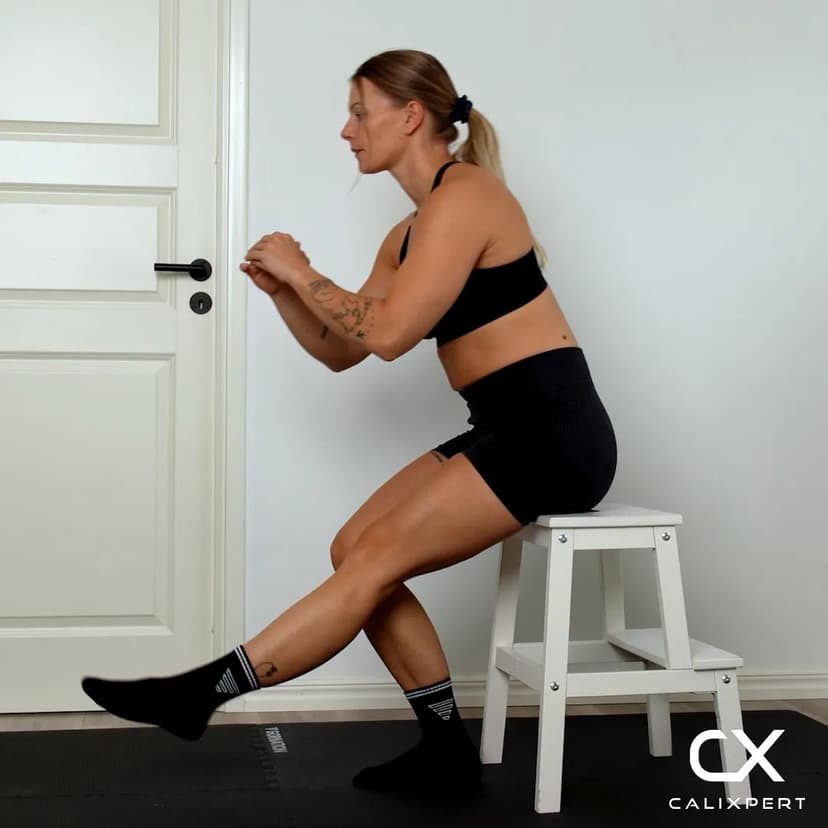
Weighted Negative Pistol Squat
Hold a light dumbbell or weight plate at chest height during the descent. The added load increases the eccentric demand on the quads and forces greater core stabilization throughout the movement.