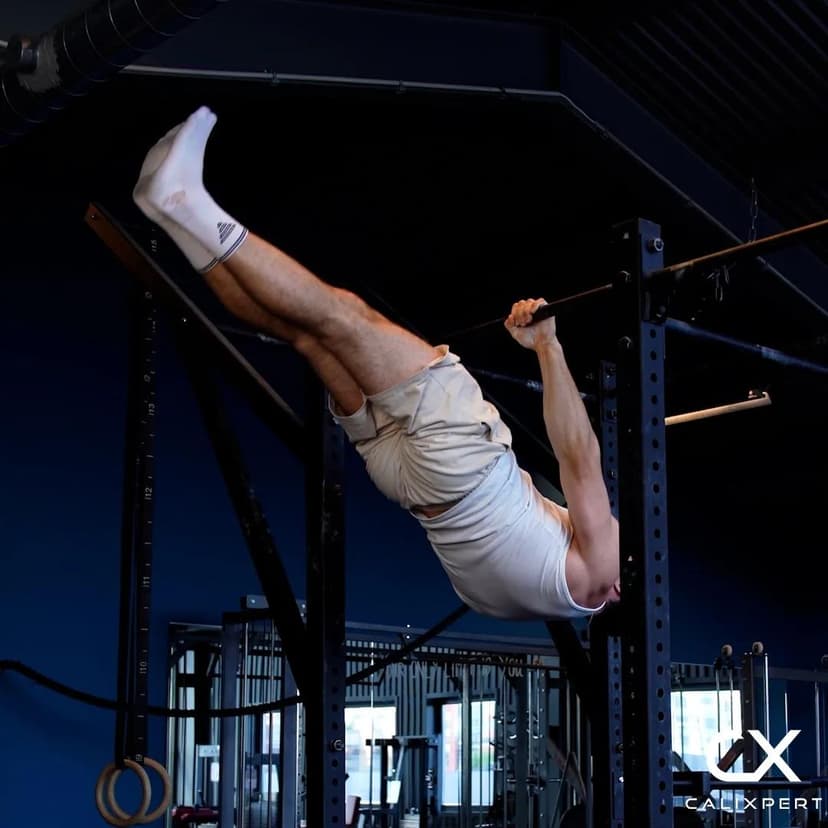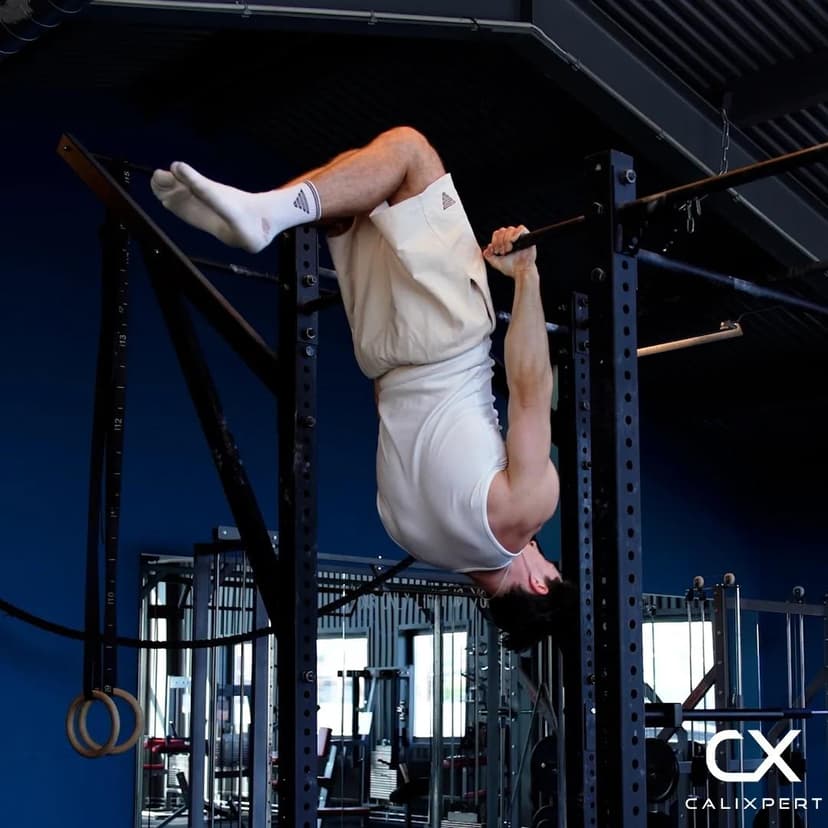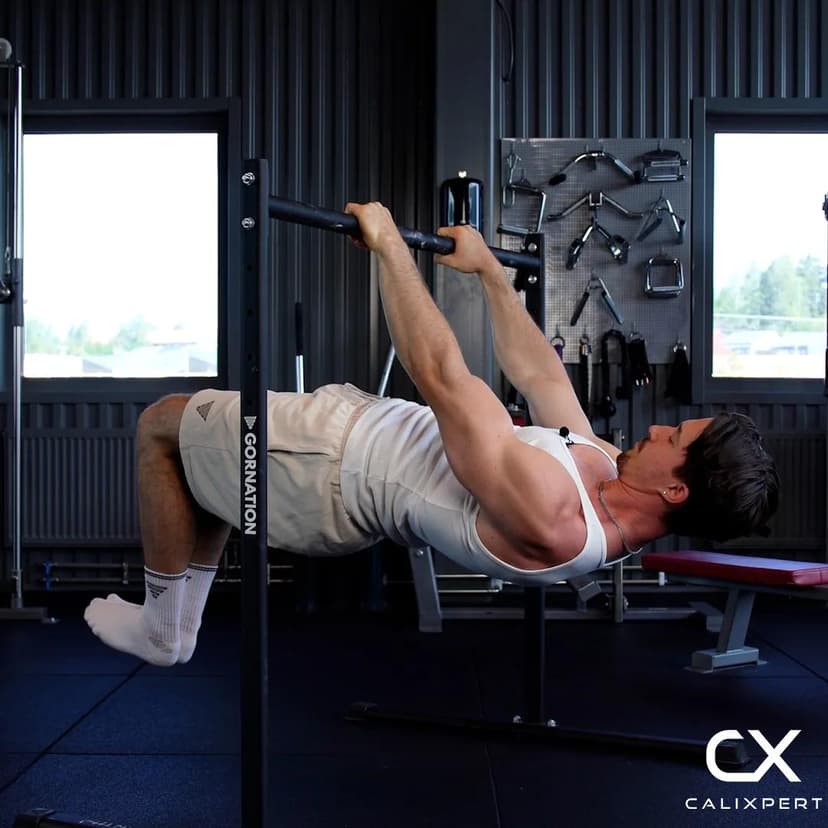
Skin The Cat
Skin the Cat is an intermediate calisthenics and gymnastics movement that combines shoulder mobility, core compression, and upper body strength into a single rotational hang. The exercise targets the lats, shoulders, chest, and core as you rotate your body through a full arc underneath and behind the bar. When performed with control, Skin the Cat builds the deep shoulder flexibility and hanging strength required for back levers, muscle-ups, and virtually every advanced upper body skill in calisthenics.
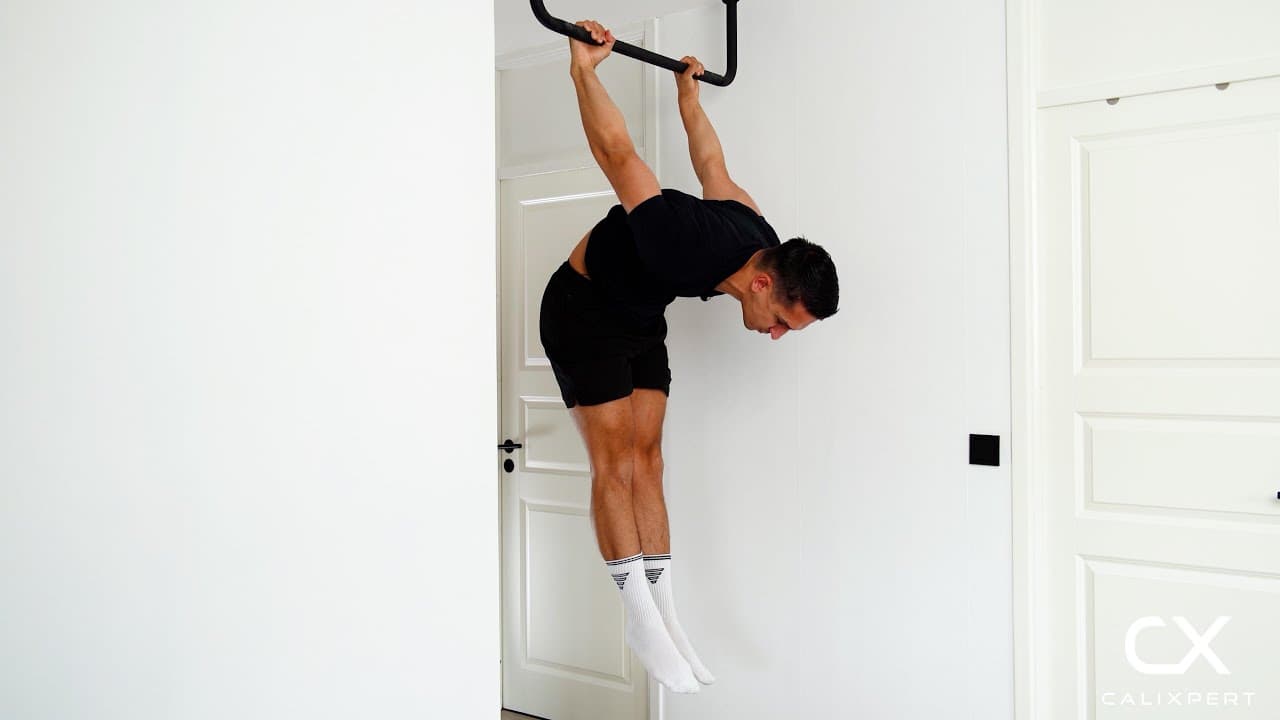
Skin the Cat is an intermediate calisthenics and gymnastics movement that combines shoulder mobility, core compression, and upper body strength into a single rotational hang. The exercise targets the lats, shoulders, chest, and core as you rotate your body through a full arc underneath and behind the bar. When performed with control, Skin the Cat builds the deep shoulder flexibility and hanging strength required for back levers, muscle-ups, and virtually every advanced upper body skill in calisthenics.
How to Do Skin The Cat
1. Set Your Grip on the Bar
Grab a straight bar with an overhand grip slightly wider than shoulder width. Wrap your thumbs fully around the bar for a secure hold. Hang with arms fully extended, shoulders active, and feet off the ground. Your body should be still with no swinging before you begin.
Thumbs around, shoulders active, no swing
2. Tuck Knees to Chest
Bring your knees up toward your chest in a tight tuck position. Compress your core as hard as possible to pull the legs in close. The tighter your tuck, the easier it will be to pass your legs through and past the bar. Keep your arms straight throughout this phase.
Knees tight to chest, arms straight
3. Rotate Through the Bar
Continue the rotation by threading your tucked legs between your arms and past the bar. Do not pull your shoulder blades down during this phase, because depressing the scapula reduces the space between your body and the bar, making it harder to pass through. Let the shoulders elevate slightly to create clearance as your hips pass the bar.
Keep shoulders relaxed to create space
4. Lower Into the German Hang
Once your legs have passed through, slowly extend your body downward behind the bar. Your arms stay straight as your shoulders open into deep extension. Lower only as far as your shoulder mobility allows. You should feel a strong stretch across the chest and front of the shoulders, but no sharp pain.
Lower slowly, stop before any sharp pain
5. Reverse the Movement
From the bottom position, compress your core and tuck your knees back toward your chest. Pull your hips back through the space between your arms, reversing the exact path you took on the way down. Maintain straight arms and control the rotation with your lats and core, not momentum.
Compress and reverse, no swinging
6. Return to Dead Hang
Complete the rotation until you return to the starting hang position with arms fully extended. Reset your shoulders, let your body come to a complete stop, and re-engage your core before starting the next rep. Each rep should begin and end from a controlled, motionless hang.
Full stop before the next rep
Most people rush the pass-through and then drop into the bottom position like a dead weight. That is where shoulders get hurt. Think of the entire movement as one slow, continuous rotation. If you cannot control the speed at every point in the arc, shorten your range of motion and build depth over weeks, not minutes. The mobility gains from Skin the Cat come from time under tension in the stretched position, not from forcing range you have not earned.
Muscles Worked During Skin The Cat
Primary Muscles:
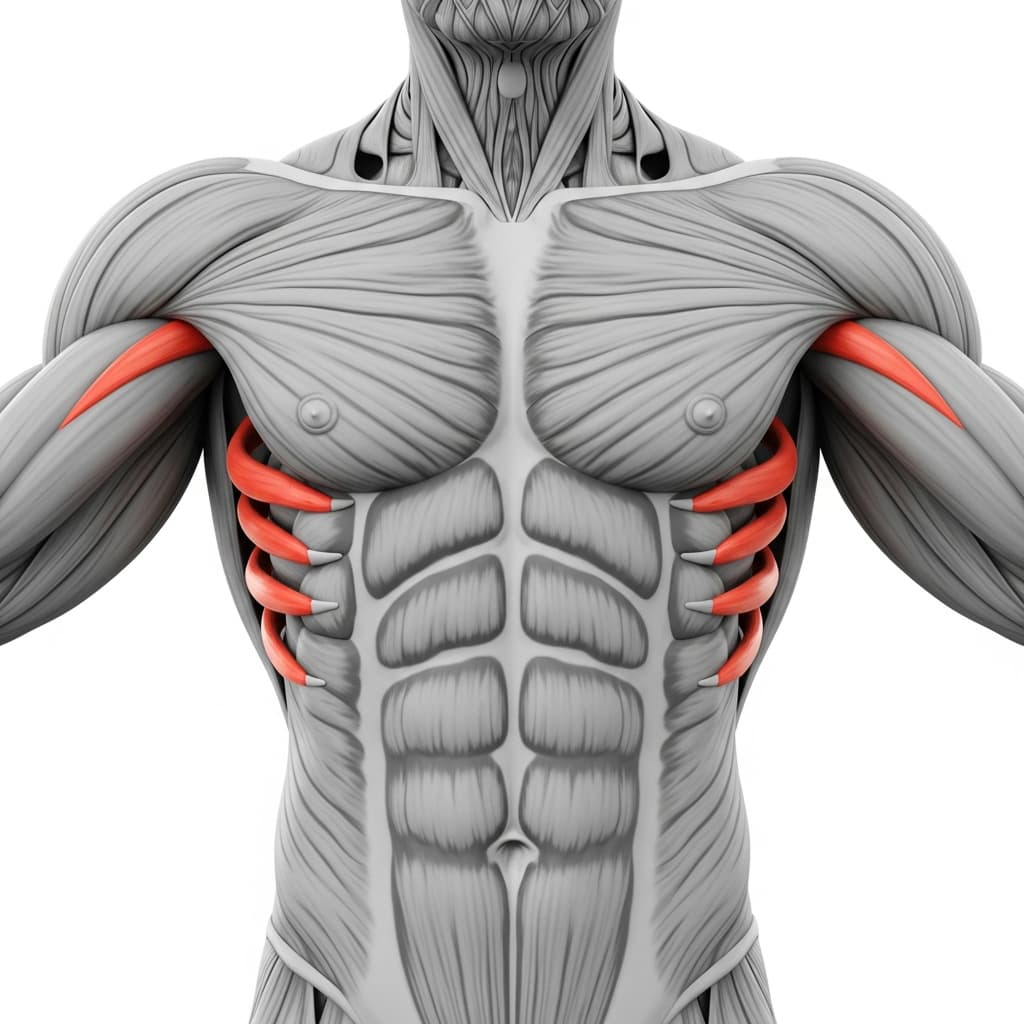
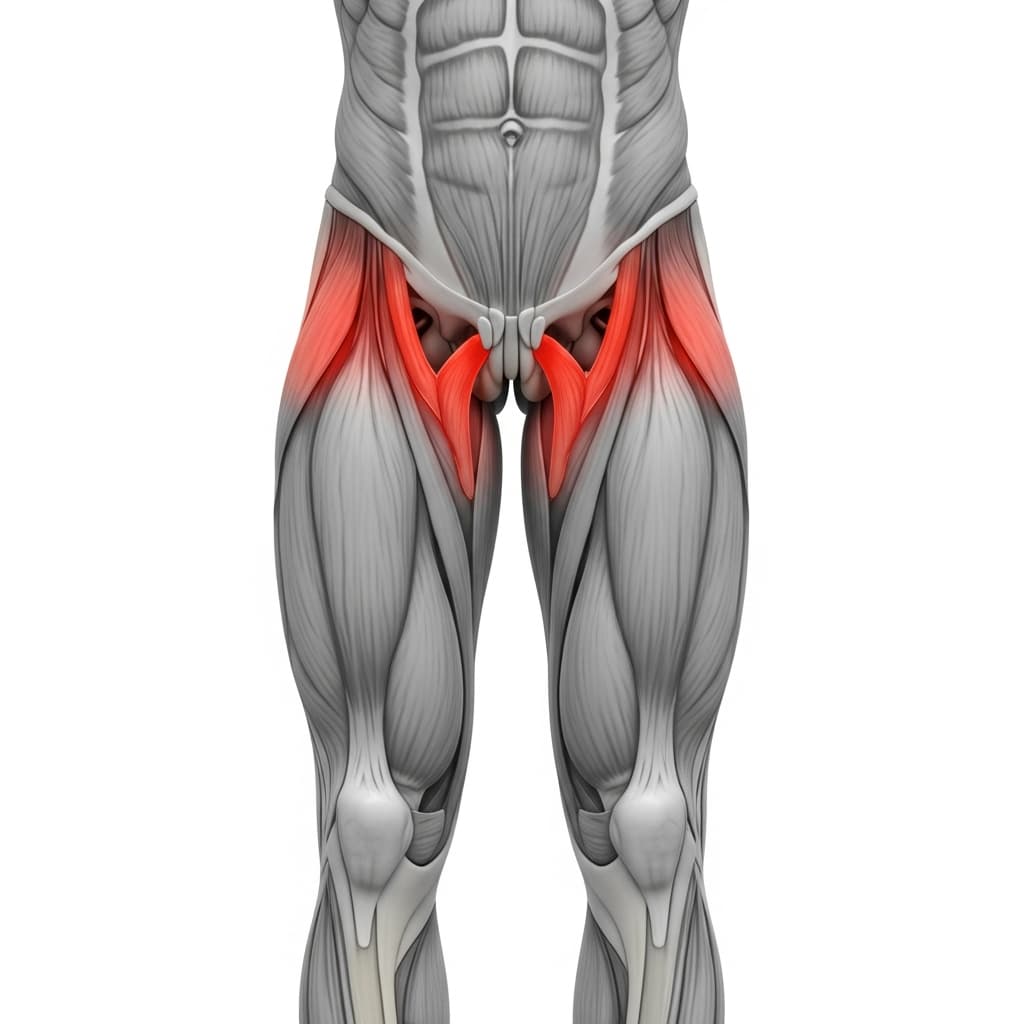
Primary Muscles
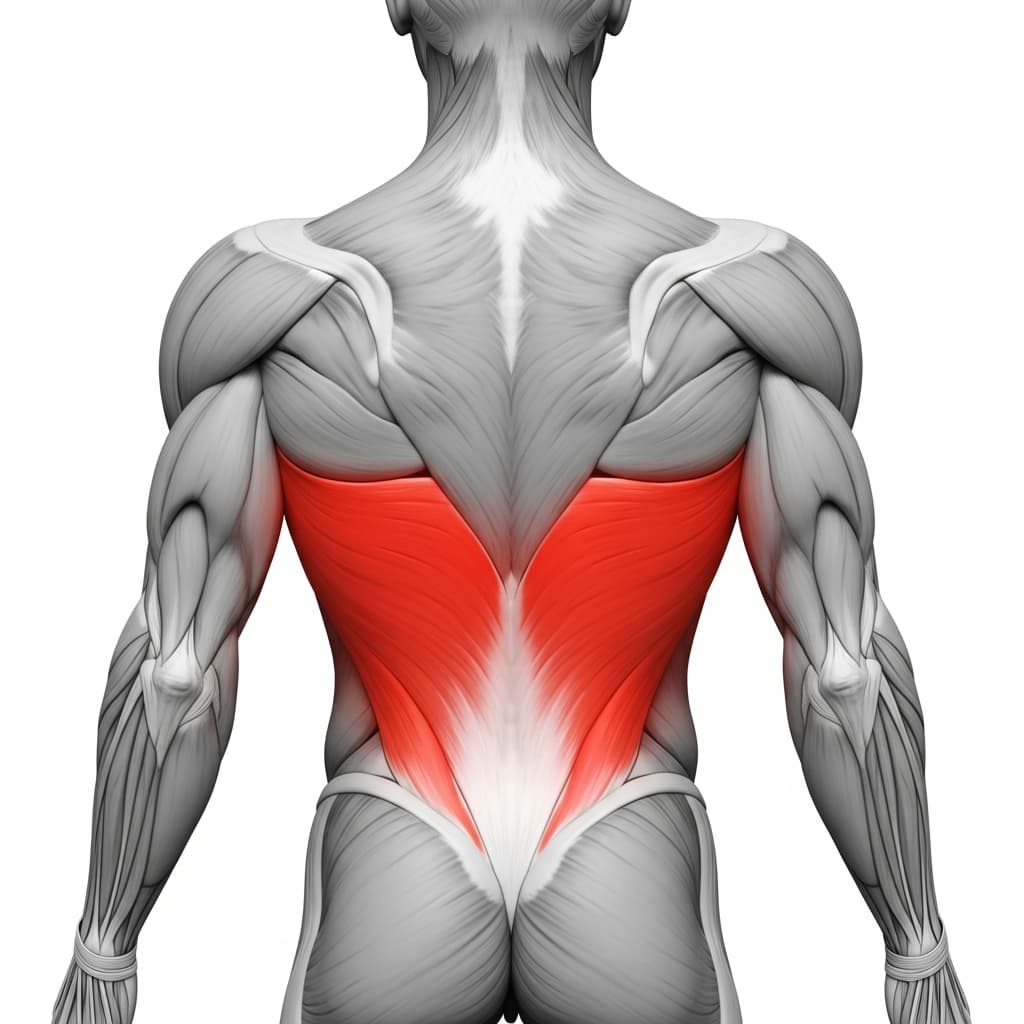
Latissimus Dorsi (Lats) - The lats control the overhead hang, drive the rotation through the bar, and decelerate the descent into the German hang position.
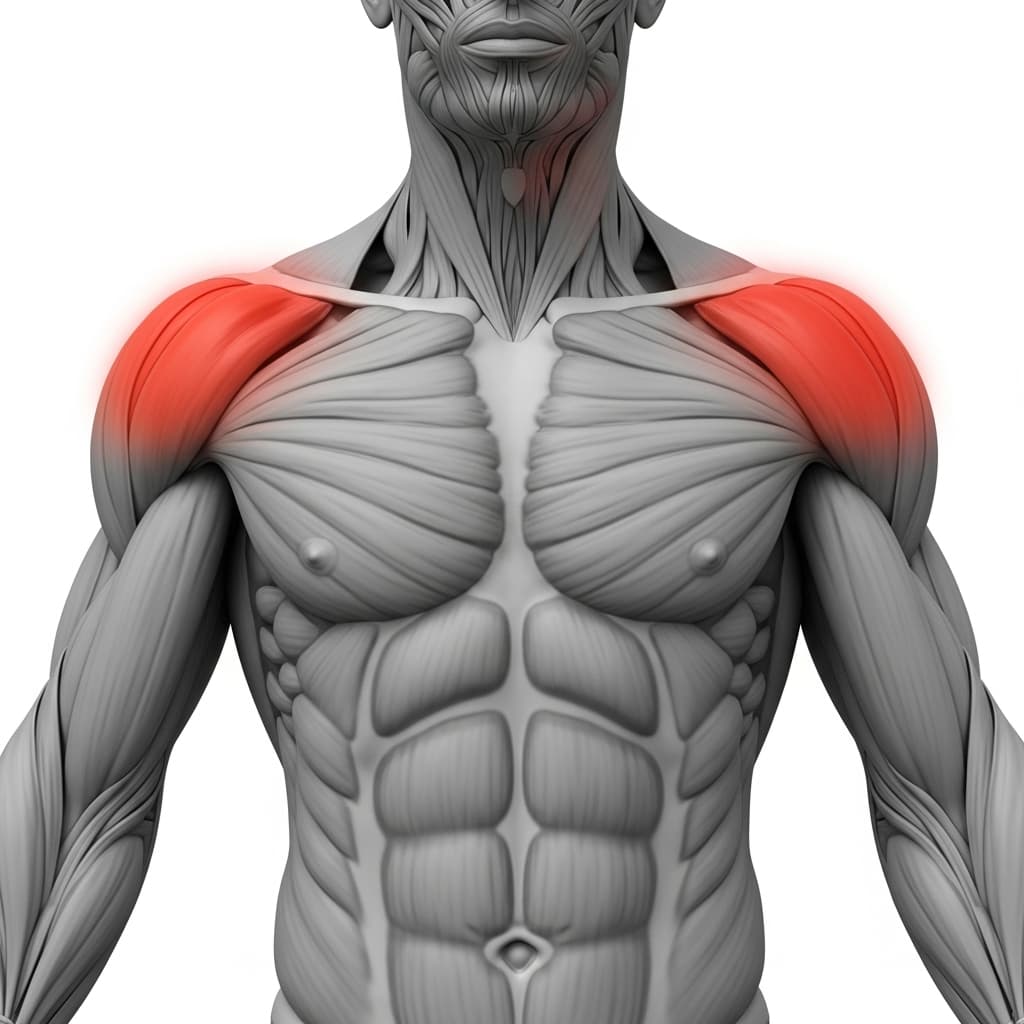
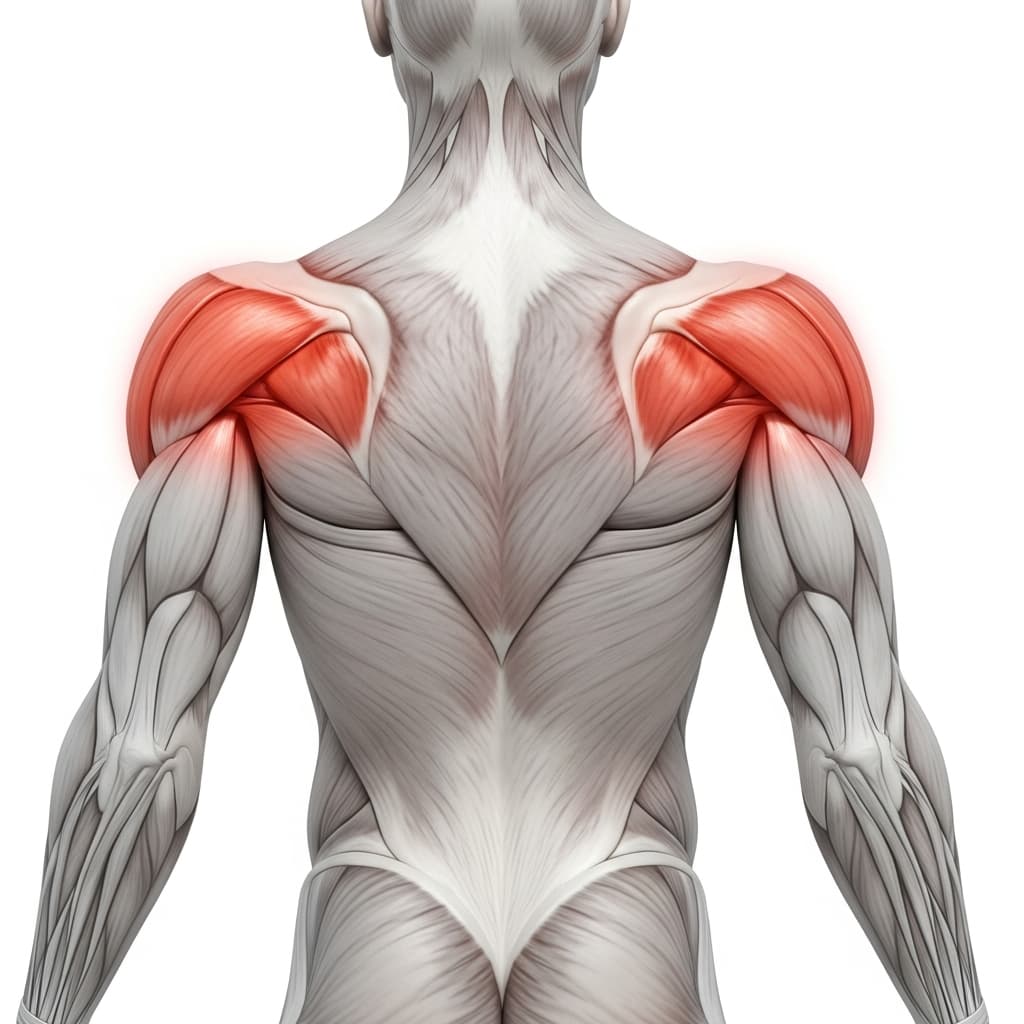
Anterior Deltoid (Front Deltoid) - The front deltoids are loaded eccentrically as the shoulders extend behind the body and work concentrically to reverse the rotation back to the starting hang.
Secondary Muscles
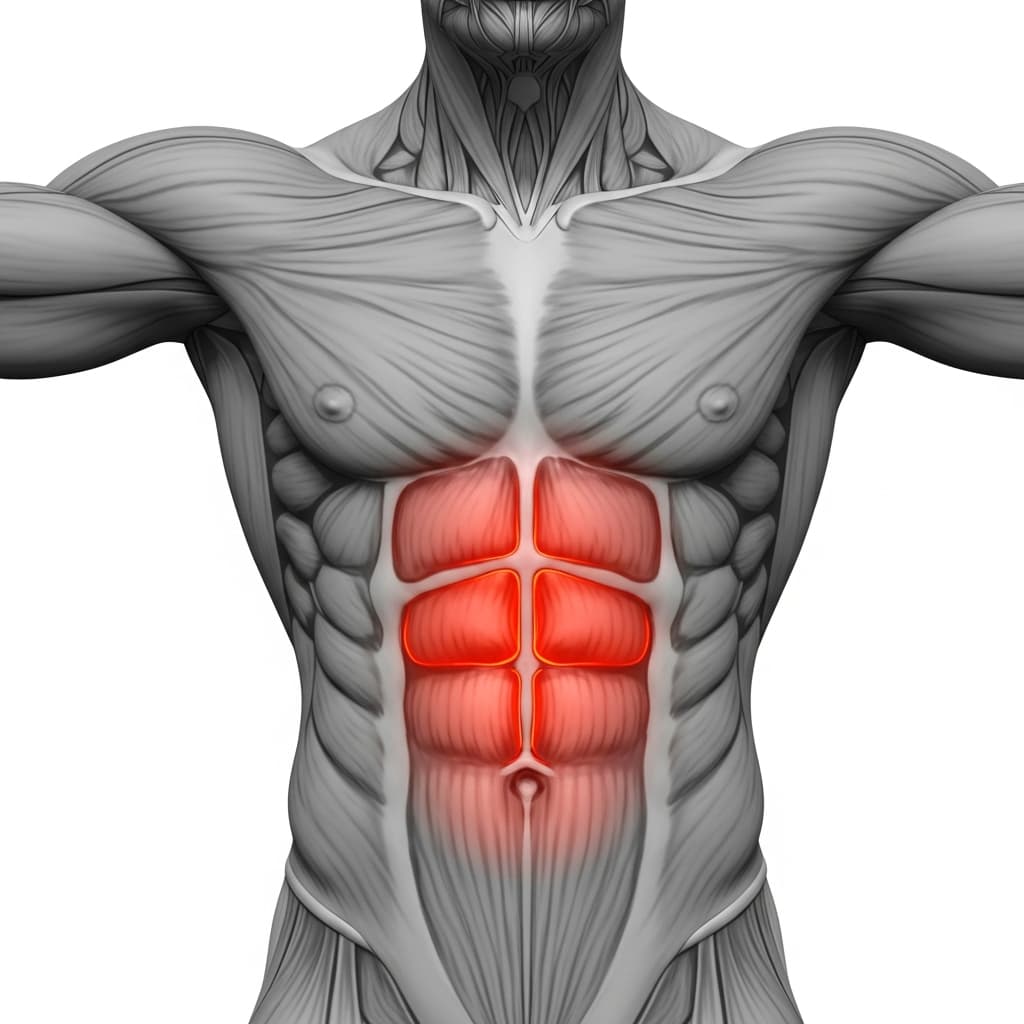
Rectus Abdominis (Abs) - The rectus abdominis compresses the torso into the tuck position and controls trunk rotation throughout the pass-through phase.
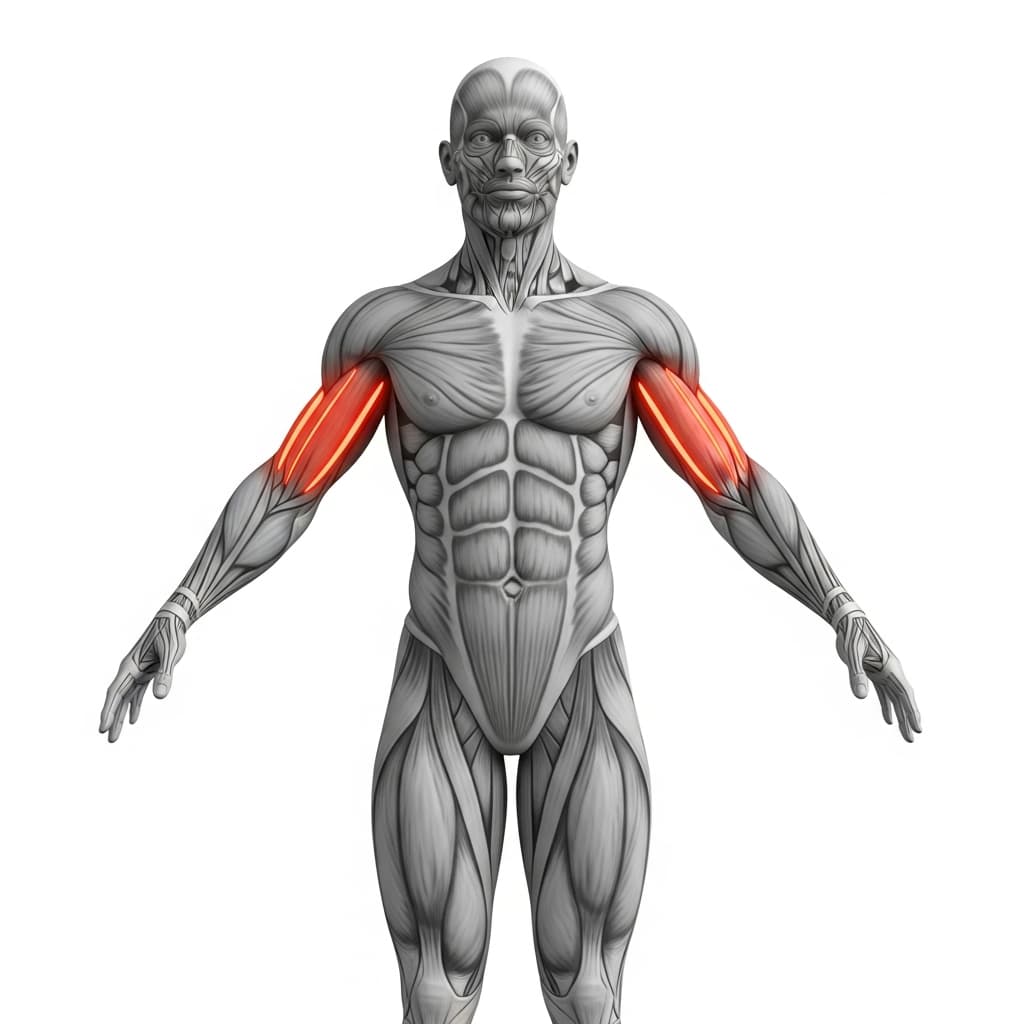
Biceps Brachii (Biceps) - The biceps maintain elbow extension under load and assist the lats in controlling the rotational arc while the arms stay straight.
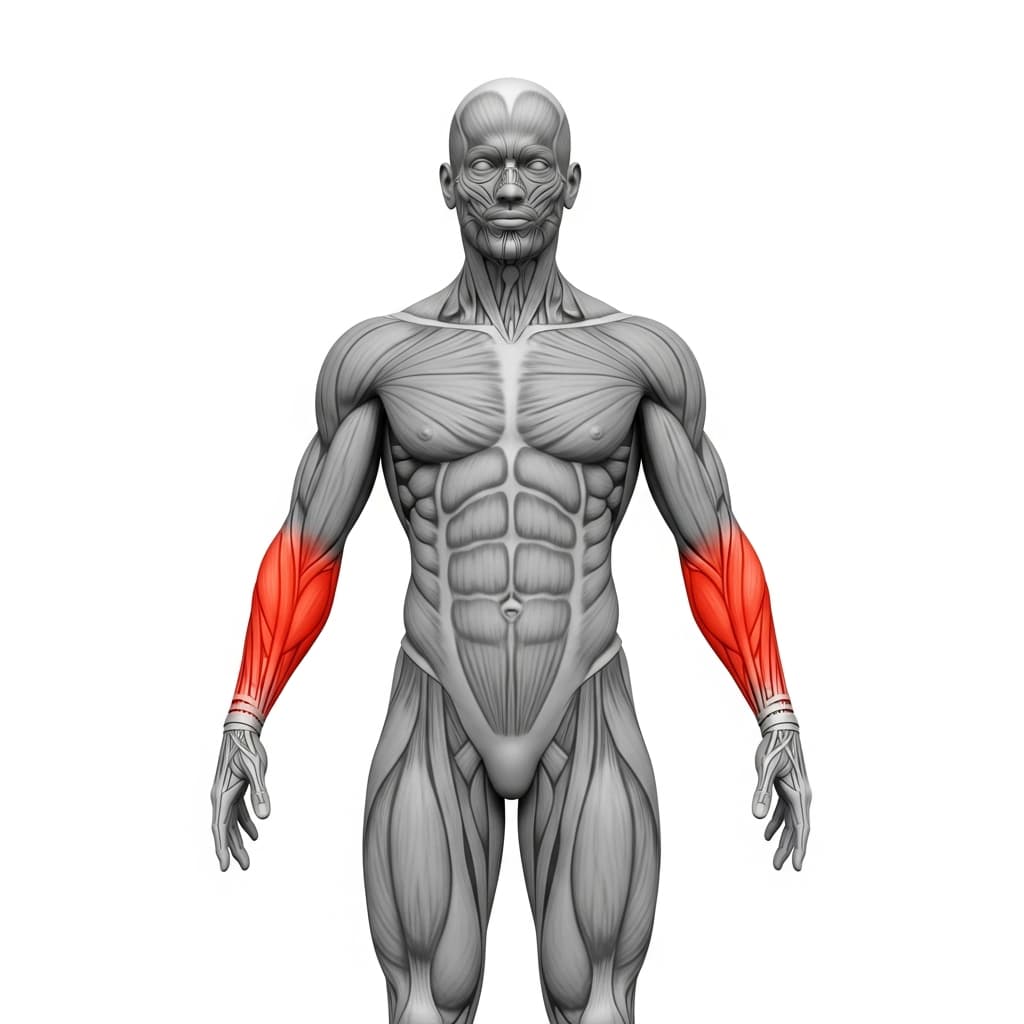
Forearm Flexors & Extensors (Forearms) - The forearm flexors sustain grip on the bar throughout the full rotation, especially under the increased load at the bottom position.
Posterior Deltoid (Rear Deltoid) - The rear deltoids stabilize the shoulder joint as it moves into deep extension and help pull the body back through the return phase.
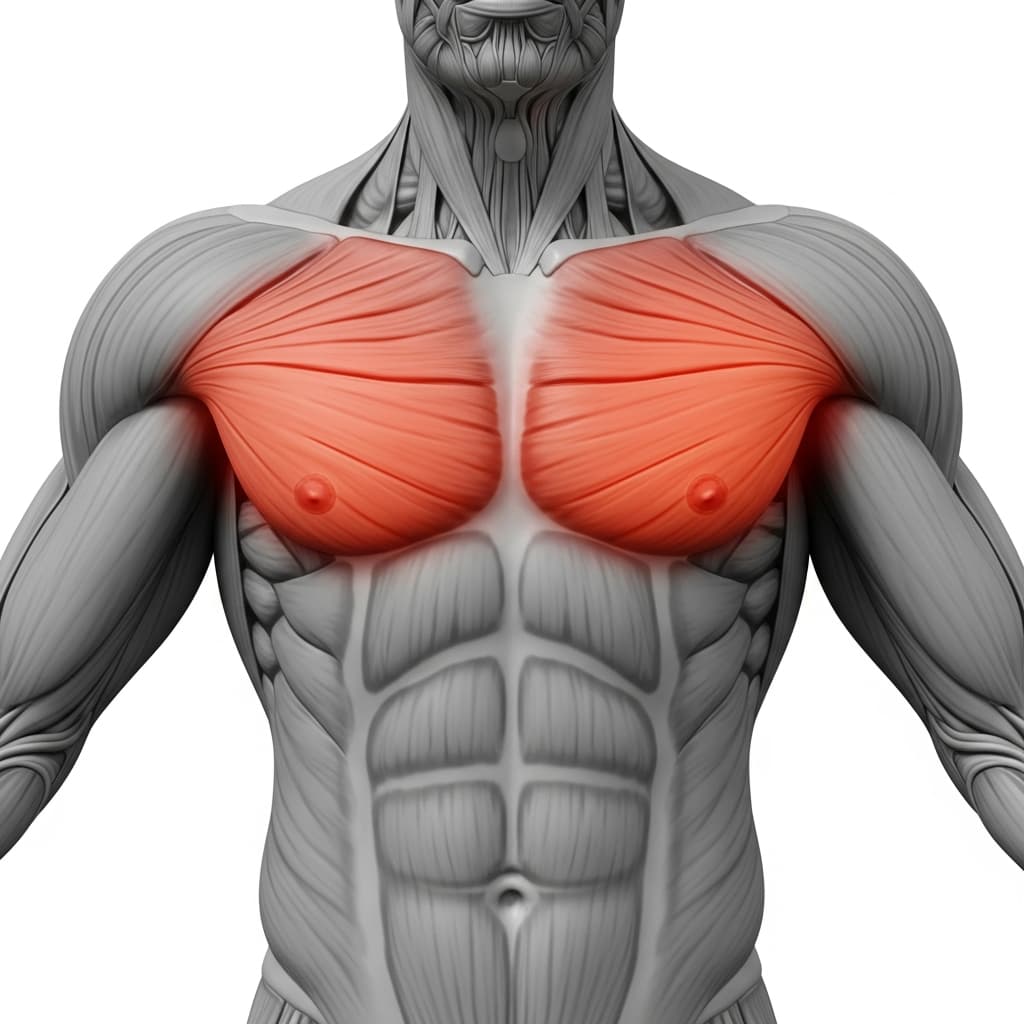
Pectoralis Major (Chest) - The pectorals are stretched under load in the German hang position and contribute to pulling the arms forward during the reverse rotation.
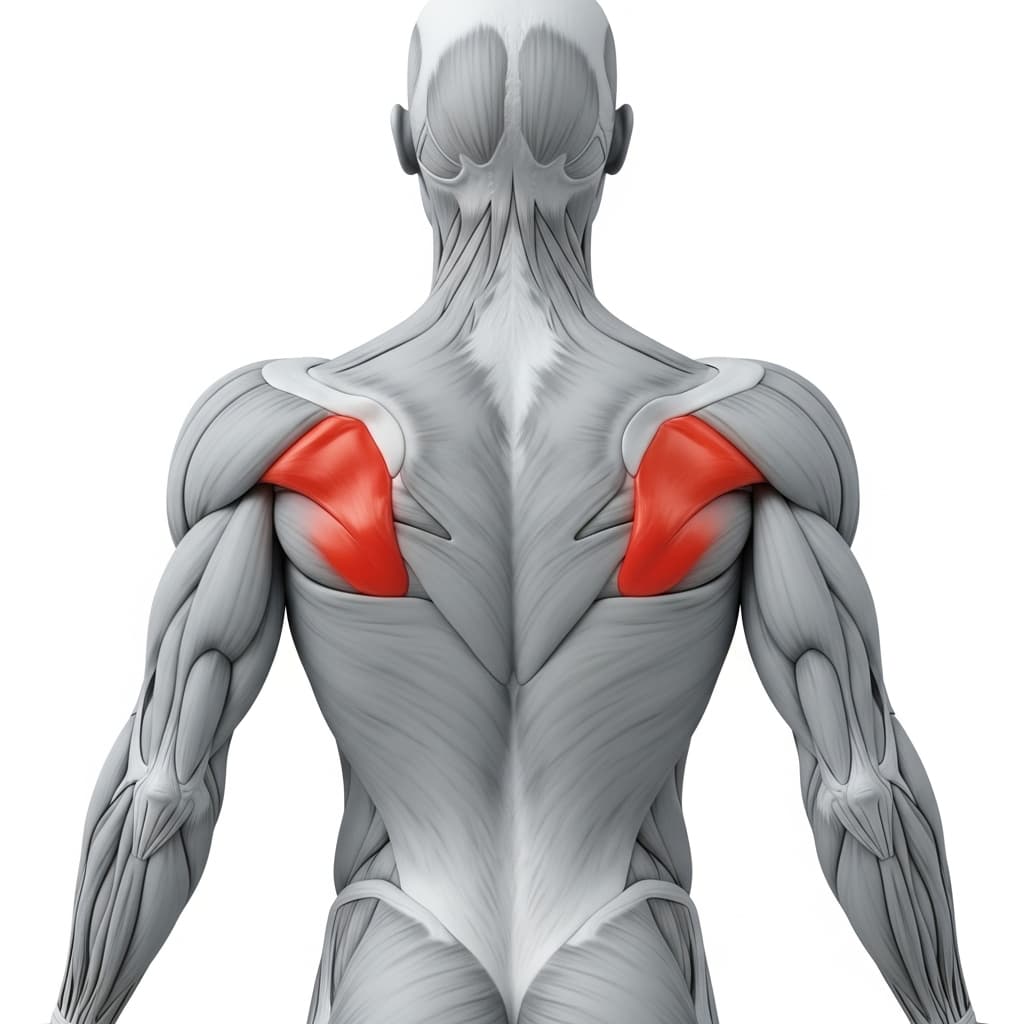
Rotator Cuff (SITS) (Rotator Cuff) - The rotator cuff muscles stabilize the humeral head in the socket through the full arc of shoulder rotation, preventing impingement at end range.
Serratus Anterior (Serratus Anterior) - The serratus anterior protracts and upwardly rotates the scapula during the pass-through, creating the clearance needed for the legs to move past the bar.
Iliopsoas (Hip Flexors) - The hip flexors pull the knees toward the chest during the tuck phase and maintain leg position during the rotation through the bar.
Benefits of Skin The Cat
- Develops deep shoulder extension flexibility that transfers directly to back lever, German hang, and muscle-up progressions
- Strengthens the lats, core, and shoulder stabilizers through a full 360-degree range of motion that no standard pulling exercise replicates
- Builds body awareness and coordination for rotational hanging movements, which are foundational to gymnastics-based calisthenics
- Decompresses the spine and opens the chest through the deep stretch position at the bottom of the movement
- Strengthens the rotator cuff and serratus anterior under load, which protects the shoulder joint during pressing and overhead work
Who Is This Exercise For?
You should be able to hold a dead hang for at least 20 seconds and perform controlled hanging knee raises before attempting Skin the Cat. Comfortable scapular pull-ups and basic shoulder mobility, specifically the ability to reach both arms overhead without compensation, are also required. If hanging from the bar causes shoulder discomfort or you cannot tuck your knees to your chest while hanging, you are not ready for this movement yet.
Common Mistakes to Avoid
Dropping too fast into the bottom position: Lower into the German hang slowly over 3 to 4 seconds. Dropping quickly places sudden force on the shoulder capsule and can cause impingement or strain, especially when shoulder flexibility is still developing.
Pulling shoulder blades down during the pass-through: Allow the shoulders to stay relaxed and slightly elevated as your legs pass through. Actively depressing the scapula reduces the gap between your body and the bar, making the rotation harder and forcing compensation.
Bending the arms during rotation: Keep your arms fully extended throughout the entire movement. Bending the elbows shifts the load onto the biceps and removes the shoulder mobility benefit that makes this exercise valuable.
Using momentum instead of core compression: Start each rep from a dead hang with no swing. Use a tight core tuck to initiate the rotation rather than kicking the legs for momentum. If you need a swing to get through, the movement is too advanced for your current level.
Variations & Progressions
Tucked Skin the Cat on Low Rings
Perform the movement on gymnastics rings set low enough that your feet can touch the ground at the bottom. This lets you control the depth of the shoulder stretch and bail out safely while building the pattern.
Straight-Leg Skin the Cat
Keep your legs fully extended throughout the entire rotation instead of tucking. This dramatically increases the core compression and shoulder strength required, and demands significantly more flexibility in the bottom position.