Negative Toes To Bar
Negative toes to bar is a controlled eccentric hanging exercise that trains the abs, hip flexors, and grip through the lowering phase of a full toes to bar. The movement starts by tucking the knees high, straightening the legs toward the bar, and then slowly lowering them back to a dead hang under tension. Training the negative portion in isolation teaches the core engagement pattern needed for strict toes to bar and builds the specific strength most people lack in the hardest part of the movement.
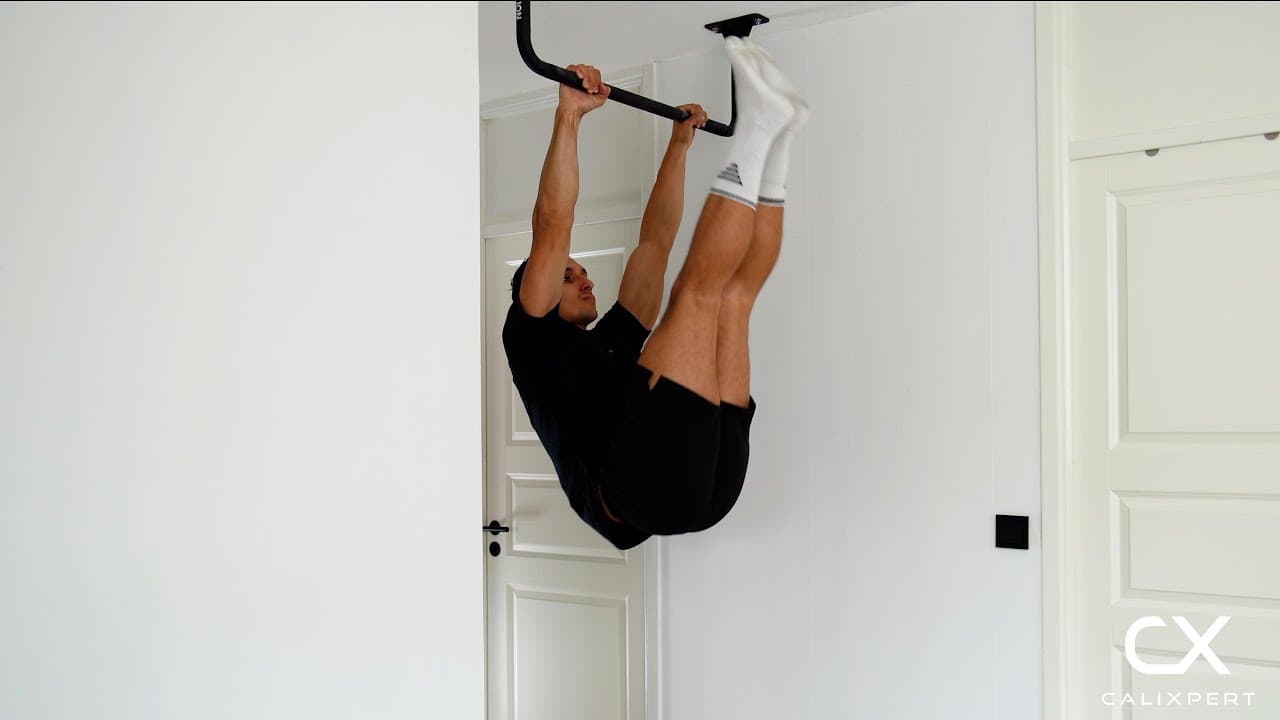
Negative toes to bar is a controlled eccentric hanging exercise that trains the abs, hip flexors, and grip through the lowering phase of a full toes to bar. The movement starts by tucking the knees high, straightening the legs toward the bar, and then slowly lowering them back to a dead hang under tension. Training the negative portion in isolation teaches the core engagement pattern needed for strict toes to bar and builds the specific strength most people lack in the hardest part of the movement.
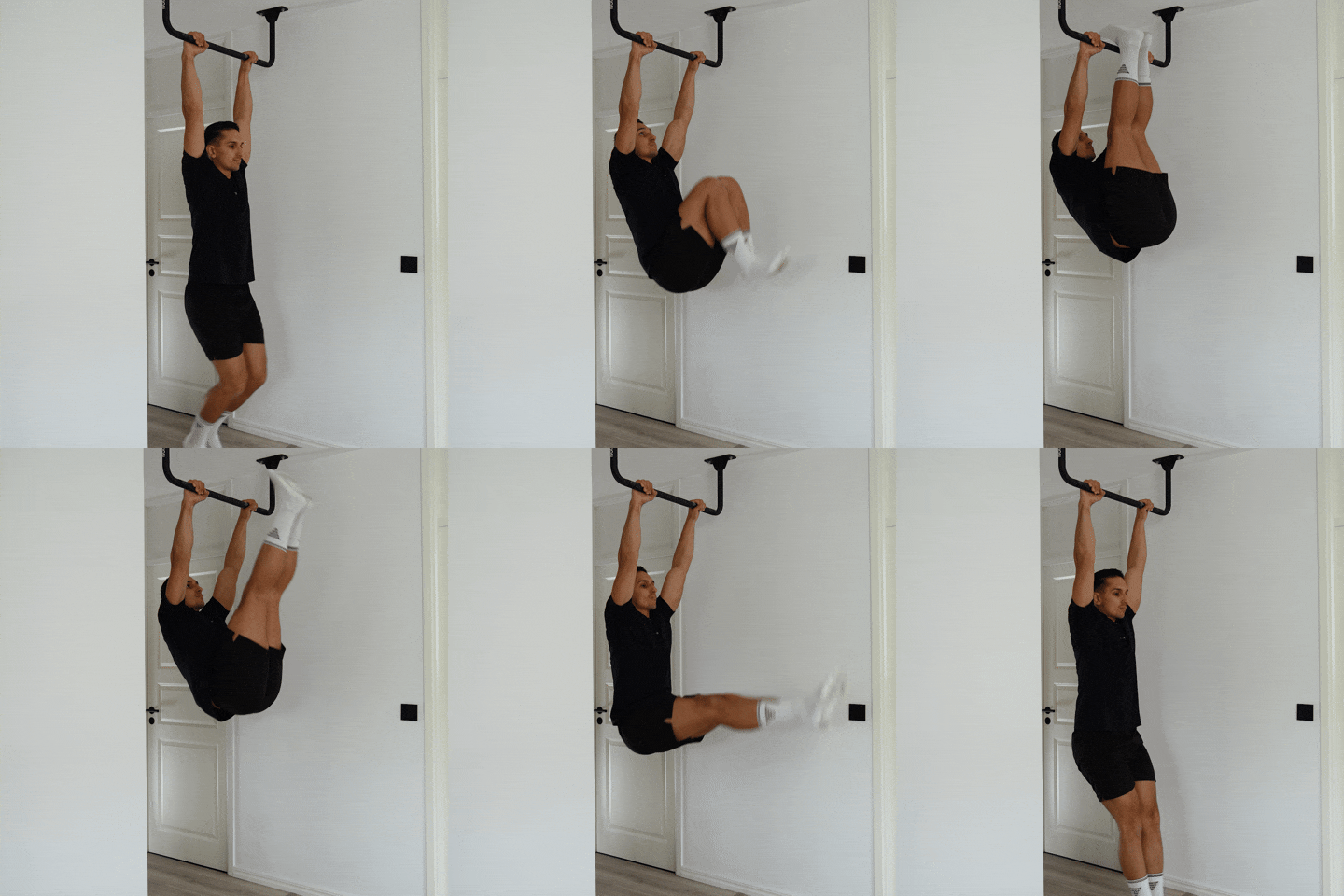
How to Do Negative Toes To Bar
1. Grab the Bar Overhead
Grab a high straight bar with an overhand grip, palms facing forward, slightly wider than shoulder width. Wrap your thumbs fully around the bar for a secure hold. Hang with your arms fully extended and your shoulders pulled slightly down away from your ears.
Thumbs around, shoulders away from ears
2. Tuck Knees Up High
From the dead hang, tuck both knees up toward your chest as high as possible. Drive the knees above hip level using your core, not momentum. Keep your upper body still and avoid swinging during the tuck.
Knees as high as possible, no swing
3. Straighten Legs Toward the Bar
Once your knees are tucked high, extend both legs straight out so your toes reach toward the bar. Lock your knees fully and point your toes. This is your starting position for the negative, so take a moment to stabilize before lowering.
Straighten completely before you lower
4. Lower Legs Slowly Under Control
Begin lowering your straight legs toward the ground as slowly as you can manage. Resist gravity through every inch of the descent using your abs and hip flexors. Aim for a 3 to 5 second lowering phase. Do not let your legs drop or accelerate at any point during the descent.
Fight gravity the entire way down
5. Return to a Dead Hang
Continue lowering until your legs hang straight below you and your body is completely still. Reset your grip, re-engage your shoulders, and let any residual swing die out before starting the next rep. Each rep should begin from a controlled, motionless dead hang.
Full stop before the next rep
Most people fail at toes to bar because they have zero control through the lowering phase, they just kick up and drop. Negative toes to bar fixes that directly. Focus on making the descent last at least 4 seconds and you will build the strength and body awareness that transfers immediately into strict reps.
Muscles Worked During Negative Toes To Bar
Primary Muscles:
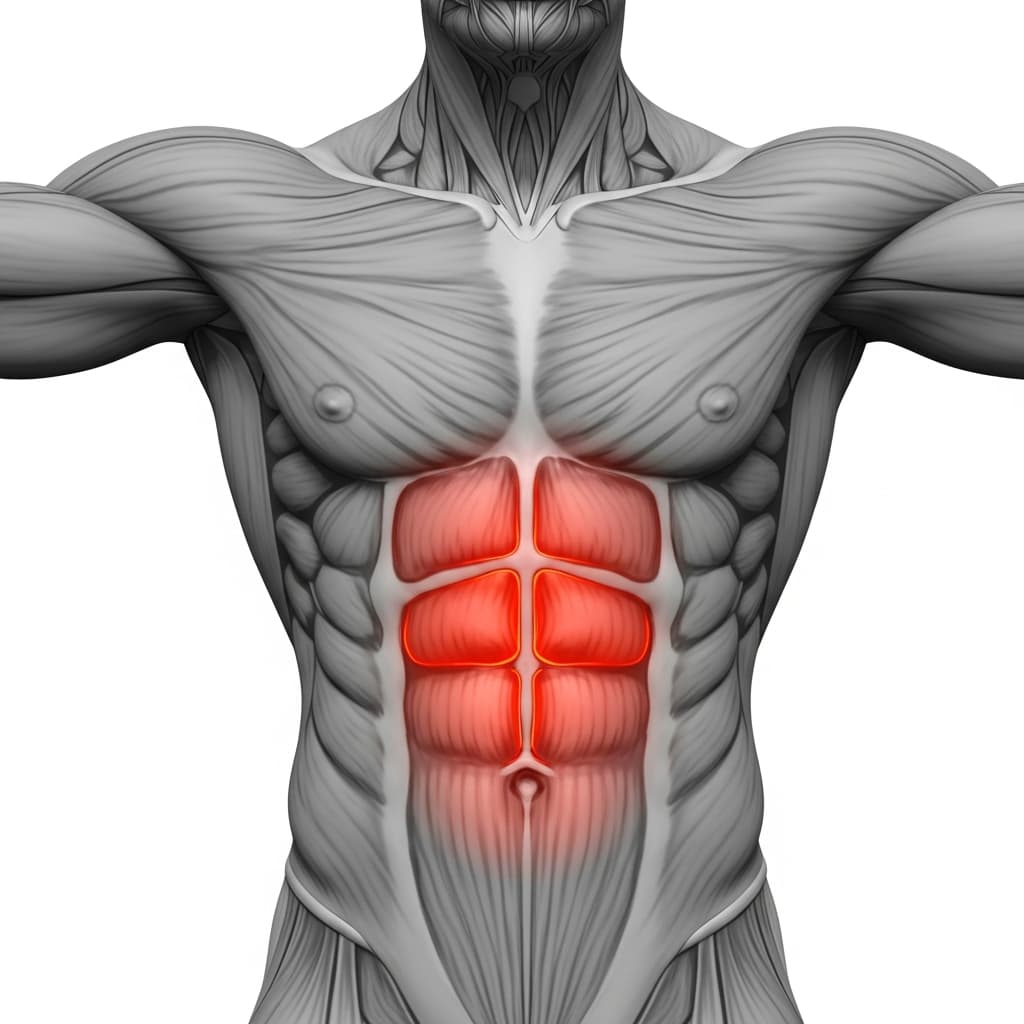
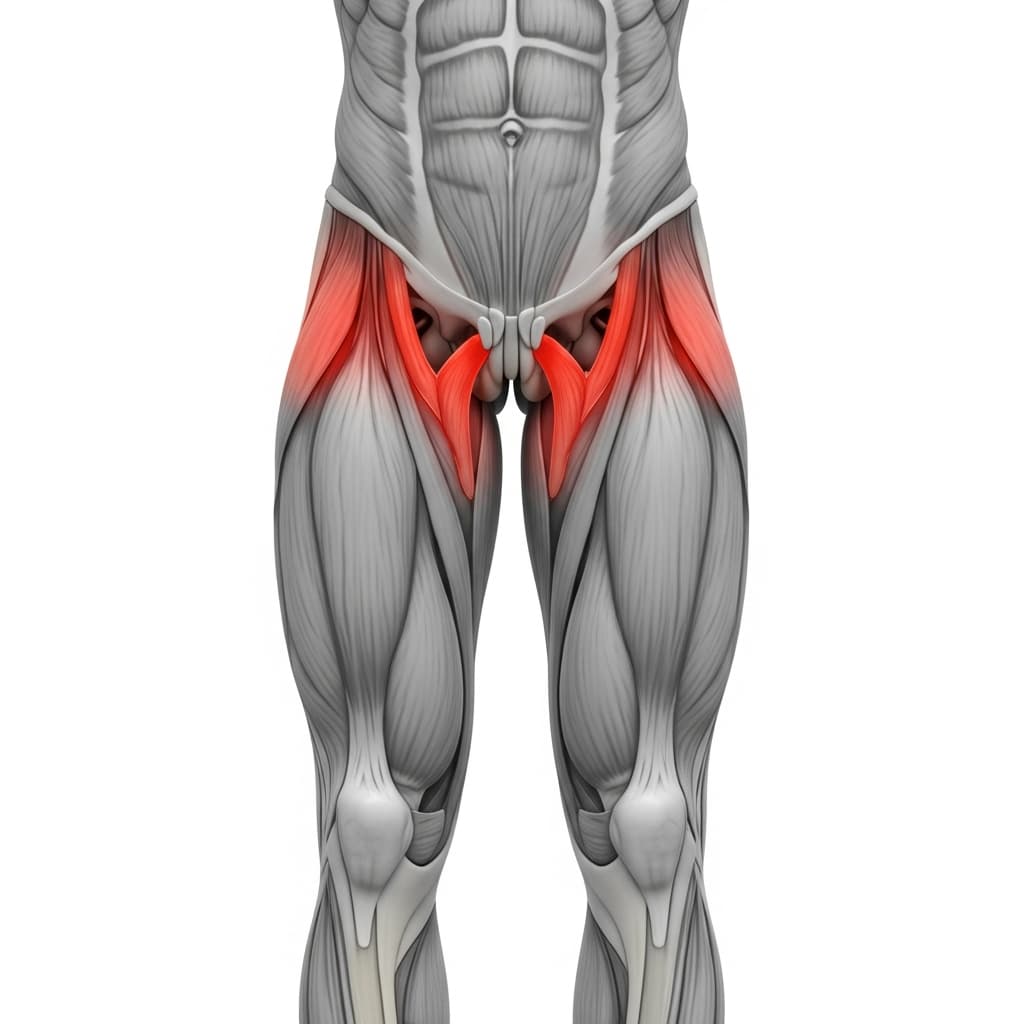
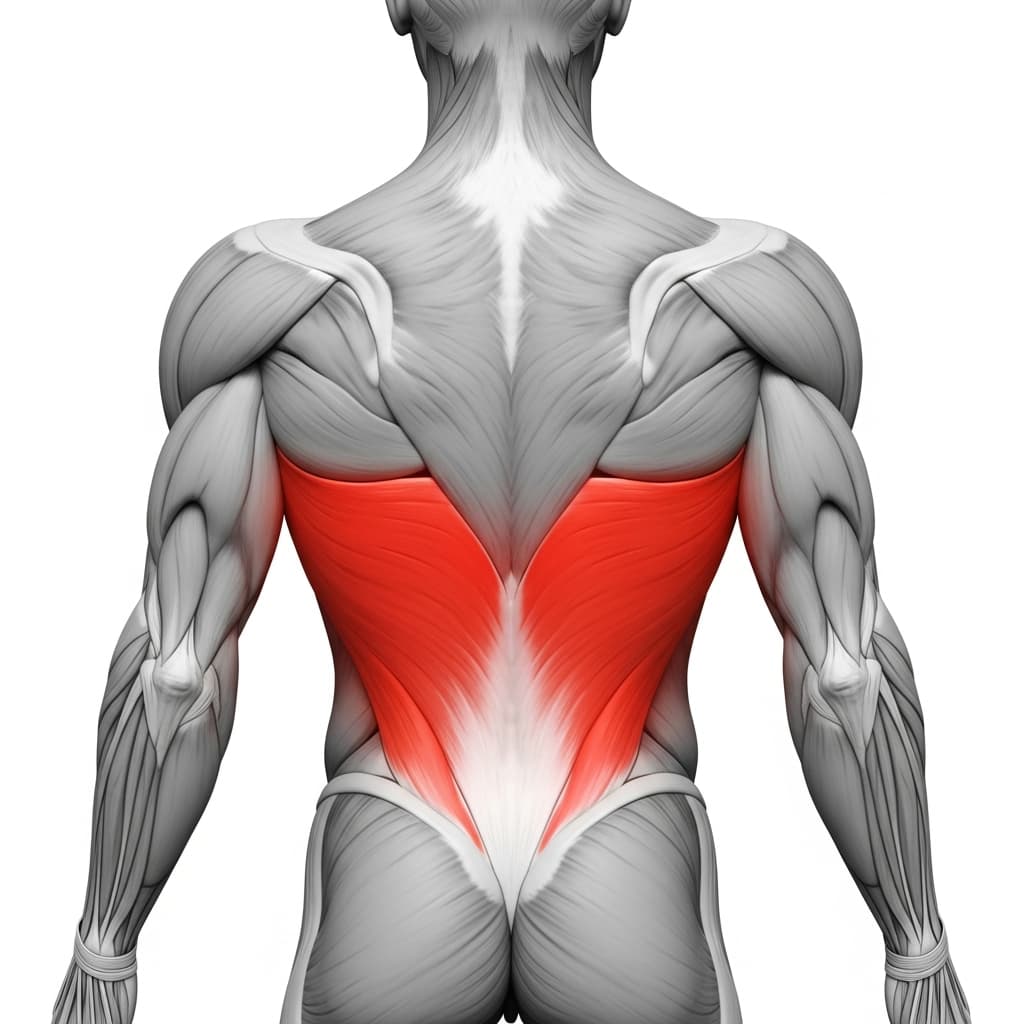
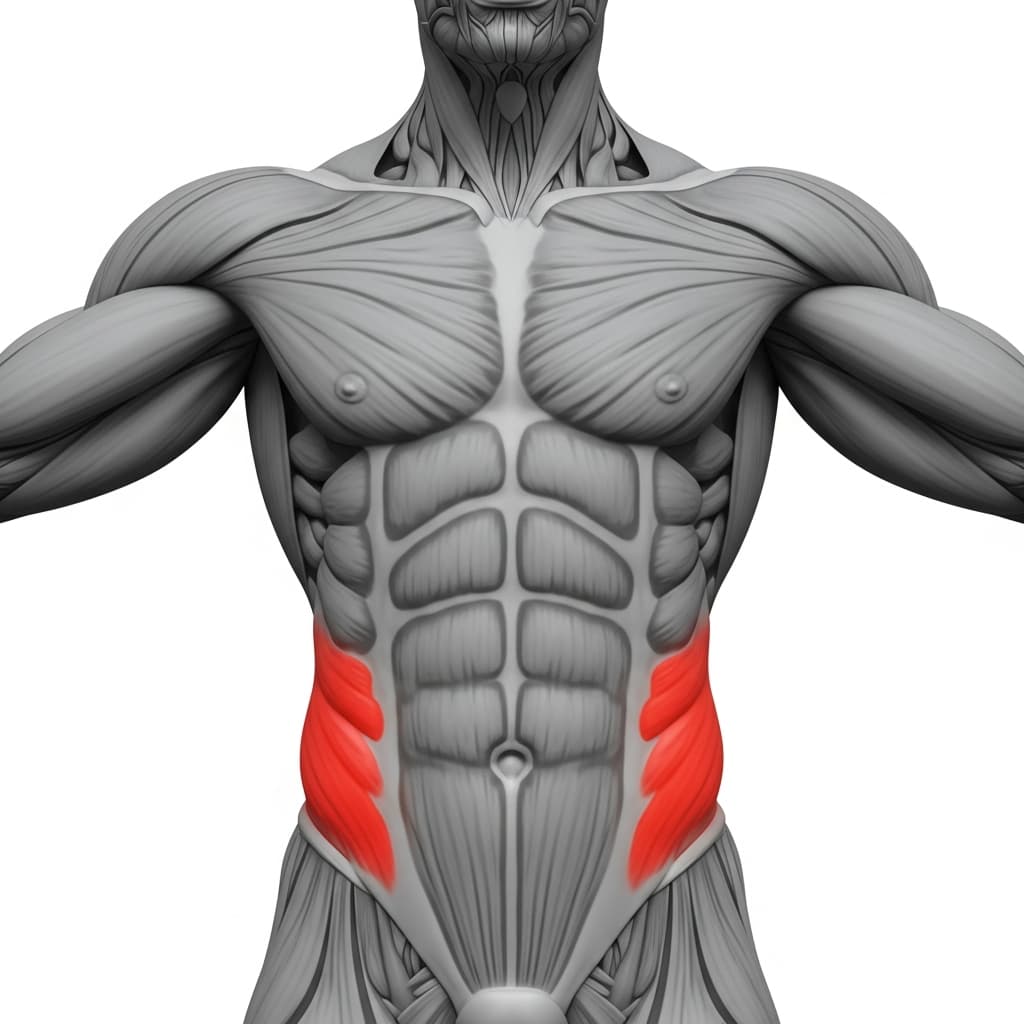
Primary Muscles
Rectus Abdominis (Abs) - The rectus abdominis controls the slow lowering of the legs by resisting spinal extension under load throughout the full eccentric phase.
Iliopsoas (Hip Flexors) - The hip flexors resist the downward pull of the legs during the descent, maintaining tension through a long range of hip flexion to extension.
Secondary Muscles
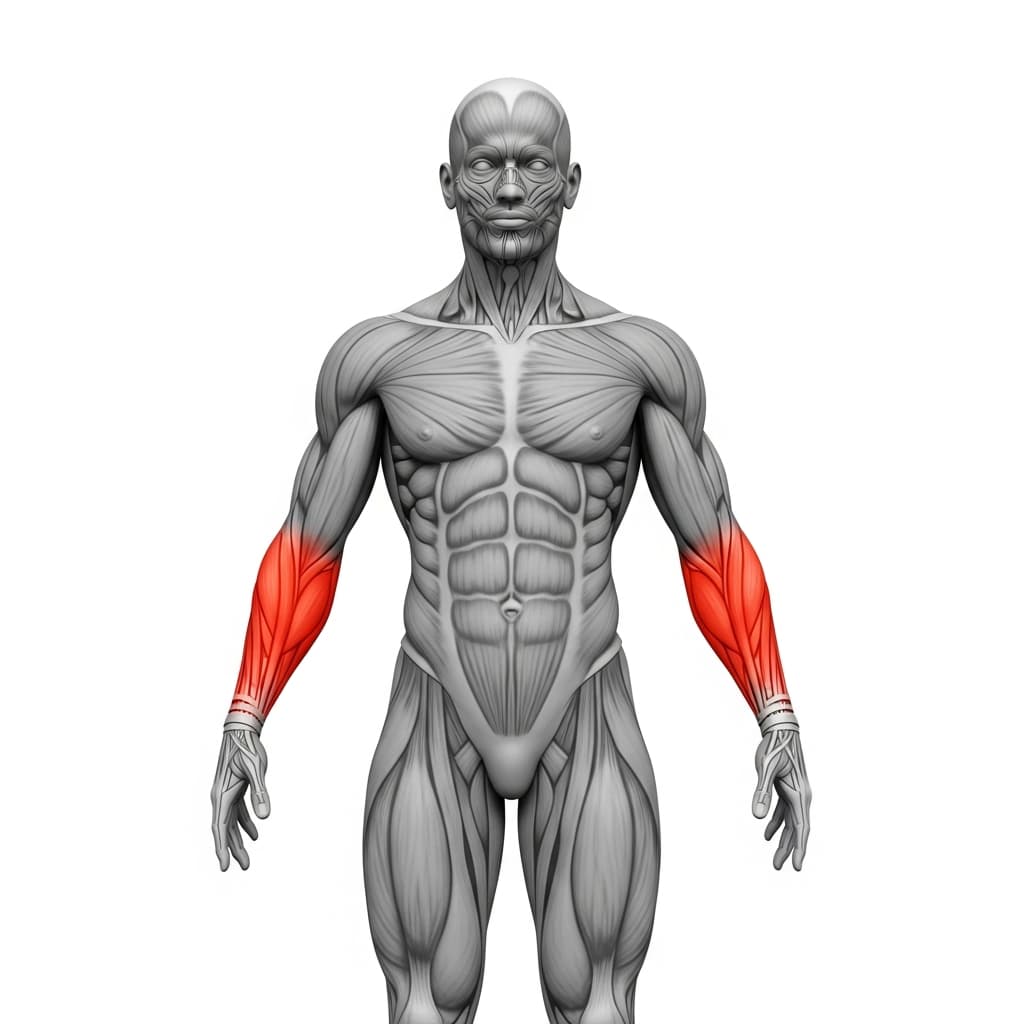
Forearm Flexors & Extensors (Forearms) - The forearm flexors maintain grip on the bar under sustained load, working harder as each slow rep extends total hang time.
Latissimus Dorsi (Lats) - The lats stabilize the shoulder joint and keep the torso from swinging during the controlled lowering phase.
Obliques (Obliques) - The obliques resist lateral rotation and side-to-side movement of the trunk, keeping the body symmetrical as the legs lower.
Benefits of Negative Toes To Bar
- Builds eccentric core strength through the exact range of motion needed for strict toes to bar, making it the most direct progression exercise for the full movement
- Develops hip flexor strength and endurance through a long lever position that hanging knee raises cannot replicate
- Strengthens grip and forearm endurance under sustained load, since each slow rep keeps you hanging longer than a standard toes to bar attempt
- Teaches the correct muscle engagement sequence for toes to bar by forcing you to feel which muscles control each phase of the descent
Who Is This Exercise For?
You should be able to hold a dead hang for at least 20 seconds and perform hanging knee raises with controlled form before attempting negative toes to bar. If you cannot tuck your knees above hip height without swinging, work on hanging knee raises and active hangs first. Grip endurance and basic shoulder stability in a hang are non-negotiable prerequisites.
Common Mistakes to Avoid
Dropping the legs too fast: The entire point of this exercise is the slow, controlled lowering phase. If you cannot maintain at least a 3-second descent, reduce the range of motion by lowering from a knee tuck position instead of fully straightened legs.
Swinging during the tuck: Use a deliberate, controlled tuck rather than throwing your knees upward. If you swing into the starting position, the momentum will carry through the negative and rob you of the eccentric tension that builds strength.
Bending the arms to compensate: Keep your arms fully extended throughout the movement. Bending the elbows shifts load from your core onto your biceps and reduces the training effect on the muscles you are trying to develop.
Losing tension in the mid-range: Most people let gravity take over once their legs pass the 45-degree mark. Actively squeeze your abs through the entire descent, especially in the middle portion where control is hardest to maintain.
Variations & Progressions
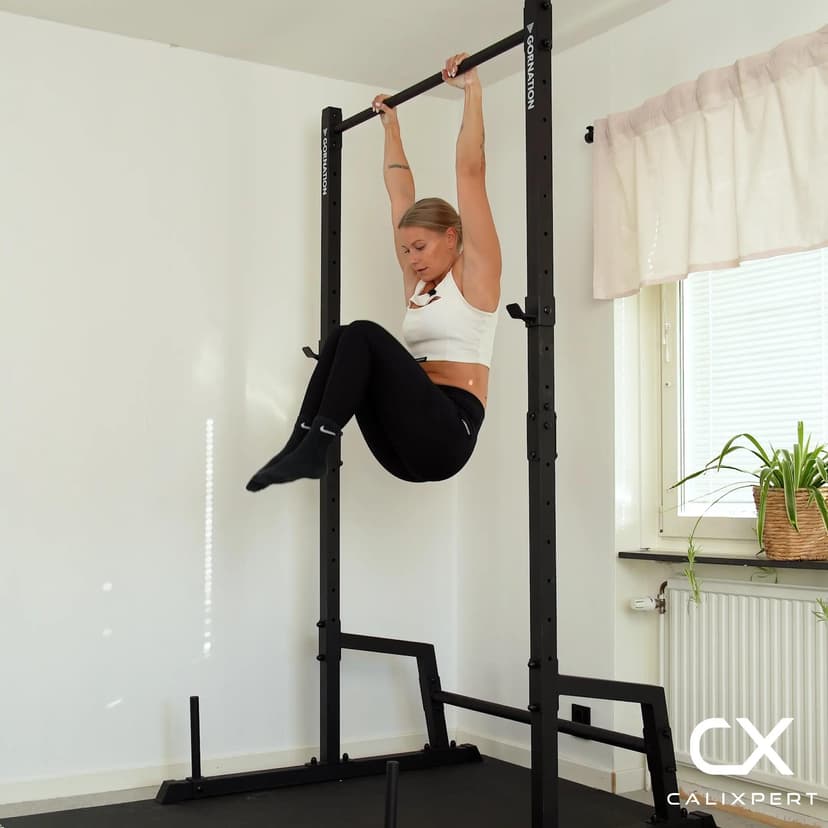
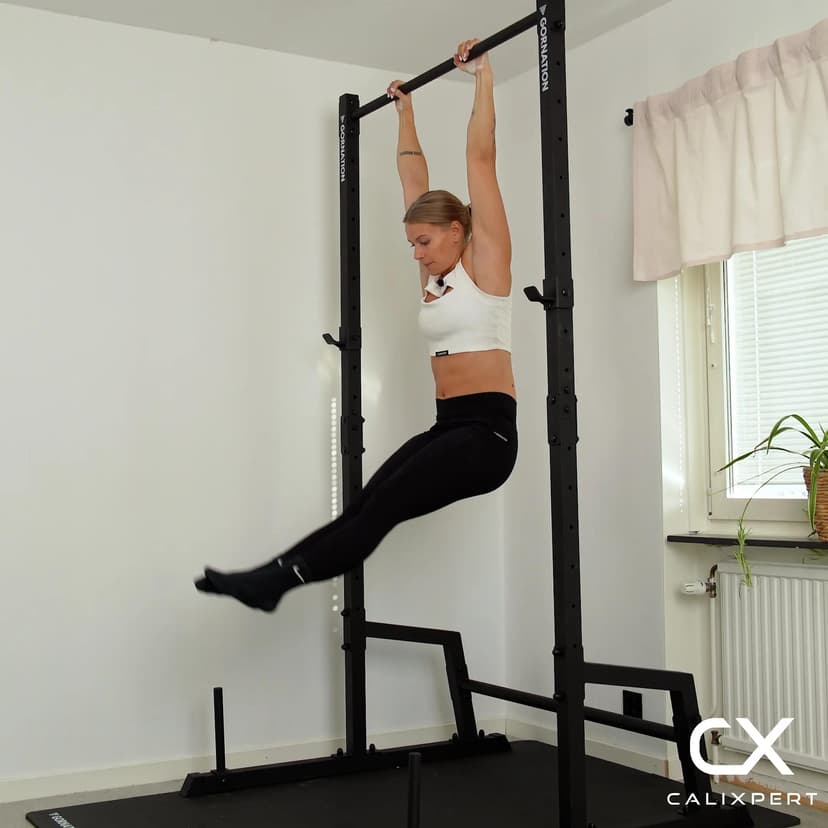
Strict Toes To Bar
Perform the full concentric and eccentric phases under control, raising and lowering the legs without any momentum. This is the target movement that negative toes to bar directly prepares you for.