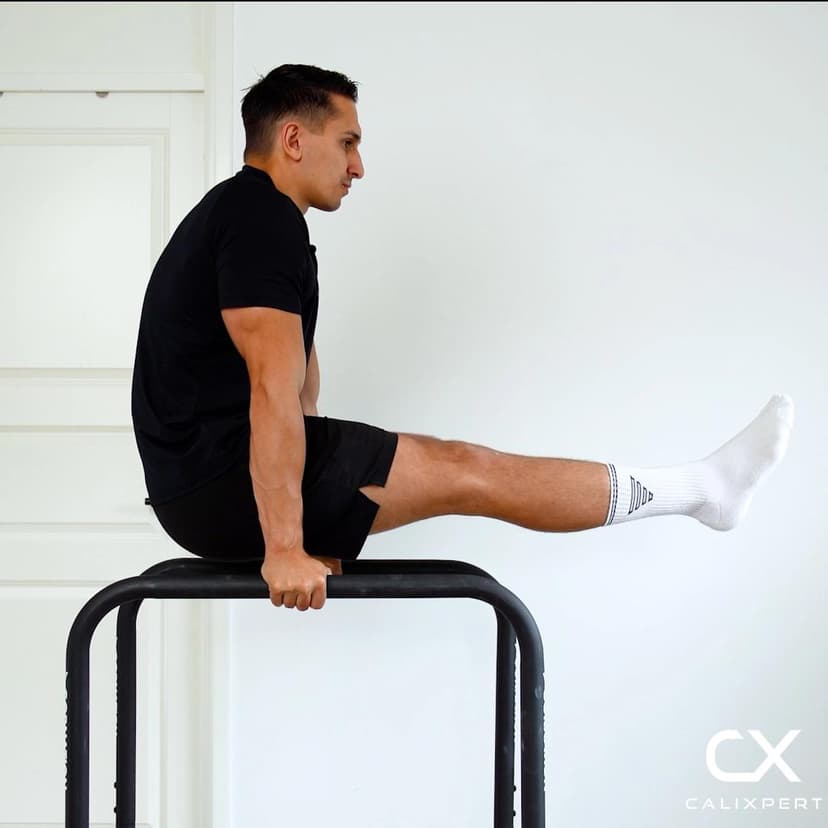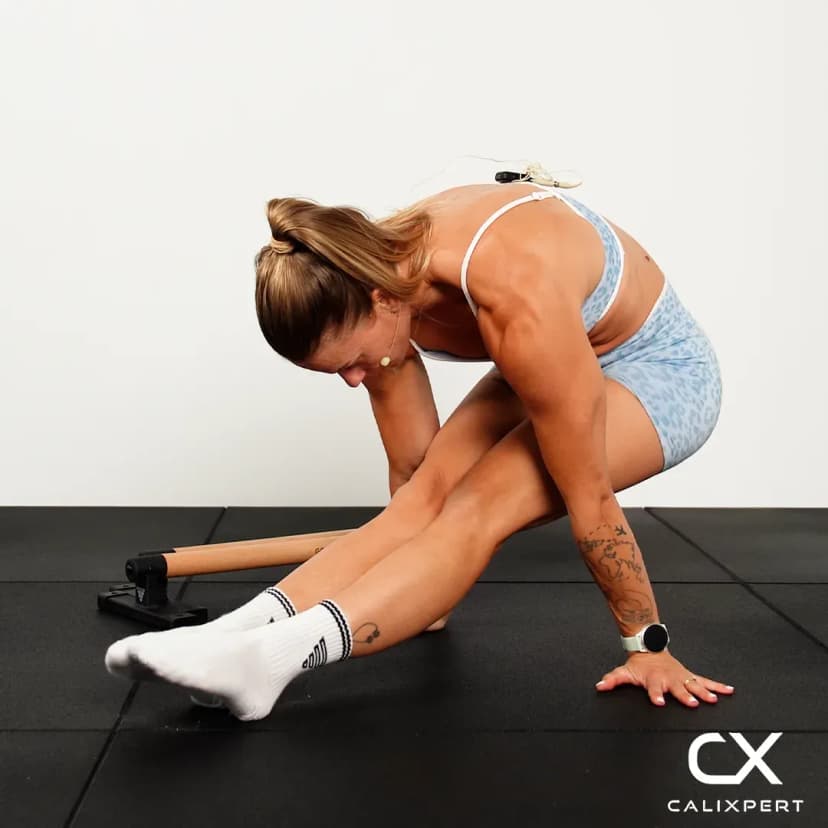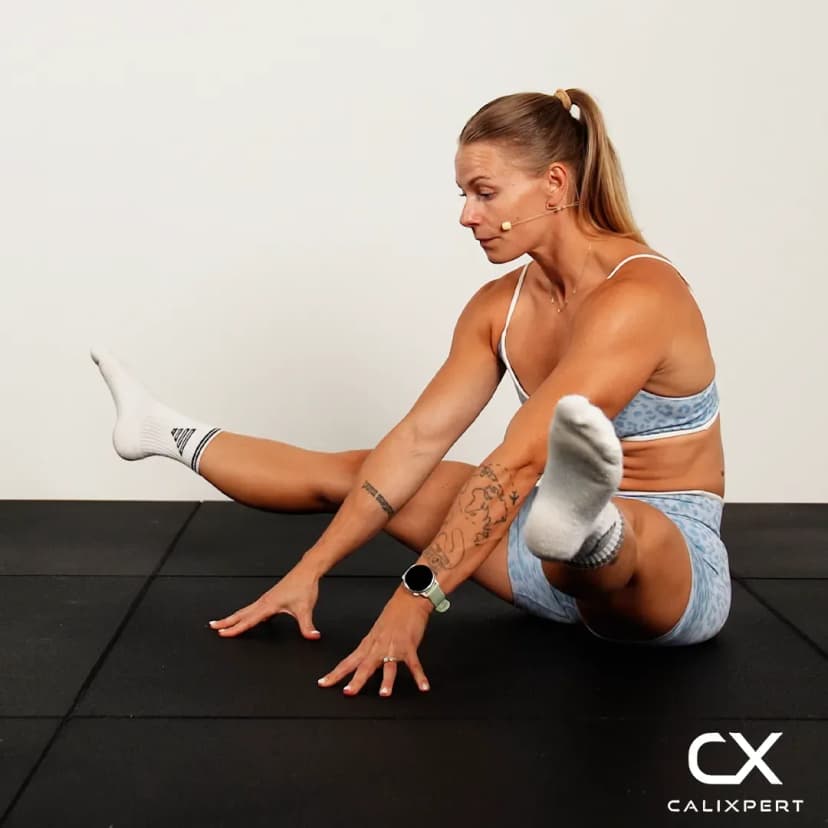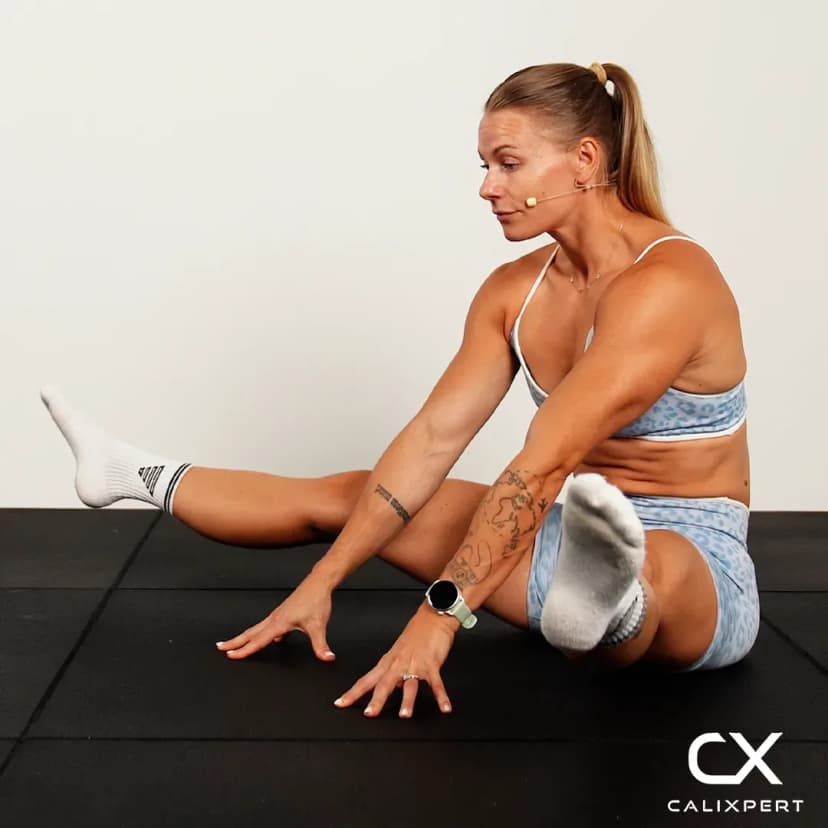
Tuck L-sit Hold
The Tuck L-sit Hold is an isometric core exercise performed on parallettes or dip bars where you support your bodyweight on straight arms while holding your knees tucked in front of you. It targets the abs, hip flexors, triceps, and serratus anterior through sustained contraction under load. As the primary progression toward a full L-sit, the tuck variation builds the pressing strength and hip flexor endurance that unlock every seated and lever-based hold in calisthenics.
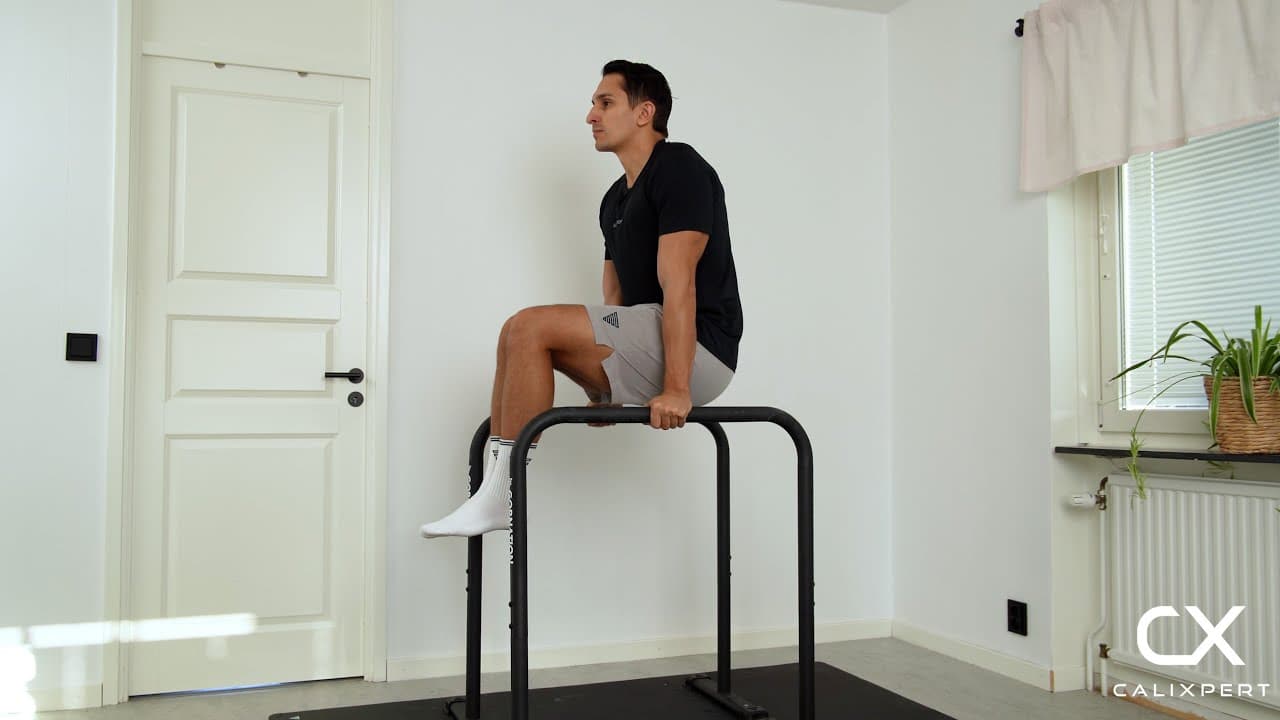
The Tuck L-sit Hold is an isometric core exercise performed on parallettes or dip bars where you support your bodyweight on straight arms while holding your knees tucked in front of you. It targets the abs, hip flexors, triceps, and serratus anterior through sustained contraction under load. As the primary progression toward a full L-sit, the tuck variation builds the pressing strength and hip flexor endurance that unlock every seated and lever-based hold in calisthenics.
How to Do Tuck L-sit Hold
1. Set Up on the Bars
Place a pair of parallettes or dip bars at shoulder width on a flat surface. Grip both bars firmly with a full wrap of the fingers and thumbs. Position yourself between the bars with your feet flat on the ground, ready to press up into a support hold.
Firm grip, thumbs wrapped around
2. Press Into Dip Support
Press your body up by straightening your arms completely and lifting your hips off the ground. Lock out your elbows fully so there is zero bend in the arms. Actively push the bars down and away from your ears to depress your shoulder blades. Your torso should be upright with your chest open.
Push the bars down, shoulders away from ears
3. Tuck Your Knees Forward
From the locked support position, lift both knees up and forward in front of your body. Bring your thighs to roughly parallel with the ground or slightly above. Keep your knees together and your shins relaxed. Maintain straight arms and depressed shoulders throughout the lift.
Knees up and forward, arms stay locked
4. Hold With Active Tension
Hold the tucked position for the target duration while maintaining full-body tension. Keep pressing the bars down to prevent your shoulders from creeping up. Breathe steadily through your diaphragm without letting your core collapse. If your form breaks, end the set rather than holding with poor positioning.
Breathe steady, press down the whole time
5. Lower With Control
When you finish the hold, slowly lower your feet back to the ground rather than dropping out of the position. Keep your arms straight and shoulders depressed until your feet touch down. Releasing tension suddenly under load increases the risk of shoulder strain.
Feet down slow, do not just drop
Most people fail the tuck L-sit because they try to lift their knees before they set their shoulders. Get the depression locked in first, push the bars as far from your ears as you can, and only then bring the knees up. If your shoulders are high, your core has nothing stable to brace against and the hold falls apart within seconds.
Muscles Worked During Tuck L-sit Hold
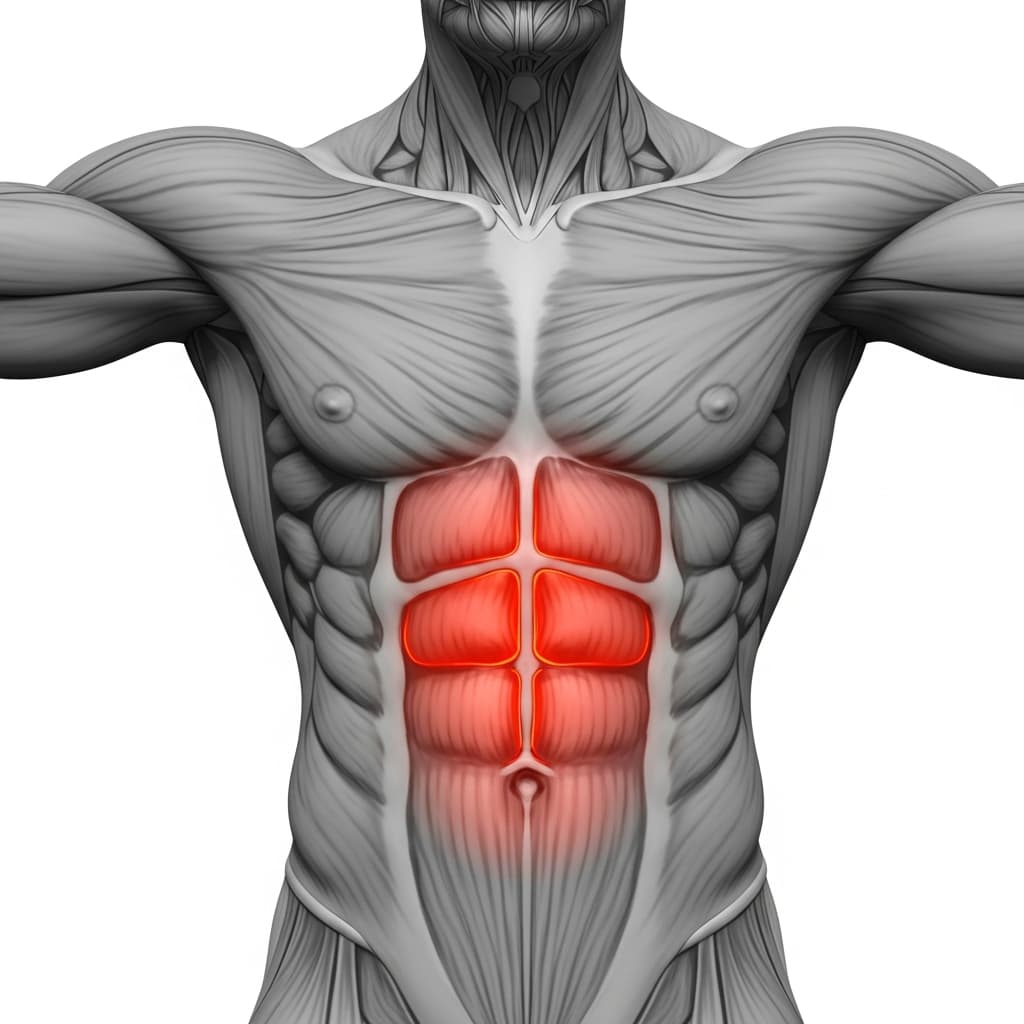
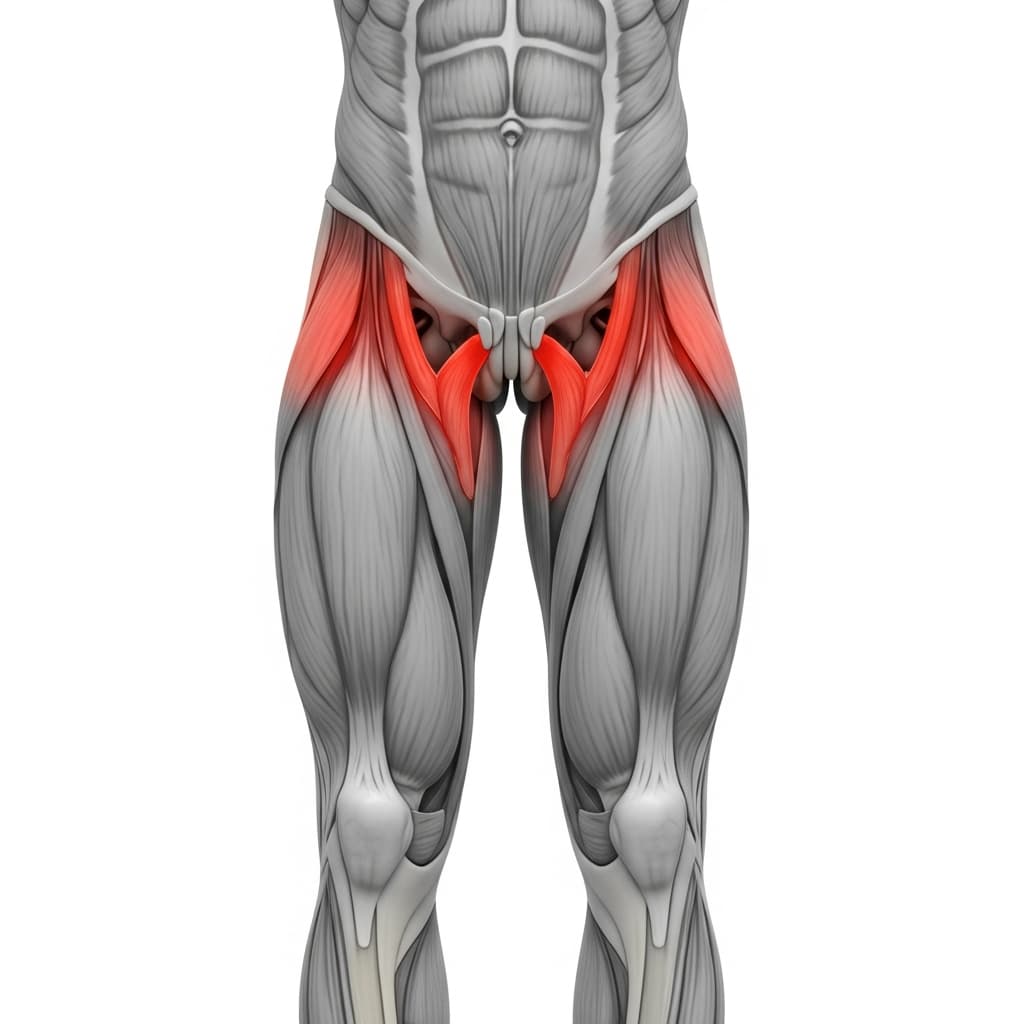
Primary Muscles:
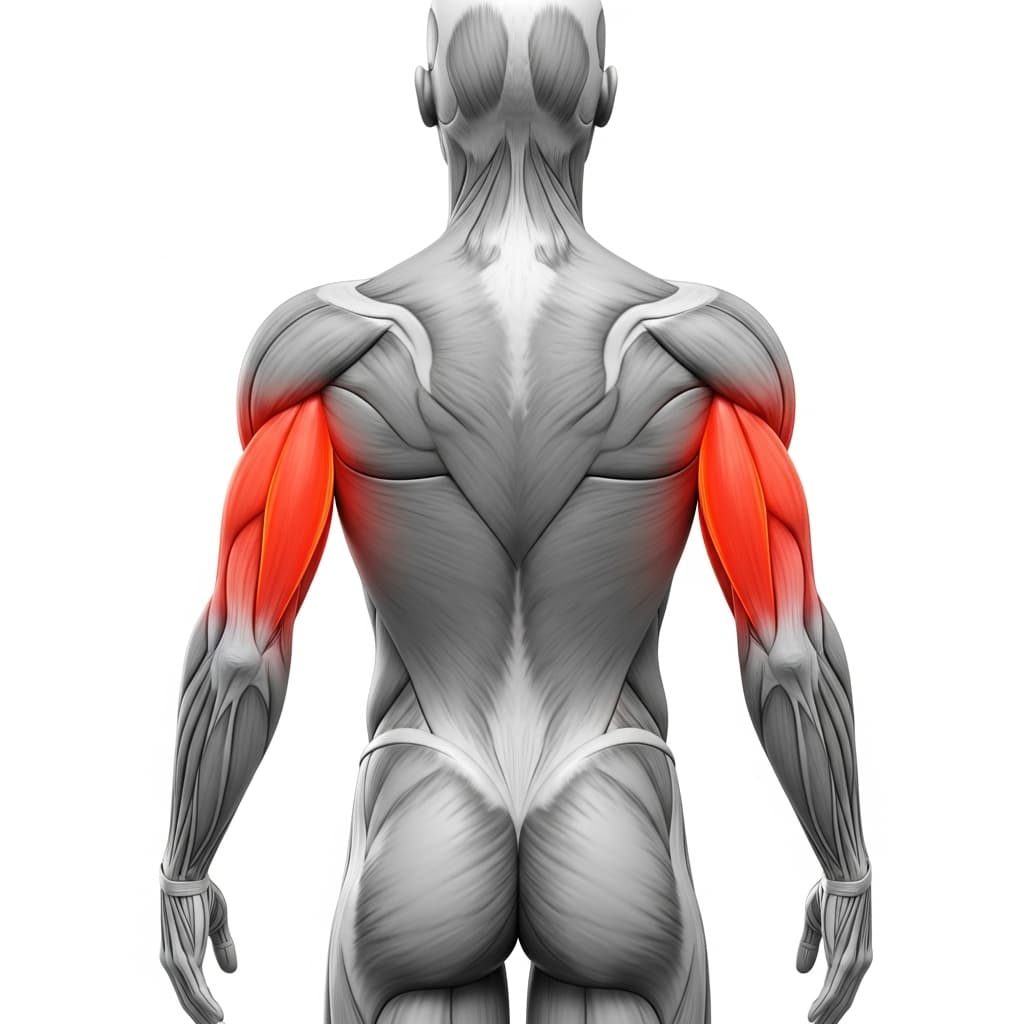
Secondary Muscles:
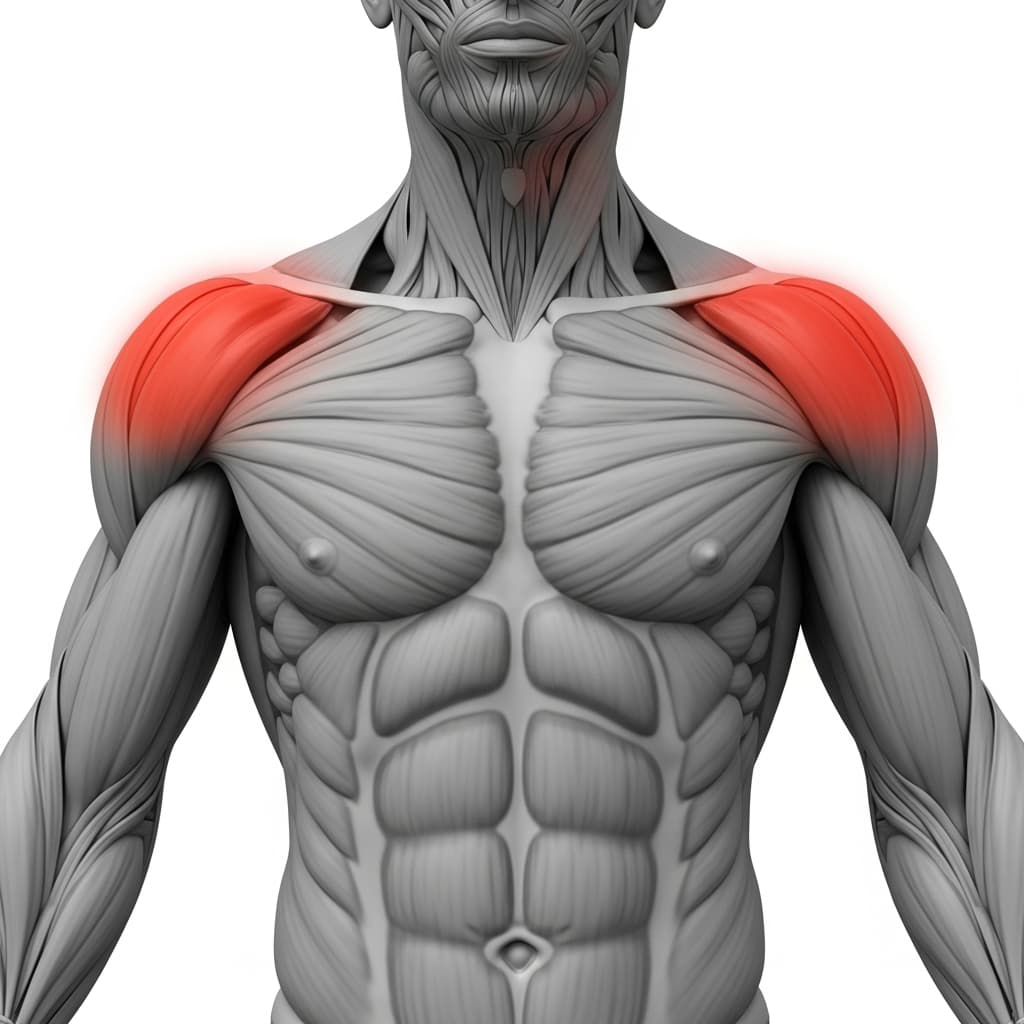
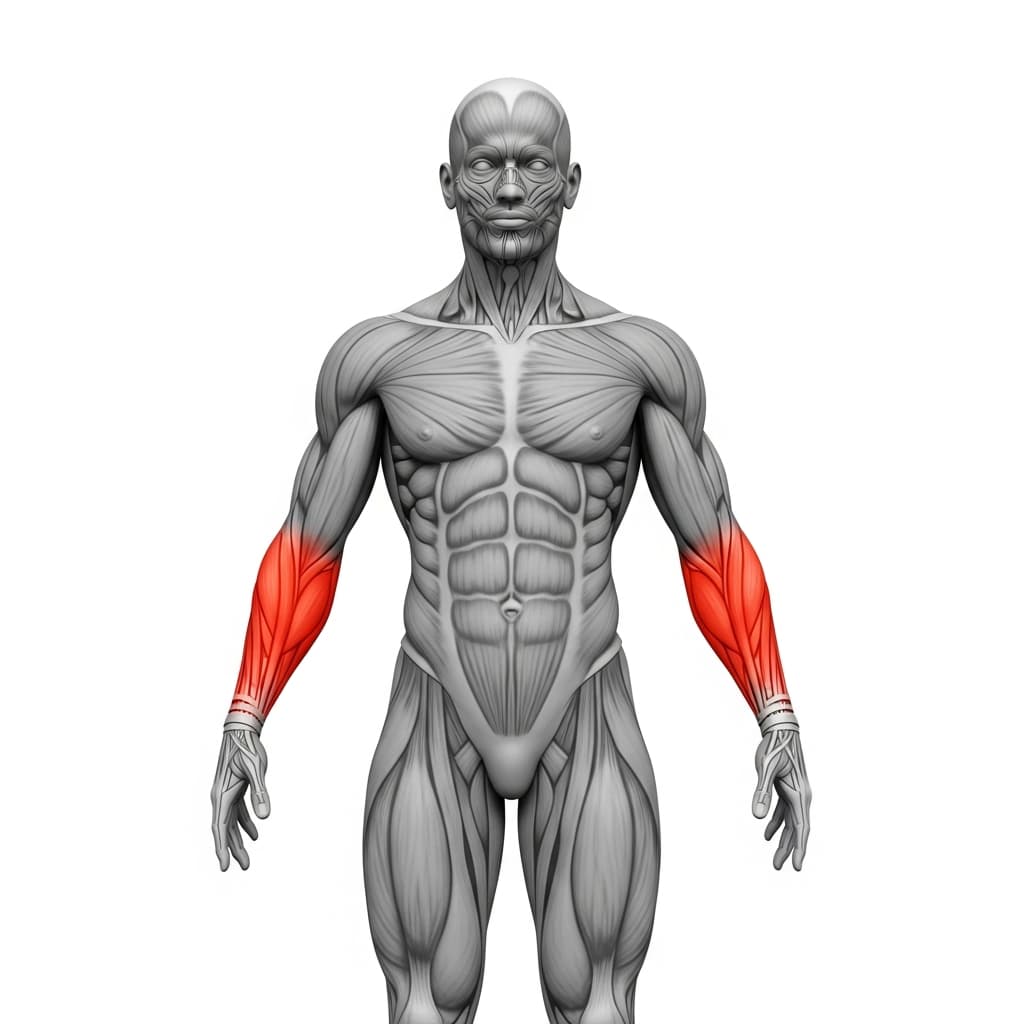
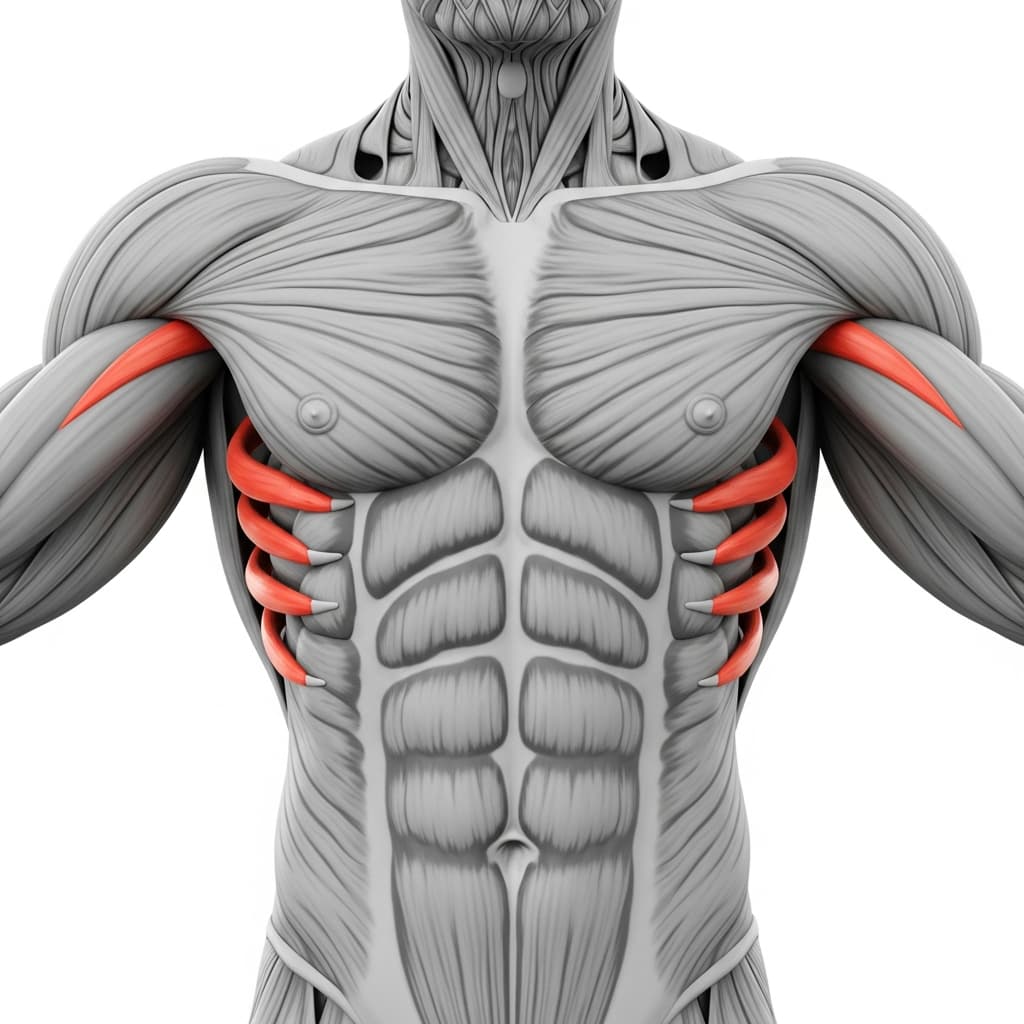
Primary Muscles
Rectus Abdominis (Abs) - The abdominals contract isometrically to stabilize the torso and resist the pull of the tucked legs, preventing the pelvis from tilting backward under load.
Iliopsoas (Hip Flexors) - The hip flexors hold the thighs elevated in front of the body against gravity for the entire duration of the hold, making them the primary endurance limiter in this exercise.
Secondary Muscles
Triceps Brachii (Triceps) - The triceps maintain full elbow lockout throughout the hold, supporting the entire bodyweight on straight arms.
Anterior Deltoid (Front Deltoid) - The front deltoids stabilize the shoulder joint in the depressed support position while resisting the forward pull created by the tucked legs.
Forearm Flexors & Extensors (Forearms) - The forearm muscles maintain a firm grip on the parallettes or dip bars, preventing slippage during the sustained isometric hold.
Serratus Anterior (Serratus Anterior) - The serratus anterior actively depresses and protracts the scapulae, keeping the shoulders pulled down and away from the ears throughout the hold.
Benefits of Tuck L-sit Hold
- Develops hip flexor strength and endurance under sustained isometric load, which directly transfers to L-sits, V-sits, and front lever progressions
- Builds straight-arm pressing strength through the triceps and shoulders, a prerequisite for planche and handstand training
- Strengthens the serratus anterior through active scapular depression, improving shoulder health and overhead stability
- Trains core compression, the ability to pull the legs toward the torso under load, which is the limiting factor in most advanced calisthenics holds
Who Is This Exercise For?
You should be able to hold a dip support hold on parallettes or dip bars for at least 15 seconds with depressed shoulders and fully locked arms before attempting the tuck L-sit. If your shoulders shrug up toward your ears or your elbows bend under load, work on shoulder depression drills and straight-arm support holds first. A basic understanding of scapular depression is essential, as the tuck L-sit demands constant downward pressure through the shoulders.
Common Mistakes to Avoid
Shoulders shrugging toward the ears: Actively push the bars downward throughout the entire hold to keep your shoulders depressed. If your shoulders rise, your traps take over and the serratus and core lose engagement. Practice isolated shoulder depression drills on the bars before adding the tuck.
Bending the elbows during the hold: Lock your elbows out completely before tucking the knees and maintain that lockout for the entire set. Bent arms shift the load onto the biceps and make the hold significantly harder while reducing the core stimulus.
Leaning too far back: Keep your torso upright with a slight forward lean rather than leaning backward to compensate for the weight of your legs. Excessive backward lean puts unnecessary stress on the lower back and reduces hip flexor activation.
Holding breath during the set: Breathe in short, controlled cycles through the diaphragm. Holding your breath causes your core to fatigue faster and limits your hold time.
Variations & Progressions
Foot-Supported Tuck L-sit
Keep one foot lightly touching the ground while holding the tuck position with the other leg. This reduces the load on the hip flexors and core, making it accessible for athletes who cannot yet hold the full tuck for more than a few seconds.
One-Leg Extended L-sit
Extend one leg straight out in front of you while keeping the other knee tucked. This increases the lever length on one side and demands significantly more hip flexor strength and core stability than the bilateral tuck.