Assisted 90 Degree Chin Up Hold
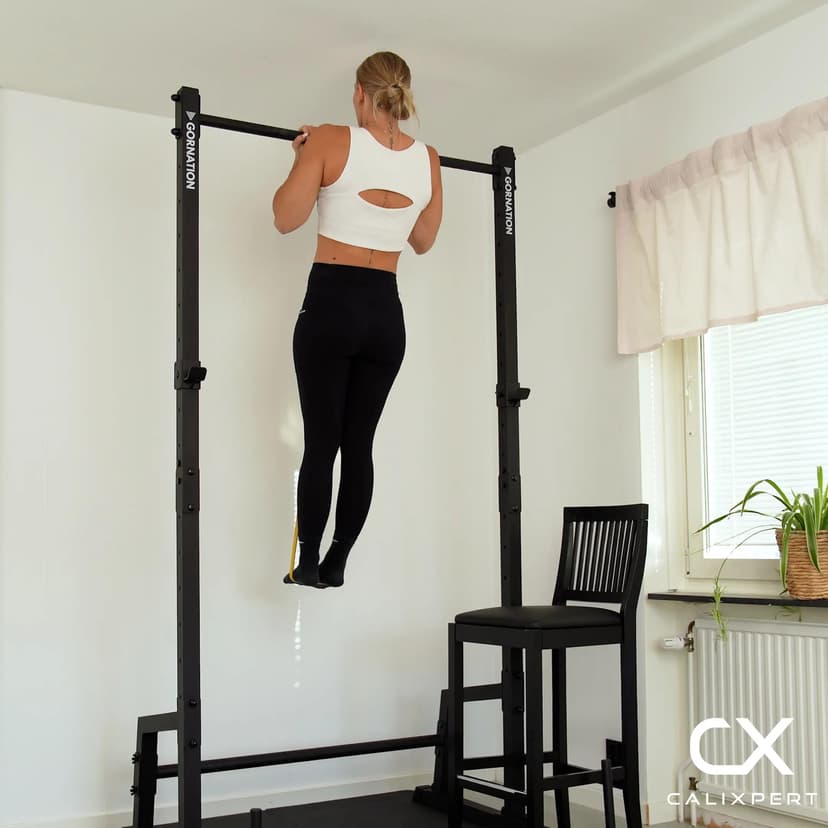
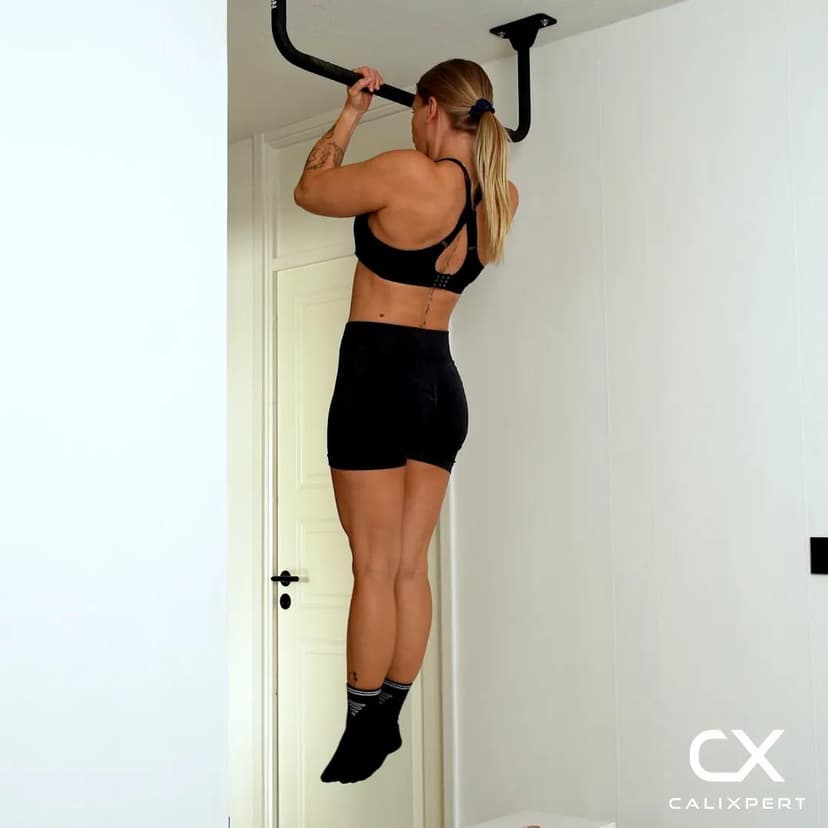
The Assisted 90 Degree Chin Up Hold is an isometric pulling exercise that builds time under tension in the biceps, lats, and upper back at the most demanding point of the chin-up range of motion. A resistance band reduces the load enough to hold the 90-degree elbow position with full body tension, proper scapular retraction, and controlled breathing. This hold is one of the most effective ways to develop the mid-range pulling strength that directly transfers to unassisted chin-ups and one-arm chin-up progressions.
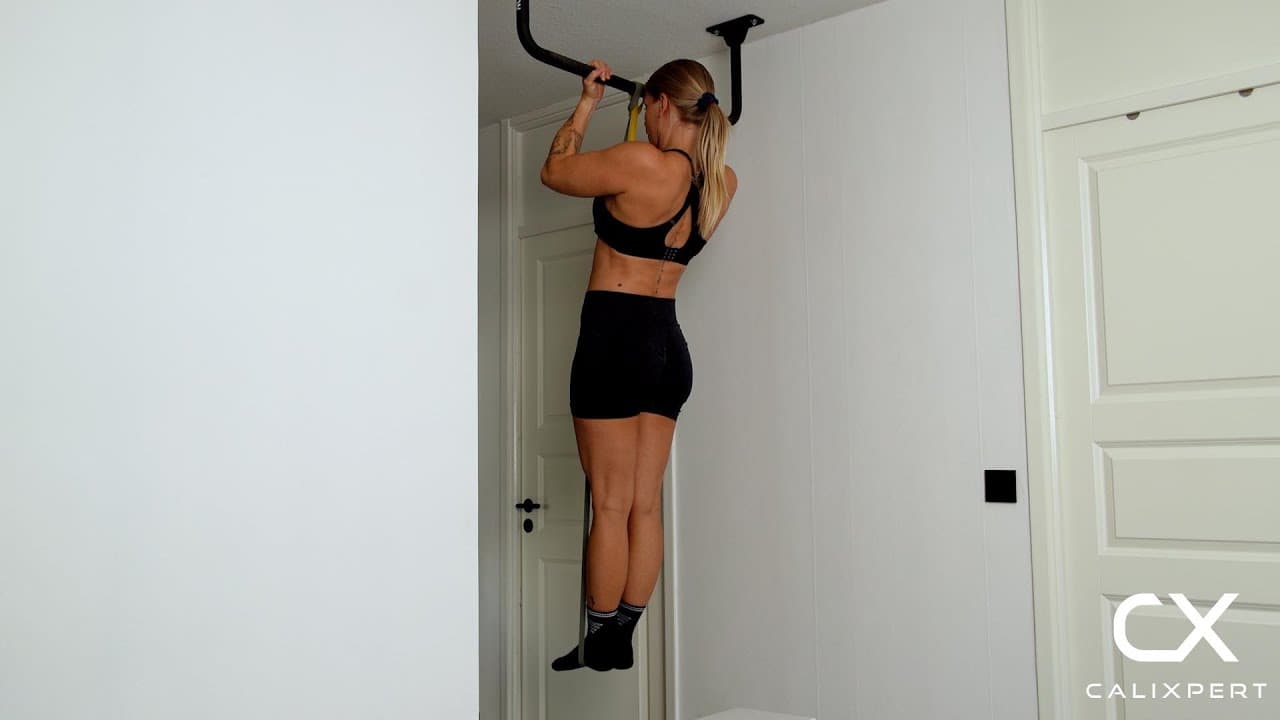
The Assisted 90 Degree Chin Up Hold is an isometric pulling exercise that builds time under tension in the biceps, lats, and upper back at the most demanding point of the chin-up range of motion. A resistance band reduces the load enough to hold the 90-degree elbow position with full body tension, proper scapular retraction, and controlled breathing. This hold is one of the most effective ways to develop the mid-range pulling strength that directly transfers to unassisted chin-ups and one-arm chin-up progressions.
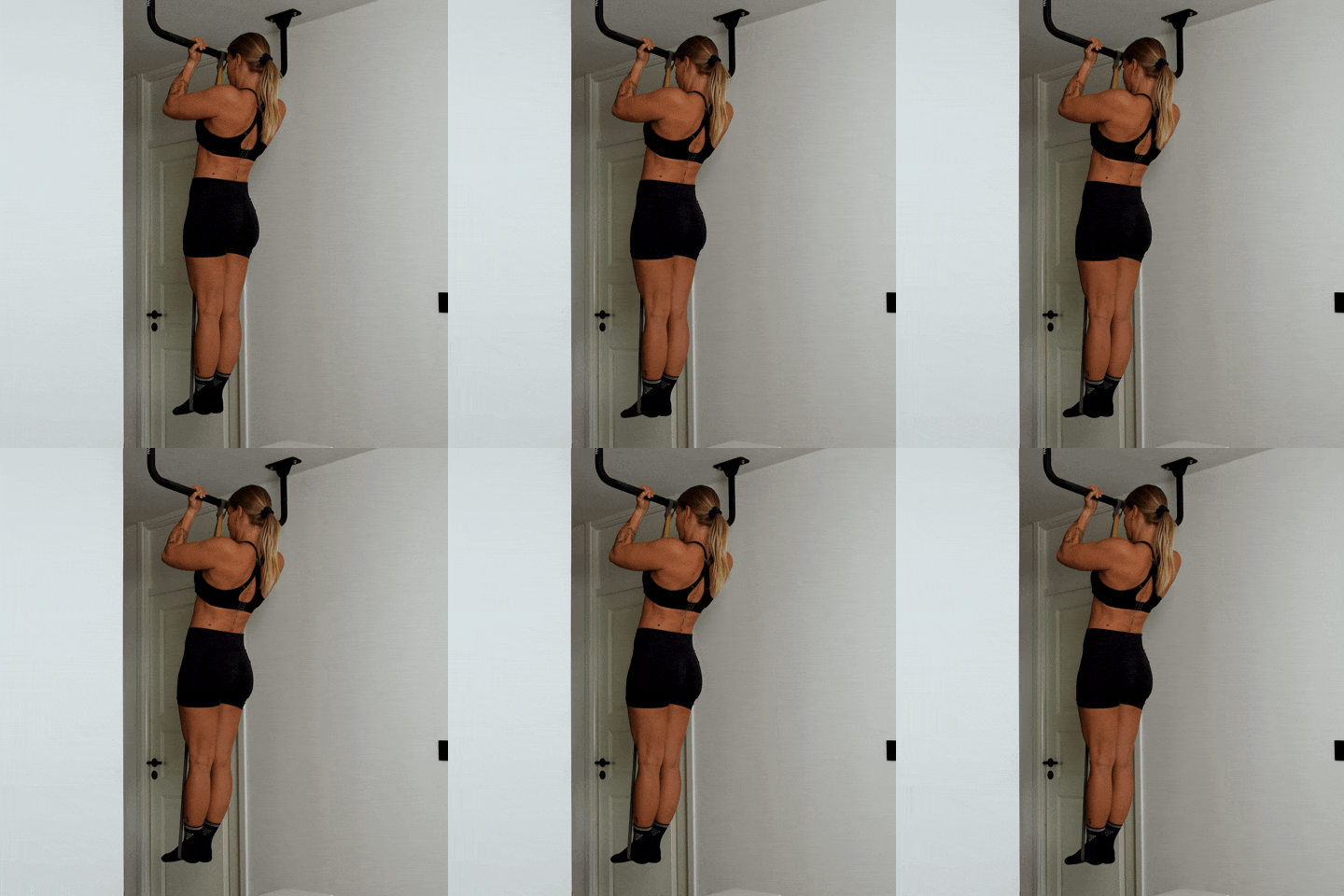
How to Do Assisted 90 Degree Chin Up Hold
1. Attach the Band and Set Up
Loop a light to medium resistance band over a high pull-up bar so it hangs straight down. Step both feet into the bottom of the band and let it sit across your midfoot. The band should be taut when your arms are fully extended in a dead hang. Use the lightest band that still allows you to hold the position for your target time.
Band on feet, not knees
2. Grip the Bar Shoulder Width
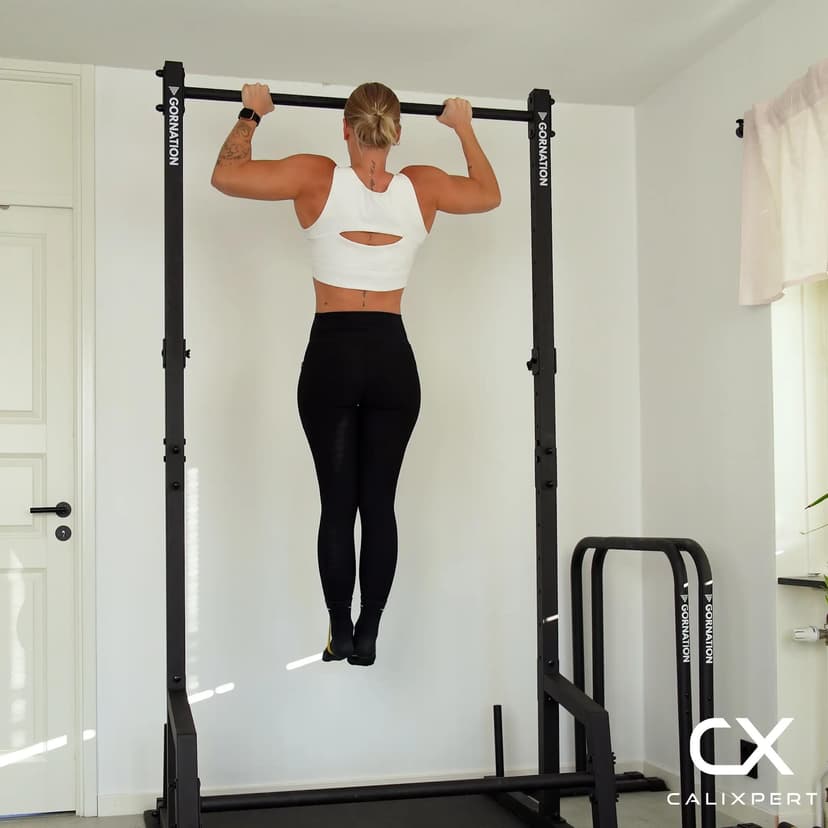
Grab the bar with an underhand grip, palms facing toward you, at shoulder width. Wrap your thumbs fully around the bar for a secure hold. Let your body hang with arms fully extended before initiating the pull. This supinated grip places the biceps in their strongest pulling position for the hold.
Palms toward you, thumbs around the bar
3. Pull to the 90-Degree Position
Pull yourself up until your elbows are bent at roughly 90 degrees and your upper arms are parallel to the floor. As you pull, depress your shoulders and squeeze your shoulder blades together. Your head should be close to bar height, not sinking below the midpoint. Arrive at the hold position under control, not with a fast jerk.
Elbows to 90, head near the bar
4. Lock in Full Body Tension
Once you reach the 90-degree position, activate your entire body. Brace your core as if preparing for a punch, squeeze your glutes, and press your legs together. This full body tension prevents swinging and forces the upper back and lats to stabilize the hold. A loose body leaks energy and makes the hold significantly harder than it needs to be.
Core tight, glutes squeezed, legs together
5. Retract and Depress the Scapula
Keep your shoulder blades pulled down and squeezed together throughout the entire hold. This scapular retraction ensures the lats and upper back stay engaged rather than dumping all the load onto the biceps. If your shoulders start creeping up toward your ears, the set is over. Breathe slowly and evenly while maintaining the scapular position.
Shoulders down and back the entire time
6. Lower Down With Control
When you reach your target hold time or cannot maintain proper position, lower yourself slowly to a full dead hang over 3 to 4 seconds. Do not drop out of the hold. This controlled descent adds valuable eccentric work and protects the elbow joint from sudden loading. Reset your grip and scapula before starting the next rep.
Slow descent, never drop
Most people lose this hold from the shoulders, not the arms. The moment your shoulder blades stop squeezing together and your shoulders creep up, the lats check out and the biceps take the full load alone. Focus on keeping the scapula locked down and back for the entire hold. If you can maintain that position, the hold time will improve on its own.
Muscles Worked During Assisted 90 Degree Chin Up Hold
Primary Muscles
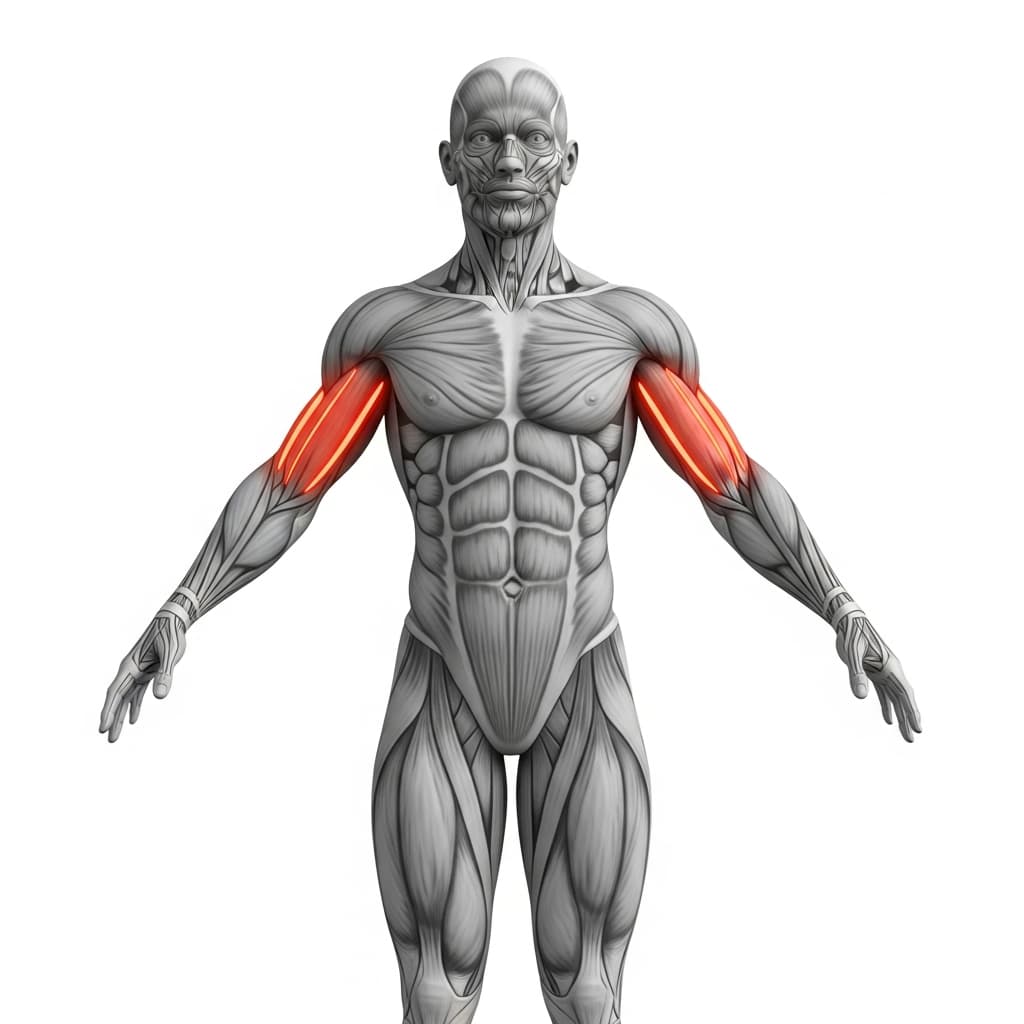
Biceps Brachii (Biceps) - The biceps maintain the 90-degree elbow flexion isometrically throughout the hold, resisting gravity in the supinated grip position where they have the strongest mechanical advantage.
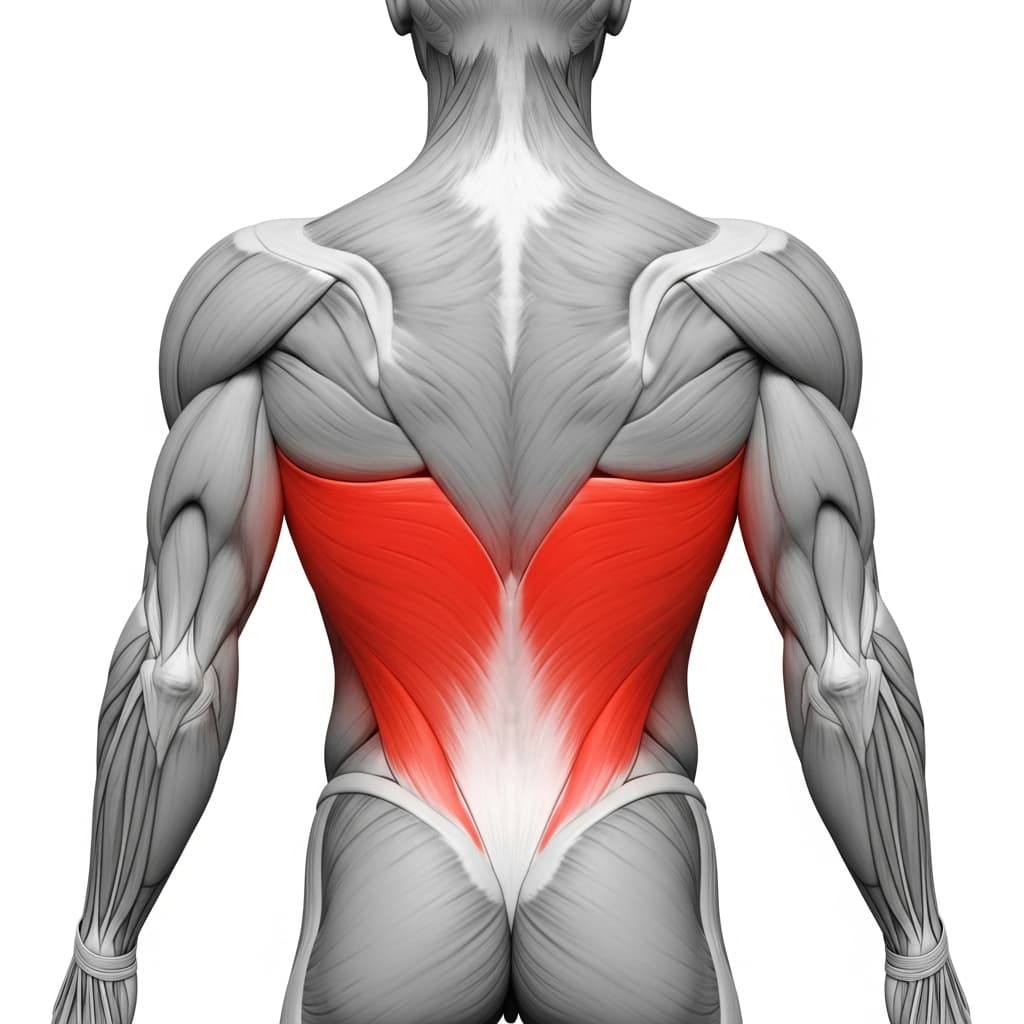
Latissimus Dorsi (Lats) - The lats work isometrically to keep the torso pulled close to the bar and prevent the body from drifting away from the hold position.
Secondary Muscles
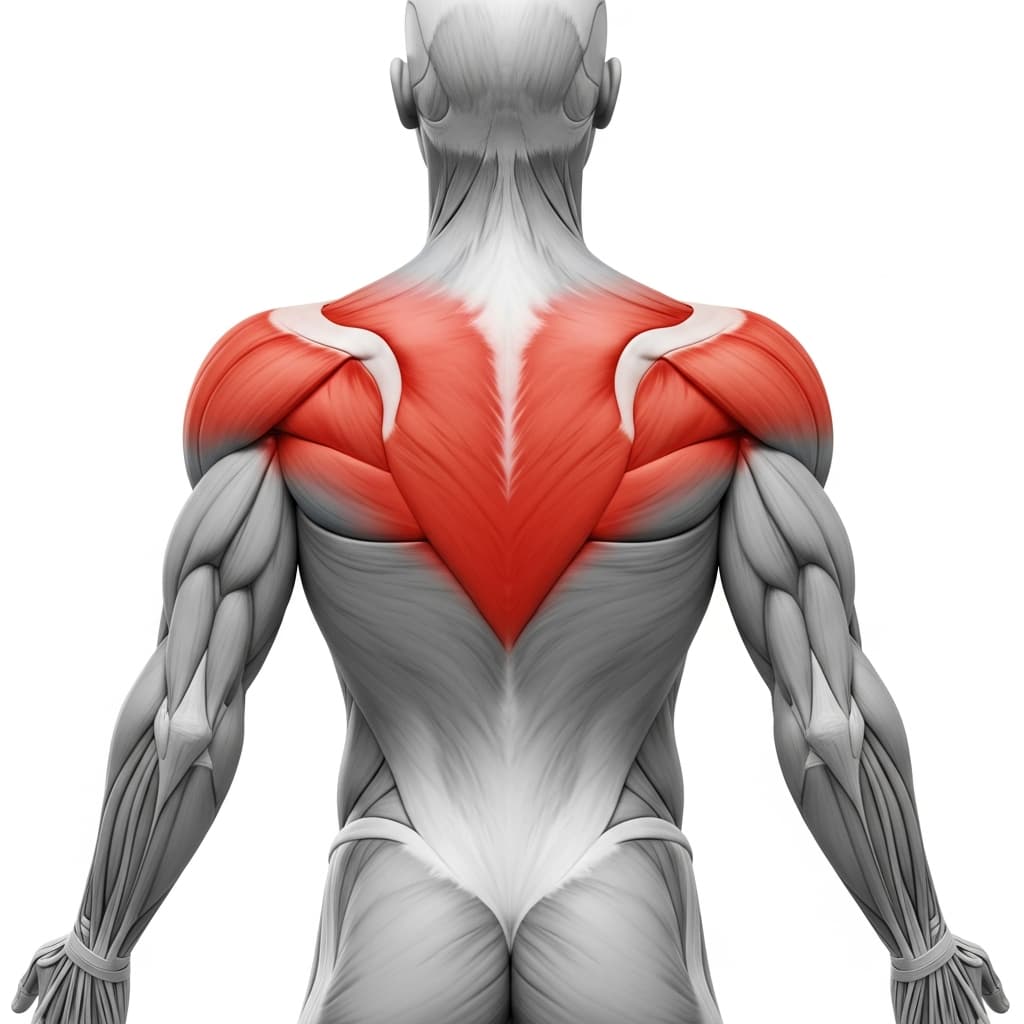
Rhomboids & Upper Trapezius (Upper Back) - The rhomboids and mid-traps maintain scapular retraction throughout the hold, keeping the shoulder blades squeezed together and preventing the shoulders from rounding forward.
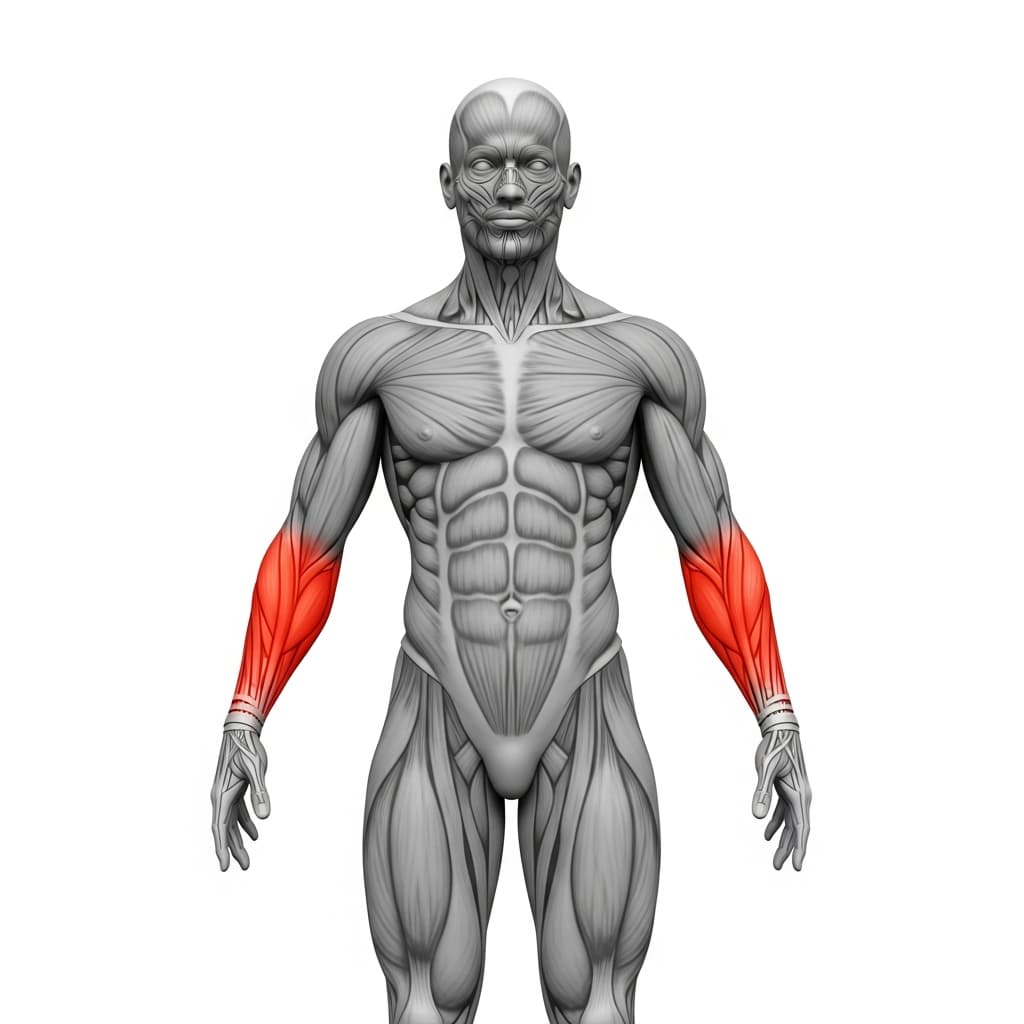
Forearm Flexors & Extensors (Forearms) - The forearm flexors sustain grip on the bar for the full duration of the isometric hold, working continuously against bodyweight minus band assistance.
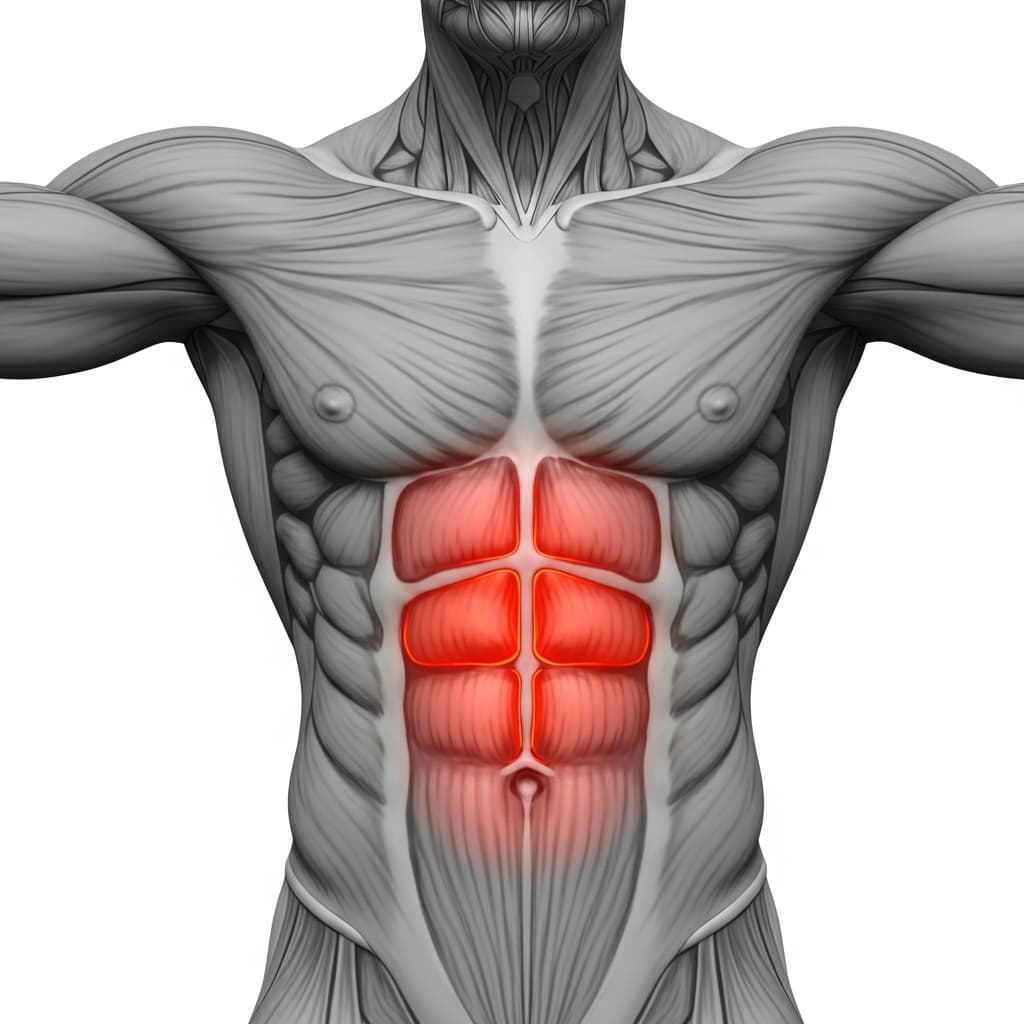
Rectus Abdominis (Abs) - The abdominals brace the trunk and prevent the lower body from swinging, maintaining the rigid body line required for an efficient hold.
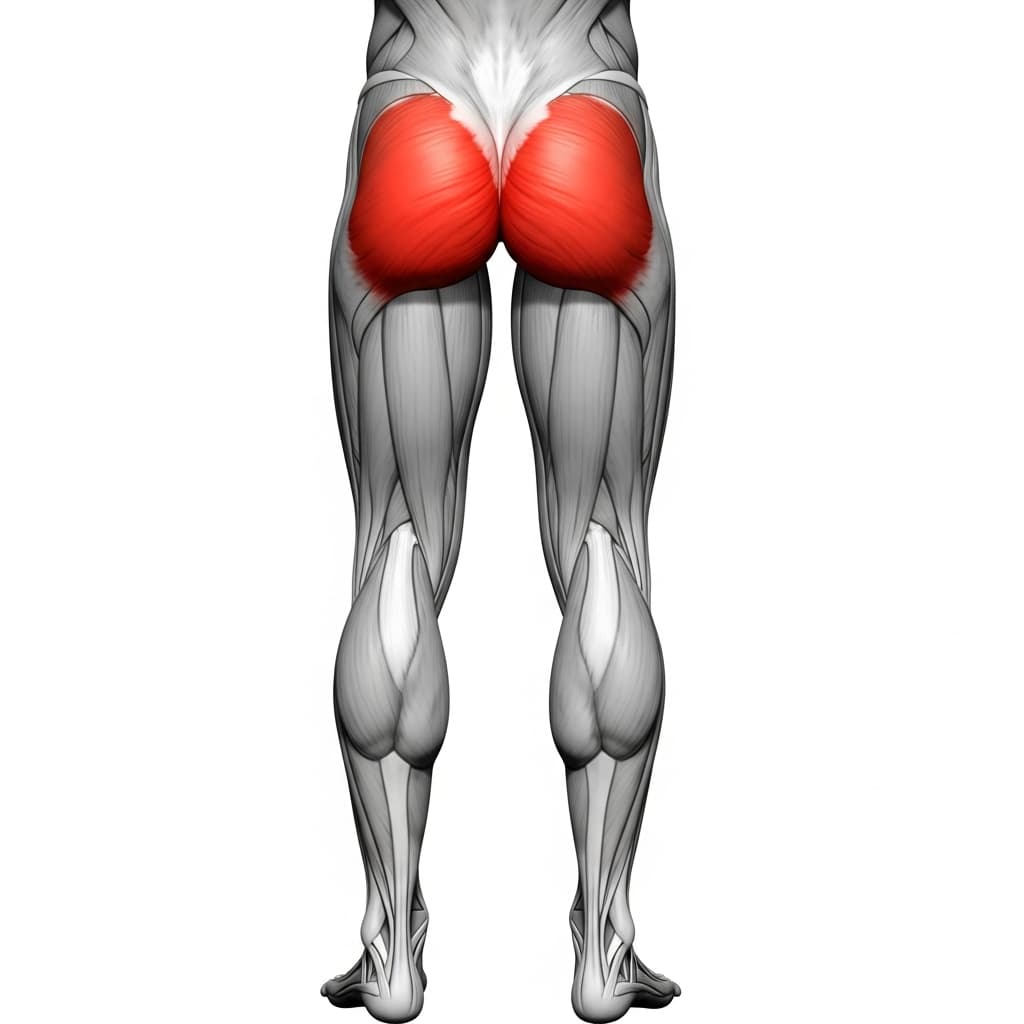
Gluteus Maximus (Glutes) - The glutes contract to lock the hips in extension and contribute to the full body tension that eliminates energy leaks during the hold.
Benefits of Assisted 90 Degree Chin Up Hold
- Builds isometric bicep and lat strength at the most mechanically demanding point of the chin-up, directly improving sticking-point performance
- Develops scapular retraction endurance under load, which transfers to every pulling movement in calisthenics
- Increases time under tension at a fixed joint angle, stimulating tendon adaptation and connective tissue strength in the elbows and shoulders
- Serves as a measurable progression benchmark toward unassisted chin-up holds and one-arm chin-up training
Who Is This Exercise For?
You should be able to hold a dead hang for at least 15 seconds and perform 3 to 5 band-assisted chin-ups with controlled form before attempting this hold. If you cannot pull yourself to the 90-degree position even with a band, work on assisted chin-up negatives until you build enough strength to pause at the midpoint. Wrist or elbow pain during underhand grip hanging means you are not ready for sustained isometric work at this angle.
Common Mistakes to Avoid
Shrugging the shoulders up toward the ears: Actively depress your shoulder blades throughout the hold. If your shoulders start rising, it means the upper back has fatigued and the set should end. Practicing scapular depressions in a dead hang builds the endurance to maintain this position.
Using too much band assistance: The band should reduce the load just enough to hold the position for your target time, not make it effortless. If you can hold for over 45 seconds without difficulty, switch to a thinner band or remove it entirely.
Letting the body swing or sway: Squeeze your glutes and press your legs together before pulling into the hold. A rigid body line eliminates momentum and forces the working muscles to do all the stabilization work.
Holding breath during the isometric: Breathe slowly and evenly throughout the hold. Holding your breath spikes blood pressure and causes you to fatigue faster. Controlled breathing helps you sustain the position significantly longer.