Ring Dips
Ring dips take the standard dip and move it onto a pair of gymnastic rings, so nothing under your hands stays still. The chest, triceps and front deltoids do the pressing, while the lats, upper back and core work the whole time to keep the rings pulled in tight against your body. That stability demand is what separates them from a dip on fixed bars, and it is why the same rep feels much harder once the rings are moving under your hands.

Ring dips take the standard dip and move it onto a pair of gymnastic rings, so nothing under your hands stays still. The chest, triceps and front deltoids do the pressing, while the lats, upper back and core work the whole time to keep the rings pulled in tight against your body. That stability demand is what separates them from a dip on fixed bars, and it is why the same rep feels much harder once the rings are moving under your hands.
How to Do Ring Dips
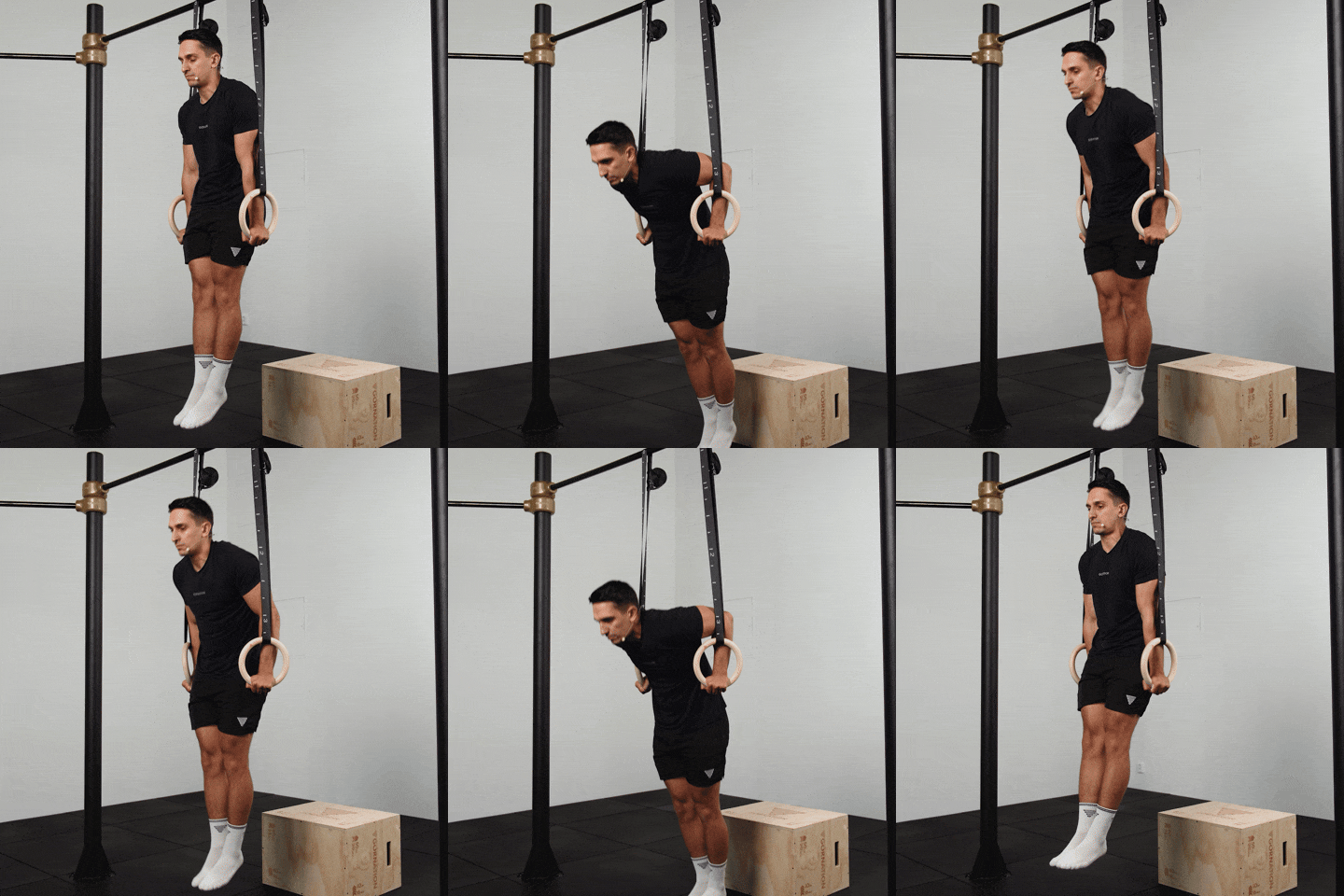
1. Hang the Rings and Set a Box
Attach the rings to something sturdy and hang them high enough that your legs can stay straight at the bottom of the rep. A box beside the rings is worth having, so you can step in rather than jump up into them.
High enough to straighten your legs
2. Set Your Grip
Take hold of the rings so each ring sits deep in your hand rather than hanging in your fingers. You are not hanging your bodyweight in the rings, you are holding them so the pressure comes through that one point in the hand.
Ring deep in the hand, not in the fingers
3. Step In and Lock Out
Step off the box into the support position and straighten your arms as far as you can. Let your feet leave the box so you are holding your own weight before the first rep starts.
Step in, then lock out
4. Pull the Rings In and Tension Up
Pull the rings in against your body and tension your whole body from your hands to your feet. This is the position you have to hold for the entire rep, and losing it is what makes the exercise fall apart.
Rings tight, everything tense
5. Lower to 90 Degrees
Lower yourself with the elbows staying close to your sides and the rings staying close to your body. Go down until your elbows reach roughly 90 degrees, keeping everything tight and in.
Elbows close, down to 90 degrees
6. Press Back Up Slowly
Push back up to the support position slowly and under control, still keeping the rings pulled in. With time you will be able to do this faster, but that speed comes on its own rather than being something you force.
Slow and controlled on the way up
The whole exercise lives or dies on where the rings are. Many people lose control and let them travel outwards on the way down, and that makes it much, much harder than it needs to be. Pull them in against your body, keep your elbows close, tension everything, then go down to 90 degrees and push back up slowly and controlled. The speed comes later on its own.
Muscles Worked During Ring Dips
Secondary Muscles:
Primary Muscles
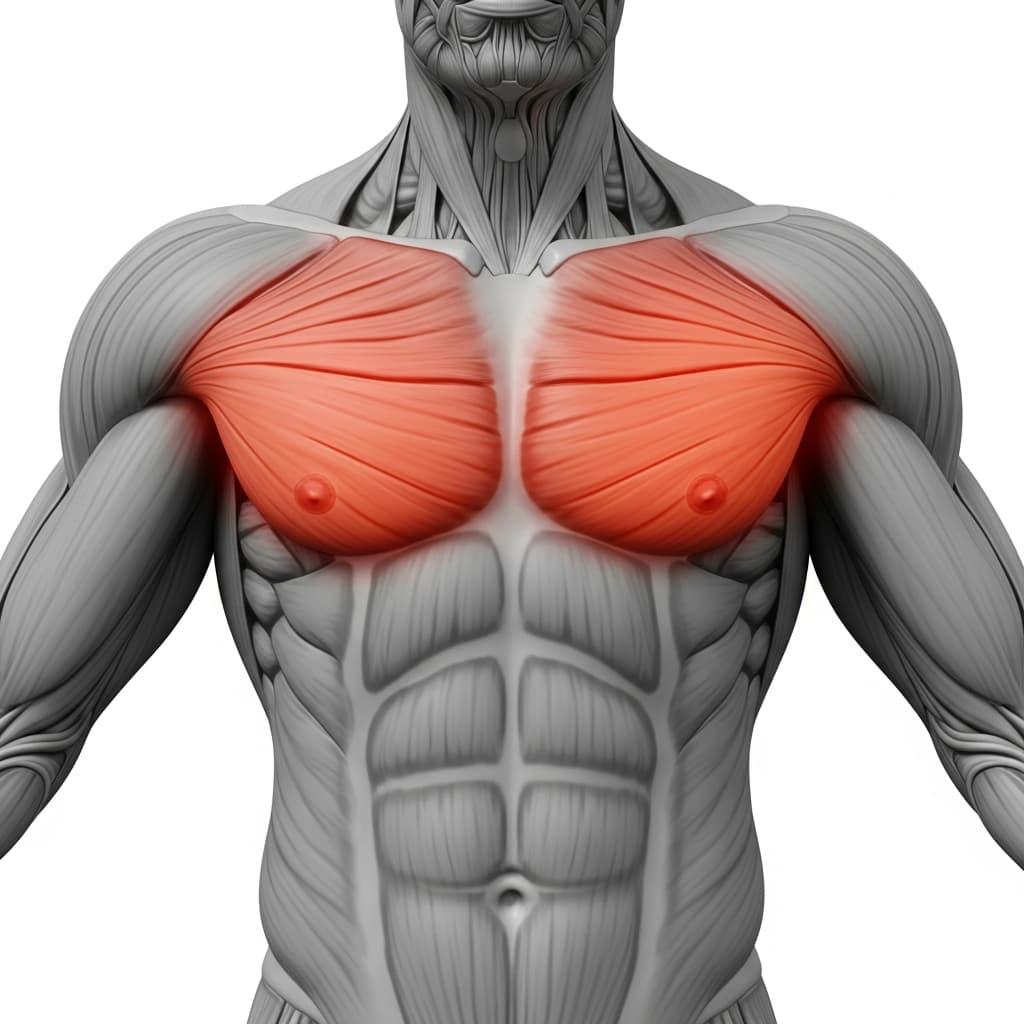
Pectoralis Major (Chest) - The chest carries the most load in the bottom position, where it sits under the deepest stretch with the elbows around 90 degrees, and it starts the press out of that bottom.
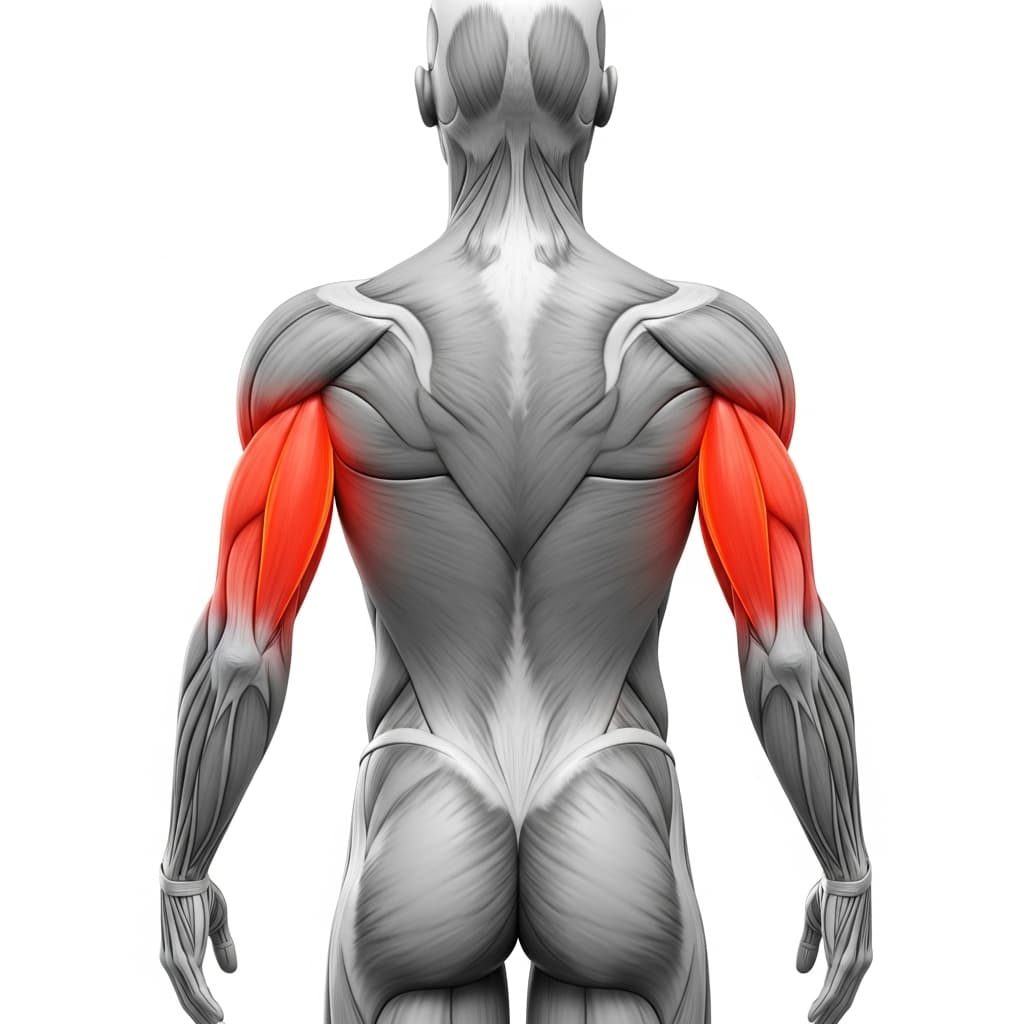
Triceps Brachii (Triceps) - The triceps extend the elbows and take over as the arms straighten, so their hardest work sits in the top half of the press as you finish into the support position.
Secondary Muscles
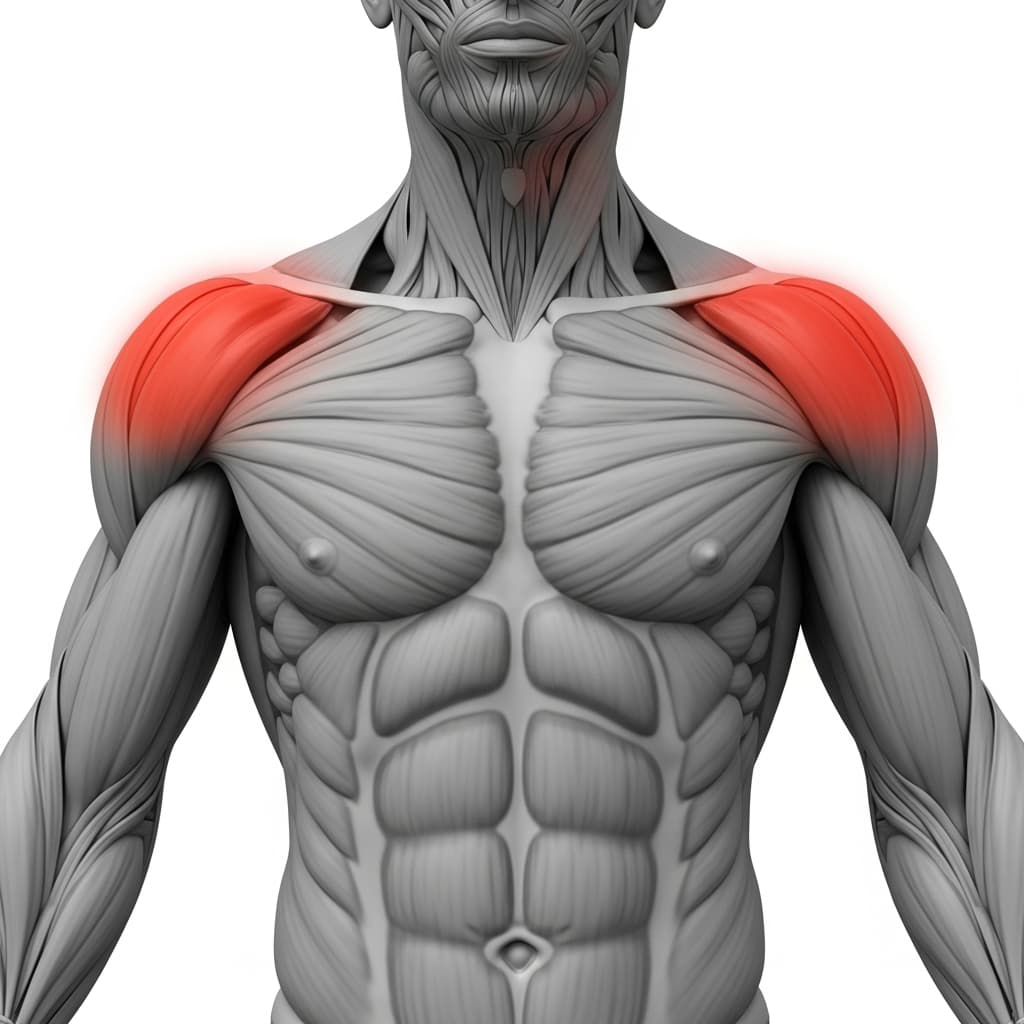
Anterior Deltoid (Front Deltoid) - The front deltoids support the shoulder at the bottom of the dip and help drive the press back up to the top.
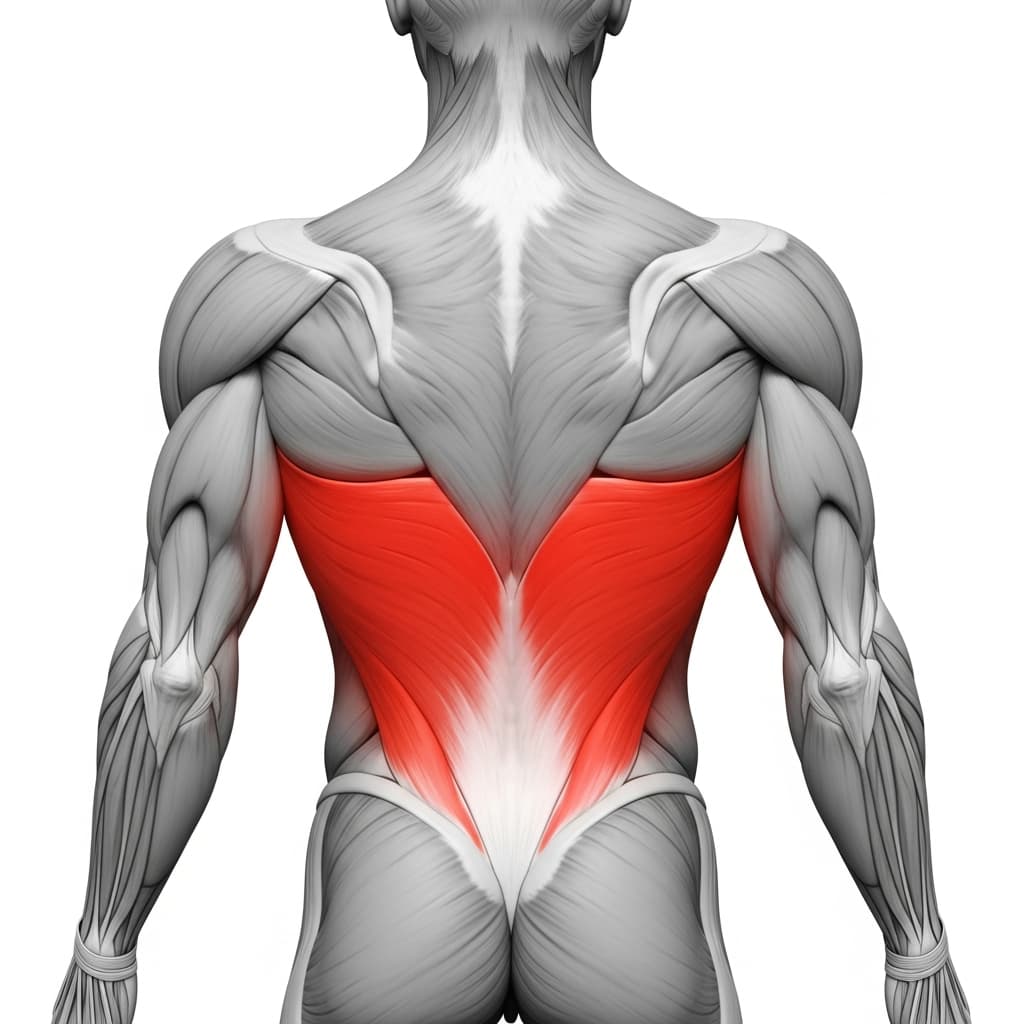
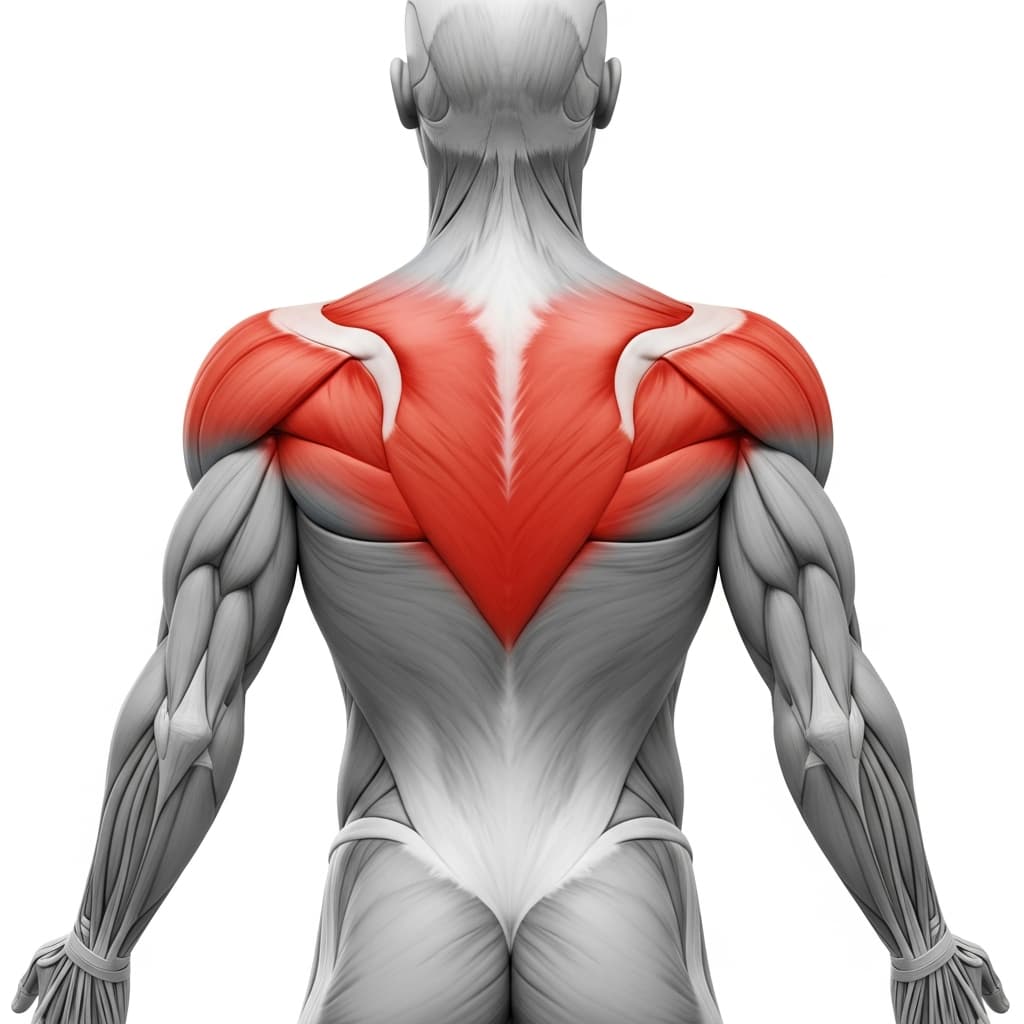
Latissimus Dorsi (Lats) - The lats pull the rings in toward your ribs and stop them spreading outwards, which is the difference between a stable dip and a very hard one.
Rhomboids & Upper Trapezius (Upper Back) - The upper back holds the shoulder blades in place so the support position stays steady rather than collapsing as you fatigue.
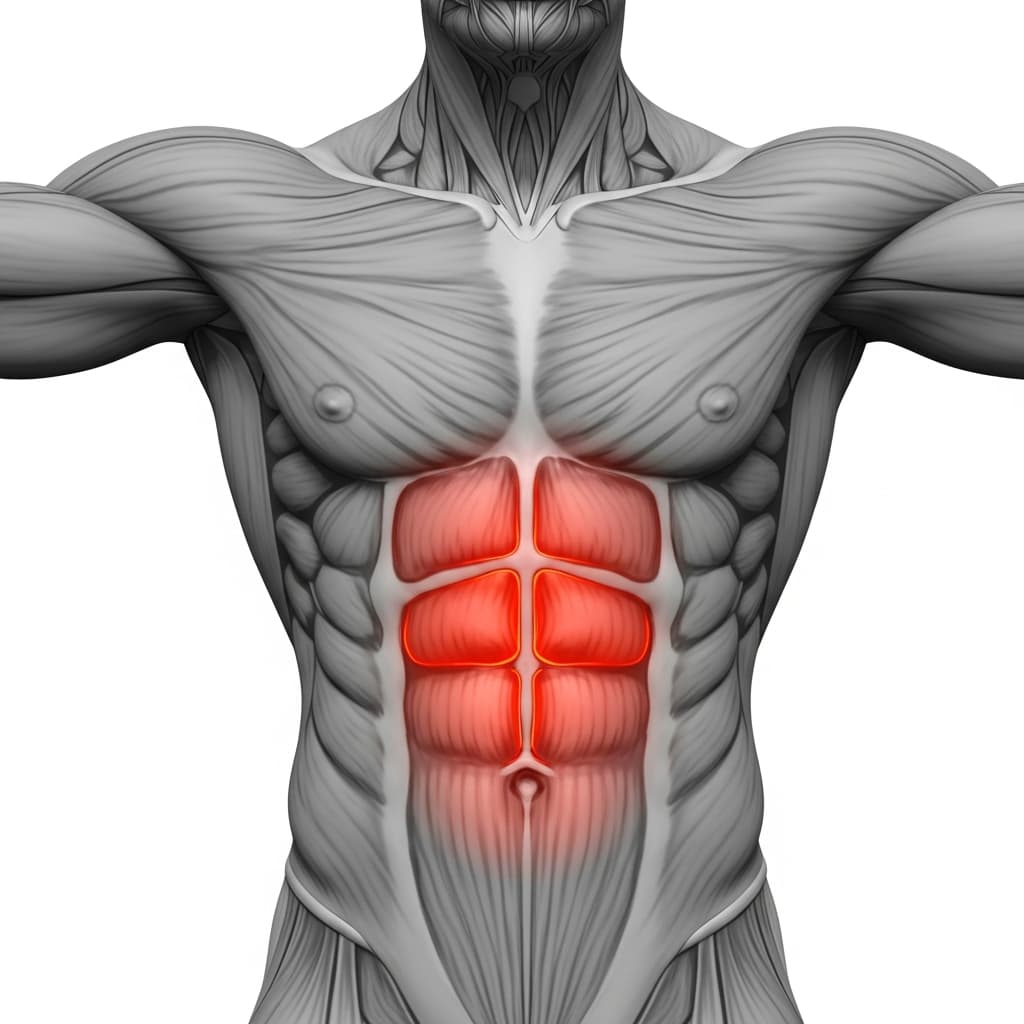
Rectus Abdominis (Abs) - The abs hold the whole body tight so the hips and legs do not swing, which is what keeps the rings tracking in a straight line.
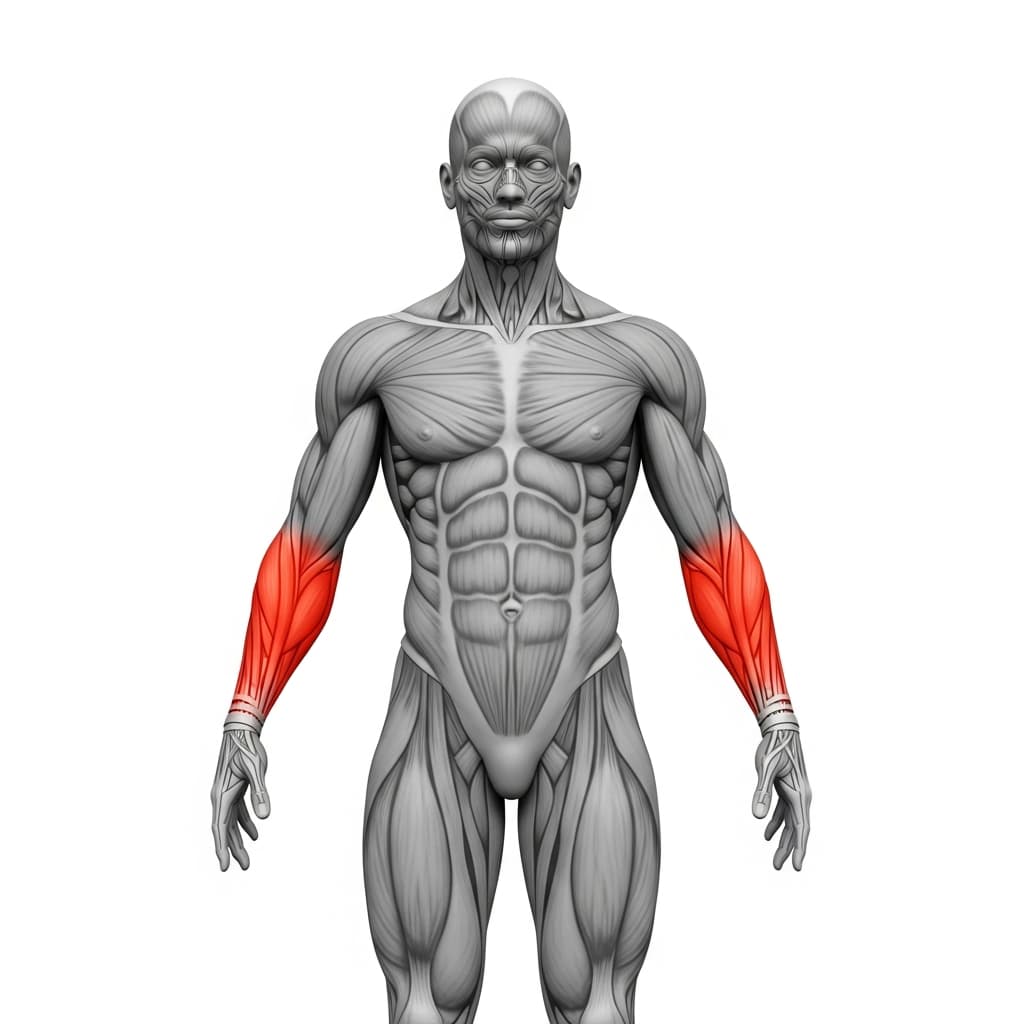
Forearm Flexors & Extensors (Forearms) - The forearms grip the rings and work constantly to stop them rotating or sliding, so they fatigue noticeably faster than they do on fixed bars.
Benefits of Ring Dips
- Builds pressing strength across the chest, triceps and front deltoids through a full range on every rep
- Develops shoulder and wrist stability that fixed bars cannot train, because the rings move under your hands
- Forces full-body tension, so the core and legs work on every repetition rather than hanging along for the ride
- Carries over to the rest of your ring training, because a steady ring support is the base position those skills are built on, even where a skill adds its own ring turnout on top
- Scales for years of progress, from floor assisted versions up to weighted reps, using very little equipment
Who Is This Exercise For?
Ring dips sit at the advanced end of the dip family, so the pressing strength wants to be built before the rings come into it. Full range dips on fixed bars should feel controlled for repeated sets rather than something you are still fighting for, and ring push-ups should feel steady, since that is where you learn to keep the rings from wandering while your feet are still on the floor. A calm support hold at the top of the rings, with no drifting or shaking, is the last piece. If any of that is missing, keep building on bar dips, ring push-ups and support holds first, because the instability of the rings will simply hide whatever pressing strength is not there yet.
Common Mistakes to Avoid
Letting the rings drift outwards: This is the error that shows up most often, and it makes the exercise much, much harder than it needs to be. Actively pull the rings in toward your ribs on the way down and hold them there for the whole rep.
Flaring the elbows wide: Wide elbows push the rings out and cost you the stable position. Keep the elbows tracking close to your sides from the very start of the descent.
Sinking into the rings at the top: Hanging your weight into the straps leaves the shoulders passive and the rings loose in your hands. Hold an active support with the rings sitting deep in your hands and the shoulder blades set before you start lowering.
Cutting the rep short: Stopping well above 90 degrees is usually a sign the rings are already getting away from you. Reduce the difficulty with an assisted version until you can reach 90 degrees with the rings still tight.
Variations & Progressions
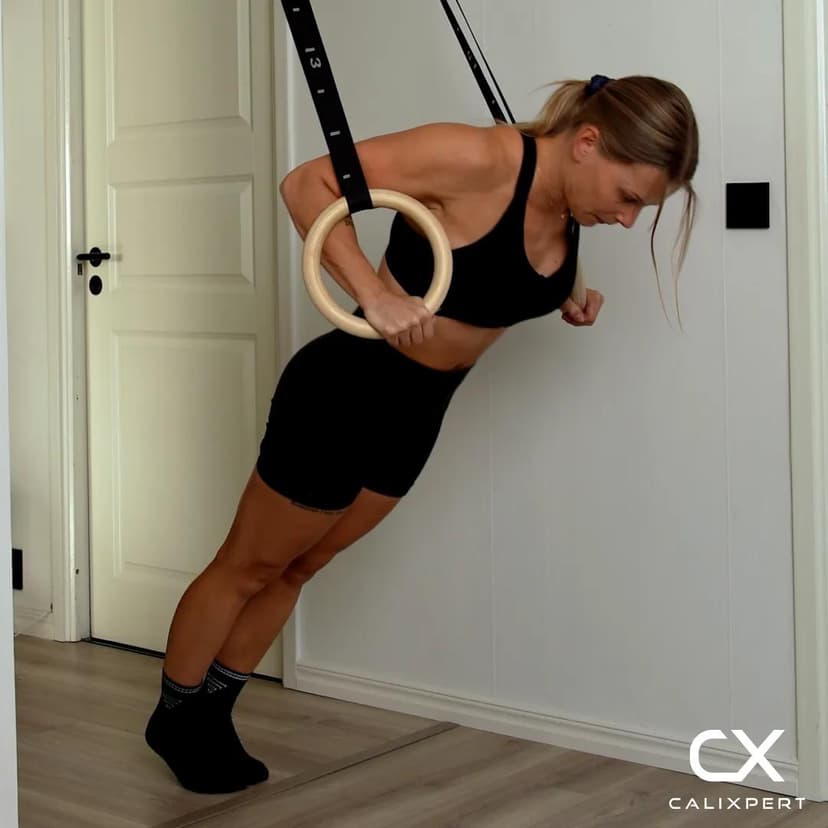
Weighted Ring Dips
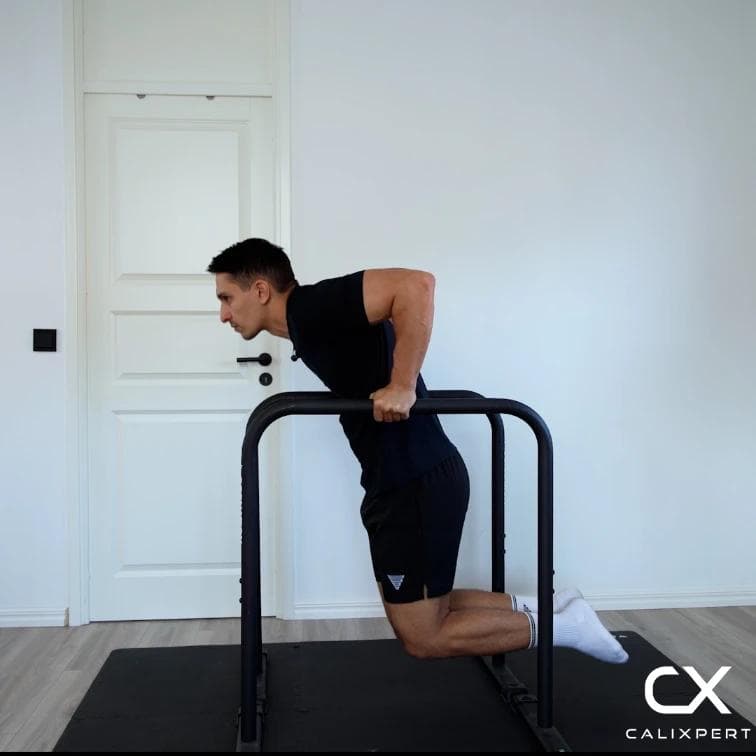
Once full sets of ring dips feel controlled and the rings stay where you put them, adding load with a dip belt keeps the movement progressing, though the rings limit how heavy you can go compared to fixed bars.