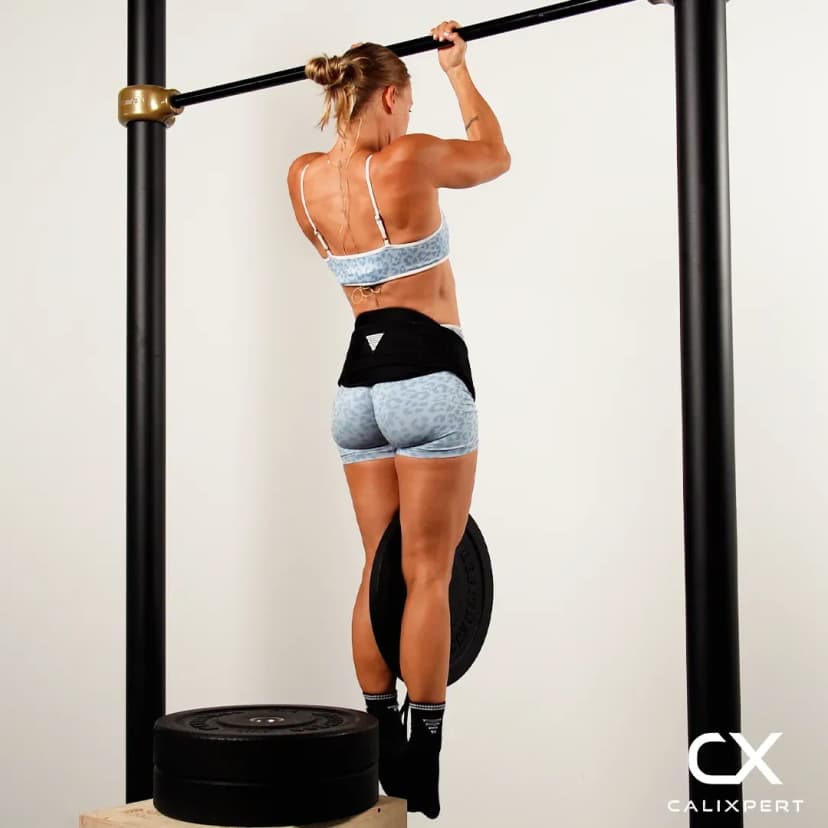
L-sit Support Hold
The L-sit support hold is a foundational isometric exercise in calisthenics that builds the straight-arm strength and shoulder depression control needed for a full L-sit. It targets the abs, triceps, hip flexors, and serratus anterior through sustained bodyweight support on parallettes. Once this hold is solid, it becomes the launchpad for every L-sit progression and most straight-arm pressing skills.
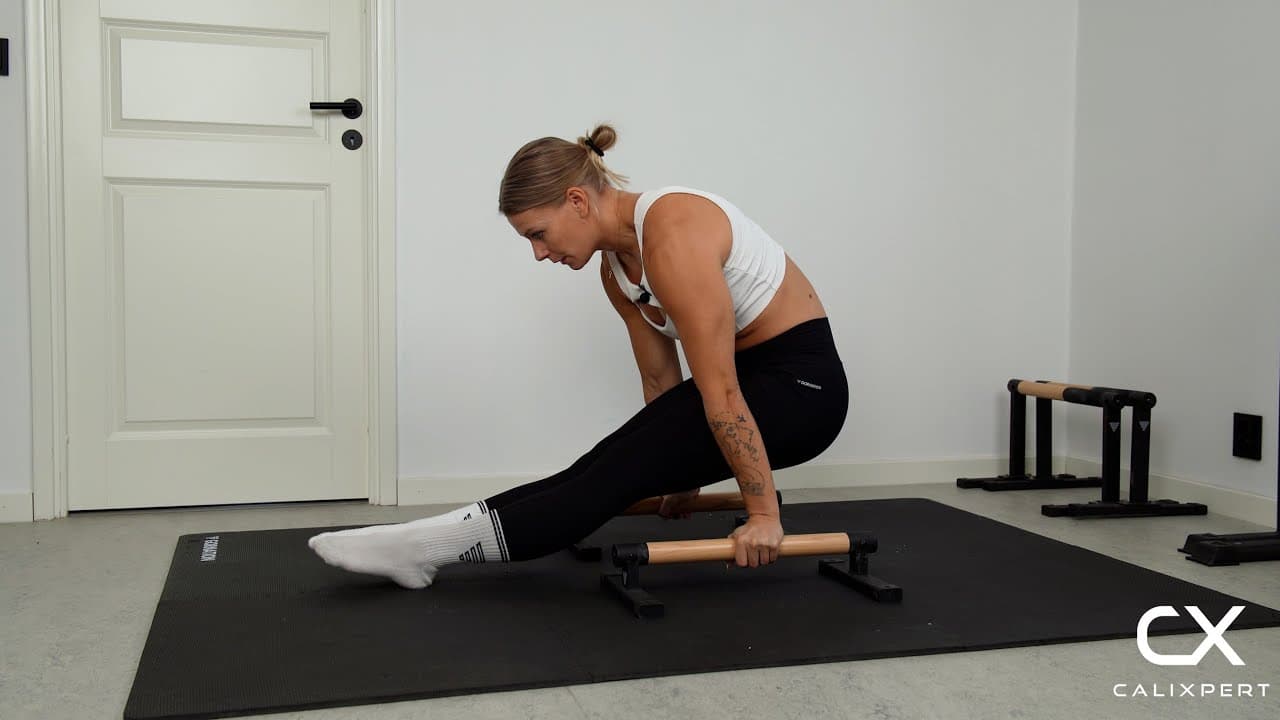
The L-sit support hold is a foundational isometric exercise in calisthenics that builds the straight-arm strength and shoulder depression control needed for a full L-sit. It targets the abs, triceps, hip flexors, and serratus anterior through sustained bodyweight support on parallettes. Once this hold is solid, it becomes the launchpad for every L-sit progression and most straight-arm pressing skills.
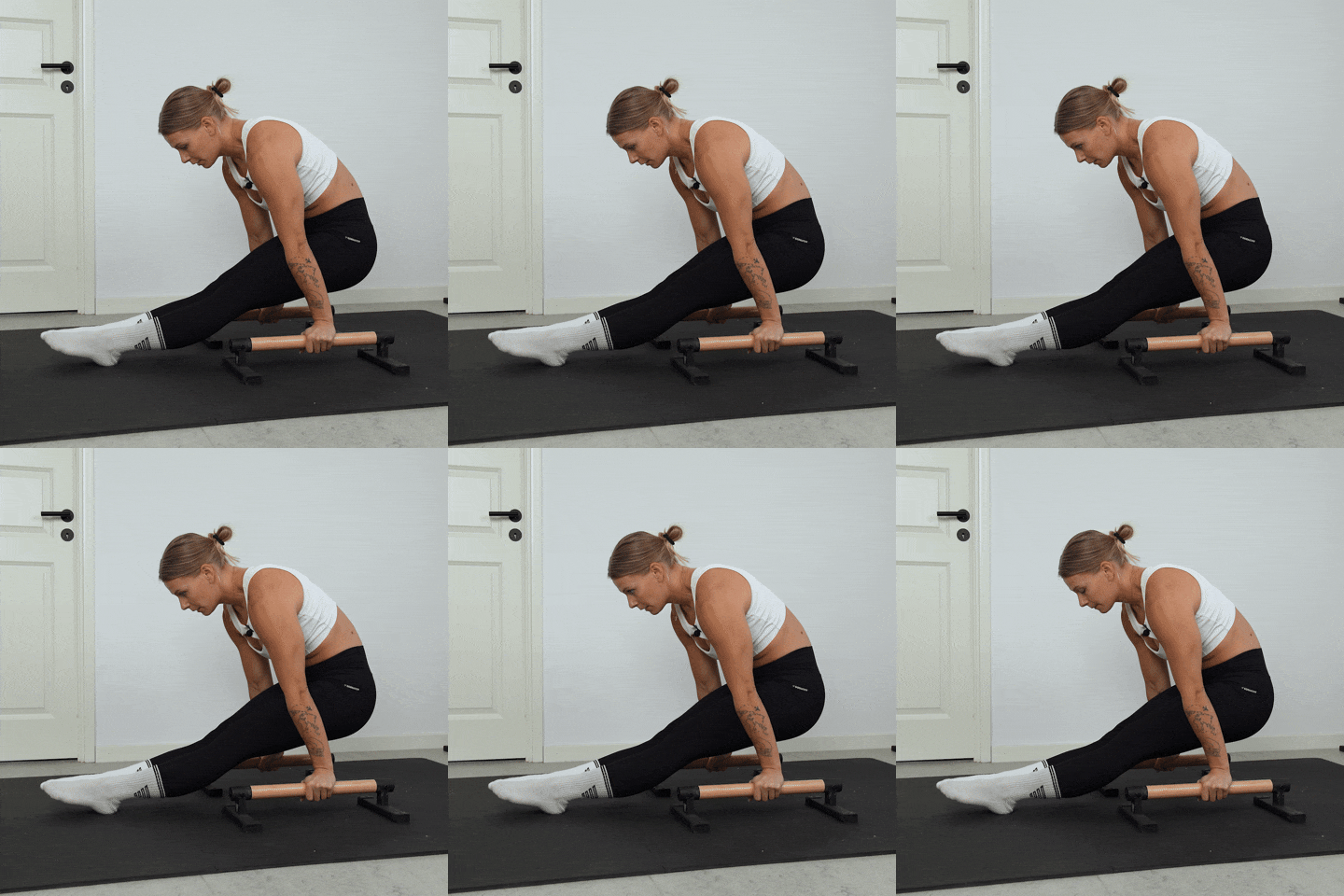
How to Do L-sit Support Hold
1. Set Up the Parallettes
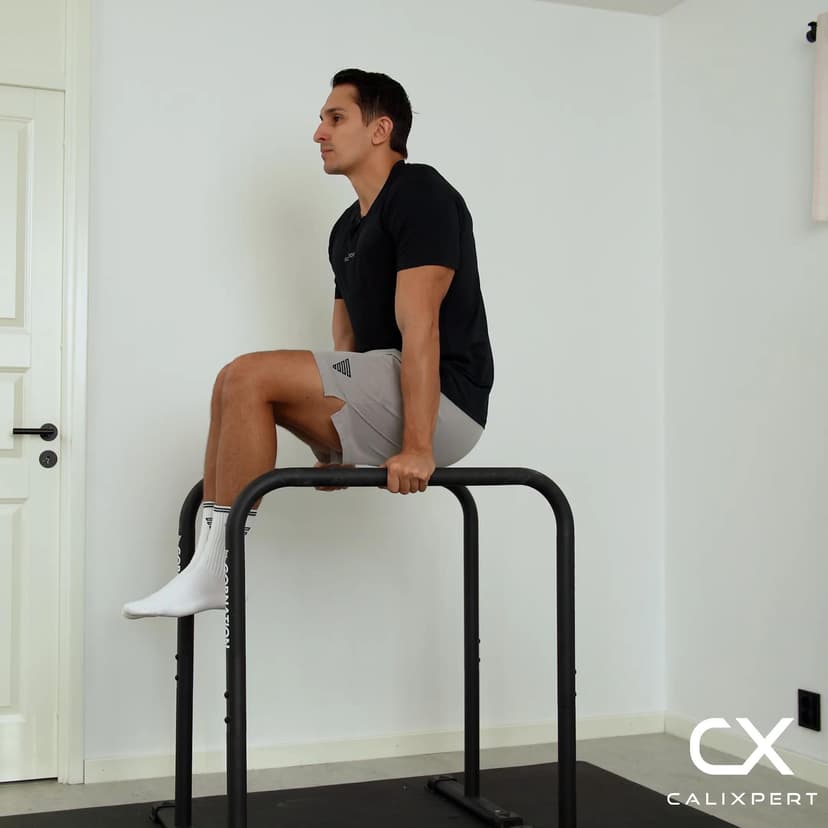
Place a pair of parallettes on the floor just outside your hips, parallel to each other. Sit between them with your legs extended straight in front of you and your weight resting in your heels. The bars should be at hip height when you are seated so your hands can grip them without reaching.
Bars outside the hips, legs straight
2. Grip and Press to Straight Arms
Grab the parallettes with a full grip, wrapping your thumbs around the bars. Press down firmly through your palms and extend your arms fully, lifting your hips off the ground. Lock your elbows completely and keep your wrists stacked directly under your shoulders.
Lock the elbows, press the floor away
3. Depress Your Shoulders
Once your arms are straight, actively push your shoulders down away from your ears. This shoulder depression is the most important part of the hold and cannot be skipped. It engages the serratus anterior and lower traps, which stabilize the entire shoulder girdle under load.
Shoulders down, neck long
4. Engage the Core and Lift the Hips
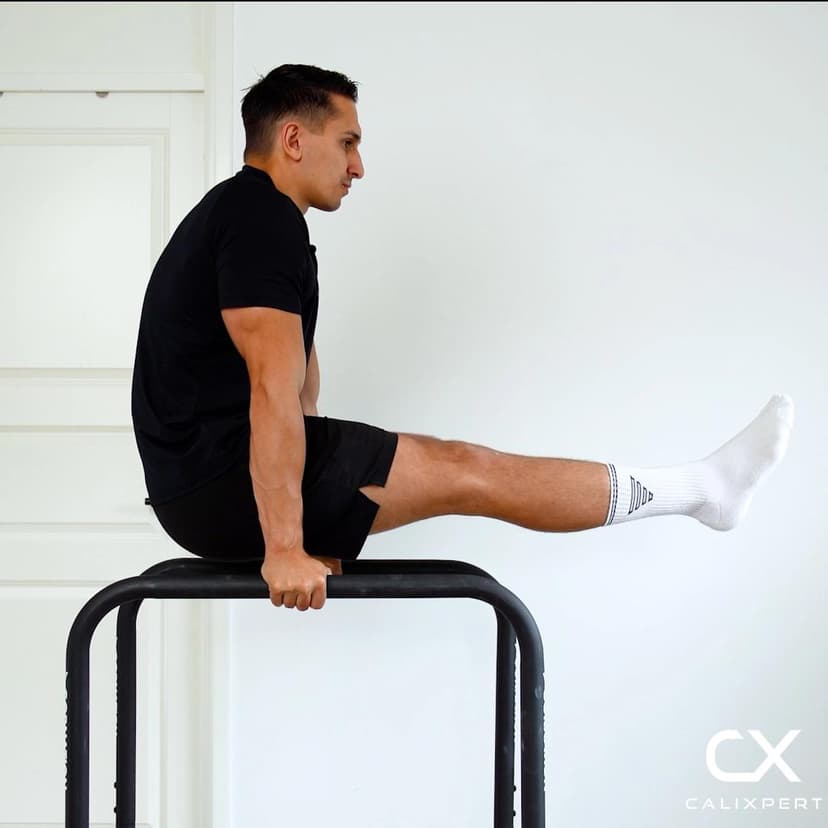
Draw your belly in as tightly as you can and tilt your pelvis slightly backward. Try to lift your hips back and upward so that your arms end up slightly in front of your hip line rather than directly beside it. This posterior pelvic tilt activates the lower abs and hip flexors, which is the exact demand of a full L-sit.
Suck the belly in, hips back and up
5. Hold and Breathe Under Tension
Maintain the hold with straight arms, depressed shoulders, and an engaged core. Keep your legs straight with your weight in your heels on the floor. Breathe steadily through your chest without releasing the abdominal tension. Aim for timed holds rather than counting reps.
Breathe, but never release the core
Most people fail the L-sit support hold because they skip the shoulder depression and just push up on bent arms. The real work happens before you even think about lifting your hips. Press down, push the shoulders as far from your ears as possible, lock the elbows, and only then engage the core. If you get that sequence right, the hip lift will feel surprisingly natural.
Muscles Worked During L-sit Support Hold
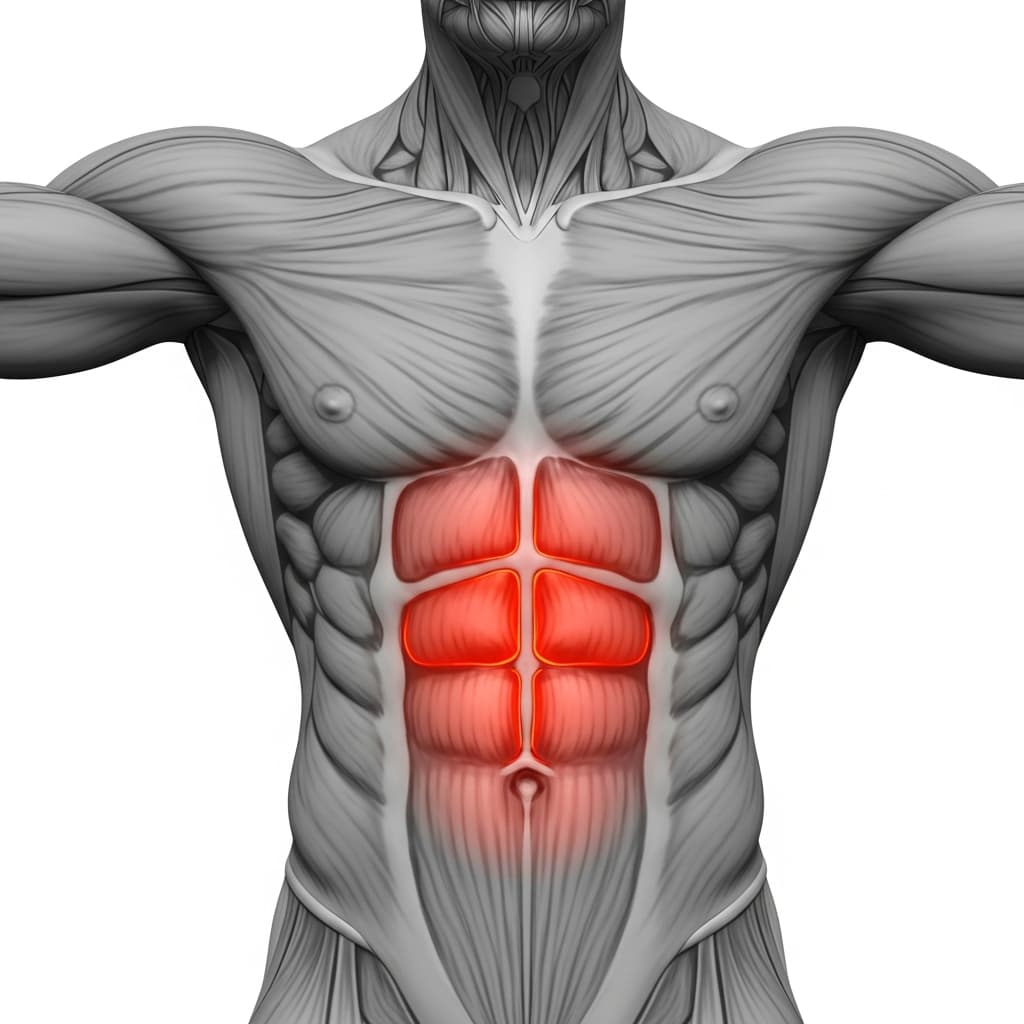
Secondary Muscles:
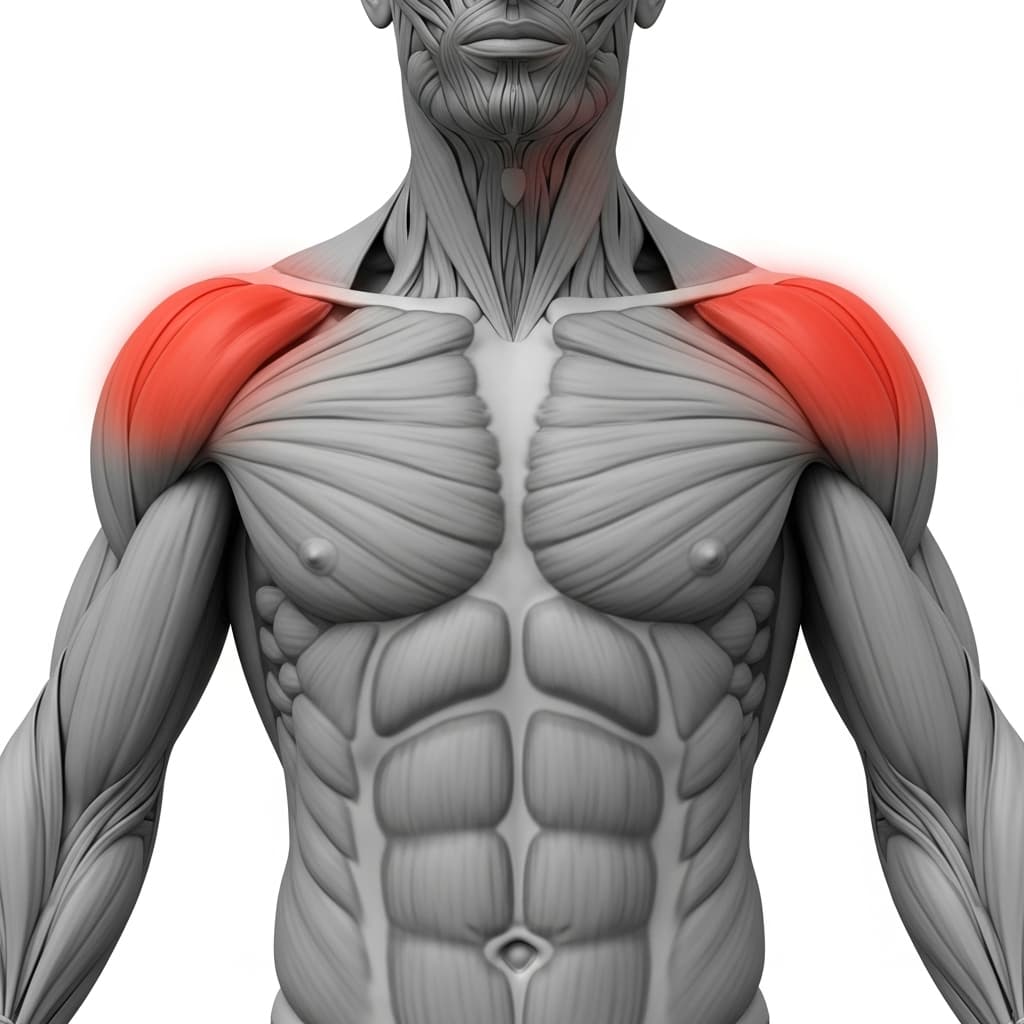
Primary Muscles
Rectus Abdominis (Abs) - The abs maintain posterior pelvic tilt and generate the upward hip lift that defines the support hold position.
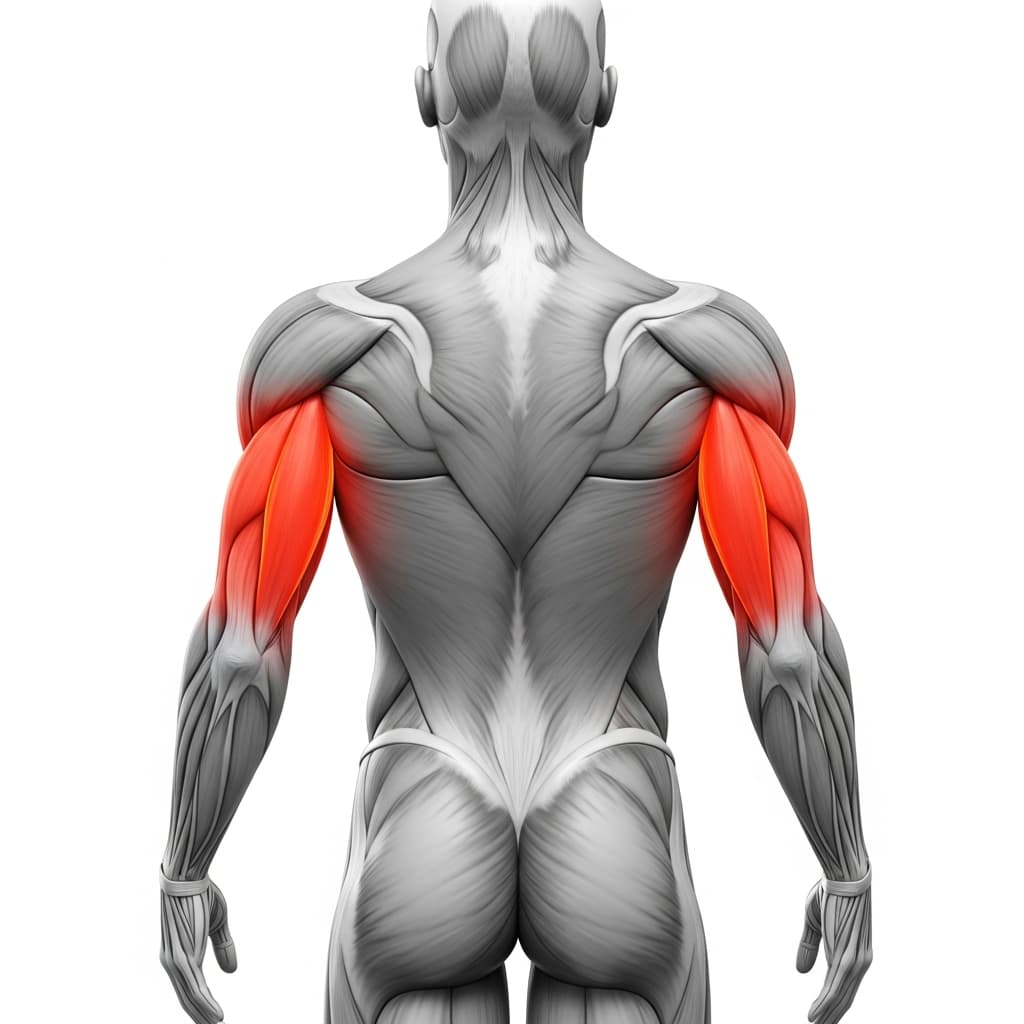
Triceps Brachii (Triceps) - The triceps lock the elbows in full extension and sustain straight-arm support under the entire bodyweight.
Secondary Muscles
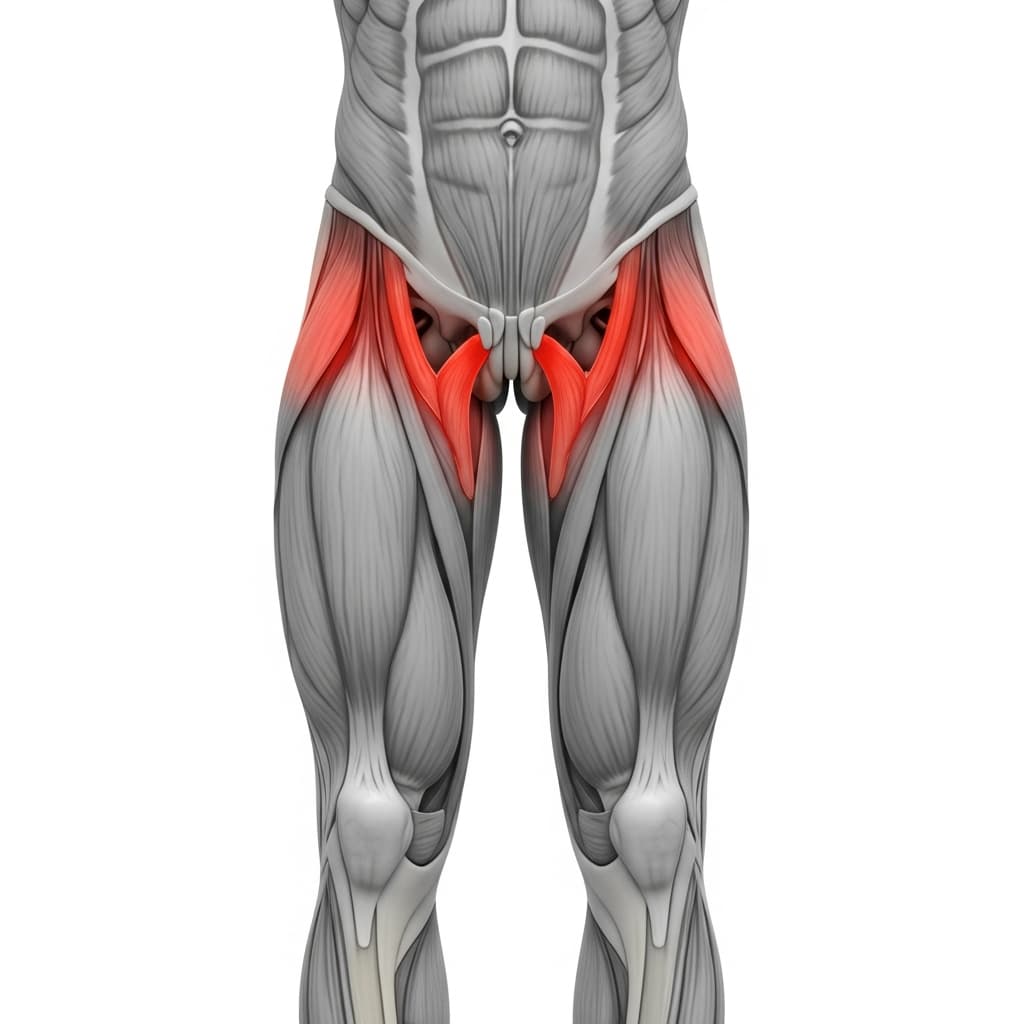
Iliopsoas (Hip Flexors) - The hip flexors work isometrically to tilt the pelvis backward and assist in lifting the hips during the hold.
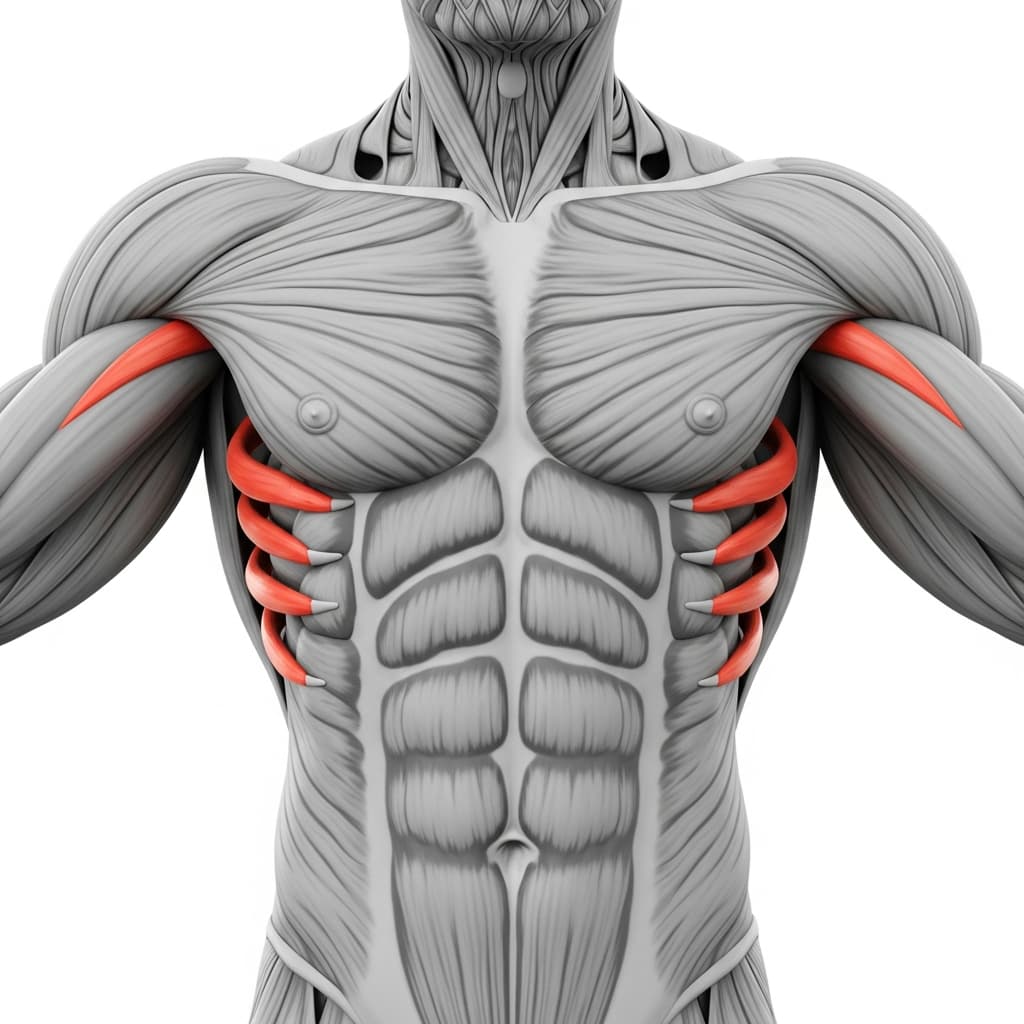
Serratus Anterior (Serratus Anterior) - The serratus anterior drives active shoulder depression, keeping the shoulders pulled down away from the ears throughout the hold.
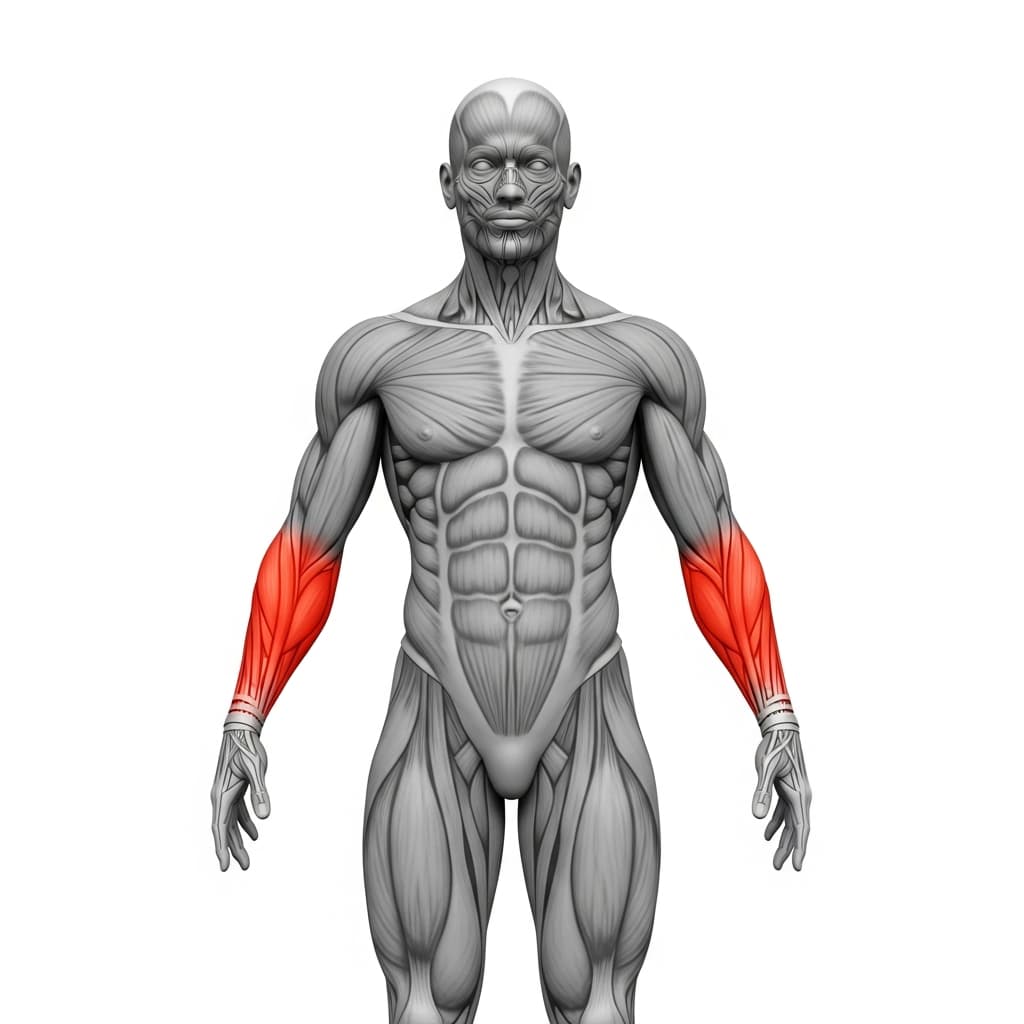
Forearm Flexors & Extensors (Forearms) - The forearms maintain grip pressure on the parallettes and stabilize the wrists under sustained bodyweight load.
Anterior Deltoid (Front Deltoid) - The front deltoids stabilize the shoulder joint in the support position and resist forward collapse of the upper body.
Benefits of L-sit Support Hold
- Builds the shoulder depression strength and scapular control required for L-sits, planches, and all straight-arm pressing skills
- Develops isometric tricep endurance under bodyweight, which directly transfers to dips, handstands, and ring support work
- Strengthens the lower abs and hip flexors through posterior pelvic tilt activation, the exact demand pattern of every L-sit progression
- Trains grip and forearm endurance on parallettes, building the foundation for longer holds and more complex parallette skills
Who Is This Exercise For?
You should be able to hold a basic dip support position on parallettes for at least 15 seconds with stable, depressed shoulders before attempting this exercise. Practicing shoulder depression drills and dead hangs will prepare the scapular stabilizers for the sustained load. If your arms bend or your shoulders creep up toward your ears during a basic support hold, you are not ready yet.
Common Mistakes to Avoid
Shoulders shrugging up toward the ears: Actively push your shoulders down throughout the entire hold. If you cannot maintain depression for more than a few seconds, shorten the hold duration and build up gradually.
Bending the elbows under load: Lock your elbows fully before initiating the hold. If your arms collapse, your triceps are not strong enough yet. Regress to basic support holds with shorter durations until straight-arm strength improves.
Relaxing the core and letting the hips sag: Draw your belly in before lifting and maintain that tension for the full hold. The moment you lose core engagement, the load shifts entirely to your arms and shoulders.
Placing parallettes too narrow or too wide: Set the bars just outside your hips so your arms are close to vertical when pressing up. Too narrow cramps the shoulders, and too wide makes depression harder to maintain.
Variations & Progressions
Feet-on-floor support hold with bent knees
Keep both feet flat on the floor with knees bent to reduce the load on your arms and core. This allows you to focus purely on shoulder depression and straight-arm positioning before adding the hip lift.