Negative Knee Push Up
Negative knee push-ups are an eccentric-focused pushing exercise that builds chest, front deltoid, and tricep strength by emphasizing the slow lowering phase of a knee push-up. The key is controlling the descent for 3 to 5 seconds while maintaining a straight line from head to knees, which builds the muscle and tendon strength needed for full push-ups. This exercise is one of the most effective progressions for anyone who cannot yet perform a clean full push-up, because the eccentric phase is where strength develops fastest.
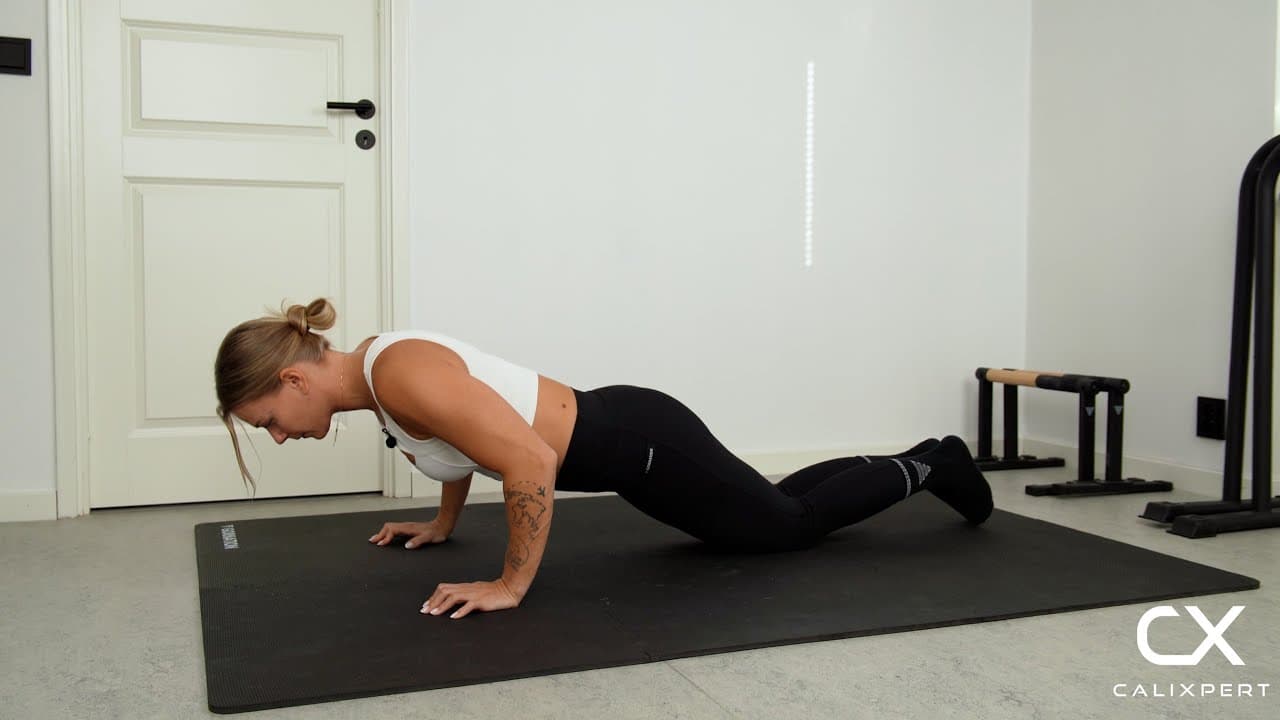
Negative knee push-ups are an eccentric-focused pushing exercise that builds chest, front deltoid, and tricep strength by emphasizing the slow lowering phase of a knee push-up. The key is controlling the descent for 3 to 5 seconds while maintaining a straight line from head to knees, which builds the muscle and tendon strength needed for full push-ups. This exercise is one of the most effective progressions for anyone who cannot yet perform a clean full push-up, because the eccentric phase is where strength develops fastest.
How to Do Negative Knee Push Up
1. Set Up the Knee Plank
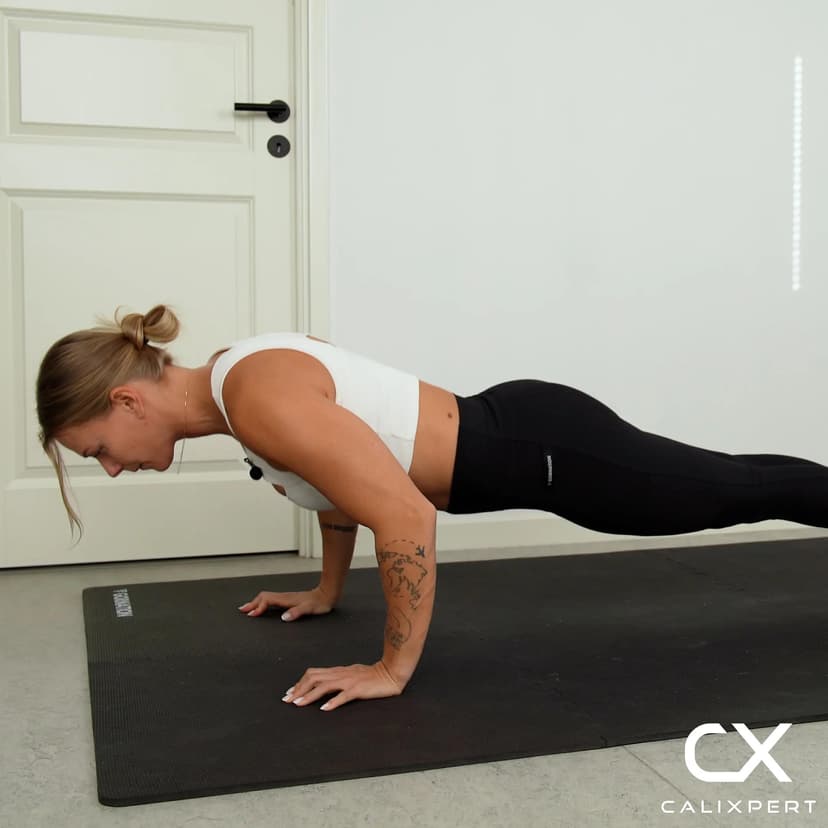
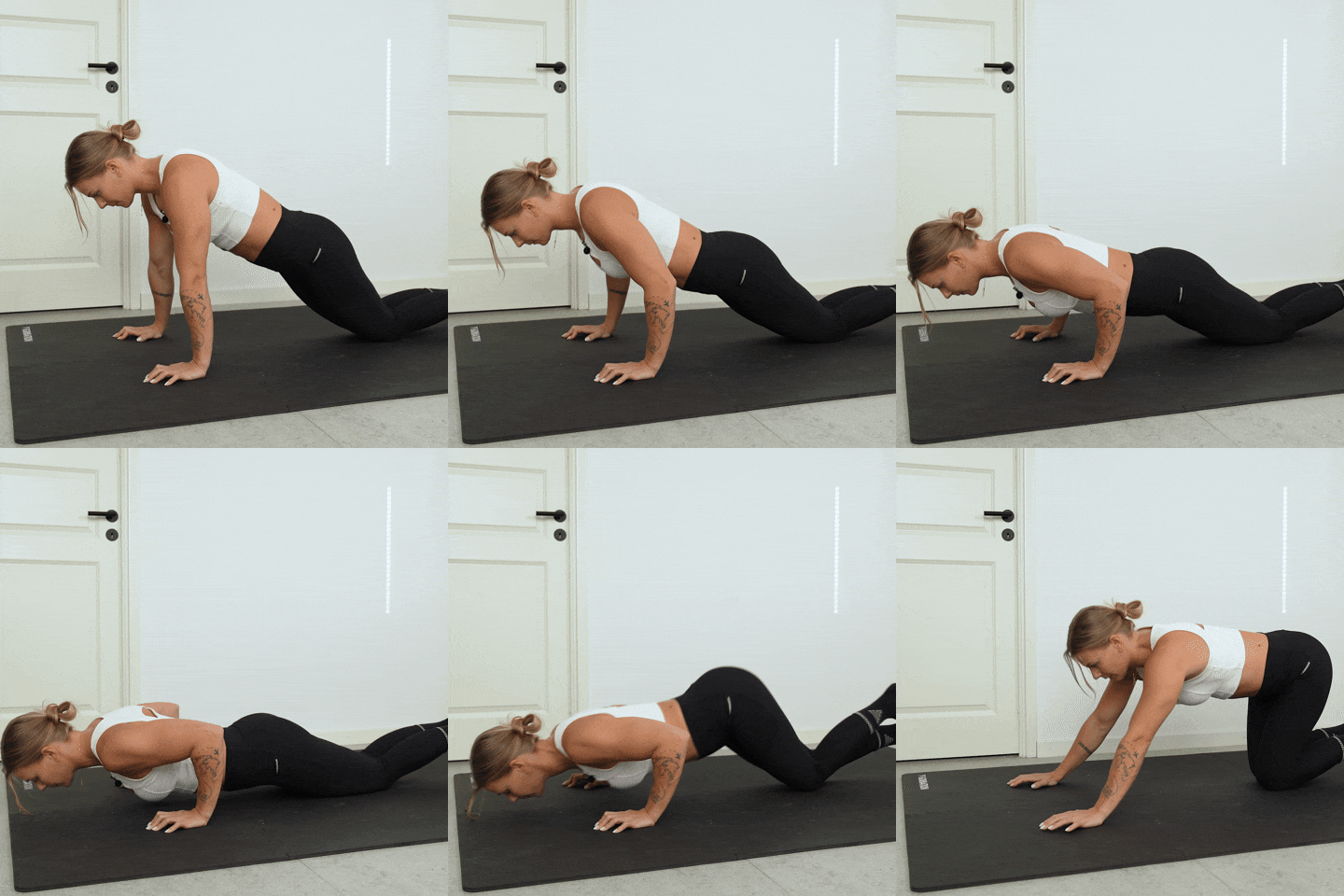
Place your knees on the ground behind your hips and your hands slightly wider than shoulder width apart. Keep your shoulders stacked directly above your wrists. Engage your core and squeeze your glutes so your body forms a straight line from your head to your knees.
Straight line from head to knees
2. Lean Forward Slightly
Before initiating the descent, shift your weight forward so your shoulders move slightly ahead of your wrists. This forward lean ensures the chest and shoulders take the load rather than dumping it into your elbows. Maintain this forward position throughout the entire lowering phase.
Shoulders ahead of the wrists
3. Lower Slowly to the Ground
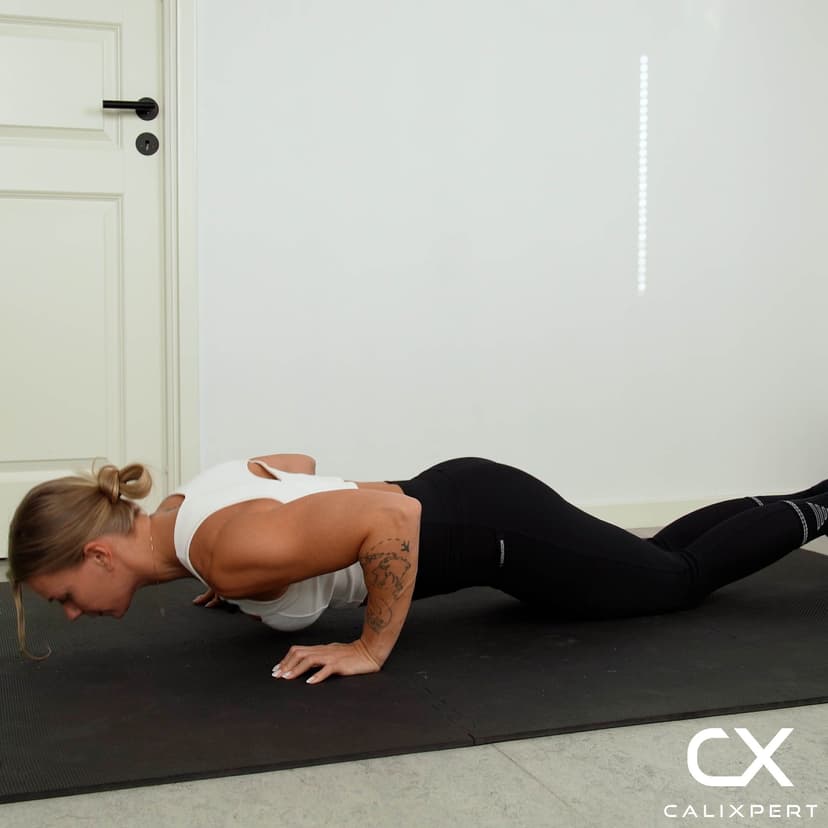
Bend your elbows and lower your body toward the ground as slowly as you can control. Aim for a 3 to 5 second descent, keeping your elbows at roughly a 45-degree angle from your torso. Continue lowering until your chest touches the floor. Do not let your hips drop or pike up during the descent.
3 to 5 seconds down, chest to floor
4. Touch Chest to the Ground
Let your chest make contact with the ground at the bottom of the movement. This completes the full eccentric range of motion. Do not stop short or hover above the floor, as the last few centimeters are where the most strength is built.
Chest touches, full range every rep
5. Reset to the Top Position
Once your chest is on the ground, get back to the starting position however you can. You can push your hips up first, shift one knee forward, or press up in segments. The reset does not need to be strict because this exercise is about the lowering phase only. Return to a solid knee plank before starting the next rep.
Reset however you need, then re-brace
Most people rush through negatives because the bottom position feels uncomfortable. That discomfort is exactly where the strength gets built. Set a timer or count out loud, and fight for every second on the way down. If you can hit a controlled 5-second negative for 5 reps, you are very close to your first full push-up.
Muscles Worked During Negative Knee Push Up
Secondary Muscles:
Primary Muscles
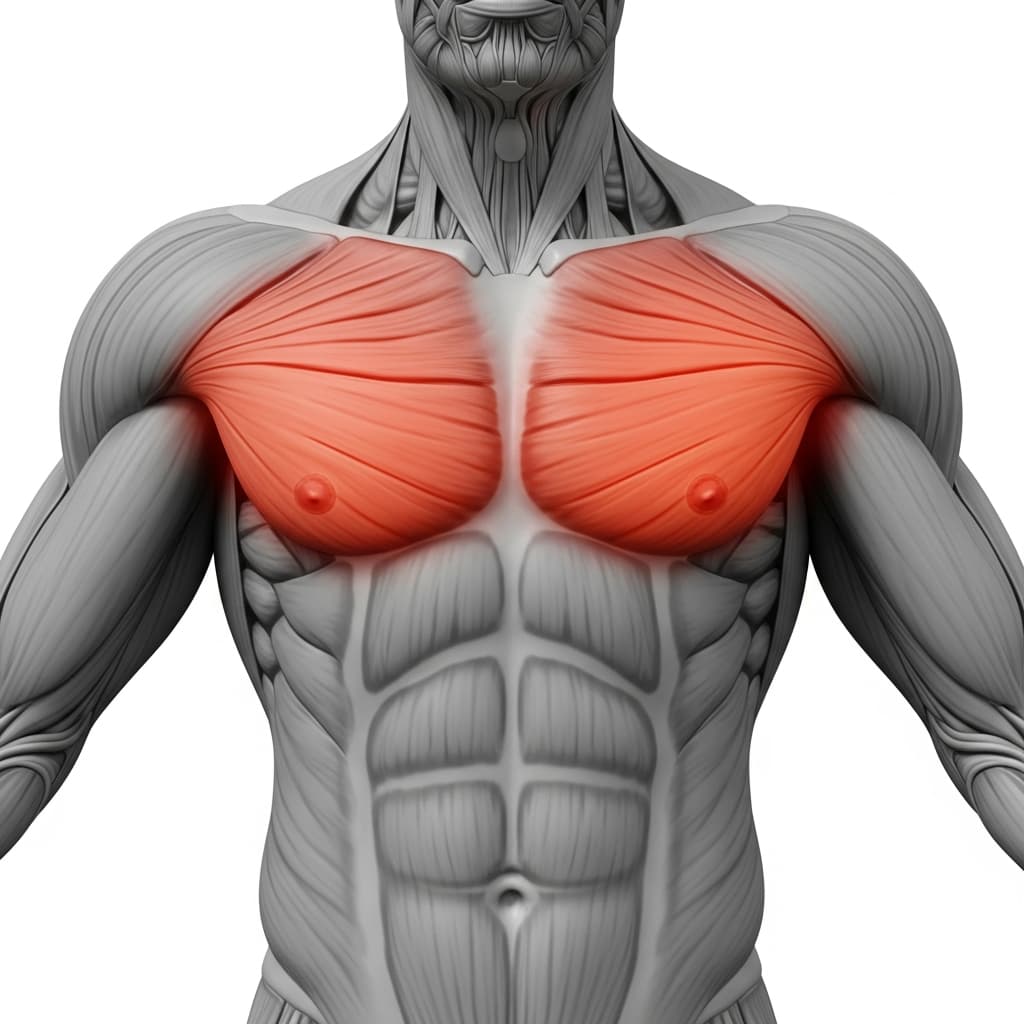
Pectoralis Major (Chest) - The pectoralis major controls the slow descent by eccentrically resisting the stretch as the body lowers toward the ground, working hardest in the bottom half of the range.
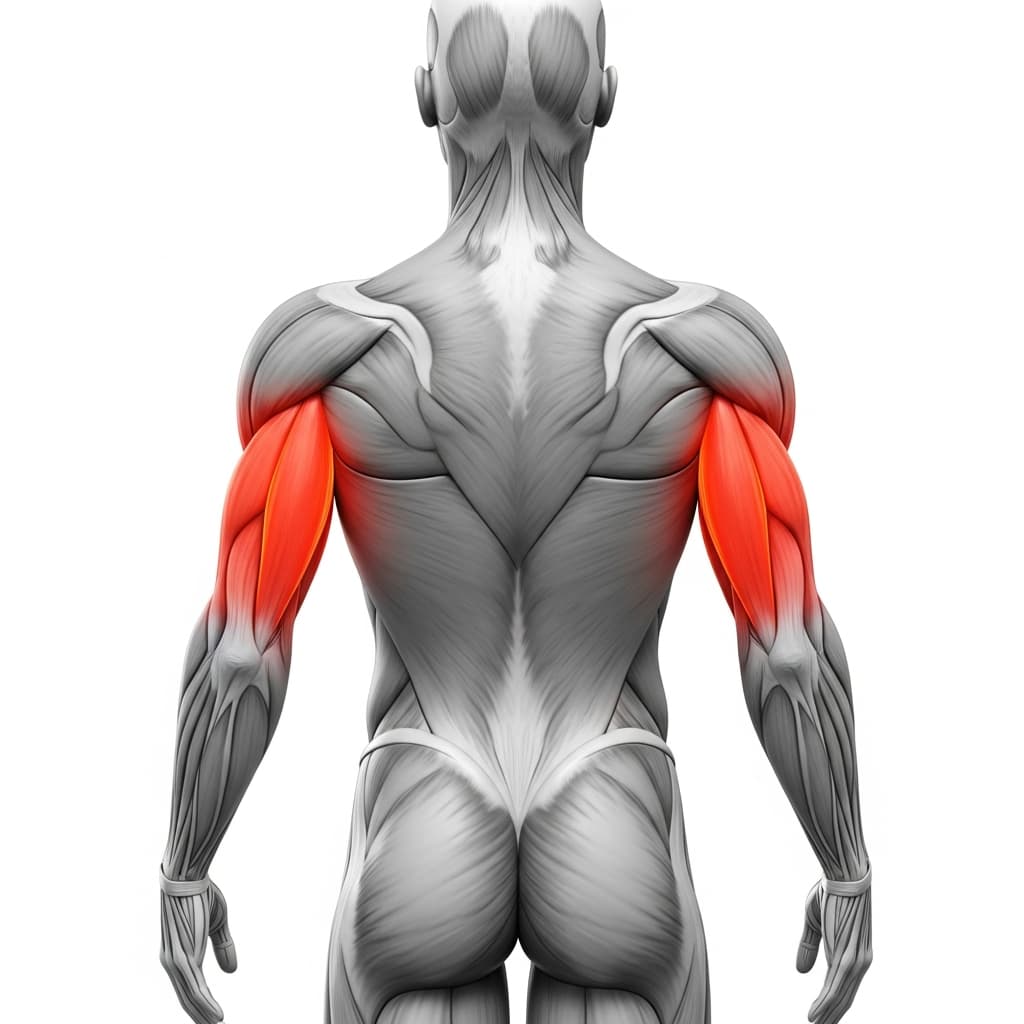
Triceps Brachii (Triceps) - The triceps control elbow extension eccentrically, decelerating the bend of the arm throughout the lowering phase to prevent a fast drop.
Secondary Muscles
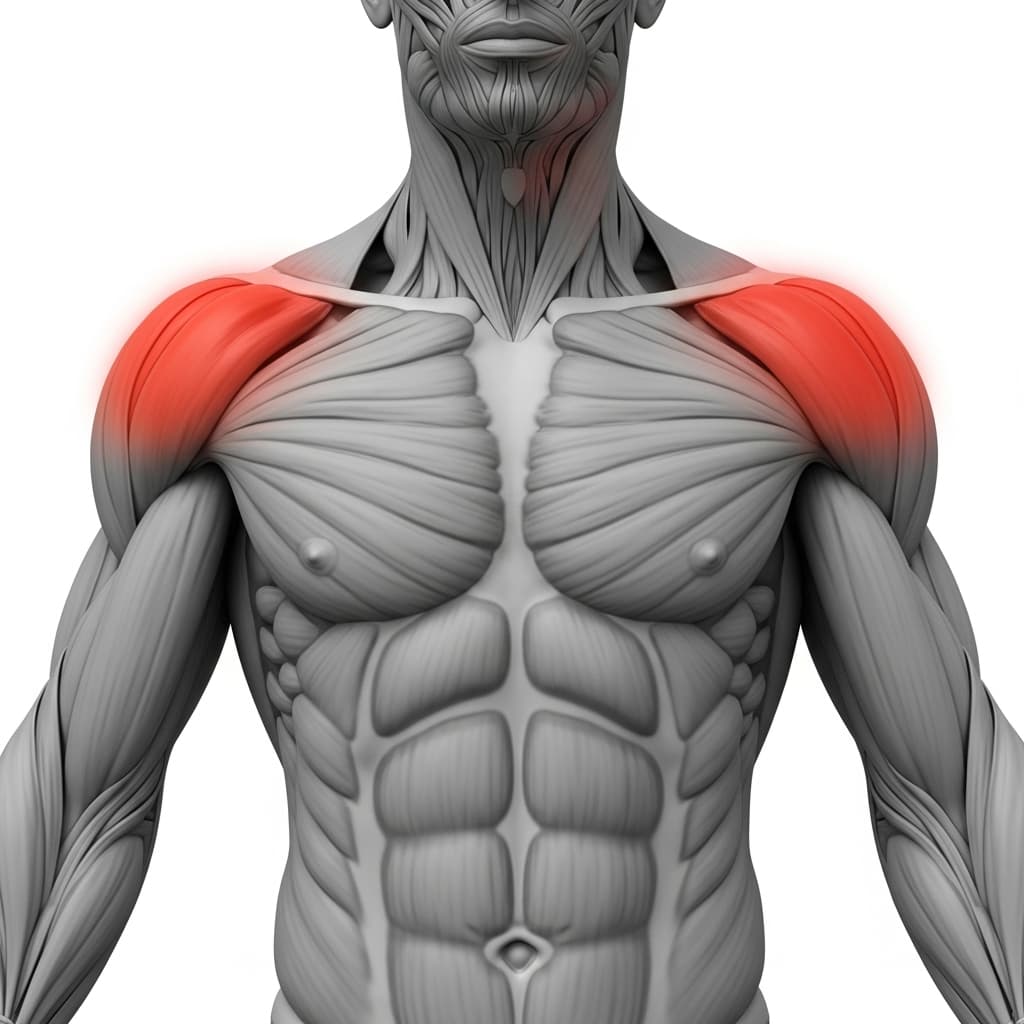
Anterior Deltoid (Front Deltoid) - The anterior deltoid assists in controlling shoulder flexion during the descent, stabilizing the upper arm as it moves below the torso line.
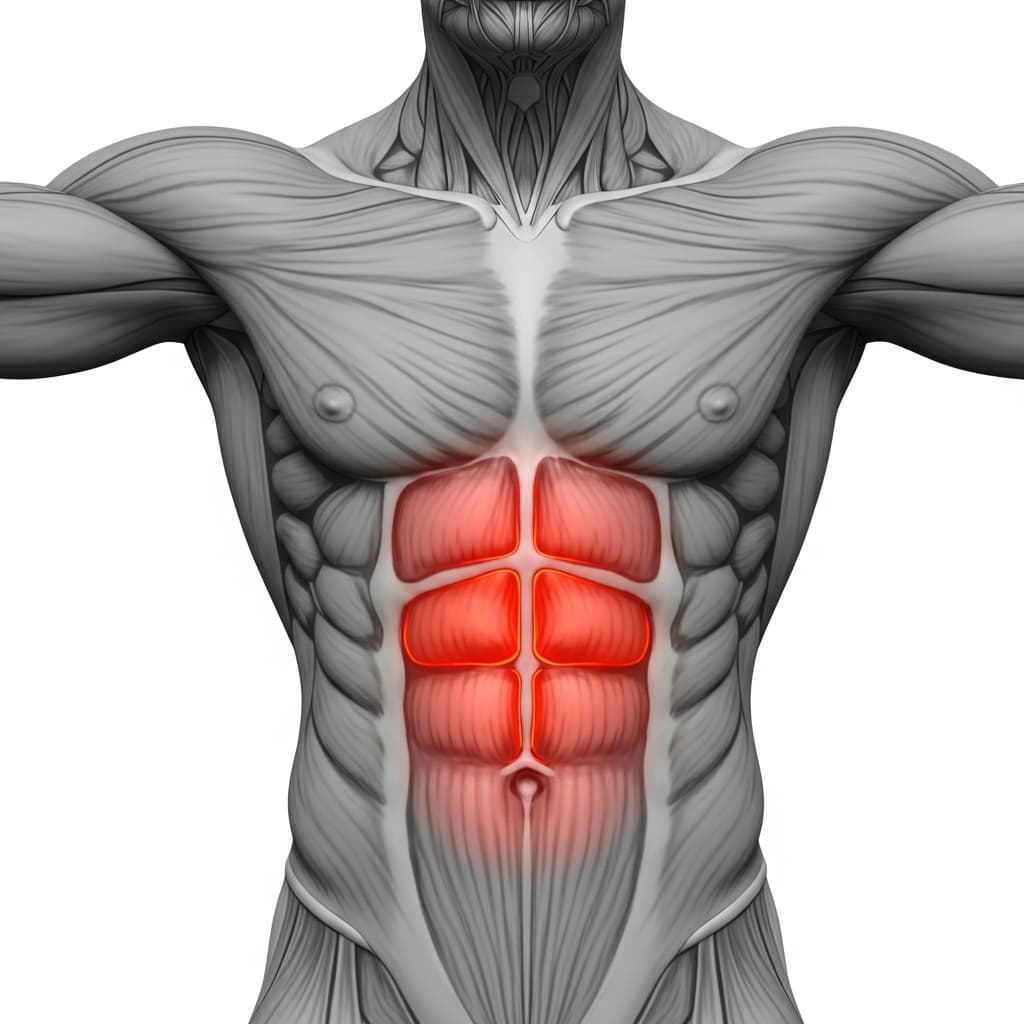
Rectus Abdominis (Abs) - The abdominals brace the torso to maintain a straight body line from head to knees, preventing the hips from sagging under load.
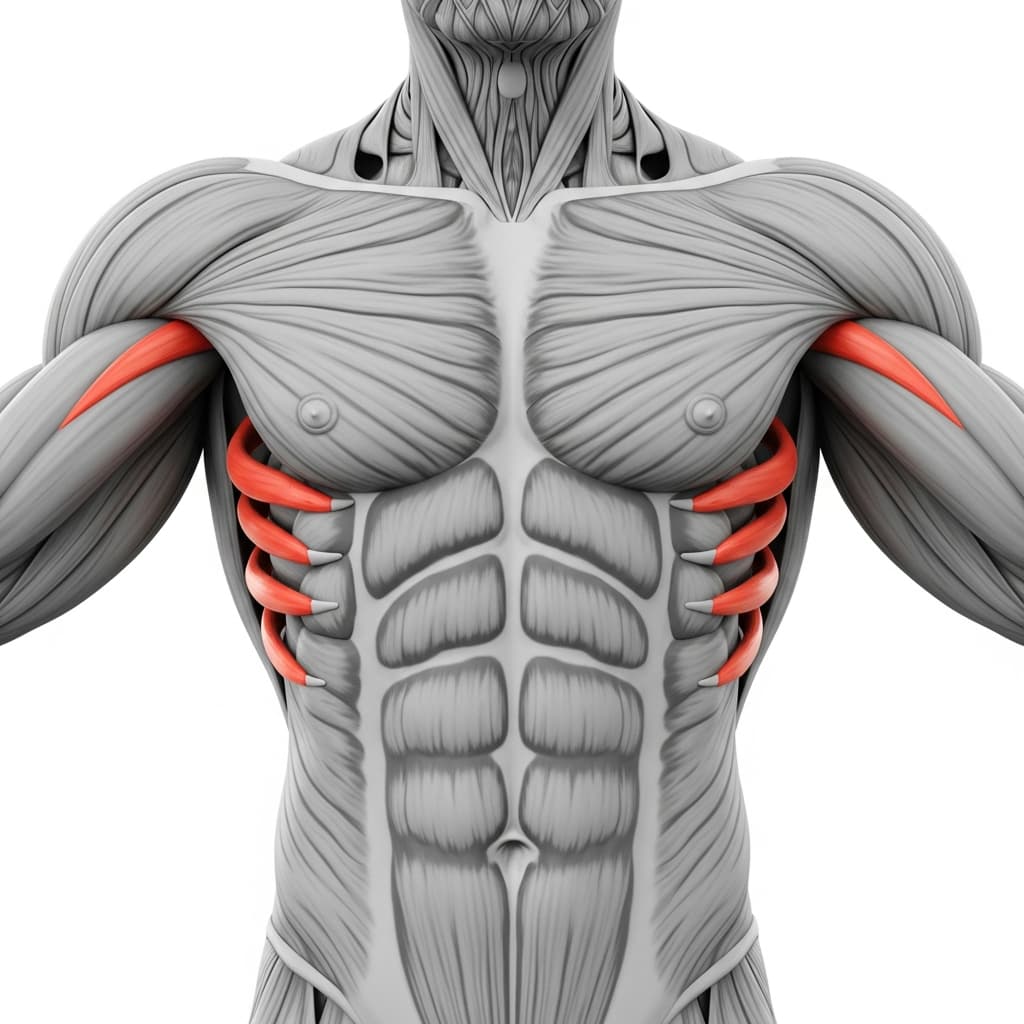
Serratus Anterior (Serratus Anterior) - The serratus anterior stabilizes the scapula against the ribcage, keeping the shoulder blades from winging during the loaded descent.
Benefits of Negative Knee Push Up
- Builds eccentric chest and tricep strength faster than isometric holds, directly preparing the muscles for full push-up reps
- Develops shoulder stability and scapular control under load through a full range of motion without requiring concentric pushing strength
- Teaches proper push-up body alignment and elbow tracking in a forgiving position, building correct motor patterns before adding difficulty
- Strengthens tendons and connective tissue in the elbows and wrists through slow, loaded movement, reducing injury risk as you progress
Who Is This Exercise For?
You should be able to hold a knee plank position for at least 20 seconds with your core engaged and hips level before attempting negative knee push-ups. If maintaining that plank causes your hips to sag or your lower back to arch, work on core stability and plank holds first.
Common Mistakes to Avoid
Dropping too fast: Count 3 to 5 seconds on every descent. If you cannot control the speed for at least 3 seconds, reduce your range of motion until you build enough strength to slow it down.
Hips sagging during the descent: Squeeze your glutes and brace your core before you begin lowering. If your hips drop, the lower back absorbs the load instead of the chest and triceps.
Elbows flaring out to 90 degrees: Keep your elbows at a 45-degree angle from your torso throughout the descent. Wide elbows place excessive stress on the shoulder joint and reduce chest engagement.
Stopping short of the floor: Lower all the way until your chest touches the ground on every rep. Cutting the range of motion short eliminates the hardest and most productive portion of the exercise.