Assisted Chin Up Top Hold
The assisted chin-up top hold is an isometric exercise where you hold the top position of a chin-up with band assistance, training the biceps, lats, and upper back under sustained tension. Using a resistance band and a chair allows you to step directly into the top position without pulling yourself up, isolating the hold itself as the training stimulus. This exercise builds the specific strength and muscular endurance needed to maintain the contracted position at the top of a chin-up, which is a critical milestone on the path to unassisted chin-ups.
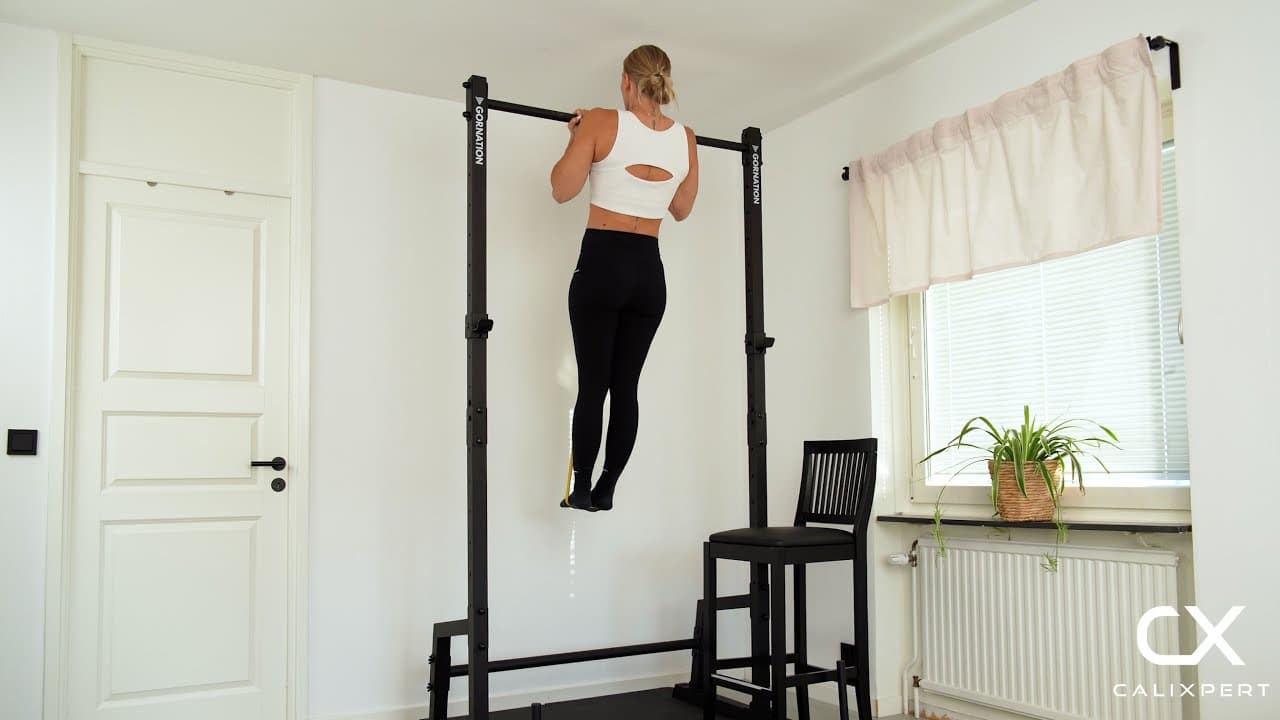
The assisted chin-up top hold is an isometric exercise where you hold the top position of a chin-up with band assistance, training the biceps, lats, and upper back under sustained tension. Using a resistance band and a chair allows you to step directly into the top position without pulling yourself up, isolating the hold itself as the training stimulus. This exercise builds the specific strength and muscular endurance needed to maintain the contracted position at the top of a chin-up, which is a critical milestone on the path to unassisted chin-ups.
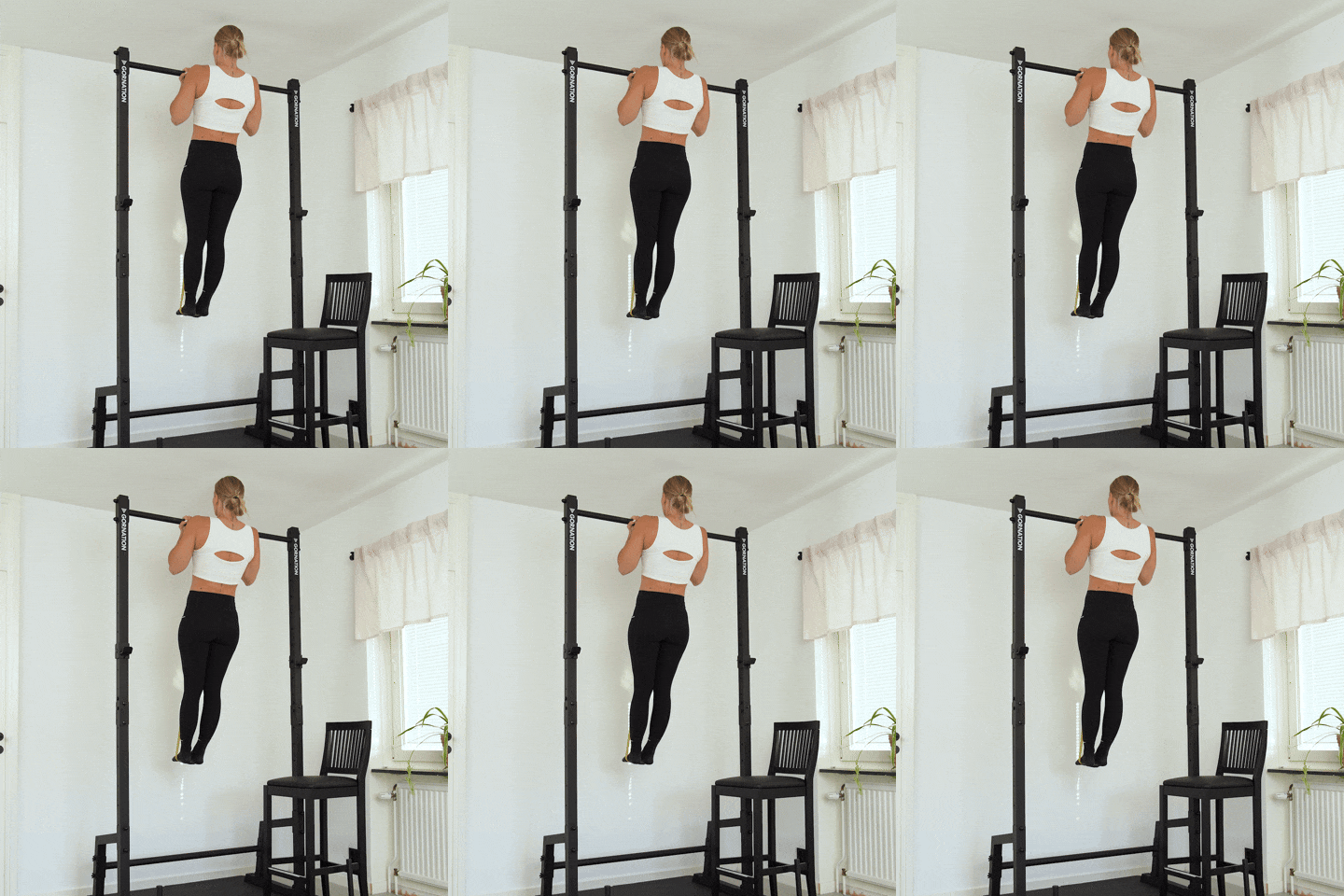
How to Do Assisted Chin Up Top Hold
1. Set Up the Band and Chair
Attach a resistance band to the pull-up bar so it hangs down within reach. Place a sturdy chair or box directly beneath the bar so you can stand on it and position your chin above bar height. The chair should be stable enough that you can step on and off it safely without wobbling.
Stable chair, band attached overhead
2. Grip the Bar and Step In
Standing on the chair, grab the bar with a supinated grip, palms facing toward you, at slightly narrower than shoulder width. Wrap your thumbs fully around the bar. Step one foot into the loop of the resistance band so it provides upward assistance when you step off the chair.
Palms toward you, thumbs around the bar
3. Activate Scapular Retraction
Before stepping off the chair, squeeze your shoulder blades together and pull your shoulders down away from your ears. This scapular retraction is essential because it loads the upper back and protects the shoulder joint during the hold. Keep your chest lifted toward the bar throughout the setup.
Shoulder blades together, shoulders down
4. Step Into the Top Hold
With your scapula set and chin above the bar, carefully step off the chair so the band takes some of your bodyweight. Your chin should be clearly above bar height from the start, not straining upward to reach it. Keep your body straight with a slight engagement through the core to prevent swinging.
Step off, chin stays above the bar
5. Hold the Top Position
Maintain the hold with your chin above the bar, chest up, and shoulder blades squeezed together. Breathe steadily and do not hold your breath. Focus on keeping the shoulders depressed and the elbows pulled tight to your body throughout the entire duration of the hold.
Chest up, breathe, hold tight
6. Step Back Safely
When you can no longer maintain chin-over-bar position with proper scapular retraction, place your feet back on the chair rather than dropping straight down. Releasing under control protects the shoulders and elbows from sudden loading. Rest fully between sets before repeating.
Step back to the chair, do not drop
Most people rush through this hold and let their form collapse within a few seconds. The real training effect comes when you treat every second like a rep. Set your shoulder blades hard before you step off the chair, keep your chest glued to the bar, and the moment your chin drops below the bar or your shoulders start shrugging, the set is over.
Muscles Worked During Assisted Chin Up Top Hold
Secondary Muscles:
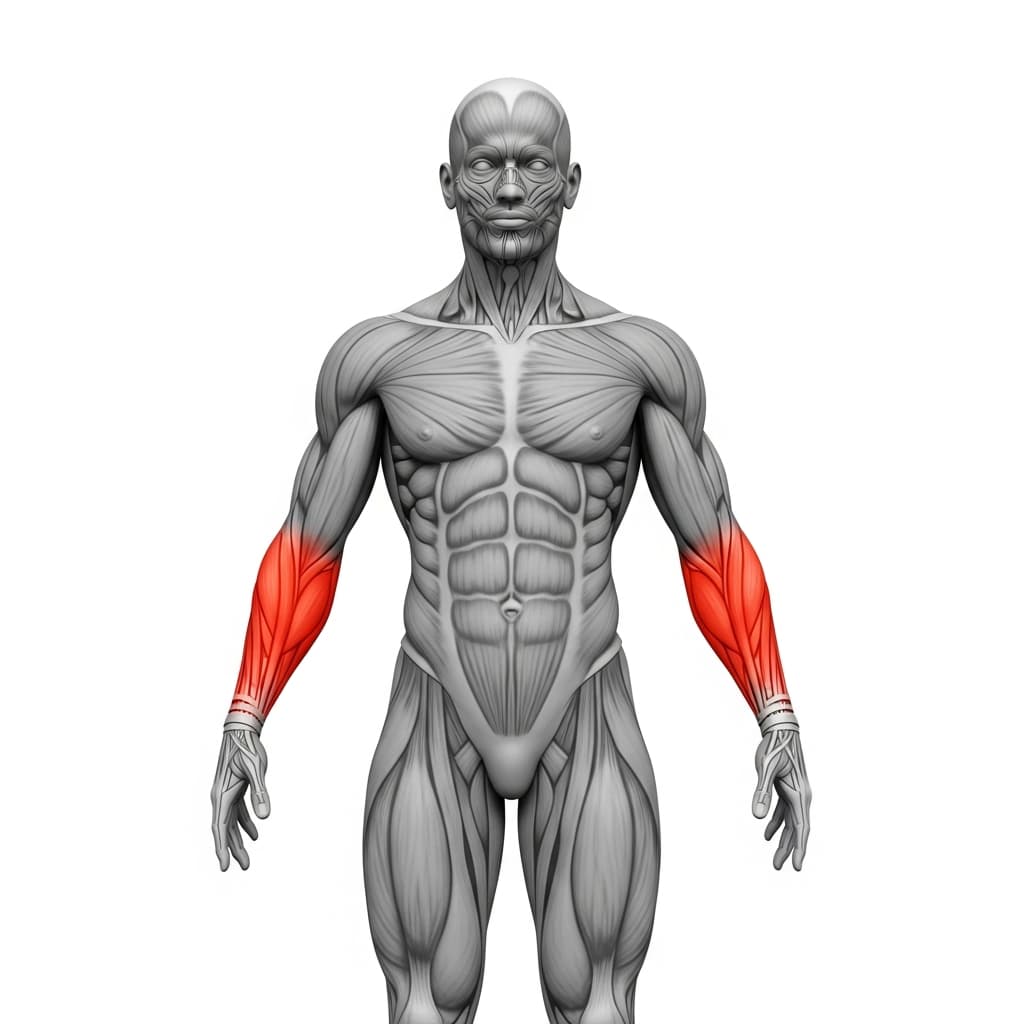
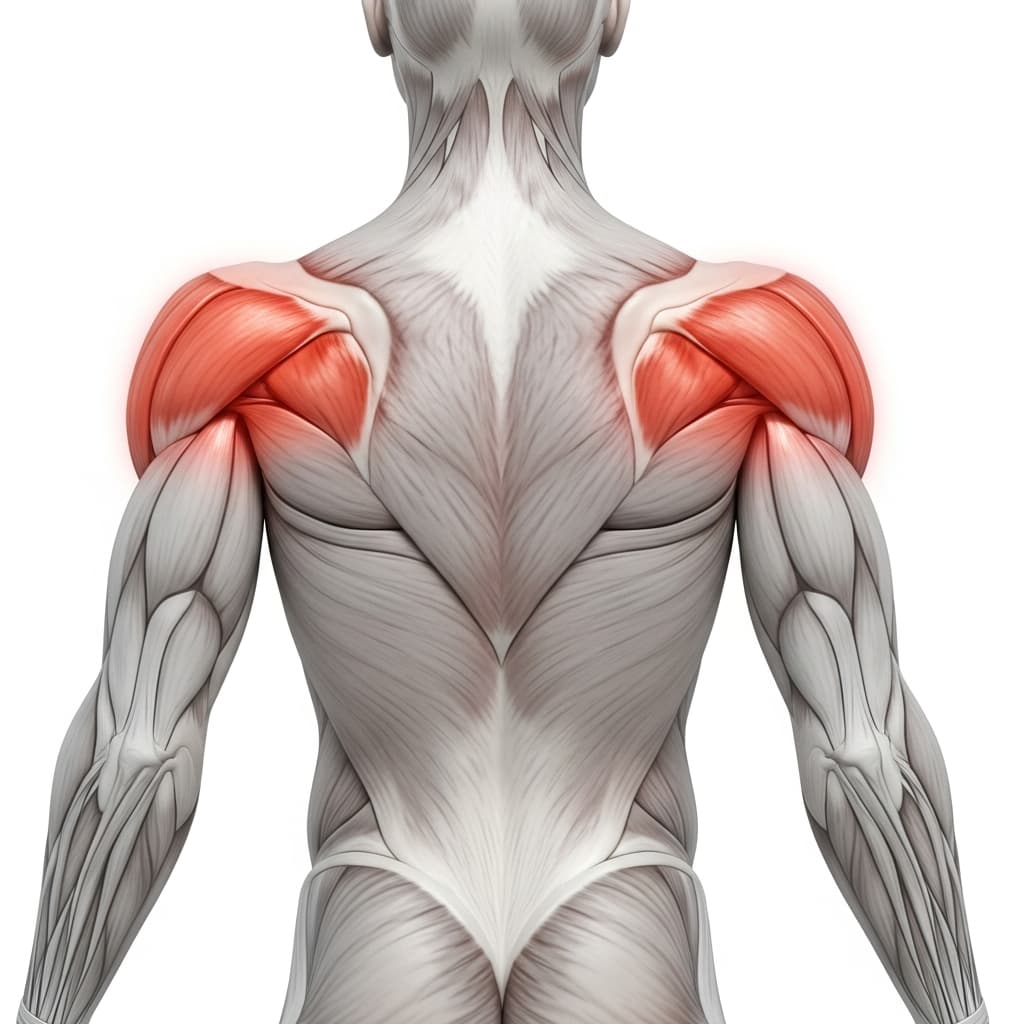
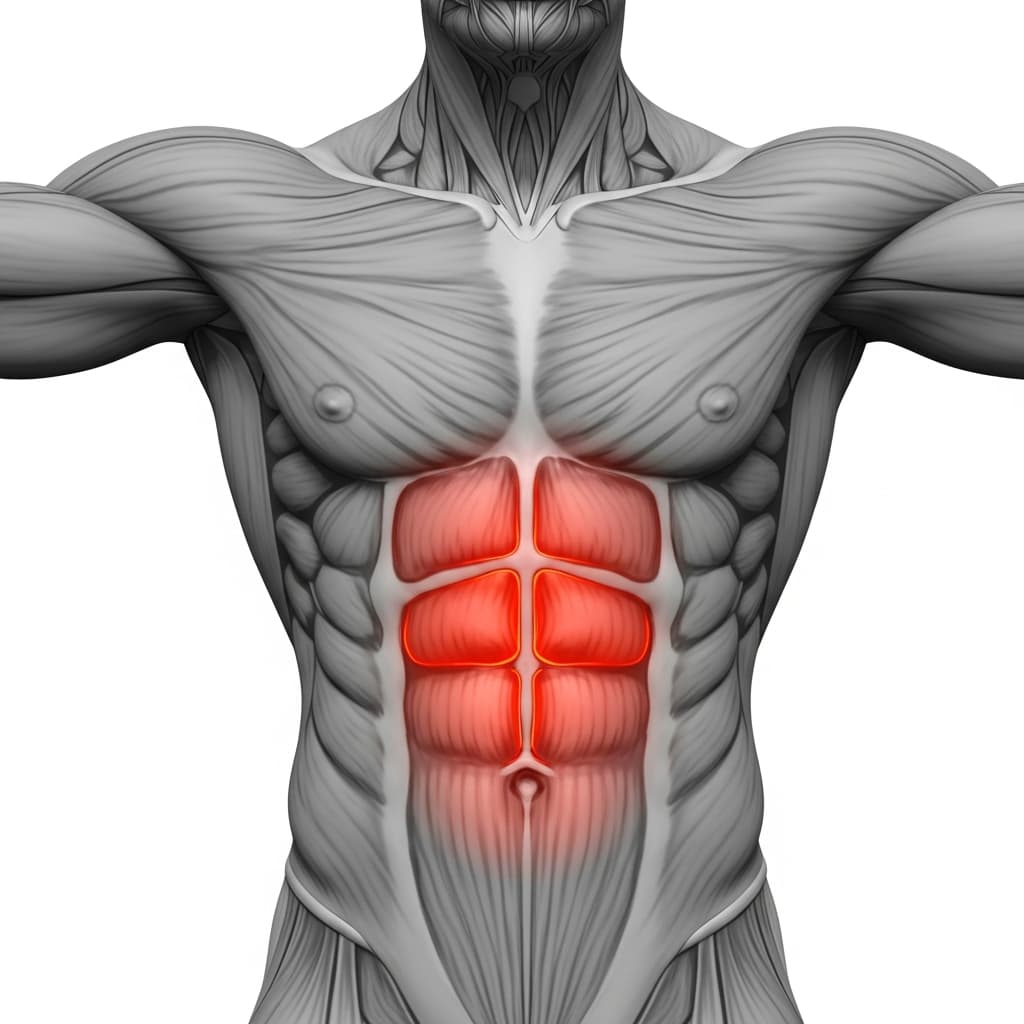
Primary Muscles
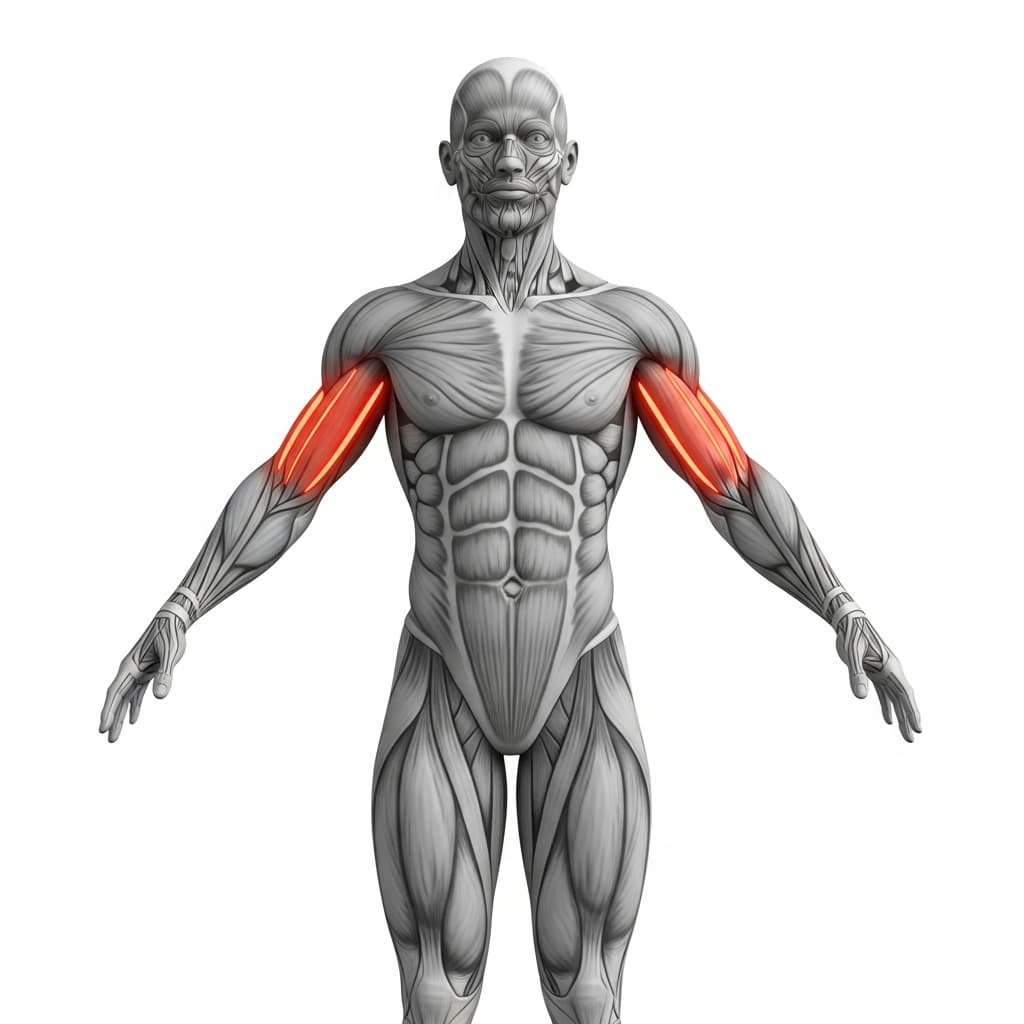
Biceps Brachii (Biceps) - The biceps maintain the flexed elbow position against gravity throughout the hold, resisting the pull of bodyweight that would straighten the arms.
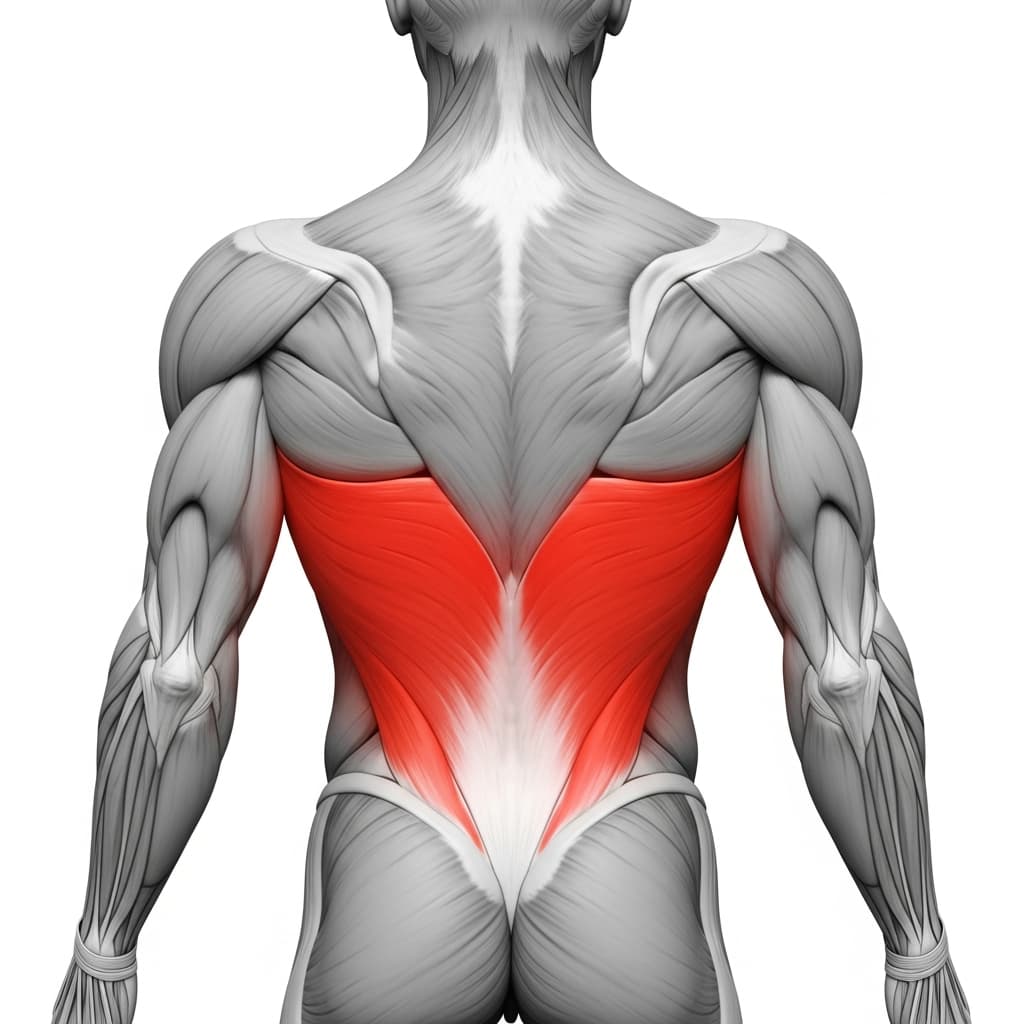
Latissimus Dorsi (Lats) - The lats hold the upper arms in an adducted and extended position, keeping the body elevated and the chest close to the bar.
Secondary Muscles
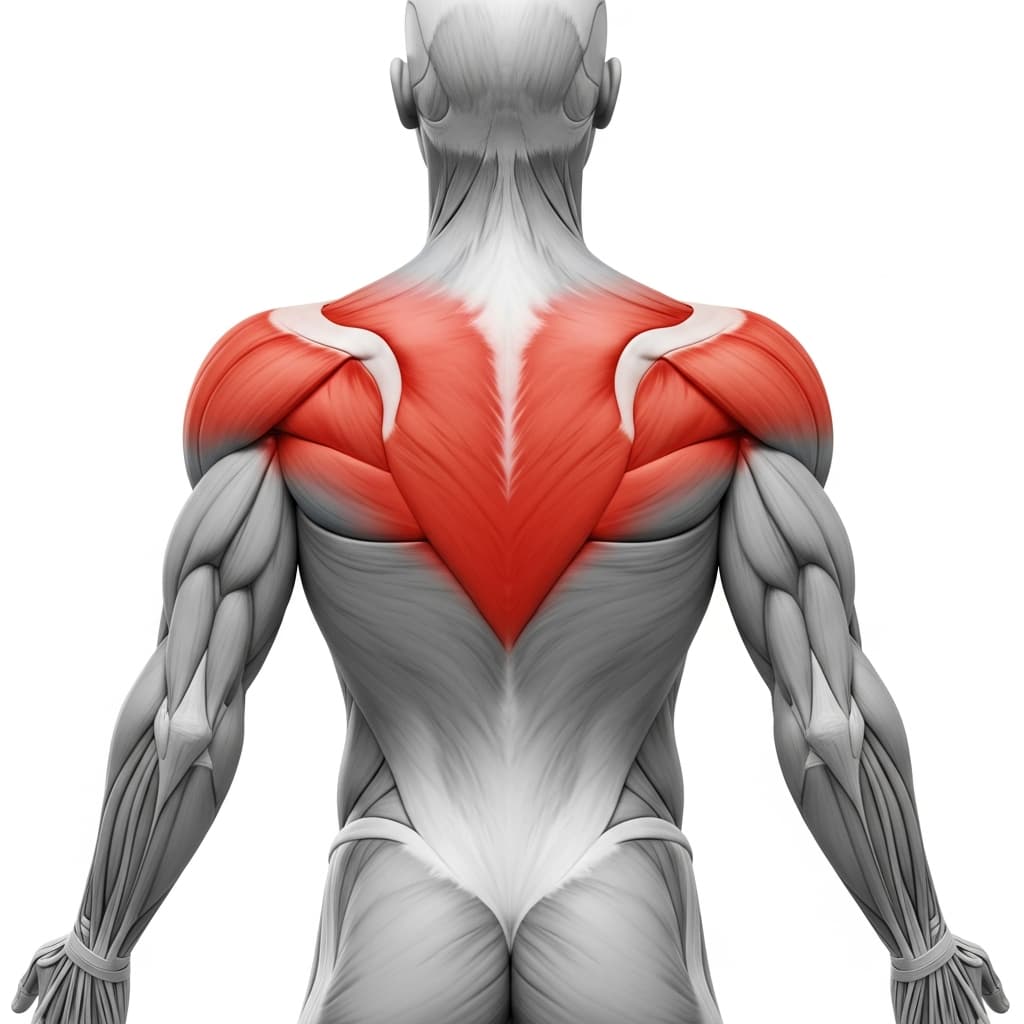
Rhomboids & Upper Trapezius (Upper Back) - The rhomboids and mid-trapezius maintain scapular retraction throughout the hold, keeping the shoulder blades squeezed together and the chest lifted.
Forearm Flexors & Extensors (Forearms) - The forearm flexors sustain grip on the bar under bodyweight load for the full duration of the isometric hold.
Posterior Deltoid (Rear Deltoid) - The rear deltoids assist in keeping the elbows pulled back and the shoulders in a stable, retracted position during the hold.
Rectus Abdominis (Abs) - The abdominals brace the trunk to prevent swinging and maintain a straight, controlled body line while hanging from the bar.
Benefits of Assisted Chin Up Top Hold
- Builds isometric bicep and lat strength at the most demanding point of the chin-up range of motion, which is the position most beginners lose first
- Teaches correct scapular retraction under load, reinforcing the shoulder blade position needed for all pulling exercises
- Develops grip endurance under a sustained supinated hold, directly transferring to chin-up and supinated row performance
- Allows beginners to train the hardest part of the chin-up without needing the pulling strength for a full rep
- Strengthens the upper back stabilizers in a contracted position, which protects the shoulder joint during overhead and pulling movements
Who Is This Exercise For?
You should be able to hold a dead hang for at least 10 seconds with stable shoulders and perform scapular pull-ups with controlled retraction before attempting this exercise. If you cannot maintain a supinated grip on the bar without wrist discomfort, work on wrist mobility and basic hang progressions first. This exercise is not appropriate if you lack the baseline grip strength to hold the bar for the duration of a set.
Common Mistakes to Avoid
Shrugging the shoulders up to the ears: Actively pull your shoulders down and squeeze the shoulder blades together before and during the hold. If your shoulders creep up, the upper back disengages and the neck and traps take over.
Craning the neck to get chin over the bar: Your chin should clear the bar as a result of your body being high enough, not by jutting the head forward. Keep your neck neutral and focus on lifting the chest toward the bar instead.
Using a band that is too heavy: The band should provide enough assistance that you can hold the position with proper form for at least 5 seconds. If the band does all the work and you feel no effort in your biceps or back, switch to a lighter band.
Letting the body swing or rotate: Engage your core and keep your legs together throughout the hold. Any swinging shifts the load away from the target muscles and stresses the shoulder joint unpredictably.