Jackknife Top Hold
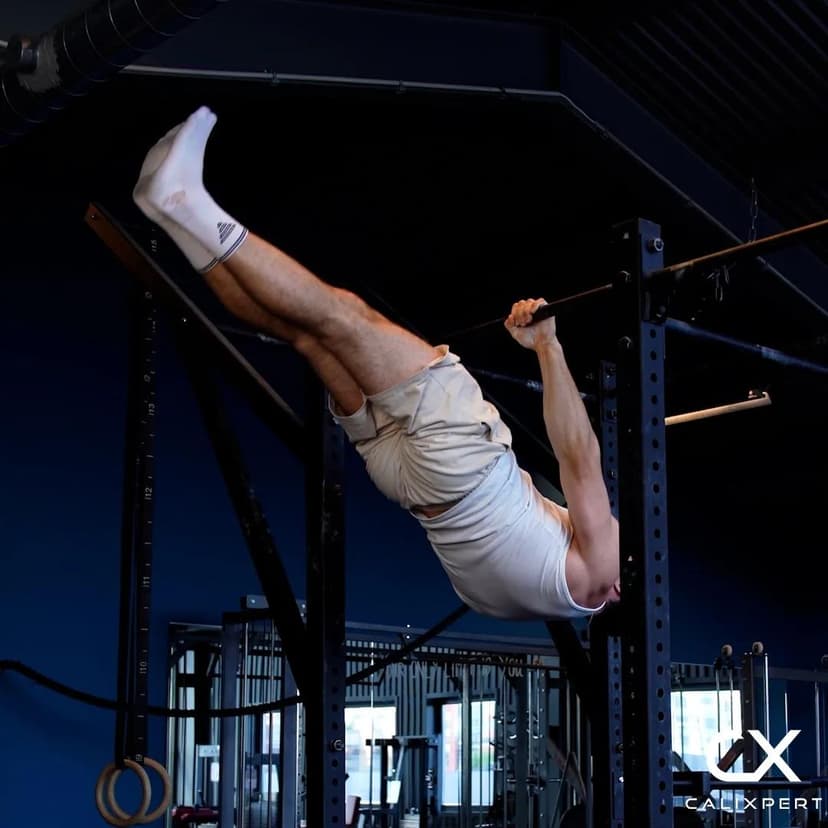
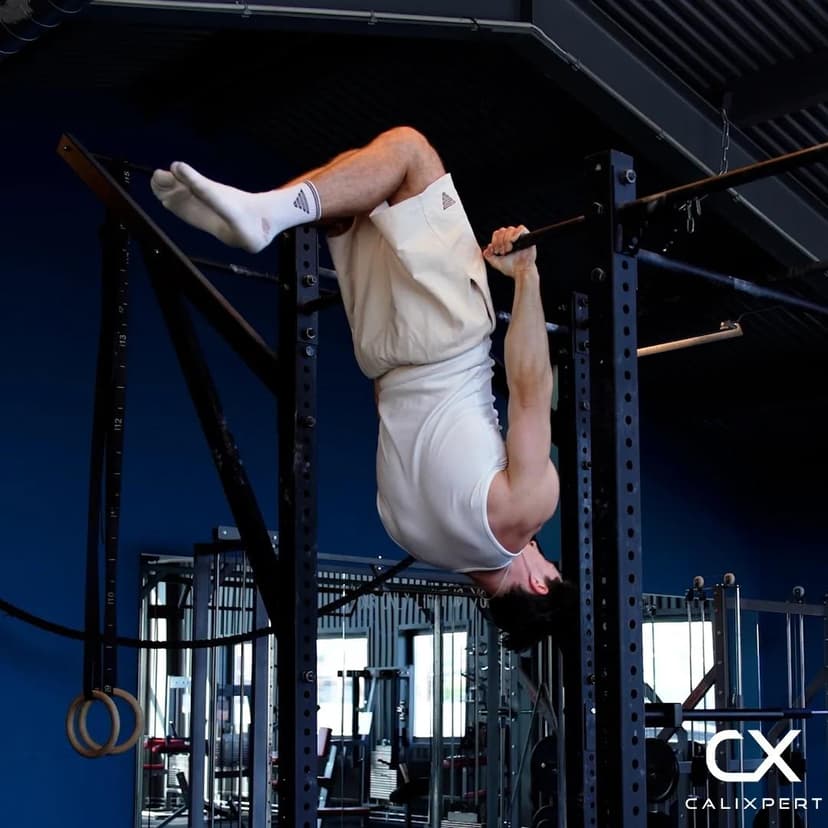
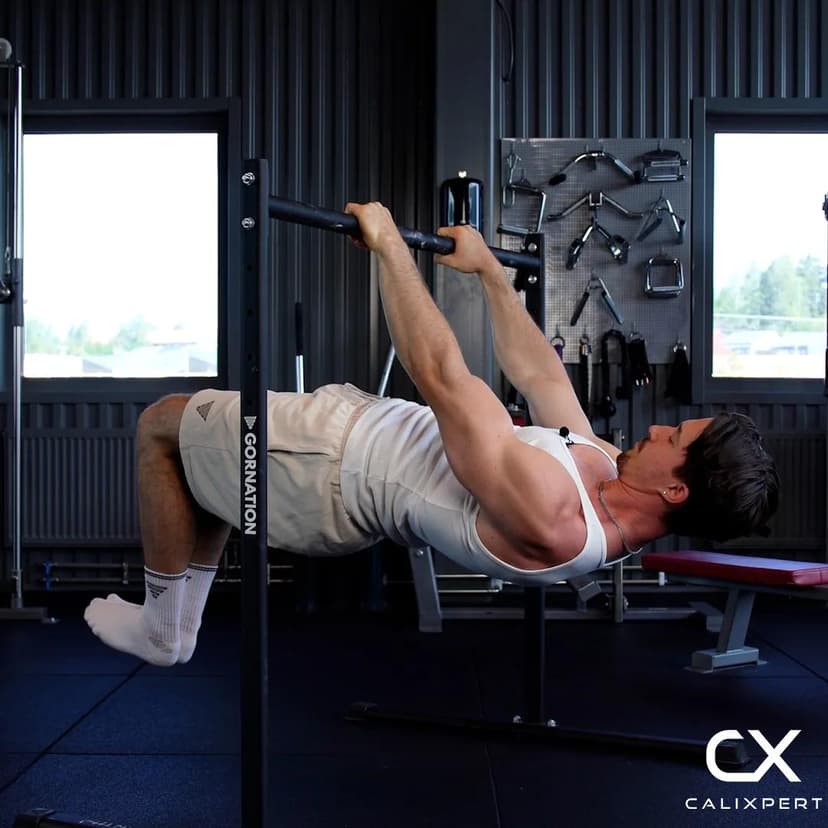
The Jackknife Top Hold is an isometric pulling exercise performed on rings or a low bar, where you hold the top position of a pull-up with your legs assisting from the ground. It targets the lats, upper back, and biceps while teaching proper scapular retraction under load. This hold builds the positional strength and muscle activation patterns needed to progress toward unassisted pull-ups.
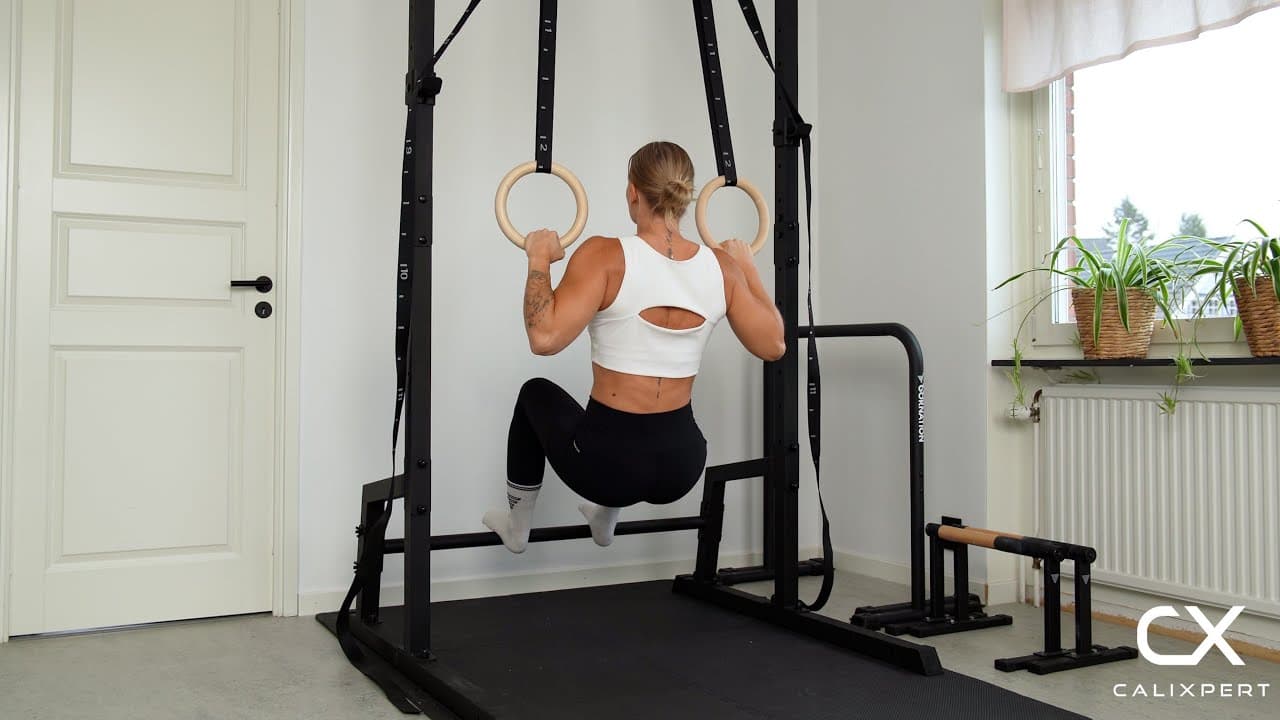
The Jackknife Top Hold is an isometric pulling exercise performed on rings or a low bar, where you hold the top position of a pull-up with your legs assisting from the ground. It targets the lats, upper back, and biceps while teaching proper scapular retraction under load. This hold builds the positional strength and muscle activation patterns needed to progress toward unassisted pull-ups.
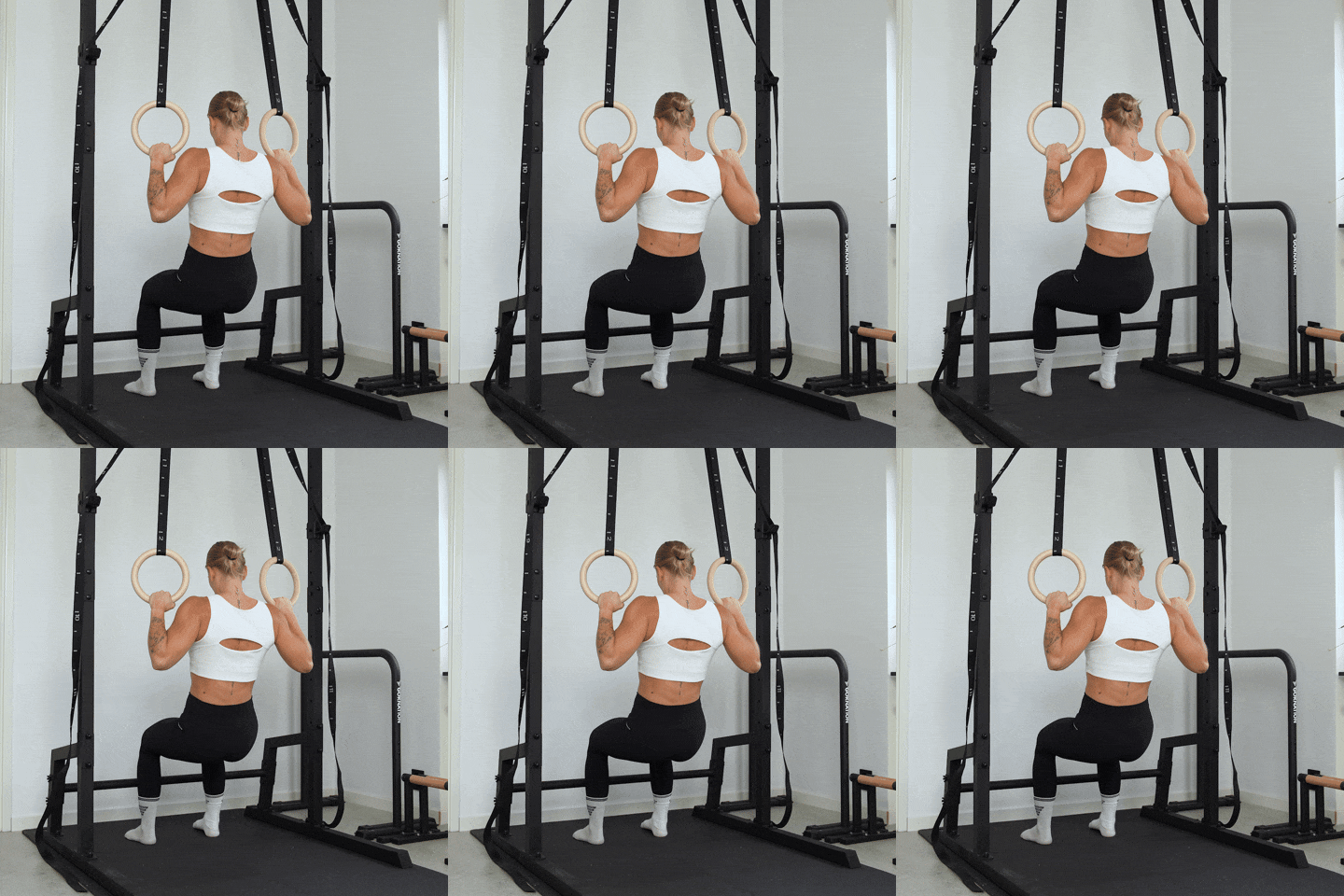
How to Do Jackknife Top Hold
1. Set the Ring or Bar Height
Hang a pair of rings or position a low bar so that when you sit directly underneath, you can reach the rings or bar with straight arms above your head. This height ensures you start from full arm extension and move through the correct range of motion. Rings are recommended because they allow quick height adjustments.
Sit under, reach up, arms fully straight
2. Position Your Feet and Grip
Sit on the floor beneath the rings or bar and grip them with an overhand grip, slightly wider than shoulder width. Place your feet in front of you with your knees bent so the soles of your feet are flat on the ground. Your legs will support part of your bodyweight throughout the movement, reducing the load on your pulling muscles.
Knees bent, feet flat, thumbs around
3. Initiate With a Scapular Pull
Before bending your elbows, depress your scapulae by pulling your shoulders down and away from your ears. This scapular pull activates the lats and upper back stabilizers before the arms engage. Skipping this step shifts the load into the biceps and leaves the back underworked.
Shoulders down before elbows bend
4. Pull to the Top Position
Drive your elbows outward and back while pressing through your feet to assist the pull. Continue pulling until your chest rises toward the rings or bar and your shoulder blades are fully retracted. Use only as much leg drive as necessary to reach the top, keeping the majority of the effort in your back and arms.
Chest up, elbows back, legs assist
5. Hold and Squeeze at the Top
At the top of the movement, squeeze your shoulder blades together and hold your chest high toward the rings or bar. Maintain this position for the target hold duration, keeping your core braced and your neck neutral. Focus on feeling the contraction across your entire upper back rather than gripping harder with your hands.
Squeeze shoulder blades, hold the position
6. Lower Under Control
Slowly extend your arms and lower yourself back to the starting position over 3 to 4 seconds. Resist the pull of gravity throughout the descent rather than dropping. Reset your scapulae at the bottom before initiating the next rep.
Slow descent, do not drop
Most people rush through the hold and let their shoulders creep up toward their ears after a few seconds. The real training effect comes from maintaining active scapular depression the entire time. If your shoulders start shrugging, end the set, rest, and go again with a shorter hold that you can control completely.
Muscles Worked During Jackknife Top Hold
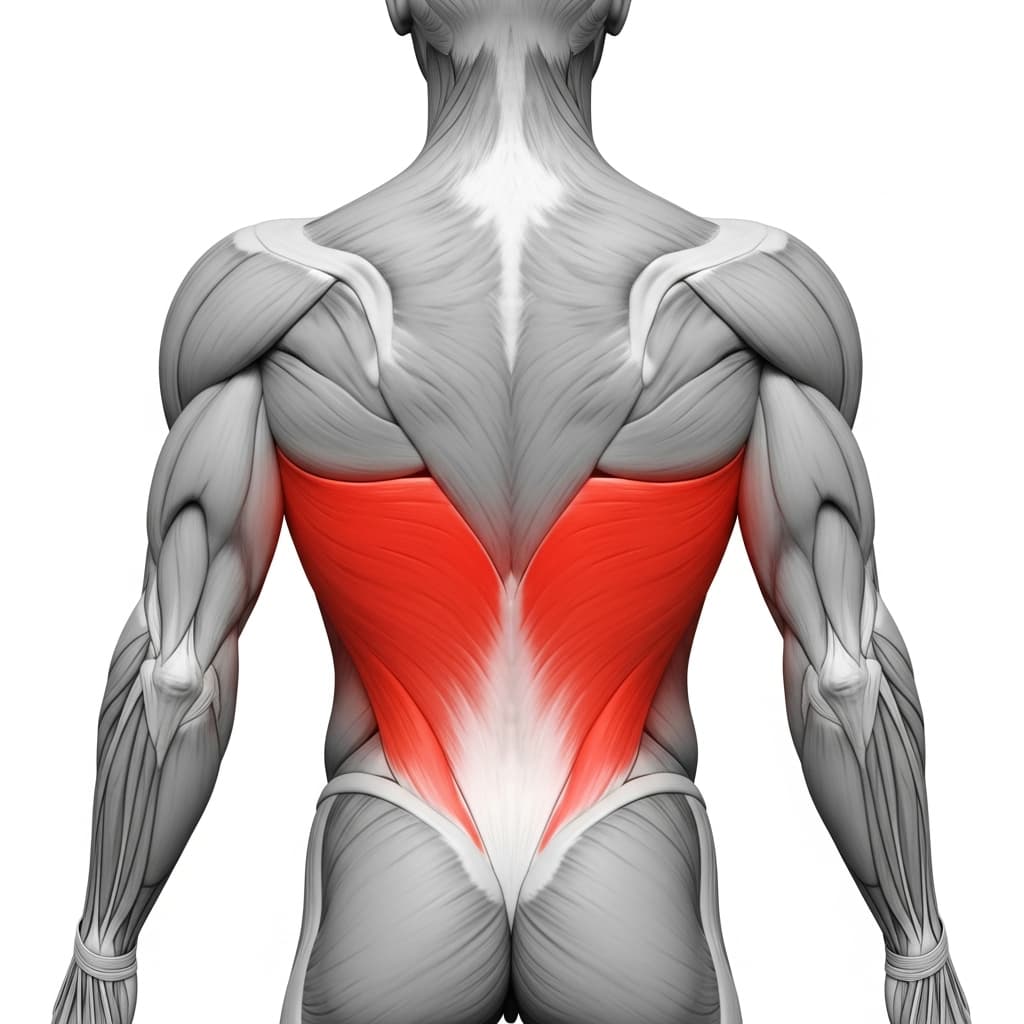
Primary Muscles:
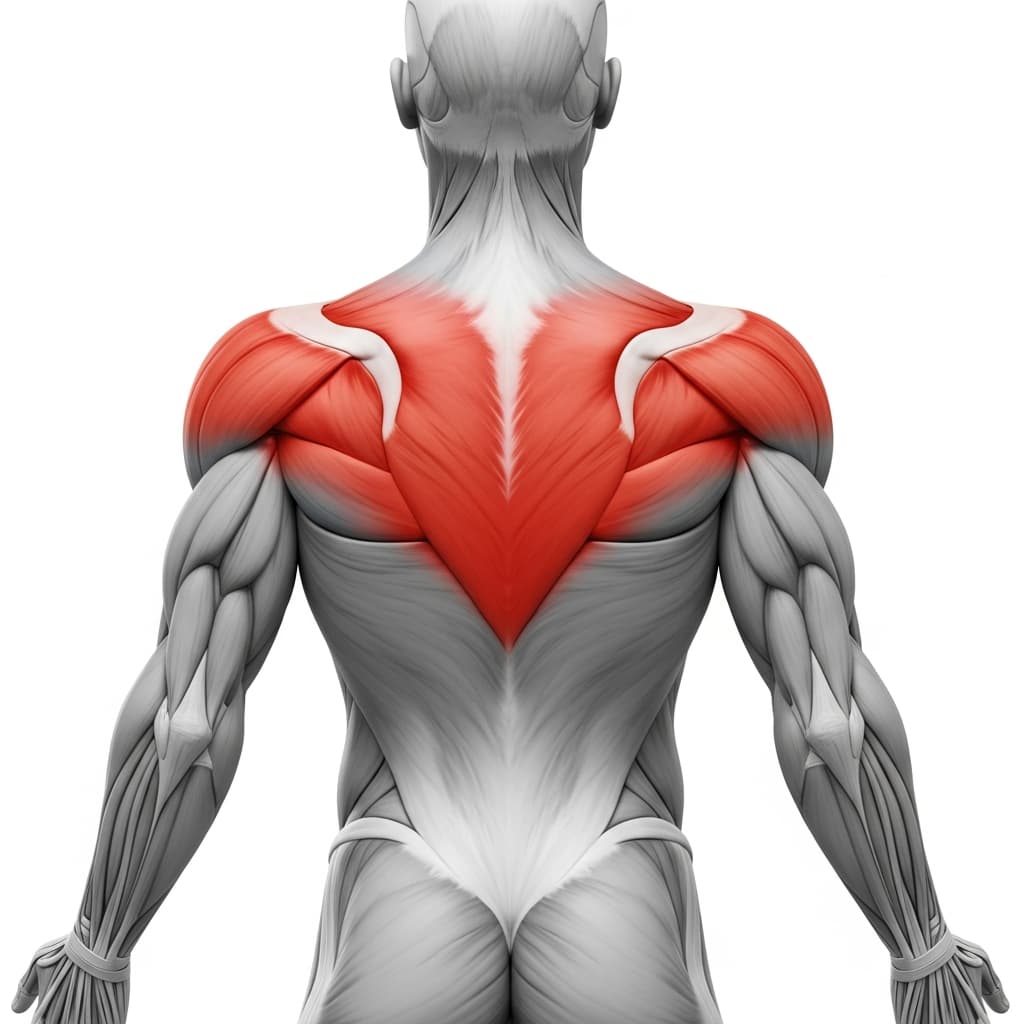
Secondary Muscles:
Primary Muscles
Latissimus Dorsi (Lats) - The lats drive the pulling motion and maintain the shortened position at the top of the hold by keeping the upper arms pulled down and back.
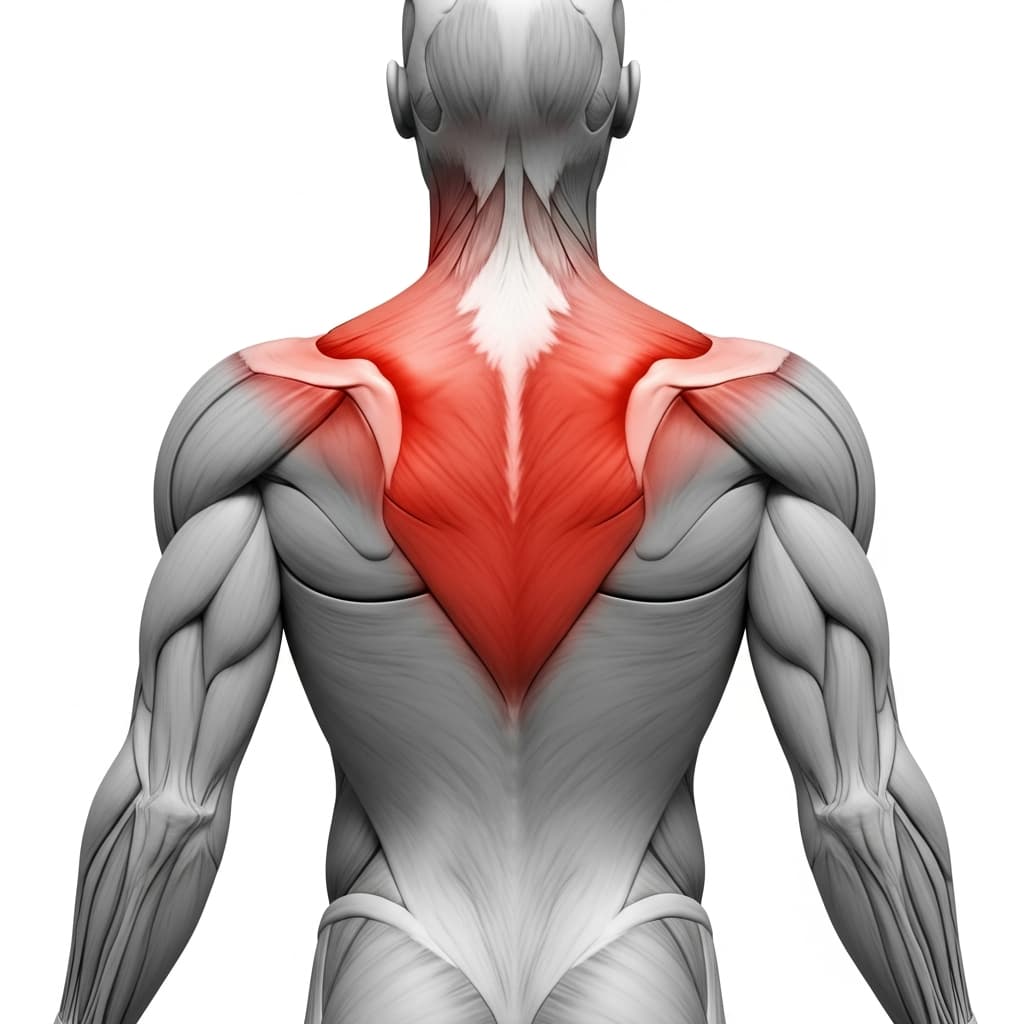
Rhomboids & Upper Trapezius (Upper Back) - The rhomboids and mid-trapezius retract the shoulder blades together at the top position, maintaining the chest-up posture throughout the isometric hold.
Secondary Muscles
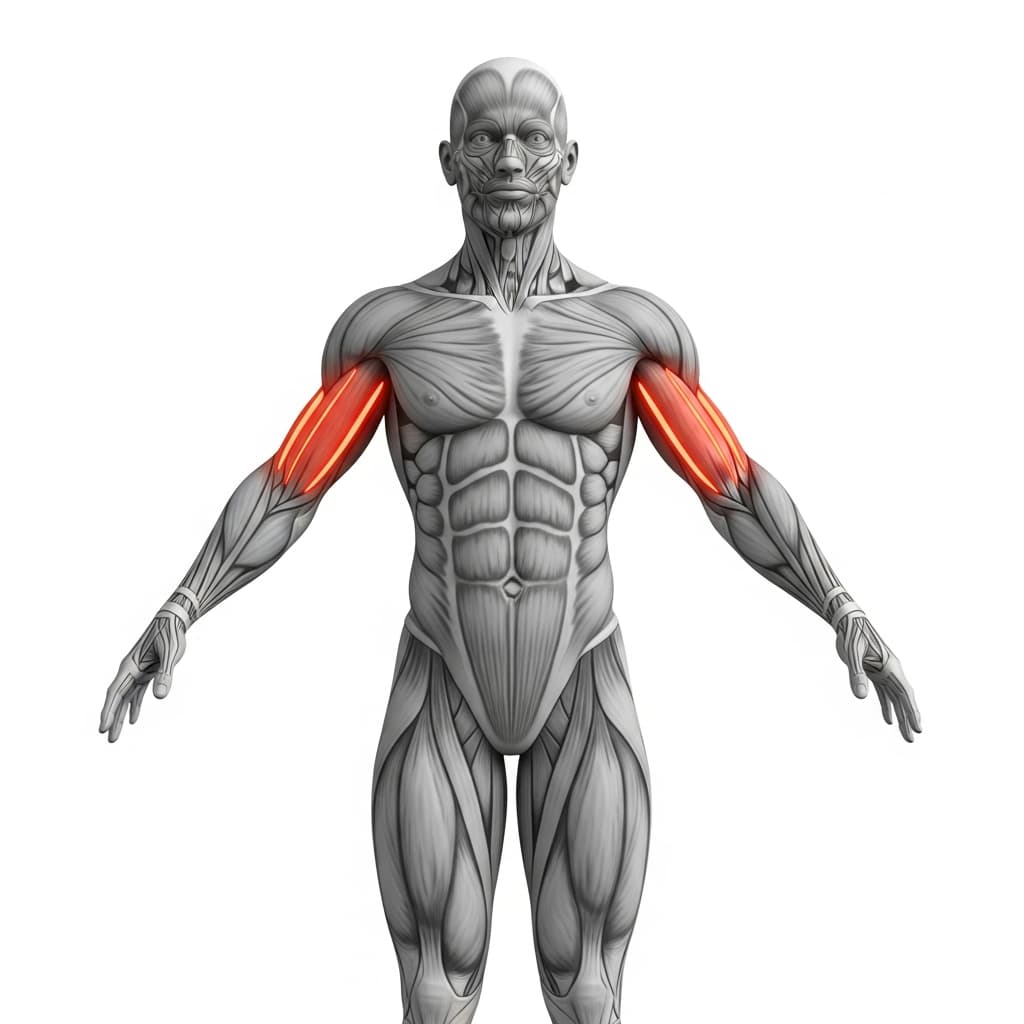
Biceps Brachii (Biceps) - The biceps assist the pull by flexing the elbow and stabilize the arm position during the isometric hold at the top.
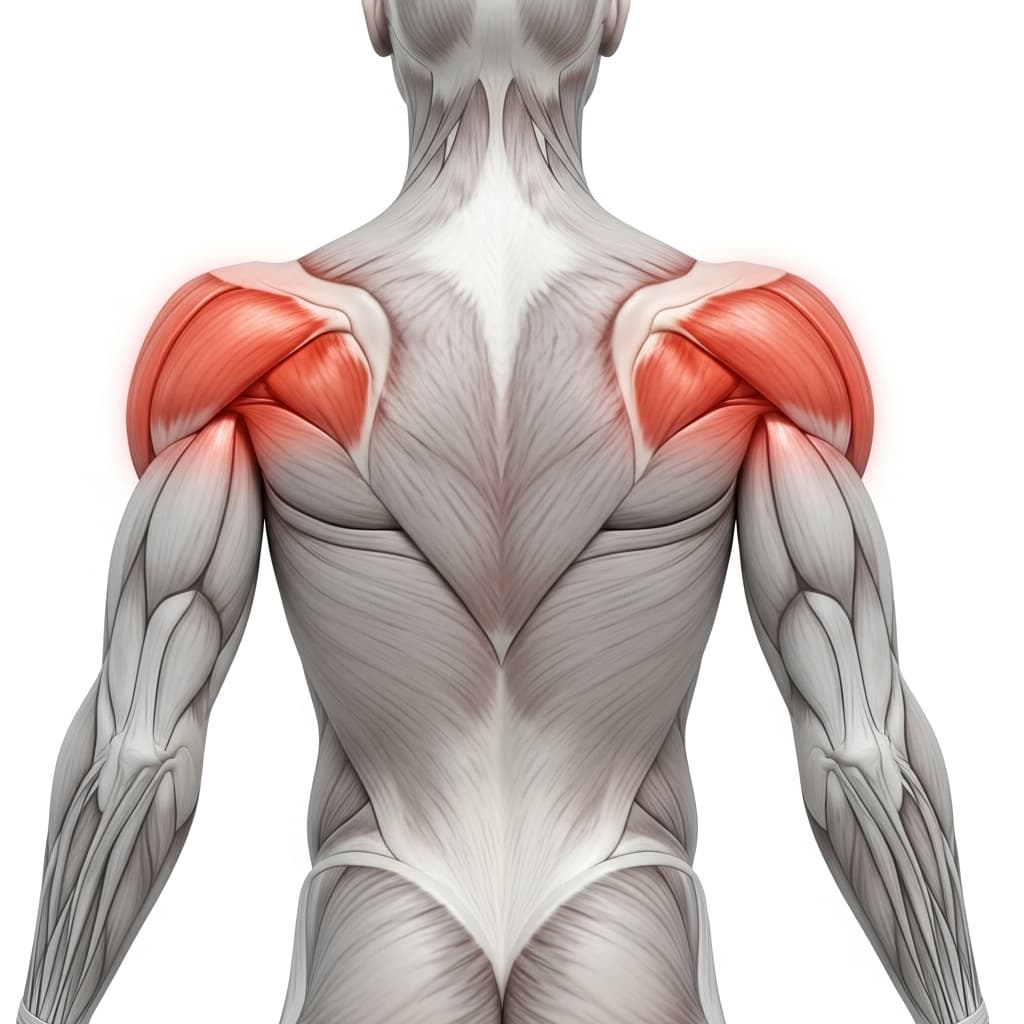
Posterior Deltoid (Rear Deltoid) - The rear deltoids assist in pulling the upper arm backward and help maintain horizontal shoulder extension at the top of the hold.
Trapezius (Trapezius) - The lower and middle traps work to depress and retract the scapulae, keeping the shoulders stable and away from the ears during the hold.
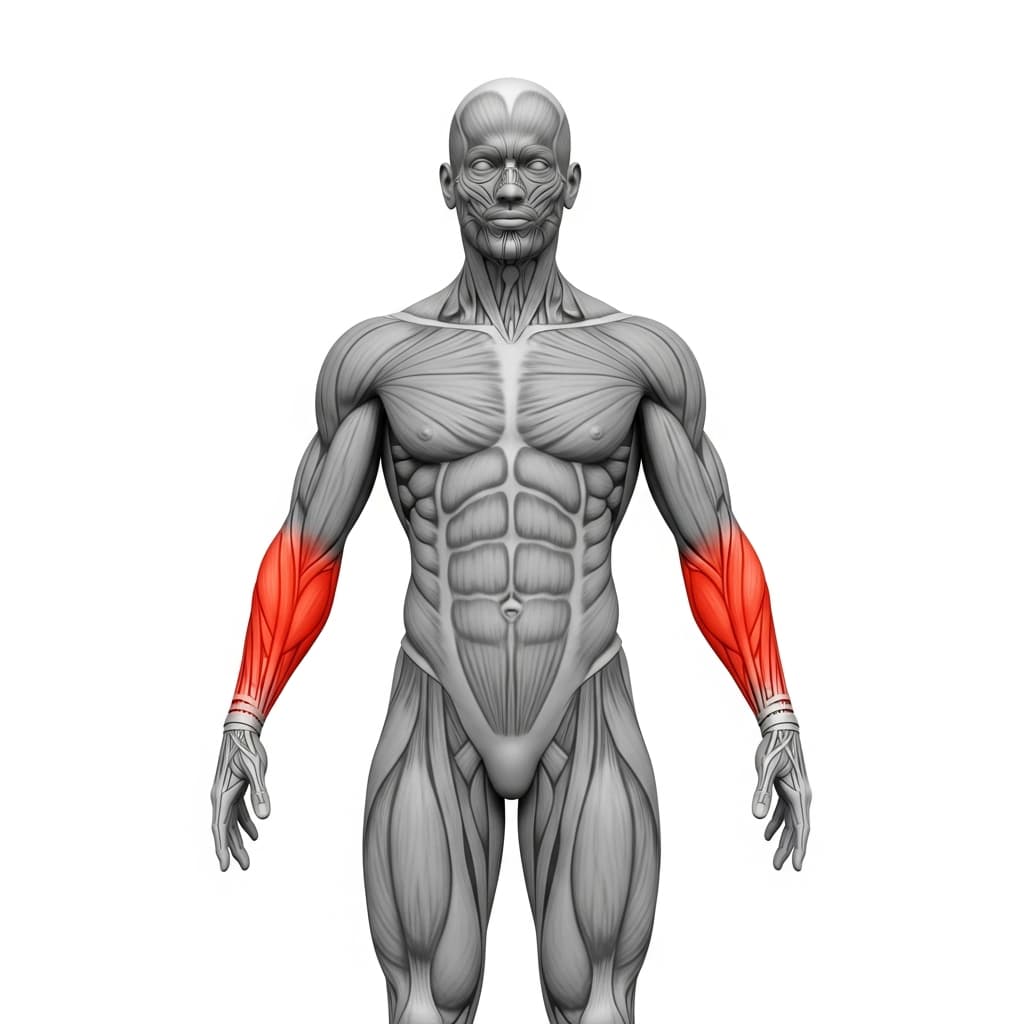
Forearm Flexors & Extensors (Forearms) - The forearm flexors maintain grip on the rings or bar throughout the hold, working continuously under sustained isometric load.
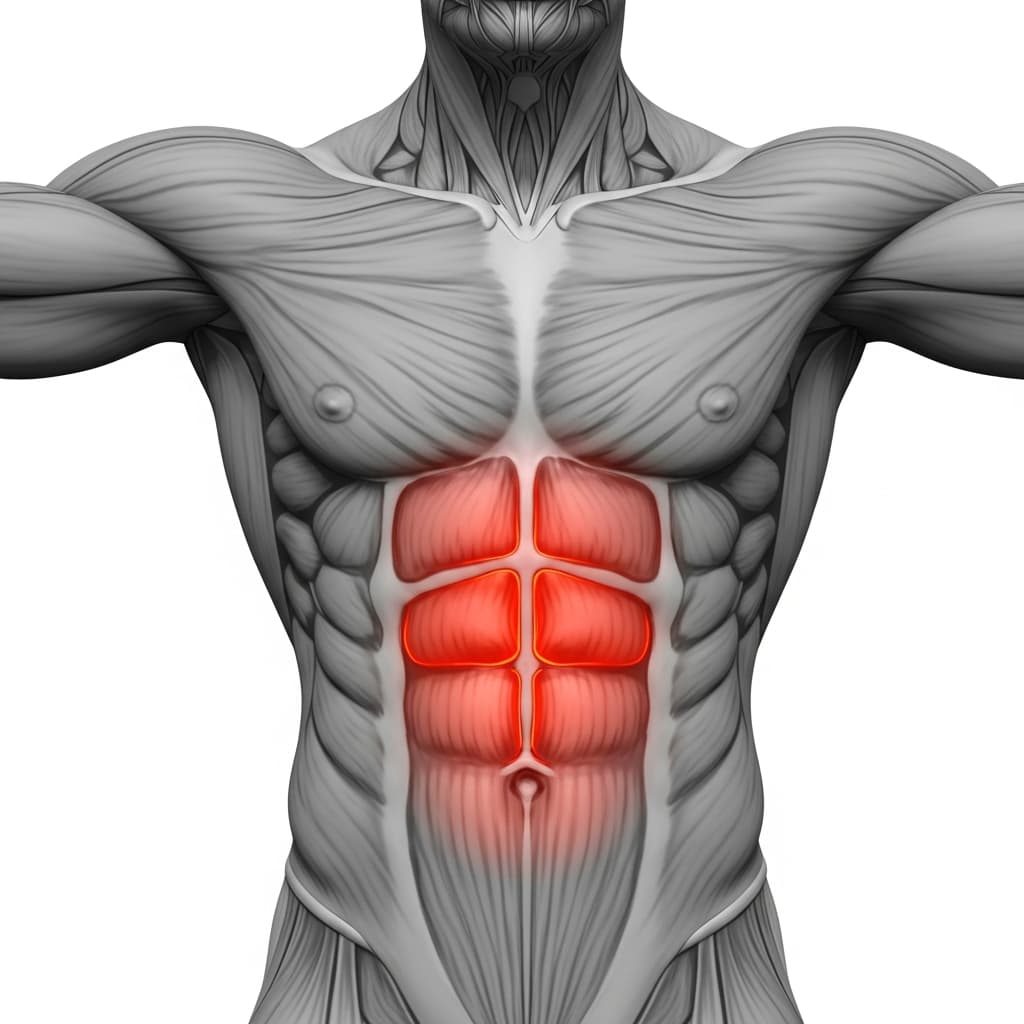
Rectus Abdominis (Abs) - The abdominals brace the torso and prevent excessive arching of the lower back, keeping the body aligned during the pulling hold.
Benefits of Jackknife Top Hold
- Builds isometric pulling strength at the top of the pull-up, which is the weakest position for most beginners learning to pull
- Trains scapular retraction under load, developing the upper back control needed for strict pull-ups and advanced pulling skills
- Provides a scalable pulling exercise where leg assistance can be reduced progressively as strength increases
- Strengthens grip endurance in a loaded hanging position, directly transferring to dead hangs and full pull-up sets
Who Is This Exercise For?
You should be able to hold a dead hang for at least 15 seconds and perform controlled scapular pull-ups before attempting the Jackknife Top Hold. Comfortable overhead reaching with stable shoulders is also required, since the starting position demands full arm extension above the head. If you cannot maintain a basic dead hang without your shoulders shrugging up to your ears, work on passive and active hangs first.
Common Mistakes to Avoid
Skipping the scapular initiation: Always depress your shoulder blades before bending the elbows. If you pull with the arms first, the lats never fully engage and the hold becomes a bicep endurance test instead of a back exercise.
Using too much leg drive: Your legs should assist, not do the work. If you can hold the top position with almost no effort, you are pushing too hard through your feet. Reduce leg drive until holding the top feels genuinely challenging for your back.
Letting the shoulders shrug up: Keep your shoulders actively pulled down and away from your ears throughout the hold. Shrugged shoulders shift tension into the upper traps and neck instead of the lats and mid-back.
Collapsing at the chest: Your chest should stay lifted and open at the top of the hold. If your chest drops and your shoulders round forward, you lose the scapular retraction that makes this exercise effective for back development.
Variations & Progressions
Feet Close to Body Jackknife Top Hold
Place your feet closer to your hips so your knees are at a sharper angle. This position allows your legs to bear more of your bodyweight, reducing the load on your pulling muscles.
Elevated Feet Jackknife Top Hold
Place your feet on a raised surface such as a box or bench. Elevating the feet increases the percentage of bodyweight your back and arms must support, bringing the hold closer to a full pull-up top hold.