Plank Hold With Leg Crunch
The plank hold with leg crunch is a dynamic core exercise performed from a forearm plank, where you alternate driving each knee toward the same-side elbow while maintaining full-body tension. It targets the abs and obliques through a combination of isometric stabilization and controlled hip flexion, making it significantly more demanding than a static plank. This exercise develops the anti-rotation and anti-extension strength that carries directly into handstands, levers, and every other calisthenics skill that depends on a rigid midline.
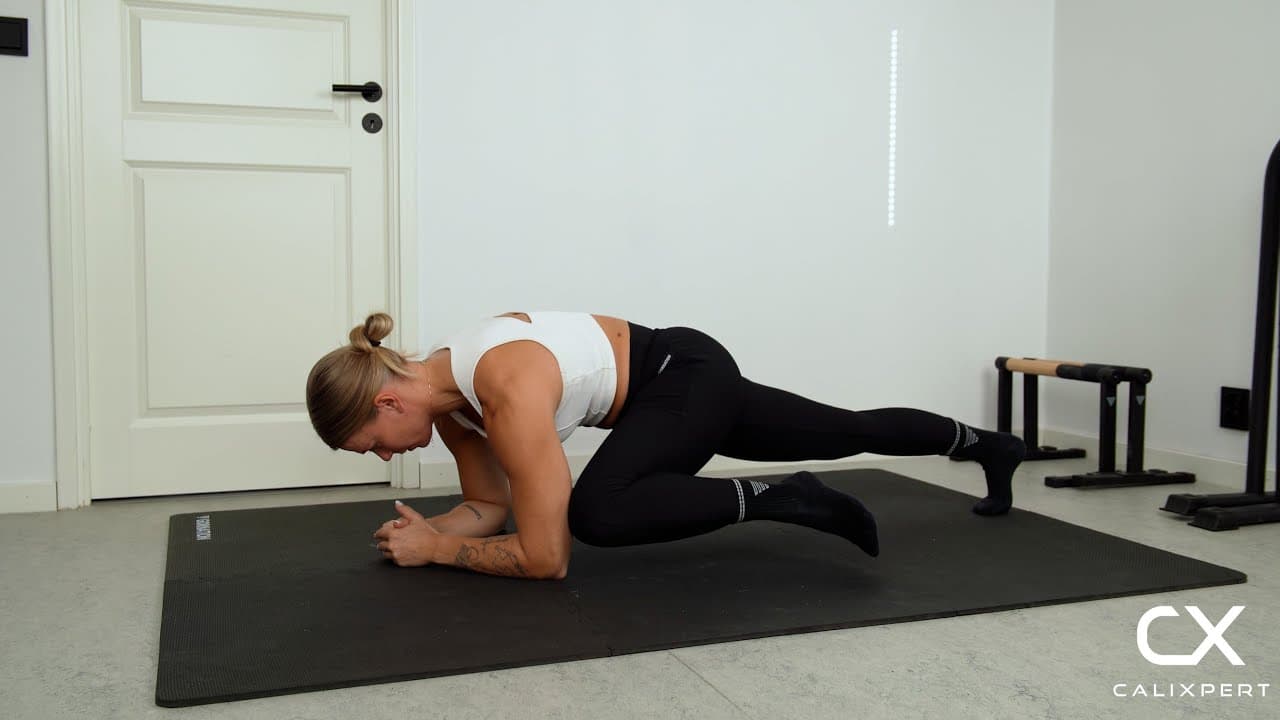
The plank hold with leg crunch is a dynamic core exercise performed from a forearm plank, where you alternate driving each knee toward the same-side elbow while maintaining full-body tension. It targets the abs and obliques through a combination of isometric stabilization and controlled hip flexion, making it significantly more demanding than a static plank. This exercise develops the anti-rotation and anti-extension strength that carries directly into handstands, levers, and every other calisthenics skill that depends on a rigid midline.
How to Do Plank Hold With Leg Crunch
1. Set Up the Forearm Plank
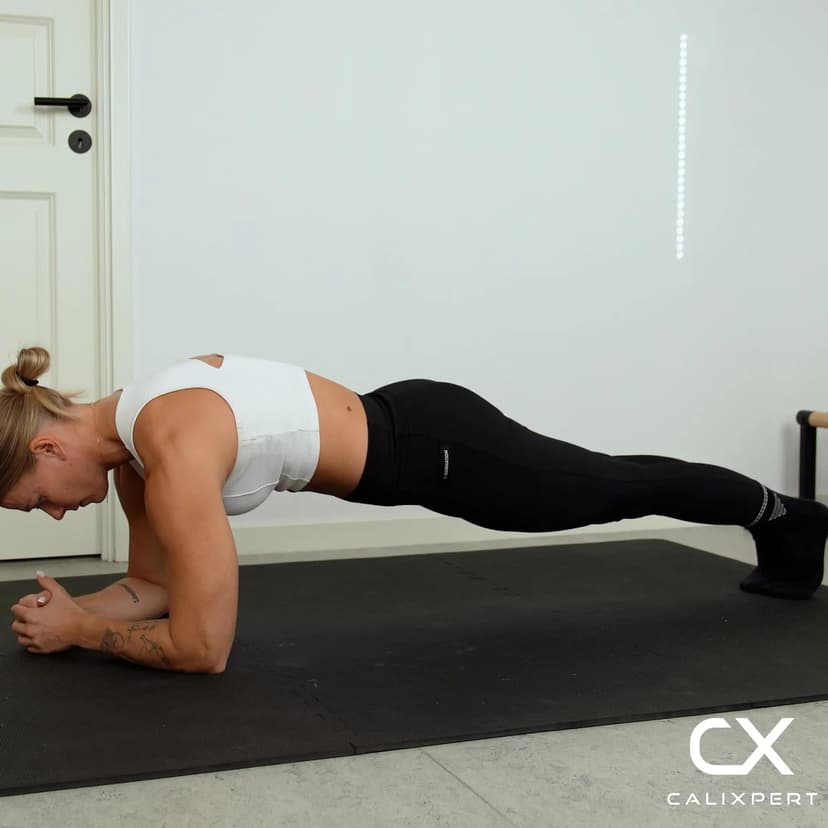
Place your forearms flat on the ground with your elbows directly under your shoulders. Spread your fingers wide for a stable base. Your body should form a straight line from the top of your head to your heels, with feet roughly hip-width apart.
Elbows stacked under shoulders
2. Protract the Scapulae and Brace
Push your shoulder blades apart by pressing the floor away with your forearms. This active protraction engages the serratus anterior and prevents your upper back from collapsing between the shoulders. At the same time, brace your core as if preparing to absorb a punch.
Push the floor away from you
3. Lock the Hips and Squeeze
Squeeze your glutes and tighten your quads to lock your pelvis into a neutral position. Your lower back should have zero arch, and your hips should sit level with your shoulders. This full-body tension is the foundation, and every rep starts and ends here.
Glutes and legs squeezed tight
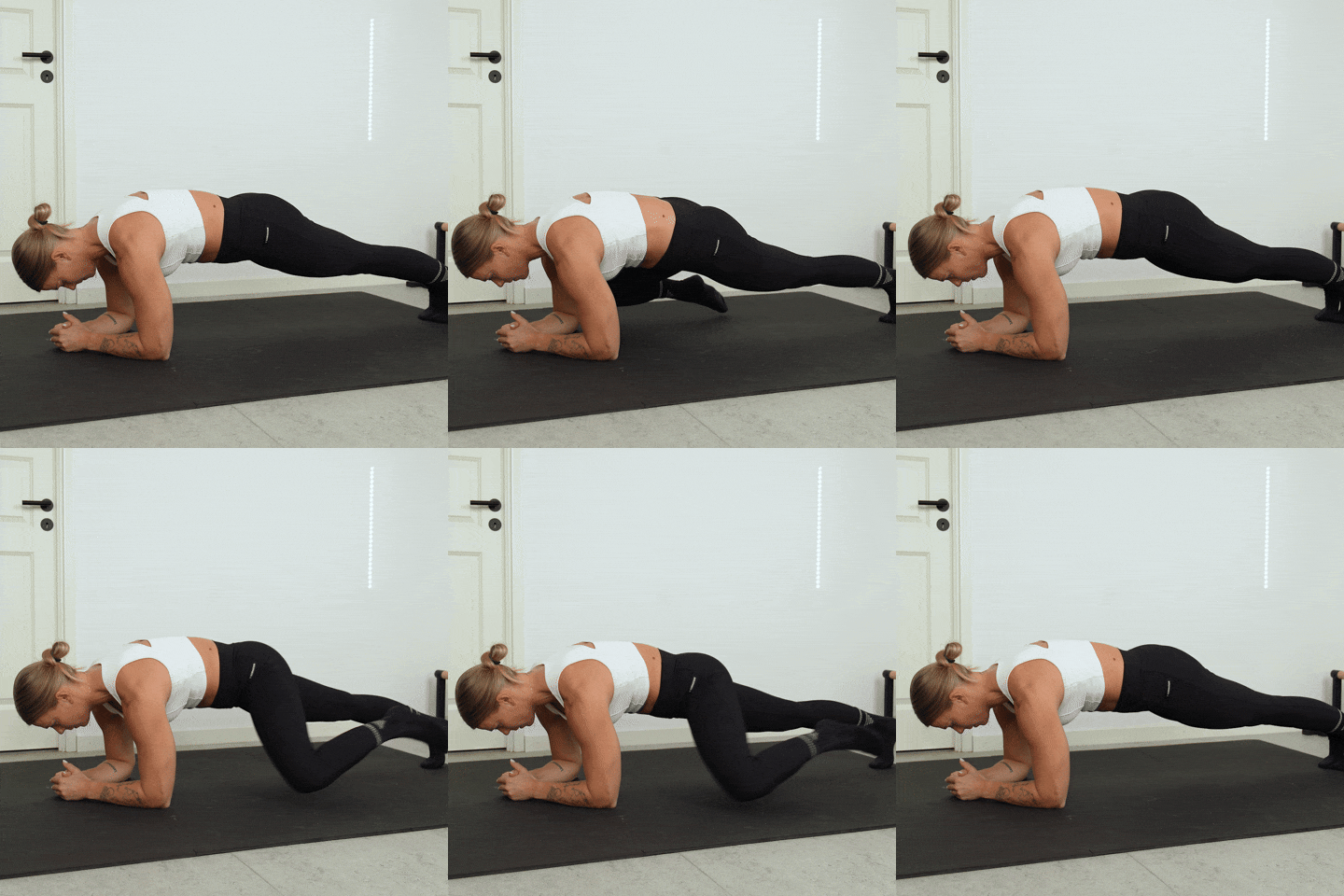
4. Drive the Knee to the Elbow
Without lifting or rotating your hips, bring one knee forward and touch it to the same-side elbow. Move in a controlled, deliberate path. Keep your core braced throughout the entire motion so that only the leg moves while the rest of your body stays completely rigid.
Knee to elbow, hips stay level
5. Return and Alternate Sides
Extend the leg back to the starting position under control, resetting your full-body tension before switching to the other side. Do not rush the transition. Each rep should feel like its own distinct movement with a brief pause in the plank position between sides.
Reset the plank before switching
Most people turn this into a fast mountain climber and wonder why their core never gets stronger. Slow it down. Each knee drive should take a full two seconds, with a one-second pause in the plank between sides. When you control the speed, your obliques and deep stabilizers have to work the entire time instead of relying on momentum to get the knee there and back.
Muscles Worked During Plank Hold With Leg Crunch
Primary Muscles:
Secondary Muscles:
Primary Muscles
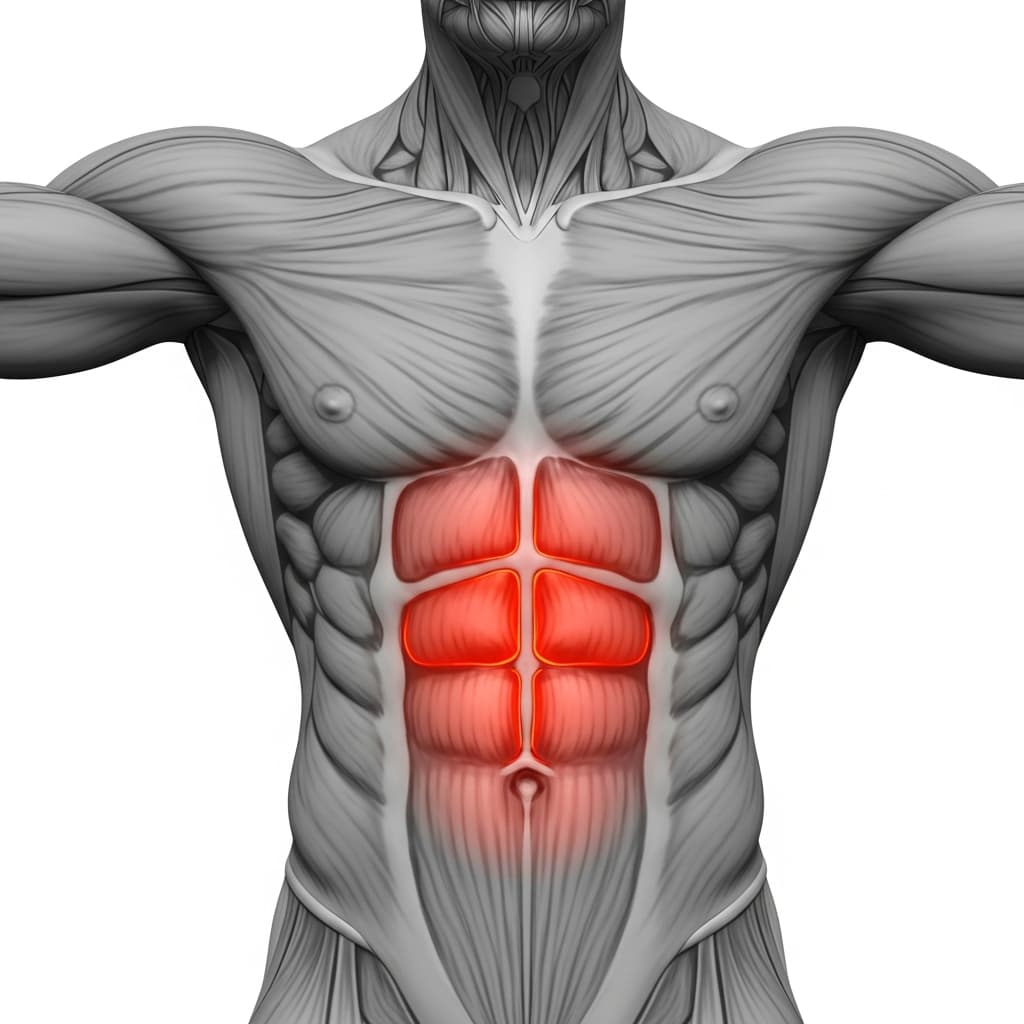
Rectus Abdominis (Abs) - The rectus abdominis works isometrically to resist extension of the spine during the plank hold and contracts dynamically to flex the hip during the knee drive.
Secondary Muscles
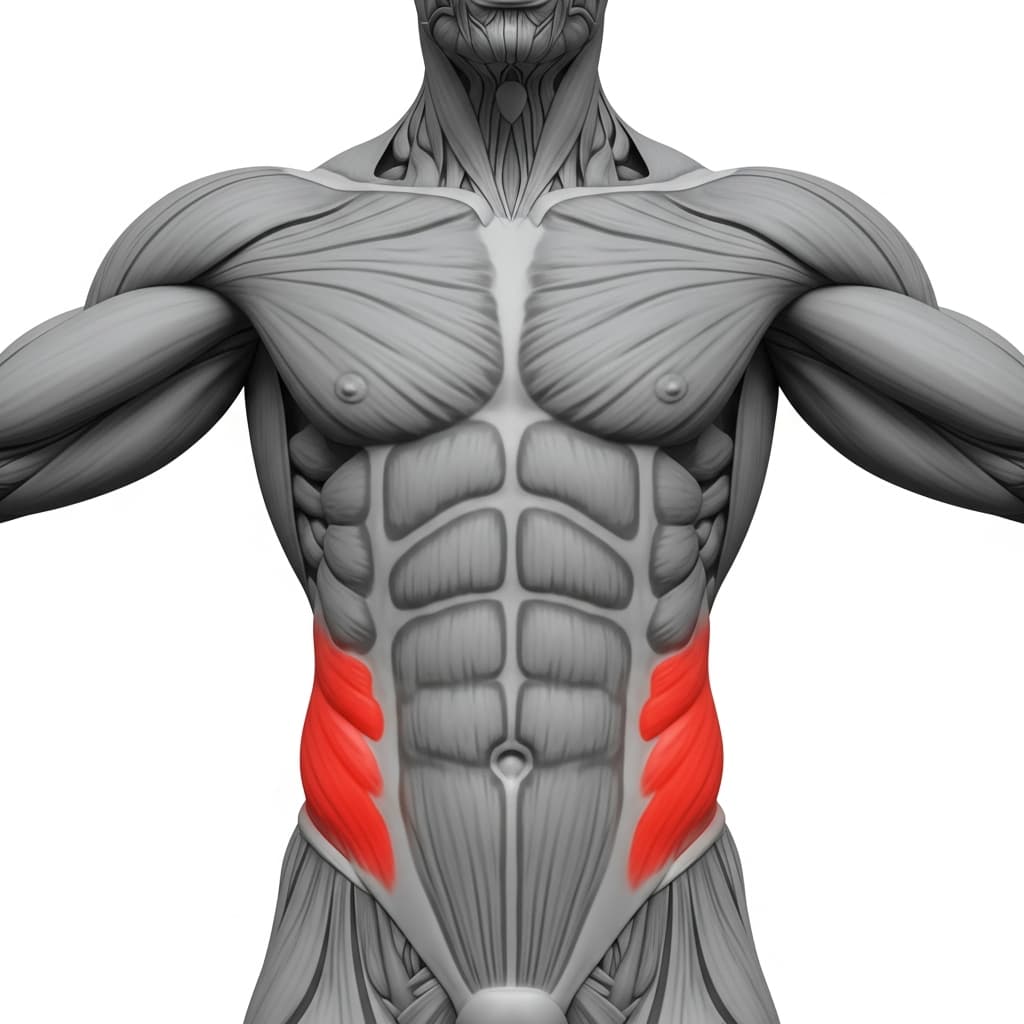
Obliques (Obliques) - The obliques resist rotation and lateral flexion of the trunk as the leg moves, preventing the hips from twisting during each knee-to-elbow crunch.
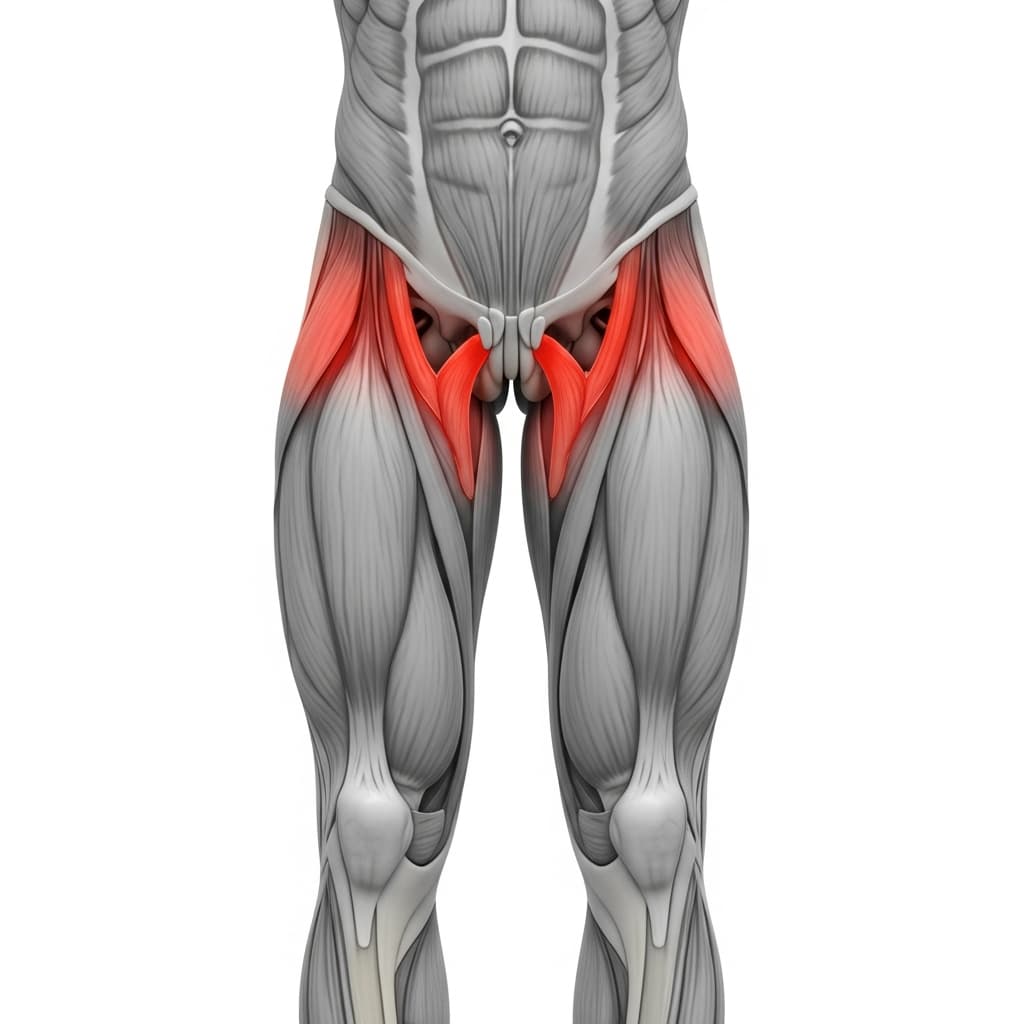
Iliopsoas (Hip Flexors) - The hip flexors drive the knee forward toward the elbow against gravity, working through a shortened range while the core maintains a braced position.
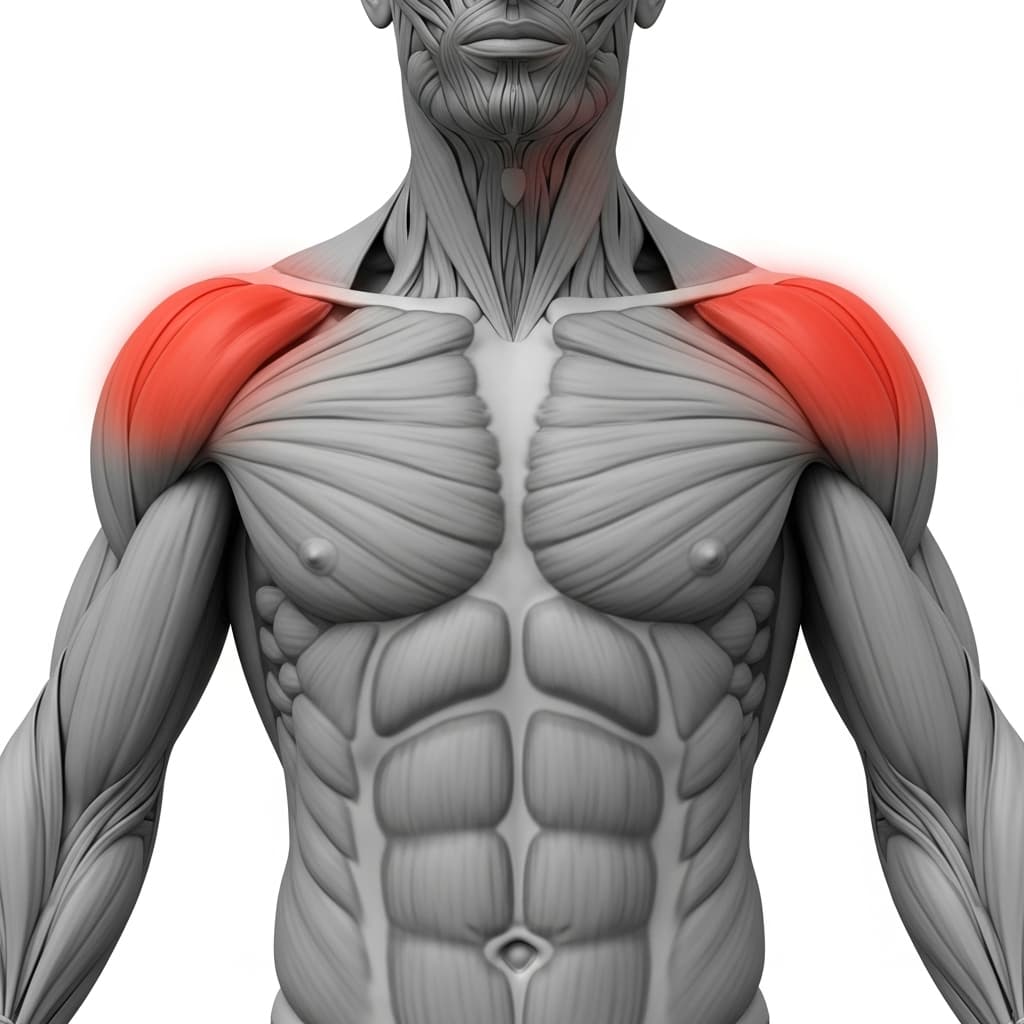
Anterior Deltoid (Front Deltoid) - The front deltoids stabilize the shoulder joint under bodyweight load throughout the forearm plank, keeping the upper body from collapsing.
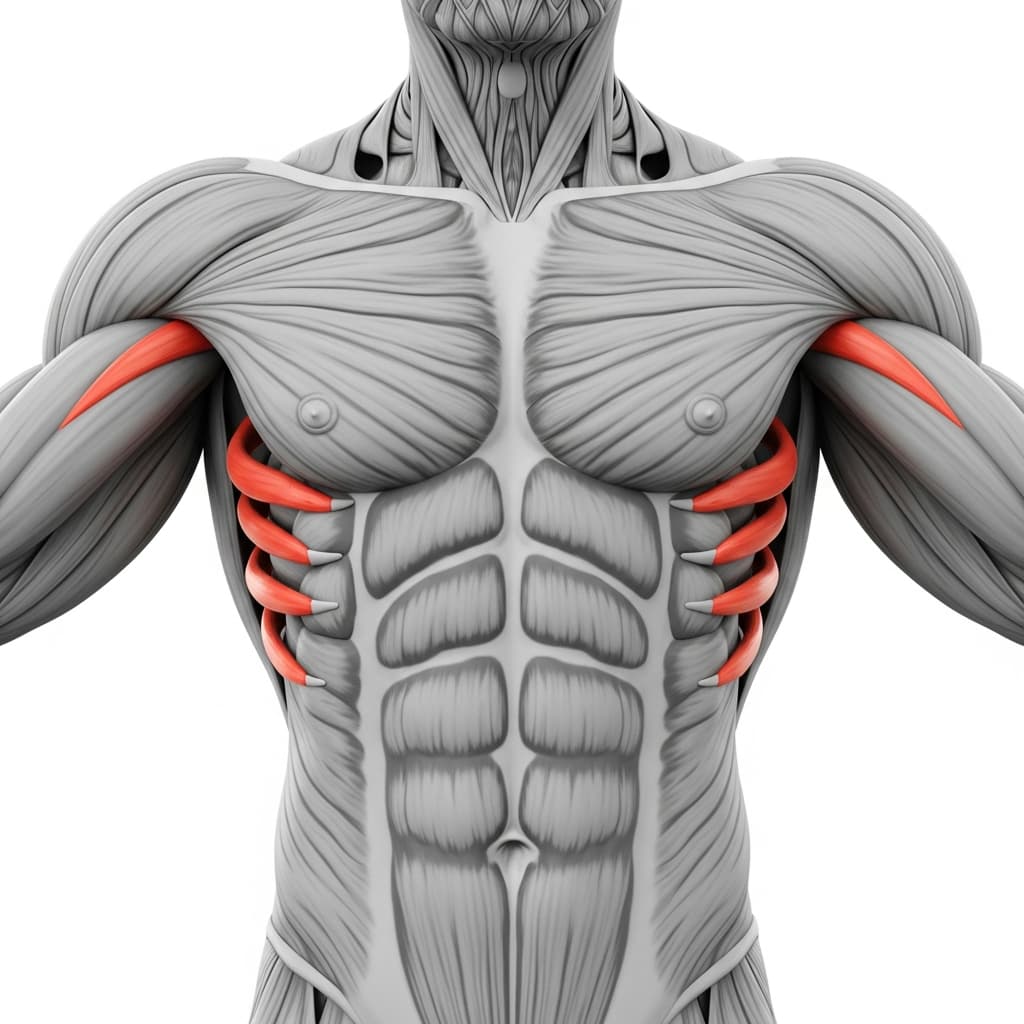
Serratus Anterior (Serratus Anterior) - The serratus anterior protracts the scapulae and holds them apart against the ribcage, maintaining the active push-away position that protects the shoulders.
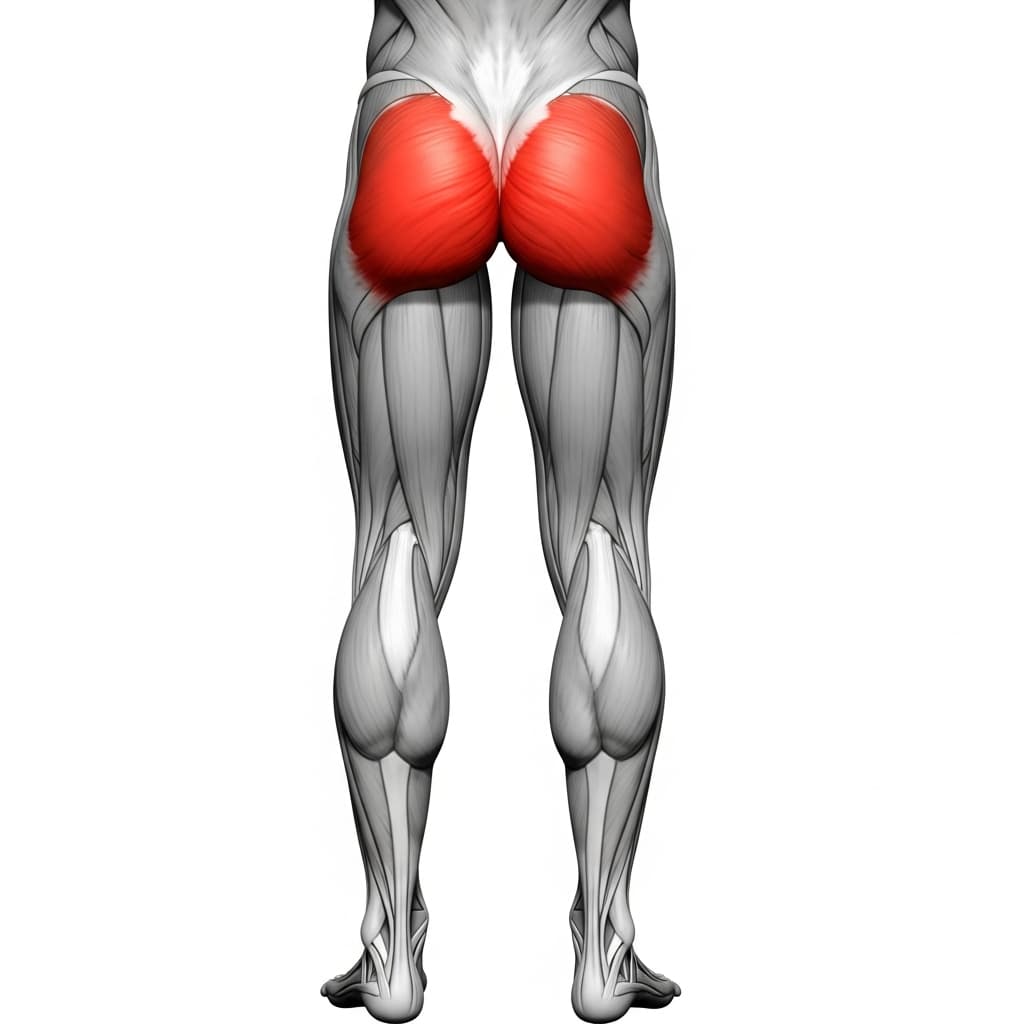
Gluteus Maximus (Glutes) - The glutes contract isometrically to lock the pelvis in a neutral position and prevent the hips from sagging or rotating during the leg crunch.
Benefits of Plank Hold With Leg Crunch
- Develops anti-extension and anti-rotation core strength simultaneously, which transfers directly to handstands, levers, and planche progressions
- Trains hip flexor mobility and strength under load without compromising spinal position, a pattern most static core exercises miss entirely
- Builds shoulder stability through sustained scapular protraction, reinforcing the same shoulder position used in planche and press-to-handstand work
- Exposes and corrects side-to-side core imbalances by alternating legs under strict form, making weaknesses immediately obvious
Who Is This Exercise For?
You should be able to hold a strict forearm plank for at least 30 seconds with no hip sag or lower back arch before adding the leg crunch. If your hips drop or your lower back caves during a basic plank, focus on building isometric core endurance and glute activation first. Mastering the standard forearm plank with active scapular protraction is the only prerequisite.
Common Mistakes to Avoid
Letting the hips sag or pike up: Squeeze the glutes and brace the core before every rep. If your hips drop, your lower back takes the load. If they pike up, the abs disengage. Film yourself from the side to check your alignment.
Rotating the hips during the crunch: The hip should stay perfectly level as the knee drives forward. Imagine balancing a glass of water on your lower back. If the water would spill, you are rotating too much.
Rushing the reps with momentum: Each knee drive should take about two seconds in each direction. Speeding through the movement turns this into a cardio drill and removes the core stability challenge that makes the exercise effective.
Collapsing between the shoulder blades: Maintain active scapular protraction throughout the entire set. If you feel your chest sinking between your arms, press the floor away harder and re-engage the serratus.