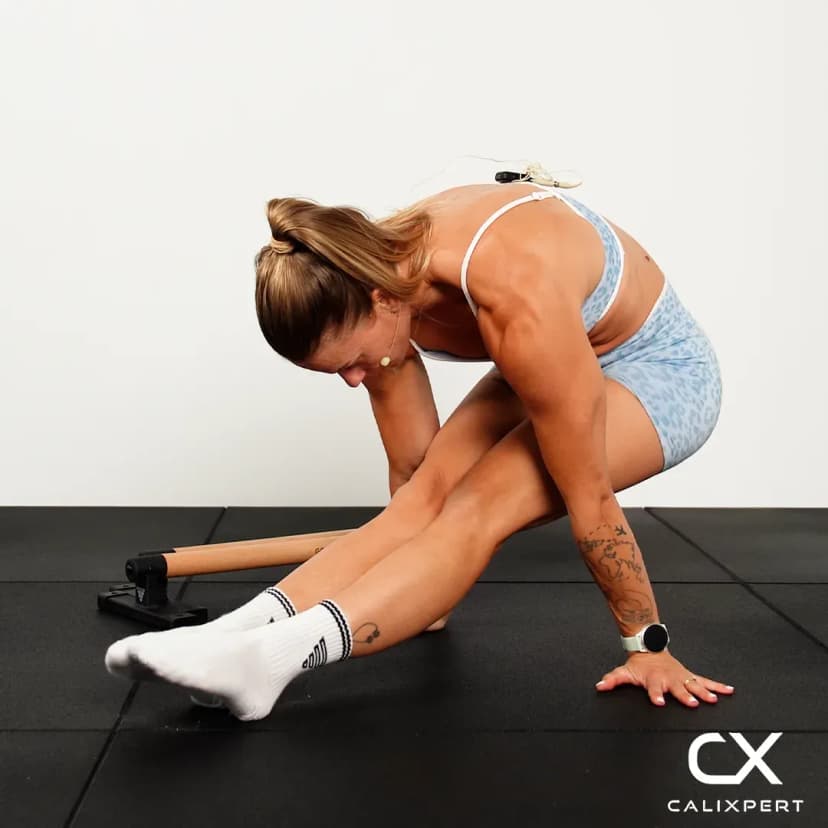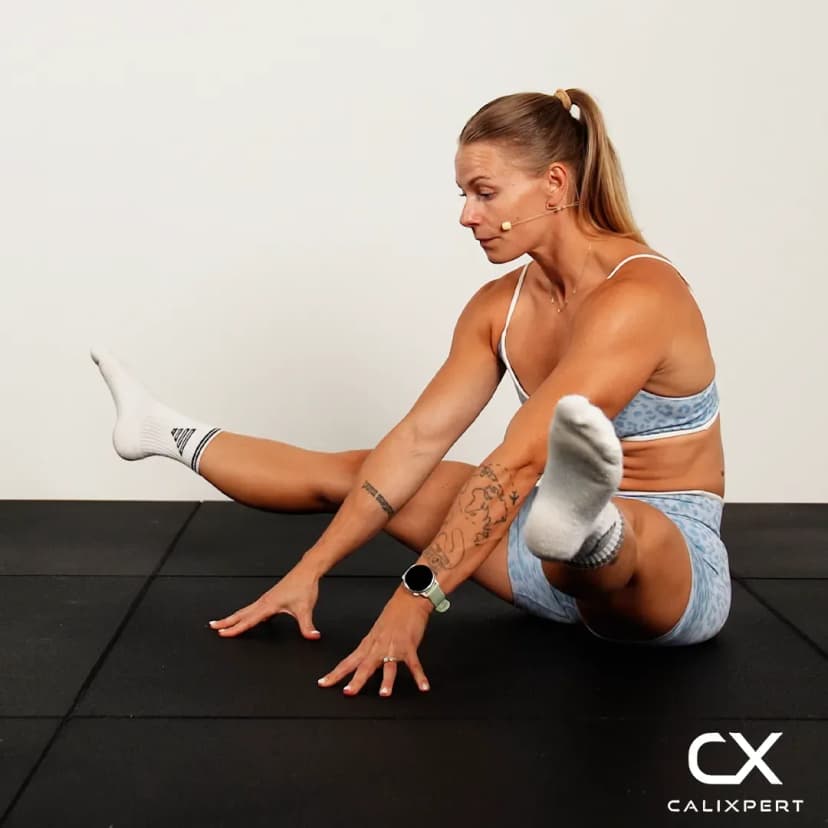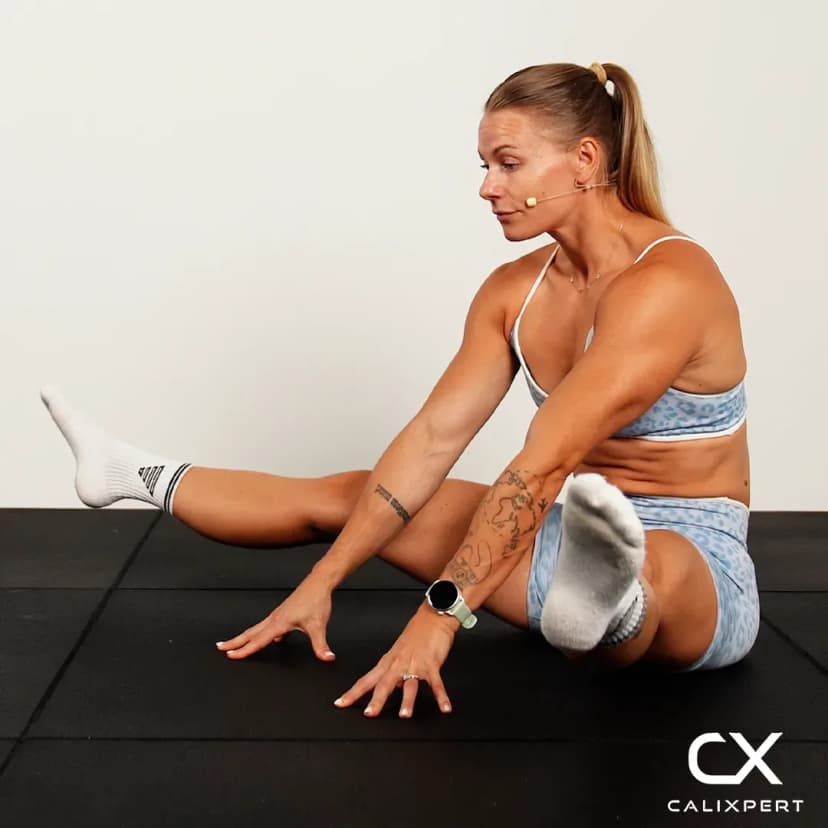
Penguin Hold
The Penguin Hold is an isometric core exercise performed on your back where you sit up, reach forward to touch your ankles, and hold that contracted position. It primarily targets the rectus abdominis through sustained tension in a shortened position, with the hip flexors and obliques working to maintain stability. This hold builds the static core strength and muscular endurance needed for L-sits, front levers, and every calisthenics skill that demands a locked midsection.
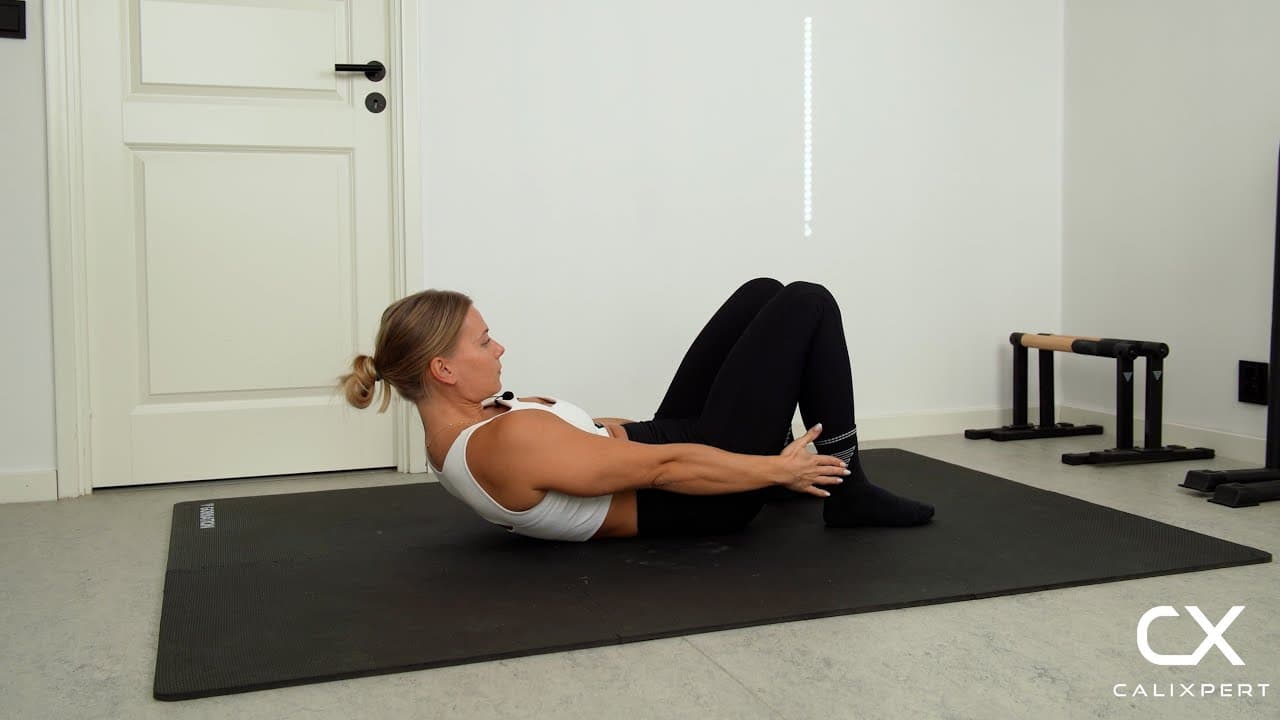
The Penguin Hold is an isometric core exercise performed on your back where you sit up, reach forward to touch your ankles, and hold that contracted position. It primarily targets the rectus abdominis through sustained tension in a shortened position, with the hip flexors and obliques working to maintain stability. This hold builds the static core strength and muscular endurance needed for L-sits, front levers, and every calisthenics skill that demands a locked midsection.
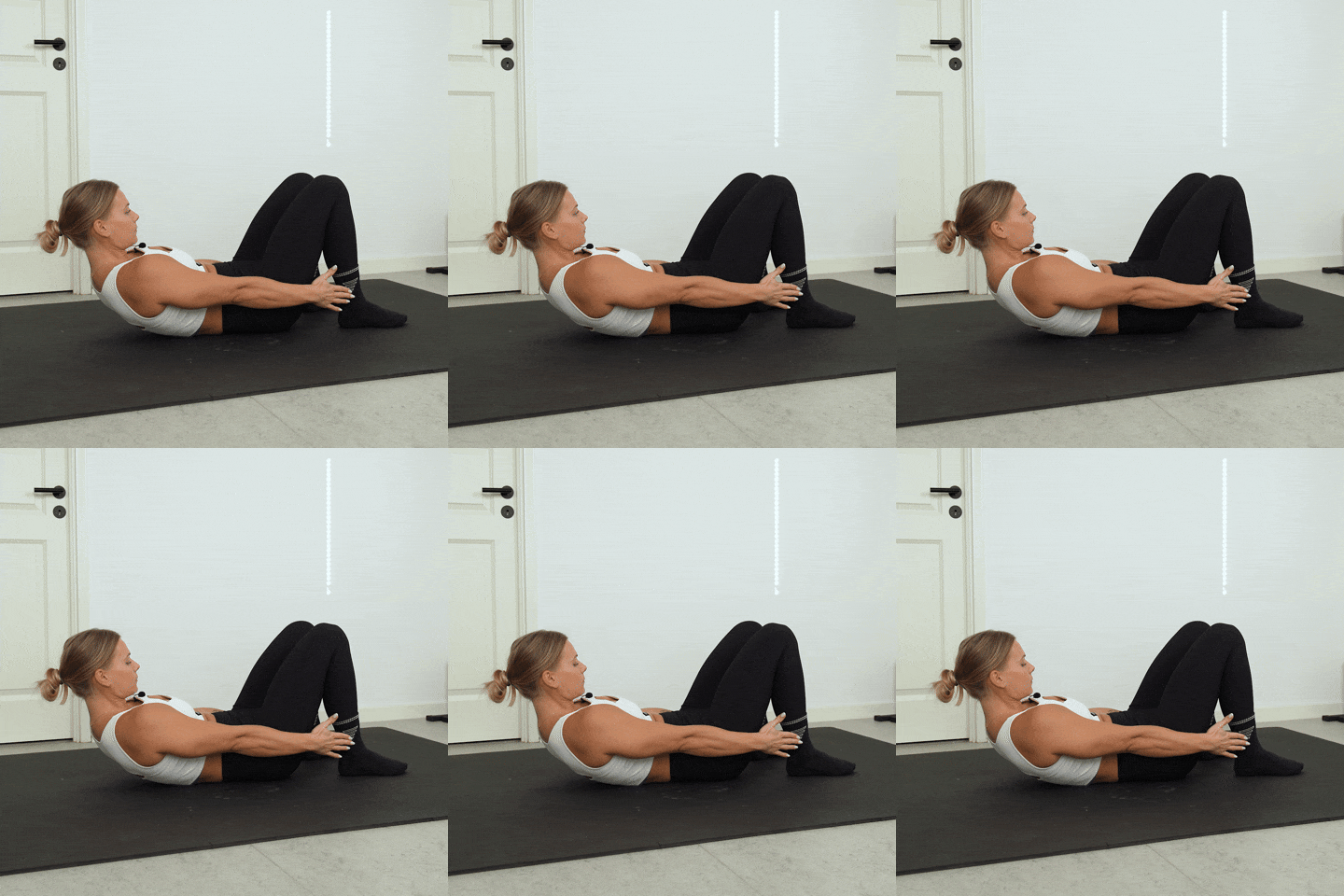
How to Do Penguin Hold
1. Lie Back and Set Your Legs
Lie flat on your back with your knees bent and your feet flat on the floor. Start with your feet relatively close to your hips so your ankles are within easy reaching distance. Keep your lower back pressed into the ground throughout the setup.
Back flat, feet close to start
2. Position Your Arms Forward
Extend both arms straight out in front of you, parallel to each other and hovering above your thighs. Your hands should be relaxed and pointing toward your feet. This arm position sets the trajectory for the reach and helps you gauge the correct distance to your ankles.
Arms straight, hands toward your feet
3. Sit Up and Reach for Your Ankles
Contract your abs and curl your upper body off the floor, reaching forward until both hands touch the outside of your ankles. Drive the movement with your core, not by yanking your neck forward. Your shoulder blades should fully clear the ground at the top of the movement.
Curl up with your abs, not your neck
4. Hold the Top Position
Once your hands are touching your ankles, hold this contracted position without relaxing. Keep your abs fully engaged and your chest lifted. Breathe in short, controlled breaths through your diaphragm rather than letting your ribcage expand and break the hold.
Lock in and keep breathing
5. Lower Under Control
After holding for the prescribed time, slowly reverse the curl and lower your upper back to the floor one vertebra at a time. Do not drop back down. This controlled descent adds eccentric loading to each set and keeps the abs working through the full range.
Slow descent, do not collapse
Most people lose this hold because they try to muscle through it with their neck and shoulders instead of their abs. The fix is simple: before you sit up, press your lower back hard into the floor and think about shortening the distance between your ribcage and your pelvis. Once you feel your abs lock on, then reach for the ankles. If you set the contraction first, the hold becomes twice as sustainable.
Muscles Worked During Penguin Hold
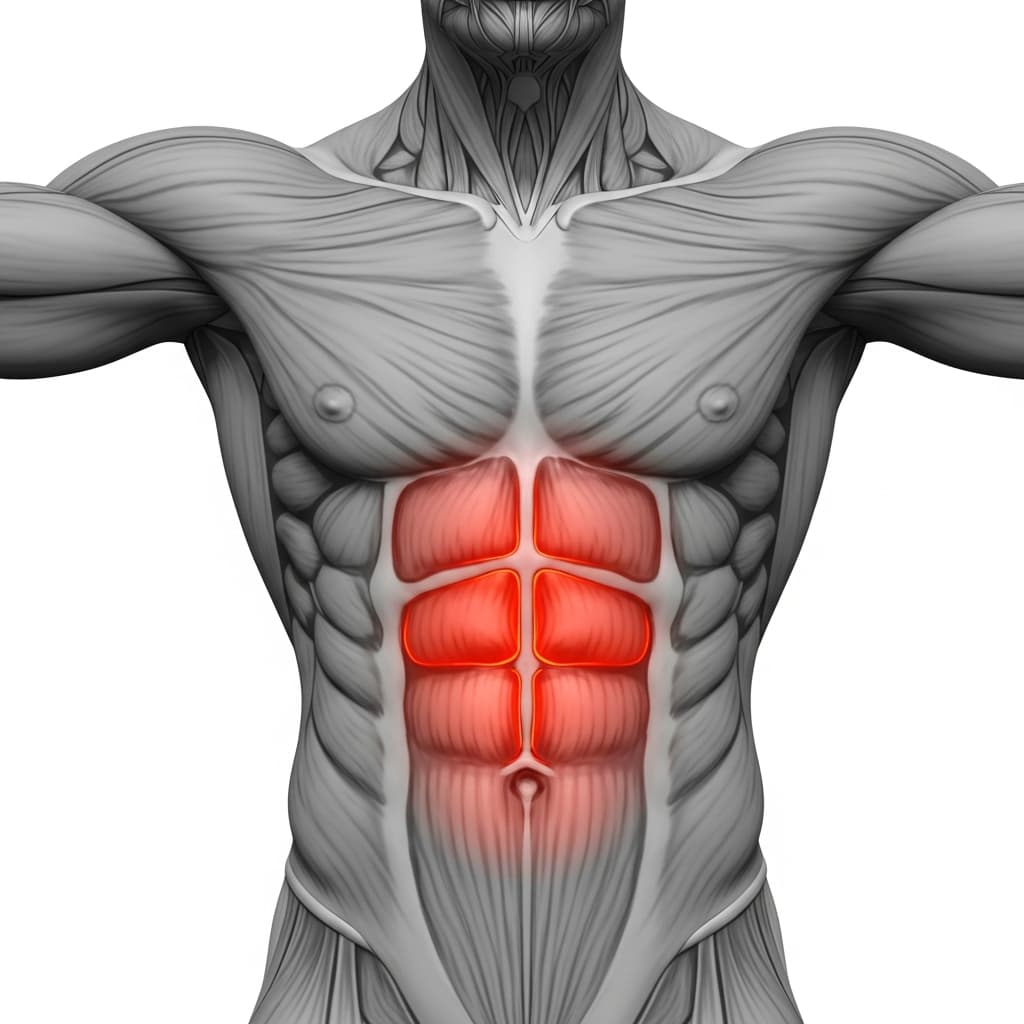
Primary Muscles:
Secondary Muscles:
Primary Muscles
Rectus Abdominis (Abs) - The rectus abdominis contracts isometrically to hold the trunk in a flexed position, maintaining the crunch at the top of the movement for the entire duration of the hold.
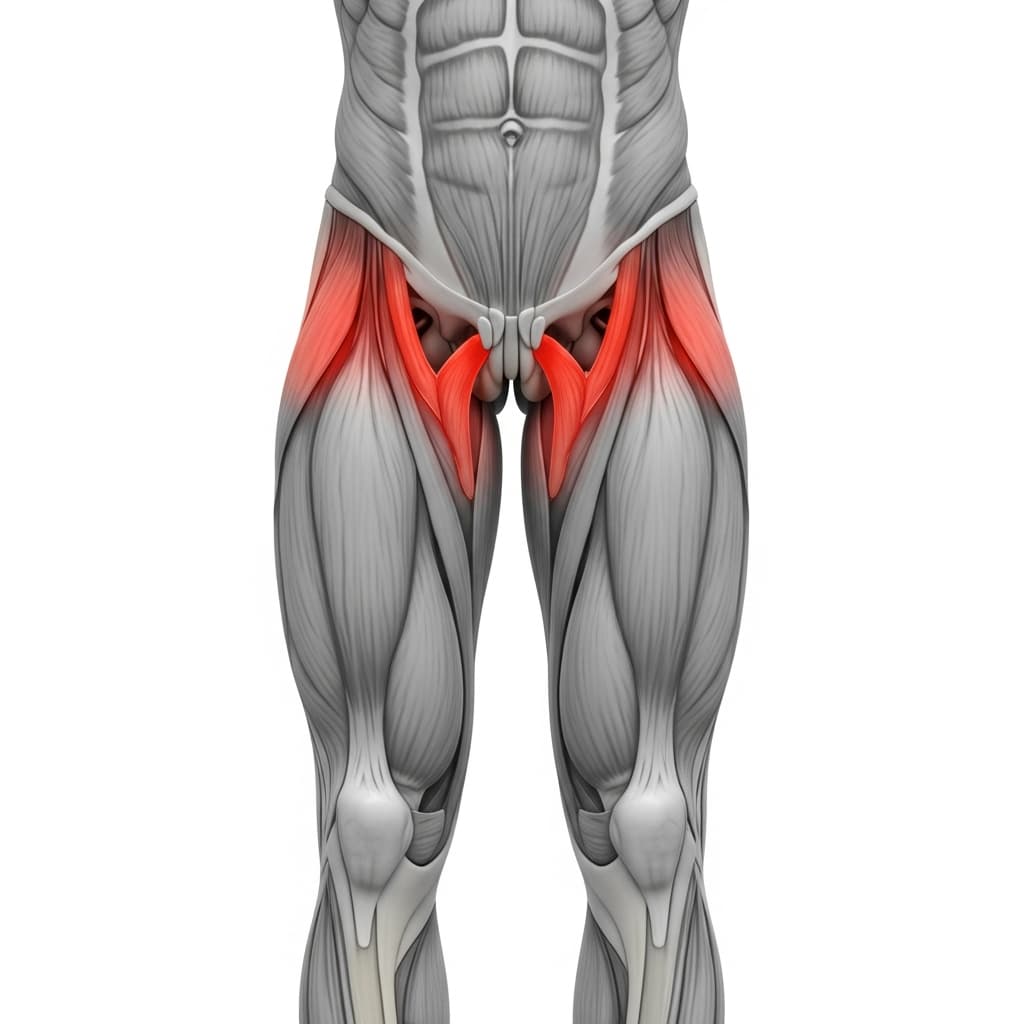
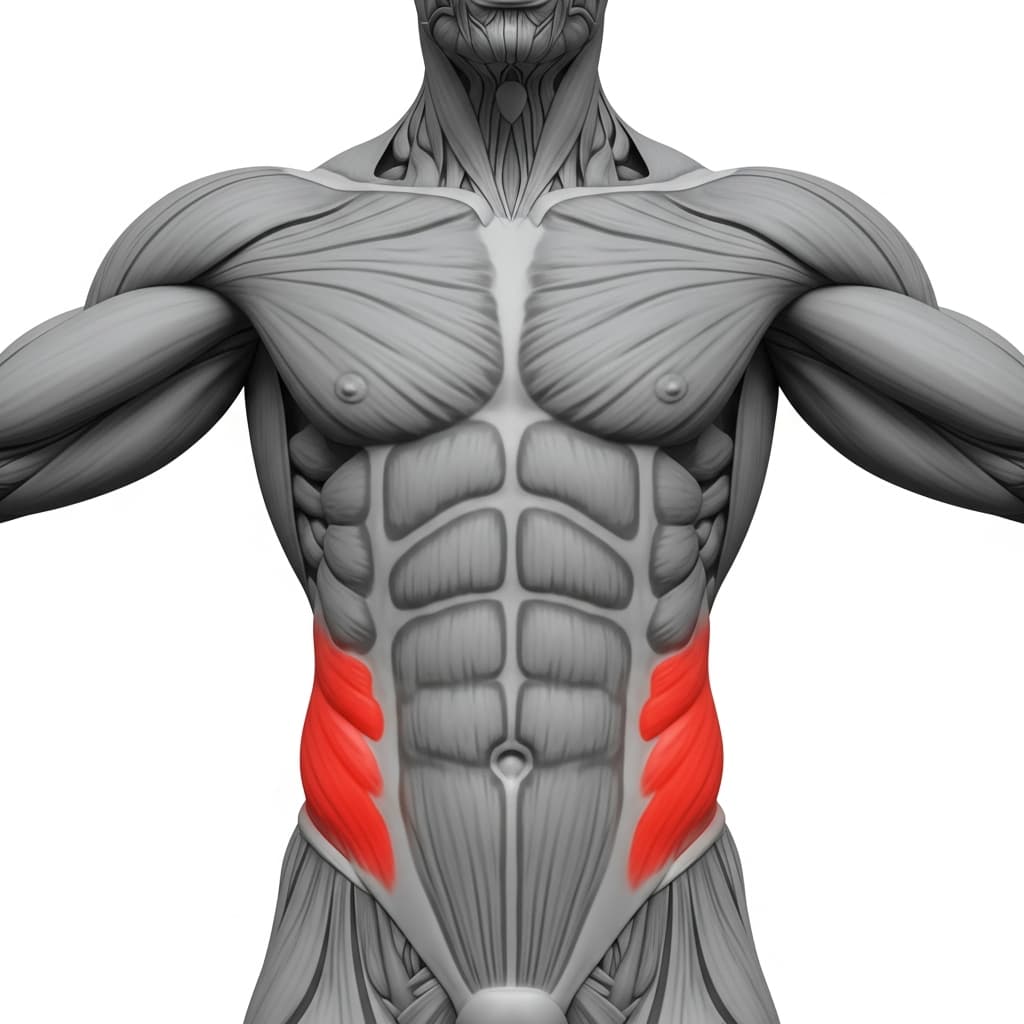
Secondary Muscles
Iliopsoas (Hip Flexors) - The hip flexors assist in maintaining the seated-up position by stabilizing the pelvis and preventing the upper body from falling back during the sustained hold.
Obliques (Obliques) - The obliques work as lateral stabilizers to prevent the torso from rotating or shifting side to side while holding the contracted crunch position.
Benefits of Penguin Hold
- Builds isometric endurance in the rectus abdominis, which transfers directly to holding hollow body and L-sit positions in calisthenics
- Strengthens the hip flexors in a shortened position, improving the ability to maintain leg compression in tuck and pike movements
- Develops the mind-muscle connection needed to keep the core locked under sustained tension, a skill that underpins front lever and planche progressions
- Requires zero equipment and minimal space, making it one of the most accessible core holds for any training environment
Who Is This Exercise For?
You should be able to perform 10 controlled crunches with your feet flat on the floor before attempting the Penguin Hold. If you cannot maintain a basic crunch at the top for 5 seconds without your lower back lifting off the ground, work on standard crunches and dead bugs first. Anyone with acute lower back pain should avoid this exercise until cleared by a professional.
Common Mistakes to Avoid
Pulling with the neck instead of the core: Keep your chin slightly tucked with a fist-width of space between your chin and chest. If your neck is straining, you are compensating for weak abs. Reduce the hold time or move your feet closer until your core can do the work.
Holding your breath during the hold: Breathe in short, shallow cycles while maintaining tension in the abs. Holding your breath spikes intra-abdominal pressure unnecessarily and limits how long you can sustain the position.
Letting the lower back arch off the floor: Press your lower back into the ground before you begin the sit-up and maintain that contact throughout the hold. If your lower back lifts, your hip flexors are taking over and your abs are disengaging.
Feet too far away before building strength: Start with your feet close to your hips so you can comfortably reach your ankles. Only move them further away once you can hold the close position for at least 20 seconds with clean form.
Variations & Progressions
Feet-Close Penguin Hold
Move your feet as close to your hips as possible so the reach to your ankles is shorter. This reduces the lever arm on your abs and makes the hold significantly easier to sustain.
Extended Feet Penguin Hold
Slide your feet further away from your hips while still reaching for the ankles. The longer distance increases the demand on your rectus abdominis and hip flexors, making the hold substantially harder to maintain.