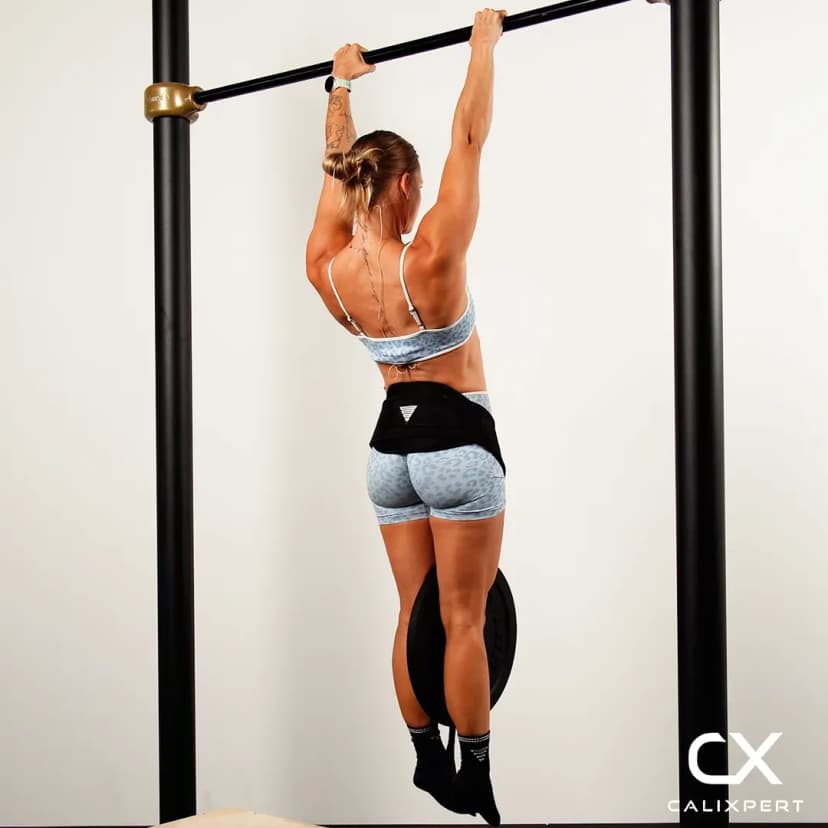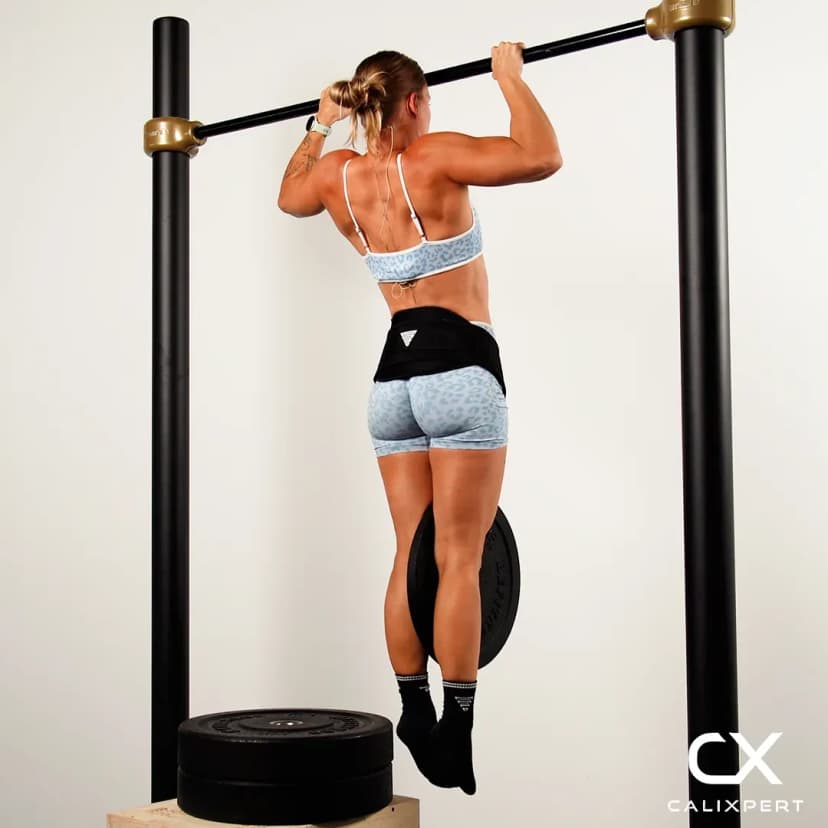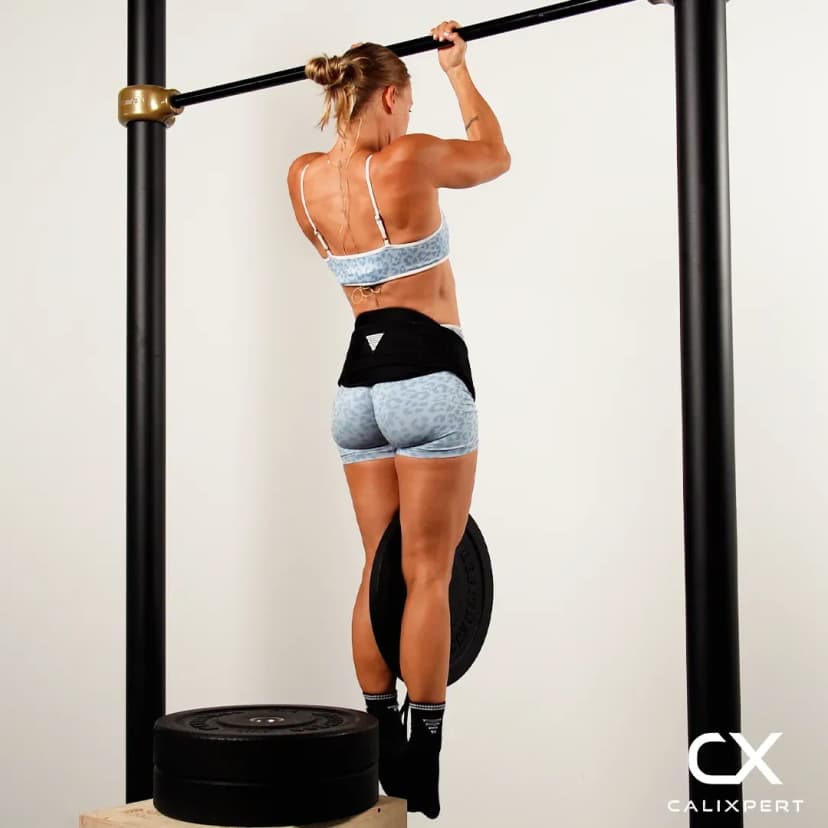
Pull Up Top Hold With Knee Raises
The pull-up top hold with knee raises is a compound calisthenics exercise that combines an isometric pull-up hold with a dynamic core movement, targeting the lats, abs, biceps, and hip flexors simultaneously. The exercise demands that you hold yourself at the top of a pull-up while performing controlled knee raises, which forces the upper back and arms to stabilize under load while the core works through a full range of motion. This combination builds serious pulling endurance and core strength that transfers directly into front levers, muscle-ups, and other advanced calisthenics skills.
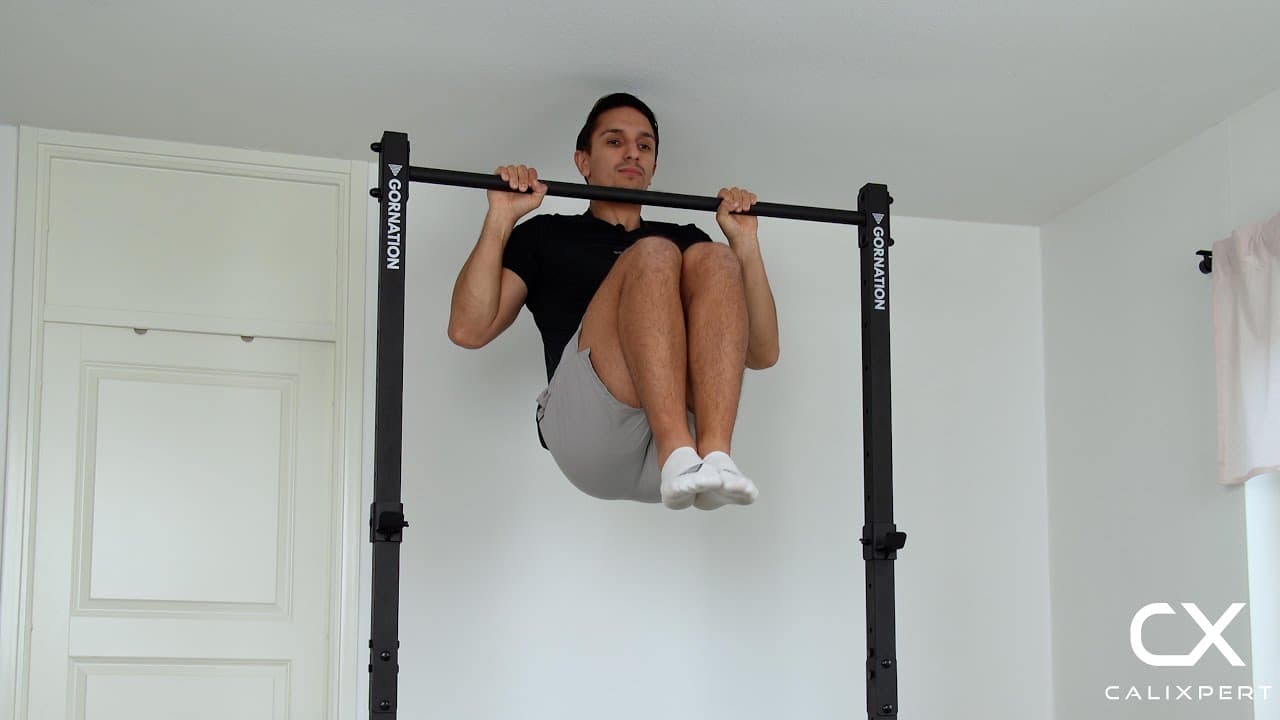
The pull-up top hold with knee raises is a compound calisthenics exercise that combines an isometric pull-up hold with a dynamic core movement, targeting the lats, abs, biceps, and hip flexors simultaneously. The exercise demands that you hold yourself at the top of a pull-up while performing controlled knee raises, which forces the upper back and arms to stabilize under load while the core works through a full range of motion. This combination builds serious pulling endurance and core strength that transfers directly into front levers, muscle-ups, and other advanced calisthenics skills.
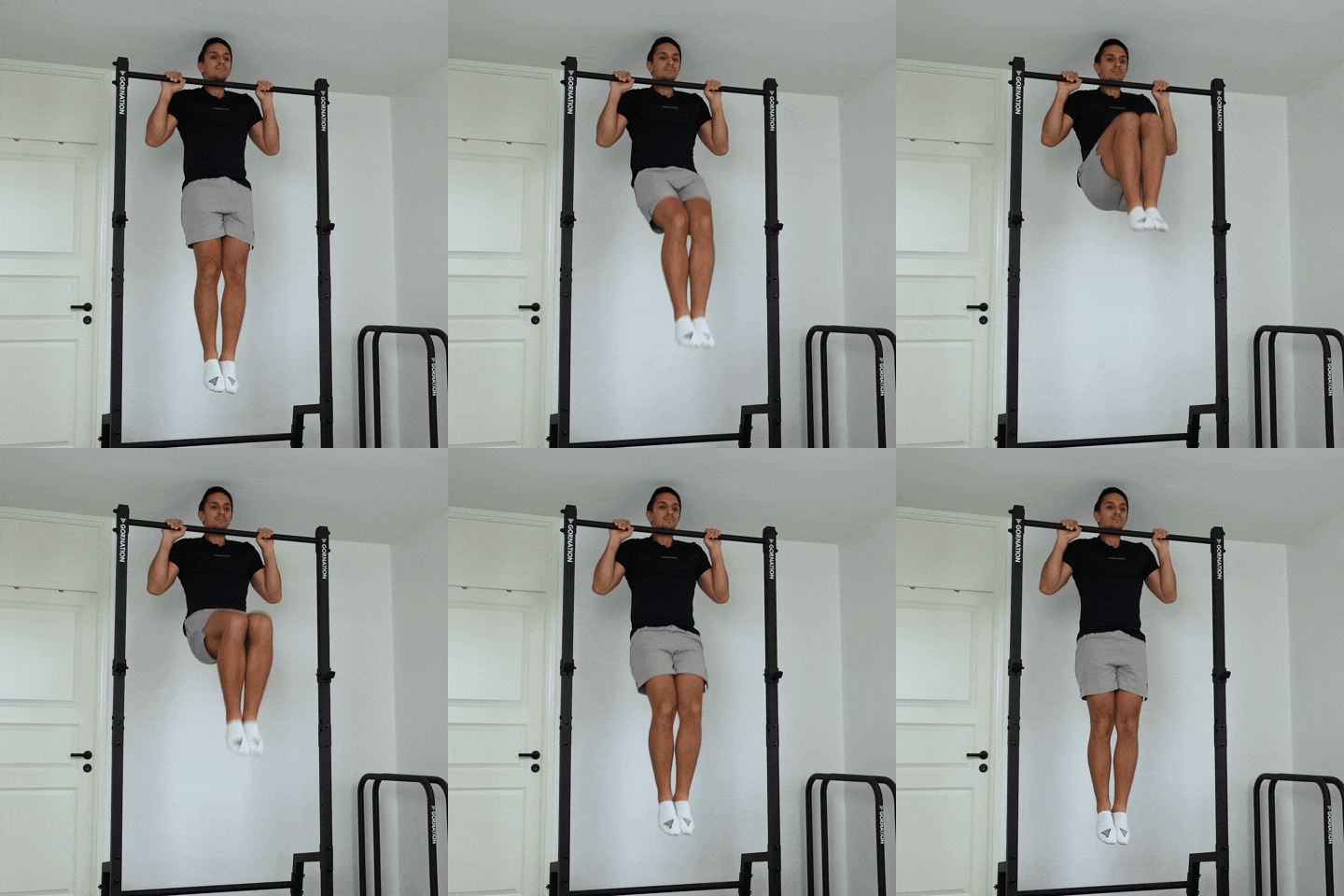
How to Do Pull Up Top Hold With Knee Raises
1. Set Up Your Grip
Grab a high pull-up bar with an overhand grip slightly wider than shoulder width. Do not go too wide, as the transcript specifically warns that a very wide grip makes the hold extremely difficult. Wrap your thumbs fully around the bar and set your wrists in a neutral position.
Just outside shoulder width, thumbs around
2. Pull Up to the Top
Initiate a full pull-up by setting your scapula down and back, then driving your elbows outward and behind you. Pull until your chin clears the bar. If you are not yet strong enough to pull up and hold, step up from a box or elevated platform so you begin already at the top position.
Scapula first, then pull
3. Lock In the Top Hold
Once your chin is above the bar, hold the position with your chest lifted and shoulder blades squeezed together. Keep your arms bent and your elbows driven back to maintain the hold. Brace your core and eliminate any swinging before you begin the knee raises.
Chest up, shoulders locked, no swing
4. Raise Your Knees With Control
Keeping your legs together, drive your knees upward toward your chest in a controlled motion. Focus on contracting your abs to lift the knees rather than using momentum or a hip swing. You can raise the knees higher if your core strength allows, but never at the cost of losing your top hold position.
Legs together, knees to chest
5. Lower Legs and Repeat
Slowly lower your legs back to the hanging position while maintaining the top hold. Re-brace your core and stabilize before initiating the next knee raise. Each rep should start and end from a controlled, still position with no momentum carryover.
Reset fully between every rep
6. Descend Under Control
After completing all reps, lower yourself from the top hold slowly over 3 seconds. Do not drop from the bar. This controlled descent protects the shoulder joint and builds additional eccentric pulling strength.
Slow descent, never drop
Most people fail this exercise because they try to rush the knee raises and lose their hold position. Slow everything down. Lock in the top hold first, squeeze your shoulder blades together, and only then start the knee raises. If you can hold the top for 10 seconds without the knees, you can hold it for reps with them.
Muscles Worked During Pull Up Top Hold With Knee Raises
Secondary Muscles:
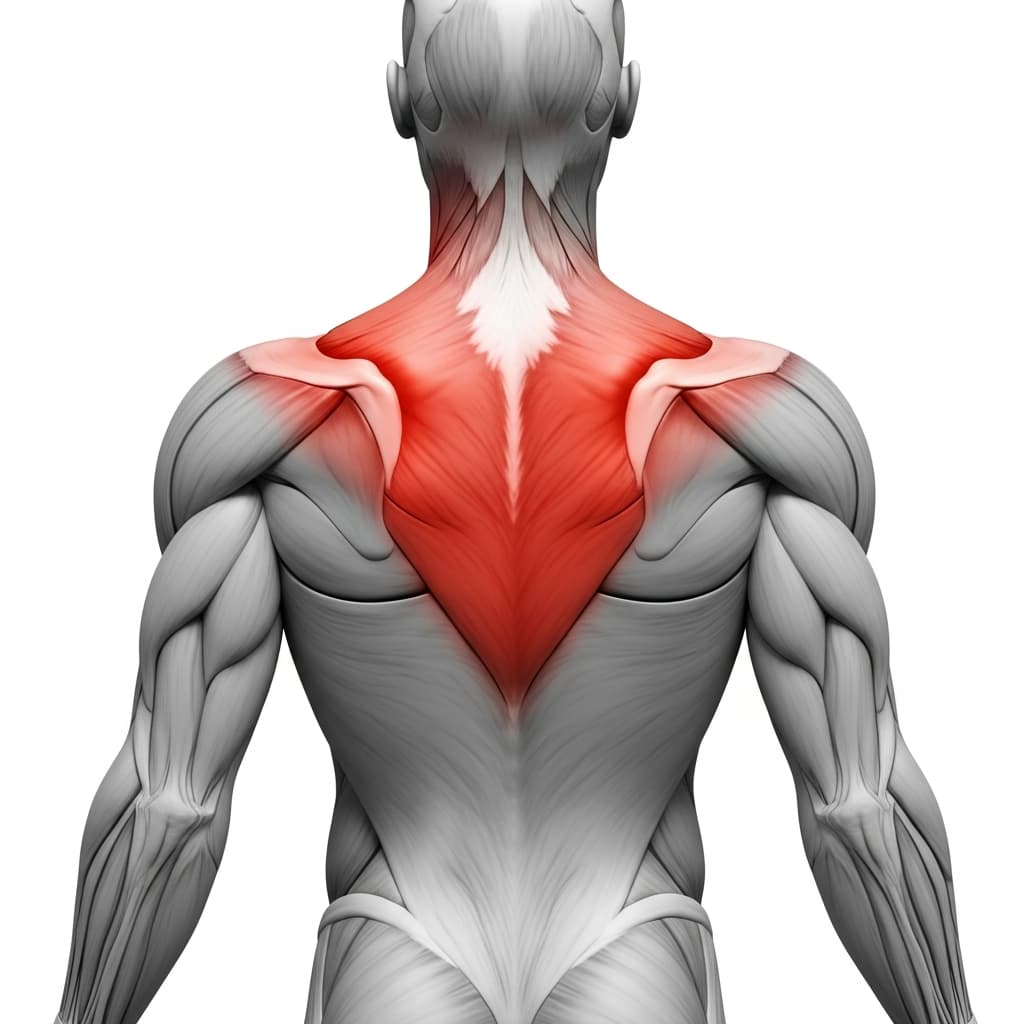
Primary Muscles
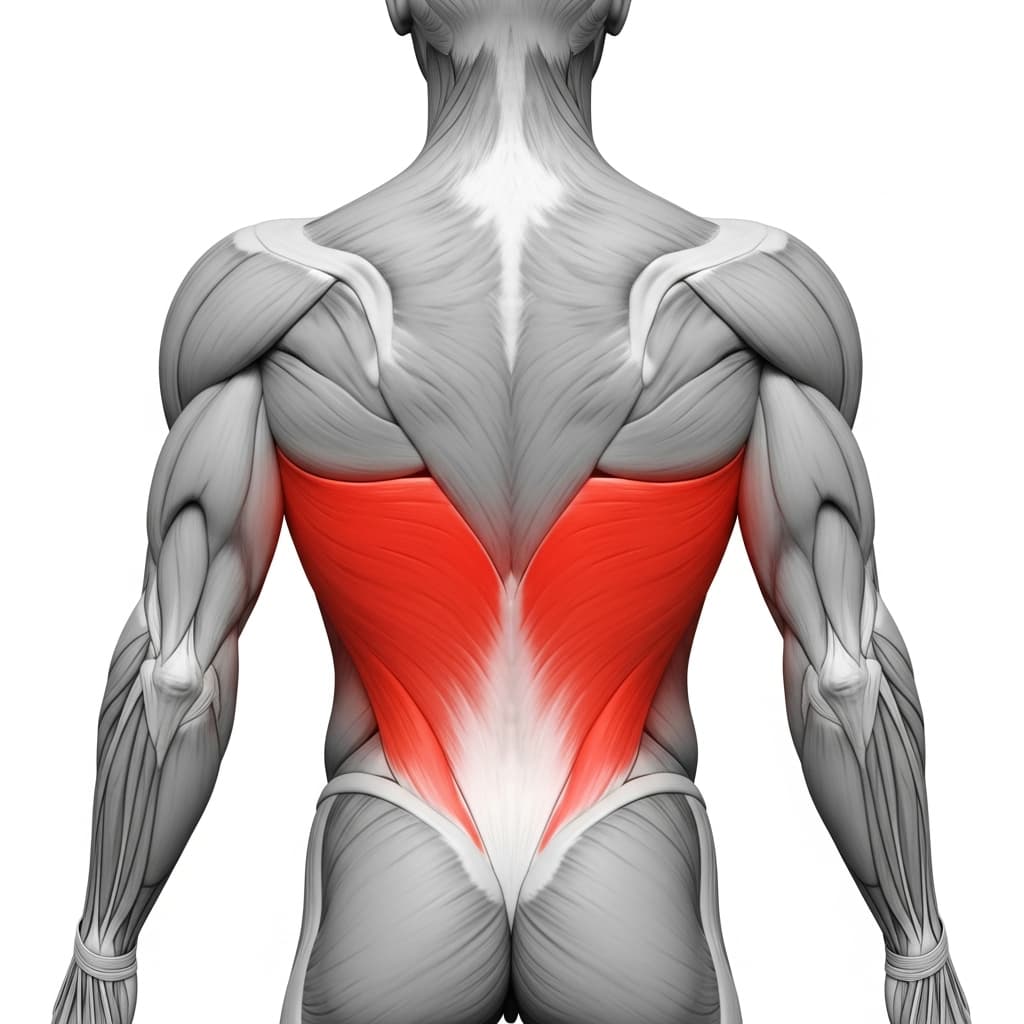
Latissimus Dorsi (Lats) - The lats maintain isometric contraction throughout the top hold, keeping the body elevated at the bar while resisting the added rotational forces created by the knee raises.
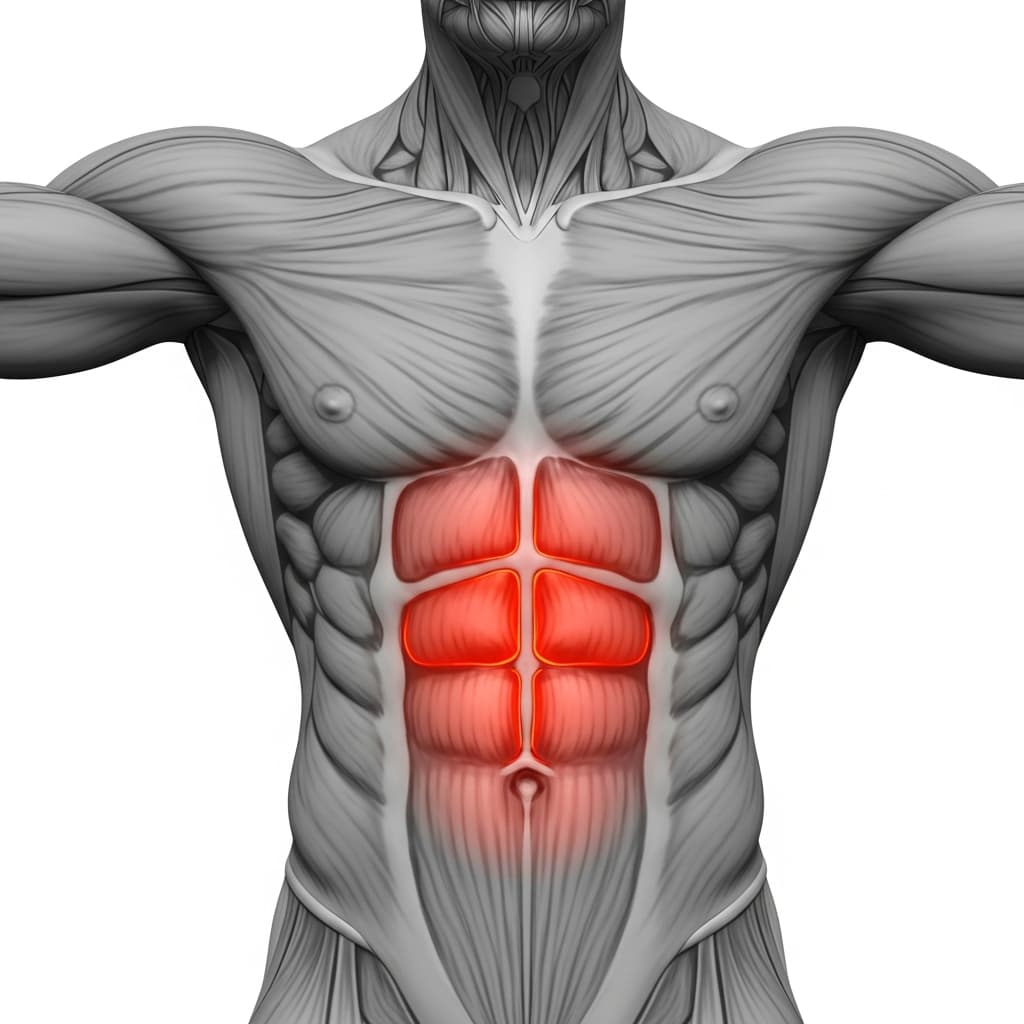
Rectus Abdominis (Abs) - The rectus abdominis contracts concentrically to drive the knees toward the chest during each raise, and works isometrically to prevent the torso from swinging during the hold.
Secondary Muscles
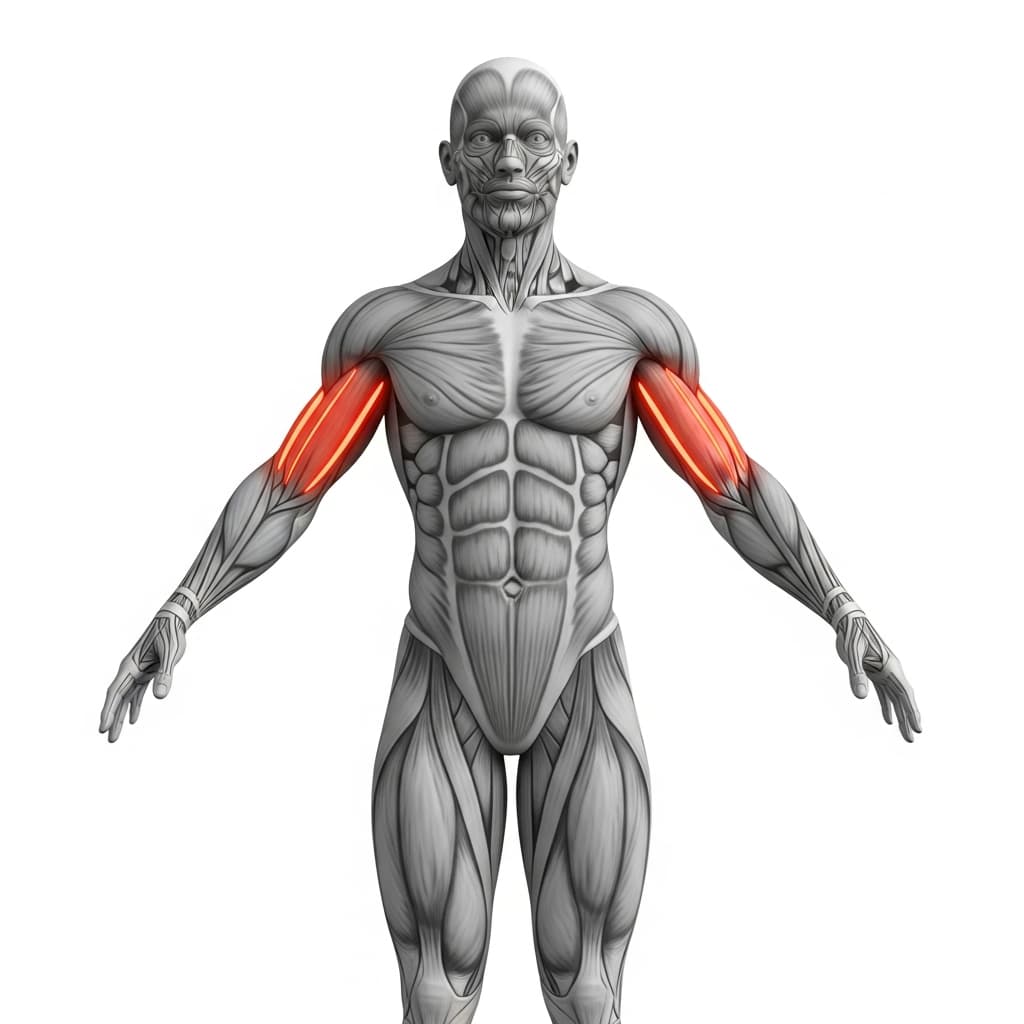
Biceps Brachii (Biceps) - The biceps hold a sustained isometric contraction at the top of the pull-up position, keeping the elbows flexed and supporting the body's weight throughout the set.
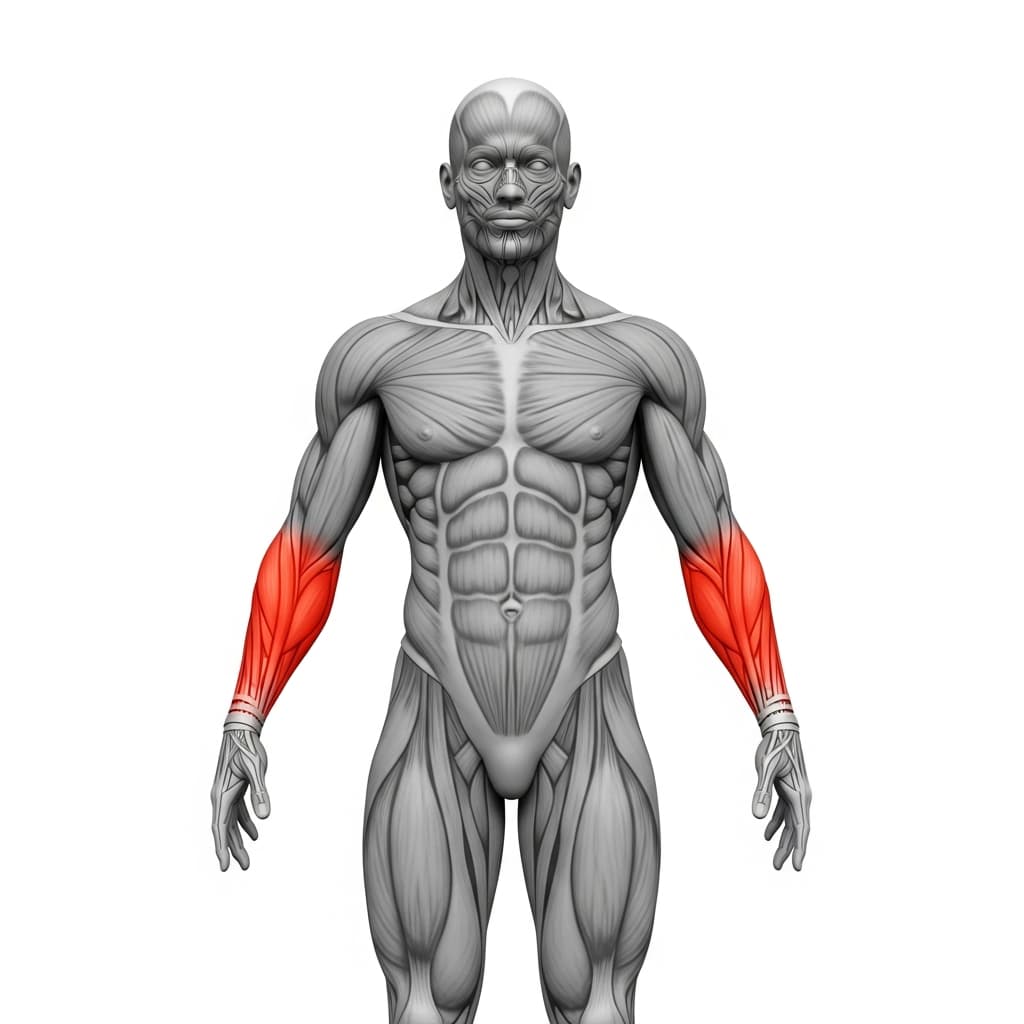
Forearm Flexors & Extensors (Forearms) - The forearm flexors maintain grip on the bar under prolonged load, working harder than in a standard pull-up because of the extended time under tension.
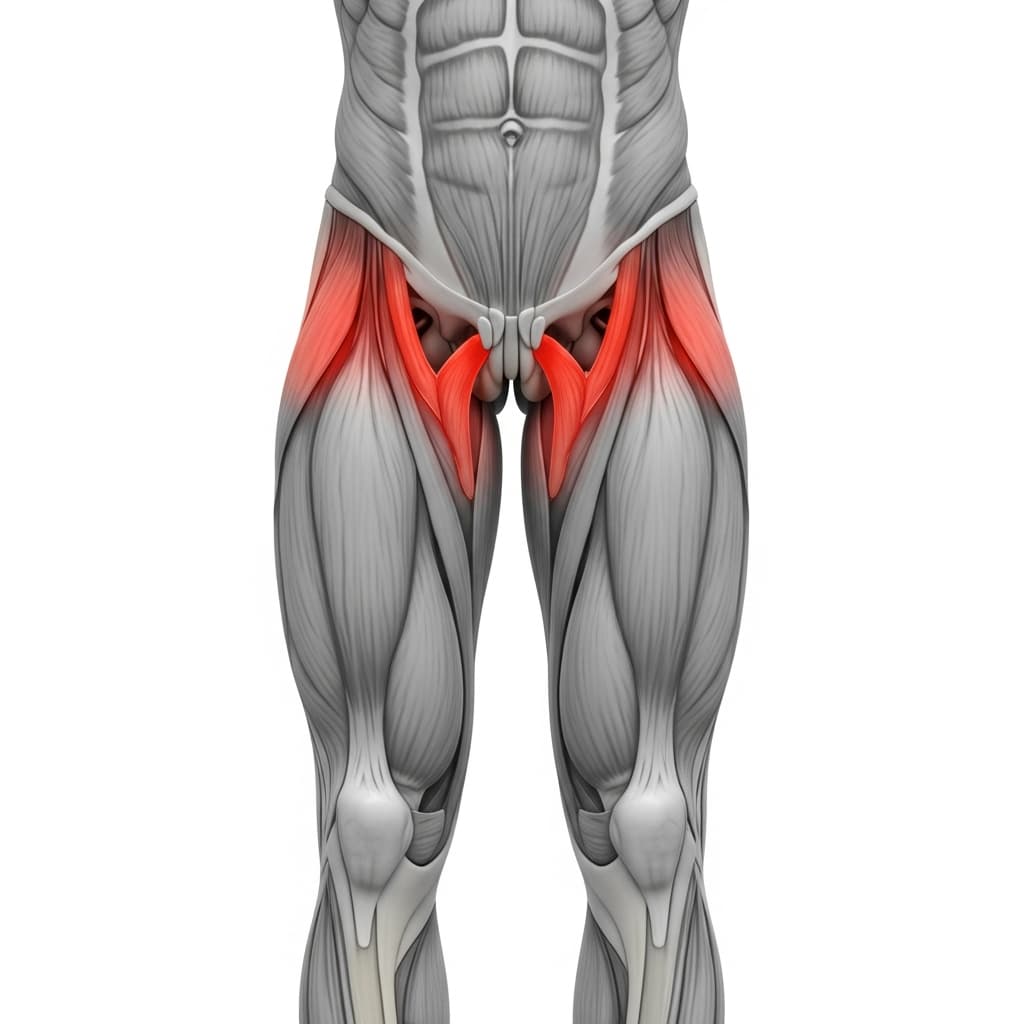
Iliopsoas (Hip Flexors) - The hip flexors work alongside the abs to lift the knees toward the chest, initiating the lower portion of each knee raise through hip flexion.
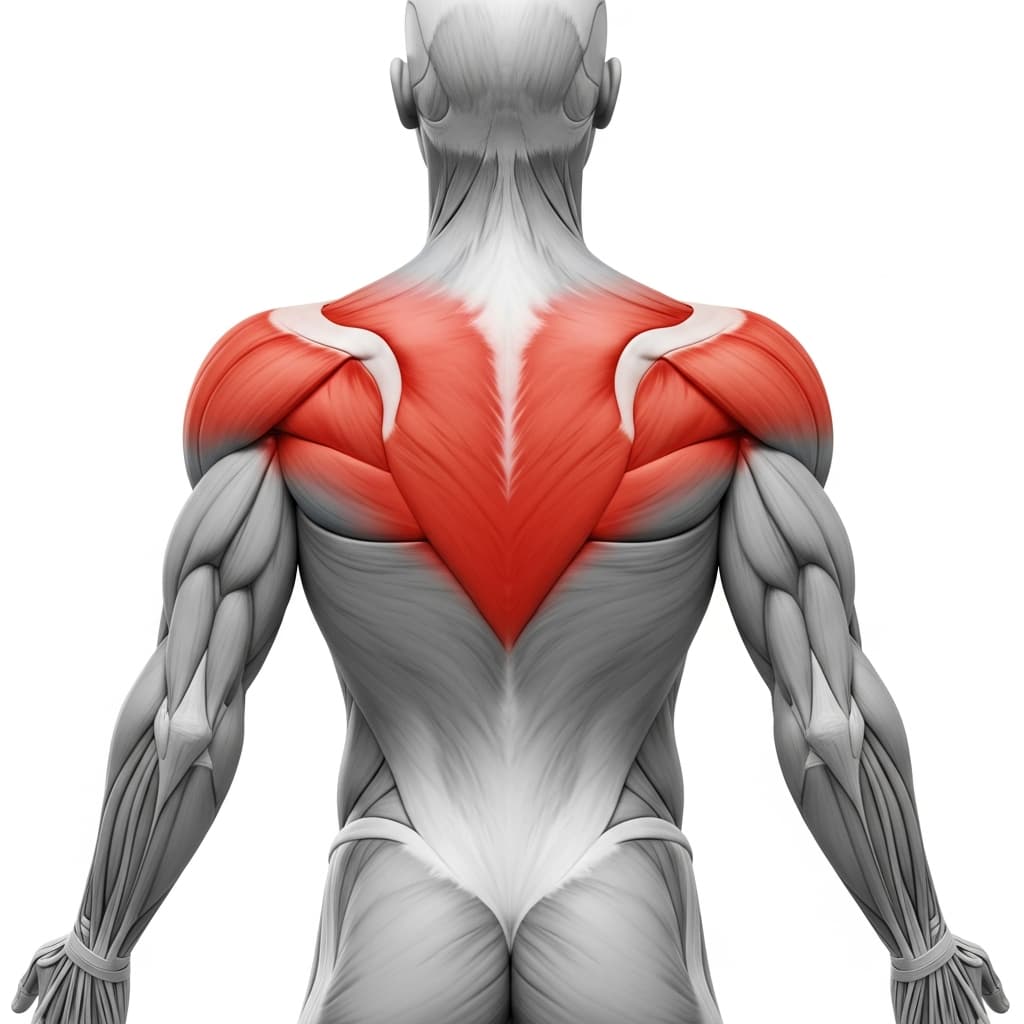
Rhomboids & Upper Trapezius (Upper Back) - The rhomboids and mid-trapezius maintain scapular retraction during the top hold, stabilizing the shoulder blades against the bar while the core moves dynamically below.
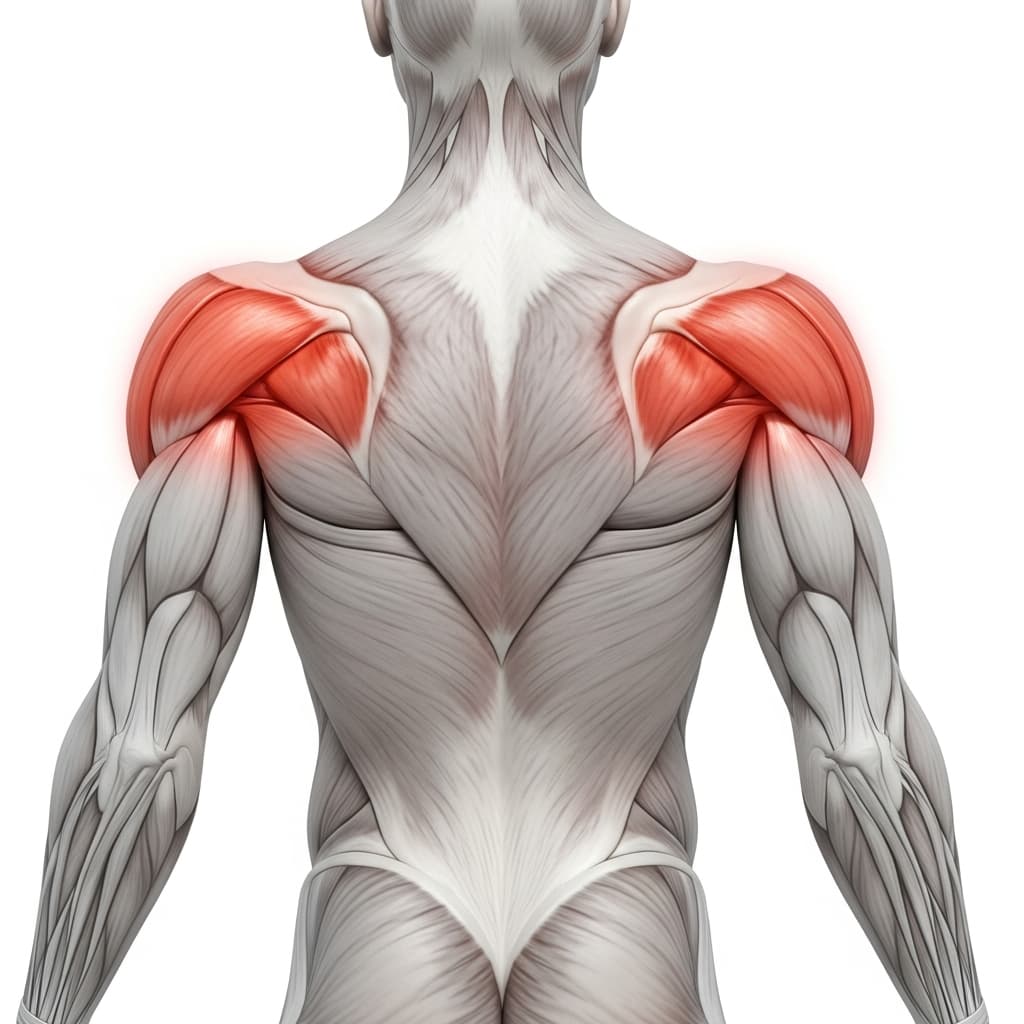
Posterior Deltoid (Rear Deltoid) - The rear deltoids assist in maintaining horizontal pulling force at the top of the hold, keeping the shoulders packed and preventing forward roll.
Trapezius (Trapezius) - The lower and middle traps work to depress and retract the scapulae, preventing the shoulders from shrugging upward under the sustained isometric load.
Benefits of Pull Up Top Hold With Knee Raises
- Builds isometric pulling endurance in the lats and biceps, which directly transfers to longer hold times in muscle-ups and front lever progressions
- Develops core strength under upper body load, training the abs and hip flexors to fire while the arms are already working hard
- Strengthens grip endurance and forearm stamina through sustained loaded hanging with an added stability challenge
- Improves shoulder stability and scapular control by forcing the upper back to maintain retraction while the lower body moves dynamically
Who Is This Exercise For?
You should be able to perform at least 5 clean pull-ups and hold the top position of a pull-up for 10 seconds before attempting this exercise. If you cannot hold the top position without shaking or losing chin clearance, train isometric top holds and hanging knee raises separately until both are solid. Comfortable dead hangs of 30 seconds and controlled hanging knee raises for 8 reps are the minimum baseline.
Common Mistakes to Avoid
Swinging during knee raises: Eliminate all momentum before each rep by pausing at the bottom of the knee raise. If you cannot raise your knees without swinging, reduce the range of motion or lower the rep count until you build enough core control.
Losing the top hold position: If your chin drops below the bar during the knee raises, your hold strength is the limiting factor. Train isometric top holds for 15 to 20 seconds before adding the knee raise component.
Gripping too wide: A grip that is too wide puts excessive strain on the shoulders and makes the hold unsustainable. Keep your hands just outside shoulder width, exactly as you would for a standard pull-up.
Lifting knees with hip momentum: Focus on initiating the knee raise from your lower abs, not from a hip thrust. Slow the movement down and pause at the top of each rep to confirm your core is doing the work.
Variations & Progressions
Top Hold With Single Knee Raise
Raise one knee at a time instead of both together. This reduces the core demand and makes the hold easier to maintain, which is ideal for building the strength needed for the full version.
Top Hold With Straight Leg Raises
Extend your legs fully and raise them straight in front of you instead of bending the knees. The longer lever arm dramatically increases the core load and the stability demand on the upper back hold.