Narrow Knee Push Ups
Narrow knee push-ups are a beginner-level pressing exercise that targets the triceps, chest, and front deltoids while using the knees as a support point to reduce load. The narrow hand placement and tucked elbows shift the majority of the work onto the triceps, making this a highly effective exercise for building pushing strength before progressing to full push-ups. When performed with a straight line from chest to knees and full body tension, this movement teaches the exact pressing mechanics that carry over to every advanced calisthenics push variation.
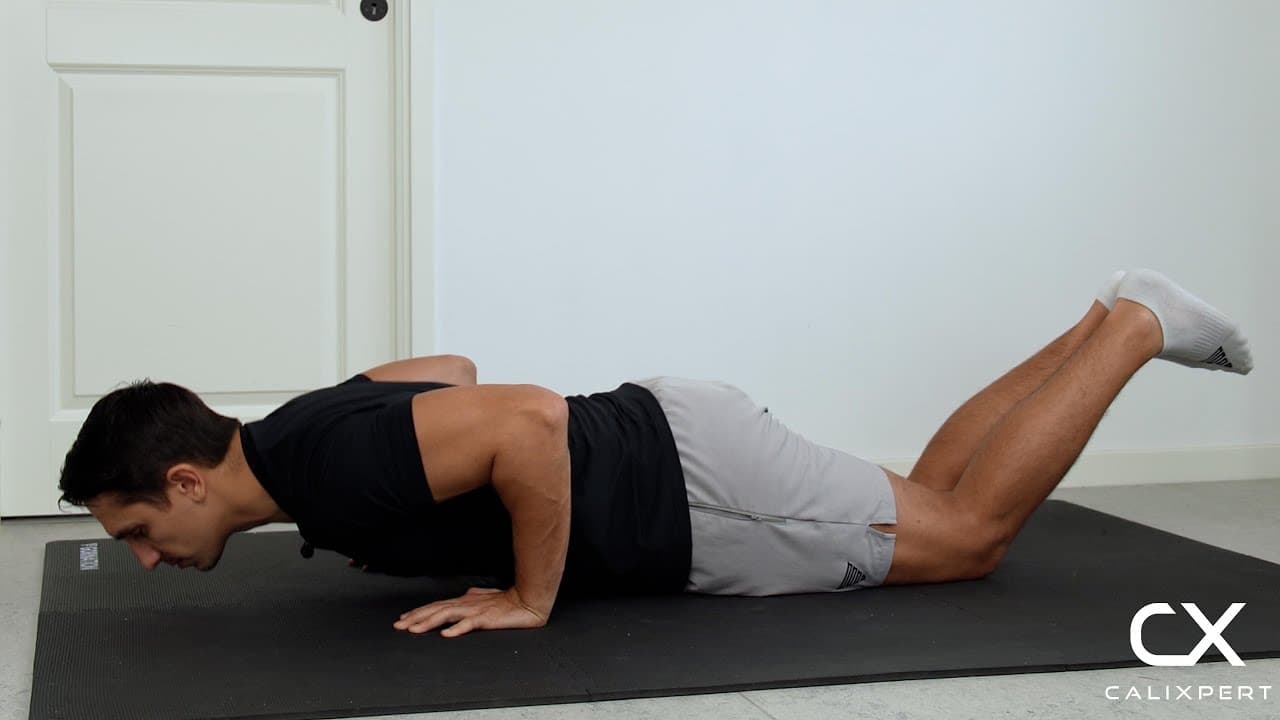
Narrow knee push-ups are a beginner-level pressing exercise that targets the triceps, chest, and front deltoids while using the knees as a support point to reduce load. The narrow hand placement and tucked elbows shift the majority of the work onto the triceps, making this a highly effective exercise for building pushing strength before progressing to full push-ups. When performed with a straight line from chest to knees and full body tension, this movement teaches the exact pressing mechanics that carry over to every advanced calisthenics push variation.
How to Do Narrow Knee Push Ups
1. Set Up on Your Knees
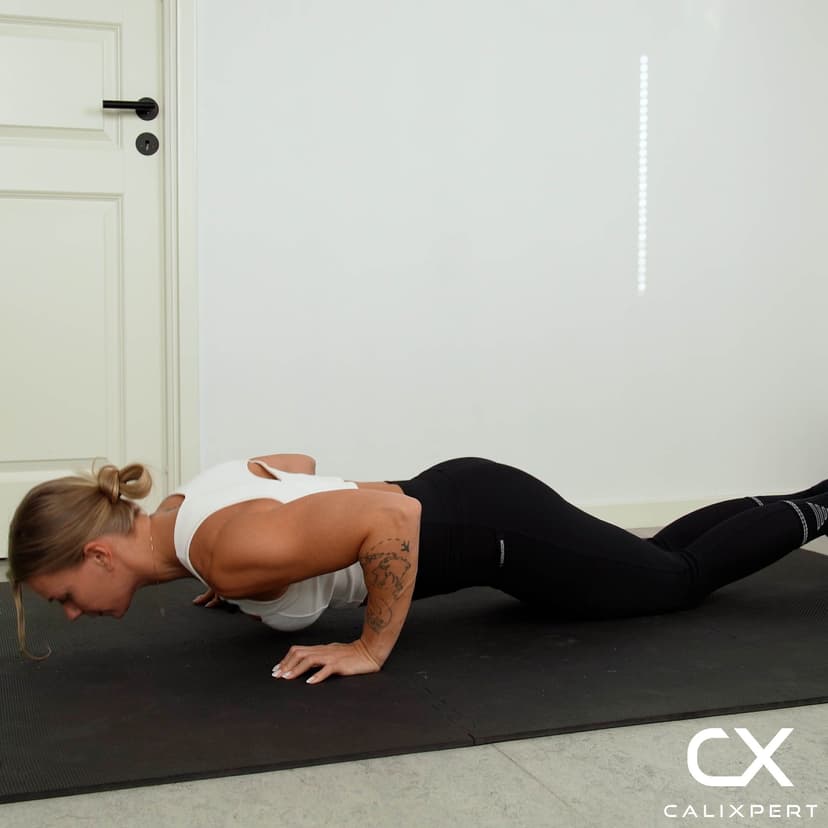
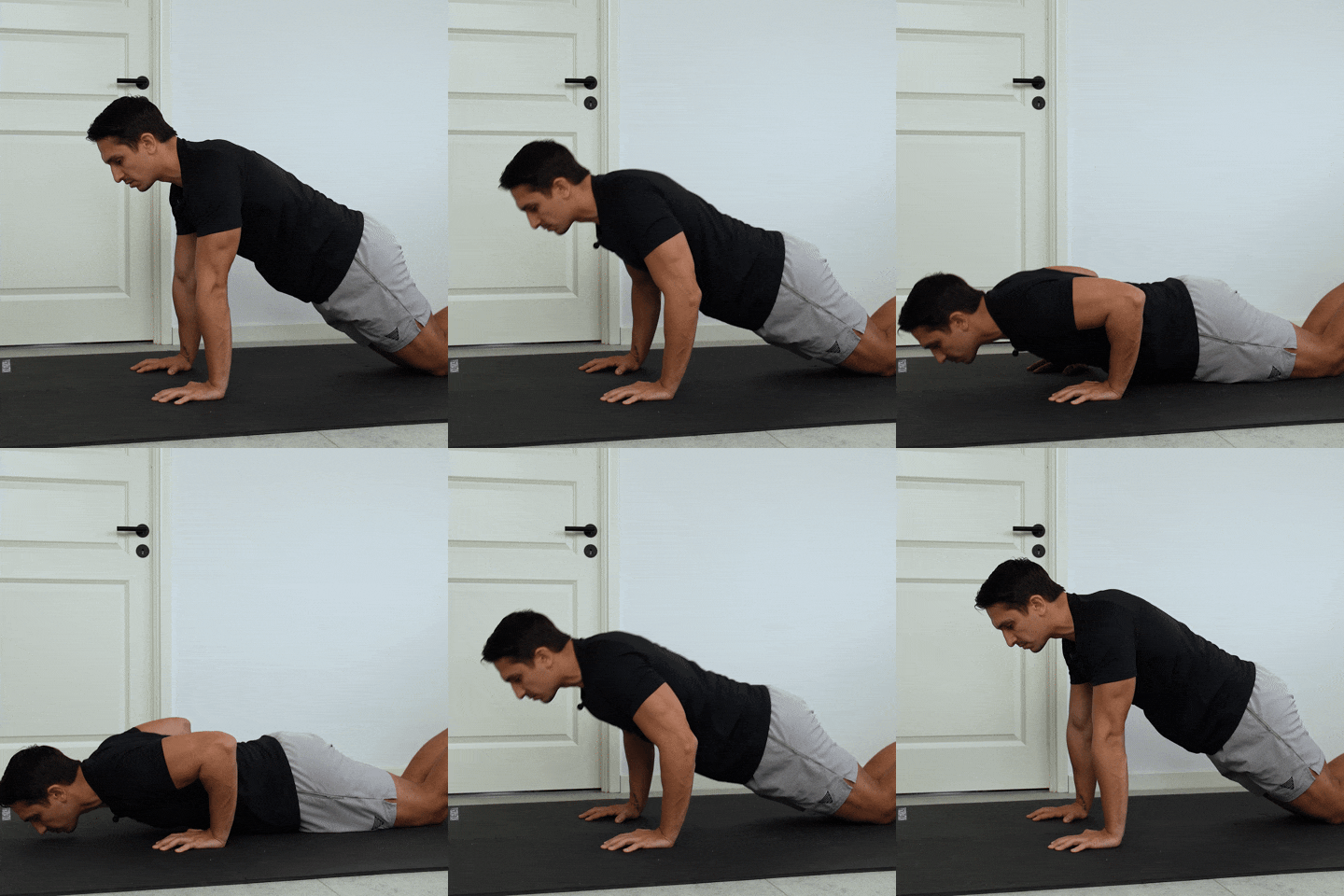
Kneel on the floor and place your hands directly under your shoulders at shoulder-width apart. Your fingers should point forward with your thumbs wrapped naturally around the side of your palm. Push your hips forward so your body forms a straight line from your chest to your knees. Do not let your hips sit back toward your heels.
Straight line, chest to knees
2. Brace Your Entire Body
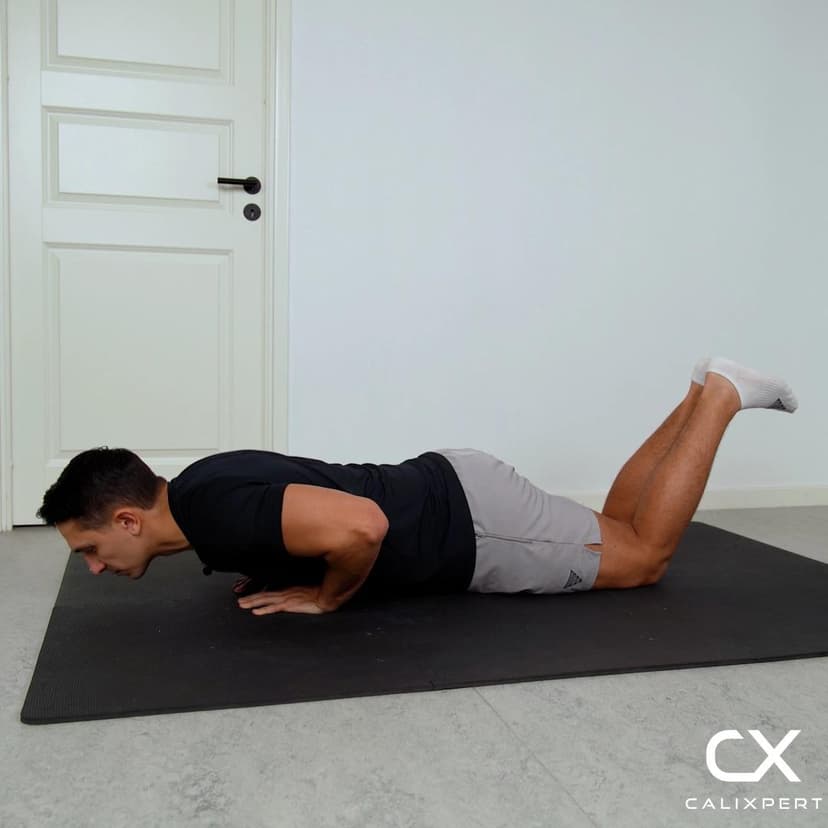
Before lowering, tighten your core, squeeze your glutes, and press your knees firmly into the floor. This full-body tension prevents your hips from sagging and keeps the load on the correct muscles throughout the rep. Without this tension, the lower back absorbs force that should go through the chest and triceps.
Squeeze glutes, brace core, stay tight
3. Lower With Elbows Tucked In
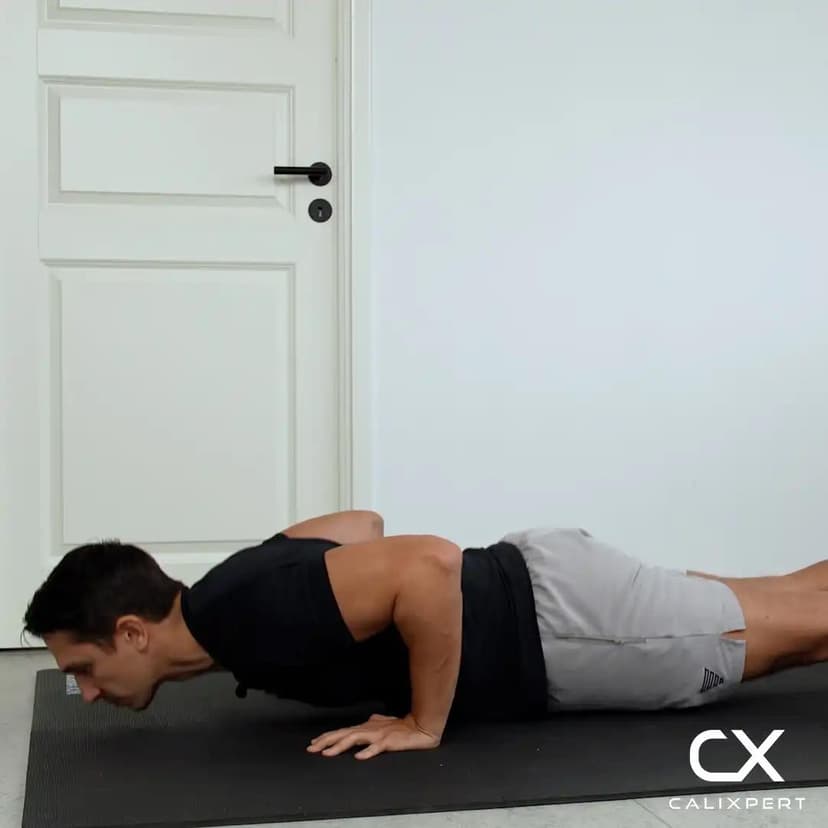
Bend your elbows and lower your chest toward the floor while keeping your elbows close to your sides at roughly a 30 to 45 degree angle from your torso. Do not let the elbows flare outward. Lower until your chest is just above the floor, maintaining the straight body line the entire way down.
Elbows tight to the body
4. Keep Your Head Neutral
Look at a spot on the floor slightly in front of your hands throughout the movement. Keep your neck in line with your spine and avoid tucking your chin to your chest or looking straight ahead. A neutral head position prevents neck strain and helps you maintain a consistent body line.
Eyes on the floor, neck neutral
5. Press Back Up to Full Extension
Push through your palms to extend your arms fully, driving the floor away from you. Focus on squeezing through the triceps at the top of each rep. Reset your body tension and confirm your straight line before starting the next rep.
Push the floor away, lock out
Most people turn knee push-ups into a half-effort exercise by sitting their hips back and cutting the range of motion short. The fix is simple: push your hips forward until you feel the load in your chest and arms, not your thighs. When you maintain that straight line from chest to knees and keep the elbows tight, you will feel the triceps working in a completely different way.
Muscles Worked During Narrow Knee Push Ups
Secondary Muscles:
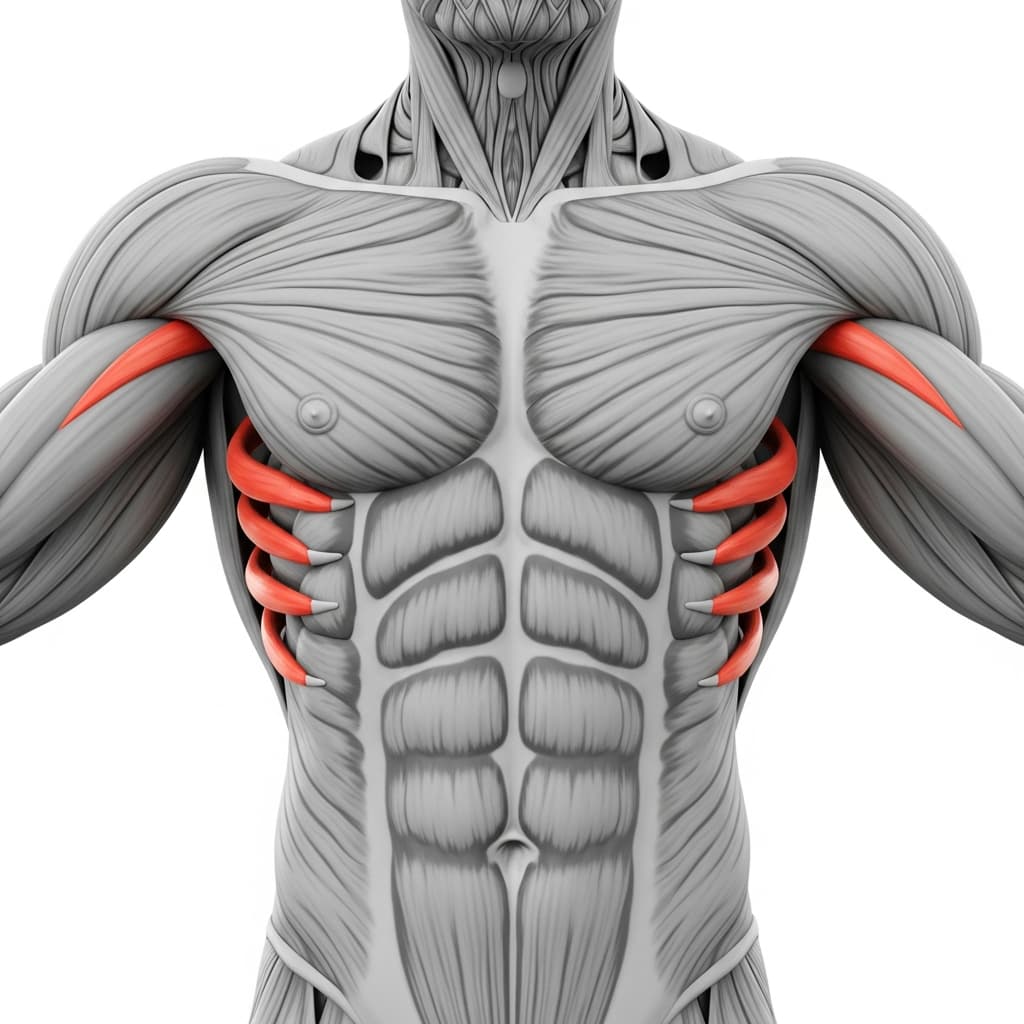
Primary Muscles
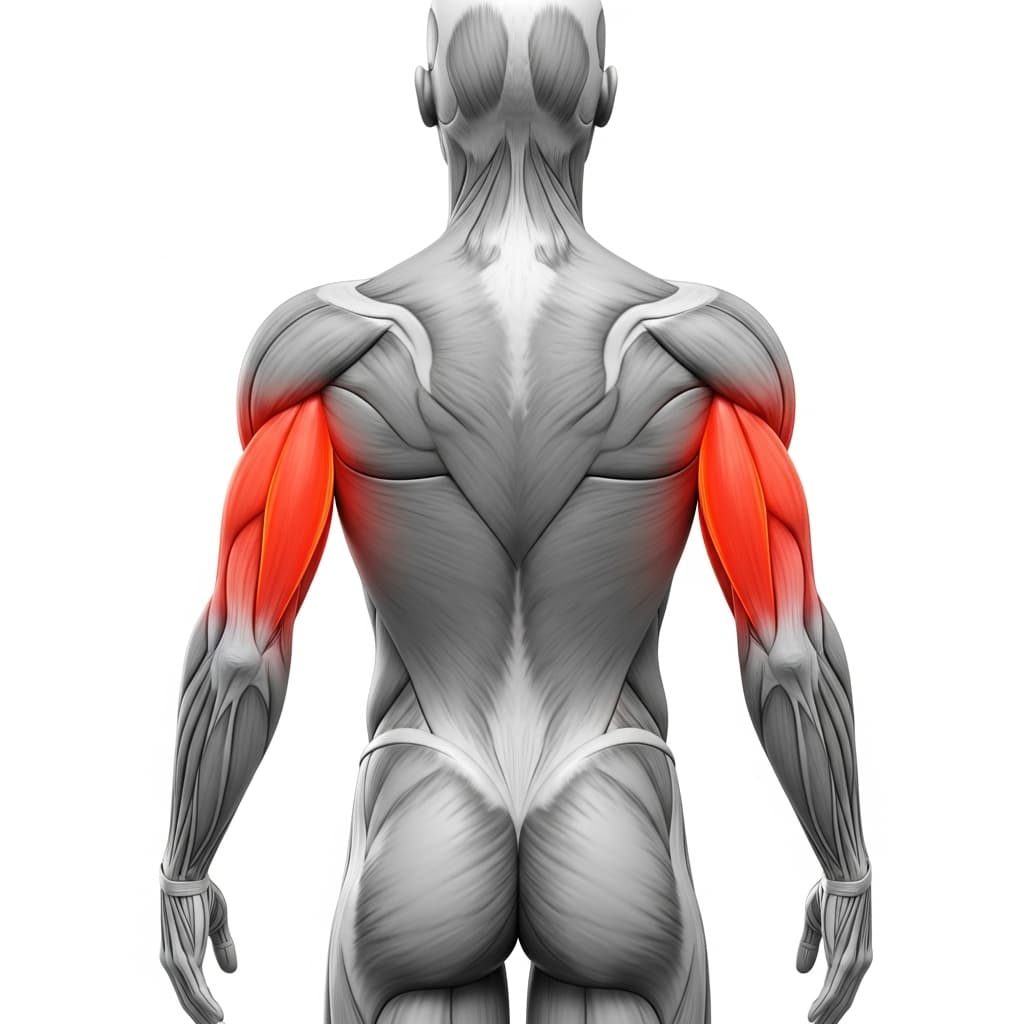
Triceps Brachii (Triceps) - The triceps extend the elbow during the pressing phase and are the primary mover due to the narrow hand placement and tucked elbow position.
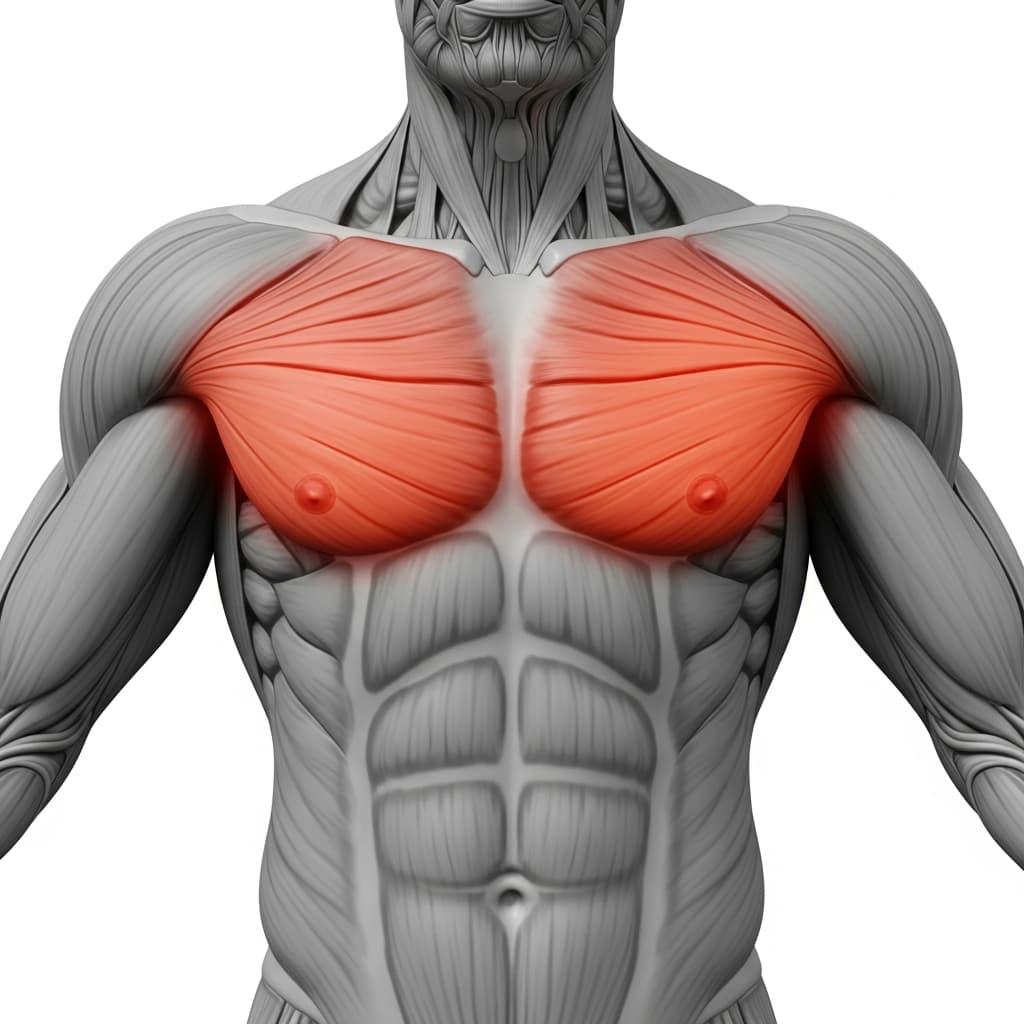
Pectoralis Major (Chest) - The chest muscles assist in horizontal adduction of the arms during the push, working hardest in the bottom half of the movement as you press away from the floor.
Secondary Muscles
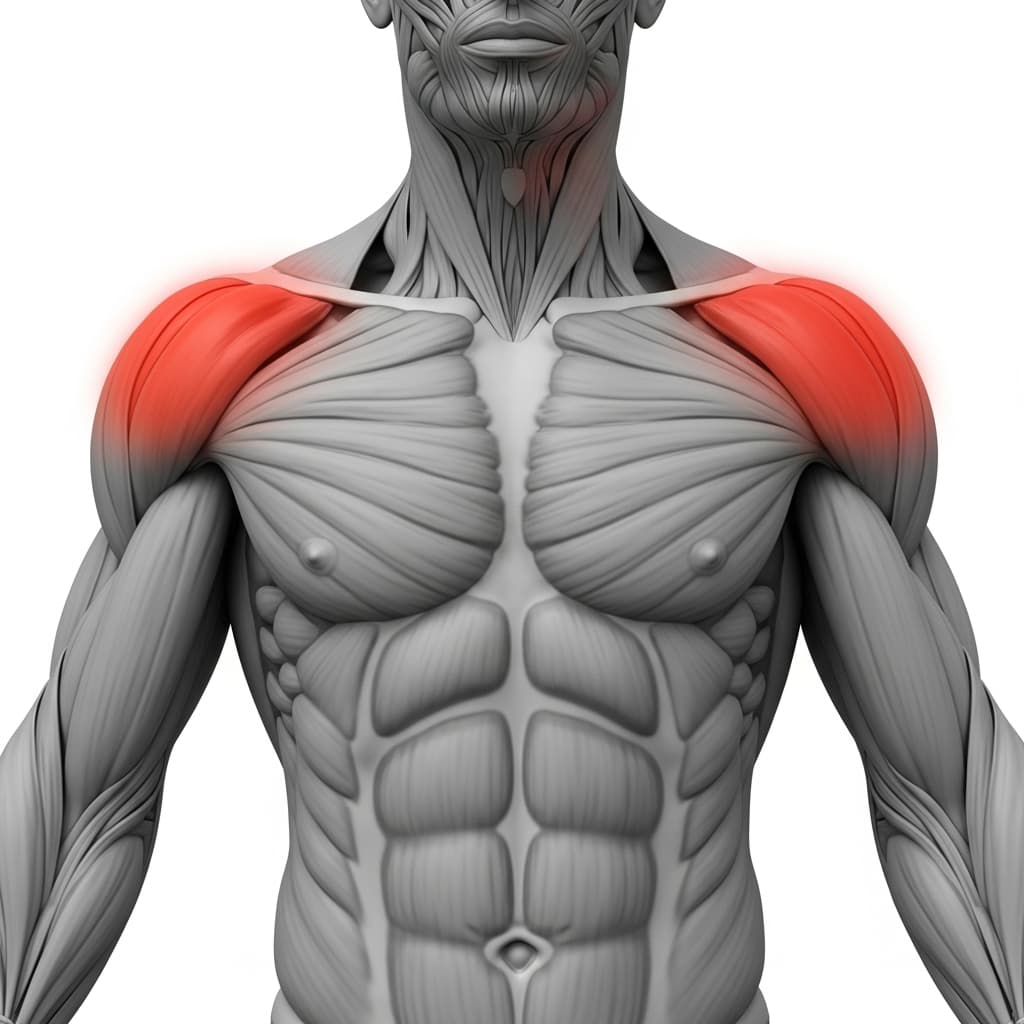
Anterior Deltoid (Front Deltoid) - The front deltoids stabilize the shoulder joint and assist in flexing the arm forward during the upward pressing phase of each rep.
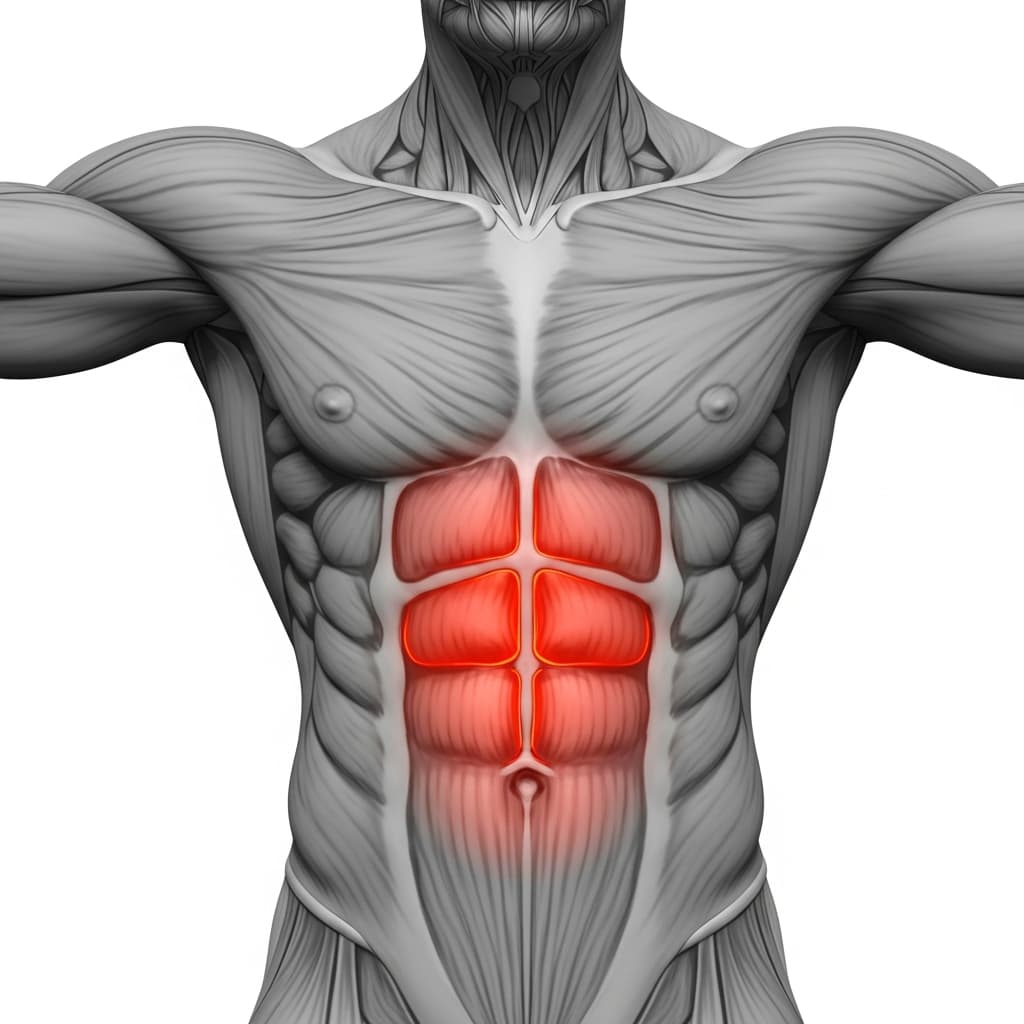
Rectus Abdominis (Abs) - The abdominals brace isometrically throughout the movement to maintain the straight body line from chest to knees and prevent the hips from sagging.
Serratus Anterior (Serratus Anterior) - The serratus anterior protracts the shoulder blades at the top of each rep, stabilizing the scapula against the ribcage during the lockout.
Benefits of Narrow Knee Push Ups
- Develops triceps strength with a reduced load, making it one of the most effective beginner exercises for building the pressing power needed for full push-up progressions
- Teaches correct elbow tracking and body alignment under load, which transfers directly to diamond push-ups, dips, and handstand push-ups
- Strengthens the serratus anterior and shoulder stabilizers through the full pressing range of motion, protecting the shoulder joint during all pushing movements
- Builds core stability under dynamic load, since maintaining the straight body line requires continuous bracing throughout every rep
Who Is This Exercise For?
You should be able to hold a plank on your knees for at least 15 seconds with a straight body line before attempting narrow knee push-ups. If you cannot maintain that position without your hips sagging or rising, focus on building core stability and shoulder endurance with knee planks first.
Common Mistakes to Avoid
Flaring the elbows outward: Keep your elbows tucked at a 30 to 45 degree angle from your torso throughout the entire rep. Flaring shifts the stress onto the shoulder joint and removes the triceps from the movement.
Letting the hips sag or pike up: Squeeze your glutes and brace your core before every rep to maintain a straight line from chest to knees. If your hips drop, you load the lower back instead of the pressing muscles.
Sitting the hips back toward the heels: Push your hips forward so the weight stays over your hands. When the hips sit back, the range of motion shortens and the exercise becomes significantly easier than it should be.
Rushing through reps with no control: Use a 2-second lowering phase and a 1-second pause at the bottom. Controlled reps build more strength and teach the body positioning that transfers directly to full push-ups.