Hanging Knee raises
Hanging knee raises are a foundational core exercise in calisthenics that targets the abs and hip flexors through a controlled hanging position. The key to an effective rep is initiating with a slight scapular engagement and scooping the knees forward and up, rather than simply pulling the knees to the chest and arching the lower back. Done with strict form, hanging knee raises build the core compression strength that directly transfers to L-sits, toes-to-bar, and front lever progressions.
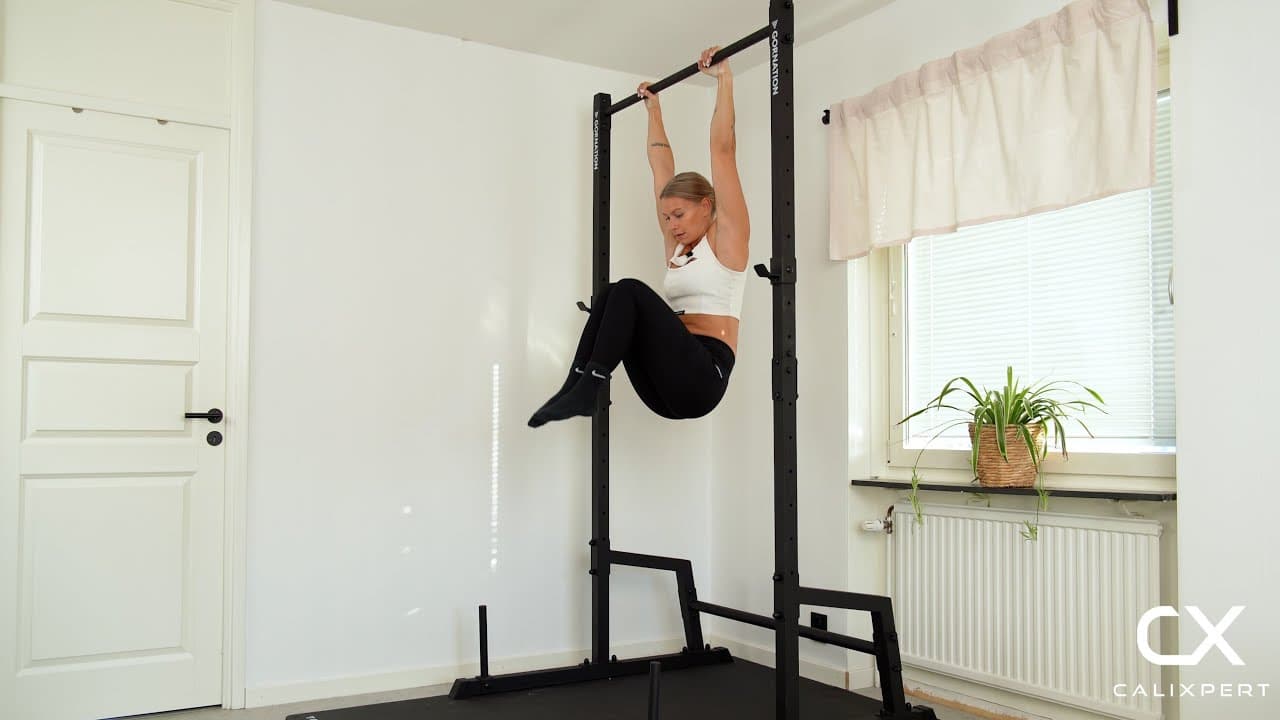
Hanging knee raises are a foundational core exercise in calisthenics that targets the abs and hip flexors through a controlled hanging position. The key to an effective rep is initiating with a slight scapular engagement and scooping the knees forward and up, rather than simply pulling the knees to the chest and arching the lower back. Done with strict form, hanging knee raises build the core compression strength that directly transfers to L-sits, toes-to-bar, and front lever progressions.
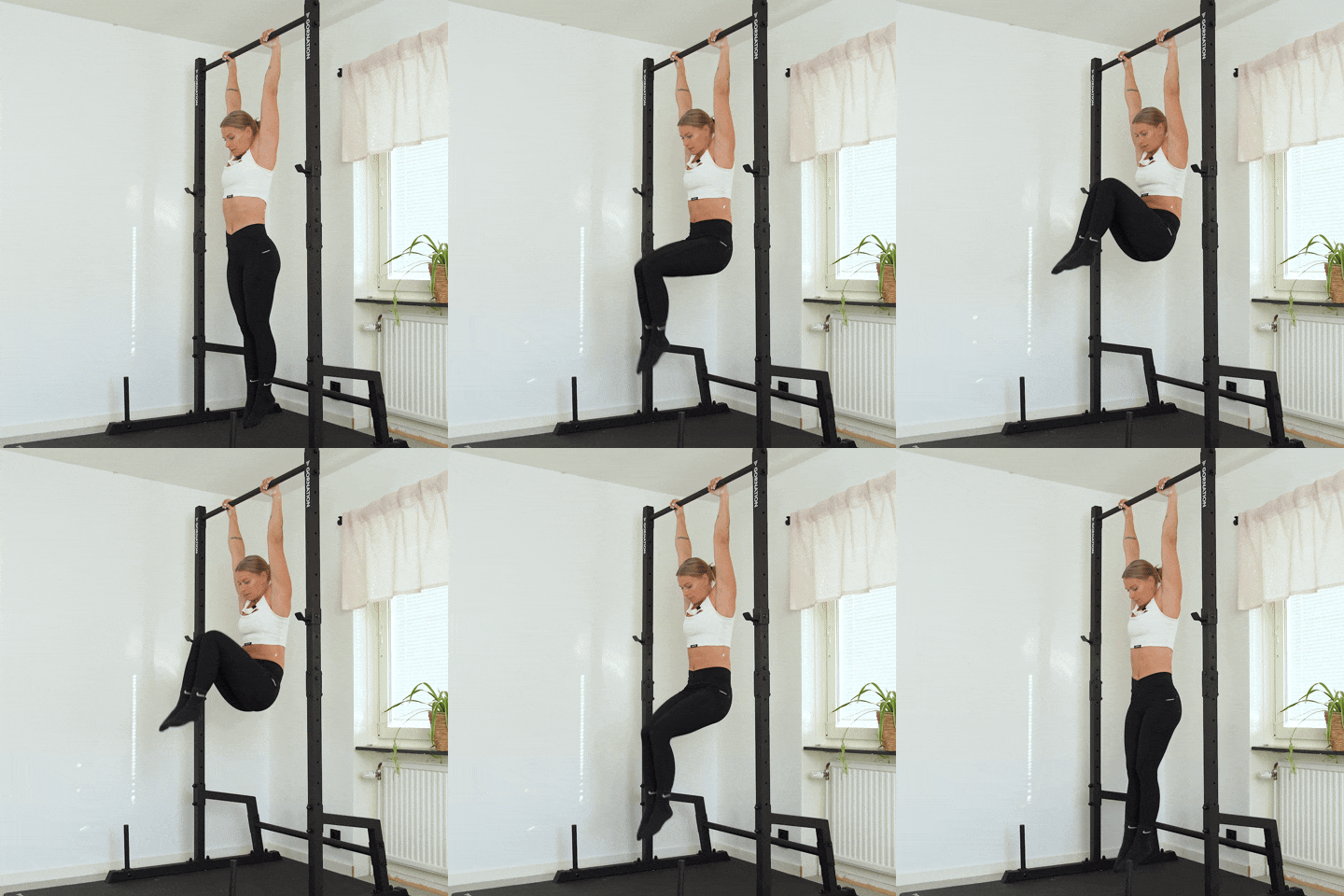
How to Do Hanging Knee raises
1. Grip the Bar and Hang
Grab a straight pull-up bar with an overhand grip, hands shoulder-width apart. Wrap your thumbs fully around the bar for a secure hold. Let your body hang with arms fully extended and feet off the ground. Keep your shoulders packed, not shrugged up toward your ears.
Thumbs around, shoulders down
2. Set Your Scapula
Before lifting your knees, perform a slight scapular pull-up by pulling your shoulder blades down and together. This engagement stabilizes your upper body and prevents you from swinging during the lift. Without this set, every rep turns into an uncontrolled swing.
Shoulders down and locked before you lift
3. Scoop the Knees Forward and Up
Lift your knees by scooping them forward and upward in front of your body, not straight up toward your chest. Think of drawing a forward arc with your knees rather than pulling them vertically. This scooping motion engages the lower abs and prevents the lower back from arching excessively. Avoid leaning too far backward as you lift.
Scoop forward, not straight up
4. Pause at the Top
Hold briefly when your thighs reach parallel to the ground or slightly above. Your core should be fully engaged and your body stable with no swinging. This pause eliminates momentum and forces the abs to do the work under load.
Hold for one second at the top
5. Lower with Control
Slowly lower your legs back to the starting position, resisting gravity throughout the descent. Do not let your legs drop or swing freely. Re-set your scapular engagement and eliminate any swing before starting the next rep.
Slow descent, dead stop at the bottom
Most people treat hanging knee raises like a hip flexor curl, yanking the knees up and arching the back. The exercise changes completely when you think of it as a scoop. Set your scapula, then drive the knees forward and up in a scooping arc. You will feel your lower abs engage in a way that straight pulling never achieves.
Muscles Worked During Hanging Knee raises
Primary Muscles:
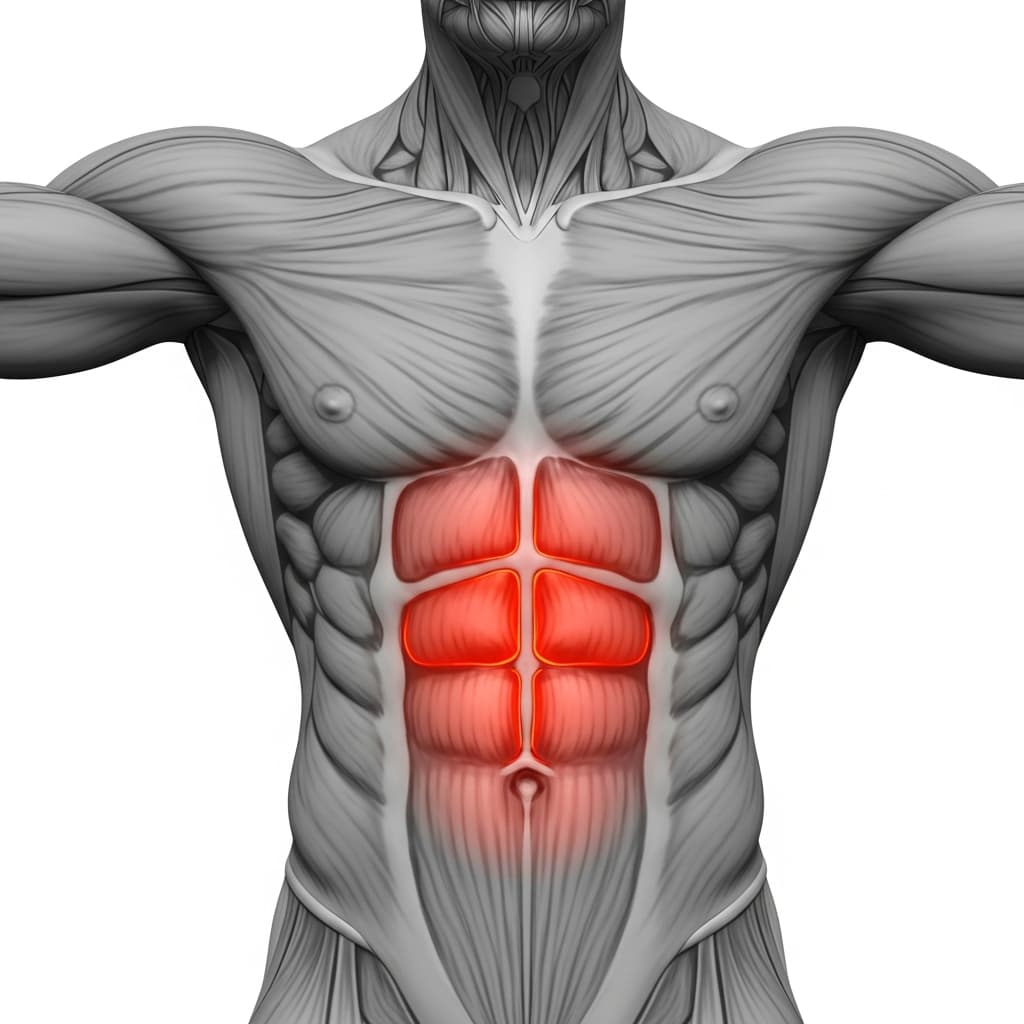
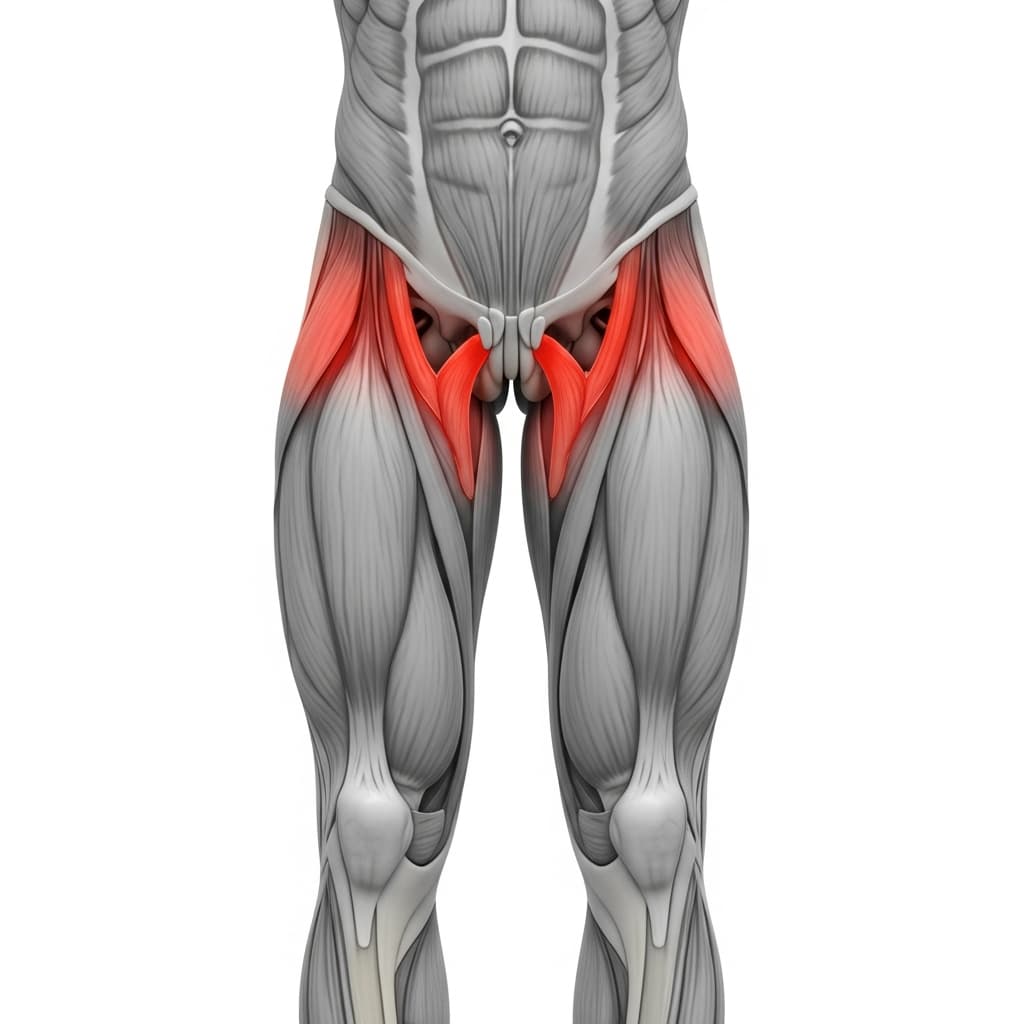
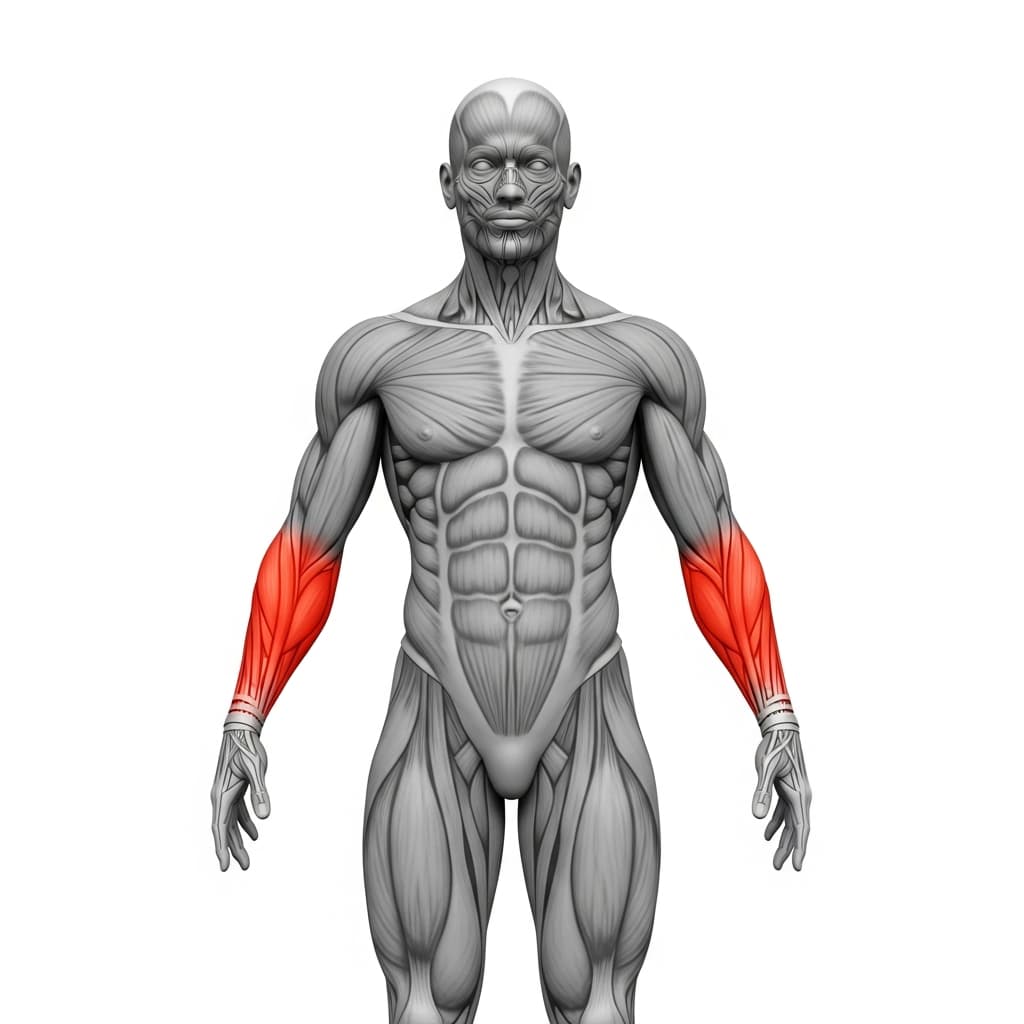
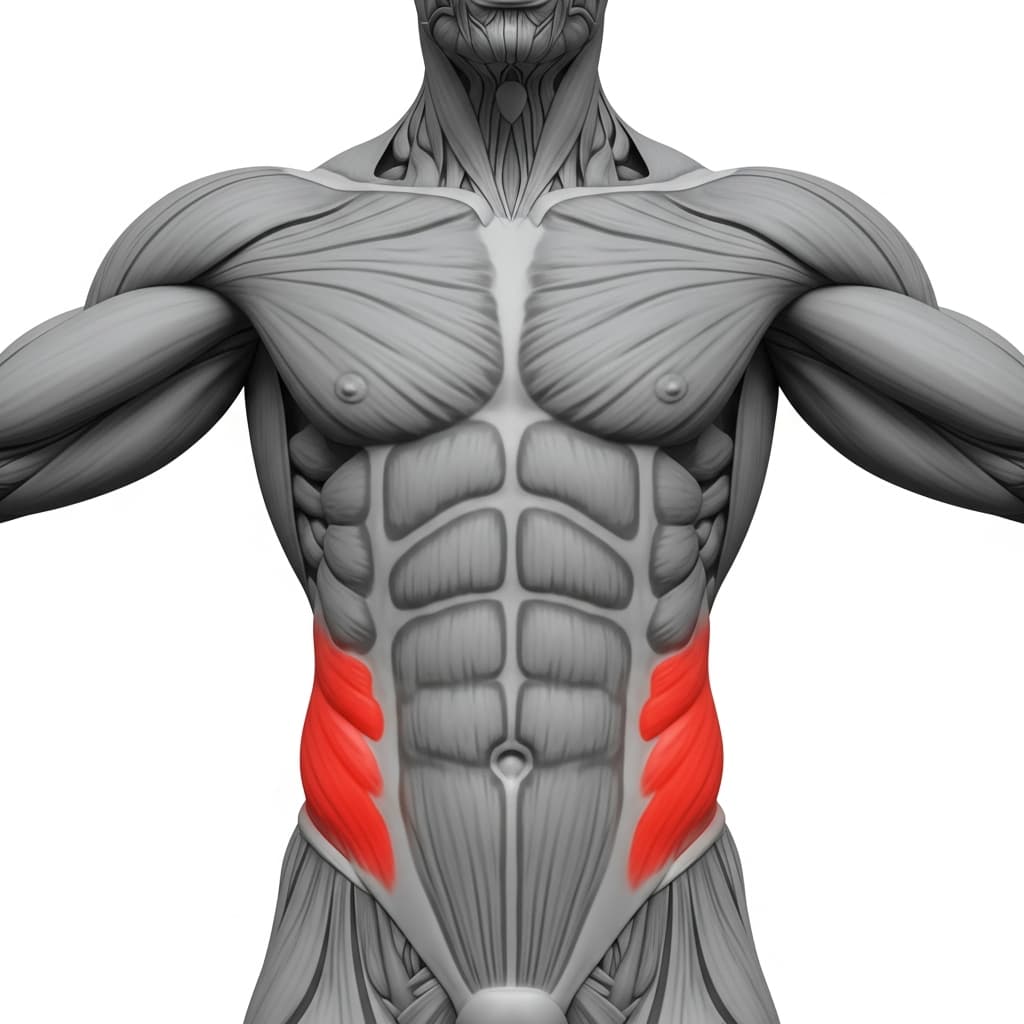
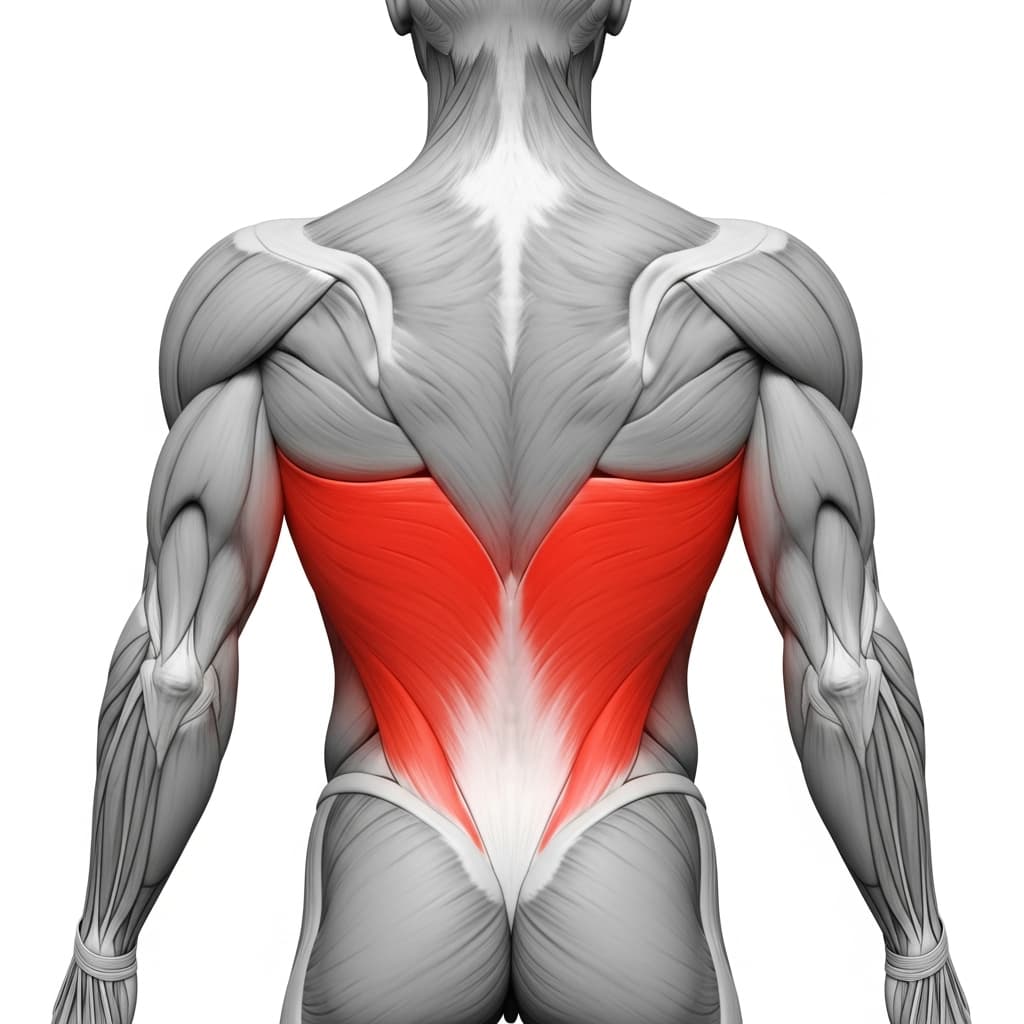
Primary Muscles
Rectus Abdominis (Abs) - The abdominals flex the spine and compress the torso as you scoop the knees forward and upward, creating the primary force that lifts the lower body against gravity.
Iliopsoas (Hip Flexors) - The hip flexors drive the knee lift by flexing the hip joint, working alongside the abs to bring the thighs toward the torso throughout the full range of motion.
Secondary Muscles
Forearm Flexors & Extensors (Forearms) - The forearm muscles maintain your grip on the bar throughout the entire set, working under sustained isometric load while the lower body moves.
Obliques (Obliques) - The obliques stabilize the torso and prevent lateral rotation or side-to-side swinging as you lift and lower your knees.
Latissimus Dorsi (Lats) - The lats engage isometrically through the scapular set to stabilize the upper body and prevent uncontrolled swinging during each rep.
Benefits of Hanging Knee raises
- Builds lower abdominal and hip flexor strength through a loaded hanging position, which directly transfers to L-sits, front levers, and toes-to-bar
- Develops grip strength and forearm endurance from sustained hanging under the added challenge of lower body movement
- Strengthens the scapular stabilizers and lats through the isometric hold required to keep the upper body stable during each rep
- Trains core compression, the ability to bring the hips toward the ribcage under load, which is the foundational movement pattern for advanced calisthenics skills
Who Is This Exercise For?
You should be able to hold a dead hang for at least 15 seconds with stable shoulders and a neutral spine before attempting hanging knee raises. If your grip gives out before your abs fatigue, spend time building hang endurance and consider using captain's chair knee raises temporarily while your grip catches up.
Common Mistakes to Avoid
Arching the lower back: Focus on scooping the knees forward and up in front of your body instead of pulling them straight to your chest. When the knees go straight up, the lower back hyperextends and the abs lose tension.
Swinging and using momentum: Start each rep from a dead hang with no residual swing. If you need to swing to lift your knees, the set is over, because momentum is doing the work instead of your core.
Skipping the scapular set: Pull your shoulders down and engage your lats before every rep. Without this, your body swings freely and the exercise becomes uncontrolled and far less effective.
Dropping the legs on the descent: Lower your legs over 2 to 3 seconds, resisting gravity the entire way. The eccentric phase builds just as much core strength as the lift itself and keeps the shoulder joint safe.
Variations & Progressions
Captain's Chair Knee Raises
Perform the same knee raise movement while supported on a captain's chair or dip station. The back pad and arm rests eliminate the grip and stability demands, letting you focus entirely on the core contraction.
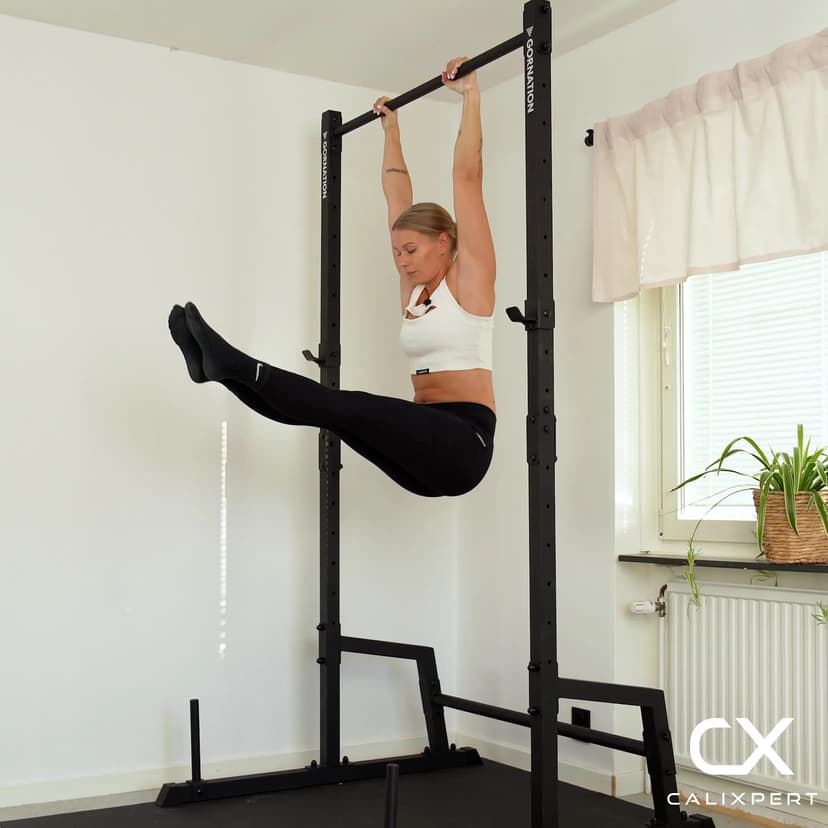
Hanging Toes to Bar
Raise your straight legs all the way up until your toes touch the bar. This full range of motion requires exceptional hip flexor flexibility, core strength, and lat engagement to control the movement.