Frog stand
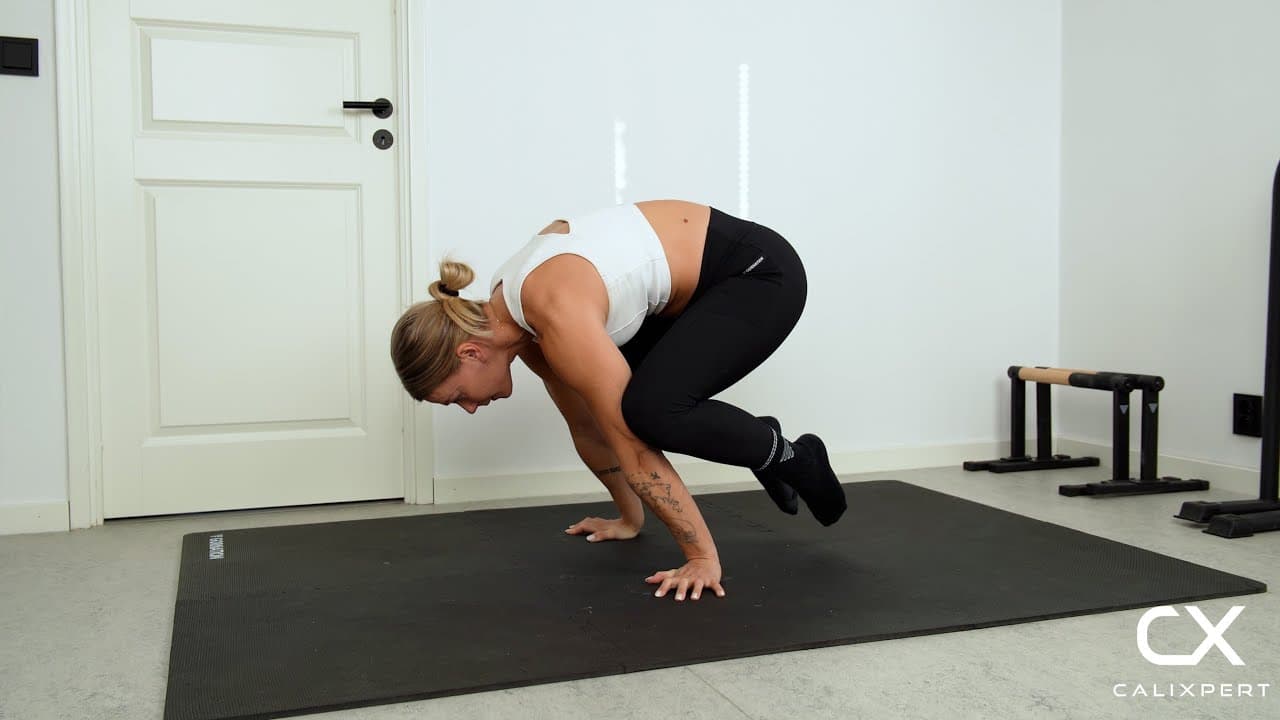
The frog stand is a beginner-level hand balance hold that trains the triceps, front deltoids, and core while developing the wrist stability and forward lean control required for every advanced balance skill in calisthenics. You hold your bodyweight on your hands with your knees braced against your elbows, learning to shift your center of gravity over your palms without tipping forward. Once you can hold a clean frog stand for 20 to 30 seconds, you have the balance foundation to progress toward crow pose, tuck planche, and eventually freestanding handstand work.
The frog stand is a beginner-level hand balance hold that trains the triceps, front deltoids, and core while developing the wrist stability and forward lean control required for every advanced balance skill in calisthenics. You hold your bodyweight on your hands with your knees braced against your elbows, learning to shift your center of gravity over your palms without tipping forward. Once you can hold a clean frog stand for 20 to 30 seconds, you have the balance foundation to progress toward crow pose, tuck planche, and eventually freestanding handstand work.
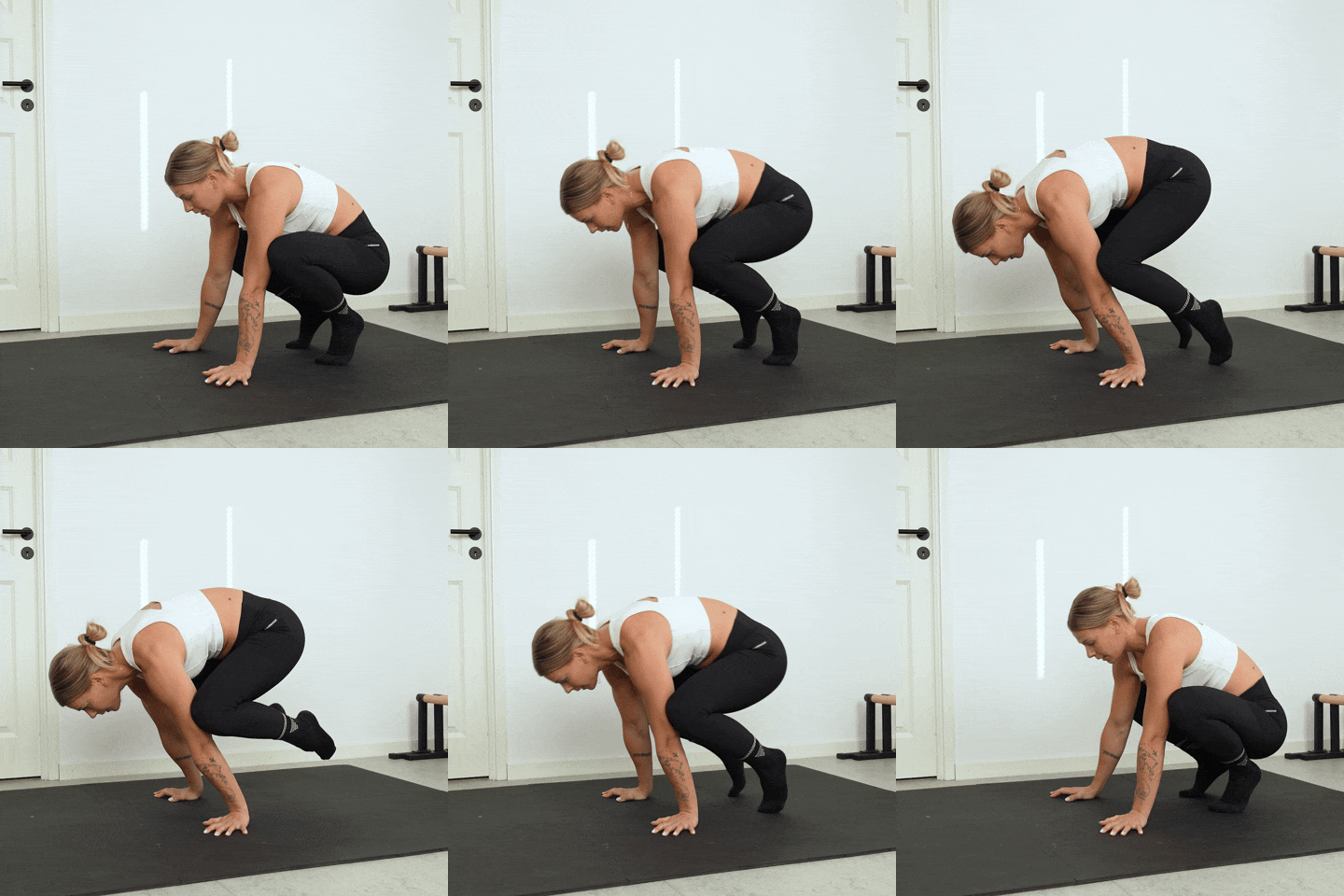
How to Do Frog stand
1. Set Up Your Hand Position
Place your hands on the floor roughly shoulder-width apart with fingers spread wide. Point your fingers forward or rotate them slightly outward if your wrists feel tight. Press your entire palm into the floor so no part lifts during the hold. This wide finger spread creates a larger base of support and gives you more control over balance corrections.
Spread fingers wide, full palm contact
2. Position Knees on Elbows
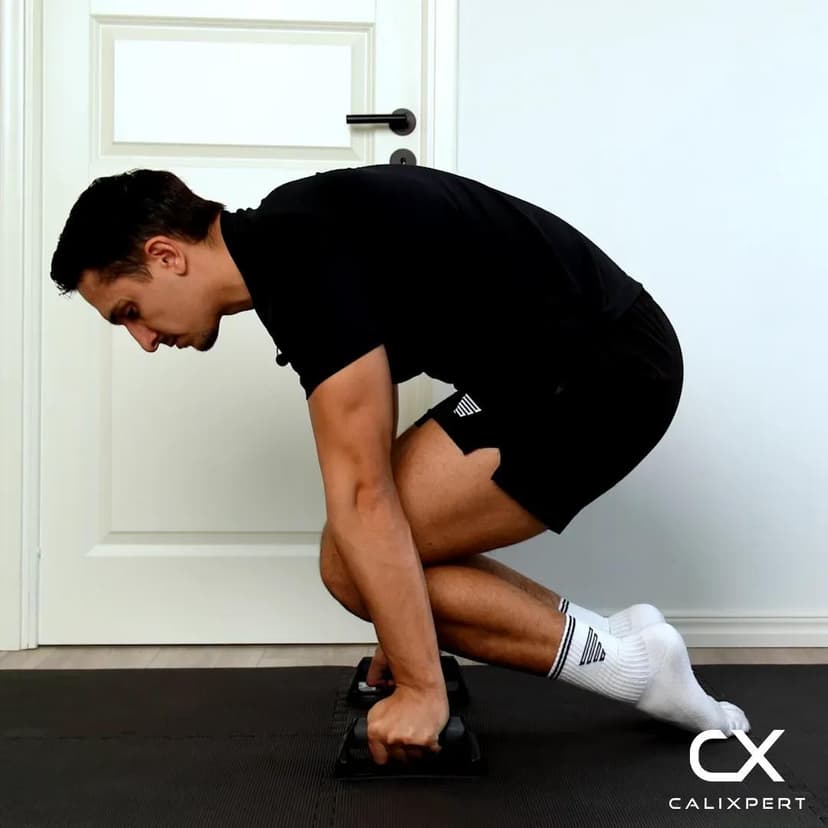
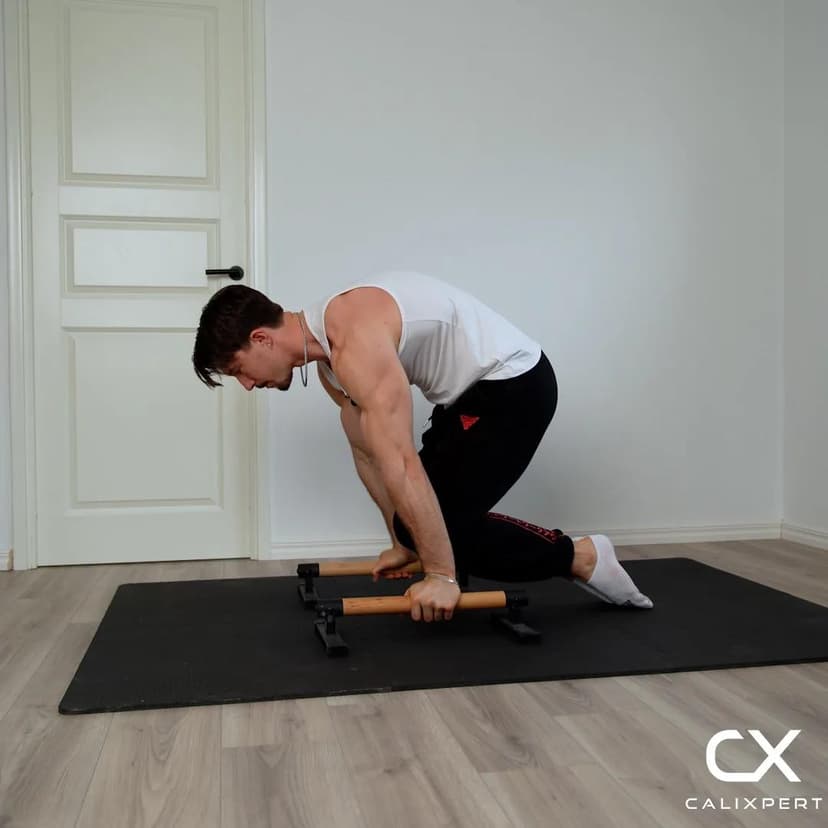
From a deep squat behind your hands, place the inside of each knee against the back of the corresponding elbow. Your knees should sit on the outer edge of your upper arms, just above the elbow crease. Keep your elbows bent at roughly 90 degrees so your upper arms create a stable shelf for your knees.
Knees press into the back of the elbows
3. Lean Forward and Shift Weight
Slowly lean your torso forward, transferring your weight from your feet onto your hands. Keep shifting until you feel your toes become light on the floor. Your shoulders should move ahead of your wrists during this lean. This forward shift is the key to the entire hold, and rushing it is the most common reason people fail.
Lean until your toes feel weightless
4. Lift Feet and Hold
Once your weight is fully on your hands, lift both feet off the floor and bring your heels toward your glutes. Engage your core to prevent your hips from dropping or rotating. Keep your head in a neutral position, eyes focused on a spot roughly 15 to 20 centimeters in front of your fingertips. Balance by making small pressure shifts through your fingers and palms.
Eyes forward, balance through the fingertips
5. Lower With Control
To come down, slowly shift your weight back toward your feet and place your toes on the floor. Do not collapse forward or drop your knees to the ground. A controlled exit teaches the same balance awareness as the hold itself and protects your wrists from impact.
Shift back slowly, never drop
Most people bail on the frog stand because they are scared of falling forward, so they never lean far enough. Put a pillow in front of you and commit to the lean. Once your shoulders pass your wrists and your toes float off the ground, the balance clicks almost immediately. The hold is about trusting the forward lean, not about arm strength.
Muscles Worked During Frog stand
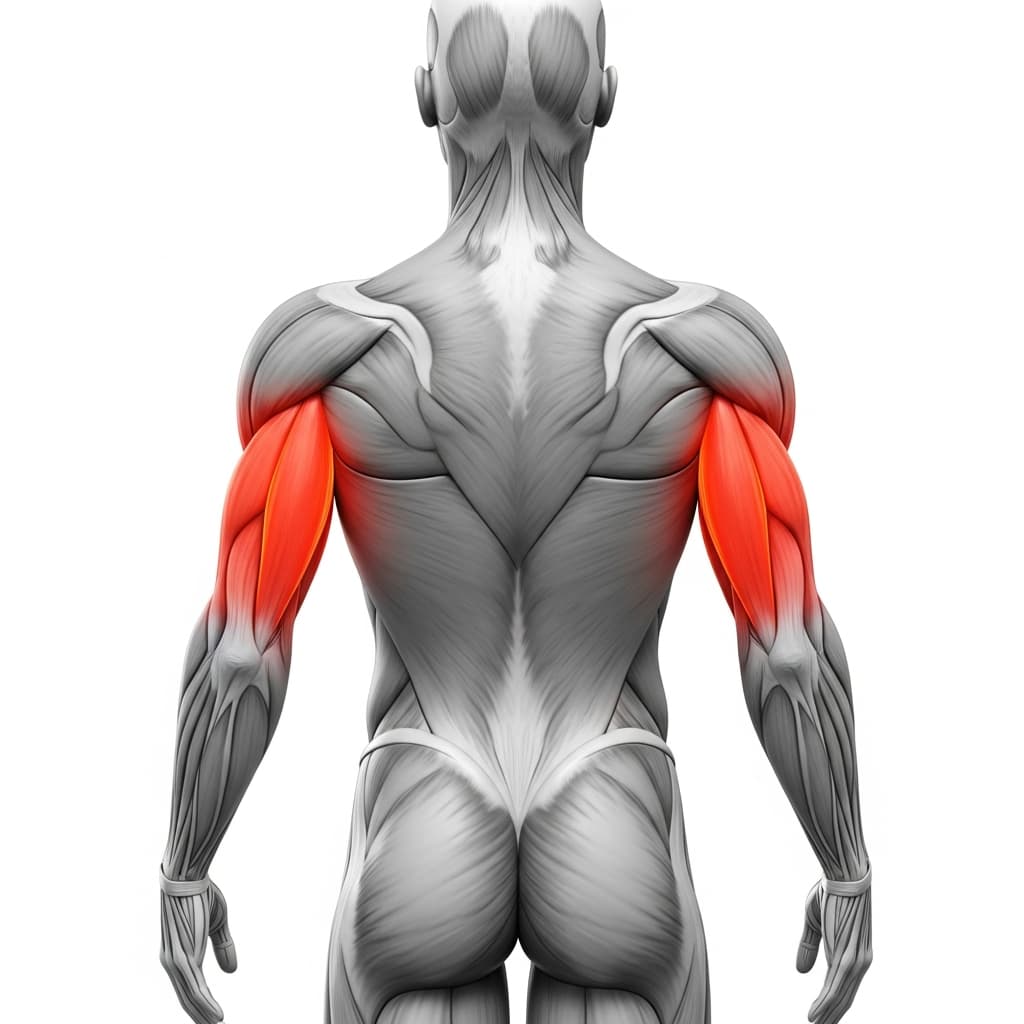
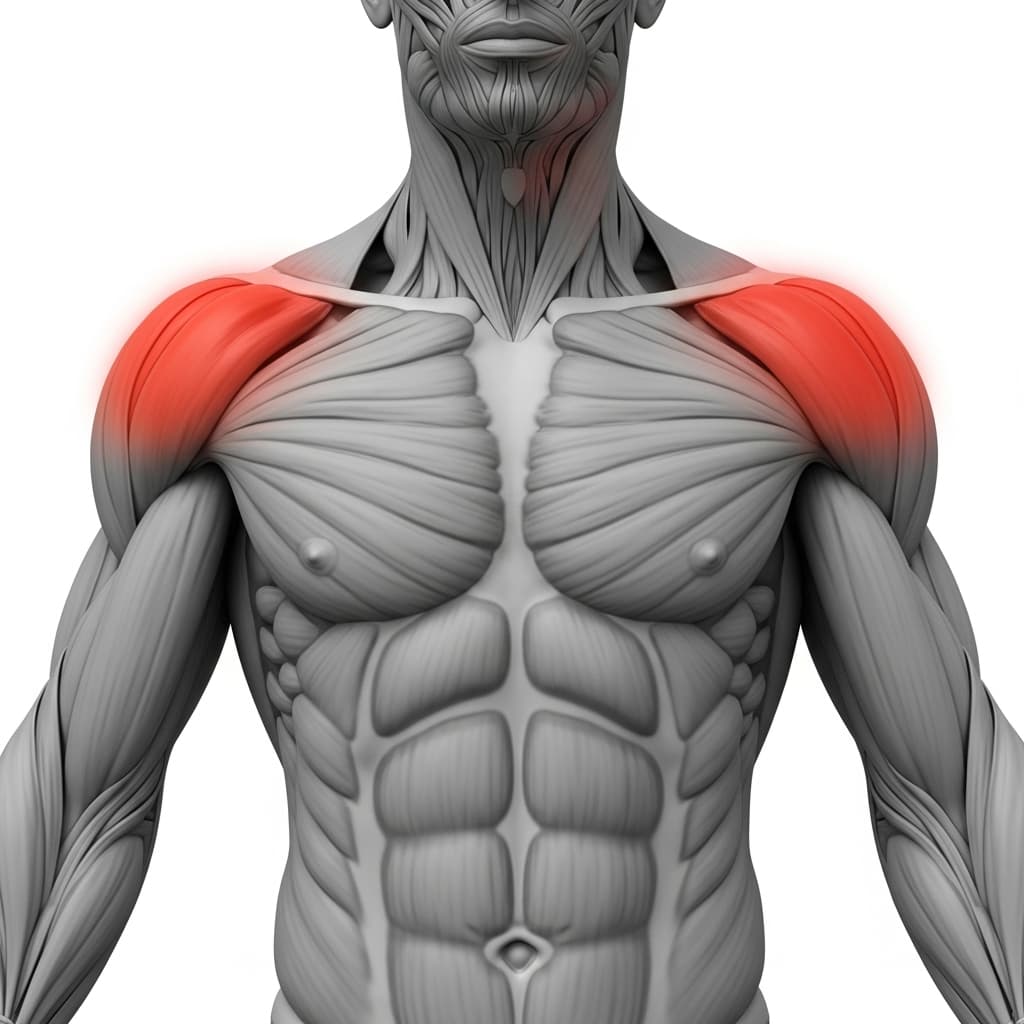
Primary Muscles:
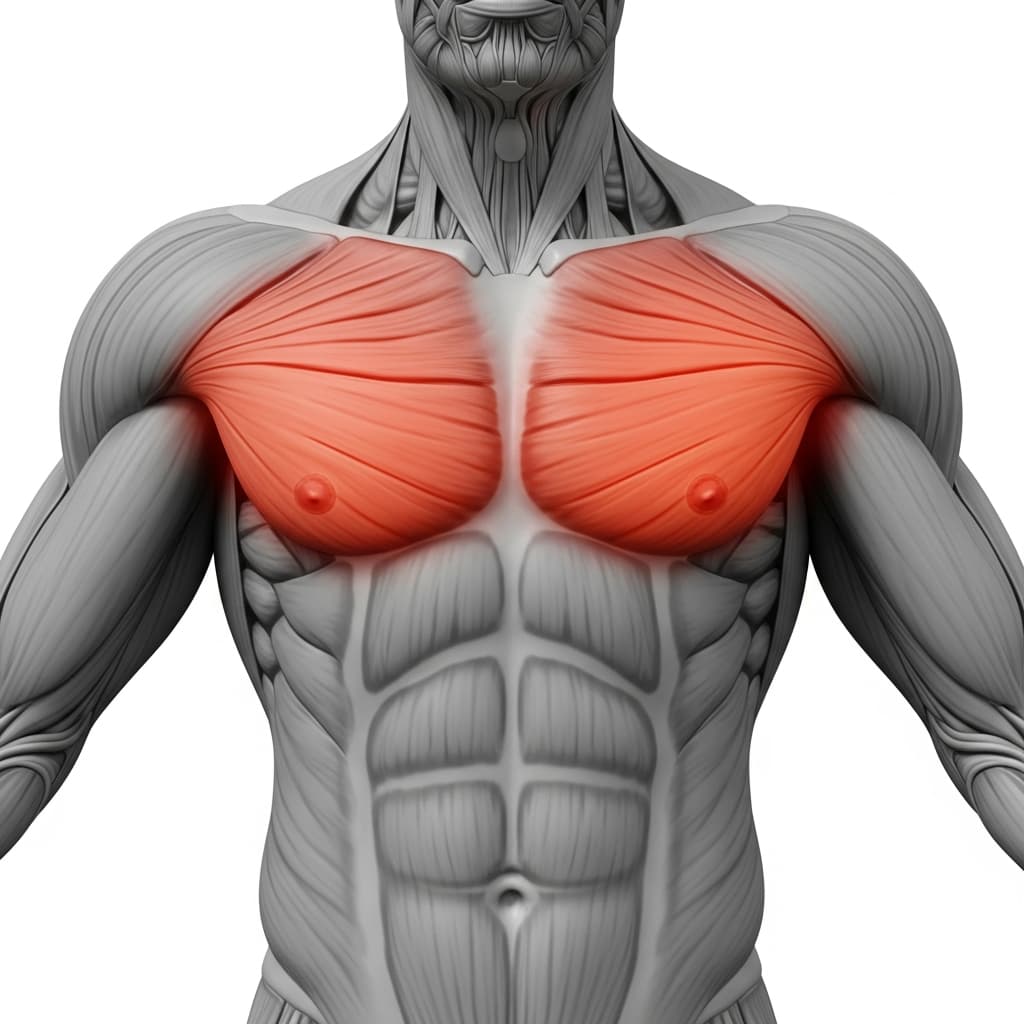
Secondary Muscles:
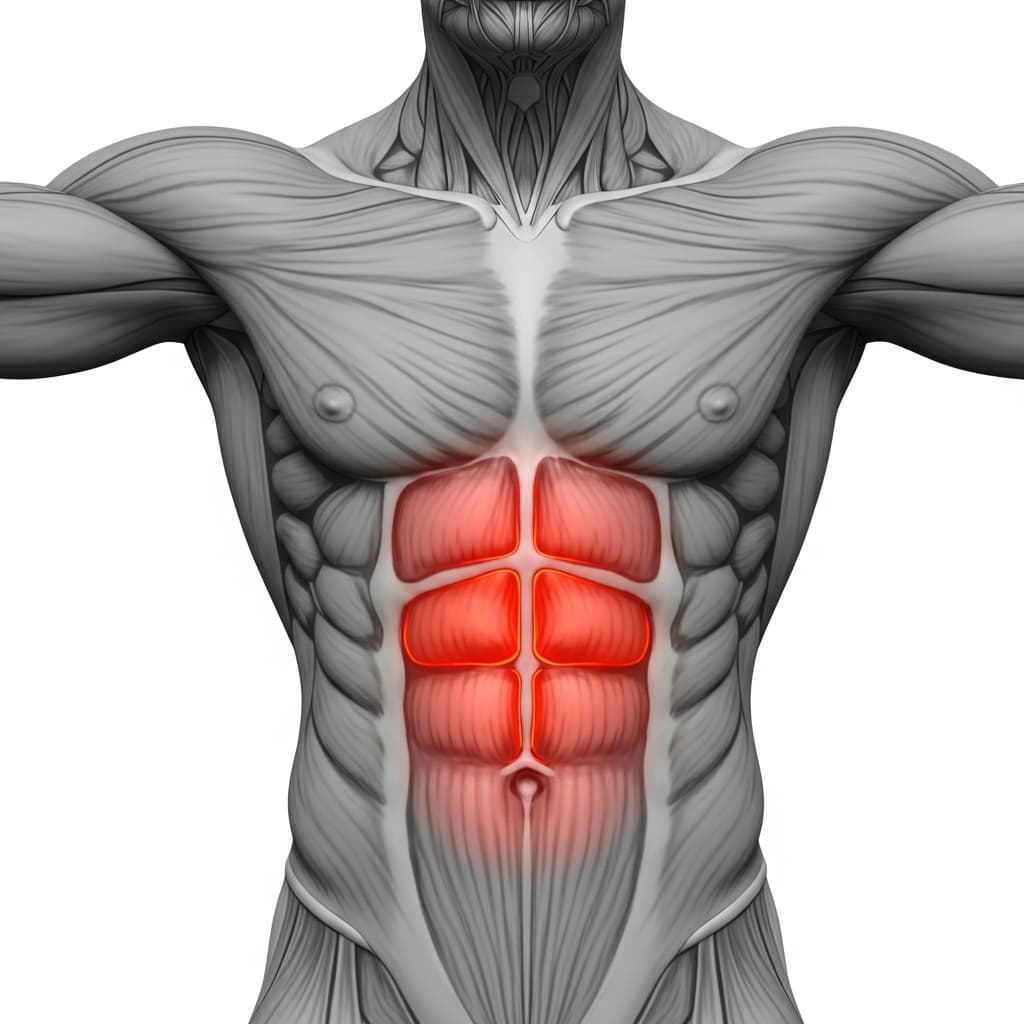
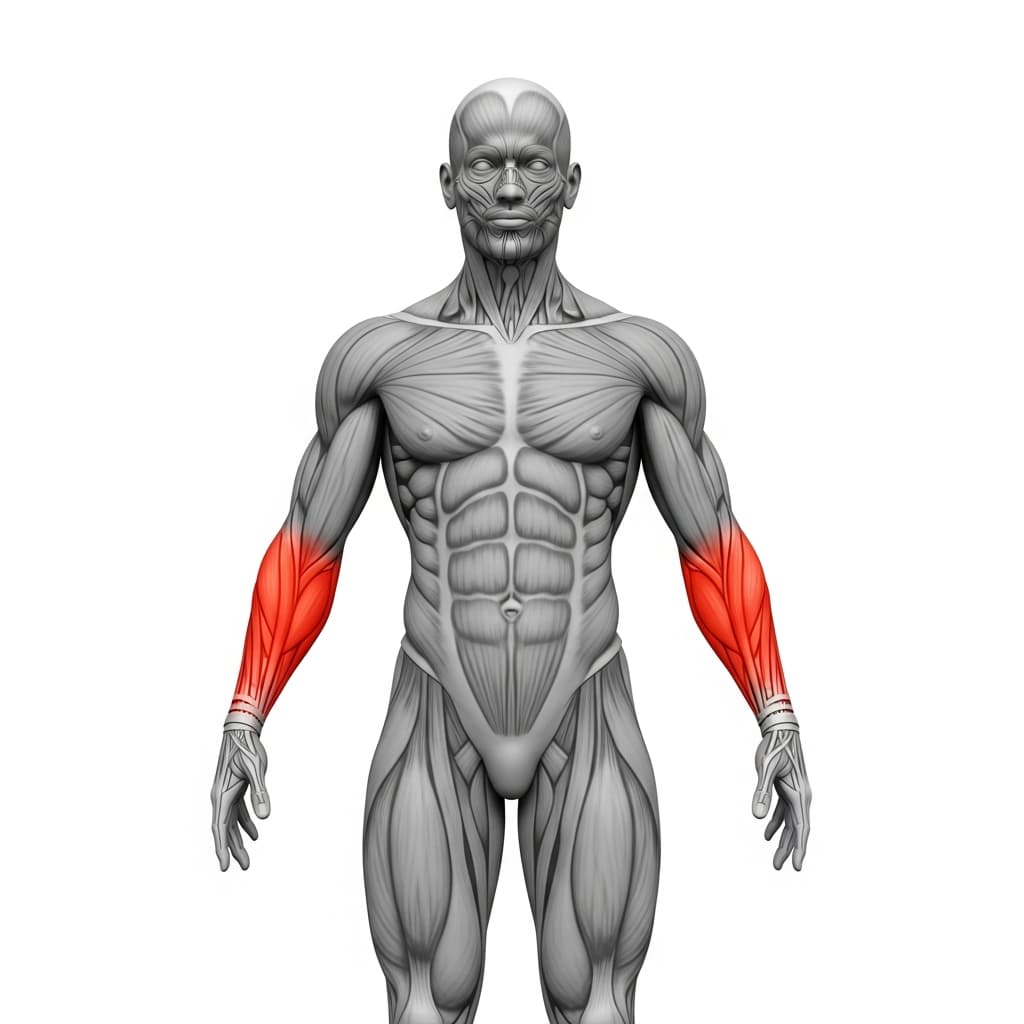
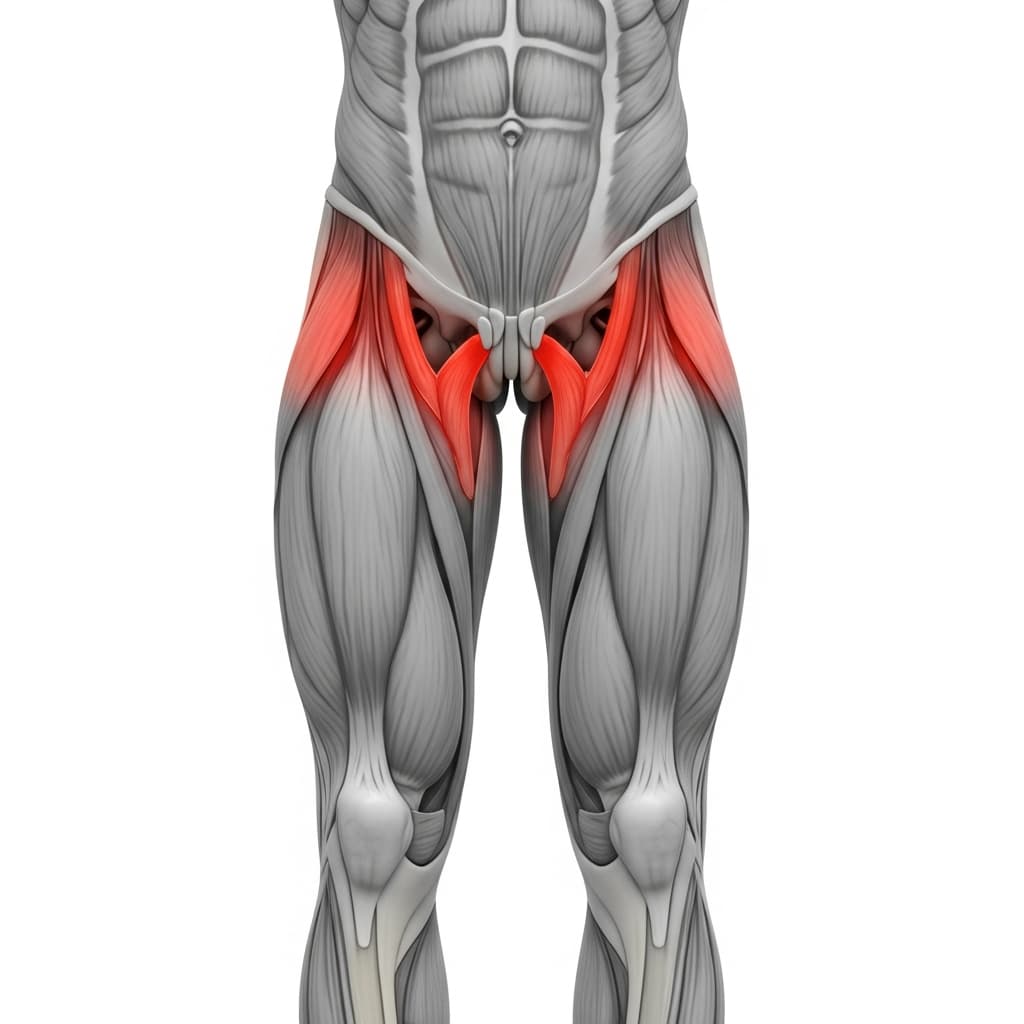
Primary Muscles
Triceps Brachii (Triceps) - The triceps maintain the bent-arm position under load throughout the hold, resisting elbow flexion as your bodyweight presses down through your upper arms.
Anterior Deltoid (Front Deltoid) - The front deltoids stabilize the shoulder joint as your torso leans forward past your wrists, preventing the shoulders from collapsing under the shifted center of gravity.
Secondary Muscles
Pectoralis Major (Chest) - The pectorals assist the front deltoids in stabilizing the shoulder during the forward lean and help maintain the arm position against the outward pressure of the knees.
Rectus Abdominis (Abs) - The abdominals hold the pelvis in position and prevent the hips from sagging or rotating during the hold, keeping the body compact over the base of support.
Forearm Flexors & Extensors (Forearms) - The forearm flexors and extensors work continuously to balance the body through micro-adjustments in finger and palm pressure against the floor.
Iliopsoas (Hip Flexors) - The hip flexors keep the knees drawn in tight against the elbows and prevent the legs from sliding down or away from the upper arms.
Benefits of Frog stand
- Develops the forward lean awareness and wrist conditioning required for crow pose, tuck planche, and handstand progressions
- Strengthens the triceps and front deltoids under sustained isometric load, building joint stability that transfers to all pressing movements
- Trains proprioceptive balance through the hands, teaching fine motor control in the fingers and palms that no other beginner exercise provides
- Builds confidence with inverted positions at a low risk level, reducing the fear response that blocks progress in more advanced hand balancing
Who Is This Exercise For?
You should be able to hold a plank for at least 30 seconds and perform a comfortable deep squat with flat feet before attempting the frog stand. If your wrists ache during basic floor work like push-ups, spend two to three weeks on daily wrist mobility drills and wall-supported wrist loading before adding frog stand to your training.
Common Mistakes to Avoid
Not leaning forward enough: Most failed attempts happen because the lifter does not shift their shoulders far enough past the wrists. Lean forward until you feel your toes lift naturally, and trust the position. Your shoulders need to be ahead of your hands for the balance point to work.
Looking straight down at the floor: Tucking your chin and staring at your hands shifts your center of gravity too far forward and causes you to tip over. Keep your head neutral and focus your gaze on a spot just ahead of your fingertips.
Placing knees too low on the arms: When knees slide down toward the wrists instead of sitting at elbow height, you lose the shelf that supports your weight. Reposition your knees against the back of the elbows before every attempt.
Rushing into the hold without wrist warm-up: The frog stand places significant load on the wrists in deep extension. Spend at least two minutes on wrist circles, floor presses, and gentle extension stretches before each session to avoid strain.
Variations & Progressions
Fingertip-elevated frog stand
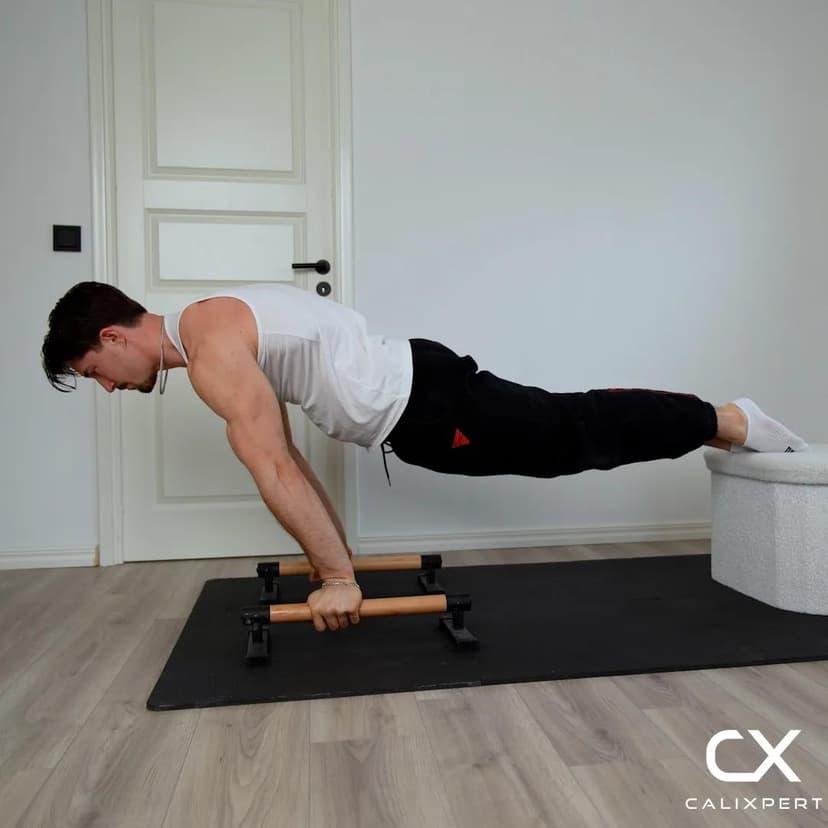
Place your hands on parallettes or yoga blocks to reduce the wrist extension angle. This is ideal if you have limited wrist mobility but enough strength to hold the position.
Straight-arm frog stand
Lock your elbows fully and place your knees behind your upper arms near the armpits with a high hip position. Straight arms demand more shoulder strength, wrist conditioning, and a greater forward lean, making this a direct stepping stone toward tuck planche.