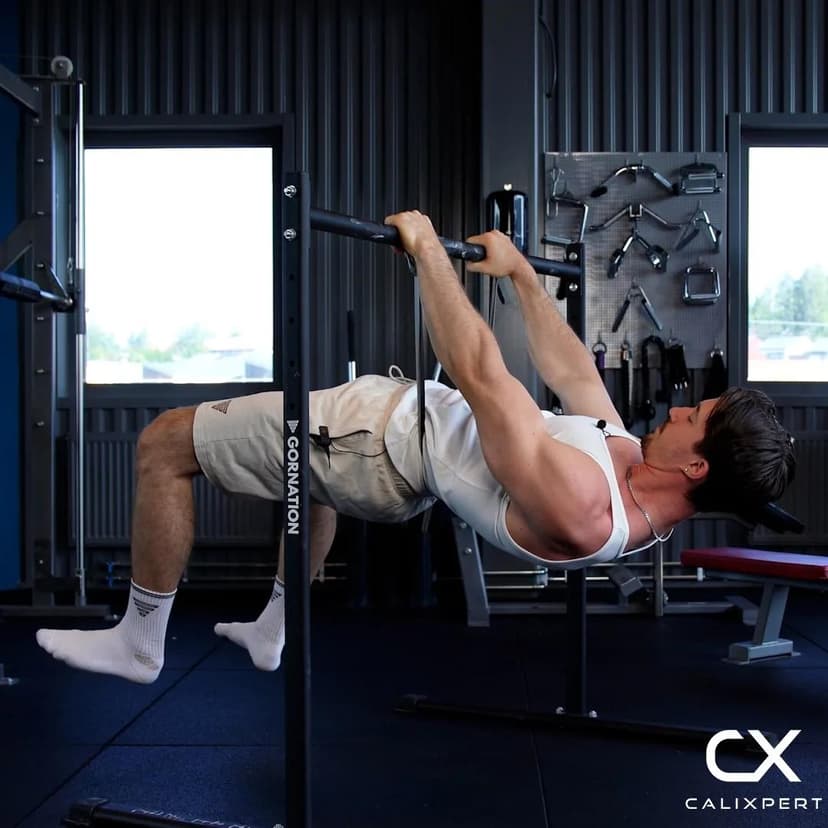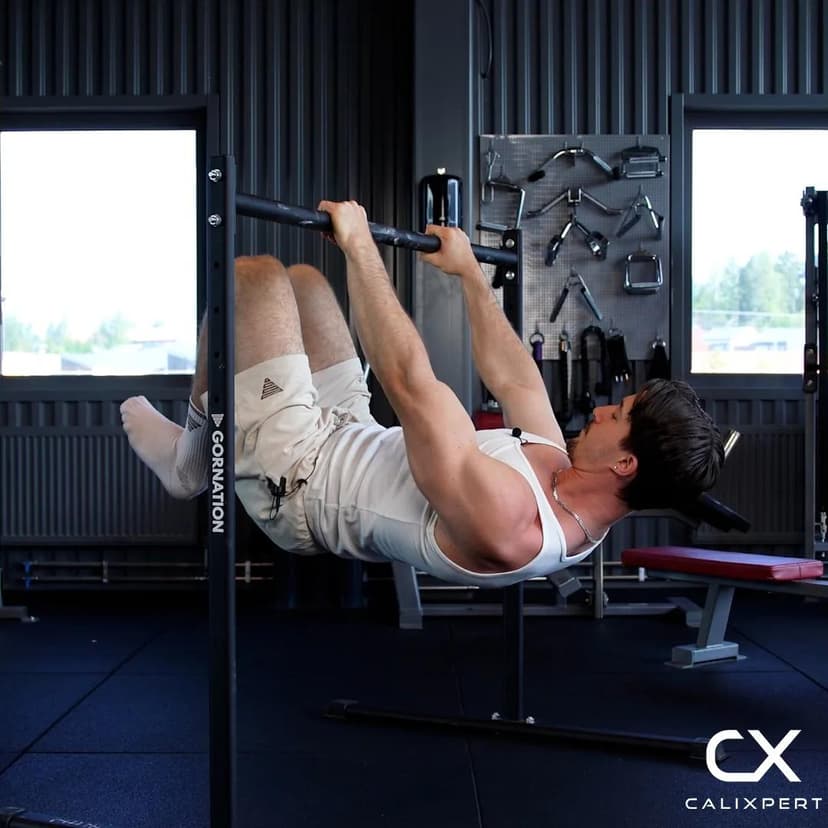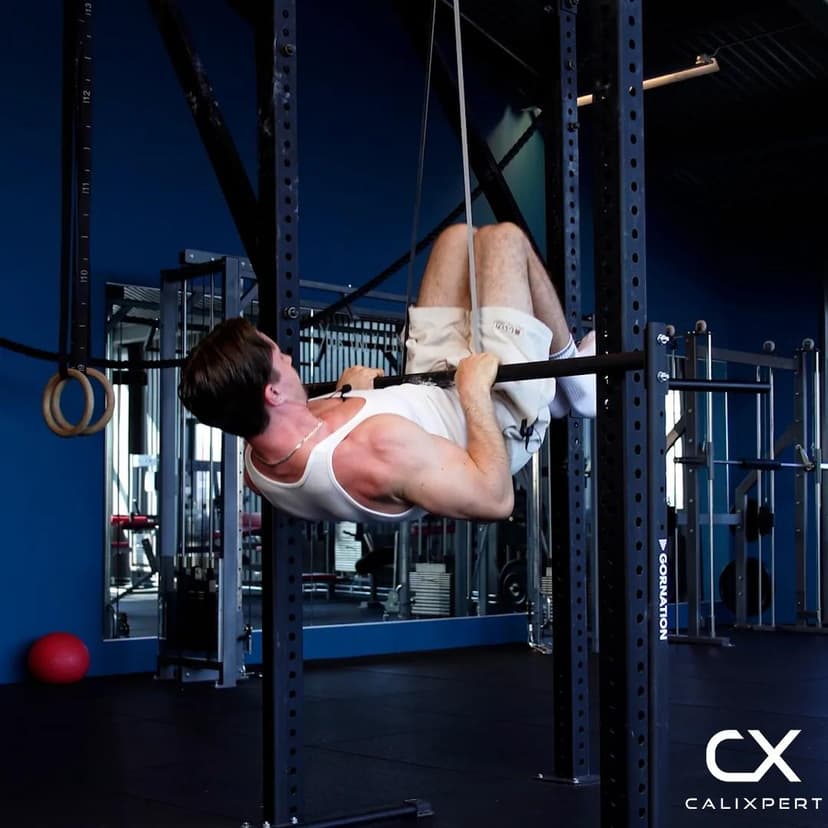
Dip Bar Leg Raises
Dip bar leg raises are a core-dominant exercise performed from a straight-arm support position that targets the abs and hip flexors through a controlled leg lift. The movement demands active shoulder depression and a braced trunk, which prevents the common mistake of arching the back and turning the exercise into a sloppy swing. When performed with strict form, dip bar leg raises build the anterior core strength and body control that directly transfer to L-sits, front levers, and every pressing skill in calisthenics.
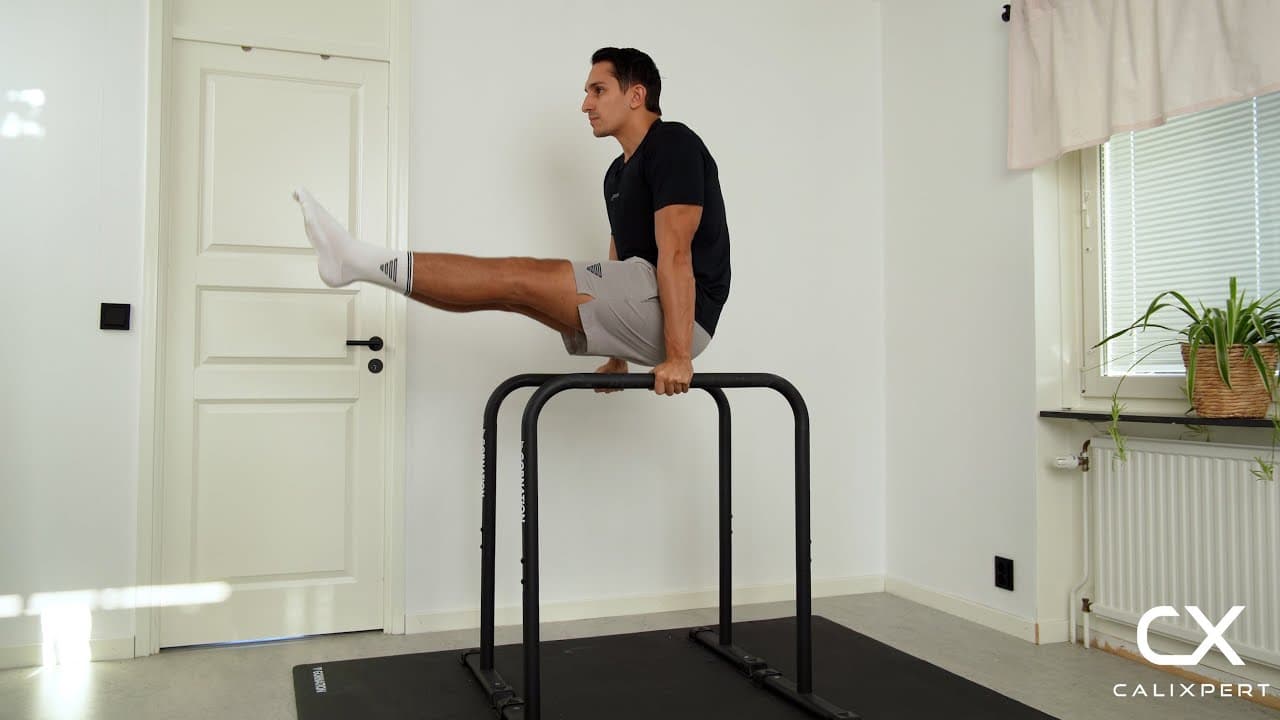
Dip bar leg raises are a core-dominant exercise performed from a straight-arm support position that targets the abs and hip flexors through a controlled leg lift. The movement demands active shoulder depression and a braced trunk, which prevents the common mistake of arching the back and turning the exercise into a sloppy swing. When performed with strict form, dip bar leg raises build the anterior core strength and body control that directly transfer to L-sits, front levers, and every pressing skill in calisthenics.
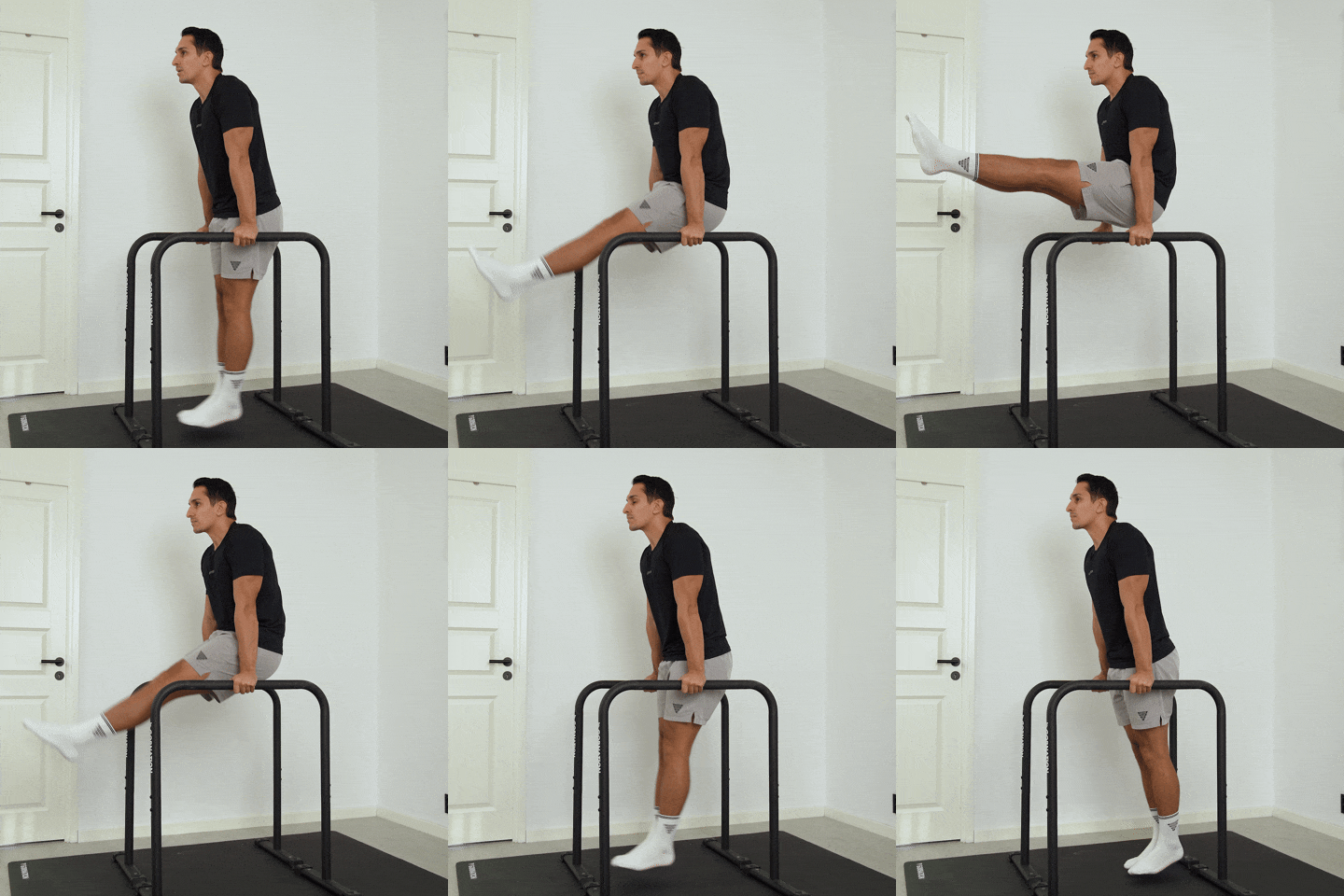
How to Do Dip Bar Leg Raises
1. Set Up on the Bars
Grip both dip bars firmly and press yourself up into a straight-arm support position. Lock your elbows fully and keep your body centered between the bars. Your legs should hang straight down with your feet together and toes pointed.
Straight arms, feet together
2. Depress and Set Your Shoulders
Before moving your legs, actively push your shoulders down away from your ears. This scapular depression keeps the upper body stable and prevents your torso from collapsing during the lift. Maintain this depressed position for the entire set.
Push shoulders down and hold them there
3. Brace Your Core
Tighten your abs and flatten your lower back by tilting your pelvis slightly forward. This posterior pelvic tilt is what allows the abs to do the work instead of letting the back arch. If you skip this step, the hip flexors take over and the core barely engages.
Flatten the lower back before you lift
4. Lift Legs in Front of You
Raise your legs forward and upward in a smooth arc, keeping them as straight as possible. Think about bringing your feet out in front of you rather than pulling your knees toward your chest. Lift until your legs reach at least parallel with the ground or slightly above. Keep the movement controlled and avoid any jerking at the start.
Legs forward, not knees to chest
5. Hold Briefly at the Top
Pause for one second at the top of the movement with your core fully engaged. Your legs should be at or above parallel, your shoulders still depressed, and your torso upright. This brief hold eliminates momentum and forces the abs to work through the hardest part of the range.
One-second hold, core tight
6. Lower with Control
Slowly lower your legs back to the starting position over a count of two to three seconds. Resist gravity the entire way down and do not let your legs simply drop. Reset your core brace and shoulder depression before beginning the next rep.
Slow descent, no dropping
Most people think of this as a leg exercise and try to yank their feet upward. The real shift happens when you stop thinking about lifting your legs and start thinking about curling your pelvis. Depress the shoulders, flatten the lower back, then bring the legs forward. You will feel the abs light up in a completely different way compared to just swinging the legs around.
Muscles Worked During Dip Bar Leg Raises
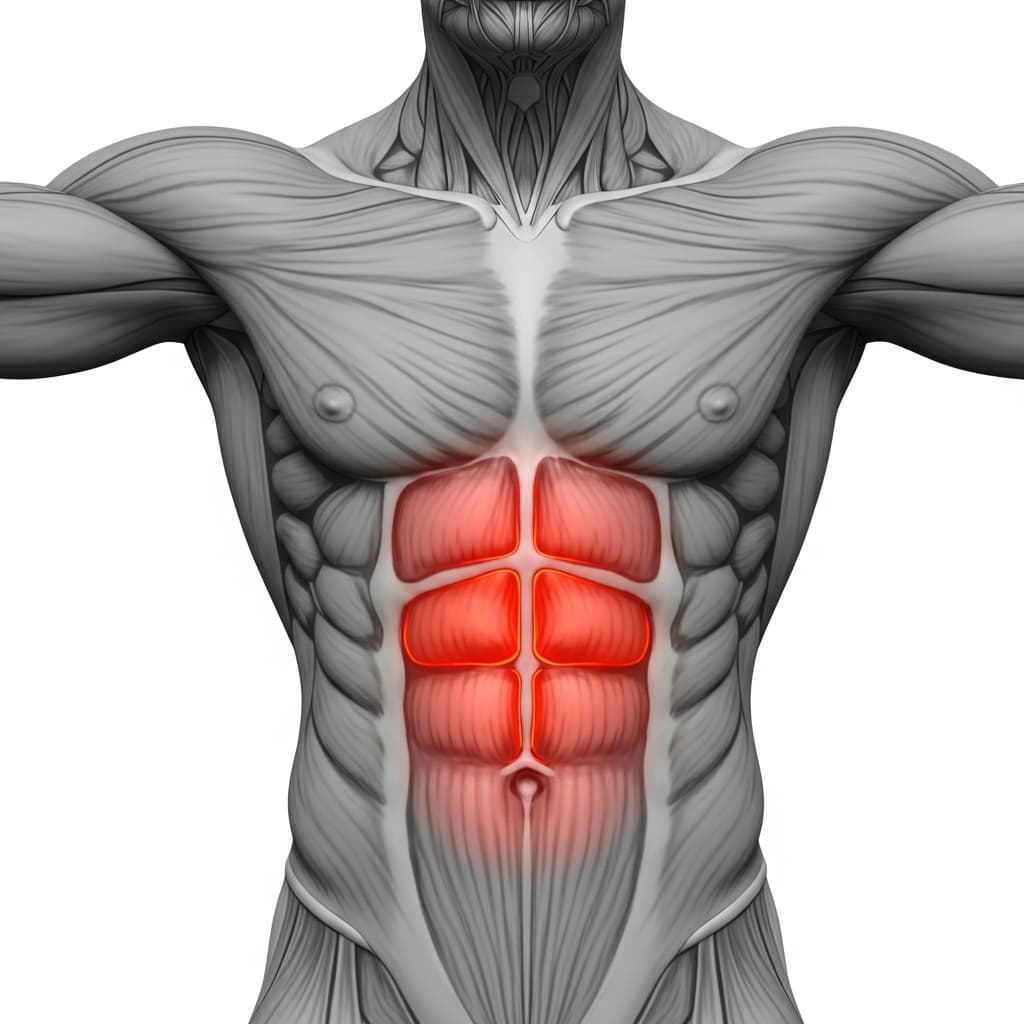
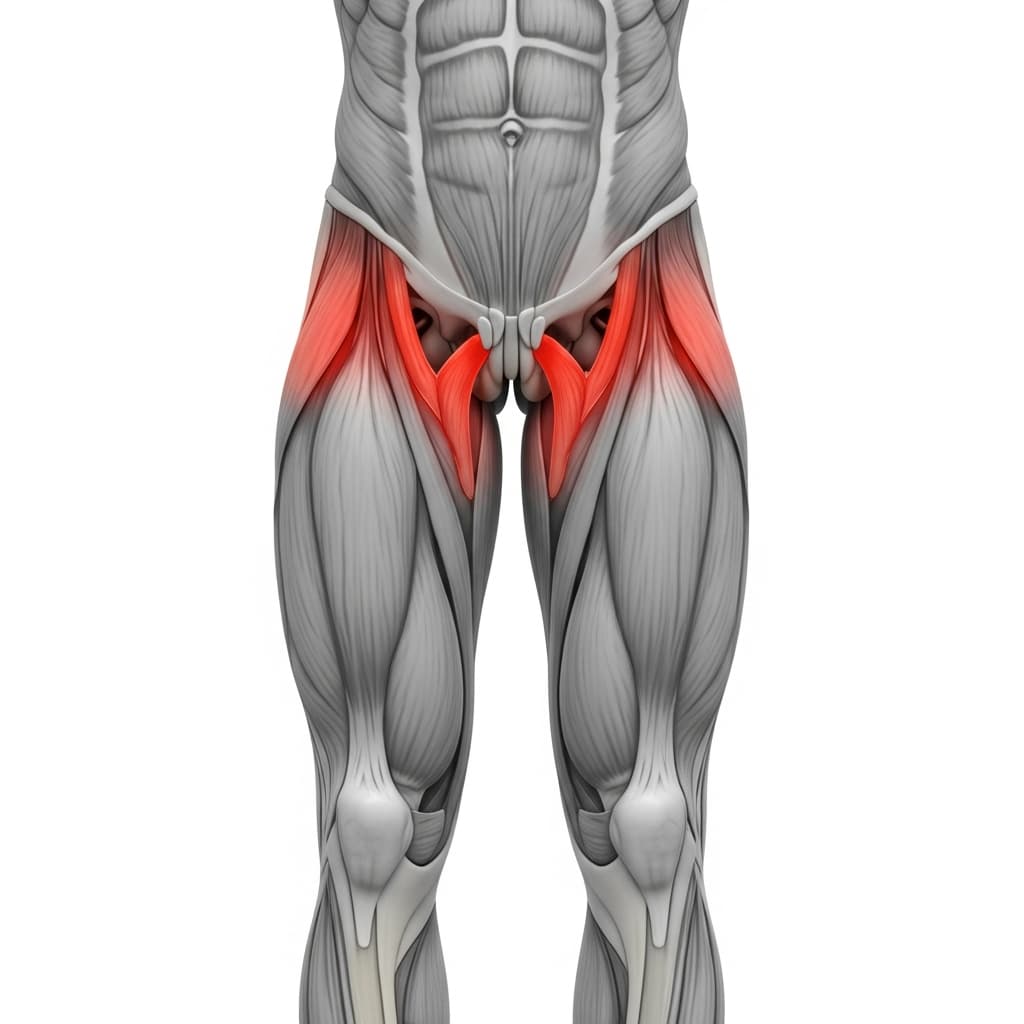
Primary Muscles:
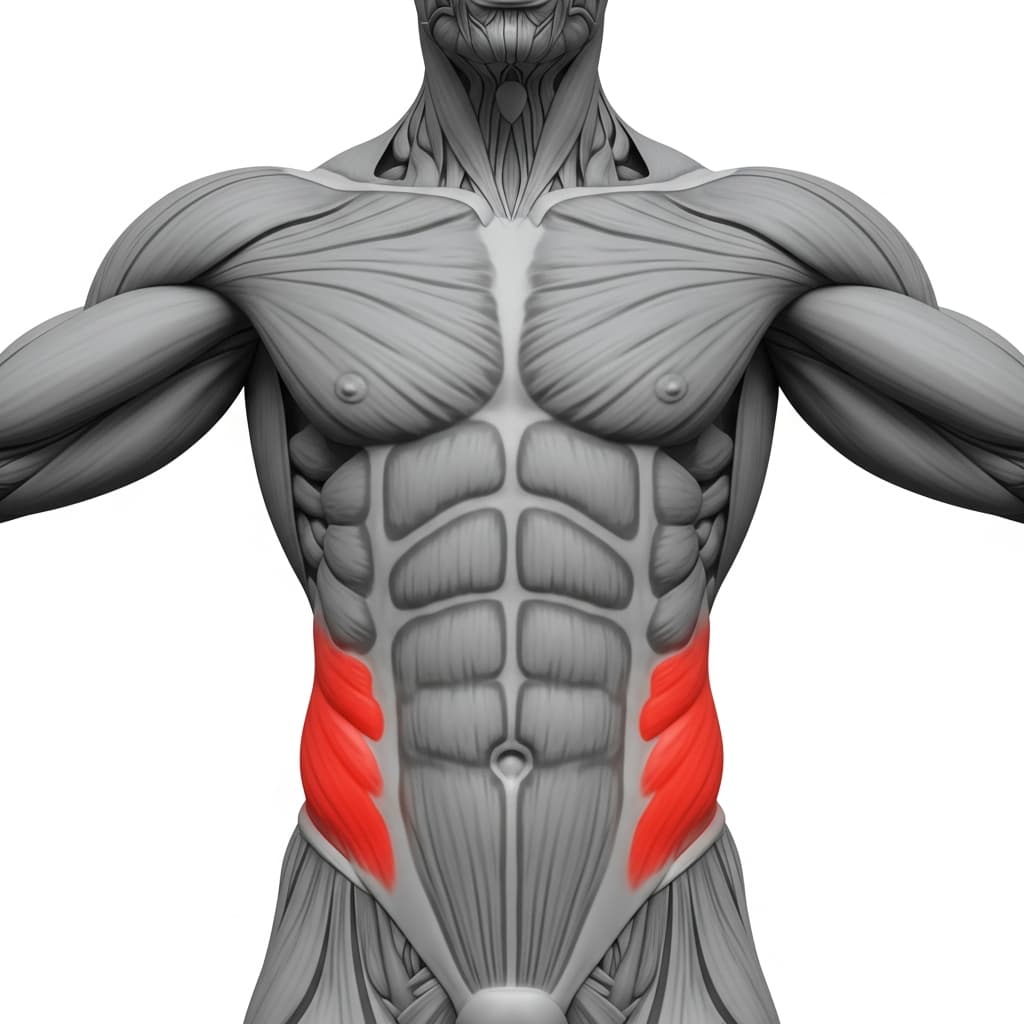
Secondary Muscles:
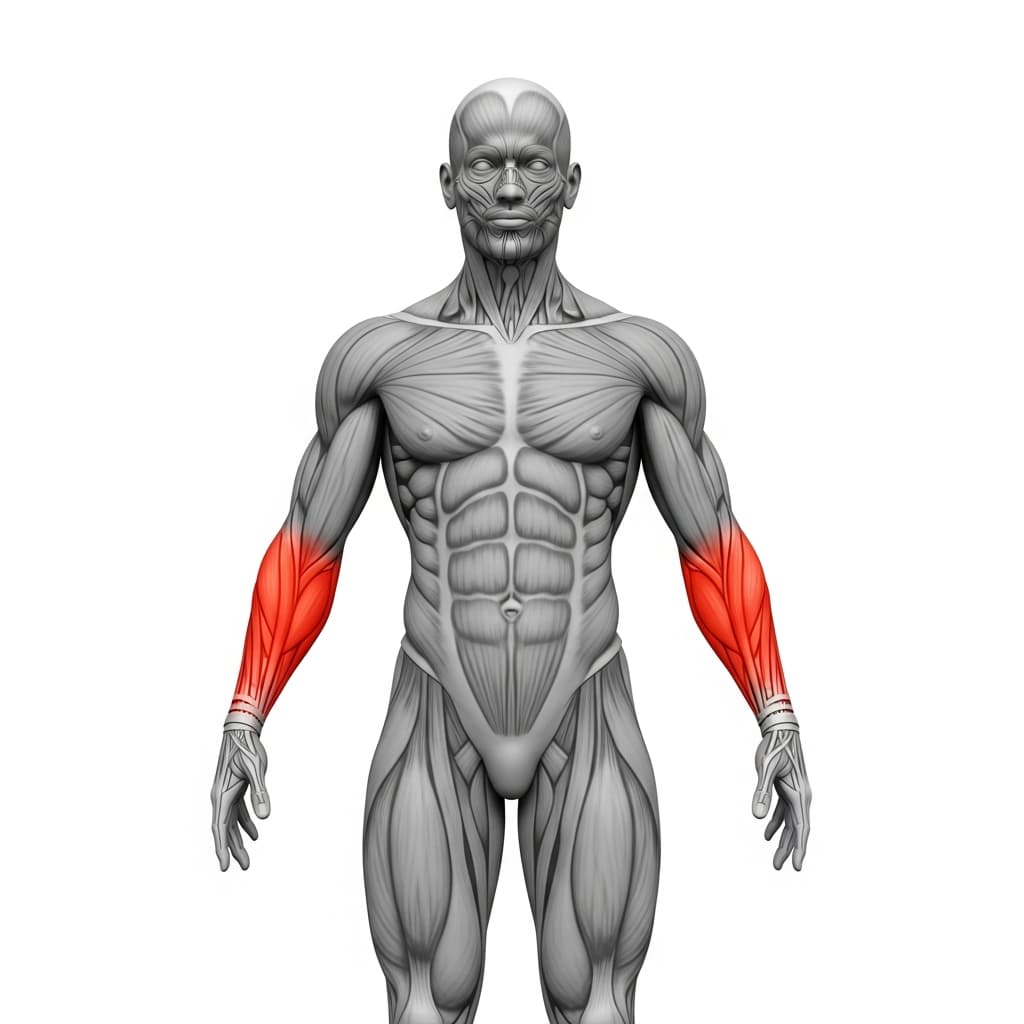
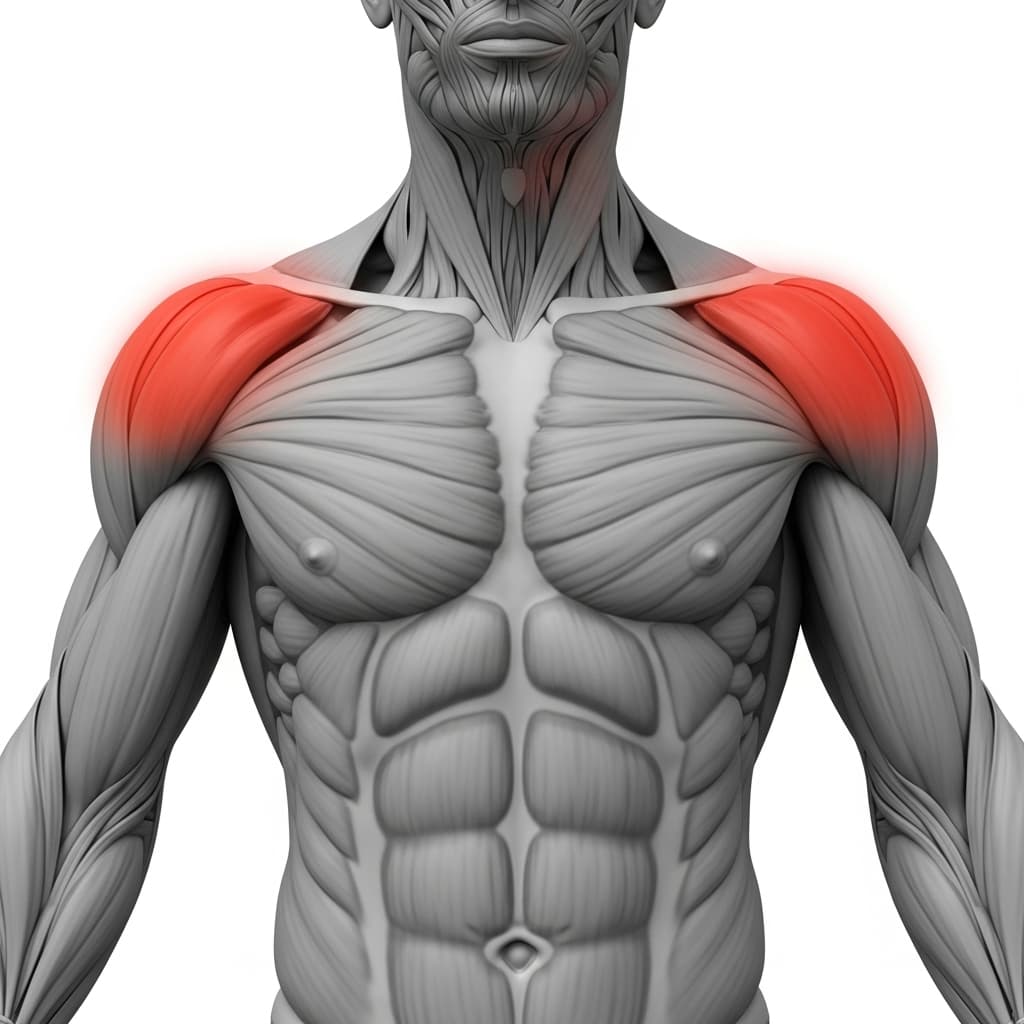
Primary Muscles
Rectus Abdominis (Abs) - The rectus abdominis contracts to flex the trunk and maintain the posterior pelvic tilt that keeps the lower back flat while the legs are raised.
Iliopsoas (Hip Flexors) - The hip flexors, primarily the iliopsoas, drive the legs upward from a hanging position against gravity through the full arc of the movement.
Secondary Muscles
Obliques (Obliques) - The obliques stabilize the torso laterally and prevent rotational sway during the leg raise, keeping the body centered between the bars.
Forearm Flexors & Extensors (Forearms) - The forearm flexors maintain a secure grip on the dip bars throughout each set, working under sustained isometric load as bodyweight presses down.
Anterior Deltoid (Front Deltoid) - The anterior deltoids stabilize the shoulder joint in the straight-arm support position and resist the forward torque created as the legs rise.
Benefits of Dip Bar Leg Raises
- Builds lower abdominal and hip flexor strength through a full range of motion that most floor-based core exercises cannot match
- Develops the straight-arm support endurance and shoulder depression strength required for L-sits, dips, and ring work
- Strengthens grip and forearm endurance from sustained loaded holds on the bars throughout every set
- Improves active hip flexion range, which directly transfers to compression-based calisthenics skills like V-sits and press handstands
Who Is This Exercise For?
You should be able to hold a straight-arm support on the dip bars for at least 15 seconds with depressed shoulders and no shaking before attempting leg raises. If maintaining that locked-out position is a struggle, focus on dip bar holds and scapular depression drills first. You also need enough hamstring flexibility to raise straight legs to at least hip height without rounding your lower back.
Common Mistakes to Avoid
Arching the lower back: Maintain a slight posterior pelvic tilt throughout the movement by consciously tightening the abs and tucking the pelvis forward. If your back arches, the hip flexors take over and the abs disengage completely.
Using momentum to swing the legs up: Start each rep from a dead stop with no body swing. If you cannot raise your legs without swinging, reduce the range of motion or switch to the knee raise variation until you build enough controlled strength.
Shoulders shrugging up toward the ears: Actively depress your shoulders before every rep and check that they stay down during the lift. When the shoulders ride up, the upper body becomes unstable and the core cannot generate force effectively.
Bending the knees to cheat range of motion: Keep your legs as straight as possible throughout the lift. If straight legs are too difficult, perform full-range knee raises instead of half-straight, half-bent reps that train nothing properly.
Variations & Progressions
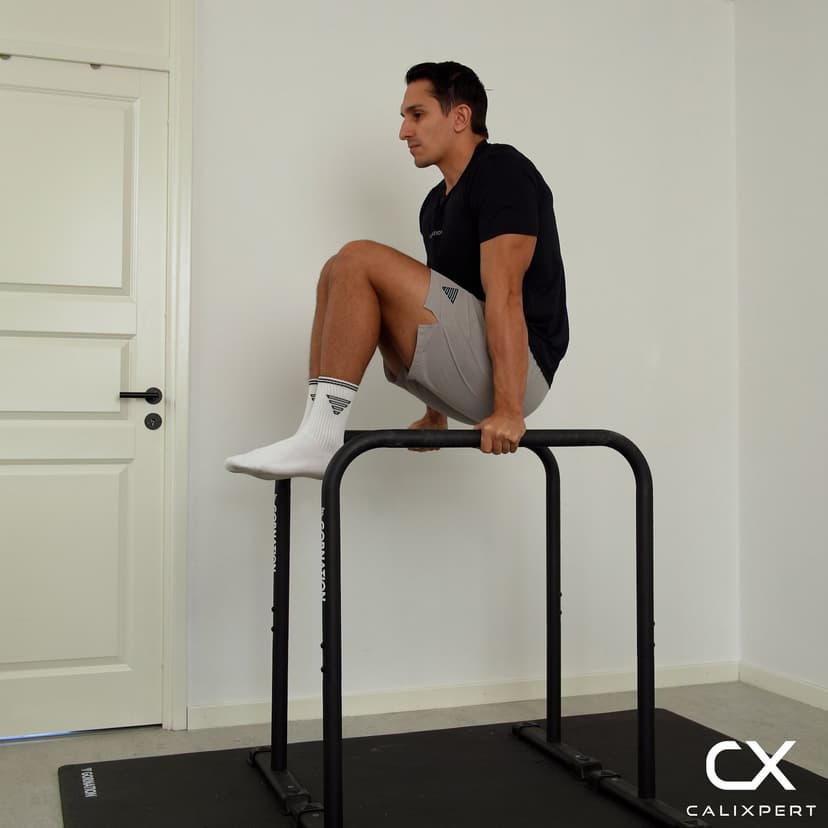
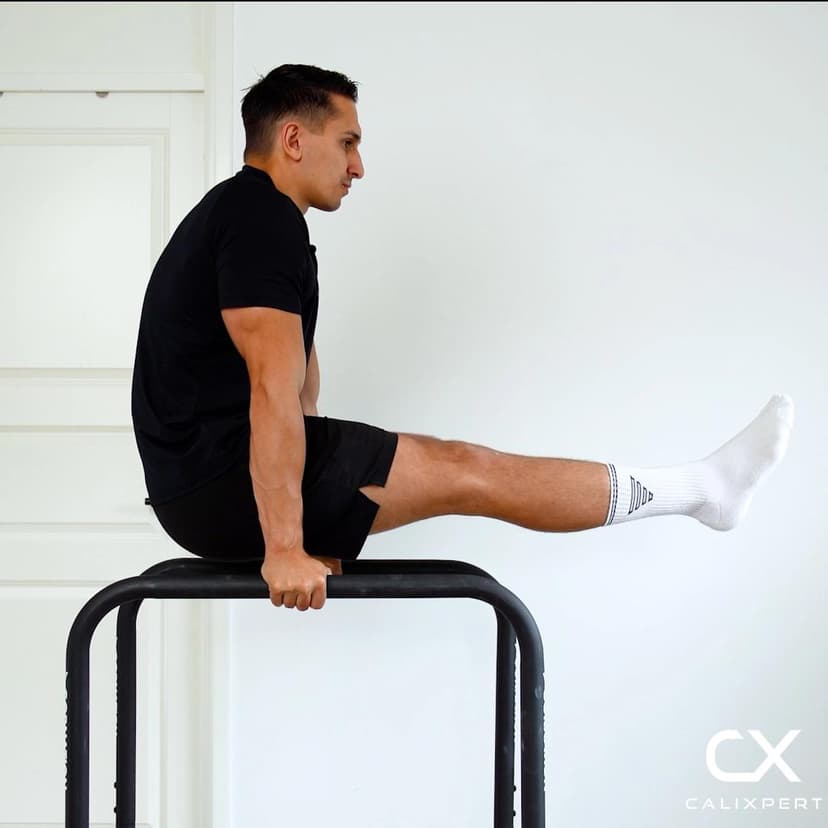
Dip Bar Toes-to-Bar Raises
Continue the leg raise past parallel until your toes reach the height of the bars or above. This extended range of motion requires significantly more hip flexor strength and ab compression at the top.