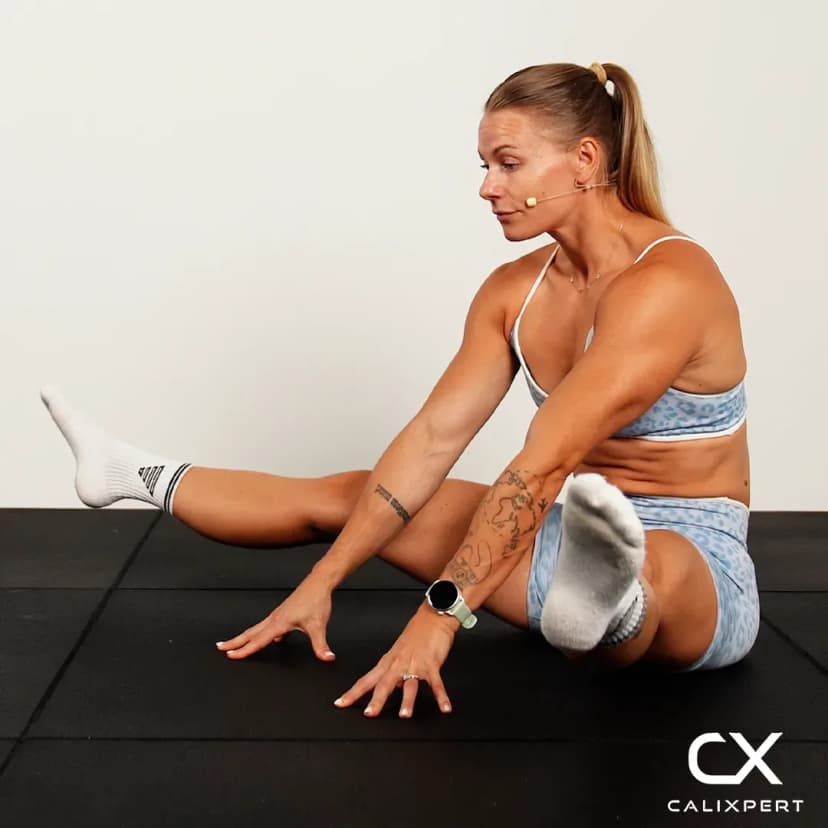
Dip Bar Knee Raises
Dip bar knee raises are a core exercise performed from a support hold on parallel bars, targeting the abs and hip flexors through a controlled knee-lifting motion. The key to making this exercise effective is maintaining full shoulder depression and body tension throughout, rather than relaxing into the bars and swinging the legs. When performed with strict form, dip bar knee raises build the anterior core strength and body control needed for more advanced calisthenics movements like L-sits and leg raises.
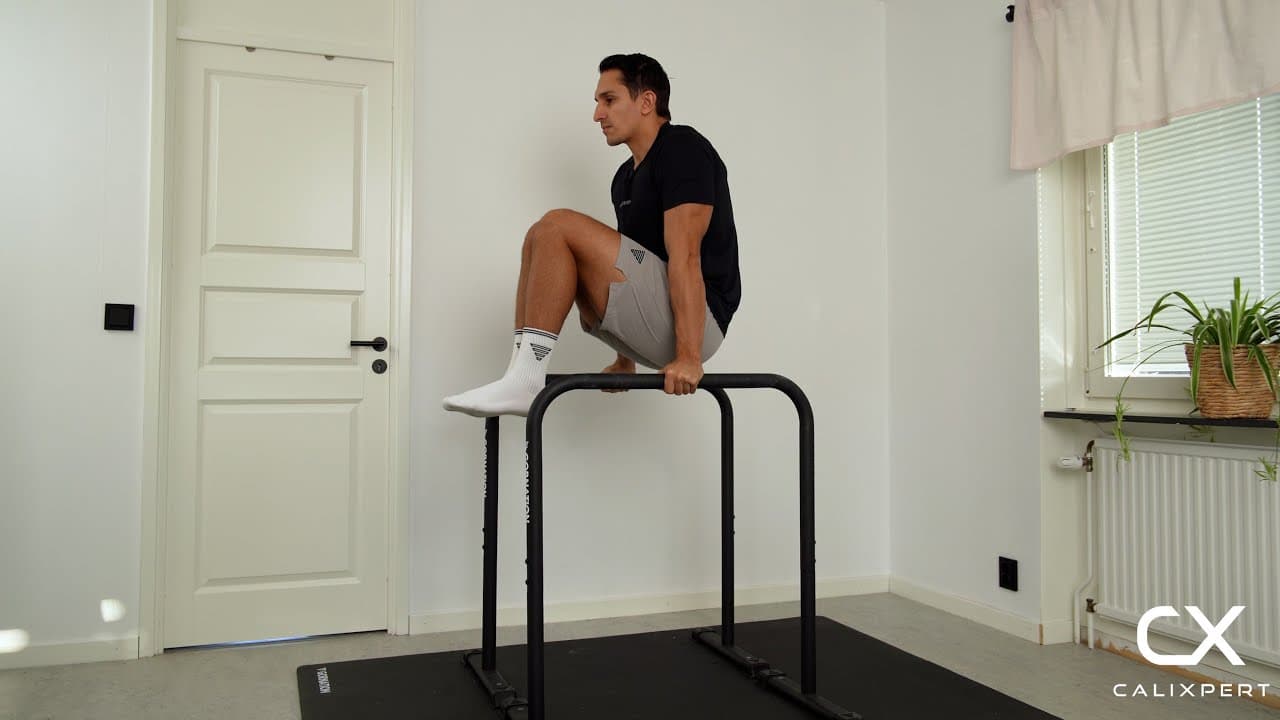
Dip bar knee raises are a core exercise performed from a support hold on parallel bars, targeting the abs and hip flexors through a controlled knee-lifting motion. The key to making this exercise effective is maintaining full shoulder depression and body tension throughout, rather than relaxing into the bars and swinging the legs. When performed with strict form, dip bar knee raises build the anterior core strength and body control needed for more advanced calisthenics movements like L-sits and leg raises.
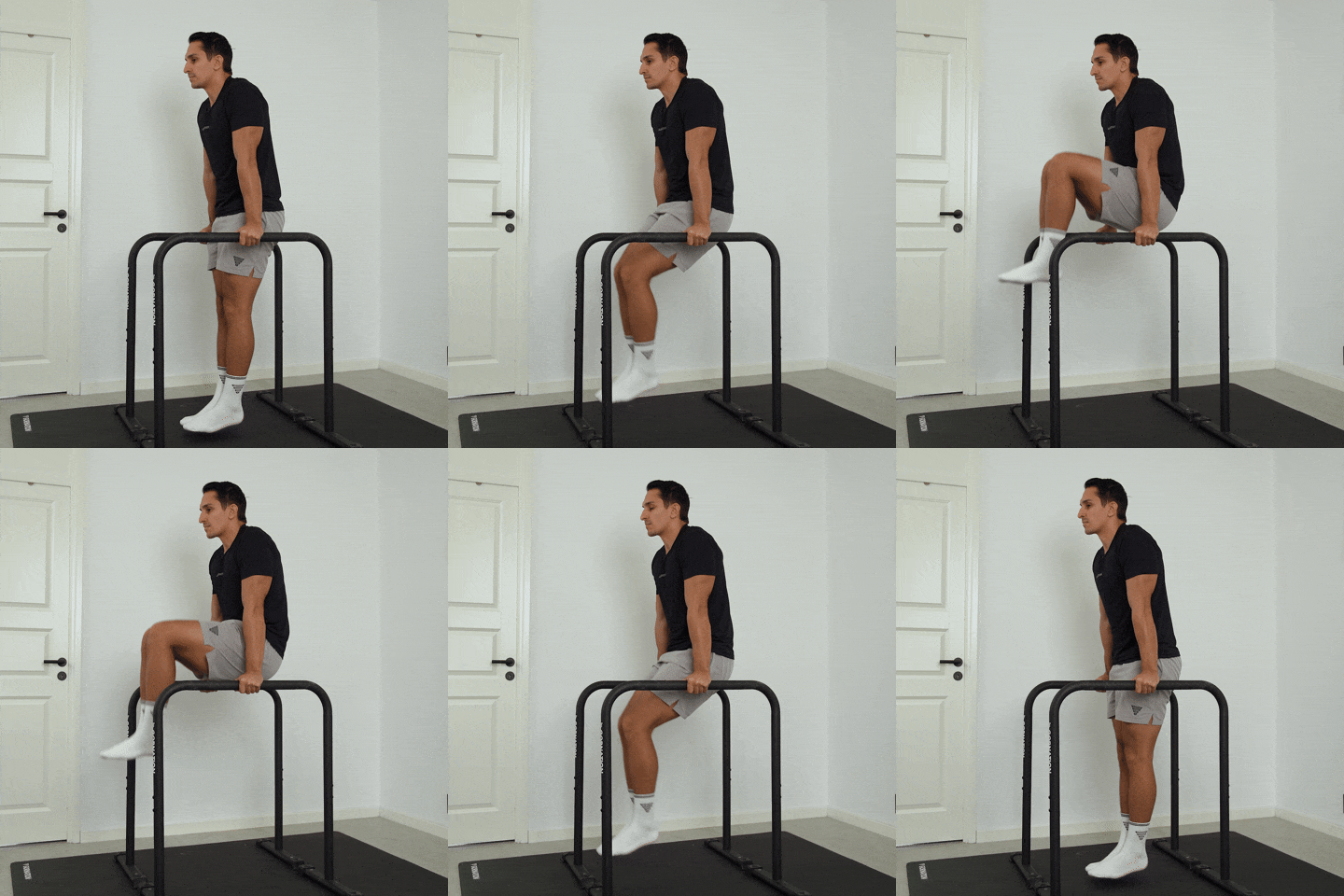
How to Do Dip Bar Knee Raises
1. Mount and Set the Support Hold
Grip the parallel bars firmly and press yourself up into a full support hold with arms locked out. Your body should hang vertically with legs straight down and feet off the ground. Wrap your thumbs fully around the bars for a secure grip.
Arms locked, chest up, feet clear
2. Depress the Shoulders and Create Tension
Actively push your shoulders down away from your ears and create tension through your entire body. This shoulder depression is not optional. It stabilizes the upper body and prevents the compensatory shrugging that ruins the movement. You should feel your lats and lower traps engage as you press down.
Push shoulders down, lock in tension
3. Raise the Knees in Front of You
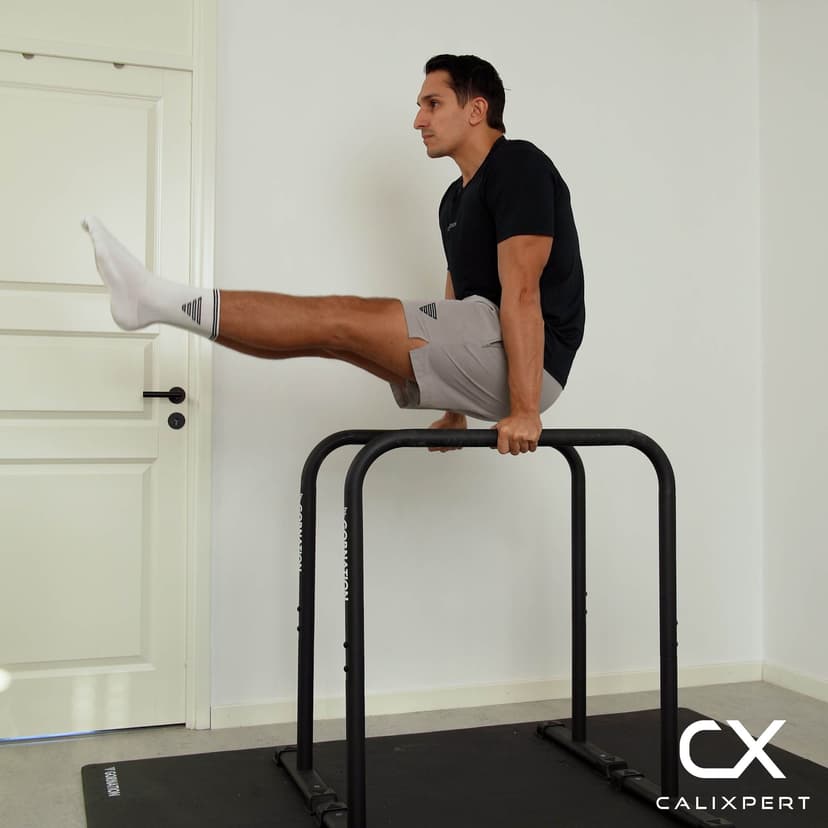
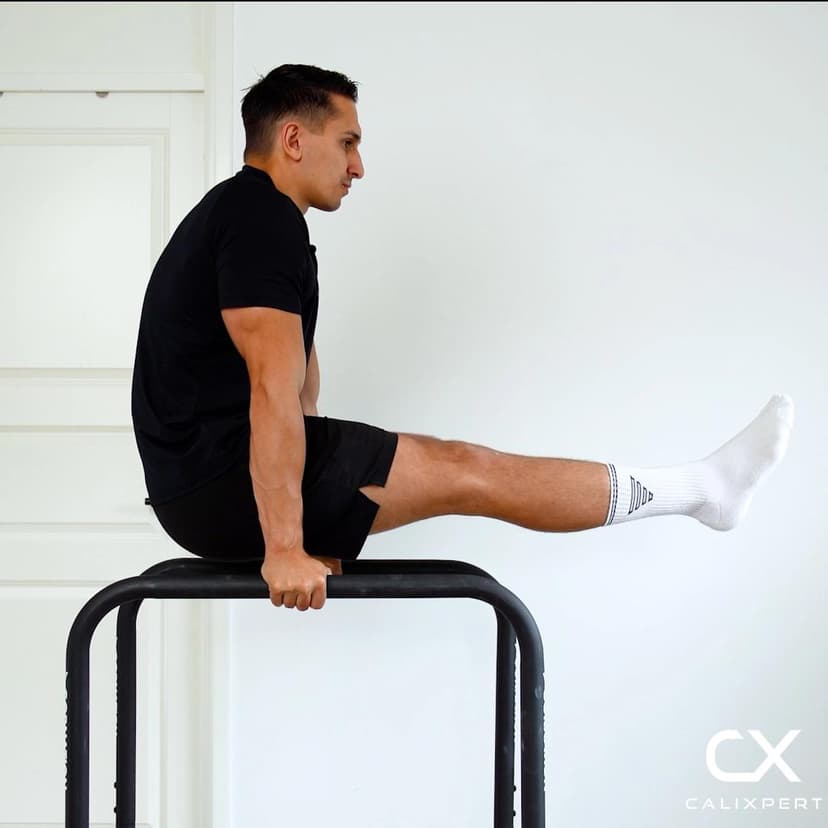
With your core braced, lift both knees up in front of your body until your thighs reach approximately parallel with the ground. Drive the movement from your abs, not by swinging your hips. Keep your upper body still and avoid leaning backward as the knees come up.
Abs pull the knees up, not momentum
4. Pause Briefly at the Top
Hold the top position for a brief moment with your thighs at or just above parallel. Maintain full shoulder depression and avoid letting your torso rock forward or backward. This pause eliminates any momentum and forces the abs to work under sustained contraction.
Hold the top, stay still
5. Lower With Control
Slowly extend your legs back to the starting position, resisting gravity throughout the descent. Do not let the legs drop or swing past vertical. The lowering phase should take at least two seconds to complete. Re-establish full body tension at the bottom before starting the next rep.
Slow descent, no swing at the bottom
Most people fail at dip bar knee raises not because their abs are weak, but because they let their shoulders relax the moment they start lifting. The fix is simple: before your knees move an inch, push the bars down hard and lock your shoulders in place. When the upper body stays rigid, the abs have a stable anchor to pull against, and you will feel the difference on the very first rep.
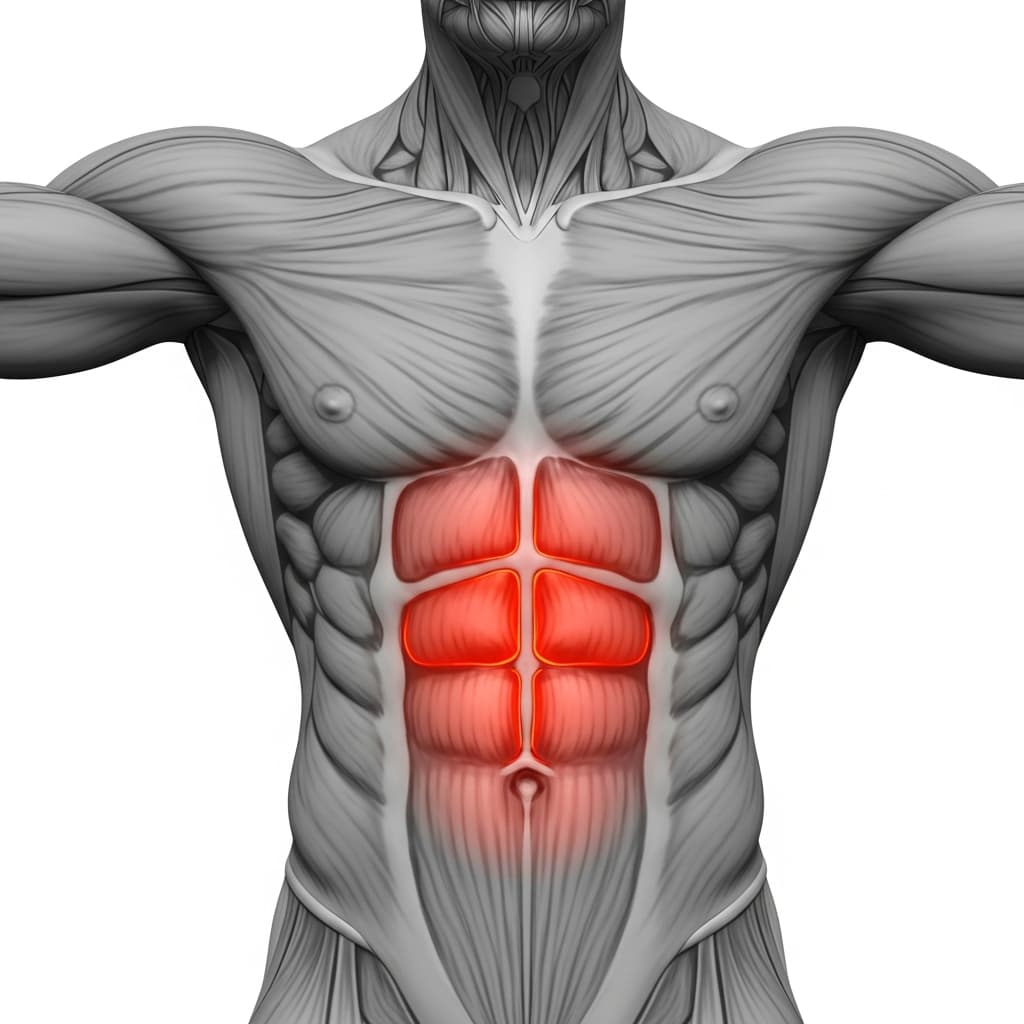
Muscles Worked During Dip Bar Knee Raises
Primary Muscles:
Secondary Muscles:
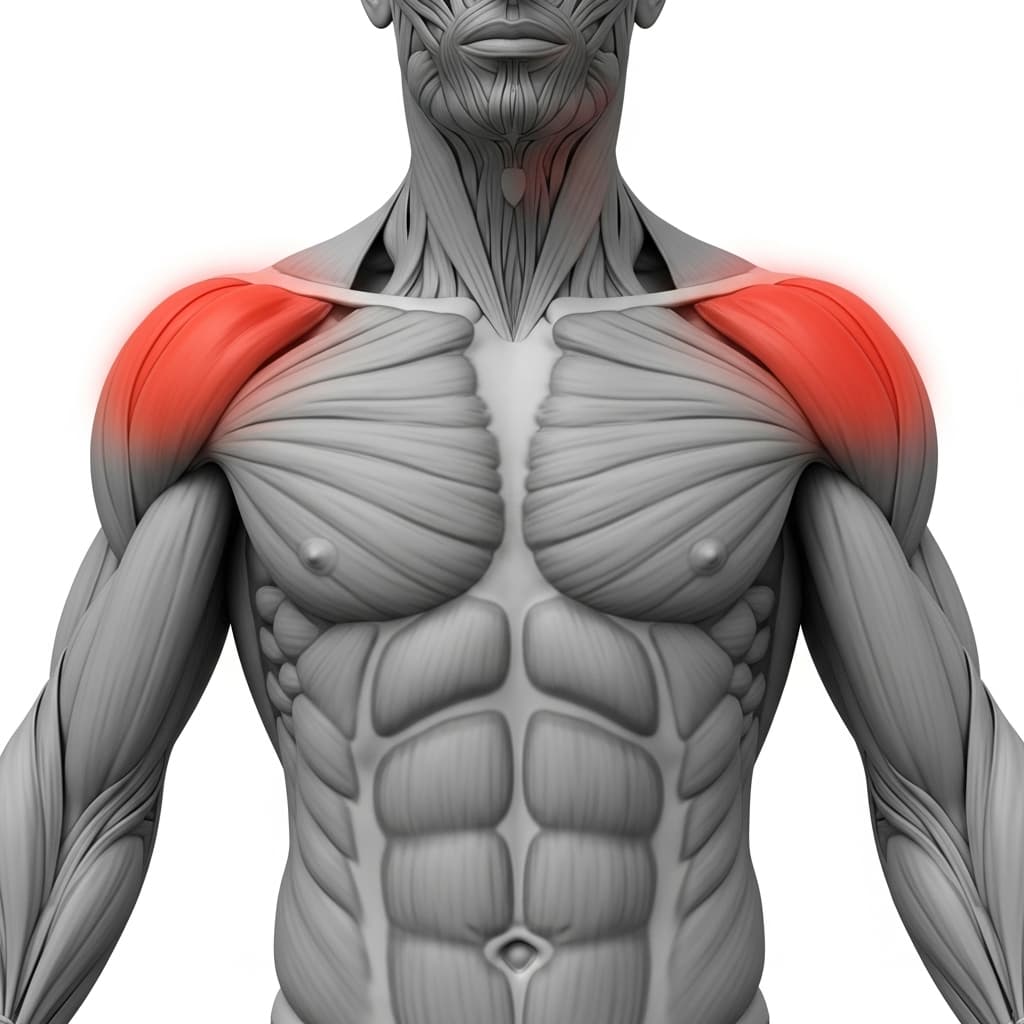
Primary Muscles
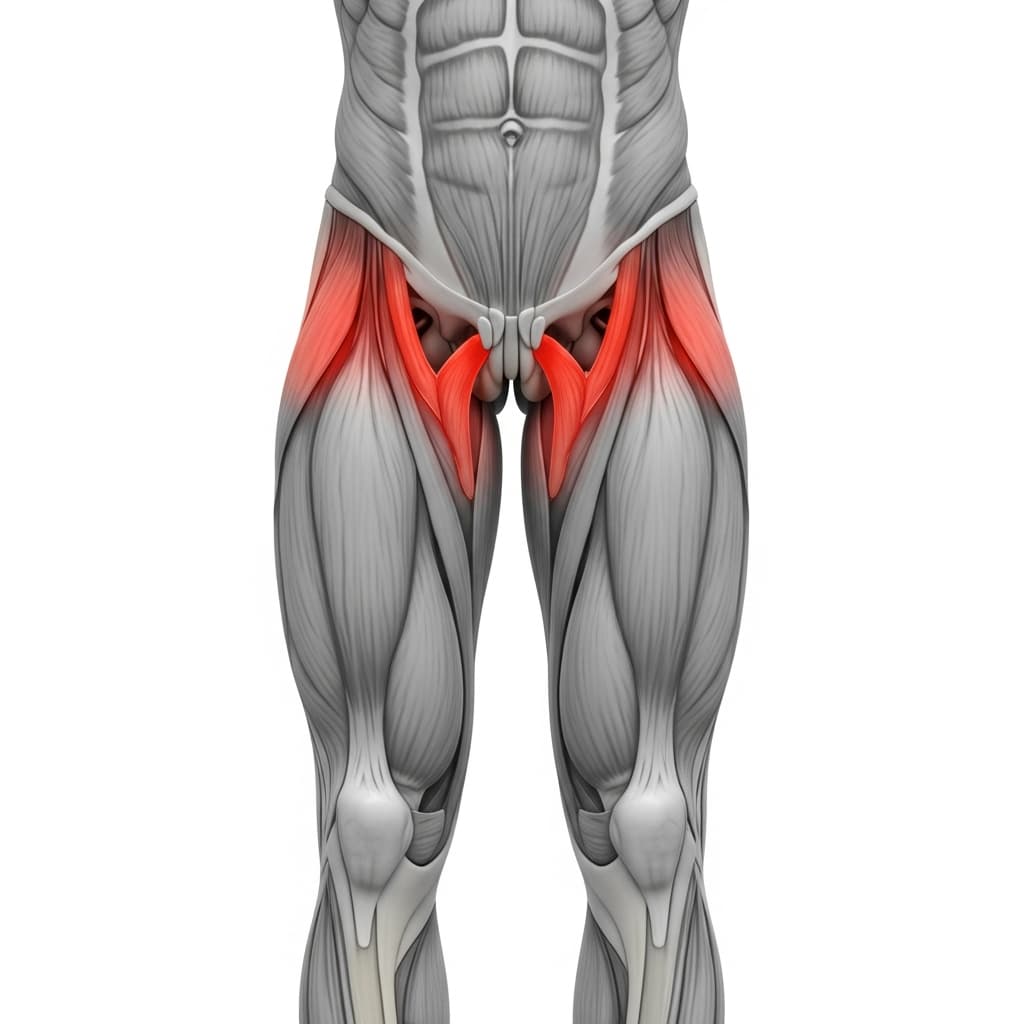
Rectus Abdominis (Abs) - The rectus abdominis contracts to flex the spine and tilt the pelvis posteriorly as the knees are lifted, serving as the primary driver of the upward movement.
Iliopsoas (Hip Flexors) - The iliopsoas and rectus femoris work together to flex the hips and draw the knees upward against gravity throughout the concentric phase.
Secondary Muscles
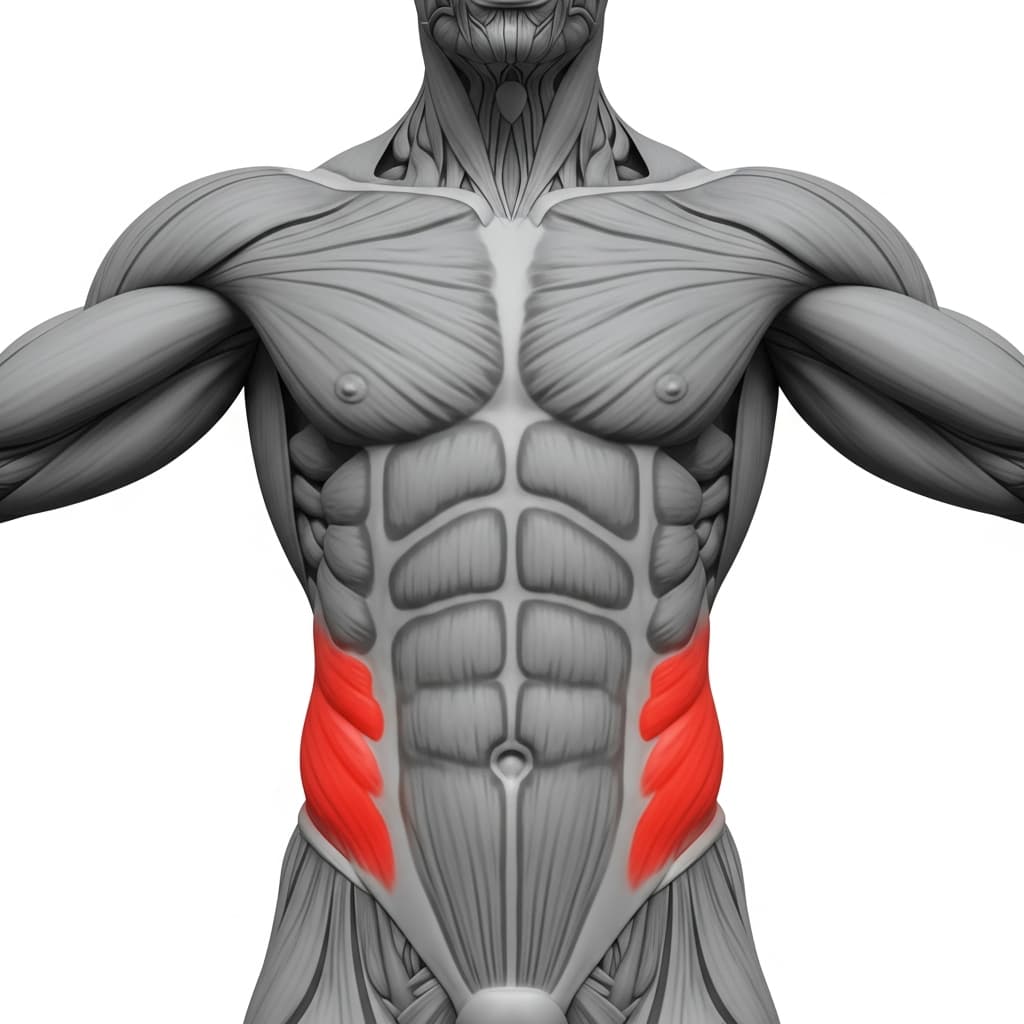
Obliques (Obliques) - The obliques co-contract isometrically to prevent lateral trunk sway and rotational drift while the legs move in front of the body.
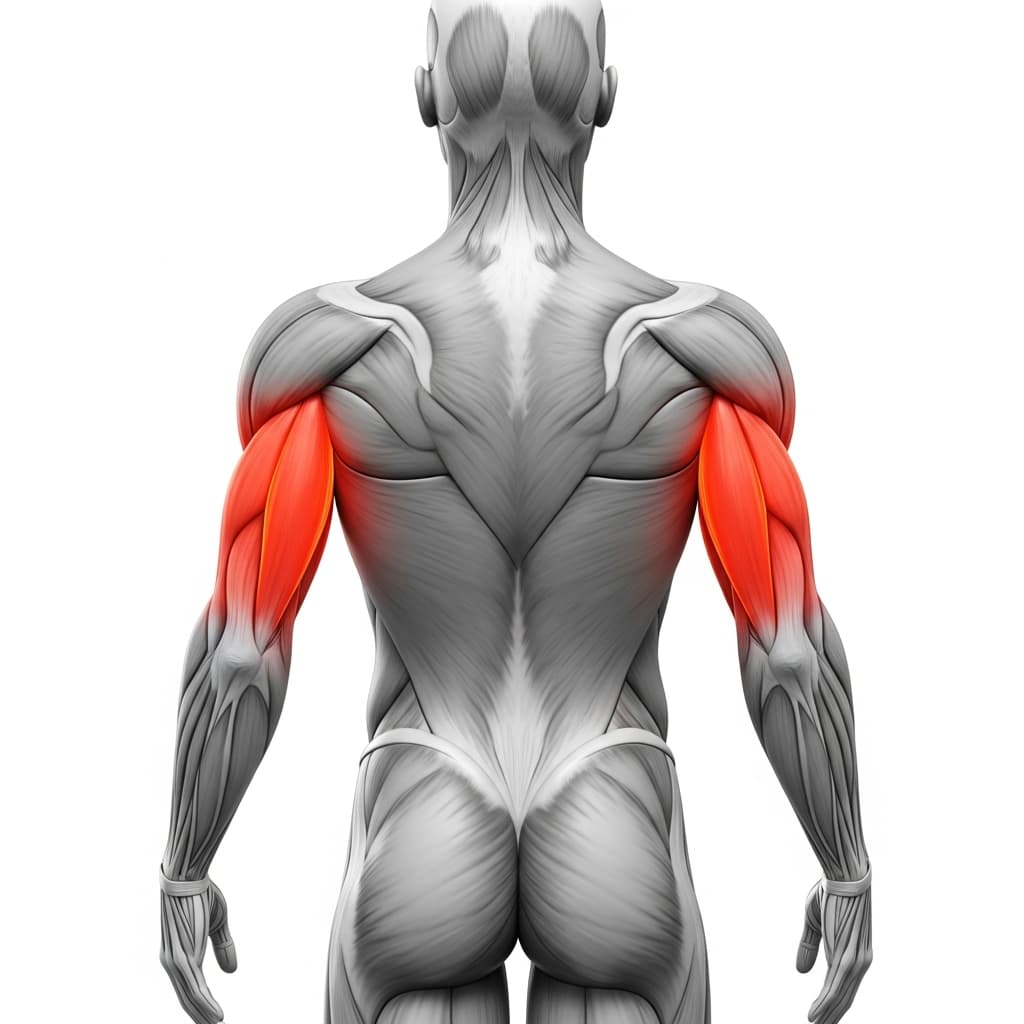
Triceps Brachii (Triceps) - The triceps maintain elbow lockout throughout the support hold, keeping the body elevated on the bars for the entire duration of each set.
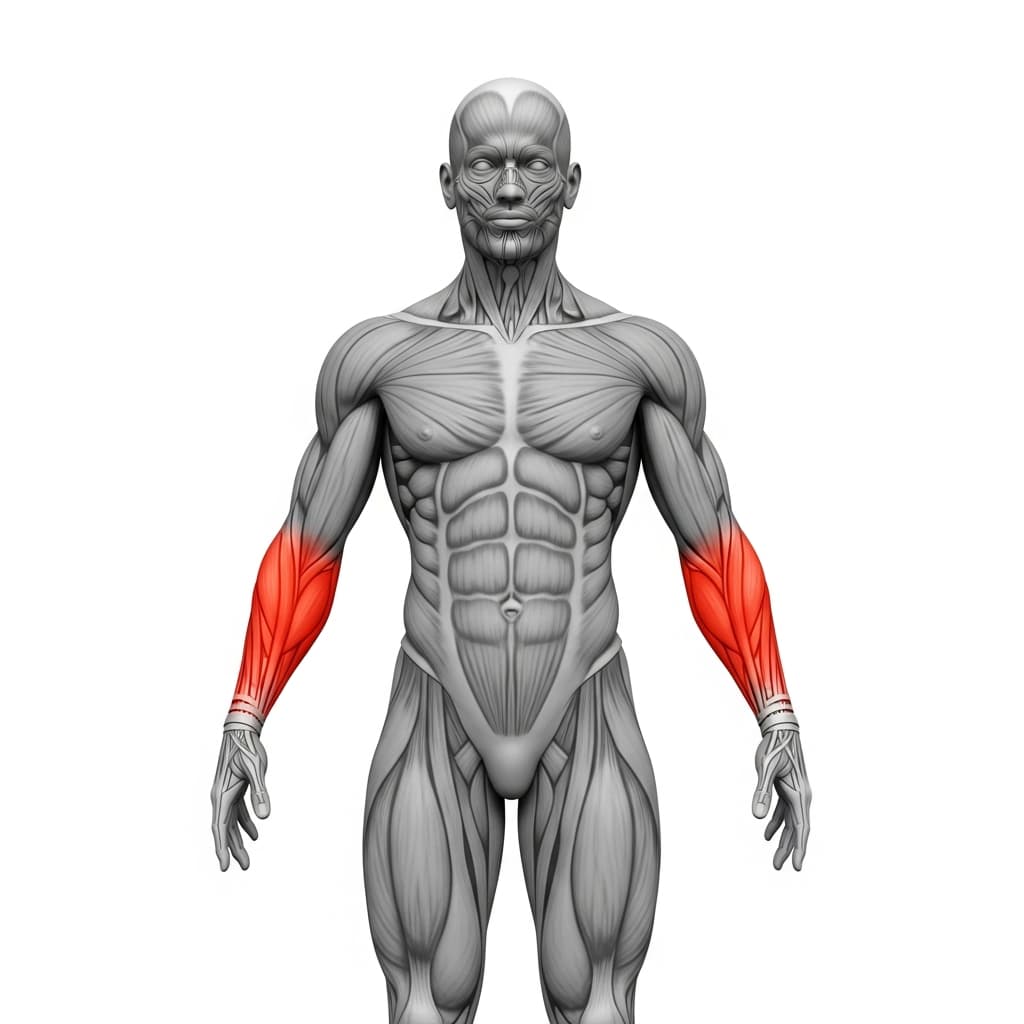
Forearm Flexors & Extensors (Forearms) - The wrist and finger flexors sustain the grip on the parallel bars, working under increasing fatigue as the set progresses.
Anterior Deltoid (Front Deltoid) - The anterior deltoid assists in stabilizing the shoulder joint and maintaining shoulder depression against the downward force of the body during the support hold.
Benefits of Dip Bar Knee Raises
- Builds lower abdominal strength and hip flexor endurance in a hanging position, which transfers directly to L-sits, leg raises, and front lever progressions
- Develops shoulder depression strength and scapular stability, two capacities that are essential for every dip, handstand, and ring-based movement in calisthenics
- Trains anti-swing core control, teaching you to stabilize your body against momentum, a skill that carries over to every bar and ring exercise
- Strengthens grip endurance and tricep isometric capacity through the sustained support hold required on every set
Who Is This Exercise For?
You should be able to hold a dip support position on parallel bars for at least 15 seconds with stable, depressed shoulders before attempting knee raises. If your shoulders shrug up toward your ears or your arms shake during the hold, focus on building support hold endurance first. Practicing shoulder depression drills on the dip bars will prepare both the triceps and the scapular depressors for the added demand of leg movement.
Common Mistakes to Avoid
Relaxing the shoulders during the raise: Keep your shoulders actively depressed throughout every rep. When the shoulders shrug up, the core disengages and the movement becomes an uncomfortable arm-dominant swing. Think about pushing the bars down into the ground the entire time.
Swinging the legs for momentum: Start each rep from a completely still position with no residual swing. If you need to swing to get the knees up, the set is over. Reduce the range of motion or slow down rather than using momentum.
Rounding the upper back and collapsing the chest: Keep your chest lifted and your upper back neutral. Collapsing forward shifts the load off the abs and places unnecessary stress on the shoulders and wrists.
Lifting knees too high too soon: Bringing the knees all the way to the chest before you have the core strength for it causes the pelvis to tuck excessively and the shoulders to round. Raise the knees to parallel first and build range over time as your strength allows.
Variations & Progressions
Seated Knee Tucks on Dip Bars
Start with your feet resting lightly on the ground and tuck your knees up from that position. The ground contact reduces the stability demand and lets you focus on learning the ab contraction pattern.