Dead Bug
The dead bug is a supine core stability exercise that trains the transverse abdominis, rectus abdominis, and hip flexors through controlled contralateral limb movement. The entire exercise revolves around one non-negotiable rule: keeping the lower back pressed flat into the floor while extending the opposite arm and leg away from the body. Mastered with patience, the dead bug builds the anti-extension core strength that directly transfers to hollow body holds, handstands, and every loaded calisthenics skill.
The dead bug is a supine core stability exercise that trains the transverse abdominis, rectus abdominis, and hip flexors through controlled contralateral limb movement. The entire exercise revolves around one non-negotiable rule: keeping the lower back pressed flat into the floor while extending the opposite arm and leg away from the body. Mastered with patience, the dead bug builds the anti-extension core strength that directly transfers to hollow body holds, handstands, and every loaded calisthenics skill.
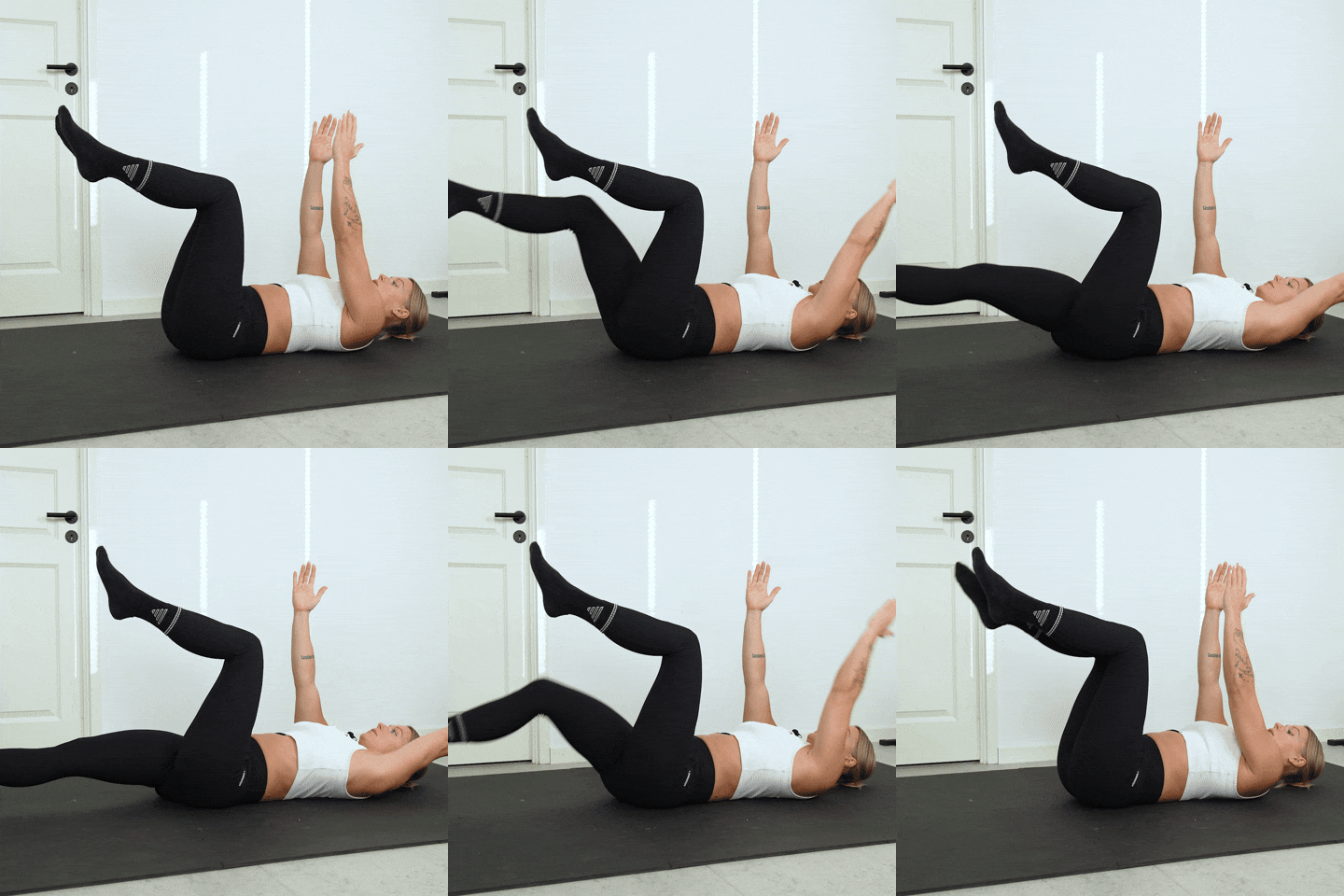
How to Do Dead Bug
1. Lie Down and Set Your Back
Lie flat on your back on a mat with your knees bent and feet flat on the floor. Before lifting anything, press your lower back firmly into the ground by drawing your belly button toward your spine. This posterior pelvic tilt eliminates the gap between your lumbar spine and the floor. This flat-back position is the foundation of the entire exercise and must be maintained through every rep.
Lower back glued to the floor
2. Raise Knees and Arms to Start
Lift both knees until your hips and knees form 90-degree angles, with your shins parallel to the ceiling. Extend both arms straight up toward the ceiling, directly over your shoulders. Keep your ribs pulled down and your core braced as you settle into this starting position. Breathe steadily and confirm your lower back has not lifted off the mat.
Knees stacked over hips, arms over shoulders
3. Extend Opposite Arm and Leg
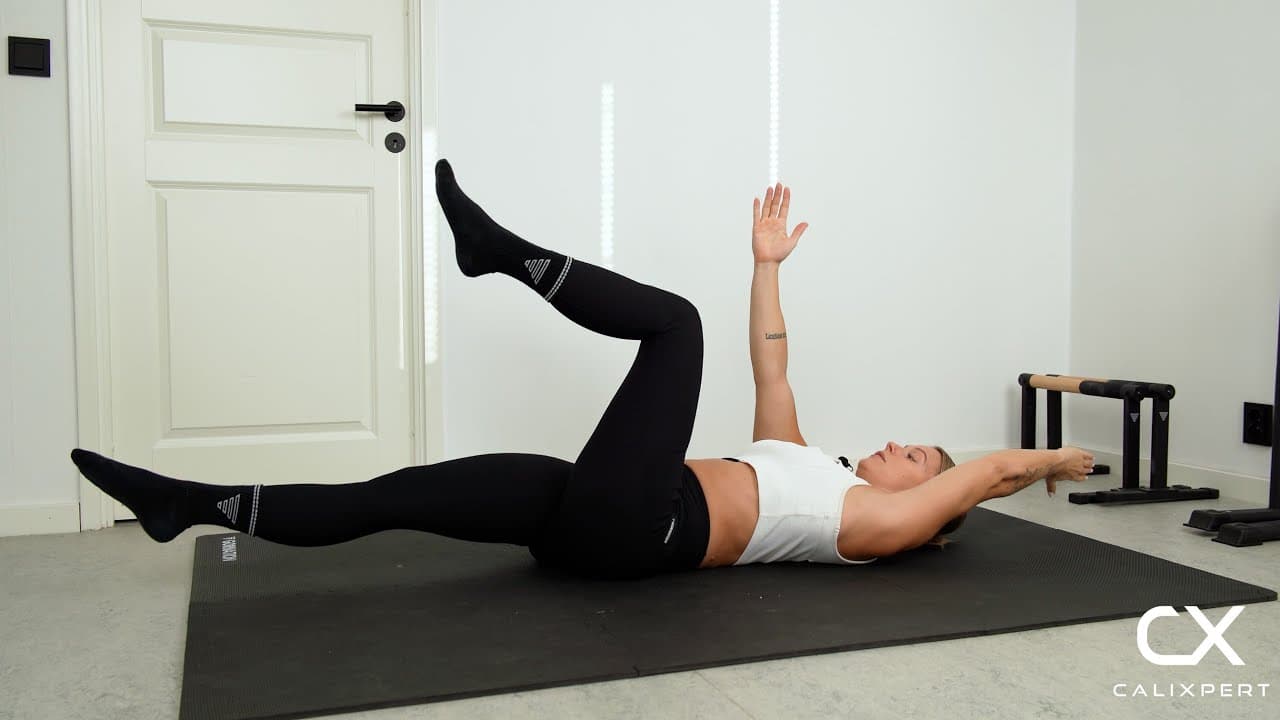
Slowly lower one arm overhead toward the floor while simultaneously extending the opposite leg away from your body. Move on a controlled exhale, keeping the descent slow and deliberate. Your arm and leg should travel in a straight line, hovering just above the floor at full extension. If your lower back begins to peel off the mat at any point, stop the descent at that range and do not go lower.
Opposite arm and leg, slow and controlled
4. Pause at Full Extension
Hold briefly at the bottom of the movement with your arm and leg extended and hovering above the floor. Use this pause to confirm your lower back is still pressed flat and your core is fully engaged. This is where the anti-extension demand is highest, so resist any urge to rush through it.
Pause and check your lower back
5. Return to Start Position
Bring your extended arm and leg back to the starting position at the same controlled speed you used on the way down. Inhale as you return and re-brace your core before initiating the next rep. Do not let momentum carry your limbs back, pull them in with control.
Return as slowly as you extended
6. Alternate Sides and Repeat
Switch to the opposite arm and leg and repeat the same lowering pattern. Continue alternating sides for the prescribed number of reps. Reset your flat-back position between every single rep if needed. Each side counts as one rep.
Alternate sides, reset every rep
The dead bug looks easy until you actually do it right. The moment you commit to keeping your lower back welded to the floor, the difficulty changes completely. If you can extend your leg all the way to the ground without your back peeling up, you are ready to progress. If you cannot, shorten the range and own that range first, because a half-range dead bug done perfectly builds more core strength than a full-range rep done with a gap under your lower back.
Muscles Worked During Dead Bug
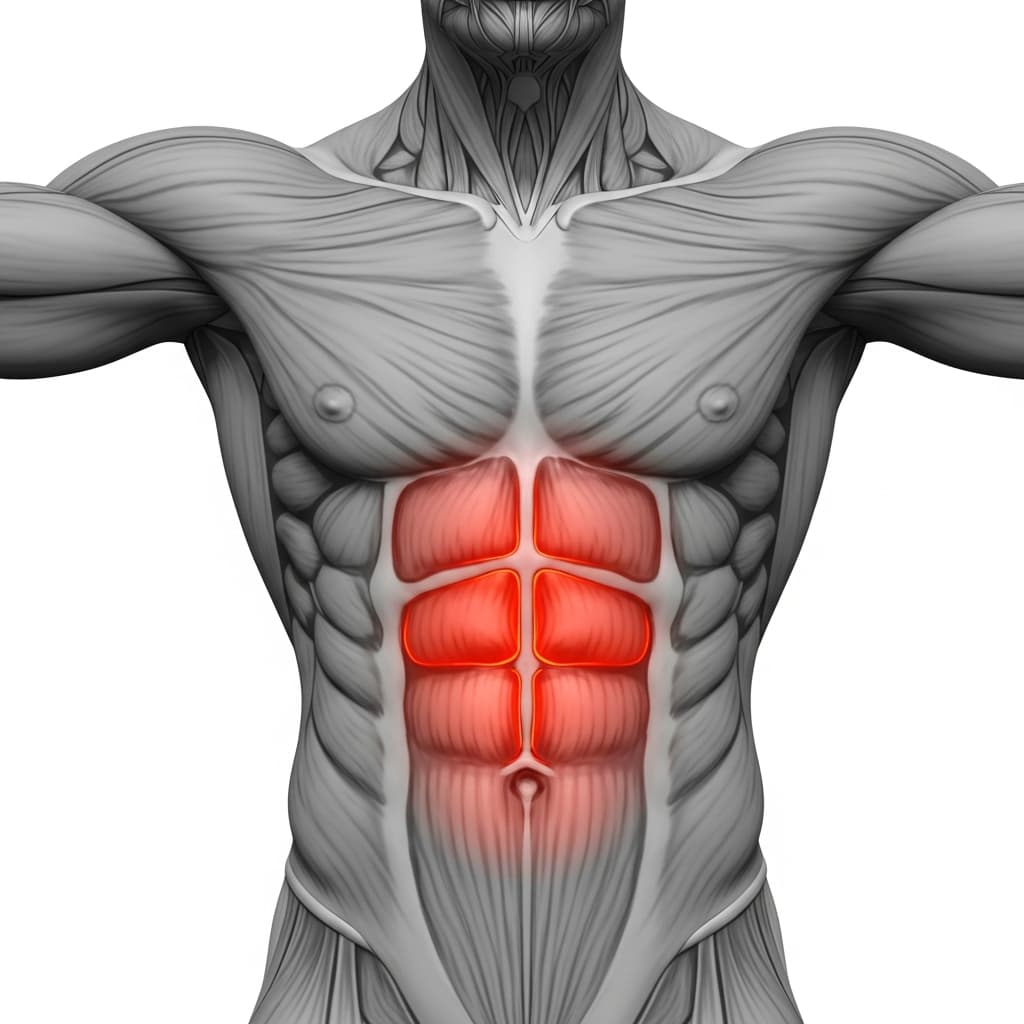
Primary Muscles:
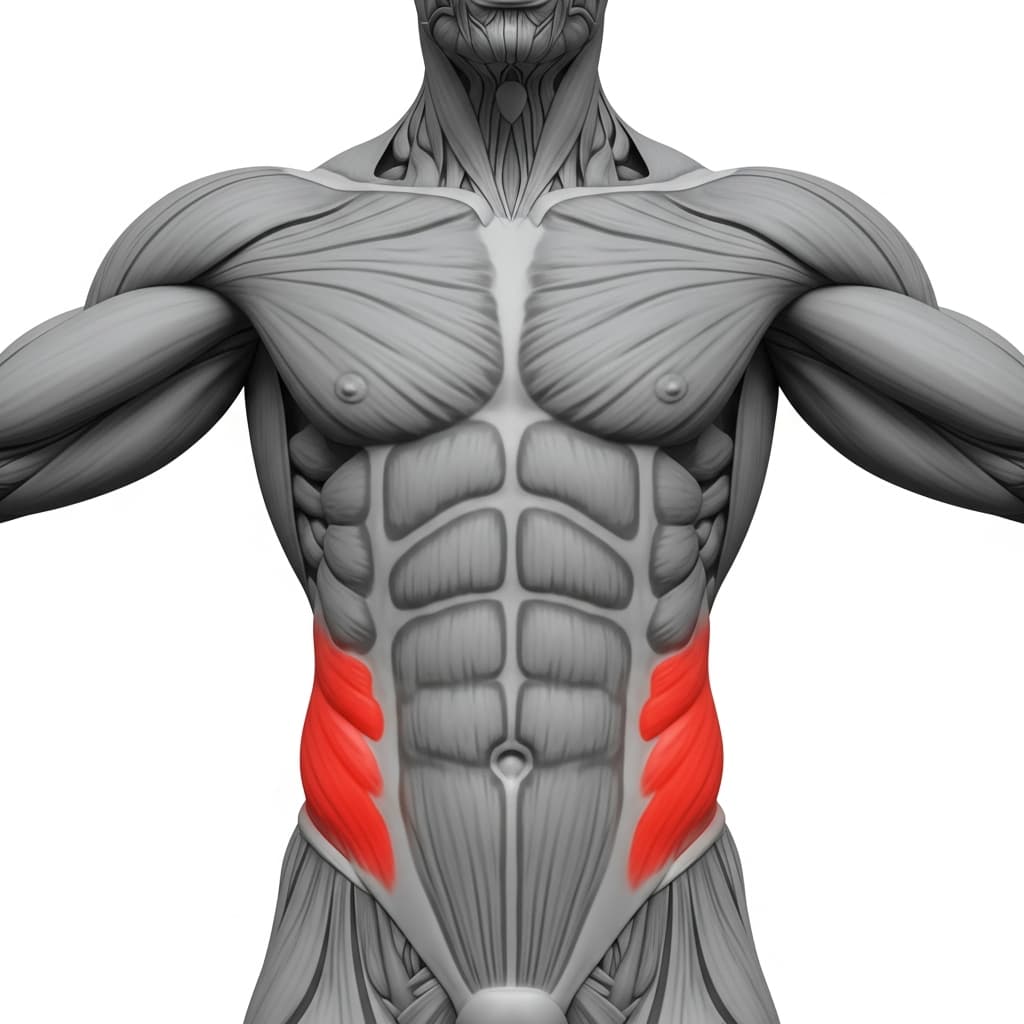
Secondary Muscles:
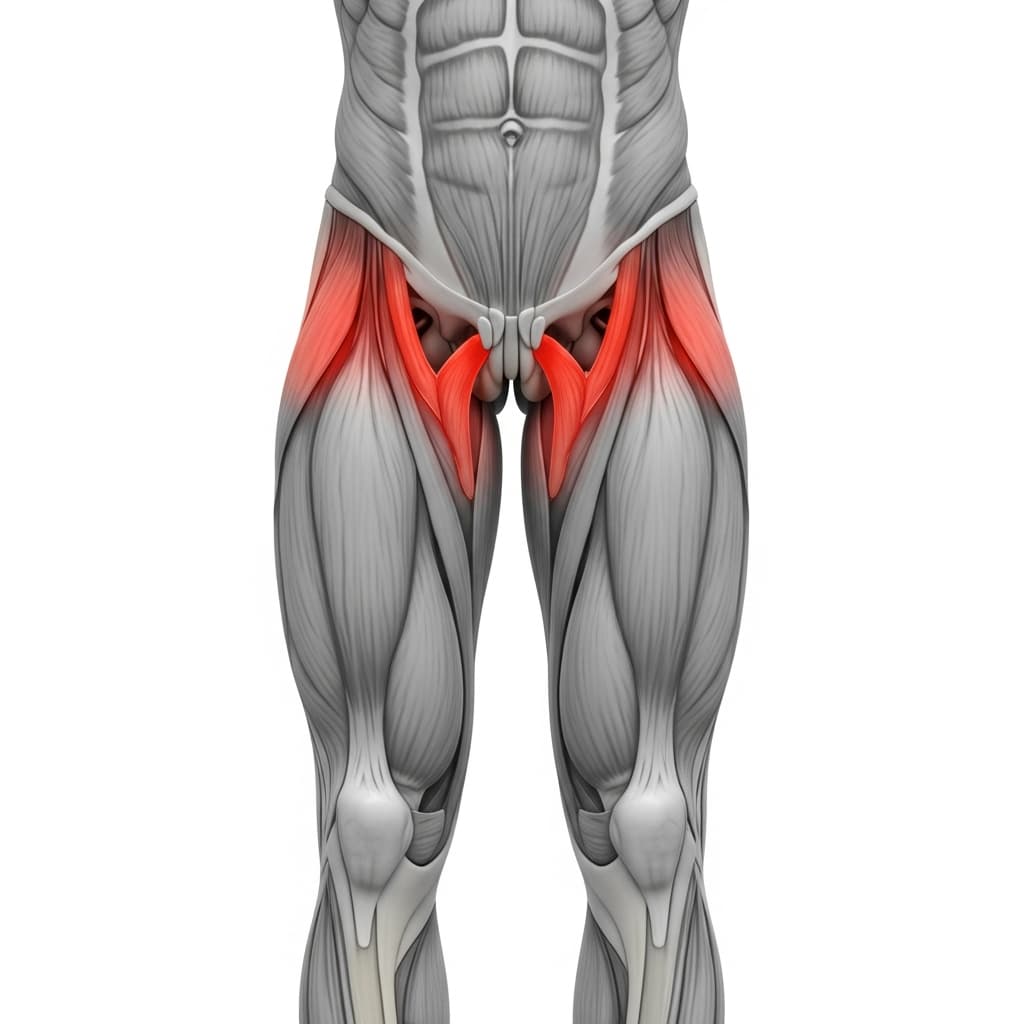
Primary Muscles
Rectus Abdominis (Abs) - The rectus abdominis and transverse abdominis work isometrically to maintain a posterior pelvic tilt and resist lumbar extension as the limbs move away from the body.
Secondary Muscles
Obliques (Obliques) - The obliques resist rotational forces created by the contralateral arm and leg movement, keeping the torso stable and preventing the hips from shifting side to side.
Iliopsoas (Hip Flexors) - The hip flexors control the descent of the extending leg and actively pull the returning leg back to the 90-degree starting position.
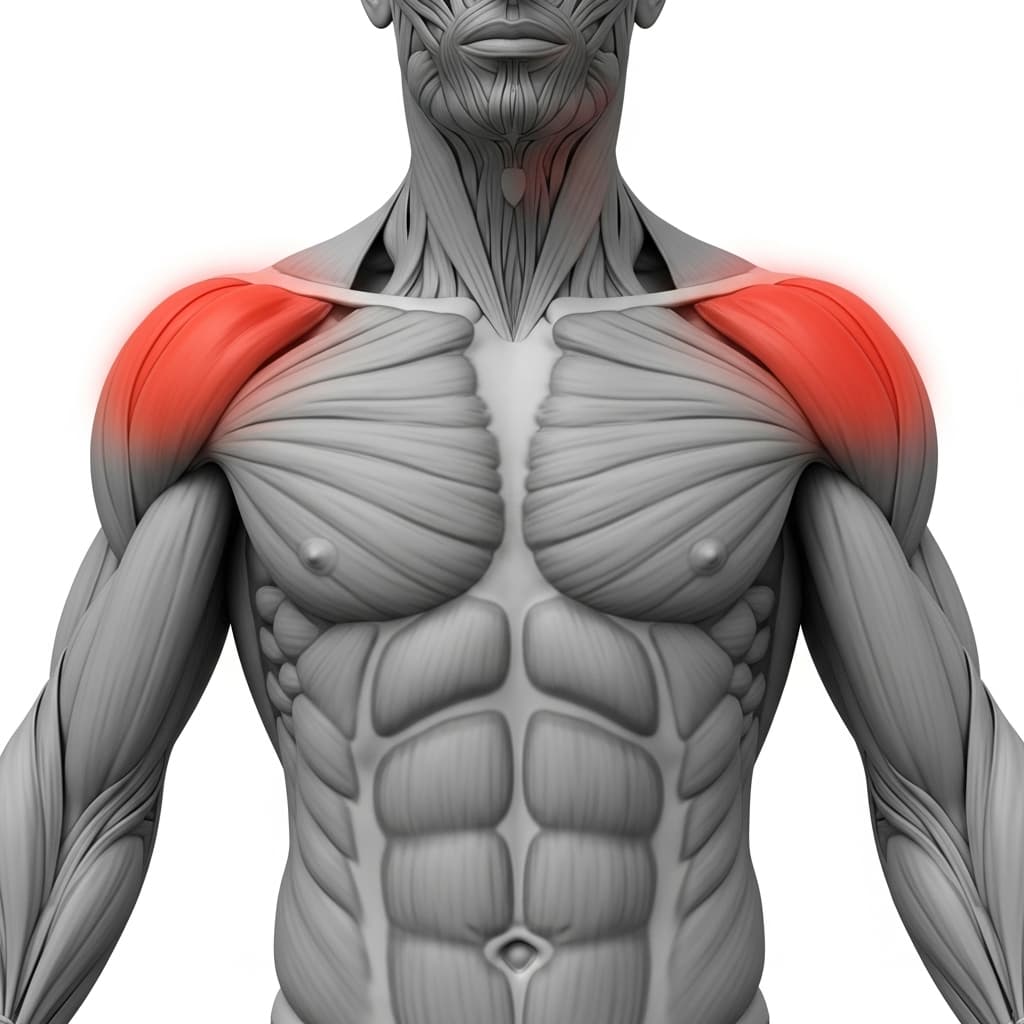
Anterior Deltoid (Front Deltoid) - The front deltoid controls the overhead reach of the extending arm and decelerates its descent toward the floor.
Benefits of Dead Bug
- Develops anti-extension core strength, which is the specific ability to resist the lower back from arching under load, directly transferring to hollow body holds and L-sits
- Trains contralateral coordination between opposite arm and leg, building the motor control foundation required for crawling patterns and complex calisthenics movements
- Reinforces proper breathing mechanics under core tension, teaching you to brace and breathe simultaneously, a skill critical for every loaded calisthenics hold
- Strengthens the deep stabilizers of the lumbar spine, reducing lower back pain risk during high-demand exercises like front levers and handstand presses
Who Is This Exercise For?
You should be able to hold a posterior pelvic tilt while lying on your back with both knees raised at 90 degrees for at least 20 seconds without your lower back lifting off the floor. If maintaining that flat-back position is a struggle with both legs up, practice the static hold before adding any limb movement. Mastering diaphragmatic breathing while bracing the core in this position is the baseline before attempting full dead bug reps.
Common Mistakes to Avoid
Lower back lifting off the floor: Actively draw your belly button toward your spine and maintain a posterior pelvic tilt throughout every rep. If your back lifts during leg extension, reduce your range of motion and only lower the leg as far as you can while keeping the back flat.
Moving too fast through the reps: Each extension should take 2 to 3 seconds down and 2 to 3 seconds back. Speed removes the stability demand that makes the dead bug effective and turns it into a coordination drill with no real core training benefit.
Extending the same-side arm and leg: Always lower the opposite arm and leg together. Contralateral movement is what forces the obliques and deep core to resist rotation, which is the entire point of the exercise.
Holding breath or forgetting to breathe: Exhale as you extend your arm and leg, and inhale as you return to the starting position. Controlled breathing maintains intra-abdominal pressure and keeps the core engaged without creating unnecessary tension in the neck and shoulders.
Variations & Progressions
Leg-Only Dead Bug
Keep both arms extended toward the ceiling and only lower one leg at a time. Removing the arm movement reduces the coordination demand and lets you focus entirely on maintaining a flat lower back.
Banded Dead Bug
Loop a light resistance band around your hands and knees, then perform the standard dead bug. The band creates active resistance that forces the core to work harder to stabilize the spine as you extend each limb.
Straight-Leg Dead Bug
Extend the lowering leg fully straight instead of keeping the knee bent at 90 degrees. The longer lever arm significantly increases the anti-extension demand on the core and makes it much harder to keep the lower back flat.