Bulgarian Squats
Bulgarian squats are a single-leg squat variation performed with the rear foot elevated on a bench or box, targeting the quads, glutes, and hamstrings through a deep range of motion. The elevated rear foot forces the front leg to handle the vast majority of the load, making this one of the most effective unilateral lower body exercises in calisthenics. Trained consistently with proper depth and control, Bulgarian squats build serious single-leg strength, correct left-to-right imbalances, and develop the hip mobility needed for advanced bodyweight skills.
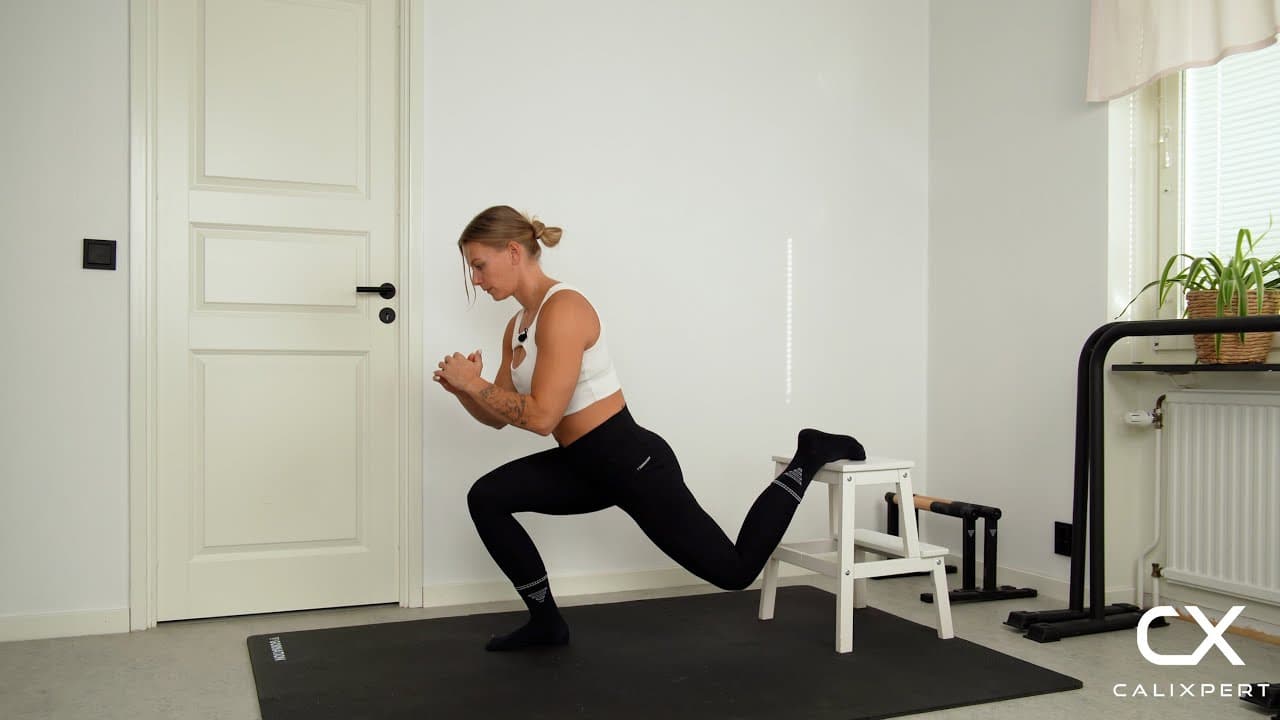
Bulgarian squats are a single-leg squat variation performed with the rear foot elevated on a bench or box, targeting the quads, glutes, and hamstrings through a deep range of motion. The elevated rear foot forces the front leg to handle the vast majority of the load, making this one of the most effective unilateral lower body exercises in calisthenics. Trained consistently with proper depth and control, Bulgarian squats build serious single-leg strength, correct left-to-right imbalances, and develop the hip mobility needed for advanced bodyweight skills.
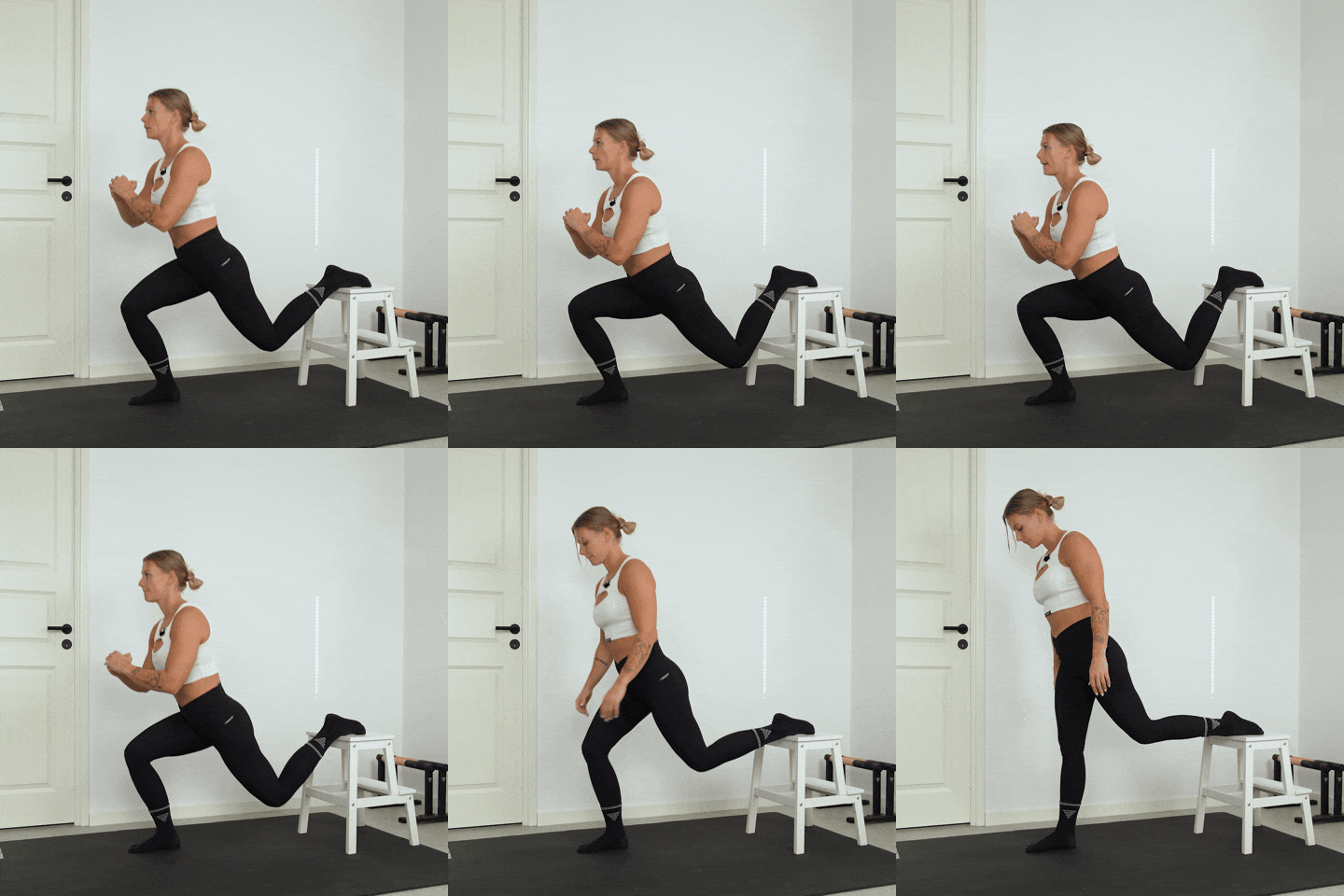
How to Do Bulgarian Squats
1. Position Yourself in Front of the Bench
Stand directly in front of a bench, box, or sturdy elevated surface roughly knee height. Face away from the bench and take a large step forward so that when your rear foot is placed on the bench, your front shin can stay vertical at the bottom of the squat. Keep your feet hip-width apart, not in a tightrope line, to maintain lateral stability throughout the movement.
Big step forward, feet hip-width apart
2. Place Your Rear Foot on the Bench
Extend one leg behind you and place the top of your foot flat on the bench surface. Your rear leg is there for balance, not to generate force. Keep your hips square and facing forward, and avoid twisting your torso toward either side.
Top of the foot flat on the bench
3. Brace Your Core and Set Your Torso
Engage your core by pulling your ribcage down slightly and keeping your back as straight as possible. Your torso should have a slight forward lean, but your chest stays lifted. This bracing protects your lower back and keeps you stable as you descend into the squat.
Core tight, chest up
4. Lower Into the Squat
Bend your front knee and drop your hips straight down toward the floor. Continue lowering until your front thigh reaches at least parallel to the ground, aiming for a 90-degree bend at the knee or deeper. Keep your front knee tracking in line with your toes and your weight centered over the middle of your front foot. Your back knee should travel downward toward the floor without slamming into it.
Hips straight down, 90 degrees minimum
5. Drive Up Through the Front Heel
Press firmly through your front heel and midfoot to reverse the movement and stand back up. Focus on squeezing the glute of the working leg at the top of each rep. Avoid pushing off the back foot, the rear leg should contribute as little as possible to the upward drive.
Push the floor away through the front heel
6. Reset and Repeat
At the top of each rep, re-check that your hips are square and your core is braced before descending again. Complete all prescribed reps on one leg before switching sides. Maintain the same tempo on both the descent and the ascent for every rep.
Reset at the top, same tempo every rep
Most people set up way too close to the bench, which turns this into a quad-dominant half squat with a wobbly back leg. Take a bigger step forward than you think you need. When your front shin can stay nearly vertical at the bottom of the rep, you know the distance is right, and your glutes will fire completely differently.
Muscles Worked During Bulgarian Squats
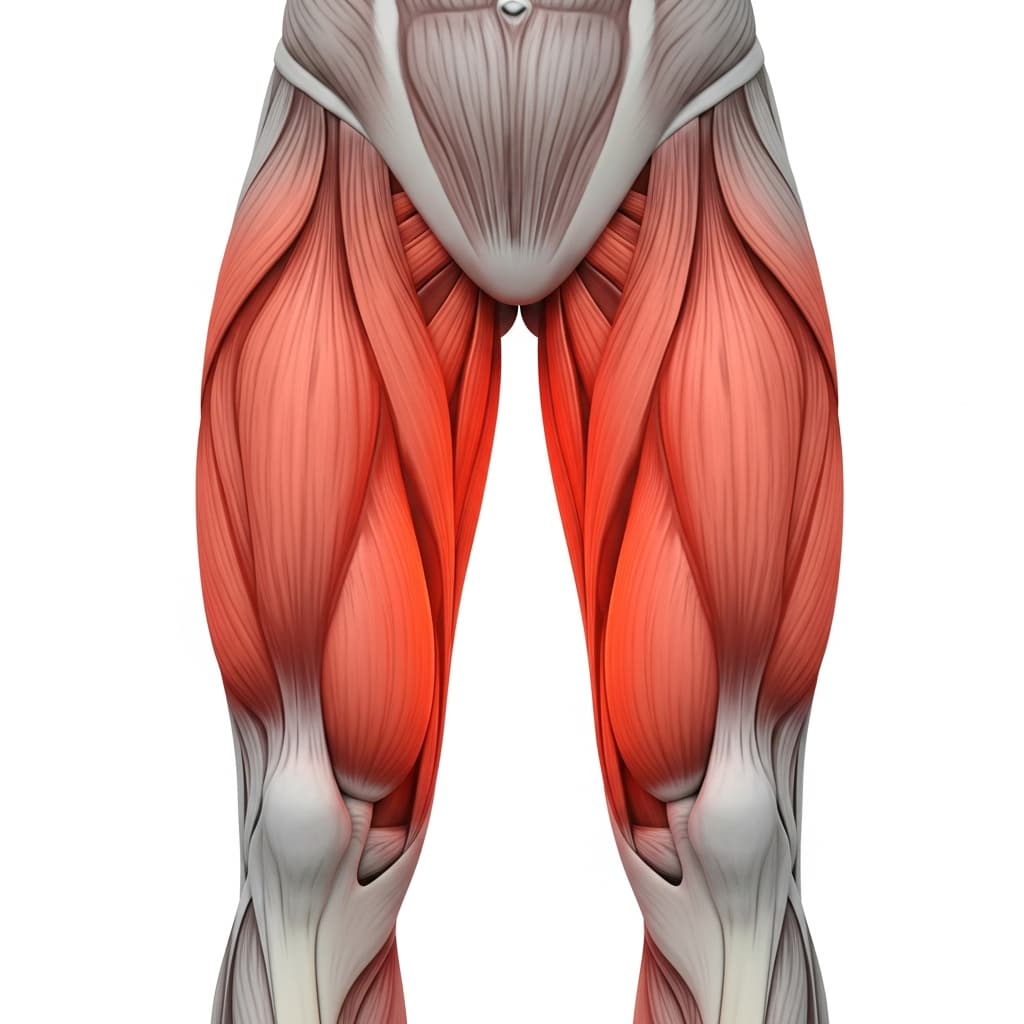
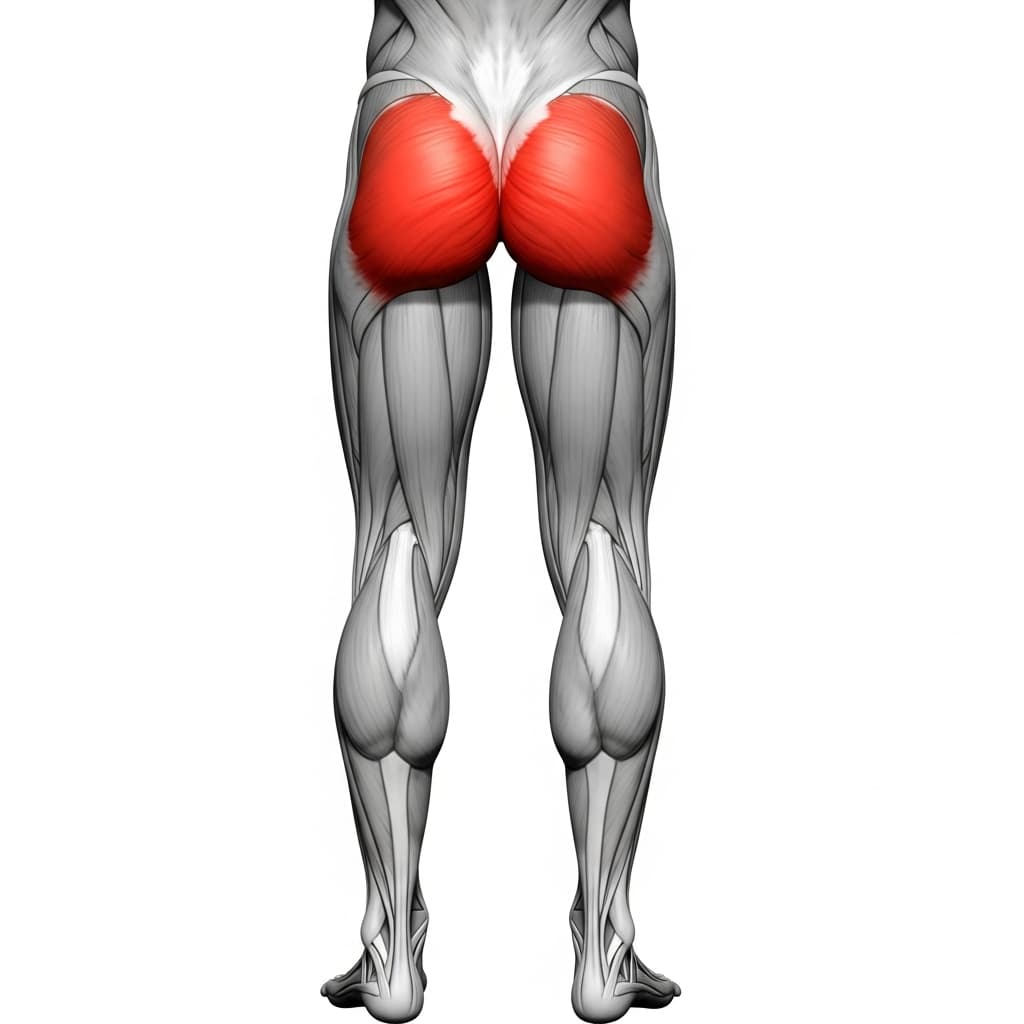
Secondary Muscles:
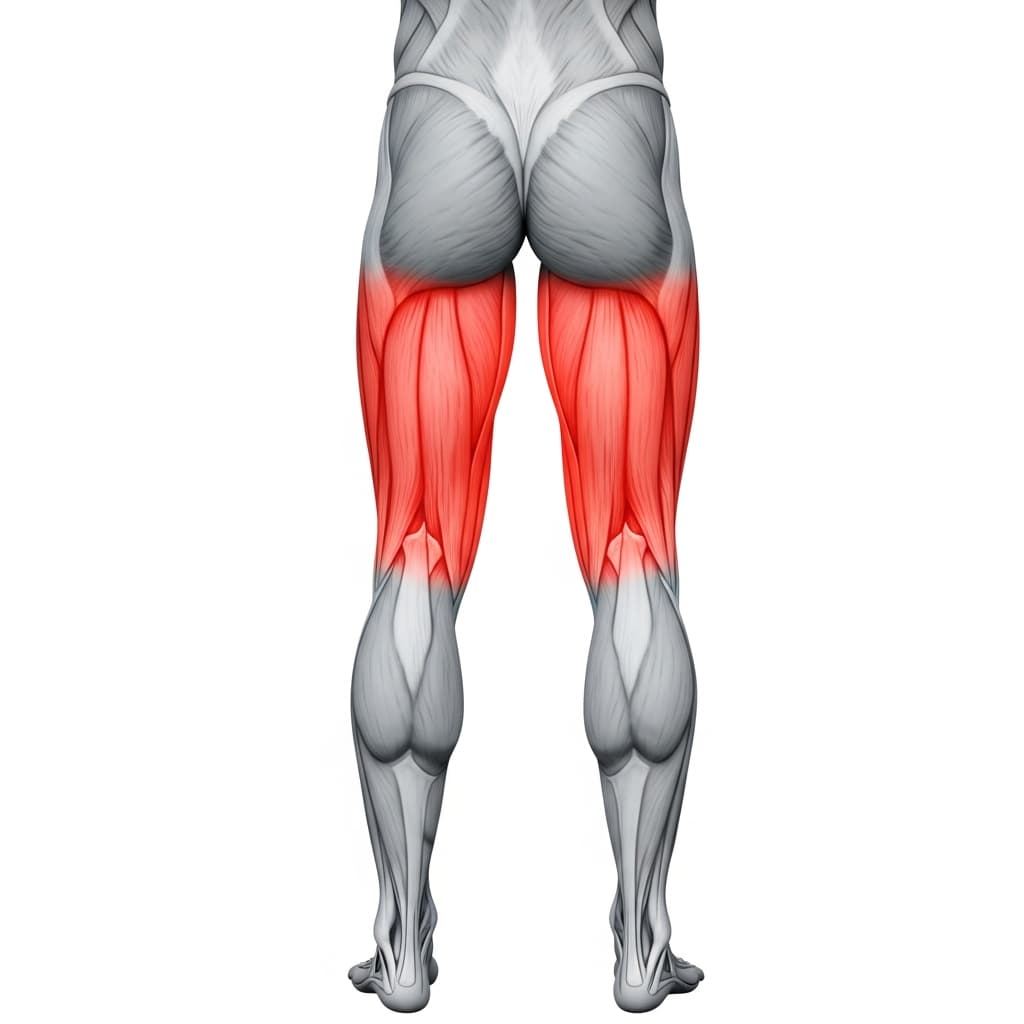
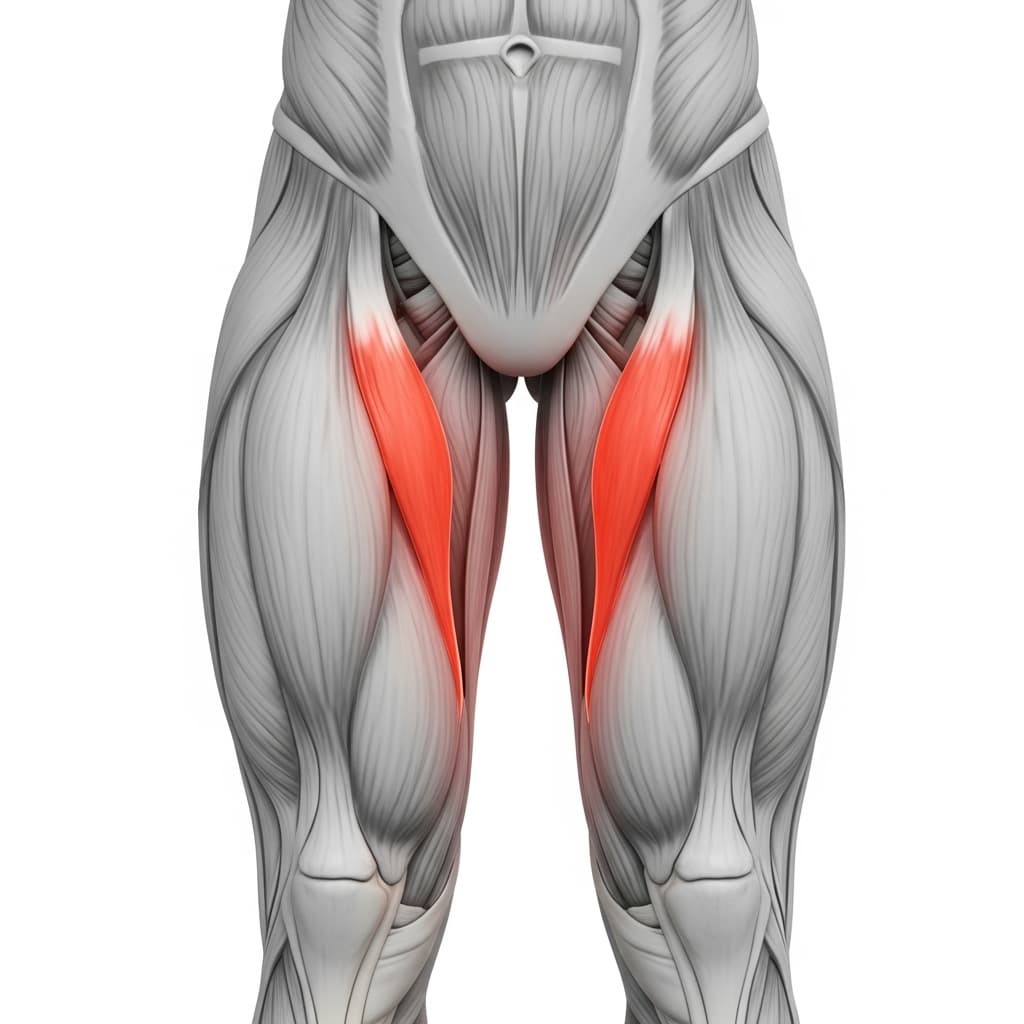
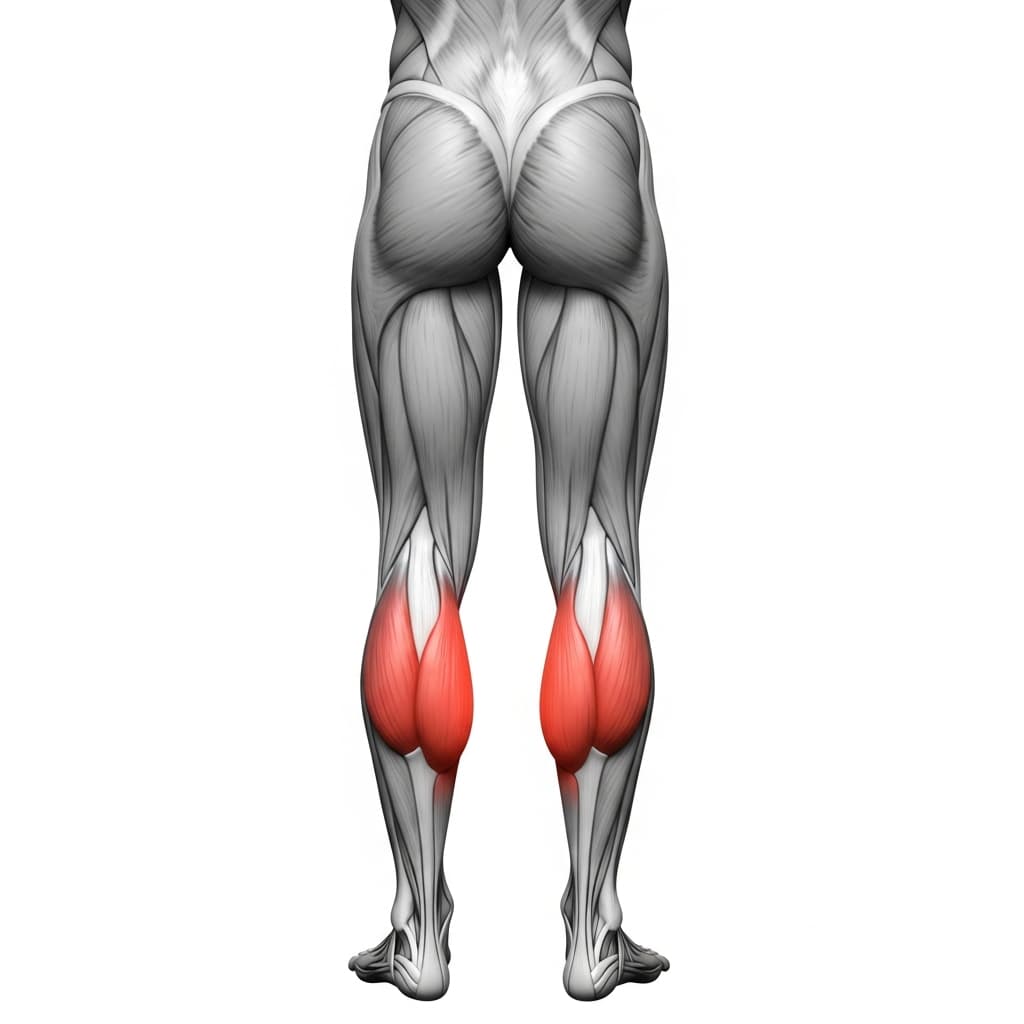
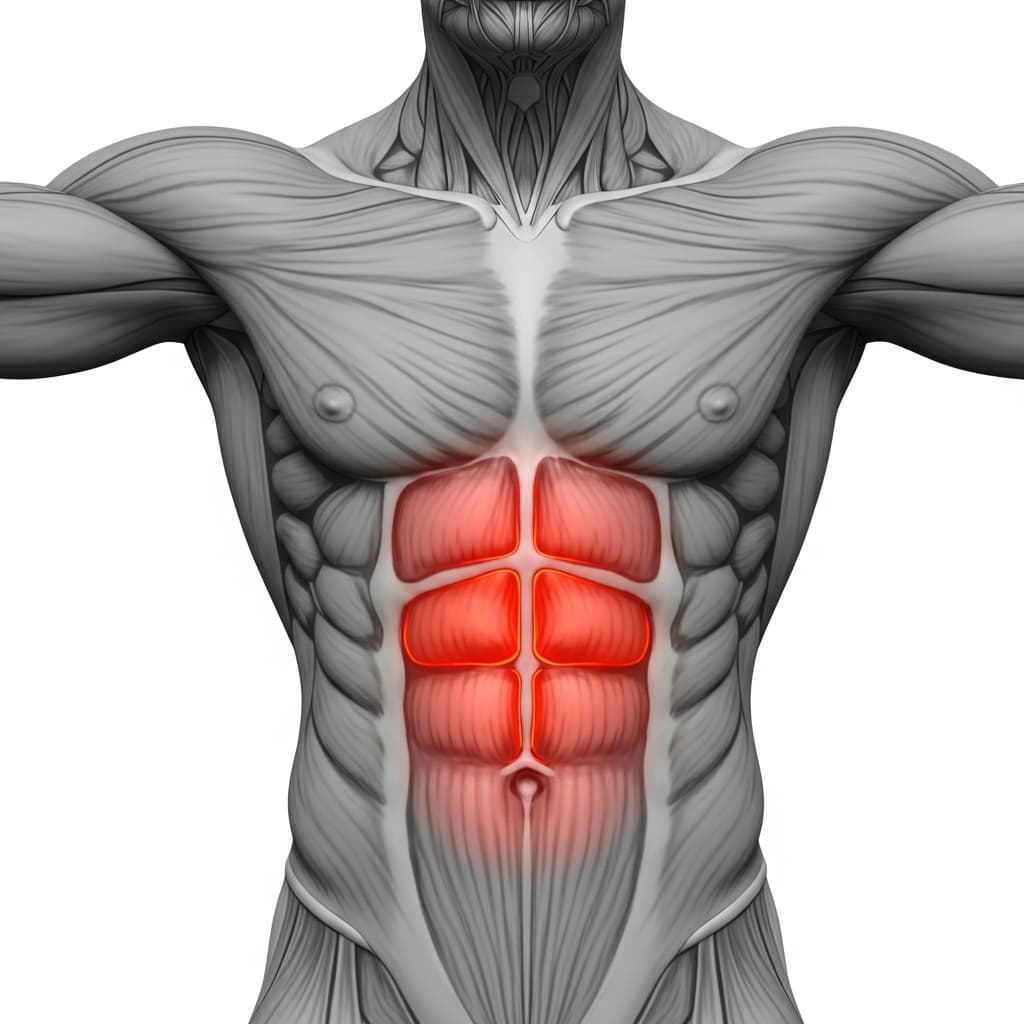
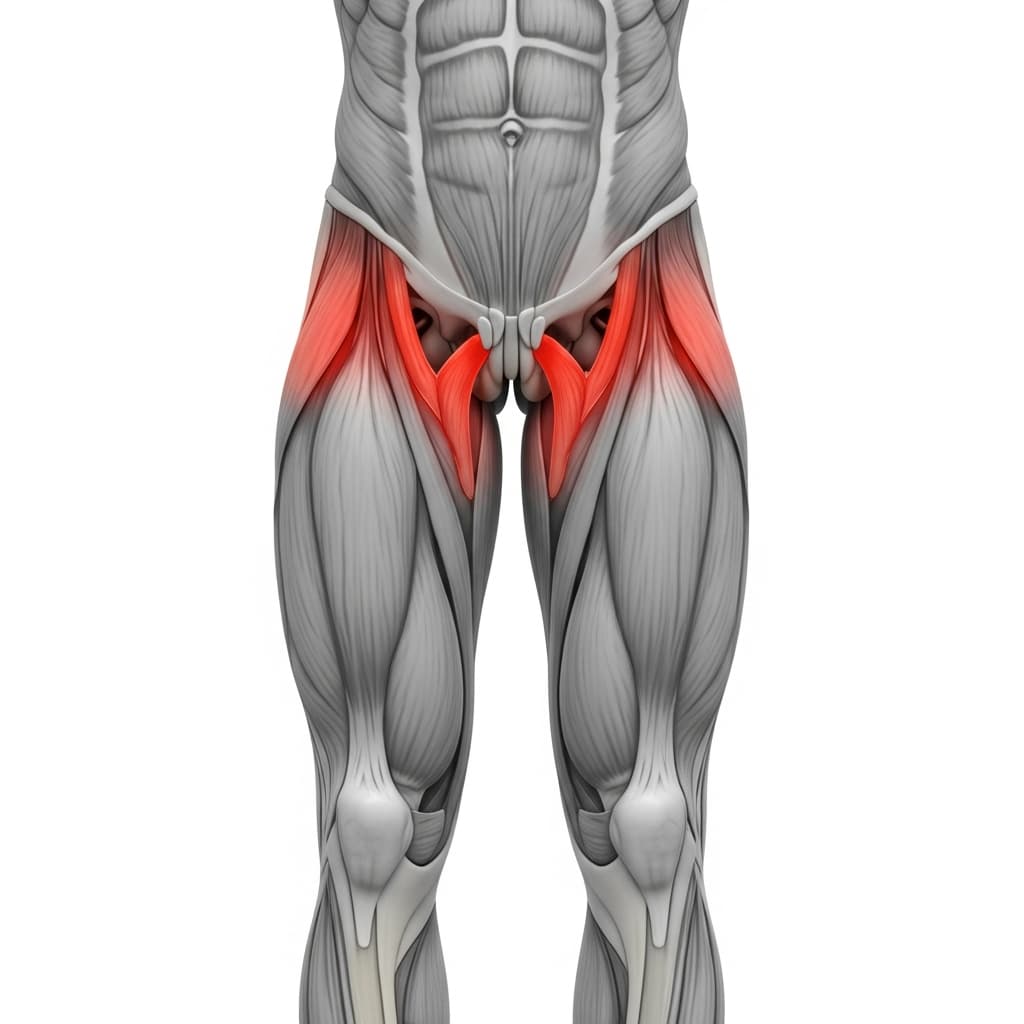
Primary Muscles
Quadriceps (Quads) - The quadriceps extend the front knee during the upward drive, handling the majority of the force required to lift the body out of the bottom position.
Gluteus Maximus (Glutes) - The glutes of the working leg extend the hip as you rise from the squat and stabilize the pelvis throughout the entire range of motion.
Secondary Muscles
Hamstring Group (Hamstrings) - The hamstrings assist the glutes in hip extension during the ascent and help control the rate of descent as the hip flexes under load.
Hip Adductors (Adductors) - The adductors stabilize the front leg laterally, preventing the knee from collapsing inward during both the descent and the drive upward.
Gastrocnemius & Soleus (Calves) - The calves stabilize the ankle joint of the front foot, maintaining balance and allowing force to transfer efficiently from the foot through the leg.
Rectus Abdominis (Abs) - The abdominals brace the torso to prevent excessive forward lean and keep the spine neutral under the asymmetric loading of the single-leg stance.
Iliopsoas (Hip Flexors) - The hip flexors of the rear leg are stretched under load at the bottom of each rep, and they work isometrically to stabilize the pelvis throughout the movement.
Benefits of Bulgarian Squats
- Builds single-leg quad and glute strength that directly transfers to pistol squats, shrimp squats, and other advanced calisthenics leg skills
- Corrects left-to-right strength and muscle imbalances by forcing each leg to work independently under full load
- Develops hip flexor flexibility on the rear leg and ankle mobility on the front leg through a deep range of motion under load
- Strengthens the stabilizer muscles around the knee and hip, reducing injury risk during dynamic movements like jumping and running
- Builds core stability under asymmetric loading, training the abs and obliques to resist rotation and lateral shift
Who Is This Exercise For?
You should be able to perform 10 clean bodyweight squats to full depth and hold a stationary lunge for 15 seconds per side before attempting Bulgarian squats. Comfortable single-leg balance and basic hip flexibility are essential, so practice forward lunges and bodyweight squats with a slow tempo first. If you cannot hold a lunge position without losing balance or feeling sharp knee discomfort, you are not ready for this exercise.
Common Mistakes to Avoid
Stance too narrow or feet in a line: Keep your feet hip-width apart, as if standing on two parallel rails. A tightrope stance makes balance nearly impossible and forces compensations through the knee and ankle.
Front knee caving inward: Actively push your front knee outward so it tracks over your second or third toe throughout the entire rep. If you cannot control knee tracking, reduce depth or switch to assisted lunges until hip and glute strength improves.
Pushing off the back foot: The rear foot is only there for balance. If you feel your back leg doing significant work, shift more of your weight forward over the front foot before you begin the descent.
Leaning the torso too far forward: A slight forward lean is acceptable, but excessive forward tilt shifts load onto the lower back and away from the quads and glutes. Keep your chest lifted and your core braced to maintain an upright torso angle.
Not reaching adequate depth: Lower until your front thigh is at least parallel to the ground. Cutting the range of motion short reduces quad and glute activation significantly. If mobility limits your depth, lower the height of the rear elevation and work on hip flexibility separately.
Variations & Progressions
Assisted Bulgarian Squat
Hold onto a wall, doorframe, or sturdy object with one hand for balance support. This allows you to focus on depth and knee tracking without worrying about falling over, making it ideal for building confidence in the movement pattern.
Bulgarian Squat with Pause
Add a 2 to 3 second pause at the bottom of each rep with your thigh at or below parallel. The pause eliminates any stretch reflex and forces the quads and glutes to produce force from a dead stop, dramatically increasing time under tension.
Deficit Bulgarian Squat
Place your front foot on a small elevation like a weight plate or low step to increase the range of motion at the bottom. This deeper stretch targets the glutes and hip flexors more aggressively and demands greater ankle and hip mobility.