Bodyweight Squats
Bodyweight squats are the foundational lower body exercise in calisthenics, targeting the quadriceps, glutes, and hamstrings through a full range of hip and knee flexion. The key to an effective bodyweight squat is tracking the knees in line with the toes, keeping the spine neutral, and descending to at least parallel while driving through the heels on the way up. Mastered with clean form, bodyweight squats build the leg strength, hip mobility, and core stability required for every advanced calisthenics leg skill.
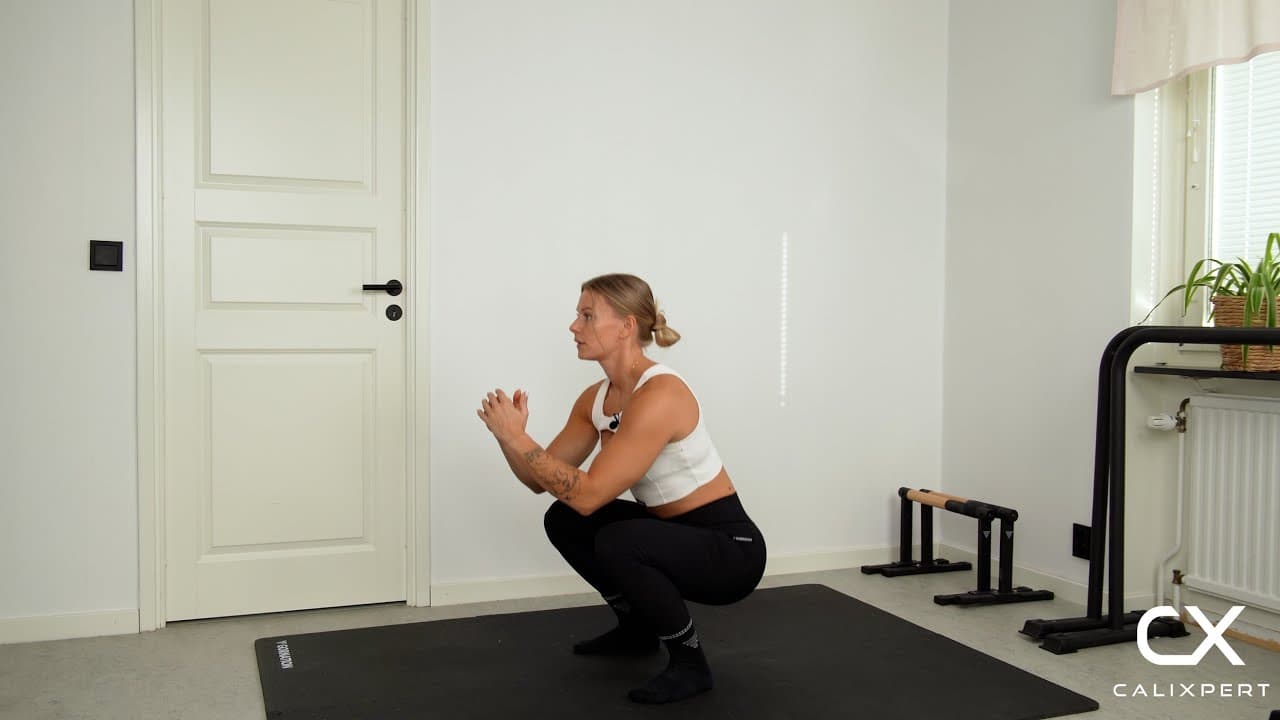
Bodyweight squats are the foundational lower body exercise in calisthenics, targeting the quadriceps, glutes, and hamstrings through a full range of hip and knee flexion. The key to an effective bodyweight squat is tracking the knees in line with the toes, keeping the spine neutral, and descending to at least parallel while driving through the heels on the way up. Mastered with clean form, bodyweight squats build the leg strength, hip mobility, and core stability required for every advanced calisthenics leg skill.
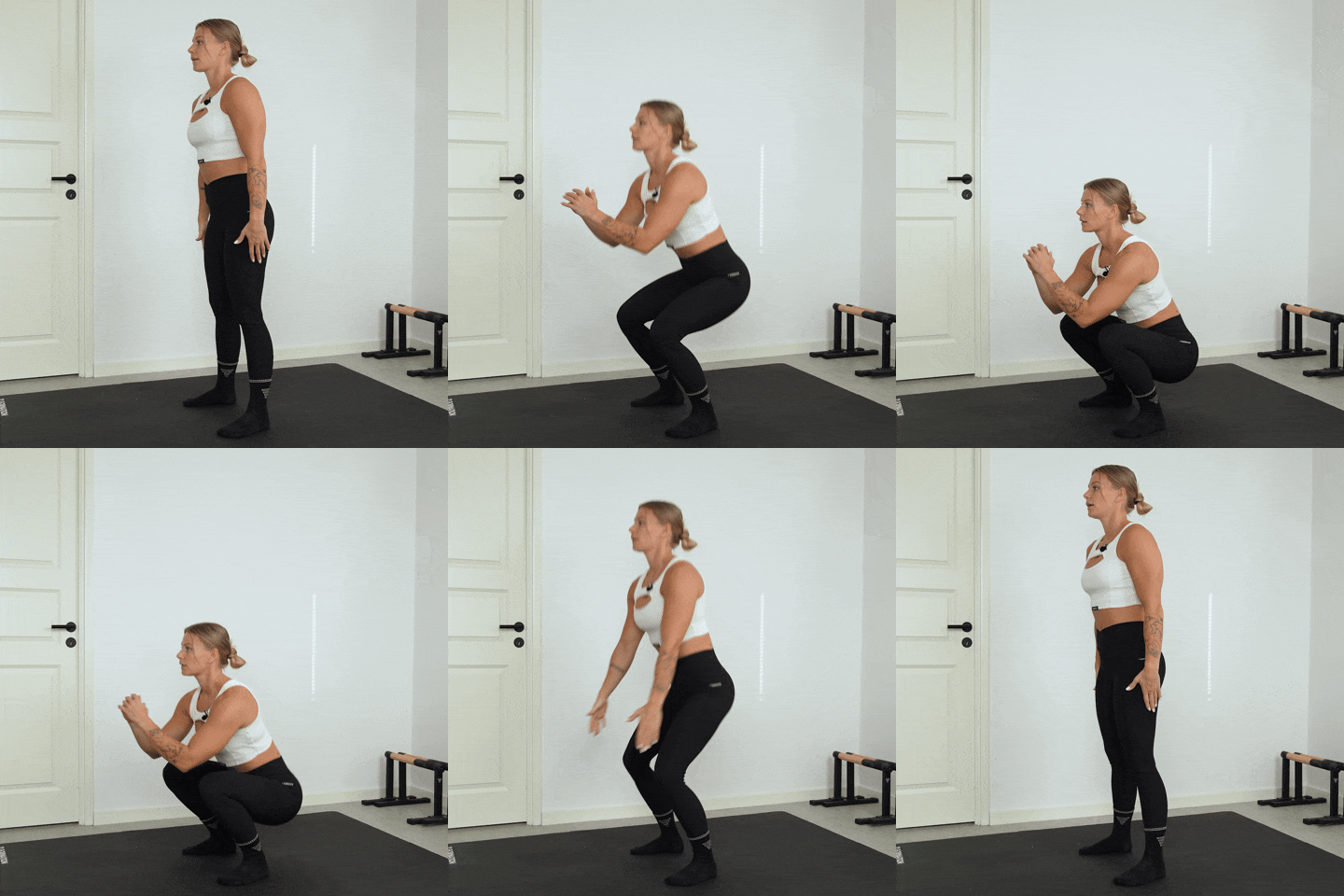
How to Do Bodyweight Squats
1. Set Your Foot Position
Stand with your feet roughly hip-width apart on a flat surface. Point your toes forward or slightly outward, no more than about 15 to 30 degrees. Distribute your weight evenly across both feet with a slight emphasis on the heels. Keep your arms at your sides or extend them in front of you for balance.
Feet hip width, toes slightly out
2. Brace Your Core
Before you descend, engage your core by tightening your midsection as if bracing for a light punch. This prevents your lower back from arching or rounding during the squat. Maintain this brace throughout the entire rep, both on the way down and on the way up.
Tight core, no arching
3. Descend With Control
Initiate the squat by pushing your hips back and bending your knees simultaneously, as if sitting into a chair. Keep your chest lifted and your back as straight as possible throughout the descent. Track your knees in the same direction as your toes, not collapsing inward or flaring outward. Lower yourself at a controlled tempo, taking about 2 seconds to reach the bottom.
Knees track over toes, sit back
4. Reach Full Depth
Descend until your thighs are at least parallel to the ground, meaning your hip crease reaches knee height or below. If your mobility allows, go deeper than parallel for greater glute and hip engagement. Your heels must stay flat on the floor at the bottom position. If your heels lift, reduce depth until your ankle mobility improves.
Thighs parallel or deeper
5. Drive Up Through the Heels
Press through your heels and midfoot to stand back up, squeezing your glutes at the top. Maintain your upright torso position throughout the ascent, resisting any forward lean. Fully extend your hips and knees at the top before starting the next rep.
Push through heels, squeeze glutes
Most people rush through bodyweight squats because they think the exercise is too easy. Slow the tempo down to 3 seconds on the descent and pause for 1 second at the bottom, and you will feel a completely different level of muscle activation in your quads and glutes. Once you can do 20 reps at that tempo without form breaking down, you are ready to start progressing toward single-leg variations.
Muscles Worked During Bodyweight Squats
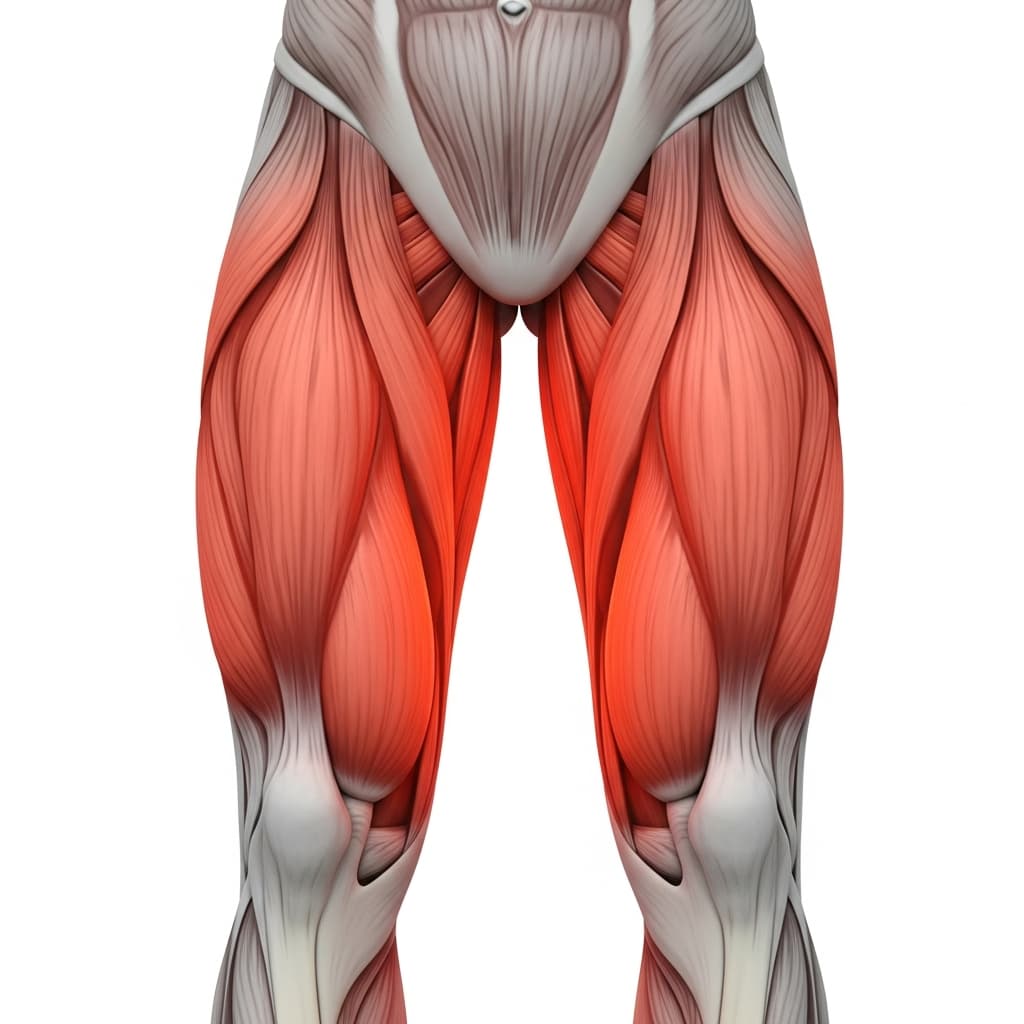
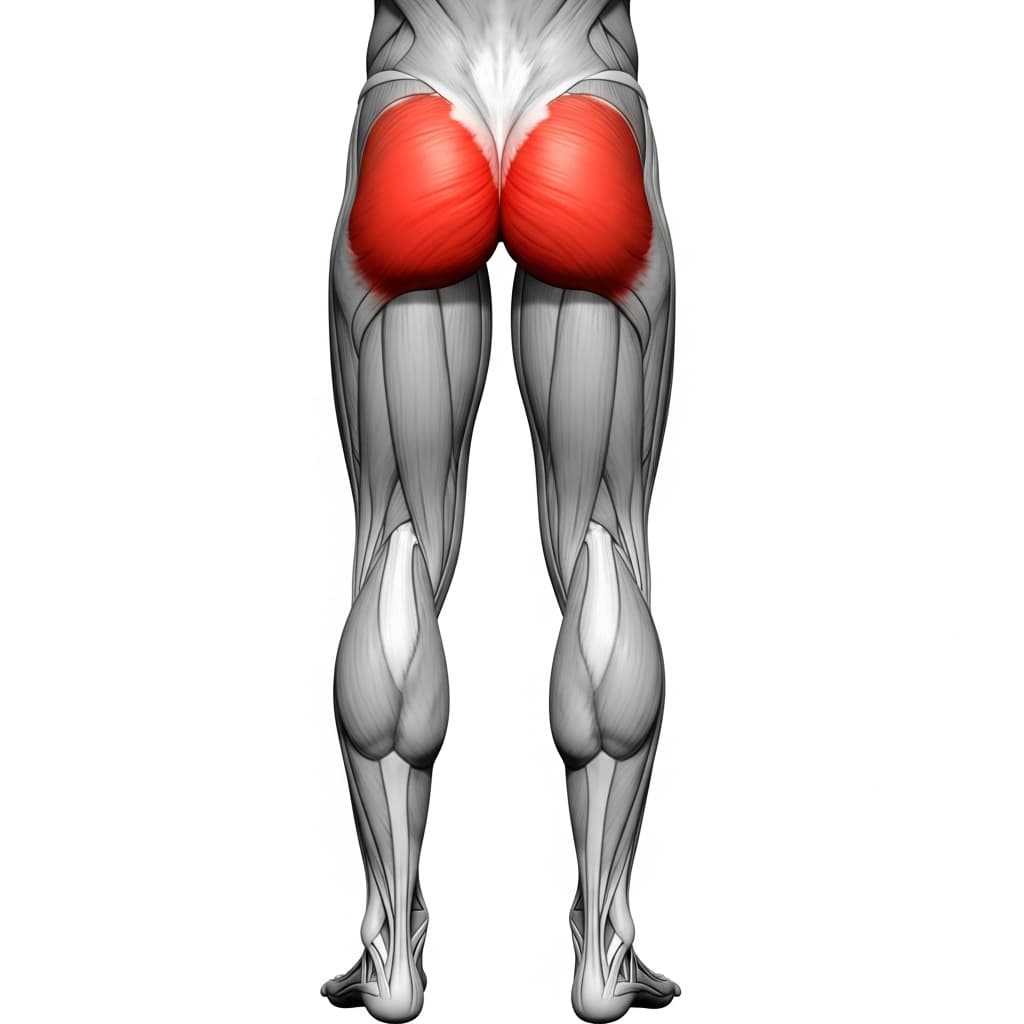
Secondary Muscles:
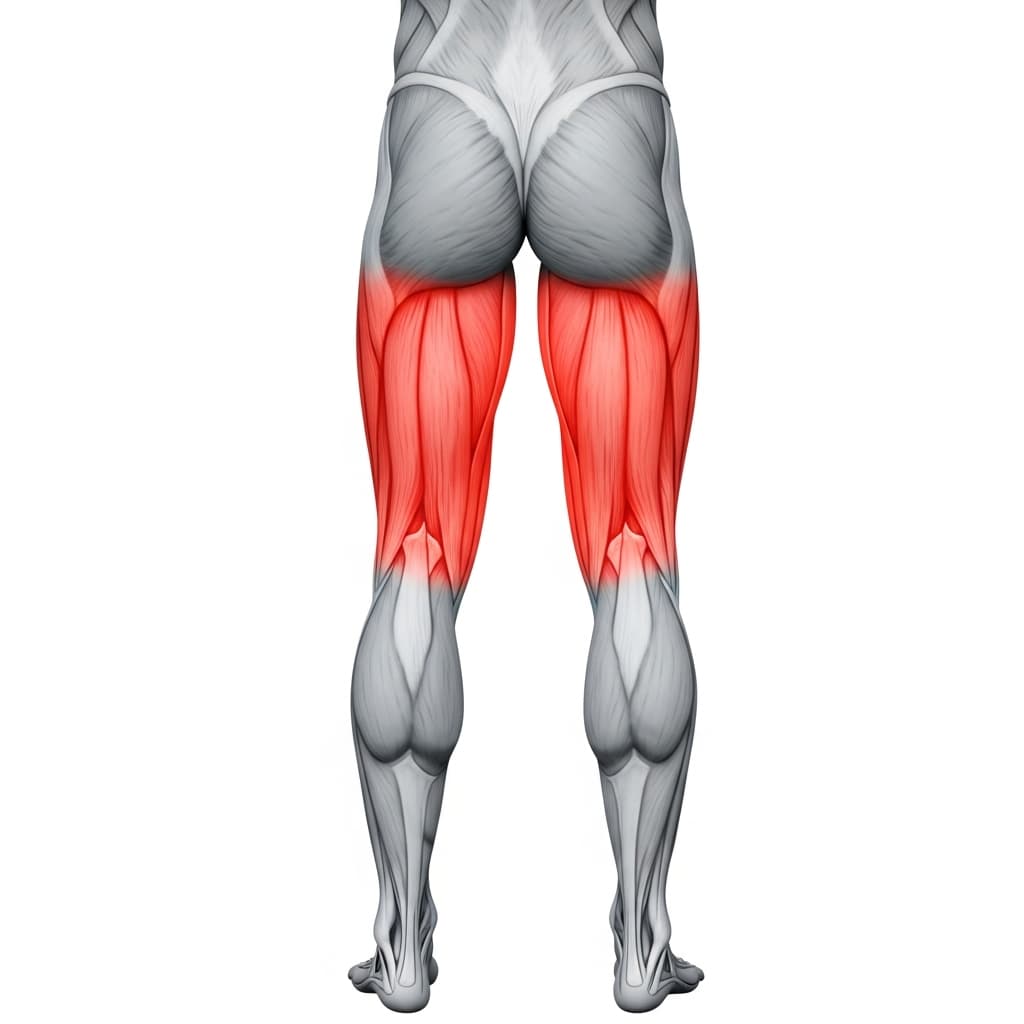
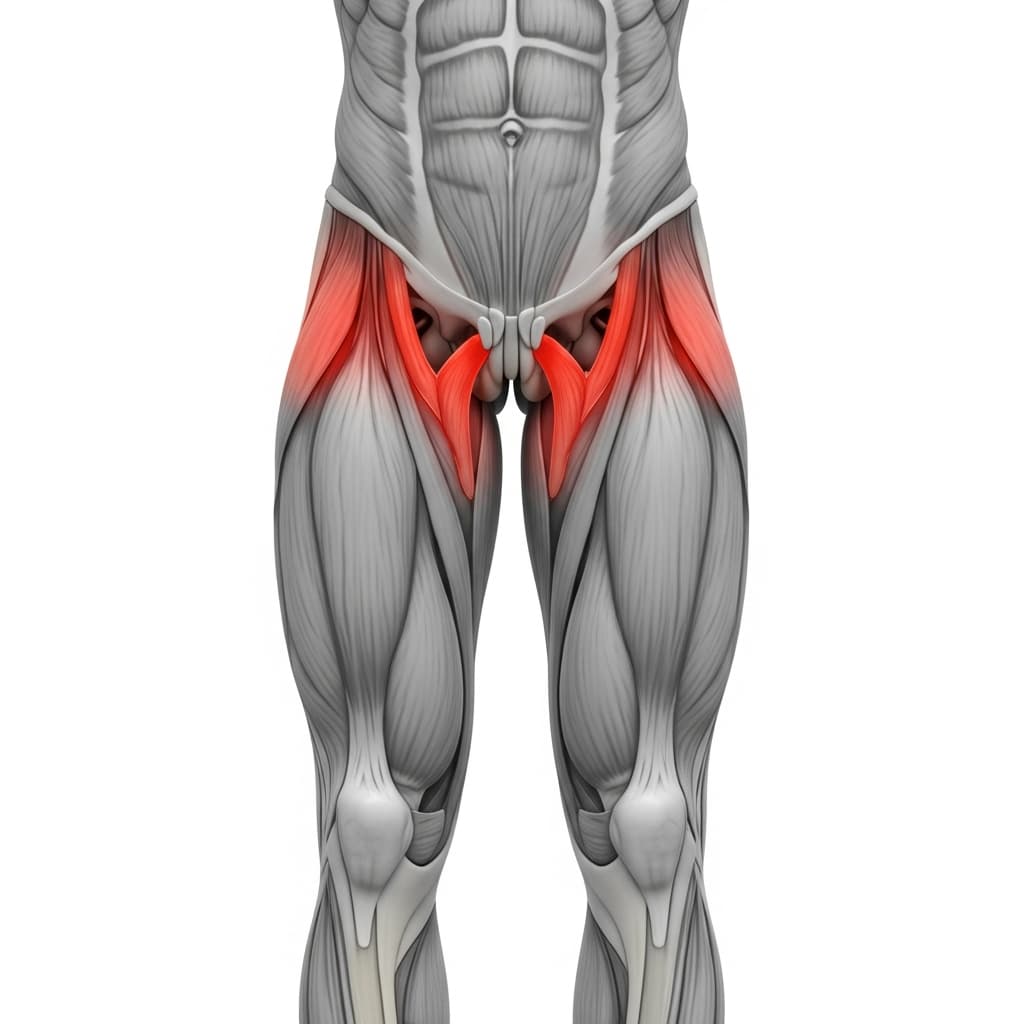
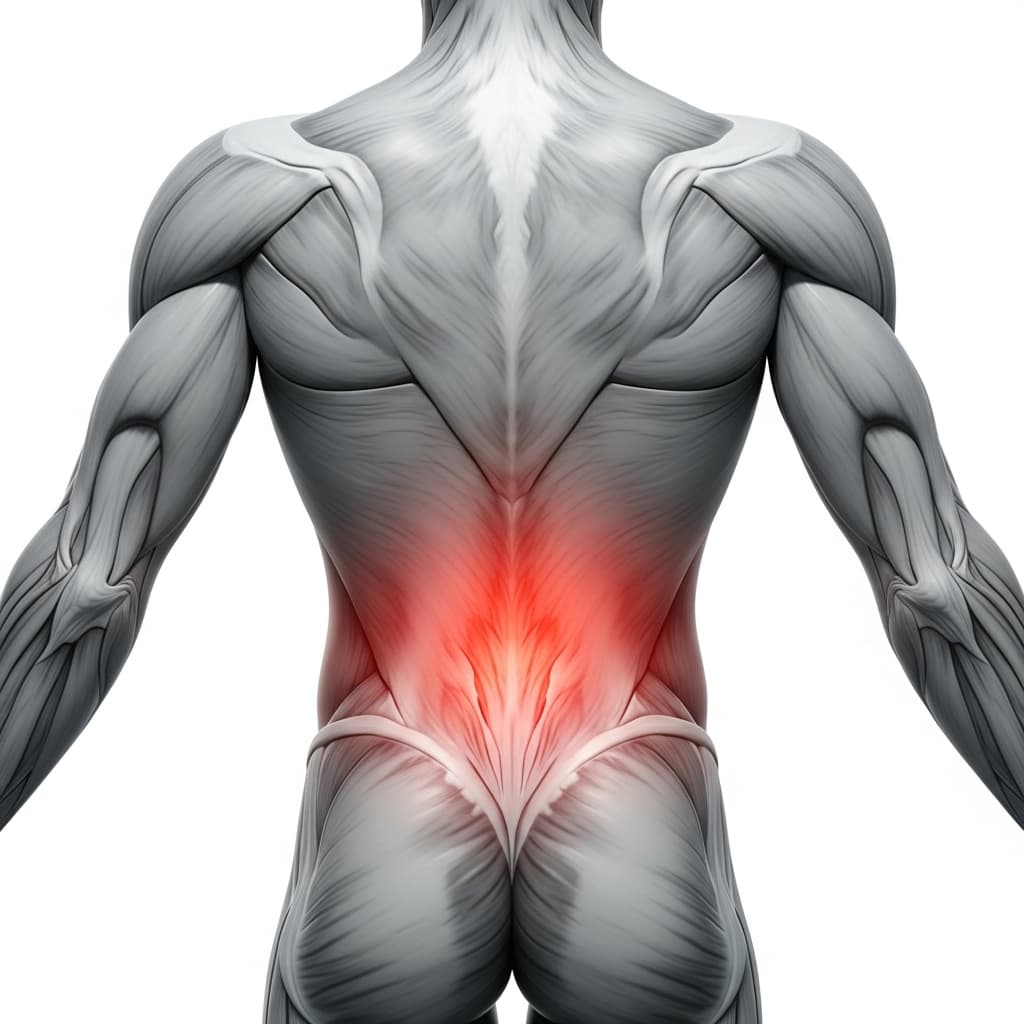
Primary Muscles
Quadriceps (Quads) - The quadriceps extend the knee joint during the upward phase of the squat, producing the primary force needed to stand back up from the bottom position.
Gluteus Maximus (Glutes) - The glutes extend the hip joint as you rise out of the squat, contributing more force the deeper you descend below parallel.
Secondary Muscles
Hamstring Group (Hamstrings) - The hamstrings assist hip extension during the ascent and work eccentrically to control the rate of descent as you lower into the squat.
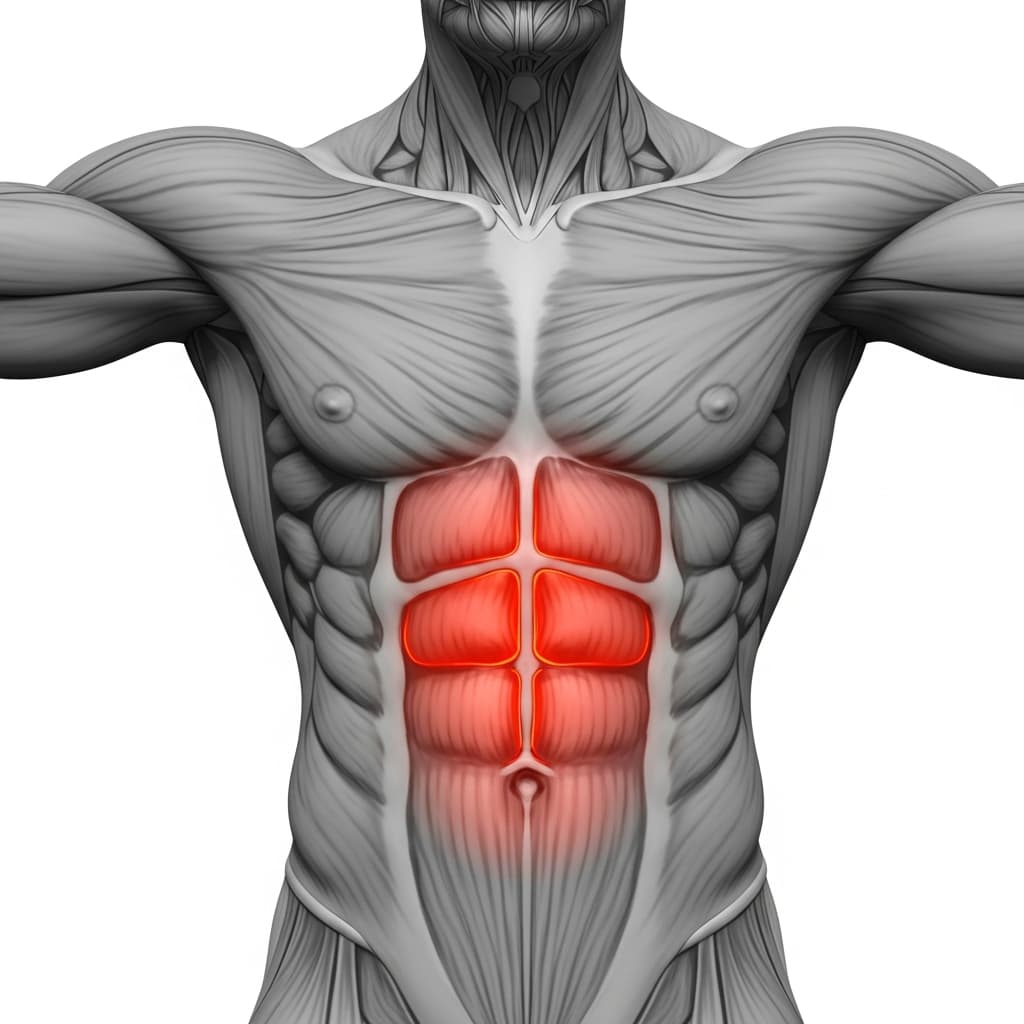
Rectus Abdominis (Abs) - The abdominals brace the spine and resist forward trunk lean, maintaining an upright torso throughout the squat.
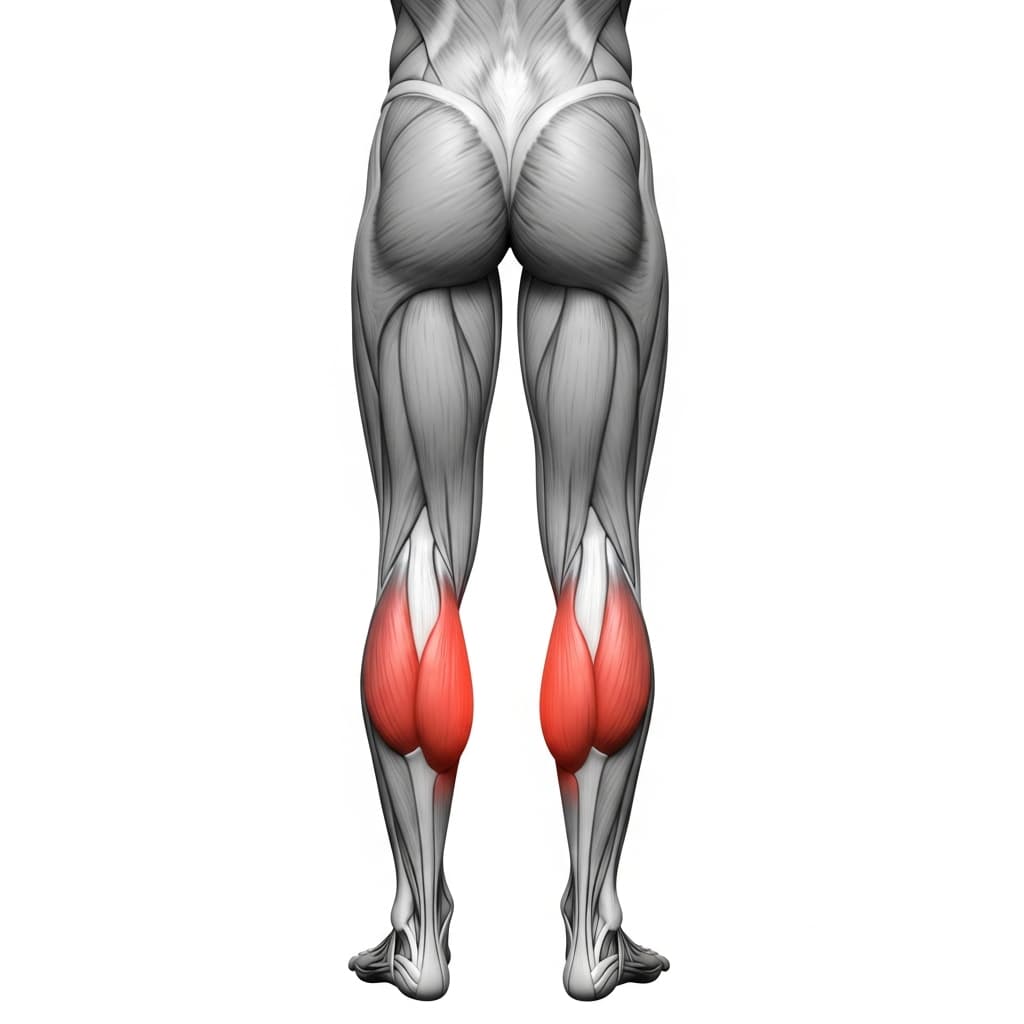
Gastrocnemius & Soleus (Calves) - The calves stabilize the ankle joint and control forward shin angle, keeping the heels grounded during the descent and ascent.
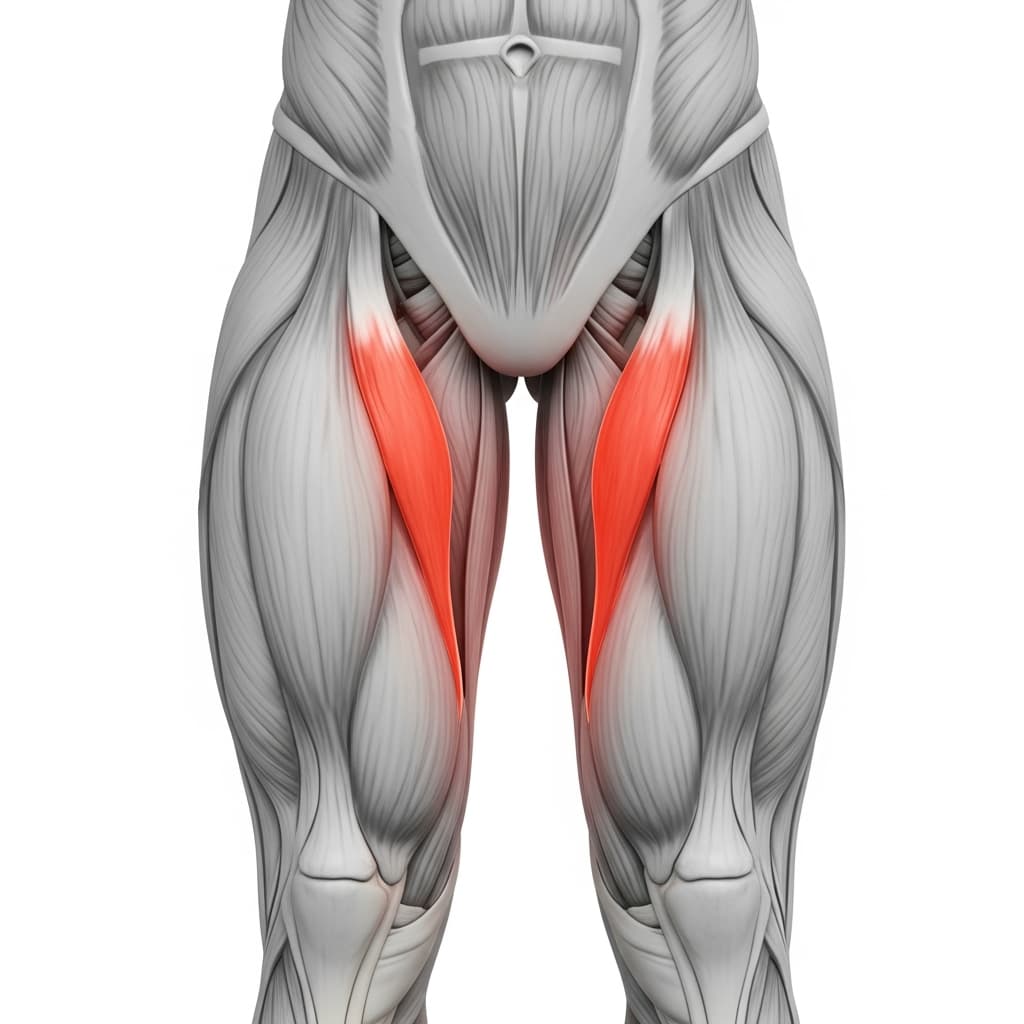
Hip Adductors (Adductors) - The adductors stabilize the inner thigh and assist knee tracking, working to prevent the knees from collapsing inward under load.
Iliopsoas (Hip Flexors) - The hip flexors work to stabilize the pelvis and control pelvic tilt at the bottom of the squat, especially as depth increases beyond parallel.
Erector Spinae (Lower Back) - The lower back muscles maintain a neutral spinal position throughout the squat, resisting the tendency to round forward under the demands of the movement.
Benefits of Bodyweight Squats
- Builds quad and glute strength that directly transfers to pistol squats, jumping skills, and all single-leg calisthenics progressions
- Develops hip and ankle mobility through repeated full-range-of-motion loading, which improves squat depth over time
- Strengthens the core stabilizers under load, training the abs and lower back to resist spinal flexion and extension during movement
- Requires zero equipment and minimal space, making it the most accessible leg strength exercise in any training environment
Who Is This Exercise For?
You should be able to stand on one leg for 10 seconds without losing balance and sit down into a chair and stand back up without using your hands before training full bodyweight squats. If you lack the ankle or hip mobility to reach parallel depth without your heels lifting or your lower back rounding, prioritize mobility drills and assisted squat holds first.
Common Mistakes to Avoid
Knees caving inward: Actively push your knees outward in the direction of your toes throughout the entire movement. Thinking about spreading the floor apart with your feet helps engage the muscles that keep the knees tracking correctly.
Rounding the lower back: Brace your core before you descend and keep your chest lifted. If your back rounds at the bottom, reduce your squat depth until your hip and ankle mobility improve enough to maintain a neutral spine.
Heels lifting off the ground: Shift your weight slightly back toward your heels before descending. Heels lifting usually indicates tight calves or ankles, so working on calf stretches and ankle mobility drills will fix this over time.
Not squatting deep enough: Aim for at least parallel depth on every rep. Cutting squats short above parallel reduces the workload on the glutes and limits the mobility benefits of the movement.
Leaning too far forward: Keep your chest up and your gaze forward, not down at the floor. Extending your arms in front of you acts as a counterbalance and helps you stay more upright throughout the squat.
Variations & Progressions
Assisted Squat (using a door frame or pole)
Hold onto a sturdy support in front of you and use your arms to assist on the way up. This reduces the load on your legs and helps you practice depth and knee tracking before doing unassisted reps.
Jump Squat
Perform a full bodyweight squat and explode upward at the top, leaving the ground. This adds a plyometric element that increases power output and cardiovascular demand significantly.
Pistol Squat
Squat on one leg with the other leg extended straight in front of you. This requires far greater single-leg strength, balance, and hip mobility than the bilateral bodyweight squat.