Asssisted Negative Pull Up
Assisted negative pull-ups are a band-supported eccentric pulling exercise that trains the lats, biceps, rear deltoids, and traps by focusing exclusively on the slow lowering phase of the pull-up. A resistance band looped over the bar reduces your effective bodyweight during the descent, allowing you to control the negative even when you lack the strength for a full concentric rep. This exercise is one of the most effective progressions toward your first unassisted pull-up because eccentric contractions build strength faster than any other contraction type at the same relative load.
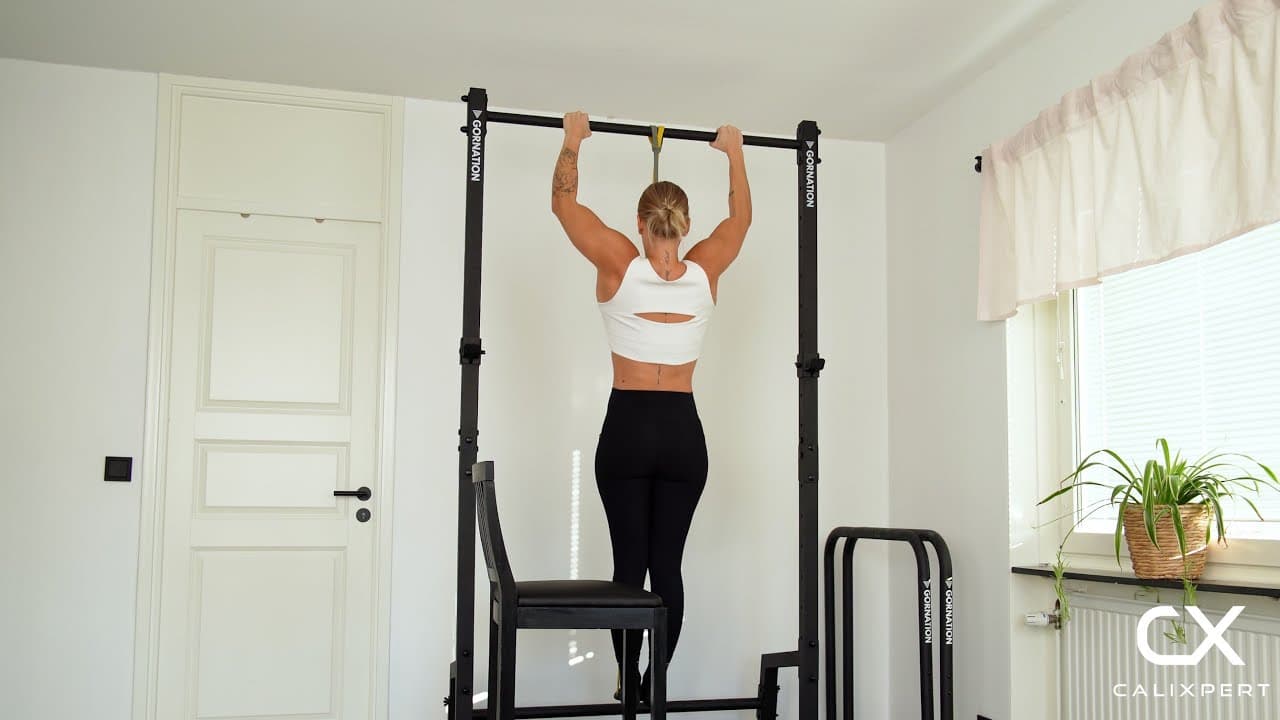
Assisted negative pull-ups are a band-supported eccentric pulling exercise that trains the lats, biceps, rear deltoids, and traps by focusing exclusively on the slow lowering phase of the pull-up. A resistance band looped over the bar reduces your effective bodyweight during the descent, allowing you to control the negative even when you lack the strength for a full concentric rep. This exercise is one of the most effective progressions toward your first unassisted pull-up because eccentric contractions build strength faster than any other contraction type at the same relative load.
How to Do Asssisted Negative Pull Up
1. Set Up the Band and Chair
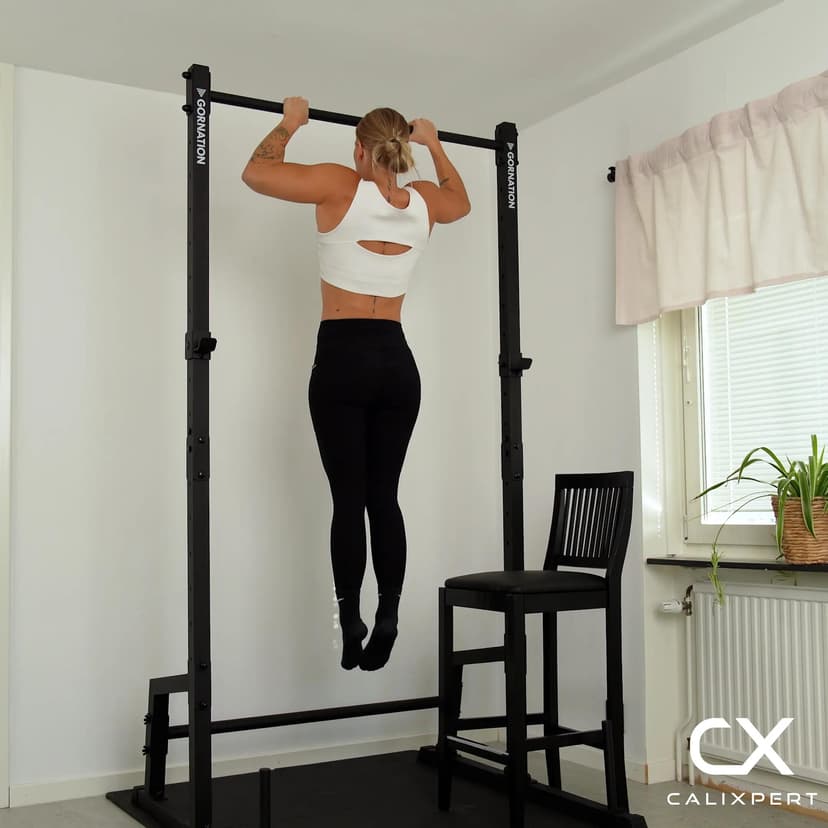
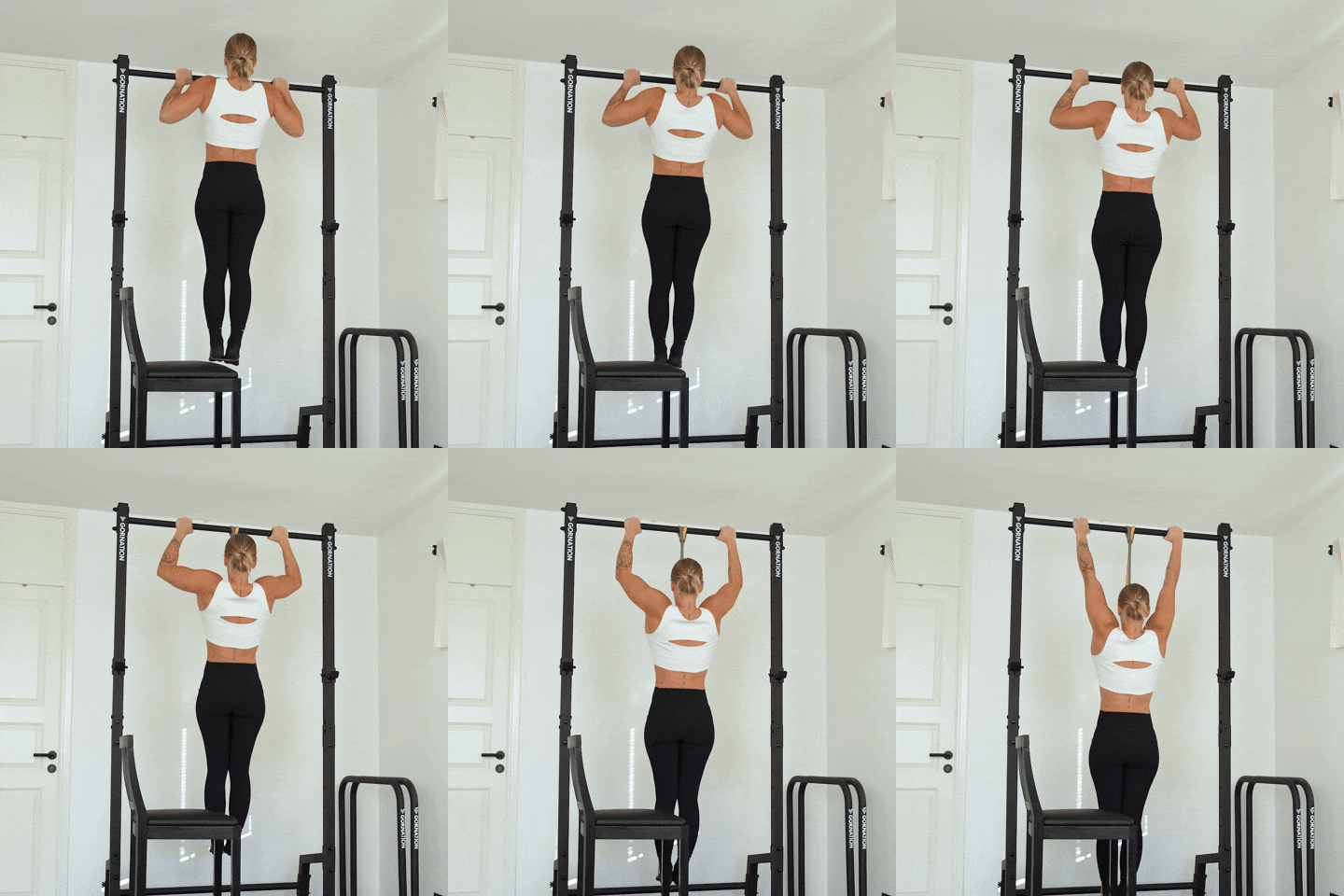
Loop a resistance band over the pull-up bar so it hangs straight down. Place a sturdy chair or platform directly underneath the bar, high enough that you can stand on it with your chin already above bar height. The chair eliminates any need to jump, which keeps your starting position controlled and consistent every rep.
Chair height lets you start with chin over bar
2. Step Into the Band and Grip
Step one foot into the bottom loop of the resistance band while standing on the chair. Grab the bar with an overhand grip roughly shoulder-width apart or slightly wider. Wrap your thumbs fully around the bar with knuckles facing up. This grip keeps the wrists stable and prevents your hands from slipping during the slow descent.
Thumbs around, knuckles on top
3. Set the Top Position
While still standing on the chair, position your chin clearly above the bar with your chest lifted. Retract your shoulder blades by squeezing them together and pulling your elbows backward as far as possible. Engage your core and create full-body tension from shoulders to toes before you leave the chair. This locked-in top position is where every rep begins.
Chest up, shoulder blades squeezed together
4. Lift Your Feet and Begin the Descent
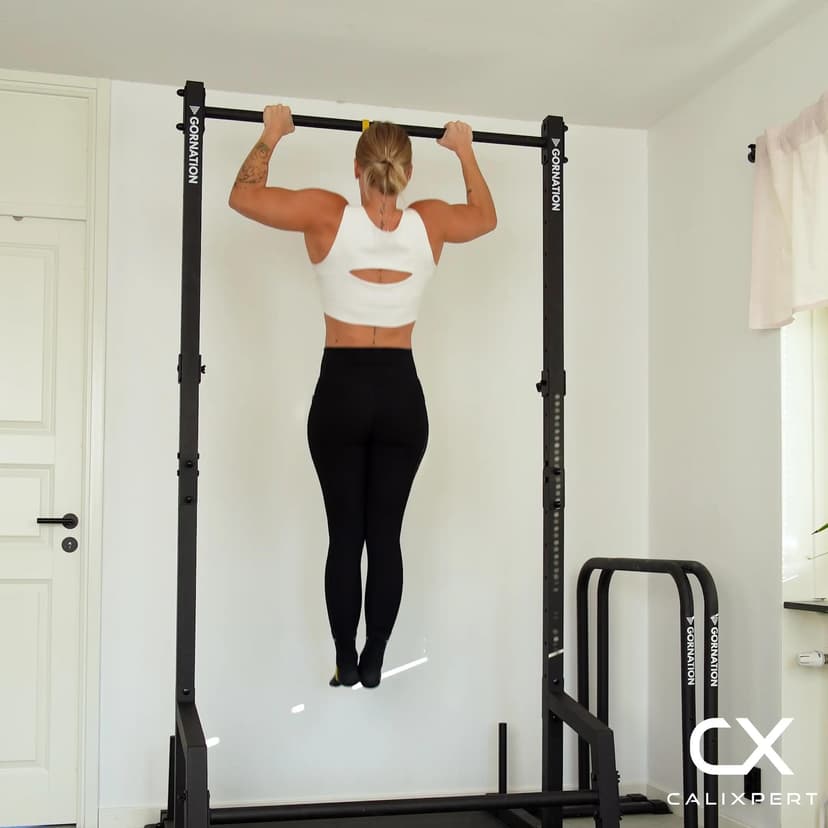
Carefully lift your feet off the chair so your bodyweight transfers into the band and your arms. Maintain the scapular retraction and core tension you established in the previous step. Begin lowering yourself by slowly extending your arms, resisting gravity the entire way down. Aim for a descent of 3 to 5 seconds from chin over the bar to full arm extension.
Resist the entire way down
5. Control Through the Mid-Range
As your elbows pass roughly 90 degrees, the movement becomes hardest because the band provides the least assistance at the bottom. Focus on keeping your elbows pointing outward and backward rather than flaring forward. Maintain a slight hollow body position by squeezing your abs to prevent swinging or arching.
Elbows out and back, core tight
6. Reach Full Extension and Reset
Continue lowering until your arms are completely straight and your shoulders are in a stable dead hang position. Do not let your body drop or bounce at the bottom. Step back onto the chair, re-establish your chin above the bar, re-set scapular retraction, and begin the next rep from the same controlled top position.
Step up, reset, then go again
The biggest mistake people make with negatives is treating them like a freefall with a band. The whole point is time under tension. If your descent takes less than 3 seconds, the band is doing too much work or you are not fighting gravity hard enough. Count out loud on the way down, and when you can consistently hit 5-second negatives for sets of 5, you are very close to your first real pull-up.
Muscles Worked During Asssisted Negative Pull Up
Primary Muscles:
Secondary Muscles:
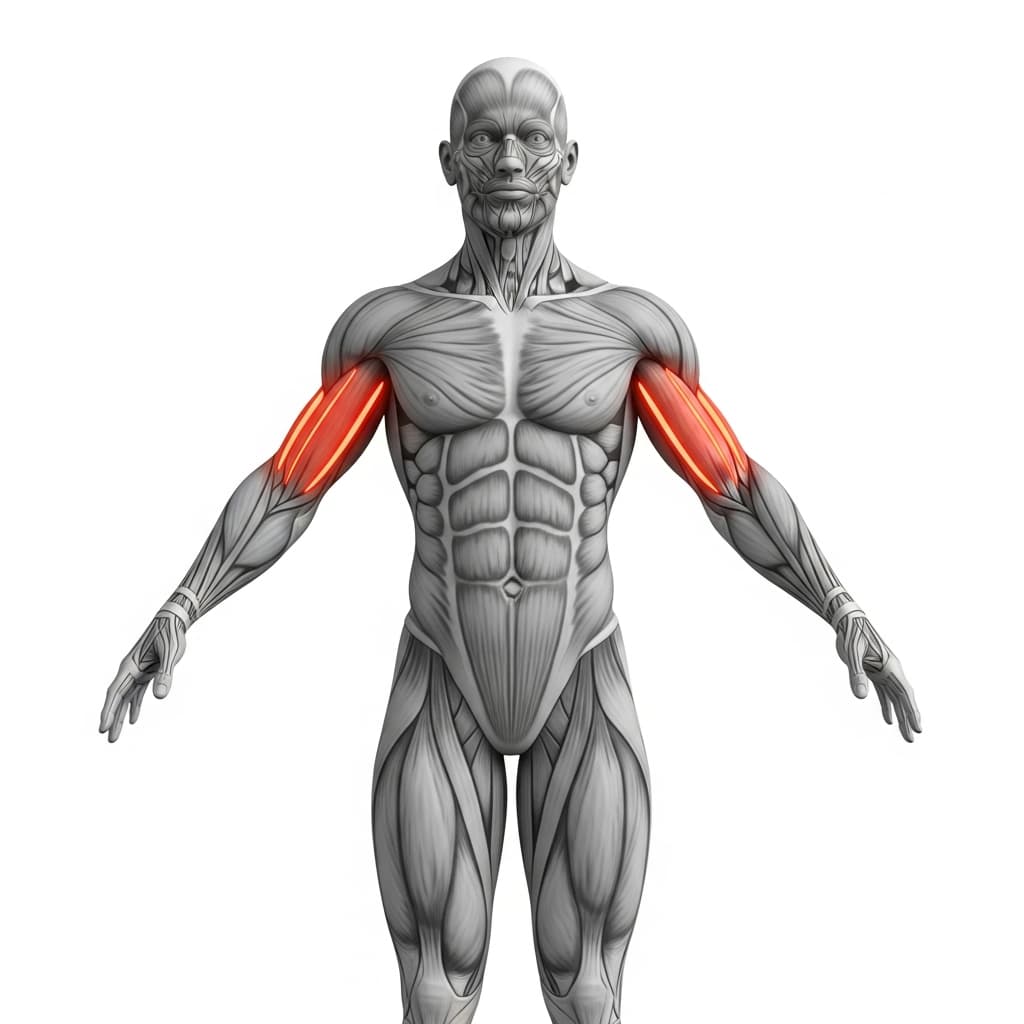
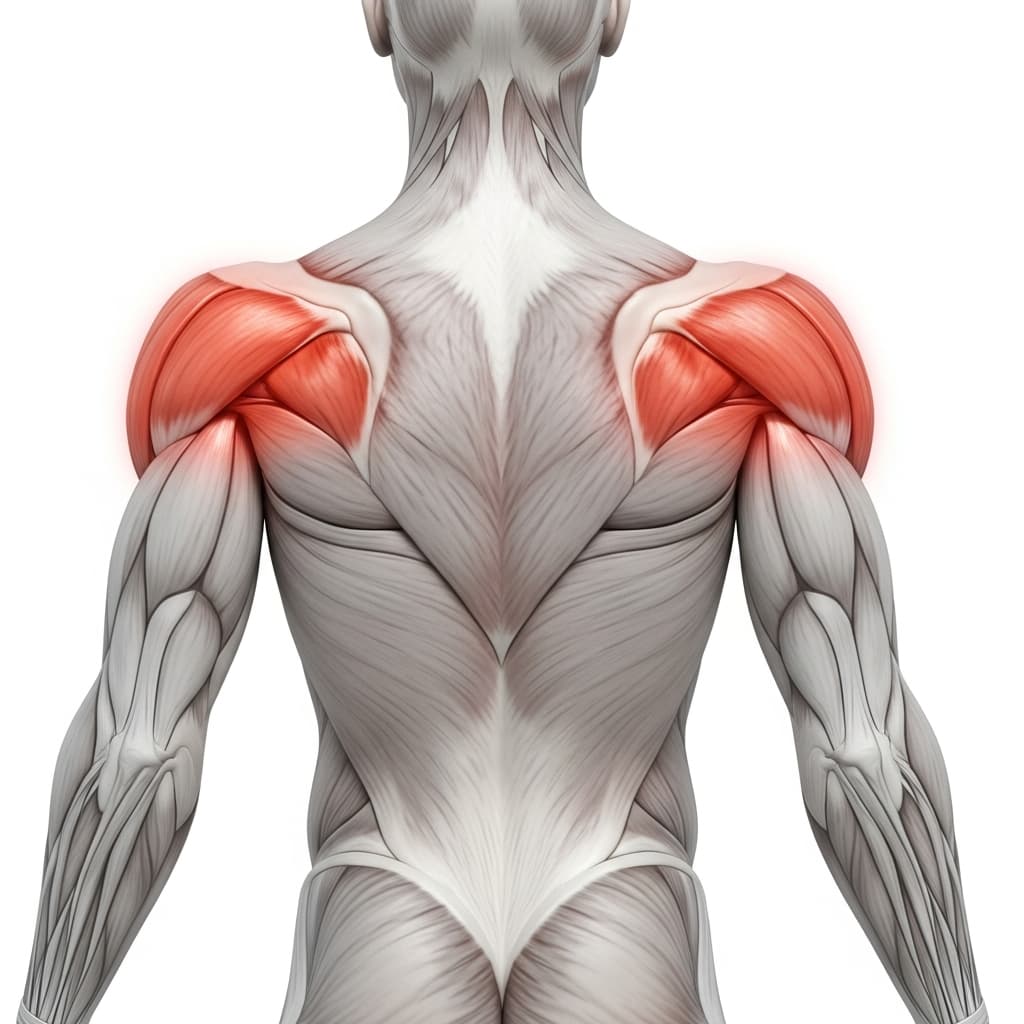
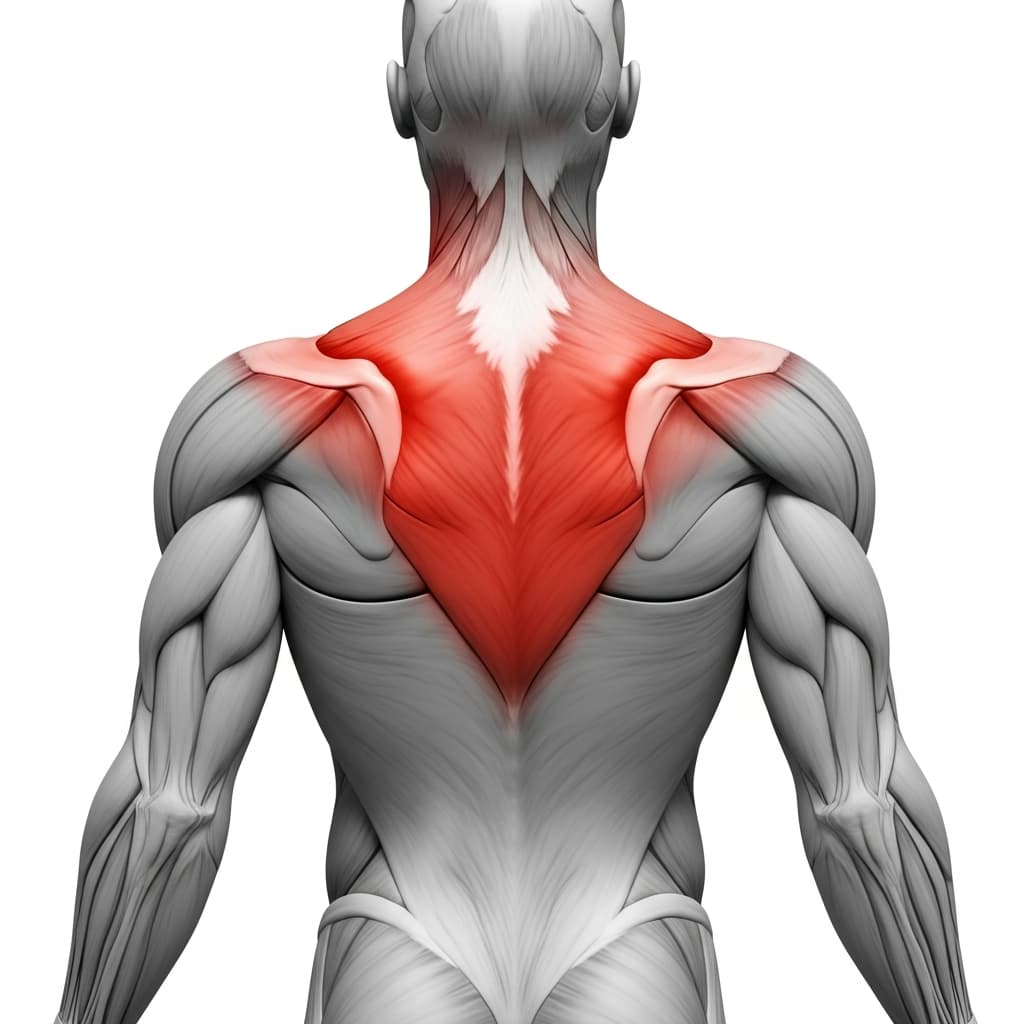
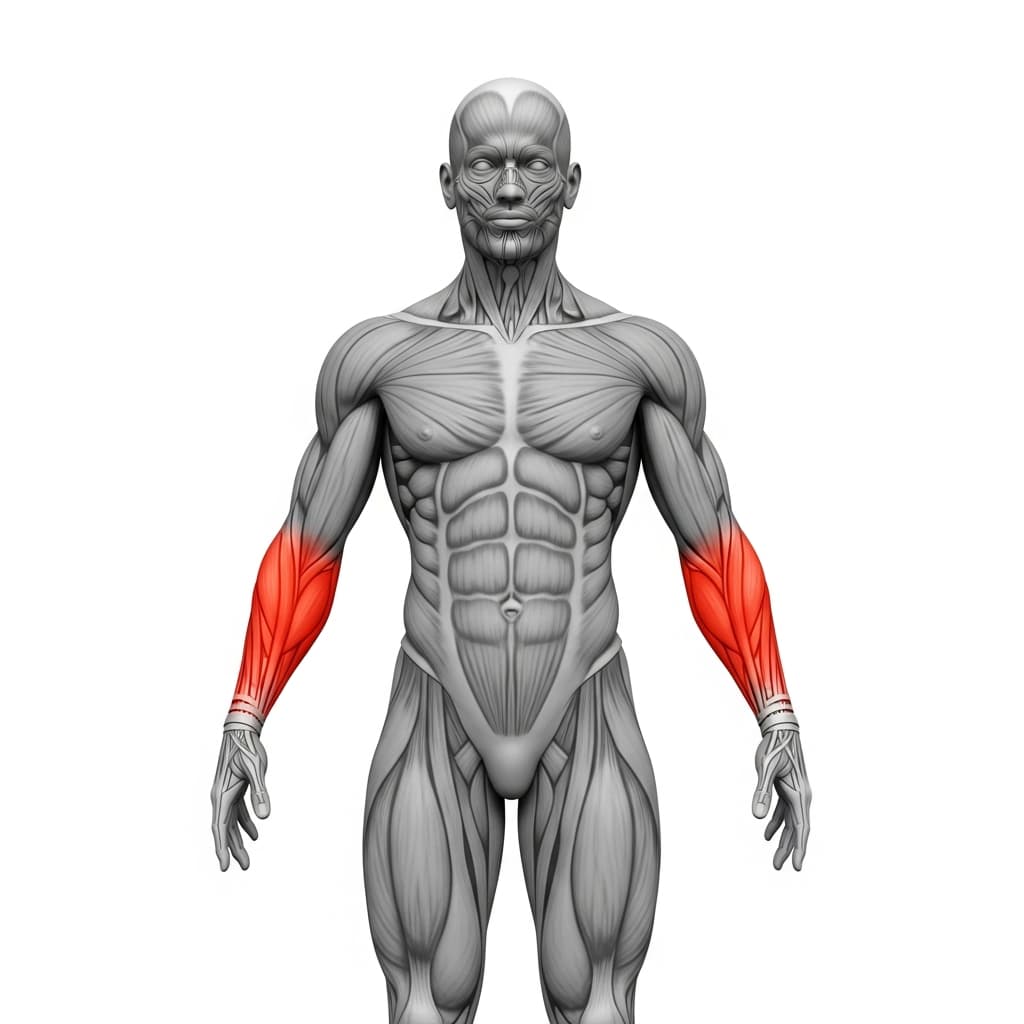
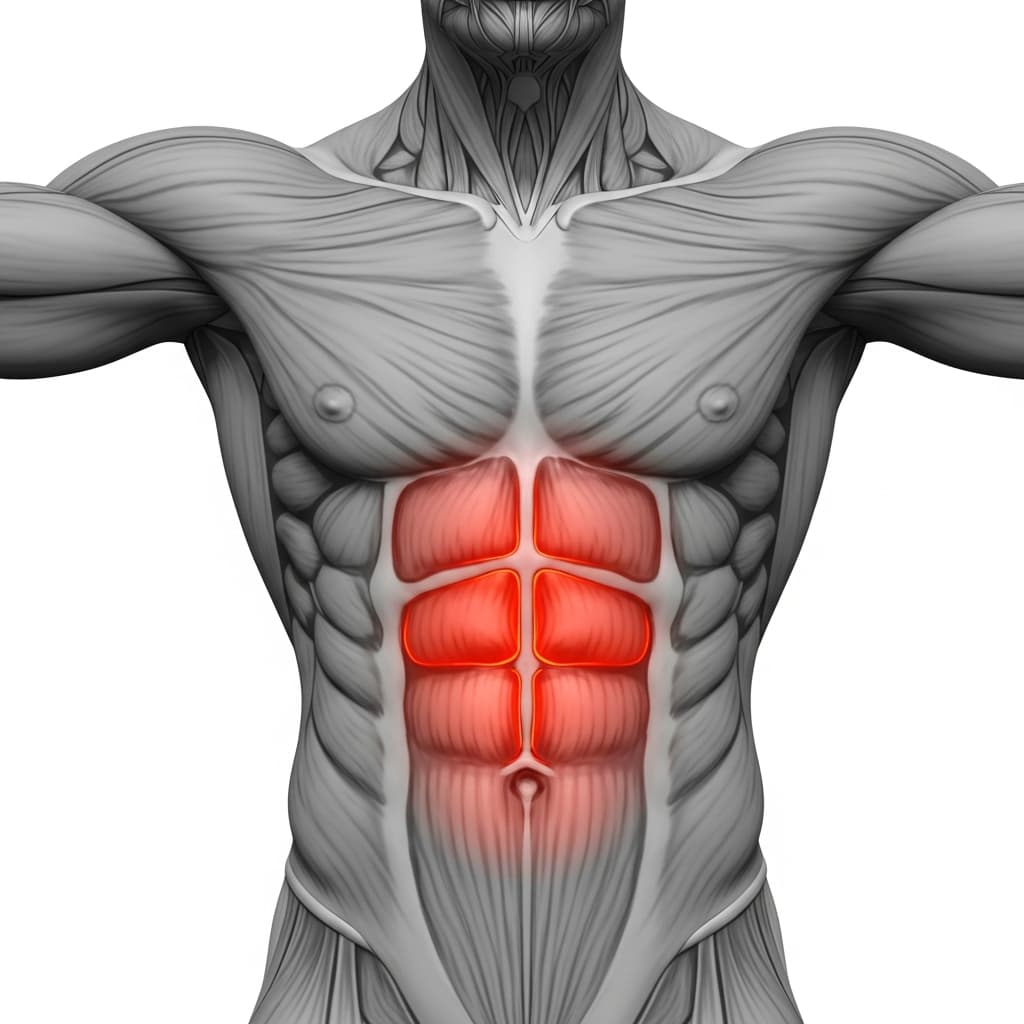
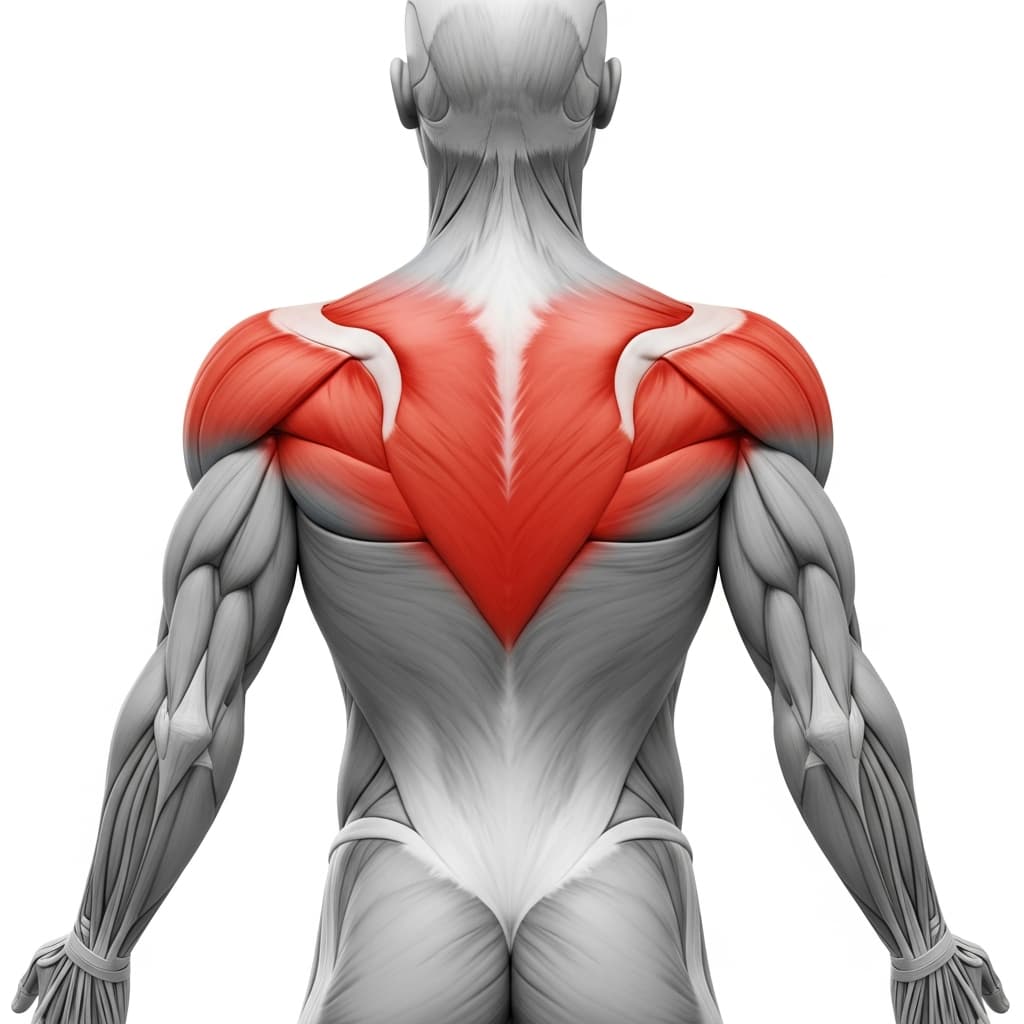
Primary Muscles
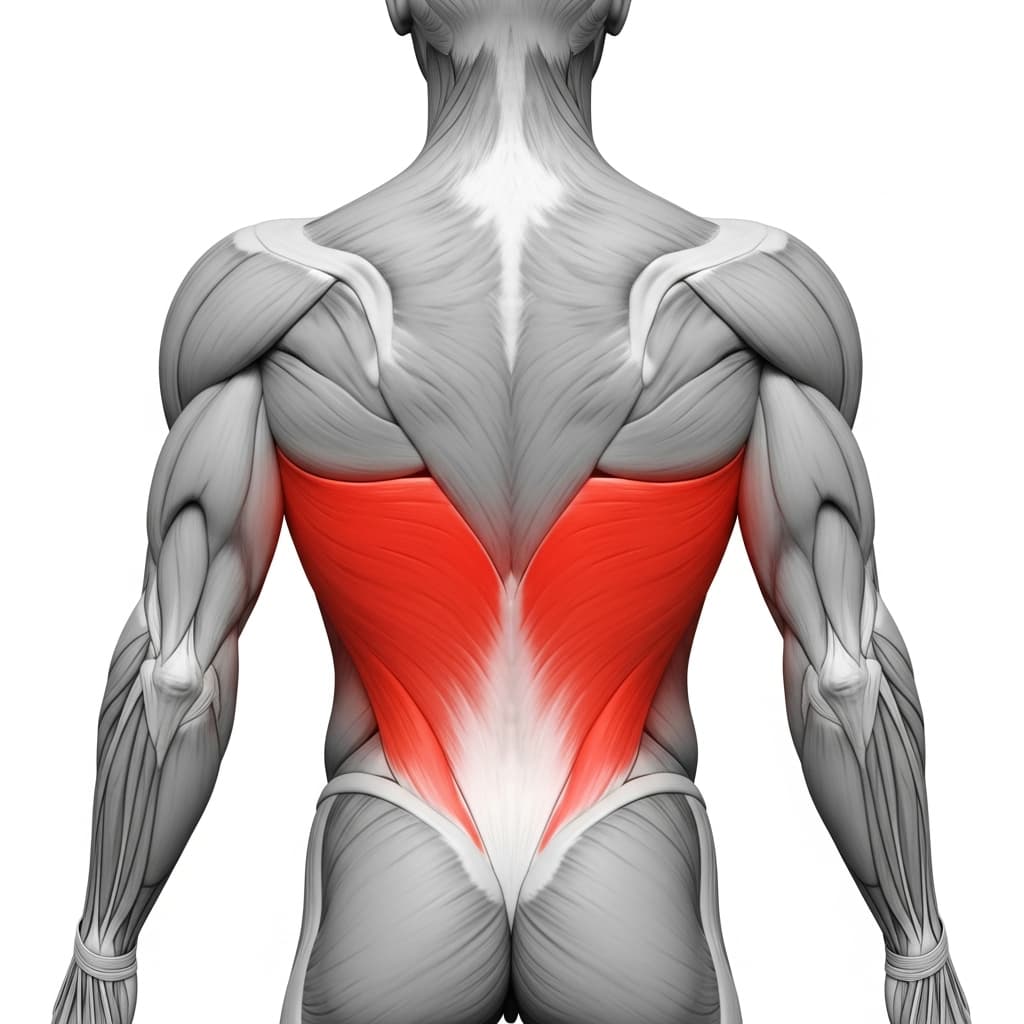
Latissimus Dorsi (Lats) - The lats control the rate of arm extension during the descent by eccentrically resisting shoulder flexion as you lower from chin-over-bar to a dead hang.
Secondary Muscles
Biceps Brachii (Biceps) - The biceps work eccentrically to control elbow extension as you slowly straighten your arms throughout the lowering phase.
Posterior Deltoid (Rear Deltoid) - The rear deltoids assist in maintaining horizontal shoulder retraction and stabilize the shoulder joint as the arms extend under load.
Trapezius (Trapezius) - The mid and lower traps hold the shoulder blades in retraction and depression during the initial top position and through the controlled descent.
Forearm Flexors & Extensors (Forearms) - The forearm flexors maintain grip on the bar throughout the slow negative, sustaining isometric contraction under bodyweight for the entire rep duration.
Rectus Abdominis (Abs) - The abdominals brace the torso in a slight hollow body position, preventing swinging and keeping the body aligned during the descent.
Rhomboids & Upper Trapezius (Upper Back) - The rhomboids and other upper back muscles work with the traps to maintain scapular retraction and stabilize the shoulder blades against the ribcage.
Benefits of Asssisted Negative Pull Up
- Builds eccentric pulling strength in the lats and upper back, which is the fastest path to earning your first full unassisted pull-up
- Develops scapular control and retraction endurance by requiring a locked shoulder position at the start of every rep
- Strengthens grip and forearm endurance through sustained loaded hanging during a slow, controlled descent
- Trains the biceps and rear deltoids through a full range of motion under time-under-tension that exceeds a standard pull-up rep
Who Is This Exercise For?
You should be able to hold a dead hang for at least 10 seconds with stable shoulders and perform scapular pull-ups with control before starting assisted negatives. Familiarity with how to safely loop and step into a resistance band on a pull-up bar is also important to avoid slipping or losing balance. If you cannot hold the bar without your grip failing immediately, focus on dead hang holds and grip endurance work first.
Common Mistakes to Avoid
Dropping too fast through the descent: Every rep should take 3 to 5 seconds from top to bottom. If you cannot control the speed, switch to a thicker resistance band that provides more assistance until you build the eccentric strength to slow down.
Skipping scapular retraction at the top: Before lifting your feet off the chair, squeeze your shoulder blades together and pull your elbows back. Starting without this retraction shifts the load onto the biceps and leaves the lats disengaged for the entire rep.
Losing core tension and swinging: Brace your abs and maintain a slight hollow body position throughout the descent. If your body swings or arches, the band pulls unevenly and the lowering phase becomes uncontrolled.
Jumping into the top position instead of stepping up: Jumping creates momentum and makes it nearly impossible to set proper scapular retraction before the negative begins. Use a chair that is tall enough to let you step calmly into position with your chin already above the bar.