

These are the 20 exercises we would give someone who trains at home with little or no equipment. They are split into pushing, pulling, legs and core, and each group goes from easiest to harder.
For every exercise you get what to feel, the mistake we see most and how to make it easier. Each one also has its own page with the full steps.
What you need at home
For pushing, legs and core you need a floor, a wall and a sturdy chair or table. That covers 15 of the 20.
Pulling is the hard part at home, because you need something to pull on. Most of our programs are built around two things: a pull-up bar and a set of resistance bands. With those two you can follow most of our plans from home, and a doorframe bar takes little space. If you have no bar yet, start with the band exercise below and add the bar later.
How to use this list
Start in each group with the first exercise you can do with clean form, not the hardest one you can survive. Clean form means the body line, the elbows and the lower back the way each exercise below describes.
When an exercise feels easy for all your reps, move one step down the list. When it falls apart, go one step back. Our program for complete beginners trains 3 times a week, and that is a good rhythm here too.
Pushing exercises
1. Hip height incline push-ups
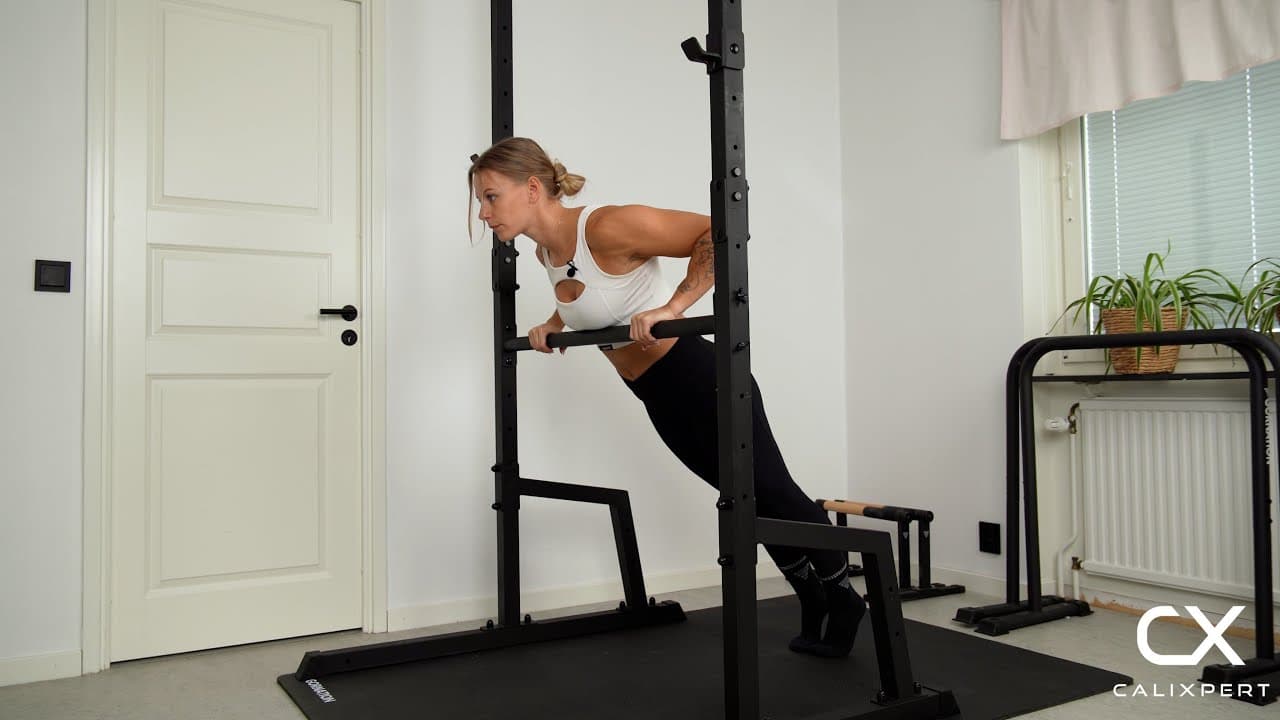
Put your hands on a table or another solid surface at hip height, walk your feet back and lower your chest to the edge. You should feel it in the chest, shoulders and the back of the arms.
These feel easy, so it is tempting to rush them. Use the lighter load to practise the two things every push-up needs: elbows at about 45 degrees from the body and a straight line from head to heels. A higher surface makes it easier. Steps on our page for hip height incline push-ups.
2. Knee push-ups
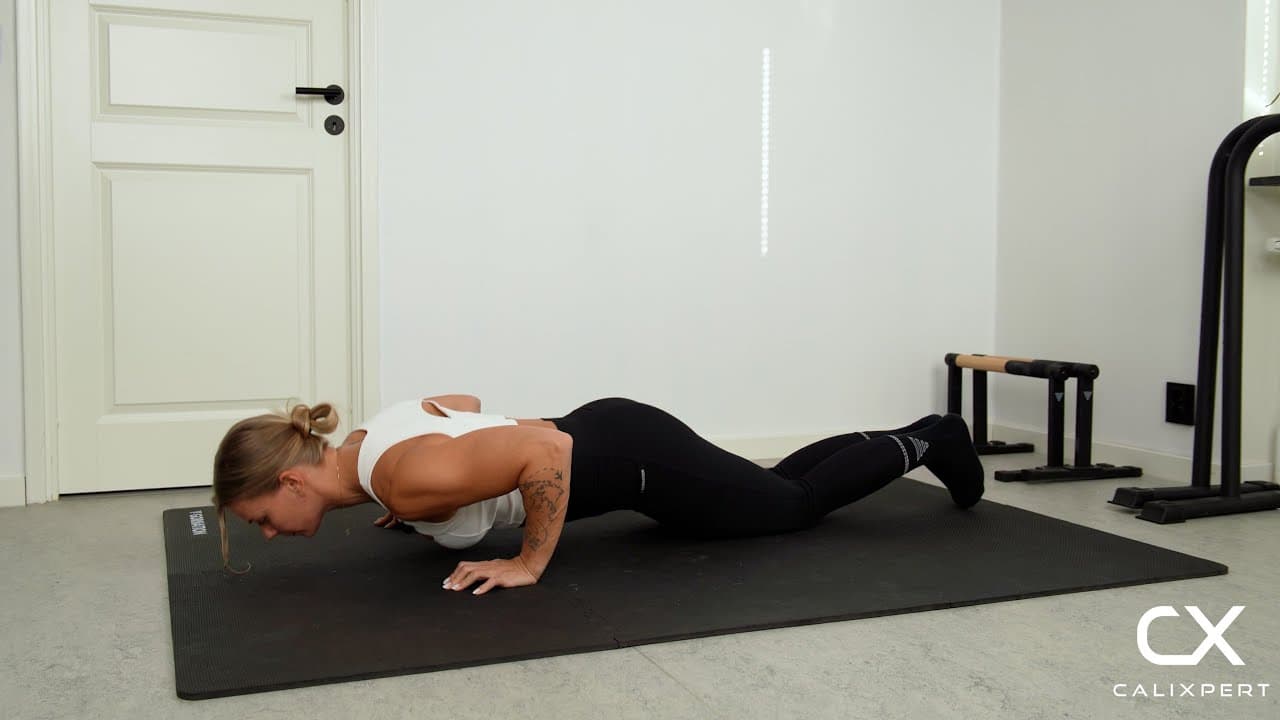
Hands slightly wider than your shoulders, knees on the floor, and a straight line from the knees to the top of your head. Squeeze your glutes so your hips do not sag.
The usual mistake is half reps. Lower until your elbows are bent to at least 90 degrees every time. When you can do 3 sets of 12 clean knee push-ups with 3 seconds on the way down, you are ready for the full push-up. All the steps: knee push-ups.
3. Push-ups
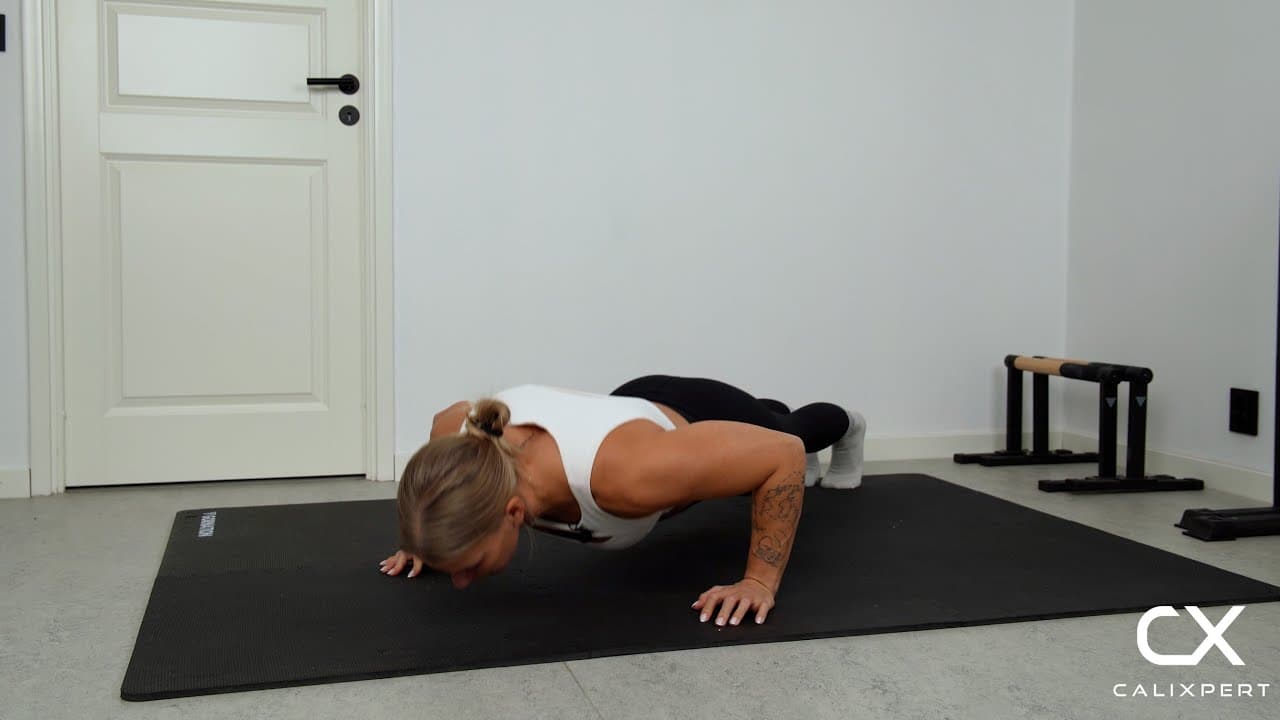
Shoulders straight above your hands, fingers pointing forward, and your whole body tight from head to heels before you bend your elbows.
Most people lose the push-up in the middle of the body, not in the arms. If your hips sag or your lower back arches, rest instead of grinding out more reps. Going back to knee push-ups or a raised surface is the easier version. Read the full push-up guide, and if you are still working towards your first one, our push-up program takes you there step by step.
4. Diamond push-ups
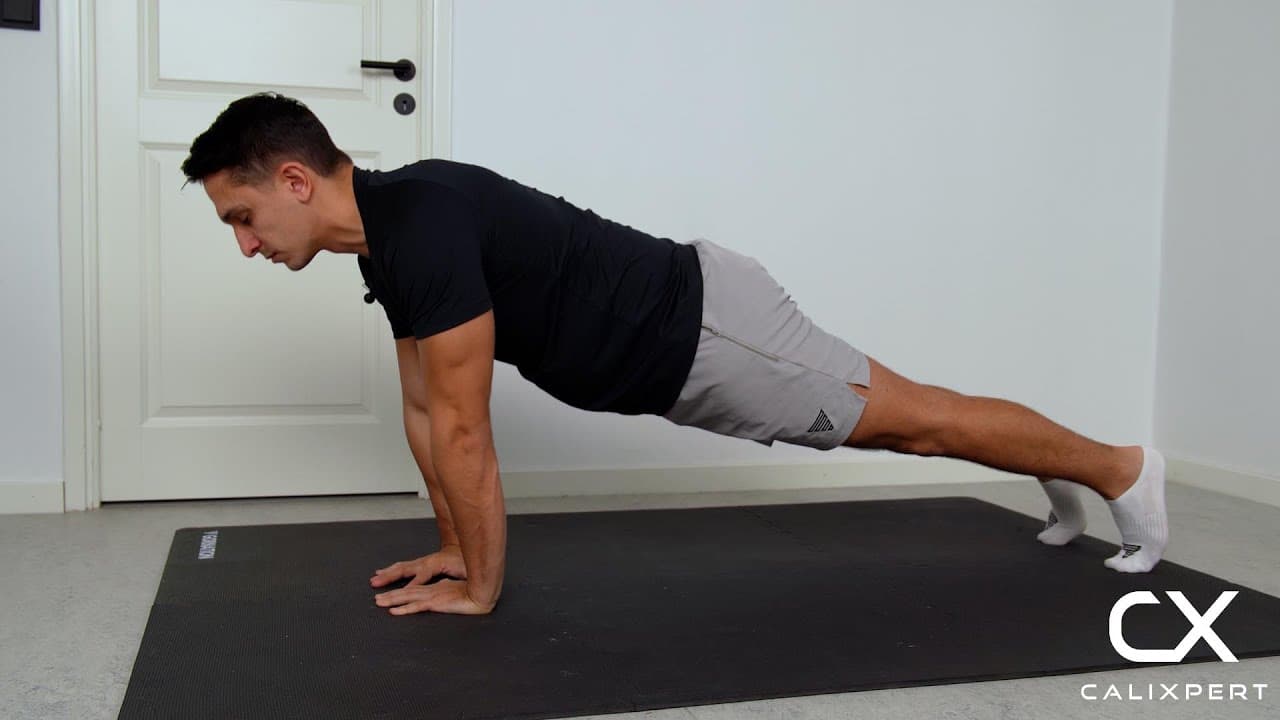
Put your hands together under the middle of your chest, thumbs and index fingers touching. This moves more of the work to the back of your arms.
Diamond push-ups usually fail at the bottom, when the elbows drift out. Think about squeezing your elbows into your ribs on the way down. If you cannot do a full rep with the elbows tight, put your hands on a raised surface or do them on your knees. More on our diamond push-ups page.
5. Pike push-ups
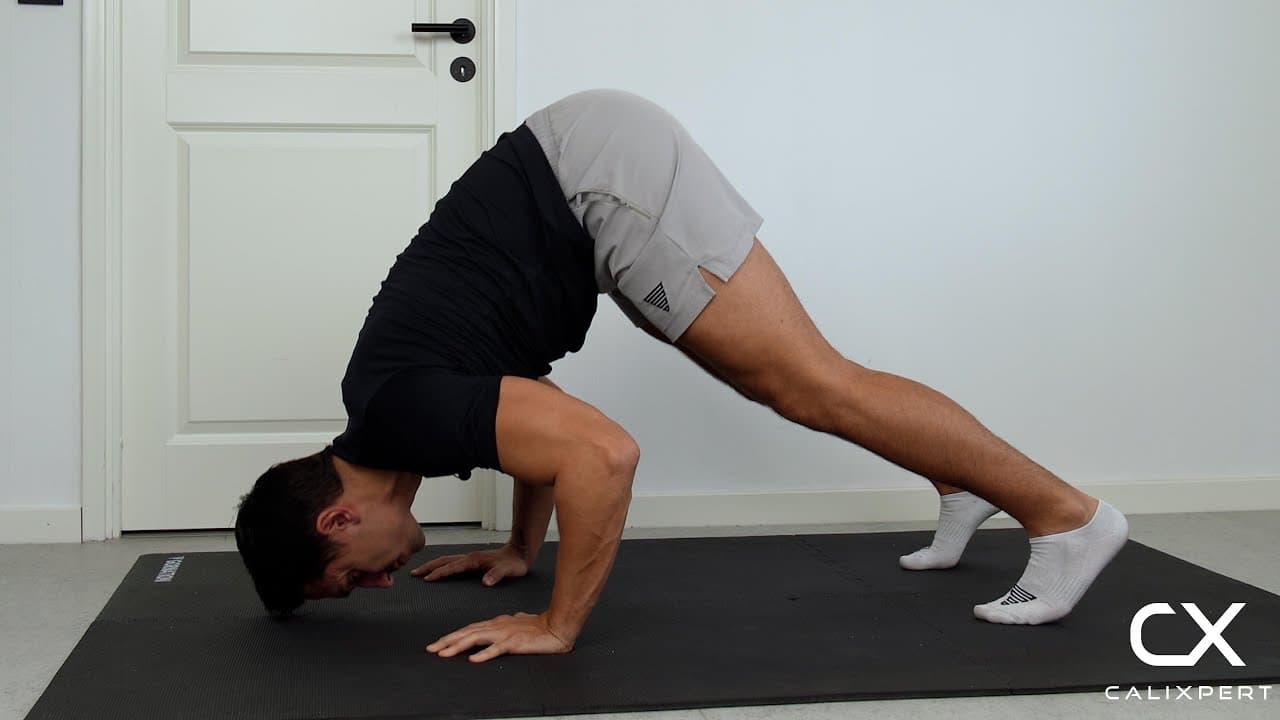
Hips high, body in an upside-down V, and lower the top of your head towards the floor in front of your hands. You should feel it in the shoulders, not the chest.
The usual mistake is having the shoulders straight above the hands, which turns it into an incline push-up. Walk your feet closer and push your hips back until the weight moves into your shoulders. Doing them from your knees is easier. This is the first step towards a handstand push-up, explained on our pike push-ups page.
Pulling exercises
6. Resistance band lat pull-downs
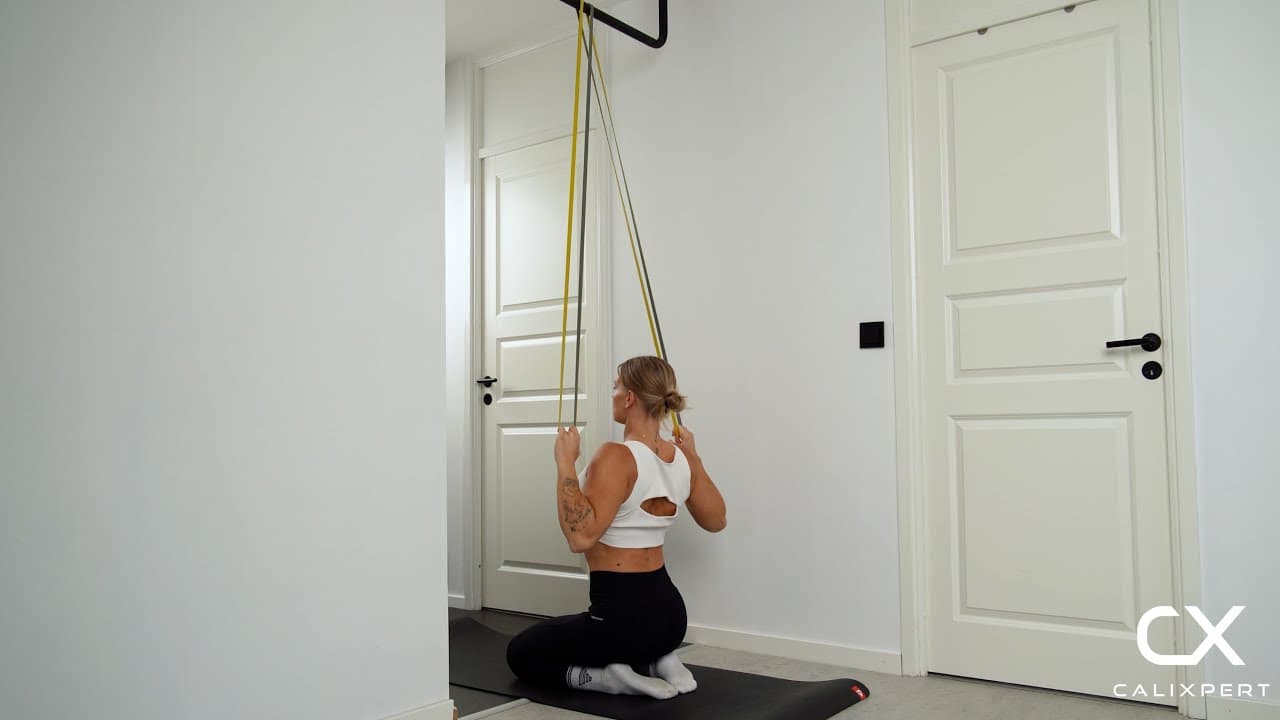
Loop a band over a pull-up bar or a door anchor, kneel under it and pull the band down. This is the pulling exercise you can do without a bar of your own.
Before you bend your arms, pull your shoulder blades down. Without that, the biceps take over and the back barely works. Go slowly and pull from the elbows, not the hands, and hold the bottom for a second. A lighter band, or sitting instead of kneeling, makes it easier. See resistance band lat pull-downs.
7. Dead hang

Hang from the bar with straight arms and a relaxed body, thumbs wrapped around the bar. It trains your grip and stretches your shoulders.
People rush past the dead hang to get to pull-ups and then their grip gives out first. Spend real time here: a 45 second hang makes every pulling exercise after it feel more stable. If the full hang is too hard, keep your feet on a chair or the floor and take some of the weight. Steps on our dead hang page.
8. Scapula pull-ups
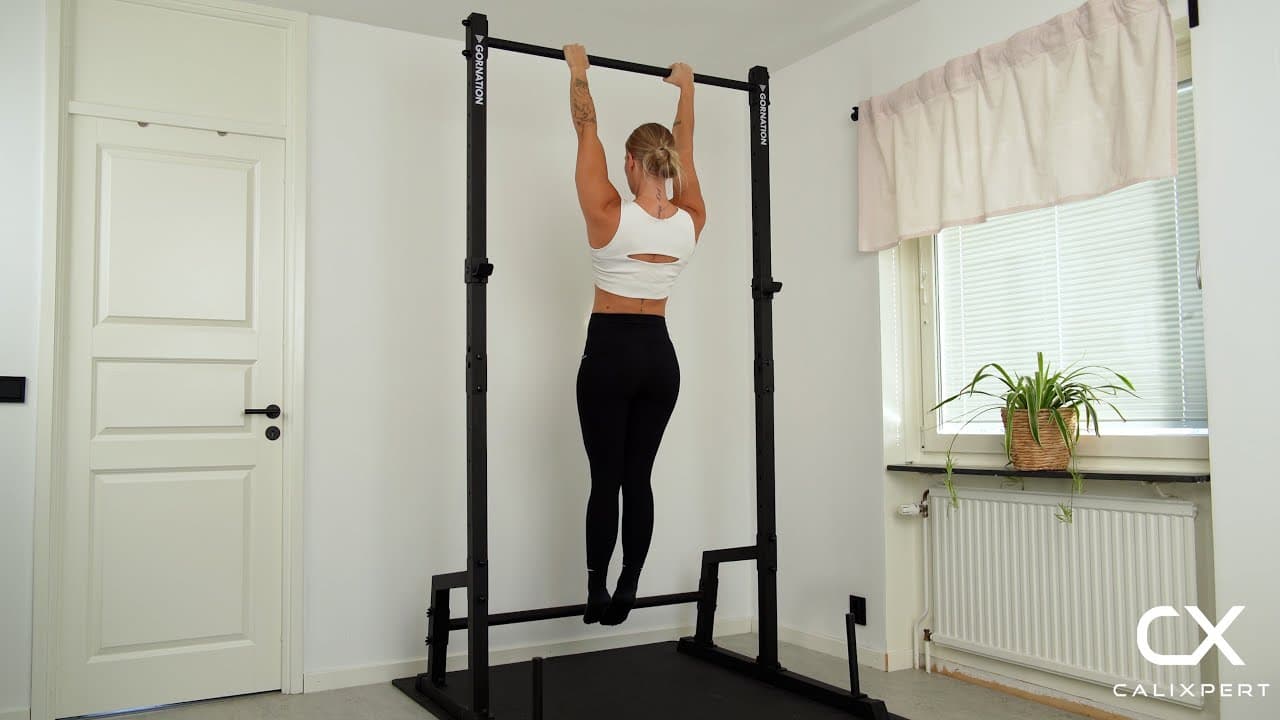
Hang with straight arms, then pull your shoulder blades down without bending your elbows. Your body rises a few centimetres. Think about putting your shoulder blades into your back pockets.
The mistake is bending the elbows, which turns it into a half pull-up. When you can do 3 sets of 10 with a pause at the top, your pull-ups start to feel different, because the back starts the pull instead of the arms. A band makes them easier. More on scapula pull-ups.
9. Bodyweight incline rows
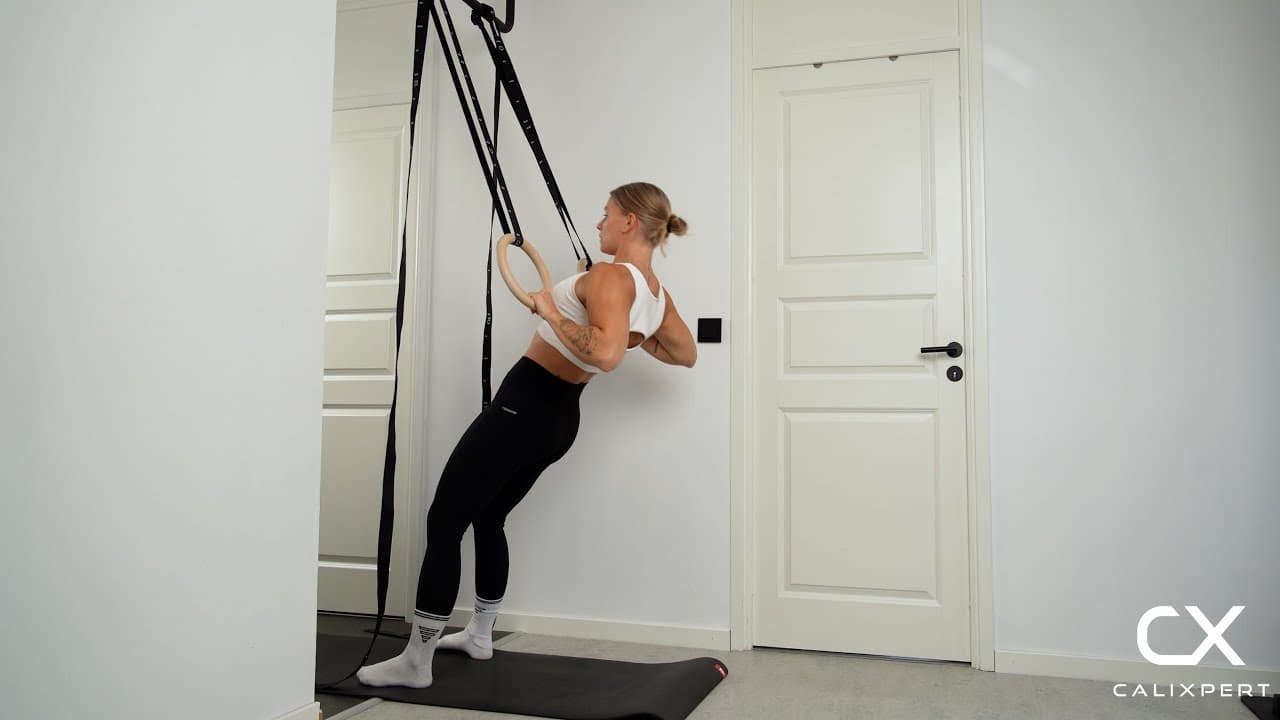
Hang rings or set a bar at about the height of your belly button, lean back with straight arms and pull your chest up. The more upright you stand, the easier it is.
Most people make rows too easy by standing almost upright for months. Pick the angle where you get 8 clean reps with the shoulder blades squeezed at the top, then move your feet 2 to 3 centimetres forward each week. Our incline rows page shows how.
10. Negative pull-ups
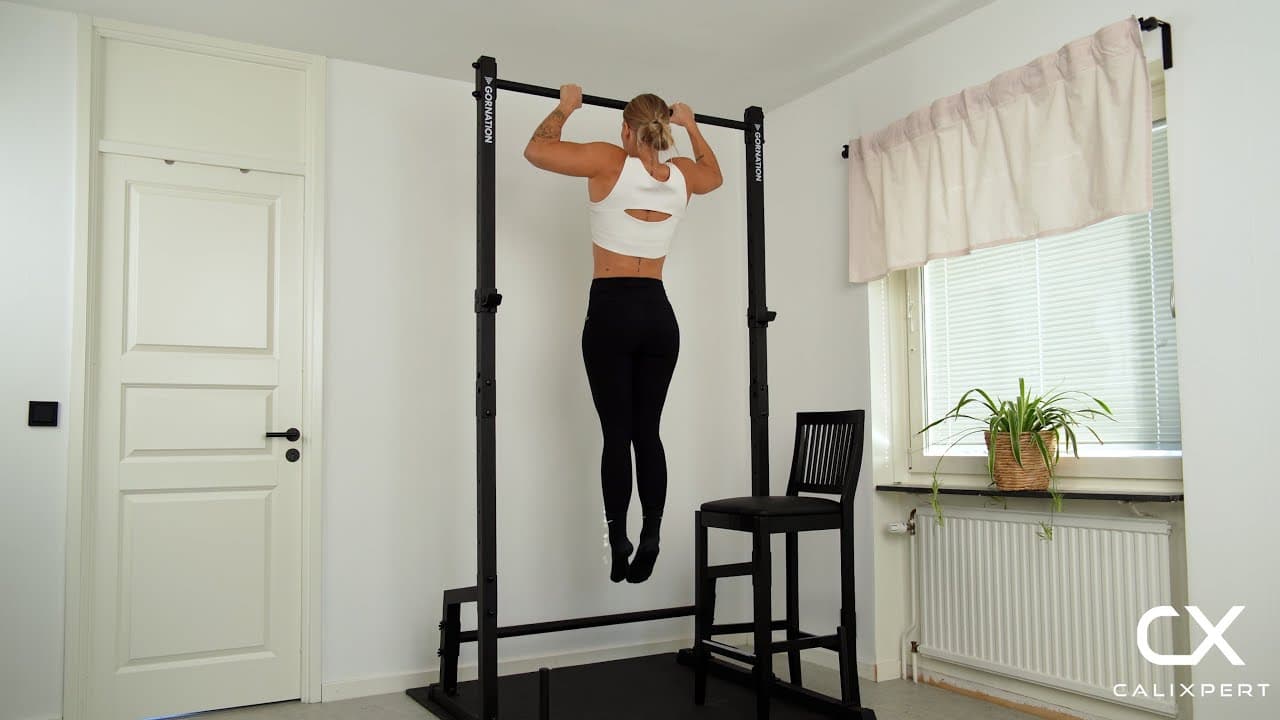
Stand on a chair or box with your chin over the bar, step off and lower yourself as slowly as you can until your arms are straight.
The mistake is dropping fast. A 5 second lowering where you fight for every centimetre does more than 10 fast drops. If you cannot hold 3 seconds, do fewer reps per set rather than faster ones. A band under your feet makes it easier. This is the exercise we lean on most for a first pull-up: read negative pull-ups, and our pull-up program builds the whole plan around it.
Leg exercises
11. Glute bridge
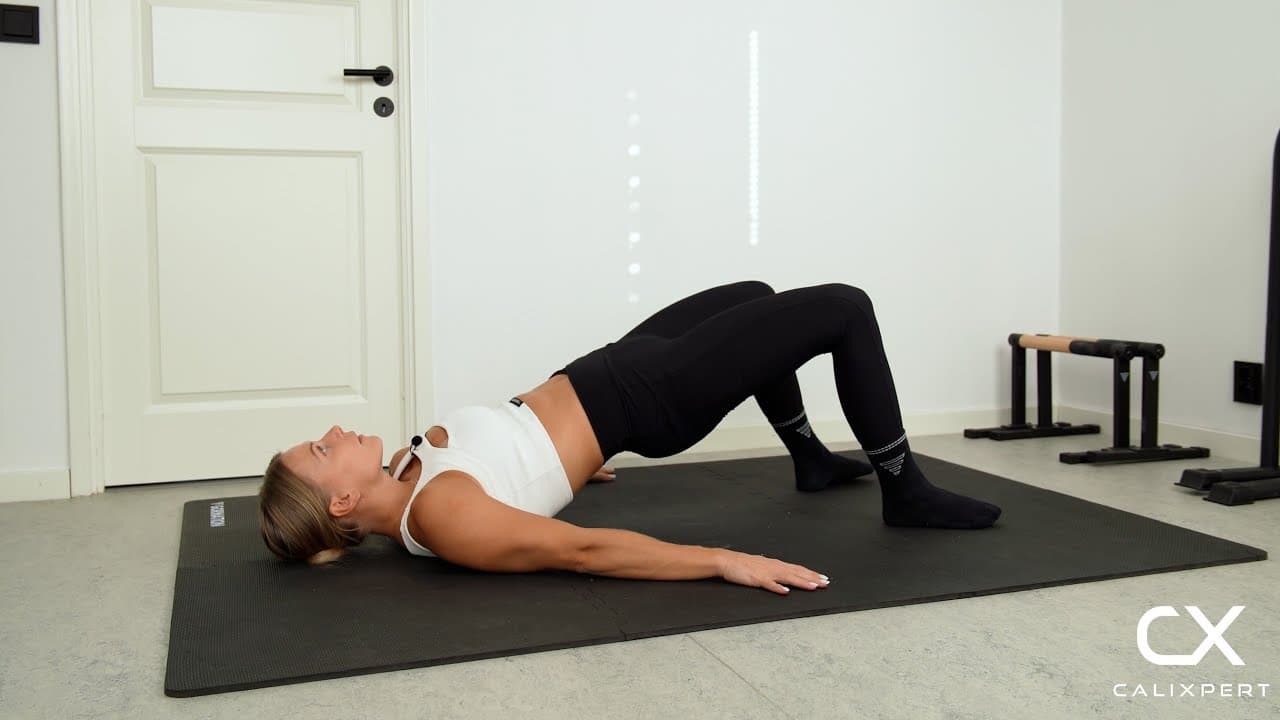
Lie on your back with your knees bent, press through your heels and lift your hips until there is a straight line from your shoulders to your knees.
Rush them and you will hardly feel your glutes. Hold the top for a full second and squeeze. If you feel it mostly in the back of your thighs, move your feet closer to your body. Lifting your hips only part of the way is the easier version. See our glute bridge page.
12. Bodyweight squats
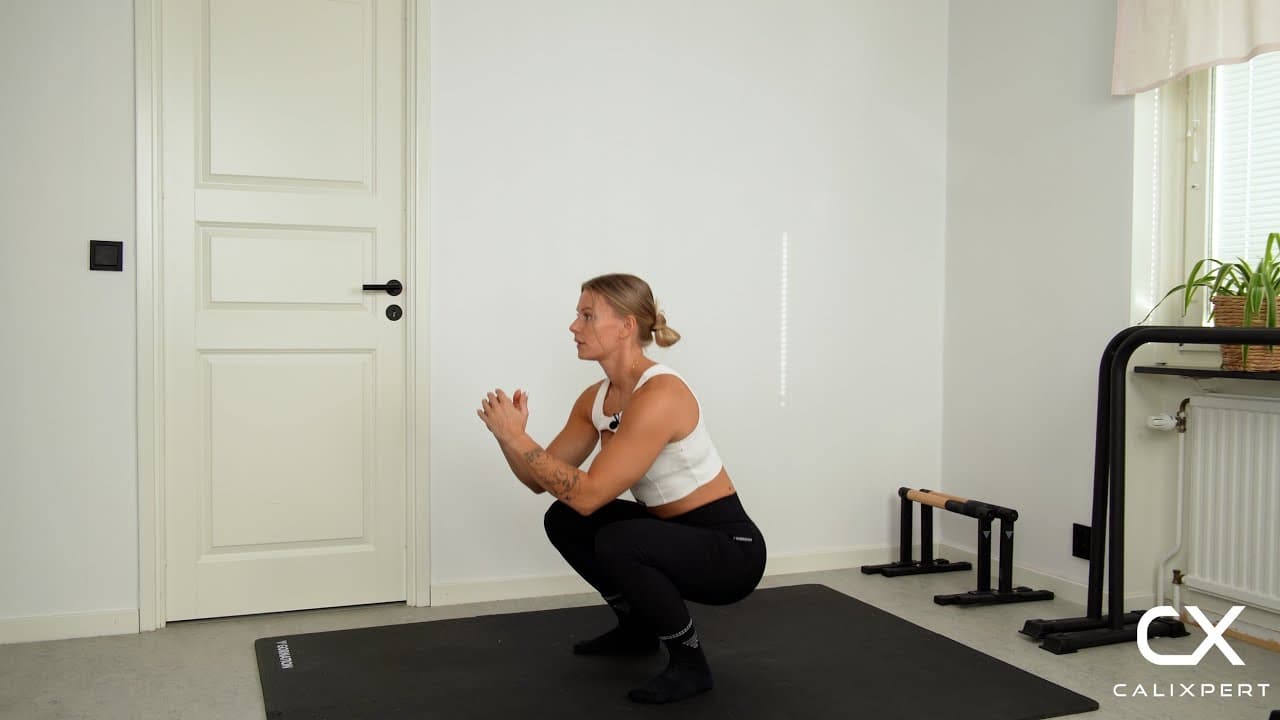
Feet about hip width, toes slightly out. Push your hips back and bend your knees as if you sit down on a chair, and keep your knees going the same way as your toes.
The usual mistake is knees caving in. Think about spreading the floor apart with your feet. Squats feel easy, so slow them down: 3 seconds down and a 1 second pause at the bottom. When you can do 20 like that, you are ready for single-leg work. Holding a door frame makes it easier. More on bodyweight squats.
13. Calf raises
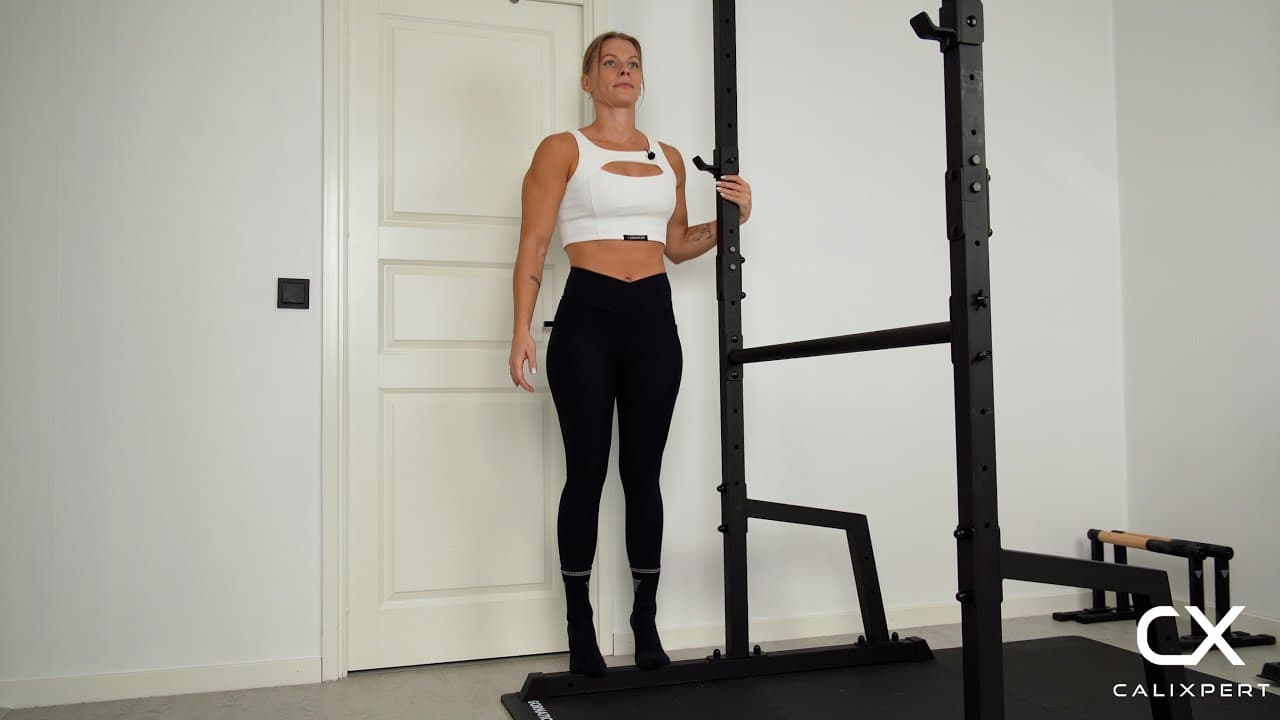
Stand with the balls of your feet on a step, heels hanging free, and hold on to a wall or something sturdy for balance. Let your heels sink, then rise as high as you can.
Bouncing through them fast does little. Pause for a second at the bottom and squeeze for a second at the top. On a flat floor they are easier, and on one leg they are harder. See calf raises.
14. Bulgarian squats
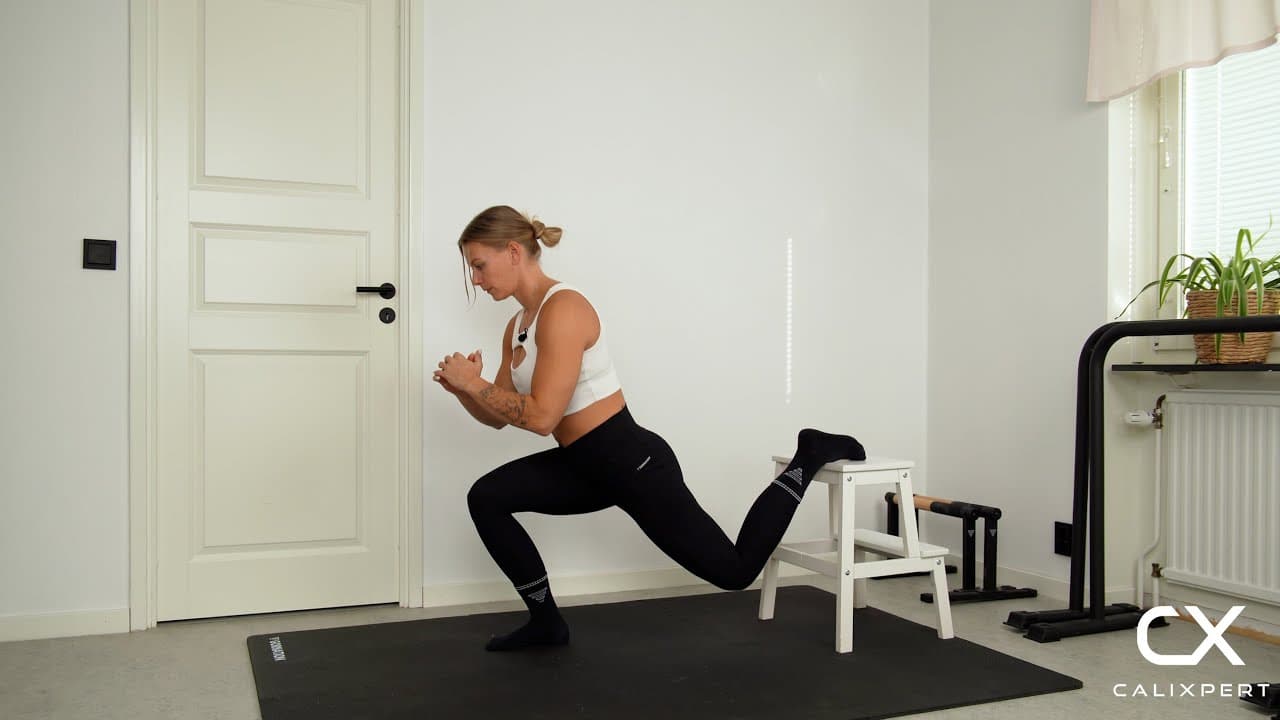
Put the top of one foot on a chair behind you and squat down on the front leg. The back foot is only there for balance.
Most people stand too close to the chair. Take a bigger step forward than you think you need: when your front shin can stay almost vertical at the bottom, the distance is right. Holding on to something makes it easier. More on our Bulgarian squats page.
15. Negative box assisted pistol squat
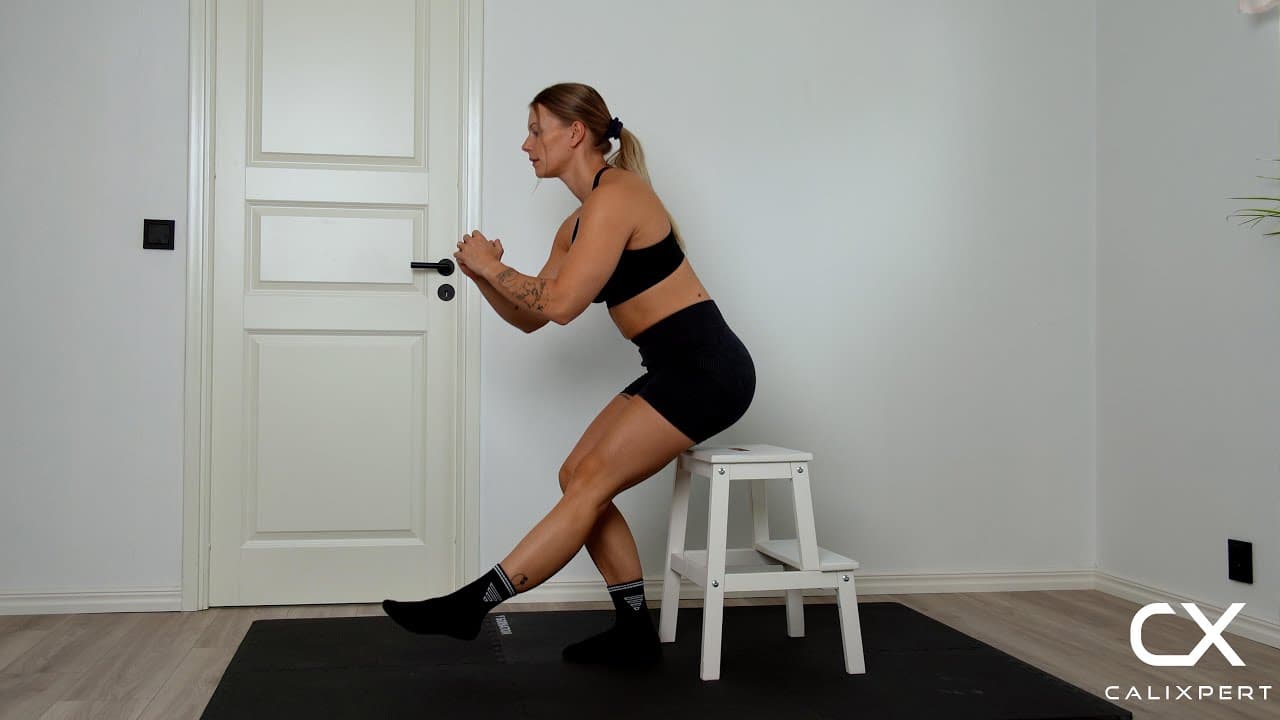
Stand in front of a chair or box at knee height, lift one leg straight out in front of you and lower yourself on the other leg until you sit down. Then stand up on both legs.
The whole point is the slow lowering. Take at least 3 seconds. If you cannot control the last part, use something higher to sit on. When you can take 5 seconds down to a knee-height box without wobbling, you can start training the full pistol squat. See the negative box assisted pistol squat.
Core exercises
16. Plank
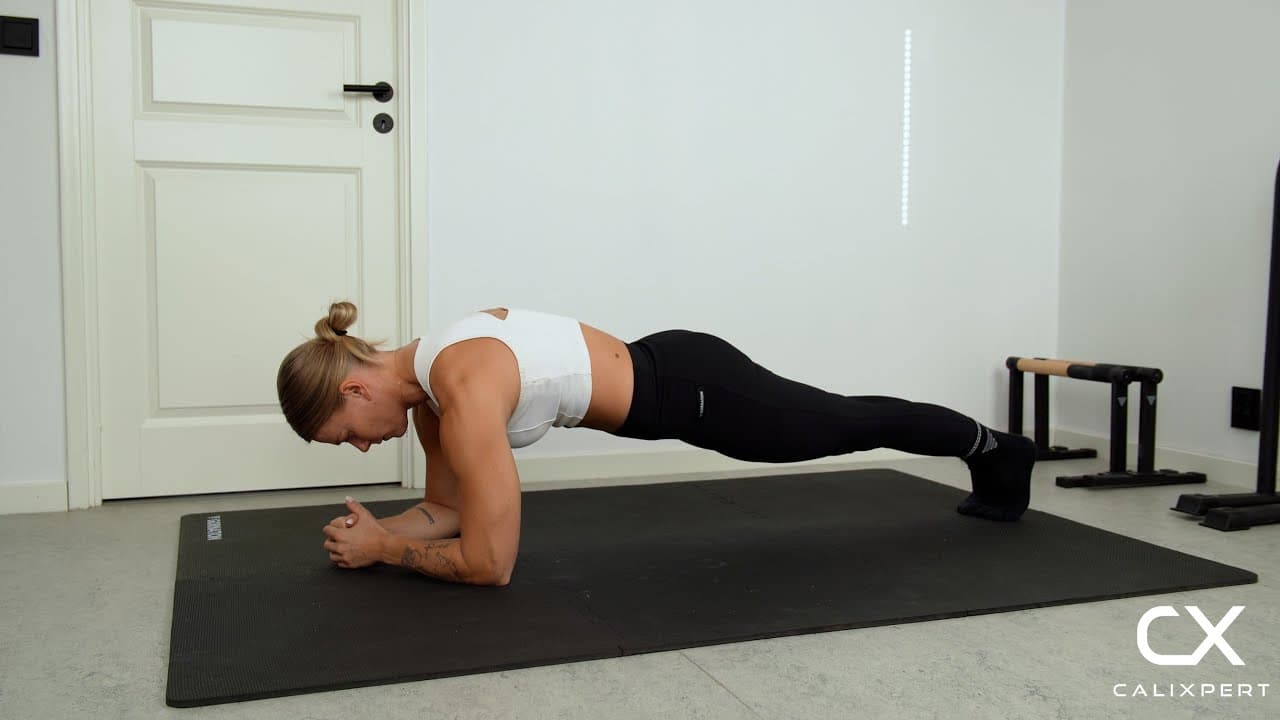
Forearms on the floor with your elbows under your shoulders, and a straight line from head to heels.
Do not just hang between your shoulders. Push the floor away with your forearms, push your upper back towards the ceiling and squeeze your glutes. Then 30 seconds feels like a minute. The plank on your knees is the easier version. See our plank page.
17. Dead bug
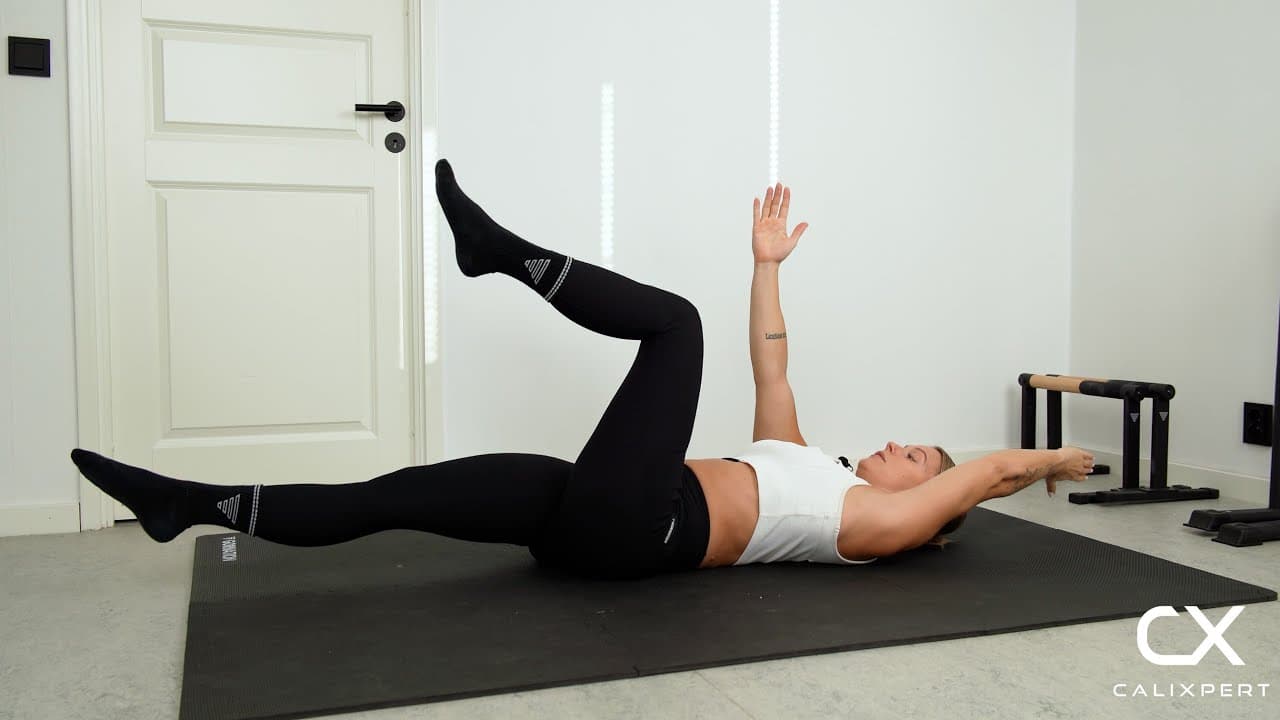
Lie on your back with your knees over your hips and your arms up. Lower the opposite arm and leg slowly while your lower back stays pressed into the floor.
The one rule is the lower back on the floor. If it lifts, only lower the leg as far as you can keep it down. Take 2 to 3 seconds out and 2 to 3 seconds back. Moving only the legs is easier. See dead bug.
18. Hyperextension
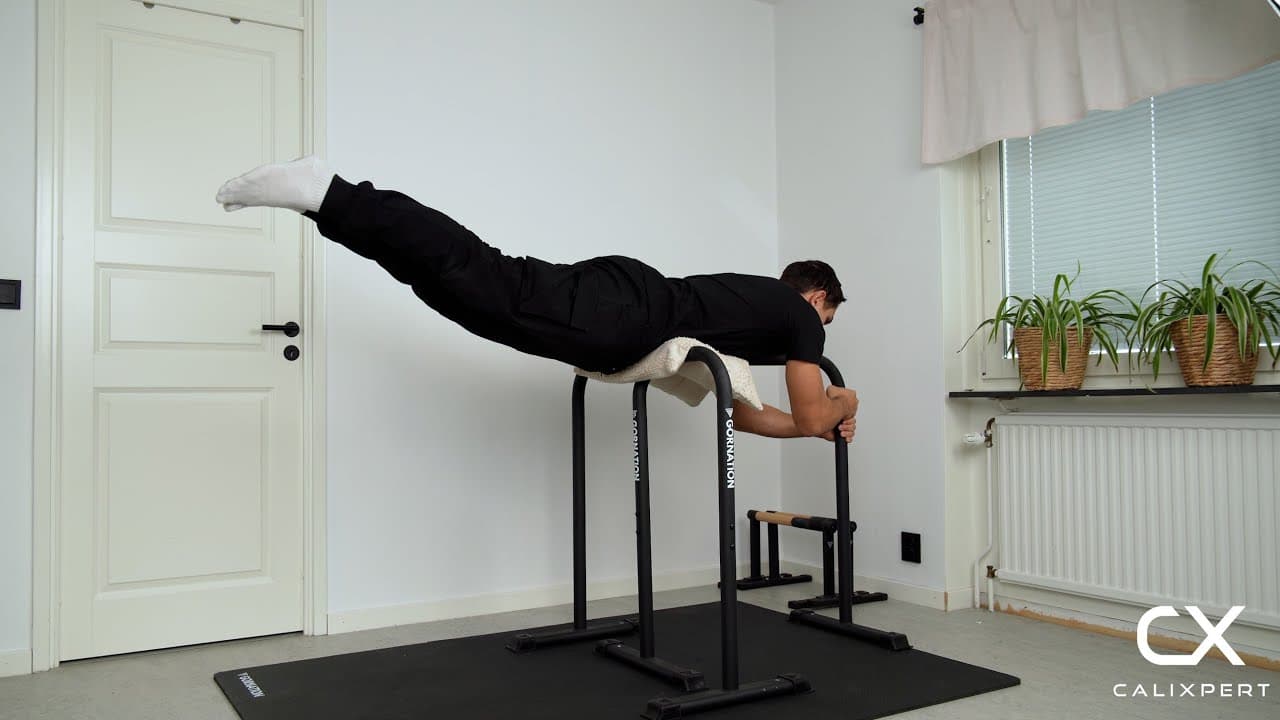
Lie face down with your hips at the edge of a pair of dip bars, a sofa arm or a sturdy table, with a towel under your hips, and lift your straight legs. It trains the lower back and glutes.
The mistake is swinging the legs up. Start every rep from a still position, and stop the arch as soon as you feel the lower back and glutes working hard. Bending your knees makes it easier. Read hyperextension.
19. Laying leg raises
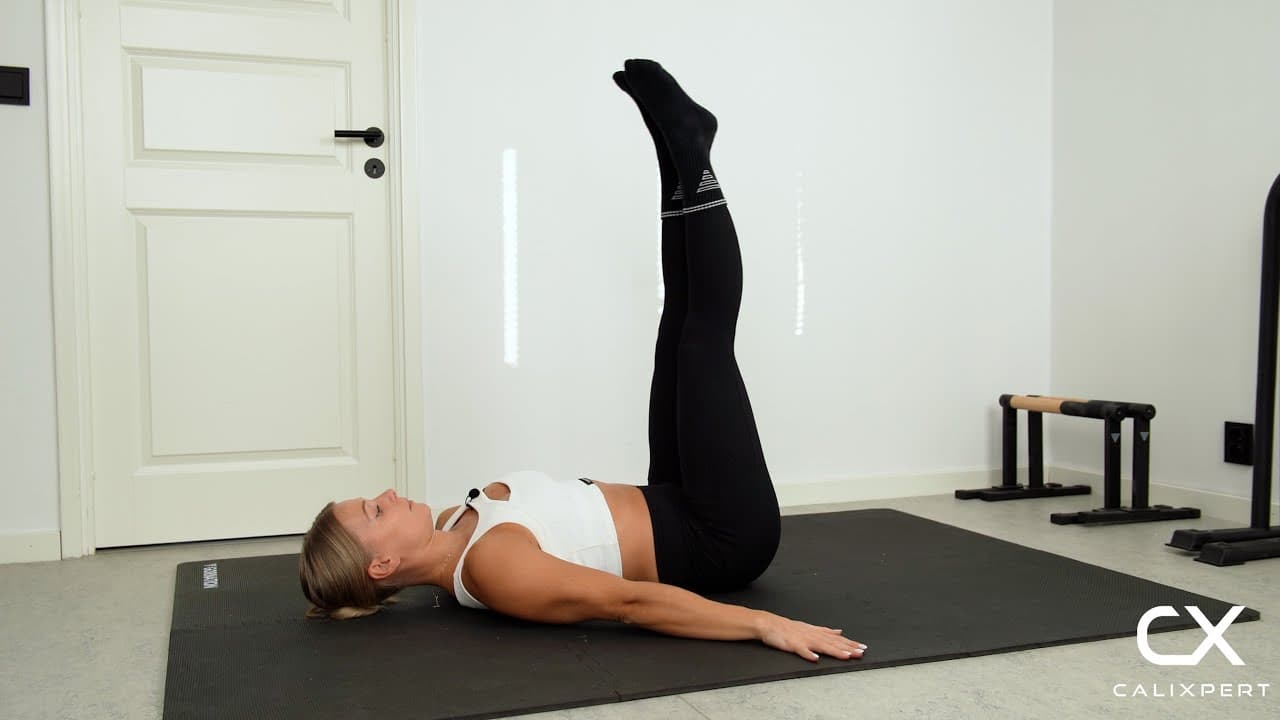
Lie on your back, press your lower back into the floor and lower your straight legs slowly. Take at least 3 seconds down.
Most people chase the full range and end up arching their back. Find the point where your lower back is about to lift and stop there. That is your working range, and it grows as you get stronger. Bending your knees is the easier version. More on laying leg raises.
20. Hollow body hold
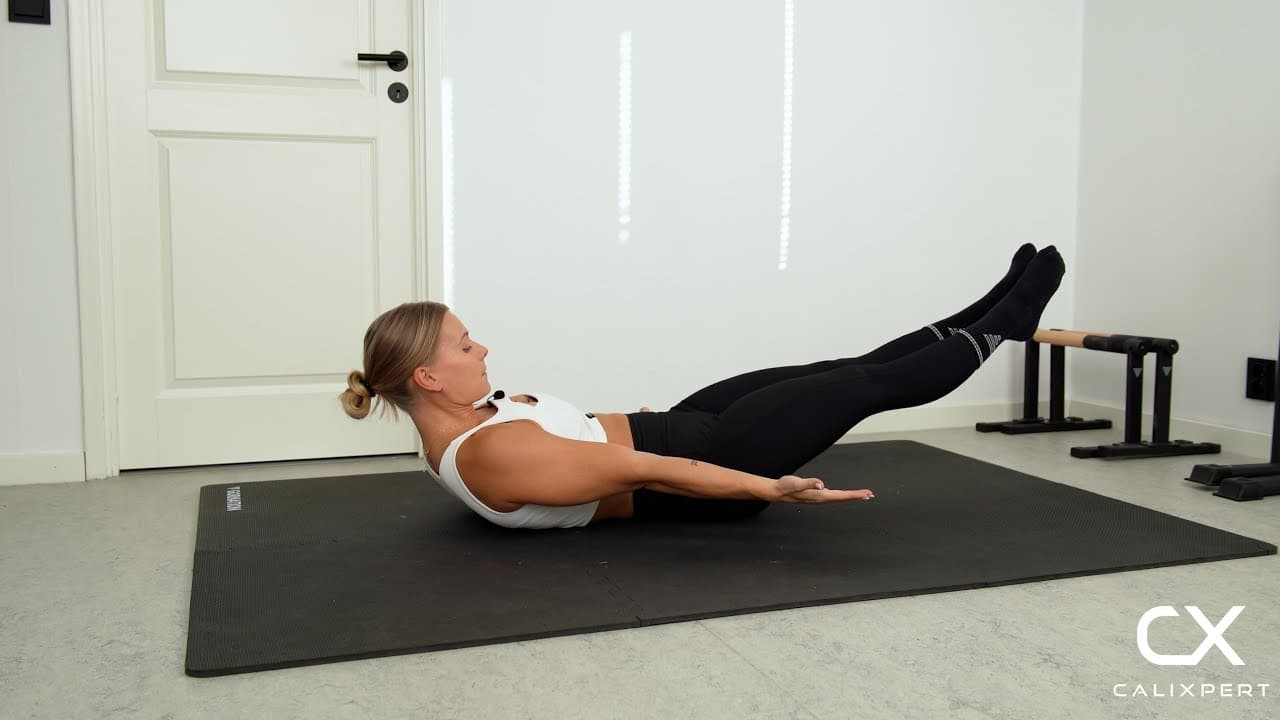
Lie on your back, press your lower back into the floor, lift your shoulders and hold your legs up. It is the body shape behind handstands and levers.
Do not try to get your legs as low as possible on day one. Your lower back decides: keep the legs high enough that it never leaves the floor, and lower them a little at a time over weeks. Bending your knees makes it easier. See our hollow body hold page.
A whole workout to follow
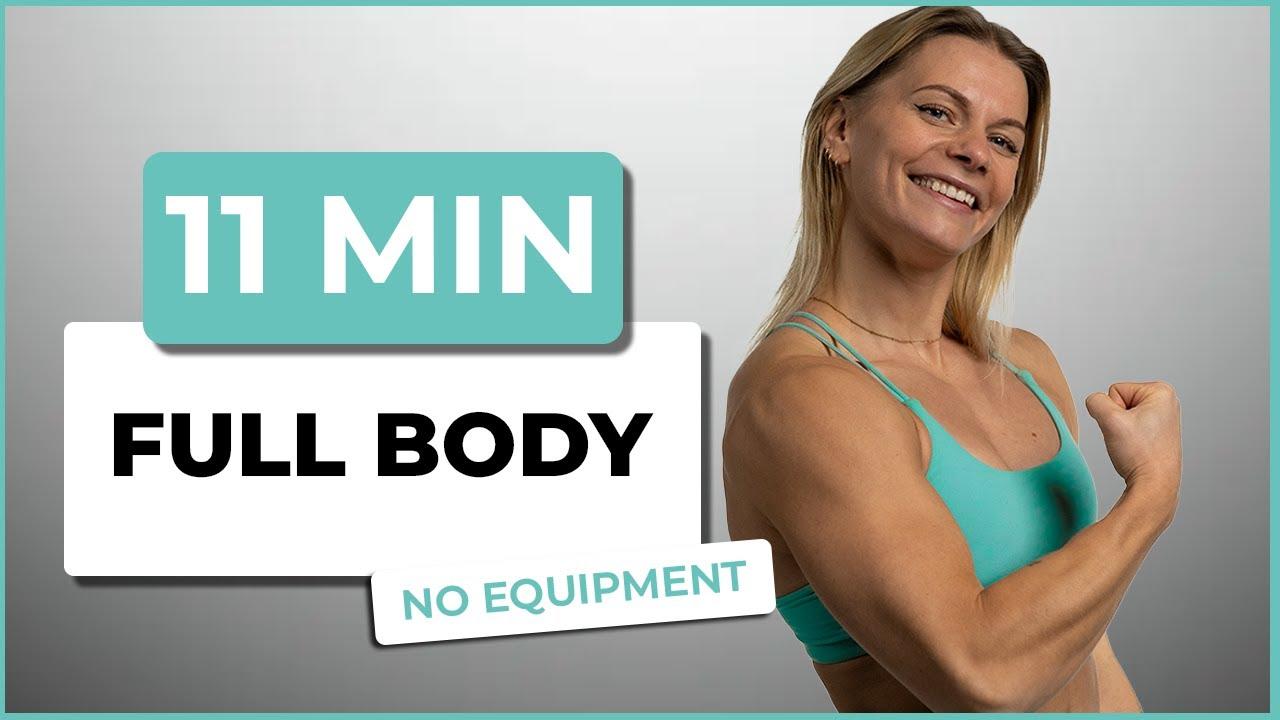
If you would rather train along with us than build your own session, this is an 11 minute full body workout without equipment from our YouTube channel.
Where to go from here
Pick one exercise from each group that you can do with clean form today, and train them 3 times a week. Write down your reps, so you know when it is time to move one step down the list.
If you would rather have the order and the weeks planned for you, our beginner program puts these exercises into a plan, starting from no push-ups and no pull-ups.
Are you over 30 and struggling with pull-ups, handstands or muscle-ups? We have helped thousands of people master these skills, and we will help thousands more. If you want a systematic and supportive approach to your calisthenics goals, start a 7-day free trial of Calixpert.