

A muscle-up is a pull-up that turns into a dip on top of the bar. Many people join our community with it as their goal. When I asked our members about their first big win in calisthenics, Daniel, who coaches with me, answered with his first muscle-up. It is a big moment, and it is one you can train for.
You will not get it by trying the full muscle-up again and again. Build the strength first, then train the three parts of the movement on their own, 3 times a week. That is how Daniel and I coach it, and it is how we have seen members go from jumping muscle-ups and thick bands to their first muscle-up.
Below I share what we use for that. First how strong you should be before you start, then the exercises for each part with our own videos and a training week you can follow. At the end, the mistakes I see most on our coaching calls and roughly how long it takes. It is about the strict bar muscle-up, with no big swing and no kipping.
What you need before you start
About 10 clean pull-ups and 10 straight bar dips. That is what our muscle-up program asks for before you start, and the higher you can pull, the better. Below that, the muscle-up itself is not what is missing yet. I would build the pull-up and the dip first.
If you are not there, our pull-up program and the dips page are the places to start. Then come back here.
You also need a bar you can get above: a high bar in a park, a gym or a pull-up station. On a door frame bar the room above the bar is limited, which can be a problem if you are tall.
The three parts of a muscle-up
1. The pull. You pull much higher than in a normal pull-up: the bar goes to your chest, not your chin. Keep your elbows close to your body.
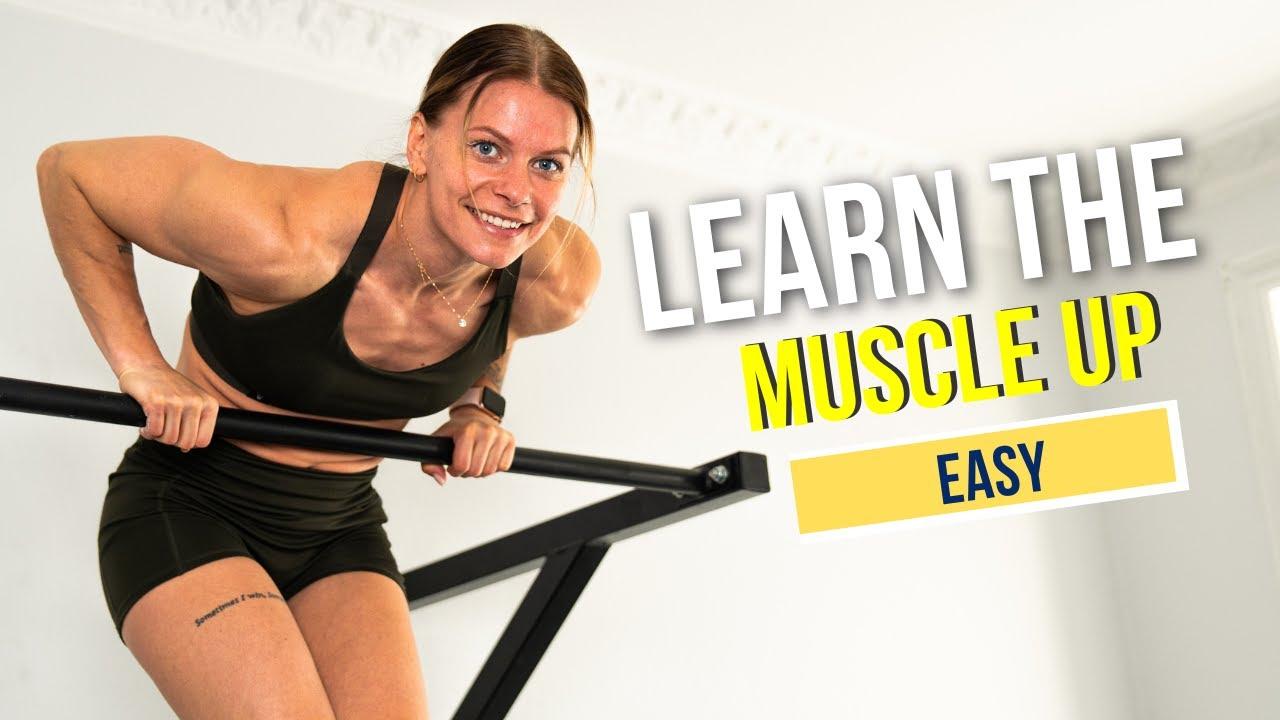
2. The transition. At the top of the pull you lean over the bar, turn your grip forward and push your elbows back. This is the hard part, and in my experience the part most people never train on its own.
3. The dip. Once your chest is over the bar, you finish with a straight bar dip.
The pull is not the same as a strict pull-up. Your body moves in a C shape around the bar, so it feels different, and it has to be trained as its own skill.
The exercises that build it
High pull-ups
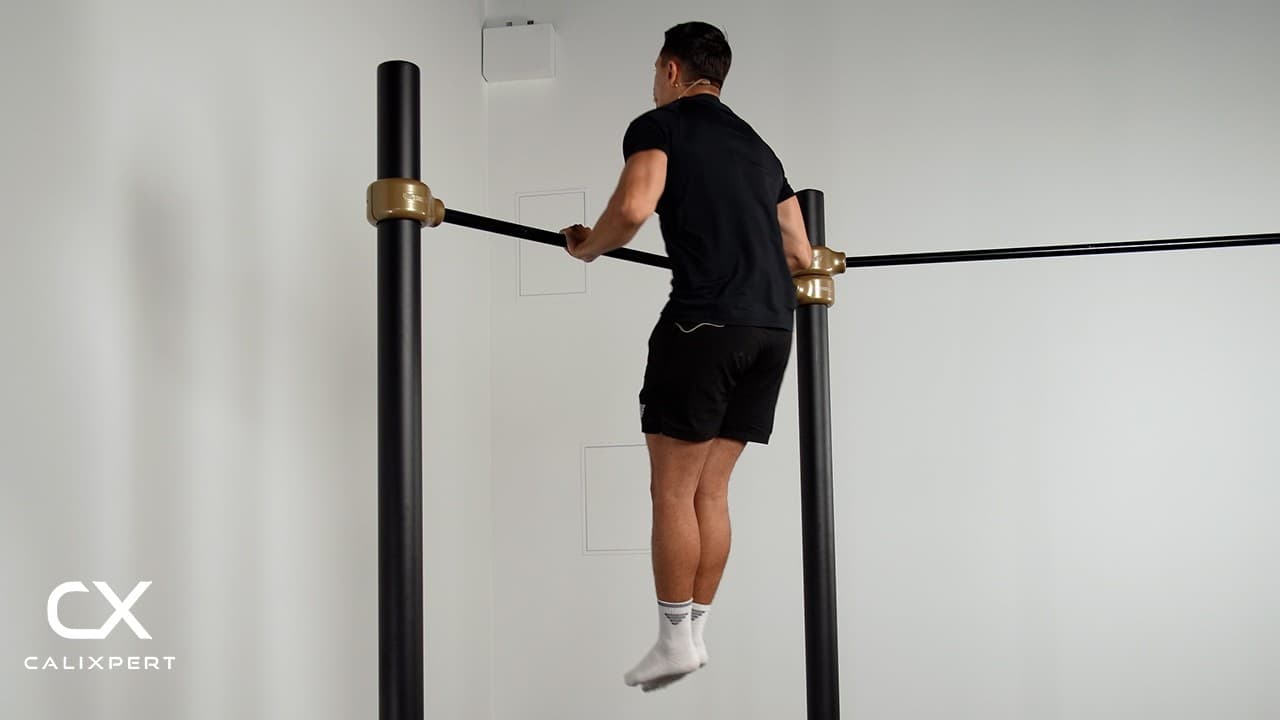
The main exercise for the pull. Take a small swing, and pull at the moment you are about to swing back, not on the way out. Elbows close, and aim the bar towards your chest. A band makes them easier. Steps on our high pull-ups page.
Explosive pull-ups
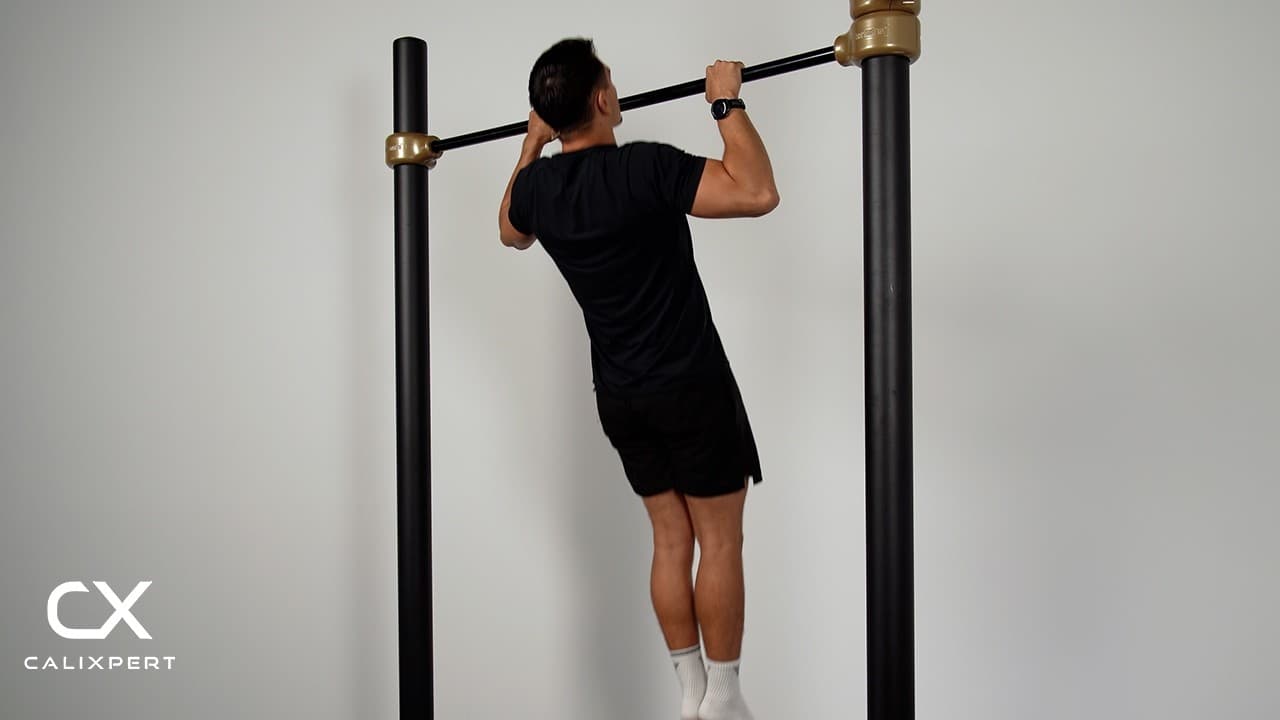
From a still hang, with everything tight, explode up so your chin goes over the bar. The way down is only there to control you, so do not train it. Low reps, full rest. See explosive pull-ups.
False grip hang
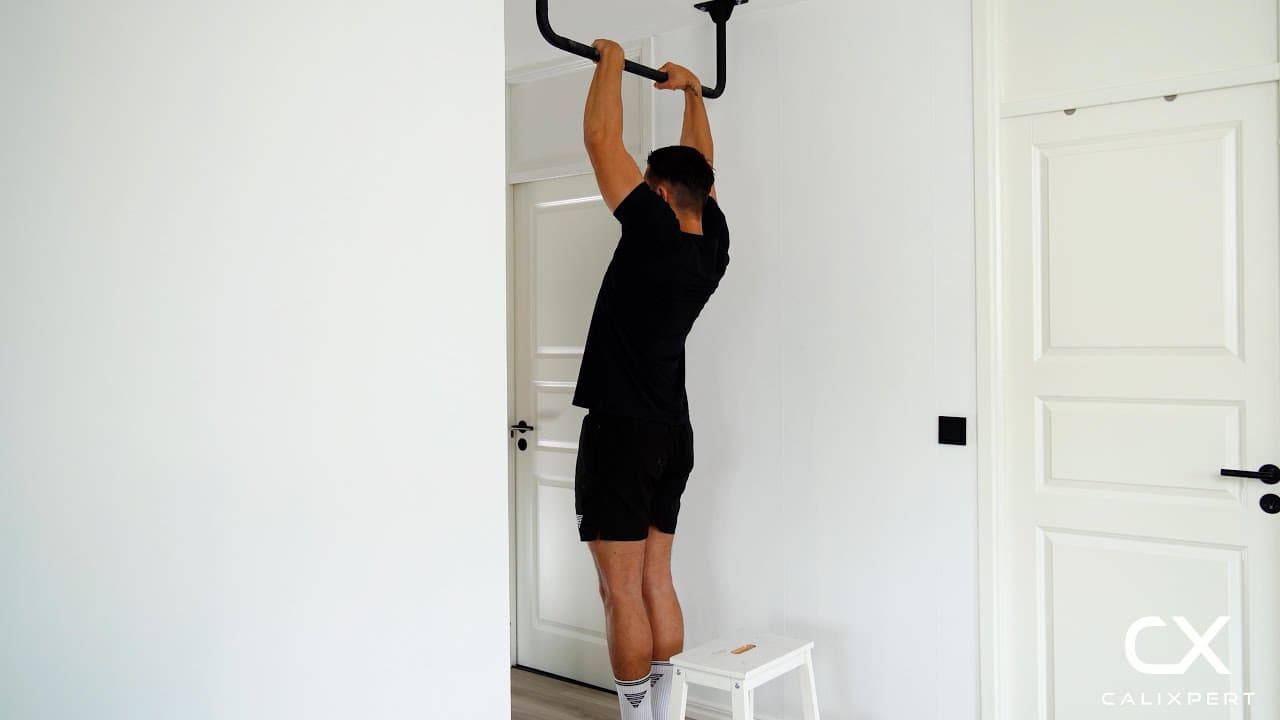
In a false grip your wrist sits on top of the bar instead of your fingers holding it. That makes the turn from pull to dip much easier. Set the grip before you step off, never while hanging, and put the chalk on your wrists, not only your palms. It hurts the wrists at first, and that gets better. See false grip hang.
Negative muscle-ups
Start on top of the bar with straight arms and lower yourself slowly, through the dip and the transition, down to a hang. Spend your time in the middle, where the dip turns into the pull. That is where the strength for the transition is built.
On a low bar you can keep your feet on the floor for support and control the speed on the way down. See floor assisted negative muscle-up.
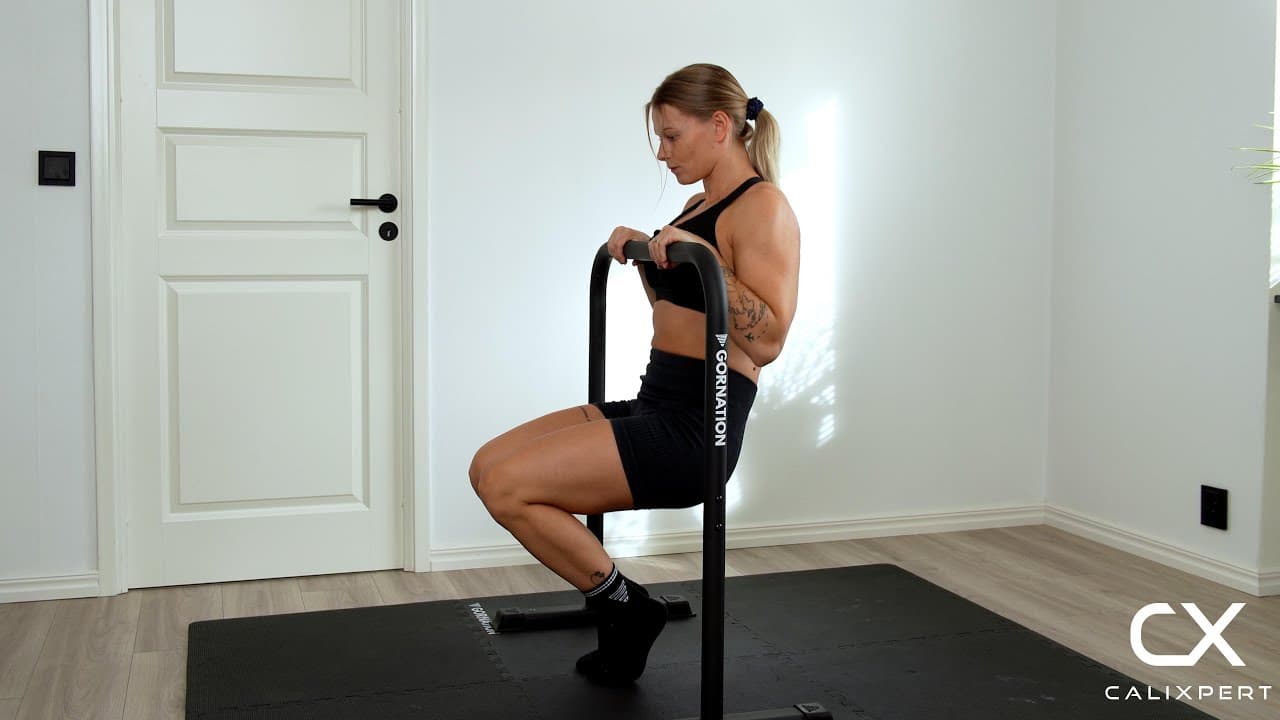
Jumping and band-assisted muscle-ups
Jumping muscle-ups on a low bar teach the transition with help from your legs. A band looped over the bar is the closest drill to the full movement: stand on it with straight legs and a tight core. If you bring your feet forward, the band stops helping.
Do not stay on the thickest band. Daniel has told many of our members to drop it once they are stronger, because it gives so much help that it does little besides a boost in confidence.
Weighted pull-ups
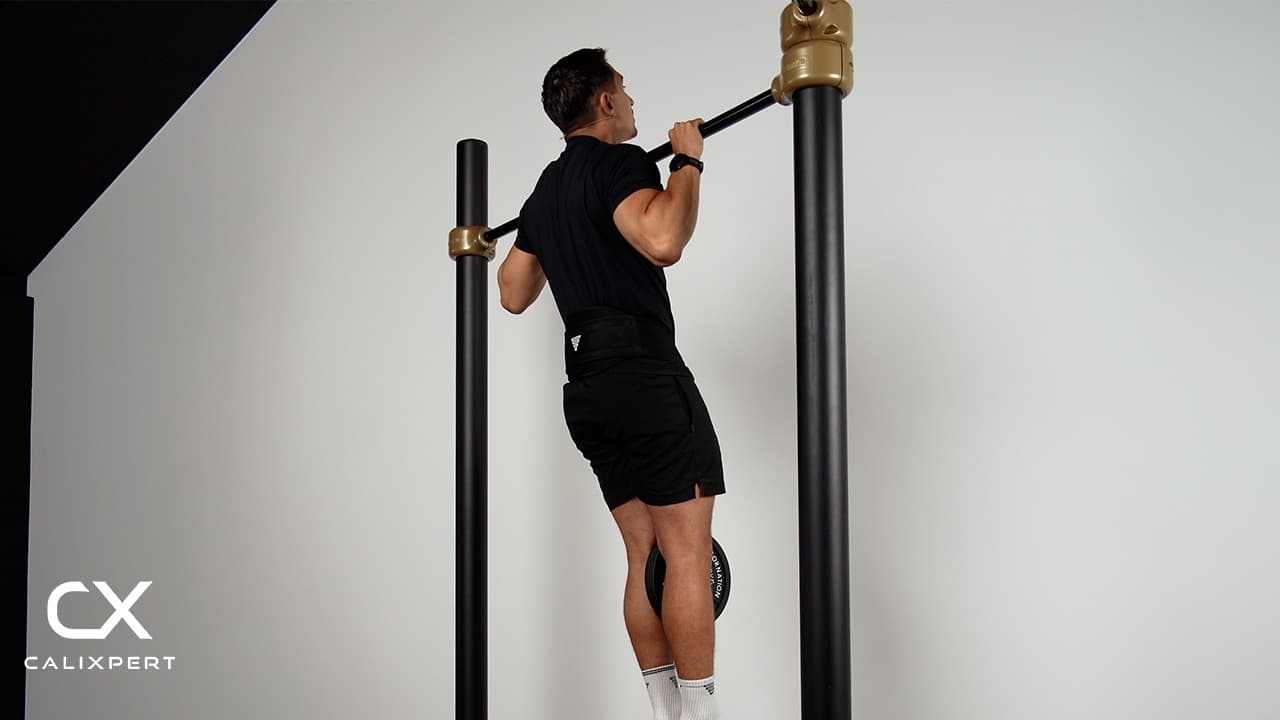
Once your pull-ups feel solid, adding weight with a dip belt makes your normal pull-up feel light. Small jumps of 1 to 2.5 kg, and only when every rep is clean. See weighted pull-ups.
A training week to follow
Train 3 times a week with a rest day between, for example Monday, Wednesday and Friday. Each day has its own focus. Warm up first, and do the exercises in this order.
Day 1, power: high pull-ups, explosive pull-ups and straight bar dips. 3 to 5 sets each of 3 to 6 reps, with 2 to 3 minutes of rest.
Day 2, transition: negative muscle-ups, jumping or band-assisted muscle-ups, then false grip hangs and hollow body holds. 3 sets each, holds of 10 to 20 seconds.
Day 3, strength: pull-ups, dips and chin-ups, weighted if you have a dip belt. 3 to 5 sets of about 5 reps, with 3 minutes of rest.
I would keep 1 or 2 reps in reserve in every set. A muscle-up is built from fast, clean reps, not from sets you grind out. Follow it for 6 weeks, then test a muscle-up when you are fresh.
This is the shape of how we train it. Our muscle-up program gives you the exact exercises, sets and reps week by week in 3 levels, with videos of every workout. When you finish, you go through it again on a harder level.
The mistakes I see on our coaching calls
Trying instead of training. Many people keep trying the muscle-up instead of training for it. Train the parts, and test now and then.
Loose legs. Crossing the legs, kicking or bending the knees steals the tension you need. Keep your legs quiet and your whole body tight. A muscle-up is a full body exercise, so never relax in the middle of it.
Transitioning too early. If you fight through the transition, you did not pull high enough. Pull to your chest first, then lean over.
Pulling like a strict pull-up. A wide, straight-up pull gets your chin over the bar but not your chest. A slightly narrower grip and a pull towards your chest set you up for the turn.
Chasing the feeling of the band. The band is for technique. When it carries you, it is time for a thinner one.
And if your elbow starts to hurt, my advice is to rest. Muscle-up training puts load on tendons that are not used to it, and pushing through can turn into an elbow problem that takes months to settle.
How long it takes
It depends on where you start. If you already have 10 clean pull-ups and 10 straight bar dips, some members get their first muscle-up within the 6 weeks, and others need several rounds. It is common to feel that it will take years. It does not have to: the body learns new skills faster than most people think, as long as the training is structured.
If you are doing ring muscle-ups instead, the false grip and the transition matter even more. Our ring muscle-up program is built for that.
Are you over 30 and struggling with pull-ups, handstands or muscle-ups? We have helped thousands of people master these skills, and we will help thousands more. If you want a systematic and supportive approach to your calisthenics goals, start a 7-day free trial of Calixpert.