How To Do German Hang
The German Hang is an advanced bodyweight position performed on rings or a bar that targets the shoulders, chest, biceps, and upper back. It places the shoulders in deep extension, making it a demanding mobility and strength exercise. Proper form is important to protect the shoulders and elbows while building strength and flexibility for advanced calisthenics skills.
Step-by-Step Guide to Properly Execute German Hang
Starting Position
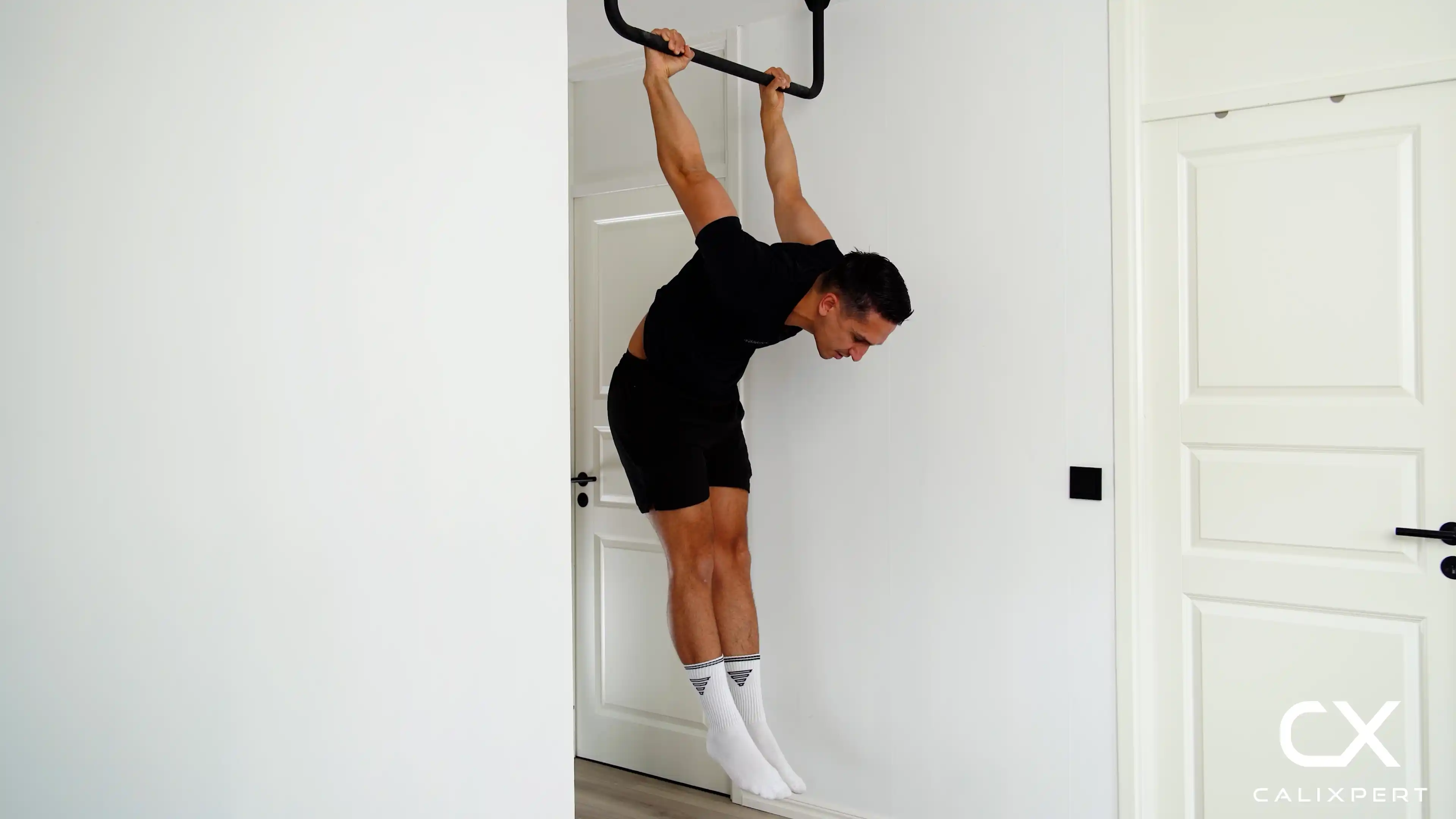
Begin by setting gymnastic rings at about waist height or using a low bar. Grip the rings with straight arms and step or jump into a support position. Slowly rotate your body forward while keeping your arms straight, allowing your shoulders to move behind you.
Lowering Phase
Continue rotating under control until your arms move behind your torso. Your chest should open, and your shoulders should be extended. Keep your core tight and avoid bending the elbows as your body lowers.
Returning Phase
Using shoulder and upper back strength, begin to reverse the movement. Pull your arms back toward your sides while maintaining straight elbows and control through the shoulders.
Finishing Position
Return to the starting support position with your body upright and arms straight. Pause briefly before stepping down or repeating the movement.
German Hang Workout Plan for All Levels
- Beginner: 2 sets of 10–20 second holds, 2–3 minutes rest, 2 times per week
- Intermediate: 3 sets of 20–30 second holds, 2–3 minutes rest, 3 times per week
- Advanced: 4 sets of 30–45 second holds, 2–3 minutes rest, 4 times per week
What Are The Benefits Of German Hang
- Improves shoulder extension mobility
- Builds strength in the shoulders and upper back
- Prepares the body for advanced ring skills
- Helps condition the elbows and biceps
Common Mistakes to Avoid
- Bending the elbows: This reduces the shoulder stretch and increases elbow strain
- Dropping too fast: Moving without control can stress the shoulders
Similar Exercises To Try For Your Workout
- Skin the Cat
- Ring Support Hold
- Back Lever Tuck Hold

FAQ About “German Hang”
This exercise is not best for most beginners. It puts a lot of stretch on the shoulders and arms. If you are new, it is better to build shoulder strength first. Beginners should only try it with help or very short holds.
Yes, you can make it easier. You can keep your feet on the ground to help support your weight. You can also bend your arms a little or hold the position for less time. These changes make it safer and easier.
You may start to feel better shoulder comfort in a few weeks. Strength and control usually take longer, around one to two months. This depends on how often you practice and how your body feels. Going slow helps avoid pain.
You should feel a stretch in your shoulders and chest. You may also feel it in your arms and upper back. You should not feel sharp pain. If it hurts, you should stop and rest.
Andra övningar

.webp)



%20(1).webp)

.webp)


.webp)


.webp)



.webp)