Weighted Scapula Pull Ups
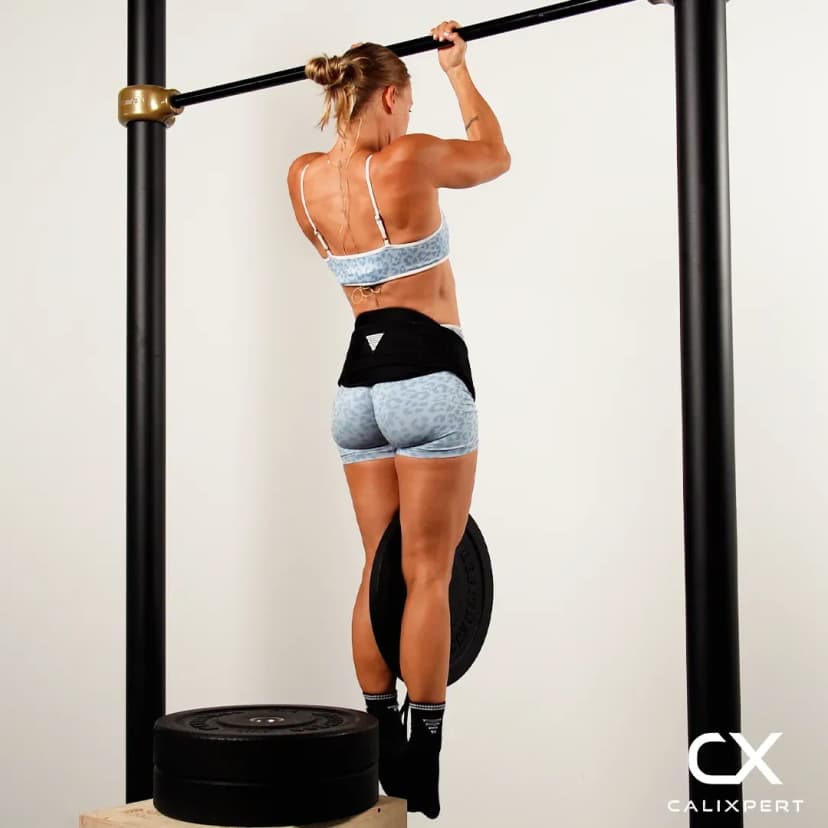
Weighted scapula pull-ups add a plate on a belt to the scapula pull-up, so the shoulder blades pull down against more than your bodyweight. You hang from the bar and move only the shoulder blades, pushing them down to lift your body a short distance and releasing back into a dead hang. The elbows never bend, which separates it from weighted pull-ups and weighted negative pull-ups, and it lets you keep progressing on the first part of every pull-up once regular scapula pull-ups are easy.
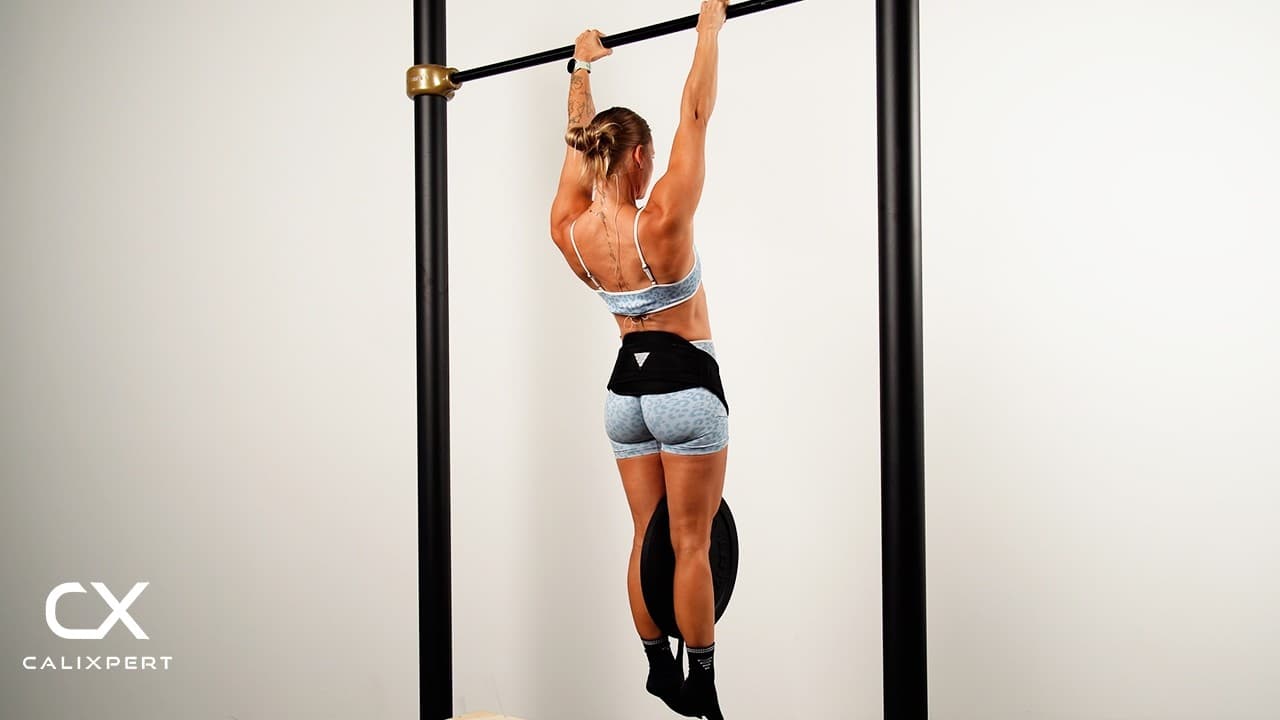
Weighted scapula pull-ups add a plate on a belt to the scapula pull-up, so the shoulder blades pull down against more than your bodyweight. You hang from the bar and move only the shoulder blades, pushing them down to lift your body a short distance and releasing back into a dead hang. The elbows never bend, which separates it from weighted pull-ups and weighted negative pull-ups, and it lets you keep progressing on the first part of every pull-up once regular scapula pull-ups are easy.
How to Do Weighted Scapula Pull Ups
1. Attach The Plate And Step Onto A Box
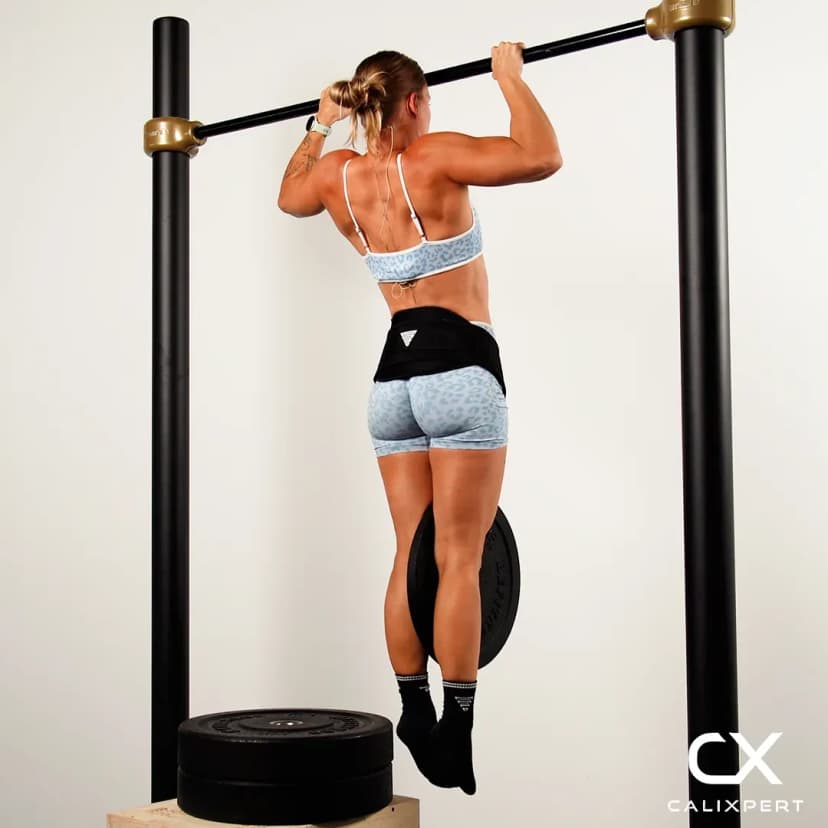
Put the weight belt around your hips and attach the plate before you go to the bar, so it hangs between your legs. Stand on a box under the bar so you can take hold of it with the weight already hanging, instead of jumping for the bar with a plate on.
Plate on first, then step up.
2. Grip Shoulder Width With Thumbs Around
Grab the bar with an overhand grip, roughly shoulder width apart, and wrap your thumbs around the bar. Take the grip while you are still standing on the box so you can set the arms before any weight goes through them.
Shoulder width, thumbs around.
3. Lock The Elbows With A Slight Outward Rotation
For most people, bending the elbows comes pretty naturally when they try to move the shoulder blades. To stop it, imagine bending the bar with your wrists towards your pinky sides, which rotates the arms slightly outwards and makes the elbows harder to bend than with neutral arms. Lock the elbows and keep that slight rotation for the whole set.
Bend the bar to your pinky sides.
4. Start From A Dead Hang
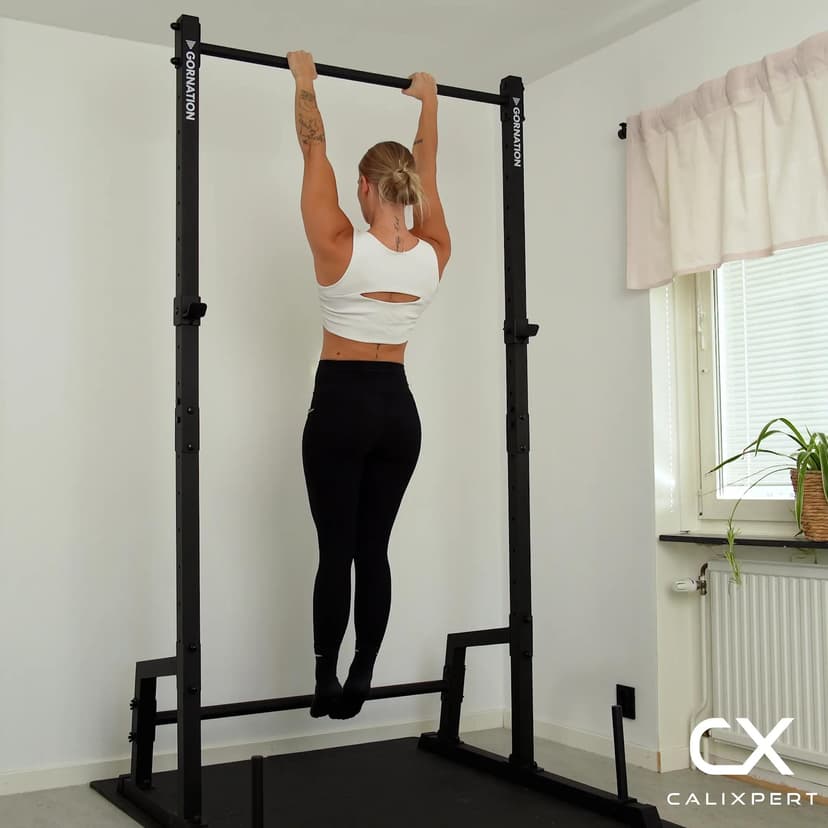
Take your feet off the box and hang with your arms straight and your shoulders relaxed up towards your ears. Bend the knees if you need to clear the box, and let the plate settle so it is not swinging before the first rep.
Full dead hang, plate still.
5. Push The Shoulder Blades Down
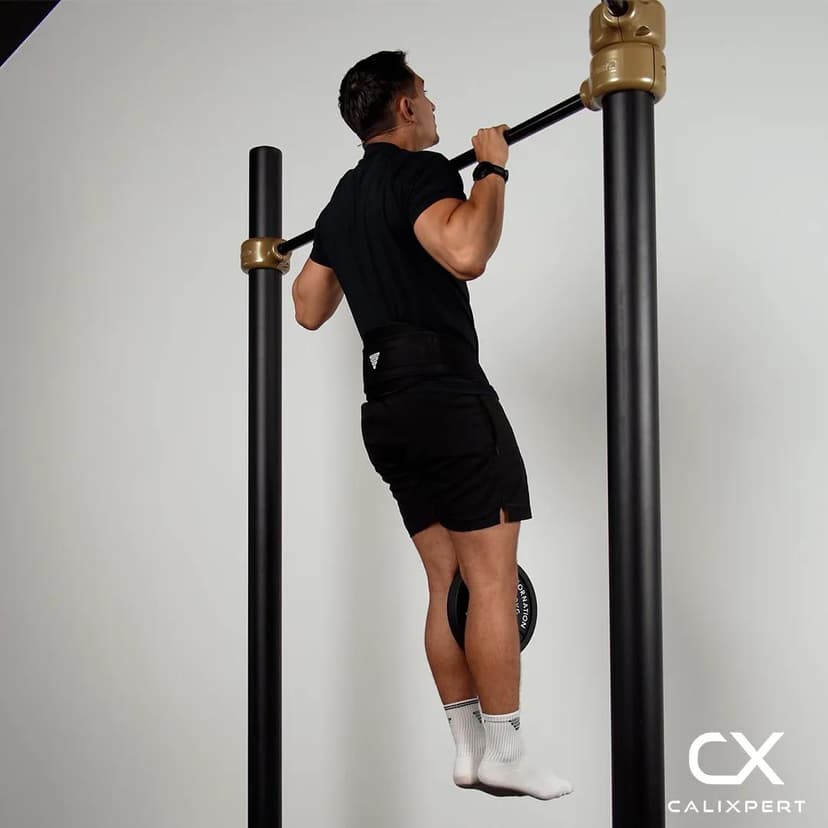
Lift yourself up by depressing the shoulder blades, pushing the shoulder blades and the shoulders down away from your ears while the elbows stay locked. Your body only rises a short distance. It can also help a little to think about lifting the chest up slightly, so the shoulder blades move back as well as down.
Shoulders down, chest up a little.
6. Release Back Up Into The Dead Hang
Let the shoulder blades travel back up until you are in a full dead hang again, arms still straight. Lower under control rather than dropping, so the plate does not start swinging, then go straight into the next rep.
All the way back to the dead hang.
The elbows are what give first on this one, so before your feet leave the box, set the grip as if bending the bar with your wrists towards your pinky sides. Then every rep is the same: dead hang, shoulder blades down, release back up. If the elbows start to bend or the plate swings, drop to a lighter plate and keep every rep clean.
Muscles Worked During Weighted Scapula Pull Ups
Secondary Muscles:
Primary Muscles
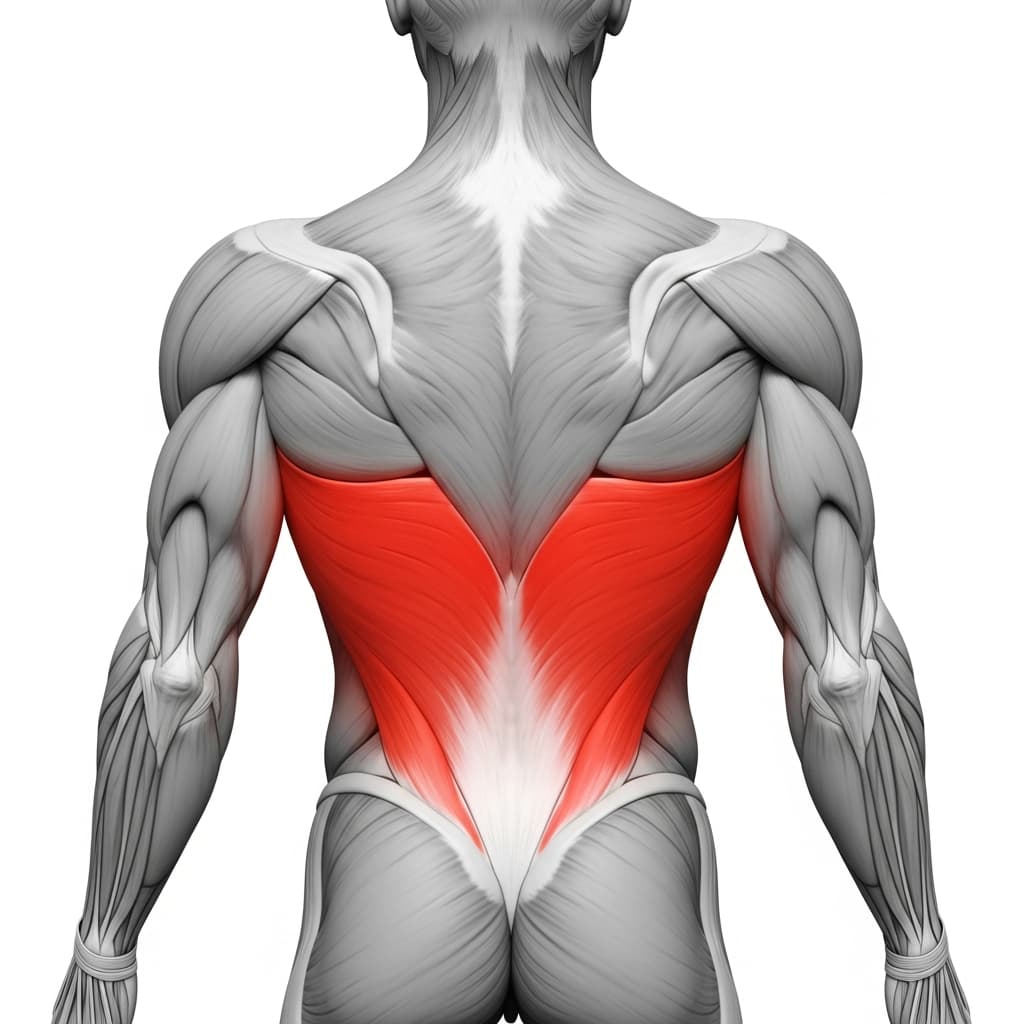
Latissimus Dorsi (Lats) - The lats are one of the main muscles pulling the shoulder blades down, and with a plate on they work against more than your bodyweight.
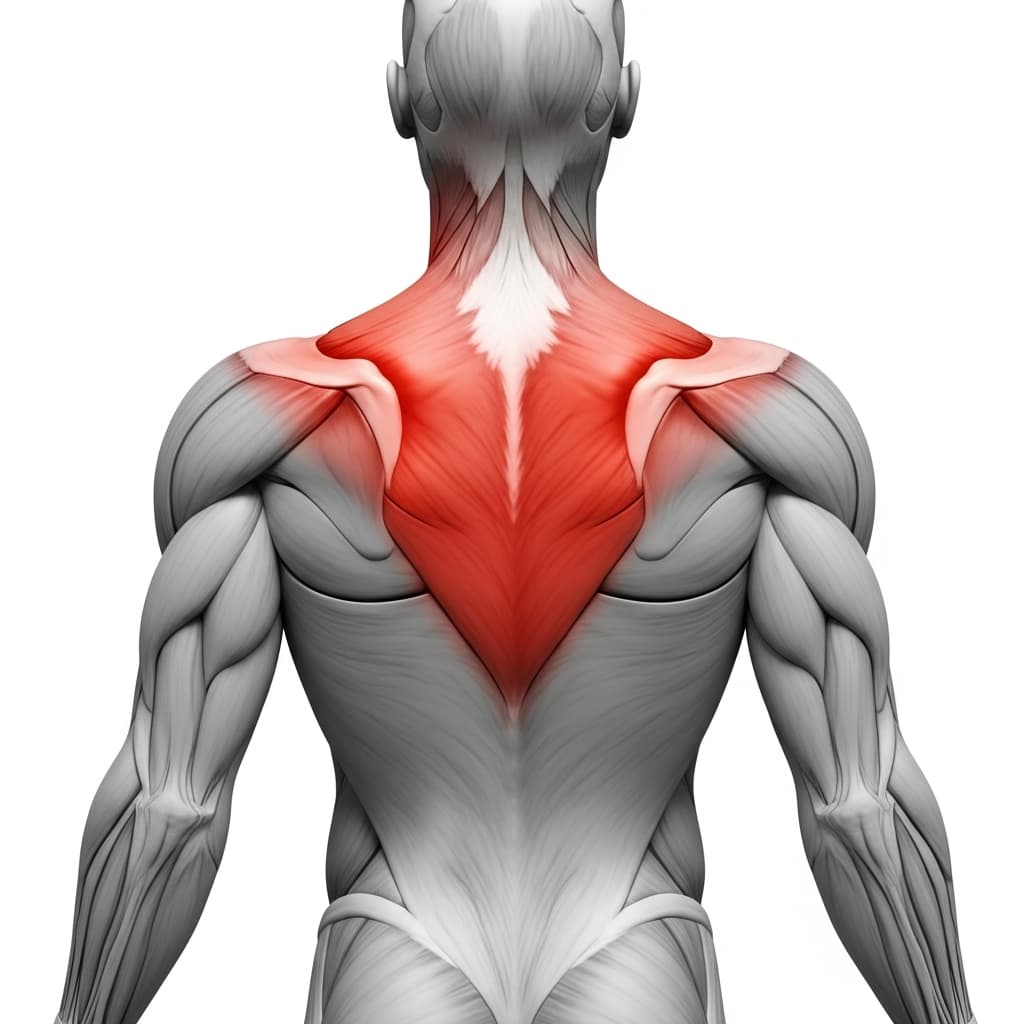
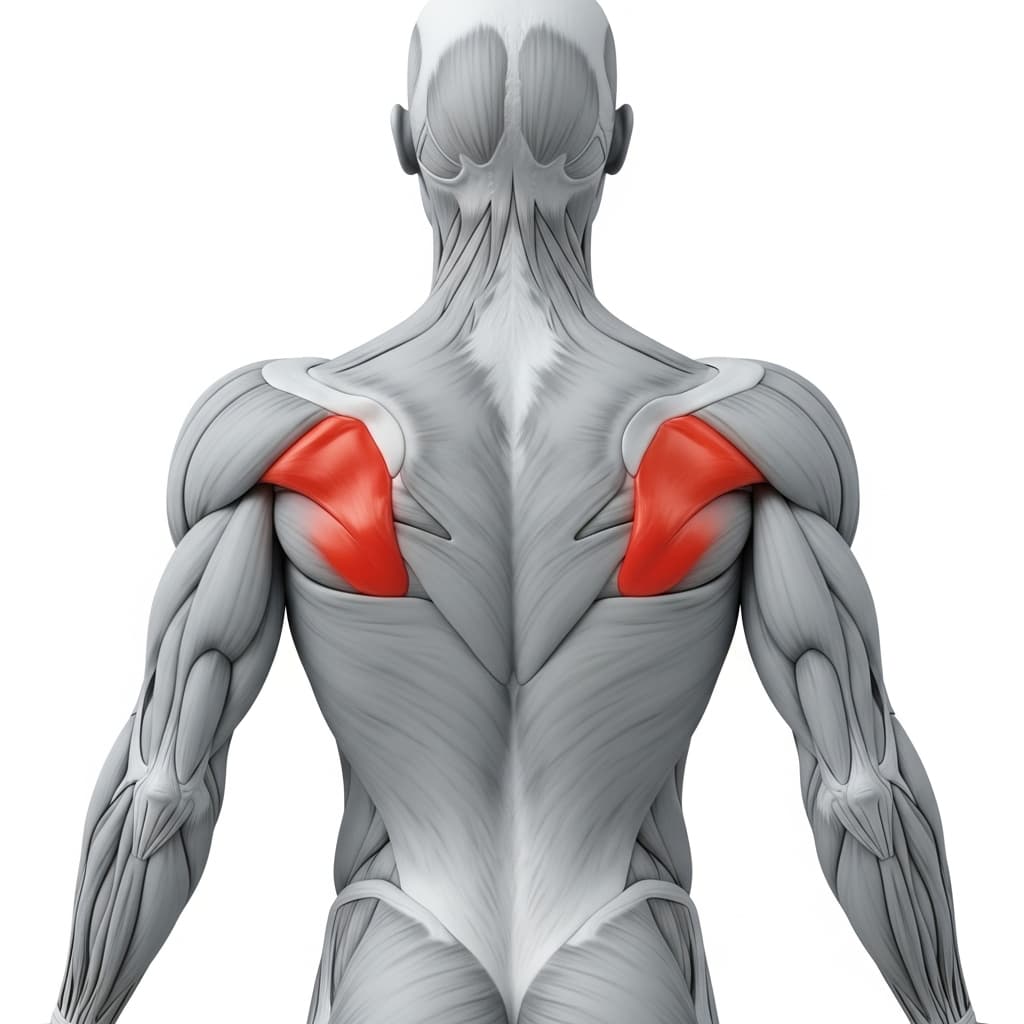
Trapezius (Trapezius) - The lower trapezius draws the shoulder blades down away from your ears on every rep, which is the whole movement of this exercise.
Secondary Muscles
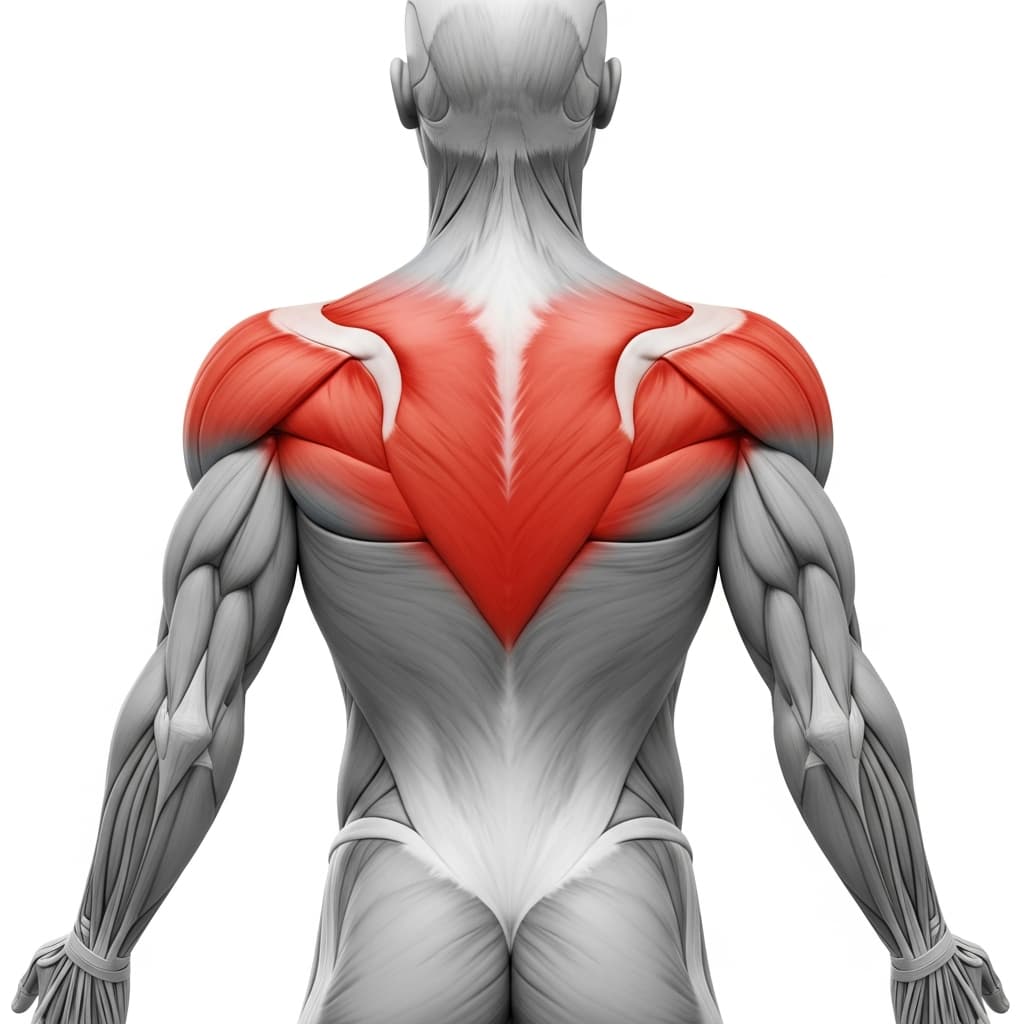
Rhomboids & Upper Trapezius (Upper Back) - The rhomboids and mid back help draw the shoulder blades back a little as you lift the chest, instead of only pulling them down.
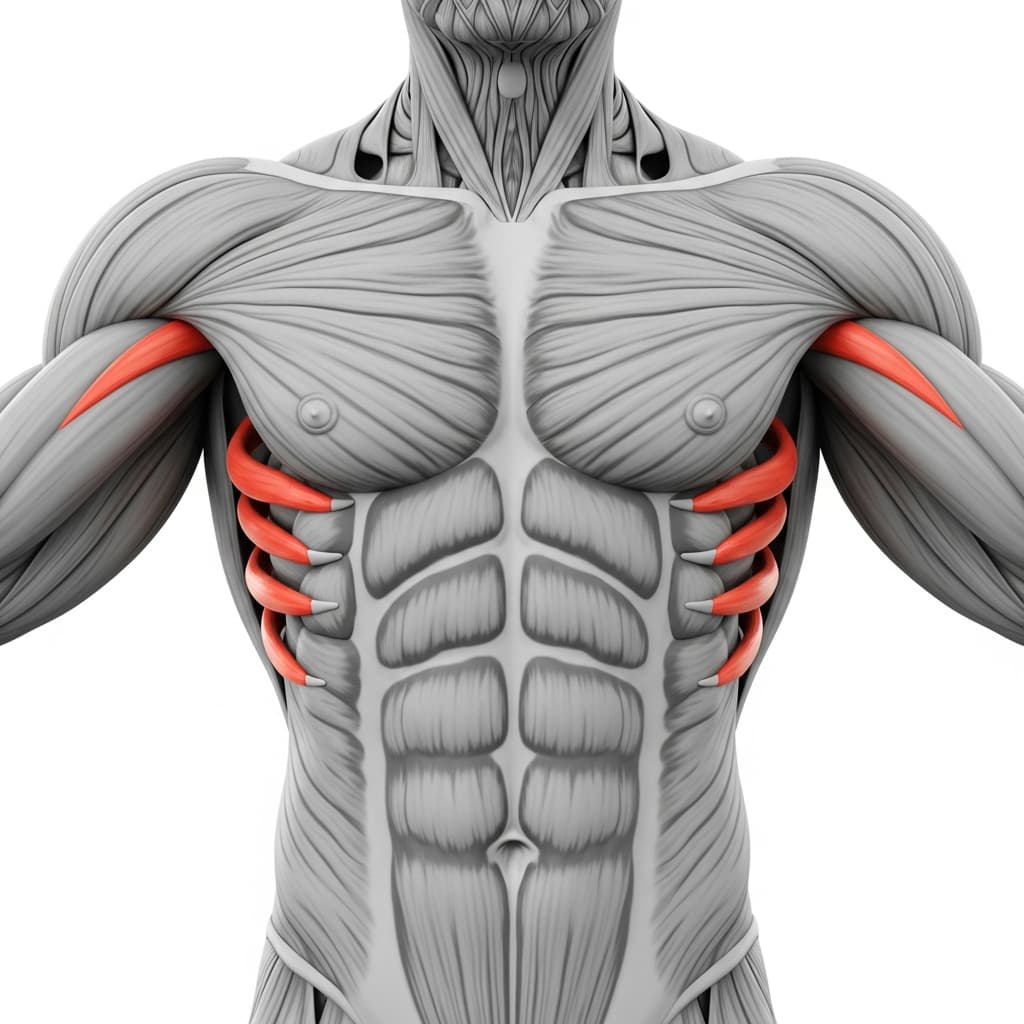
Serratus Anterior (Serratus Anterior) - The serratus anterior keeps the shoulder blades flat against the ribcage as they slide down and back up.
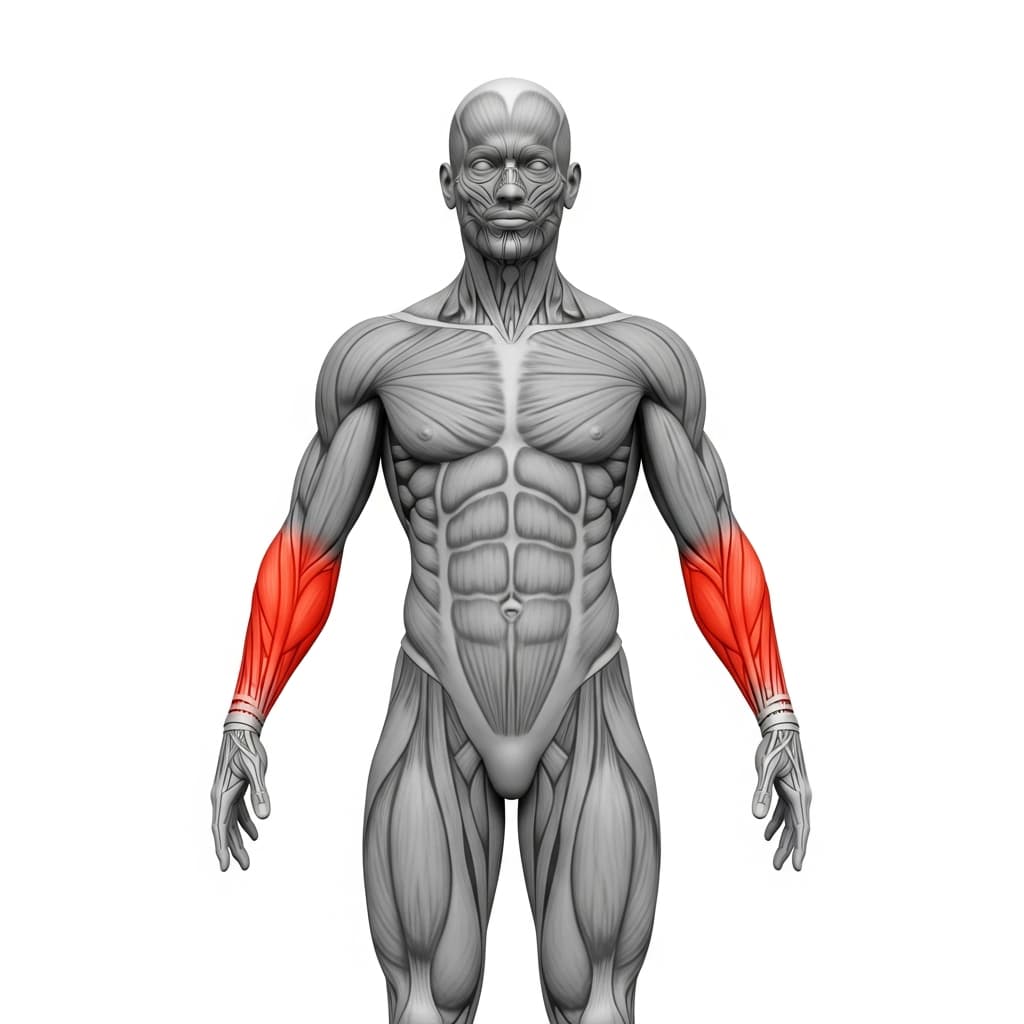
Forearm Flexors & Extensors (Forearms) - Your forearms and grip hold your bodyweight plus the plate for the whole set, with no rest at the top or the bottom of a rep.
Rotator Cuff (SITS) (Rotator Cuff) - The rotator cuff turns the arms slightly outwards when you imagine bending the bar towards your pinky sides, which is what helps keep the elbows locked.
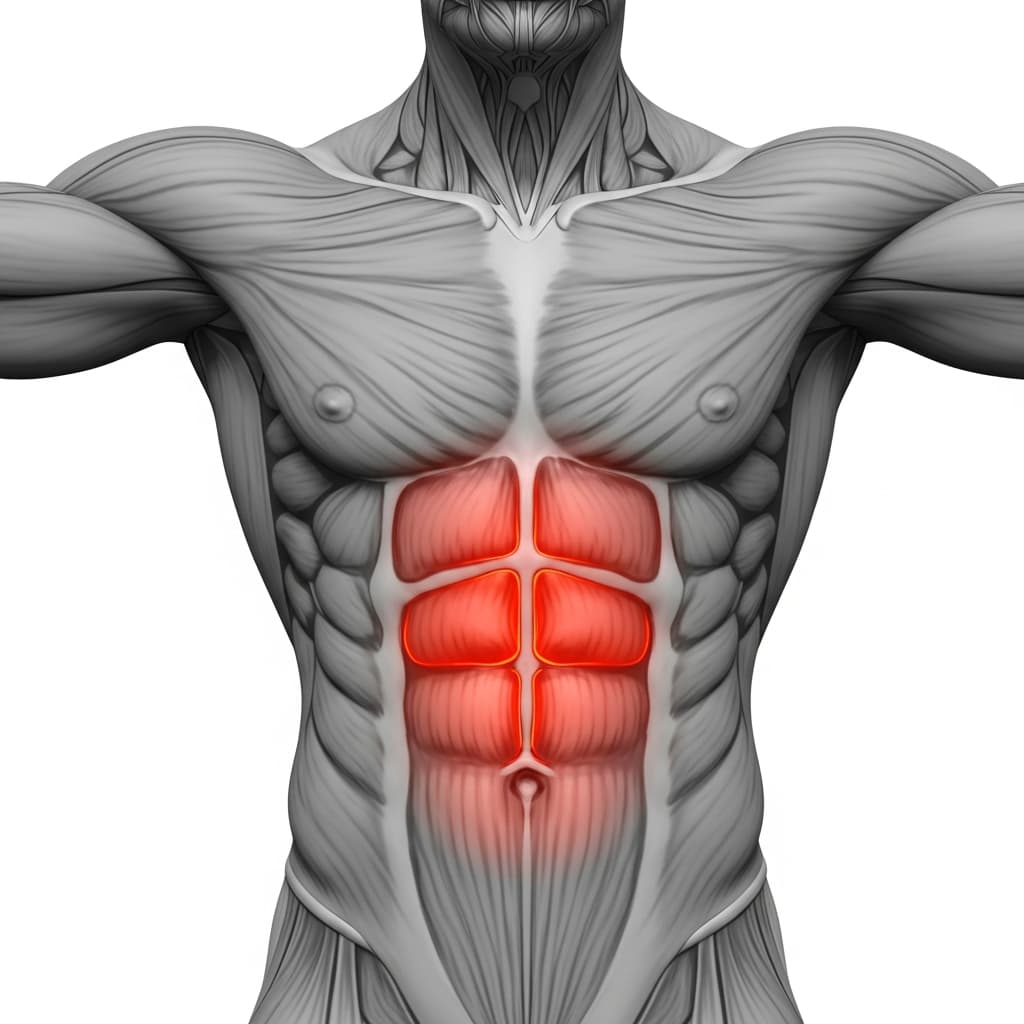
Rectus Abdominis (Abs) - The abs keep your body still in the hang so the plate does not start swinging between reps.
Benefits of Weighted Scapula Pull Ups
- Loads the shoulder blades pulling down, the first part of every pull-up, beyond what your bodyweight can give once regular scapula pull-ups are easy.
- Strengthens the lats and lower traps, the muscles that pull the shoulder blades down, with the arms kept straight.
- Builds the shoulder blade depression that straight arm skills like the front lever hold from start to finish.
- Lets you progress in small steps by changing the plate, instead of jumping straight to a much harder variation.
- Trains your grip and forearms to hold your bodyweight plus extra load in a full hang.
Who Is This Exercise For?
Regular scapula pull-ups should be clean and easy first, and a good marker is 12 or more controlled reps with locked elbows, a full dead hang at the bottom and no swinging. You also need to hang comfortably with the plate on. For equipment, you need a pull-up bar, a weight belt with a plate, and a box to stand on so you can take the bar with the weight already hanging.
Common Mistakes to Avoid
Bending the elbows: Bent elbows make it a small pull-up, with the arms working instead of the shoulder blades. Imagine bending the bar towards your pinky sides so the arms rotate slightly outwards, and if the elbows still bend, take weight off until they stay locked.
Adding weight before the bodyweight version is solid: If your bodyweight scapula pull-ups still end in bent elbows, cut-short reps or swinging, a plate only makes those habits heavier. Get 12 or more clean bodyweight reps first, then start with a light plate and add weight in small steps.
Stopping short of the dead hang: Cutting the release short takes out half of the range, since the exercise trains the shoulder blades moving down and then back up again. Let the shoulders rise all the way into a dead hang before you start the next rep.
Letting the plate swing you up: A swinging plate can bounce you into the rep, which turns it into a small kip instead of shoulder blade work. Let the plate settle in the dead hang, keep your legs still and move at a steady pace in both directions.