Wall Handstand Straddle Slides
Wall Handstand Straddle Slides are a chest to wall drill for the straddle press: you straddle your legs and slide your feet down the wall as deep as you can, leaning the shoulders slightly forward, then push back up. It works the shoulder lean and press back, leg mobility and deep transverse ab control while the wall holds your legs. Where the Wall Handstand Press Lean keeps the legs together and moves only the shoulders, this adds the straddle path of a real press.
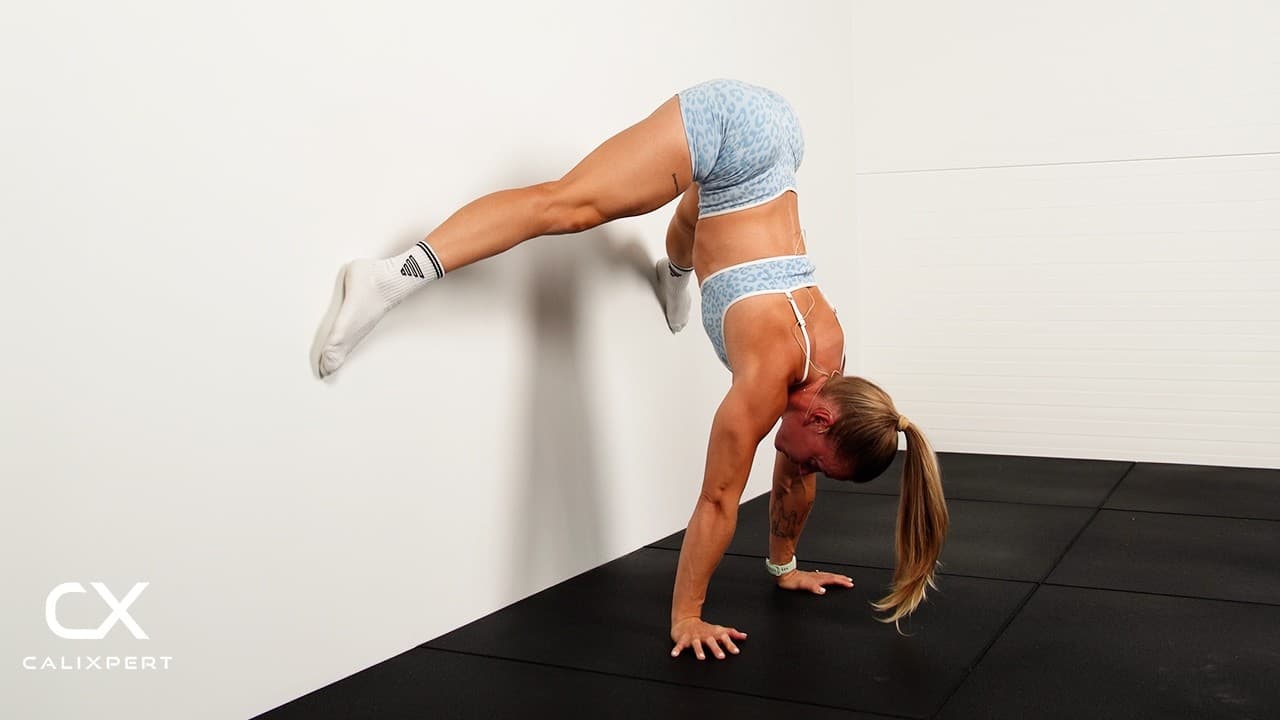
Wall Handstand Straddle Slides are a chest to wall drill for the straddle press: you straddle your legs and slide your feet down the wall as deep as you can, leaning the shoulders slightly forward, then push back up. It works the shoulder lean and press back, leg mobility and deep transverse ab control while the wall holds your legs. Where the Wall Handstand Press Lean keeps the legs together and moves only the shoulders, this adds the straddle path of a real press.
How to Do Wall Handstand Straddle Slides
1. Turn Your Fingers Slightly Out
Before you go up, rotate your fingers a little bit outwards. This is easier on the wrists and asks less of your shoulder mobility.
Fingers a little out.
2. Climb Into A Chest To Wall Handstand
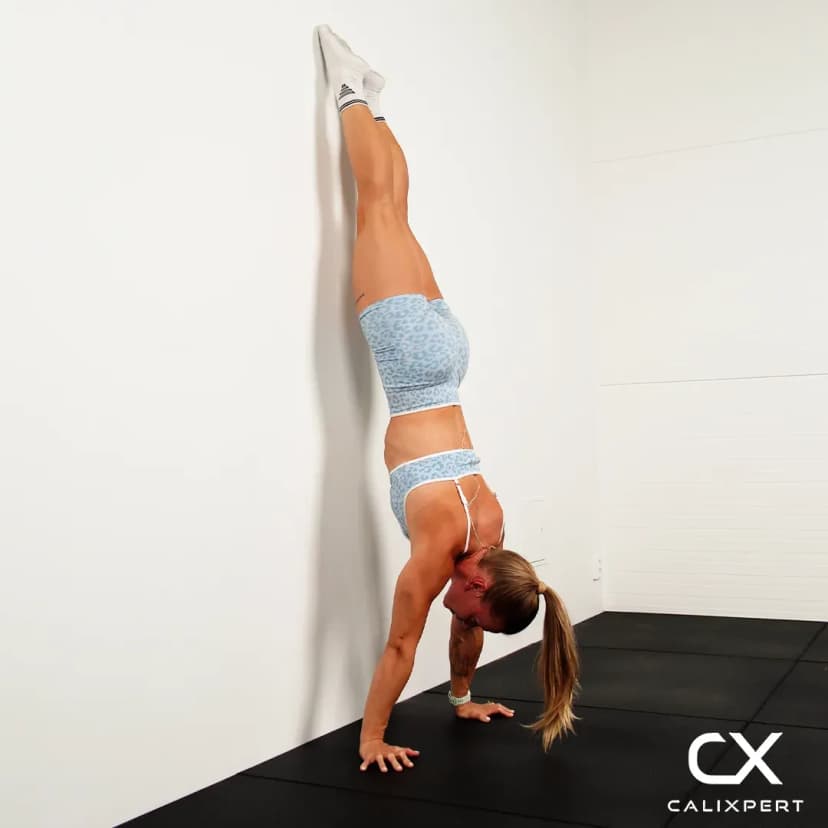
Stand with your back to the wall, put your hands on the floor some distance from it and climb your feet up the wall into a full handstand facing the wall. Keep that distance so your body sits at a slight angle, not flat against the wall. The right gap depends on your strength and flexibility, so move the hands out a little at a time.
Hands out from the wall.
3. Switch On The Core
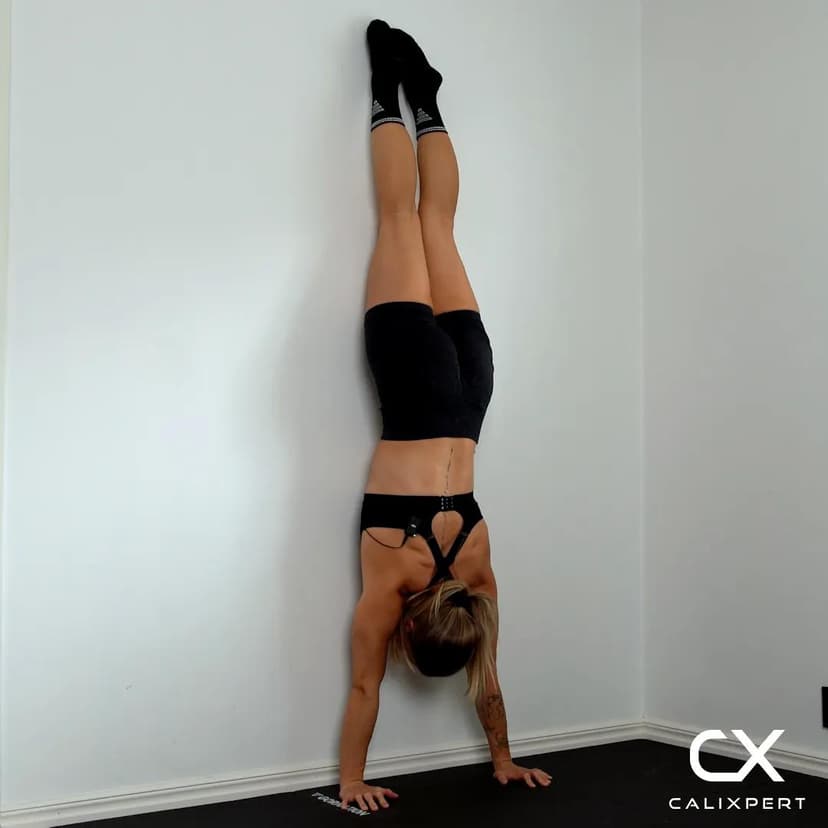
Suck your belly button in toward your spine to activate the transverse abs. Keep them activated at all times, at the top of the handstand, at the bottom of the slide and on the way back up. Keep your legs straight and squeezed.
Keep a strong suck-in.
4. Straddle Down The Wall
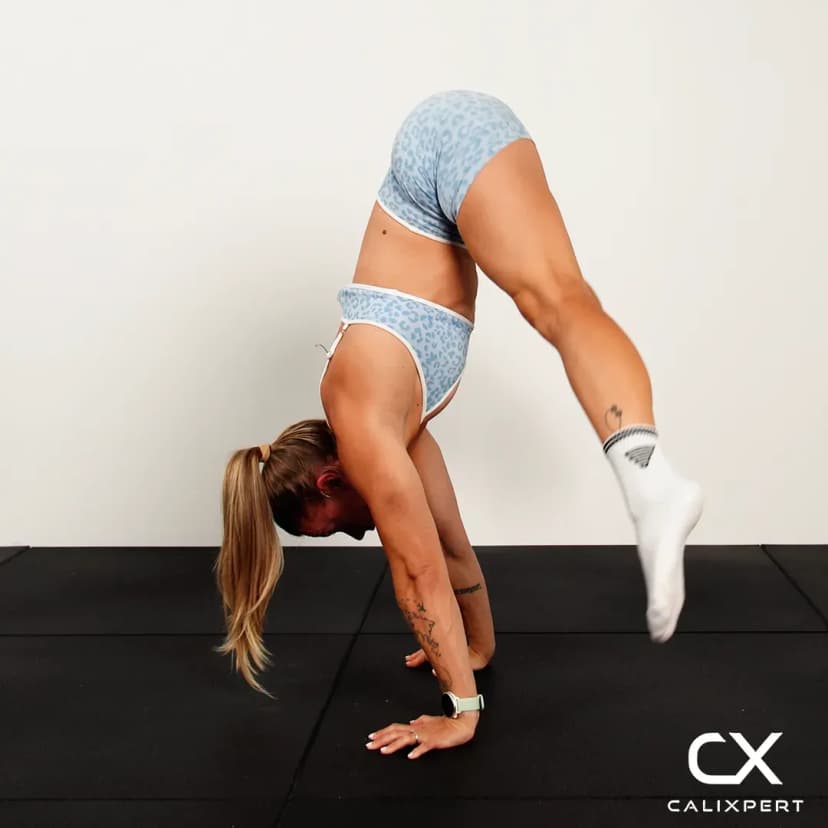
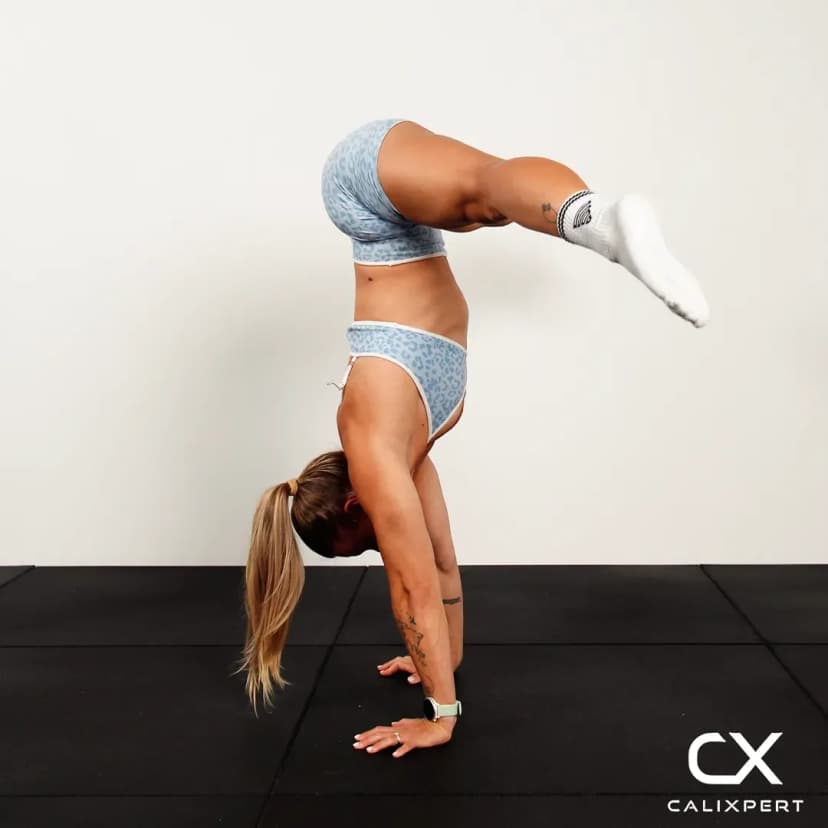
Split your legs into a straddle and let your feet slide down the wall, going as deep as you can. As the legs come down, lean slightly forward into your shoulders and keep the core compressed. This is the same shoulder lean you work from at the start of a handstand press.
Straddle, lean slightly forward.
5. Push Back Up To The Handstand
From the bottom, push back up and bring the legs up the wall and back together. As the legs come up, push your shoulders back into the straight alignment of the full handstand, so you finish every rep stacked and tall rather than still leaning.
Push back, finish straight.
6. Repeat From The Top
Go into the next slide from the full handstand, again as deep as you can, and push back up. End the set when your legs go soft or the suck-in lets go, since either one means the position is gone.
Deep as you can, then back up.
Keep your feet light on the wall so they slide rather than grip. The wall is there to hold the legs while you learn the path, not to push off from. If the bottom of the slide is where your core lets go, stay a little longer on this drill before you take the press off the wall.
Muscles Worked During Wall Handstand Straddle Slides
Primary Muscles:
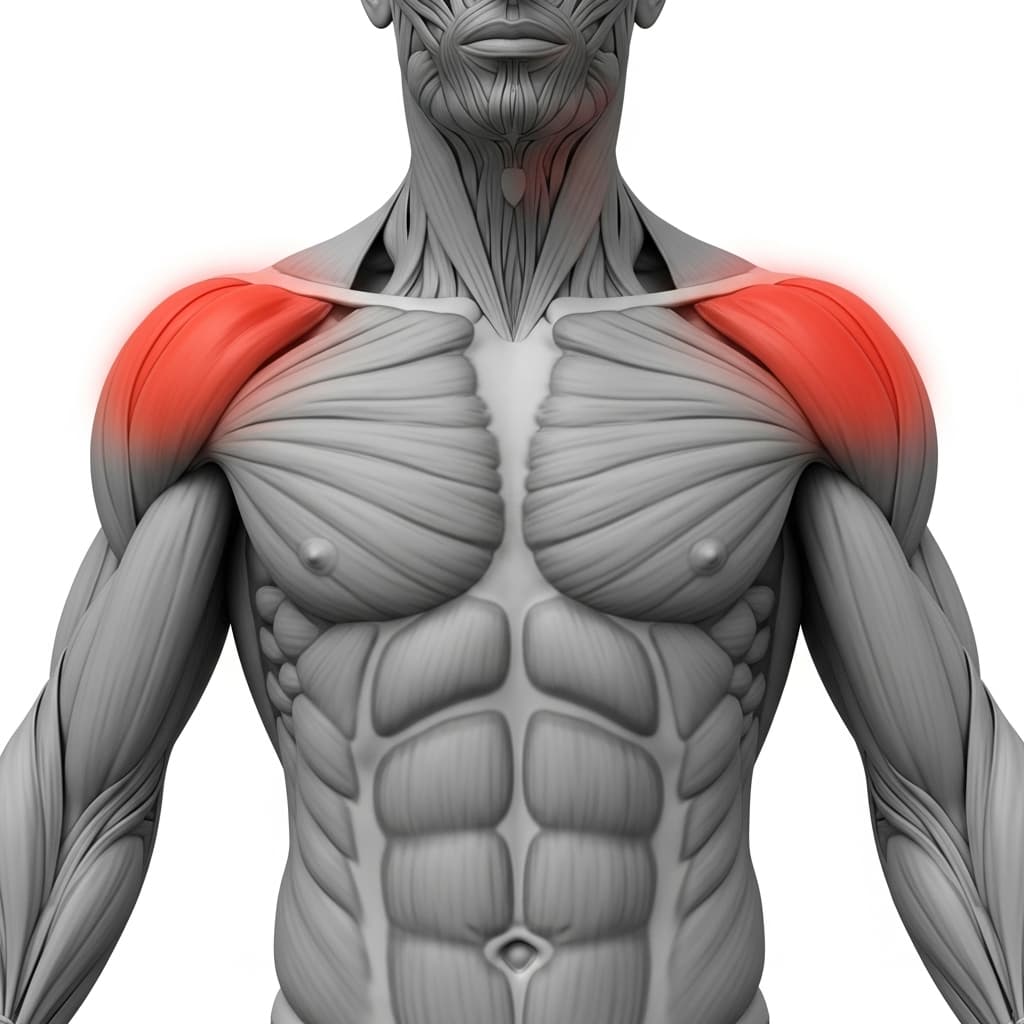
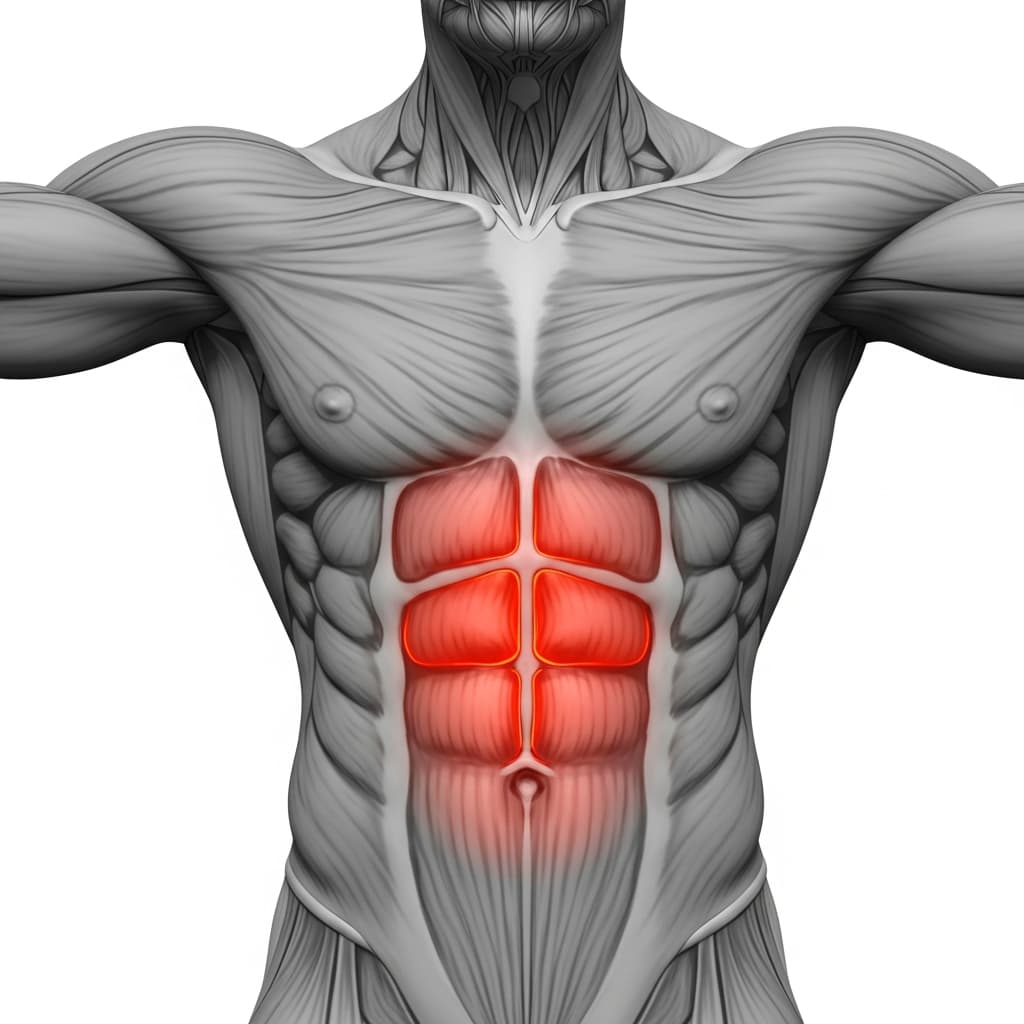
Secondary Muscles:
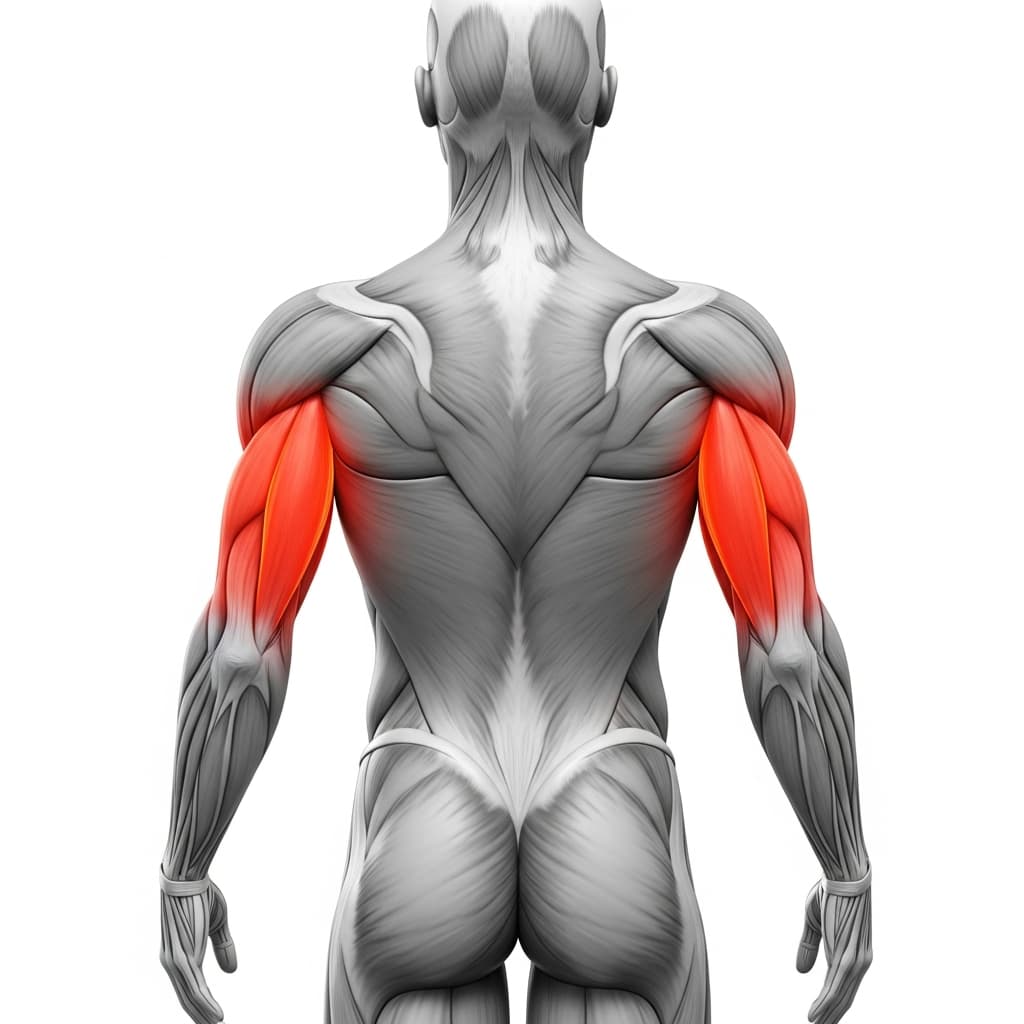
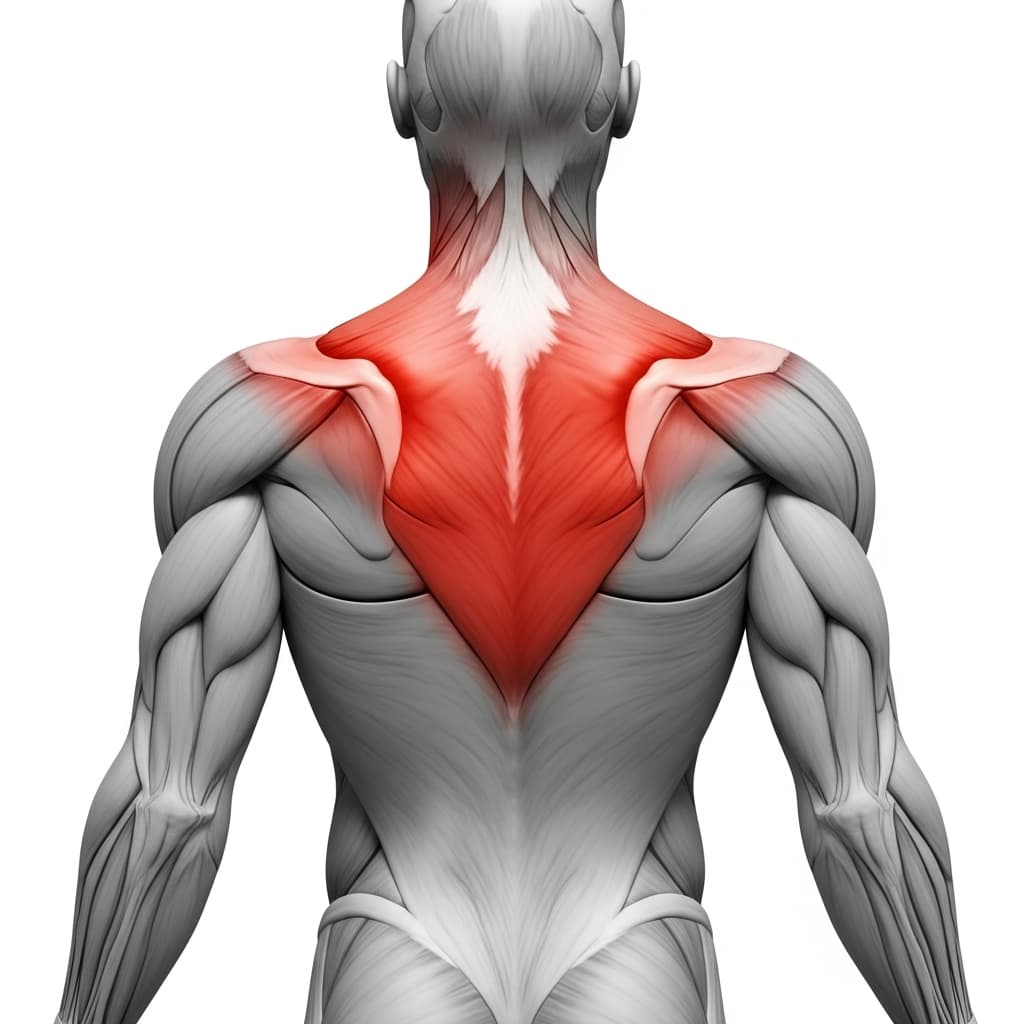
Primary Muscles
Anterior Deltoid (Front Deltoid) - The front deltoids hold the forward lean as the legs come down the wall, then drive the shoulders back into a straight handstand on the way up.
Rectus Abdominis (Abs) - The abs, and the deep transverse abs in particular, stay activated with a strong suck-in for the whole rep and hold the compressed shape at the bottom of each slide.
Secondary Muscles
Triceps Brachii (Triceps) - The triceps keep the elbows locked so every part of the rep, down and back up, happens on straight arms.
Trapezius (Trapezius) - The traps help keep the shoulders pushed up away from the floor so you stay tall on your hands while you are upside down.
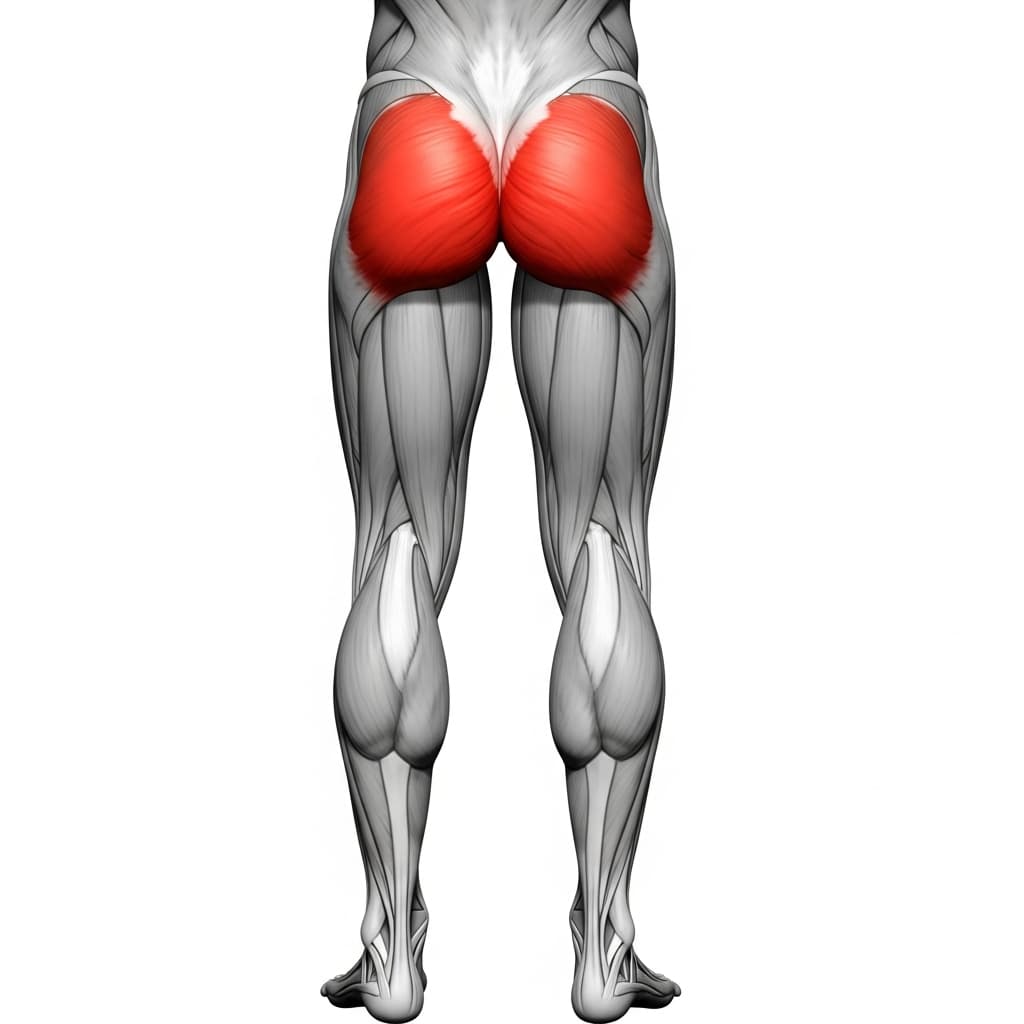
Gluteus Maximus (Glutes) - The glutes help lift the straight legs from the bottom of the slide back up the wall into the full handstand.
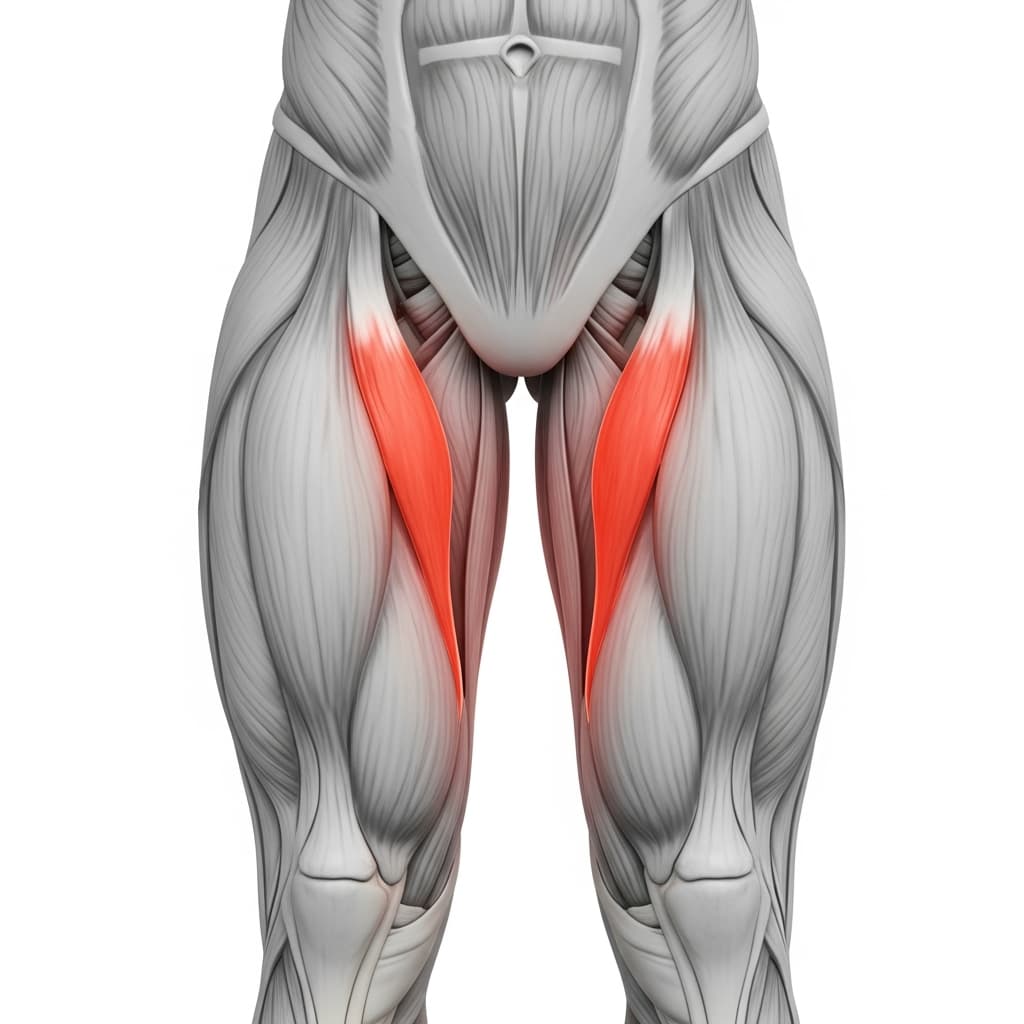
Hip Adductors (Adductors) - The adductors on the inside of the thighs are lengthened as the legs open into the straddle, which is a large part of the leg mobility this drill works.
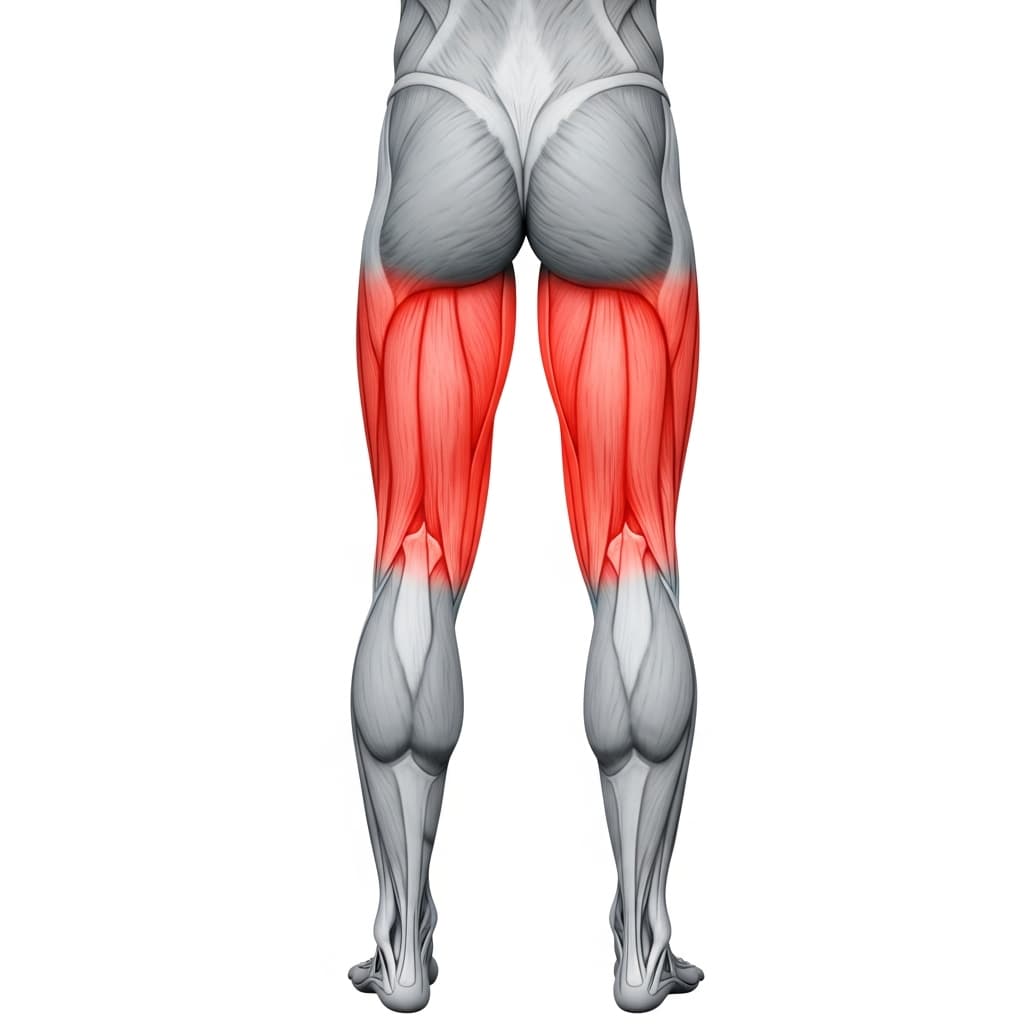
Hamstring Group (Hamstrings) - The hamstrings lengthen as the hips fold and the legs travel down the wall, so tight hamstrings limit the depth, and they help the glutes bring the legs back up.
Benefits of Wall Handstand Straddle Slides
- Trains the forward shoulder lean and the press back to a straight handstand, the same work as the start of the handstand press.
- Lets you practise the straddle path of the press in both directions, down and back up, in every rep.
- Works the mobility of the legs, since the straddle opens and folds while you hold yourself upside down.
- Builds deep transverse ab control by holding a strong suck-in from the top of the handstand to the bottom of the slide.
- Takes balance out of the picture with the wall holding the legs, so you build strength and position before the press leaves the wall.
Who Is This Exercise For?
You should be able to hold a chest to wall handstand with straight arms, a tight core and your legs together, but you do not need a freestanding handstand. You also need some straddle flexibility and enough shoulder strength to lean slightly forward over your hands with locked elbows. Warm up your wrists first, because they carry your bodyweight in extension for the whole set.
Common Mistakes to Avoid
Setting the hands too close to the wall: Hands tight to the wall leave you flat against it, with little room for the legs to fold down. Move them out a little at a time until your body sits at a slight angle, since more distance means more load on the wrists.
Letting the belly relax at the bottom: The transverse abs need to be activated at all times, including at the bottom of the slide. Keep a strong suck-in of the belly button toward the spine and stay compressed as you come back up.
Keeping the shoulders stacked while the legs come down: As your feet slide down the wall, lean slightly forward into your shoulders the way you would at the start of a press. Staying stacked turns the rep into a straddle on the wall and leaves out the lean the press needs.
Bending the knees during the slide: Keep the legs squeezed and straight the whole way down and the whole way up. Soft knees shorten the legs and take the stretch out of the straddle, so stop the set when they start to bend.
Finishing the rep still leaning: When the legs get back to the top, push your shoulders back into the straight alignment of the full handstand before the next rep. Starting the next slide from a half leaned position cuts the press back short.