One Leg Planche
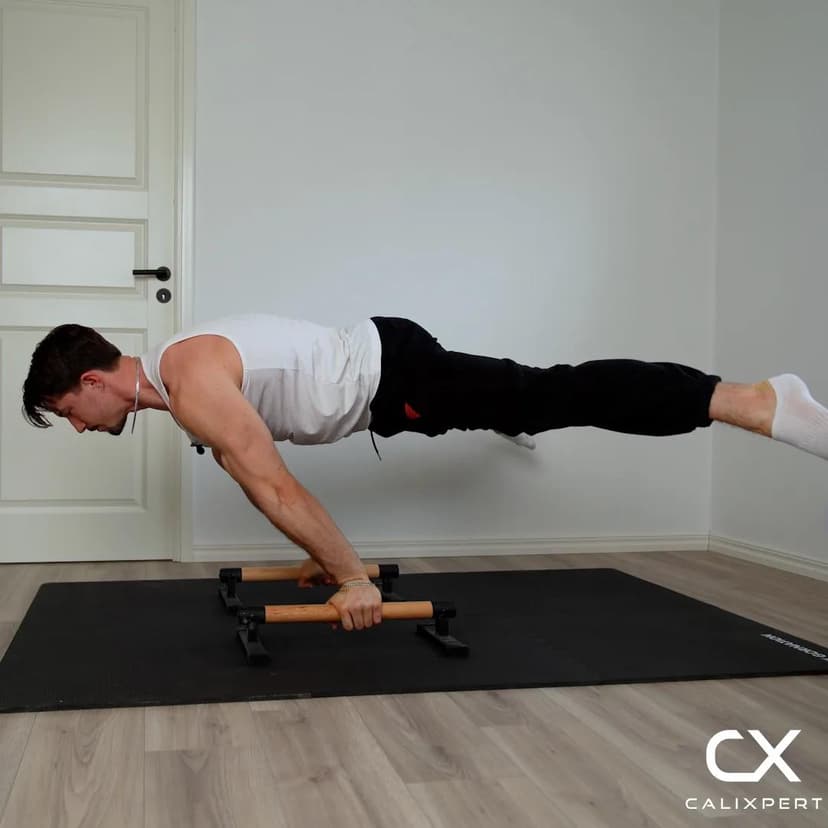
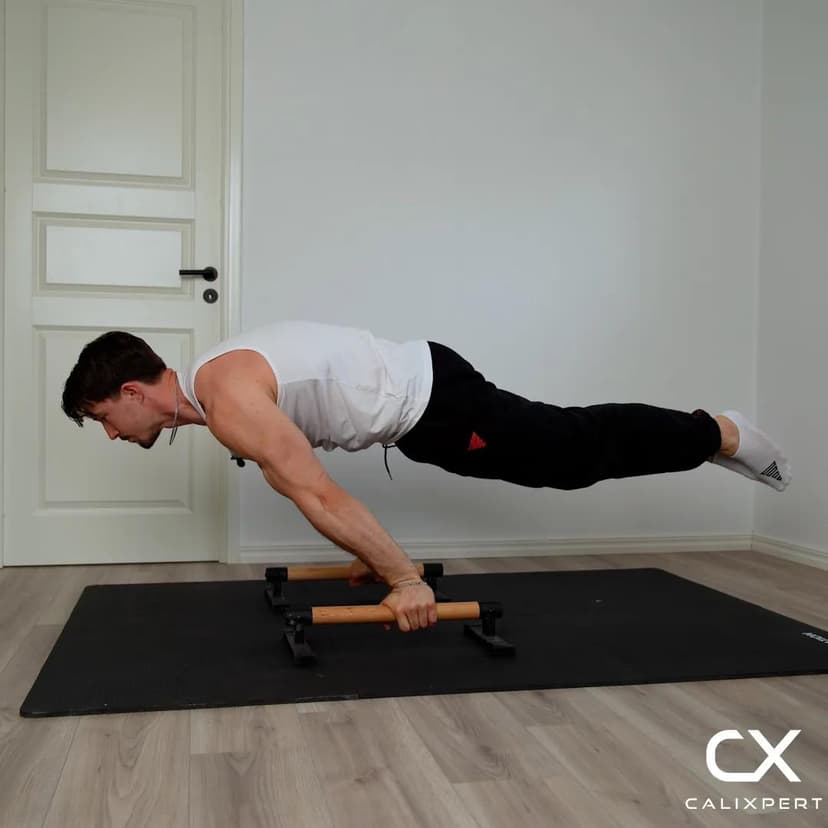
The one leg planche is where half of your body is already doing a full planche. One leg extends straight back with the hip open, while the other stays bent at the knee in a slight advanced tuck to keep the lever short enough to hold. That puts it one rung above the straddle planche and one rung below the full planche itself. Daniel holds it on parallettes here, which is a bit easier on the wrists than the floor, though the position is the same either way.
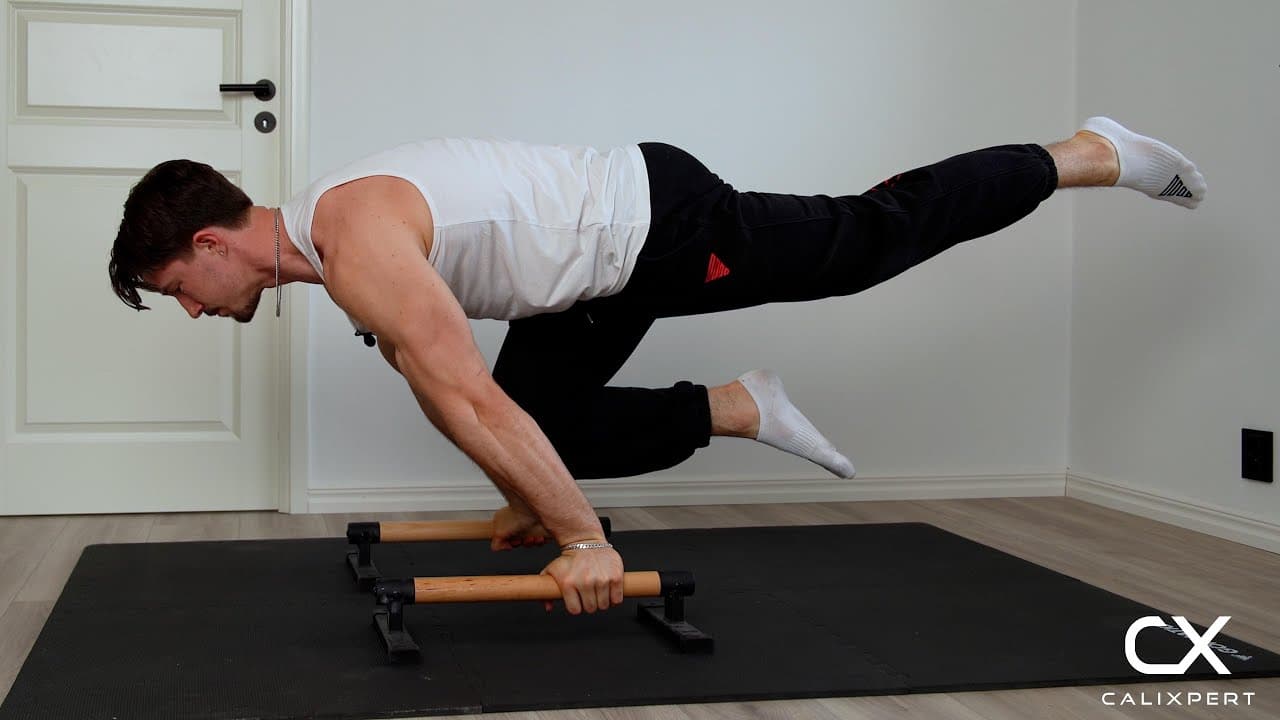
The one leg planche is where half of your body is already doing a full planche. One leg extends straight back with the hip open, while the other stays bent at the knee in a slight advanced tuck to keep the lever short enough to hold. That puts it one rung above the straddle planche and one rung below the full planche itself. Daniel holds it on parallettes here, which is a bit easier on the wrists than the floor, though the position is the same either way.
How to Do One Leg Planche
1. Set Up On The Parallettes
This can be done on the floor or on a set of parallettes. Daniel uses parallettes here because it is a bit easier on the wrists, since the grip takes some of the extension angle out of the joint. Set the bars around shoulder width, grip them hard, and kneel behind them.
Bars about shoulder width
2. Lock The Arms
Straighten your elbows fully and keep them that way for the entire hold. Any bend hands the work over to the elbow joint and the biceps instead of the shoulder, and the hold stops training the thing you came here to train. If the arms start to soften, the set is finished, come down.
Elbows straight from first second to last
3. Protract The Shoulders
Push your shoulders forward and downwards, away from your spine. This is the planche shoulder position, and it keeps the shoulder blades wrapped around the ribs so the shoulder has a stable base to press against. The moment you lose it, load transfers straight into the biceps tendon and the elbow.
Push forward and downwards
4. Lean Until Both Feet Leave The Ground
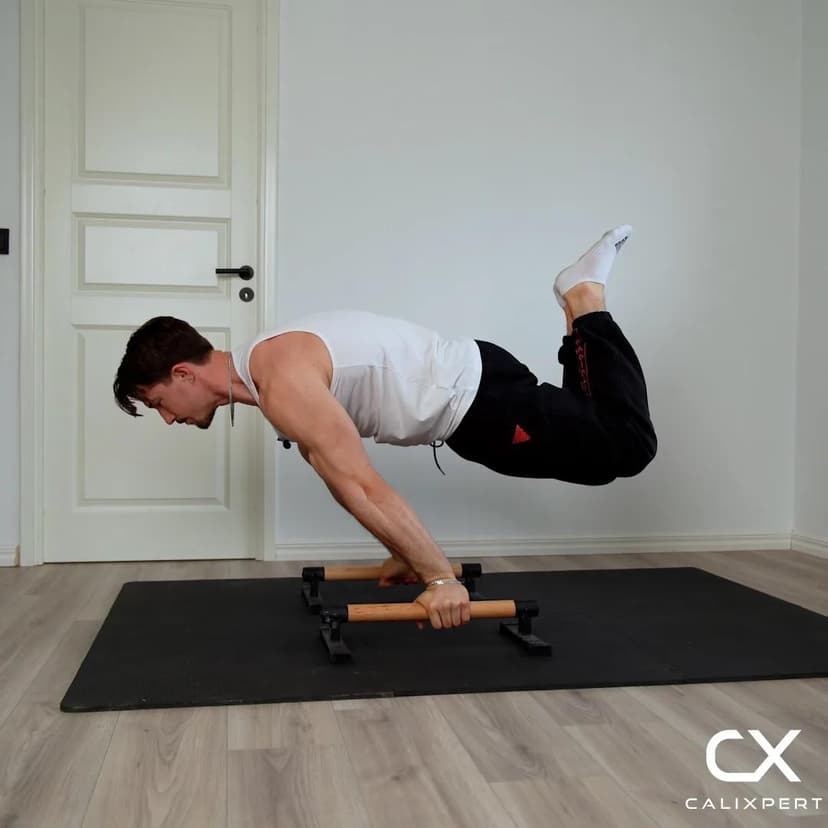
Shift your weight forward over the bars until your shoulders sit clearly past your hands and both feet come off the floor. Start with both legs in the advanced tuck shape, hips open and knees folded in. Get that stable and horizontal before you change anything else.
Shoulders travel well past your hands
5. Push One Leg Out
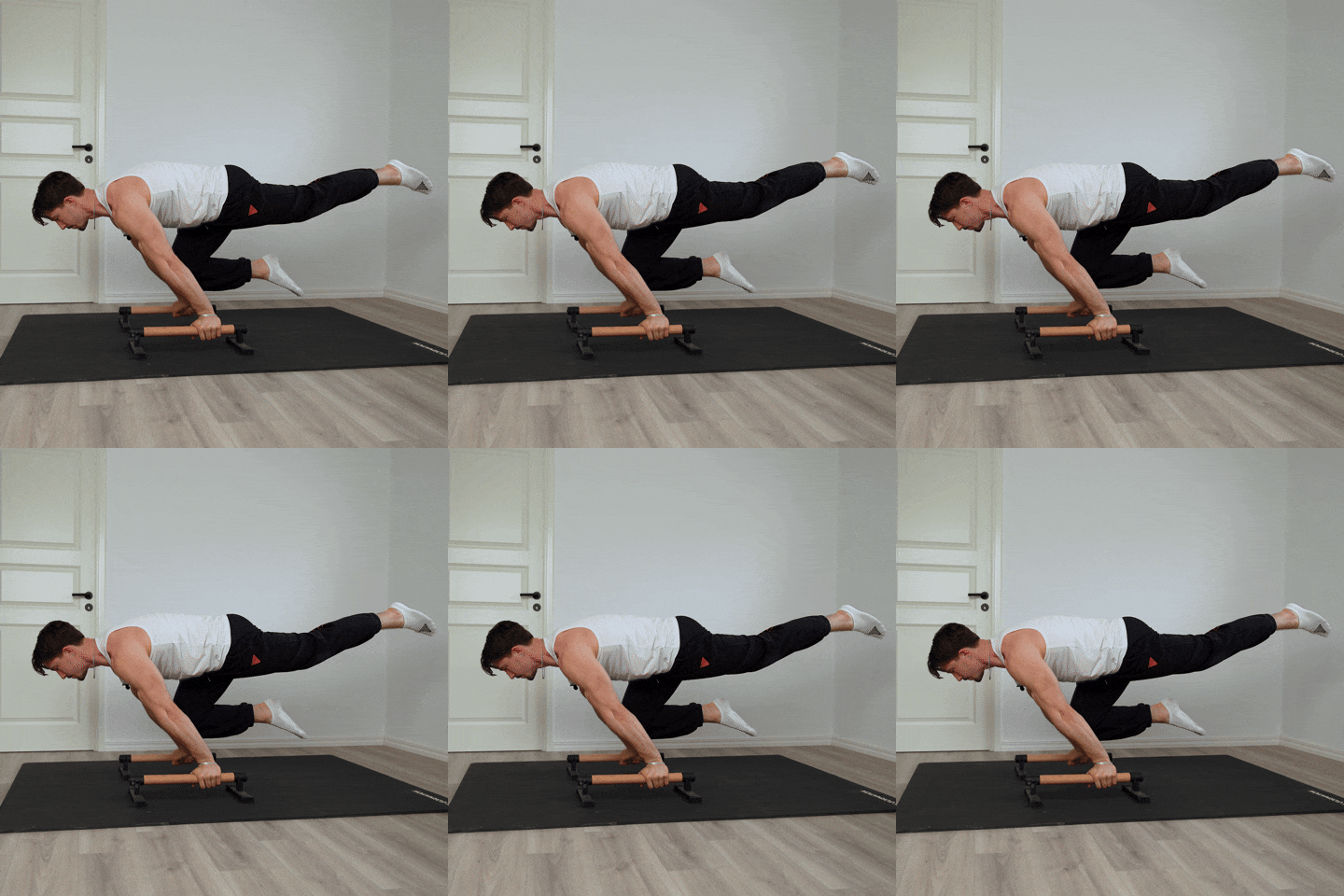
Squeeze the core first, then let the glute push one leg straight back behind you. The other leg stays slightly in that advanced tuck position, which is what keeps the hold manageable. Keep the extended leg in line with your body rather than letting it drift out to the side.
The glute pushes the leg, not the lower back
6. Hold Tight, Then Swap Sides
Keep it all switched on for the whole hold: locked arms, protracted shoulders, squeezed core, working glute. Aim for quality seconds rather than a long ugly hold, since a hard working set at this level usually lands somewhere around four to ten seconds. Then repeat the same number of sets on the other leg.
Everything stays tight
Three things decide this hold. Keep the arms fully locked. Keep the shoulders protracted, which is pushing them forward and downwards. Then think about the hips, because only one leg is going to push back and the other one stays slightly in an advanced tuck position. With the leg you are extending, squeeze the core, and let the glutes be the ones that push the leg outwards. If you keep everything tight there, you will have good proper form.
Muscles Worked During One Leg Planche
Primary Muscles:
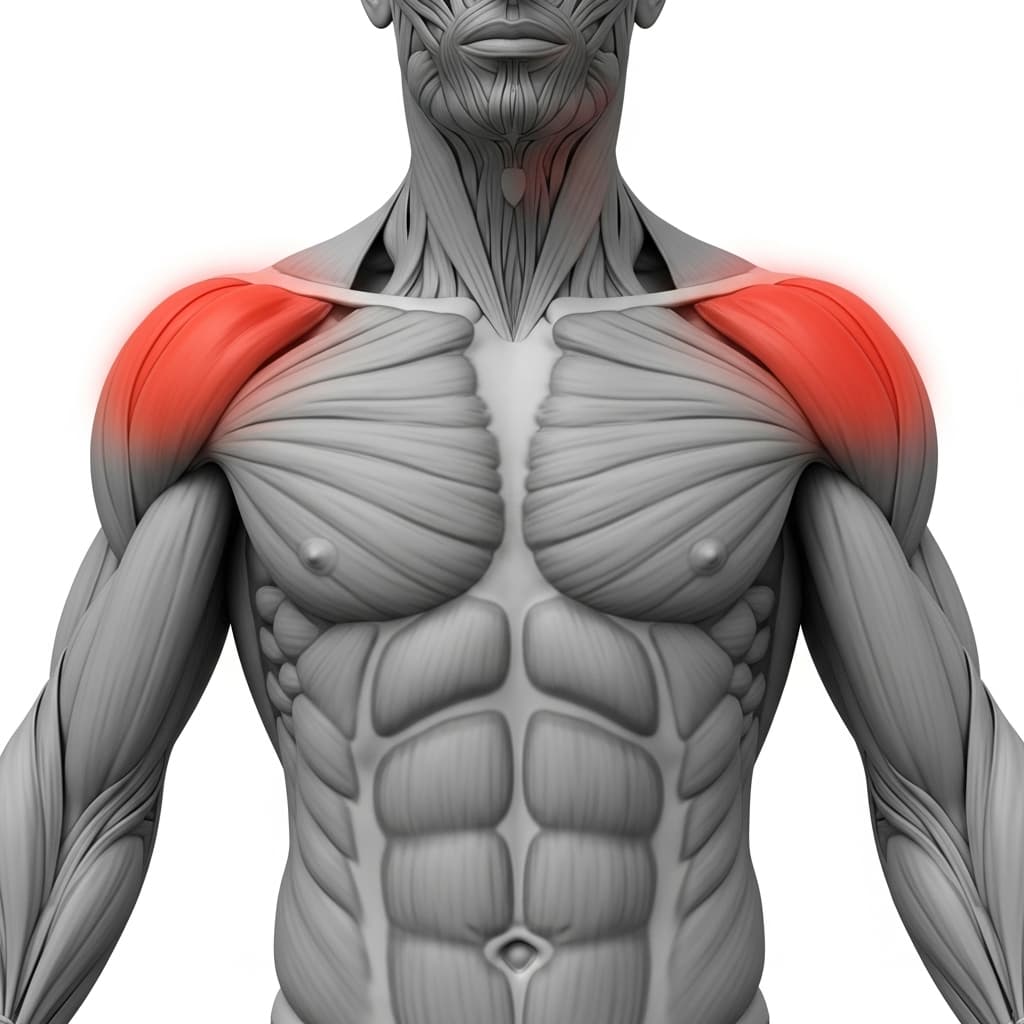
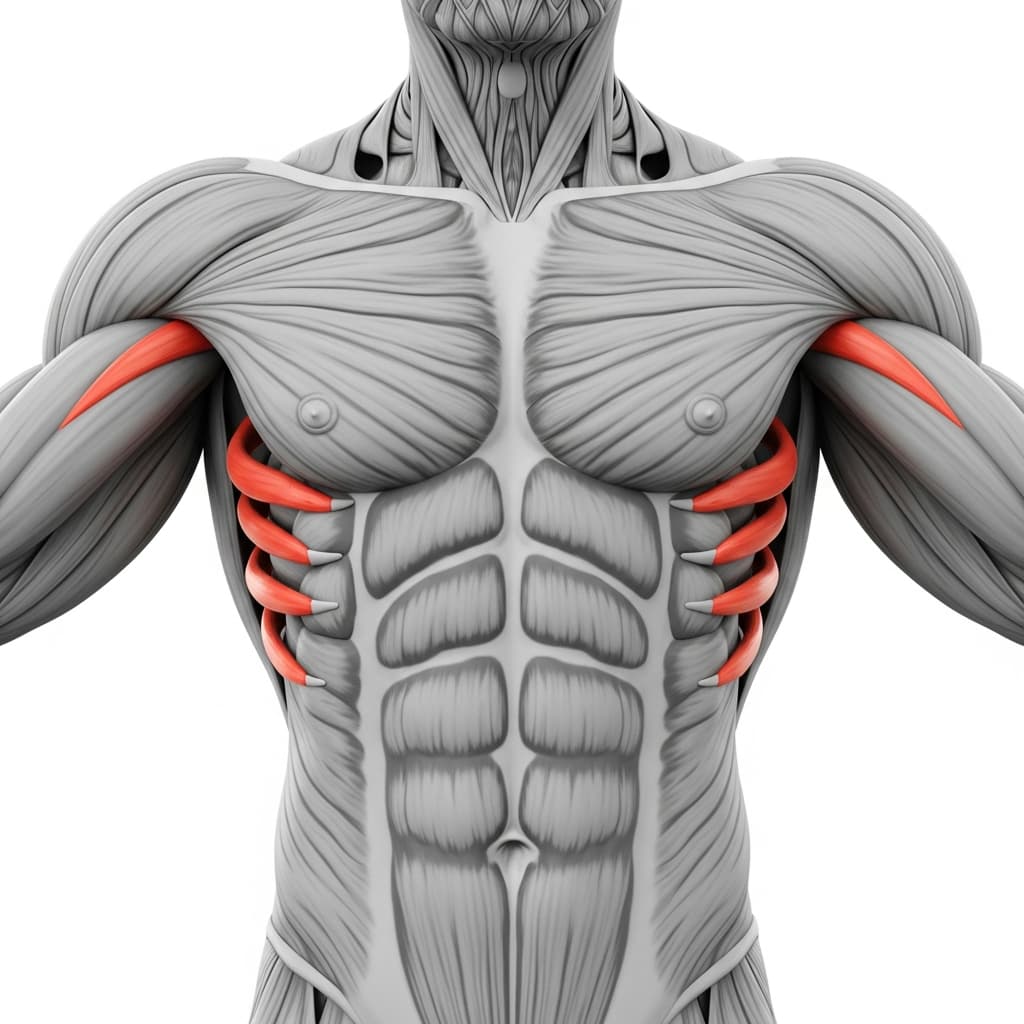
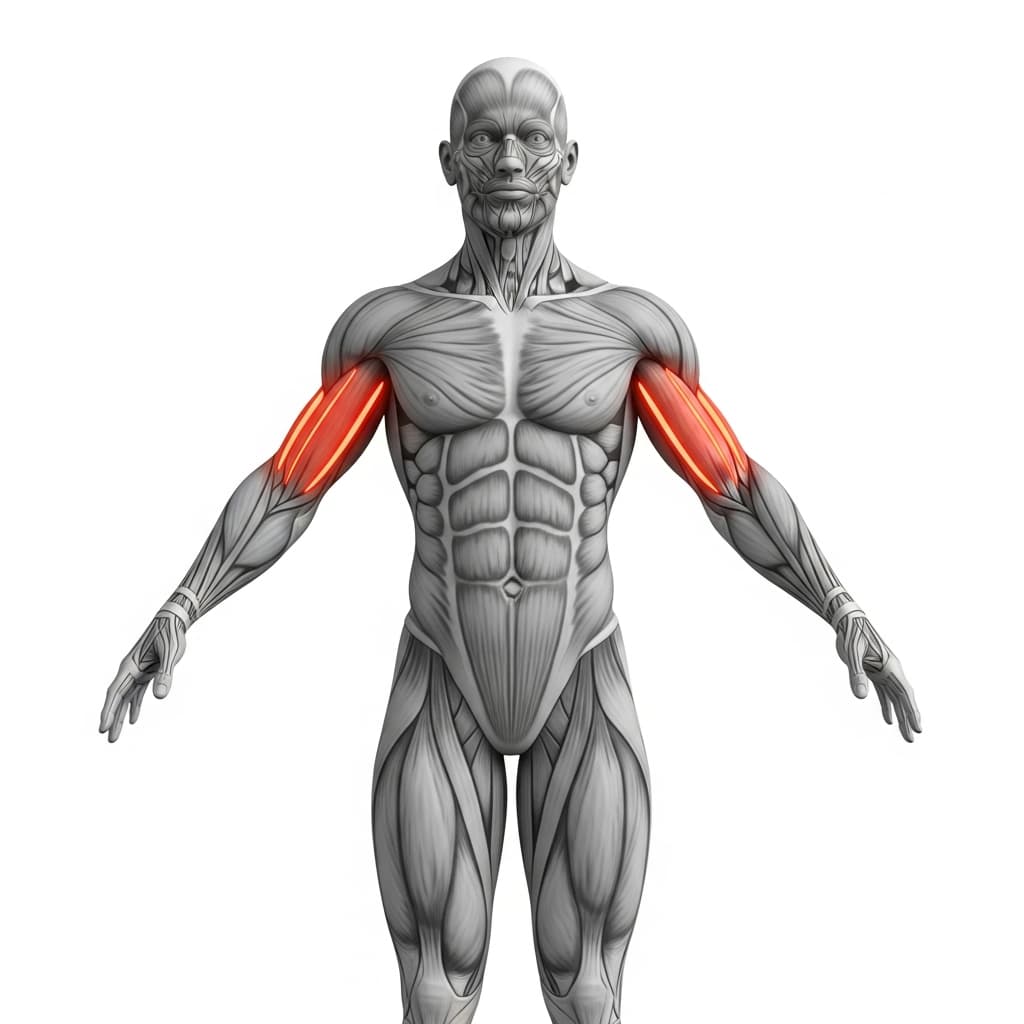
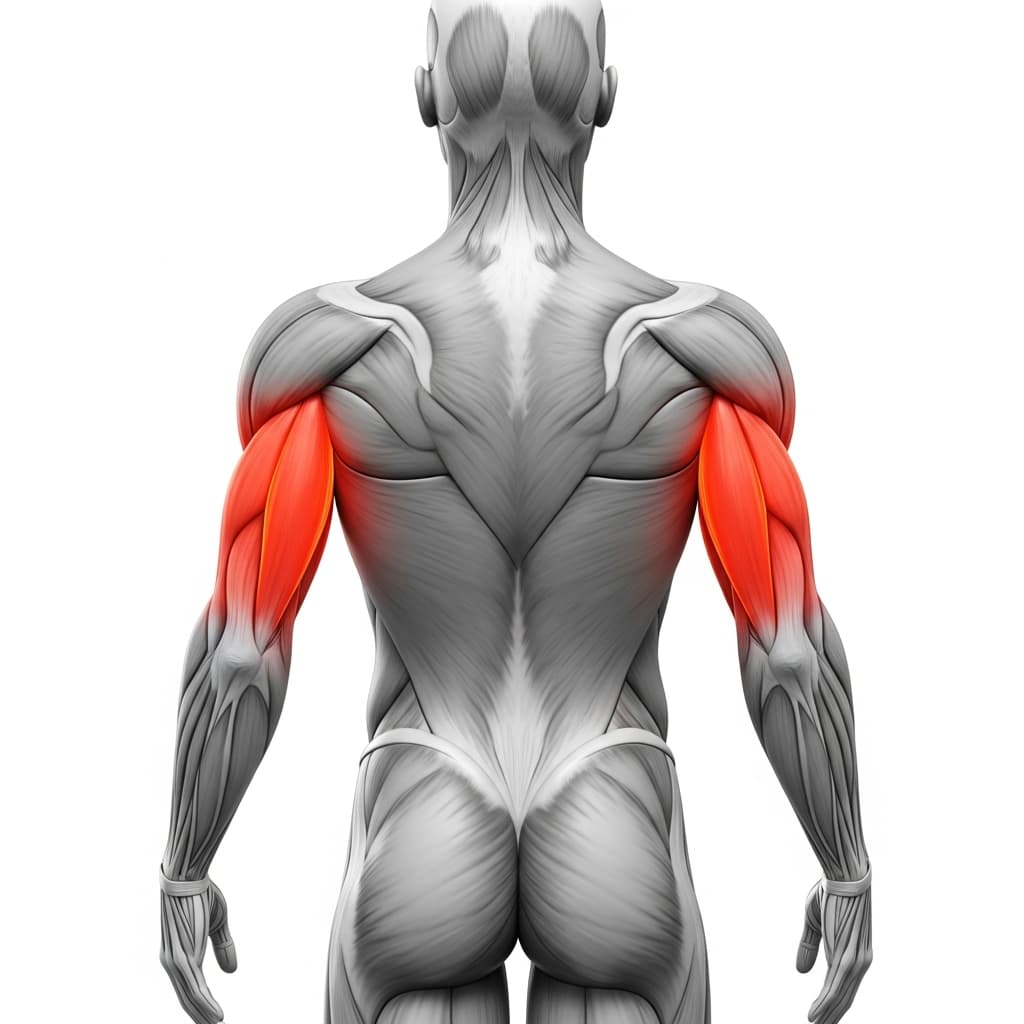
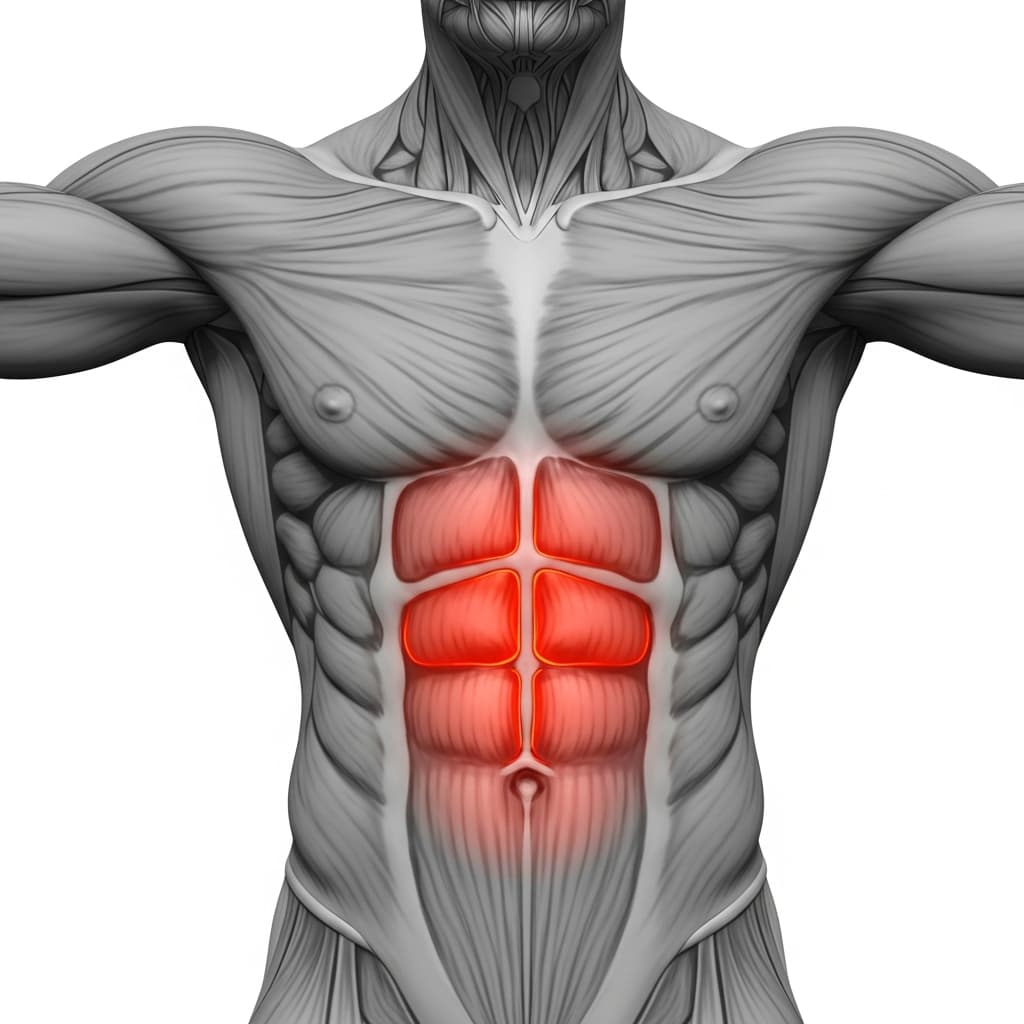
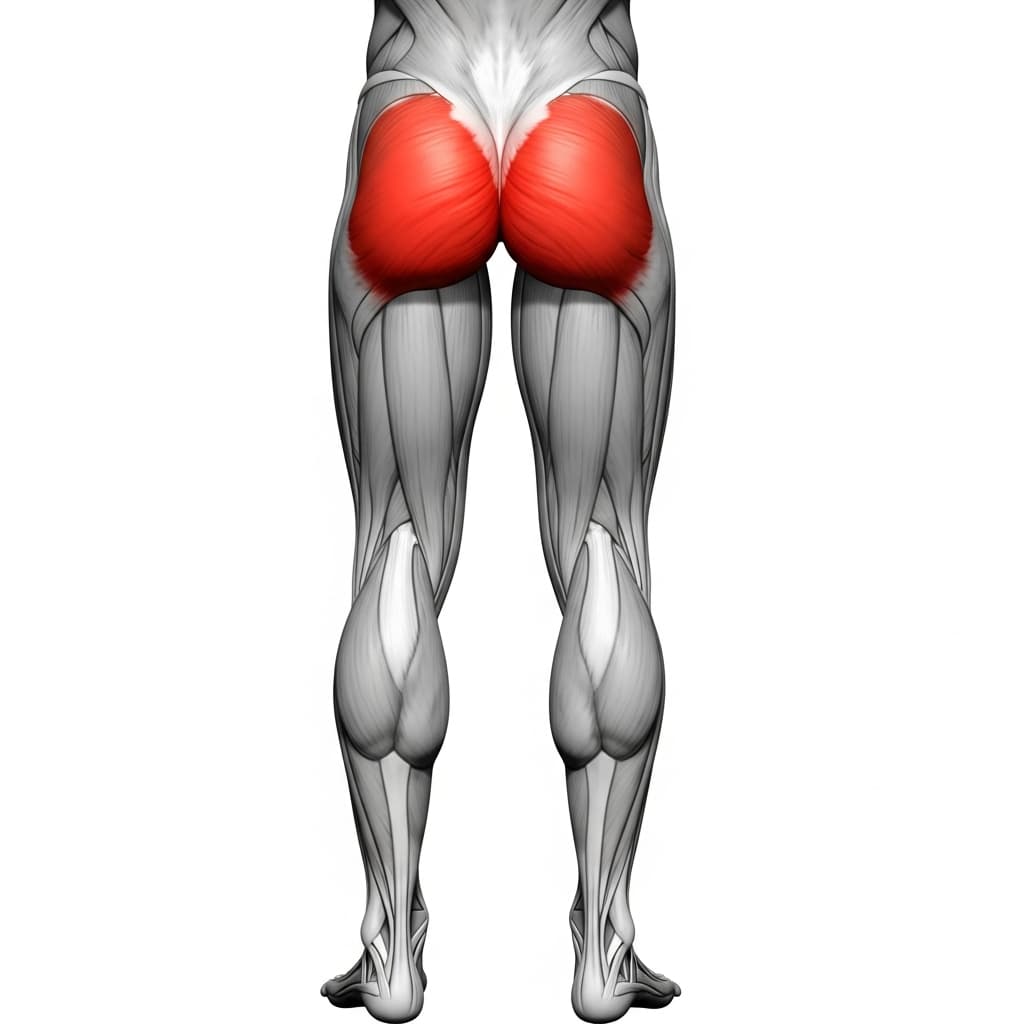
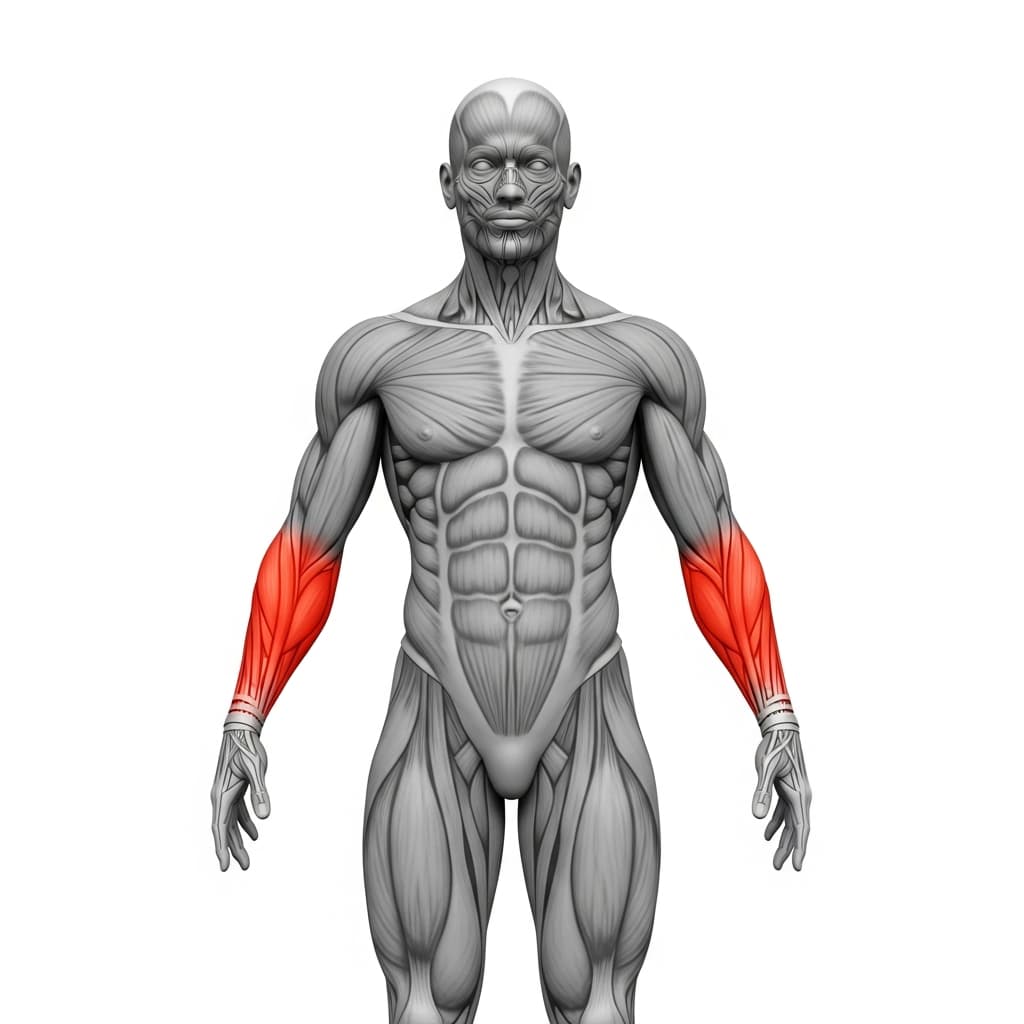
Primary Muscles
Anterior Deltoid (Front Deltoid) - Carries your body weight out in front of your hands, and it is the muscle that decides how many seconds the hold lasts.
Serratus Anterior (Serratus Anterior) - Pulls the shoulder blades forward around the ribs to hold the protraction, and it is normally what fades first when the shoulders start to pinch back together.
Secondary Muscles
Biceps Brachii (Biceps) - Works isometrically against a lever that is constantly trying to bend the elbow open.
Triceps Brachii (Triceps) - Holds the elbow locked so the arm stays one straight column under the load instead of collapsing into a bent arm hold.
Rectus Abdominis (Abs) - Keeps the ribs down and stops the extended leg from dragging your lower back into an arch.
Gluteus Maximus (Glutes) - Push the extended leg back and up, which is what keeps the body horizontal rather than hanging.
Forearm Flexors & Extensors (Forearms) - Grip the bars hard and control the balance point through the wrists and fingers for the whole hold.
Benefits of One Leg Planche
- Loads the shoulders close to full planche level while the bent leg keeps the hold long enough to be worth training
- Builds the hip extension strength the full planche needs, which is often what gives out before the shoulders do
- Shows you exactly how big your left to right difference is, and gives you the tool to close it
- Trains the core to resist rotation, because one straight leg constantly pulls the hips out of square
- Adds straight arm time under near full load, which is what conditions the wrists and elbows for the full planche
Who Is This Exercise For?
Before you touch this rung you want a straddle planche you genuinely own, held cleanly for several seconds across a few working sets, sitting on top of a solid advanced tuck planche. A common rule of thumb is to move up once a position is comfortable for around ten seconds, though plenty of people sit at five or six seconds for a long time. Your wrists need months of graded exposure behind them because the lean here is deep, and your elbows need to lock out straight with no lingering pain. The biceps tendon ruptures people report in planche training happened during straight arm holds, so tendon conditioning gates this as much as shoulder strength does. A strong hollow body hold matters as well, because the extended leg is usually the first thing to drop.
Common Mistakes to Avoid
Losing the protraction: The shoulder blades pinch back together, usually because the serratus gives out before the delts do, and the upper back flattens. When that happens the shoulder loses its stable base and the load moves into the biceps and elbow tendons. Cut the hold short the second the shoulders pinch back, and spend a block on shorter, cleaner holds rather than longer failing ones.
The extended leg sagging: The straight leg drifts down below the line of your shoulders because the glute stopped pushing, not because the shoulder gave out. Hip extension is often the limiter here rather than the shoulders. Squeeze the glute deliberately at the start of the hold and keep thinking about pushing that heel away from you, not just holding it there.
Twisting toward the extended leg: One straight leg and one bent leg is an asymmetric load, so the hips rotate and the whole body opens up sideways. It shortens the lever slightly, which is why it feels easier and goes unnoticed. Film yourself from the front and keep both hips level and square to the ground for the whole hold.
Only training your good side: One side always comes first, and it is the side you keep repeating because the holds look better. Left alone the difference grows, and it is the kind of gap that shows up later in the full planche, which needs both hips extending equally. Match the sets on both legs every session, and set the volume by what the weaker side can hold, not the stronger one.